Researchers Finland say they are the first to determine the state of a superconducting qubit using a bolometer – a device that measures radiant heat. While the fidelity and speed of the readout fall far short of state-of-the-art conventional methods for quantum computing, the technique has the potential to be more scalable than current methods and could be immune to some types of noise.
Quantum computers use quantum bits (qubits) to store and process information. At the end of a calculation the quantum states of qubits must be read to extract the result. Some of the most advanced quantum computers to date – including those developed by Google and IBM – use qubits made from superconducting electronic circuits that are operated at very low temperatures.
Reading these qubits is currently a complex and difficult process, explains Mikko Möttönen of Aalto University and Finland’s VTT Technical Research Centre: “If you tried to measure the voltage directly it would be very challenging, because the voltage is tiny. Instead a microwave resonator is coupled to the qubit, and depending on the state of the qubit the frequency of the resonator gets shifted slightly.”
This process involves injecting microwaves into the measurement circuit, and then reading the state as a change in the phase of the current–voltage oscillations of the microwaves caused by their interaction with the qubit.
This is not ideal, as Möttönen explains: “The signal that you can put into this measurement circuit is very, very weak, so if you were to take it to room temperature without amplifying you would measure nothing,” he says. This is important, because the results of a quantum calculation must be ultimately be relayed to electronics operating at room temperature.
Uncertainty principle
“So on the way up to room temperature there will be several stages of amplifiers, and each of these amplifiers must add some noise. It can be done quite well, but it’s not at the same level of accuracy as quantum logic at the moment.” Another problem is more fundamental: measuring the state of the qubit involves measuring voltage and current, and Heisenberg’s uncertainty principle limits the precision at which these can both be known simultaneously.
Measuring the power emitted by the qubit with a bolometer circumvents both these problems. The measurement can be made in the refrigerator, so repeated amplification is unnecessary. Moreover, as there is no need for complete knowledge of the phase of a microwave in order to read off the energy level of the qubit, Heisenberg’s uncertainty principle does not limit the measurement’s accuracy in this way.
The researchers connected their bolometer to a standard superconducting qubit chip with a coupled microwave resonator. However, they made a slight tweak to the input. In a standard measurement scheme, the input microwave frequency is intermediate between the two resonant frequencies. “In that case, there’s no information in the amplitude of the oscillation because you’re in the middle of the resonances, so you always excite the same amplitude,” says Möttönen.
Slightly higher power
Instead, the researchers drove the resonator at the ground state frequency of the qubit. “Now we just channel the signal to the absorber of the bolometer,” says Möttönen. If the qubit is in the ground state, the bolometer detects slightly higher power because of resonance. If the qubit is in the excited state, then the signal in the bolometer is lower – and this difference is used to determine the state of qubit.
For this technique to work at very high fidelity, a very fast and very sensitive bolometer is needed to measure the quantum state before it decays. In 2020, the Finnish researchers unveiled a bolometer that used graphene as its absorber – a fast and sensitive design that was intended for use in quantum computing. Unfortunately, this bolometer degraded over time and the team instead used an older bolometer design involving interfaces between superconductors and normal metals.
Möttönen says that the researchers had initially not expected the older design to be effective for reading out the states of individual qubits. He also expects that the read-out fidelity could be boosted using improved graphene bolometers. “I’m hoping to get the new graphene bolometers out of the oven soon,” he says.
David Pahl at the Massachusetts Institute of Technology believes that the work is very preliminary, but potentially very important. He says that the two most important performance metrics for a scheme to read out quantum states are the fidelity and the speed: “The state of the art speed that we’ve seen in the past year is 0.1 μs and 99.5% fidelity…[Möttönen and colleagues] showed 14 μs and 61.7%,” he says.
Pahl points out that the bolometer is much more compact than amplifier-based systems. Amplifiers require bulky isolators, whereas bolometers could potentially be integrated on a chip, he says. He also points out that Heisenberg’s uncertainty principle does impose some theoretical limits on the sensitivity of a bolometer, but says that today’s devices are far from those limits. He looks forward to seeing the results with graphene bolometers.
In 1983 officials from San Diego City Council in California voted to install high-pressure sodium (HPS) streetlights that emitted a full spectrum of visible light. The existing, low-pressure sodium (LPS) streetlights gave off only a narrow, yellowish band, and it was hoped that the HPS lights would brighten streets and reduce crime. Makes sense, right?
However, astronomers at the 200-inch Hale telescope on Palomar Mountain, about 100 km away, were appalled, saying light pollution would blind their instrument. While they could readily filter out the narrow band of wavelengths from LPS lights, this was impossible with HPS lamps. “It would have the same effect as taking a sledgehammer and knocking out half of it,” complained one scientist who studied quasars, fearing it was “the beginning of the end”.
One member of San Diego’s council defended its action, claiming that local citizens didn’t like the existing lights and feared for their safety. “All we’re doing is responding to our constituents who are telling us that they don’t want yellow lights,” the council member said. “I’m for technology. But I’m also for the people of San Diego.”
In 1984 the council reversed its decision and approved the LPS lights. Delighted astronomers even named an asteroid that had recently been discovered “3043 San Diego”. But the battle continued to rage for nearly a decade. Some LPS opponents insisted that if the astronomers really wanted the telescope they should move it elsewhere. Others derided the telescope’s value.
“Little that is done in astronomy anywhere is of any practical importance,” huffed one writer to the San Diego Union-Tribune. Another said there was “no reason whatever to inconvenience literally millions of people in Southern California so some fool astronomer can play with this particular toy”. A third demanded that San Diego citizens’ safety be put ahead of the desire to “see Venus on a cloudy night”.
Astronomers assumed they’d prevail so long as they presented their case ‘factually and logically’
Other supporters of the bright lights were annoyed by how they felt they were being treated, and angered that they were being dismissed as “provincial and small-town”. At one city-council meeting they were labelled “flat-Earthers”. Eventually, in 1993, the council did a second U-turn and decided to install HPS lamps in high-crime areas – and later in other parts of the city too.
Disputed issues
Palomar astronomers were forced to cope with increasing light pollution by observing more in the infrared and by looking to the skies to within just 45 degrees of the zenith. Recounting the dispute in his 2001 book Asteroids: a History, the aerospace historian Curtis Peebles said it was tempting to think “that the political and civic leaders in one of California’s largest cities could not really do and say these things…but they did.” The asteroid, though, retained its name.
Astronomers assumed they’d prevail so long as they presented their case “factually and logically”, as Peebles put it. But facts and logic were not the only motivating concerns of the San Diego citizens. Some thought that their safety should come ahead of the telescope’s operation, others were suspicious of the instrument’s overall value compared to other important values, and still others were annoyed by the way their concerns were dismissed. As Peebles wrote, the scientists simply “never understood the people they were fighting”.
The San Diego events sound parochial, but Peebles concluded they “mirror those in the larger world”. I’ve covered a few, such as the time when the Brookhaven National Laboratory was forced to shut its research reactor in 1999 after an insignificant leak of tritium ignited anti-nuclear protests and fed political ambitions. There was also the closing of the US National Tritium Labelling Facility at the Lawrence Berkeley National Laboratory, following protests against tritium emissions that were within limits set by the US Environmental Protection Agency.
A lab’s purpose is harder to explain and justify than for more ordinary institutions
Many local institutions, such as schools, post offices or fire stations, fit into their surrounding communities in three distinct ways. First, they have a physical place, sharing air, water, streets, electricity and other services with neighbours. Second, they serve easily recognized purposes, which neighbours might feel they could not easily do without. Finally, such institutions have “personalities”, for their behaviour over time appears as more or less reliable, caring and trustworthy.
Laboratories are different. They, too, have physical places. But because they have sensitive scientific instruments, it can make labs vulnerable to activities in other nearby places. When Palomar, for example, was being planned nearly a century ago, it was sited in a then-remote location on a mountain top. But population growth and technological developments effectively shrank distances to places like San Diego, leading to intrusive interactions.
A lab’s purpose, too, is harder to explain and justify than for more ordinary institutions. Its products and services are not primarily for neighbours but the wider scientific community and can seem to be of little practical value – as the Palomar telescope did to some. Finally, a lab “lives in” a community, which means its conduct and those of its staff can be investigated and commented on by politicians and the media.
The critical point
Ensuring a lab’s place in a community therefore poses special challenges. For the Palomar astronomers, the stars seemed to be a straight shot – or as straight as the geometry of spacetime will allow. Contacting San Diego involved a more complex trajectory with several different paths. Unless these paths are identified and addressed, the events at Palomar are likely to mirror others.
Billed as “Germany’s first quantum physics escape room,” the Kitty Q Escape Room has been unveiled by the Dresden-Würzburg Cluster of Excellence for Complexity and Topology in Quantum Matter (ct.qmat).
The room is located at the Technische Sammlungen Dresden science museum and is described as being, “perfect for family outings, children’s birthday parties, and school field trips”.
The installation has four separate rooms and 17 puzzles that offer visitors a multisensory experience that explores the quirky world of quantum mechanics. The goal for the participant is to discover the fate of Kitty Q (is she dead or alive?), an imaginary being that embodies the spirit of Schödinger’s cat.
Kitty Q might sound familiar to Physics World readers because we wrote about the imaginary cat in 2021, when ct.qmat launched a mobile phone app that teaches children about quantum mechanics. That app is an escape game, and it has now come to life in Dresden.
The app and escape room were designed in collaboration with Philipp Stollenmayer, who is founder of the independent games designer Kamibox.
Physicist and ct.qmat’s Dresden spokesperson Matthias Vojta says, “By embracing modern gamification techniques, we ensure that learning happens in an engaging and subtle way. The best part [is] you don’t need to be a math or physics expert to enjoy the game!”
Pulses of laser light can cause any material – including insulators – to develop a relatively large magnetic moment. This effect, which has been demonstrated for the first time by an international team of researchers, shows that laser light can induce quantum behaviour even at room temperature, not just under the extremely cold conditions usually required. While primarily of interest for fundamental science, the technique could also have applications for faster, more efficient magnetic data storage.
In their experiments, Stefano Bonetti of Stockholm University and the Ca’ Foscari University of Venice and colleagues started with a relatively simple idea. By applying laser light that is both circularly polarized – that is, its polarization traces out a corkscrew-like shape as it propagates – and resonant with the frequency of atomic oscillations within a material, they figured they could drive these oscillations in a circular pattern and thus induce a magnetic moment.
The researchers were encouraged in their thinking by theoretical research, which predicted that atoms moving in circular patterns could indeed induce magnetization in almost any material. “Given my expertise in magnetism and my recent investigations into phonon dynamics (lattice vibrations), I believed that my laboratory would be an ideal setting to experiment with this concept,” Bonetti says.
Polarized light source induces large magnetic moments
Before they could begin, the researchers first had to develop a new polarized light source with a frequency in the required terahertz (far-infrared) range. Once the source was ready, they used it to fire short, intense pulses at a sample of strontium titanate (SrTiO3). At room temperature, this material is a paraelectric diamagnet with a cubic perovskite lattice structure. The researchers chose it because some of its atoms vibrate at terahertz frequencies – specifically, at 3 THz with a bandwidth of 0.5 THz.
The team found that these light pulses induced a phenomenon known as dynamic multiferroicity. Multiferroicity occurs when several properties of a material each have their own preferred states. For example, a multiferroic material might have magnetic moments that point in one direction, and electric charge that also shifts in a certain direction. Importantly, the two phenomena are independent of each other.
Though predicted by theory, this phenomenon had never been demonstrated experimentally. Bonetti reports that the experiment also yielded a surprise: the magnetic moments induced in the material were 10 000 times larger than theory predicts.
Magnetic data storage applications
The researchers say their discoveries could find use in magnetic data storage technologies, where there is great interest in novel methods of encoding magnetic information. This is because magnetic domains could be switched by a fast, lower-power electric field, rather than by an electric current (an energy-intensive and relatively slow process) as conventional domains are.
New observations of the flavour composition of atmospheric neutrinos have revealed no conclusive evidence for the minuscule, short-lived black holes that have been predicted by some theories of quantum gravity. The study was done by researchers using the IceCube Neutrino Observatory at the South Pole and the result places some of the tightest constraints ever on the nature of quantum gravity.
Developing a viable theory of quantum gravity is one of the greatest challenges in physics. Today, gravity is described very well by Albert Einstein’s general theory of relativity, which is incompatible with quantum theory. One important difference is that general relativity invokes space–time curvature to explain gravitational attraction while quantum theory is based on flat space–time.
Finding a way forward is challenging because the two theories work at very different energy scales, which makes doing experiments that test theories of quantum gravity very difficult.
“Creative measurements”
“In recent years, creative measurements have been devised to search for the tiny influence of quantum gravity: either via the use of extreme precision in laboratory experiments, or by exploiting the highly energetic particles produced in the distant universe,” explains Thomas Stuttard at the University of Copenhagen, who is a member of the IceCube collaboration.
Among these new theories is the idea that the quantum effects of uncertainty, combined with energy fluctuations in the vacuum of space, could have a tangible effect on the curvature of space–time, as described by general relativity. This could result in the creation of “virtual black holes”. If they exist, these microscopic objects would decay on the order of Planck time. This is about 10−44 s and is the smallest interval of time that can be described by current physical theories.
As a result, virtual black holes would be impossible to detect in the lab. But, if they really exist, researchers predict that they should interact with neutrinos, altering how the particles change flavour states via the phenomenon of neutrino oscillation.
Cubic kilometre of ice
The team searched for evidence of these interactions in data collected by the IceCube Neutrino Observatory, located at the South Pole. As the world’s largest neutrino observatory, IceCube consists of thousands of sensors positioned throughout a cubic kilometre of Antarctic ice.
These sensors detect distinctive flashes of light created by charged leptons that are produced why neutrinos interact with the ice. In this latest study, the team focussed on IceCube detections of high-energy neutrinos produced when cosmic rays interact with Earth’s atmosphere.
Stuttard explains that their search is not the first of its type. “This time, however, we were able to exploit the naturally high energy and large propagation distance of these ‘atmospheric’ neutrinos (rather than earthbound neutrino sources such as particle accelerators or nuclear reactors), as well as the high statistics afforded by the vast detector size. This enabled us to search for effects far weaker than can be probed by any previous study.”
Flavour composition
In their study, the team examined the flavour composition of over 300,000 neutrinos, observed by IceCube over an 8-year period. They then compared this result with the composition they expected to find if the neutrinos had indeed interacted with virtual black holes on their journey through the atmosphere.
Even with the extreme sensitivity offered by IceCube, the results were not any different from the flavour compositions predicted by the current model of neutrino oscillation. For now, this means that the theory of virtual black holes remains without any conclusive evidence.
However, this null result did allow the team to place new limits on the maximum possible strength of black hole–neutrino interactions, which are orders of magnitude more stringent than the limits set in previous studies.
“Aside from quantum gravity, the result also serves to demonstrate that the neutrino does appear to remain truly unperturbed by its environment even after travelling thousands of kilometres, even for neutrino energies exceeding any man-made collider,” says Stuttard. “This was a remarkable demonstration of quantum mechanics over truly macroscopic distances.”
More broadly, the team’s findings place new constraints on the theory of quantum gravity as a whole, constraints that are currently few and far between. “Whilst this work rejects certain scenarios, quantum gravity as a concept is certainly not excluded,” Stuttard adds. “The true nature of quantum gravity may differ from the assumptions made in this study, or the effects may be weaker or more strongly suppressed with energy than previous thought.”
Eager explorer Florence Downs enjoys showcasing the opportunities of engineering to young people. (Courtesy: Florence Downs)
What skills do you use every day in your job?
As an editor, the largest part of my job is doing just that – editing. Most broadly, I spend my time working out how to communicate a story as clearly as possible to the reader. A lot of the time that might just involve a bit of rearrangement and grammatical wrangling. Sometimes it calls for more of a rewrite, and the writer in me can’t help but get excited for those moments. I write shorter pieces for the magazine too, so am trying to develop my approaches to storytelling, interviewing and other more “writerly” skills.
Applying a curious mindset definitely helps me to spot what a story (no matter how long or short) could be missing. Having a scientific background helps a lot with that. Being happy to get stuck into a new subject – if you can call that a skill – is something that’s come in handy in every job I’ve had and that was definitely honed during my physics degree. Without it, it would have been impossible to hop between scientific disciplines and, eventually, find myself in the world of engineering.
As with any job, there’s always a degree of plate spinning. Managing all the smaller aspects of the role – from newsletters to web analytics – is vital.
What do you like best and least about your job?
I love so many things about it. Probably the main one is that I am constantly learning. Every day I get to satisfy my burning curiosities – learn about new technologies and how engineers are making the world a better place. I’m a bit of a magpie so thankfully it’s part and parcel of this job to be drawn to shiny and interesting things.
There’s also the process of seeing an article germinate and eventually take shape. It’s very creative (and a lot of fun) thinking about what to cover and how to guide a piece in the right direction. At the same time, it’s a collective effort, and that comes down to everyone who feeds into it, from our editorial board and team to freelance writers.
I’m grateful to be learning from lots of inspiring people – engineers at all stages of their careers and creative science communicators and writers. Inspiration comes from the other side too. It’s all too often that I’ll interview someone and the amount they’ve achieved before turning 25 will blow my mind.
What I like least is that there’s not enough time in the day to pursue all the article and project ideas we have. It can be a tough call choosing something to prioritize and having to put something else to one side for now.
What do you know today that you wish you knew when you were starting out in your career?
Definitely this: stop worrying so much and know that everything will work out. I’ve learned so much from each stage of my career and would love to tell my past self just to enjoy it. That, incidentally, was also some of the best advice I was given about my PhD viva.
The oncology information system (OIS) lies at the heart of all cancer care, managing the entire clinical pathway – from patient registration, to treatment scheduling and delivery, to follow-up. The software revolution has transformed cancer care from paper-based charts and records to today’s fully digitized processes. But an OIS can do so much more: it can collect data to analyse and learn from, automate tasks and data processing, and intuitively guide users to the information that they need.
A case in point is RayCare, the OIS from oncology software specialist RaySearch Laboratories. RayCare is now used in clinics across three continents, in many cases supporting the entire chain of cancer patient management and in others, coexisting with the hospital information system or working alongside another OIS.
First launched in 2017, RayCare was built from the ground up with the users’ needs in mind. “RayCare originated as a customer need,” explains RayCare chief functionality owner Eeva-Liisa Karjalainen. “We already had our RayStation treatment planning system, which was very well received in terms of its speed and quality, and some of our customers reached out to ask why we didn’t have an OIS software as well. In parallel, we saw a need to combine the OIS and the planning software to achieve important radiotherapy goals such as efficient management of adaptive treatments.”
In response, the company set up a clinical advisory board with various hospitals and spent hundreds of hours working with nine clinics worldwide to define not just how an OIS should perform today, but what they’d like it to do in the future and how to achieve that. The aim was to not build something that already existed, but to create a system that would be useful for the future of cancer care.
Eeva-Liisa Karjalainen “We see the software opportunity as a game changer.” (Courtesy: RaySearch)
At the ESTRO 2024 meeting, the company is launching RayCare 2024A, a major release that will offer a range of top-level enhancements requested by users. This includes a completely new workspace to design and manage treatment courses and scheduling from RayCare. “This brings the advantage that, together with digital workflow support and the integration with RayStation, we can make the whole treatment management process more user-friendly and more efficient,” Karjalainen explains.
And herein lies the key attribute of RayCare: its ability to increase efficiency while maintaining or improving the quality of patient care – a pressing task for cancer clinics worldwide. With an ageing population, hospitals face the challenge of providing high-quality cancer care to an increasing number of patients with a static level of resources. RayCare can help balance available resources against this increasing need for care.
Saving time through automation
RayCare’s “active workflows” provide support for the activities required throughout the entire patient pathway. Unlike prior systems, in which users had to check off finished tasks from a list and inform the next person in the workflow, RayCare actively monitors everything that happens within the system. When a task has been completed, the software automatically opens up the next task in the workflow, assigns that task to the responsible user and informs them that their next step is ready to perform.
This approach reduces lead times between activities and minimizes time spent on manual interactions. Critically, the active workflows also provide a vital safety check, by ensuring that no tasks are forgotten.
To increase efficiency further, RayCare incorporates a wide range of inherent automation features. In general, all data that should be available throughout the RaySearch systems are automatically shared and available where the user needs them, to minimize errors and the need for manual work. For instance, after a planning CT is acquired and received in RayCare, it automatically becomes available within the treatment planning system.
Next-generation OIS RayCare provides support for all tasks throughout the entire treatment pathway. (Courtesy: RaySearch)
There’s also support for automation by use of scripting that allows users to easily configure the software to run specified actions automatically. A typical use case is to instigate generation of a treatment plan in RayStation directly from RayCare, getting it ready for a physician to review without needing any manual interaction.
“A recent example from one of our customers is the performing of scripted quality controls of a treatment plan, checking off a multitude of parameters that were previously checked manually and only pushing the plan onto an additional review if any of those checks failed,” says Karjalainen. “If the plan is within all of the quality measures, no one needs to do anything and it can go straight for approval. Otherwise it can be passed back to another staff member for review.”
Karjalainen points out that while it’s possible to use advances in radiotherapy hardware to treat more patients, for example by delivering radiation faster to reduce fraction times, the big efficiency savings will inevitably come from the automation and organizational support that software such as RayCare brings. “We see the software opportunity as a game changer,” she adds.
Patient-centred approach
Ultimately, RayCare is designed to provide a patient-centred approach based on the concept of a single oncology workflow. Patients often require more than one treatment modality in their cancer care, including surgery or medical oncology as well as radiotherapy. RayCare aims to ensure that staff in all of these disciplines can access the same patient data from one system.
“We want to bring all of these users to RayCare, to centre them around the patient and not have to transport information between different systems or institutions, which is more error prone and also shifts more responsibility to the patient,” Karjalainen explains.
The RayCare architecture already incorporates the framework to enable this type of comprehensive cancer care. And in the future, it will offer specific features such as scheduling for chemotherapy and dedicated workspaces to manage medical oncology and surgical information. This approach should enable better cross-disciplinary communication and reduce the burden on both the hospital and the patient.
“In the long term, the hope is that all activities related to oncology care would be conducted using RayCare. It will not only be the software for the radiotherapy department, but also the software for the surgery and medical oncology departments. Within one system, you could review the toxicities, the data, the outcomes and get a cohesive view on the patient’s history,” says Karjalainen. “At the same time, we are strong advocates for enabling clinics to select the best software or hardware for their clinical needs, independent of vendor. RayCare is designed to communicate with other hospital systems as one of the building blocks of the ecosystem.”
RaySearch’s commitment to supporting open interfaces and open competition is reflected in the company’s co-founding last year of the organization UniteRT, a collaboration of radiation therapy technology vendors that share the mission of complete freedom of choice for the customers.
Echoing this strong focus on supporting future technologies, RaySearch is also working on the automation of online adaptive radiotherapy, a longstanding and important clinical goal for the radiotherapy community. Online adaptive radiotherapy – in which a treatment plan is adapted to the patient’s current anatomy during the course of their treatment – requires the ability to perform extremely fast planning and replanning.
ESTRO 2024 will see the company present some of the first pieces of this project, the newly reworked fast replanning in RayStation. And in one of the next major software releases, this capability will be integrated into the RayCare software. “Truly efficient online adaptive radiotherapy is something that I’m really looking forward to becoming a reality in our RayCare clinics,” says Karjalainen.
In a proof-of-concept study, researchers at the National Institute of Standards and Technology (NIST) used a smartphone’s built-in magnetometer, combined with hydrogels that change their shape in response to specific cues, to measure sugar concentrations in beverages. The platform, they say, could potentially be used to measure glucose in biological samples, detect environmental toxins, or even test the pH of liquids in an at-home brewery.
That a smartphone can be used as a compass is thanks to its magnetometer, which measures the Earth’s magnetic field (or a local source of magnetism) in three directions. Postdoctoral researcher Mark Ferris and project leader Gary Zabow, both of whom work in the Applied Physics Division at NIST, decided to employ smartphone magnetometers to measure chemical constituents in samples.
“We’re trying to make a new sensing platform, and in particular, trying to make something that is very accessible to a lot of people. And so we have been using a cell phone, which most people have already, as the basis of the sensor platform,” says Zabow.
“We think [the sensing platform is] a good complement to optical smartphone devices that are already out there that may have a little more issue getting around autofluorescence, scattering and so on in murky samples…That’s where, in general, magnetics does better,” Ferris adds.
The magnetics-based sensing platform hinges on hydrogels – materials that swell when immersed in water – that are embedded with tiny magnetic particles. The hydrogels react to the presence of different chemical constituents of a sample, such as glucose, or to changing pH levels.
The platform works by clamping to a smartphone a small well containing a few millilitres of test solution and a strip of hydrogel. As the hydrogels enlarge or shrink, they move the magnetic particles closer to or father from the magnetometer, which detects and measures corresponding changes in the strength of the magnetic field.
The researchers opted to use a stack of hydrogels to amplify particle motion, making it easier to measure changes in magnetic field strength.
“Magnetics lends itself to being directly quantitative,” Zabow says. “It’s a number that you measure, the strength of the magnetic field. It’s not a picture that you need to convert into something that’s quantitative.”
So far, the researchers have demonstrated proof-of-concept in the sensing platform using control test samples, including wine and champagne. They observed that a high-sugar wine (sangria) induced a bigger change in magnetic field than low-sugar options (pinot grigio and champagne brut). Glucose concentrations were measured at high sensitivities, as small as a few millionths of a mole per litre.
The sensing platform is inexpensive and relatively easy to build and could be used in locations with relatively few resources.
The researchers’ next steps will be to improve platform sensitivity and specificity, which can be addressed by altering the hydrogel chemistry or by incorporating hydrogels that are sensitive to different analytes.
“There are some steps that need to be taken first, in terms of specificity of the tests to ensure that when you’re measuring glucose or pH – those are the two examples in the paper – there’s no interference, you’re not getting some other inadvertent contribution from something else in the solution. That’s a question of specificity of the hydrogel test strips, and that’s something that we still have to work on,” Zabow says.
This episode of the Physics World Weekly podcast explores how the medical physics community is embracing environmental sustainability. Our guests are the medical physicists Rob Chuter of the Christie NHS Foundation Trust in the UK and Kari Tanderup of Aarhus University in Denmark.
They chat with Physics World’s Tami Freeman about the environmental impact of healthcare provision – and how the community can reduce its carbon footprint without having negative impacts on health outcomes.
This podcast was created in collaboration with IPEM, the Institute of Physics and Engineering in Medicine. IPEM owns the journal Physics in Medicine & Biology.
Today’s measurement systems can get very complicated very quickly. Scientists working at the cutting edge of research will often have to cobble together instruments from a number of different suppliers. This is problematic because mixed-vendor systems can be difficult to operate and this can seriously compromise the accuracy and repeatability of the measurements being made.
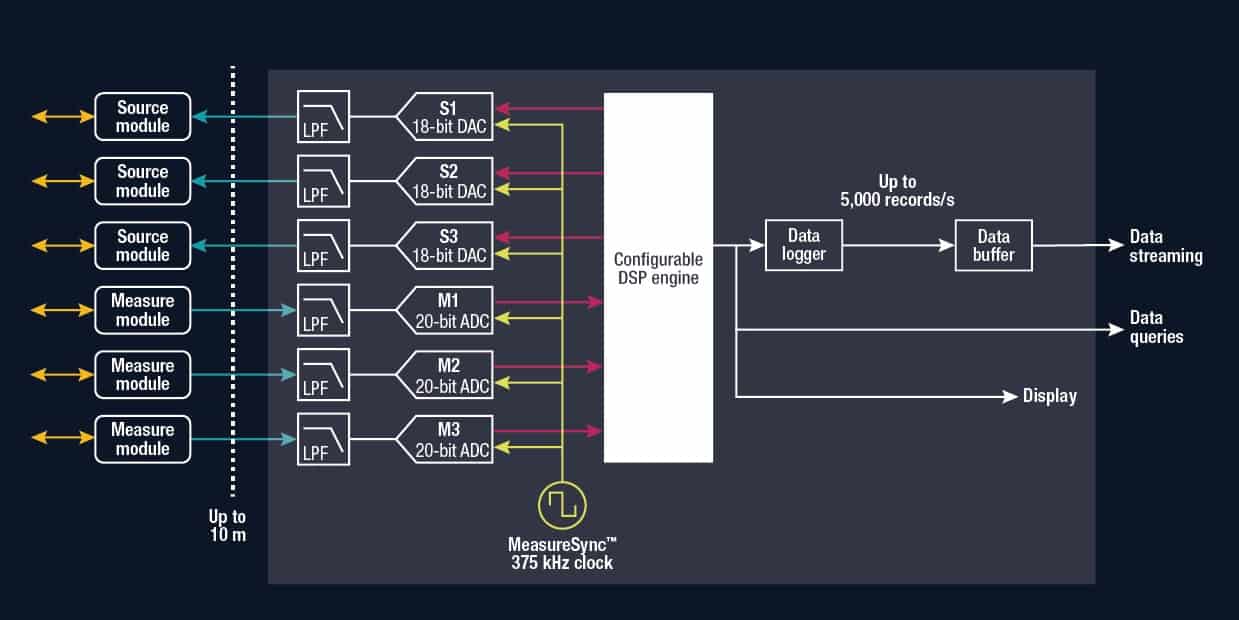
Lake Shore Cryotronics has addressed these uncertainties with its MeasureReady M81-SSM (Synchronous Source and Measure) system, which allows up to three source and three measurement modules to be simultaneously operated by a single central control instrument. The M81-SSM uses Lake Shore’s proprietary MeasureSync technology to ensure that all connected source and measure modules are synchronously updated and sampled well within +/-10 ns of each other at a 375 kHz sampling rate.
“We purposely put synchronous source and measure capabilities together,” explains Chuck Cimino, who is senior product manager at Lake Shore. “This also enables use of a common accuracy reference to the sample being characterized and ensures consistently minimal noise performance.”
The company is headquartered in Westerville, Ohio and has been developing measurement and control solutions for 56 years. “We’ve got multiple patented technologies in the M81-SSM that very much enable superior synchronization, mixed DC and AC sourcing and measuring, and smoother/faster voltage measurement range changing,” he adds.
At the heart of the M81-SSM is a controller instrument that currently supports four different types of source and measurement modules: a constant voltage source module; a balanced or differential constant current source module; a greater than 1 TΩ input impedance voltage measurement module; and a zero-offset voltage type current measurement module with programmable DC bias built in. Cimino says that more application-specific type modules are being developed to expand the system’s capabilities.
Extremely low-noise operation
All M81-SSM modules contain linear amplifier electronics that are powered by highly-isolated linear power supplies. Cimino says the result is extremely low-noise operation that exceeds many of the best conventionally-built single-box source and measure instruments, including a number of commonly used lock-in amplifiers.
The M81-SSM was designed from the start to cover the widest possible range of voltage versus current characterization applications with lowest possible noise and quickest configuration and setup for measuring samples in cryogenic and/or high field experiment environments. Lake Shore has extensive experience characterizing materials and devices in these and other extreme environments and has also fully leveraged proprietary signal conditioning and measurement technologies, as well as the company’s application scientists’ expertise, in the design of the M81-SSM.
This low-power and low-noise signal capability makes the M81-SSM very useful for measuring magnetic field effects using various Hall bar structures and magnetic field sensors. These devices are used in a number of applications, including spin transport experiments and the study of superconducting materials at cryogenic temperatures. As well as making measurements at very low temperatures while minimizing self-heating, the M81-SSM can also characterize materials in room and very high-temperature environments, avoiding thermal offsets via AC sourcing with lock-in detection.
Hall bar measurements, which are used to make very precise measurements of a sample’s electrical resistance, can be done very effectively using the M81-SSM’s differential current source and voltage measurement module combination. General four-wire resistance measurement applications also benefit from these low-noise, low-power fully differential connected modules.
The modular nature of the M81-SSM and the ability of the modules to switch easily between AC (up to 100 kHz), DC and lock-in detection modes gives users great flexibility in the types of measurements that can be done without swapping between or modifying dedicated DC and AC only instrumentation. This modularity and flexibility also means that the M81-SSM can be used to test multiple devices under identical conditions to deliver consistent results.
The VM-10 voltage measurement module can detect signals from the low nanovolt range up to 10 V. It operates from DC up to 100 kHz and can detect amplitude, phase and harmonics. The CM-10 current measurement module can detect currents in the femtoampere to 100 mA range. Current measurements can be made from DC to 100 kHz and include amplitude, phase and harmonic detection.
The BCS-10 balanced current source module is programmable from 100 fA to 100 mA from DC to 100 kHz sinusoidal output, while the VS-10 voltage source module provides programmable voltages from 1 µV DC/100 nV AC up to ± 10 V with DC to 100 kHz sinusoidal output.
The controller instrument offers a range of digital connectivity including USB, GPIB and Ethernet as well as interfacing with external reference sources or detectors. The controller and modules are compact benchtop instruments that can also be rack mounted.
Synchronization and integration
Thanks to its high degree of synchronization and integration of sourcing and measuring capabilities, the M81-SSM can reduce the number of separate instruments, in many cases to just the M81-SSM system, required to make precision measurements. This level of integration also minimizes the number and length of cables typically used to connect separate sources, measuring instruments and samples. This integration avoids the introduction of parasitic effects – such as leakage, noise, resistance and reactance – all of which can significantly degrade measurements.
The remote modules are connected to the main instrument via standard 2 m noise-immune power and signal cables, which can be optionally extended to 6 m total between instrument and any one module. This means that the modules can be placed very close to where the measurements are being made, such as in a cryogenic probe station. “The name of the game in low-level measurements is to minimize the length of the signal level cables,” says Cimino. “With the M81-SSM you can put the amplifier modules right next to the sample if desired.”
The modular nature of the system means that a wide range of configurations can be created by simply swapping connected modules. This makes the M81-SSM an extremely flexible system and its performance is more predictable than setups built of multiple separate instruments and instruments from different vendors. Furthermore, the entire system is supported by one supplier, making customer service and technical assistance simpler and more streamlined.
The M81-SSM uses a patented analogue system to transmit signals between the controller and its modules. Cimino explains that this keeps noisy digital circuits far away from the sensitive analogue circuits in the modules. This also minimizes ground errors and ensures the tight synchronization of all modules.
Dedicated ADCs and DACs
Signals from up to three connected measurement modules are digitized in the controller by dedicated analogue-to-digital (ADC) converters. Output signals from up to three source modules are defined by the controller by dedicated digital-to-analogue converters (DACs).
Accurate timing Up to three measure modules and three source modules can be synchronized by the M81-SSM using Lake Shore’s MeasureSync technology. (Courtesy: Lake Shore Cryotronics)
The ADCs and DACs are triggered by the rising edge of a shared MeasureSync clock signal. MeasureSync is Lake Shore’s patent-pending signal synchronization system that uses a common 375 kHz clock signal for updating and reading all modules – enabling continuous data sampling on every connected channel rather than the typical multiplexed multi-channel alternatives.
During the gaps between sampling clock edges, ADC data are read by the controller, and the DACs are set to provide the next output values. The result is the complete synchronization and continuous sampling of up to six connected amplifier channels – which means that several synchronized measurements can be made in parallel. Each channel can be set to perform AC, DC or lock-in measurements. Raw samples are acquired and processed at 375 kilosamples per second (kSa/s) and completed measurements are transmitted via LAN, USB or GPIB to a host PC at up to 5k records per second or an aggregate rate for 3 measure channels of 15k measurements per second.
This high degree of synchronization between source and measurement means that the M81-SSM can be used to make lock-in measurements that can extract very weak signals from noisy backgrounds. This is a significant benefit for users because lock-in measurements are usually done using a dedicated AC measurements-only lock-in amplifier instrument.
Lock-in at the touch of a button
“I’ve demonstrated for some interested customers the M81-SSM main capabilities and they ask ‘so where is the lock-in amplifier?’,” says Cimino. “Initially, they just see the compact modules and controller elements, and I have to explain that the lock-in is implemented digitally. ‘It’s a lock-in at the touch of a button’ is the enthusiastic response I got from multiple potential users.”
Cimino adds that novices and experts alike appreciate how simply and intuitively Lake Shore has configured the user interface. At the expert user end of the spectrum, Cimino says that “one M81-SSM user has adopted our Python driver as his group’s driver standard across all of his equipment. He just liked the way we abstracted the M81-SSM controls in our Python driver.”
“Or if you don’t want to program at all, our MeasureLINK software allows you to just drag and drop high-level source and measurement commands to stream data or to do long-duration testing,” says Cimino. “If you want to manipulate a magnetic field or a sample temperature while making electrical measurements, you can do that with no programming.”
Cimino describes the M81-SSM’s user interface as “discoverable” and that any smartphone user (i.e., “everyone”) would be comfortable using it. “Each module is represented in the interface and when you click on a module, you see a virtual front panel for that instrument,” he explains. The default settings on the interface correspond to the most common measurements, but users can also easily navigate the interface to control the M81-SSM in a way that matches their skill level and measurement requirements. And for the novice and expert user alike, Lake Shore provides support from its team of PhD-level application engineers.
“The M81-SSM is the result of five years of really hard work by Lake Shore’s engineering and application teams,” says Cimino, adding that positive responses from the user community suggests that it was well worth the effort.