The physics of the Web

The internet appears to have taken on a life of its own ever since the National Science Foundation in the US gave up stewardship of the network in 1995. New lines and routers are added continually by thousands of companies, none of which require permission from anybody to do so, and none of which are obliged to report their activity. This uncontrolled and decentralized growth has turned network designers into scientific explorers. All previous Internet-related research concentrated on designing better protocols and faster components. More recently, an increasing number of scientists have begun to ask an unexpected question: what exactly did we create?

One thing is clear. While entirely of human design, the emerging network appears to have more in common with a cell or an ecological system than with a Swiss watch. Many diverse components, each performing a specialized job, contribute to a system that is evolving and changing at an incredible speed. Increasingly, we are realizing that our lack of understanding of the Internet and the Web is not a computer-science question. Rather it is rooted in the absence of a scientific framework to characterize the topology of the network behind it.

Figure 1

Networks and graphs have long been studied in a prolific branch of mathematics known as graph theory. Until recently, the absence of detailed topological information about large complex systems, such as communication networks or cells, meant that networks were modelled as “random graphs”. The most widely investigated random-graph model was introduced by Hungarian mathematicians, Paul Erdös and Alfred Rényi, in 1960. Their influential model consists of N nodes, each of which has a probability, p, of being connected to another node via a link (figure 1a).

For such a random network the probability that a node has k links follows a Poisson distribution, implying that it is exponentially rare to find a node with a high number of links. But the Erdös-Rényi model raises an important question: do we believe that networks observed in nature are truly random? Could the Internet really offer us the relatively fast and seamless service we currently enjoy if the computers were connected randomly to each other? Or, to take a more extreme example: would you be able to read this article if the chemicals in your body decided to react randomly to each other, bypassing the rigid chemical web that they normally obey?

Intuitively the answer is no – we all feel that behind every complex system there is an underlying network with non-random topology. The challenge for physicists is to unearth the signatures of order from the apparent chaos of millions of nodes and links. Following this path, in the last few years we have learned that the tools of statistical mechanics are particularly well suited to this task, offering an unexpected perspective on the structure and dynamics of many truly complex interacting systems, including the Internet and its offshoot the World Wide Web.

Complex networks

According to a recent study by Steve Lawrence of the NEC Research Institute in New Jersey and Lee Giles of Pennsylvania State University, the Web contains nearly a billion documents. The documents represent the nodes of this complex network and they are connected by locators, known as URLs, that allow us to navigate from one Web page to another.

To analyse the Web’s properties, we need to draw a map that tells us how the pages link to each other. This information is routinely collected by search engines, such as Google and AltaVista. But the companies that have developed these engines are often reluctant to share the information for research purposes. Thus we needed to obtain a map of our own. This is exactly what the current author together with Réka Albert and Hawoong Jeong, also at the University of Notre Dame, did in 1998. We wrote a robot or Web crawler that started from a given Web page, collected all the outgoing links, and followed these links to visit more pages and collect even more links. Through this iterative process we mapped out a tiny fraction of the Web, amounting to less than 0.05% of its total size.

As the Web is a “directed” network, each document can be characterized by the number of incoming, kin, and outgoing, kout, links. The first quantities that we investigated were the probability distributions, P(k), that a randomly selected Web page has exactly kin or kout links, respectively. Guided by random-graph theory, we expected that P(k) would follow a binomial distribution and would converge to a Poisson distribution when the number of nodes was large. So it was rather surprising when our data indicated that P(k) decayed via a power law – a completely different type of distribution (figures 1c and d). Indeed, we found that the probability was given by k – G, where G = 2.45 for outgoing links and G = 2.1 for incoming links, a result that was confirmed in a parallel study by Ravi Kumar and co-workers at IBM’s Almaden Research Center in California.

Figure 2

There are major topological differences between networks with Poisson and power-law distributions. For random networks, most nodes have approximately the same number of links, k ~ <k>, where k> represents the average value. The exponential decay of P(k) guarantees the absence of nodes with significantly more than <k> links. In contrast, the power-law distribution implies that there is an abundance of nodes with only a few links, and a small – but significant – minority that have a very large number of links.

A road map that has cities as nodes and motorways as links is a good example of an exponential network because most cities are located at the intersection of motorways. In contrast, networks that can be described by a power-law distribution look more like the airline route maps found in glossy in-flight magazines. Although most airports are served by a small number of carriers, there are a few hubs, such as Chicago or Frankfurt, from which links emerge to almost all other US or European airports, respectively. Just like the smaller airports, the majority of documents on the Web have only a few links (figures 1e and f).

Since a typical node in an exponential network has k ~ <k> links, the average number of links is an important characteristic. However, <k> is not a particularly significant quantity in a power-law distribution. This absence of an intrinsic scale in k prompted us to call networks with a power-law degree distribution “scale free”. The finding that the Web is a scale-free network raised an important question: would such inhomogenous topology also emerge in other complex systems?

Recently an answer to this question came from an unexpected direction – the Internet itself. The Internet forms a physical network, the nodes of which are “routers” that navigate packets of data from one computer to another, and groups of routers and computers that are called “domains”. The links that join the nodes together are the various physical connectors, such as phone wires and optical cables (figure 2). Due to the physical nature of the connections, this network was expected to be different from the Web, where adding a link to an arbitrary remote page is as easy as linking to a computer in the next room.

To the surprise of many, the network behind the Internet also appears to follow a power-law distribution. This result was first noticed by three brothers, Michalis Faloutsos of the University of California at Riverside, Petros Faloutsos of the University of Toronto and Christos Faloutsos of Carnegie Mellon University. When they analysed the Internet at the router and domain level, they found that the degree distribution follows a power law with an exponent of G = 2.5 for the router network and G = 2.2 for the domain map. This indicates that the wiring of the Internet is also dominated by several highly connected hubs.

Separated by 19 clicks

In 1967 Stanley Milgram, a sociologist at Harvard University in the US, surprised the world with a bold claim: any person in the world can be traced to any other by a chain of five or six acquaintances. That is, despite the six billion inhabitants of our planet, we live in a “small world”. This feature of social networks came to be known as “six degrees of separation” after John Guare’s Broadway play and movie. In addition, sociologists have repeatedly argued that nodes (i.e. people) in social networks are grouped in small clusters, representing circles of friends and acquaintances in which each node is connected to all other nodes, with only a few weak links to the world outside their own circle of friends.

While the existence of such local clustering and small-world behaviour agrees with our intuition, these features were not expected to be relevant beyond social systems. It came as a surprise, therefore, when Duncan Watts of Columbia University and Steven Strogatz of Cornell University found that many networks in nature, such as the brain of the worm C. elegans, as well as the network of movie actors in Hollywood and the network of power lines in western America, simultaneously have a small node separation and display a high degree of clustering. The question is whether the Internet and the Web follow this paradigm?

For a proper answer we need a full map of the Web. But, as Lawrence and Giles have shown, even the largest search engines cover only 16% of the Web. This is where the tools of statistical mechanics come in handy – they can be used to infer the properties of the complete network from a finite sample. To achieve this our group at Notre Dame constructed small models of the Web on a computer, making sure that the distribution of links matched the functional form that we had previously measured.

Next we identified the shortest distance between two nodes, defined as the number of clicks required to get from one page to another, and averaged over all pairs of nodes to obtain the average node separation, d. Repeating this process for networks of different sizes using a technique called “finite size scaling” – a standard procedure in statistical mechanics – we inferred that the average node separation is given by d = 0.35 + 2.06 log(N), where N is the number of nodes. This expression predicts typically that the shortest path between two pages selected at random among the 800 million nodes (i.e. documents) that made up the Web in 1999 is around 19 – assuming that such a path exists. This path, however, is not guaranteed because the Web is a directed network, i.e. a link from one page to another does not imply the existence of an inverse link. Consequently, not all pairs of nodes can be connected – a feature factored into the calculation that leads to the expression for d.

An extensive study by a collaboration between IBM, Compaq and AltaVista has subsequently found that the shortest distance between any two nodes in a sample of 200 million is 16. This value is in good agreement with our prediction of 17 for a sample of this size.

These results clearly indicated that the Web represents a small world, i.e. the typical number of clicks between two Web pages is about 19, despite the fact that there are now over one billion pages out there. And as Lada Adamic of Stanford University in the US has shown, the Web also displays a high degree of clustering. The probability that two neighbours of a given node are linked together is much greater than the value expected for a random network without clustering. Results from our group indicate that the Internet follows suit – the typical separation between two routers is nine. In other words, a packet of data can reach any router within 10 hops, and the network is highly clustered, demonstrating that the small-world paradigm has rapidly infiltrated the Earth’s newly developing electronic skin as well.

Evolving networks

Why do systems as different as the Internet, which is a physical network, and the Web, which is virtual, develop similar scale-free networks? We have recently traced the emergence of the power-law distribution back to two common mechanisms that are absent from the classical-graph models, but are present in many complex networks.

First, traditional graph-theory models assume that the number of nodes in a network is fixed. In contrast, the Web continually expands by the addition of new pages, while the Internet grows by the installation of new routers and communication links. Second, while random-graph models assume that the links are distributed randomly, most real networks exhibit a phenomenon called “preferential attachment”, i.e. they contain nodes that have a high probability of being connected to another node with a large number of links. For example, we are far more likely to link our Web page to the most popular documents on the Web, as these are the ones we know about. Meanwhile, network engineers tend to connect their company or institution to the Internet through points that have a high bandwidth, which inevitably implies a high number of other consumers, or links.

Based on these two ingredients, we constructed a simple model in which a new node was added to the network at every time step, linking it to some of the nodes already present in the system (figure 1b). The probability, Pi(k), that a new node connects to a node with k links follows preferential attachment, i.e. Pi(k) = k/Sigmaiki, where the denominator is summed over all nodes.

Numerical simulations indicate that the resulting network is indeed scale-free, and the probability that a node has k links follows a power law with an exponent of G = 3. This simple model illustrates how growth and preferential attachment jointly lead to the appearance of a hierarchy. A node rich in links increases its connectivity faster than the rest of the nodes because incoming nodes link to it with higher probability – this “rich-gets-richer” phenomenon is present in many competitive systems.

Traditionally networks were viewed as static objects with a constant number of nodes. In contrast, scale-free models view networks as dynamical systems that self-assemble and evolve in time through the addition and removal of nodes and links. Such a dynamical approach follows the long tradition of physics-based modelling, aiming to capture what nature did when it assembled these networks. The expectation behind these modelling efforts is that if we capture the microscopic processes that drive the placement of links and nodes, then the structural elements and the topology will follow. In addition, viewing evolving networks as dynamical systems allows us to predict many of their properties analytically. For example, in the scale-free model the rate at which a node acquires new links is given by dk/dt = mPi(k), where m is the number of links that a new node has when it joins the network. This expression predicts that each node increases its connectivity over time according to the power law k(t) = tß, where ß = 1/2 is the dynamic exponent.

The scale-free model is the simplest example of an evolving network. In real systems, however, the probability Pi(k) that a new node connects to one with k links can be nonlinear. As Paul Krapivsky and Sid Redner of Boston University have shown, such nonlinearities result in deviations from power-law behaviour. Moreover, links are often added to real networks between existing nodes, or nodes and links can disappear. Indeed, Jose Mendes of the University of Porto in Portugal and colleagues, plus several other groups, have demonstrated that the presence of such events can modify the exponent, G, allowing for practically any value between one and infinity. In addition, Luis Amaral and collaborators at Boston University have shown that aging and saturation effects limit the number of links that a node can acquire, thereby inducing exponential cut-offs in P(k).

Power laws regularly greet us in critical phenomena and describe, for example, the freezing of water or the ordering of spins in a magnet. But there is a crucial difference between these systems and evolving networks. In critical phenomena the exponents are fixed and universal, i.e. they cannot be tuned easily by modifying some parameters in the system. In networks, however, the exponent G can be changed continuously by changing almost every parameter that governs the link and nodes. Thus universality as we know it is absent. However, most complex systems share the same dynamical character as evolving networks, indicating that their topology and evolution cannot be divorced from each other.

Bose-Einstein condensation

In most complex systems, the nodes vary in their ability to compete for links. Some Web pages, for instance, quickly acquire a large number of links through a mixture of good content and marketing. A good example is the Google search engine, which in less than two years has become one of the most connected nodes of the Web.

This competition for links can be incorporated into the scale-free model by adding a “fitness”, etai, to each node, i, to describe its ability to compete for links at the expense of other nodes. A Web page with good up-to-date content and a friendly interface, for example, has a greater fitness than a low-quality page that is only updated occasionally. The probability Pi(ki) that a new node connects to one with ki links is then modified such that Pi(ki) = etai ki/Sigmaj etaj kj.

Figure 3

The competition generated by the various fitness levels means that each node evolves differently in time compared with others. Indeed, the connectivity of each node is now given by ki(t) ~= tß(eta), where the exponent ß(eta) increases with eta. As a result, fit nodes (ones with large eta) can join the network at some later time and connect to many more links than less-fit nodes that have been around for longer.

Amazingly, such competitive-fitness models appear to have close ties with Bose-Einstein condensation, currently one of the most investigated problems in atomic physics. In an atomic gas, the atoms are distributed among many different energy levels. In a Bose-Einstein condensate, however, all the particles accumulate in the lowest energy ground state of the system and are described by the same quantum wavefunction.

By replacing each node in the network with an energy level having energy epsiloni= exp(-ß etai), Ginestra Bianconi and I found that the fitness model maps exactly onto a Bose gas (figure 3). According to this mapping, the nodes map to energy levels while the links are represented by atoms in these levels.

The behaviour of a Bose gas is uniquely determined by the distribution g(epsilon) from which the random energy levels (or fitnesses) are selected. One expects that the functional form of g(epsilon) depends on the system. For example, the attractiveness of a router to a network engineer comes from a rather different distribution than the fitness of a dot.com company competing for customers.

For a wide class of g(epsilon) distributions, a “fit-get-richer” phenomena emerges. Although the fittest node acquires more links than its less-fit counterparts, there is no clear winner. On the other hand, certain g(epsilon) distributions can result in Bose-Einstein condensation, where the fittest node does emerge as a clear winner. It develops a condensate by acquiring a significant fraction of the links, independent of the size of the system. In network language this corresponds to a “winner-takes-all” phenomenon. While the precise form of the fitness distribution for the Web or the Internet is not known yet, it is likely that g(epsilon) could be measured in the near future. Eventually we may be able to answer the intriguing question: could the Web or the Internet represent a gigantic Bose condensate?

The Achilles’ heel of the Internet

As the world economy becomes increasingly dependent on the Internet, a much-voiced concern arises. Can we maintain the functionality of the network under the inevitable failures or frequent attacks by computer hackers? The good news is that so far the Internet has proven rather resilient against failures: while about 3% of the routers are down at any moment, we rarely observe major disruptions. Where does this robustness come from? While there is a significant error tolerance built into the protocols that govern the switching of data packets, we are beginning to learn that the scale-free topology also plays a crucial role.

Figure 4

In trying to understand the topological component of error tolerance, we can get help from a field of physics known as percolation. Percolation theory tells us that if we randomly remove nodes, then at some critical fraction, fc, the network should fragment into tiny, non-communicating islands of nodes. To our considerable surprise, simulations on scale-free networks do not support this prediction. Even when we remove up to 80% of the nodes, the remainder still form a compact cluster (figure 4).

The mystery was resolved last year by Reuven Cohen of Bar-Ilan University in Israel and co-workers. They showed that as long as the connectivity exponent G is less than three (which is the case for most real networks, including the Internet) the critical threshold for fragmentation is fc = 1. This is a wonderful demonstration that scale-free networks cannot be broken into pieces by the random removal of nodes, a result also supported by the independent calculations of Duncan Callaway and collaborators at Cornell University.

This extreme robustness to failures is rooted in the inhomogeneous topology of the network. The random removal of nodes is most likely to affect small nodes rather than hubs with many links because nodes significantly outnumber hubs. Therefore the removal of a node does not create a significant disruption in the network topology, just like the closure of a small local airport has little impact on international air traffic. The bad news is that the inhomogeneous topology has its drawbacks as well. Scale-free networks are rather vulnerable to attacks. Indeed, the absence of a tiny fraction of the most-connected nodes will cause the network to break into pieces.

These findings uncovered the underlying topological vulnerability of scale-free networks. While the Internet is not expected to break under the random failure of the routers and lines, well informed hackers can easily design a scenario to handicap the network.

Computer viruses that disable local computers and programmes are another threat in the on-line world. Recently Romualdo Pastor-Satorras from Universitat Politecnica de Catalunya in Barcelona, Spain, and Allessandro Vespigniani from the International Centre for Theoretical Physics in Trieste, Italy, demonstrated that viruses behave rather differently on scale-free networks compared with random networks.

For decades, both marketing experts and epidemiologists have intensively studied so-called diffusion theories. These theories predict a critical threshold for virus spreading. Viruses that are less contagious than a well defined threshold will inevitably die out, while those that are above the threshold will multiply exponentially and eventually reach the whole system. The Barcelona-Trieste group, on the other hand, has found that the threshold for a scale-free network is zero. In other words, all viruses, even those that are only weakly contagious, will spread and persist in the system. This explains why “Love Bug”, the most damaging virus so far, is still the seventh most frequent virus, a year after its introduction and supposed eradication.

Our improved understanding of real networks might provide new insights into the spread of ideas and biological viruses among the human population, networks that appear to be as inhomogenous as scale-free networks. It also suggests that we should take another look at the volumes of research written on the interplay of network topology, fads and epidemics.

A social network in Canberra

The original creators of the Internet could not have foreseen the exploding demand for bandwidth and the emergence of new technologies. These changes will require new communication protocols that can respond to this high and sophisticated demand. Moreover, any change in the current protocols requires extensive testing and optimization, which is very sensitive to the underlying network topology.

The recent realization that all models based on the random-network topology are simply inappropriate to describe real systems sparked a race among computer scientists to create new generators with a more realistic topology. An equally high-stakes race is on to develop better search engines by capitalizing on the emerging understanding of the Web’s large-scale topology. In this respect, Google appears to be winning – it became the most popular search engine by ranking documents based on the topological position of the nodes within the network, cleverly exploiting the Web’s inhomogenous architecture.

But the implications of network research resonate well beyond computer science. Scale-free networks appear to be the architecture of choice for nature when it comes to complex systems. By working together with Zoltán Oltvai, a cell biologist from Northwestern University in the US, we have recently found that the metabolic and the protein-protein interaction networks of cells follow a scale-free topology in all investigated organisms. Moreover, Ricard Sole and collaborators at Barcelona have shown that some food webs that depict how species interact with each other are best described as scale-free networks. And it appears that the phenomenal robustness of these networks plays a key role in both of these systems. The network’s inhomogeneity contributes to the well known resilience of cells against random mutations and explains why ecosystems do not collapse under the random disappearance of species.

The advances discussed here represent only the tip of the iceberg. Networks represent the architecture of complexity. But to fully understand complex systems, we need to move beyond this architecture and uncover the laws that govern the underlying dynamical processes, such as Internet traffic or reaction kinetics in cells.

Most importantly, we need to understand how these two layers of complexity – architecture and dynamics – evolve together. These are all formidable challenges for physicists, biologists and mathematicians alike, inaugurating a new era that Stephen Hawking recently called the century of complexity.
Will a chip every day keep the doctor away?

“We can rebuild him. We have the technology. We have the capability to make the world’s first Bionic man.” So began each episode of 1970s TV show Six Million Dollar Man, as surgeons attempted to rebuild aeroplane crash victim Steve Austin by fitting him with bionic limbs and eagle-eye vision. As the popularity of the show proved, the concept of integrating man and machine has long fuelled our imagination. It has also been the subject of many other science-fiction movies and shows, including Bionic Woman, Robocop and Inspector Gadget.

Despite Hollywood’s somewhat over-the-top portrayals, our ability to develop miniature devices that can be implanted into the body has been quietly developing over the past 30 years. We can now produce precisely engineered and accurate electronic devices, such as pacemakers, that have extended the lives of thousands of patients. Much of the progress has been thanks to the enormous investment by the electronics industry in silicon technology, which has led to the evolution of an array of “intelligent” devices for human healthcare.

Cochlear implants, for example, were the first direct link between silicon chips and the human brain. When inductively coupled to an external microphone, the implant converts external sounds into electrical signals that are fed into an array of microelectrodes attached to nerves in the inner ear. The impulses are then passed by the auditory nerve to the brain, which interprets them as sounds. Cochlear implants are now so small that they have even been implanted in deaf toddlers, every one of whom has the chance to develop not only normal hearing but normal speech as well. Significant progress has also been made in developing silicon-based devices that can treat paralysis, blindness and neuro-degenerative disorders.

Healthy chips

However, the role of silicon in medicine has recently taken a new turn. Research by the authors during the past five years at the UK’s Defence Evaluation Research Agency (DERA) has identified forms of silicon that are not only valuable in the electronic sense as a semiconductor, but also in the medical sense as a “biomaterial”. In particular, we have found that so-called “porous” silicon – bulk silicon that has been deliberately riddled with nanometre-sized holes – can be biocompatible and biodegradable.

So rather than having to shield a silicon-based device from body tissues and the bloodstream, as has historically been the case, it is now theoretically possible to construct silicon-based devices that are genuinely “bioactive”. The surface of a chip could be designed so that it, say, interacts actively with living tissues in order to elicit some desirable physiological response. The silicon chip could, for example, stimulate bone-depositing cells in the body to cover the chip in both collagen and hydroxyapatite (the inorganic component of bone), thereby giving it a natural camouflage and enabling it to fuse with nearby bone. Other possibilities include tablets containing a cocktail of drugs hidden in tiny reservoirs that are released at different times (see below).

In an attempt to commercialize this research, we and our colleagues at DERA set up a company called pSiMedica in December last year with £1m of investment from the Australian company pSiVida and UK backers. Our aim is to build medical devices incorporating porous silicon and its variants. pSiMedica was, in fact, the first commercial DERA “joint venture” in the healthcare sector.

Nanostructuring silicon

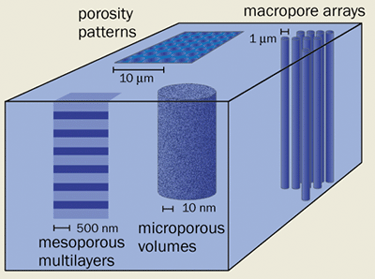
So how can a lump of pure silicon be converted into biocompatible porous silicon? One popular technique is to etch the nanometre-sized pores into the surface of a silicon wafer using hydrofluoric-acid-based solutions (figure 1). Depending on the particular choice of wafer resistivity, electrolyte composition and applied current density, one can create “macropores” (with pore widths >50 nm), “mesopores” (pore width 2-50 nm) or even “micropores” (pore width <2 nm). The fraction of total volume that is void – the “porosity” – can be varied from about 1% to 95%.

Figure 1

The highly porous silicon that is created in this manner is still pure silicon, but it behaves very differently to non-porous bulk silicon. Its “band gap” – the energy gap between the conduction and valence bands – can be more than twice that of bulk silicon, which increases its chemical reactivity and, remarkably, enables the silicon to emit visible light. Indeed, it is the light-emitting properties of porous silicon that have attracted the attention of most physicists to date, culminating in the recent reports of optical gain and stimulated emission (see further reading).

Unfortunately, the increased reactivity of porous nanostructured silicon is a problem in many optoelectronic applications. In particular, etching the silicon with acid produces unstable silicon-hydrogen bonds at the ends of the silicon skeleton. These bonds gradually oxidize in air, causing the silicon’s properties to change with time. For example, it becomes more electrically resistive.

Groups led by Mike Sailor at the University of California at San Diego, Jillian Buriak at Purdue University in Indiana and Jean-Noel Chazalviel at the Ecole Polytechnique in Palaiseau, France, have therefore been trying to modify the nanostructured surface of silicon. Their work has led to “derivitized” forms of porous silicon in which the silicon-hydrogen bonds are replaced by silicon-carbon bonds that do not oxidize. These processes could also enable a wide range of organic and biological molecules to be covalently bonded to the surface, which would give porous silicon a wide range of diverse properties. Linked antibodies, for example, could selectively bind targeted molecules (“antigens”) travelling through the bloodstream.

Bioactivity and biodegradability

The first tests to see how nanostructured silicon surfaces might behave in a biological environment were carried out in 1995. Our group at DERA showed that certain types of porous silicon – as well as “polycrystalline” silicon containing nanometre-sized grains – could stimulate and provide structural support for the growth of the inorganic component of bone (hydroxyapatite); the tests were carried out in a simulated biological “plasma” – the liquid part of body fluid (figure 2a). Originally developed by Tadashi Kokubo from Kyoto University in Japan, this simple test is now used by many biomaterial researchers to find out if ceramics can bond to bone in the body.

Figure 2

It was during such studies that the present authors made a striking observation. We noticed that thin layers of highly porous silicon could actually dissolve from the underlying non-porous wafer within a day or so. In other words, nanostructured silicon was shown to be biodegradable in vitro. This was a stunning result. It meant that the human body itself might be able to dissolve and excrete silicon. If so, silicon would then add its name to the roster of biodegradable materials. These are increasingly popular in medicine because they do not stay in the body forever and so reduce the risk of infection and of rejection by our immune system. In other words, biodegradable materials help the body to heal itself.

The behaviour of porous silicon in other simulated body environments – including the gastric juices of the stomach, intestinal fluid and the cerebrospinal fluid that bathes the brain and spinal cord – has now also been assessed in vitro (figures 2b – d). The results are promising. In almost all cases, underivitized porous silicon dissolves away relatively quickly, the one exception being gastric juice, which is very acidic and dramatically reduces the rate of biodegradation. This work could lead to “smart pills” that – once swallowed – deliver potent drugs to the colon.

Despite the thousands of in vivo tests that clinical scientists have carried out to develop and understand the biomaterials used by surgeons, there have been amazingly few published papers on bulk silicon and – until recently – none at all on the nanostructured forms of the material. The dearth of published information on the biocompatibility of silicon prompted us to investigate this aspect by conducting a major six-month study of both porous and non-porous silicon in guinea pigs. Performed according to ISO standards at DERA’s Biomedical Sciences Department, both forms of the semiconductor were found to have just as good tissue compatibility as titanium, a tried-and-tested biomaterial. While the bulk silicon and titanium hardly corroded at all over the six-month implantation period, the partially porosified silicon disks continuously decreased in weight, and became more and more corroded with time. This was the first demonstration that a semiconductor can be made simultaneously biocompatible and biodegradable.

So what are the possible uses for biodegradable silicon, bearing in mind the wide range of polymers, metals, ceramics and composites that are already available to the medical and pharmaceutical industries? The key features that distinguish silicon from other biomaterials are that it can be micromachined, it is a semiconductor, and it has an inert, crystalline form. Add to the menu the fact that porous silicon is biodegradable and compatible with human tissue and one has a highly versatile material from which implantable and intelligent devices can be built.

Its micromachinability enables precise yet complex shapes on the micron length scale to be mass produced. Its semiconducting properties, meanwhile, enable porous silicon to form part of a compact electrical microsystem with sensors, actuators and circuitry that can control biological activity, process incoming data and relay that information via biotelemetry to the outside world. Moreover, the level of porosity can be controlled, enabling porous silicon to be used in a wide variety of different clinical areas.

In diagnostics, for example, derivitized porous-silicon mirrors placed just under the skin could be used in minimally invasive optical monitoring of biochemical markers for cancer. And in biofiltration, porous-silicon boxes could protect insulin-secreting cells from the immune system of diabetic patients. Their pores would be made large enough to let nutrients in and insulin out, but small enough to stop the patient’s cells from attacking the boxed-in foreign cells. pSiMedica is, however, focusing its technology on two key areas: controlled drug delivery and orthopaedics/tissue engineering.

Intelligent and passive drug delivery

In its simplest form, a nanostructured form of porous silicon acts as a biodegradable “scaffold” that encapsulates a particular drug. The drug – in a suitable liquid form – could initially be drawn into the porous chip by capillary action. Once the chip has entered the body, the outer surface of the silicon scaffold will erode and the drug will gradually be released. The wonderful advantage of silicon is that it can be processed into all the forms that are currently used to administer drugs. It could be made into tablets for swallowing, “patches” that would deliver the drug through the skin, “microparticles” that would be injected, or “cylinders” that would release the drug slowly following injection into subcutaneous fat.

Figure 3

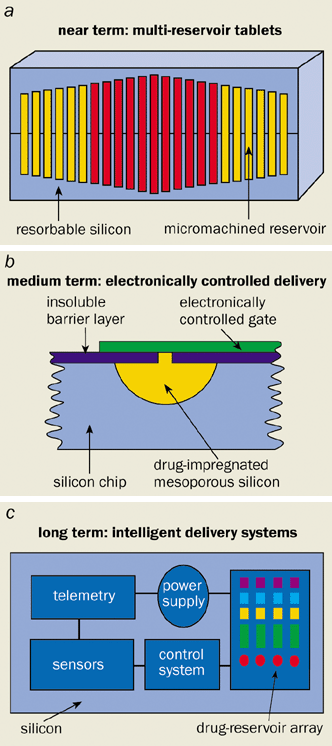
The growth in the number of ways of delivering drugs into the body stems from the increasing desire for drugs to be given at just the right dose and only to the appropriate part of the body. Chemotherapy drugs for cancer treatment, for example, only work without unacceptable side effects over a narrow range of concentration in the body. Jeff Coffer from Texas Christian University in the US has therefore been incorporating such drugs (cis-platin and carbo-platin) into the hydroxyapatite coating of porous-silicon chips, in an attempt to improve their delivery to bone tumours. The rate of release of the drug from the porous silicon can itself be controlled by varying the level of porosity in the silicon: highly porous silicon degrades faster than lightly porous silicon and therefore releases the drug faster. In other words, the rate of release of an active drug from a drug-impregnated porous-silicon chip can be adjusted by choosing the right microstructure. Another possibility is a multi-reservoir tablet that can release a cocktail of drugs at pre-determined times (figure 3a).

The rate of release can also be controlled by derivitizing the surface of the porous silicon – in other words, by replacing the hydrogen atoms at the ends of the silicon skeleton with other groups, such as amino acids or hydrophilic chains of carbon atoms. This is, perhaps, the first step towards the “smart” control of drug release. One could, for example, imagine drug molecules connected to a biodegradable silicon scaffold by bonds that are sensitive to a particular enzyme. The silicon would only release its drug when the enzyme meets that chip. The implant would then have a crude “measurement and response” function, triggering a cascade of biochemical events that maintains physiological requirements for the drug. Thomas Laurell and his group at Lund University in Sweden, who are taking advantage of the large internal surface area of porous silicon to make in vitro bioreactors, have already shown that enzymes can work well within porous silicon.

Of course, the above structures do not harness the full value and potential of biosilicon technology. With the continued miniaturization of electronic components – including power supplies, transducers and sensors – it is only a matter of time before more subtle regulation will be possible with this new biomaterial. Possibilities include “ticking tablets” that release their drug payload at a particular time (figure 3b). The holy grail is for drug release to be linked to in vivo diagnostic devices and computerized data collection (figure 3c). Doctors would then be able to fine-tune “disease management”, with substantial benefits for patients.

Orthopaedics and tissue engineering

The other key area of interest for pSiMedica is in orthopaedics and tissue engineering. Indeed, one of the first applications of artificial materials in the human body involved the internal reconstruction of damaged bone with metals. Materials that are favoured today include steel, titanium, polyethylene, ceramics, alloys of cobalt and chromium, as well as bioglasses and composites. There are, however, a number of fundamental limitations to the use of, say, titanium or steel implants. First, they often have to be removed after they have fulfilled their purpose. Second, bone tissue is actively growing and remoulding, which means that the metal does not always anchor itself properly to the bone. Another problem is that metal adheres poorly to bone in any case. Adhesive cements are therefore needed for knee and hip implants.

Figure 4

As a potential orthopaedic material, bone-bonding silicon has some clear attributes as well as drawbacks. It has a better tensile strength than steel, but – unlike metals – it is brittle and subject to impact damage. However, its Young’s modulus of elasticity can be tuned by varying the level of porosity to match that of either cortical (i.e. hard) or cancellous (i.e. spongy) bone. This is important to avoid the problem of “stress shielding” that often occurs when metallic prostheses are in direct contact with bone. (Essentially, bone is a tissue that thrives on stress, which means that any implants that take all the load will cause nearby healthy bone to die.)

But the biodegradability of porous silicon is perhaps the biggest advantage of this material. Renowned tissue engineers like Joseph Vacanti from Harvard Medical School in the US have already started using micromachined silicon moulds as “templates” to create precise three-dimensional topographies in biodegradable polymers. So why don’t we try making 3D structures from biodegradable silicon itself? A porous silicon structure could, for example, be deliberately sculpted to provide bone-building cells with a scaffold that they can penetrate and anchor to (figure 4). As the bone tissue deposits itself onto the scaffold, the porous silicon would slowly dissolve away – eventually leaving just new bone. The other advantage of porous silicon is that – unlike biodegradable ceramic or polymer scaffolds – it can conduct electricity. (Bone itself is piezoelectric, which has already led to electrical techniques for repairing broken bones that have failed to heal with other methods.)

Biocompatibility and manufacture

The fact that porous silicon corrodes away in the presence of biofluids is not quite enough for it to be labelled a true “biomaterial”. To earn that title, we have to be sure that it is non-toxic and biocompatible. We also have to know that the products it degrades into are safe and that they are properly excreted from the body. Fortunately, porous silicon degrades mainly into monomeric silicic acid (Si (OH)4), which just happens to be the most natural form of silicon in the environment. (Indeed, silicic acid accounts for 95% of the silicon that is cycled through rivers and oceans, and is present in many foods and drinks.) Furthermore, tests using radio-labelled silicic-acid drinks given to human volunteers resulted in the concentration of the acid in the bloodstream rising only very briefly above typical values of ~1 mg l-1. Urine excretion of silicic acid is also highly efficient and expels all the ingested silicon. In fact, the human body actually needs silicon in this form as an essential trace nutrient. Groups such as those led by Jonathan Powell of St Thomas’ Hospital in London are trying to find out why.

A wide range of in vitro tests are now also under way to reveal and quantify any potential sources of toxicity to different types of living cells grown directly on the material. We know, for example, that freshly etched layers of porous silicon can, as a result of hydrolysis, emit silane gas at concentrations of several parts per million and that the more reactive layers might supersaturate the nearby fluid with silicon. We have also found that bacteria, such as E-Coli, can readily colonize silicon chips, just as they are colonized by mammalian cells. We are therefore developing ways of sterilizing porous silicon so that its properties don’t change and that any risk of infecting the body is minimized.

What about the practicalities of manufacturing porous-silicon products? Thanks to its starring role in the microelectronics industry, we now know an enormous amount about how to process silicon. This practical know-how, which has been built up over the past 50 years, gives silicon a substantial advantage as a possible new healthcare material. After all, silicon is produced with a purity that would be the envy of most pharmaceutical companies. Perhaps such purity will not be required for many medical applications, but the fact that silicon is routinely handled in clean-room conditions and that many established processing techniques exist will undoubtedly spur on its contribution to medicine.

Indeed, at a purpose-built factory in Japan, Takao Yonehara of Canon Inc. directs the anodization of 10 000 wafers per month, as a way of supplying “silicon-on-insulator” (SOI) wafers, which are used for specialist chip applications. In this technique, layers of pure silicon are epitaxially deposited onto the porous upper layer of a silicon wafer. The wafer is then bonded to another wafer with an insulating silicon-oxide surface, so that the epitaxial silicon ends up sandwiched in the middle. The porous silicon is selectively dissolved away to leave the desired SOI product: epitaxial silicon on top of an oxide layer on top of the silicon wafer. The analogy is clear: Canon uses porous silicon as a sacrificial layer outside the body, while we at pSiMedica intend to use it within the body. The Canon enterprise has shown that nanostructuring silicon wafers in this manner can meet manufacturing requirements of scale-up, low cost, yield and clean-room compatibility.

A more bionic future?

We are but a few steps down the path to making machines man’s best friend. Implantable and interventional therapies are, of course, now commonplace. Market leaders such as Medtronic Inc. of the US have revenues of about $3bn and a broad portfolio of implantable products, including pacemakers, catheters, perfusion systems, drug-delivery devices, and systems for neurological and spinal benefit. Such systems are mainly based on electronic devices that are quite isolated from the biological systems into which they feed.

One particularly challenging – but potentially rewarding – research area that a number of groups are pursuing is the use of microelectronic implant technology to restore vision to the blind. Similarly, functional electrical stimulation to restore movement in paralysed patients is receiving much attention. Clearly, the application of electronic intelligence to many devices has been commercially fruitful and improved the quality of life for many patients.

So where do we go next? To satisfy commercial pressures, pSiMedica will begin by developing simple, relatively unintelligent drug-delivery devices. In the longer term, we want to develop implant systems that contain both technical and biological components, such as simple bio-interactive porous-silicon chips that can deliver drugs only when required by the body. The mechanics of such implant systems will, however, require many years of R&D before they reach the market.

As far as patient acceptability is concerned, we have already entered an era where people are generally comfortable with the idea of implants that can regulate key physiological activities, such as pacemakers to control irregular or slow heartbeats. Improved drug delivery using novel devices is also common, although most devices on the market neither boast nor require electronics at this stage. The biggest ethical challenge will perhaps come with the introduction of microelectronic monitoring devices that constantly tell doctors how a patient or their medication is performing. However, there have already been several successful products in this area, including an insertable “loop recorder” that was launched by Medtronic in 1998 to record a patient’s heart rate and rhythm non-stop for a year. It is likely to be a precursor to a range of minimally invasive devices for monitoring patient well-being. The early diagnosis of cancer recurrence would be one such area.

Nature does not create ultra-smooth planar surfaces like those of the polished wafers that populate silicon foundry lines. The living materials in our body rely on porosity to function properly, from the nanometre-wide pores of each cell membrane, to the architectures that govern interchange in tissues and organs. Is porous silicon an obvious “biomaterial bridge” between the basic requirement for a biocompatible and biodegradable material and the well established electronics arena? Time will no doubt tell – and will decide if chips will keep not only the grim reaper, but also the doctor away.

Yeah, but what about the crayfish?

Geoffrey West

Geoffrey West has a mission: to put some “quantitative meat” into the principle of natural selection. He believes that physicists – whom he says possess “the most powerful way of thinking about the universe” – should divert some of their attention from the inanimate world and unravel the most fundamental problems: consciousness, and the origin and nature of life. He’s made a start, having come up with a theory to explain the “quarter power” scaling laws seen throughout nature. But he thinks there is plenty more to do and is working feverishly on trying to quantify as much as he can about the living world.

“Physics so far has concerned itself with the relatively uninteresting stuff in the universe,” he says. “My view is having done that you now return to the problem that started these inquiries in the first place, namely where did we come from and what is going on inside our heads?”

It has been known since the 1930s that there is a well defined relationship between the mass of a species and its rate of metabolism. The metabolic rate of a species is proportional to its mass raised to the power of three-quarters. This is just one of many scaling relationships that involve a quarter or three-quarter power and it holds true all the way from micro-organisms to blue whales. In fact, West has found that it even applies to the mitochondria inside cells.

West, who is based at the Los Alamos National Laboratory and the Santa Fe Institute in the US, has come up with a mathematical theory that can explain these remarkable empirical findings. Ultimately, West would like to see the whole of evolutionary theory quantified. He believes that up till now too much emphasis has been placed on genetic algorithms, and that in a literal sense the theory has no flesh and bones.

Making the move

West’s move into biology was part design and part luck. He’d been thinking in general terms about how to put the biological sciences on a more mathematical footing and was teaching biological examples of scaling laws to students struggling with maths. Then he got a phone call from a distinguished ecologist called Jim Brown from the University of New Mexico in Albuquerque. As a particle physicist, West had been working with scaling laws for many years and was recommended to Brown by a mutual acquaintance in Santa Fe. West got together with Brown and his research student Brian Enquist, and thus was born a highly productive interdisciplinary scientific team.

At first West looked upon his work on scaling in biology as little more than a hobby and did not really believe he could make any worthwhile contributions. But as he explored the literature it became clear that there was a lot of quantitative data that were very open to physics thinking, and that all the work that had been done on these data so far by biologists was, he says, mediocre.

The problem that really fascinated West was ageing. The lifetime of a species increases as mass to the one quarter and heart rate decreases as mass to the one quarter. Therefore the total number of heart beats, he realized, is the same across all species (within a particular group of species, such as mammals). “The scaling laws for mortality fit in with the scaling laws for living,” he says. “I realized that to come to grips with ageing and mortality you’d first better understand how living things are sustained.”

West, Brown and Enquist wrestled with the idea that the scaling laws may be related to the structure and hydrodynamics of the networks that supply nutrients to the cells in an animal’s body. After a year of intense activity, the trio discovered that scaling results from the fractal-like structure of the network. They came up with three fiendishly simple universal postulates, grounded in the principle of natural selection, from which the scaling laws can be deduced mathematically. The first of these was that the network fills the whole of an organism’s body. The second was that the diameter of the smallest branches in the network does not vary from one species to another since cell size is about the same in all species. And the third was that fluid flows throughout the network with minimum energy loss.

A different mind set

The work has drawn praise from many biologists, including the popular science writer and Oxford professor Richard Dawkins, who describes it as “a theory of enormous power, explaining a huge range of facts with great economy”.

West says that while many referees reviewing his work have also been highly supportive, some have taken the opposite view. “You get some referees’ reports back that say our work is fantastic, the greatest thing that they’ve ever read. Others say that it’s horse shit and that everything is derived from molecular biochemistry. And then there’s the classic, ‘yeah, but what about the crayfish’.”

“In general,” he says, “although this was not true of my collaborators, biology tends to be dominated by a certain type of person in the opposite way to physics. They are always looking at the particular, and everything is an exception.” He says he does not understand how such people can work in science if they do not believe there are such things as universal laws. “If you had biologists working, for example, in nuclear physics you would have someone working on deuterium and then someone else working on helium and they would not realize they were working in the same field.”

West is, however, also critical of physicists. “As I’ve branched out I’ve become aware about how conservative many physics departments are. There are very well defined groups and each group wants to maintain its own research strength and is often reluctant even to look to other groups in the same department.” Coupled with the pejorative and arrogant view that physicists sometimes have of other scientific disciplines, he thinks this will hold physics back. “Because physics deals with fundamental problems at all scales that are open to quantitative analysis, it should be reaching out to other subjects like biology where there are important basic problems to be solved. Some departments have moved gingerly in that direction but they are always concerned with the deadly question, ‘is it really physics?’.”

West moved out of particle physics when he realized that there was a widening gulf between theory and experiment. “Since the Large Hadron Collider at CERN will not come on line until 2006, there will have been a long, dry period of 10 years or more when there have been no major new results from accelerators. And this may continue if the scales relevant for unification are way beyond the scales at which you can do experiments. High-energy physics cannot survive like that. In fact, I’ve been surprised that more people from the field haven’t moved into other things.”

Marriage vows

West certainly has no regrets about his change of scientific direction. “There’s no question that the interface between physics and biology is going to be a major area of investigation,” he says. “I think that some of the big problems in biology will only be cracked once researchers start to nurture this interface more.”

Dawkins also believes that physicists can make – and have made – important contributions to biology. But he adds: “Not all of them appreciate that biologists too have something to contribute to biology. Geoffrey West does.”

“Interdisciplinary research is an awfully difficult process,” explains West. “It is extremely important that physicists do not just say, oh this looks interesting and work on their own thing. I think you have to be involved in a collaboration at an intense level in a committed way, which is like a marriage. But not a marriage of 2001, a marriage of 1901. You go in with the attitude that divorce is a very unlikely thing.”

There looks to be no divorce on the horizon as far as West and his collaborators are concerned. In fact, their relationship is in rude health, with several papers lined up for publication. Not content with single organisms, the group is extending its mathematical description of nature to complete ecosystems and it has been sharpening its knives for a major assault on natural selection with a thermodynamic description of evolution.

Ultimately, West hopes that by combining their theory with genetics and studies of the brain, it may be possible to integrate the neural system and genetic code with the body’s resource networks. West calls these his “night thoughts”, the ideas he turns over in his mind late at night when there’s nothing good on television. But he believes and hopes that the study of living things will one day be part of physics.

“You could imagine that physics departments of the very distant future might have a sub-department of life and consciousness,” he says. “50 years ago one might have thought that it was not possible to have a unified theory that explained the laws of the elementary particles and the evolution of the universe. So it’s not entirely crazy to think that there might not be a credible theory that explains life and consciousness.”

Nanotubes are the new superconductors

Sheng and colleagues detected superconductivity in single-walled carbon nanotubes – which are rolled up sheets of graphite – just 0.4 nanometres in diameter. “We believe this is the first time that superconductivity has been seen in individual carbon nanotubes”, Sheng told PhysicsWeb. Superconductivity has been seen in carbon nanotubes before, but it was due to the ‘proximity effect’. This is an exotic phenomenon in which two superconductors can induce resistance-free current in certain materials sandwiched between them.

The nanotubes showed three telltale signs of superconductivity: the Meissner effect, a superconducting gap and a supercurrent. In the Meissner effect, a superconductor placed in a magnetic field expels magnetic flux from its interior. “This is the acid test for superconductivity”, Sheng told PhysicsWeb. The team used a SQUID magnetometer to measure the magnetic susceptibility of the carbon nanotubes, which is directly related to this internal flux.

The nanotubes were placed in a magnetic field after they had been cooled to 1.8 kelvin, and the temperature was then raised to 50 kelvin. This process was repeated for magnetic fields ranging in strength from 0.02 tesla to 5 tesla. Below 10 kelvin, magnetic flux inside the nanotubes fell steadily as the field grew stronger, and was close to zero at 5 tesla. This effect was still evident as the temperature approached 20 kelvin. This closely matches the predicted behaviour of the Meissner effect.

The electrons in conventional conductors move individually, but superconducting electrons move in pairs. “The energy needed to separate the paired electrons is known as the superconducting gap”, explains Sheng. This gap is further evidence of superconductivity. The third effect the team observed was a ‘supercurrent’. “This flow of paired electrons is only possible in defect-free nanotubes”, says Sheng, “so we made nanotubes just 50 nanometres long to reduce the chance of imperfections, enabling us to detect the supercurrent”.

The data collected by Sheng and colleagues are consistent with the Bardeen-Cooper-Schreiffer theory of superconductivity, which states that vibrations of the crystal lattice – known as phonons – aid the free flow of paired electrons in superconductors. “We have fulfilled a prediction made in 1995 that superconductivity would occur in nanotubes due to enhanced coupling between phonons and electrons”, says Sheng, “and our results are in the predicted range”.

Elastic lava blows its top

The cool, thick lava near the top of the volcano is almost solid, and fills just the top 100 metres of the central cylindrical channel. In effect, this cold lava ‘corks’ the volcano. The hot magma deeper in the channel is under much greater pressure, and this column of low-viscosity lava is about 5 kilometres deep. Lees’ team assumes that the channel of Karymsky is fed at a constant rate from the magma chamber below.

Large quantities of gas are dissolved in the magma deep inside the volcano and this makes it very compressible. As magma flows upwards, it compresses the hot lava already in the channel, and pressure builds up beneath the cold lava plug. This build-up period is the dormant phase of the volcano. When the pressure reaches a certain level, the upward shear forces acting on the plug make the cold lava around its rim much less viscous. This is because semi-viscous lava becomes ‘runnier’ than highly viscous lava when shear stress is applied to it. Once the rim of the plug has melted, the pressurised lava lifts the plug and the volcano belches gas and ash.

Once some of the pressure is released in this way, the plug sinks back into the volcano. The shear stress around the rim of the plug falls temporarily, and the plug again adheres to the column. But this phase is short-lived because as the plug falls, it compresses the lava, storing elastic energy. The lava pushes upwards again, exceeding the shear stress needed to melt the rim of the plug. This ‘chugging’ process then repeats itself. The time it takes for the pressure to build up to this level leads to the characteristic ‘phase’ of the volcano.

The model devised by Lees and colleagues – which accounts for the density, temperature, viscoelasticity and pressure of the lava – describes both the fast- and the short-period patterns of emission from Karymsky. “We are optimistic that it will fit accurately the behaviour of other Strombolian-type volcanoes”, Lees told PhysicsWeb. “These include Sangay in Ecuador, Arenal in Costa Rica, and Semeru in Indonesia”.

Physicist mooted as new US science advisor

Marburger was president and professor at the State University of New York at Stony Brook between 1980 and 1994, and served as professor of physics and electrical engineering until 1997. He received his BA in physics from Princeton University in 1962, and gained his PhD at Stanford University in 1967 for research into nonlinear optics. He has also worked for a number of professional and philanthropic organizations, and made a series of educational television programmes.

Under Marburger’s directorship, Brookhaven National Laboratory obtained the first results from its Relativistic Heavy Ion Collider, while the laboratory’s g-2 experiment – designed to measure the spin of muons – recently cast doubt on the Standard Model of particle physics.

Liquid marbles roll out

The Paris team has called the non-wetting drops ‘liquid marbles’ because they can bounce and roll around surfaces without leaking. They created the marbles by adding a highly water-repellent powder made of moss spores that had been coated with silane to the water droplets. The powder spontaneously migrated to the surface of the drop, thereby preventing the water from interacting with any surface. Indeed, the resulting liquid marbles even floated on a pool of water.

By studying the motion of the non-wetting droplets on an inclined plane, Aussillous and Quéré demonstrated that liquid marbles behave differently to conventional fluid drops. Small water droplets, for example, can stick to a window while more massive ones slide down the glass. Liquid marbles, however, roll down the plane with a velocity that is determined by a competition between gravity and friction, which slows down drops that have a large surface area in contact with the plane. The Paris team discovered that large non-wetting droplets move more slowly than smaller ones, as predicted two years ago by L Mahadevan, now at Cambridge University in the UK, and Yves Pomeau at the Ecole Normal Supérieure in Paris.


Aussillous and Quéré found even stranger results when they tilted the plane further and photographed the drops with a high-speed camera. The forces acting on the rolling spherical droplets deformed them into a doughnut shape, as first predicted by Lord Rayleigh nearly 90 years ago. And when the marbles rolled off the edge of the plane, they transformed into a peanut shape. The French team is currently testing the robustness of the liquid marbles and is studying their motion in electric and magnetic fields.

Nucleus sheds light on neutron stars

The nucleus of lead-208 has the highest proportion of neutrons of all stable nuclei – 126 neutrons to just 82 protons. Theorists believe that the neutrons in such nuclei form a neutron-rich ‘skin’ that surrounds a core of protons. Under a certain pressure, protons are squeezed together and gain enough energy to overcome the Coulomb barrier. This is a potential energy barrier that pushes apart similarly charged particles, unless they are very close together. By overcoming the barrier, the protons force the neutrons – which are more numerous – to the surface of the nucleus. The higher the pressure, the more neutrons are pushed out and the thicker the skin becomes.

In their ‘parity radius experiment’, Horowitz and Piekarewicz accurately measured the radius of a lead-208 nucleus. Using field theories that predict the interactions in large assemblies of nucleons, the researchers calculated the thickness of the neutron-rich skin under different pressures.

From these results, however, Horowitz and Piekarewicz calculated that pressure has the opposite effect in neutron stars. Neutron stars are thought to have a crust of solid non-uniform neutron-rich material surrounding a liquid core. This crust is analogous to the skin in the lead nucleus. Under high pressure, the increased internal energy makes it energetically unfavourable for the well-mixed liquid in the core to ‘condense’ into the solid non-uniform crust. As the pressure rises, the distance from the centre at which liquid matter solidifies grows larger, and the crust becomes thinner.

Horowitz and Piekarewicz believe that these clues about the structure of neutron stars will give astronomers insights into the rotation of pulsars and the properties of non-spherical rotating stars.

Finding the formula for freak waves

Random conditions in the ocean occasionally produce mammoth waves. A wave must be at least 2.2 times the height of the so-called significant wave height to qualify as a freak wave. The significant wave height is the average height of the largest 33% of waves. Some freak waves are caused by strong currents or the chance reinforcement of two large waves, but scientists recently found that a ‘self-focusing’ effect could also create outsized waves.

The JONSWAP power spectrum – named after the Joint North Sea Wave Project that monitored a huge expanse of ocean in 1973 – describes typical sea conditions. The range of wave heights at different frequencies is a smooth hump that extends from about 0.7 to 0.2 hertz. But Onorato and colleagues found that a so-called ‘enhancement factor’ in the JONSWAP spectrum has an unexpectedly powerful effect on the profile. When the enhancement factor is 1 the profile is a smooth peak spanning a wide frequency range. But when it rises to 5, the profile becomes much sharper, leading to waves nearly ten times higher. Transforming the frequency-based JONSWAP relation into a time-based Schrödinger-like equation enabled Onorato and colleagues to map the motion of waves over the whole portion of sea under consideration.

“We believe our results provide important new physical insights into the generation of freak waves”, says Onorato. His team hopes to verify its findings by employing higher-order equations that take into account finer details about the motion of wave trains. “Wave tank experiments will also be very useful”, he adds.

Solar neutrinos change their tune

The Sun only produces electron neutrinos, but experiments have only detected half of the predicted number so far. If these neutrinos change their type, this would explain the shortfall. Previous experiments had failed to demonstrate this. While particle physicists must now attempt to incorporate this ‘oscillation’ into the Standard Model, solar scientists can breathe more easily. “We are now highly confident that the discrepancy is not caused by flaws in models of the Sun but by changes in the neutrinos themselves”, says Art McDonald, director of the SNO project.

The SNO project counts electron neutrinos by the telltale flashes of light they induce when they travel through heavy water. Deuterium – which contains an extra neutron – replaces ordinary hydrogen in heavy water, but it ionizes in the same way. When a neutrino collides with a deuterium nucleus it converts the neutron to a proton and ejects an energetic electron, which then emits Cherenkov radiation. Since the intensity of this radiation is related to the energy of the neutrino, the energy distribution of the incoming neutrinos can be calculated by the array of nearly 10 000 photomultipliers that monitor the flashes. About 10 neutrinos each day were detected by the current set-up. To date the SNO detector has counted only electron neutrinos, but a recent modification will enable it to count muon and tau neutrinos in the next experiment.

The SNO detector is located 2000 metres underground in an old mine shaft. Around 100 scientists from Canada, the US and the UK work on the project, which has been operating since 1998 and was conceived 14 years earlier. “It is incredibly exciting, after all these years spent by so many people, to see such intriguing results coming out of our first data analysis”, says team member David Wark of the Rutherford Appleton Laboratory and Sussex University in the UK, “and there is so much more to come”.

Scientists from SNO combined their data with results from the Super-Kamiokande (SK) experiment in Japan to establish an upper limit on the mass of neutrinos. Over a three-and-a-half year period, the SK project detected only 45% of the solar neutrino flux predicted by theory. The SK experiment used a lower energy threshold than previous studies, which enabled it to detect a greater proportion of lower-energy electron neutrinos and a small number of muon and tau neutrinos (S Fukuda et al 2001 Phys. Rev. Lett. 86 5651, 5656).

Copyright © 2026 by IOP Publishing Ltd and individual contributors