Resistance-free current flow would have enormous benefits for the electronics industry and is usually associated with superconductivity. But ‘ballistic quantum wires’ may offer an alternative. These tiny structures are almost completely free of the defects – such as impurities and dislocations – that lead to resistance in conventional conductors. de Picciotto’s team has succeeded in separating the intrinsic resistance of the wire from the resistance of the contacts through which the resistance is measured.
de Picciotto and co-workers used a special technique known as cleaved edge overgrowth to grow a layer of gallium arsenide on a sliver of aluminium gallium arsenide. This results in a layered structure with an extremely smooth flat edge. Next the team deposited tiny metal source and drain electrodes on top of the structure and applied a voltage across them. This potential difference isolates the smooth edge of the device and makes it behave as a ‘one-dimensional’ wire. The wire is termed ‘ballistic’ because the electrons can travel its whole length before meeting a defect.
Two more metal contacts are placed between the source and drain electrodes so that the resistance of the wire can be measured. When a negative voltage is applied to these electrodes, electrons are depleted from the semiconductor structure beneath, but this does not disturb the quantum wire. These depleted regions then act as resistance-free voltage probes, and this allowed de Picciotto and colleagues to measure the resistance of the quantum wire. The team’s conclusion that the resistance found in previous experiments arose purely from the contacts gives valuable insight into the limits of future circuits based on quantum wires.
When a beam of energetic electrons travels through a plasma, the space charge at the tip of the beam knocks electrons from the ions in the plasma, leaving the ions with a larger positive charge. If the plasma ions are massive, they do not move, and the tip of the electron beam effectively bores a positively charged channel through the plasma. The symmetrical array of positive charges focuses the remainder of the beam into the channel as it passes through.
Now imagine that the plasma has a boundary with a less dense gas. If the electron beam approaches this interface at an angle, the end of the charged tunnel at the interface would be slanted. Particle physicists had predicted previously that this asymmetry would deflect the beam. Katsouleas and co-workers found that the beam is indeed skewed towards the normal by a twentieth of a degree – in the same way that light bends as it enters a less dense medium. The team also found that the particle beam can be totally internally reflected – that is, reflected back into the plasma – at very shallow angles of incidence.
In contrast to the refraction of light at an interface, the electron beam briefly splits into two because the plasma-gas boundary takes a split second to react to the head of the particle beam. This means that the first pulse of electrons is undeflected, while the tail of the beam is bent towards the normal.
According to inflation theory, the early Universe underwent a period of exponential expansion for a few fractions of a second. This turned quantum fluctuations into the density variations that led to structure in the Universe, setting up sound waves that produced the ripples in the microwave radiation. An analysis of the Boomerang data that was published last year confirmed the presence of the largest ripples, which extend about a degree across the sky and provide convincing evidence that the overall geometry of the Universe is “flat”. But there was no firm evidence for higher “harmonics” – the ripples that are predicted to occur at smaller angular scales. In contrast the new analysis finds these harmonics peak at the angles predicted by inflation theory.
The ratio of the heights of the first and second peaks is a measure of the amount of ordinary, or “baryonic” matter in the Universe. The new data indicate that ordinary matter accounts for about 4.5% of the Universe’s total mass and energy. Unlike last year’s analysis, which suggested 6%, the new figure agrees with an estimate of the amount of ordinary matter in the Universe, based on calculating the quantities of deuterium produced in the Big Bang.
“These results are a tremendous confirmation of the inflationary model and also agree extremely well with measurements by other astronomers using completely different methods. It looks like we now have a ‘Standard Model of Cosmology,'” says Phil Mauskopf from Cardiff University, a member of the Boomerang collaboration.
The Boomerang experiment, which took its data from a telescope suspended from a balloon high above the Antarctic, involves physicists from Canada, Italy, the UK and the US. The Dasi and Maxima experiments, on the other hand, are purely American collaborations. Dasi is a ground-based experiment located at an observatory at the South Pole and Maxima another balloon experiment.
At the end of June, NASA’s MAP satellite is due to take off. This will take far more detailed images of the microwave radiation than previous experiments – it will be some 100 times more accurate and will study the whole sky (Boomerang, in comparison, covered only about 3% of the sky). And it will also measure the polarization of the radiation. Since different theories of the Universe’s origins predict different polarization patterns, MAP will provide an additional check on the validity of inflation theory.
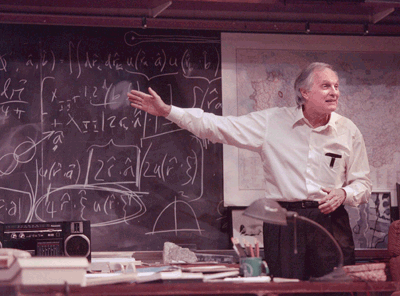
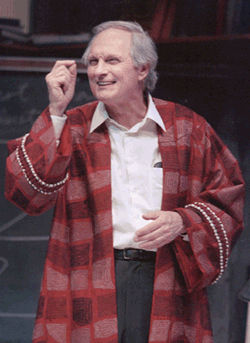
Richard Feynman was the star of his own life. Feynman played Feynman, and he played it to the hilt. He was always on stage, whenever he had an audience, no matter how small. Although I don’t know him at all, I suspect that, like Feynman, Alan Alda plays Alan Alda. And so, now at the Mark Taper Forum in Los Angeles, before a house that was sold out for its entire run before it even opened, we have Alan Alda playing Alan Alda playing Richard Feynman playing Richard Feynman, in a play by Peter Parnell, called QED.
And it works! Alda doesn’t look like Feynman, and, in spite of what must have been valiant efforts, he doesn’t sound much like him either. (Oddly, in the previous play at the Taper, called Glimmer, Glimmer and Shine, there was an actor named John Spencer who did look and sound like Feynman.) I came to the play fearing that Alda would talk the talk and walk the walk, but, like one of those south Pacific cargo cults Feynman used to like to talk about, it would be all outward appearance, lacking the inner guts that made Feynman who he was. Miraculously, almost the exact opposite happens. Alda puts the Dick Feynman I knew back up there, on the stage, where he always belonged.
The play takes place in Feynman’s office at the California Institute of Technology. Like Alda himself, the set doesn’t look like the real thing, but captures its spirit. It is a Saturday morning, near the end of his life. That night, Feynman is to appear beating his bongo drums as the chief of Bali Hai in the Caltech student production of the Rodgers and Hammerstein musical South Pacific.
In the course of the day, Feynman learns by phone from his doctors that his cancer has returned and new, even more perilous surgery is needed. He debates his treatment with his doctors, and he debates the form of the final report on the Challenger disaster, again by phone, with the Chairman of the investigating commission, former secretary of state William Rogers.
He works on a public lecture he had forgotten he was supposed to give in a couple of days. Some Russians arrive at the airport and show up off-stage, part of a scheme to gain entry to the mysterious land of Tuva. All the while, he talks to his audience, in the Feynman idiom, about things big and small, physics, sketching nude women, his father, his first wife, himself.
There are lots of good laugh lines, and Alda delivers them impeccably. He prowls around the stage, occasionally writing on the blackboard or beating his drums. There is physics in Alda’s long monologue, enough of it, and done right, to tell the audience that it was physics that lit Feynman’s fire, and the rest was window dressing. (Well, not all of it. He liked the women too).
Late that night, in the second act, the only other character in the play shows up. She’s a very pretty young student, slightly tipsy from the after-the-play party (Feynman would have loved it). Her role in the drama is to help pull him out of the growing depression that his own condition and his memories of the death of his first wife, Arlene, have cast him into. And that works too.
There have been important plays written about scientists. Bertold Brecht’s Galileo comes to mind as does In the Matter of J Robert Oppenheimer by Heinar Kipphardt. When I saw the Kipphardt play at the Taper years ago, the actor who played Edward Teller looked like Hans Bethe, and the actor who played Bethe looked like Teller. Most of the audience would not have known or cared. More recently, Copenhagen by Michael Frayn, portrayed various versions of Werner Heisenberg’s visit to Niels Bohr during the Second World War (Physics World July 1998 pp35-36, print version only).
Feynman’s life did not contain the kind of moral dilemma faced by the personages in those plays (although Parnell gets considerable dramatic mileage out of Los Alamos and the making of the bomb). This is not a play of ideas, but rather a character sketch. Ah, but what a character! Parnell’s QED, as played by Alan Alda, is a fitting tribute to an old friend of mine who just happened to be one of the most singular characters to roam the Earth in the 20th century.
I purposely skipped “Caltech night” at the Taper so I could see the play among an ordinary audience and make up my own mind. At the end of the play, the ordinary audience came forth with an instantaneous, spontaneous standing ovation. I’m not sure whether they were applauding Alda or Feynman. I guess it doesn’t matter.
* QED continues at the Mark Taper Forum, 135 N Grand Avenue, Los Angeles, CA-90012, USA, until 13 May (tel. +1 213 628 2772; e-mail tickets@ctgla.com; www.centertheatregroup.com)
But if the shape of the billiard table is changed from a rectangle to the shape of an athletic stadium, the system becomes chaotic and turns into a pool player’s nightmare.
While chaotic billiards should be avoided in the pool hall, physicists and mathematicians welcome them as model systems for understanding the consequences of chaos in a wide range of fundamental problems, ranging from thermodynamics and statistical mechanics to quantum mechanics.
In the May issue of Physics World, Sri Sridhar of Northeastern University in Boston, USA, explains how Mark Raizen’s group at the University of Texas at Austin and Nir Friedman’s group at the Weizmann Institute in Israel have independently constructed a new type of optical billiards experiment in which ultracold atoms bounce from walls of light (Phys. Rev. Lett. 2001 86 1514 and 1518).
The links between physics and biology have become increasingly close in recent years. Many universities in the US have invested in interdisciplinary research institutes and the UK government has earmarked funding for the so-called life-sciences interface. At first sight, no area of physics seems more relevant to biology than soft condensed matter. After all, living things are made of complex fluids – liquids that contain mesoscopic structures with length scales of 1 µm and less – and physicists have long studied complex fluids such as colloids, polymers, liquid crystals and solutions containing soap-like molecules.
In fact, soft-condensed-matter physics has recently enjoyed a boom that has been fuelled, in part, by advances in synthetic chemistry. These developments have led to the kind of well characterized materials with which physicists like to work. Another important boost has come with the realization that many of the mathematical tools developed for other areas of theoretical physics can be used to describe soft matter. A third essential factor is the battery of new techniques that are available for the study of mesoscopic samples. These methods include a range of new microscopies, as well as scattering experiments at national and international facilities.
The study of complex fluids is now a coherent sub-discipline within condensed-matter physics. At the same time, the subject retains a distinctly interdisciplinary flavour and most research projects involve synthetic and physical chemists, materials scientists and chemical engineers, as well as physicists.
However, the dialogue between soft-condensed-matter physics and biology is not as well developed as one might expect. This is partly because soft matter is a relatively new sub-discipline of physics. There are also the usual barriers between diverse disciplines, such as different jargon and different journals. And the use of mathematics is a particular hurdle that physicists and biologists must overcome. But, in our opinion, there is also another obstacle that is specific to the dialogue between soft-condensed-matter physics and biology.
Different approaches
Modern biology functions under an essentially atomistic paradigm. The structure of many biological macromolecules can be determined to atomic resolution and can be related to the way that the molecule functions. If an atom located in the crevice of a protein moves by just a few angstroms (10-10 m), for example, the result could literally mean the difference between life and death. Details are all important in biology – ultimately, no protein is really like any other protein. Biology without atoms is, quite simply, inconceivable to the modern practitioner.
On the other hand, soft-condensed-matter physicists aim to find similarities between different types of complex fluids. In this “coarse-grained” approach, all polymers share certain common features – irrespective of the chemical details – because they are all long flexible chains. Such features can be understood by studying polyethylene, the simplest model system. The next level of complexity is to relate the topology of the chains to more general properties such as the viscosity of polymer solutions and melts.
It should now be obvious why the dialogue between those who study soft matter in general and those who study living soft matter may be fraught. Atoms turn biologists on, but turn physicists off. Biologists are rightly suspicious of physicists who tell them that one protein is just like any other because they are both “just polymers”. Perhaps that attitude is often an excuse for physicists who fail to learn enough biology before they offer their opinion. On the other hand, specialists in soft-condensed-matter physics can easily think that they have nothing to contribute after hearing an atomistic description of a typical biology problem.
This is an unfortunate situation because soft condensed matter does have things to contribute that are of genuine interest to biologists. In this article, we describe a number of problems where coarse-graining has provided a useful insight into biological soft matter. These areas include protein crystallization, the cell cortex, the build up of proteins responsible for “mad-cow” disease and Alzheimer’s disease, and cell adhesion in plants. This list is by no means exhaustive, but it illustrates a principle. We hope that these examples may act as catalysts to encourage dialogue between soft-condensed-matter physicists and biologists.
Protein crystallization
Although the first draft of the human genome was published earlier this year, scientists have still to overcome many major hurdles before they can harvest its riches. One such obstacle is the need to determine the structure of proteins. Our genes control the synthesis of the proteins that play a vital role in the structure and functioning of all forms of life. However, protein molecules only perform their biological function when they “fold up” to form particular 3-D structures. Knowledge of this 3-D structure therefore provides the most detailed starting point for understanding how proteins work.
Currently the favourite way to determine the structure of proteins is by X-ray crystallography (see Physics World May 1998 pp43-48). Protein crystals are usually formed by adding salts or polymers, such as polyethylene glycol, to induce crystallization in a protein solution. Surprisingly, the resulting crystals contain up to 50% water. Thus small molecules can diffuse more or less freely through a protein crystal, making it a novel template for catalysis applications.
The crystallization process is currently an art that is based almost entirely on practical know-how, rather than theoretical understanding. And progress is being hindered because new proteins are often only available in microgram quantities. The reason is either due to difficulties in synthesizing them, or because they only exist in small quantities in living tissues – as is the case for the proteins that build up in the brains of patients with CJD, the human form of mad-cow disease. Either way, trial and error is an expensive means of making protein crystals. Developments in “colloid physics” may be able to help.
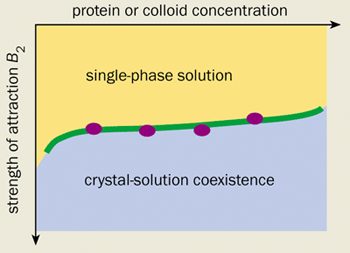
1 How to make protein crystals A schematic phase diagram of a protein solution. The strength of the short-range attraction (vertical axis) that is induced between protein molecules is quantified by the so-called second virial coefficient, B2 – a quantity that can be measured directly using light scattering. Crystallization occurs when the interparticle attraction (and therefore B2) is sufficiently negative due to the presence of additives, such as salts or polymers. The horizontal axis measures the concentration of protein in the solution. Experiments have shown that over two dozen globular proteins crystallize within a narrow band (green). B2 can also be used to quantify the attraction induced between hard spheres by an inert polymer. Such a colloid-polymer mixture crystallizes at the points marked in purple. The model shows biologists the conditions under which protein crystals are likely to form.
A colloid is a homogenous material in which a second substance is finely dispersed. In solid-in-liquid colloids, the suspended solid particles interact via a potential, U(r), that depends on various properties of the solvent, including its dielectric constant and the presence of any dissolved species.
Colloidal particles undergo Brownian motion and can therefore reach thermal equilibrium. Thus, in many ways, a collection of colloidal particles is analogous to a simple atomic system, like argon. Indeed, the same theoretical and computational tools that were developed to understand the equilibrium phase behaviour and phase-transition kinetics of atomic systems can also be applied to understand colloids.
One of the simplest models of dense atomic systems is a collection of hard spheres. Indeed, an early result of computer simulations was that hard spheres should crystallize when the density is high enough – that is when the spheres occupy about half of the available volume. Peter Pusey of the University of Edinburgh and Bill van Megen of the Royal Melbourne Institute of Technology in Australia confirmed this behaviour in the early 1980s when they found that dense suspensions of nearly hard sphere-like plastic particles crystallized at the predicted density. Like their protein counterparts, colloidal crystals also contain a large amount of solvent.
More recently, experimentalists have found ways to vary the interparticle interaction in a colloidal suspension by adding an inert polymer that has a small radius of gyration, rg. The polymer can effectively add a short-range attractive force provided that rg – which is related to the molecule’s moment of inertia – is much smaller than the average radius, R, of the particles in the colloid. The technique works because the polymer molecules are excluded from a so-called depletion region between two particles that are separated by distances smaller than 2rg. Instead, the polymer molecules outside this region bombard the pair of colloidal particles to create a net force that pushes them together.
The equilibrium phase diagram of such a colloid-polymer mixture has been studied extensively in the last decade by groups at Edinburgh, the University of Utrecht in the Netherlands and elsewhere, using a combination of experiment, theory and simulation. The results have shown that polymers with rg << R enable dense colloidal crystals to form in solutions that are much more dilute than those that do not contain any polymer additives. The experiments have also provided insights into the kinetics of various phase transitions in such systems – insights that could hold the key to understanding protein crystallization.
Indeed, there is now substantial evidence to suggest that the main role of the additives used in protein crystallization is to induce a short-range attraction between the protein molecules. For example, William Wilson’s group at Mississippi State University, and Chuck Zukoski and co-workers at the University of Illinois in the US have measured the strength of the attraction induced in a number of protein-additive solutions in light-scattering experiments. The results were surprising. They showed that dozens of so-called “globular” proteins begin to crystallize under identical conditions.
Even more surprisingly, one of the current authors (WP) has calculated that a synthetic colloid-polymer mixture exhibits almost exactly the same crystallization behaviour as globular protein solutions (see figure 1). This is an intriguing result. After all, the surface of a protein is extremely varied and water is a complicated liquid. We would therefore expect every protein to react differently to the addition of a salt or a polymer. We certainly would not expect to see anything universal about the phase diagrams of protein solutions, let alone be able to make comparisons with a model colloid-polymer mixture that has no directional or specific interactions.
Much remains to be learnt, of course, in particular about the complex pathways that lead to the nucleation and growth of crystals. Such insights are crucial for obtaining diffraction-quality crystals. But one thing is clear – further advances along these lines promise a quantitative toolkit for structural biologists who need to crystallize new proteins.
Physics and cells
All animal cells are enclosed by a thin membrane, which in turn covers a thin layer composed mainly of a protein called actin. This so-called cell cortex gives the cells their rigidity, while its deformation plays a crucial role in helping the cells to ingest food particles and crawl along surfaces.
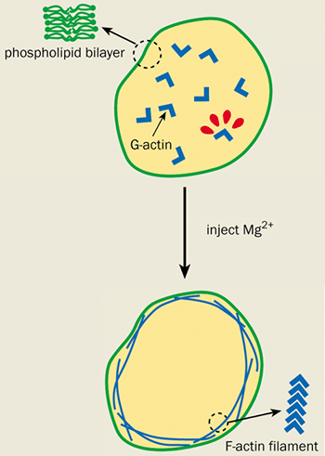
Actin is a polymer of polymers. It is made up of many individual sub-units of a protein called G-actin. Under the right conditions, the G-actin can spontaneously polymerize to form semi-rigid filaments known as F-actin, which exists in high concentrations in the cell cortex (see figure 2). Biologists have known that the cortex is attached to the cell membrane by actin-binding proteins – molecules that bind to the F-actin filaments and insert themselves into the cell membrane.
2 Actin in action A schematic illustration of Eric Sackmann’s experiment. A portion of the giant vesicle is magnified to show the bilayer, which is made up of phospholipid molecules. Sackmann’s group filled the vesicle with G-actin monomers (blue), some of which are labelled with a fluorescent dye (red), and saw uniform fluorescence when they imaged the giant artificial cell. Next they injected magnesium ions into the cell to polymerize the G-actin to form filaments called F-actin. In this case they found that the fluorescence was concentrated in a thin layer just below the bilayer.
However, elegant physics experiments on artificial cells called giant vesicles have recently raised questions over the function of these binding proteins. Giant vesicles consist only of a membrane and are effectively empty cells. Eric Sackmann and co-workers at the Technical University of Munich in Germany were among the first to conduct experiments on them. His group recently enclosed a G-actin solution in an artificial cell and injected magnesium ions to initiate polymerization and form F-actin. The fate of the resultant actin filaments was monitored by attaching fluorescent molecules to the G-actin and studying them under a microscope.
Surprisingly, the F-actin formed a cortex just underneath the cell membrane even in the absence of actin-binding proteins. This cortex caused the vesicle to undergo the same shape changes that are observed in cells, but not in “bare” vesicles that do not have an actin layer.
Sackmann and colleagues built a simple physical model to explain this behaviour by treating the two basic components of the problem in the most coarse-grained way possible. They assumed that the vesicle membrane was a fluctuating elastic sheet and modelled the F-actin filaments as semi-flexible elastic rods. They found that the formation of a cell cortex is basically due to the desire of the rods to minimize elastic energy as they grow longer in a confined space.
Similar physics may operate in real cells. But if actin-binding proteins are not needed to attach the cortex to the cell membrane, then what role do they play? Sackmann and colleagues found some clues when they discovered that the presence of the artificial actin cortex hardly affects thermally driven elastic fluctuations in the vesicle. Perhaps it is the coupling of the cortex to the membrane by the actin-binding proteins that alters the mechanical properties of real cell membranes in ways that are not observed in model systems. Whatever the final answer is, it is clear that simple experiments performed under a coarse-grained soft-matter paradigm can shed light on important aspects of biological systems.
Protein folding gone wrong
When proteins are synthesized, they form long and flexible molecules that fold up to form a 3-D structure. However, the molecules need to fold into exactly the right structure in order to function properly. It is astonishing just how rarely misfolding occurs. Nature has devised a host of error-correcting mechanisms, most of which are barely understood. Yet one type of misfold arises again and again, causing a process known as amyloidosis, which is observed in a number of diseases.
Most proteins contain three types of discernible smaller “secondary structures” made up of many individual amino acids. Some sections of the protein coil into spring-like shapes known as “alpha-helices”, while others weave back-and-forth to form “beta-sheets”. The third type of secondary structure is random loops, which connect the helices and the sheets.
These sub-structures can perform vital functions. The alpha-helices, for example, form the “moving parts” of the protein that receive other interacting biomolecules, while the beta-sheets create barrel-shaped tunnels through cell membranes. But sometimes things go wrong and the beta-sheet structure can take over. In this case, the protein folds twist back and forth, first forming a long beta-sheet tape and then more complex, rigid fibrils as the individual tape-like proteins begin to self-assemble (see figure 3). Structures of this kind are known as amyloids, and appear in the brains of patients suffering from Parkinson’s disease and Alzheimer’s disease, and in tissue affected by some forms of cancer.
3 The physics of fibril formation The theoretical scheme developed by Sasha Semenov and Irina Nrykova at Leeds to explain the self-assembly of rod-like peptide molecules. Single helix-shaped molecules transform under thermal excitation into rods, which then self-assemble into single flexible tapes a). Attraction between the tapes can cause them to double (b), then stack into twisted fibrils (c). The fibrils then aggregate further to form fibres (d). The electron micrographs show examples of these structures in an experimental system. (Picture credit: Mark Bell and Neville Boden/Leeds University)
Amyloid structures are found in both proteins and in smaller protein-like units called peptides. When amyloids form in a solution they can have a dramatic physical effect. Small changes in temperature or pH, for example, can trigger the assembly of tape-like molecules in solutions containing less than 1% of peptide molecules. As a result, a low-viscosity solution rapidly turns into a stiff gel. To connect macroscopic regions of space with such little material – individual peptide polymers can measure up to a millimetre or more in length – is the everyday miracle of giant polymer molecules.
Biologists and chemists at the University of Leeds in the UK recently teamed up with experimental and theoretical physicists to investigate the process of amyloidosis in detail. Their studies have focused on a family of lightweight peptides that can self-assemble under carefully controlled and monitored conditions. The process can be switched on and off by changing the pH or the temperature, while the amyloid can be detected by a tell-tale feature in its ultraviolet spectrum.
The picture that emerges is of a delicate balance of specific atomic interactions and a more general structure that appears on a coarse-grained level. From a coarse-grained perspective, a peptide can be thought of as a small molecular rod. However, if specific hydrogen atoms are located along the rod so that the molecules can bond to each other, then the peptides can self-assemble to form long and flexible polymer tapes. This process of self-assembly is also governed by coarse-grained statistical mechanics. By knowing enough about the general requirements of self-assembly and solvent interactions, Amalia Aggeli and Sheena Radford designed a peptide from first principles that produced tapes in aqueous environments (see Aggeli in further reading).
Spectroscopy, microscopy and rheology have identified a whole hierarchy of self-assembled structures that depend only on the coarse-grained interactions of the tape-like objects. As the concentration of protein or peptide is increased further, the tapes first double-up and then stack into twisted fibrils. These fibrils then combine to form larger fibres (figure 3).
Astonishingly, the theorists in the Leeds team, Sasha Semenov and Irina Nrykova, find the same hierarchy in a very general statistical-mechanical model of self-assembling tape-like objects. In their model the complex local interactions of water-repelling and water-loving bonds can be summed into a small set of coarse-grained parameters.
One important insight that was gained from the calculations is the mechanism by which the stacking of tapes can be prevented from runaway growth. Theory shows that the natural twist of the tapes is progressively unwound as they stack up. Eventually the energy needed to twist another layer on the stack becomes greater than the attractive-energy gain, thus discouraging further additions to the stack.
The model may also explain the ease with which many natural proteins form amyloid fibrils. Moreover, extensions to this model predict that the timescales for molecular self-assembly can be very long and comparable to the gestation times for degenerative amyloid diseases. The old taunt “if it moves it’s biology, if it smells it’s chemistry and if it doesn’t work it’s physics” might be true in this sense. When the highly evolved structures and processes of biology take a wrong turn, the entropy-driven self-assembly of physics takes over.
What about plants?
Physics has opened a new window on botany. Indeed, the developments in microscopy, in particular, have been crucial to understanding the structure of plants on the mesoscopic length scale.
What, for example, controls how the cells in a plant stick together? As we have described, biochemists are likely to examine this question at the atomistic and molecular level. Recently, Keith Waldron and colleagues at the Institute of Food Research (IFR) in Norwich, UK, used fluorescence microscopy – among other techniques – to study the adhesion of plant cells. They identified ferulic acid as a key component in plants. The acid allows polymers to “cross-link”. In other words, it promotes the formation of side bonds between different chains in the polymer cell wall, which increases the adhesion between neighbouring components. Cross-linking thus provides good “sticking power” between the primary cell walls.
Work at the IFR has revealed why – as connoisseurs of Chinese food know – water chestnuts retain their crispness no matter how long they are boiled. Unlike most plants, water chestnuts contain significant levels of diferulic acid, which is bound in the cell walls and acts as a cross-linker.
Although fluorescence microscopy has made a big impact, it is wavelength limited and lacks the resolution of electron microscopy. Waldron and Andrew Smith, also at the IFR, have recently teamed up with one of us (AD) to address this issue. We have started exploring the capabilities of a so-called environmental scanning electron microscope (ESEM) to study the deformation in the cell walls of plants.
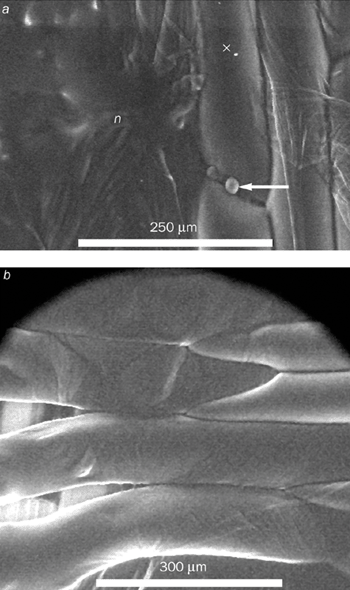
4 Focus on plant cells An environmental scanning electron microscope image of fresh onion cells under strain. The fracture causes the cell at a to explode, although the break is obscured by the ruptured cell’s contents. The fracture (indicated by the arrow) then begins to propagate across the intact and turgid cell that is highlighted by the cross. (b) Onion cells that have been treated with a chemical to destroy cell adhesion. The failure is intercellular and neighbouring cells readily separate.
The images that are produced by an ESEM are essentially made up of low-energy electrons that are emitted by atoms at the surface, electrons that are back-scattered from atoms or molecules in the sample, and “environmental” electrons that are produced in ionizing collisions between any type of electron and water molecules in the ESEM chamber. Crucially, the presence of water vapour means that the hydrated state of the plant tissue can be maintained (see Donald in further reading).
Samples that are viewed with conventional electron microscopes usually have to be covered with gold beforehand. However, the ESEM allows hydrated samples to be imaged without coating. This means the water-based contents of fruit and vegetable cells can be studied in their natural state.
The relationship between the mechanical properties and the cellular structure of plants is of great economic interest in the food sector. However, plant tissue is increasingly being used to reinforce synthetic plastics and to manufacture biodegradable plastics. In either case, the tissue has to be handled appropriately. This might mean attempting to reduce juice losses due to cracking or breakage during harvesting. Conversely, in the juice- and oil-extraction industries, the tissues may be treated so that they break easily to release the cell contents.
New questions can now be addressed for the first time thanks to the ESEM. For example, we can now manipulate the adhesion between plant cell walls to obtain a better understanding of the process. To change the adhesion, we treated the epidermal layers of an onion with a chemical that can selectively attack components in the cell wall. We then observed how a crack advanced when the layers were placed under strain in a tensile testing rig – results that provided new information for modelling.
We found that the cell contents of fresh untreated onion cells remain intact until they rupture – at which point the contents “explode” into the microscope (figure 4a). In other words, the failure occurs within a single cell. However, we observed an entirely different failure mode after treating the onion with the chemical. In this case failure occurs between the cell walls (figure 4b).
Although the work is still at a very early stage, it reveals how advances in instrumentation are opening up new fields in the life sciences. We have shown that the deformation of tissue under natural or controlled living conditions that can be imaged directly with high resolution. Our work also stresses the point that physicists are exploring longer length scales than those studied by biochemists, who are usually more interested in the response of individual bonds rather than the whole cell.
Foams and fresh vegetables
Using the ESEM, we can also study how tissue behaves as we compress it. Lorna Gibson, now at the Massachusetts Institute of Technology, and Mike Ashby of Cambridge University made important progress in this area in the 1980s. They demonstrated that the compressive deformation of cellular solids, such as polyurethane foams, follows universal laws. These laws demonstrate simple power-law relationships between the bulk density of the foam and its mechanical properties, regardless of the chemistry of the foam. However, the laws are altered considerably if, like plant cells, the voids in the foam are full of fluid rather than air. Indeed, Mark Warner and Sam Edwards at the Cavendish Laboratory in the UK have recently shown that a fluid-filled foam is much stiffer than the corresponding unfilled foam. The reason is that the fluid is incompressible. However, universal laws can still be obtained.
How do fruit and vegetables behave when they are not fresh? In this case, the cell is only part full, and the cell walls are effectively slack. Warner’s recent theory predicts that the cell can be deformed rather easily at first. Then, once the cell has been squashed to the point where its volume is entirely filled, the cell should exhibit a stiffer response than can be described by the original theory.
Brad Thiel and one of us (AD) have directly tested these ideas in experiments on carrots. We left the vegetables to age for varying lengths of time to alter the degree of “turgor”, that is the amount of fluid that fills the cells. We found excellent agreement with Warner’s theory. His model, which was effectively tested on a particular type of filled foam (i.e. carrots), is another example of a coarse-grained model that enables physicists to draw general conclusions about a biologically complex structure.
If we want to manipulate and control the texture of fruit and vegetables by breeding and processing – or even by genetic modification if consumers agree – plant scientists must learn much more about the basic relationship between the architecture of the cell wall, its structure and its mechanical properties. Models will allow biologists to make predictions about plants. But models can only be developed if the correct mechanistic properties are understood by, for example, the direct visualization experiments we have described.
Rich pickings for physicists
Physicists like simple coarse-grained models but this can lead to our colleagues in multidisciplinary collaborations stereotyping us. Biologists and chemists expect physicists to come up with simplistic arguments based on “perfectly spherical cows”.
The point is, of course, that the adequacy of the “perfect sphere” model of a cow depends entirely on the problem under study. If all we want to know is how much more hide can be obtained by doubling the weight of a cow, then the spherical model can give a fairly accurate answer. But if we want to know what limits the size of four-legged animals, then it might be better to model the cow by two spheres that are connected by a rod – perhaps the strength of the animal’s neck is the limiting factor.
Similarly, whether a coarse-grained description that is rooted in soft-condensed-matter physics is adequate for understanding biomolecules depends very much on the problem being studied. We have found, for instance, that a model of a perfect sphere with a uniformly sticky surface is good enough to show the conditions under which protein crystals form. However, to understand other effects – such as the selection of crystal forms or the formation of gels – we probably need a slightly finer-grained model, such as a sphere with sticky patches. To build such a model, we need some input at the atomistic level. For example, we might need to know the typical distribution of water-repelling and water-loving chemical groups on the surfaces of proteins. And a certain amount of atomic-level information was needed to formulate the coarse-grained model of aggregating tapes and fibrils in amyloidosis.
As we see it, the challenge and fun lies in selecting just the right amount of atomistic detail to build coarse-grained models with maximal generality. In some sense, of course, that is precisely what physics is about. We are simply suggesting that biology offers rich pickings for soft-condensed-matter physicists who wish to apply their trade to new systems.
In the last decade, however, a more constructive aspect of entanglement has emerged, and it is now seen as a valuable resource that could provide significant improvements in our powers of communication and computing. Now Paul Kwiat and Salvado Barraza-Lopez of the Los Alamos National Laboratory, and André Stefanov and Nicolas Gisin of the University of Geneva, have shown experimentally that entanglement can be manipulated, controlled and even concentrated or “distilled” (P G Kwiat et al. 2001 Nature409 1014).
In the May issue of Physics World, Tony Sudbery of the University of York, UK, explains what it all means.
In the May issue of Physics World Frédéric Leroy of L’Oréal Recherche, Aulnay sous Bois, France, explains how health and beauty companies like L’Oréal are using ever more sophisticated characterization and imaging techniques – many of them physics based – to understand the structure of hair, and to measure the effectiveness of shampoos, conditioners, colourants and permanent-wave treatments on the hair’s strength, body and shine.
Along the way six “area volumes” have been published on the major subfields of physics – atomic, molecular and optical physics; plasma science; elementary particle physics; nuclear physics; condensed-matter and materials physics; and gravitational physics – along with four shorter volumes. These reports all make recommendations that are relevant to these specific areas. In the final report in the series, Physics in a New Era: An Overview, a panel chaired by Thomas Appelquist of Yale University addresses the bigger picture.
The report identifies six “grand challenges” in physics (see below) and makes nine recommendations on the level of government support for physics in the US, education, the role of information technology in physics, planning and organization, and national security. Surprisingly, the report does not comment on the fact that the US’s share of world physics papers declined from 32% in the early 1980s to 26% in the late 1990s. However, it does present a highly readable summary of the latest developments within and between the major subfields of physics. It is particularly strong on the links between physics and the biomedical sciences, and on the physics research that has laid the foundations for the information age, although the chapter on the environment is less convincing.
The panel also presents a pressing case for the need to reform physics education at all levels in the US. In particular, it advises physics departments to revise their curricula to ensure that they appeal to a wide range of students and that they make connections with other areas of science and technology.
The six grand challenges in the report were identified on the basis of “their intrinsic scientific importance, their potential for broad impact and application, and their promise for major progress during the next decade”. The panel recommends that these six challenges – developing quantum technologies; understanding complex systems; applying physics to biology; creating new materials; exploring the universe; and unifying the forces of nature – should be supported strongly by universities, industry, the federal government and others in the years ahead.
The other recommendations stress the need to support small groups and single investigators at universities, to re-establish long-term basic research related to national security, and to encourage partnerships between government, universities and industry. The panel also calls on the US government to “develop effective mechanisms for US participation and leadership in international scientific projects, including clear criteria for entrance and exit”.
On funding, the report recommends that federal investment in basic physics research should be restored to the levels of the early 1980s, relative to GDP, thereby reversing a fall of 20% in real terms since then. Unfortunately, this particular recommendation has come too late for President George W Bush, whose budget request for 2002 includes no increases for physics (see page 8, print version). However, the US budget must be approved by Congress, which seems to know more about the importance of the physical sciences than the President, and Physics in a New Era will be a useful weapon in the battle to restore some degree of parity between the physical and biomedical sciences.
It has been two years since I was last at congress: two years is a long time in physics and an even longer time in politics, where the unit of measurement is daily crises. Physicists have achieved some tremendous results over the past two years. The Institute has been busy with a number of initiatives, and we in government have also been hard at work. Last time I was here, it was shortly after the increases for science funding were announced under the comprehensive spending review. This time, it is shortly after the allocations under the latest spending review, again showing a large increase for science.
“At its best, research in physics and astronomy in the UK is at the very highest levels worldwide.” Those are not my words, but the words of an international panel that came in to review UK physics last year. This is backed up by data showing that in physics we have 8% of world publications and 10% of world citations. We clearly have some world-leading physics research in the UK, and I want to congratulate all of you involved in that research.
The report – “International perceptions of UK research in physics and astronomy” – highlighted areas where the UK is making a world-leading contribution. These include nuclear physics, particle physics, astrophysics and astronomy. The report also noted that below the peaks of scientific excellence, the quality of UK physics research noticeably drops. Partly this was due to resources, and I shall mention later the latest spending review and the additional money we have made available for physics. Partly, though, the report suggested that in some areas of physics, scientists had not been pursuing the most leading-edge, scientifically innovative research areas. I know this has generated much debate, but I hope that it has led to a better understanding of our strengths and of future opportunities within the worldwide physics community.
The report also contained a number of general findings and recommendations, directed more at the research councils and at central government. These included:
* attracting young physicists and recruiting more physics teachers;
* specifically targeting girls in schools to encourage them to do physics at A-level and beyond;
* investing further in university infrastructure;
* tackling low university salaries.
Like the physics community, the report has been useful to the government in understanding what the perceived weaknesses and threats are to UK physics. Several of the comments made in the report have been at least partially addressed by the latest review of government spending, but there is still more to do as I shall mention later.
I would like to congratulate the Institute of Physics, which has been particularly active in promoting physics and physicists over the last couple of years. The Institute has held seminars, produced “vision papers” and significantly raised the amount of media coverage that physics attracts. It has also been active in physics education in schools, and has produced new AS- and A-level courses, presenting physics in a more attractive form without stinting on the need for rigour and mathematical understanding. It is very encouraging that significant numbers of young people are taking the courses – many who would not previously have considered doing physics after age 16.
In two areas the Institute has achieved major measurable successes. First, in 2000, Institute of Physics Publishing was awarded a prestigious Queen’s Award for Enterprise for the company’s success in exporting science and technology information, and for its innovative use of Web-based technology. Over 80% of Institute of Physics Publishing’s sales are to overseas markets, mainly in North America (42%), Western Europe (20%) and Japan (11%), and the company has increased the value of its exports by over £5m in the past five years.
Second, I recently had the pleasure of presenting an award to the 30 000th member of the Institute. Given that just 10 years ago the number stood at 14 621 and five years ago at 21 318, this is a tremendous achievement. Even more so as the figure now exceeds 32 000. It is particularly encouraging that so much of the increase is in young people – students and post-docs. This is a sign of the health and intellectual excitement of modern physics.
Government highlights: the right framework
As physicists have had a review of their activities, it seems only fair to review the activities of the government over the last couple of years. Two years ago when I addressed a previous Institute of Physics congress, I talked about six challenges that the government needed to face. These ranged from maintaining the highest quality science to informing and educating the public about recent advances. So, two years on, how are we doing? I want to concentrate mainly on two targets – getting the right framework and increasing exploitation – but I will briefly mention the others.
The first of my targets was to get the right framework for maintaining the highest quality science. Last July the government produced a white paper “Excellence and opportunity – a science and innovation strategy for the 21st century”. The aims of the white paper were to:
* maintain and enhance the UK’s scientific excellence;
* provide new opportunities for innovation;
* create a society confident in its relationship with science.
The white paper starts from the premise that innovation depends on the knowledge, risk-taking and creative energy of individuals. It is not best done or planned by government, but that does not mean that government has no role or responsibility. If we are to make the most of the opportunities presented by recent, dramatic scientific breakthroughs, government must play a part: as an investor, facilitator and regulator of science and innovation.
First, how has the government done as an investor? New Labour came to power offering to rebuild the science base after a decade of cuts. We stuck to our word. The 1998 comprehensive spending review increased the science budget by 15% over three years – the largest percentage compared with all departmental budgets (Physics World August 1998 p7; December pp7-8, print version). In July last year, the government continued its programme of investment and the 2000 spending review added £725m to the science budget over three years (Physics World August 2000 p5, print version). Over this period, the science budget will increase by 7% per year in real terms. If we continued at this rate of increase we would double the science budget in real terms in 10 years.
We will be investing an additional £350m in scientific research programmes. Of this, £252m has been allocated to the key new areas of genomics, e-science and basic technology, and physical scientists have a major contribution to make to all three. In genomics, physicists are working at the border with the life sciences on bioinformatics and new technologies for functional genomics. There will also be funding to stimulate the process-engineering base to address the priorities for genomics research.
In e-science, physical scientists are involved in several key applications – such as the computing for CERN’s Large Hadron Collider, the virtual observatory and engineering modelling. The Engineering and Physical Sciences Research Council (EPSRC) also holds the core programme on behalf of all the councils. Through this core programme, computer scientists and application scientists will work together to develop the generic technologies required.
The third programme is for basic technology. Whereas basic science is about acquiring knowledge, basic technology is about acquiring capability. Basic technology is a crucial element in the research and innovation process, and is clearly of great interest to physicists.
Increasing exploitation
Of course, science excellence is only the start. In the modern knowledge economy, it is not enough to generate research – we must make the most of it. We want not only world-class science but also world-class scientific entrepreneurs. So how has the government done in its second role as facilitator, encouraging the exploitation of novel ideas and technologies?
The white paper provides more resources and mechanisms to make sure that the opportunity for innovation is available across our universities. It extends the highly successful University Challenge Fund and Science Enterprise Centres. The £140m Higher Education Innovation Fund will triple existing funds for university-industry collaboration – particularly with small businesses. The Science Enterprise Centres are particularly important in enabling students to acquire entrepreneurial skills while still at university.
The £50m Regional Innovation Fund will help cement the role of universities as the drivers of regional competitiveness. Working with the Regional Development Agencies, these funds will support clusters, incubators and new clubs of scientists, entrepreneurs and financiers.
We also want to see more companies using science and technology to create competitive advantage. Too many of our companies are slow to adopt new technologies and lack even the awareness of the need for change. So, we are doubling the number of new starts for Faraday partnerships from four to eight a year, to link the science base to business networks.
Finally, the Small Business Research Initiative, inspired by a similar and successful programme in the US, will open up research and development procurement programmes worth up to £1bn to small firms. Our target is to procure £50m of research under these programmes from small firms.
All of our actions are, of course, being informed by the Foresight initiative. This is particularly important for physics because it underpins so many technologies. Of the 13 Foresight panel reports published in December last year, ten contained explicit messages for the world of physics.
I would like to congratulate the Institute for its active participation in Foresight. Not only did its contributions to the consultation process last year contain many helpful points, but it has also operated its own Foresight associate programme, which has been looking at how technology might address the issues raised by the UK’s ageing population and the challenge of crime prevention.
As a first response to the Foresight panel reports, I have announced a new round of Foresight LINK awards, supported with £15m of funds from the Department of Trade and Industry. These awards promote research partnerships between companies and universities and other research-base organizations. This round is specifically targeted at four key Foresight priority areas: biomaterials, sustainable energy, mobile wireless communications and nanotechnology. I expect that there is much in these areas that will be of interest to physicists.
Science and society
The third key role we identified for the government in the science and innovation white paper is that of regulator, to help the consumer. Our task is to ensure that people can be confident about the new products that science can deliver; confident about the way that risks are assessed and managed; and confident that scientific progress always takes account of their views and values. This links in more generally with the third of my targets from 1999, to inform and educate the public about recent scientific and technological advances.
I am happy to say that the public agenda has now moved beyond the “public understanding of science” towards a dialogue between scientists and the public about science. This must involve scientists understanding the public as well as the public understanding science, and must involve a debate about the benefits, risks and values of science as well as the science itself. This new agenda was articulated in the influential report on science and society published by the House of Lords select committee on science and technology in February 2000.
All of this led to the commitment in the white paper to creating a robust and transparent framework to address consumer concerns over safety. We have already implemented stronger guidelines from the chief scientific advisor on the use of scientific advice by government departments, and we are working on a further draft of the new code of practice for scientific advisory committees, which was promised in the white paper. Many of the recommendations made by the Philips committee on BSE are relevant to this, and will be taken into account when drafting the text of the code of practice. A second round of consultation about this will begin soon.
In addition, we have begun a review of our science outreach activities in the Office of Science and Technology by working with the Wellcome Trust to survey public attitudes to science and science-communication activities in the UK. Research done on this is very encouraging – the British public are mainly pro-science.
The Institute of Physics has, of course, its own active programme of outreach activities, including the annual public awareness of physics awards to reward individuals or groups who have excelled in promoting physics to the public. It is good to see that physicists are using so many imaginative ways of communicating with the public.
Internationalization, interdisciplinarity and working environments
My fourth challenge from two years ago was to increase the internationalization of research. In many areas of science, large-scale international collaboration is the only way to pursue our scientific goals. Within physics, the last couple of years have included fleeting glimpses of what might be the Higgs boson during the last few weeks of CERN’s LEP accelerator (Physics World October 2000 p5, print version). It has seen first light for the Gemini North telescope on Hawaii. It has seen the launch of the Cluster satellites to measure the Earth’s magnetosphere, and the XMM-Newton observatory to look at the cosmos at X-ray wavelengths. And here at home we are building a major international synchrotron facility. All of these are, of course, the result of international co-operation.
Most recently, as a result of the spending review, the UK will be able to join the European Southern Observatory (ESO). This will be a major boost to UK astronomy, and secures our place in major ground-based astronomy projects in the coming decades. The ESO facilities will provide UK astronomers with new opportunities. Now the government has delivered the money, my challenge to them is to go out and maximize those opportunities.
We have also been working hard to make the European 6th Framework more effective than the 5th, and I am extremely pleased that the most recent document from the European Commission for the next Framework programme has taken on board our proposal that funding should be focused on a limited number of areas where the Framework programme can add real value to national programmes. In order to be effective, European funding should not be spread over too wide a range of activity. Instead, it should be concentrated on areas where the scale of research requires co-operation at a European level, and we should spend enough on these areas to make a difference in competing with the US and others on the world stage.
We also largely welcome the commission’s choice of priority thematic areas, four of which accord very closely with the UK’s own priorities. We and the commission wish to see Europe maintaining its position as a leader in genomics and biosciences. We want to see Europe among the world leaders in information-society technologies and the Grid. We agree that we need to aim to enable the aeronautics industry to provide the products to go on winning at least half of the world market. Finally, we also want to build on European strengths in key emerging technologies, including nanotechnology. Physics underpins these priorities. In all areas we need to strengthen innovation capacity, improve knowledge dissemination and uptake, and improve programme management.
My fifth challenge was to increase interdisciplinarity in research. I have already mentioned the three new interdisciplinary programmes funded under the latest spending review – genomics, e-science and basic technology – and I am glad to see an increasing amount of interdisciplinary work is taking place. An excellent example is the physics for healthcare programme run by the EPSRC. Through this programme, physicists are working with medical researchers to bring physics techniques into hospitals. There have been many successes within the programme. Just to name one, physicists from the universities of Glasgow and St Andrews are working with Ninewells Hospital to develop an endoscope to detect gastrointestinal cancers. This builds on technologies that detect very faint light emissions at specific wavelengths, which in this case are characteristic of cancerous tissues.
My sixth and final challenge was to ensure the right working environment for scientists. Of course, our investment in research infrastructure and research programmes is an important part of that activity. In addition, following the latest spending review, we are increasing PhD stipends to £9000 by 2003/2004 (a 28% increase in real terms), and the research councils have the flexibility to go higher and faster where they see the need. We have recently launched a joint scheme with the Wolfson Foundation and the Royal Society worth £20m over five years to help institutions recruit and retain world-leading researchers in key areas of science. Substantial new money is flowing into higher-education pay and staff development generally in return for clearer institutional commitment to improved management.
For its part, the Institute of Physics has also been working to help universities and funders enhance the career development of the many post-doctoral researchers on fixed-term contracts. This has complemented the wider Research Careers Initiative, led by Sir Gareth Roberts, which continues to drive forward progress in this area. I lend this my full support. So, overall, I think some useful progress is being made, but that much still remains to be done.
Finally, I want to briefly mention the subject of science education. Schools education and teacher supply has been a major interest of the Institute of Physics. We all know that there have been problems in recruiting science teachers, particularly physicists. The government is acutely aware of the problem and is actively working on this issue.
Since the introduction of “golden hellos” in 1999, followed by a £10 000 package for postgraduate trainees in shortage subjects in 2000, there has been a 5% increase in recruitment to post-graduate science-teacher-training courses after several years of decline. I am particularly pleased that the Graduate Training Programme, which trains mostly mature career changers on the job, has shown healthy take-up. And I am sure you will have heard the recent budget announcement giving an extra £200m to recruit and retain teachers.
If we are going to attract and retain the best teachers it is essential that we offer them a comprehensive package of development and training opportunities throughout their careers. This is why Estelle Morris, the minister for school standards, recently launched a £92m programme to strengthen support for teachers’ professional development. Science teachers, of course, have particular needs because of the rapid developments taking place in their field and because many will be teaching across the science curriculum.
Much of the recent debate on physics education has been focused on schools. But there are important issues of physics education in universities as well. The Institute’s Undergraduate Physics Inquiry, chaired by Sir Peter Williams, is currently looking at all aspects of undergraduate physics, and I very much look forward to the report when it is available in the summer. There are certainly many considerations of widespread interest, not least the number and proportion of students choosing to study physics, their abilities when starting their undergraduate studies, the nature of the teaching and the relevance of their education to future employers.
More generally on science education, Science Year will be launched in September, targeted at 10-19 year olds. The aim is to raise the profile and status of science both in schools and among the general public. As part of Science Year, we will be launching a new Science Ambassadors scheme, aimed at encouraging young scientists and engineers to form links with schools and colleges, to counter the stereotypical image of scientists and engineers, provide a positive picture of the science professions and to motivate young people in their studies.
I know that the Institute is already considering how to get involved in Science Year. I hope you will take advantage of this excellent opportunity to illustrate both the excitement and the value of physics to young people. Hopefully this will lead to more young people choosing to continue studying physics to higher level.
To conclude I would like to look forward two years. By 2003 many of the funds we are investing today in physics will be bearing fruit. I hope that the UK will be producing even more outstanding research across most subfields of physics. The e-science initiative will be well advanced, and the solution to handling the immense data rates will be in sight. The UK will be a full and active member of ESO, and the DIAMOND synchrotron project at the Rutherford Laboratory will be well advanced.
I would hope by 2003 that our initiatives to promote technology transfer and the exploitation of research will be producing even better results, with more spin-off companies, more research being done for industry, and more science and technology graduates who have had the opportunity to learn basic entrepreneurial skills.
By 2003 I would like to see the recent problems of recruiting science teachers as a thing of the past, with rising numbers of well motivated teachers, both new graduates and those entering from mid-career.
These are some of the targets I would like to achieve by 2003, and if I am still minister for science, I will come back in 2003 and tell you how we have done. If I am not, this commitment is a good booby-trap for my successor!