For over 30 years particle physicists have been able to explain the results of every high-energy physics experiment in terms of what is called the Standard Model. Now this model has been challenged by new results from the Brookhaven National Laboratory in the US. Precise measurements of the behaviour of muons in a magnetic field disagree with theoretical predictions by about 4 parts in a million and could hint at “new physics” beyond the Standard Model.
The Muon (g – 2) Collaboration – which involves physicists from the US, Russia, Germany and Japan – released its results at a colloquium at Brookhaven on 8 February and submitted a paper to Physical Review Letters the same day. “We are 99% sure that the present Standard Model calculations cannot describe our data,” says Gerry Bunce of Brookhaven, project manager of the experiment. The first theory paper about the new results appeared on the Los Alamos preprint server the day after the announcement.
“There are three possible interpretations of this result,” says Vernon Hughes of Yale University, co-spokesperson for the experiment. “Firstly, new physics beyond the Standard Model, such as supersymmetry, is being seen. Secondly, there is a small statistical probability that the experimental and theoretical values are consistent. Thirdly, although unlikely, there is always the possibility of mistakes in experiments and theories.”
Particle physicists are most excited by the possibility that the Brookhaven team has glimpsed the first evidence for supersymmetry. This theory proposes that every fundamental particle has a companion particle called its superpartner, but to date there has been no firm experimental evidence for supersymmetry. “Many people believe that the discovery of supersymmetry may be just around the corner,” says team member Lee Roberts of Boston University. “We may have opened the first tiny window to that world.”
Closing in on the g-factor
The Standard Model describes how quarks and leptons – a class of particles that includes electrons, muons and neutrinos – interact through three of the four fundamental forces: electromagnetism plus the strong and weak nuclear forces.
However, the model contains 17 parameters that must be inserted “by hand” and physicists believe that it is only an approximation to a more fundamental theory. Moreover, the fourth fundamental force, gravity, has not yet been incorporated into the model.
Since all quarks and leptons have an intrinsic angular momentum or “spin”, they also have a magnetic moment, which is related to the spin by the “g-factor”. Simple quantum theories predict that g = 2 for both the electron and the muon. However, these calculations do not include “radiative corrections” – the continuous emission and re-absorption of short-lived “virtual particles” by the electron or muon. These corrections make the g-factor sensitive to the existence of other particles – both established particles such as electrons and photons, and other, as yet undiscovered, particles that are not part of the Standard Model.
When these radiative corrections are included in calculations, the g-factors for the electron and the muon increase slightly to about 2.0023. Particle physicists work in terms of the so-called anomalous g-factor – which is defined as a = (g – 2)/2. The Standard Model prediction for the anomalous g-factor of the electron agrees with experiment to nine decimal places, which is currently the best agreement between theory and experiment in physics.
The fact that the muon is some 208 times heavier than the electron makes it more difficult to calculate its g-factor because more radiative corrections must be computed, while experiments are more difficult because the muon is unstable and decays with a half-life of about 2 microseconds. However, the muon g-factor is also about 40 000 times more sensitive than the electron to new physics beyond the Standard Model.
The Brookhaven team injected an intense beam of positive muons into a storage ring with a constant magnetic field of 1.45 tesla. The muons were “spin polarized” so that initially all of their spins were pointing in the direction of motion. However, the anomalous magnetic moment caused the spin direction to rotate slightly faster than the actual particles – just like the axis of a spinning top can rotate slowly or “precess” around the vertical as the top itself spins rapidly around its axis. Roughly speaking, the muon spin rotated 30 times for every 29 trips around the storage ring, which had a diameter of 14.2 metres.
To determine the anomalous g-factor for the positive muon, the team had to measure the energy and direction of the positrons emitted when the muons decayed. Based on data from more than one billion decays, they obtained a value of a = 11 659 202 × 10-10, with an error of 1.3 parts per million. This differs from the theoretical prediction by 2.6 standard deviations, which means that there is a 99% probability that the measurement does not agree with the Standard Model.
Cautious reactions
John Ellis, a theoretical physicist at CERN, warns against jumping to conclusions. “We need to be certain that the experimental results are reliable and not subject to a systematic error,” he told Physics World. Ellis added that the statistical error, although small, was not negligible: “The result is very exciting, but even if it is confirmed, we should not tear up 30 years’ worth of experiments that support the Standard Model.”
One possibility is that particle physicists may simply need to supplement the Standard Model. “It is possible that the characteristics of muons are more complex than we first thought,” says Ellis, “but if the data are confirmed, supersymmetry is the most plausible explanation for the results.”
The Brookhaven figure is based on data collected between 1997 and 1999, and the team has still to analyse data taken last year. “When we analyse the data from 2000, we will halve the level of error,” says team member William Morse. The team also hopes that related data from experiments in Novosibirsk, Beijing and Cornell will refine the theoretical predictions. The final analysis is expected within a year.
The last experiment to measure g – 2 for the muon was at CERN in the 1970s. “This experiment is nearly six times more accurate than our set-up,” says John Field, who worked on that experiment. Field eagerly awaits analysis of the remaining data, but is sceptical about supersymmetry. “I don’t think the results represent a real threat to the Standard Model at this stage,” he says, “but it will be extremely interesting to see what the new data reveal.”
Homewood’s team implanted boron ions into a piece of silicon to form a potential junction – the basis of all LEDs. But the ions also displace silicon atoms into a ring around the boron ion. These ‘dislocation loops’ create local electric fields that trap electrons and positive holes, which then recombine and emit radiation in the near-infrared part of the spectrum. This is very close to the wavelengths – 1.3 µm and 1.5 µm – used in fibre optic communications. The team is currently developing a wavelength-tunable version of the LED.
It is difficult to make silicon emit light because of its electronic structure. But a light-emitting device made from silicon could easily be incorporated into the mass production techniques used in consumer electronics, unlike, say, gallium arsenide. Components that could send and receive light signals instead of electrons could communicate literally at the speed of light. Such components are crucial for further miniaturization: as electronic circuits become ever smaller, electrons spend proportionately more time travelling between components – and these connections are fast approaching their maximum efficiency.
Coupled with an optical cavity, the silicon LED could ultimately form the basis of a silicon laser. The cavity would collect and amplify the light, and then emit it as a coherent beam. “The LED is a useful device in itself”, Homewood told PhysicsWeb, “but we are also confident that it is the route to a silicon laser – and we are working on that now”. Silicon lasers have been the goal of many recent attempts to coax light from silicon, but have been dogged by low efficiencies at room temperature.
The BaBar collaboration at Stanford Linear Accelerator Center in the US and the BELLE collaboration at the KEK laboratory in Japan began collecting data just a year ago, and early results confirm that they have successfully measured differences in the decay rates of B mesons and their anti-particles.
Cosmologists believe that anti-matter and matter – known as baryonic material – were created in equal amounts at the beginning of the universe. It was once thought that particles and their anti-particles had exactly the same mass but opposite electrical charges, and that they produced identical – but mirror image – decay traces.
But anti-matter and matter must have undergone slightly different processes since the Big Bang to account for the dominance of matter over anti-matter that we see today. Experiments in the 1960s supported this idea by showing that particles known as K mesons were not exact opposites of their anti-particles because they decayed at different rates. Russian physicist Andrei Sakharov later proposed a mechanism for this so-called asymmetry, known as charge-parity (CP) violation.
But the unusual behaviour of the K mesons cannot alone account for the excess matter in the universe, and although CP violation is consistent with the tried and tested Standard Model of particle physics, it is not fully proven. The BaBar and BELLE experiments were devised to help fill the gap by searching for asymmetry in decays of the B mesons. Asymmetry effects were expected to be more pronounced in the B mesons than in the lighter K mesons.
The B factories fire a beam of positrons into a beam of electrons to create millions of pairs of B mesons and their anti-particles. Detectors measure the decay rates of B mesons and anti-B mesons extremely accurately, and from this physicists calculate a quantity known as ‘sin 2-beta’. The BaBar experiment found a sin 2-beta value of 0.34 +/- 0.2, which is around twice as accurate as the previous best guess. The BELLE estimate is 0.58 +/- 0.33.
“The new results are very exciting and are strong evidence for CP violation in another system”, Ken Peach, a particle physicist at Rutherford Appleton Laboratory in the UK, told PhysicsWeb. Although these results are too uncertain to decide the fate of the CP violation theory, they strongly support the idea that asymmetry exists in B mesons. The error levels are expected to fall as the BaBar and BELLE teams continue to plough through the huge volumes of data they have collected.
“There is a long way to go before we can tell whether the B meson asymmetry is linked to the excess of baryonic material in the universe”, said Peach. “But this is an extremely important first step – and I very much look forward to the analysis of new data”.
It is a tribute to the dynamism of astrophysics today, and to the achievements of the past century, that Paul Murdin and his distinguished editorial board, together with over 500 contributors, many of them extremely well known astrophysicists, should find it worthwhile to embark on the massive task of creating this encyclopaedia. It is a vast achievement, occupying four volumes and 3600 pages, with 700 main articles and a slightly greater number of short entries. I am sure that Murdin is right in claiming this to be the largest single reference source in astronomy and astrophysics. The only competition would be the many volumes of the Annual Review of Astronomy and Astrophysics.
In fact, the Encyclopedia of Astronomy and Astrophysics must be one of the grandest reference works in science today. As Martin Rees writes in the foreword: “We are witnessing a crescendo of discovery in astronomy. Probes have penetrated the outer reaches of our solar system; planets have been detected in orbit around other stars; powerful telescopes have imaged galaxies so far away that their light set out ten billion years ago when they were newly formed; and precise measurements of the ‘afterglow’ of the Big Bang disclose what happened in the first few seconds of cosmic history.”
The level of the main articles is, generally, demanding and the contributors have not been afraid to use equations and technical diagrams. I would say that the natural users of this encyclopaedia will be physics undergraduates writing an astrophysics project. They will find this an absolute mine of information and many departments will be able to expand their list of project titles simply because this resource is available.
Professional astrophysicists, meanwhile, will enjoy reading about the 90% of the field that they probably do not know too much about, such is the level of modern specialization. In many subjects, where the chosen author has made a real effort to write a comprehensive review, given credit to the main workers in the field, and provided a comprehensible bibliography, the professionals will even enjoy reading about their own areas of research.
General astronomy enthusiasts – and fortunately for astronomy they are a very numerous breed – will find the encyclopaedia fascinating, provided that they have studied mathematics and physics to a reasonably advanced level.
The coverage of different fields of astrophysics is, however, far from uniform. On the Sun and solar physics, Eric Priest has steered his contributors to an overwhelming 500 pages worth of material, which is almost too much for anyone outside the field to digest. I take my hat off to Eric and his team for their efforts, but I have to say that life may be too short for me to work my way through this section.
In contrast, cosmology, which many would see as the pinnacle of 20th-century achievement in astrophysics, occupies only 100 pages. Nevertheless, many of the individual cosmological articles are excellent, for example those on topological defects in cosmology (Paul Shellard), light-element nucleosynthesis (Gary Steigman), galaxy formation (Joseph Silk and Rychard Bouwens), gravitational lensing (Prasenjit Saha), the Sunyaev-Zeldovich effect (Anthony Lasenby) and the Lyman alpha forest (Michael Rauch).
There are other cosmological articles that are also good, but their value to some readers will be reduced by the lack of a full bibliography. These include the articles on the Standard Model of particle physics (John Ellis), the cosmic microwave background (Edward Wright), the standard model of cosmology (John Peacock), simulations of structure and galaxy formation (Carlton Baugh and Carlos Frenk), dark matter (Georg Raffelt) and gravitational radiation (Bernard Schutz).
However, some of the cosmological topics are not, in my view, covered well at all, usually because the articles are not ambitious enough in their scope or because they lack adequate bibliographies. These include the articles on the Hubble diagram, the redshift, galaxies at high redshift, the universal distance scale, universal thermal history, galaxy-redshift surveys, and the Hubble deep field.
There are good articles in the area of extragalactic astrophysics on quasistellar objects – although its author, Patrick Osmer, has not included a bibliography – on elliptical galaxies (Roger Davies), supermassive black holes (Luis Ho and John Kormendy), galaxy interactions and mergers (C Mihos), Seyfert galaxies (Mark Whittle), the distribution of galaxies (although Marc Postman’s article has a poor bibliography) and on the Local Group (Mario Mateo).
Stellar astrophysics is well served by fine articles on stellar evolution and helioseismology (Jørgen Christensen-Dalsgaard), the Hertzsprung-Russell diagram (Cesare Chiosi), solar neutrinos (John Bahcall), star formation (Joan Najita), nucleosynthesis (Friedrich Thielemann), RR Lyrae stars (Allan Sandage), pulsars (Stephen Thorsett) and supernovae (Craig Wheeler).
And on the interstellar medium, I liked the articles on dusty circumstellar dust shells (Ben Zuckerman), interstellar grains (Bruce Draine), interstellar absorption lines (Edward Jenkins), the physics of molecules (David Williams), interstellar molecular clouds (Leo Blitz) and interplanetary dust (Mark Sykes). There is also good coverage of planetary physics and of the new field of extrasolar planets.
These articles, which are just a few that caught my eye among the 700, give some impression of the breadth and detail of the coverage, and of the quality of the contributors. There are also some fascinating historical articles, especially those by Noel Swerdlow (on planetary theory from Eudoxus to Copernicus), Robert Smith (on extragalactic astronomy from 1900 to 1950) and Michael Hoskin (on stellar astronomy).
However, the short biographical pieces are often inaccurate and the entry on Aristotle is, frankly, ludicrous. Aristotle’s view of the cosmos held sway for almost 2000 years and deserves to be properly described. For example, his concept of a universal time was preserved unchanged in Newtonian theory and was modified only with the advent of the special and general theories of relativity. Even then, Aristotle’s universal time re-emerges unscathed in the cosmic time of modern cosmological theory. To dismiss him, as the author does, with the remarks that “Aristotle’s model lasted for centuries. It held back the progress of science until the authority of the church was challenged by observation and experiment, as by Galileo” can only be characterized as a facile version of the history of medieval science.
Straying even further from the preoccupations of the modern astrophysicist, there are interesting reviews on exobiology and the origin of life. Paul Murdin and Patrick Moore provide a very nice entry on art and literature in astronomy. The encyclopaedia contains over 2000 illustrations, some in colour. The latter, however, are collected together in blocks and are rendered slightly less useful by the fact that you have to find the black-and-white version of the illustration in the relevant article to read the caption.
A big disappointment is the coverage of the astronomy of the new wavebands – radio, infrared, X-ray and submillimetre – and the entries on space missions. While some solar-system missions merit several pages (Rosetta, SOHO, Ulysses, Vega), major astronomical missions like IRAS, COBE, Einstein and ROSAT receive only a few sentences. The piece on the Hubble Space Telescope is particularly weak. The poor coverage of these major areas of modern astrophysics, together with the unambitious and patchy coverage of cosmology previously mentioned, represent the main weaknesses of the encyclopaedia.
Overall, though, Paul Murdin and his team of contributors are to be congratulated on a major achievement. The publishers – Nature Publishing Group and Institute of Physics Publishing – also deserve praise for this ambitious venture. One aspect of the encyclopaedia that is particularly exciting is that it is also being published as an electronic on-line version, and the editor promises that this will be revised quarterly, with 20% of the text being revised each year. This means that the weaknesses can be rapidly fixed and the encyclopaedia kept relatively up to date in this rapidly moving field.
I hope that we will soon see all the major articles providing substantial bibliographies, including relevant books and review articles as well as specialist articles. I think that most universities that offer astrophysics courses will want to subscribe to the electronic version. For individuals, the book version would be a handsome, if expensive, acquisition. If there were to be a new revised edition in a couple of years’ time, that might be the one to have on your shelves.
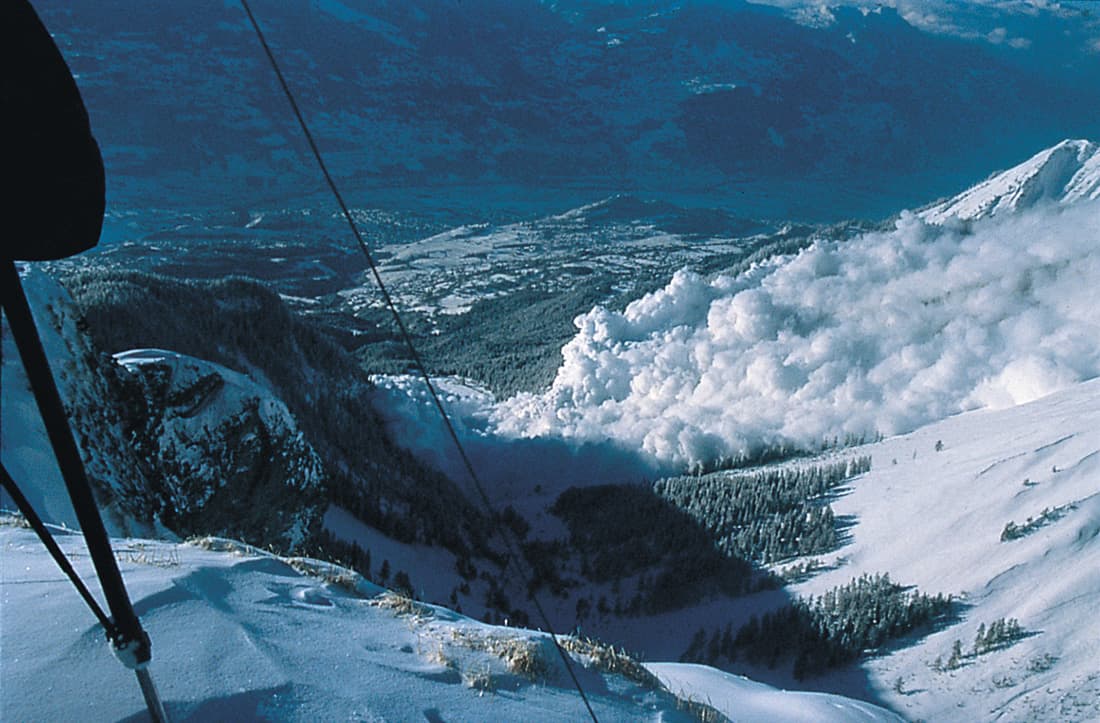
Two years ago, Switzerland and Austria were struck by the worst avalanches in over 50 years. Some 3000 avalanches occurred in the Swiss Alps alone, 1000 of which caused damage to villages, power lines, forests and agricultural land. Villages were cut off and tourists were stranded, causing havoc to the country’s lucrative tourist industry. A total of 12 people were killed when one massive avalanche destroyed several chalets and overcame two unsuspecting motorists on a road near the village of Evolène. The avalanche came to a halt some 4 km from its starting point, burying the road under 10 m of snow and ice. Across the border in Austria, an avalanche killed 38 residents of the town of Galtür – by far the worst accident of the winter.
Switzerland has a long tradition of coping with snow avalanches, and research at the Swiss Federal Institute for Snow and Avalanche Research (SLF) began in 1938, on the eve of the Second World War. Fearing a German invasion, the Swiss knew that they would have to fight in mountain terrain and feared losing valuable troops to avalanches.
These days it is skiers in remote areas who present avalanche experts with the greatest difficulties. On average, 25 people die every year in Switzerland in avalanches and most of them are back-country or off-piste skiers. After the last catastrophic winter in 1951, when avalanches killed over 100 people, research into avalanche warning, avalanche dynamics, and the physics and mechanics of snow intensified. The winter of 1999 – with its three periods of heavy snowfall in January and February – provided snow and avalanche researchers with their best opportunity to test the simulations and theories that had been developed over the previous 50 years.
Avalanches follow a well worn path
Perhaps the most common misconception – largely propagated by Hollywood films that show avalanches killing villains in quasi acts of God – is that alpine communities are completely unprotected from the wrath of snow. Little wonder that many people think avalanches strike randomly and cause mass destruction. This certainly isn’t the case in Switzerland, a country that has a long tradition in coping with avalanches. A mountain community usually knows the starting or fracture zone of an avalanche, as well as the path that the sliding mass of snow is most likely to take down the mountainside. Indeed, generations of inhabitants who have observed the activity of avalanches for centuries often give these paths names, like Tristallaui or Rotlaui.
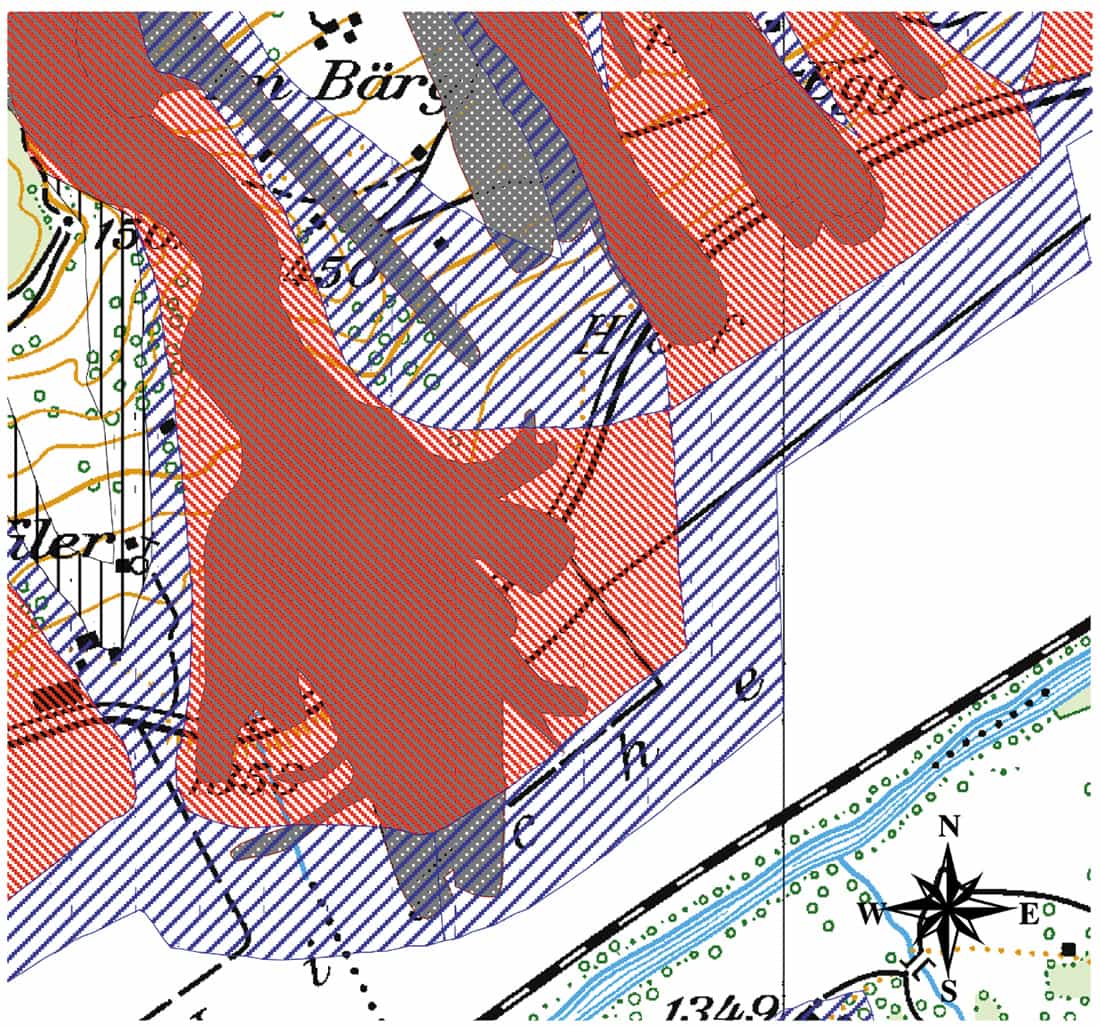
1 Predicting the hazards A typical hazard map used by the local authorities in the Wallis region of Switzerland. Land is divided into red and blue zones based on the expected impact pressures of an avalanche with a return period of 300 years. The grey region shows the extent of the avalanche debris following a large snow slide in 1999. Snow and ice covered the road and came within 200 metres of the railway line. The map performed well because the avalanche debris was confined to the blue region. (Picture credit: Swiss Federal Office of Topography)
Mountain communities keep official records that contain information about when an avalanche occurred, the meteorological conditions at the time, where the snow slide started and how far it ran down the mountainside. Land planners use these records to draw up so-called hazard maps that help to determine if, for example, a house can be built at a particular location, or if a property needs to be reinforced to withstand the impact pressure of an avalanche (figure 1). Local authorities also refer to these hazard maps to decide whether they should evacuate buildings in extreme situations, like those that occurred during the winter of 1999.
However, in order to draw up such maps, land planners need to know how far an avalanche can travel given the volume of snow that initially breaks away from the mountainside. We relate this volume to the so-called return period, the number of years that have passed since a similar avalanche occurred in the same area. A large avalanche with a return period of 300 years can unleash over 100,000 m3 of snow and ice, weighing about 30,000 tonnes.
During the catastrophic winter of 1999, avalanche researchers observed fracture lines that extended several kilometres along the mountain tops. Ominously, the fractures in the snowpack were between five and eight metres deep. Once such a large avalanche begins, it can reach velocities of over 250 kilometres per hour and exert pressures of over 50 tonnes per square metre.
In general, land planners prepare hazard maps by consulting the historical avalanche records and applying their intuition and experience. But if a record-breaking avalanche looks likely, then the planners must turn to models of avalanche dynamics to estimate how far the snow will travel and what its pressure will be on impact.
Go with the flow
In one sense avalanches are rather simple phenomena – they are nothing more than masses moving down a slope under the influence of gravity. On the other hand, they are extremely complex phenomena: avalanches are rapidly moving gravitational shear flows that contain a dense granular core surrounded by a cloud of airborne and turbulent powder.
The properties of the snow – such as its density, mechanical properties and wetness – together with the mountainside terrain determine whether the dynamics of the avalanche are dominated by granular or powder flow (see box). Moreover, avalanches gather more snow as they slide down the mountain, making their flow highly irregular and difficult to predict. In addition, the flow is sensitive to the characteristics of the terrain – such as the steepness and roughness of the mountainside – and the local vegetation.
It is hardly surprising that models of avalanche dynamics range from the trivial to the highly complex. In the simplest case, the terminal flow velocity of an avalanche is estimated based on the conservation of potential and kinetic energy. At the other end of the spectrum, the dynamics are calculated using sophisticated three-dimensional numerical models that take into account both the ice particles and the air contained in the snow slide. The first avalanche models were proposed in 1955 by the Swiss physicist Adolf Voellmy, and numerical models are now being developed by groups in Switzerland, Norway, Austria and France.
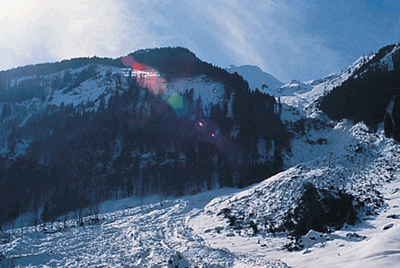
2 Destructive forces Avalanches can easily destroy an entire forest. These spruce trees in the Mettlenruns region of Switzerland were knocked flat by a powder cloud in February 1999. Trees can help to stabilize the snow on a steep slope but they do not slow down a flowing avalanche.
Currently the most popular simulations are the so-called depth-averaged hydraulic models. In these models, the differential equations that describe the conservation of mass and momentum are similar to the equations in fluid mechanics that characterize the motion of waves in shallow water. However, flowing snow is very different from water and the equations must be modified to take into account the fact that snow exhibits solid behaviour.
The models also assume that the frictional force at the base of an avalanche is proportional to the force that acts perpendicular to the surface, rather like a solid block sliding down an inclined surface. Meanwhile, the internal friction – the energy that is dissipated via granular collisions and interparticle rubbing – is parametrized by the “angle of repose” of the dense core. This is the steepest slope on which the granular clods (i.e. clumps) of snow that make up the core can lie without slipping.
The reasoning behind this approach is that an avalanche consists of different flow regimes. In the “grain inertia regime”, first defined in the 1940s by the British geophysicist and explorer Ralph Bagnold, granular collisions between the snow clods are the dominant mechanism of energy and momentum transport. The contact forces between the clumps of snow are small, which means that the clods cannot rub together and create friction. Pressure sensors that are placed in the path of real avalanches have confirmed the behaviour of this flow regime by measuring the individual impacts of the clods, rather than a stationary or continuous pressure.
In the second flow regime, the dominant frictional mechanism arises from the snow clods rubbing together, while the collisional activity is small. In an extreme case, the core of the avalanche moves like a solid plug sliding over a thin layer of fluid that is deformed due to rubbing.
Another difference compared with hydraulic models is that avalanches usually “entrain” or collect a significant portion of the snow cover as they slide down the mountain. Snow entrainment is now being included in models of avalanche dynamics. Without it, the mass balance of the calculations is simply wrong. This has practical consequences since the models are used to calculate the height of the deflectors and dams that are built to protect villages and roads. By neglecting snow entrainment, avalanche researchers risk underestimating the height of the flow and therefore the height of the dams that are needed to catch the snow.
The amount of snow entrained by an avalanche is proportional to the flow velocity. The snow that is gathered up as the avalanche slides down the mountain is accelerated from rest up to the flow velocity. As a result, the latest simulations treat snow entrainment as a drag force that is proportional to the velocity squared. On a steep slope, entrainment fails to slow the avalanche, but it does reduce the acceleration.
Interestingly, avalanches can easily destroy and entrain entire forests as well as the snow cover. The energy needed to fracture and transport a dense forest of spruce trees is very small compared with the kinetic energy of a good-sized avalanche, which typically ranges between 104-105 megajoules. In other words, once an avalanche has enough force to break or overturn a tree, the deceleration caused by breaking and accelerating a tree trunk up to the flow velocity is very small. This fact explains the massive areas of forest that were destroyed during the winter of 1999 (see figure 2). Forests do not protect communities by stopping a flowing avalanche, but rather by stabilizing the snow cover on steep slopes above the village.
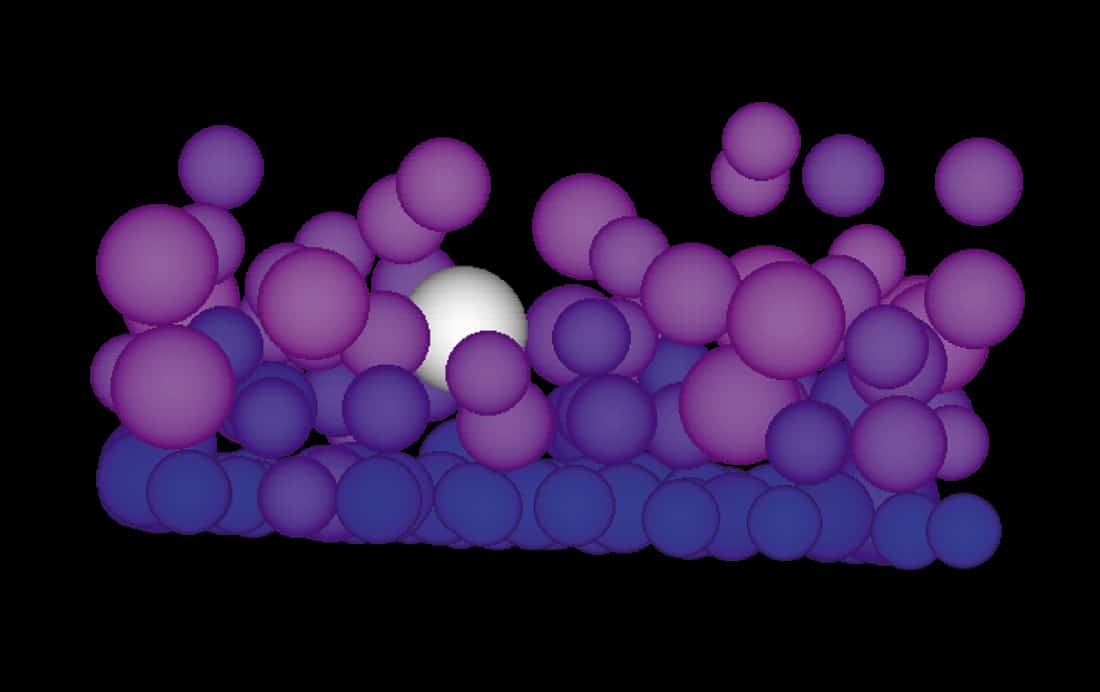
3 Granular physics in action A simulation of the particle dynamics of an avalanche shows what happens to a large white particle placed at the bottom of the flow. After several seconds, the particle migrates to the top of the flow in a process called ‘squeeze expulsion’. Such simulations illustrate how an ‘air bag’ could save the life of a skier caught in an avalanche by preventing him or her from being buried. They also provide important insights into avalanche flow.
Researchers are also gaining further insights into the nature of avalanche flow using models of particle dynamics. In these computer simulations, the motion of the particles is governed by simple, inelastic, binary collisions – i.e. by the conservation of translational and angular momentum (figure 3). A large number of spherical particles of varying diameters and densities are placed in a box on a virtual slope and accelerated downward by gravity. The sides of the box are periodic – i.e. when one particle leaves the box, it re-enters from the opposite side. (The number of particles depends on the available computing power.) The numerical simulation is then used to model the steady-state conditions of the system.
Such models are being used to determine why larger particles remain on the flow surface – an important point when trying to understand how to save skiers who are caught in an avalanche, and also for establishing rheological laws that can feed into depth-averaged hydraulic models. Moreover, models of particle dynamics may provide important insights into the formation of powder-snow avalanches from flowing ones – a key question that is both difficult and expensive to investigate experimentally.
Simulations of particle dynamics have revealed clearly that the granular motion within a flowing avalanche is chaotic. The exact location of an individual particle cannot be determined after the first 100 collisions or so, due to inaccuracies in the initial state propagating through the simulation.
Different types of avalanches
The dynamics of an avalanche are dominated by either a core of dense snow flowing down the mountain or an airborne cloud of powder. The table shows how the characteristics of the two types are very different.
Flowing avalanche
Powder avalanche
Typical velocity
30 – 60 ms-1
40 – 100 m s-1
Flow height
1 – 5 m
20 – 100 m
Density
100 – 300 kg m-3
3 – 20 kg m-3
Pressure
100 – 500 kPa
0.5 – 40 kPa
Friction
Granular collisions, basal friction
Turbulent drag, surface friction unimportant
Terrain
Avalanche often follows gullies
Terrain less important, follows steepest descent
Snow and ice reach breaking point
Avalanches form as soon as the forces due to gravity, fresh snow, an explosion or the additional weight of a skier, exceed the mechanical strength of the packed snow and ice. However, this simple fact is completely useless to the local authorities that have to decide when to close a road, evacuate a village or artificially release an avalanche to protect a ski run. Researchers therefore need to address questions concerning the forces and the strength of the snowpack.
For example, what is the strength of snow? Not surprisingly, the mechanical properties of snow are somewhat similar to ice. Both are viscoelastic materials that exhibit creep behaviour over time. In other words, snow and ice deform continually without fracturing as the load on top of them increases. However, the loading rate is critical, and avalanche experts are just as interested in the rate of snowfall as they are in the amount. Heavy snowfalls over a short period of time lead to a greater chance of avalanches.
Snow is a porous medium rather than a homogenous solid. It contains grains of ice that are arranged in a complicated interconnected lattice as well as air and, sometimes, water. Ice bonds exist between the grains and under loading the force is carried by grain-bond chains within the lattice.
During creep, the snowpack deforms via two main mechanisms: intergranular sliding and straining. Experiments indicate that the sliding of the ice grains over each other – a frictional and irreversible process – dominates in new or low-density snow. Meanwhile, the viscoelastic straining of the granular ice chains, and in particular of the ice bonds, dominates in older and denser snow. As a chain is only as strong as its weakest link, the bonds between the grains are critical. However, the breaking of a single bond does not necessarily initiate a chain reaction that leads to an avalanche. On the contrary, new bonds can form under deformation that might even strengthen the snow cover.
What is important is that the stresses on the ice bonds are some 50 to 100 times higher than the continuum stresses exerted on the snowpack as a whole. The reason for this is that snow is a porous medium and the force is carried only by the ice chains, which have a small cross-sectional area. The exact stress on the ice bonds depends on the microstructural properties of the ice grains, such as their size and shape. And it is this problem that makes predicting the stability of the snowpack so difficult. Researchers must forecast how the microstructural properties of the snow cover change over time. The only way to accomplish this task is with numerical snowpack models.
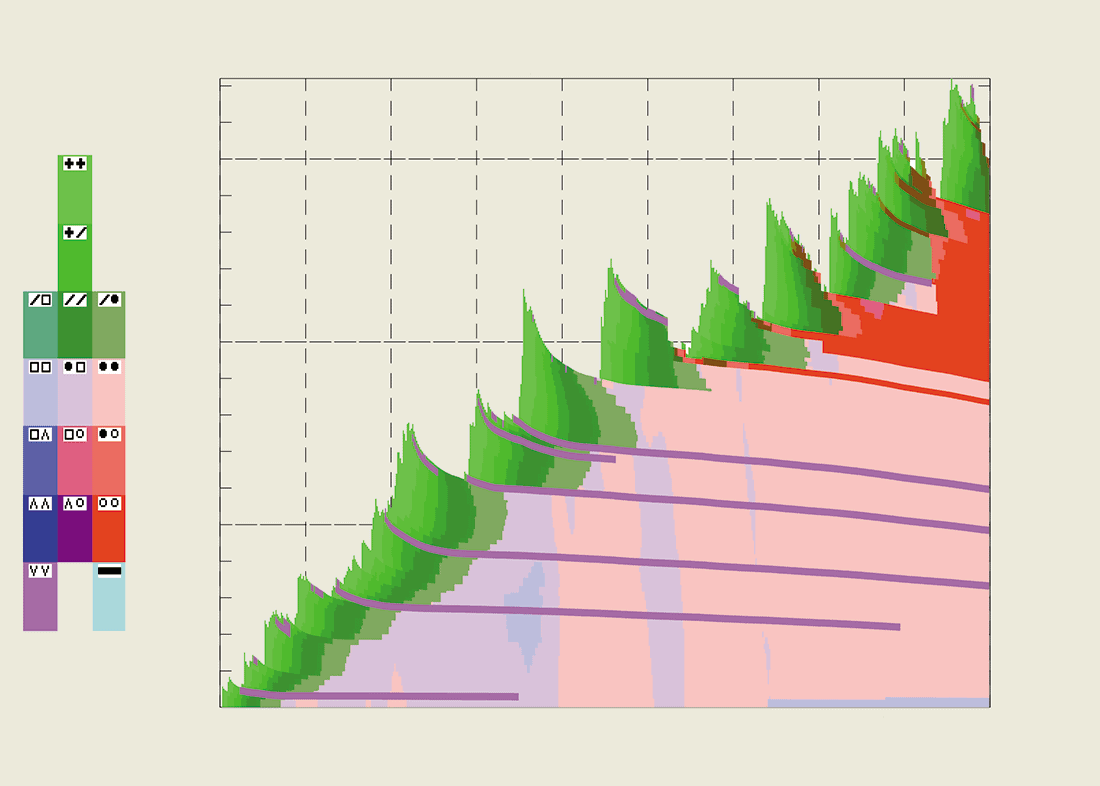
4 Let it snow A simulation of the snow cover during the winter of 2000. The height of the snow is shown as a function of time. The green regions refer to fresh dendritic snow made of tree-like ice crystals, while the red areas indicate older well metamorphosed snow with rounded ice crystals. Note the particularly heavy snowfall that occurred in the middle of January 2000.
Simulations based on finite-element analysis can track the heat transfer and the mechanical deformation of the snow, together with the transport of water and water vapour, and the phase changes that occur within the snowpack over the entire winter. At the SLF, these models are driven using meteorological data – such as the air temperature, solar radiation, wind speed and relative humidity – measured at some 80 automatic weather stations scattered throughout the Swiss Alps.
The model we have developed, called SNOWPACK, also tracks the microstructural changes of the snow grains. These changes are governed by vapour-pressure differences between the layers of snow, between the grains in a layer, and between the surfaces of a single grain. Within the model, the laws that describe the heat conductivity and viscosity of the medium are parametrized in terms of the size and shape of the snow grains.
SNOWPACK is probably the most advanced model of its type because a great deal of effort has gone into evaluating the model by digging snow pits and comparing the observed and simulated layers in the snow. The model appears to work, since it is now being used by avalanche specialists to estimate the height of new snowfall and the snowfall loading rates – the initial information needed to predict the degree of avalanche danger.
However, the model needs considerable work and validation before it can be used to predict exactly when and where avalanches will occur. Currently SNOWPACK only calculates the development of the snowpack at a single isolated point, not for an entire slope (figure 4).
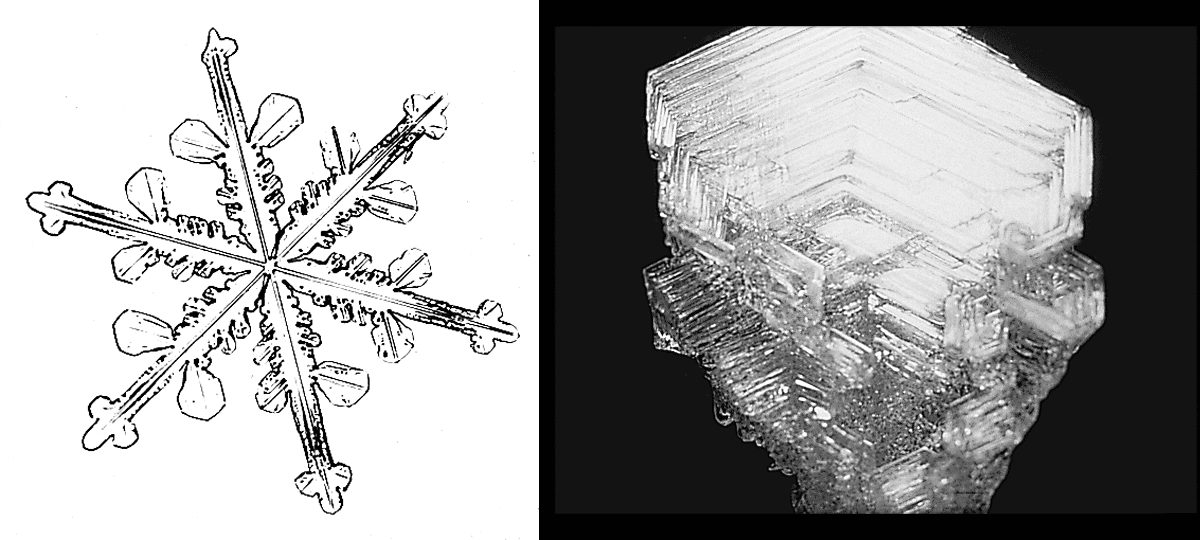
The delicate and intricate structure of falling snowflakes doesn’t last for long (figure 5a). The tiny branches of the crystal break as soon as the flake lands on the ground and is covered by fresh snow. This load deforms the crystalline structure, increasing the density of the new layer of snow. Gravity is the obvious force driving the structural changes but there are other, more subtle, mechanisms at work that are just as powerful.
5 Snow crystals up close (a) New snow forms delicate crystals with sixfold symmetry. (b) Metamorphosis leads to hollow cup-shaped crystals that are weakly bound.
The heat flow from the ground is typically large enough to ensure the temperature at the soil-snow interface is kept at freezing point, while the surface of the snow is normally below 0 °C. This heat flow generates a corresponding water-vapour pressure difference, which leads to the onset of diffusion. The sublimed water molecules in the warmer regions wander to the colder areas, where they deposit on the ice frame. In addition, water vapour can move freely throughout the porous system. The consequence of this transport is a localized change in the density and in the shape of the crystals – known as metamorphosis. As a result, we often find a spectacular layer of “depth-hoar” – hollow cup-shaped ice crystals that grow up to a few millimetres in size (figure 5b). Depth-hoar crystals develop in a loose array that leads to a zone of weakness within the snowpack and are a major contributor to avalanche formation.
Metamorphosis is often thought of as a rather slow process. However, since the structural changes in porous snow occur close to the melting point, metamorphosis can happen quickly. Indeed, the changes may be visible within a day or so. The fragile ice hoar-frost crystals that appear on cold surfaces, such as car windscreens, build up overnight. Next time you scrape the frost from your car, take a better look at the beautiful crystals you destroy. Snow physics is a cold job, but nevertheless could be classified as high-temperature solid-state physics.
Avalanche warning
With the development of winter tourism and ski resorts, safeguarding skiers and increasing numbers of snowboarders and snowmobilers, both on and off piste, has become even more important. Skiers and mountaineers have to be aware of the avalanche lurking in their path. Avalanche management is called for, including implementing sophisticated methods to control avalanches.
Just as wild waters can be tamed, so avalanches can be controlled – with a few exceptions that we call catastrophes. Avalanche managers – such as the Forest Service in the US and the local authorities in Switzerland – apply different strategies, depending on the situation. For example, avalanche fences can be placed in the starting zone to stabilize the snow cover, while deflector or catching dams can be constructed in the avalanche runout zone. The artificial release of avalanches with explosives is also a powerful defence tool. Forecasting is another.
Avalanche forecasts based on purely physical methods are not really feasible. Physical models require knowledge about when the load exceeds the strength of the snow cover. To obtain this information, researchers would need to know how much snow there is, and its temperature, to an accuracy that we can only hope for.
6 Testing time for avalanche research The site in the Vallee de la Sionne, Switzerland, where researchers at the SLF deliberately produce large avalanches using explosives. The flow velocities and impact pressures of the snow and ice are measured using instruments placed in the avalanche’s path.
Based on both experience and experiments, we know that variables such as the snow temperature, air temperature, wind, precipitation and solar radiation, among others, affect the stability of the snow cover. The SLF has gathered such data for decades and also kept records of avalanches, such as their date, location and cause. Such data beg a statistical treatment. Charles Obled and P Bois at the Cemagref agriculture and environmental research centre in Grenoble, France, first developed this kind of approach as an avalanche warning system in the 1970s.
Using statistical methods, they developed a technique to find the most significant meteorological variables (e.g. precipitation) related to an avalanche that occurred in a particular area. The results were always expressed as a probability that an avalanche would strike on a given day. In practice, however, these statistical outcomes were of little value because the technique failed to distinguish between different types of avalanches. Suppose, for example, that the technique predicts that the probability of an avalanche is 100%. Statistics do not tell us whether there will be one small avalanche or many large ones. Other ways had to be found to make the results more transparent and applicable.
The solution is a simple concept known as the “k nearest neighbours” method, which was pioneered by one of us (OB). Essentially it is a way of quantifying our experience. On a given day we examine the state of the snow and the weather conditions on a representative snow field. The variables we consider are the ones found by Obled and Bois to give the best results in their statistical method. We then look back through the records to find the 10 days – the nearest neighbours – that best match these conditions and check if an avalanche subsequently occurred. If there were no avalanches, then we can be pretty sure that one will not happen that day. However, if an avalanche did occur then we can find out from the records the type of avalanche it was, the time of day it happened and, perhaps, even what caused it. The local authorities can then decide whether to close a ski resort or roads, and also issue their own forecast for that particular area. This means that actions are taken based on a numerical methods, rather than intuition.
Outlook: goodbye to the weakest link
What began in the 1930s with coarse and simple field observations has become a sophisticated and fascinating field of experimental, theoretical and numerical physics. And the experiments continue. At the Vallée de la Sionne avalanche-dynamics test site in Switzerland, we conduct field tests to measure avalanche flow velocities, impact pressures, flow heights and densities. The avalanches are artificially released with explosives and flow past instrumented obstacles located along the avalanche path. Our final goal is to improve the basic understanding of avalanche motion and to develop better physical models that can be applied by avalanche practitioners to calculate runout distances.
Meanwhile in the laboratory, computed tomography imaging is being applied to determine how the microstructure of snow changes over time. The aim of this research is to relate microstructural changes to mechanical strength. Moreover, experiments that measure the stress-strain behaviour of snow samples of known structure should improve our knowledge of specific bond strengths.
Armed with this information, we might be able to model the propagation of a crack and tell whether it will be damped or will lead to a full-sized fracture that will start an avalanche. As with many things in life, tiny events like the failure of the “important” bond can have disastrous results. To find this bond in the snow is the ultimate challenge in snow and avalanche research.
Last month the Royal Society of Chemistry mustered together a collection of like-minded bodies – including the Institute of Physics, the Institute of Biology and the Engineering Council – for the launch of a “charter for science and engineering”. The charter was launched at a meeting at the House of Commons attended by representatives of the three main parliamentary parties.
The ten-point charter contains few surprises, and it remains to be seen what impact it will have. However, a unified statement on research by more than 100 scientific, mathematics and engineering societies in the US in 1997 is often credited with playing a role in maintaining healthy levels of government investment in science. With rumours abounding that President Bush is going to chop the US science budget to make room for $1600bn worth of tax cuts, a similar campaign could soon be needed again.
The UK’s Labour government has been good to science, as the charter acknowledges. However, a number of key challenges for the future stand out: the recruitment and retention of school teachers; salaries and career paths for academic researchers; and energy and the environment. All three are also areas of concern for the government’s new chief scientific advisor, David King.
The shortage of teachers is a problem that has expanded from just the physical sciences to most areas of the curriculum. The government has introduced various schemes to combat the shortage, but without much success so far. The scale of the problem was illustrated at the launch of the charter by Richard Sykes, rector of Imperial College in London, when he pointed out that fewer than 1% of graduates from Imperial – the UK’s foremost college of science and technology – go into teaching. The government’s recent statements about the end of “bog standard” comprehensive schools show that it is open to new thinking. Promises to write off student debts for new science teachers over a ten-year period might work, although much student debt is due to other Labour policies.
Labour’s motto at the last election was “Education, education, education”. “Teachers, teachers, teachers” could well be the cry this time around.
The last word
The epilogue of James Gleick’s biography of Richard Feynman describes how Feynman lost his temper during an interview with an unnamed historian of science. In his article, Robert Crease reveals that he was that historian, and describes the misunderstandings that can arise when outsiders – historians, social scientists and journalists – interview eminent physicists. The final scene of this episode, as recounted in the book, is not related to Crease’s article, but is certainly worth repeating here. As Feynman fumes, Murray Gell-Mann looks out of his office and says: “I see you’ve met Dick.”
In the March issue of Physics World, Mike Lockwood of Rutherford Appleton Laboratory and Southampton University, UK, and Duncan H Mackay of the University of St Andrews, UK, underline the significance of the solar magnetic field in our understanding of the solar flux and cosmic rays in particular.
A more detailed review by William Mills of the International Radiation Protection Association and past president of the US Health Physics Society appears in the March issue of Physics World.
In Permissible Dose: A History of Radiation Protection in the Twentieth Century, J Samuel Walker, official historian of the NRC, focuses his attention on the role that the US federal agencies play in radiation safety and on how radiation-protection regulations have evolved over the past century. He describes how principles and practices have changed over time in response to scientific and political developments.
Overall, Walker does a very good job in describing the role of US federal agencies with regard to radiation protection, and his book will appeal to those who want to gain a fuller understanding of how such agencies shape science policy. However, the main drawback of the book is that it focuses almost exclusively on the US, with very little coverage given to standards elsewhere in the world. The US has, in my view, been overzealous in promoting overly restrictive radiation-protection standards and has much to learn from Europe, where standards are based on more reasonable scientific judgement.
In molecular materials like water, the structural units that make up the liquid state can also dictate the properties of the frozen solid. But what about monatomic liquids that are composed of single atoms, rather than molecules? It is tempting to think of such liquids as completely unstructured, like gases in slow motion, but this is not the case.
In the March issue of Physics World, Elaine DiMasi of Brookhaven National Laboratory, USA, describes a successful search for fivefold symmetric clusters in liquid lead by Harald Reichert at the Max Planck Institute in Stuttgart, Germany, and colleagues from Germany, France and the US (Nature 2000 408 839).
During the past decade, the availability of simple, effective methods for laser cooling and trapping has enabled enormous advances in the experimental study of atoms in their ground state. Until quite recently, however, these techniques have had much less impact on investigations of highly excited atoms – and almost none on plasmas. Several laboratories have now begun experiments in which atoms are initially prepared in the ground state at sub-millikelvin temperatures and then excited by a laser to very high electronic states, or even ionized. The result is a gas in which the atoms are in a highly excited state but move very slowly. This unusual scenario is, in reality, quite attainable – although the system is intrinsically unstable.
Now Thomas Gallagher of the University of Virginia in the US, Pierre Pillet of the Laboratoire Aime Cotton in Orsay, France, and co-workers have reported a remarkable manifestation of this instability. They have found that a sufficiently dense sample of highly excited cold atoms ionizes spontaneously with very high efficiency. In other words, the sample of gas converts itself to an extremely cold plasma in a matter of microseconds (M P Robinson et al. 2000 Phys. Rev. Lett.85 4466).
Remarkable properties
The preferred internal energy state of a cold atom is the state with the lowest energy (i.e. the ground state). Laser radiation can promote the atom to higher-energy states, or even remove the electron altogether by the process of photoionization. High-energy states, in which the electron is barely bound, are known as Rydberg states, and these have many remarkable properties. For example, the electron is very far from the nucleus.
If we label each state by its principal quantum number n, where n is large for Rydberg states, then the characteristic radius of the electron’s orbit around the nucleus scales as n2, increasing from ~0.05 nm for the ground state to over 100 nm for a state with n = 50. The size of such an atom is comparable to the smallest feature on a modern integrated-circuit chip.
In contrast, the energy needed to remove the electron from the atom scales as 1/n2, decreasing from several electron-volts for the ground state to about 5 millielectron-volts for n = 50. Due to their small binding energy, Rydberg states tend to be very fragile and sensitive to external perturbations such as collisions or electric fields.
If the electron has sufficient energy, it can leave the atom, yielding a free electron and a positively charged atomic ion. A collection of such negative and positive charges is known as a plasma – a state of matter that appears in such diverse places as astrophysics, thermonuclear fusion, fluorescent lighting and semiconductor processing (see Technological plasmas in this issue by Bill Graham).
In thermal equilibrium, the temperature of a plasma must be high enough for the thermal energy to exceed the binding energy of the atoms. This requires temperatures of the order of 10 000 K, otherwise the positive and negative charges are perfectly happy to recombine into bound atoms. However, recent work with laser-cooled atoms has shown that very-low-temperature plasmas can be created – and can also survive long enough to be studied experimentally.
Several recent experiments have used a laser-cooled gas as the starting point for creating an ultracold plasma. Steve Rolston’s group at the NIST laboratory in Gaithersburg, US, for example, has given the electrons in ultracold xenon atoms just enough energy to ionize them with a laser (T Killian et al. 1999 Phys. Rev. Lett.83 4776). Since the electrons are so light, they carry away the majority of the energy, leaving the ions almost as cold as the initial atoms. The liberated electrons begin to disperse, but only a small fraction leave the gas: the residual net positive charge is enough to trap the remaining electrons, allowing the formation of a relatively stable ultracold plasma. Subsequent experiments by Rolston’s group have investigated the slow expansion of this plasma, as well as the oscillations that can be excited in it by radio waves.
Plasma avalanche
In one of the most surprising recent developments, the Virginia-Orsay team has observed that such an ultracold plasma can form spontaneously from a gas of ultracold Rydberg atoms. In the experiments, ultracold rubidium or caesium atoms with temperatures in the range 140-300 microkelvin are excited with a pulsed laser into highly excited Rydberg states with n = 35-40 (see figure 1). A gas of Rydberg atoms can be distinguished from a plasma by the electric field that must be applied in order to extract charges from the sample. For weakly bound Rydberg atoms, the field must be large enough to rip the electron from its atom. In a plasma, on the other hand, the electrons are already free.
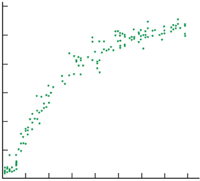
By varying the initial number of Rydberg atoms, Gallagher, Pillet and co-workers observed a threshold above which the sample rapidly converts from Rydberg atoms to a plasma on a timescale of a few microseconds (see figure 2). They explain this avalanche plasma formation as a three-step process. First, a small number of the cold Rydberg atoms are ionized – either by collisions with the small number of room-temperature Rydberg atoms present, or by absorbing background radiation. A few of the electrons that have been produced escape, but the remainder are trapped by the net positive charge to produce a very dilute ultracold plasma that coexists with the remaining Rydberg atoms. Finally, these trapped electrons move throughout the Rydberg sample, colliding with and ionizing the very fragile atoms. The more free electrons that are available, then the more rapid the production of new electrons – hence the avalanche nature of the process.
Puzzling phenomena
An interesting question arises. Where does the energy come from? The initial Rydberg atoms have negative energy because they are bound, while the nearly neutral plasma state has positive energy. Energy is clearly required to produce the initial electrons that “seed” the avalanche process – this comes from the initial ionization process, either collisions or absorption of radiation. However, every time an electron ionizes a Rydberg atom, it must give up a significant amount of energy. So how can the process be sustained?
A likely possibility is that electrons sometimes undergo “super-elastic” collisions, in which an excited atom gives up part of its electronic excitation and the electron departs with increased kinetic energy. Clearly further work is needed in order to address this important issue.
In our lab at the University of Connecticut, we have recently observed not only the formation of the avalanche plasma, but also the plasma state reverting back into bound Rydberg states. In other words, we start with a sample of Rydberg atoms that ionize in a few microseconds to form an ultracold plasma. But, if we wait long enough – about 20 microseconds – we actually begin to see Rydberg atoms again. These atoms are presumably the result of three-body recombination in which two electrons and an ion collide to leave one of the electrons bound in a Rydberg state, while the other electron takes away the binding energy. It seems that after a brief period of separation, the electrons and ions are happy to be reunited back into Rydberg atoms. Rolston’s group at NIST also sees this type of recombination, although they start with a plasma that has been produced directly by the laser photoionization of ground-state atoms. The physical basis of this recombination is not yet fully understood.
Ultracold plasmas are generating interest because of the possibility that they are “strongly coupled”, meaning that the potential energy of neighbouring charges exceeds the typical kinetic energy. In other cold plasmas composed solely of trapped ions this has been shown to lead to a type of crystallization. Moreover, recombination of a low-temperature positron-antiproton plasma has been discussed as a way of efficiently forming antihydrogen atoms.
The theoretical treatment of ultracold plasmas is also of considerable interest. A rethinking of traditional collisional models is required because, at such low temperatures, the ions hardly move at all on the timescale of the ionization and recombination processes. We must think more in terms of interactions rather than of collisions.
The ultracold Rydberg atoms themselves are interesting because of their strong interactions and the possibility of observing collective effects. Schemes for quantum logic gates using ultracold Rydberg atoms have also been proposed. The recent marriage of highly excited atoms and ultralow temperatures has already unveiled some surprises – others undoubtedly await to be uncovered.