Tully and co-workers have combined the data from the four experiments at LEP and found evidence that the Higgs boson has a mass of 114.9 GeV c-2. ‘It is a 2.6 sigma effect,’ he told PhysicsWeb, ‘so there’s still a 6 in 1000 chance that what we are seeing are background events, rather than the Higgs.’
The LEP collider was due to stop running at the end of September to make way for the Large Hadron Collider, a proton-proton collider that will be built in the same underground tunnel. Now there may be a strong scientific case for extending the lifetime of LEP until December to allow the experiments to double the amount of data collected. According to Tully, this will allow the teams to reduce the likelihood that the signal is some kind of background effect to 1 in 10 000.
Searches for the Higgs bosons have been underway at all four LEP experiments – ALEPH, DELPHI, L3 and OPAL – for several years. In recent months the energy of the electron and positron beams has been raised slowly and the accelerator is now running at its maximum possible centre-of-mass energy of 207 GeV.
The strongest evidence for the Higgs boson comes from the ALEPH experiment. Three ‘events’ were found which suggest that a Higgs boson was produced along with a Z boson, a neutral particle that carries the electroweak force. In these events, both the Higgs and the Z boson decay quickly to form quarks that cause a spray of particles in the detector. While the other three experiments find less compelling evidence, they cannot rule out the ALEPH data.
The international research board at CERN will decide on 14 September whether the LEP accelerator will continue running until December. Particle physicists await with bated breath.
The researchers at the French GANIL accelerator studied heavy, highly charged ions, in which the attraction between the nucleus and the remaining electrons is extremely strong. As a result, the difference in energy between atomic states can actually be higher than different states in the nucleus. To observe the effect, the group fired high-energy tellurium-125 ions at a target to excite the tellurium nuclei and electrons. By analysing x-rays and gamma-rays emitted by the ions as they left the target, the team showed that as the nucleus returned to a lower energy state, a tightly bound inner electron was promoted to an outside orbit.
An important property of the new process is that it is strongly resonant: a small increase in the atomic excitation energy can produce a large variation in the half-life and rate of nuclear decay. Carreyre’s team suspects that the transfer of energy between nucleus and surrounding electrons could account for apparent anomalies in the lifetimes of certain radioactive elements. Interestingly, the effect is exactly the reverse of a process recently observed, in which the nucleus is excited by a near-resonant electron transition (Kishimoto et al 2000 Phys. Rev. Lett.85 1831).
The phenomenon may have important implications for astrophysics. The highly ionized gases, or plasmas, that exist inside stars contain nuclear species whose lifetimes may be affected by the process. If that is the case, this may change our understanding of how the elements are created inside stars.
Nothing can travel faster than light. Despite a recent raft of reports in the media, this statement is as true now as it ever was. Nonetheless, experiments over the past 20 years have been forcing us to re-examine what we mean by the word “nothing”. In the latest experiment, a group of researchers at the NEC Research Institute in Princeton, US, observed the peak of a laser pulse leave a small cell filled with caesium gas before it had even entered the cell (L J Wang, A Kuzmich and A Dogariu 2000 Nature406 277). Apparently, the peak of this pulse is simply not the kind of “thing” to which Einstein’s famous law applies.
At almost 300 000 km s-1, the cosmic speed limit, c, is one of the most widely known constants in physics. A massive object needs infinite energy to reach c, while massless particles like photons always carry their energy at precisely the speed of light. More importantly, the relativistic notion of simultaneity makes it clear that no information can travel faster than light without throwing all our concepts of cause and effect into disarray. Relativity teaches us that if two space-time events are separated so that they cannot be connected by any signal travelling at c or less, then different observers will disagree as to which of the two events came first. Since most physicists still believe that cause needs to precede effect, we conclude that no information can be transmitted faster than the speed of light.
Nevertheless, velocities greater than c can be observed. Suppose a lighthouse illuminates a distant shore. The rotating lamp moves quite slowly, but the spot on the opposite shore travels at a far greater velocity. If the shore were far enough away, the spot could even move faster than light. However, this moving spot is not a single “thing”. Each point along the coastline receives its own spot of light from the lighthouse, and any information travels from the lighthouse at c, rather than along the path of the moving spot. Such phenomena are described as the “motion of effects”, and are not forbidden by relativity.
Long-held theories
In optics, the possibility of superluminal velocities was with us throughout the 20th century. The overall velocity (or “group velocity”) of an optical pulse passing through a medium is determined by the way the refractive index varies for the different frequencies that make up the pulse. Since the peak of the pulse occurs when all the frequencies add up in phase, the peak can be delayed by a large amount if each component experiences a very different refractive index (see figure 1a).
When the energy of the optical pulse differs from the energy difference between two electronic energy levels in the atoms of the medium (i.e. when the light is far from resonance), the refractive index increases with frequency. This “normal” dispersion reduces the group velocity below c. Roughly speaking, an atom may temporarily absorb a photon, even though the light is not exactly at resonance, and re-emit it some time later, thus slowing down the light.
However, the behaviour of the light pulse is very different closer to the absorption line, where the refractive index decreases with increasing frequency. This behaviour leads to so-called anomalous dispersion in which the sign of the delay changes, which means that the group velocity can exceed c. This problem was treated in a classic analysis by Arnold Sommerfeld and Léon Brillouin, who pointed out that the strong absorption and distortion that occur at the resonant frequency generally make the group velocity a meaningless concept. They demonstrated that neither information nor energy can travel faster than light in this region. Throughout most of the 20th century, this was usually accepted as the last word on superluminal group velocities.
However, the field was revived in 1970 by Geoffrey Garrett and Dean McCumber, then both at Bell Laboratories in the US. They showed that it should be possible to observe an undistorted Gaussian pulse with a group velocity exceeding the speed of light, or even with a negative group velocity, provided the pulse has a narrow bandwidth and the region though which it travels is short. This effect was dramatically confirmed in an experiment by Steven Chu and Stephen Wong, then also at Bell Labs, in 1982 (Phys. Rev. Lett.48 738).
Although Sommerfeld and Brillouin’s conclusion – that neither energy nor information travels faster than c – remains valid, the group velocity is not entirely meaningless. The smooth Gaussian waveform is reshaped by the absorber, leading to a peak at precisely the time predicted by the group velocity. As for the energy, most of it is absorbed by the medium, and the sensible conclusion is that the transmitted energy comes from the leading edge of the incident pulse, which never travels faster than the speed of light.
Conventional wisdom slowly began to adapt to the idea that superluminal group velocities need not imply that the pulses are extremely distorted, as long as most of the energy in the pulse is absorbed. This absorption makes it possible for the velocity of the energy propagation, like the velocity of the information, to remain less than the speed of light regardless of the superluminal speed of a peak.
Experimental breakthroughs
Over the past ten years, similar superluminal effects have been studied in connection with quantum-tunnelling experiments. In such experiments, the transmitted energy is once again quite small (R Y Chiao and A M Steinberg 1997 Progress in OpticsXXXVII 347).
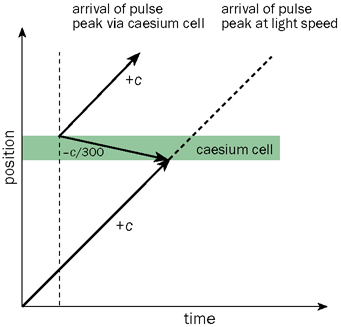
In contrast, the NEC team creates a region of anomalous dispersion in a nearly transparent medium. Wang and co-workers do this by pumping energy into the caesium vapour to create a kind of optical amplifier. First a laser is used to pump most of the caesium atoms into a particular spin state. Next, two additional pump lasers are used to lend energy to the atoms. These atoms can amplify light from yet another “probe” laser by making an electronic transition in which they absorb “pump” energy and re-emit it into the probe beam. There are two specific frequencies at which such a probe can be amplified in this way. By replacing absorption with amplification, the NEC team can swap the regions of normal and anomalous dispersion (see figure 1b). A region halfway between the two amplification lines appears where there is little loss, amplification or distortion. Here the group velocity becomes negative and nearly constant. Indeed, Wang and co-workers measured a group velocity of –c/310. In other words, a pulse travelling a distance, L, is advanced by 310L/c.
The meaning of a negative group velocity is illustrated in figure 2. Within the cell, the peak of the pulse travels backwards relative to the direction it is moving in outside the cell. Long before the incident light pulse reaches the cell, two peaks appear at the far end: one travelling away from the cell at c, the other travelling back towards the entrance. This second pulse travels 300 times more slowly and is timed to meet up with the incident peak. The transmitted pulse travelling at c appears to leave the cell some 60 ns before the incident pulse arrives, enough time for it to travel an additional 20 metres.
What is shocking is that such an effect has been observed for the first time without a great deal of attenuation, amplification or distortion of the pulse. It appears as though energy has, in fact, travelled faster than light.
Of course, this is not the case. The effect observed at NEC only works in the presence of an amplifying medium, i.e. a medium that stores energy. In this case the energy is stored in the pump-laser beams. The caesium atoms are prepared in a state that allows them to transfer energy from these beams to the signal beam. The faster-than-light propagation occurs because the pump beams preferentially amplify the leading edge of the incident pulse, lending power to the signal and being repaid by absorbing some of the energy in its trailing edge. (It is important to note that even the dramatic 60 ns advance is only one fiftieth of the width of the pulse.) This is exactly analogous to the intuitive explanation of normal dispersion, except that in this case the atoms temporarily amplify the light pulse rather than absorb it.
A fascinating suggestion is that this experiment might work even for a pulse composed of only a single photon. However, there has been a good deal of controversy over how to discuss the information transmitted through such a system by a single-photon pulse, and many subtle issues remain.
Although relativity emerges unscathed from these experiments, our understanding of exactly which velocities are limited (or not) by c continues to evolve. And even though neither energy nor information is transmitted faster than light in experiments like the one at the NEC, it has already been proposed that the effects may one day be useful in compensating propagation delays in electronic systems.
For the time being, physicists will kept be busy trying to clarify their intuition about relativity and learning how to accurately describe the information carried in real optical or electronic pulses.
Since it was lit in Athens back in May, the Olympic torch has so far travelled over 27,000 km through 13 countries – carried by snowmobile, camel, canoe and even underwater. For the thousands of participants at this year’s Olympic games, the journey to Sydney has been no less arduous. It has taken strength, determination and years of intensive training to qualify for the ultimate sporting event. And as the torch is carried into the Olympic Stadium on 15 September, one thought will be at the forefront of the athletes’ minds: winning.
With improvements in performance becoming ever more slight in some sports, many experts believe that today’s sportsmen and women are approaching some kind of physical limit. It is not surprising, therefore, that athletes are increasingly turning to science and technology in their quest to run faster, jump higher and throw further.
Swifter, higher, stronger
Technology can be used to improve sports performance in two ways: either by helping the athlete to perfect his or her technique, or by refining the equipment used. Manufacturers like Nike and Speedo spend millions of dollars each year on research to develop the footwear and swimsuits that could help shave vital milliseconds off world records. Sport, however, is not meant to be a test of who has the best equipment, but an even match between one athlete and another. The sports’ governing bodies keep a careful watch on technological developments to make sure that the ability and skill of the athletes still count.
In his feature “Physics, technology and the Olympics“, Steve Haake looks at the influence of technology on the 100-metre sprint, the pole vault and the javelin. The technology available to top-class sprinters is limited to lighter running shoes, Lycra bodysuits to reduce wind resistance and improved track surfaces. Even with these developments, the winning times for the 100-metre sprint at the Olympics appear to be levelling off. Sprinting, it seems, remains a test of raw speed.
It is a different story for pole-vaulting. The sport literally reached new heights in the early 1960s when lighter and stronger glass-fibre poles replaced the bamboo that had been used since the 1900s. Pole-vaulters have even changed their technique to make the most of the new technology. Athletes competing 100 years ago used to go over the bar with their feet pointing downwards. Now they can bend the pole much further to extract as much of the strain energy as possible, turning upside down as they propel themselves over the bar. Although the winning heights are beginning to level off, researchers are continuing to develop new composite materials and designs that could add an extra few centimetres to the winning height.
Not all changes to sports equipment improve performance. By the mid-1980s athletes were almost able to throw the javelin the full length of a sports stadium, putting spectators’ lives at risk. The international ruling body decided that the javelin had to be redesigned to underperform, and turned to the laws of physics for a solution. As a result the centre of mass of the javelin was moved, but as athletes adapt to the new javelin it might not be long before another design change is needed.
Coaching tips
Gymnastics is one the most breathtaking and defining sports of the Olympics. One of the most memorable moments in Olympic history was when 14-year-old Nadia Comaneci scored seven perfect scores at the Montreal games in 1976. In his feature (print edition only), Fred Yeadon describes how a fundamental understanding of the mechanics behind twisting somersaults is helping gymnasts devise more complex routines in pursuit of the perfect score.
Gymnasts, divers and trampolinists are free to somersault, twist and tilt within the constraints imposed by angular momentum. Yet certain skills are more highly rated than others. Computer models of the body, which are based on the equations of motion and conservation of angular momentum, are now being used as a coaching aid. The simulations can identify simple movements that can lead to more complex twisting somersaults. Champion trampolinists have used the technique to learn new skills and remain competitive.
Swimmers face a different set of challenges, as Hideki Takagi and Ross Sanders report in their feature (print edition only). In a sport where a hundredth of a second can make all the difference, success at the top level depends on small refinements of technique to increase propulsion and reduce drag. Sport scientists have developed a series of experiments to measure the hydrodynamic forces on the body and hands, and advise coaches and competitors accordingly. For instance, many swimmers in Sydney will be wearing a new full-length swimsuit developed specifically to reduce drag.
Ultimately, sporting performance is still down to the skill of the athlete. But there is no doubt that a knowledge of physics can give competitors that crucial edge.
In 1951 Herman Weyl, a pioneer in the application of the mathematics of symmetry to physics, published a popular account of the field. His book was called, quite simply, Symmetry. To the uninitiated, Gordon Kane’s new book Supersymmetry might be construed as evidence that the world of physics has been gripped by the same inflationary trend that has turned fashion models into “supermodels”. However, neither the topic nor the terminology is new.
Supersymmetry arose from the discovery in the early 1970s that certain quantum field theories exhibit a symmetry between the “Fermi fields” associated with matter and the “Bose fields” associated with forces. This symmetry was considered so surprising that it deserved a new name.
But why the surprise? Quantum field theory naturally incorporates the wave-particle duality of quantum mechanics. It might be thought that this should remove the distinction between particles of matter and waves of radiation, but it really just turns it into a distinction between Fermi and Bose fields. Fermi fields are associated with particles called fermions that obey an “exclusion” principle. This essentially prevents them from “condensing” and is an obvious requirement for the construction of any solid object. Bose fields, on the other hand, are not so restricted, and their associated particles – bosons – actually prefer to condense into a single quantum state, the photons in a laser beam providing an example.
Fermion physics is radically different from boson physics. But if nature is supersymmetric, then this difference must be just an illusion! Prior to 1970 this not only seemed physically impossible but was also, apparently, forbidden by the mathematics of symmetry. The physicists who first realized that it was, after all, possible, were thus founding a new branch of mathematics. But is nature supersymmetric? We don’t yet know for sure, although we soon may do, and Kane’s book is an attempt to provide the scientifically literate layperson with the perspective needed to understand the import of such a discovery.
Supersymmetry predicts that for every known fundamental fermion particle there exists an (as yet undetected) fundamental boson particle, and vice versa. So, for example, the electron (a fermion) is paired with a hypothetical “selectron” (a boson), while the photon (a boson) is paired with a hypothetical “photino” (a fermion). These hypothetical “superpartners” must be massive enough to have escaped detection so far, but Kane’s belief, which is shared by many, is that at least some will be discovered within the decade by high-energy experiments at large laboratories such as CERN and Fermilab.
The term “high energy” also refers to the theoretical effort that goes in to understanding the results of these experiments, although you might not guess this from a perusal of the “theory” section of the Los Alamos high-energy physics archives, which is dominated by articles on superstrings and M-theory, often in space-times of dimensions other than four. Much of this work is also concerned with the implications of supersymmetry, but the focus is on the basic principles underlying phenomena such as quark “confinement” and black- hole “evaporation”, with little attempt to confront experimental findings. You are more likely to find a discussion of recent high-energy experiments in the “phenomenology” section of the archives.
Indeed, Kane himself is a “phenomenologist” and his book concentrates on the immediate implications of supersymmetry, should convincing evidence for it be discovered in experiments at the facilities that are currently being built. One chapter provides an overview of the experimental situation with a useful table of current and planned collider facilities.
Experiments to date have largely confirmed the Standard Model of elementary particles and their electroweak and strong interactions. The techniques needed to deduce the consequences of this theory for the purpose of comparison with experiment were worked out in the 1970s, and the two physicists who were mainly responsible for this – Gerard ‘t Hooft and Martinus Veltman – were awarded last year’s Nobel Prize for Physics. Nevertheless, few believe that the Standard Model is complete. Apart from recent experimental results that have shown the need for some modification of the Standard Model, the main worry for theorists is that the (still hypothetical) Higgs particle, which is crucial to the success of the model, creates an incoherent instability, known as the “hierarchy problem”.
Kane does a good job of explaining how supersymmetry helps here, and how it improves the prospects for unifying the electroweak and strong forces. He makes the point that supersymmetry was not invented to solve these problems – unlike other ad hoc proposals, which typically solve one problem at the cost of making others more intractable. Contrast this, so Kane urges, with supersymmetry: once introduced to solve a problem in one area it provides potential solutions to problems in others. Kane provides an excellent bullet-point summary of the problems that supersymmetry could solve.
An example of this fecundity of supersymmetry is expounded in a chapter entitled “What is the universe made of”. Astronomers assure us that most of the universe must be made of unknown and invisible “dark matter”, the most likely candidate for which is a stable massive particle that has so far escaped detection. This is, in itself, further evidence that the Standard Model is incomplete, but the main point is that supersymmetry naturally provides a candidate for this particle in the form of the LSP, or “lightest super- partner”. Kane overstates the case here because one needs an additional symmetry, other than supersymmetry, to ensure the stability of the LSP.
Of course, in a book of this kind many details must be left out in the interests of readability, and Kane is to be congratulated for having written a very readable book. I would have to temper my recommendation with a caution that it should be read as a case made for a cause, rather than as an objective account, but I recommend it nonetheless. Kane does an excellent job of marshalling his evidence. It is a pity that we didn’t have this book years ago when, according to one of Kane’s anecdotes, research into supersymmetry was blocked in the UK by an unsympathetic establishment.
What do the evolution of the universe and the relative proportions of men and women in physics have in common? Well, imagine that men are matter and that women are antimatter. And note that equal amounts of matter and antimatter were created in the big bang, just as equal numbers of baby boys and girls are born every year. Yet for reasons that are still not understood, we now live in a universe that is dominated by matter and a world where physics is a male-dominated profession. Particle physicists believe they are close to solving the first of these asymmetries, but despite much talk and some progress, a satisfactory solution to the second inequality is still a long way off.
A recent report that was prepared for the European Commission by the ETAN Expert Working Group on Women and Science observed that “there is a continuous drop in the numbers of women at each level of the academic ladder and many highly trained women are lost to science. Institutions that employ scientists tend to be behind the times in addressing the life/work balance and need to modernize”. The working group also concluded that “the under-representation of women threatens the goals of science in achieving excellence, as well as being wasteful and unjust”. Philippe Busquin, the European Commissioner for Research, has identified the lack of women scientists in Europe as a high priority for his term in office.
Good data are difficult to find but, in general, roughly equal numbers of men and women go to university in most countries. However, a “leaky pipeline” means that the proportion of women becomes smaller as you move up through the ranks in both academia and industry. This becomes more pronounced when we look at just science and technology, and even more pronounced in physics. And within physics there are considerable variations from country to country.
In the UK, for instance, only about 20% of physics undergraduates are women – although girls outperform boys in the pre-university A-level exam – and this figure falls to 7% for lecturing staff and less than 2% for professors (compared with an average of 9% for all subjects.) Still, this represents progress of sorts: ten years ago there were just two women professors of physics in the UK, today there are at least 12. On page 8 we ask what advice these physicists have for young women who would like to follow in their footsteps.
The story is similar in the United States where only 3% of physics professors are women. However, as we report on page 9, female physicists have recently been appointed to two of the most senior research positions in the US. Elsewhere in Europe – in particular in France, Italy, Portugal, Spain and most of Scandinavia – the number of senior women scientists is noticeably higher than in the UK and US, but there is still room for improvement.
The low numbers of women holding senior positions in physics results from a combination of two factors: the relatively low numbers of women studying physics in schools and universities, and the effects of the “leaky pipeline”. Physics is seen as a male subject, so those recruiting pupils and students into school and university courses must go out of their way to make the subject attractive to young women. And there is clearly some unnecessary asymmetry at work when about 20% of those starting physics degree courses are female, but only 2%-3% of the professors teaching them in some countries are women.
Lord Rutherford is often held up as an outstanding role model for young physicists, but it is to be hoped that his famous comment to Lise Meitner on meeting her for the first time – “Oh, I thought you were a man” – belongs to an era that has long past.
Bent on winning Pole-vaulters have benefited from advances in technology. (Courtesy: Tony Marshall/EMPICS)
The modern Olympic games were founded by Baron Pierre de Coubertin in 1896, with the intention of improving health and education, promoting world peace, and encouraging fair and equal competition. However, the motto of the modern Olympic games – citius, altius, fortius (swifter, higher, stronger) – shows that it is not only the taking part that counts. Winning is just as important now as it was 2500 years ago at the original games in ancient Greece. Then, as now, winning athletes were treated like heroes, given seats for life at theatres and public gatherings, and awarded cash bonuses, gifts and prizes. It is no wonder, then, that athletes – both ancient and modern – have used any means at their disposal to improve the speeds at which they can run, the distances they can throw and the heights they can jump.
In sports such as the discus, hammer or javelin – where pieces of equipment are used – athletic performance is governed by the laws of physics, but ultimately limited by the arbitrary rules of sport. And herein lies the conflict. It is human nature for athletes to improve themselves so that they are swifter, higher and stronger – and to use technology if it helps. It is the role of sports’ governing bodies to allow continual improvements to equipment, but to stop those developments that give any competitor too much of an unfair advantage. Conflict can arise as sport is not meant to be a test of who has the best equipment – it should be an even match between one athlete and another, and from one year to the next.
The fact that the rules of sport have been altered and manipulated over the last century to allow (or disallow) developments in equipment implies that technology certainly does influence sport. But what evidence is there that it does? This article looks at the physics of three Olympic athletics events – the 100-metre sprint, the pole vault and the javelin (citius, altius, fortius) – to see if the fine balance between technology and tradition has been maintained.
The 100-metre sprint
The Greeks actually had a sprint of about 190 metres called the stadion in the ancient Olympics, which was a sprint down a straight track and back again. The technology of the day consisted of nothing more than a wooden post at one end to help the runner on his return back up the track. Races originally began with the athletes standing upright, with their toes resting in grooves in a stone starting sill – hence the expression “toe the line”. False starts were punished by flogging from a judge standing behind the athletes. Later it seems that a starting gate (called the husplex) was used, much like that used in horse-racing today.
In the modern Olympics, sprinters start from a crouching position, pushing against starting blocks to help them accelerate. Blocks were introduced in the late 1920s and were first used at the 1948 Olympic games in London. Instrumented starting blocks appeared in the early 1980s, and consisted of a spring plate and a microswitch. In the late 1980s units based on strain gauges emerged, although they were very sensitive to the push of the athlete against them and caused many wrong false starts in competitive races. An improved strain-gauge version that worked quite well was introduced in about 1993, and two years later an “intelligent” version was developed. It has a small module with a microcontroller built into the starting block and uses complex algorithms to eliminate false triggers. Starts are considered false if the athlete starts within 0.1 s of the firing of the starting gun – although the guilty athletes are no longer flogged!
The difference between winning and losing in sprinting is now so small that modern athletes obviously have to be timed as accurately as possible. Today’s timing systems usually consist of a clock, which is triggered by the starter’s gun, a light source, and an optical pick-up device that stops the timer when the winning athlete cuts the light beam. The light source is generally “modulated” – switched on and off – at frequencies of about 1000 Hz so that it is not fooled by changes in background-light intensity.
Tom Westenburg, who works as a principal engineer at the US Olympic Committee in Colorado Springs, helps the committee to develop electronics technology to aid elite American athletes. He has investigated the technological limitations of timing systems in the 100-metres sprint. For example, the timing device, which is typically a quartz oscillator, has to be stable to about 100 parts per million per degree kelvin to stop it losing accuracy as the temperature fluctuates. Westenburg has also shown that a modulation frequency of at least 4000 Hz must be used to ensure that the timing device is accurate to within one-thousandth of a second – as required for the 100-metre sprint. Fortunately such accuracies are becoming easier to realize than in previous decades thanks to improvements in microchip technology.
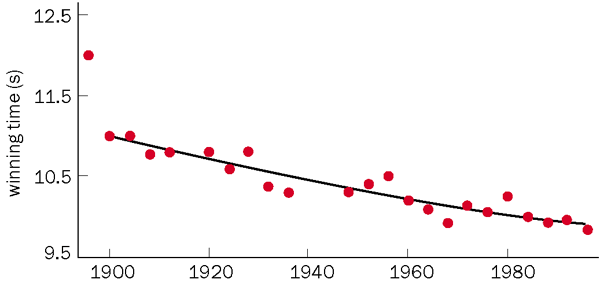
1 Sprinting to success Winning times in the men’s 100-metre sprint at the Olympic games from 1896 to 1996. The improvements are mostly due to better nutrition, physiology and coaching.
As far as the sprinters themselves are concerned, the technology available to them is fairly limited. Most developments have focused on improving the surface of the track and designing running shoes that are lighter and give a better fit. The winning times for the 100-metre sprint at the modern Olympics show a downward trend that appears to be levelling out (figure 1). Improvements are now about 0.006 seconds per year compared with 0.015 seconds per year a century ago. Given the scatter in the data it is difficult to see any particular moment when there has been a significant increase in performance. It is likely, therefore, that the 100-metre sprint is dominated by human ability and that improved performance is most likely caused by improvements in diet, coaching, fitness and physiology, with technology playing a relatively minor role.
Amazingly, Donovan Bailey, who won the 100-metres gold medal at the 1996 Olympics in Atlanta, would have beaten the first gold-medal winner of 1896 by some 20 metres!
The physics of pole-vaulting
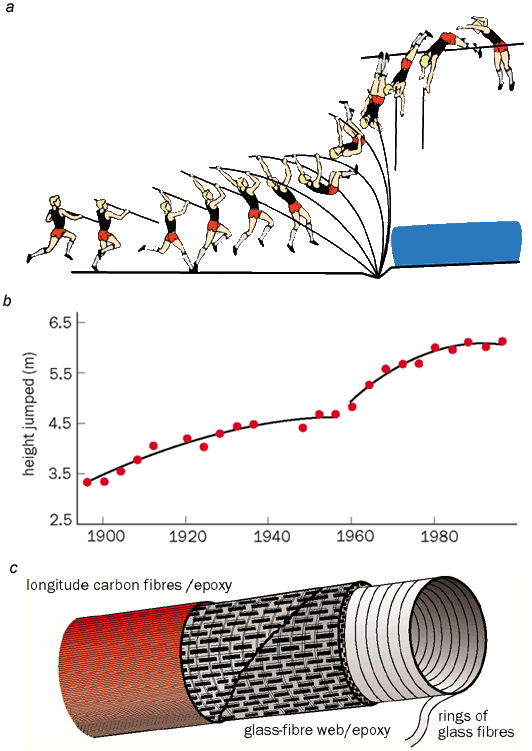
Pole-vaulting was not one of the original Olympic sports in ancient Greece. Some think that the sport was derived from the Dutch habit of dyke-jumping, although one of the earliest pole-vaulting stands was built in Germany in 1791. The objective is, obviously, to get the athlete’s centre of mass over the highest bar possible. However, today’s pole-vaulters use a quite different technique to that used 100 years ago, when athletes went over the bar with their feet pointing downwards. Athletes now do a complex gymnastic manoeuvre, turning upside down as the jump takes place (figure 2a). We shall see that this is a direct result of the technology used.
2 Vaulting to new heights (a) Today’s pole-vaulters perform a complex gymnastic manoeuvre to propel themselves over the bar feet first. Modern carbon-fibre or glass-fibre poles are strong yet flexible enough to allow this technique to be used. (b) Winning heights in the men’s pole-vault at the Olympic games from 1896 to 1996. The replacement of old-style bamboo poles with more flexible glass-fibre poles in the early 1960s led to a dramatic improvement in winning heights. (c) A cross-section of a carbon-fibre pole.
The rules for pole-vaulting that are set by the International Amateur Athletic Federation (IAAF) – the sport’s governing body – are extremely liberal. There is no restriction on the length of the pole, the materials from which it is constructed or its energy-storage capacity. The only stipulation is that poles should be generally smooth and not be covered with too much adhesive tape.
Poles were originally made out of solid wood, probably hickory. Slightly more flexible bamboo poles were introduced in the early 1900s, mostly by American vaulters, who dominated the sport at the time. Basic mechanics tells us that the highest stresses occur on the outside of a bent beam, and that a symmetrically bent object, such as a pole, actually has a zone down the middle (known as the neutral axis) where the stresses are very low and even zero. There is therefore no need for the pole to have any mass down the centre. Bamboo, which is a naturally hollow material, is much lighter per unit length than a solid pole – yet provides the same maximum stress. This enables an athlete carrying a bamboo pole to either take a faster run-up or to use a slightly longer pole.
The use of bamboo poles led to a steady increase in the winning height of the Olympic pole-vaulting competition (figure 2b). However, the improvements were starting to level off by the mid-1950s, and in the early 1960s bamboo began to be replaced by glass-fibre poles. This led to a dramatic increase in the winning heights. Glass-fibre poles consist of long filaments of glass fibre – ranging from 3-20 µm in diameter – embedded in a matrix of less stiff polymer resin. The material can readily be fabricated into different shapes and has a high stiffness-to-weight ratio.
Essentially pole-vaulting involves the conversion of the kinetic energy of the running athlete to the potential energy of the jump using strain energy stored in the pole (the energy stored in elastic deformation). Consider an athlete of mass m = 80 kg running at a speed v = 10 m s-1, who has kinetic energy of 1/2mv2 = 4000 J. If this energy is converted with 100% efficiency into potential energy mgh, where g is the acceleration due to gravity and h is the height jumped, then the athlete can climb a height of 4000/mg, or just over 5 m. However, in reality, most pole-vaulters can jump heights of nearly 6 m. So where does the extra energy required to propel the athlete to these greater heights come from?
It turns out that the extra energy comes from the athleticism of the vaulter bending the pole. Energy is stored in the pole as it is bent or strained by the athlete’s muscles, and returned to the vaulter as the pole recoils. The strain energy comes from the work done by the muscles of the athlete as he or she takes off, carrying out work on the pole as it is bent. The maximum strain energy of the pole is ms2/2rE, where s is the maximum or “failure” stress on the outside of the pole, r is its density and E is its Young’s modulus (i.e. its “stiffness”).
Bamboo has a relatively low Young’s modulus and density, and a moderate failure stress. Glass fibre also has a low Young’s modulus and density – but a much higher failure stress than bamboo. In fact, the maximum strain energy that can be stored in a glass-fibre pole before it breaks is about 2500 J, compared with just 100 J for bamboo. One consequence of this is that glass-fibre poles can be bent through much larger angles before breaking, which is why athletes can use them to jump gymnastically over the bar.
If we assume that the efficiency of a glass-fibre pole is 50%, an extra 2500 J of stored energy would be enough to get the athlete’s centre of mass, feet first, over the bar. In other words, our athlete would have a kinetic energy of 4000 J plus a strain energy from the pole of 1250 J, giving a total energy of 5250 J. If all this is converted into potential energy, the athlete would climb a height of 5250/80g ~ 6.5 metres.
The advances in pole-vaulting performance are certainly not as good now as they were in the 1960s. That has not, however, stopped researchers from searching for further improvements, which have included introducing carbon fibres to make the pole still stronger and lighter (figure 2c), and allowing the pole to vary in thickness along its length. The latter innovation stemmed from work done in 1996 by Stuart Burgess, then at the Department of Engineering at Cambridge University. He demonstrated theoretically and experimentally that, during a jump, the greatest bending moments – and hence the greatest stresses – are at the middle of a pole, while the lowest stresses are at the ends. In other words, the ends of a pole can be made narrower – and hence lighter – without compromising the pole’s performance. Burgess therefore optimized the thickness of a pole so that it tapered towards its end, giving a mass saving. Also, the bending moment – and hence the failure stress – increases with the stiffness of the pole for a given section of the pole and radius of bend. The ideal pole therefore has a low stiffness, a low mass and a high failure stress.
Clearly, pole-vaulting is an example of a sport in which technology has been used to improve athletic performance. As the Olympic winning heights in the discipline level off, it will be interesting to see if our ingenuity can provide another technological leap to allow pole-vaulters to jump even higher.
The javelin
The javelin was an event first enjoyed by the Mycenaeans at least 3000 years ago. The Greeks of 500 BC used thin wooden javelins with a cord wrapped around the centre of mass. When the javelin was thrown, the athlete would hold onto the end of the cord to make the javelin rotate freely through the air – in much the same way that a toy gyroscope is made to rotate by pulling a string. The rotation stabilized the javelin by averaging any asymmetries in its construction about a central axis.
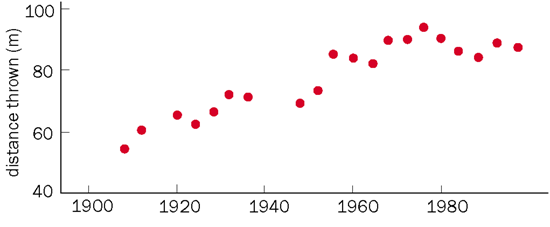
3 Javelin changes Winning distances in the men’s javelin competition at the Olympic games. By the mid-1980s some athletes could throw javelins further than 100 m, which forced the IAAF to change the rules. The new rules stipulated that the centre of mass should be moved forward by 4 cm. This helps to keep the nose down reducing the lift on the javelin and cutting the distance it can travel.
Compared with the pole vault, the modern javelin has relatively strict rules governing its design (for example, the length of a javelin for the men’s event must be between 2.60-2.70 m and have a minimum mass of 800 g). It must also be smooth, and there are strict geometric rules stipulating where its centre of mass must lie. The reason for this can be seen by examining the winning throws at Olympic games from 1904 onwards (figure 3). At the London games in 1908 the winning throw was just over 50 m. By 1976 this distance had increased to almost 95 m and in 1984 Uwe Hohn (from the former East Germany) threw a staggering 104.80 m in a non-Olympic event. Athletes at this time were able to throw javelins almost the full length of a sports stadium, putting the lives of spectators at risk! The IAAF decided fairly quickly that the javelin had to be re-designed to underperform. This was done by moving the centre of mass forward by 4 cm – the effect of which is explained below.
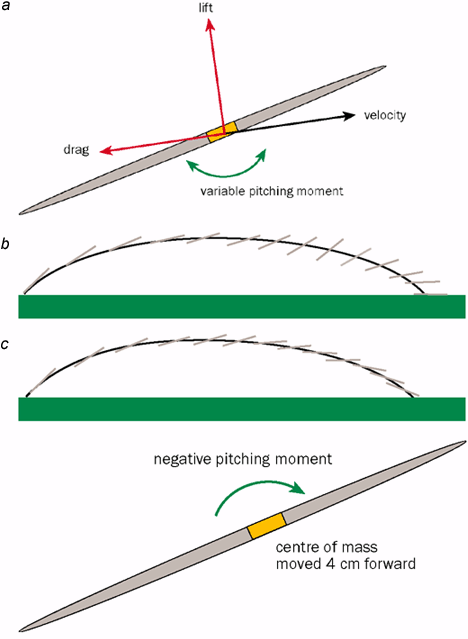
At about the time of the IAAF rule change in the mid-1980s, Mont Hubbard of the University of California at Davis carried out a series of tests and simulations to look into the physics of the flight of the javelin. He found that javelins are launched at about 30o to the horizontal with an “angle of attack” of about 7o – in other words, the javelin is tilted 7o more steeply than the direction traced by its centre of mass. The angle of attack influences both the javelin’s “lift”, which acts perpendicularly to its direction of motion, and the drag, which acts parallel to it (figure 4a). These forces do not act at the centre of gravity but are displaced from it through a “centre of pressure” – the point through which the aerodynamic forces (lift and drag) act.
4 Flight of fancy (a) A force diagram for an ‘old-rules’ (pre-1984) javelin. The ‘pitching moment’ varied throughout the flight. (b) A ‘positive’ pitching moment occurred in the early stage of the flight, rotating the javelin about its centre of mass so that the angle of attack increased, giving the javelin a low lift and low drag. In the later stages of its flight the pitching moment acted in the opposite sense a ‘negative’ pitching moment. This rotated the javelin so that the angle of attack decreased and the drag and lift increased until the tip only just hit the ground first. (c) In the mid-1980s the IAAF changed the rules so that the centre of mass had to be moved 4 cm further forward. The ‘new-rules’ javelin only has a negative pitching moment, which helps to keep the nose down and reduces the distance travelled.
If the centre of pressure is behind the centre of mass, it causes a “pitching moment” that makes the tip dip down. However, if the centre of pressure is ahead of the centre of mass, it makes the angle of attack increase, causing the javelin to stall. Although the lift and drag forces were relatively constant from one “old-rules” (pre-1984) javelin to another, the pitching moment was not since it moved forward and back about the centre of mass throughout its flight. The result was that the furthest distance a javelin could be thrown depended on how it was designed. A “positive” pitching moment occurred in the early stage of the flight of an “old-rules” javelin, rotating the javelin about its centre of mass so that the angle of attack increased (figure 4b). In the later stages of its flight the pitching moment acted in the opposite sense – a “negative” pitching moment – rotating the javelin so that the angle of attack decreased until the tip only just hit the ground first.
When the rules were changed so that the centre of mass was moved 4 cm forward, it effectively removed any positive pitching moments so that the angle of attack did not increase early on in the flight. This caused the overall lift to drop. A “new-rules” javelin keeps its nose down relative to its velocity vector, and there are no high lift forces at the end of the trajectory. The net effect is to reduce the total distance a javelin can travel. Indeed, the winning javelin throws at the Olympics are now some 15 m less than they were before the rule change.
As far as the rule-makers are concerned, the new javelin has two advantages: it does not fly as far and it lands tip first, which is obviously safer. The new rule also gives the athlete an advantage because the “old-rules” javelin was very sensitive to the initial throw conditions, and even a small change could reduce distances by as much as 20 m. The “new-rules” javelin, in contrast, is much less sensitive to initial conditions, partly because it always has a negative pitching moment. Athletes can now produce much more consistent throws. But as figure 3 makes clear, it might not be too long until a further rule change is required!
The balance between physics and sport
The examples in this article highlight the varying impact that technology has had on sport. In the 100-metre sprint, it seems that the strength and power of the athlete dominates, and that no technological development has arrived that requires a change of rules. Performances in the pole vault, in contrast, improved dramatically with the introduction of flexible poles in the 1960s. However, it was the ability of the athlete to adapt to the new equipment – rather than the physics of the equipment itself – that produced the gains. And since the technology has been widely available to all athletes, the ruling bodies have – so far – not deemed it necessary to change the rules to deliberately keep heights low. Meanwhile, the authorities altered the rules of javelin by exploiting the laws of physics to reduce throw lengths and make the sport safer for both athletes and spectators.
There is, it seems, a balance between technology and tradition. The ruling bodies either allow technology to advance a sport (such as in the pole vault) or use it to under-engineer a sport (such as the javelin). Is it cheating? Well, as long as the same technology is available to all competitors at the same time, then ultimately it comes down to the ability and the skill of the athlete. Problems only arise when technology is available exclusively to only one group of athletes.
Happily, a century on from Baron de Coubertin’s original vision of the Olympics, the motto swifter, higher, stronger ultimately still depends on the skill of the athlete.
The UK is about to experience an explosion in the number of new interactive science centres. By this time next year about a dozen major new science-centre projects will have opened (see table). These large-scale capital schemes have been funded by a mixture of National Lottery grants from the Millennium Commission and money from public and private bodies. The huge size of these centres is in marked contrast to the existing network of smaller science centres.
Although all science centres have their own slightly different philosophies, they each share a common mission – to make science and technology more accessible to the public and school groups through hands-on exhibits, demonstration shows and workshops. The first interactive science centres in the UK opened in the mid-1980s, with the development of Launch Pad at the Science Museum in London, Techniquest in Cardiff and the Exploratory in Bristol.
As the repercussions from the controversial £758m Millennium Dome in London continue and the completion dates of these ambitious new projects approach, it seems likely that the current media sport of “millennium-project bashing” will reach new heights of frenzy and farce. Yes, some of these new centres will face considerable difficulty meeting their visitor targets and they will all require ongoing financial support. Yet if the centres are correctly managed, the massive injection of funds – several hundreds of millions of pounds – represents an enormous opportunity for science communication and education in the UK.
In an increasingly competitive leisure market and under the intense glare of a media spotlight, science centres face many challenges. In this frenetic environment there is a danger that existing and new science centres will concentrate solely on immediate survival at the expense of being innovative and far-sighted. Obviously a strong business approach and a desire to survive in the short term are critical, but it is easy to get lost in these concerns. Many of the longer-term challenges, discussed below, do not appear to make immediate sense on a balance sheet and pose formidable difficulties. However, they lie at the heart of the mission of many science centres.
* The figures quoted include the total cost for all of the elements of each project, not just the science centre.
Having a dream
In their efforts to attract new audiences and compete for the relatively small proportion of the public who are attentive to science, science centres are likely to leave themselves open to ill-informed claims of trivializing science and placing entertainment before education. While I feel that science centres can learn some valuable lessons from the experience of commercial visitor attractions, such as theme parks, there are fundamental differences in the approach of these two types of attraction.
Science centres must continue to reject the notion that education and entertainment are mutually exclusive extremes. In a science centre, visitors have choices and can manipulate the exhibits to produce unique learning experiences, whereas in a theme park the exhibitions are designed to manipulate and direct each visitor along a similar experience. If science centres are to maintain their integrity and distinct identity in the crowded leisure market, it is vital that each of the centres is clear about what it wants to achieve and that this mission is shared by all of the staff at the centre.
But the altruistic mission of making science accessible for as wide a range of visitors as possible can conflict with a deeper economic need for centres to maximize the income from visitors. It is far more costly to cultivate new, reluctant audiences than it is to capitalize on existing visitor groups. Some of the new centres have created exhibitions aimed at particular under-represented visitor groups and they talk confidently about “greater social inclusion”, although how they intend to achieve this worthwhile but seemingly intractable goal is less clear.
Outreach programmes represent one of the best ways of targeting those people who are uninterested in or intimidated by science. By taking science events out to the places where people socialize, it is possible to begin to break down some of the barriers that normally prevent these groups from engaging with science.
Visitors are also intrinsically social creatures and the interactions between staff and visitors at exhibits and during shows play a crucial part in the overall experience of each visitor. The genuine enthusiasm of staff can help to convey the human side of science and encourage visitors to engage with science more confidently – important outcomes of any science-centre visit. We must therefore develop progressive and secure career structures for the staff who interact directly with visitors.
New views of science
Critics of existing science centres have argued that most centres present a very limited view of the breadth of the scientific enterprise. They tend to concentrate on the topics that can be most easily presented through hands-on exhibits – mainly fundamental physics, with the occasional nod to biology or chemistry. The new science centres are starting to broaden this base by including exhibits and programmes about medicine, genetics, geology, psychology, computer science, modern physics, space science, meteorology, environmental science, engineering, robotics, design and mathematics.
I also believe that a wider appreciation of how science actually works is critical in facilitating an informed public debate about contemporary scientific issues. I am not suggesting that centres should try to communicate the idealized inductive “scientific method” taught in schools, because it bears little resemblance to the methods used by real scientists. At their best, open-ended interactive exhibits allow visitors to experience the process of discovery for themselves. It is this creative process that underpins all of science and technology.
It is also possible to develop programmes of shows, dramas and debates that help to communicate the real nature of science and scientific knowledge: that science is a series of provisional models that best represent reality according to our present knowledge; that science can address some questions but not others; that vigorous debate and disagreement between experts is a normal, and indeed necessary, part of the scientific process at the limits of our knowledge; and that probability and risk play a role in all scientific theories. Conveying key ideas about the process of discovery and the nature of scientific progression involves some of the most difficult, yet rewarding, challenges facing science communicators.
Courting controversy
Given the scant attention that most existing centres have paid to contemporary scientific issues and the nature of science, it is hardly surprising that visitors do not associate the “established science” that they experience during their visit with the “controversial science” that they encounter every day in the media. Is it unreasonable to expect one experience to inform the other? Most existing science centres have argued that the public do not want to be confronted with difficult or ethical issues in their leisure time. However, I believe that the public will attend to and try to grasp those scientific issues that they consider to be important to their lives.
Open any newspaper and note the science stories that are covered regularly – BSE, genetically modified food and the potential dangers of mobile phones, for example. News editors are not renowned for publishing material in which the public has no interest. To argue that the public are not sufficiently sophisticated to cope with the limitations and negative consequences of science is to do a disservice both to the scientific enterprise and to the public, who fund it and are affected by its products.
The Antenna exhibition in the recently opened Wellcome Wing at London’s Science Museum attempts to tackle exactly these kinds of socio-scientific issues in a neutral way, which, it is hoped, will extend the coverage that these topics receive in the media. These exhibits will be replaced regularly in an attempt to keep pace with the latest science news stories. The exhibition currently includes the issues of drugs in sport and the human genome project.
I am not, however, suggesting that every exhibition and programme has to raise uncomfortable contemporary issues. Science centres, like any other media, have strengths and weaknesses in the topics that they can communicate. However, by offering visitors a choice of subjects, including topical issues, I feel that the centres can present a more complete and mature representation of science.
It has been argued that the new landmark science-centre projects are expensive architectural edifices imposed on local communities by external agencies. I believe that this image will change once these centres are open and they can begin their real mission – developing networks of people and programmes to communicate science throughout the local community. There are huge opportunities for centres to develop innovative schemes with local schools, adult-education colleges, universities, industries, scientists, and community organizations. How many venues currently exist to encourage local scientists to meet members of the public so that each group’s understanding of the other can be improved?
Users or just visitors?
Finally, the motivational and inspirational aspects of a visit to a science centre are well recognized, but centres need to find ways to encourage visitors to follow up any newly discovered interests or gains in confidence once they leave the centre. How can these short-term outcomes be turned into actual behavioural changes in the way visitors engage with science after a visit? I believe that the centres need to provide links to the other sources of information about science and technology available to the public.
Perhaps the greatest medium- to long-term challenge facing science centres in the UK is in trying to change the way in which people use them. I believe that those centres that survive the next five crucial years will tend to fall into one of two categories: visitor attractions – large centres that, thanks to their location and budget, can sustain infrequent visits by a large number of visitors; and resource centres – smaller set-ups that act as a resource and forum for regular users in their local community and provide a gateway between scientists and the public.
The success of these resource centres will not be crudely measured by the number of visitors that pass through a turnstile, but rather by the extent to which local people actively use them to reconstruct and engage in a new relationship with science – a relationship founded on dialogue that encourages the public to have the confidence to raise their concerns and participate in scientific discussion as a part of their everyday lives. Of course, this model of a science centre raises fundamental questions about the importance of informal learning in our society and how it should be funded.
The way ahead
Many of the challenges outlined above require a greater emphasis on people and programmes in science centres than on exhibits. Programmes of shows and events can respond more quickly and flexibly to different audiences and issues. Allowing visitors to experience and interact directly with physical phenomena through exhibits must remain a vital element of all science centres, but to continue to under-represent other media because they are not “hands-on” in a literal sense is surely to let the medium dictate the message. Unfortunately, staff costs are already the major expense of most science centres and this approach requires a sustained investment in staff.
I hope that the science centres of the 21st century will find the courage and vision to experiment with different styles and techniques to engage new audiences and deal with a wider range of issues. Like science itself, their future lies in continual innovation and evolution.
The latest evidence comes from an analysis of the magnetic fields surrounding Europa. When a conducting body is placed inside a time-varying magnetic field, electrical currents are induced inside the conductor, which in turn produce measurable secondary magnetic fields. In this case the conductor is Europa and the magnetic field is the magnetosphere of Jupiter.
Kivelson’s team inspected data gathered as Galileo passed close to the Jovian moon in January 2000. The spacecraft’s magnetometer showed that the induced magnetic field of Europa changes erratically with time, which suggests the presence of an electrically conducting layer beneath the surface. Another early study had suggested that Europa might have its own permanent magnetic field, but such a field would vary regularly. A continuous layer of water with a composition similar to Earth’s seawater best explains the observations.
Theoretical, geological and spectroscopic arguments all support the subsurface ocean theory, although it is still possible that the layer is made up of graphite or some other carbon-rich material. The Europa orbiter, scheduled for launch in 2003, is expected to establish the existence of the ocean using radar techniques.
Argon is the lightest yet of the inert gases to have formed a compound. It is difficult to persuade light inert gases to react because their outer electrons are shielded less from the electrostatic pull of the nucleus by the inner electrons that are present in heavier noble gases. Khriachtchev and co-workers created the new compound argon fluorohydride – or HArF – by photolysis of hydrogen fluoride in an inert argon matrix at 7.5 kelvin. The matrix separates the HArF molecules, which would break up into more stable argon and hydrogen fluoride molecules if they collided with each other. Heating above about 27 kelvin also causes the molecules to decompose. ‘The first Ar molecule will have no practical applications because it is too reactive’, Markku Rasanen, a colleague of Khriachtchev, told PhysicsWeb, ‘but its bonding puts us on the right track for making further Ar compounds which may have applications’.
The team believes that a similar process might yield equivalent compounds of the remaining light inert gases, helium and neon. Although early attempts have been unsuccessful, the discovery of the new compound may spur other researchers into action.