Philippe Busquin, the European Union’s commissioner for research, has moved with remarkable speed since he was appointed last September. By January he had published a consultation paper on his big idea, the “European research area” – an initiative that was welcomed by science organizations across Europe – and by last month his plans had received a positive reaction from the European council of research ministers. Busquin’s consultation paper* might have made less impact had it not started with some stark facts about research in Europe. The 15 EU states invest about 1.8% of their gross domestic product on R&D, compared with 2.8% in the US and 2.9% in Japan. Europe also employs proportionally fewer researchers than the US or Japan, and its trade deficit for high-tech products – currently Euro 20 billion per year – seems to be getting worse.
So what needs to be done to establish the European research area? Busquin’s paper contains more than 50 ideas: some are modest extensions of existing EU polices, such as networking centres of excellence, while others seem “no-brainers” (e.g. building a high-speed European communications network). As Busquin himself admits, many of the ideas are not new.
However, Busquin’s vision of a European research area also calls for three fairly radical, if logical, developments: increasing the mobility of young researchers across Europe; introducing a European patent; and improving the co-ordination of national research programmes, to the extent of making parts of them open to scientists from other countries.While most researchers would welcome the first and second proposals, it might be thought that Busquin’s proposal to “open up” national research programmes to outsiders would meet with resistance. However, the European Science Foundation – an association of 67 national funding agencies from 23 European countries – has already proposed a scheme, EUROCORES, that would involve funding agencies from four or more countries running collaborative research programmes, with applications judged by international peer-review panels.
Busquin’s ideas will also require an imaginative response from his own staff. The EU currently drives its research agenda through the multiyear framework programmes. While EU officials like to point out that these only account for 5% of public spending on research in Europe, the fifth framework has a hefty budget of Euro 15 billion. It has also been widely criticized for being too complex and inflexible, and too focused on near-market research at the expense of basic science. Busquin needed to move fast to prevent these mistakes being repeated in the sixth framework. He has made a solid start and it is to be hoped that the final outcome really does result in a dynamic and world-class European research area.
*Towards a European Research Area: europa.eu.int/comm/research/area.html
Light fantastic
In his novel London Fields, Martin Amis writes: “Nothing, no information, can reach us faster than cosmic light. There’s a speed limit up there. The universe is full of signs, circled in red, saying 186 287.” Einstein had reached a similar conclusion in 1905. It was a surprise, therefore, to learn that physicists in Florence have observed pulses of microwaves travelling 25% faster than the speed of light (p3).
But that seems modest compared with the enhancement by a factor of 300 witnessed in an experiment at Princeton: the laser pulses in Lijun Wang’s laboratory appear to leave his apparatus before they even arrive. Indeed, Wang’s experiment was so superluminal that reports of it appeared in the New York Times while it was still being peer-reviewed at Nature. The laws of physics, however, have not been shattered. Effects similar to those observed by Wang were predicted in the mid-1990s. Amis and Einstein were right.
What is happening to the subject that we have loved and served? More than any other discipline, physics has transformed the face of civilization, particularly during the last century. It has developed techniques and insights that have propelled chemistry, biology and medicine to new heights. It has led to the genesis of modern engineering and has created vast industries, such as energy, communications, computing and the broadcast media. It has been the winner of wars and preserver of peace. It has played a seminal role in the emergence and development of the Internet, one of the most significant new communication media in history. As we stand at the threshold of the 21st century, its potential for economic and social innovation is greater than ever.
Yet as we survey the state of physics as a viable enterprise, the signs of accelerating decay and decline are distressingly clear. The number and calibre of students and teachers that it attracts are falling alarmingly. Academic departments are shrinking, amalgamating and closing. Corporate physics labs are deemed to be an extravagance in the era of deregulation and “market forces”. Morale in the global community of physicists is waning as professional positions, research grants and fellowships continue to diminish. Among non-physicists, and particularly among non-scientific decision makers in politics and business, physics is perceived to have had its day, never again to merit the pivotal position that it held during the 20th century. Physics is in crisis, it would seem, and the future is believed to belong to biotechnology and software engineering.
Analysis before prognosis
It is vital that we, as physicists, analyse the current crisis carefully before rushing to embrace easy answers and shallow remedies. It is sometimes assumed, for example, that it will be enough merely to publicize what we do – that the root of the problems of our subject is a simple inability to market it as aggressively as those in biotechnology or IT, for example, manage to do. Certainly we must take these elementary steps, difficult though they may be for us physicists, who have always considered the worth of our subject as self-evident. However, we must delve more deeply into the state of physics and physics education, asking difficult and embarrassing questions.
For example, has physics lost its intellectual appeal as the basis for all science and engineering? Does physics training still provide the talents needed at the cutting edge of technology? Have our courses and research programmes adapted to the rapidly changing dynamics of university education, as it evolves from serving an elite group of school leavers to providing advanced vocational education for a large cross-section of society? Have we adapted to the new reality of the pace and scope of innovation and investment in high-tech industry, as the new knowledge-based economies place ever-greater emphasis on intellectual property and the laws of increasing returns?
Nothing has provoked these questions and their attendant doubts as much as the advent of IT and the Internet, where the value of bits is emphasized while the value of atoms is taken for granted. There are, it appears, no atoms in cyberspace.
Simply too successful
In many ways, physics has been a victim of its own successes. We have helped to create a rapidly changing world, in which microscopes, telescopes, space vehicles, MRI scanners, mobile phones, lasers, DNA-sequencing equipment and the rest are yesterday’s news. We cannot compete with the palpable sense of excitement created by popular books such as Nicholas Negroponte’s Being Digital, in which it is assumed that physicists and electronic engineers will continue to do their jobs so well that unlimited computing power, data-storage capacity and communication bandwidth can be taken for granted by the software engineers.
Our systems are so capable and reliable that they have become transparent – the performance of practical systems being limited only by software glitches and limited user understanding of the vast networks that we provide. Packet-switched data networks are so versatile that they will one day probably cost their users nothing apart from a modest access fee. (Perhaps we should build fibre-optic systems and digital radio transmitters that cost a fortune to use and break down more often so that our crucial role will become more apparent.) There are, in fact, many atoms in cyberspace, but they perform so flawlessly that only the antics of the bits and pixels that they support are visible to the world at large.
At the other end of the spectrum, our research into the “external” frontiers of physics – fundamental areas such as high-energy physics, cosmology, gravitation and quantum physics, in which we are pushing to the limits of energy, time and distance – has succeeded so well and progressed so far that it has become incomprehensible to all but a few specialists. Large-scale transnational efforts are often required, in which politics and economics can dominate and obscure the physics. Whether looking at bits, quarks or plasma ignition – or in many other cases where physics has a vital role to play – the importance of physics is invisible to non-physicists. Clearly our communication and marketing skills need to be developed and used in earnest, and they must be directed at the future rather than the past.
Then there is the anti-science culture that is rising steadily in most Western countries. Again much of the blame can be laid at the door of the practitioners: our successes have distanced physicists from the public, making us appear mysterious or arrogant. We have become closely identified with the military-industrial complex, particularly in the US and former Soviet Union. We are blamed for releasing the twin genies of nuclear fission and thermonuclear weapons. Such is the level of distrust that we have engendered that even the power lines and cellular communication masts required by the rapid growth of new industries are believed to cause health hazards comparable to those of industrial pollution or tobacco smoking. Scientists are believed to be part of the problem rather than the solution.
And what of our relationship with the vast physics-based industries that drive the developed world’s economies? In the past, physicists have had so many choices and career options that we have kept only the most intellectually stimulating and academically respectable topics (in our opinion) and abandoned many of the more mundane but useful technologies and industries to the engineers. The contrast with chemistry- and biology-based industries is striking: to pursue a career in these industries one needs a degree in the core scientific discipline, whereas to enter physics-based industries it is usually easier if one has a degree in some branch of engineering. Physics is erroneously seen by many employers as being too abstract and esoteric for their needs.
Solutions to the problem
The crisis now facing physics and physicists is a multilayered one that has developed over decades. To resolve it we will need a careful, considered and strategic response, combining immediate alleviation and long-term cure. In general terms we must capture and preserve the essential ethos and culture of physics, the prime reasons for its successes to date: its rigorous, mathematical, flexible and conceptual framework and its focus on fundamentals, problem solving and innovation. We must understand and reinforce how physics resonates with humankind’s natural instincts of curiosity, competitiveness and self-preservation. At the same time we must extend and reinvent physics to include far greater emphasis on information and energy, and their crucial roles in the future development of humankind.
More specifically, in the short term, we need to improve public understanding and approval of physics dramatically. We need to develop attractive foundation courses in physics for non-scientists, and produce and support good science journalists. We must immediately begin to reclaim our industrial base, developing our courses, research programmes and career paths to enhance the employment prospects for physicists – and not merely for physics graduates working as engineers or IT specialists.
We must make university physics courses more attractive and accessible to a range of students. However, we should avoid at all costs the temptation to “dumb down” to garner popularity: it would be far better to build a new education and training structure to enable moderately able students to master difficult material. Instead of the forbidding quasi-professional primary physics degrees now offered in European universities, with their steep learning curves, we should seriously consider schemes where students accumulate credits at a flexible pace toward broader primary degrees. Students would then learn to understand and use physics in context with mathematics, computing, chemistry, biology and engineering, and sample topics from the humanities and business studies. For those wishing to become professional physicists, this broader first degree would be topped up by a sharper, more focused, professionally accredited postgraduate degree involving vocational training and experience.
The 21st century will require new interdisciplinary insights and work habits, and we need to develop and position physics as an ideal basis for this continually evolving mode of education and working. A physicist should be seen as a person who can enhance any scientific activity or industry, because of both specific technical training, and general problem formulation and solving skills. Physics applied to economics and finance should be encouraged and researched rather than lamented as a waste of talent.
Longer-term answers
In the medium term – say during the next 10 years – we must reinvent physics to remain the basis for all science – the dynamics of bits and pixels as well as atoms and photons. This will require fundamental new approaches to information science, including (but not limited to) physical treatments of information at a quantum level.
We should develop the “internal” frontiers of physics – those areas in which we are finding new insights and applications within the currently accessible regimes of time, energy and space. These include dynamical systems and control, hard and soft condensed matter, environmental physics, biophysics, ultrafast optics and nanoscale electronics. Such topics should connect naturally and seamlessly with developments in the life sciences, information and communications technologies, energy studies and other emerging priorities. They should be accorded the same respectability as the external frontiers of physics, where elite efforts should continue for the sake of basic human curiosity.
In the long term – over some decades – physicists must increasingly focus on those areas crucial to the benefit of humankind, including medical physics, space exploration and novel forms of energy. There must also be a continued emphasis on information. While it is impossible to set targets and deadlines in these areas, it is vital that physics and physicists should play – and be seen to play – a vital role in the continued development of the human race.
We must persuade the politicians, captains of industry, journalists and other agents of influence that physics is an essential ingredient in the mixture of talents that is needed in the 21st century. We must restore the drive, energy and excitement to physics by reinventing both it and ourselves. We need to open up the doors and windows, clean out the cobwebs, and identify and safeguard the true treasures of physics. Only then can we set about the task of rebuilding our subject to become the basis of the new interdisciplinary science, engineering and innovation culture of the information age.
In the era of the Internet, massive amounts of information and multimedia have become easily accessible in every corner of the world. The decreasing cost of storing data, and the increasing storage capacities of ever smaller devices, have been key enablers of this revolution. Current storage needs are being met because improvements in conventional technologies – such as magnetic hard-disk drives, optical disks and semiconductor memories – have been able to keep pace with the demand for greater and faster storage.
However, there is strong evidence that these surface-storage technologies are approaching fundamental limits that may be difficult to overcome as the ever-smaller regions that store bits of information become less thermally stable and harder to access. Exactly when this limit will be reached remains an open question: some experts predict these barriers will be encountered in 2-3 years, while others believe they will not be reached for at least another five years. In either case, one or more successors to current data-storage technologies will be needed in the near future.
An intriguing approach for the next generation of data-storage systems uses optical holography to store information throughout the three-dimensional volume of a material. And by superimposing many holograms within the same volume of the recording medium, it should be possible to achieve far greater storage densities than current technologies can offer.
Although holography was conceived in the late 1940s, it was not considered a potential storage technology until the development of the laser in the 1960s. The rapid development of holography for displaying 3-D images led to the realization that holograms could potentially store data at a volumetric density of one bit per cubic wavelength. Given a typical laser wavelength of around 500 nm, this density corresponds to 1012 bits (1 terabit) per cubic centimetre or more.
In holographic storage, data are transferred to and from the storage material as 2-D images composed of thousands of pixels, each of which represents a single bit of information. Since an entire “page” of data can be retrieved by a photodetector at the same time, rather than bit-by-bit, the holographic scheme promises fast read-out rates as well as high storage densities. If a thousand holograms, each containing a million pixels, could be retrieved every second, for example, then the output data rate would reach 1 gigabit per second. (In comparison, a DVD optical-disk player reads data 100 times slower.) Despite this attractive potential, however, research into holographic data storage all but died out in the mid-1970s due to the lack of suitable devices that could transfer 2-D pixelated images.
Interest in volume-holographic data storage was rekindled in the early 1990s by the availability of charge coupled devices (CCD), semiconductor detectors, small liquid-crystal panels and other devices that can display and detect 2-D pages of data. The wide availability of these devices was made possible by the commercial success of hand-held camcorders, digital cameras and video projectors.
With these components at their disposal, researchers have begun to demonstrate the potential of holographic storage and have shown that data can be stored at densities equivalent to 390 bits per square micron. This density exceeds the storage capabilities of DVD disks by a factor of almost 20, and of magnetic disks by a factor of five.
The potential of holographic storage has generated numerous research efforts at large multinational companies, including Lucent, Imation, Panasonic, Sony and NEC, as well as independent start-up companies such as Holoplex, Tamarak and Accuwave. Several consortia of universities and industries are funded by the Defense Advanced Research Project Agency (DARPA) in the US with industrial partners including IBM, Siros, Rockwell, Kodak, Bayer and Aprilis.
Holography basics
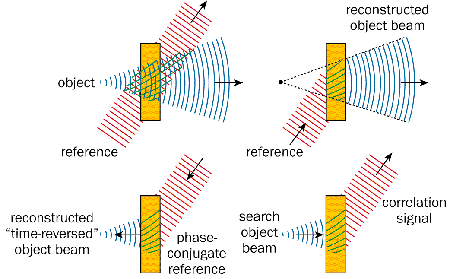
A hologram is a recording of the optical interference pattern that forms at the intersection of two coherent optical beams. Typically, light from a laser is split into two paths called the object and reference paths (figure 1a). The beam that propagates along the object path carries the information while the reference beam is used to record and read out the hologram. A plane wave is commonly used as the reference beam because it is simple to reproduce at a later stage.
1 How holograms work (a) Holographic storage of a single data bit. The spherical wave from a single pixel (the object shown in blue) interferes with a coherent plane wave (red) in the reference beam. The resulting interference pattern (green) changes the refractive properties of the photosensitive medium (yellow). (b) The hologram is read out using the original reference beam, which is diffracted by the interference pattern stored in the medium to reconstruct the original spherical wavefront. An image of this beam can be formed on a single detector pixel, resulting in the retrieval of a single bit. (c) The hologram can also be read out by illuminating it with a counter-propagating (or ‘phase-conjugate’) reference beam. The phase-conjugate beam returns to its point of origin, where the bit value can be read without a high-quality imaging system. (d) A third way to retrieve data involves illumination with a diverging beam called an object beam, which reconstructs the original plane-wave reference beam. This beam can be focused onto a detector and provides an optical measurement of the correlation between the stored data and the object beam. This technique allows us to search the stored data according to its content, rather than its address.
To make the hologram, the reference and object beams are made to overlap on a photosensitive medium, such as a photopolymer or an inorganic crystal, where the resulting optical interference pattern creates chemical and/or physical changes. As a result, a replica of the interference pattern is stored as a change in the absorption, refractive index or thickness of the media.
The pattern contains information about both the amplitude and the phase of the two light beams. This means that when the recording is illuminated by the read-out beam, some of the light is diffracted to “reconstruct” a weak copy of the object beam (figure 1b). If the object beam originally came from a 3-D object, then the reconstructed hologram makes the 3-D object reappear.
If the hologram material is thin – as it is on many credit cards – the read-out beam can differ in angle or wavelength from the reference beam that was used to record the image and the scene will still appear. However, if the hologram is recorded in a thick material, the reconstructed object beam will only appear when the read-out beam is almost identical to the original reference beam.
Since the diffracted wavefront accumulates energy from throughout the thickness of the storage material, a small change in either the wavelength or angle of the read-out beam generates enough destructive interference to make the hologram effectively disappear.
The sensitivity of the holographic reconstruction to changes in wavelength and angle increases with the material thickness, which means that the laser and read-out optics need to be stable and give repeatable results. However, destructive interference also opens up a tremendous opportunity: a small storage volume can now store multiple superimposed holograms, each one distributed throughout the entire volume. The destructive interference allows each of these stored holograms to be independently accessed with its original reference beam.
Several different techniques have been developed to define a set of suitable reference beams by, for example, slightly changing the angle, wavelength or phase of the original light beam. Using so-called angle multiplexing, as many as 10 000 holograms have been stored in a 1 cm3 volume.
Storing and retrieving digital data
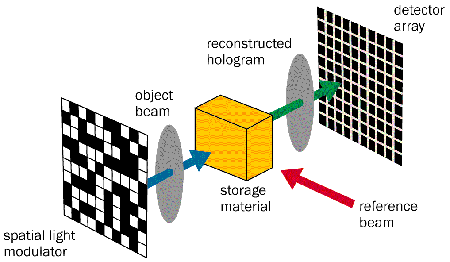
To use volume holography as a storage technology, digital data must be imprinted onto the object beam for recording and then retrieved from the reconstructed object beam during read out (figure 2).
The device for putting data into the system is called a spatial light modulator (SLM) – a planar array consisting of thousands of pixels. Each pixel is an independent microscopic shutter that can either block or pass light using liquid-crystal or micro-mirror technology. Liquid-crystal panels with 1000 x 1000 pixels and micro-mirror arrays with 1000 x 800 elements are commercially available due to the success of computer-driven projection displays. The pixels in both types of device can be refreshed over 1000 times per second, allowing holographic data-storage systems to reach input data rates of 1 gigabit per second &- assuming that the laser power and material sensitivities permit.
2 Basics of holographic storage Data are imprinted onto the object beam by shining the light through a pixelated device called a spatial light modulator. The reference beam overlaps with the object beam on the storage material, where the interference pattern is stored as a change in absorption, refractive index or thickness of the medium. A pair of lenses image the data through the storage material onto a pixelated detector array, such as a charge coupled device (CCD).
The data are read using an array of detector pixels, such as a CCD camera or a semiconductor sensor. The object beam often passes through a set of lenses that image the SLM pixel pattern onto the output pixel array (figure 2). To maximize the storage density, the hologram is usually recorded where the object beam is tightly focused.
When the hologram is reconstructed by the reference beam, a weak copy of the original object beam continues along the imaging path to the camera, where the optical output can be detected and converted to digital data.
The speed of a storage device is described by the read-out rate (in bits per second) and the latency, or time delay, between asking for and receiving a particular bit of data. To access holographically stored data, the correct reference beam must be directed to the appropriate spot within the storage media. The hologram is then reconstructed and the optical signals processed and decoded to extract the desired digital data. The latency tends to be dominated by mechanical movement, especially if the storage media has to be moved.
The read-out rate is often dictated by the camera integration time: the reference beam reconstructs a hologram until a sufficient number of photons accumulate to differentiate bright and dark pixels. A frequently mentioned goal is an integration time of about 1 millisecond, which implies that 1000 pages of data can be retrieved per second. If there are 1 million pixels per data page and each pixel stores one bit, then the read-out rate is 1 gigabit per second. This goal requires high laser power (at least 1 W), a high-quality storage material and a detector that has a million pixels and can be read out at high “frame rates”.
Frame rates of 1 kHz have been demonstrated in such “mega-pixel” CCDs, but these are not yet commercially available. However, low-noise mega-pixel semiconductor-detector arrays that can support 500 frames per second are expected to become available soon. Even with these requirements, faster read-out rates and lower latency could be reached by steering the reference-beam angle non-mechanically, by using a pulsed laser and by reading only the desired portion of the detector array.
Both the capacity and the read-out rate are maximized when each detector pixel is matched to a single pixel on the SLM, but for large pixel arrays this requires careful optical design and alignment. At IBM’s Almaden Research Center in California, we have built several test platforms on which this pixel-to-pixel matching has been achieved. The first such platform was designed to test holographic recording materials for the DARPA-sponsored Photorefractive Information Storage Materials (PRISM) program.
We have designed the PRISM tester to have customized imaging optics and a high degree of alignment (figure 3). This means that any errors that occur while the data pages are stored and retrieved can be unambiguously assigned to the storage material under study.
These high-performance features have allowed our partners in materials development – including Aprilis and Bayer &- to evaluate and markedly improve their materials and fabrication processes. Since the reference beam can be delivered to the front, back or sides of samples, the PRISM system has been able to test and study the recording physics of a wide variety of storage materials, including both write-once and erasable materials.
Recording materials
Materials for writing permanent volume holograms generally involve irreversible photochemical reactions that are triggered by the bright regions of the optical interference pattern. A photopolymer material, for example, polymerizes in response to optical illumination: material diffuses from darker to brighter regions so that short monomer chains can bind together to form long molecular chains. And in a so-called direct-write or photochromic material, the illuminated molecules undergo a local change in their absorption or index of refraction, which is driven by photochemistry or photo-induced molecular reconfiguration.
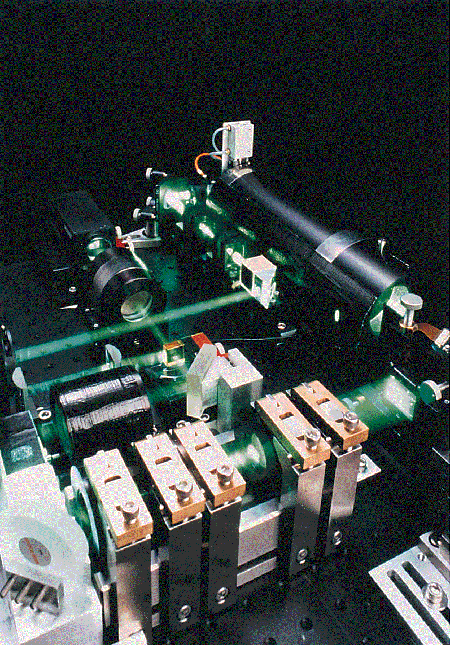
3 Testing times for materials A close-up of the PRISM apparatus used to test holographic materials. The spatial light modulator is a chrome-on-glass mask (not shown), and the detector array is a portion of a large CCD camera comprising 1024 x 1024 pixels (not shown). A pair of precision rotation stages (centre) allow the reference beam to enter the storage material (upper centre) at any horizontal incidence angle.
Both types of materials are inexpensive to make in bulk, but both can have problems reproducing the object beam faithfully. With a photopolymer, problems arise because the material shrinks during recording, distorting the reconstructed pixelated image. The direct-write material responds both to the rapid variations of the interference pattern encoded with data and to long-range brightness variations across the illuminated spot. Such effects distort the reconstructed data pages. Fortunately, all these problems can be minimized by careful system design. For example, we have developed a novel optical-illumination system that delivers beams with extremely uniform brightness.
One advantage of a photopolymer is that leftover monomers can be polymerized after recording without affecting the holograms. In contrast, a direct-write material requires a separate chemical or optical step after the hologram-recording process to deplete the remaining absorbers. This is necessary otherwise the light from the read-out beam would induce further photochemical reactions, which would reduce the contrast between the bright and dark fringes in the recorded interference pattern and thereby erase the stored holograms. As with photographic film, both these types of write-once media must be protected from ambient light before use, and tend to lose their effectiveness as they age.
Although problems with shrinkage, scattering and dynamic range remain, recent developments in these write-once materials have overcome previous difficulties with poor optical quality and excessive absorption. And fairly thick samples (0.5-1 mm) have been demonstrated. Together with recently developed multiplexing techniques that use spherical or speckled reference beams to increase the number of holograms that can be superimposed in thin media, these developments bring “write-once/read-many” holographic storage systems close to the prototype stage.
Most erasable holographic materials are inorganic photorefractive crystals doped with transition metals or rare-earth ions. These crystals are often available in centimetre-thick samples and include lithium niobate, strontium barium niobate and barium titanate doped with iron, cerium, praseodymium or manganese.
These materials react to the light and dark regions of an interference pattern by transporting and trapping electrons, which subsequently leads to a local change in the index of refraction. The trapped charge can be rearranged by later illumination, so it is possible to erase recorded holograms and replace them with new ones.
This would seem to enable a read-write storage device in which small blocks of data can be written, read and erased equally well. However, the recording rate of photorefractive materials is typically 50 times slower than the achievable read-out rate. In addition, it is quite difficult to erase individual holograms from a small storage volume without affecting the other superimposed holograms. As a result, a holographic storage system built from photorefractive crystals is not a conventional read-write system. Instead such a storage device would record data slowly and in large 100-1000 megabyte blocks but could then provide rapid access to any small chunk of data. The large data blocks could be erased and replaced as desired.
The process of charge re-excitation means that the stored holograms can be erased during normal read out – a feature that is clearly undesirable. Moreover, the holograms can gradually fade in the dark via thermal excitation.
Recorded holograms can be “fixed” – that is made semi-permanent and resistant to fading during read out – by using separate thermal or electronic processes. Since this fixing process affects all the stored holograms within a volume simultaneously, it tends to be slow and cumbersome.
An alternative method for achieving non-volatile storage in photorefractive materials is to record at a wavelength that is only absorbed by the crystal in the presence of a third “gating” beam of a different wavelength. This third beam is present only during recording and is switched off while the information is read out, allowing the data to be retrieved without being erased.
Conventional photorefractive materials can be optimized for this gated, two-colour recording process by changing the way in which they are fabricated or by adding multiple dopants. For example, one of us (RMM) and Harald Guenther, now at the Gemfire Corporation in California, have enhanced the two-colour response of lithium niobate by using material in which the ratio of lithium to niobium was increased. Meanwhile, Demetri Psaltis and co-workers at the California Institute of Technology have improved the response of the crystals by doping them with manganese and iron atoms.
In the last two years, research into gated, two-colour photorefractive materials has led to improvements in the sensitivity and dynamic range of the materials. This, in turn, has increased both the speed with which information can be written and the data-storage capacity. However, further improvements are still needed before prototypes can be built.
Coding and signal processing
In most data-storage systems, designers maximize important figures of merit – such as the storage density and data rate – by pushing the physical components of the system well beyond the point where the system is error-free. Coding and signal-processing algorithms are then introduced to reduce the proportion of erroneous bits to acceptable levels.
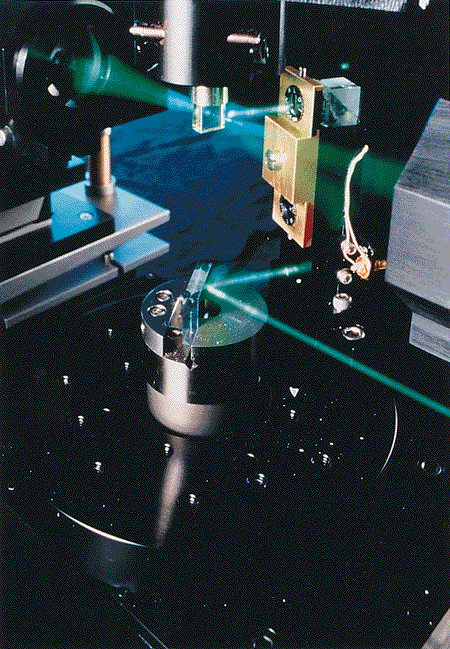
Whereas the PRISM tester was built to test the properties of holographic storage materials, we built a second platform called DEMON I to evaluate the coding and signal-processing techniques, including the algorithms used to combat noise (figure 4).
4 Holographic storage in action The DEMON I holographic data-storage system. The information is encoded in light that passes through a spatial light modulator (right foreground), which is then focused onto the photosensitive inorganic crystal (centre) and finally imaged onto a pixelated detector (centre background). The coherent reference beam is directed by a mirror (left edge) onto the crystal.
Noise can arise in a holographic storage system from a number of sources, including poor imaging of the data pattern onto the detector, optical scatter, cross-talk between multiplexed holograms, spatial brightness variations and electronic detector noise. The fundamental trade-off between the levels of signal and noise is a consequence of the finite dynamic range of the storage material. As the number of holograms or the read-out rate increases, the amount of power diffracted towards the detector array decreases, reducing the signal-to-noise ratio and increasing the number of incorrect bits.
Using the DEMON platform, we have developed several powerful data-modulation codes and novel signal-processing techniques for the removal of deterministic variations from holographic data pages. We have also demonstrated ways to record more than one bit per pixel by controlling the amount of light that each pixel receives during recording.
In addition, we have developed a strong understanding of the trade-offs involved in recording holograms at high areal density, where focusing a large data page through a small hole introduces cross-talk between pixels.
This has allowed us to build a third platform, called DEMON II, specifically to demonstrate high areal density. (High volumetric density then follows from a combination of high areal density and a thin material.)
DEMON II combines large, mega-pixel data pages together with short-focal-length optics that have a high resolving power, and novel post-processing routines to correct for optical aberrations. Recently, we used DEMON II to store and retrieve volume-holographic data at an areal density of 390 bits per square micron. (In comparison, DVD disks have an areal density of 20 bits µm-2 and magnetic disks that can store up to 80 bits µm-2 have been produced in the lab.)
Phase-conjugate read out
Experiments show that an expensive short-focal-length lens system and a storage material with high optical quality are needed to combine high density storage with excellent imaging capabilities. Moreover, the optical system must be corrected for all aberrations, particularly distortion, over a large field of view.
In the past, several researchers – including Lambertus Hesselink and co-workers at Stanford University, Feng Zhao at the Accuwave Corporation and Psaltis at Caltech – have proposed bypassing these requirements by reading the volume holograms using a “phase-conjugate” approach (figure 1c).
Once the light from the spatial light modulator has been recorded with a reference beam, the resulting hologram can be reconstructed with a phase-conjugate or “time-reversed” copy of the original reference beam. The wavefront diffracted by the phase-conjugate read-out beam then retraces the path of the incoming object beam in reverse, cancelling out any accumulated phase errors from lens aberrations or material imperfections. This allows data pages to be retrieved with high fidelity using an inexpensive lens, or even without imaging lenses for an extremely compact system.
However, two uncertainties prevented earlier work from proceeding. First, researchers were worried that imperfections in producing the phase-conjugated reference beam would introduce errors in each retrieved data page. In the simplest case this phase-conjugate beam is a separate beam that is carefully aligned to propagate in exactly the opposite direction to the original reference beam. However, even minor differences between the two beams will distort the reconstructed data pages.
Alternatively an extremely accurate phase-conjugate beam can be produced by a so-called phase-conjugate mirror. In this device, an incoming beam enters a barium-titanate crystal and interferes with its own backscattered reflection. The resulting hologram eventually diffracts the phase-conjugate of the input beam. Thus there are two holograms involved: one to record the data-bearing object beam, and one to produce the phase-conjugated reference beam.
The second concern was that many pairs of phase-conjugate reference beams would be needed to read the many different holograms recorded within the same volume, and that it would be impossible from a practical point of view to maintain these beams over long periods of time. Furthermore, researchers were prevented from using phase-conjugate mirrors because barium-titanate crystals take some time to respond to changes in the input beam.
To solve this problem we proposed – and are currently testing – a novel architecture that allows phase-conjugation and multiplexed holographic storage to co-exist. The technique involves separating the phase-conjugation and hologram-storage processes into two successive steps using a “buffer” hologram. This approach allows many holograms to be stored in separate storage locations using a single spatial light modulator and just one detector. Since such a system contains a single pair of phase-conjugate beams, it never needs to wait for the barium-titanate crystal to respond.
We anticipate that the successful use of phase-conjugation in holographic storage will enable compact and affordable high-capacity systems, with only a moderate increase in the overall system complexity.
Applications of holography
Holographic storage is an emerging candidate for the next generation of data-storage systems. It could potentially lead to new devices, including fast, erasable holographic memory, write-once 3-D disks, pre-recorded 3-D disks and holographic “content-addressable” database machines (figure 5).
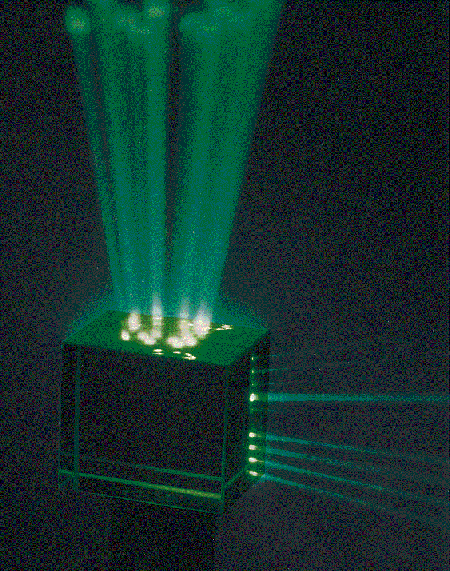
5 Searching data in an instant Holographic data storage has the unique ability to locate similar features stored within a crystal instantly. A data pattern projected into a crystal from the top searches thousands of stored holograms in parallel. The holograms diffract the incoming light out of the side of the crystal, with the brightest outgoing beams identifying the address of the data that most closely resemble the input pattern. This parallel search capability is an inherent property of holographic data storage and allows a database to be searched by content.
A fast, erasable holographic memory could provide sub-millisecond access to information and support terabytes of data with read-out rates in excess of 1 gigabit per second. Suitable applications might include “video on demand” and large Web servers.
Write-once 3-D disks could support more than 100 gigabytes per disk, each 120 mm in diameter. Blocks of data 100 megabytes in size could be accessed in 10-100 milliseconds and could perhaps be read out at rates of 500 megabits per second. Suitable applications might include the archiving of data that require permanent storage yet rapid access, such as medical information, and high-resolution maps and satellite images. There are initial indications that some write-once materials could possibly be made reversible, leading to erasable 3-D disks.
On the other hand, holographic data storage might be the successor to the DVD standard, offering pre-recorded 3-D disks for distributing computer programmes, movies and multimedia. One advantage of holographic data storage is that the 3-D disks cannot be replicated via physical stamping. This would make it difficult to pirate disks on a large scale.
Finally, holography could provide a unique hardware device for searching databases rapidly (see box). This device might offer 1000 searches through more than 1 million database records per second, supporting applications such as data-mining, genome databases, fingerprint or iris-print databases and bio-informatics.
Bright future?
The research efforts of the last few years have demonstrated that holographic storage systems with desirable properties can be engineered and built in the laboratory. However, existing and competing storage technologies are also continuing to evolve and improve at a tremendous pace, making the next few years crucial for holographic storage.
We are collaborating with (and competing against) a large number of scientists around the world to study the technical feasibility of holographic storage and memory devices that are relevant for real-world applications. The next steps are to optimize the storage media, to demonstrate these systems outside the laboratory environment, and to design and build systems at a cost that is competitive with existing technologies.
If suitable recording materials become available from the research efforts currently under way, holographic memory, 3-D disks, and database-searching machines may very well become a reality.
Associative retrieval
With a conventional memory or data-storage device, a user must supply an address at which the desired data is located. In volume-holographic data storage, this implies that the data – which were once imprinted on an “object” beam and stored within the volume – can be read out later by illuminating the volume with the correct “addressing” reference beam (figures 1a and b).
However, this hologram can also be illuminated by the object beam to reconstruct all of the angle-multiplexed reference beams that were used to record data pages into the volume (figure 1d).
The amount of power diffracted into each “output” beam is proportional to the similarity between the input data page that is displayed on the spatial light modulator and the stored data page. Each set of output beams can be focused onto a detector array, so that each beam forms its own correlation “peak”. The stored pages that match the input page can be identified by setting a threshold on the detected optical signal.
If the patterns that make up these pages correspond to the various data fields of a database, and if each stored page represents a data record, then this optical-correlation process can be used to simultaneously compare the entire database against the search argument. This parallelism gives content-addressable holographic data storage an inherent speed advantage over a conventional serial search through large databases, in particular. For example, it would take a conventional software-based search 40 seconds to go through one million records each containing 1 kilobyte of data. In comparison, an appropriately designed holographic system built using off-the-shelf components could search the same records in about 30 ms – over 1200 times faster. Custom-built hardware could reduce this search time to 1 ms or less.
In addition to searching for exact matches to a query, we have introduced a novel encoding scheme that allows us to perform a “fuzzy search” for similar matches. To demonstrate parallel searching of a holographic content-addressable memory, we stored and searched a small multimedia database of 100 images in our modified DEMON I system. We achieved high fidelity with searches for similarly coloured images, searches for specific colour percentages, and searches on keyword. Each search could be performed with a single optical exposure.
With the ability to perform fuzzy searches and to search many thousands of holograms in parallel, volume-holographic content-addressable data storage is an attractive method for rapidly searching vast databases with complex queries.
Further reading
J Ashley et al. 2000 Holographic data storage IBM Journal of Research & Development44 at press
J F Heanue, M C Bashaw and L Hesselink 1994 Volume holographic storage and retrieval of digital data Science265 749
J H Hong et al. 1995 Volume holographic memory systems: techniques and architectures Optical Engineering34 2193
D Psaltis and G W Burr 1998 Holographic data storage Computer31 52-60
D Psaltis and F Mok 1995 Holographic memories Scientific American273 70
G T Sincerbox (ed) 1994 Selected Papers on Holographic Storage SPIE Milestone Series MS 95 (SPIE, Bellingham)
The origin of gamma-ray bursts is one of the biggest unsolved problems in astrophysics. Some 3000 of these short-lived bursts of intense gamma-rays have been detected in the last three decades, but it is only recently that astrophysicists have confirmed that they originate outside our galaxy.
The burst of 25 April 1998 surprised astronomers because it was between a thousand and a million times fainter than a typical burst. Moreover, it was also unusual in that is was from a galaxy “only” 125 million light years away. However, this proved to be an advantage as it allowed the galaxy, ESO 184-G82, to be imaged by the Space Telescope Imaging Spectrograph on Hubble. Although 20 other galaxies have been identified with gamma-ray bursts, they are all too far away to be imaged. The Hubble images show that the galaxy contains numerous clouds of hydrogen and regions containing hot young stars.
The fact that a supernova was observed at exactly the same location as gamma-ray burst less than 24 hours later is further evidence that these two types of highly energetic events are related, although this has still to be proved conclusively.
In a Bose-Einstein condensate a gas of atoms is cooled until the de Broglie wavelength of the atoms exceeds the inter-atom spacing. If the atoms are bosons – that is, if they have a “spin” of 0, h/2p, 2(h/2p), 3(h/2p) and so on, where h is the Planck constant – they all collapse into the same quantum ground state. This gives the condensate many unusual quantum properties.
In quantum information the ability of a quantum particle – such as an atom or a photon – to be in two or more quantum states at the same time can be used to perform certain computational tasks much faster than would be possible with a conventional or classical computer. As the number of quantum particles increases, the quantum computer outperforms the classical computer by larger and larger factors. A key requirement for quantum computation is that the particles must be in an entangled state: in such a state the correlations between the particles are much stronger than any classical correlations. However, entangled states are difficult to prepare and maintain.
Zoller and co-workers show theoretically how a specially prepared laser pulse could be used to entangle all the atoms in a condensate. The pulse has the property that its area is p/2. The largest number of particles that has been entangled so far is four. However, the Innsbruck-Aarhus team claim that their technique could eventually be used to entangle any number of atoms.
Manfred Bayer of the University of Wurzburg in Germany, and co-workers in Wurzburg and the National Research Council of Canada in Ottawa, studied indium gallium arsenide quantum dots grown on a gallium arsenide surface (M Bayer et al. 2000 Nature405 923). The dots measured about 20 nanometres across. Meanwhile, a group lead by Khaled Karrai at the Ludwig Maximilians University in Munich, working with Pierre Petroff’s group at the University of California at Santa Barbara, grew nanometre-sized quantum rings of indium arsenide on gallium arsenide (R Warburton et al. 2000 Nature405 926).
Electrons become trapped in the dots and rings because both indium gallium arsenide and indium arsenide have small energy band gaps than gallium arsenide. Moreover, the confinement of the electrons inside the dots and rings leads to electronic structure similar to that found in atoms. In bulk semiconductors, on the other hand, the electrons can occupy a band of energies.
Both groups then used lasers to excite electrons to higher energy levels within the dots and rings. The combination of the excited electron and the “hole” it leaves behind is called an exciton. Photons are emitted when the electron and hole recombine. Both groups studied how the emission wavelength depended on the number of electrons and excitons within the quantum dot or ring. A major challenge was to isolate the light from just one dot or ring.
While there were many similarities with the behaviour observed in atoms – indeed quantum dots are often called artificial atoms – there were also differences. Bayer and colleagues, for instance, observed that “hidden symmetries” within the dots lead to unusual quantum interference effects and emission properties.
Like these so-called chiral molecules, circularly polarized light also comes in right and left-handed varieties, and can be used to produce an excess of one type of molecule. However, circularly polarized light is quite rare in nature and is not thought to be the source of the “homochirality of nature”. This problem greatly puzzled Louis Pasteur, who thought that magnetic fields might be responsible because they can rotate the polarization of light. And despite forceful opposition from Lord Kelvin, who first introduced the word “chirality” to science, many scientists followed Pasteur’s lead.
Rikken and Raupach study a molecule called Cr(III)tris-oxalato which exists in left- and right-handed forms and is unstable in solution. They show that the combined effect of a magnetic field and a beam of unpolarized light travelling parallel to the magnetic field can lead to a build-up of one of the enantiomers. When the magnetic field is reversed, an excess of the other enantiomer is produced. The use of polarized light has no effect on the process. However, when the magnetic field and light are at right angles to each other, no excess is observed.
According to Laurence Barron of the University of Glasgow, Rikken and Raupach’s work means that “a tortuous quest involving physicists, chemists and biologists that has endured for over 150 years has finally ended.”
The Poisson’s ratio of a material is defined as nij = –ej/ ei, where ej is the lateral strain in the j direction that is caused when a strain ei is applied in the longitudinal i direction. Negative Poisson’s ratios have previously been observed in foam- and polymer-based structures, in the non-cubic phases of arsenic and other crystals, and in certain cubic metals. While these materials have the counterintuitive property of expanding laterally when stretched, none of them are “incompressible” when stretched. A rubber band, on the other hand, is incompressible because the volume does not change when the band is stretched. Baughman and co-workers predict that incompressible materials can also have negative Poisson’s rations – another highly counterintuitive property.
The team investigate the effect of a wide range of processes – including temperature changes, charge screening, crystal strains and ion mixing – on the Poisson’s ratios of a variety of different systems. These systems range from star crystals, which can have densities as high as 1011 grams per cubic centimetre, to crystals of ions and colloids with densities of just 10-15 grams per cc. The work could have implications in both astrophysics and the development of new optical devices.
The principal speaker at the dedication of the main accelerator at Fermilab on 11 May 1974 professed bewilderment. “Until the call which commanded me here,” physicist Leon Lederman told the audience, “I hadn’t even known that the protons we had been studying were coming from an undedicated accelerator.” He claimed to be out of his element. People who run dedication ceremonies are not scientists, he said, but “older persons, or statesmen or philosophers”.
Lederman was being disingenuous; scientists, after all, had been dedicating particle-physics accelerators for decades. They did so – and continue to do so – for very understandable reasons. A dedication, according to my dictionary, is a ceremony to mark the official completion of a public building, monument or other work, the opening of which ushers in an important change in the social order. The event is both a moment of celebration and triumph – serving to thank those who worked on it – and an occasion to impress others who may need to be recruited for future political battles.
The completion of an accelerator – when it changes from something being built to something being used – involves the entry of a new power into the world, opening up new domains for scientists to explore. What kind of structure could be more deserving of a dedication ceremony?
The first of many
In the old days, this change of state was unproblematic. You worked on an accelerator until you got a beam of particles out of it, then you paused a moment to celebrate before starting to use it. Probably the first accelerator to have a full-scale dedication party was the 184 inch synchrocyclotron at the Berkeley Radiation Laboratory in California, which was built shortly after the Second World War under the guidance of the clever and politically savvy accelerator maker and Nobel laureate Ernest O Lawrence.
The machine, which opened up the energy region in which mesons could be created, produced its first beam just before midnight on 1 November 1946. The excited scientists used a piece of film to take a “picture” of the beam, developed it, and all present signed it to mark the important and historic commissioning moment.
Lawrence then organized a weekend-long celebration at a posh beach hotel at Monterey, south of San Francisco. However, with an eye on securing future financial support for the project, he made the event chiefly a political affair. “Everyone who had contributed money or influence to the completion of the machine was invited,” Berkeley’s historians later wrote. These included representatives of the Rockefeller Foundation, the National Academy of Sciences, the International Cancer Research Foundation and people from General Electric, Kodak and other leading businesses.
Six years later, Berkeley’s rival accelerator institution – the Brookhaven National Laboratory on America’s east coast – completed its first major accelerator, the Cosmotron. The Cosmotron’s first beam arrived on 20 May 1952, and it became the first machine to boost subatomic particles to energies of more than 1 GeV – high enough to create so-called “strange particles”. The scientists who built it argued that, given its size and significance, it deserved just as much of a ceremony as a ship christening, a keel laying or indeed any device paid by taxpayers for the social good. They also believed that the event could be used to showcase the Brookhaven laboratory to influential politicians, perhaps even President Truman.
However, the Atomic Energy Commission, which funded the machine, frowned on the idea of a political event and insisted instead on a “scientific and academic” affair. When the dedication finally took place on 15 December 1952, the Cosmotron was still not running perfectly and was some two months from being user-friendly.
Martini and mayhem
Still, the enthusiasm of the participants, aided by generous consumption of frequently refilled pitchers of Martini at each table, sabotaged the commission’s intent to keep the affair “scientific and academic”. Luis Alvarez, a Berkeley physicist who was 16 years away from his Nobel prize, set his tablecloth on fire. Another party-goer shouted words of encouragement to the final speaker before passing out on the table. That speaker – the president of Johns Hopkins University, Detlev Bronk – managed to mix up the text of his speech with one that he was scheduled to give in Canada a few days later, puzzling those still compos mentis, with references to “your King”.
The next major American accelerator – Berkeley’s 6 GeV Bevatron, which opened up the energy region in which heavy particles like anti-protons would be produced – was an exception; it was not dedicated. Perhaps the reason was a string of difficulties that befell the accelerator during its start-up – including a broken generator that alone kept the machine down for two months – or perhaps it was simply the desire of the Berkeley scientists to get to work.
However, the accelerator after that – Brookhaven’s 33 GeV Alternating Gradient Synchrotron (AGS) – did have a dedication. The AGS was built not inside a building, but in a tunnel under an embankment that traversed the landscape. The size of these new machines had changed the nature of accelerators. “One no longer builds accelerators as such,” wrote Ken Green, one of its chief architects, “but as a component of a complete high-energy facility.” Not only that, he added, its systems were now so complex that “an accelerator is never finished, but constantly in the process of being upgraded”.
The AGS signalled a change not only in experimental science but also in dedications. Its dedication, on 13 September 1961, had no particular link to the completion of the machine nor to the start of experimental work, which had already been going on for some months. The dedication was instead arranged to accommodate the schedules of politicians and other notables.
Vodka and kisses
Dedications, of course, have not just been American affairs. On 24 November 1959 the CERN particle-physics laboratory in Geneva celebrated the fact that its new proton synchrotron had accelerated protons to energies of 25 GeV becoming the world’s highest-energy machine in the process. Amid emotional and dramatic scenes, writes Gordon Fraser in his book The Quark Machines (1997 Institute of Physics Publishing), the Italian physicist Gilberto Bernardini jubilantly kissed John Adams, the “laconic” leader of the project.
The next day a special meeting was held to convey the news to CERN staff. Adams showed a vodka bottle mat he had been given some months earlier on a trip to Dubna in the Soviet Union, with strict instructions that it should be drunk when the CERN machine had surpassed the Dubna machine’s record of 10 GeV. “The bottle was now empty,” writes Fraser. ‘Adams [then] produced a photograph of the oscilloscope trace displaying the achievement and squeezed it into the bottle, giving instructions that it should now be returned to Dubna.”
Back on the other side of the Atlantic, the timing of the dedication of the next big US hadron accelerator – Fermilab’s 400 GeV main ring – was still more arbitrary. Designed to study key particle resonances, the machine produced its first 200 GeV beam in March 1972, but magnet troubles rendered the machine unusable for more man a year after that. Moreover, because Fermilab was new and the initial construction had focused on the underground accelerator, there was no good place to hold the dedication.
The lab’s planners therefore waited until the photogenic “high-rise” office building on the site was completed before consulting the calendars of key politicians and scheduling the event for May 1974. The ceremony drew a senator, a congressman and the chairwoman of the AEC. US President Richard Nixon, who was then in the final phase of the Watergate crisis, was a no-show, although he did send a signed plaque.
“How does one dedicate?” asked Lederman at the ceremony. He found a worthy way, playing a recording of the late Enrico Fermi – although the wind whipping across the Illinois plain put some of the audio equipment out of commission and Fermi’s voice failed to carry far.
Balloons for Bill
The newest US accelerator – Brookhaven’s Relativistic Heavy Ion Collider (RHIC) – is larger and more complicated still than any of its predecessors. It was built to study quark matter, and a large conference on the subject will be held next January to discuss the first results of the huge new energy regime that it will make accessible. However, even RHIC’s commissioning was convoluted.
RHIC has two counter-revolving rings of particles – named “blue” and “yellow” – that meet at six intersection regions. Accelerator physicists normally consider such a machine to have been commissioned when they have managed to circulate particles readily in each ring for multiple laps, captured and stored the particles in the radio-frequency system and then accelerated to higher energies. For an accelerator accelerates, right?
However, a key document called a CD-4 had to be signed before the Department of Energy (DOE) would authorize routine operations. Indeed, once the RHIC budget had been officially transferred from construction to operations, both the lab and the DOE were keen to surmount this important legal milestone. The blue ring was commissioned in July 1999, and particles had made some trips round the yellow ring in August.
However, as summer gave way to autumn, the accelerator builders still had much to do and were persuaded to narrow their definition of “commission” so that the all-important document could be signed and authorization made. Once the machine was thus “officially” commissioned, an official dedication party was scheduled around the calendar of Bill Richardson, DOE secretary, for 4 October 1999.
It was a typically ambivalent Long Island day. The sky was grey and the wind gusted, occasionally fiercely. At unpredictable moments it thundered and rain poured from the sky. A band and team of cheerleaders from the local high school marched up the road, passing underneath a large bridge made from yellow and blue balloons strung together in neat stripes, fastened to lampposts on either side of the road. Gusts blew the balloon bridge around, so that it sometimes bent and twisted and even wrapped itself around one of the lampposts, looking like a huge yellow and blue caterpillar tortured by electric shocks.
A large tent had been erected in the parking lot of the main RHIC building, in front of which was a stage for the politicians. Two banners were hung directly in their field of vision: “RHIC: extraordinary tool for extraordinary science” and “RHIC: ISO 14001 registered! Dedicated to protecting our environment”. The politicians delivered their speeches. Richardson disappeared inside the building for a press conference.
Outside, the skies opened up again. The cheerleaders regrouped and gamely began making pyramids in the pouring rain. The caterpillar started to look more and more frazzled, its formerly striped coat now a chaos of blue and yellow spots. The gusts began to tear off the balloons – sometimes singly, sometimes in groups of two and three – flying away from the disintegrating bridge, moving almost horizontally in the strong wind, like the fragments of a colliding balloon event. Richardson departed. The crowd dispersed. The scientists went back to work, still trying to get control over the beam in the yellow ring.
The critical point
Today’s accelerators, it seems, are so large and complex that their “official completion” is a nebulous concept. Even the dedication has effectively been split into two events with separate functions. Lederman’s feigned impression as he dedicated the Fermilab machine, oddly enough, has come to pass. Official dedications today are for the outsiders. The scientists themselves will get together on an entirely different occasion – arranged around their own schedules – to share the excitement of the first results. For them, this conference will be the real dedication – the celebration of their entry into a new domain.
Physicists have studied the interaction of water with surfaces for centuries. Felix Savart, for instance, first studied shocks in shallow water in 1833. It is now well known that the maximum diameter that a droplet can achieve is determined by the ratio of two numbers – the Reynolds and Weber numbers – that are determined by the drop diameter and density, the drop velocity at impact, and the shear viscosity and surface tension of the liquid in the droplet.
It might be thought that increasing the maximum diameter of the droplet on the surface would increase the absorption of weed-killer and other compounds in the droplet. However, as soon as the droplet reaches its maximum diameter, it rebounds and starts to get smaller. And if the rebound velocity is high enough, a large fraction of the droplet will bounce off the surface. Bergeron and co-workers overcame this problem by adding small amounts of a flexible polymer to the water. This reduces the rebound velocity and hence the amount of droplet that is lost from the surface.
After eliminating possible explanations for this effect – such as absorption of the polymer by the surface – the French team concludes that increases in a quantity known as the elongational viscosity are responsible. This is a non-Newtonian effect that has long been exploited in fire-fighting – the addition of a small amount of polymer can greatly increase the range of water hoses. Non-Newtonian effects become important in a polymer solution when the deformation rate of the solution is comparable with the relaxation rate of the polymer molecules.