The 32-minute film can be downloaded from Sightsound.com. Viewers are charged $3.95 to view it for up to five days, with a higher charge for permanent downloads. The film’s makers, Metafilmics, are hailing The Quantum Project as “every bit as groundbreaking as The Jazz Singer“, the first film to include speech.
“We feel this is the latest example of the clear viability of the Internet as a safe, secure and quality viewing experience for filmed entertainment,” said Scott Sander of Sightsound.com. However, the film crashed PhysicsWeb’s browser when we tried to view it earlier today.
Polymer films are used in to make many mass-produced products, such as compact discs. It has been known for some time that the flow rate of liquid polymers can become irregular during the manufacturing process, despite the slow fluid speeds involved. This was surprising because these slow speeds should reduce the effects of inertia, and hence reduce the turbulence.
Researchers thought that by increasing the length of the polymer molecules, they would increase the viscosity of the polymer liquid, which should lead to regular or laminar flow, rather than turbulence. However, the velocity at which turbulent flow occurred became lower, rather than higher as expected. This behaviour appeared to be caused by the elasticity of the polymer chains — which has now been confirmed by the observation of turbulence in the complete absence of inertial forces in the Weizmann experiments.
Measurement is at the heart of physics. As physical quantities have been measured with greater and greater accuracy, our knowledge of the world has improved. This applies equally to measurements on the subatomic and intergalactic scales, although the relative error bars are very different. The Planck constant is known to an accuracy of one part in ten million, for instance, whereas the uncertainty in the Hubble constant is about 10%.
This year marks the 125th anniversary of the signing of the “metre convention” in Paris and the creation of the Bureau International des Poids et Mesures. It is also the 100th birthday of the National Physical Laboratory (NPL) in the UK. Other standards labs have similarly long histories: the Physikalisch-Technische Bundesanstalt (PTB) in Germany dates back to 1887, while the forerunner of the US National Institute of Standards and Technology was set up in 1901. Then, as now, the laboratories were responsible for maintaining the measurement standards that underpin national and international commerce.
Back in those days the metre was defined in terms of quadrants of the Earth: today it is defined by the speed of light. Redefining the seven SI base units in terms of the fundamental physical constants is a long-term goal in metrology. The ruling body for the physical constants, the Committee on Data for Science and Technology (CODATA), has just published the “1998 CODATA recommended values“, which are based on all the data available at the end of 1998.
As might be expected, the accuracy of most of the values has improved since the 1986 recommended values. There is, however, one exception – the gravitational constant, G. The recommended value of “big G” is now 6.673 X 10⁻¹¹ in units of metres cubed per kilogram per second squared, with an uncertainty of 1.5 parts in a thousand. This is less accurate than the 1986 value by a factor of ten. The reason for the increased uncertainty is a puzzling measurement at the PTB that differed from the existing value by more than 40 standard deviations.
The same problem that confronts big G researchers – the fact that gravity is the weakest of the four fundamental forces by many orders of magnitude – is also a major challenge for many astrophysicists. Detecting a gravitational wave must surely be the most difficult experiment in physics – it is necessary to detect tiny changes (about 1% of the size of a proton) in the separation of two masses that are several kilometres apart. However, there are even plans to place a gravitational-wave detector in space: the LISA mission will involve three satellites separated by five million kilometres.
Those who test the equivalence principle – the fact that the gravitational and inertial masses of bodies are the same – face similar daunting challenges. However, as a workshop organized by the European Space Agency and CERN heard last month, it is clear that the technology needed for such experiments – such as ultrastable lasers and drag-free satellites – now exists. We are on the verge of an exciting, yet immensely difficult, age of experimental gravitational physics and measurement science.
Archaelogy is becoming increasingly popular, a fact that is reflected by the large number of television programmes and newspaper stories on the subject. Indeed, at the turn of a new millennium there seems to be an obsession with looking at the past. This fascination with discovering how the human character has evolved from pre-human origins until the recent past is understandable. By studying our past, we satisfy our “need to know”. We also gain a greater sense of identity and a perspective from which to view and plan for the future.
Archaeology has developed into a flourishing professional discipline, greatly empowered by science. Indeed “archaeological science” has become a fully recognized multidisciplinary subject with supporting academic journals and university departments. All the major sciences make a contribution, and were this magazine not devoted to physics, we could just as well highlight the role played by molecular biology, botany, geochemistry, physical anthropology and astronomy.
Together with these sciences, physics has played a critical part in dating objects and in discovering new archaeological sites. Radio-isotope dating famously revealed that the Turin Shroud was not a genuine relic from the time of Christ, and the technique continues to shed light on the diet and lifestyle of our ancestors. Meanwhile archaeologists have recently discovered the remains of the largest wooden temple in the UK by detecting tiny variations in the soil’s magnetic field, rather than by digging. Indeed, the impact of such techniques on archaeology should not be underestimated.
Radiocarbon dating
Perhaps the single most important development for archaeology in the 20th century was the discovery of radiometric dating – and of radiocarbon dating in particular. In 1946 Willard Libby of the University of Chicago predicted that all living plants and animals absorb the weakly radioactive carbon-14 isotope from the atmosphere. The process stops when the plant or animal dies, and the carbon-14 nuclei start to decay at a known rate with a half-life of 5730 years. Measurements of the residual radioactivity of a sample thus provide an estimate of its age, provided it is less than 50 000 years old. Libby and his colleagues were the first to estimate the age of archaeological samples in this way, work that earned Libby the Nobel Prize for Chemistry in 1960.
Radiocarbon dating is central to the chronological ordering of events, particularly for prehistoric incidents that occurred before written records began. Indeed, prehistoric events can now be dated to within a few decades if radiocarbon dating is calibrated with data from tree rings and combined with statistical modelling that incorporates stratigraphic information. For instance, we now know that the ditch encircling Stonehenge was dug during the initial phase of construction between 3020-2910 BC. More recently, a combination of radiocarbon dating, mathematical modelling and tree-ring measurements has been used to date the curious timber circle on a Norfolk beach to between April and June 2049 BC precisely.
1 AMS and the Turin shroud AMS has shown that the linen from the shroud is medieval, not from the time of Christ.
Other radioactive isotopes with longer half-lives – such as potassium-40 (which decays to argon-40) and uranium-238 (which decays to thorium-230) – extend radiometric dating considerably beyond 50 000 years by measuring the build-up of the decay products. Such methods have proved vital to research into the evolution of early humans and the subsequent colonization of Eurasia over the last 2 million years.
In the late 1970s archaeologists turned to accelerator mass spectrometry (AMS) – a well known technique in nuclear physics – to improve radiocarbon dating. In AMS the sample is first converted to graphite and then bombarded by caesium ions, which causes carbon ions to be released. The carbon ions are then accelerated to high speeds through a magnetic field, which deflects them at an angle that is proportional to their atomic weight. This means that the carbon-14, carbon-13 and carbon-12 isotopes can be detected separately.
Because individual carbon-14 atoms can be counted, AMS allows much smaller samples to be analysed than was previously possible. This means that tiny items such as individual seeds can be dated. Meanwhile the dating of precious objects can be achieved by removing minute samples without significant or apparent damage. A celebrated application of the technology in 1989 proved that the cloth of the Turin Shroud was medieval and dated from AD 1220-1280, not from the time of Christ (figure 1).
A more prosaic and recent example of AMS dating has shown that scraps of charred organic matter recovered from a pit excavated near Oxford are the earliest examples of charred bread in the UK. Were our ancestors burning toast between 3620-3350 BC? Experiments with even greater sensitivity used AMS to date the individual waxy and oily compounds preserved in prehistoric pots. The results will provide information on both the diet and chronology of our ancestors.
Luminescence, spin and magnetism
Other dating methods that depend indirectly on radioactivity are “luminescence dating” and “electron spin resonance”. Luminescence dating relies on measuring the energy of electrons that are trapped in the crystal structure of the archaeological object. These electrons have been ionized by radiation from radioactive elements in the sample, or its surroundings, and then trapped by defects in the crystal lattice. The electrons are released from the traps by heating the sample – for example when a pot is fired or a flint is burnt – or by exposing it to light. In other words, heating resets the “thermoluminescence clock” to zero. The number of trapped electrons then accumulates according to a rate controlled by the local radiation.
In order to date the object, the sample is first reheated and the electron energy is determined by measuring the light emitted when the electrons recombine with so-called luminescence centres in the crystal. If the local level of radiation from the sample and the environment in which it was buried is known, the proportional build up of thermoluminescence can provide an estimate of the object’s age since the “clock” was last set to zero. Although less precise than radiocarbon dating, thermoluminescence can help date fired materials such as pottery, burnt flint and some industrial products. The method extends well beyond the 50,000 year limit of radiocarbon dating.
In electron spin resonance the presence of trapped energy in a sample is measured from its response to high-frequency electromagnetic radiation in the presence of a magnetic field. This method is useful for materials, such as tooth enamel, that would disintegrate if heated. Electron spin resonance has proved valuable for dating hominid remains in the Middle East in the critical period when Neanderthal and modern man overlapped approximately 100,000 years ago.
As will become more apparent later, the Earth’s magnetic field plays a variety of roles in archaeological science, one of which is “archaeomagnetic dating”. This depends on the imprint of the Earth’s ambient magnetic field in magnetic materials as they cool below their Curie temperature. To date a sample in this way, its orientation in situ must be carefully noted before it is removed. The magnetic field of the sample is then measured with a laboratory magnetometer and compared with known field variations over time.
From time to time the polarity of the Earth’s magnetic field has reversed. The signature of such reversals has been recorded in certain types of sedimentary and volcanic rocks. Palaeomagnetism has been used to date the fossilized remains of the earliest species related to human beings. In 1998, for instance, it was used to date a complete hominid skeleton found at Sterkfontein in South Africa. The measurements revealed that the remains were between 3.22 and 3.58 million years old, owing to their position between layers of rock with known polarity reversals.
Archaeological prospecting
Physics-based methods also play a vital role in helping archaeologists to discover new archaeological sites, and help to define and interpret sites that are not completely understood. Tony Clark, a pioneer of archaeological geophysics, describes the subject as the ability to “see beneath the soil” – surely one of the most cherished desires of archaeologists.
There are, of course, various ways in which archaeological sites can manifest themselves on the ground’s surface. The scattering of artefacts, excavated earth and embankments, and the variation in the depth or colour of crops growing in a field can indicate areas of archaeological interest. These areas can be mapped from the air. However, it is much more of a challenge to penetrate below the surface without resorting to expensive and damaging excavation.
Some of the earliest field archaeologists were aware that the physical properties of the ground could reveal what lay beneath it. By thumping the ground with a crowbar and listening to the variations in resonance, they were able to detect the course of buried ditches on chalk hilltops very effectively. The method was an early precursor of the seismic survey, which ironically has not been used much in subsequent archaeological research.
The geophysical methods that are now routinely used in archaeological prospecting are adapted and scaled-down versions of those applied in geological mapping, mineral exploration, civil engineering and environmental geophysics. These methods may be categorized as either active or passive. Active methods inject energy into the ground, like the crowbar, and measure a response at the surface. They include seismic prospecting, electromagnetic techniques and earth-resistance surveying. Passive methods, such as magnetometry and gravity surveying, simply measure existing physical properties.
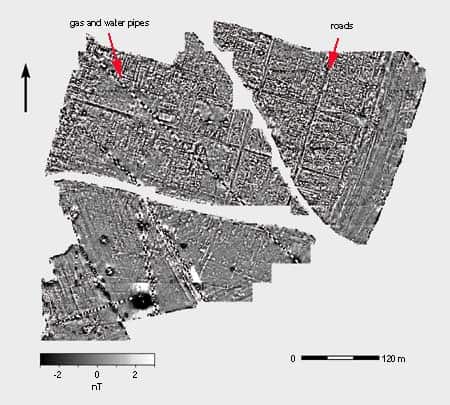
2 A Roman city uncovered A portion from the large-scale flux-gate gradiometer survey conducted over the Roman city of Wroxeter in the UK. Under ideal conditions such as these, the magnetometer can reveal a wealth of archaeological detail, including the Roman street plan (the rectangular lattice shown clearly at the top) and even the outline of individual buildings. The black and white diagonal lines running from the top left to the bottom right of the image are modern water and gas pipe lines. The white regions were not surveyed.
Over 50 years ago the first true geophysical technique used to locate archaeological features was the earth-resistance survey, which supplemented information available from aerial photography. Both these remote-sensing techniques rely on changes in the local water content of the subsoil, which appear as variations in the growth of surface vegetation and in the ability of the ground to conduct a small electric current. The presence of archaeological remains close to the surface – such as an impermeable stone wall or a moisture-retentive buried ditch – will alter the water content of the soil in the immediate vicinity. For example, the stone-wall footing will lead to reduced moisture retention that may appear as a parched mark visible from the air during a dry summer. Under suitable conditions, it may also result in a high-resistance anomaly.
Earth-resistance measurements are generally made by inserting a series of electrodes into the soil and injecting a small electric current. This current does not pass through the archaeological features themselves unless they are porous, but it is conducted through mineral ions dissolved in the water held in the soil.
Two practical constraints complicate the measurements in the field. The first is the high contact resistance between the measurement electrodes and the ground surface. This requires the current to be injected through one pair of electrodes and the resulting potential gradient in the soil to be recorded with a second pair of electrodes. The second constraint arises because the ions dissolved in the water in the soil are highly mobile. The measurement current polarizes the ions: positive ions accumulate around the negative electrode, while negative ions build up round the positive electrode. As the polarization increases, the measured potential difference decreases over time, thereby affecting the reliability of the measurement and making it impossible to repeat the results.
This problem is usually overcome by applying a low-frequency AC current that is tuned to disregard spurious electric currents, such as those associated with the mains electricity supply.
The first painstakingly slow earth-resistance measurements were made in the 1940s using a mahogany and brass hand-cranked generator, resplendent of a more genteel age of archaeological geophysics. Instrumentation has advanced rapidly since then and owes much to the development of affordable electronic hand-held resistance meters. These devices were pioneered by Clark and John Martin who both worked in the instrumentation section of the Distillers Company. In 1956 they were inspired by the late Richard Atkinson to apply the latest transistor technology to the development of an archaeological earth-resistance meter.
Modern earth-resistance meters now take full advantage of microprocessor control and are capable of storing the many thousands of readings collected during a survey. Recently a medical imaging technique known as applied potential tomography has been adapted to produce 3-D images of the ground surface by combining measurements from a wide array of electrodes.
When a current is injected into a homogenous medium, it follows an approximately hemispherical path through the ground. By increasing the spacing between the surface electrodes, the resistance measured at the surface will be influenced by current pathways that flow deeper into the ground. These measurements thus indicate the variation of the earth’s resistance as a function of depth. Numerical-reconstruction algorithms are then applied to combine the resulting measurements from each electrode and thereby produce an image of the underlying resistance of the earth.
Due to its reliance on the moisture of the soil, earth-resistance measurements demonstrate a distinct seasonal variability. In general the most successful results are obtained during the spring and autumn months between arid summer conditions and the water-logged depths of winter. A further constraint is the time needed to insert the measurement electrodes over large areas. The electrodes often have to be spaced every 0.5 m to image archaeological anomalies.
A number of systems have been developed to increase the speed with which earth-resistance measurements can be made. These include arrays of spiked metal wheels that act as electrodes as they are pulled across the site, and non-contacting capacitive systems that are being developed by researchers at Iris Instruments in France. Nevertheless, it remains difficult for earth-resistance measurements to match the speed and coverage that magnetic surveys offer.
Geophysics with magnetism
Magnetic surveying is a passive technique that can measure minute variations in the magnitude or gradient of the Earth’s magnetic field. Indeed, it can often detect such variations or “anomalies” over 50 000 times weaker than the ambient field strength. Magnetic surveys were initially used to locate burnt archaeological structures, such as Roman pottery kilns. However, the technique soon demonstrated its sensitivity to other features, such as ditches, rubbish pits and even individual holes into which timber posts were sunk.
The anomalies arise due to variations in the magnetic susceptibility of buried features, which occur when iron-rich minerals in the soil form more strongly ferrimagnetic materials such as magnetite and maghemite. This magnetic enhancement is usually related to burning, although more subtle inorganic and bacterially controlled mechanisms may take place under suitable soil conditions. Such conditions occur naturally in most topsoils, providing a source of magnetically enhanced material that becomes embedded into archaeological features and so produces almost indelible magnetic anomalies.
The first magnetic surveys were conducted in the 1940s using “proton free-precession magnetometers”. The drawback with these instruments was that they had a limited sensitivity and required several seconds at each point to obtain a reading. Currently, the majority of surveys within the UK are conducted using so-called solid-state gradiometers that measure the magnetic gradient between two “flux-gate” sensors separated by 0.5 m on a rigid vertical beam. Each flux-gate sensor consists of two strips of magnetically “soft” Mumetal alloy surrounded by a drive coil. (A magnetically soft material is one in which the direction of magnetization changes easily when an external magnetic field is applied.) The two coils are wound in opposite directions to each other and are fed with a high-frequency sinusoidal signal. The two Mumetal strips are driven through alternating cycles of positive and negative magnetic saturation.
In the absence of any external magnetic field, the positive magnetic field in the first strip will be completely cancelled by the negative field in the second one because the drive coils are counter-wound. However, when an external magnetic field is present, the saturation cycles of the two strips are no longer matched. This results in a beat frequency that is proportional to the magnitude of the external field. The weak signal is detected through an additional pick-up coil wound around the sensor.
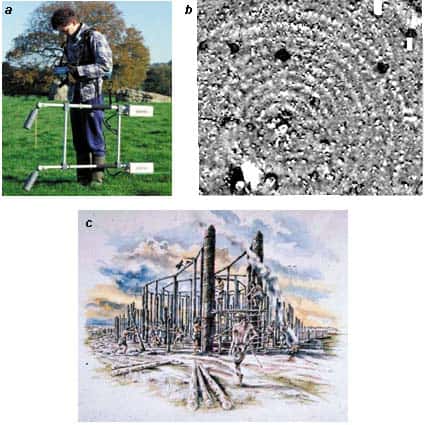
3 The magnetic remains of a giant wooden henge (a) A high-sensitivity caesium-vapour magnetometer was used to produce a magnetic survey within the stone circle at Stanton Drew in the UK. (b) The survey revealed a series of nine concentric circles of discrete positive anomalies. Each anomaly is believed to be the remains of an individual timber post setting. From the geophysical evidence, the site is interpreted as a giant neolithic ritual monument, similar to the reconstruction shown in (c).
These hand-held instruments can record data continuously, allowing several hectares of ground to be covered in a day with many readings per unit area. A further advantage of flux-gate gradiometers is that they are unaffected by variations in the Earth’s magnetic field or by solar electromagnetic storms. This is because the two flux gates experience an identical magnetic disturbance, and thus only more significant local variations in the strength of the Earth’s magnetic field will be detected.
Unlike earth-resistance measurements, magnetic surveys do not exhibit any seasonal variation. However, the success of the technique is often closely related to the geology of the site under investigation. Fortunately, the geological conditions over the majority of the UK are favourable because there is a sufficient supply of iron-rich minerals to ensure that magnetically enhanced topsoils develop. However, some regions contain highly magnetic rocks that may complicate the interpretation of archaeological data.
The effectiveness of magnetometer surveying can be illustrated by the recent survey of the Roman city of Cornoviorum, now known as Wroxeter, near Shrewsbury in the UK (figure 2). The 73 hectare survey was completed in 1997 by a team from English Heritage and Geophysical Surveys of Bradford. Some 3 million magnetometer readings were used to create images that have radically improved our knowledge of the fourth largest Roman city in the UK. The city is now all but invisible below pasture fields, but the magnetic survey has revealed roads, buildings and industrial areas with remarkable clarity. Indeed, these images, together with information from aerial photographs and excavations, are helping to re-create the entire cityscape.
The geophysical data have formed the foundation of a series of data sets that can be combined in a “geographic information system” – a powerful computer program that manipulates geographic data to provide a previously unsurpassed level of interpretation and analysis. It has even allowed archaeologists to digitally recreate the appearance of the city.
More recently, alkali-vapour magnetometers have been developed that are 10-100 times more sensitive than the flux-gate detectors used to form the Wroxeter images. These new devices allow archaeologists to detect ever more subtle magnetic anomalies (as small as 0.001 nT) from features that may have previously been invisible.
High-sensitivity magnetometry has been used to stunning effect to elaborate the results from a flux-gate gradiometer survey within a stone circle at Stanton Drew, near Bristol in the UK. The magnetic surveys have revealed evidence for a huge timber temple constructed from a series of upright timbers arranged in nine concentric circles (figure 3). Despite magnetic interference from ferrous debris in the soil, the caesium magnetometer revealed a series of discrete positive anomalies related to the holes sunk in the ground to support the individual timber posts. Indeed, anomalies 100 000 times smaller than the Earth’s magnetic field were detected. It is possible that these anomalies are due partly to magnetic biominerals created by bacteria that concentrated in the organic remains of the decaying timbers around 4500 years ago.
Ground-penetrating radar
The ultimate aim of geophysics is to produce a complete 3-D model of buried archaeological features that goes beyond the 2-D plans provided by traditional earth-resistance and magnetic surveys. Although these techniques are capable of providing some depth-related information, the length of time it takes to collect the data can be prohibitive and considerably reduces the area that can be covered. Recently, the combination of ground-penetrating radar and powerful computers to visualize the data has provided a new tool for archaeologists to address this problem.
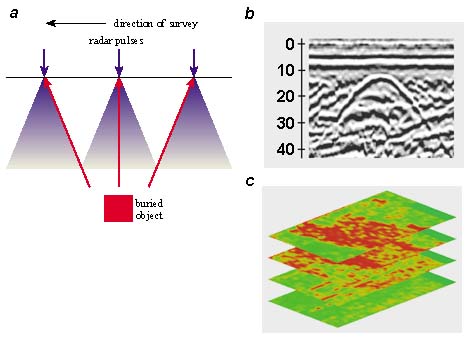
4 Imaging remains with radar (a) As the surveyor walks across the site, the radar antenna fires a series of short radar pulses into the ground and records both the time and magnitude of the reflected signals. Due to the conical nature of the radar beam, the buried object (red) will be partially illuminated before and after the surveyor has walked directly over it. (b) The resulting hyperbolic reflections may confuse the interpretation of the data, (c) The data are processed numerically to form a series of ‘time slices’ that reveal a 2-D plan of the buried structure with depth. In this case, the strong reflections (red) show the floor plan of a Roman building.
Ground-penetrating radar operates by introducing a short impulse of electromagnetic energy from a surface antenna and recording both the time and magnitude of return signals reflected by dielectric contrasts in the subsoil. A graphical trace is then produced that shows the magnitude of reflection against the time taken for the pulse to travel from the transmitter to the target and back to the receiver (figure 4). This impulse signal covers a wide range of frequencies, but is generally tuned to a centre frequency between 100-1000 MHz, depending on the antenna chosen for the survey. The imaging resolution and penetration depth depend on both the chosen centre frequency and the average dielectric permittivity of the subsoil. Although a high-frequency, short wavelength impulse covers a smaller area, it is capable of resolving smaller objects.
High-speed electronics allow the digital data to be collected every few centimetres along parallel paths and to a depth of several metres. The resulting mass of data is often difficult to interpret because the radar beam spreads out in a cone from the transmitter. This means that the buried object will reflect part of the beam before the antenna passes directly over it. Thus the resulting complex reflected signals may bear little relation to the physical dimensions of the subsurface target.
We can begin to make sense of the data using powerful computer programs. The technique assumes that each reflected wave comes from a point source in the ground and travels towards the surface according to the wave equation. The radar data allows us to build up a 3-D image of the expanded wavefronts. Although it takes a great deal of computational effort, it is possible to “reverse” the wave equation and collapse these expanded wavefronts back to a series of point sources at the correct depths. The process is analogous to running a film of a rising and expanding bubble in reverse to determine the bubble’s source.
Once the data have been analysed, they can be visualized in 2-D “time slices”. Each progressive slice represents reflections from features at an increasing depth, thereby creating a 3-D model of the buried target. We can also enhance any interesting features by combining a series of such time slices in a computer animation. Indeed, this process may reveal an incredible wealth of detail in a buried structure.
Future prospects
Over the last 10 years geophysical prospecting has made great strides. This is due, in part, to a greater recognition that geophysics can provide cost-effective information about important ancient remains. In the UK, where archaeological evaluations are required before any site is developed, the demand for geophysical surveys is on the increase. This mirrors a wider awareness of the importance of archaeological remains and the realization that sites and artefacts are a finite resource to be protected.
Improvements in methodology will continue to increase both the speed with which measurements are made and their surface density. And as the sensitivity of instruments improves, so will the resolution. Many recent developments in this area have been due to the availability of high-power computers for the numerical inversion and analysis of massive amounts of data. Such computing will continue to play a vital role. For example, much of the interpretation of geophysical data is currently a matter of individual experience and even intuition – something that could be improved by employing sophisticated artificial-intelligence algorithms. Future research should focus on new methods that will give us access to the very rich archaeology hidden beneath our cities and buried deep below alluvial deposits.
Physics has played a vital role in calibrating humankind’s passage through time, helping archaeologists to both analyse the physical properties of artefacts and to uncover hitherto undiscovered ancient monuments. There is little doubt that the physical sciences will continue to help unravel the history of ancient technologies and satisfy our desire to understand our ancestors’ lives.
George Steiner once proposed a challenging thought experiment. He suggested that we imagine a world without art critics. What would it be like, asked Steiner, professor of English and comparative literature at the University of Geneva, if artists were supported and encouraged, while all art critics, commentators and interpreters were banned from the media and the academic world? What would it be like if, but for explicative and historically contextualizing commentary, “all talk about the arts, music and literature [were] prohibited [and] held to be illicit verbiage”?
The result, according to Steiner, would be a “primary city” of purely creative people, as opposed to the “secondary city” in which we now live, dominated by the derivative and domesticated interpreters of – and commentators on – creativity. Would society and the arts flourish in such a “counter-Platonic republic”, Steiner demanded to know, or would they wither and die?
Steiner, like Plato before him, recognized the impossibility of his ideal state, yet at the same time felt an intensely passionate longing for it. That longing for a world without critics sprang from Steiner’s sense that the contemporary mountain of commentary, paraphrase and secondary literature placed such a heavy burden on artists that it was in danger of smothering and choking off the creative imagination. “The tree dies under the hungry weight of the vines,” he complained.
A world without science critics
It is irresistible to propose the same thought experiment with respect to science. What if all science critics, commentators and interpreters simply disappeared? These would include the popularizers, who translate the special knowledge of science into ordinary language via images, clever use of language and other techniques. The popularizers are made up of a spectrum of people, from scientists who write sometimes brilliant books that are easily accessible to the public, via magazines like Physics World, all the way to non-scientists who write for magazines like Discover and the science sections of newspapers.
Another category of people who would disappear in a world without science critics would be the academic commentators. These are the people who examine the connections between scientific and other kinds of knowledge, but who to outsiders may sometimes end up appearing to reduce science to these other types of knowledge via ideological straitjackets, and who sometimes appear to undermine scientific knowledge by exposing its limitations. In this category I include many sociologists, philosophers and historians of science, including myself.
Meanwhile, there are the activists, who wield powerful images in pursuing their attacks on scientific facilities and programmes. One thinks of the anti-nuclear activities of groups like Greenpeace, or the recent protests of groups opposed to genetic engineering. The raw effectiveness of such action recently provoked one American senator to remark in the wake of the riots in Seattle against the World Trade Organisation that “the scientific debate is not being controlled by PhDs but apparently by young people with a proclivity for street theatre…It’s coming to the point that scientists are going to have to get dressed up as corncobs to get the attention of the media”.
What if these groups were all banned? What if there were only scientists and consumers or clients of scientific information – and no intermediary commentary or interpretation? Surely many professional scientists, feeling “the hungry weight of the vines”, would find the scenario appealing?
The case for critics
Of course, society does need appropriately trained legislators to keep in check people like Richard Seed, the physicist who announced that he was planning to open a human-cloning clinic. Some translators would also certainly be needed to keep those legislators informed, and to advise the politicians who fund the scientists. Nevertheless, would science or society really suffer if all the other popularizers, commentators and activists simply vanished?
At least two individuals – the political scientist Langdon Winner and the philosopher Don Ihde – have, in effect, championed the benefit of having critics. In the arts, Winner points out, critics are immediately understood as playing “a valuable, well established role, serving as a bridge between artists and audiences”. A critic of literature, for instance, “examines a text, analysing its features, evaluating its qualities, seeking a deeper appreciation that might be useful to other readers of the same text”. Unfortunately, Winner lamented, the same kind of function is not performed in the sciences, partly because scientists tend to regard as suspect anyone who plays the role of critic – as if science critics are by definition objecting to science or insisting on its limitations.
My colleague Don Ihde, meanwhile, actively calls for science critics and even outlines what he thinks they should be like. “The science critic would have to be a well informed – indeed [a] much better than simply well informed – amateur, in [the sense of] a ‘lover’ of the subject matter, and yet not the total insider.” The reason why the science critic must not be a total insider – just as an arts critic should not be a practising artist or literary author – is because, as Ihde puts it, “we are probably worst at our own self-criticism”.
Science critics, according to Winner and Ihde, would have an essential function. They would be there to assess the impact of science and technology on our political world (Winner) and on the human experience (Ihde). So, for example, Winner writes about the “politics” of technological artefacts, such as the way bridges over a Long Island motorway were built to exclude the buses that would carry lower-class citizens to the beach.
Ihde, meanwhile, writes about the transformation of experience by instruments. The dental pick, for instance, mediates and transforms the human sense of touch, enhancing the awareness of the texture of the surface of a tooth, while dampening awareness of properties like the tooth’s temperature. The pick allows dentists to feel cracks and soft spots more clearly than they could with their own fingers, albeit at the cost of losing certain (inessential) information. Ihde’s other examples include how fountain pens, typewriters and computers have affected the process of writing and how imaging technologies, such as those often used in physics, produce knowledge by transforming the information that has been imaged.
The kind of criticism advocated and practised by Winner and Ihde, in short, judges the presence of science and technology in society. But it seems to me that there is another, complementary model for science criticism. This model would focus on the way science is a profoundly social institution, with its own, ever-changing network of attitudes, values, practices, institutions, politics and even emotional responses. This network has certain affiliations with the cultural network of everyday life; scientists have distinctive ways, for example, of being rivals with one another, of celebrating discoveries, of conducting rituals like dedicating new machines, and so forth – all of which resemble ordinary strategies, processes and actions but with certain differences. The kind of science criticism I have in mind would examine and explore these differences. Instead of evaluating the presence of science in society, my kind of criticism would evaluate the presence of society in science.
The critical point
All of this brings us back to Steiner’s thought experiment: what would such critics ultimately contribute? The answer is linked to the fact that the two “cities” ultimately cannot be separated: the activities of the primary city – the artists and scientists themselves – take place in and are supported by the secondary city. It is easy for the first city to take the second for granted – and easy to assume that the equilibrium condition is that the primary city operates relatively freely and independently of the secondary one.
But this, of course, is fiction. The two cities are closely connected with each other. And the role of science critics, as I see them, would be to examine the intertwining of the two cities and clarify their value to each other. The activities of the primary city, for instance, would not appear to be lifeless, abstract, remote and therefore potentially threatening to the secondary city. In a similar way, art criticism does not aim simply to help the layperson understand a particular work of art, but ultimately to clarify the value of artistic production itself and therefore why it is worth supporting. The same could work for science.
What the thought experiment forces us to do, therefore, is to reverse the priority of the two cities – to see that the first city thrives on the second. Science, in other words, thrives on the presence of science critics. And the value of science criticism would be to help maintain the health of the “secondary” city that thrives on a well functioning “first”.
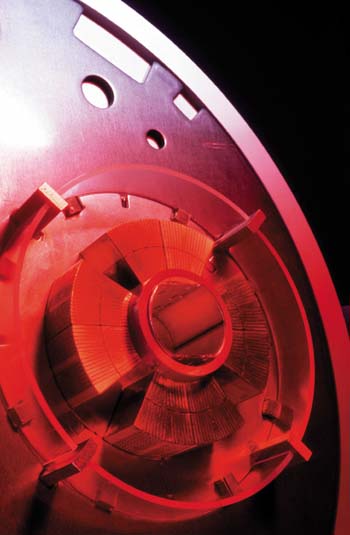
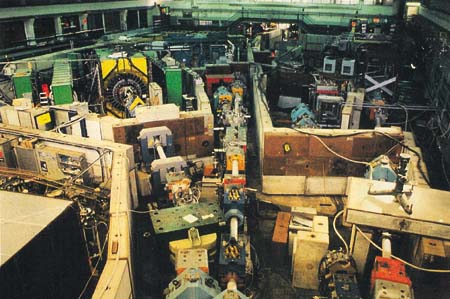
Super challenge: a superconducting LHC magnet. Credit: CERN
The phrase “needle in a haystack” – the challenge of finding something small but important in the midst of a much, much larger object – is often used to describe CERN. It could be applied to searching for someone’s office in one of the 373 buildings that occupy the laboratory’s site at Meyrin, just outside Geneva on the Swiss-French border, but the real needle in the haystack at CERN is the Higgs boson.
The Higgs is the particle that is responsible for other fundamental particles such as quarks and Z-bosons having mass. It is also the main reason that CERN is building a machine called the Large Hadron Collider (LHC) at a cost of SwFr 2bn. Particles predicted by supersymmetry – the theory that every particle has a supersymmetric partner with the same mass and charge but different “spin” – are the other top priority.
There is a chance, albeit it a small one, that particle physicists might find the Higgs boson at CERN’s large electron-positron (LEP) collider before it is shut down to make way for the LHC. It all depends on how high the beam energy at LEP – which currently stands at 103 GeV (103 X 109 electron volts) – can be raised. “1 GeV can matter at this stage,” says Luciano Maiani, the lab’s director general. “Exploring up to a mass of 114 GeV is optimistic but not impossible. Unless we see the Higgs, the current plan is for LEP to be dismantled after it stops running at the end of September. Installation of the LHC in the LEP tunnel will then start in October.”
Big science
The LHC will collide protons at a centre-of-mass energy of 14 TeV (14 000 GeV), and two massive general-purpose detectors – ATLAS and CMS – will search for evidence of the Higgs and supersymmetry. A third experiment called LHC-b will probe the difference between matter and antimatter, while the ALICE experiment will study the extreme state of matter known as the quark-gluon plasma.
So will the LHC start in 2005 as planned? “Both the schedule and the budget seem to be under control,” says Maiani, “although there are some delays in the civil engineering for the ATLAS and CMS caverns. We will assess any impact on schedule at the end of this year.”
Industrial production is now the big unknown according to Maiani. Industry has to make 1200 dipole magnets, each 15 metres long, and they have to be installed in a 27 km circumference on a tight schedule. “This is a gigantic job but we must succeed,” he says. “With the LHC we are putting our credibility as a community on the line. I am confident that the CERN staff will cope with this difficult task.”
Whether the staff agree is a different matter. A poster for a recent staff meeting about “employment conditions and staff reduction” at CERN showed a pole vaulter trying to jump over a bar labelled LHC, but the director general was sawing off the bottom of the pole. How did Maiani react to that? “We are in the middle of a five-yearly review of employment conditions and this may explain some agitation,” he explains, reluctant to comment any further.
Detector developments
Meanwhile, two massive teams of physicists are preparing the two detectors for the LHC. Both ATLAS and CMS have the same basic structure: an inner tracker to measure the paths of electrically charged particles; a calorimeter to measure the energy of charged and neutral particles; and a spectrometer to track muons, the only particles apart from neutrinos that will reach the outer region of the detector. Both collaborations involve more than 1700 physicists from more than 30 countries.
The 12 500 ton CMS detector is budgeted to cost SwFr 452m at 1995 prices, and will have the biggest superconducting solenoid magnet ever made. The construction of the magnet will drive the rest of the schedule, says CMS spokesperson Michel Della Negra. The magnet will be tested around March 2004 and, if all goes well, the detector will be lowered 100 metres below ground.
A major challenge for CMS is its scintillator crystals. The L3 detector at LEP used bismuth germanium oxide (BGO) crystals, explains Della Negra, but BGO is too slow for the LHC and would not survive the intense radiation levels either. That is why a new crystal material, lead tungstate, had to be developed specially for the LHC. Moreover, CMS needs 11 m3 of lead tungstate – about 80 000 crystals – whereas L3 needed only 1 m3 of BGO. Half of the crystals will come from Russia and half from China. However, changes in the exchange rate between the dollar and the Swiss franc mean that the current cost of crystals in Swiss francs has risen by 30% – just one of a variety of problems that the project leaders have had to face.
One of the major challenges when building the detectors is to ensure that the electronics for the inner tracker can survive the intense radiation produced there, and also take up as little volume inside the detector as possible, explains Peter Jenni, spokesperson for ATLAS. Many of the components for ATLAS have already been built, he says. For instance, 12 of the 64 modules needed for the barrel of the hadronic tile calorimeter have been completed and are now at CERN. ATLAS is budgeted to cost SwFr 475m.
Both collaborations are also now looking closely at the issue of computing and how to cope with the enormous amounts of data that will flow from the LHC detectors. Indeed, this challenge is the driving force behind the development of a new approach to computing called the Grid.
We have the technology
Although fundamental physics is CERN’s top priority, the lab has started to pay more attention to technology transfer in recent years. “Technology transfer has always happened at CERN, but now it is more proactive and explicit,” says Juan Antonio Rubio, head of CERN’s newly created education and technology transfer division. “The aim is less to generate revenue,” he says, “than to demonstrate to the CERN member states that the money invested in CERN is bringing benefits to European industry.”
Technologies that CERN is strong in include superconductivity, information technology, control systems and vacuum technology. Various accelerator and detector technologies have also been transferred to medical applications. For example, the BGO crystals developed for the LEP detectors are now being used in PET scanners.
But the most important area of technology transfer is people, says Rubio. This currently happens at many levels, from placement students who spend a summer at the lab to fellows who have spent several years at CERN. Another area is collaboration agreements with companies, says Rubio, and CERN is currently undertaking a study to find out what mechanisms work best for such collaborations.
The future
It has been suggested that CERN will find it difficult to maintain the intellectual life of the lab during the gap between LEP and LHC. Maiani disagrees. “Analysis of LEP data will take two or so years,” he says, “leaving only a three or four year gap before physics results start to pour in from the LHC.” He also points to on-going experiments with protons, muons, neutrinos, neutrons, kaons and the antiproton decelerator.
So what will happen at CERN after the LHC? Maiani sees three possibilities. The first is a linear collider called CLIC that will have a centre-of-mass energy of 3 or 4 TeV. Maiani does not see CLIC as being in competition with existing proposals to build a 1 TeV linear collider in Germany, Japan or the US. Such a collider would, he says, come on-line before CLIC and focus on a lower energy range. “However, money is money,” he admits, and if it came to a choice between a 1 TeV machine and a 3-4 TeV machine, he would back the latter.
The second option is a neutrino factory based on a muon storage ring. Maiani thinks that any neutrino factory would be built by a network of labs, and with the detectors thousands of kilometres away from the storage ring, location will not be too important. “It will be really a world machine,” he says.
The third option is a second phase of the LHC. Maiani believes that as microelectronics moves to shorter length scales, it may be possible to cope with even higher collision luminosities, thereby increasing the accessible energy range. Better magnets could also allow the energy to be increased beyond 14 TeV.
However, Maiani recognizes the dangers of particle physics becoming isolated from the rest of science and society, and sees it as one of his jobs to make sure that this does not happen. “The particle-physics community needs to be more open,” he cautions.
When Victor Hess discovered cosmic radiation almost 90 years ago, he did so in manned balloon flights that reached altitudes of up to 5 km in the Earth’s atmosphere. This was only a few years after the Wright brothers’ first flight and neither they nor Hess are likely to have thought that, by the year 2000, millions of air passengers and crew would be travelling through this complicated radiation field each year. Research outside the Earth’s atmosphere has resulted in a comprehensive understanding of the various types of electromagnetic radiation and particles that make up cosmic rays. More recently, an international team of physicists has joined forces with NASA and several European airlines to study in detail how the radiation field varies inside the atmosphere depending on the altitude, latitude and solar activity (see link).
Astronauts are subjected to the full intensity of high-energy cosmic rays and solar particles (together with the secondary particles produced in the spacecraft walls), and the biological risks in space are the subject of ongoing investigations. A typical return mission to Mars, for example, could result in a total “dose equivalent” of up to 0.5 sievert. The dose equivalent takes into account the harm caused by a particular type of radiation. Current estimates suggest that a person who receives a 1-4 sievert dose of ionizing radiation incurs a few per cent increase in the risk of contracting fatal cancer in his or her lifetime, although the risk level depends on sex and age.
The radiation we observe at aircraft altitudes of typically 10-12 km is due to very high-energy particles – mainly protons and helium nuclei, together with a small amount of heavy nuclei – penetrating the atmosphere and colliding with air atoms. These collisions give rise to the production of more particles, such as protons, neutrons and various mesons. A cascade of particles is then produced by successive interactions as they penetrate deeper into the atmosphere. As a result, the flux of particles increases in the upper atmosphere and reaches a maximum at about 20 km above sea level. Below this point, the number of particles decreases due to energy losses and various particle interactions.
Happily, at the Earth’s surface we are protected by the air above us, which provides the same degree of shielding as a layer of water 10 m thick. The small amount of radiation that eventually reaches us in the form of muons and electrons makes up about 10% of the natural background at sea level.
The need to monitor cosmic rays
Several studies of cosmic rays in the Earth’s atmosphere have been undertaken intermittently during the last few decades. However, cosmic-ray physicists regard the atmosphere as a nuisance because it causes fragmentation and energy losses that largely destroy the information on element abundances and energy spectra of interest to them.
Some years ago, the European Union expressed concern at the patchy knowledge available on the radiation field at aircraft altitudes. It funded a major investigation during the last minimum in solar activity between 1995 and 1998. These investigations have recently received further significant support and a major European study will be continued through the solar maximum between 2000 and 2003. The research team includes physicists from my group at the Dublin Institute for Advanced Studies in Ireland – the main interest of which is cosmic-ray astrophysics – and the leading radiological research centres in Italy, Austria, Germany, France, the UK and Sweden.
But why the sudden interest in the situation now? After all, we have been travelling at altitudes up to 17 km for decades, and few of us seem to care about being bombarded by high-energy particles. One of the main reasons is concern that the relative biological damage caused by neutrons may have been underestimated in the past. In addition, there is an increasing trend for subsonic aircraft to fly at higher cruising altitudes. And the International Commission on Radiological Protection (ICRP) has recently made a series of recommendations concerning exposure to cosmic rays.
Neutrons are the major source of concern because they occur in significant numbers at aircraft altitudes. An improved understanding of their role in the radiation field is therefore important. Following the ICRP recommendations, the European Union has revised its basic safety-standards directive to include, for the first time, exposure to naturally occurring sources of ionizing radiation – including cosmic radiation – as an occupational hazard. The revised directive is being incorporated into the laws of the EU member states this month, and monitoring of aircrew will soon become mandatory.
Results and regulations
The problems involved in monitoring cosmic radiation at high altitudes are quite different from those encountered at sea level by, for example, the nuclear industry. The wide range of particles and the very different energy regime – the energy can be thousands of times greater than at sea level – demand a special approach.
The research team has developed several different types of detector for the project, some of which have operated at high altitude on the Zugspitze mountain in Germany and Chacaltaya in Bolivia. Many detectors have flown on planes going from Europe to the US, Asia and South America (see figure 1). The airline partners – Alitalia, Aer Lingus, British Airways, Finnair, Lufthansa and Scandinavian Airlines – together with NASA, all provided special facilities for the detectors on their flights.
In addition, the detectors were placed in high-energy beams at particle accelerators at Uppsala University in Sweden, the GSI laboratory in Germany and at CERN in Switzerland. At the super proton synchrotron at CERN, for example, we can simulate the radiation field at an altitude of about 12 km using the interactions of 120 GeV c-1 or 205 GeV c-1 protons and pions with a copper target (figure 2). This facility enables us to calibrate all the instruments together, and greatly enhances the quality of the data, even when the instruments cannot be housed on the same flight. Further instrument-response studies and calibrations are performed with neutron and heavy-ion beams. In addition, computer programs have been extended to provide a better description of the transport of cosmic rays, and a new code based largely on experimental data is being developed.
The results obtained so far provide a fairly comprehensive picture of the expected dose rates, at least for much of the northern hemisphere. Overall, the dose-equivalent rates vary from about 1 to 17 microsieverts per hour. The highest value recorded was at an altitude of 22 km during a NASA flight. These rates were recorded during a lull in solar activity, when we expect the intensity of galactic cosmic rays to be highest.
The new EU regulations propose that there should be individual estimates for aircrew whose annual doses fall in the 1-6 millisievert per year category, and that pregnant aircrew should not be exposed to more than 1 millisievert per year. These estimates could be made for various routes using improved computer codes that are based on measured radiation levels and occasional experimental data. Currently, the crews of subsonic commercial aircraft fly at altitude for up to 600 hours or so each year. Supersonic crews fly for about half this time. Our results suggest that a crew member will receive a dose equivalent greater than 6 millisievert per year only in exceptional cases.
This work has also allowed us to investigate in detail the physics of cosmic-ray interactions in the atmosphere. For instance, we have found that the neutron spectrum – the number of neutrons as a function of energy – has two peaks. One peak is at about 1 MeV and is caused by nuclear evaporation. The second peak, at around 100 MeV or higher, arises because few neutrons interact in this energy region and thus survive.
We have also determined dose rates as a function of altitude and latitude, and the spectra of primary and secondary nuclei – from helium up to iron – at subsonic and supersonic altitudes. We have also improved the methods for routine dose assessment.
Currently, we are entering a period of maximum solar activity. During this phase we expect to complete our studies for the full 11 year solar cycle. And we should detect several instances when high-energy particles are ejected by the Sun. Such events will be superimposed on the normal galactic cosmic-ray intensity, which has varied little over the last few million years.
For a given altitude and latitude, the variations caused by solar phenomena are unpredictable. Ground-monitoring and space-weather systems will be used as an early-warning system, giving us time to deploy our detectors at high altitudes and plug a gap in our understanding of solar cosmic rays.
“The question of whether paranormal phenomena actually exist probably divides educated members of modern Western civilization as sharply as any other single issue. If it is true that the human brain can receive messages and control things in ways that cannot be explained normally, then this undermines the belief of most scientists and runs contrary to the belief of most of us who actually investigate the brain.”
It was with these remarks that Horace Barlow, a physiologist from Cambridge University, opened a unique interdisciplinary conference in Cambridge last month. The meeting brought together some 50 scientists from a range of disciplines, including psychology, psychiatry and physics, to discuss “rational perspectives on the paranormal”.
Many of the delegates at the conference, including Barlow, are highly sceptical of the existence of paranormal phenomena. Claims of ghosts, alien abductions and spoon-bending are often based on dubious evidence, while attempts by parapsychologists to reproduce paranormal phenomena under controlled laboratory conditions are fraught with difficulty. Positive results are not unusual, but are rarely repeatable. Moreover, many seemingly weird phenomena have subsequently been explained by conventional science.
Most readers of Physics World will probably dismiss paranormal phenomena as either utter nonsense or not worthy of serious study, but over the years the subject has attracted the interest of a number of eminent physicists. Lord Rayleigh, J J Thomson and Oliver Lodge, for example, were all early members of the Society for Psychical Research, which was founded in 1882 by fellows of Trinity College to study “those faculties of Man, real or supposed, which appear to be inexplicable on any generally recognized hypothesis”.
According to Bernard Carr, who organized last month’s meeting and is a cosmologist at the University of London, paranormal phenomena fall into three main categories. First there are “pseudo-psychic phenomena”, which may in fact have a very simple physical explanation. Some kinds of poltergeist phenomena, for example, may fall into this category. “These phenomena are not really psychic, but are often misinterpreted as such,” Carr explains.
Second, there are phenomena – such as out-of-body and near-death experiences, hypnosis and apparitions – that may be entirely within the mind and do not necessarily involve any interaction with the physical world. “No doubt, people have these experiences,” says Carr, “but the question is how do we interpret them? Do they correspond to some form of higher-order reality, or are they just illusions? It would be easy to dismiss ghosts, for example, as no more than visual hallucinations, but sometimes apparitions are shared by more than one person or contain information about the real world, which makes them more interesting.”
The third type of paranormal phenomenon involves the direct interaction of the mind with the physical world, including telepathy, extrasensory perception and “psychokinesis”. One example of the latter effect was given at the meeting by Fotini Pallikari, a physicist from the University of Athens in Greece. She has analysed data from a group of German psychologists, who tried to see if people can influence supposedly random physical processes. The psychologists used electronic “noise” from a semiconductor diode, which consisted of a series of random positive and negative pulses that were digitized as 0 and 1. The signals were fed into a computer, and people were then asked to mentally “influence” the statistical distribution of millions of such bits.
Although conventional statistics found that the operators had no influence on the average, an alternative statistical approach, which looks for long-range correlations and periodicities in the time series, gave a different picture. It appeared to suggest that the mind could weakly sustain the “direction” of any naturally occurring localized deviations from chance, such as a run of ones and zeroes. In other words, the operator could affect the patterns by which the bits are arranged in time, even though their average value remained unchanged.
Brian Josephson, the Nobel-prize winning physicist from the Cavendish Laboratory, Cambridge, is attempting to elucidate the physical mechanisms behind such phenomena. These include the possibility that organisms can learn to bias the statistics through having a better understanding of its patterns than non-living matter, or that some “critical fluctuation” is involved.
The interaction between mind and matter in this way is one of the main reasons why physicists are interested in the paranormal. “Quantum mechanics, after all, is the first theory in physics in which the role of the observer has to be taken into account,” explains Carr. “You cannot separate the observer from the system being observed, although the precise role of consciousness in this process remains controversial.”
The mathematical physicist Roger Penrose, who was not at the meeting, has already tried to use quantum mechanics to explain the nature of consciousness in the normal mind, and some physicists believe that quantum mechanics only needs to be tweaked to incorporate paranormal effects. Henry Stapp from the Lawrence Berkeley Laboratory in the US, who has developed a quantum-mechanical theory of how the normal brain interacts with the mind, believes that his theory could be altered to accommodate certain paranormal effects, if they exist. “But such a tweaking greatly disrupts the logical and aesthetic unity of quantum theory, and I would be very reluctant to believe that any such thing actually occurs,” he says.
But Basil Hiley, a theoretical physicist from Birkbeck College, London, believes that conventional quantum mechanics will not be able to account for paranormal phenomena, if they exist. “Quantum processes provide a clue for understanding the mind, but we must go beyond that. We need an extended quantum physicalism,” he says.
Carr defends physicists who study paranormal phenomena, pointing out that much of “conventional” modern physics is itself highly speculative. “Some might say there is less evidence for superstrings than there is for ESP and at least we can try to replicate paranormal phenomena in the laboratory,” he says.
One problem for researchers with an interest in the paranormal is that the subject is not generally deemed to be academically respectable. That may change as related topics, such as consciousness, enter the mainstream, but for now many researchers study the paranormal as a “hobby” or as a sideline to their main research.
The final word goes to Barlow: “I do not believe the subject will make any progress unless we are sufficiently open-minded to accept the possibility of supernormal powers, and sufficiently critical to abandon claims shown to be false.”
Most materials only become superconducting when they are cooled to low temperatures. In this state the electrons inside the material overcome their natural repulsion and travel through the material in pairs. It has long been suspected that if the surface of a material was doped with enough electrons, the electrons would be pulled into the interface region, allowing a similar electron-pairing effect to occur.
Schön and colleagues used a field-effect transistor to induce three electrons per carbon-60 molecule into the top layer of their device. They discovered that when a positive voltage is applied to the crystal, the carbon switches into a superconducting state. This effect survives up to a temperature of 11 Kelvin.
The New York conference is intended to specify a timetable for all the main nuclear powers – China, France, Russia, the UK and the US – to abandon their nuclear weapon stockpiles. Delegates will also discuss ways to curb the production of weapons-grade fissile material and promote nuclear non-proliferation among the other states. But many countries have accused the nuclear powers of trying to protect the current status quo. Kofi Annan, secretary general of the United Nations, reminded delegates that the threat of nuclear war remained “a very real, and very terrifying possibility.”