A more detailed review by Phil Anderson of Princeton University, US is in the November issue of Physics World magazine.
This delightfully written little book is full of typically Dysonian intellectual sparkle. It is based on three public lectures given at the New York Public Library in 1997, in which the physicist Freeman Dyson looked forward to the coming century, sharing with us his unique breadth of view and receptiveness to technical innovation.
After an introduction containing a few personal reminiscences, the first chapter is primarily an extended comment on the structure of scientific revolutions. He paints a vivid picture of science driven by successive waves of enterprising instrument-makers following the appropriate craft tradition of their time, which currently is software and the Internet. This chapter is the best of the book, supporting a coherent theme with such fascinating and disparate examples as Sanger’s overlapping genes, the Sloan survey to map the skies, and Penny Sackett’s Internet-connected “microlensing” survey.
In another chapter Dyson presents a sobering assessment of the possible uses from the Human Genome Project. He points out the real possibility of developing a self-perpetuating overclass that could afford designer children and gene therapy of various kinds. He also points out the many benefits – expected and unexpected – to be anticipated from detailed manipulation of the genetic material.
In spite of the many exciting ideas and the pellucid writing, it is uncertain whether Dyson took this assignment seriously or, for that matter, that one should examine the future in such a light-hearted tone as his. For example, there is no mention of global warming and sea-level rise nor any “sense of danger” with regard to the totally unexpected new directions that science (or society, for that matter) can take over the course of 100 years.
All that being said, this is a book that can be heartily recommended, if not for what it can tell us about the 21st century, then at least for what we can learn about what goes on in our own.
When the great and the good met at the World Conference on Science in Budapest in June, one question was on many people’s lips. How much has science changed since the previous World Conference held in Vienna 20 years before? One major development has been, of course, the collapse of science in eastern Europe and the former Soviet Union following the fall of communism. Less spectacular, but equally significant, has been the rising influence of the Third World Academy of Sciences, which was set up in 1983 in Trieste in Italy.
These two examples may serve to illustrate the important role played by scientific institutions in the development of science. Such institutions also have a vital part to play in the ethical implications of scientific research, which have changed considerably since the Second World War. No longer can scientists simply ignore ethics or sweep it under the carpet. As the particle physicist Sidney Drell has pointed out, the scientific community has a responsibility “to be alert to the implications and practical uses of our progress”. The community as a whole – in the form of its scientific institutions – has a social obligation to monitor the ethical uses of scientific knowledge. Indeed, I believe that the 21st century will be a “century of evaluation”, in which economic and ethical judgements in science will become increasingly important.
Scientific societies and ethics
The dissident Soviet physicist Andrei Sakharov – who died in 1989 after a lifetime of courageous, outspoken protest against the arms race and in favour of democratic freedom – provides an excellent example of how science and ethics interact. His life raises two key questions. First, why did the Soviet science establishment not protect Sakharov better than it did? After all, everything that Sakharov ever said about caring for the environment, supporting democracy and respecting human rights was basically sound – and even common sense – yet he was ignored, and indeed exiled to Gorky for seven years.
The other question his life raises is why did the collapse of the Soviet Union lead to the collapse of the scientific establishment there? The obvious answer is that the scientific establishment was too close to power and too distant from ordinary people. One might even say that “the Soviet Union lived by science and perished by science”.
Over the last ten years, developing countries have been learning from the collapse of science in the communist world. The Soviet model no longer appears to be the smart shortcut to scientific progress that it once did. Indeed, in preparation for this year’s World Conference, two scientists from south-east Asia published an article in Nature (1999 399 633) entitled “Scientific societies build better nations”. Rather than denouncing, as perhaps one might have expected, the dominant Western model, they argued that such societies have much to contribute to the national development of Third World countries.
But which example of a Western scientific society should developing nations follow? Clearly the most dynamic scholarly society in physics is the American Physical Society (APS), which recently celebrated its centenary. When the last APS president, Andrew Sessler, was asked how the society has changed over the last hundred years, he explained that the APS is no longer a body concerned only with physics, but that it has evolved into “a society with a social conscience”. For example, the APS set up a forum on physics and society in 1972, and soon after created a panel on public affairs, a committee on international freedom of scientists, as well as other groups on women, minorities, science planning, applied physics and careers.
One of the first initiatives of the forum on physics and society was the creation of the Leo Szilard lectureship award, which is given for “physics in the public interest”. Szilard was a pioneer on many issues relating to ethics in science, as his witty and imaginative book The Voice of the Dolphins (Simon and Schuster 1961) makes clear. And last year, to celebrate the centenary of Szilard’s birth, the APS gave the award new impetus by setting up a fund to enable the holder to lecture to groups of young physicists.
The role of national academies
Let me now turn from scholarly societies, which are the professional bodies representing particular disciplines, to the national academies, which cover all of science. These may be classified into two broad categories – “functional academies”, which are healthy, and “fossil academies”, which are sick. Three examples of healthy academies are the Royal Swedish Academy of Sciences, the Royal Society in the UK and the US National Academy of Sciences.
One feature of healthy academies is that the number of members, N, does not increase linearly with the population, P, of the country, and does not remain constant either (see right). This is because national science academies are not just representative of the country’s population (if they were, then N would simply be proportional to P) but are also representative of world science as a whole with its many disciplines (a requirement that would imply that N should be independent of P). The interplay between these two constraints leads to a curve that is neither a straight line from the origin, nor a constant, but something in between.
The way in which the number of members changes with time enables one to make a clear distinction between healthy and sick academies. If we assume a “quasi-stationary” regime, then the number of members, N, is simply the number of people joining the academy each year, F, multiplied by the average time that they remain in the academy. Since that average time is the difference between the age at which the members die, T2, and the age at which they are elected, T1, we can say that N = F(T2 – T1).
For healthy academies, N tends to increase with time for three reasons: first, F tends to increase, because the number of scientific disciplines is always growing; second, T2 increases naturally as people tend to live for longer; and third, healthy academies do not permit the average election age T1 to creep upwards. But if an academy limits the total number of members, it can become increasingly divorced from modern science and society. Such a catastrophic decoupling indeed occurs for those “microcanonical” academies: in other words, if N is held constant, T1 will shoot up because F and T2 are increasing. This leads to an unstoppable process of “fossilization”, a vicious circle in which the people who elect new members to their academy – having lost contact with laboratory life, younger scientists and cutting-edge research – prefer to choose other scientists who are equally old and out of touch.
This catastrophic process has been neatly documented by Alfred Kastler, the physicist who won the 1966 Nobel Prize for Physics for his work on atomic spectroscopy. Kastler looked at the average age at which scientists were elected to the French Academy of Sciences, and found it has steadily risen from about 45 in 1850 to 72 today. The reason why the academy does not allow N to rise is that it receives a sum of money from the government, which it divides between its members. The only way that the academy could increase the number of members, while maintaining the amount it pays them, would be to ask for more government funds – an approach that is not good for independence.
In sharp contrast, the Royal Society has a statute that states: “The society shall not, and by its laws may not, make any dividend, gift, division, or bonus unto or between any of its members.” The lack of any form of financial privileges is the key to the society’s openness and adaptability. The amusing paradox here is that Robert Hooke, who helped found the society, stated in 1663 that “the business and design of the Royal Society is to improve the knowledge of natural things…not meddling with Moralls”. But it turns out that the ability of the Royal Society to carry out its aims has been crucially dependent on this ethical rule. Far from being an obstacle to efficiency, ethics proved here to be essential for it.
Whistleblowers need protection
Another important role of scientific societies and academies is to protect whistleblowers. As the physicist Joseph Rotblat said in his acceptance speech for the 1995 Nobel Peace Prize: “Whistleblowing should become part of the scientific ethos.” Scientists who alert the wider world about risks or misconduct in science should be allowed to do so, just as they are when discussing truths within science itself. In other words, people who speak out about ethical problems in science need to be protected as they spread their message. If the whistleblowers are silenced, inertia prevails and catastrophes will occur.
An instructive parallel can be drawn between the lives of Andrei Sakharov and Abdus Salam, two physicists whose destinies have been linked with the two major confrontations of the last 50 years: between East and West in the case of Sakharov, and between North and South in the case of Salam. Although Sakharov was elected to the Soviet Academy of Sciences at the age of only 32, he was not effectively protected by the scientific community, and his warnings went unheeded.
Salam was also young – just 33 – when he became a fellow of the Royal Society. But unlike Sakharov, Salam’s concerns for the needs of developing nations and his practical suggestions for helping them were not ignored. Within five years of his election to the society, he had founded the International Centre for Theoretical Physics in Trieste, which was later followed by the Third World Academy of Sciences and other worthy institutions. (It is a remarkable peculiarity of the Royal Society that British nationality is not a requirement for fellowship; so although Salam was a Pakistani, he was elected as a fellow, rather than as a foreign associate.)
But whistleblowing is not reserved for the famous. The American Association for the Advancement of Science (AAAS), for example, has created a prize for scientific freedom and responsibility, which recognizes and supports courageous individuals. The list of laureates, and the story of their lives and predicaments, provide instructive, concrete lessons on some hard realities of our time.
And in Europe, the German Research Council set up an international commission on self-regulation in science in 1997, following the disclosure of a major incident of fraud and misconduct in biology, dubbed the “Herrmann-Brach affair”. The commission came up with 16 recommendations, including rules for properly evaluating research, for promoting good scientific practice, and for dealing with the thorny question of “honorary authorship” on scientific papers. I hope that all 16 recommendations will soon become European standards.
Societies must take the lead
But how should the responsibility for raising ethical questions be shared between the individual and the community? While not everyone is expected to become a hero, every scientist should see to it that scientific institutions and societies provide adequate evaluation and protection for those who take risks in advancing disturbing truths. The need for rationality is not just relevant to the natural sciences, it is also relevant in the realm of human responsibility. And just as human impunity behind state sovereignty is no longer acceptable for politicians, so impunity behind value-free science will no longer be acceptable for scientists.
Let me end with the hope of Rammal Rammal, the Lebanese condensed-matter physicist whose family background, and early brilliance, were similar to those of Salam. Born in Beirut in 1951, Rammal came to France for his university studies and stayed there for most of his scientific career. Shortly before he died in 1991 – after so many years of Lebanese civil war – he wrote in his last message to me: “[I have] one hope alone: that human intelligence will take over.”
His hope has now become a European one, because the Rammal medal is in the process of becoming the first distinction sponsored by Euroscience – a new association with the ambition to become the European equivalent of the AAAS. And in the light of Rammal’s hope, let me formulate a pragmatic wish that the European Physical Society will draw inspiration from the best achievements of the APS – its openness, its dynamism, and its affirmative actions. Let me also wish that Euroscience will emulate the AAAS in its clever, intelligent initiatives.
* This article is a shortened and edited version of the Cecil Powell memorial lecture given by the author in September at the 11th general conference of the European Physical Society in London.
A few months before Isidor Isaac Rabi died in early 1988, his doctors watched as he was gently moved into the bore of a magnetic-resonance-imaging machine. Once inside the machine, Rabi saw a distorted image of his face in the cylindrical surface surrounding him. “It was eerie,” Rabi said. “I saw myself in that machine. I never thought my work would come to this.” An eerie moment? Certainly – since Rabi’s physical research led directly to magnetic resonance imaging, a technique that is widely used in hospitals today.
For Rabi to see his life and work embodied in that distorted facial image as he approached his 90th birthday must have been haunting. But in a deeper sense, it was an affirming moment. His persona and his physics were an unbroken whole. The character of the man determined the style of his physics. For Rabi to see himself in his work was inevitable.
The foundation years
Rabi was born in 1898 in what was the Austro-Hungarian empire and is now Poland. By the time he was two years old, Rabi and his family were living in a Jewish ghetto on the Lower East Side of New York. Rabi’s boyhood was dominated by the strictures of poverty and conservative Judaism. In their two-room flat, occupied by the four members of the Rabi family plus two boarders, hardly a sentence was spoken that did not refer to God in some fashion.
As a youngster, Rabi subjected his religious teachings to small experimental tests, only to discover that what he was taught to expect did not actually occur. So when he discovered a library book that explained the design of the Copernican system of planetary motion, Rabi’s ready response was “Who needs God?”. As an adult Rabi never practised religion, but the early influences remained. “My early upbringing, so struck by God, the maker of the world, this has stayed with me,” he said.
Rabi’s route to obtaining his PhD in physics from Columbia University in 1926 was odd and tortured. He went to the Manual Training High School rather than the Boys High, the school chosen by his smart Jewish friends. And at Cornell University he studied chemistry, not physics. At both high school and at Cornell Rabi spent little time on his classroom assignments. Instead, he read widely on subjects both related and unrelated to his courses. Rabi’s father called him lazy.
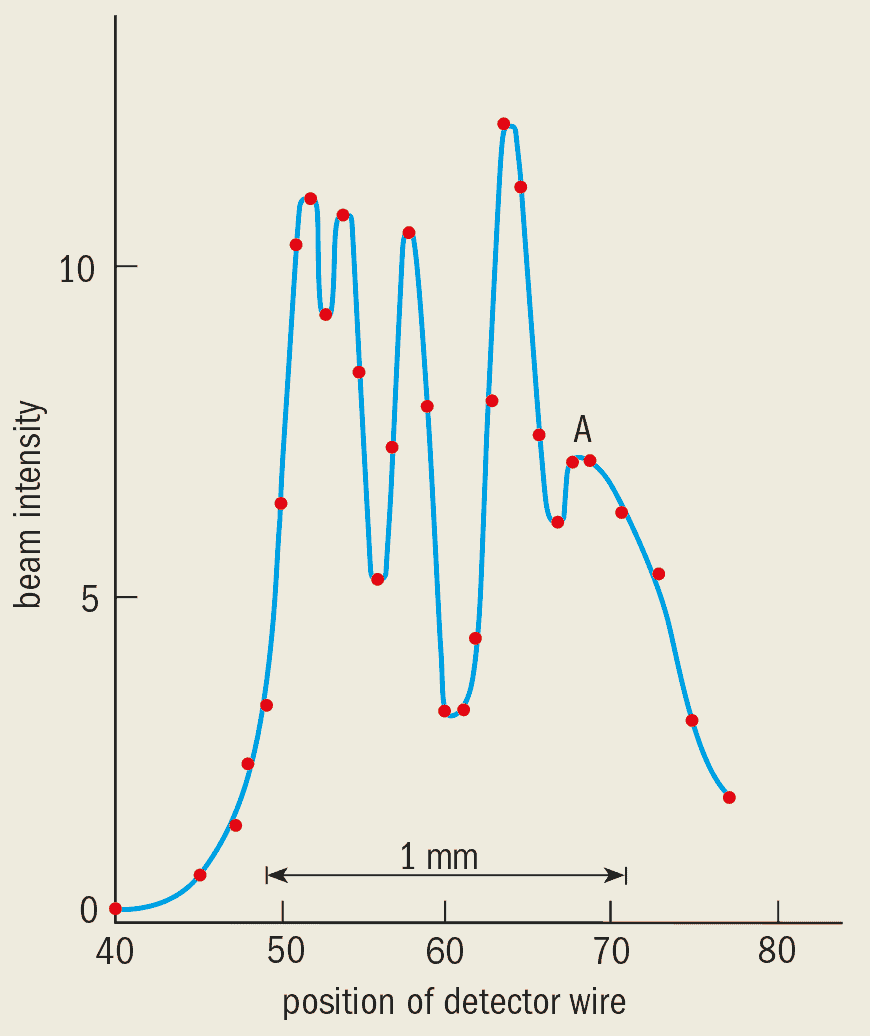
1 Stylish measurements of sodium The beam intensity versus detector position for a molecular-beam experiment with atomic sodium. By measuring four intensity peaks (the peak marked A is not a signal peak), Rabi and Victor Cohen were able to show that the nuclear spin of sodium was 3/2. (Courtesy: Physical Review43 582)
After graduating in 1919, he spent three long years doing nothing. He had no job and wasted time “fooling around” with three friends. He spent long days at the New York City public library. When he finally decided to go to graduate school, he returned to Cornell only to discover that chemistry did not captivate him. In 1923 he transferred to the physics department at Columbia.
Rabi’s approach to his doctoral dissertation was an extension of his past behaviour and gave a glimpse of his future research style. In 1923 physics was “snapping and popping” in Europe. Quantum ideas fascinated Rabi and a new experiment by Otto Stern and Walther Gerlach captivated him so much that he was asked to give a departmental seminar on the subject. Unfortunately for Rabi, quantum theory was not part of the fare at Columbia, nor at other American universities at that time.
Rabi’s dissertation research was to measure the magnetic susceptibility of a class of crystalline substances and had its origins in the physics of the 19th century. Rabi grew crystals and procrastinated. He spent days in the library. He read Zeitschrift für Physik and organized a group of students to discuss the new physics that was taking form in Europe. But he could not bring himself to start the tedious magnetic-susceptibility measurements and employ routine experimental methods. One day, however, while reading James Clerk Maxwell’s 1873 Treatise on Electricity and Magnetism, an idea came to him for a simple and accurate method for doing his measurements.
Rabi suspended his crystal from a glass fibre in a solution and placed the apparatus in a magnetic field. He knew that the weight of the crystal would change as the magnetic field was turned on and off because the solution and the crystal had different magnetic susceptibilities. Rabi then adjusted the magnetic susceptibility of the solution until the weight of the crystal did not change, which meant that the susceptibilities of the crystal and the solution were the same. Finally, he compared the magnetic susceptibility of the solution with that of water, which was known, thus allowing him to determine the susceptibility of the crystal.
Rabi was animated. Here was an experiment with class. In six weeks he measured the susceptibilities of a whole series of crystalline substances, and did so with unprecedented accuracy.
Quantum mechanics became a reality during Rabi’s graduate school days and he wanted to learn the new physics from its creators. With PhD in hand, he went to Europe and spent short periods with Arnold Sommerfeld, Niels Bohr, Wolfgang Pauli, and Werner Heisenberg. However, it was in Hamburg, while presumably working with Pauli where Rabi’s future course was determined.
Otto Stern – whose experiment with Walther Gerlach had so captivated Rabi – was also based in Hamburg. Stern and Gerlach had sent a beam of silver atoms through a non-uniform magnetic field and observed that individual atoms were deflected such that the beam was split into two distinct components. While Stern concluded that he had verified “space quantization” – the most bizarre feature of the old quantum theory – he had unknowingly anticipated the intrinsic angular momentum or “spin” of the electron (see Friedrich and Herschbach in further reading). Electron spins and nuclear spins are responsible for the magnetic properties of materials.
Of course, Rabi’s ongoing enchantment with the Stern-Gerlach experiment drew him into Stern’s laboratory to see the work first hand. On one visit, Rabi made a casual suggestion to Stern about deflecting particles with a uniform magnetic field. “Do it,” said Stern!
The magnetic-deflection method that Rabi demonstrated in Stern’s lab was both simple and successful. He sent a beam of atoms into a homogeneous magnetic field at a glancing angle. The field could be calibrated easily, unlike the inhomogeneous field used in the Stern-Gerlach experiment. As the atoms entered the field, they changed direction according to their magnetic moments. This method came to be called the Rabi field.
The 1930s: nuclear physics with style
In the late 1920s the physics department at Columbia University needed a faculty member who could teach the new quantum mechanics. It so happened that Heisenberg was starting a world tour in early 1929 and his first stop in New York was Columbia. Heisenberg recommended Rabi for the new position and so began his academic career as a lecturer – the lowest rung on the professorial ladder – a few months later.
Rabi’s first two years at Columbia were unproductive. He still regarded himself as a theorist and spent his time applying quantum mechanics to solids. “I had some good ideas,” said Rabi, “but they bored the hell out of me.”
Then, in 1931, Harold Urey published a paper in which he openly acknowledged that his spectroscopic experiments could not determine the nuclear spin of sodium with certainty. There it was. With the nuclear spin of sodium as his objective, Rabi started his molecular-beam laboratory.
Rabi’s first molecular-beam paper, “The nuclear spin of sodium”, was published in 1933 (see Rabi and Cohen in further reading). Again Rabi was frustrated by the available experimental techniques, just as he had been during his thesis research. After months of experiments with different magnetic fields and different field inhomogeneities, Rabi and his first graduate student, Victor Cohen, had accumulated deflection data that required a time-consuming and laborious statistical analysis. “This is not for me,” Rabi said. “I’m going to know my answer at the end of the day.”
Two things happened next. First, Gregory Breit and Rabi showed theoretically how the tiny magnetic moments of the nucleus could be measured in the presence of the much larger electron moments by using a weak magnetic field. Second, Rabi and Cohen modified the standard Stern-Gerlach apparatus to exploit the Breit-Rabi theory.
More specifically, they replaced the single, strong deflecting field with three deflecting fields – one strong field and two weak ones – along the path of the beam. The sodium atoms in the beam therefore experienced three different deflections in succession. Each atom experienced a deflection that depended on its effective magnetic moment, which in turn depended on its hyperfine quantum state. Hyperfine structure results from the interaction of the magnetic moments of the electrons and the nucleus.
The end result was that the beam was split into 2(2I + 1) components, where I is nuclear spin of the sodium atoms. The symmetry of the experiment meant that half of the components (i.e. 2I + 1) were deflected to the right of the detector and half were deflected to the left.
Rabi and Cohen counted the number of components by moving a wire surface-ionization detector across the beam. They found four components on one side, so the nuclear spin of sodium was 3/2 (figure 1). Rabi had his answer at the end of the day. “It just charmed me,” he said. “These atoms in quantized states… Count them! … Each one, I suppose, seeks God in his own way.”
From 1933 until the end of decade, Rabi directed an atomic ballet as atoms pirouetted through his beam apparatus, responding to the magnetic nudges and stimuli exerted on them and giving up their inner secrets. The atoms of many elements formed the corps de ballet, but one atom was the prima ballerina: hydrogen.
Rabi and his collaborators made a series of increasingly accurate measurements of the nuclear spin of the hydrogen atom (i.e. the proton) and the deuterium atom (i.e. the bound state of a proton and a neutron known as the deuteron), culminating in the discovery of the nuclear quadrupole moment of the deuteron in 1940 (see box).
Rabi's experiments on the hydrogens
The magnetic-resonance method The magnetic fields (H) produced by the deflecting magnets A and B both point in the same direction (up in the diagram), but the gradients of the fields (dH/dz) point in opposite directions; n is the magnetic moment of an atom. The combined effect of magnets A and B is to refocus atoms leaving the source into the detector (blue lines). However, if a third magnetic field (from magnet C) is used to change the orientation of mu relative to H (i.e. if the atom’s quantum state is changed), then the atom will not be detected (yellow lines). By varying the strength of H and the frequency of a radio-frequency field in the same region, it is possible to make very accurate measurements of nuclear magnetic moments. (Physical Review55 527)
In 1933, using a beam of hydrogen molecules, Otto Stern had measured the magnetic moment of the proton to be 2.5 ± 0.25 nuclear magnetons. Stern’s result came as a complete surprise. The nuclear magneton is defined as 1 nm = eh/4πMc, where e is the charge of the electron, h is the Planck constant, M is the rest mass of the proton and c is the speed of light. In 1928 Dirac had explained why the magnetic moment of the electron was eh/4πMc, where m is the electron mass, so the proton was expected to have a moment of 1 nuclear magneton.
The significance of the proton, and the fact that the Breit-Rabi weak-field method could measure its magnetic moment using abeam of hydrogen atoms, demanded that Stern’s measurement be repeated. “After all,” said Rabi, “there’s only one proton.”
Rabi’s first experiments on hydrogen and deuterium were crude. A simple deflection method was used, a beam temperature had to be assumed, the velocity distribution of the atoms smeared the results, and the detector had a yellow surface that turned blue where the beam atoms impinged. The results of Rabi’s 1934 experiment were 3.25±0.33 nm for the proton, and 0.7710.2 nm for the deuteron. The results were inconsistent with those of Stern and with experimental uncertainties of 10% and 26% better results were needed.
A second experiment introduced the elegantly simple refocusing technique that presaged the far-reaching magnetic-resonance method. The beam particles passed through two deflecting fields, “A” and “B”, that were oriented to deflect the atoms in opposite directions. As before, the magnitude of the deflection depended on the effective magnetic moments of hydrogen and deuterium. With both fields switched on, atoms deflected one way by the A-field were deflected the other way by the B-field, and all the atoms, fast and slow alike, were refocused into the detector.
When neither magnet was activated, a new detector known as a Stern-Pirani gauge, was positioned to locate the beam. Then the B-field, which was strong enough to effectively destroy the coupling between the electronic and nuclear spin moments, was activated. The detector signal vanished as the beam was split into two components located on each side of the detector. Then the A-field was turned on and its magnitude slowly increased.
For the 2S1/2 quantum state of hydrogen and deuterium, the total angular momentum F can have two values: when the nuclear and electron spins point in opposite directions (F = 0) there is only one hyperfine level, mF = 0; and when these spins point in the same direction (F = 1) there are three hyperfine levels, mF = 1, 0 and –1. As the A-field was increased, the states with the larger magnetic moment, mF = ±1, were refocused into the detector first, followed by the mF = 0 states at a higher field. The 1935 results were 2.8510.15 nm for the magnetic moment of the proton and 0.8510.03 nm for the deuteron. This time the uncertainties were reduced to 5% and 4%.
Rabi then added a static magnetic field between the A- and B-fields. This field was shaped so that the atoms moving through it would experience the effects of a rotating magnetic field. By this means, Rabi was able to determine the signs of the magnetic moments of the proton and deuteron, and found that both were positive. The data also allowed the magnetic moment of the neutron, which had been discovered only three years earlier, to be deduced.
In late 1937 Rabi introduced a homogeneous magnetic field between the A-and B-fields, which had an oscillating radio-frequency (rf) field embedded within it (see figure above). When the A and B deflecting fields were adjusted so that all the beam particles were refocused, the detector signal was at a maximum. Then, with the frequency, ν, of the rf field fixed, the strength of the homogeneous magnetic field, H, was slowly increased.
At some combination of ν and H, beam particles would undergo a quantum transition and could no longer be refocused into the detector by the second magnetic field. This caused the detector signal to decrease. However, increasing H further brought the detector signal back to full strength. A plot of the detector signal against H showed a resonance peak. Rabi showed that the magnetic moments could be determined with unprecedented accuracy when the detector signal was at a minimum. At this point the frequency of the rf field matched the natural precession frequency of the atomic nucleus, and the nucleus absorbed maximum energy from the radio waves. The 1939 results were 2.78+0.02 nm for the proton and 0.85310.007 nm for the deuteron, an accuracy of around 0.7%.
This version of the experiment also led to a major discovery – the deuteron possessed a nuclear quadrupole moment. In other words, the electric charge was not distributed spherically throughout the deuterium nucleus. Moreover, the existence of the quadrupole moment meant that the forces within the nucleus were not “central” as had previously been assumed. It was later found that all nuclei with nuclear spin greater than 1/2 have quadrupole moments, and that a new type of spin-dependent or “tensor” force exists within the nucleus.
The war years
In 1940 the Rabi laboratory, with its galaxy of world-class students and post-docs, was riding on top of the crest of a wave – a wave that was building in amplitude. But it did not last. The highly secret arrival from the UK of a small, odd-looking device called a magnetron brought Rabi’s research to a precipitous halt.
On 6 October 1940 the magnetron – a 10 000 watt source of 10 cm waves – was demonstrated at the Bell Telephone Laboratories. It was immediately clear that the magnetron made radar systems viable on ships and aircraft. One month later, on 6 November, Rabi had moved to the Massachusetts Institute of Technology (MIT) where the Radiation Laboratory had just been launched.
Rabi became the head of the research division and later the associate director of the “Rad Lab”. From the beginning, he took a long-term view and quickly started the development of 3 cm and 1 cm radar systems. He gained the confidence of military leaders and was able to anticipate radar systems that would complement upcoming military initiatives. As Lee DuBridge, director of the Rad Lab, said: “Rabi’s talents were too widespread to confine him to a particular piece of the lab.”
Rabi’s talents were also too broad to restrict him to one laboratory. The Manhattan Project, the code name for the massive effort that brought the atomic bomb to fruition, began at Los Alamos in late 1942. J Robert Oppenheimer, director of the project, recognized that Rabi’s experience at the Rad Lab was what he needed at Los Alamos, and asked him to be associate director on the project. However, Rabi was convinced that victory in the war depended more on radar than on a potential nuclear bomb and declined the offer, although he did become one of Oppenheimer’s two senior consultants and was a frequent visitor to Los Alamos. The other senior consultant was Niels Bohr.
A new Rabi and a new world
At the end of the war, a different Rabi entered a different world. Physicists, riding the successes of the war-winning radar project and the war-ending bomb project, were treated like rock stars are today. No Washington guest list was complete without a physicist. Rabi had the additional aura of having won the 1944 Nobel Prize for Physics. He was, at the age of 47, one of the elder statesman of physics, and his ability to work with policy-makers had launched him onto the world stage. All this meant that Rabi was associated with only a few eventful experiments after the war, although he did, with his students John Nafe and Edward Nelson, expose an anomaly that turned out to correct the electron’s magnetic moment.
The war had hurt Rabi’s department at Columbia University. His colleagues Enrico Fermi and Urey had gone to Chicago for military work and stayed there as professors when the war ended. To strengthen Columbia’s position, in early 1946 Rabi and his student Norman Ramsey, who also went on to win the Nobel prize, organized nine universities in the north-east of the US to push for the creation of a nuclear and particle physics laboratory in the region. As a result Brookhaven National Laboratory, on Long Island in New York, was established in January 1947.
At the same time, Rabi talked to European physicists about the creation of a nuclear physics laboratory in Europe. In June 1950 he attended the general assembly of the United National Educational, Scientific and Cultural Organization (UNESCO) in Florence, Italy. There he carefully built up support for the idea and on the 7 June presented a motion to establish the laboratory. The motion was unanimously accepted. Geneva was selected as the site, and on 15 February 1952 nine nations signed the agreement that established CERN.
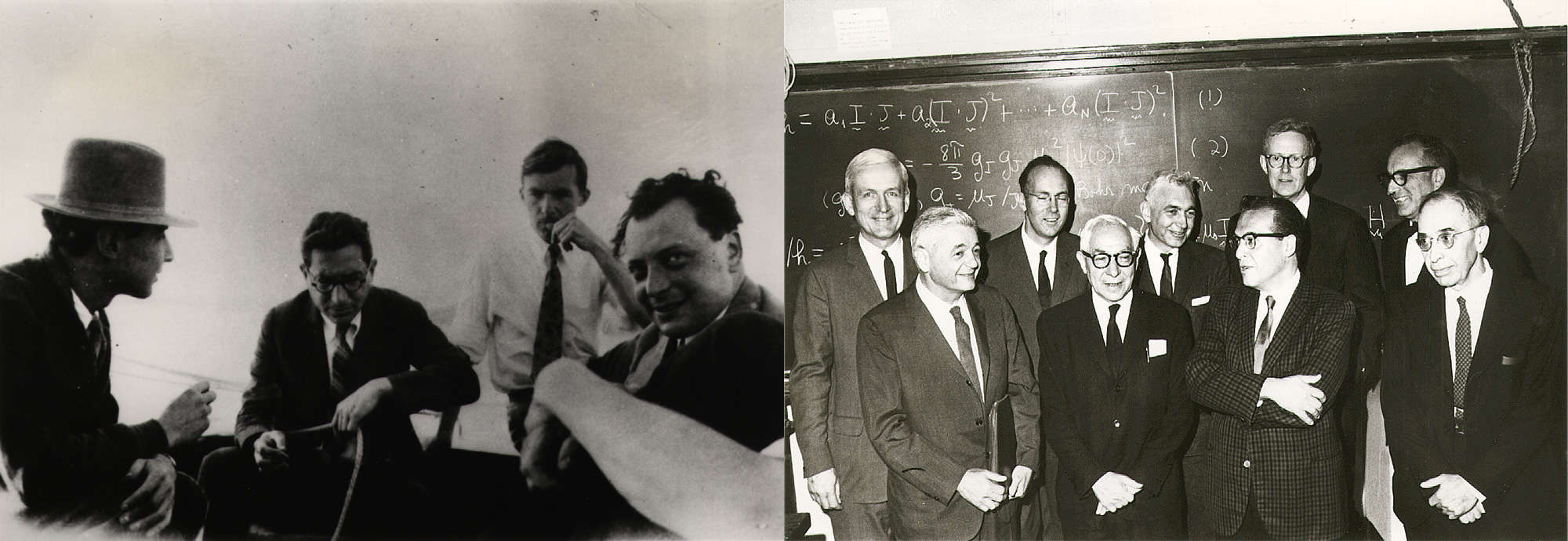
Left, on a lake in Zurich shortly before Rabi left Europe to assume a faculty position at Columbia University. On Rabi’s right is J Robert Oppenheimer, on his left are Lewis Mott-Smith and Wolfgang Pauli (Courtesy: Niels Bohr Library, American Institute of Physics). Right, Rabi with former students and associates at his retirement from Columbia University in 1968. Pictured from left to right are Norman Ramsey, Jerrold Zacharias, Charles Townes, Rabi. Vernon Hughes, Julian Schwinger, Edward Purcell, William Nierenberg and Gregory Breit (Courtesy: Niels Bohr Library, American Institute of Physics).
In 1945 the war ended and the nuclear age began. The Cold War started in earnest after the former Soviet Union detonated its first nuclear weapon in 1949. Physicists had created the awesome new power and now became active advisors to world leaders. For Rabi, the opportunities to serve were more than a responsibility – they were an obligation. It is also true that he enjoyed the stage, and he became a member of the General Advisory Committee of the Atomic Energy Commission, which was chaired by Oppenheimer. While members of this committee unanimously advised against the development of a fusion weapon, Rabi and Fermi wrote a minority report in which the issue was couched in broad policy and ethical terms (see Rigden in further reading). One paragraph from the Rabi-Fermi report reads as follows: “The fact that no limits exist to the destructiveness of this weapon makes its very existence and the knowledge of its construction a danger to humanity as a whole. It is necessarily an evil thing considered in any light.”
Rabi’s position was a tough-minded one: a fusion bomb should not be developed; nuclear weapons should not be under any single nation’s control. He proposed confronting the Russians and saying: “Now you have an atomic bomb, and we have lots of them. The atomic arms race is over. We’ll both give up our weapons to international control. If you don’t agree with this plan, we’ll force it on you.” The committee’s advice was ignored.
The committee’s recommendation against the hydrogen bomb, made a few weeks after the Soviet atomic bomb had drained policy-makers’ aplomb, was partly responsible for the downfall of Robert Oppenheimer – but only partly. Oppenheimer was highly charismatic, with a brilliant mind, and a tongue that could crush the most confident opponent. But Oppenheimer, a cult figure after the Second World War, had enemies. When Oppenheimer’s committee (and it was his committee) recommended against the fusion weapon, his alleged association with communists during the 1930s was resurrected and used against him.
A few months prior to the Oppenheimer hearing, President Eisenhower delivered a speech to the United Nations in which he proposed that governments should donate their fissionable materials to an international atomic energy agency that would be chartered to use this new power for peaceful ends. For Rabi, a lover of opera, Eisenhower’s proposal was like an aria. Lewis Strauss, chairman of the Atomic Energy Commission, asked Rabi what response could be made to Eisenhower’s idea. When Rabi suggested holding an international conference, Strauss appointed Rabi chairman of the planning committee.
So here was Rabi working closely with Strauss, Oppenheimer’s most powerful antagonist, while at the same time remaining an eloquent and forceful witness in support of his former colleague. Rabi could neither lose Strauss’s support for the international conference nor could he stand by while his friend Oppenheimer was falsely accused. Oppenheimer, to Rabi’s deep disappointment, was stripped of his security clearance and forced into relative obscurity. The idea for a conference, to Rabi’s great satisfaction, survived.
The inaugural International Conference on the Peaceful Uses of Atomic Energy was held in Geneva in 1955 under the auspices of the United Nations. Dag Hammarskjöld, secretary general of the UN, linked arms with Rabi throughout the planning effort. Hammarskjöld regarded the first conference as one of the most important events in the post-war world, and the series continued long after 1955. Rabi gave the opening address at the fourth international conference in 1971. “Real peace means more than the absence of violent war,” he said. “To fulfil human expectations, peace must be a condition which permits the release of the latent creative energies of all people to the end of enhancing and elevating the quality of human life on this globe.”
Rabi’s legacy
In 1959 the US Navy, through its Naval Research Advisory Committee, wanted to demonstrate the enormous pay-off resulting from the support of basic research. They chose to use the work of Rabi and illustrated the impact of his research by means of a tree. The tree sprang from the root work done by Louis Dunoyer, Otto Stern and Rabi himself. The work of Rabi and his students formed the trunk, and there were numerous branches adorned by the names of physicists whose research could be traced back to Rabi’s work. This research included nuclear magnetic resonance, the discovery of the so-called Lamb shift and the anomalous moment of the electron, which in turn led to refinements in quantum electrodynamics. Rabi’s work also contributed to electron spin resonance, optical pumping, refined molecular-beam methods, masers, radio astronomy and atomic clocks. Among the physicists identified on the “Rabi tree” are 19 Nobel laureates. Since 1958 the tree has sprouted new branches and grown enormously.
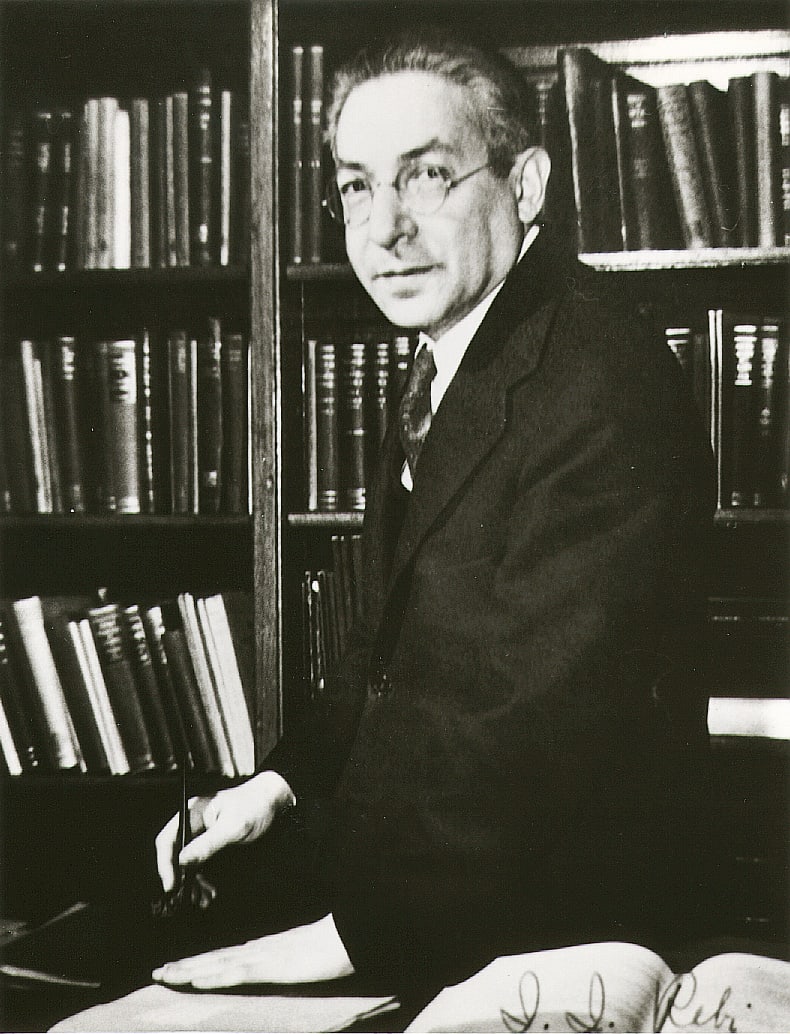
Rabi while he was the associate director of the MIT Radiation Laboratory and about the time he won the Nobel Prize for Physics in 1944. (Courtesy: Niels Bohr Library, American Institute of Physics)
Rabi’s impact on physics, more specifically on American physics, is profound. When Rabi became a lecturer at Columbia, the frontiers of physics were formed by the work of European physicists. By the early 1930s American physics was in the ascendancy and Rabi’s work was at the forefront. An illustrious group of students and post-doctoral associates were drawn to Rabi and his research. Among them were Victor Cohen, Donald Hamilton, Vernon Hughes, Jerome Kellogg, Polykarp Kusch, Sidney Millman, John Nafe, Edward Nelson, Martin Perl, Norman Ramsey, Julian Schwinger, Henry Torrey and Jerrold Zacharias.
These students went on to distinguished careers and high honours, but a part of Rabi remained with them – his standards sat in judgement of their research. “Does it bring you near to God?” Rabi would ask when a former student described his research activities. To Rabi, physics, like religion, springs from human aspirations, from the depths of the soul, from deep thinking and deep feeling. For Rabi, doing great physics was walking the path of God.
During the war, both Edward Purcell, at the Radiation Laboratory, and Richard Feynman, at Los Alamos, referred to Rabi as an elder statesman, even though he was still a young man at the time. As the years passed, Rabi’s influence grew and he was often called the dean of world physics. Rabi died peacefully at his New York home, six months short of his 90th birthday.
There is an old joke about a farmer who has a hen that will not lay eggs. After consulting unsuccessfully with a biologist, and then a chemist, he finally turns to a theoretical physicist. Several days later, the physicist announces that he has solved the problem: “First we assume a spherical chicken…” This story is a reminder that the art of approximation is crucial to most successful applications of theory to real problems; however, the proper level of simplification is not always obvious at the outset.
Differences in fundamental assumptions are behind much of the controversy among theorists over the cause of high-temperature superconductivity – the absence of resistance to electrical current at temperatures as high as 130 K – in layered copper-oxide compounds. One common assumption is that the charge carriers are distributed uniformly throughout the all-important CuO2 layers. However, there is growing experimental evidence that this is not the case and that “stripes” of charge form in these puzzling materials.
Now a significant step forward in the struggle to understand the behaviour of charge carriers in high-temperature superconductors has been made at the Oak Ridge National Laboratory in the US. Neutron-scattering experiments by Herb Mook of Oak Ridge and Fatih Do�gan from the University of Washington at Seattle suggest that charge stripes form instantaneously in a range of superconducting materials (Nature 1999 401 145). The results are intriguing because these stripes would have to occur in all the superconducting cuprates for them to be responsible for high-temperature superconductivity, as advocated by some theorists. Until now charge stripes had only been observed in a single cuprate system.
To understand why charge segregation may occur, it is useful to consider the parent copper-oxide compounds from which the superconductors are formed. The copper-oxide compounds are so-called “correlated insulators”, and are different from common insulators like silicon or sodium chloride in which the valence electron orbitals are either completely full or completely empty.
Rather than having full or empty orbitals, the copper atoms in the CuO2 planes each have one electron in the 3d level, so each copper atom has a net spin of 1/2. Normally one would expect these “unpaired” electrons to hop freely from one atomic site to another as in a metallic conductor, but this does not happen. Instead, the strong Coulomb repulsion between electrons prevents more than one of them from occupying the same site, so they tend to become localized. However, the ground-state energy of the compound can be lowered slightly if the unpaired electrons make “virtual” hops onto neighbouring sites and back again. Since the Pauli exclusion principle forbids electrons with the same quantum numbers being in the same place at the same time, this hopping is only possible when the spins of the unpaired electrons on neighbouring atoms are antiparallel. So it is therefore energetically favourable for the material to become antiferromagnetic. In other words, the antiferromagnetism that has been observed experimentally in the parent cuprates is a consequence of the correlated-insulator state.
Superconducting compounds are obtained from the parent cuprates by removing a small but finite density of electrons from the planes by chemical doping with, for instance, strontium for lanthanum. These missing electrons are commonly referred to as “holes”. If we assume, for simplicity, that each hole is associated with a copper atom, then an atom with a hole has no unpaired electron and no net spin. An unpaired electron from a neighbouring atom can readily hop onto a hole site, which allows the hole to move through the plane, lowering its kinetic energy. The accompanying rearrangement of the electrons results in clusters of parallel spins, and this costs magnetic energy relative to the antiferromagnetic state. Thus there is competition between the kinetic energy of the holes and the exchange energy of the spins.
Various experimental studies have demonstrated that antiferromagnetism survives in the doped cuprates. At the same time, however, superconductivity requires mobile charge carriers. How can mobile holes and local antiferromagnetism coexist? Several theorists have pointed out that the competing electronic interactions in the planes can lead to spatial segregation of the holes. In turn, neutron and X-ray diffraction studies on variants of the lanthanum strontium cuprate (La2 – xSrxCuO4), the prototypical copper-oxide superconductor, have shown that this segregation takes the form of regularly spaced stripes of charge separating the antiferromagnetic domains. The stripes are easiest to detect when they are static, but in such samples the superconducting transition temperature falls sharply. Some pro-stripe theorists have argued that the tendency towards charge segregation plays a crucial role in the hole-pairing mechanism essential to the superconductivity. On the other hand, sceptics have suggested that stripe order is a competing ground state that is incompatible with superconductivity.
If stripes are relevant to high-temperature superconductivity, they must be common to all of the superconducting cuprates. Furthermore, since static stripes appear to be bad for superconductivity, the stripes must also be dynamic. The search for experimental evidence for dynamic stripes is complicated by the fact that this is a brand new state of electronic matter of which we have no experience.
Recent inelastic neutron-scattering experiments on superconducting yttrium barium copper oxide (YBa2Cu3O6 + x) have found that the magnetic response is consistent with the dynamic-stripe model. The results are not conclusive, however, because the findings can be explained by alternative models in which the charge is distributed evenly throughout the material. To make the stripe interpretation more convincing, one needs evidence for the spatial modulation of the hole density. This is where the new work by Mook and Do�gan comes in.
Neutrons do not interact with charge carriers directly, but instead scatter from atomic nuclei. Static charged stripes cause displacements of the ions that make up the crystal lattice, and it is through such displacements that the stripes have been detected previously. The spatial period corresponding to the charge modulation, and hence the displacement pattern, is precisely half of the period of the magnetic modulation. This supports the idea that the charge is concentrated in the walls separating the antiferromagnetic domains. In contrast to the static case, dynamic charged stripes should alter lattice vibrations. (A lattice vibration is essentially a resonant mode of the lattice.) Mook and Do�gan studied a particular vibrational mode that should be affected by the stripes. They found an anomalous response at just the right spatial period one would expect for stripes, based on earlier magnetic scattering experiments. Thus the observed dependence of the resonance on the vibrational wavelength is circumstantial evidence for dynamic stripes.
Of course, the story will not end here. Sceptics will inevitably find alternative explanations or excuses to dismiss the new work, and experimentalists will continue to probe these mystifying materials. Nevertheless, the mounting evidence for magnetic and charge inhomogeneities indicates that this is not just a “stripe tease”, as it was called in New Scientist earlier this year, but rather a serious starting point for comprehending the cuprates.
One clear result from the reader survey distributed with the July issue of Physics World was the large number of you who want more articles on the history and philosophy of physics. This came as a big surprise to us. We thought that we had responded to a similar message in our 1996 survey by publishing major articles on J J Thomson, Cecil Powell, Paul Dirac, Patrick Blackett, Ernest Rutherford, John Bell and Marie Curie; Forum articles about philosophical topics such as the “science wars“; and a large number of books reviews in these areas. But it appears that this was not enough, so in the November issue you will find articles about the late II Rabi, who received the Nobel prize for his work on magnetic resonance and nuclear physics, and Frederick Guthrie, the outspoken chemist-turned-physicist who founded the Physical Society of London, which later became the Institute of Physics.
It is often said that history is written by the winners, and this is true of popular accounts of the history of physics, with the winners normally being chosen by the Nobel selection committees. Magazines such as Physics World are guilty in this respect too: we prefer to write that “professor X discovered this and professor Y explained that”, rather than to go into the details. This “heroic” view is particularly unpopular with professional historians of science.
Some of the most interesting episodes in the history of physics have occurred when physicists played a key role in “real” history, most notably with the development of radar and the atomic bomb during the Second World War. The bomb brought physicists into direct contact with ethical and moral questions that they had not faced previously. Rabi was a prime example of this. The whole question of ethics and the related area of misconduct – or, less euphemistically, fraud – continue to loom large. In this month’s issue Gérard Toulouse argues that it is the responsibility of both individual scientists and scientific societies to maintain ethical standards in science. Toulouse also describes systems that have been set up in Germany to monitor misconduct in science. Meanwhile, the US government has just started a 60-day consultation to agree a definition of scientific misconduct.
Genetics is undoubtedly the area of science in which the debates about ethics are currently most vigorous, although public opposition to genetically modified foods is growing while the food companies, scientists and government advisors debate the topic. But there are still ethical dilemmas for physicists too. It is to the credit of the US physics community that 32 Nobel prize winning physicists so publicly supported the Comprehensive Nuclear Test Ban Treaty (CTBT) last month. And it is a disgrace that the US senate, having refused to discuss the treaty for more than two years, decided to vote on it – and reject it – with a minimum of debate. (Indeed, it has taken the senate so long to get around to the CTBT that two of the laureates who signed the original draft of the letter have since died.)
US ratification of the treaty would not, of course, end the dilemma of nuclear weapons for the physicist. Although President Clinton’s nuclear policy is based on a $5bn per year programme of computer simulation and experimentation that would replace the need for test explosions, the US would still retain an enormous stockpile of nuclear weapons that could be exploded for real. That said, the elimination of nuclear testing worldwide would be a big step in the right direction, and one can only hope that the treaty survives long enough to be voted on by a senate that can see beyond its own partisan short-sightedness.
Marking the millennium
In December Physics World will take a break from its normal format to celebrate the millennium. Instead of our usual sections we will publish a series of articles that will cover everything from physics before Galileo to the future of information technology, the findings of a survey of more than 100 leading physicists, and progress reports on ten of the outstanding challenges in physics. Watch this space.
Benetton recently signed a two-year partnership with AEA Technology, the UK science and engineering services firm. They believe that AEA’s knowledge of materials will make their cars lighter and faster. Pat Symonds, technical director of Benetton Formula One, says that the deal will “enable us to apply technologies far in advance of anything that we could achieve alone”. In return AEA will get the chance to prove that their products are robust enough to withstand the harsh environment of a Formula One car. They should then be able to sell these products to other racing teams and, perhaps eventually, to other motor manufacturers. AEA’s technologies may then find their way into ordinary cars.
AEA Technology was spun off from the UK Atomic Energy Authority in 1996. It now operates in the oil, gas, defence, rail, pharmaceutical and processing and manufacturing industries, but the nuclear industry remains its biggest market. A spokesman for AEA says that the company’s experience in the nuclear industry, and consequent expertise in materials science, puts it in a prime position to move into the world of Formula One. “Our understanding, particularly of carbon composite materials and the way that materials bond together, are particularly relevant to the motor racing industry where materials used need to be both tough and light,” he says.
AEA engineer Roger Davidson says that his company is not working on fundamental science with Benetton but rather applying knowledge of materials and processes to the demands of the race circuit. Engineers who previously carried out research into the materials used in nuclear reactors have since turned their talents to developing advanced coatings that protect the driver from intense heat, as well as designing lightweight components made from carbon composites. They also work on ways to reduce the friction between car and circuit, carry out computer modelling and develop engines.
Alliances between the high-tech and motor racing worlds are not uncommon. Indeed, AEA have worked for most of the Formula One teams, as well as many rally and touring car teams. They have treated motorcycle suspensions, produced software that assesses the durability of vehicle components, and have developed technology that removes carbon particulates from diesel exhausts. They now hope that their experience in the nuclear industry will help Benetton to pass the chequered flag ahead of the competition.
Physicists have been attempting to create a vortex in a dilute Bose condensate since these systems were first created in 1995. In principle, atomic condensates are ideal systems in which to study vortices because they can now be created and probed routinely using lasers and microwaves (see Physics World August 1999). However, a direct demonstration of the expected superfluid behaviour has proved elusive. Since the vortices seem to form on a longer timescale than the lifetime of the condensate, they cannot be generated by simply “stirring” the system.
The JILA team overcame the problem by simultaneously trapping two “hyperfine” spin states of otherwise identical rubidium-87 atoms, following a proposal by their colleagues Murray Holland and James Williams (Nature401 568). The first stage involved confining the atoms in a magnetic trap and cooling them with lasers and magnetic fields. The researchers then applied a microwave field to the condensate and focused a laser beam at various points around its circumference, splitting the atoms into two hyperfine states. This set the atoms at the perimeter – which were all in the same hyperfine state – in motion around a stationary core of atoms, which were in the other hyperfine state, thus creating the vortex.
The two states then behaved like two interpenetrating superfluids with a different relative phase. The JILA researchers exploited the quantum-interference effects caused when the atoms in the two states overlapped with each other to image the vortex and measure its properties.
In a separate experiment, physicists at the Massachusetts Institute of Technology observed evidence for a critical velocity – a key characteristic of superfluids – in a Bose condensate of sodium atoms (Phys. Rev. Lett.83 2502).
Both teams hope that further studies of Bose condensates will eventually lead to a deeper understanding of superfluidity and, possibly, superconductivity.
Investment in “knowledge”, which is defined as research and development, software and public spending on education, now accounts for 8% of the OECD’s total gross domestic product (GDP). Expenditure on knowledge is highest in Scandinavia and France (9-10% of GDP), and lowest in Italy and Japan (6-7%). OECD countries also invested an average of 7% of GDP on telecommunications in 1997 – up from 6% in 1992 – with spending highest in English-speaking countries, Sweden and Switzerland.
The report also shows that OECD countries are now spending more on research and development after “more than half a decade of stagnation”. Spending on R&D totalled $500bn in OECD countries in 1997 – equivalent to 2.2% of the OECD’s total GDP. The average figure is highest for Sweden (4% of GDP), followed by Finland, Japan and Korea (3%), but less than 1% in Mexico, Turkey and Greece. However, while R&D expenditure between 1991 and 1997 has risen in Korea and Sweden (up 1%), Ireland (up 0.5%) and Iceland (up 0.5%), it has fallen in Germany, the UK, France and Italy.
The survey is similar to a study of engineering research being undertaken by the Royal Academy of Engineering and will draw on existing data, assessments from a body of selected international experts, and site visits. The exercise will cover all physics research carried out by or for the research councils in universities, central laboratories and international facilities that is paid for by the UK science budget. A report is due in the first half of next year.
Light is emitted from a quantum cascade laser when an electron falls from an excited energy level in a quantum well to a lower level. The quantum wells are defined by alternating layers of semiconductors with different energy gaps. When an appropriate voltage is applied to the device the electron then tunnels from this lower level to the higher level of the next quantum well. The electron therefore “cascades” through the device, emitting a photon from every quantum well. Unlike previous cascade lasers, the new device switches to different set of energy gaps when the voltage is reversed. This allows it to emit photons at a wavelength of 6.3 microns for a positive voltage and 6.5 microns for a negative voltage.
Quantum cascade lasers are about 1000 times more powerful than conventional semiconductor lasers in the mid-infrared part of the spectrum, which makes them suitable for applications such as atmospheric pollution monitoring.