

Light plays tricks with nuclei

Just as electrons can be excited inside an atom, neutrons and protons can be excited from their ground states into higher-energy states inside the nucleus. If these states have long half-lifes then they are called nuclear isomers. In general such long-lived nuclear states are also associated with other unusual properties. In addition to their fundamental interest, however, nuclear isomers can also be thought of as energy stores: a single nucleus can hold up to several mega-electron-volts. This means that one gram of material could store several giga-joules of energy.

If it were possible to release the enormous energy stored in an isomer in a controlled way, we would have prodigious energy densities at our fingertips. It now appears that Carl Collins of the University of Texas at Dallas and co-workers from Romania, Russia, the Ukraine and the US have managed to achieve this feat. They bombarded an isomer of hafnium-178 with X-rays, and observed an increase in the number of high-energy gamma-rays released by the isomer (Phys. Rev. Lett. 1999 82 695). A deeper understanding of these nuclear isomers and their decay modes could pave the way to novel applications including gamma-ray lasers and, possibly, space travel.

The hafnium-178 isomer studied by Collins and co-workers has an energy of 2.4 MeV and a half-life of 31 years. This combination of high excitation energy and long half-life is unique in nuclei. The isomer can be produced in several different ways, for example by bombarding naturally occurring ytterbium-176 with alpha particles. Having obtained the hafnium-178 sample, Collins irradiated it with a 15 mA dental X-ray machine. The X-rays, which had a peak flux at 40 keV, increased the decay rate of the isomer by 4 ± 2%. The 2.4 MeV of energy is carried away by several lower-energy gamma-rays.

Taken in isolation, one would not want to bet a lot of money on being able to exploit these gamma-rays. However, Collins and co-workers show some rather convincing gamma-ray spectra, and it should be relatively easy to generate a more powerful X-ray beam in future experiments. Collins is careful not to overstate the general significance of the measurement, but his team includes rocket scientists who would like to capitalize on the huge energy density of nuclear isomers. Such isomers may have the potential to provide new ways of propelling spacecraft on interplanetary voyages. Isomers could also form the basis of a gamma-ray laser. The energy inversion that is essential to all laser operation occurs naturally in nuclear isomers, although the route to an actual gamma-ray laser has yet to be mapped out.

What has been shown for the first time is that a large energy gain can be achieved. On the basis that a 40 ± 20 keV X-ray photon can release 2.4 MeV of gamma-ray energy, Collins quotes an energy gain of 60. But could the isomer be persuaded to release its energy by even lower-energy photons? Could the 2.4 MeV isomer be de-excited with visible photons, which have energies in the eV range? Is an energy gain of one million achievable?

This might sound like speculation but it may be possible to investigate the interactions of photons with energies in the eV range with nuclei in experiments. At first sight this seems a hopeless task because the wavelength of visible light is about 108 times larger than an atomic nucleus. However, although any direct interaction would be negligible, the light can couple strongly with the atomic electrons, and these in turn can couple strongly with the nucleus.

Nature has been kind in providing a “laboratory” to study such interactions in the form of a nucleus, thorium-229, that has an isomer with an excitation energy of only 3.5 ± 1.0 eV. (This error bar is rather large because the energy is measured as the difference of two, much larger, numbers.) Indeed, this excitation energy is so low that it is less than the ionization energy of thorium. Moreover, the 3.5 eV isomer of thorium-229 has a half-life of 45 hours and is conveniently produced in the alpha decay of uranium-233.

During the last couple of years, the race has been on to detect the ultraviolet photons, termed “gamma-rays” on account of their nuclear origin, that would signal the de-excitation of the 3.5 eV isomer. Indeed, two groups reported recently that they had observed this process. However, the latest results suggest that the signal was actually due to alpha-particle-induced fluorescence of nitrogen in the air surrounding the samples (S B Utter et al . 1999 Phys. Rev. Lett . 82 505; R W Shaw et al. 1999 Phys. Rev. Lett . 82 1109). It is not possible to dispense with the alpha particles, unfortunately, because they come from the uranium-233 decays that are used to produce the thorium-229 isomer in the first place.

However, all is not yet lost. Robert Shaw and co-workers at the Oak Ridge National Laboratory in Tennessee have made a detailed comparison of the ultraviolet spectrum from uranium-233 in air with the corresponding emissions from a nitrogen discharge (see right). The strongest transitions in both samples are very similar, but there is an additional transition from uranium-233 in air, at 391 nm (3.2 eV), that remains unexplained. Shaw and colleagues are cautious, saying that “it could be the thorium-229 ultraviolet gamma-ray”, but adding that there are “other candidates for its identity”.

Although not discussed by the Oak Ridge group, it is evident that if the 391 nm transition can be identified with the spontaneous decay of the 45-hour thorium-229 isomer, then the reverse process could be attempted: that is it should be possible to excite the nucleus from its ground state into the isomer with a 391 nm laser beam. And if nuclei can be “tickled” with a laser beam, then it might be possible to harness the huge energy density of highly excited isomers.

So, who will have the last laugh? The thorium-229 story is far from over, and the hafnium-178 story has only just begun. In both cases the isomers serve as “laboratories” for exploring the interactions of low-energy photons with atomic nuclei. Taken in combination with the new laser-fusion results it is apparent that the impact of light on nuclei has a bright future.
Array signals new era of ground-based astronomy

ALMA will gather highly red-shifted radiation from the furthest stars and galaxies, and will allow astronomers to observe cool dark objects such as brown dwarfs and interstellar dust clouds. The ALMA team hope to achieve a resolution as good as the Hubble Space Telescope but for sub-millimetre images.

The site at Chajnantor, in the Atacama desert is very dry as well as high up, making it ideal for sub-millimetre astronomy as radiation at these wavelengths is usually absorbed by water vapour in the atmosphere.

Japan has also expressed an interest in joining ALMA and merging its competing project making ALMA a global research facility – the first outside particle physics. “This is certainly new for ground based astronomy, ” says Richard Wade of the Rutherford Appleton laboratory, and UK project manager on ALMA.

Building work at the site will not be completed until 2009, but intermediate observations, made with just a few antennae, should start in 2005.

Europe losing space race

ESA’s ruling body – the council of ministers – will meet later this month to discuss the agency’s budget for the next four years. Antonio Rodotà, ESA’s director general, will ask ministers for a total of Euro 1.85bn (about £1.2bn) for the science programme and a further Euro 759m for the Earth observation programme during this period. He will also call for annual rises in ESA’s budget, which has fallen by 15% to Euro 2650m since 1995.

The report – Beyond 2000: Investing in Space for Europe – contends that Europe needs ambitious long-term space projects to justify its “leading political and economic role” in the world. It argues that unless action is taken to develop programmes in core technologies, Europe’s prosperity will decline. For example, there are at least a dozen public or privately funded projects to develop a cheap reusable launcher in the US, but none in Europe.

It also suggests that Europe should have a single body for regulating telecommunications. This, the report says, would give Europe the same weight as the US when international frequency allocations are being negotiated. Another major goal will be Galileo, the European global positioning system. Galileo already has provisional funding approval and will be ESA’s first joint public-private partnership since the failure of EuroMoon 2000 – a lunar orbiter and lander – last year.

The report also suggests a radical incentive to get astronomers to look for asteroids that could collide with Earth: an annual prize to the European astronomer who discovers the biggest and nearest object. Meanwhile, Europe should consider setting up a permanent presence on the Moon, including the construction of remotely operated lunar radio telescopes.

ESA should also consider increasing its support for public information programmes as Europeans have very low awareness of the agency. It points out that only 1 in 10 Parisian taxi cab drivers know of ESA, while 9 in 10 have heard of UNESCO. Finally, it suggests that the agency should set up a European Space Policy Institute to discuss and analyse Europe’s long-term prospects in space. The programmes would cost Euro 57.8m this year to set up.

Why cautious people lose

Johnson and colleagues specified “winners and losers” by making the “agents”, as the individuals are called, repeatedly choose between two rooms. Choosing the room denotes a “trader” buying or selling shares, or a car driver picking one out of two routes home. The room which has the fewest traders in it at the end contains the winners.

Each agent keeps the information on whether he or she is a winner or not to build up “experience”. But if all the agents follow the same trend, they all become losers. Hence, each agent works out the probability of the other agents making a certain decision and adjusts their strategy accordingly. To their surprise, the researchers found that the agents self-segregate themselves into two groups, those that follow extremes and become winners, and those that are cautious and lose. However, the paper notes that successful agents rapidly fluctuate between losing and winning streaks, the equivalent of traders making and losing fortunes in rapid succession.

World’s most expensive sundial

The aluminium sundial features rings representing the orbits of Mars and Earth, and red and blue dots showing the position of the two planets at the time of the landing. Once safely installed on Mars, the sundial will relay local Martian time to a Web-site. And in a week in which Germany hosted a conference on space tourism, the designers have made allowances for tourists from all over the globe – the sundial carries the name of Mars in 44 languages.

Science submarines

Polar research

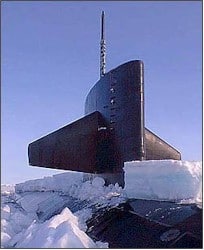
Meanwhile the Hawkbill submarine will deploy a sophisticated new sonar system to map oceanic ridges and basins on the floor of the Arctic Ocean. Researchers on the project hope to discover how extensive the last ice age was by looking for glacial scouring off the Alaskan coast, and to measure underwater volcanic activity off the Gakkel oceanic ridge. They will also enter Norwegian waters to study circumpolar currents.

Multi-planet system startles astronomers

Upsilon Andromedae is a yellow G-type star similar to the Sun. In 1996 Geoffrey Marcy from San Francisco State University, together with Butler, discovered one planet by observing a ‘wobble’ in the star’s rotational velocity. This planet is about three-quarters the mass of Jupiter and orbits the star every 4.6 days. However, an unusual scattering pattern in their observations led them to think that other planets may also be affecting the star’s velocity.

These conclusions were recently confirmed by new data gathered on the rotational velocity. They believe that two extra planets now exist around the star – a middle planet, twice the size of Jupiter, orbiting Upsilon Andromedae at roughly the Sun-Venus distance, and an outermost planet, four times Jupiter’s mass circling the star in an elliptical orbit, two and a half times the Earth-Sun distance.

But the origin of the planets is still not clear. “I am mystified at how such a system of Jupiter-like planets might have been created, ” says Marcy.

This work was confirmed independently by astronomers from the Harvard-Smithsonian Center for Astrophysics (CfA) in Cambridge, MA, and from the High Altitude Observatory (HAO) in Boulder, Colorado.

“Both of our groups found essentially the same size and shape for the orbits of the companions, ” said Sylvain Korzennik Harvard-Smithsonian CfA. “The chances of this happening by accident are infinitesimal.”

The research may also have implications on the question of whether there is life outside the solar system.

“It implies that planets can form more easily than we ever imagined, and that our Milky Way is teeming with planetary systems, ” says Derba Fischer from San Francisco State University.

The work is to be published in the Astrophysical Journal.

Physics looks to thefuture

The three-day workshop was held in Debreccen in Hungary last month and involved physicists from both eastern and western Europe. Delegates were concerned about a number of ‘serious problems’ that physics faces both with its relationship with the general public, and as a discipline. The workshop pointed out, for example, that the public often cites Heisenberg’s uncertainty principle as a reason for claiming that everything is uncertain.

On a brighter note, the report points out that politicians are starting to realise how science can smooth and help diplomacy, and that the public are buying more popular-science books. ‘Our defence of physics, as well as science in general, must find ways of exploiting these hopeful points, ’ says the report.

Sharper image for polycrystalline materials

Polycrystalline materials contain lots of tiny crystals oriented randomly in space. Thomas Wessels, Christian Baerlocher and Lynne McCusker from the Swiss Federal Institute of Technology in Zürich have found a way to orient these tiny crystals. A synchrotron X-ray source can then be used to determine the atomic structure. According the researchers the method “can be applied to any class of compounds.”

Old polycrystalline diffraction techniques relied on two experimental approaches. In both cases, several powder diffraction patterns are collected on the same polycrystalline sample. One method relies on changing the temperature of the sample: as the temperature increases, the lines of the diffraction pattern change. The second technique uses several samples of the same compound but with different structural ‘textures.’

Wessels, Baerlocher and McCusker’s new technique relies on the highly parallel, monochromatic X-rays generated by an intense synchrotron X-ray source. The precise nature of the beams allows the researchers to discover the distribution of the crystals’ orientation. By rotating the sample in the beam, they could gather a number of different diffraction patterns. A highly detailed image of the sample is then obtained by using existing methods for analyzing diffraction patterns.

The most distant object in theuniverse

Galaxies with extremely large redshifts are hard to detect as the radiation they emit shifts to longer wavelengths that are easily absorbed by giant intergalactic hydrogen clouds. Another problem is that their luminosity is dimmed by the vast distances the photons travel, while any radiation that does reach the Earth is absorbed by our atmosphere. Such galaxies are therefore impossible to detect by ground-based telescopes.

However, the 2.4m Hubble Space Telescope is above the atmosphere, and can easily focus on these distant galaxies. The galaxy spotted by Lanzetta, Chen and Pascarelle is highly energetic at ultraviolet wavelengths, which allows light from the galaxy to pass through the hydrogen clouds. This suggests that the galaxy is unusually active in star formation. The researchers speculate that between 4 and 25 solar masses of material per year are converted into stars. They also suggest that the low heavy-element content seen in the starlight indicates that the stars formed in this galaxy are some of first stars formed in the universe. Studies of these objects – which are very different to older galaxies – may help astronomers discover how more ‘normal’ galaxies arose.

Visions of Einstein

“I am deeply moved by the offer from our State of Israel, and at once saddened and ashamed that I cannot accept it. All my life I have dealt with objective matters, hence I lack both the natural aptitude and the experience to deal properly with people and to exercise official functions.

So wrote Albert Einstein in response to the offer to become president of Israel in 1952 at the age of 73. By then, Einstein had become as much a personality as a scientist, as the documents and photos in this book reveal. Selected from his personal papers, many of which have not been published before, the material provides a fascinating insight into Einstein – both the man and the myth.

We get to see a personal letter written by Erwin Schrödinger in 1925 showing the influence that Einstein had on his development of wave mechanics, and a message from Max Planck urging the re-establishment of ties between German and other European physicists after the First World War. Letters showing Einstein’s crucial role in the development of nuclear weapons – and his strong anti-nuclear sentiments after 1945 – are also included.

But it’s not all serious stuff. There is a letter from a six year old instructing Einstein to get his hair cut, and a bizarre request from “The Shoe Club” for Einstein’s right shoe.

The book is also superbly designed, with most of the correspondence reproduced in facsimile form, and with many charming photos of Einstein at work and at home.

Copyright © 2026 by IOP Publishing Ltd and individual contributors