They will also reduce emissions of hydrofluorocarbons, perfluorocarbons and sulphur hexafluoride by the same amount, measured against either 1990 or 1995 levels.
The deal was hammered out after 10 days of tough negotiations at the climate summit in Kyoto, Japan. The US, which went into the summit not wanting to make any cuts below 1990 levels, has softened its original hard-line stance and agreed to make a cut of 7%. The European Union will make a slightly larger cut of 8%.
Central and eastern European nations have also agreed to an 8% reduction, while Canada, Hungary, Japan and Poland have agreed to a cut of 6%. However, Russia, New Zealand and the Ukraine will only have to stabilize their emissions at 1990 levels, while Norway will be allowed to increase emissions by 1%, Australia by 8% and Iceland by 10%. Developing nations, which the US originally insisted had to be part of the deal, will not have to take any action to reduce emissions. China has refused to sign the deal.
The Kyoto agreement gives countries flexibility in how they make and measure their emissions reductions. Industrialized nations will receive credit for paying for projects that help to reduce emissions in other developed nations, while an international emissions trading regime will be set up to let rich countries buy and sell excess emissions credits among themselves. Countries will also be given credit for planting forests, as these help to absorb carbon dioxide from the atmosphere.
When we walk across a room, our eyes automatically adjust to keep objects in focus. The eyeballs swivel in their sockets to compensate for the movement. Professional camera operators use a harness containing a bulky set of counter-weights to achieve the same effect. In aircraft, a series of spinning mirrors or mechanical scanning devices are used.
Andre Lareau, Brian James and Russell Bennett from Recon/Optical, Inc have developed a new electro-optical imaging array which can compensate for this forward motion. In Patent 5692062 they describe how processing the pixel information can compensate without requiring any moving parts.
They use a CCD (Charge Couple Device) camera which consists of a two dimensional grid of pixels, rows and columns. Usually pixels are read individually but in this case the pixels are read at a column group at a time.
The camera records a series of images into a storage area. Processing circuitry then specifies a fixed point in the images, and extrapolates the forward motion velocity of the vehicle by tracking the movement of the point across the pixels. The camera’s circuitry then compensates for the motion in images producing crisp clear pictures.
The inventors hope to try out their invention in robotic reconnaissance planes for the US Army.
In the last year, a number of American defence companies have merged into “mega” defence companies. The British, French and German governments have become increasingly concerned at the lack of rationalization in the European defence market as too many companies compete for too few orders.
Hence their trilateral statement calling for a restructuring of Europe’s aerospace and defence sector. The governments have called on three companies in particular, British Aerospace (BAe), Aerospatiale and Daimler-Benz Aerospace to come up with proposals to integrate their civilian and defence operations before March 31, 1998.
Sighart Nehring, a official in Chancellor Helmut Kohl’s office told reporters in a press conference today, “It would be desirable to have one company”.
The statement calls for “Europe to improve its commercial position in the world and reinforce its security and guarantee that it plays fully its role in its own defence.”
A statement from British Aerospace welcomes the plan but remains coy on whether the company is talking to its competitors. Chief Executive, Sir Richard Evans, said “We welcome the Trilateral statement which confirms and reinforces the urgent need for a restructuring of Europe’s Aerospace and Defence Sector and the commitment of our own Government to this issue.”
However, the British Manufacturers Association whose members include British Aerospace and GEC, said France must first commit to privatizing its aerospace industry before any proposals can go forward.
British Aerospace’s managing director, John Weston, has called in the past for such a pan-european merger, but has publicly stated that the French government’s stake in Aerospatiale and Dassault would be an obstacle to such a scheme.
In addition to being very strong and flexible, carbon nanotubes also have unusual electronic properties. Nanotubes are described by two numbers, conventionally m and n, and a specific nanotube can be metallic or semiconducting, depending on these numbers.
Nanotubes are made by rolling up two-dimensional sheets of carbon atoms. The atoms are arranged in hexagons in both the sheet and the tube. The values of m and n are related to the direction in which the sheet is rolled: they also determine the diameter of the tube.
By connecting nanotubes with different electronic properties it should be possible to make a range of nanoscale electronic devices. A major challenge will be to make T-shaped junctions between different types of tubes. Now two American physicists — Madhu Menon of the University of Kentucky and Deepak Srivastava of the NASA Ames Research Center — have shown that this is indeed possible. By introducing pentagons and heptagons into the junction they showed that a (10, 0) nanotube, which is semiconducting, can be connected at right angles to a (9, 0) tube, which is metallic. And by adding only heptagons, they showed how to connect a (10, 0) nanotube with a metallic (5, 5) nanotube.
“These quasi-2D junctions could be the building blocks of nanoscale tunnel junctions in a 2D network of nanoelectronic devices” the authors write in the December 1 issue of Physical Review Letters.
Quantum spin excitations in a single crystal of copper germanate (CuGeO3) measured on the MARI spectrometer at ISIS by Masa Arai and co-workers from the KEK-KENS Laboratory in Japan using time-of-flight techniques. CuGeO3 is a one-dimensional Heisenberg antiferromagnet whose quantum spin excitations are characterized by a lower boundary and an upper boundary with twice the energy (y-axis) and double the periodicity in momentum space (x-axis).
The neutron community has expanded enormously since nuclear physicists made the first measurements of neutron cross-sections in the 1940s. Crystallographers started to exploit the potential of the new technique in the 1950s and were soon joined by condensed-matter physicists. The advent of “cold” neutron sources, which provided a rich flux of long-wavelength neutrons, attracted chemists and later biologists to neutron scattering. And in the last decade or so engineers, materials and earth scientists have joined the club, all attracted by the unique possibilities that neutron scattering is offering to their fields.
Neutron scattering provides unique microscopic information on the structure and dynamics of materials. Within condensed matter, neutrons have made outstanding contributions to our understanding of fundamental phenomena such as magnetism, phase transitions, spin dynamics and quantum fluids. This was formally recognized when Bertram Brockhouse of Canada and Clifford Shull of the US shared the 1994 Nobel Prize for Physics for their neutron-scattering experiments in the 1950s. Neutrons have also contributed greatly to our knowledge of technically important materials such as plastics, proteins, polymers, fibres, liquid crystals, ceramics, hard magnets and superconductors.
Although neutron scattering was pioneered in North America, Europe is now home to the world’s most intense reactor at the Institut Laue-Langevin (ILL) in Grenoble, France, and the world’s most intense pulsed source, the ISIS Facility at the Rutherford Appleton Laboratory in the UK. European neutron scientists are now drawing up plans to maintain their lead in neutron-scattering research by building a next-generation European Spallation Source (ESS).
The ESS would be 30 times brighter than any currently available pulsed source and would lead to a new generation of experiments in many areas of science. Within physics, the ESS could address fundamental questions in fields as diverse as superconductivity and cosmology. The ESS would also be invaluable to researchers in biology, chemistry, engineering, geology and medicine, and could be used to improve our understanding of many industrially important new materials.
Neutron basics
Neutrons interact with matter through all four forces: the strong, weak, electromagnetic and gravitational interactions. However, it is their interactions via two of these forces – the short-range strong nuclear force and their magnetic moments – that make neutron scattering such a unique probe for condensed-matter research. The most important advantages of neutrons over other forms of radiation in the study of structure and dynamics on a microscopic level are summarized below.
Neutrons are uncharged, which allows them to penetrate the bulk of materials. They interact via the strong nuclear force with the nuclei of the material under investigation.
The neutron has a magnetic moment that couples to spatial variations of magnetization on the atomic scale. Neutrons are therefore ideally suited to the study of magnetic structures, and the fluctuations and excitations of spin systems.
The energy and wavelength of neutrons may be matched, often simultaneously, to the energy and length scales appropriate for the structure and excitations in condensed matter. The energy, E, and wavelength, l, are related via the de Broglie relation, E = h2/2mnl2, where h is the Planck constant and mn is the neutron mass. An energy of 20.45 meV corresponds to a wavelength of 2 Å. Neutrons with wavelengths of 0.1-20 Å are ideal for the study of interatomic correlations. In addition, a wide range of energy scales can be probed, from the micro electron volt (µeV) energies associated with polymer reptation, through molecular vibrations in the meV range, to eV transitions within the electronic structures of materials.
The use of polarized neutron beams – in which all of the neutron magnetic moments point in the same direction – allows us to separate the nuclear and magnetic contributions to the scattering. In non-magnetic systems, coherent and spin- incoherent scattering, arising from different nuclear spin states in atoms, can be separated.
The neutron does not significantly perturb the system under investigation, so the results of neutron-scattering experiments can be clearly interpreted.
Neutrons are non-destructive, even to delicate biological materials.
The high penetrating power of neutrons allows us to probe the bulk of materials and facilitates the use of complex sample-environment equipment (e.g. for creating extremes of pressure, temperature and magnetic field).
The neutron scattering cross-section varies randomly between different elements and even between isotopes. This allows us to observe light atoms such as hydrogen in the presence of heavier ones, to distinguish neighbouring elements in the periodic table easily, and to exploit isotopic substitution and contrast variation methods.
In isotope difference methods, measurements are made on samples that are identical except for the substitution of an isotope. By subtracting the measurements we can “see” the structure of the system from the viewpoint of the substituted element. For example, by substituting a nickel isotope in an aqueous solution of nickel chloride we can “sit on” the nickel ion and see how it is hydrated by the water molecules. Contrast variation exploits the fact that hydrogen and deuterium have elastic scattering amplitudes of different sign. Thus, by varying the H/D ratio in part of a system (e.g. the protein coat of a virus), the scattering density can be matched to that of another part of the system. This can make the protein coat “invisible” to neutrons, which can then be used to locate the nucleic acid inside the virus.
Neutron sources and scattering experiments
Neutrons have traditionally been produced by fission in nuclear reactors optimized for high neutron brightness (usually measured as neutrons per second per steradian per meV). The neutrons from such steady-state sources are produced continuously. After the high energy (MeV) neutrons have been thermalized to meV energies, beams are emitted with a broad band of wavelengths. The energy distribution of the neutrons can be shifted to higher energies (shorter wavelengths) by allowing them to come into thermal equilibrium with a “hot source” (at the ILL this is a self-heating graphite block at 2400 K), or to lower energies with a “cold source” such as liquid deuterium at 25 K. The resulting Maxwell distributions of energies thus have the characteristic temperatures of the moderators (figure 1a).
Accelerator-based pulsed neutron sources are a more recent development. In these sources neutrons are released by bombarding a heavy-metal target with high-energy particles from a high-power accelerator – a process known as spallation. The neutron beams are pulsed because the accelerator beam is pulsed. Spallation releases much less heat per useful neutron than fission (typically 30 MeV per neutron, compared with 190 MeV in fission). The low heat dissipation means that pulsed sources can deliver high neutron brightness – exceeding that of the most advanced steady-state sources – with significantly less heat generation in the target.
1 Neutrons: hot and cold (a) Typical wavelength distributions for neutrons from a reactor, showing the spectra from a hot source (2000 K), a thermal source and a cold source (24 K). The spectra are normalized so that the peaks of the Maxwell distributions are at unity, (b) Typical wavelength spectra from a pulsed spallation source. The H2 moderator is at 20 K and the CH4 moderator is at 110 K. The spectra have a high-energy “slowing” component and a thermalized component with a Maxwell distribution. Again the spectra are normalized at unity, (c) Neutron flux as a function of time at a steady-state source (yellow) and a pulsed source (blue). Steady-state sources, such as the ILL, have high time-averaged fluxes, whereas pulsed sources, such as ISIS and the ESS, are optimized for high brightness (not drawn to scale).
As in fission, the neutrons produced in the spallation process have very high energies and must be slowed by many orders of magnitude – from MeV to meV. This is achieved by hydrogenous moderators, such as water at room temperature, methane at 100 K and liquid hydrogen at 20 K. These moderators, which surround the spallation target, exploit the large inelastic-scattering cross-section of hydrogen to slow down the neutrons by repeated collisions with the hydrogen nuclei. The neutron spectrum is more complex than that from a reactor. It has two parts: a “slowing” region of hotter, incompletely thermalized neutrons, and a Maxwell distribution characteristic of the moderator temperature. Since neutrons of different energies interact in a complex way with the moderator system, the shape of the neutron pulse can be tailored and optimized for different classes of instruments (figure 1b).
Thus the characteristics of the neutrons produced by a pulsed source are significantly different from those produced at a reactor (figure 1c). The time-averaged flux (in neutrons per second per unit area) of even the most powerful pulsed source is low in comparison with reactor sources. However, judicious use of time-of-flight techniques that exploit the high brightness in the pulse can compensate for this. Some of the advantages of using pulsed sources are listed in the box.
In a typical neutron-scattering experiment, instruments measure the number of neutrons scattered by the sample as a function of scattering angle. For elastic scattering this corresponds to measuring with diffractometers the momentum change, which provides information about the spatial distribution of nuclei in systems ranging in size and complexity from small unit-cell crystals, through disordered systems such as glasses and liquids, to “large scale” structures such as surfactants and polymers. Spectrometers, on the other hand, additionally measure the energy lost (or gained) by the neutron as it interacts with the sample. These data can be related to the dynamical behaviour of the sample, such as the dynamics of the atoms or molecules in a crystal lattice (phonons) or of the magnetic moments in magnetic systems (spin waves).
To take advantage of the different characteristics of reactor and pulsed sources, experiments performed on the sources differ in detail. In experiments at reactors, for example, a single-wavelength beam is normally used (figure 2). Monochromatic beams can be produced by wavelength selection from a crystal monochromator or by velocity selection through a mechanical chopper. In contrast, “white” beams that contain neutrons with a wide range of wavelengths are generally used at pulsed sources. Energy analysis of the scattered beam is achieved by Bragg scattering from an analyser crystal or by measuring the total time-of-flight. In the latter case, the initial time-of-flight (i.e. the time the neutron takes to travel from the source to the sample), has to be determined as well.
2 Neutrons: steady-state and pulsed Typical geometries for (a) diffraction and (b) inelastic-scattering experiments with a reactor source. A monochromator selects neutrons of one energy (or wavelength) that then scatter from the sample. Typical geometries for (c) diffraction and (d, e) inelastic-scattering experiments with a spallation source. The neutron beam from a spallation source is pulsed and the detectors perform an additional time-of-flight (TOF) analysis. Diffraction experiments exploit a wide wavelength band simultaneously (c). If a monochromatic beam is combined with TOF techniques, the energy and momentum change can be determined (d). Alternatively, inelastic experiments can be performed by using a range of incident neutron energies and crystal analysers in the scattered beam(e). Diffraction experiments provide information on the structure of the sample, while inelastic-scattering experiments probe the dynamics.
Neutron guide tubes, which exploit the phenomenon of total reflection, can be employed to transport all but the high-energy neutrons over large distances without a significant loss in intensity. As high-resolution measurements tend to require long times-of-flight, guide tubes allow very high-resolution measurements to be made without suffering the fall in intensity caused by the inverse square law.
Achievements of neutron scattering in physics
Neutron scattering has achieved a great deal, not only in physics, but over a very broad range of science: geologists explore the structure of minerals under extreme temperatures and pressures; biologists are increasingly turning to neutrons to collect information that is complementary to that obtained with other techniques, in particular where hydrogen or water is involved; while engineers use neutrons to probe stresses deep inside complex components. In this article, however, we will emphasize some of those areas of physics, in particular condensed-matter areas, in which neutron scattering has been of outstanding importance.
Almost everything we know about magnetic structures – from the early demonstration by Shull of antiferromagnetism in simple systems to the complex structures of today’s hard magnets – has come from experiments with neutrons. The generalized magnetic susceptibility, which is directly proportional to the neutron cross-section, describes all that can be known about the microscopic spatial and temporal correlations of the magnetic moment in a material. This fact, combined with the possibility of using polarized neutrons to separate nuclear and magnetic scattering, has made neutron scattering the foremost tool in fundamental magnetism research.
3 Looking at lattices A diffraction pattern from a magnetic-flux-line lattice in a single crystal of niobium measured at ILL by Don McKPaul and co-workers from Warwick University in the UK. The colour scale represents increasing intensities.
And when important new materials, such as heavy-fermion systems or high-temperature superconductors, are discovered, neutron scattering is often the first technique chosen to investigate the fundamental physical microscopic properties. Neutrons have, for example, revealed the definitive crystal structures of superconducting materials with high transition temperatures (high-Tc) and have precisely located the positions of the oxygen atoms, where the “holes” that carry the charge reside. Neutron spectroscopy has provided unique information on the nature of magnetism in high-Tc materials, on the interplay between magnetic fluctuations and superconductivity, and on the role of the lattice dynamics. Neutrons gave the first microscopic evidence for the lattices formed by magnetic flux lines in conventional superconductors, and played a major role in accounting for the large heat dissipation in the high-Tc materials, especially at high magnetic fields where no other technique can image flux lines (see figure 3).
The properties of the neutron make it a particularly powerful probe for studies of disordered materials such as liquids and amorphous solids. Among the crucial questions that neutron scattering has solved in this area are the structures of water molecules round ions in solution (literally revolutionizing our understanding of hydration), the microscopic behaviour of supercooled liquids, the detailed structures of binary liquid metals and molten salts, and the structures of amorphous silicon and carbon hydrides that are being used to develop new high-strength materials.
“Soft matter” encompasses a wide range of molecular materials such as polymers, surfactants and colloids, and the range of distance and time scales relevant to the performance of these materials can be remarkable. However, the specific advantages of neutrons have led to many scientific breakthroughs in the field. Examples include the confirmation of the theory of polymer reptation proposed by Pierre Gilles de Gennes, the stabilization of colloids using polymer adsorbates, and the structure of water in lyotropic and microemulsion phases (figure 4).
For more information see the European Science Foundation report and the ESS Scientific Case in further reading.
A next-generation neutron source for Europe
Neutron scattering is very much an intensity-limited technique, and experimenters are pushing hard against the limits of what is possible with today’s sources. In many areas, demonstration experiments are being performed that provide a tantalizing glimpse of what may be possible with more intense neutron beams. Moreover, the broadening and expansion of the neutron-user community – though very much welcome – means that demand is continuously rising. If we want to continue to exploit the power of neutron techniques, a more powerful source is essential.
Many existing neutron sources will soon reach the end of their technically and economically viable life. In 1990 a panel set up by the European Commission recognized this problem and concluded that, unless action was taken, there would be a “drought” of neutrons that would have serious consequences for European science and its exploitation. In 1994, responding to the panel’s report, the commission funded a proposal to examine the technical feasibility and likely cost of a next-generation pulsed source. Thus the European Spallation Source Project – an accelerator-driven neutron source that would be 30 times more powerful than any pulsed source operating at present – was born. The source would take advantage of the huge advances in high-power accelerator technology developed for the US Strategic Defense Initiative and for accelerator-based transmutation of nuclear waste. The ESS Project has just published detailed reports on the scientific case for such a source and its technical feasibility (see further reading). The proposed 5 MW source would cost some ECU 934 m to build (at 1996 prices) and would provide 44 beamlines.
The ESS will deliver a neutron intensity of up to 30 times that of ISIS. Combined with appropriate developments in neutron instrumentation, a total increase of up to three orders of magnitude could be obtained in some experiments. This gain in effective intensity will be used in a variety of ways by the large scientific community that utilizes neutrons to perform “small science” at large facilities.
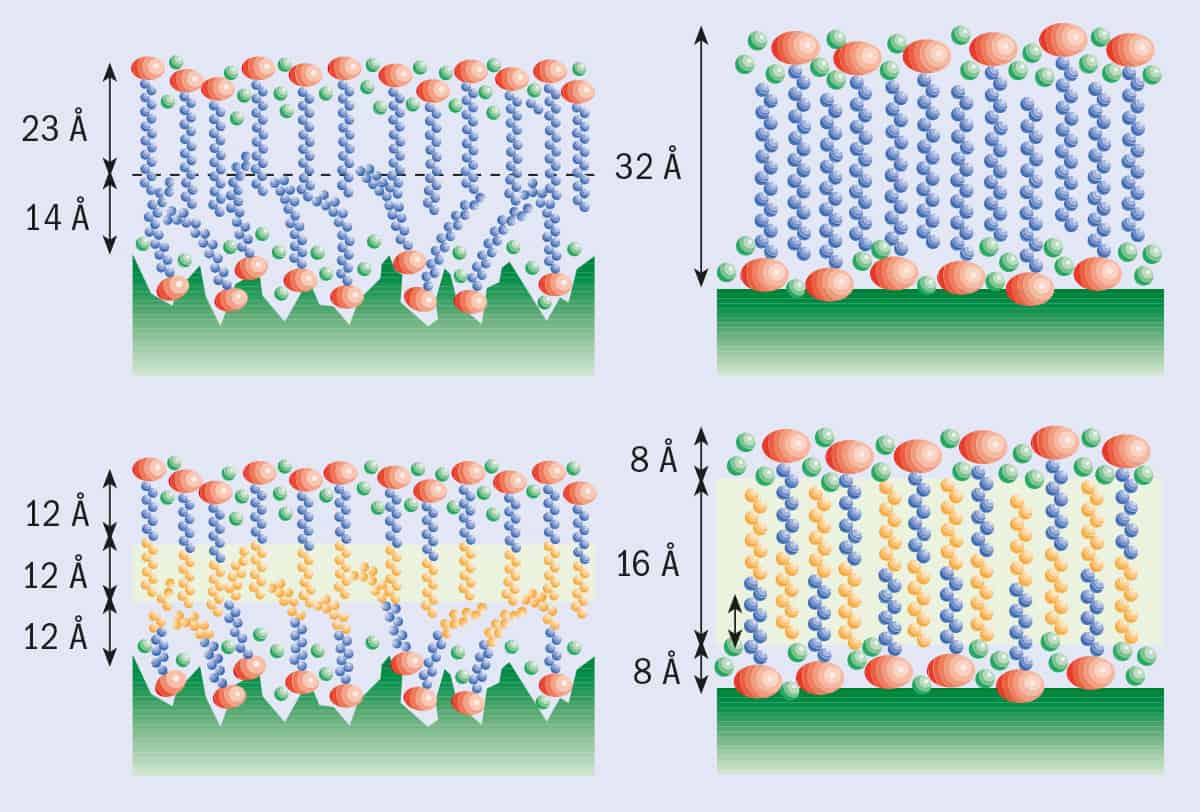
4 Surfaces: the rough and the smooth Neutron reflectivity has been used by Bob Thomas and co-workers from the University of Oxford to investigate the structure of the surfactant C16TAB (hexadecyl trimethyl ammonium bromide) adsorbed at the hydrophilic silicon/silicon oxide/aqueous interface. The figure shows a schematic representation of the models used to fit the C16TAB data for some of the different isotopic combinations on both “rough” (left) and “smooth” surfaces. In both cases a bilayer of surfactant is adsorbed. Roughness reduces the amount of surfactant adsorbed but increases the thickness of the bilayer. Moreover, the bilayer is not symmetrical on the rough surface.
The high intensity can be used directly to perform experiments on inherently small or dilute samples, or to make measurements over shorter times than are currently possible. In addition, we can trade off some of this enhanced intensity for increased resolution. Exploiting these “generic opportunities” will have a huge impact on all areas of neutron science. Moreover, the ESS will also extend the unique advantages of neutrons to areas where, until now, intensity limitations have prevented their application.
It is difficult to give more than a taste of the exciting possibilities that the European Spallation Source would open up. The ESS Science Case outlines a host of new scientific opportunities in many areas of science (see further reading). Here we will highlight some of the generic opportunities that could be explored in physics.
The need for better resolution is a common quest in physics. Trading increased intensity for higher resolution will enable more accurate structural and dynamical studies of the increasingly complex systems that are central to modern materials science. For example, better experiments on hard magnetic materials (e.g. Nd2Fe14B) are needed to understand magnetic properties on a microscopic scale. This will lead to better materials for the billion-dollar magnetics industry. High-resolution measurements will also shed light on the role that electron-phonon interactions play in “normal” and “unusual” superconductors. The ability to measure small cross-sections will expand studies on systems that carry very small magnetic moments (e.g. molecular magnets and “magnetic” heavy-fermion systems) or experiments in which dilute quantities of paramagnetic ions are used to probe magnetism.
The higher intensity will allow us to measure smaller cross-sections. In disordered materials, we will be able to begin to understand how interactions in aqueous solutions are modulated by changing pH, ionic strength, pressure, temperature and so on – in particular at the low concentrations that are important in many chemical and biological processes. The whole field of neutron Brillouin scattering – inelastic measurements performed at very low momentum transfers – will allow us to explore the dynamical regime between the microscopic and the hydrodynamic for the first time. This regime is of both fundamental and industrial importance. And with so much more flux, the enormous potential of full polarization analysis would become routinely available.
It will also be possible to make measurements over shorter times. By following variations with pressure, temperature, concentration and so on, experimenters will be able to solve real problems, rather than being restricted to single experiments at a single state point that reveals only a small fraction of the picture. For example, the uranium-platinum compound UPt3 exhibits unusual “heavy-fermion” behaviour. Heavy-fermion systems have very large electronic contributions to their specific heat at low temperatures, which can be parametrized in terms of an effective electron mass hundreds or thousands of times larger than those in normal metals. Bulk measurements such as specific heat and thermal expansion as a function of magnetic field, temperature and pressure have established a fascinating phase diagram with strong evidence for unconventional superconducting behaviour in UPt3. However, only very sparse microscopic information obtained by inelastic neutron scattering is presently available to help with the understanding.
Shorter time measurements will also enable real-time studies of kinetic processes. Examples include monitoring the structural changes that occur when a battery is discharged, or watching the phonon spectrum of a crystal during a structural phase transition. The response of a sample under strongly non-equilibrium conditions can also be followed. Measurements of flowing surfaces in sheared systems will give new information on lubrication, while in situ real-time studies of electrochemical and electrode processes will also be possible. And we should also be able to follow, under realistic conditions, the mechanisms – e.g. wall effects during polymer extrusion – that control the processing of soft solids, with a view to optimizing them.
Experiments under extreme sample environments offer the prospect of new and exciting science. For example, we will be able to perform structural and dynamical studies of material phases that only exist in very strong magnetic fields (above 16 T), at very low temperatures (~ nK or less), or at very high pressures (above 25 GPa). All these extreme environments suffer from severe restrictions: high magnetic fields and ultralow temperatures can only be maintained for short times, while only very small sample volumes are possible at very high pressures.
In fundamental neutron physics, a number of experiments can be performed that will help to determine the basic structure of the elementary interactions in nature, to elucidate the history of the universe, and to study a number of questions in quantum and measurement theory. For example, an experiment has been proposed for the ESS that could give a clear-cut answer to the question of the “handedness” of nature. In the late 1950s it was recognized that the weak interaction is exclusively left-handed. However, most Grand Unified Theories – theories that seek to unify the strong and electroweak forces – start with a left-right symmetric universe and explain the evident left-handedness of nature through a spontaneous symmetry breaking at a critical energy. This scenario, if true, would mean that the neutrino should carry a small right-handed component. Although limits on this right-handed component have been derived from free-neutron- and muon-decay experiments, they have not provided the ultimate answer. The proposed experiment investigates the beta decay of unpolarized neutrons into hydrogen. The trick is that one of the hyperfine levels of hydrogen can only be populated where there are right-handed components of the participating particles involved.
An ultracold neutron source could be used to investigate a very wide variety of fundamental problems, including phase topography, Berry phases, time-reversal invariance, strong localization and inertial versus gravitational mass. Experiments currently out of range on existing sources could address interesting questions such as the slope of the quark-quark potential and so throw light on quark confinement. Answers will relate to questions such as the production of heavier elements in stellar processes and the existence or otherwise of an inflationary period in the early phase of the big bang.
The ESS would also produce high intensities of a variety of other particles. Intense pulsed beams of muons are produced via the insertion of a thin graphite intermediate target into the extracted proton beam. High-energy nuclear reactions produce pions over a wide momentum band that decay into muons. These muons could be channelled into an ultraslow beam that would greatly improve the sensitivity and selectivity of muon-spectroscopy experiments on surfaces and thin layers. Likewise, the unprecedented intensity of neutrinos produced would open up a new era in neutrino physics, with a large impact on particle physics, astrophysics and cosmology.
The ESS could also be used to produce beams of short-lived radioactive nuclei that could be exploited in both fundamental and applied studies. The former include nuclear- structure studies as the neutron-to-proton ratio is varied, and measurements of the properties of unstable nuclei that are important in nuclear astrophysics. Possible applications include ion-implantation studies relevant to microelectronics and metallurgy, tumour radiotherapy and the provision of the nuclear data needed for effective transmutation of nuclear waste.
The European Spallation Source
An artist’s impression of the proposed ESS campus.
The ESS study was carried out by an enthusiastic consortium of neutron users from all over Europe, with representatives from the many areas of science for which neutrons have become an indispensable tool. With funding from the European Science Foundation (ESF), a Europe-wide consultation process was launched. Experts in science with neutrons and in neutron instrumentation met over a two-year period. In parallel, with funding from the European Commission, accelerator and target experts considered the most appropriate technical design.
These activities were overseen by the ESS Council, where ten European countries were represented, chaired by Jorgen Kjems of the Rise National Laboratory, Denmark. One of the authors (JF) chaired the ESS Science Working Group, while Herbert Lengeler of the Julich Research Centre in Germany managed the technical study.
The European Spallation Source (ESS) will be driven by an accelerator producing an average proton beam power of 5 MW (compared with 160 kW at ISIS) at a repetition rate of 50 Hz. The power will be supplied by a 700 m long 1.3 GeV linear accelerator for negative hydrogen ions. After stripping off the electrons, the proton beam will be injected into two accumulator rings that will also compress the length of the proton pulse to 1 us.
The proton beam will be delivered to two liquid-mercury target stations, which will each be differently optimized. One will receive ten pulses per second (and 1 MW of power), optimizing the performance of instruments using mainly long-wavelength neutrons. The second target will operate at 50 Hz/4 MW for high-intensity/high-resolution applications. On each target station, water and liquid-hydrogen moderators will feed 18 independent beam ports, some of which will be equipped with multiple neutron guides. It is currently envisaged that there will be a total of 44 instruments.
The technical study established a site-independent, “green field” design (above) and delivered a cost estimate for the construction and operation of the ESS. The total construction cost is ECU934m (1996 prices and accurate to 20%). Having submitted the technical feasibility study and the scientific case, the ESS project is now moving into the R&D phase.
Five leading European institutions – the Commissariat a I’Energie Atomique in France, the Council of the Central Laboratory of the Research Councils in the UK, the Forschungszentrum Julich in Germany, the Paul Scherrer Institut in Switzerland and Risa National Laboratory in Denmark – have agreed to collaborate in providing the database for the engineering design, and to further minimize the costs and the technical risk. The engineering phase could start in the year 2000 and – if all goes well -the ESS could be fully operational by 2010.
Next steps
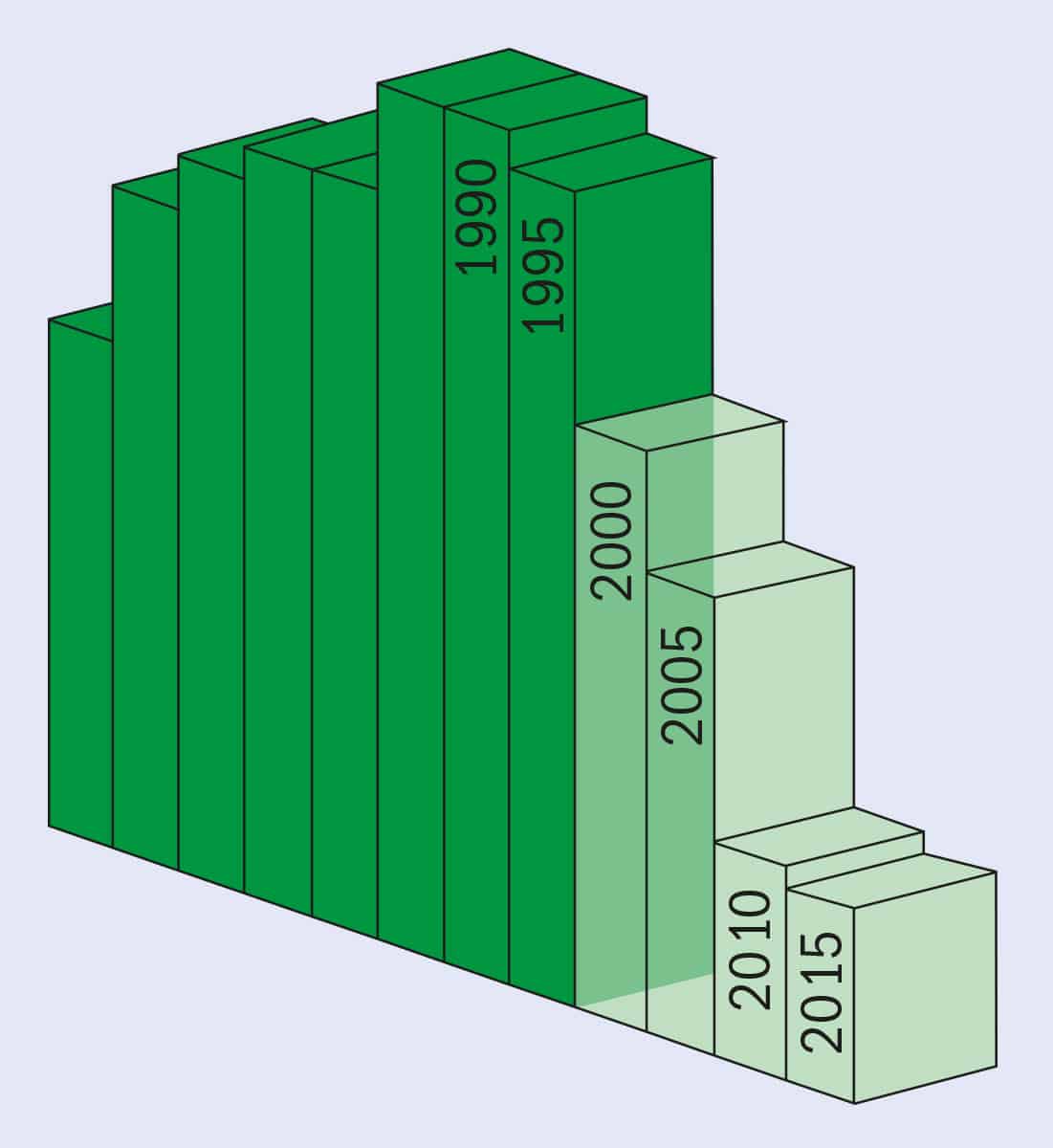
Neutrons have made pivotal contributions to a range of scientific areas. This was underlined in a recent critical assessment by the European Science Foundation (see further reading), which also foresaw increasing demand in traditional and new areas, both fundamental and applied. Noting that other non-neutron tools, such as synchrotron radiation sources, could not substitute this demand, the ESF concluded that unless appropriate action is taken, sources of neutrons are likely to decrease in the next ten years (figure 5). The realization of the ESS would resolve this problem in Europe.
5 The neutron drought The predicted decline in world neutron sources. New sources, like the ESS, are needed to meet the demand for neutrons as the size and diversity of the neutron-scattering community increases and old sources close down (Source OECD Megascience Forum: Neutron beams and synchrotron radiation sources)
This same message has been received in the US and Japan, and both countries have well developed plans for next-generation neutron sources. In 1995 the US abandoned plans for a more powerful reactor facility, the Advanced Neutron Source, but is currently developing proposals for a Spallation Neutron Source at the Oak Ridge National Laboratory in Tennessee. The SNS would be powered by a 1-5 MW accelerator. Meanwhile, Japan is working on two schemes for spallation sources, also in the 1-5 MW range. For Europe to maintain the lead in the field that it has had for the last 25 years or so, it must plan now for new sources, since the lead-time for building such facilities is long.
The scientific case for the ESS shows a tremendous amount of exciting science that would be possible with the source. However, it is always difficult to predict the future. No-one foresaw high-temperature superconductors, and likewise we cannot foresee – despite foresight exercises – the new science of the first decade of the next millennium.
We must, therefore, make sure that the techniques will be available with which to address the scientific questions of the 21st century. Neutron scattering is and will continue to be a tool of paramount importance to the scientific community.
Further reading
European Science Foundation 1996 Scientific Prospects for Neutron Scattering with Present and Future Sources
European Spallation Source 1997 ESS: A Next Generation Neutron Source for Europe. Vol. 1: The European Spallation Source; Vol. 2: The Scientific Case; Vol. 3: The ESS Feasibility Study
An expert panel set up by the ESF concluded that there is no need for a large crystal growth laboratory in Europe and that the case for the Austron neutron source is not strong enough, although it did not dismiss Austron completely.
The chairman of the panel, Reinder van Duinen, president of the NWO research council in the Netherlands, said: “The scientific baseline of both projects is sound, but the case for active support by the international community at either the regional or European level has not been made convincingly.” This is the first time that a European country has approached the ESF for advice on its scientific priorities.
According to the ESF, “the EURO-CRYST proposal to establish a large research centre on a green-field site did not win the panel’s support. No convincing added value would be achieved by massing crystal research together under such a central unitary structure at such high costs”. The panel also felt that the proposed activities at EURO-CRYST were too specialized and disparate, and that it was preferable for crystal researchers to work more closely with teams in universities. However, the panel did see advantages in establishing a “distributed laboratory” by creating a network of existing crystal-growth research centres, and encouraged Austria to take the lead in setting up such a laboratory.
The panel acknowledged that the proposal for Austron, a medium-sized pulsed neutron source for central Europe, was technically feasible but concluded that “the `scientific-strategic positioning’ of the source has not yet been sufficiently demonstrated”. However, the panel noted that a “window of opportunity” for a new European neutron source did exist: “We believe that the Austron proposal needs to be adjusted to comply with transnational expectations and, if pursued, should move forward quickly to avoid missing the present window of opportunity.”
Lead and nickel-cadmium batteries are still the most common type of battery, but lithium is becoming more popular with power-hungry users.
Lithium can store large voltages, is light, and can be quickly recharged. Unfortunately, lithium batteries can also ignite if they short circuit. Moreover, lithuim batteries suffer the ‘memory-effect’, where repeated recharge cycles decrease the lifetime of the battery and the charge stored.
As electrical equipment becomes smaller and lighter, more demands are made on batteries. Most cylindrical batteries make use of sheet-shaped electrodes rolled into a cylinder. This leads to technical manufacturing difficulties when designing small high-power batteries, especially for cameras. In these situations, a thick coating is used on both sides of the electrode sheet to increase voltage capacity, which in turn makes it difficult to roll the sheet up.
Hiroshi Fujimoto and Yasuo Aotsuka from Fuji Photo Film Company in Japan have patented a new type of battery which has better properties than those available at present. Patent 5683834 refers to a type of lithium battery which has coatings of different thickness. The inner coating is thinner than the outer one, making it easier to roll up into a cylinder. Tests carried out by the researchers as part of their Patent claim sound very encouraging for users looking for better batteries.
A number of new research projects in physics were also announced and Enric Banda, former secretary of state for universities and research in Spain, was confirmed as the foundation’s next secretary general.
In particular, Rees advised, scientists cannot expect to convince the public of the benefits of science using only scientific logic. “The result is likely to be irritation and hostility rather than sympathy and understanding. Rees also called for the ESF “to break really new ground in the advancement of science or in building new bridges between emergent disciplines.” This focus on the health of science would be complementary to the European Union’s approach, which concentrates on the practical benefits to be obtained from science.
Twelve new scientific programmes were also approved in Strasbourg, including six in the physical sciences. These are: electronic structure calculations for solids and surfaces; Fermi-liquid instabilities in correlated metals; molecular magnets; nanomagnetism and growth processes on vicinal surfaces; probabilistic methods in non-hyperbolic dynamics; and structure and manipulation of nanostructures. Other new programmes with a physics theme include studies of environmental pollution in groundwater systems and the response of the Earth to impact processes.
The ESF is also looking for proposals for new programmes in the following areas: chemical and physical systems at extremes (“breaking the nanometre and femtosecond barriers”); novel materials and complex molecules; nonlinear dynamics; advanced computing; and complex technologies and technical systems.
Brookhaven Science Associates has been chosen as the new contractor to manage the laboratory based in Long Island, NY.
The company is led by the Research Foundation of the State University of New York and will manage and operate the laboratory for a five-year term at an estimated cost of $2 billion. The contract will be awarded in early January.
The cuts will be needed to offset global warming, which scientists believe has already caused the Earth’s mean surface temperature to rise by 0-3-0.6 oC since the late 19th century. They warn that if no action is taken, the planet will warm by a further 1-3.5 oC by 2100. This could reduce biological diversity, spread disease and play havoc with agriculture. Rising sea-levels could also submerge islands and low-lying coastal areas.
The Kyoto conference aims to strengthen the UN Framework Convention on Climate Change (UNFCCC), which was launched at the 1992 Earth Summit in Rio de Janeiro (see figure). Politicians at Rio called for the emissions of greenhouse gases to return to 1990 levels by 2000. But global levels of carbon dioxide, the main greenhouse gas, have already risen by 6% since 1990 and only the UK, Germany and Russia are expected to meet the Rio target.
Politics will play an important role at Kyoto, and governments have spent the last few months spelling out their positions. The EU is calling for a 15% reduction in the emissions of carbon dioxide, nitrous oxide and methane by 2010, with an intermediate reduction of 7.5% by 2005. The UK has gone a step further, and pledges to cut emissions of carbon dioxide by 20% by 2010 – if other countries agree to similar cuts. Japan proposes a 5% reduction by 2010, but the US is only prepared to stabilize emissions at 1990 levels by 2008-2012, and is not prepared to make any cuts until 2017.
The US position occupies the middle ground between much stricter targets proposed by environmentalists and the less stringent wishes of US industry. Moreover, the US is only prepared to make cuts if developing nations agree to do so as well, which goes against the terms of the UNFCCC. The American stance is unlikely to impress the developing nations, who believe that rising greenhouse gas levels are the fault of industrialized nations. Poorer countries fail to see why they should have to reduce their own emissions.
Sir John Houghton, chairman of the climate science working group of the Intergovernmental Panel on Climate Change (IPCC), believes that cutting greenhouse gas emissions is perfectly feasible. “There is no scientific and technical reason why the world cannot go substantially below 1990 levels, ” he told Physics World. “Reducing emissions would take a lot of concerted effort, but it could be a great opportunity for industry.” Houghton believes that a lot can be done without damaging the economies of developed nations, and that tackling climate change would actually create jobs. “There’s a tremendous need for new research into renewable energy sources and energy efficient products, ” he adds.
His views echo those of the EU, which argues that cutting emissions by 15% is “technically feasible and economically manageable” – provided that all industrialized nations make similar efforts. Improved rail transport, reduced car emissions and a doubling of renewable energy are among the measures the EU proposes.
The US, however, wants any cuts to be largely voluntary until 2008. It plans to reduce its own emissions through increased competition in the electricity markets, tax credits for industries that act before 2008, and increased spending on energy research. The US also calls for an international market-based “emissions trading” system to start in 2008. This would allow countries that emit too much carbon dioxide to buy emissions rights from nations who have managed to emit less than planned.
So what is the likely outcome of the conference? Klaus Hasselmann, a climate researcher at the Max Planck Institute for Meteorology in Hamburg, Germany, would like emissions to be cut steeply straight away, but admits that is probably unrealistic. “They will probably go for a compromise between the US and European positions, ” he says.
Bert Bolin, former chairman of the IPCC, is more pessimistic. “The likely outcome is very unclear, even though most countries have accepted the views of the IPCC that global warming is real, ” he says. Bolin thinks that there will be major opposition to the EU’s proposal that different countries within the EU should be allowed to have different responsibilities.
Meanwhile, a group of 600 European climate researchers have a signed a letter to negotiators at Kyoto, calling for nations to “agree to substantive action for controlling the growth of greenhouse gas emissions”. They emphasize that such action “is needed now” and rebut the economic arguments put forward in favour of postponing emission reductions. They say that any delay “could shift an unfair burden onto future generations”, which would make it “more difficult to prevent future climate change when action is finally taken”.
Hasselmann stresses the importance for politicians at Kyoto to give a clear signal that global warming is real. “They need to show a commitment to tackling climate change so that industry can begin taking action on developing alternative technologies.” And Bolin adds that any deal at Kyoto must be just the first step. “The important thing is for the politicians to agree how to pursue negotiations after the Kyoto Summit, since the agreements in Kyoto will be inadequate.”