Radio astronomy: from amateur roots to worldwide groups

I’ve been thinking a lot about my identity recently. When someone asks me what I do, I describe myself as a radio astronomer, or a cosmologist, or an astrophysicist – depending on my mood and who I’m talking to. But I’ve never really felt I fully belonged in any of these options. It seemed to me that my pursuit of the first stars using radio data did not quite fit with cosmologists’ tense discussions of the inflationary paradigms and dark energy. Similarly, when visiting radio telescopes, the jargon of “receivers” and “gains” flowed over my head.

“Radio astronomer” is a curious phrase, as one rarely hears scientists attach themselves so closely to any other wavelength. I’ve never heard the phrase “gamma-ray astronomer”, for example. But having visited groups of amateur radio astronomers over the last year, I realized that I do not yet have the skills to call myself a true “radio astronomer”. The label is a badge of honour one cannot earn simply by using data taken by radio telescopes.

Row of large radio telescopes at sunset

I am an active member of the Square Kilometre Array Observatory (SKAO), an international radio telescope that is currently under construction in South Africa and Western Australia. Although the project’s headquarters, are Jodrell Bank Observatory in the UK, the SKAO is a global project with partnerships stretching from Australia, China, Italy and the Netherlands to Portugal, South Africa, Spain, Switzerland and the UK.

Astronomer versus engineer

According to astrophysicist Philip Diamond, director-general of the SKAO, the project’s calls and meetings often span some 20 time zones. With such a global and populous observatory, it is unsurprising that many of the people who project manage the SKA are from business backgrounds. Diamond half-jokingly quipped once that some will never have even touched a telescope. But that’s not a bad thing – they are not there for their love of the stars. They are there because they know how to keep complex companies thriving, so that the end user (like myself) has great quality data flowing to them on time.

Diamond has undoubtedly earned the badge of “radio astronomer” – indeed, his PhD is in the subject, and his career has found him working at most of the major radio facilities in the world. Talking to him, it is clear he loves the bare bones of the instruments as much as the science they enable. Lower down the hierarchy, not everyone is as broadly situated. There is an explicit split between astronomers and engineers, with only a few exceptions.

The two consortia, engineering and science, even have separate conferences, though I don’t think anyone would test your soldering skills at the engineering meet-up, to grant you entry. While I did attend one engineering conference many years ago, I sit firmly in the science camp and I can tell you: sometimes that split feels more like a chasm. The engineers bemoan the scientists who ask for too much and who do not understand the limits of the technology. Meanwhile, at the science conferences, the scientists loudly despair of any antenna changes that diminish their own science goals, complaining that the engineers do not understand the science potential going down the drain.

These conversations are not unique to the SKA, but they are pronounced because the size of the collaboration is so big. The vast majority of researchers involved are based at their universities and companies across the globe, not in one location where they might have the chance to meet and lessen the tribalism.

In many ways, we are seeing radio astronomy returning to its roots, which began with an uneasy marriage between astronomy and electrical engineering. It took time for scientists in those two fields to learn to cohabit and teach their academic offspring – but eventually universities produced ready-rolled radio astronomers who created the great radio facilities of the 1960s and beyond.

Recreational roots

Radio astronomy was pioneered by Bell Labs engineer Karl Jansky and the British scientists James Stanley Hey and Bernard Lovell (see boxes below). Their first discoveries were possible only thanks to electrical engineers, astronomers and amateurs working together. But with large-scale radio astronomy increasingly becoming a collaboration between two stark specialisms – engineers on the one hand and scientists on the other – what about the jack-of-all-trades amateurs? Is there still room for the group who played such a vital role in the genesis of the field?

Karl Jansky: the engineer

Two black and white photos: a man in an office and a large metal structure on wheels

In 1928 Karl Jansky was an engineer with Bell Labs in the US, where his job was to reduce the annoying crackles on the new transatlantic radio telephone service that cost $25 a minute ($400 today). Most of the noise he found was due to local disturbances – such as lightning storms – but there was a lesser, continuous hiss in his headphones that he couldn’t place. Putting his engineering skills to good use, Jansky built his “Merry-go-Round”, a 30-m-wide arrangement of rectangular loops of wire that together acted as an antenna, all placed on repurposed Ford Model T wheels. This was during the Great Depression, after all, and money was scarce.

There followed a frustrating year, where Jansky chased the hiss across the sky, at first convinced it was coming from the Sun. But by 1932, he eventually realized that the true source was the centre of our galaxy. Jansky didn’t come to this conclusion alone. Realization dawned only when an astronomer colleague suggested plotting data from the whole year together, and a daily shift of 4 minutes resolved itself: the exact sidereal time (time determined by the apparent daily motions of the stars) you see in objects outside of the solar system. Unfortunately, as Bell Labs was not involved in radio astronomy, Jansky did not pursue this discovery – but his research was taken forward by amateur astronomer Grote Reber.

Grote Reber: the first radio astronomer
Black and white photo of a man stood in front of a radio telescope

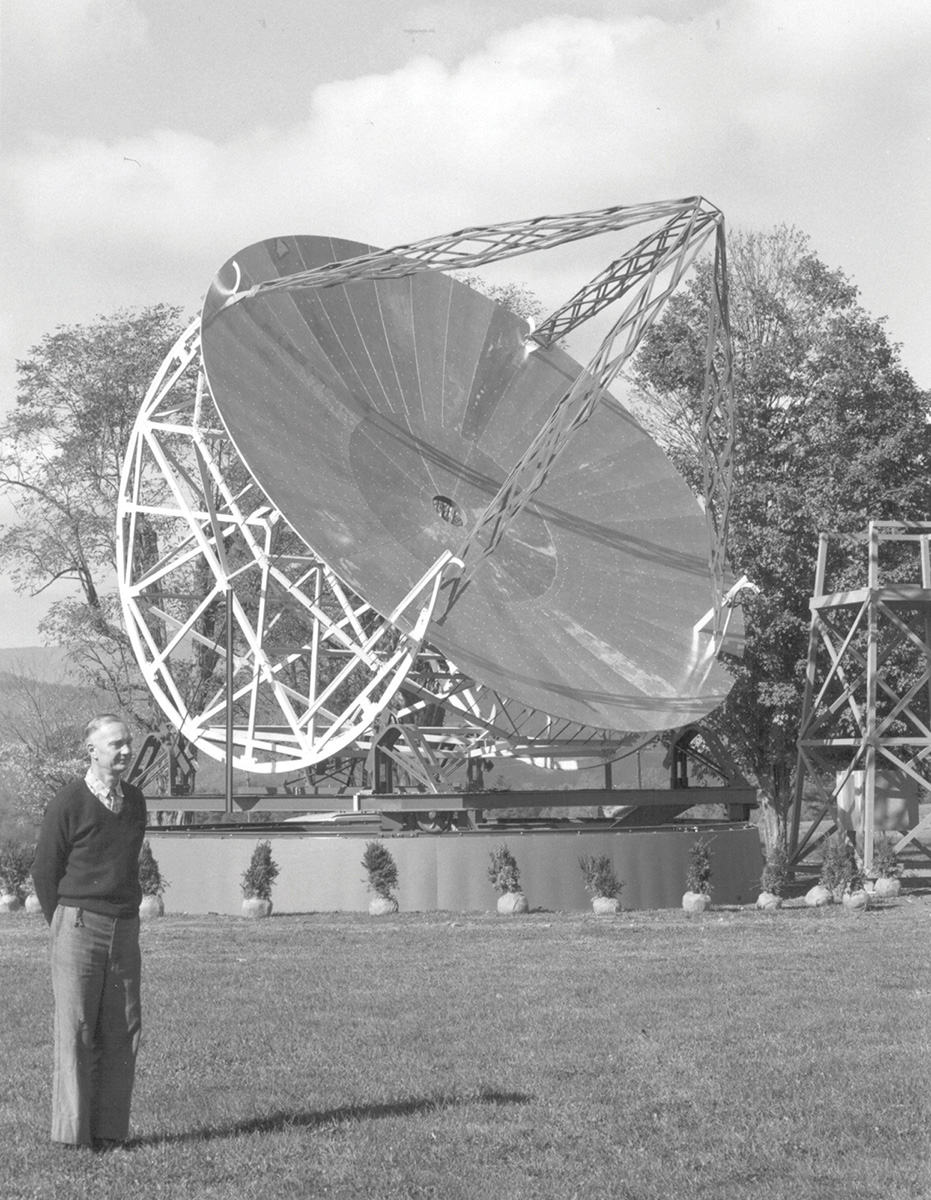
For a number of years after Jansky’s 1932 discovery, there was one radio astronomer in the entire world, and he was an amateur with a reputation for the eccentric. Grote Reber, a young US engineer who worked for a radio equipment manufacturer in Chicago, had devoured Jansky’s pre-war literature and contacted various academic departments asking when they would act on this clearly important discovery. He repeatedly got the brush-off and eventually, bored with the disrespect from professional astronomers, in 1936 he decided to build a radio telescope in his mother’s back garden.

Using his radio engineer skills, Reber worked out the best shape for the dish (a parabola that would act as the blueprint to most future radio dishes). He then took a summer off work and a year’s worth of salary out of the bank and built a 9.6 m dish. The neighbours feared it could change the weather, pilots rerouted to avoid it, and school children used it as a climbing frame when he wasn’t looking.

Reber, undeterred, first confirmed Jansky’s experiments and then mapped the whole radio sky in the early 1940s, discovering the first radio galaxy, Cygnus A. He also made some of the first solar radio measurements, while professional astronomers were still just waking up to the potential of radio astronomy following the declassification of documents after the Second World War. As Reber’s (and later those of James Stanley Hey and Bernard Lovell’s) results became more well-known, there was a rush to observe the radio sky.

Those with a physics background could make the equipment but didn’t have a clue what they were detecting. Meanwhile, astronomers knew what they wanted to look at, but couldn’t understand the electrical engineering. In these first years, academics could offer only half the skills for a true radio astronomer: they could understand the experiment or they could understand the results. Reber seemed to be the only person who could do both. Alone, in his mother’s garden, Reber was the first radio astronomer, amateur or professional, and remained so for over a decade.

James Stanley Hey: the teacher

Black and white photograph of a man in a suit outside a large house

In 1942 the radar defence network of Britain’s Royal Air Force (RAF) failed for a nail-biting two days. Physicist James Stanley Hey found himself in charge of working out why the failure occurred. He had been drafted out of teaching physics at Burnley Grammar School in Lancashire at the start of the Second World War, when he joined the Army Operations Research Group. Hey had been given a cursory radio-engineering briefing and put in charge of a team responsible for improving the radar for anti-aircraft guns. By cross-referencing the timing and extent to which each radar station suffered a blackout, Hey worked out that the source of the radar failure was the Sun.

Had he been an astronomer Hey would have been perplexed, as most astronomers at the time knew that there had only been failures in attempts to detect solar radio waves. Even Thomas Edison had not succeeded. As a physics teacher, Hey had no such preconceptions, however, and readily admitted his own ignorance. He even went as far as calling the Royal Greenwich Observatory to ask if anything was wrong with the Sun. As it happens, it turns out there was, as the astronomers at Greenwich confirmed. Indeed, Hey found out that during the exact window the radar stations found themselves overwhelmed with noise, a monstrous sunspot had bloomed across the surface of the Sun.

At the time, the RAF must have been pleased the source wasn’t a new German jamming technology and thankful that there had not been a raid while the defences were blind. After the war, with his work declassified, Hey began to give talks, but the astronomy community was not kind. Who was this man, a teacher no less, to tell them the Sun emitted radio waves? Ridiculous!

Luckily, his vindication came quickly when, in 1946, another mammoth sunspot crossed the solar disc and produced the same interference. At this point, radio astronomy was established as a serious profession across the world, and Hey and other physicists (including Bernard Lovell) scavenged disused wartime radar equipment and constructed their own listening devices. This time, though, they were pointed not at enemy planes, but at the stars.

Bernard Lovell: the physicist

Two black and white photos: a man in a suit and a large telescope under construction

When the Second World War began in 1939, Bernard Lovell was a researcher at the University of Manchester, UK, where he was visualizing the tracks of ionizing particles through vapour in a cloud chamber. Lovell had been drafted in to develop portable radar units, but they were suffering from a pesky source of interference. Eventually the false signals were attributed to showers of particles interacting with the ionosphere and creating emitting radio waves –a fortuitous discovery for Lovell. Having struggled with table-top cloud chambers, he realized he could rely on the Earth’s atmosphere as both particle accelerator and cloud chamber.

After the war, Lovell and others – including his wartime colleague James Hey – “rescued” some disused radar equipment and set it up in the fields of a small outpost of the University of Manchester, at Jodrell Bank. The quiet location should have meant he heard the ping of the radar picking up the trails of a particle shower once an hour. But, to his surprise, he heard a cacophony. Hey suggested that Lovell’s signals could instead be due to the entry of a space rock into the Earth’s atmosphere. The ionized trails left behind by these meteors would reflect radio signals, giving away their position.

Lovell, not in any way qualified to think about meteors, quickly found out that professional astronomers had neither the time nor the inclination to use their precious telescopes to study them either. They left that business to the amateurs. And so it was that Lovell convinced Manning Prentice – solicitor by day, amateur astronomer by night – to join him at Jodrell Bank during the next big meteor shower. Prentice would lie back in his deckchair and shout when and where he saw a meteor. Each time, Lovell would turn the radar equipment in that direction and shout if there were pings on the radar screen.

It became quickly apparent that Lovell had indeed been recording meteor showers. Cloud chambers and particle physics now forgotten, Lovell began raising money to build the Mark I Telescope at Jodrell Bank (later renamed the Lovell Telescope) and began down the path to becoming one of the greatest radio astronomers of the 20th century. All it took was lessons from an amateur.

The word “amateur” has two common meanings: “one who engages in a pursuit, study, science or sport as a pastime rather than as a profession” and “one lacking in experience and competence in an art or science”. From gardening to DIY, there are many skills at which I am both unpaid and incompetent, and so it must go deeper than that. Indeed, the Latin root of the word is amator, meaning “lover”. Literally, to be an amateur in a pursuit is to love it, to have a passion for it.

It turns out I had been unfairly judging those who engage in amateur hobbies, not least in the field I thought I knew better than anyone: radio astronomy. Amateur astronomers might not be paid, or produce high-profile academic papers, but the pings of a meteor and the hiss of the Milky Way in their headphones make them beam with joy.

Upon searching for a modern equivalent of the pioneering US amateur radio astronomer Grote Reber (see box above), I came across numerous associations of amateur radio-astronomy clubs observing everything from the galactic spiral arms to, astonishingly, pulsars. Upon speaking with a few – including the British Amateur Astronomy Radio Astronomy Group, the Lincoln Amateur Astronomy Club, and the Sutton and Mansfield Amateur Astronomy Club – I realized that nowhere do I feel more like an amateur than in an amateur astronomy club.

Row of several telescope dishes on a lawn in front of a low stone building

Indeed, when I meet such groups, I must seem such a disappointment to the members; not that I am ever made to feel that way by them. The optical astronomers resident at these clubs usually do well to recover from their shocked pauses after I admit I don’t know what planet, constellation or star they are pointing at, while the radio amateurs politely try to get past my lack of experience in building or maintaining radio telescopes.

Dishes adorn roofs, lines of wire stretch across posts and antennas of all shapes point towards the sky. The technology is so simple and familiar looking that it is easy to assume those in the sheds are just trying to tap into a free radio or TV service. To me, though, I jump in excitement as I see the antennas shaped to pick up the storms of Jupiter or measure incoming solar flares.

The people who voluntarily maintain these telescopes are most often retired men who used to work in fields such as electrical engineering or radar science. They are experts at terrestrial radio technology who, after retirement, turned their devices to look up – either for the pure challenge or, truly, because their doctors told them they should no longer be carrying their hulking optical tubes along dark, icy fields.

There are still plenty of professional radio astronomers with knowledge of their antennas bordering on the level of horse-whispering – but I have met them mostly at the older, smaller telescopes and less frequently among my generation of academics. In large collaborations, radio astronomers like this are rare these days, due to a necessity of scale. In my view, that’s a loss. It was in the amateur groups’ cold, run-down sheds that I rediscovered the spirit of radio astronomy. Here were the true radio astronomers, amateur or not.

Two photos: a radio beacon and a man sat at a desk looking at several monitors of data

History looms large over the SKA headquarters at the Jodrell Bank Observatory, sitting as it does in the shadow of the iconic Lovell telescope. This 76 m dish was once the largest steerable radio dish in the world when constructed in 1957 and the phenomenal feat of its construction means only two telescopes have surpassed it since (in Effelsberg, Germany, and the Green Bank Telescope in West Virginia, US).

Large-scale radio-telescope arrays, such as the SKA, are the vital next step to gather light over larger areas. Indeed, the SKA is an interferometer, one part of which comprises 130,000 antennas in the West Australian Desert, linked so that incoming long-wavelength radio waves “see” a giant collecting area that circumvents the mechanical-engineering constraints of a physical dish.

A singular dish is easy to anthropomorphize and love; I suspect that an array of 130,000 antennas is less likely to induce as much love and loyalty. Perhaps one will develop a liking for antenna 118,456, which always seems to go cheekily offline on a Tuesday, but it will be the data engineer who chuckles. The astronomer will probably never know.

Large area of desert with several circular groups of hundreds of small antennas

Rogue radio astronomer

This lack of consolidated knowledge is a cause for concern for some radio astronomers, who know how important it is to understand how data are collected. I found one such astronomer in the physics department at the University of California, Berkeley, US.  As the director of its Radio Astronomy Laboratory, Aaron Parsons has made major contributions in my research field of the first stars, heading a collaboration of scientists in their quest for radio signals from the early universe. For me, touring his lab was a magical experience. I darted around, lifting sheets of metal and admiring different antennas while listening in rapture as Parsons spoke about each piece, as though he were a passionate curator of art.

Aaron Parsons is now what I like to think of as a rogue radio astronomer, turning his back on the evolution of the field towards global collaboration

Parsons freely expresses his concern – bordering on cynicism – regarding large collaborations, because of the natural split in expertise that efficiency dictates. Indeed, he is now what I like to think of as a rogue radio astronomer, turning his back on the evolution of the field towards global collaboration. He even spends his holidays camping alone or with his son in isolated parts of the US, looking for the perfect canyon across which to hang his newest, handmade antenna.

The ingenuity of his solo collaboration is overtly reminiscent of Reber and Lovell. Parsons builds his own instruments, always keeping in mind how he expects the data will look. He tells me he would struggle to trust any other scientist’s analysis, unless they have built the antennas themselves. One must know the instrument to know its effect on the data, more so than ever when the tiniest cosmological signal can be washed out by modelling an antenna effect incorrectly.

As we now enter an era of immense interferometry, we risk unpicking the tight marriage between electrical engineering and astronomy. Indeed, the knowledge required to show expertise in any one aspect is now too great for one person, or even one PhD training programme. The happiness of any ongoing relationship relies on spending time together and communicating openly. Large observatories such as the SKA will thrive only with the scientists and engineers exchanging knowledge and respecting each other’s expertise and love for their craft. One without the other is as good as nothing at all.

In some ways, true radio astronomers are a dying breed. They are found mainly at smaller telescopes or in amateur clubs; it’s potter for pleasure, not publish or perish. I understand why large collaborations need a clear split between engineers and astronomers, but both sides need to learn a little of the other’s language so that the essential marriage of minds does not falter. Your local amateur astronomy club could very well be the best place to do just that.

Ultrasensitive microfluidic chip helps predict whether lung cancer treatment is working

Lung cancer treatments are complex, lengthy and can cause debilitating side effects. And because a treatment may not be effective for a particular patient, it is important to learn early on whether or not it is working so that alternative cancer fighting tools can be employed where appropriate. Analysis of blood samples using liquid biopsy can monitor cancer cell destruction as early as four weeks into treatment, but current approaches are ineffective for non-small cell lung cancer (NSCLC).

This may change with the development of a novel ultrasensitive graphene oxide (GO) microfluidic chip by researchers at the University of Michigan. The team’s “GO chip” can isolate and capture enough circulating tumour cells (CTCs) in the blood of NSCLC patients for laboratory analysis. CTCs are early signs of metastasis and strong predictors of future progression, but their low concentration in the blood – 10 to 100 CTCs/ml, compared with a background of 108 white blood cells – makes their detection and analysis challenging.

Current tests for detecting CTCs in blood capture a single type of protein on the cell surface that’s infrequent in lung cancers. Instead, the GO chip is designed to capture a wider range of surface proteins specific to lung tumours. The chip uses immunoaffinity, antibodies against these CTC surface proteins, to capture and immobilize them on functionalized gold nanoposts as blood is pushed through the chip’s channels during testing.

Principal investigators Sunitha Nagrath and Shruti Jolly and their colleagues investigated the GO chip’s effectiveness at measuring CTCs in 26 patients with stage III NSCLC. They recorded measurements throughout the patients’ treatment cycles – which comprised chemoradiotherapy followed by 12 months of anti-PD-L1 immunotherapy – following up the patients for an average of 21 months. They also performed molecular characterization to develop CDC signatures that predict which patients have a shorter or longer progression-free survival.

For the study, the researchers analysed blood samples at six time points: pre-treatment, during and after chemoradiotherapy (weeks 1, 4 and 10) and during immunotherapy (weeks 18 and 30). They used two GO chips for each patient blood sample, one for CTC analysis and the other for RNA extraction of captured CTCs.

Writing in Cell Reports, Nagrath and Jolly report that CTCs decreased significantly during treatment for all patients. They observed a significant decrease in CTC counts from baseline following the first chemoradiation treatment, as well as at week 10 with the commencement of immunotherapy and at week 30. However, there was no correlation between the gross tumour volume and absolute CTC quantity throughout the duration of the blood testing.

Patients with a decrease in CTCs of less than 75% between baseline and week 4 had a shorter progression-free survival, with a mean time before progression of seven months. Patients with a decrease of 75% or greater were progression-free throughout the 21-month long study. This finding demonstrates the potential for using CTCs as an early predictor of progression.

The researchers also conducted mRNA analysis using the microarrays to compare gene expressions. Gene expression changes over time indicated that CTCs shed by tumours that survive chemoradiation may be more metastatic and more aggressive.

“We have now shown that CTCs are potential biomarkers to monitor and predict patient outcomes in patients with stage III NSCLC,” says Jolly in a press statement. “Currently, there is typically a wait of weeks to months before we can fully assess the effectiveness of cancer treatment. However, with this chip, we may be able to sidestep prolonged, ineffective therapy and quickly pivot to alternatives, thus saving patients from needless side effects. This technique has the potential to shift cancer diagnostics, moving from a delayed single assessment to a more continuous surveillance, and facilitating the delivery of personalized cancer treatment.”

Nagrath tells Physics World that the study results could also be relevant to other solid tumours. “We are currently testing the utility of GO chip in other solid tumours, such as bladder cancer, to identify the more aggressive disease,” she says. “We are also planning to conduct a larger cohort study in the future to confirm our initial findings.”

FRIB finds five new isotopes in platinum fragments

By colliding heavy ions, physicists in the US have created five previously unseen nuclear isotopes. Led by Oleg Tarasov at Michigan State University, the team identified the nuclei in the debris produced by the fragmentation of platinum-198.

Nearly 300 naturally occurring isotopes are known to physicists, with about 250 of these being stable. Researchers have also created about 3000 short-lived isotopes at labs like the Facility for Rare Isotope Beams (FRIB), which is an accelerator-based institute at Michigan State University.

Short-lived isotopes  also occur naturally in violent astrophysical events such as supernovae and neutron star mergers. In these events, some of these isotopes are thought to be involved in the rapid neutron-capture process (r-process), which makes heavy elements such as gold.

Tiny fraction

“The number of natural isotopes is a tiny fraction of the possible isotopes and a tiny fraction of the number that exist in extreme astrophysical environments with active nuclear reactions,” Tarasov explains. “A fundamental question is: what combinations of protons and neutrons can form an atomic nucleus or a rare isotope?”.

Answering this question is one goal of FRIB, which creates isotopes by smashing heavy ion beams into targets at energies up to 200 MeV. Thanks to the latest increase in beam power, the facility is now poised to provide unprecedented access to heavy, neutron-rich isotopes in as-yet unexplored regions of the nuclear chart.

For Tarasov’s team, one region of particular interest contains isotopes slightly lighter than lead-208. Until now, these nuclei have proven challenging to study due to low production yields in experiments, combined with the difficulty in distinguishing between different nuclei.

Projectile fragmentation

With FRIB, “heavy isotopes with many more neutrons than protons can be produced by projectile fragmentation, where a heavy stable beam such as a natural isotope of platinum is smashed into a carbon target at half the speed of light,” Tarasov explains.

To find new isotopes, the researchers faced a two-fold task: to sort the fragmentation debris according to the different isotopes it contains, and to unambiguously identify each isotope. These challenges were overcome using the Advanced Rare Isotope Separator (ARIS) at FRIB.

Altogether, the team’s fragmentation experiment yielded five different isotopes of the elements thulium, ytterbium, and lutetium, which had never been observed before.

“The successful identification of these isotopes showcases the high-resolution capabilities of the ARIS fragment separator and its potential for future discoveries in the high-Z region of the periodic table, especially as beam intensity increases,” says Tarasov.

The team is confident that its results are just the start of an exciting new era for fragmentation experiments. “This was accomplished less than a year after FRIB operations started, and promises great science potential when performing similar measurements with lead and uranium fragmentation,” Tarasov continues.

In future experiments, Tarasov and colleagues will aim to produce nuclei containing 126 neutrons. This is a “magic number” and these nuclei are expected to be more stable than their neighbours in the nuclear chart. This makes them an important target for astrophysicists in their studies of the r-process. So, future research could give us a better understanding the origins of around half of all the elements in the universe heavier than iron.

The research is described in Physical Review Letters.

Physics sing-along is coming to Minneapolis, tiny fish creates very loud sounds

Those attending the American Physical Society (APS) March meeting at the Minneapolis Convention Center next week will no doubt be looking forward to the many physics talks on offer. This year’s APS March meeting also celebrates the 125th anniversary of the APS and physicists can mark the occasion by belting out a few tunes at the meeting’s annual physics sing-along.

Organized by physicist Walter Smith from Haverford College, this year’s get together will be held on 6 March at the Hyatt Regency Hotel from 9:00 – 10:30 p.m. It will feature songs such as “Problem Set”, set to “Tainted Love” by Soft Cell, “You Got Me Lasing”, set to “You Drive Me Crazy” by Britney Spears and “Complex Z”, set to “Let It Be” by the Beatles. If that has not whetted your appetite, then the free beer provided might. At least the attendance of PhD students is guaranteed.

Staying in the realm of acoustics, an international team of researchers has reported that a tiny fish is capable of creating a sound that is comparable to a jet aircraft taking off 100 m distant. Called Danionella cerebrum, the creature is a little over a centimetre long yet can create sounds at levels greater than 140 dB.

Drumming cartilage

Ralf Britz at the Senckenberg Research Institute and Natural History Museum in Germany and colleagues used high-speed video, micro-computed tomography, gene expression analysis, and finite difference methods to show that males of the species have a unique sound-generating apparatus. This comprises drumming cartilage; a specialized rib; and a fatigue-resistant muscle.

“This apparatus accelerates the drumming cartilage with a force of over 2000 g and shoots it against the swim bladder to produce a rapid, loud pulse”, explains Britz. “These pulses are strung together to produce calls with either bilaterally alternating or unilateral muscle contractions,” he adds.

The fish live in shallow and turbid waters in Myanmar, and the researchers believe that the males use their loud calls to attract female fish in the murky water. “We assume that the competition between the males in this visually restrictive environment contributed to the development of the special mechanism for acoustic communication,” says Britz.

The team also found that during the sound-production process, parts of the fish’s skeleton moved much faster than expected – challenging current notion of how motion occurs in vertebrates.

Much of this research was possible because the fish is nearly transparent, allowing the team to observe the sound making apparatus in action.

The research is described in the Proceedings of the National Academy of Sciences.

Matter–antimatter gas of positronium is laser cooled

Researchers at CERN and the University of Tokyo have independently laser-cooled clouds of positronium. The breakthrough should make it easier to make precision measurements of the properties of antimatter and allow researchers to produce more antihydrogen.

Positronium is an atom-like bound state of an electron and its antiparticle the positron. As a hybrid of matter and antimatter, it is created in the lab to allow physicists to study properties of antimatter. Such studies could reveal physics beyond the Standard Model and could explain why there is much more matter than antimatter in the visible universe.

Positronium is currently created in “warm” clouds in which the atoms have a large distribution of velocities. This makes the precision spectroscopy difficult because an atom’s motion contributes to a slight Doppler shift in the light that it emits and absorbs. The result is a broadening of the spectral lines measured, making it difficult to see any tiny differences between spectra predicted by the Standard Model and experimental observations.

More antihydrogen

“There are several impacts of this result,” says the University of Oslo’s Antoine Camper, a laser physicist and member of AEgIS. “By reducing the velocity of positronium, we can actually produce one or two orders of magnitude more antihydrogen.” Antihydrogen is an antiatom comprising a positron and an antiproton, and is of great interest to physicists.

Camper also says that the research paves the way to use positronium to test current aspects of the Standard Model, like quantum electrodynamics (QED), which predict specific spectral lines. “There are very fine QED effects that you can probe with positronium because it’s composed of only two leptons and so is very sensitive to things like the weak force interaction,” he explains.

First propose in 1988, it has taken decades for the laser-cooling of positronium to be achieved. “Positronium is really uncooperative because it’s not stable,” says Jeffrey Hangst of Denmark’s Aarhus University. He is spokesperson for ALPHA, the antihydrogen experiment at CERN. “It annihilates itself after 140 ns and it’s the lightest atomic system that we can make, which brings a whole slew of difficulties.”

The atom’s short lifetime is partially due to the annihilation process between electrons and positrons. This means that laser pulses must interact with the positronium cloud faster than positronium decays.

The AEgIS team begins the cooling process by containing a cloud of positrons in a Penning trap. This uses static electric and magnetic fields to confine charged particles.

Then, the positrons are shot through a nanochannel silicon converter. After scattering and losing energy, positrons bind to electrons on the surface of the converter, creating positronium. This stage acts as a pre-cooling step before the positronium atoms are collected in a vacuum chamber, where they are laser cooled.

Photon interactions

The cooling process involves the atoms absorbing and re-emitting photons from a laser, losing kinetic energy in the process. The wavelength of the light is such that it is only absorbed by atoms moving towards the laser. These atoms then emit photons in random directions – cooling them down.

The team used a laser with an alexandrite gain medium, which Camper says is ideal because it produces a large spectral bandwidth that is able to cool particles with a large velocity distribution. Once cooled, the temperature of the positronium cloud is then measured with a probe laser. The AeGIS team was able to reduce its temperature from 380 K to 170 K.

“We have actually demonstrated that we are reaching the limit of efficiency of cooling for the interaction time that we used for traditional Doppler cooling,” said Camper.

New antimatter research

Managing to cool positronium to low temperatures could open up novel ways to study antimatter. Positronium is a good testbed for fundamental theories Hangst says, “There are two things that we should really understand in atomic physics, one is hydrogen and the other is positronium, because they only have two bodies.”

Precision spectroscopy can determine the energy levels of the positronium atom, and see whether they match with existing predictions made by QED. Similarly, the energy levels of positronium can be used to probe the effects of gravity on antimatter.

However, Christopher Baker, an ALPHA physicist from Swansea University, says that scientists still have a long way to go before precision spectral analysis can be done. “To get something useful, we need to come down to about 50 K,” he said. There are still things the team can do to bring down temperatures, such as cryogenically cooling the target converters or bringing in a second laser.

“I think they’re on the right track, but it’s going to be more and more difficult to get colder and colder,” Baker said.

Hangst agrees that it will be a while before researchers can achieve their “pie in the sky” goal of creating a Bose–Einstein condensate out of positronium

The research is described in Physical Review Letters. In a preprint that has yet to be peer reviewed, Kosuke Yoshioka and colleagues at the University of Tokyo describe a new laser-cooling technique that has cooled a positronium gas.


Increasing access to radiotherapy: playing the long game

The global inequity in access to radiotherapy services is systemic, hard-wired and not going away anytime soon. The data don’t lie, with the gap between radiotherapy “haves” and “have-nots” dictated, for the most part, by the economic clout of individual nation states.

According to the International Atomic Energy Agency (IAEA), an intergovernmental organization that seeks to promote the peaceful use of nuclear energy, nearly all cancer patients in high-income countries have access to radiotherapy – versus fewer than 60% of patients in middle-income countries. Worse still, in low-income countries, just one in 10 people has access to life-saving radiation treatment.

This disparity in access represents a healthcare timebomb. Cancer, almost inevitably, places its heaviest burden on low- and middle-income countries (LMICs), where over 70% of cancer deaths are expected to occur in the next 20 years. The IAEA’s Rays of Hope: Cancer Care for All initiative, launched on World Cancer Day in 2022, is in the vanguard of the collective effort to accelerate the establishment and expansion of radiotherapy services in LMICs.

To date, seven “first-wave” countries – Benin, Chad, Democratic Republic of Congo, Kenya, Malawi, Niger and Senegal – have received radiotherapy and medical imaging machines as part of the IAEA initiative (with specialist training programmes also part of the mix for clinical staff involved in diagnostic and treatment services). Although it’s early days, 67 additional IAEA member states have since requested to join Rays of Hope at the national level – an indicator of the long-game thinking that will be needed to democratize access to high-quality radiotherapy treatment.

Public–private partnership

Meanwhile, the private sector – driven by commercial imperatives like market share and profitability – is increasingly turning its attention to questions of radiotherapy access in LMICs. A case study in this regard is Elekta, a specialist equipment provider in precision radiation medicine, which has put access to radiotherapy services front-and-centre in its long-term growth strategy to open up new markets for radiotherapy equipment within LMIC healthcare systems.

John Christodouleas

A global workforce of around 5000 employees positions Elekta to make a difference – near-term and at-scale – when it comes to the roll-out of advanced radiotherapy infrastructure in developing countries. “We’re seeking to improve radiotherapy access through a number of growth initiatives you might expect – as well as some initiatives you might not expect,” explains John Christodouleas, Elekta’s senior vice-president of medical affairs and clinical research (also adjunct associate professor of radiation oncology at the Perelman School of Medicine, University of Pennsylvania).

Significantly, that commitment to enhanced access is driven top-down from the Elekta boardroom, with one of the equipment maker’s strategic milestones (by the end of 2025) linked to “availability of care” – and targeting over 300 million people to gain access to radiotherapy services through the deployment of 800–1000 additional Elekta linacs in underserved markets.

Complementary strategic objectives relate to “elevation of care” (doubling the clinical usage of short-course hypofractionation treatments among Elekta customers, while quadrupling the use of adaptive radiation treatments) and “participation in care” (with a target of more than 20% of patients actively interacting with their own care journey, compared with less than 1% today).

“Operationally,” notes Christodouleas, “our commitment to improved radiotherapy access is organized along three main pathways: support for cancer public-health initiatives; access to human capital; and access to advanced radiotherapy solutions that offer increased automation and decreased capital and service costs.”

Take cancer public health, for example. In September of last year, Elekta and the IAEA announced a formal partnership to promote the value of radiotherapy to health ministries in underserved regions, while also investing in health education programmes to raise public awareness about cancer.

Along the same coordinate, the Elekta Foundation (a Swedish philanthropic organization independent of the main Elekta corporate group) is funding a pilot screening programme for cervical cancer in the Gicumbi district of northern Rwanda – screening over 40,000 women since August 2022 and treating over 1000 patients for precancerous lesions.

Technology innovation, clinical impact

By extension, argues Christodouleas, “access to skilled human capital in radiation oncology is just as big a problem as access to financial capital for LMICs.” To address the imbalance, Elekta has invested in open-access online education programmes like the BrachyAcademy, a peer-to-peer medical information platform for radiation oncology teams.

While the web portal is upfront about curating information on Elekta’s brachytherapy products and services, the programme also covers vendor-neutral information and cutting-edge research on clinical applications. “I’m a big fan of these best-practice initiatives because they scale very effectively,” adds Christodouleas.

Elekta has been a key supplier of radiotherapy systems to Morocco

The final part of the access puzzle is Elekta’s “bread and butter”: the delivery of advanced radiotherapy systems to clinical customers all over the world. Of course, selling a radiotherapy treatment system in the US – where there’s an established network of healthcare providers and robust Elekta support services – is a very different proposition to operating in underserved regions where those infrastructures might be limited.

Wherever the market, it’s all about a granular understanding of the clinical customer’s requirements, argues Christodouleas, citing the roll-out of Elekta radiotherapy systems as core building blocks within Morocco’s National Cancer Plan over the past decade. That roll-out started with initial linac orders in 2013 before progressing through brachytherapy units (2014–16), Leksell Gamma Knife stereotactic radiosurgery systems (2017–19), and, most recently (2020), orders that include Elekta Unity, Elekta’s most sophisticated linac integrated into a high-field MRI system.

“The partnership has been a win–win for Morocco’s ministry of health and for Elekta,” says Christodouleas. “We worked diligently to get our treatment systems in place, but also to put the necessary vendor infrastructure in place. Field service engineers, equipment supply chains, applications specialists, regional distributors – all of these are critical to establish and grow a sustainable radiotherapy programme at the national scale.”

More broadly, what of the prospects for improved radiotherapy access in LMICs? Christodouleas is optimistic that the two fundamental challenges for the radiotherapy community – enhanced treatment quality (via ever-increasing precision of radiation delivery) and dramatically increased access in underserved regions – can perhaps be addressed in tandem.

“I think of the radiotherapy access equation in simple terms,” he concludes. “Hypofractionation plus automation equals increasing access. Both hypofractionation and automation are enabled with better onboard imaging. So, our best linacs with the best imaging will be key to solving the access equation and delivering the highest quality of care to patients, no matter where they happen to live.”

APS March Meeting: connecting physicists from around the globe

The American Physical Society’s March Meeting 2024 is a scientific research conference that brings together physicists and students from around the world to showcase their research, connect with others, and discover groundbreaking physics developments in topics ranging from quantum physics to soft condensed matter, and from superconductivity to the latest in climate physics. This year’s meeting, taking place from 3 to 8 March at the Minneapolis Convention Center, celebrates the 125th anniversary of the APS.

“The annual APS March Meeting welcomes our diverse international community of over 13,000 scholars to share the excitement of new discoveries, establish new friendships, interests and collaborations, discuss and influence future directions and contribute to the expansion of human knowledge and endeavour,” says programme chair Paul Chaikin, from New York University.

As well as the extensive programme of scientific sessions, the meeting includes several featured events. At a special session featuring Nobel laureates, recipients of the 2023 Nobel Prize for Physics and for Chemistry will discuss “Attosecond Physics, Quantum Dots, Human Rights”. Elsewhere, the Kavli Foundation Special Symposium looks at “Physics Far from Equilibrium”. There’s also Industry Day events focusing on industrial and applied physics research and careers, plus Future of Physics Days, designed to help undergraduates get the most out of their March Meeting experiences.

Finally, there’s the exhibit hall to explore, where over 130 companies will be highlighting their latest devices and services for cutting-edge physics research. The exhibit will also feature poster sessions where scientists will share their latest findings, a job expo to meet potential employers and a graduate school fair. Read on to find out about some of the new product offerings that will be on show at this year’s technical exhibition.

New lasers line up for emerging applications

HÜBNER Photonics is showcasing an array of high-performance lasers that have been specifically developed for applications in quantum technology, nonlinear imaging and Raman spectroscopy.

Designed for the life sciences market, the next generation of VALO femtosecond lasers – the Tidal – offers market-leading pulse durations of typically 40 fs, as well as 2 W output power. Due to this exceptional peak power, and the integrated dispersion pre-compensation unit, Tidal is an ideal laser for nonlinear applications such as high harmonic imaging, broadband terahertz generation and nonlinear wafer inspection.

Cobolt laser from HÜBNER

Another new product for life sciences is the Cobolt 06-DPL 594 nm laser, which provides a CW power output of up to 100 mW in a compact footprint with direct modulation capabilities. The laser is easy to deploy and can be integrated into laser combiner options such as the C-FLEX or simply employed for stand-alone use in the laboratory. This 594 nm laser is specifically suitable for excitation of AF594, mCherry, mKate2 and other red fluorescent proteins.

For Raman spectroscopy, the new Cobolt Disco 785 nm single-frequency laser delivers up to 500 mW in a perfect TEM00 beam. This new wavelength is an extension of the Cobolt 05-01 Series platform. Its innovative design delivers excellent wavelength stability, a linewidth of less than 100 kHz, and spectral purity better than 70 dB, providing the performance needed for high-resolution Raman spectroscopy measurements.

HÜBNER Photonics is also highlighting a range of lasers for quantum technology applications. The Cobolt Qu-T Series is a family of compact, single frequency, tunable lasers operating at 707, 780 and 813 nm. Offering a course tunability of 2–5 nm, narrow mode-hop free tuning of less than 5 GHz, a linewidth of less than 100 kHz and powers of 500 mW, the Cobolt Qu-T Series lasers are ideal for quantum experiments based on atomic transitions and generation of entangled photon pairs through spontaneous parametric down-conversion.

In addition, the new Ampheia Series of high-power fibre amplifiers are ideal for experiments in atom trapping. The Ampheia Series offers ultralow noise and single-frequency capability, while delivering 20, 40 and 50 W at 1064 nm in a perfect beam.

  • For more information, visit HÜBNER Photonics at the APS March Meeting booth #1411

Precision positioning and instrumentation for diverse physics applications

For 25 years Mad City Labs has provided precision instrumentation for research and industry applications, including nanopositioning systems, micropositioners, single-molecule microscopes and atomic-force microscopes (AFMs), as well as offering customized solutions.

New for 2024 is the MadAFM, a sample-scanning AFM that supports multiple microscopy modes for applications in materials characterization and the life sciences. Simple to install and with a compact table-top design, the MadAFM exploits the company’s closed-loop nanopositioning systems to provide precise movement of the sample and probe.

The MadAFM from Mad City Labs

These piezo nanopositioners feature the company’s proprietary PicoQ sensors, which provide ultralow noise and excellent stability to yield sub-nanometre resolution. When used with AFMs, the nanopositioning systems provide true decoupled motion with virtually undetectable out-of-plane movement, while their precision and stability yields high positioning performance and control. These attributes make the nanopositioners ideal not only for AFMs, but for a range of applications in astronomy, photonics, physics, metrology and quantum sensing.

The MadAFM joins the company’s existing line-up of instruments for AFM and near-field scanning optical microscopy. Both optical deflection and resonant probe AFMs are available, with the latter designed to provide a flexible configuration for applications such as quantum sensing and scanning nitrogen-vacancy magnetometry.

Other products from Mad City Labs include the RM21 single-molecule microscope, which offers direct optical pathway access, high stability and precision alignment. There’s also the unique MicroMirror TIRF system, which offers multi-colour total internal-reflection fluorescence microscopy with an excellent signal-to-noise ratio and efficient data collection, along with an array of options to support multiple single-molecule techniques.

As well as offering turnkey instruments, Mad City Labs supplies standalone micropositioning products such as optical microscope stages, compact positioners for photonics, and the Mad-Deck XYZ stage platform. These products use proprietary intelligent control to optimize stability and precision. The compatibility of the micropositioning products with the high-resolution nanopositioning systems allows users to develop solutions tailored to their specific applications.

  • Find out more about Mad City Labs at the APS March Meeting booth #701


Radiology societies call for critical evaluation of AI, building the UK’s quantum workforce

Artificial intelligence (AI) shows great promise for use in radiology, which involves the use of medical imaging to diagnose and treat disease. Integrating AI tools into radiology could advance the diagnosis, quantification and management of multiple medical conditions. However, it is essential to acknowledge that some AI products may be add little value or even have potential to cause harm.

To ensure that AI is used appropriately, five radiology societies in the US, Canada, Europe, Australia and New Zealand have come together to publish a joint statement on the development and use of AI tools in radiology. This episode of the Physics World Weekly podcast features an interview with one of the authors of this paper. Bibb Allen is Chief Medical Officer for the American College of Radiology Data Science Institute, and a diagnostic radiologist at Grandview Medical Center in Birmingham, Alabama.

Also in this episode, Physics World’s Katherine Skipper reports back from a workshop that looked at how the UK could boost its quantum workforce.

Diamond alignment makes high-pressure magnetometry of superconductors possible

Physicists in the US and China have devised a technique for making reliable measurements of the magnetic properties of materials held under very high pressures.  Their method could help researchers discover materials that are superconductors at high temperatures and high pressures.

High-temperature superconductivity has hit the headlines regularly in the past year or two – but often for the wrong reasons. Several claims of materials that superconduct at close to or even above room temperature have been disputed, and some have been withdrawn.

A part of the problem is that these materials are studied at very high pressures in diamond anvil cells (DACs). A DAC compresses a tiny sample between two diamond teeth, which makes it very difficult to observe the characteristic signatures of superconductivity. Indeed, it is even tricky to know the detailed atomic structure of such samples.

Typically, claims of superconductivity must be supported by two pieces of evidence. One is an abrupt drop to zero in the resistivity of the material as the superconducting transition occurs. The other is the Meissner effect, which is the expulsion of a magnetic field from a material when it enters the superconducting state.

High-pressure challenge

Seeing these simultaneously at high pressure in a DAC is challenging, says Norman Yao of Harvard University. “How do you stick a probe into this high-pressure chamber? You just don’t have access.” The resistivity of the sample can be measured by installing tiny leads. But to measure magnetic effects, researchers generally surround the entire DAC with a solenoid induction coil, which just gives an average for the whole sample.

The problem is particularly acute for materials such as cerium and lanthanum superhydrides, which have been the focus of much of the excitement about room-temperature superconductors. They are usually made using a laser to heat a flake of metal in the presence of a hydrogen-rich compound. But it can be hard to know where, at high pressure, the desired hydride phase has formed and where it has not. Yao explains that this is why experimental runs fail more often than not, because there is no continuous superconducting region joining one lead to another.

If the sample is highly inhomogeneous, it also complicates the interpretation of the average magnetic behaviour data collected by an induction coil. This is particularly tricky because those signals are generally tiny compared with the background field. As a result, claims of superconductivity at high pressure are often contentious.

Three years ago, Yao’s team and others showed that local magnetic fields can be measured at high resolution using the DAC diamonds themselves. This is done by using nitrogen vacancy (NV) lattice defects within the diamonds. In these defects, two adjacent carbon atoms are replaced by a nitrogen atom and a vacant lattice site.

Split spin states

Each NV has a quantum spin that interacts with magnetic fields. This interaction is observed using a technique called optically detected magnetic resonance. When laser light is shone on an NV, it causes the emission of fluorescent light. If a microwave signal at a specific resonant frequency is also applied to the NV, it puts the spin into a specific state and this reduces the amount of fluorescent light emitted. If a magnetic field is also present, the energy levels of that spin state are split. This means that the reduction in fluorescence occurs at two distinct microwave frequencies – and the separation between those frequencies is proportional to the magnetic field strength.

In principle this technique could be used to perform spatially-resolved magnetometry on a DAC sample using implanted NV centres near the tip of a diamond tooth. The fluorescence is created by shining a laser into the back end of a diamond.

“An inherent advantage of the NV technique is its high spatial resolution in measuring the perturbation of the applied magnetic field by the superconducting phase, as opposed to the averaging effect for measurements over the entire sample”, says high-pressure expert Mikhail Eremets of the Max Planck Institute for Chemistry in Mainz, Germany. “This allows the use of much smaller samples and the potential to reach higher pressures,” adds Eremets, who has worked on high-temperature superconductivity in pressurized lanthanum superhydride.

Deformed defects

However, there is a problem with this magnetometry technique because high pressure deforms the NV defects in a way that gradually kills off the magnetometry signal. Previously, fluorescence from such NV sites was found to disappear around pressures of 50–90 GPa, which is too low to form the superconducting phases of the superhydrides.

Now Yao and colleagues have found a solution to this pressure problem that is simple in principle but challenging to engineer. If the upper face of the diamond tooth is cut along one particular crystallographic direction, the NV sites are aligned in this direction. The result of this symmetry is that pressure does not affect the fluorescence. This has allowed the team to detect superconductivity within specific regions, as small as a few microns, of a sample of cerium superhydride at a temperature of around 90 K and a pressure of 140 GPa.

Using this crystalline orientation could help resolve past controversies and avoid some future ones, the researchers say. It could also help researchers determine which sample synthesis conditions work best. Previously, says Yao, it was difficult to determine the exact nature of a sample. But now, if the target material has some magnetic response like a Meissner effect, it should be possible to spot exactly where it is in the sample and so to deduce how effective different synthetic strategies are.

“This imaging capability of the technique will be especially useful for in situ characterization of the inhomogeneities that are present in these high-temperature superconductors, including those that are stable near ambient pressures”, says materials scientist Russell Hemley of the University of Illinois at Chicago, who was not involved in the work.

The research is described in Nature.

Quality assurance: new approaches for ultrahigh-dose rate FLASH radiotherapy

Want to learn more on this subject?

The clinical translation of FLASH radiotherapy holds great promise, with demonstrated FLASH effect, the advantageous normal tissue sparing effect under ultrahigh-dose rate (UHDR) delivery, observed in numerous preclinical studies. Nonetheless, FLASH clinical implementation presents unique challenges in ensuring the safety and accuracy of patient treatments.

A rigorous and robust quality assurance (QA) program needs to be developed to address the ultrahigh-dose rate related treatment considerations.

In this talk, Jennifer Wei Zou will delve into the efforts of our NRG FLASH working group, which outlines the framework of quality assurance for FLASH clinical trials while addressing current technology gaps, with a focus on the electron and proton treatment modalities. She will discuss various aspects, including the available UHDR delivery techniques, patient treatment safety considerations, advancements in dosimetry and additional UHDR-related QA considerations. As the field of FLASH radiotherapy continues to rapidly evolve, addressing these challenges will be essential to fully harness the benefits of the FLASH effect for patients.

Want to learn more on this subject?

Dr Jennifer Wei Zou is an associate professor and a medical physicist in the University of Pennsylvania. With more than 15 years of clinical and research experience in radiotherapy, she has been actively involved in proton FLASH development at Penn. Currently, she leads the NRG FLASH workgroup, focusing on the physics support and technical needs essential for FLASH clinical trials.


Copyright © 2026 by IOP Publishing Ltd and individual contributors