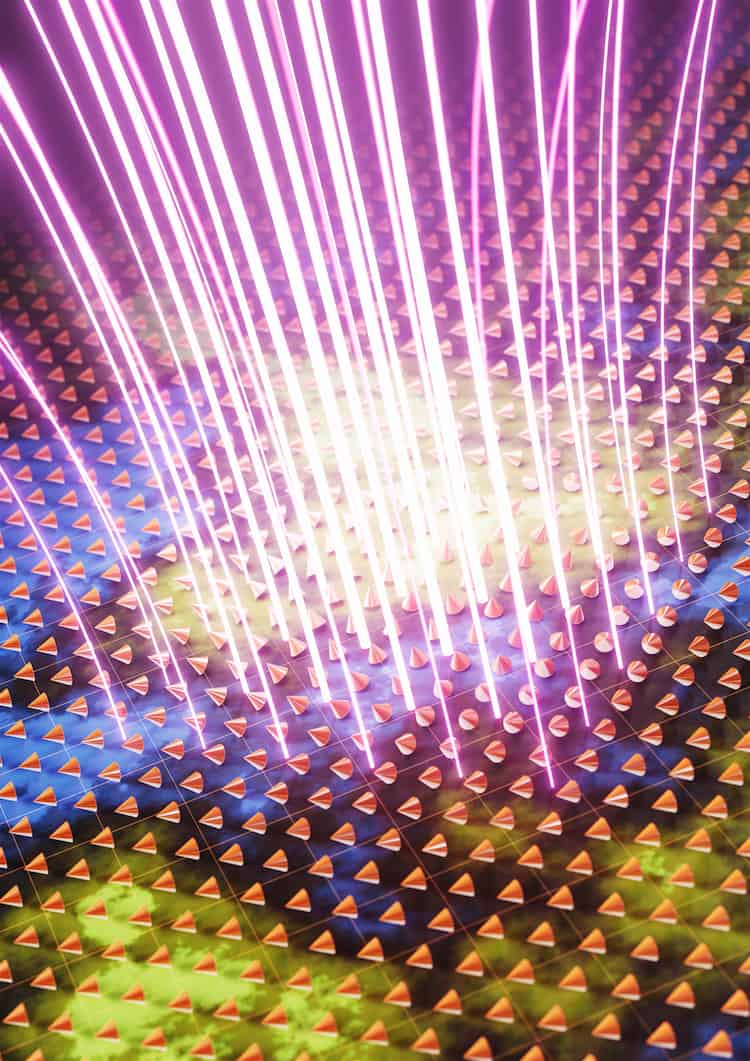
A newly-discovered “surface signature” of materials known as higher-order topological insulators could make them easier to identify – a task that has proved challenging until now. The technique, which was developed by researchers in the US, France, China and Ireland, would involve measuring changes to the polarization of an incoming light beam as it reflects off the material’s surface. Though not yet demonstrated experimentally, the technique could prove useful for developing quantum computers and spintronics devices that exploit the properties of these unusual materials.
Discovered in 2008, topological insulators are materials that conduct electricity very well along their edges or surfaces while acting as insulators in their bulk. In some topological insulators, the edge-state electric current induces a transverse spin current. These materials are known as quantum spin Hall systems by analogy with the better-known quantum Hall effect, in which strong magnetic fields induce electric current to flow along the edge of a semiconductor.
Within a topological insulator’s edge states, electrons can only travel in one direction. Unlike in normal conductors, they do not backscatter. This remarkable behaviour allows topological insulators to carry electrical current with near-zero dissipation – a property that attracts considerable interest among developers of electronic devices, who hope to exploit it to make such devices far more energy-efficient than they are today.
Over the last decade or so, additional topological materials (including Dirac semimetals, Weyl semimetals and axionic insulators) have emerged with even stranger properties. Most recently, materials that are insulating in their bulk, on their surfaces and along their edges, but conducting at hinges or corners, have been theorized to exist. The hinge states in these so-called higher-order topological insulators (HOTIs) are interesting for the study of spintronics because the direction of electron propagation in them is related to the electrons’ spin. HOTIs also hold promise for Majorana fermions, which have applications in fault-tolerant quantum computing – provided they can be definitively proven to exist.
Difficult to distinguish from other effects
In principle, HOTIs are highly distinctive because they only conduct electricity along one-dimensional lines on their surface – that is, along the boundary of a boundary. In practice, however, they are difficult to detect because other phenomena (including crystalline defects in a sample) can produce similar experimental signatures. To complicate matters, HOTI properties are only predicted to occur in materials with an unusually high degree of symmetry, explains Barry Bradlyn, a physicist at the University of Illinois at Urbana-Champaign, US, who co-led the new study. “This requires crystal structures that are unrealistically perfect and, until now, only a handful of materials, including the element bismuth, have demonstrated experimental signatures consistent with this category of material,” Bradlyn says.
In their work, which is detailed in Nature Communications, Bradlyn and colleagues analysed electrons propagating though the bulk of a HOTI, focusing on the electrons’ spin, which can be either up or down. If an electrical voltage were applied to the sample, these two spin states would accumulate on opposite sides. The researchers calculated that this spin configuration would produce a measurable signature via a phenomenon known as the magneto-optic Kerr effect, in which the polarization of an incoming light beam changes when it reflects off the surface of a sample.
According to the team’s calculations, the polarization change resulting from each spin state at the surface of a HOTI material would be exactly half that expected for an ordinary 2D insulating surface. “This ‘spin-resolved’ response at the surface is exciting,” says Bradlyn, “as it gives the first prediction for a robust experimental signature for HOTI materials.”
The properties of HOTIs that the team identified in this work could be very useful in quantum computing and spintronic devices, Bradlyn continues, though researchers would need to see them in an experiment first. “We hope that our study shows that the insides and surfaces of topological materials still host many mysterious and advantageous features if you know how to look for them,” he says.
The researchers are now trying to extend their formalism to analyse topological crystalline insulators protected by other symmetries. “We will also be looking into superconducting systems,” Bradlyn tells Physics World.
If you fancy getting away from it all, then NASA might have something for you. They are recruiting four people to spend a year living “on Mars”.
The space agency says that the volunteers, who must be non-smoking US citizens or permanent residents, will be confined to “Mars Dune Alpha”. This is a 157 square metre habitat at its Johnson Space Center in Houston that includes four private crew quarters, common lounge areas and food-growing stations.
The crew will have to perform spacewalks, “habitat maintenance” and robotic operations. But it won’t all be plain sailing as the habitat simulates the challenges of a mission on Mars, including resource limitations, equipment failures, communication delays, and “other environmental stressors”.
If that still takes your fancy, applications close on 2 April with the assignment starting in early 2025. This is the second of three such missions – the first began in June 2023 with four crew and passed the half-way mark in January. The efforts will help to develop systems and methods for the first generation of astronauts that visit actual Mars, which is currently slated for the 2030s.
Digital highway
Still on space, Bridgit Mendler, who rose to fame with her role on Disney Channel’s “Good Luck Charlie”, has announced a new space initiative. She has teamed up with her husband Griffin Cleverly and Engineer Shaurya Luthra to launch a space communications start-up, Northwood Space, which received a cool $6m in funding this week.
The firm, which was founded in October 2023 and is based in El Segundo, California, is aiming to build “a data highway between Earth and space”. This will be done by mass producing ground stations that connect to satellites in space.
“Space is getting easier along so many different dimensions but still the actual exercise of sending data to and from space is difficult,” she told CNBC. “You have difficulty finding an access point for contacting your satellite.” Northwood is aiming to carry out a first test connecting to a spacecraft later this year.
And finally, wrapping up our space-themed Red Folder, researchers at the University of Bristol in the UK have created a new computer model that is able to mimic Moon dust so well that it could help to design better lunar robots as well as to train astronauts ahead of lunar missions.
“Think of it like a realistic video game set on the Moon – we want to make sure the virtual version of moon dust behaves just like the actual thing, so that if we are using it to control a robot on the Moon, then it will behave as we expect,” says Bristol’s Joe Louca.
The Institute of High Energy Physics (IHEP), part of the Chinese Academy of Sciences, is the largest basic science laboratory in China. It hosts a multidisciplinary research programme spanning elementary particle physics, astrophysics as well as the planning, design and construction of large-scale accelerator projects – including the China Spallation Neutron Source, which launched in 2018, and the High Energy Photon Source, due to come online in 2025.
While investment in IHEP’s experimental infrastructure has ramped dramatically over the past 20 years, the development and application of quantum machine-learning and quantum-computing technologies is now poised to yield similarly far-reaching outcomes within the IHEP research programme.
Big science, quantum solutions
High-energy physics is where “big science” meets “big data”. Discovering new particles and probing the fundamental laws of nature are endeavours that produce incredible volumes of data. The Large Hadron Collider (LHC) at CERN generates petabytes (1015 bytes) of data during its experimental runs – all of which must be processed and analysed with the help of grid computing, a distributed infrastructure that networks computing resources worldwide.
In this way, the Worldwide LHC Computing Grid gives a community of thousands of physicists near-real-time access to LHC data. That sophisticated computing grid was fundamental to the landmark discovery of the Higgs boson at CERN in 2012 as well as countless other advances to further investigate the Standard Model of particle physics.
Another inflection point is looming, though, when it comes to the storage, analysis and mining of big data in high-energy physics. The High-Luminosity Large Hadron Collider (HL-LHC), which is anticipated to enter operation in 2029, will create a “computing crunch” as the machine’s integrated luminosity, proportional to the number of particle collisions that occur in a given amount of time, will increase by a factor of 10 versus the LHC’s design value – as will the data streams generated by the HL-LHC experiments.
Over the near term, a new-look “computing baseline” will be needed to cope with the HL-LHC’s soaring data demands – a baseline that will require the at-scale exploitation of graphics processing units for massively parallel simulation, data recording and reprocessing, as well as classical applications of machine learning. CERN, for its part, has also established a medium- and long-term roadmap that brings together the high-energy physics and quantum technology communities via the CERN Quantum Technology Initiative (QTI) – recognition that another leap in computing performance is coming into view with the application of quantum computing and quantum networking technologies.
Back to quantum basics
Quantum computers, as the name implies, exploit the fundamental principles of quantum mechanics. Similar to classical computers, which rely on the binary bits that take the value of either 0 or 1, quantum computers exploit quantum binary bits, but as a superposition of 0 and 1 states. This superposition, coupled with quantum entanglement (correlations among quantum bits), in principle enables quantum computers to perform some types of calculation significantly faster than classical machines – for example, quantum simulations applied in various areas of quantum chemistry and molecular reaction kinetics.
While the opportunities for science and the wider economy appear compelling, one of the big engineering headaches associated with early-stage quantum computers is their vulnerability to environmental noise. Qubits are all-too-easily disturbed, for example, by their interactions with Earth’s magnetic field or stray electromagnetic fields from mobile phones and WiFi networks. Interactions with cosmic rays can also be problematic, as can interference between neighbouring qubits.
Big physics IHEP scientists are working to “rediscover” the exotic particle Zc(3900) using quantum machine learning. The subatomic particle – the first tetraquark state observed experimentally – was discovered in 2013 by the BESIII detector (shown here) at IHEP’s Beijing Electron–Positron Collider. (Courtesy: IHEP)
The ideal solution – a strategy called error correction – involves storing the same information across multiple qubits, such that errors will be detected and corrected when one or more of the qubits are impacted by noise. The problem with these so-called fault-tolerant quantum computers is their requirement for a large number of qubits (in the region of millions) – something that’s impossible to implement in current-generation small-scale quantum architectures.
Instead, the designers of today’s Noisy Intermediate-Scale Quantum (NISQ) computers can either accept the noise effects as they are or partially recover the errors algorithmically – i.e. without increasing the number of qubits – in a process known as error mitigation. Several algorithms are known to impart resilience against noise in small-scale quantum computers, such that “quantum advantage” may be observable in specific high-energy physics applications despite the inherent limitations of current-generation quantum computers.
One such line of enquiry at IHEP focuses on quantum simulation, applying ideas originally put forward by Richard Feynman around the use of quantum devices to simulate the time evolution of quantum systems – for example, in lattice quantum chromodynamics (QCD). For context, the Standard Model describes all the fundamental interactions among the elementary particles apart from the gravitational force – i.e. tying together the electromagnetic, weak and strong forces. In this way, the model comprises two sets of so-called quantum gauge field theories: the Glashow–Weinberg–Salam model (providing a unified description of the electromagnetic and weak forces) and QCD (for the strong forces).
It’s generally the case that the quantum gauge field theories cannot be solved analytically, with most predictions for experiments derived from continuous-improvement approximation methods (also known as perturbation). Right now, IHEP staff scientists are working on directly simulating gauge fields with quantum circuits under simplified conditions (for example, in reduced-space-time dimensions or by utilizing finite groups or other algebraic methods). Such approaches are compatible with current iterations of NISQ computers and represent foundational work for a more complete implementation of lattice QCD in the near future.
The QuIHEP quantum simulator
As an extension of its ambitious quantum R&D programme, IHEP has established QuIHEP, a quantum computing simulator platform that enables scientists and students to develop and optimize quantum algorithms for research studies in high-energy physics.
For clarity, quantum simulators are classical computing frameworks that try to emulate or “simulate” the behaviour of quantum computers. Quantum simulation, on the other hand, utilizes actual quantum computing hardware to simulate the time evolution of a quantum system – e.g. the lattice QCD studies at IHEP (see main text).
As such, QuIHEP offers a user-friendly and interactive development environment that exploits existing high-performance computing clusters to simulate up to about 40 qubits. The platform provides a composer interface for education and introduction (demonstrating, for example, how quantum circuits are constructed visually). The development environment is based on Jupyter open-source software and combined with an IHEP user authentication system.
In the near term, QuIHEP will link up with distributed quantum computing resources across China to establish a harmonized research infrastructure. The goal: to support industry-academia collaboration and education and training in quantum science and engineering.
Machine learning: the quantum way
Another quantum research theme at IHEP involves quantum machine learning, which can be grouped into four distinct approaches: CC, CQ, QC, QQ (with C – classical; Q – quantum). In each case, the first letter corresponds to the data type and the latter to the type of the computer that runs the algorithm. The CC scheme, for example, fully utilizes classical data and classical computers, though runs quantum-inspired algorithms.
The most promising use-case being pursued at IHEP, however, involves the CQ category of machine learning, where the classical data type is mapped and trained in quantum computers. The motivation here is that by exploiting the fundamentals of quantum mechanics – the large Hilbert space, superposition and entanglement – quantum computers will be able to learn more effectively from large-scale datasets to optimize the resultant machine-learning methodologies.
Particle tracking IHEP scientists believe quantum computing will help to streamline track reconstruction methods in next-generation particle accelerators like the HL-LHC. Above: Hideki Okawa (right), Jiaheng Zou (standing) and Xiaozhong Huang (left) evaluate reconstructed particle tracks generated with the Origin Quantum Wuyuan computer, billed as “China’s first practical quantum computer”. (Courtesy: IHEP)
To understand the potential for quantum advantage, IHEP scientists are currently working on “rediscovering” the exotic particle Zc(3900) using quantum machine learning. In terms of the back-story: Zc(3900) is an exotic subatomic particle made up of quarks (the building blocks of protons and neutrons) and believed to be the first tetraquark state observed experimentally – an observation that, in the process, deepened our understanding of QCD. The particle was discovered in 2013 by the Beijing Spectrometer (BESIII) detector at the Beijing Electron–Positron Collider (BEPCII), with independent observation by the Belle experiment at Japan’s KEK particle physics laboratory.
As part of this R&D study, a team led by IHEP’s Jiaheng Zou, and including colleagues from Shandong University and the University of Jinan, deployed the so-called Quantum Support Vector Machine algorithm (a quantum variant of a classical algorithm) for the training along with simulated signals of Zc(3900) and randomly selected events from the real BESIII data as backgrounds.
Using the quantum machine-learning approach, the performance is competitive versus classical machine-learning systems – though, crucially, with a smaller training dataset and fewer data features. Investigations are ongoing to demonstrate enhanced signal sensitivity with quantum computing, work that could ultimately point the way to the discovery of new exotic particles in future experiments.
First beamline experiments First author Nolan Esplen at the FLASH Irradiation Research Station at TRIUMF. (Courtesy: Luca Egoriti)
Researchers in Canada have characterized an X-ray irradiation platform for radiobiological studies of FLASH radiotherapy – an emerging cancer treatment technique that uses ultrahigh-dose rate (UHDR) irradiation. The platform, dubbed FLASH Irradiation Research Station at TRIUMF, or “FIRST”, can deliver 10 MV X-ray beams at dose rates exceeding 100 Gy/s.
Located at the ARIEL beamline at TRIUMF, Canada’s particle accelerator centre, FIRST is currently the only irradiation platform of its kind in North America. Globally, there are two experimental UHDR megavoltage X-ray beamlines: the one at TRIUMF in Vancouver and another in Chengdu, at the China Academy of Engineering Physics terahertz free electron laser.
Megavoltage X-rays require modest accelerator specifications when compared with other modalities used to treat deep-seated tumours, the researchers say, and FIRST can offer both UHDR and conventional megavoltage irradiations on a common beamline.
“There’s a gap in the availability of ultrahigh-dose rate X-ray sources; it’s kind of an unmet need in the field, and there’s no commercial platform available to deliver this type of radiation routinely,” explains Nolan Esplen, a postdoctoral researcher at MD Anderson Cancer Center. “This multi-year collaborative project [with TRIUMF] …was an opportunity for leveraging this unique laboratory with access to a high-energy superconducting electron linac to produce the type of radiation we want to look at for FLASH radiobiological research.”
Esplen conducted FIRST characterization experiments while he was a graduate student at the University of Victoria working in the XCITE Lab. The research team’s latest study, published in Nature Scientific Reports, presents a comprehensive characterization of FIRST and initial preclinical experiments. Simulation work was published in 2022 in Physics in Medicine & Biology.
“We have been involved in ultrahigh-dose rate irradiations for quite some time now,” says XCITE Lab director Magdalena Bazalova-Carter. “We started talking with people at TRIUMF about the ARIEL beamline, and how if we built a target for this beamline, what kind of X-ray dose rates would we be getting. That’s how it all started.”
FIRST’s firsts
The researchers explored a subset of available and clinically relevant beam parameters to characterize FIRST under UHDR and conventional dose-rate operation. They fixed the electron beam energy at 10 MeV to maximize dose rates and target longevity, and set the beam current (peak current) between 95 and 105 µA. Dose rates were calculated using film dosimetry.
Dose rates above 40 Gy/s were achieved at up to 4.1 cm depth for a 1-cm field size. Compared with a clinical 10 MV beam, FIRST offered a reduced superficial dose buildup. Relative to low-energy electron sources, FIRST offered a more gradual dose fall-off beyond dmax (the depth of maximum dose). The team notes that the presence of steep superficial depth–dose gradients led to dose heterogeneity issues that currently restrict applications to preclinical work. Source stability limitations led to variations in current and dose.
Informed by the characterization studies, the researchers then used FIRST to deliver UHDR (above 80 Gy/s) and low-dose rate conventional X-ray irradiation to the lungs of healthy mice. They successfully delivered doses of 15 and 30 Gy to within 10% of the prescription at 1-cm depth. Effects of lung tissue inhomogeneities were not corrected for (the group’s design study pointed to negligible perturbations at megavoltage beam energies). Electron source output and film dosimetry variance dominated the uncertainties in pre-treatment dose measurements.
Lessons learned
The physical space in which FIRST is located was originally purposed – and still serves as – a beam dump (where a beam of charged particles can be safely absorbed). That led to some unique design challenges for FIRST.
“There was no basis for doing what we were doing, and it was also a development opportunity for TRIUMF. A lot of people learned about the system, as well as the nuances for this type of delivery and things that we did well, and what we could do better in the future,” Esplen says. “With the fact that this is a facility that is being developed, we were a first science opportunity – it’s a very dynamic environment. We have some extremely talented collaborators and beam physicists who worked to set all the optics parameters of the beamlines so that we could deliver a minimally dispersive beam of correct size at the target.”
At the time of the researchers’ experiments, only one phantom pair or a single mouse could be irradiated every 45 min after accounting for platform setup, delivery and shutdown. And after every adjustment made to the beamline and the beam itself, the researchers had to retune the beam to confirm its output and dosimetry.
“It’s a different story from clinical medical physics. When you run experiments on a linac in a hospital, one person can handle the entire experiment…This is a very different situation,” says Bazalova-Carter. “Five people had to run the beamline [for these experiments] to monitor all the screens – and while by far not all of them were used for our experiments, I think I counted 113 screens in the control room…It was quite interesting that we could get very decent dose agreement between Monte Carlo simulations and experiments, given how challenging these experiments are.”
Such hurdles notwithstanding, advantages of the FIRST platform include control over key source parameters, including pulse repetition frequency, peak current, beam energy and average power.
“We were the first user of the ARIEL beamline,” Bazalova-Carter reflects. “It was extremely satisfying, after many years of working on this project, to actually be able to run mouse irradiation experiments.”
An illustration of magnetic monopoles in haematite. (Courtesy: Ella Maru Studio)
Physicists at the universities of Oxford and Cambridge in the UK have spotted signatures of magnetic monopoles and other unusual magnetic structures in haematite, a naturally occurring antiferromagnetic iron oxide material. The structures, which the researchers discovered using quantum sensing measurements, could form the basis for novel devices such as racetrack memories and super-fast, energy-efficient neuromorphic computing.
An ordinary bar magnet consists of a north and a south pole. Slice it in two, and each of the resulting halves – no matter how small – will also have two poles. Indeed, the bipolar nature of magnetism is so fundamental that it crops up in Maxwell’s equations, which imply that although isolated positive and negative electric charges exist, isolated magnetic charges cannot.
During the quantum revolution of the 1920s and 1930s, some physicists began to speculate that this principle of classical electromagnetism might need revising. In 1931 Paul Dirac became the first to predict that magnetic monopoles – elementary particles that act as isolated magnetic north and south poles and are the magnetic analogues of electric charges – could exist. Although magnetic monopoles of the type Dirac envisaged have never been seen as free particles, exotic materials known as spin ices have since been found to host collective states that mimic them.
Swirling patterns of magnetic charges
A team of researchers led by Mete Atatüre, the head of Cambridge’s Cavendish Laboratory, has now observed a similar “emergent” type of magnetic monopole in haematite. These monopoles are collective states of many swirling spins (inherent angular momenta of electrons) that, together, act like a localized stable particle with a magnetic field emanating from it. “These ‘antiferromagnetic whirls’ (which are called merons, antimerons and bimerons) in haematite are associated with ‘emergent magnetic monopoles’,” explains the team’s co-leader Paolo Radaelli, a physicist at Oxford. “These whirls give away their location and we are able to study their behaviour with diamond quantum magnetometry and other scanning techniques.”
In diamond quantum magnetometry, a single spin in a tiny needle made of diamond is used to precisely and non-invasively measure the magnetic field on the surface of a material. “Quantum magnetometry can sense very tiny magnetic fields,” Atatüre explains. “Hence, it is ideally suited to map the magnetic order in antiferromagnets, a special class of magnetic materials in which the local magnetization nearly cancels out.”
A new approach pays off
The researchers, who report their work in Nature Materials, spotted several unusual magnetic structures in haematite using this technique, including two-dimensional monopoles, dipoles and quadrupoles. This is the first time a two-dimensional monopole has been observed in a naturally occurring magnet, they say. Radaelli adds that the team was not expecting to see much because antiferromagnetic spin textures were considered elusive and only observable using complex X-ray techniques.
“We sent our samples to Mete and colleagues in Cambridge without knowing exactly what to expect,” he says. “I recall discussing this and thinking that we would see nothing. When the images from Cambridge started pouring in, we debated different interpretations until quantitative simulations revealed the microscopic origin of the signal.”
It was only at this point that the team understood the monopolar nature of the observed magnetic structure and made the connection with examples of monopoles in the scientific literature, he tells Physics World.
Readout and classification
As for applications, team member Hariom Jani, a postdoctoral fellow at Oxford and the first author of the study, suggests the newly observed monopoles could serve as indicators for other unusual effects. “The interconnection between the magnetic charges, which are the sources/sinks of tiny fields, and the winding sense of the antiferromagnetic whirls is quite useful because it opens up an easy pathway to read out and classify exotic antiferromagnetic states,” he says.
His Cambridge colleague, PhD student Anthony Tan, agrees. “Our work highlights the potential of diamond quantum magnetometry to uncover and investigate hidden magnetic phenomena in quantum materials, which could help pioneer new fields of study in this area,” he says.
The team’s ultimate goal, Radaelli says, is to construct real-world devices for next-generation computing that make use of these antiferromagnetic whirls. “We are working in parallel on two separate concepts: one based on emulating biological neurons; and the other on so-called racetracks, that is, nanoscopic ‘highways’ for the whirls,” he says. Constructing such devices will require electrical contacts, leads and transducers to be fabricated at the nanoscale, he adds: “We anticipate that multi-probe scanning techniques, such as diamond quantum magnetometry, will enable us to fast-track this work.”
A private US firm has successfully made a soft landing on the Moon. The Odysseus mission touched down at 6:24 p.m. ET on Thursday on the Moon’s Malapert A region, a small crater about 300 km from the lunar south pole. Roughly the size of a red telephone box, the craft becomes the first US mission to make a soft landing on the Moon since Apollo 17 took astronauts Eugene Cernan and Harrison Schmitt to the lunar surface in December 1972.
The mission, aka IM-1, after the Houston-based company Intuitive Machines that operates it, carries an optical telescope, dubbed ILO-X, and a radio telescope called ROLSES. The two telescopes delivered by Odysseus now join one that arrived on China’s Chang’e-3 mission in 2013.
ILO-X will take advantage of the Moon’s lack of an atmosphere to image the Milky Way, the Large Magellanic Cloud and the Carina nebula, among other objects. ROLSES – short for Radiowave Observations at the Lunar Surface of the photoElectron Sheath – will use four antennas to study interactions between the Earth’s and Sun’s magnetic fields.
The mission also carries four NASA instruments while non-NASA payloads include 125 miniature Moon sculptures inside a transparent cube that have been created by artist Jeff Koons.
The flight and the touchdown, however, wasn’t all plain sailing. A post-launch test of the craft’s main engine was postponed after it took longer than expected to chill the liquid oxygen feed line. Close to the scheduled time for leaving lunar orbit, engineers gave the craft one extra spin around the Moon.
Then a problem with the craft’s navigation system forced engineers to switch to using NASA’s Navigation Doppler Lidar – an experimental payload on board the craft – to guide it down.
Mission control also had difficulty communicating with the craft for a few tense minutes after it landed. “I know this was a nail-biter, but we are on the surface, and we are transmitting,” Steve Altemus, chief executive officer of Intuitive Machines noted.
‘Power and promise’
Odysseus’s success is more than being the first US lunar lander in more than half a century. It also becomes the first commercial craft to land on the Moon. NASA contracted it to carry its payloads as part of the agency’s Commercial Lunar Payload Services programme. By contracting out missions to the private sector rather than carrying them out on its own, NASA hopes to reduce their costs significantly.
“Today is a day that shows the power and promise of NASA’s commercial partnerships,” NASA Administrator Bill Nelson noted.
Efforts to land craft on the Moon have had a mixed record during the past year. Hakuto-R, a craft developed by Japanese company Ispace, crash-landed last April and Russia’s Luna 25 met the same fate four months later.
Yet India’s Chandrayaan-3 craft did touch down successfully last August. Last month a propulsion system problem early in flight caused Astrobiotic Technology to give up hope of even setting down its Peregrine robotic landing craft on the lunar surface, while Japan’s Smart Lander for Investigating Moon (SLIM) landed at an angle that initially limited its ability to power up and collect data.
Late last year the Particle Physics Project Prioritization Panel ( P5) released a report that looks to the future of particle physics in the United States. The report is called Exploring the Quantum Universe and one of its authors, Abigail Vieregg, is our guest in this episode of the Physics World Weekly podcast.
Vieregg is an astrophysicist and cosmologist at the University of Chicago and she talks about future experiments that P5 has recommended including a muon collider that could search for new physics on a much smaller footprint than conventional colliders. Vieregg also chats about the proposed CMB-S4 next-generation cosmic microwave background observatory, which ties-in with her research on the polarization of the cosmic microwave background.
Vieregg also describes the buzz surrounding P5 meetings as the panel was presented with a wealth of ideas from the particle-physics community. She says that she is proud of the positive response P5 has garnered from physicists.
A flexible, ultrathin optical sensor that uses carbon nanotubes to convert light into electrical signals has been unveiled by Rei Kawabata and colleagues. The team at Japan’s Osaka University says that the device could lead to better optical imaging technologies.
Optical sensors play a vital role in modern imaging technologies. So far, conventional sensors have broadly relied on conventional semiconducting elements to convert light into electrical signals. To avoid damage, however, these devices tend to be mounted on thick, sturdy boards, limiting the shapes of the surfaces they are able to image close up.
To overcome the problem, researchers have begun to explore the possibilities presented by sheet-type sensors made from flexible organic materials. In principle, these sensors can wrap around more complex surfaces and image them regardless of their shape. Yet so far, these sensors have not come close to matching the capabilities of their more rigid, inorganic counterparts.
Unstable transistors
“The detection bandwidth of conventional sheet-type optical sensors is narrow,” explains Osaka’s Teppei Araki. “This makes it difficult for them to detect long-wavelength (infrared to terahertz) electromagnetic waves needed for thermal and chemical analysis.” On top of this, the flexible organic transistors required for their operation are known to become unstable when irradiated by light.
To overcome these challenges, the team looked to the unique properties of carbon nanotubes. Not only are they highly flexible; their unique molecular structure also makes them excellent at converting light into electrical energy.
To exploit these advantages, the researchers developed a technique for printing carbon nanotube photodetectors onto thin-film substrates. The nanotubes were doped with chemicals to further improve their sensitivity to light.
Photosensor sheet
“By integrating carbon nanotube photodetectors and organic transistors in an array on an ultra-thin polymer substrate, we have developed a sheet-type photosensor that exhibits stability, flexibility and high sensitivity at room temperature and in air,” says Araki.
The researchers found that the sensors are very efficient at detection across a broad spectrum from visible light to terahertz radiation. By integrating a shielding structure – which did not compromise flexibility – they also ensured that the device’s flexible transistors continued to operate reliably when irradiated light. This allowed the device to amplify sensor signals by a factor of 10.
The device is described as a highly flexible light sensor that is suitable for a wide array of imaging applications. “We have developed a thin and soft sheet-type optical sensor that does not damage the object to be measured,” Araki describes.
Bluetooth integration
The team then integrated a Bluetooth module with sensor, which means that the device can be used remotely.
“We have realized a wireless measurement system that can easily detect and image not only light, but also electromagnetic waves related to heat and molecules,” says Araki.
The team used a prototype of their sensor in two successful demonstrations. One involved sensing the heat given off by human fingers; and the other involved involve monitoring a warm sugar solution as it flowed through a thin tube. The researchers also show that their device is highly durable because it performed well after being crumpled into a ball.
They now aim to improve the device so it can be used in a wide range of applications. “Our wireless measurement system expands the possibilities of non-destructive testing methods,” Araki says. “These could include non-contact imaging, and simple liquid quality evaluations without the need to collect samples. It is also expected to be used in wearable devices and portable imaging devices.”
The most likely source of the strongest shallow “moonquake” ever recorded is less than 60 km from the lunar south pole and within many of the proposed landing zones for NASA’s forthcoming Artemis III mission. According to researchers at the US National Air and Space Museum’s Center for Earth and Planetary Studies, who identified the source by re-analysing data from lunar seismometers set up by Apollo astronauts over 50 years ago, moonquakes of this type originate from a fault or thrust that causes the lunar surface to contract. Because the seismic shaking from such an event could trigger landslides, the researchers warn that future lunar astronauts – including those aboard Artemis III, which is currently scheduled to launch sometime after September 2026 – will need to be careful where they land.
Over the last few hundred million years, the Moon has been shrinking as its core gradually cools. This shrinking led to global stresses that produced so-called contractional (or thrust) tectonic deformations in regions where sections of crust push against each other. Such deformations are known as lobate thrust fault scarps, and they resemble long, irregularly-curving wrinkles tens of metres high. Like on Earth, these lunar fault scarps are home to seismic activity. Because they are among the youngest landforms on the Moon, some of the small thrust faults that produced them are likely still active today.
Much of our knowledge of the Moon’s recent seismic activity comes from the Apollo Passive Seismic Experiment (APSE). This consisted of four seismometers placed at the Apollo 12, 14, 15 and 16 landing sites between 1969 and 1972. These seismometers operated until 1977 and recorded a total of 28 shallow moonquakes (SMQs) with equivalent magnitudes ranging from 1.5 to about 5.
Though moonquakes resemble earthquakes in some ways, they can last much longer – up to several hours compared to a few seconds or minutes. Indeed, the APSE recorded one magnitude 5 SMQ that lasted a whole afternoon.
The team’s modelling suggests that this SMQ could have produced strong to moderate ground shaking over a distance of least 40 km, with moderate to light shaking likely over even larger areas. What is more, models of slope stability predict that steep slopes in the Shackleton crater (located near the lunar south pole) may be susceptible to landslides from even light seismic shaking – especially since the lunar soil, or regolith, in this region is loosely consolidated and contains dry gravel and dust.
Seismic events from active thrust faults should be taken into account
Based on these findings, the researchers argue that the possibility of seismic events from active thrust faults should be taken into account when preparing future lunar missions and locating permanent outposts. In their view, these events are a potential hazard for future robotic missions as well as human explorers. “We hope to sound a cautionary note: that the Moon is a seismically active body and that there is a potential hazard to long-term settlements, if they are located too close to a young fault,” Watters tells Physics World.
The researchers are now examining the stability of slopes in permanently shadowed regions in more detail. “We also plan to look for evidence of recent landslides where they are predicted by our model,” Watters says.
If we want to send humans to Mars, and launch more science missions to the outer solar system, then we need the firepower to get there. One technology that could usher in this new era is nuclear-propelled rockets. This video traces the history of the nuclear spaceflight concept and looks at two complementary approaches being developed today: nuclear thermal propulsion (NTP) and nuclear electric propulsion (NEP).