Trees could shed light on some of the most cataclysmic events in the universe, according to a particle physicist at the University of Kansas in the US. Steven Prohira thinks these woody objects could function as radio antennas to spot neutrinos, with forests forming large detector arrays. Prohira argues that such detectors could be cheaper and easier to deploy than arrays of artificial antennas (arXiv: 2401.14454).
Neutrinos are difficult to observe directly because they interact so fleetingly with matter. Some detectors use thousands of photomultiplier tubes to spot the Cherenkov radiation produced on the rare occasions when a neutrino collides with ice or liquid water. Others, like the proposed Giant Radio Array for Neutrino Detection (GRAND), use radio antennas to detect the secondary particles created from collisions between high-energy neutrinos and particles in the atmosphere.
As neutrinos are so elusive, detectors need to cover a huge area. GRAND, for example, would need 20 giant radio antenna arrays around the world, each covering 10,000 square kilometres.“The big question with high-energy neutrino detectors is how to instrument a large enough volume to actually detect a measurable flux of neutrinos,” says Prohira, who hit upon the idea of using trees as radio antennas when thinking how to construct a large-scale instrument using infrastructure that already exists.
Wood you believe it
The idea of trees as radio antennae is not new, dating back to the early 1900s. But it only gained traction in the 1960s and 1970s during the Vietnam War when the US Army wrapped large magnetic induction coils around trees to improve the audibility of radio signals in the jungle. Its work showed that instrumented trees produced stronger and clearer signals than manufactured antennas. “The preliminary studies that I can find in the literature seemed quite promising,” Prohira notes.
Although trees work across a wide range of radio frequencies, Prohira thinks much more work will be needed to explore how they perform at frequencies of interest to tau neutrino detectors, which are higher than those normally used for radio communications. Researchers will also need to investigate the properties of the radio waves detected by trees and see how easy it is to reconstruct the neutrino signals from them. Other questions focus on the uniformity of the signals between different trees and the performance of various types and species of tree.
The beauty of trees, however, is that they are already in place. Prohira argues that the natural, often uniform spacing of trees in forests should make it feasible to create an array of tree antennas with a very similar layout to that proposed by the GRAND experiment. If such an array is possible, it could be used to study events such as gamma-ray bursts or collapsing stars.
“It is definitely worth exploring, because if it turns out to be relatively easy to instrument the trees and they work fairly well as antennas that could open up the potential to being able to instrument a large-scale array in an efficient array,” Prohira says. He warns, however, that there maybe “particular logistical challenges to a forest detector that make it unfeasible”.
Imagine an army of self-propelling, radioisotope-covered particles 2500 to 10,000 times smaller than a speck of dust that, upon injection into the body, search for and attach themselves to cancerous tumours, destroying them. Sounds like science fiction? Not so for mice with bladder cancer.
Researchers in Spain report that nanoparticles containing radioactive iodine and which propel themselves upon reaction with urea have the ability to distinguish cancerous bladder tumours from healthy tissue. These “nanobots” penetrate the tumour’s extracellular matrix and accumulate within it, enabling the radionuclide therapy to reach its precise target. In a study conducted at the Institute for Bioengineering of Catalonia (IBEC) in Barcelona, mice receiving a single dose of this treatment had a 90% reduction in the size of bladder tumours compared with untreated animals.
This novel approach may one day revolutionize the treatment of bladder cancer. Bladder cancer is the tenth most common cancer in the world, with over 600,000 new cases diagnosed in 2022 and more than 220,000 deaths globally, according to the World Health Organization’s Global Cancer Observatory.
Non-muscle-invasive bladder cancer, which accounts for 75% of cases, is currently treated by tumour resection followed by intravesical injection of chemotherapy or immunotherapy drugs into the bladder. Drug delivery is particularly challenging, however, due to the low permeability of the urothelium (the tissue lining the inside of the urinary tract), content filling of urine and subsequent washout of drugs. The process is also uncomfortable for patients, as they need to turn their bodies at intervals while lying prone to enable the drugs to reach all sides of the bladder wall. Following treatment, there’s a 30–70% risk of recurrence within five years.
To improve clinical outcomes, principal investigator Samuel Sánchez and colleagues aim to develop innovative and more effective bladder cancer treatments, and in the process, reduce recurrence rates. Additionally, a single-dose therapy would significantly reduce the cost of treatment, which currently requires between six and 14 hospitalizations.
The team created nanobots from mesoporous silica nanoparticles with various functional components on their surfaces. These include radioisotopes for PET visualization or radionuclide therapy, and the protein urease, which reacts with urea in urine and enables the nanobot’s propulsion.
Writing in Nature Nanotechnology, the researchers report that when they added a droplet of nanobots to a solution containing 300 mM urea, the nanobots exhibited a swarming motion, forming active and vigorous fronts and three-dimensional vortices. Without the urea, the nanobots simply sedimented near the addition site.
To examine whether the nanobots can reach a tumour in vivo, the team assessed their behaviour in tumour-bearing mice. Positron emission tomography (PET) images showed that signals from radiolabelled nanobots were co-located with the tumour position, as determined via MRI, with radioactivity primarily seen at the target tumour site. Only mice injected with nanobots plus urea showed substantial accumulation in the tumour mass – nanobots delivered in water, and control nanoparticles (without urease) delivered in water or urea exhibited minimal tumour uptake.
The researchers suggest that the mobility of the nanobots helps them to penetrate the tumour mass. “Nanobots lack specific antibodies to recognise the tumour, and tumour tissue is typically stiffer than healthy tissue, but this is not the case in bladder tumours” explains co-first author Meritxell Serra Casablancas of IBEC. “We observed that these nanorobots can break down the extracellular matrix of the tumour by locally increasing the pH through a self-propelling chemical reaction. This phenomenon favoured greater tumour penetration.” The researchers believe that the nanobots collide with the urothelium as if it were a wall, but penetrate the tumour which is spongier.
The team note that identifying the nanobots in microscopy images of dissected tissue was challenging. After confocal optical microscopy techniques failed, researchers at IRB Barcelona developed a light-sheet-based microscopy system, based on planar laser illumination, capable of scanning the different layers of the bladder and creating a 3D reconstruction of the entire organ.
“The scattered elastic light-sheet microscopy system that we developed enabled us to eliminate the light reflected by the tumour itself, allowing us to identify and locate nanoparticles throughout the organ without prior labelling, at unprecedented resolution,” says Julien Colombelli from IRB Barcelona.
To evaluate the technique’s therapeutic effect, the team labelled nanobots with the iodine-131 (131I, a radioisotope commonly used for radionuclide therapy), and administered them to the tumour-bearing mice. Treatment with lose-dose 131I-nanobots in urea arrested tumour growth, while high-dose 131I-nanobots administered in urea led to a nearly 90% reduction in tumour volume compared with non-treated animals.
Sánchez tells Physics World that the team’s next steps are to encapsulate small drugs currently used in chemotherapy and continue to test the efficiency of nanobots as drug carriers. They eventually intend to scale up the nanobots and study the regulatory pathways to move towards the first clinical trials in the next three to four years, via the IBEC spinoff Nanobots Therapeutics.
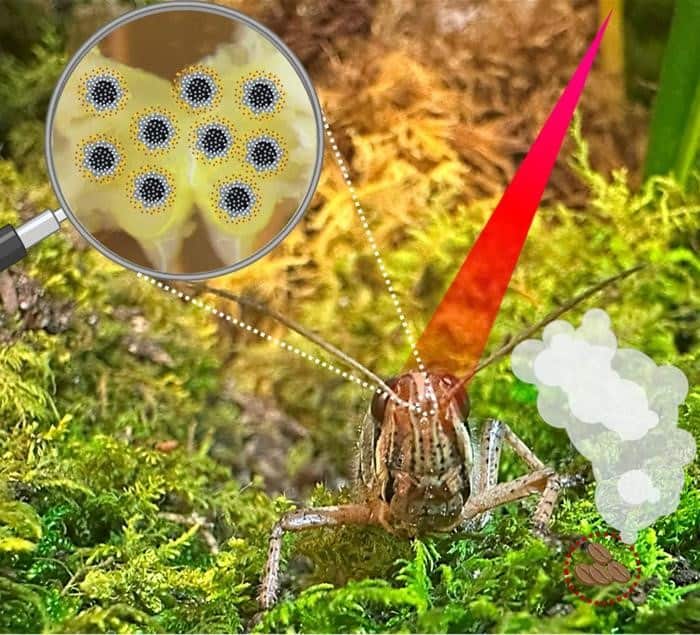
Hot spots: this photo composition has a locust (centre) showing the location of the nanoparticles (left), which are illuminated by near-infrared light (illustrated in red). (Courtesy: Singamaneni Lab/Washington University)
Using specially engineered nanoparticles, a team of US researchers has artificially enhanced the sense of smell in locusts. Led by Srikanth Singamaneni and Barani Raman at Washington University in St Louis, the researchers’ approach could lead to a new type of biological chemical sensors.
Many different animals have evolved a sense of smell that vastly outperforms our own. Even today, the latest designs of chemical sensor have yet to catch up with the sensitivity of biological olfactory systems, as well as their ability to distinguish between subtly different substances.
Recently, researchers have attempted to harness these abilities in biological chemical sensors. Initially, Singamaneni’s team planned to do this with locusts, which carry their olfactory apparatus in their antennae.
Biology does the hard work
“We let the biology do the harder job of converting information about vaporous chemicals into an electrical neural signal,” explains Raman. “These signals are detected in the insect antennae and are transmitted to the brain. We can place electrodes in the brain, measure the locusts’ neural response to odours, and use them as fingerprints to distinguish between chemicals.”
This approach quickly ran into difficulties, however. Without harming the insects, Singamaneni’s team found they were strictly limited both in the number of electrodes they could use, and in the regions where they could be placed. Ultimately, this meant that the neural signals they detected were far too weak for the system to act as a reliable chemical sensor.
To overcome this challenge, the researchers have explored how the locusts’ neural signals could be enhanced with the help of photothermal nanoparticles, which are extremely efficient at converting light into heat. “Heat affects diffusion – imagine adding cold milk to hot coffee,” Raman says. “The idea is to use the heat generated by nanostructures to locally heat and enhance neural activity.”
In this case, the team examined how locally applied heat could be used to control the release of neurotransmitters. These are the molecules responsible for conveying electrical signals between neurons in the brain.
Melting wax
To achieve this, they started by encasing photothermal polydopamine nanoparticles in a porous silica coating. They then mixed the structure with a dye containing 1-tetradecanol. The latter is a waxy solid at room temperature, but melts at just 38 °C. Finally, they loaded the nanostructures with a neurotransmitter “cargo” and injected them into locust brains.
To test their approach, the team placed random arrays of electrodes on the locusts’ heads, and monitored their neural signals when they exposed them to different odours. When they detected neural signals, the team then fired a near-infrared laser in the place where the signals appeared.
The photothermal nanoparticles absorbed the near-infrared light and this heated the surrounding 1-tetradecanol above its melting point – releasing the structure’s neurotransmitter cargo into its immediate surroundings.
Enhanced sense of smell
With the temporary abundance of neurotransmitters, the locusts’ neural signals were temporarily amplified by a factor of 10. This improved the insects’ sense of smell and also boosted the locusts’ neural activity to levels that could be measured far more accurately by the team’s electrode arrays. This was the case even when they nanoparticles were not placed in optimal positions.
“Our study presents a generic strategy to reversibly enhance neural signals at the brain site where we place the electrodes,” Raman explains. When signal amplification was no longer required, the excess neurotransmitter molecules were simply broken down by natural enzymes. In the long term, the nanostructures will biodegrade, leaving the locusts unharmed.
The researchers are confident that their approach could be a promising step towards a new generation of biological chemical sensors.
“It would change an existing passive approach – where information is simply read – into an active one, where the capabilities of neural circuits as a basis for information processing are fully used,” Raman explains. If achieved, this would both boost the sensitivity of chemical sensors, and improve their ability to differentiate between different chemicals.
Researchers at the Leibniz Institute for Solid State and Materials Research at IFW Dresden, Germany, have found proof for surface superconductivity in a class of topological materials known as Weyl semimetals. Interestingly, the superconductivity, which comes from electrons confined in so-called Fermi arcs, is slightly different on the top and bottom surfaces of the sample studied. The phenomenon could be used to create Majorana states – long-sought after quasiparticles that could make extremely stable, fault-tolerant quantum bits for next-generation quantum computers. Meanwhile, another group at Penn State University in the US has fabricated a chiral topological superconductor by combining two magnetic materials. Majorana states might also be found in this new material.
Topological insulators are insulating in the bulk but conduct electricity extremely well on their edges via special, topologically protected, electronic states. These topological states are protected from fluctuations in their environment and electrons in them do not backscatter. Since backscattering is the main dissipating process in electronics, this means that these materials might be used to make highly energy-efficient electronic devices in the future.
Weyl semimetals are a recently discovered class of topological material in which electronic excitations behave as massless, Weyl, fermions – first predicted in 1929 by the theoretical physicist Herman Weyl as a solution of the Dirac equation. These fermions behave quite differently to electrons in ordinary metals or semiconductors in that they show the chiral magnetic effect. This occurs when a Weyl metal is placed in a magnetic field, which generates a current of positive and negative Weyl particles that move parallel and antiparallel to the field.
Fermions that can be described by Weyl’s theory can appear as quasiparticles in solids that have linear electron energy bands crossing at so-called (Weyl) “nodes”, the existence of which in the bulk band structure is inevitably accompanied by the formation of “Fermi arcs” on the surface band structure that basically connect pairs of “projections” of Weyl nodes of opposite chirality. Each arc forms half of a loop on the top surface of a sample completed by an arc on the bottom surface.
Electrons confined to Fermi arcs
In the IFW Dresden study, which is detailed in Nature, a team of researchers led by Sergey Borisenko studied the Weyl semimetal platinum–bismuth (PtBi2). This material has some electrons confined to Fermi arcs on its surface. Crucially, the arcs on the top and bottom surfaces of this material are superconducting, meaning that the electrons there pair up and move without resistance. This is the first time that superconductivity has been observed in Fermi arcs, with the bulk remaining metallic, say the researchers, and the effect is possible thanks to the fact that the arcs lie close to the Fermi surface (the boundary between occupied and unoccupied electrons levels) itself.
The team obtained its result using a technique called angle-resolved photoemission spectroscopy (ARPES). This is a complicated experiment in which a laser light source delivers very low-energy photons at very low temperatures and at unusually high emission angles, explains Borisenko. This light is energetic enough to kick out electrons from the sample and a detector measures both the energy and the angle with which electrons exit the material. The electronic structure within the crystal can be reconstructed from this information.
“We have studied PtBi2 before with synchrotron radiation and to be honest we didn’t expect anything unusual,” says Borisenko. “Suddenly, however, we came across a very sharp, bright and highly localised feature in terms of momentum end energy – as it turned out, the narrowest peak ever in the history of photoemission from solids.”
In their measurements, the researchers also observed an opening of a superconducting energy gap within the Fermi arcs. Since only these arcs showed signs of a gap, this means that the superconductivity is entirely confined to the top and bottom surfaces of the sample, forming a sort of superconductor-metal-superconductor sandwich (the bulk of the sample being metallic as mentioned). This structure represents an intrinsic “SNS-Josephson junction”, explains Borisenko.
A tuneable Josephson junction
And that is not all: because the top and bottom surfaces of PtBi2 have distinct Fermi arcs, the two surfaces become superconducting at different transition temperatures, meaning that the material is a tuneable Josephson junction. Such structures show much promise for applications like sensitive magnetometers and superconducting qubits.
In theory, PtBi2 could also be used to create quasiparticles called Majorana zero modes, predicted to come from topological superconductivity. If they are demonstrated in an experiment, they might be used as extremely stable, fault-tolerant qubits for next generation quantum computers, says Borisenko. “Indeed, we are currently investigating the possibility of anisotropy in the superconducting gap in pure PtBi2 and trying to discover similar objects in modified single crystals of the material to find ways of realizing topological superconductivity in it,” he tells Physics World.
Majorana zero modes are not easy to detect however, but in the PtBi2 they could appear when the superconducting gaps open in the Fermi arcs. Much more detailed analyses of the material’s electronic structure will be needed, however, to confirm this, says Borisenko.
Combining two magnetic materials
In a separate study, Penn State University researchers stacked together a ferromagnetic topological insulator and an antiferromagnetic iron chalcogenide (FeTe). They observed robust chiral superconductivity at the interface between the two materials – something that is unexpected since superconductivity and ferromagnetism normally compete with each other, explains study team member Chao-Xing Liu.
“It’s actually quite interesting because we have two magnetic materials that are non-superconducting, but we put them together and the interface between these two compounds produces very robust superconductivity,” says team member Cui-Zu Chang. “Iron chalcogenide is antiferromagnetic, and we anticipate its antiferromagnetic property is weakened around the interface to give rise to the emergent superconductivity, but we need more experiments and theoretical work to verify if this is true and to clarify the superconducting mechanism.”
Again, the system, which is detailed in Science, might be a promising platform for exploring Majorana physics, he says.
Borisenko says that the data from the Penn State researchers is “very interesting” and as in his group’s work, Liu, Chang and colleagues appear to have found evidence of unusual superconductivity, albeit at a different type of interface. “In our work, the surface is an interface between the bulk and the vacuum rather than between two materials,” he says.
The Penn State researchers also aim to prove topological superconductivity but they have added the necessary ingredients – symmetry breaking and topology – in a more artificial way by bringing the relevant materials together to form a heterostructure, he explains. “In our case, due to the unique nature of Weyl semimetals, these ingredients are naturally present in a single material.”
The collapse of the main ocean current that keeps Europe warmer than other regions at similar latitudes is a real possibility, say researchers at Utrecht University in the Netherlands – though they remain unsure when it might happen. The researchers based their conclusions on a modern complex physics-based climate model that incorporates the gradual melting of ice sheets, and they say that the collapse, when it occurs, could have far-reaching consequences not only for Europe, but for the southern hemisphere, where temperatures could rise without the current’s heat-distributing effects.
Led by physicist René van Westen, the researchers focused on a phenomenon known as the Atlantic meridional overturning circulation (AMOC). The AMOC moves warm and cold water around the Atlantic Ocean, and it involves warm water, which is slightly saltier because of evaporation, flowing north from the tropics along the ocean’s surface. The density of this salty water is higher than that of fresh water, so as the water cools, it sinks. It then returns to the tropics and the southern hemisphere, this time passing deep along the ocean bed.
Among other things, this pattern of warm and cold flows means that the UK and other countries in northern Europe have temperate climates – unlike, say, Labrador in north-eastern Canada, which is much cooler despite being at almost the same latitude.
More freshwater in the ocean
The team’s modelling, which is based on the Community Earth System Model and performed over a period of six months on the Netherlands’ national supercomputer, Snellius, has now revealed a “tipping point” in the AMOC that could cause it to collapse over the course of around 100 years. One possible cause for this tipping would be the melting of ice sheets, which would allow large amounts of freshwater to enter the North Atlantic, reducing the ocean’s salinity and thus its density. In this scenario, the less-dense water would not sink as much during its journey back to the tropics, and the entire system would shift into a different pattern.
Modelling such a scenario is no easy task, however, and previous attempts relied on introducing unrealistically large amounts of freshwater, unrealistically quickly. The new simulations, which are the most sophisticated yet in considering how melting ice sheets could cause the AMOC to collapse, introduce freshwater gradually rather than all at once, says Westen. For example, between model year 0 and model year 2220, the model linearly increases the flux of freshwater at latitudes between 20°N and 50°N at a rate of 3 × 10⁻⁴ Sverdrups (Sv) per year, where 1 Sv is equivalent to 106 cubic metres per second.
“Such a simulation has not been conducted before within conventionally employed global climate models like the Coupled Model Intercomparison Project (CMIP5), for example, because of the high computational costs involved,” Westen says.
On a path towards tipping
The researchers found that the strength of the AMOC decreased gradually over the first 400 years they modelled. Then, after model year 800, a clear negative trend developed because of the increasing amounts of freshwater being introduced. At the 1750-year mark, the team observed the AMOC collapse from a flow rate of about 10 Sv to 2 Sv by model year 1850. The flow rate eventually became slightly negative after model year 2000.
Such a fast AMOC response is, Westen says, “spectacular considering the small flux of freshwater we introduce in our model”. What is more, Westen adds that present-day real-world data on the AMOC indicates that its strength is already decreasing. “This means we are moving closer to the tipping point and are thus on route for tipping,” he tells Physics World.
According to the team’s calculations, if the AMOC did shut down, temperatures in London, UK could cool by 10 °C on average, while Bergen, on Norway’s west coast, could see a 15 °C drop. Sea levels would rise by 70 cm along the US East Coast, while the Amazon region would see its rainy and dry seasons flip, severely disrupting its ecosystem.
“Not just a theoretical concept”
The researchers acknowledge that according to their model, overturning the AMOC would take a lot of freshwater and many hundreds of years. That said, they point out that their model might not fully reflect real-world circumstances, and add that non-linear effects – in which a small (and perhaps currently undocumented) trigger produces disproportionately large consequences – should not be discounted.
“One of the most important findings in our work is that AMOC tipping is possible and that it is not just a theoretical concept,” Westen emphasizes. “We hope that other research groups will conduct their own simulations with different models and confirm our results.”
In their present work, which is detailed in Science Advances, the AMOC tipping event was induced in an idealized model where the freshwater input in the North Atlantic increases slowly. The next step, say the researchers, would to be to induce the event in a way that takes climate change into account and better represents how it would quantitatively affect ice sheet melting. “Such a calculated collapse would be much more realistic,” Westen says.
Cooking up a mystery The author’s first and 14th editions of Kaye and Laby’s Physical and Chemical Constants. (Courtesy: Andrew Ferguson)
On a recent Friday night, as I was tidying the kitchen after dinner, I glanced down at Kaye and Laby. No, these aren’t the names of my cats, but rather a reference to my well-travelled 14th edition of the book Tables of Physical and Chemical Constants. Earlier in the day, you see, I’d been looking up the thermal properties of titanium and had neglected to put it back on the shelf.
For anyone unfamiliar with the book, well, the title says it all really. Inside you can find all sorts of information about the physical and chemical properties of materials – from the acoustic attenuation of aluminium to the boiling point of benzene. Essentially, it’s a distillation of information for the practising physicist.
It’s also a book you can easily get lost in. Having found the thermal conductivity of titanium, for example, I ended up musing over the similarly low value of the same for plutonium. At this point in the evening, instead of returning the book to its proper location, I had disappeared down a rabbit hole.
I’ve had this particular volume for perhaps 20 years and it has been a helpful reference for undergraduate teaching and research. However, that evening I realized that I had no idea who Kaye and Laby were, or how their book came about. And, of relevance to this piece, I wondered what a first edition looks like and how much it would sell for.
The reason for this rather materialistic thought was that earlier in the week I had stumbled upon the website of a London-based purveyor of rare books. They sell, for example, signed first editions of Ian Fleming’s James Bond novels, for more than I make in a year. My curiosity had been piqued.
A few minutes after the kitchen had been made respectable, I was checking on eBay, where sure enough someone was offering a cloth-covered first edition of Kaye and Laby. The starting bid was about the cost of a round of beer and there were two days left in the auction. My heart started to beat a little faster: I had gone from being ignorant about the history of Kaye and Laby to becoming emotionally invested in an Internet purchase.
George William Clarkson Kaye and Thomas Howell Laby, I discovered, were both research students at the Cavendish Laboratory in Cambridge in 1905, while J J Thomson was head. During their research on X-rays (Kaye) and atomic physics and physical chemistry (Laby), they collected physical data from diverse sources. Apparently, their colleagues found this compilation useful and suggested that it would be worth publishing.
But what other similar reference books were on the market at the time? By 1905, three editions of the Physikalisch-Chemische Tabellen by Landolt and Börnstein had been published by Ferdinand Springer and it is frequently referred to by Kaye and Laby. But it was in German and lacked any recent results on radioactivity and gaseous ionization. Kaye and Laby’s book, first published in 1911, became a success, and a second edition followed five years later.
Kaye and Laby ended up collaborating on nine editions of their work. In 1948, after both their deaths, a committee was set up by their publisher to continue revisions of the book, which still went by the names of the original authors. The final, 16th edition was published in 1995 and can be found online in an archived, unmaintained form.
A good source on the first edition of Kaye and Laby is the 1997 article in the Bulletin of the Scientific Instrument Society. The author – Anthony Constable – describes his excitement at finding a copy in good condition in a bookshop. As he put it, he had “come to treat it with the reverence that one normally reserves for precious old scientific instruments”.
I am fortunate to be able to hold a rather slim volume that is part of scientific history
Almost unbelievably to me, there were no other bidders in the online auction and I am now fortunate to be able to hold a rather slim volume that is part of scientific history. The book takes me back to a time when physics was changing apace and becoming part of the narrative of the 20th century. It was published between Einstein’s relativities, before the Bohr model of the atom, and in the same year that Marie Curie won her Nobel Prize for Chemistry.
I love the almost poetic statements interspersing the terse tables of data, which bring an understated style to the substance. In the section on photometry, we can read that “A candle is visible at about a mile on a clear dark night.” But could there be out there somewhere a Kaye and Laby first edition containing Thomson’s signature? Now, that would be a find.
We’ve all experienced it. You’re sat outside – perhaps camping with a lantern, perhaps relaxing in your garden, or maybe even walking home with a torch – and then suddenly, there are swarms of insects gathering around the light. It’s a phenomenon that’s been seen for many years, and an approach that has been used to trap insects since Roman times. But until now, the reason why insects exhibit this behaviour has eluded scientists.
Sam Fabian from Imperial College London, Yash Sondhi from Florida International University, and their wider research teams have now resolved this mystery. When asked why it’s taken so long, Fabian and Sondhi agree that “there’s been a technical difficulty in trying to track fast moving animals, especially at night-time”.
“A housefly is travelling at hundreds of body-lengths per second. For its size, this is an order of magnitude more than the fastest fighter jets,” says Fabian. “To some extent it was this belief that it was such a hard question, that there wasn’t much point in trying to answer it, because so many people had tried and got it wrong,” adds Sondhi.
Many theories have been proffered into how and why insects gather around artificial light and stay there, from the Moon acting as a celestial compass, to thermal radiation attracting insets, to their eyes being blinded by artificial light. However, Sondhi tells Physics World, “the idea that all insects, especially moths, needed to fly in a straight line and use the Moon’s position to navigate felt like it was ignoring a lot of basic ecology and didn’t feel like it should explain such a large range of behaviours. 3D trajectory and video data would shed light on what might be happening.”
Until recently, 3D tracking of small flying insects in low-light environments was technically challenging, and there weren’t the tools available to get a realistic picture of what was happening. However, understanding how and why insects interact with artificial light has become a more pressing matter in recent years due to the increase in urban light pollution that is contributing to insect decline.
Which way is up?
Many flying insects display a dorsal light response, a behaviour where their dorsal (top) side faces the brightest region. Understanding this, the researchers used high-resolution motion capture in the laboratory and high-frame rate stereo-videography in the field to capture the effects of artificial light on different insect flight trajectories at night.
The researchers captured flight data on both the flightpaths of wild insects near an artificial light source in the field and the free-flight body orientations of captive insects. They used the data from these two processes to reconstruct the 3D kinematics of insect flights around artificial lights.
In the field The team used a white cotton sheet above a shrouded UV light to create a corridor with a diffuse bright ceiling. This diffuse light source matches the effect of the sky, allowing insects to fly underneath without becoming trapped. (Courtesy: Sam Fabian)
While a lot of theories have been centred around attraction, the team found that the insects do not steer directly towards the light, but instead turn their dorsum towards the light. In natural light, this tilting helps insects to maintain the proper flight attitude and control. However, the models developed by the researchers showed that dorsal tilting creates the erratic flight paths around artificial light, causing the insects to continuously steer around the light and become trapped in a constant motion.
“It is the idea that short-range light entrapment is not a navigational disruption, but instead subversion of a basic flight stability reflex, predicting that requirements for stable flight can explain this phenomenon,” says Sondhi.
“The most standout result is that artificial lights confuse insects as to which way is up,” Fabian tells Physics World. “On the ground, we find this obvious. In the air, this is a lot more challenging. In-flight accelerations are indistinguishable from acceleration due to gravity. Simply taking the direction of light as being the sky works, even at night. The night has a lot less light, obviously, but the contrast between sky and ground is just as strong. This is a beautiful, robust way to work out which way is up – until we started lighting up the night.”
What comes next?
While this research has managed to solve an age-old question, there is still more work that can be done. When asked about the future of this research, Fabian and Sondhi point out that “we don’t know what’s happening further away from light sources, as our study focused on insects within a few metres of the light, so we would like to improve tracking technology to see if we can answer this, as well as to see how their response varies with different lighting”.
Beyond this, Fabian says that the team would like to “use this response to understand more about insect flight control. We can use lights to get insects to adjust their posture in flight, and in doing so learn about the wing and body movements that create this response”.
“We would like to examine how the mechanism for this has evolved across different insects, and what non-visual mechanisms can override or act redundantly when visual verticality sensing is disrupted,” says Sondhi. Clearly, there’s still a lot of research in the pipeline.
Sister companies Prior Scientific and Queensgate offer a diversified portfolio of enabling technologies to underpin the high-speed, high-precision positioning requirements of 3D optical metrology systems used in semiconductor manufacturing and applied R&D. Physics World talked to Queensgate product manager Craig Goodman about emerging technology and commercial opportunities within the semiconductor supply chain.
Why is non-contact surface metrology critical in semiconductor manufacturing?
As the semiconductor industry transitions from 8 inch to 12 inch (300 mm) wafers and smaller features on those wafers (down to 5 nm or thereabouts), optical inspection of those nanoscale features – reliable, repeatable and with high speed and high precision – becomes ever-more important. Put simply, 3D optical metrology is a must-have, with the requirement for automated surface inspection systems capable of evaluating hundreds of thousands of microelectronic devices on a single 300 mm wafer. This is where our positioning stages come into their own: a real “sweet spot” for the piezoelectric nanopositioning subsystems and capacitive sensors that we manufacture.
What does your addressable customer base look like in the semiconductor industry?
At Prior Scientific and Queensgate, we are targeting instrumentation OEM manufacturers who will integrate our range of enabling technologies into the next generation of non-contact optical metrology systems for 3D surface profiling and inspection. Upstream in the innovation chain, we also sell a range of positioning systems to semiconductor scientists and engineers working in applied R&D settings.
How do your positioning products benefit semiconductor manufacturers?
Once incorporated into OEM optical inspection systems, our products are used to support materials and device-level prototype development within semiconductor R&D labs. In the volume manufacturing environment, those same surface metrology systems are critical for quality assurance and quality control, weeding out device defects and failures at the wafer level – i.e. before those devices are incorporated into packaged electronic components. The payback is clear: by identifying defects early in the testing cycle, semiconductor manufacturers avoid those defective devices being built into a complete package and discovered further down the production line during electrical testing.
Strategically, why are Prior Scientific and Queensgate putting so much emphasis on the semiconductor market right now?
There are converging growth opportunities opening up for technology suppliers to the semiconductor industry. At a headline level, there’s the issue of semiconductor security linked to regional chip shortages during the COVID pandemic. By way of response, US, European and UK policy-makers are moving proactively to scale up domestic capacity in semiconductor production. There’s a parallel technology driver as volume manufacturing transitions to 300 mm semiconductor wafers, with instrumentation OEMs having to re-engineer their optical metrology systems accordingly. What the semiconductor industry wants, as standard, is high-throughput, scalable and automated optical inspection systems to drive workflow efficiencies and product quality.
Craig Goodman “There are converging growth opportunities opening up for technology suppliers to the semiconductor industry.” (Courtesy: Queensgate)
Presumably the quantum technology industry is also a driver of growth for semiconductor companies?
Correct. Advances in quantum sensing, quantum networking and quantum computing promise to yield game-changing technologies and applications, with significant areas of materials R&D and device development reliant on traditional semiconductor fabrication processes. Things are moving fast, with companies across the emerging quantum supply chain hoping to progress from the R&D lab towards sustainable commercial applications sooner rather than later.
How do Prior Scientific and Queensgate stay ahead of the curve when it comes to product innovation?
We work closely with the research community to fast-track our in-house technology innovation. A notable case study in this regard is our ongoing R&D collaboration with the National Physical Laboratory (NPL), the UK’s National Metrology Institute. With funding from Analysis for Innovators (A4I) – a programme run by Innovate UK, the UK’s innovation agency – we recently undertook a “deep dive” into the nature and extent of parasitic (off-axis) motion errors in Queensgate’s multi-axis nanopositioning stages. Working with NPL scientists, this granular investigation yielded a practical correction and calibration methodology to reinforce end-to-end quality assurance across the Queensgate portfolio of piezo-driven nanopositioning stages (as well as enabling technologies such as piezo actuators, capacitive sensors, control electronics and software).
What does the development roadmap look like for your portfolio of positioning products in 2024?
Near term, we will be launching our new high-load positioners – for manoeuvring the full optical head in a non-contact surface metrology system – as well as adding multi-axis capability to our range of sample positioning stages for 300 mm wafers (with load capacity to support heavy wafer chucks). Also in prototype development, and due for full commercial release later this year, is a Z-axis tip/tilt sample stage for advanced silicon-wafer processing. The key take-away: working together, Prior Scientific and Queensgate can cover all your positioning requirements for 3D surface measurement and inspection.
Enabling technologies and subsystems for 3D surface measurement
From research microscopes to automated surface imaging systems, Prior Scientific provides motorized positioning stages, robotic loaders, illumination solutions and other core subsystems to support the metrology requirements of advanced semiconductor R&D and manufacturing.
Prior’s H105F, for example, is a motorized XY stepper-motor stage (154 x 154 mm travel) that can accommodate large samples including semiconductor wafers, photomasks and printed circuit boards. Part of the same product family, the H112 provides a maximum travel range of 302 x 302 mm to accommodate 300 mm wafers (while ensuring compatibility with many robot-arm wafer loaders).
In parallel, Prior produces a range of motorized and manual objective nosepiece assemblies to integrate into new or existing custom optical systems. The nosepieces range from a single-objective fixed magnification for OEM applications to a six-position motorized nosepiece for automated scanning applications requiring multiple objectives.
Dovetailing with the Prior Scientific product offering, sister company Queensgate manufactures high-speed, high-precision piezo stages and capacitive sensors with low picometre resolutions for nanopositioning systems used in semiconductor wafer and mask inspection.
The WP-Z-120A wafer positioning system is a case in point. Designed for high-throughput applications, the stage combines millisecond response times with friction-free motion over a 120 µm closed-loop range. The product can handle 300 mm wafers and wafer chucks up to 8 kg.
Other core subsystems in the Queensgate portfolio include the OP400 and OP800 piezo objective scanners – offering up to 400 and 800 µm of travel respectively, with capacitive sensors giving sub-nm positioning resolution and repeatability. Meanwhile, OEM options are available now for a family of “high-load” Z positioners for positioning the entire optical system in a 3D surface metrology set-up (and compatible with loads up to 15 kg and travel ranges up to 300 µm).
Quantum diversity CQTA scientists provide academic, industry and government partners with specialist technical support in quantum computing and quantum sensing. The team currently comprises three staff members, one project coordinator, three postdocs and nine graduate students. (Courtesy: DESY)
As a German national laboratory rooted in physics, and one of the world’s leading accelerator research centres, DESY’s scientific endeavours fall under four main themes: particle physics, photon science, astroparticle physics and accelerator physics. Those complementary research pathways, pursued with a network of national and international partners, mean that DESY attracts more than 3000 guest scientists from over 40 countries every year. The laboratory is also a coveted R&D hub for industry, its leading-edge experimental facilities offering a unique addition to the innovation pipeline of Europe’s small and medium-sized enterprises as well as established technology companies.
The CQTA team is here to help industry, academic and government partners to formulate their problems in such a way that they can run on a quantum computer
That outward-facing working model underpins a nascent R&D endeavour seeking to build on DESY’s capabilities in quantum science and technology. The goal: to support the lab’s diverse high-energy physics programme, while at the same time enabling all sorts of downstream impacts in industrial and commercial applications. Those efforts are channelled through the Center for Quantum Technology and Applications (CQTA), established at DESY’s Zeuthen campus on the outskirts of Berlin with €15m of seed funding from the state of Brandenburg.
A quantum QUEST in Cyprus
Earlier this year, Karl Jansen, head of DESY’s CQTA, was awarded a €2.5m Academic Chair from the European Research Executive Agency (REA), a pan-European funding body for research and innovation. Jansen, DESY’s first REA Chair, will use the funding to establish a new research centre for quantum computing at the Cyprus Institute.
The QUantum Computing for Excellence in Science and Technology (QUEST) laboratory, located on the outskirts of Nicosia, will be fully connected with the CQTA research programme at DESY in Zeuthen. The joint goal: to improve research capacity in Cyprus by creating a regional centre-of-excellence for quantum computing R&D, in turn attracting high-level quantum scientists and engineers to the Eastern Mediterranean.
“As the REA Chair for QUEST,” says Jansen, “I am working with colleagues at the Cyprus Institute to establish a quantum group consisting of an associate professor as well as several postdocs and PhD students. Another QUEST priority is to provide hands-on training for students interested in pursuing a research career in quantum science and engineering.”
Launched in January 2022, CQTA seeks to exploit DESY’s basic science programmes in quantum computing, quantum materials and quantum sensing. “DESY has put in place a quantum technologies taskforce to coordinate its quantum R&D effort, with CQTA providing a focal point for operational implementation of quantum computing and quantum sensing,” says Karl Jansen, head of CQTA and a professor of physics at DESY. “Our portfolio of activity at CQTA is broadening all the time and what we hope for as an outcome is to identify use-cases where we can clearly deliver ‘quantum advantage’ through quantum computing methods.”
Quantum advantage in science
In terms of operational priorities, CQTA’s remit runs along several main tracks: developing quantum algorithms and methods; facilitating access to quantum computing hardware for DESY’s research and industry partners; benchmarking, testing and verification of quantum hardware; and running a quantum metrology programme using trapped-ion clocks to search for “new physics” beyond the Standard Model. There’s also a custom training programme in the works to cater for beginners looking to grasp the basics of quantum computing, as well as targeting advanced practitioners in research and industry.
Progress is encouraging, with flagship CQTA projects already underway in support of DESY’s core physics programmes. The Laser Und XFEL Experiment (LUXE), for example, is a research collaboration between DESY scientists and their counterparts at the European X-ray Free Electron Laser (Eu.XFEL) in Hamburg to study quantum electrodynamics (QED) processes at the so-called “strong field frontier” (essentially probing the interactions of a high-intensity optical laser and the 16.5 GeV electron beam of the Eu.XFEL).
Karl Jansen “The quantum algorithms and methods we have developed for applications in high-energy physics are transferable to many industrial problems – and vice versa.” (Courtesy: DESY)
CQTA researchers, for their part, are conducting proof-of-principle studies within LUXE, deploying quantum hardware to investigate the use of gate-based quantum computers for pattern recognition in particle-track reconstruction. The hope is that quantum algorithms and methods developed within LUXE will be transferable to experiments at other high-energy physics facilities, helping scientists to process enormous amounts of data in a more efficient way.
Another active area of investigation is the impact of noise in quantum algorithms. “Today’s quantum computers are very noisy,” says Jansen, “but that noise can be helpful if an algorithm becomes ‘stuck’ in a corner of parameter space.” Adding some noise, in other words, can drive an algorithm away from a wrong result towards the searched-for solution (although too much noise will mean no solution is found at all). “What we’re looking for in each case is the ‘sweet-spot’ and the optimal amount of noise,” Jansen adds.
Quantum advantage in industry
Meanwhile, quantum computing is already being touted as a “disruptor” across a range of industrial applications, including drug discovery and development, logistics optimization and financial modelling. A case study in this regard is an R&D collaboration between scientists at CQTA and Forschungszentrum Jülich, another German national research institute, looking at the “flight-gate-assignment problem” at airports – and specifically, how to maximize connectivity and scheduling between inbound and outbound flights.
Using data from an operational airport, the CQTA-Jülich team is trying to tease out hidden correlations with quantum computing and, in so doing, solve these problems more quickly and more efficiently. The bigger picture here is that the mathematical description and solution of the gate-assignment problem can also be applied to other areas of interest for industry and government, including traffic management, fleet logistics services and crowd control at large sporting events. “What’s interesting,” notes Jansen, “is that the quantum algorithms and methods we have developed for applications in high-energy physics are transferable to many industrial problems – and vice versa.”
Somewhat surprisingly, another active area of CQTA study involves scientific, technical and artistic applications of quantum computing in music. There’s growing interest here around the creative and commercial opportunities for musicians and producers, as evidenced by the Second International Symposium on Quantum Computing and Musical Creativity, which was held in Berlin in October 2023 (and co-organized by CQTA and the University of Plymouth, UK). “Once we gain enough experience at CQTA,” says Jansen, “the vision is to build a quantum synthesizer so that musicians with no idea about quantum computing can use the instrument to create completely new sounds.”
Investing in partnerships
Notwithstanding CQTA’s operational progress over the past two years, Jansen and colleagues have also been working to enhance the CQTA’s offering at a more strategic
level. Indeed, the CQTA was accepted last year as an IBM Quantum Innovation Center, opening up access to a global R&D network of Fortune 500 companies, start-ups, universities and national research labs, all of which work with IBM to advance quantum computing technologies and applications. The IBM tie-up is doubly significant given that CQTA is positioning itself as a provider of specialist technical consultancy and facilitation services for all things quantum.
DESY has put in place a quantum technologies taskforce to coordinate its quantum R&D effort, with CQTA providing a focal point for quantum computing and quantum sensing
“The CQTA team is here to help industry, academic and government partners to formulate their problems mathematically in such a way that they can run on a quantum computer,” notes Jansen. “Our close working relationship with IBM means we’re able, by extension, to mediate fee-based access for third-parties to IBM’s cutting-edge quantum hardware and software – unpacking complex scientific and technology problems via quantum computing.”
That enhanced visibility and recognition works in other respects as well – not least, CQTA’s role as a “quantum accelerator” and regional hub in the state of Brandenburg, where local government is intent on creating a globally significant base for quantum technologies by the end of the decade. “Right now,” says Jansen, “it’s all about connecting relevant stakeholders in the Brandenburg region and exploring common initiatives – building up the quantum workforce, for example, as well as applied research and innovation networks.”
While CQTA scientists and engineers continue to explore novel applications for quantum computing, Jansen is already looking for a sustainable long-term business model for the initiative, which is currently funded by the Brandenburg state government, the German Federal Ministry of Education and Research (BMBF), the European Union’s Horizon programme and a network of industry partners.
“The building blocks of CQTA’s business plan are very much work-in-progress,” Jansen concludes, “with an emphasis on R&D collaboration, applied scientific consultancy and, more than likely, a pivot towards technology translation and the spin-out of commercial start-up ventures.”
The meteorite that fell on a Gloucestershire driveway in 2021 contained amino acids and nucleobases that could be precursors to the chemical building blocks of life on Earth, according to analysis using a new electron microscopy technique.
On the evening of 28 February 2021, a bright fireball was witnessed streaking through the sky over south-west England. Fragments of the meteorite were recovered from the Gloucestershire village of Winchcombe the next day – precious interplanetary treasure from the first recorded meteorite fall in the UK since 1991.
Now, analysis of the meteorite with the scanning transmission electron microscope (STEM) at the National Research Facility for Advanced Electron Microscopy – better known as SuperSTEM – in Daresbury, UK, has identified amino acids and N-heterocycles. The latter are nitrogen-bearing compounds that form simple nucleobases. While none of these compounds are directly part of life’s chemistry, they could be precursors for biologically relevant amino acids and the more complex nucleobases utilized by RNA and DNA.
Terrestrial weathering and biological contamination can alter a meteorite’s chemical composition, a complication that afflicts most meteorites that are not found until days, months or years after their landfall. In contrast, the Winchcombe meteorite was recovered within 12 hours.
“The fast retrieval definitely helped to detect these compounds,” says Christian Vollmer of the Institute of Mineralogy at Münster University in Germany, who led the study. “The pristine nature of the Winchcombe meteorite was crucial for our work, because this limited the effect of terrestrial alteration and nitrogen-bearing compounds are very prone to alteration and dissolution.”
Super electron microscopy
The concentrations of these organic compounds within the meteorite are low, but they were enough to be discovered by the powerful electron microscope at SuperSTEM.
Since the early 2000s, SuperSTEM’s mission has been to test new technology and techniques in the field of electron microscopes. “The best way to describe it is as the ‘Skunk Works’ for electron microscopy,” says SuperSTEM’s director, Quentin Ramasse of the University of Leeds.
Electron microscopes work by scanning a nanoscale target with a beam of electrons to build up a picture. The analysis of the Winchcombe meteorite added a new technique not dissimilar to absorption spectroscopy. As the electrons impact the meteorite they are slowed down or shift wavelength in response to the meteorite’s composition.
“We see a difference in the spectroscopy signal depending on the specific molecule,” Ramasse tells Physics World.
This electron spectroscopy method is far less invasive than traditional analysis techniques that rely on chemical separation, which can damage the precious sample.
“Usually such compounds have to be extracted from meteorites by solvents and complex chemical extraction procedures,” says Vollmer. “In our work, it was possible to detect these compounds – tentatively – without using any chemical separation or concentration, in a dedicated electron microscope.”
Cosmic connection
The amino acids and N-heterocycles identified in the Winchcombe meteorite are like those compounds found in other meteorites, providing further support for the theory that the building blocks for life on Earth came from space. Ramasse hopes that the study of the Winchcombe meteorite can be taken even further by SuperSTEM, by exploring isotopic ratios to determine where and when the organic matter within the meteorite formed in the pre-solar nebula that became the solar system 4.6 billion years ago.
“Areas that have a specific isotopic ratio might be more pristine and have formed earlier than areas that have a ratio more similar to what we find on Earth today,” Ramasse explains. Key ratios include those between carbon-12 and -13 atoms, and nitrogen-14 and -15.
“One of the things we’d like to do is look for those hotspots and coldspots where there’s more nitrogen-15 or less nitrogen-15, and see how the functional chemistry varies and backtrack to different points in the solar system’s history,” says Ramasse.
And it’s not just meteorites that the SuperSTEM researchers hope to get their hands on. We’re increasingly in the age of sample-return missions, with rocks brought back to Earth from asteroids by the Japanese Hayabusa2 mission and NASA’s OSIRIS-REx, as well as samples from the Moon and even, with a little luck, from Mars in the early 2030s.
“We were lucky to look at Winchcombe because it fell in the UK and therefore is curated by the Natural History Museum [in London],” says Ramasse. “Getting our hands on samples from Hayabusa2 [to analyse at SuperSTEM] is very exciting.”