Quantum testbeds provide gateway to large-scale quantum computing

The UK’s National Quantum Computing Centre (NQCC) is investing £30 m to establish seven quantum computing testbeds based on different hardware technologies by March 2025. All of the system-level prototypes will be built by quantum hardware companies at the NQCC’s facilities on the Harwell Campus in Oxfordshire, and will be based on state-of-the-art technology platforms to support the NQCC’s mission of accelerating the development of quantum computing capabilities and infrastructure within the UK.

In establishing these quantum testbeds, the NQCC is aiming to showcase, demonstrate and evaluate the capabilities of different hardware solutions. While quantum computers promise to transform our lives by tackling problems that are beyond the reach of classical machines, more work is needed to identify and overcome the critical challenges that stand in the way of developing scalable quantum processors that can run more complex computational tasks.

By hosting multiple testbeds across a variety of qubit platforms, our aim is to support the growth of UK’s quantum computing sector and to reach the milestone of demonstrating quantum advantage in the longer term

Simon Plant, Deputy Director of Innovation at the NQCC

As a result, the seven projects funded through the initiative reflect the range of qubit architectures that could offer a pathway to fault-tolerant quantum computing. Rigetti, for example, will build a testbed with 24 superconducting qubits, while Oxford Ionics will demonstrate a trapped-ion platform based on technology originally developed at the University of Oxford. Two of the projects, awarded to QuEra and Infleqtion (formerly ColdQuanta), will assemble hardware systems based on neutral atoms, while ORCA Computing and Aegiq will take different approaches to photonics-based quantum computing. The seventh project, meanwhile, will see Quantum Motion create a demonstration platform that exploits spin qubits within a silicon-chip architecture.

Against the clock

In each case the hardware developers have been challenged to build a fully-functioning system within a sprint timeframe of just 15 months. With such an aggressive timescale the key focus for each project will be to build and install a new machine that is tested and ready for operation, delivering a stable and well characterized development system that is capable of running quantum algorithms or analogue quantum processes. Meanwhile, the R&D funding provided through the initiative will also enable the companies to incorporate novel innovations that push forward the capabilities of their hardware platforms.

“By hosting multiple testbeds across a variety of qubit platforms, our aim is to support the growth of UK’s quantum computing sector and to reach the milestone of demonstrating quantum advantage in the longer term,” says Simon Plant, Deputy Director of Innovation at the NQCC. “The strength of the response from the community offers validation of the original vision we had for the NQCC, which was that it should offer a place for people to come together to build, test and operate quantum computers.”

The original call for proposals, which was delivered in partnership with Innovate UK under the Small Business Research Initiative (SBRI), offered the flexibility for companies to build their systems anywhere in the UK, but all of the winning bids have chosen to install their testbeds in the NQCC’s facilities on the Harwell Campus. With most of the project work taking place in the UK, another important outcome from the programme will be to strengthen local supply chains for a range of quantum technologies, ensuring that each of the hardware platforms can be further developed and manufactured within the UK.

The power of community

In the initial build phase, the projects will be run as self-contained contracts while the systems are being installed and commissioned. For companies headquartered overseas, such as US firms Rigetti, QuEra and Infleqtion, establishing working machines within the UK offers a valuable opportunity to engage more closely with the UK’s vibrant quantum community, gaining access to local expertise and opening the door to future collaborations with industries that have more stringent requirements for onshore data security.
Indeed, in many ways the NQCC will act as a valuable first customer for the early-stage quantum machines being developed by the seven quantum hardware companies. “We are trying to create an environment in which hardware companies can grow and thrive,” says Elham Kashefi, the NQCC’s Chief Scientist and Director of the Quantum Software Lab at the University of Edinburgh. “The NQCC is in a unique position to commission early-stage hardware platforms, and to create a collaborative landscape that ensures IP protection for every organization that wants to get involved.”

While quantum hardware companies have in many cases worked largely in isolation to build up their hardware platforms, the intense interest in the funding call suggests that these commercial organizations can see the benefits of installing their systems within the secure and trusted environment of a national lab. “We know from recent developments in the field that quantum developers can engineer more scalable solutions by understanding and optimizing the underlying qubit architecture on the pathway towards fault tolerance,” says Plant. “The testbed initiative will help to stimulate further innovation towards this goal, including the incorporation of error correction in some of the systems. It’s an opportunity for a cohort of tech providers to trial a range of different approaches, working alongside the NQCC to understand how these innovations may translate into enhanced computational performance.”

While there has been early success in establishing different qubit architectures, everyone is now hitting the same challenges as they work to scale up their technologies

Elham Kashefi, Chief Scientist of the NQCC and Director of the Quantum Software Lab at the University of Edinburgh

Once delivered, the NQCC will test and evaluate the performance of each testbed, which could pave the way for future collaborative projects extending across both hardware and software development. Indeed, the NQCC has already been working in partnership with organizations across academia, industry and government to develop use cases for emerging quantum computers, and to identify the bottlenecks that need to be overcome to accelerate the development and adoption of this transformative technology.

“We have created a group of quantum superusers through our SparQ programme who are keen to explore the benefits of quantum computing for their specific use cases and business models,” comments Plant. “Our aim is to create collaborations between those early adopters, which include the NQCC and the Quantum Software Lab, with the hardware developers who will be building these quantum testbeds.”

Different approaches for different problems

One key focus for those future collaborations will be to understand the unique capabilities of different hardware approaches, which will help to find new strategies for building full-stack quantum computers that can deliver a demonstrable performance advantage over classical machines. “While there has been early success in establishing different qubit architectures, everyone is now hitting the same challenges as they work to scale up their technologies,” explains Kashefi. “A detailed understanding of these devices will enable software specialists like me to take account of the hardware constraints, and to help hardware developers to identify the best connectivities for supporting the latest error-correction code, or for running a particular algorithm.”

The availability of testbeds will also provide an experimental framework for ongoing efforts to develop methodologies for testing and validating the performance of quantum computers, in particular to understand which metrics should be used to assess the performance of each hardware platform. Indeed, the NQCC is already working with the National Physical Laboratory on a pilot scheme to create a UK-wide quantum standards network, which will require the development of independent test and evaluation protocols for diverse quantum technologies.

At the applications level, meanwhile, the ability to run quantum algorithms on different hardware architectures will help to clarify which one offers the most advantage for solving a particular type of problem. “It’s already becoming clear that not all hardware platforms will be suitable for every application,” says Kashefi. “The knowledge that we hope to gain through these quantum testbeds will help the whole community to discover which applications benefit most from the connectivities and modalities provided by each one.”

Long-lived qubits survive as ‘islands’ in a noisy environment

The length of time that quantum bits (qubits) retain their quantum nature is crucial for quantum computing because it determines the number and complexity of computations they can perform. For decades, the conventional wisdom has been that increasing this so-called coherence time meant protecting qubits from each other and from external perturbations. Now, however, researchers at Switzerland’s Paul Scherrer Institute, ETH Zurich and EPF Lausanne have turned this idea on its head by showing that some qubits can survive for longer periods in a noisy environment.

Like classical computers that store information in bits that have values of 0 or 1, quantum computing relies on systems that exist in two possible states. The difference is that qubits can also be in a superposition of these two states. It is this ambiguity that enables them to perform certain calculations much more quickly than classical machines, but quantum states are fragile and tend to decohere – meaning they revert to behaving like classical 0s and 1s, losing their precious quantum information.

In the latest work, researchers led by photonics scientist Gabriel Aeppli studied solid-state qubits made from terbium ions doped into crystals of yttrium lithium fluoride (YLiF4). These ions possess two low-lying quantum levels with an energy difference in the 5G communications frequency domain, and it is these two-state systems that the researchers used as their qubits. They found that while most of the qubits experience only average coherence times, the handful of qubits that form in pairs of terbium ions located close together turn out to be “exquisitely coherent”.

Sharp, distinct peaks

The researchers observed these unusually coherent qubits using microwave spectroscopy and spin echo probes, which are routinely employed to measure coherence times. They found very sharp, distinct peaks in their echo measurements, corresponding to much longer coherence times (100-fold longer in some cases) for the paired-ion qubits than for qubits located at average distances from their neighbours. The team explain these long coherence times by noting that the paired ions cannot exchange energy with nearby single ions and are thus not perturbed by interactions with them.

“The purpose of this research was to prove that it is possible to generate quantum coherent superpositions of crystal field levels (different low-energy organizations of the electrons on the rare-earth ions), even at rather high concentrations of the ions,” explains team member Markus Müller. “At first, it was not at all clear that we would be able to see any coherence in such a noisy environment and it was an unanticipated discovery that coherence was highly non-uniform among the doped entities and that ‘islands’ of high coherence can survive.”

The discovery could inform designs of quantum computing architectures, he adds – especially for schemes in which qubits are implanted randomly into a host matrix. Other potential applications include using the qubits as quantum sensors for magnetic dynamics in their environments. This might, for example, enable researchers to probe the speed of spin diffusion in random, dipolar coupled systems in studies of many-body localization and the role that dipolar interactions play in degrading it.

Optimizing the sensitivity of the pair qubits

Looking forward, the researchers aim to optimize the sensitivity of their pair qubits and to recreate quantum superpositions of local electro-nuclear states in host materials that are free of nuclear spin. Removing nuclear spin will minimize unwanted sources of magnetic noise, which in YLiF4 arise primarily from the fluorine atoms’ spin.

“We will also try to achieve similar coherent superpositions of ion states of different angular momentum” Müller reveals. “These will extend the range of excitation frequencies from the microwave region (30 GHz) that we currently employ to the optical range, where the availability of strong lasers allows for faster excitation times (Rabi frequencies). Indeed, we have already obtained promising preliminary results in this direction.”

The team is also exploring ways of using pairs of dopants in the context of quantum information processing or computing with dopants in silicon.

The study is detailed in Nature Physics.

ZARM celebrates dropping its 10,000th experiment, MadRad fools self-driving cars

Humans have been sending things into space for nearly 70 years and one thing that we have learned is that the microgravity conditions on satellites and spacecraft can have important consequences for both living and non-living systems. As a result, space agencies and satellite makers are keen on testing things in low-gravity environments before sending them into space.

To avoid the extremely high cost of launching things into space to see how they behave, researchers use a remarkably simple technique to create low-gravity environments here on Earth. Entire experiments are dropped within special towers, where they experience near-weightlessness for several seconds. While this doesn’t sound like a very long time, it’s enough to understand the effects of low gravity on things that happen very quickly – such as chemical reactions.

One of the world’s leading drop tower labs is the Fallturm in Germany – and the facility is celebrating its 10,000th drop. Complete in 1990, the slender tower offers a free-fall distance of 110 m and is part of the Center of Applied Space Technology and Microgravity (ZARM) at the University of Bremen.

The milestone experiment focussed on artificial photosynthesis and was led by Katharina Brinkert of ZARM and the UK’s University of Warwick. The goal is to find a replacement for the bulky, unreliable and energy-hungry electrolysers that generate oxygen on the International Space Station (ISS). The experiment looks at how magnetism can be used to separate oxygen bubbles from water in weightlessness. “How can oxygen, hydrogen and other chemicals be produced sustainably in microgravity, and how can we benefit from this here on Earth? These are key questions to us,” explains Brinkert.

You can read more about Falturm and the drop here.

Radar disruption

Many in the auto industry believe that self-driving cars represent the future, but not all road users are convinced. While automated-driving systems are, in principle, more reliable that human drivers there are a plethora of technological and moral issues that need to be addressed. One challenge is the fact that a bad actor might seek to disrupt a self-driving car to commit a crime or an act of terrorism.

Now, a team in the US led by Duke University’s Miroslav Pajic and Tingjun Chen have created a system called MadRad, which shows exactly how such an attack could be done.

“Without knowing much about the targeted car’s radar system, we can make a fake vehicle appear out of nowhere or make an actual vehicle disappear in real-world experiments,” Pajic says.

You might be wondering why the researchers are building such a system, given that it could be used by people with bad intentions. “We’re not building these systems to hurt anyone, we’re demonstrating the existing problems with current radar systems to show that we need to fundamentally change how we design them,” Pajic explains.

The radar-spoofing system first determines a car’s radar parameters, which it does in about a quarter of a second. Then MadRad system sends out its own radar signals to fool the target’s radar.

You can read more about this terrifying system here.

170-year-old physical law unexpectedly holds true in high-temperature superconductors

At temperatures within a few degrees of absolute zero, the ratio of a material’s thermal conductivity to its electrical conductivity should be proportional to its temperature. This principle, known as the Wiedemann–Franz law, was first formulated in 1853, but as our understanding of condensed-matter physics grew, its scope was amended so that it only applies if the same quasiparticles are responsible for carrying both heat and charge. In quantum materials where electrons interact very strongly, it should not hold.

Or so it was thought. Theorists led by Wen Wang of the US Department of Energy’s SLAC National Accelerator Laboratory and Stanford University have now found that the law should continue to be obeyed within one type of quantum material: the copper oxide (cuprate) superconductors. These materials are known as unconventional superconductors, and they conduct electricity without resistance at relatively high temperatures compared to their conventional counterparts. The finding means that physicists will not have to resort to oversimplified and conceptually problematic assumptions involving quasiparticles or Boltzmann equations when predicting how electrons in these so-called strongly correlated materials should behave.

Modelling fermions as electrons that hop between fixed sites

In their study, Wang and colleagues combined a determinant quantum Monte Carlo (DQMC) algorithm with a technique called maximum entropy analytic continuation and applied it to a Hubbard model of a cuprate material. This model represents electrons as fermions that hop between fixed sites on a lattice and interact with each other when they occupy the same lattice site. It is widely employed for simulating and describing systems in which electrons interact with each other rather than behaving as independent entities, and it contrasts with the alternative, Boltzmann framework that defines electrons as distinct quasiparticles.

The physicists found that if electron transport alone is taken into account, the cuprates’ Lorenz number – their ratio of thermal conductivity to electrical conductivity divided by temperature – approaches the value predicted by the Wiedemann–Franz law. The team suggests that other factors, such as lattice vibrations (or phonons), which are not included in the Hubbard model, could be responsible for discrepancies observed in experiments on strongly correlated materials that make it appear as if the law does not apply. The new results could help physicists interpret these experimental observations and could ultimately lead to a better understanding of how strongly correlated systems might be employed in applications such as data processing and quantum computing.

The team now plans to build on the result by exploring other transport channels such as thermal Hall effects. “This will deepen our understanding of transport theories in strongly correlated materials,” Wang tells Physics World.

The present study is published in Science.

Quality assurance: tailoring techniques for small fields

Want to learn more on this subject?

This webinar will aim to cover a general introduction into radiotherapy quality assurance with an interest in small-field quality assurance and its impact on patient care.

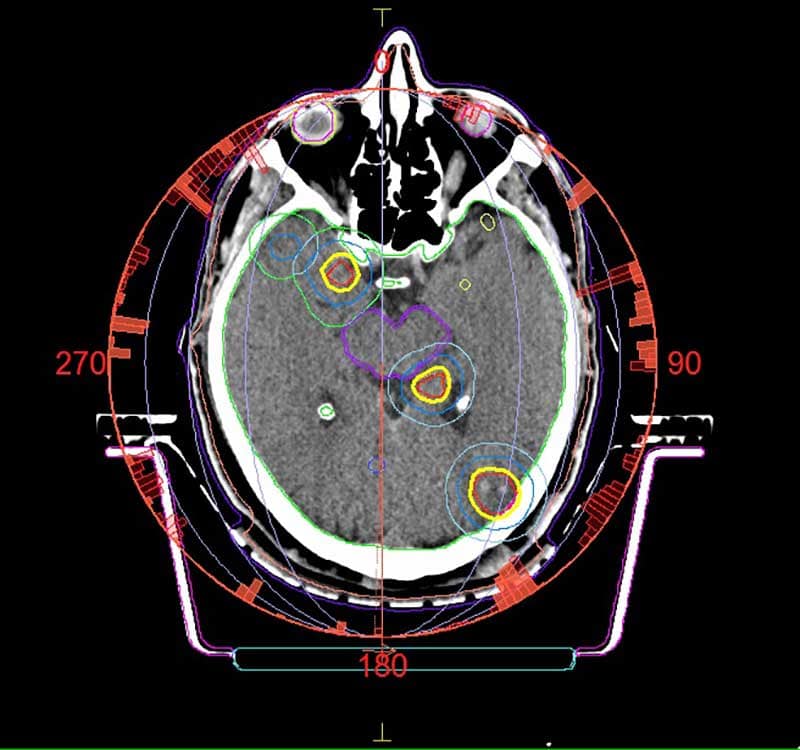
Stereotactic radiation therapy is fast becoming standard of care, and a powerful tool towards patient treatment and palliation. The correct implementation of small-field dosimetry and its impact to precise delivery of radiation treatments will be explored, highlighting the considerations required during acceptance and commissioning of radiotherapy systems.

During the webinar, we’ll attempt to understand the complexities and the effort in addressing the challenges posed by the small size of stereotactic treatment fields, including strategies employed within our institution and in current literature.

Details regarding currently available devices for quality assurance will be presented, as well as an overview of current efforts in the medical physics community to improve the accuracy and reliability of radiotherapy treatments.

We’ll also look to discuss the challenges and developments in small-field radiotherapy QA and look to gain an understanding of the evolving landscape in this field.

Want to learn more on this subject?

Luis Muñoz works as a medical physicist for GenesisCare in Adelaide, SA, Australia. Aside from working within the clinic, Luis is completing a part-time PhD through the University of Wollongong, with an interest in small-field dosimetry and planning automation.

Ask me anything: Xavier Calmet – ‘Scientific intuition is crucial. Either you have it, or you don’t’

Xavier Calmet

What skills do you use every day in your job?

My activities involve research, so I have to generate new ideas, do calculations, use computers and form literature. I also work with a team, so some team-management skills are essential.

There’s a lot of creativity involved when you are developing new ideas. This has to be mixed with an understanding of current ones and a vision of how to go beyond that, which requires some scientific intuition. Scientific intuition is crucial. Either you have it, or you don’t. It’s a skill that is hard to acquire.

When you get to senior academic levels, you also have more and more administrative duties, and this involves making other people’s lives in the department as easy as possible.

What do you like best and least about your job?

I’d be lying if I said the best part wasn’t the research. That’s the reason why I’m doing this job. I also tremendously enjoy supervising research projects because that’s when you get one-to-one interactions with young people. You can actually have a real impact on their life, helping them to develop their skills as a researcher. That’s also when they begin to understand whether they want to do this for the rest of their life or not.

Sometimes, I feel that it would be nice to work on things that could benefit society on a short time scale. Right now, the public may not see applications of our blue sky research for many decades.

What do you know today that you wish you knew when you were starting out in your career?

When I started, I was told that networking was crucial, and I didn’t believe it. When I was young and naive, I thought, “Let me do excellent research, and I will get a job.” Unfortunately, that’s not the way it works.

Also, excellent research is one thing, but you need to work on the right topics too. The best career advice I was ever given was by a friend of mine who told me that you have to do two kinds of research papers, which he referred to as “crazy” and “mundane”. By “crazy” he meant creative, and by “mundane” he meant mainstream.

If you write papers that are too creative, it takes time for people to realize that they’re good, and other scientists likely won’t read them because they’re not part of their main research activity. So these papers may be very good, but they won’t help you much when it comes to getting a job.

To get grants or to get a job in the first place, you have to write papers that are more mainstream. If you get to an equilibrium between the mundane and crazy papers, that’s when you know you’re part of the game. So that’s something I wish I had known.

Excavation of huge caverns complete for the US Deep Underground Neutrino Experiment

Excavation work has finished on two huge underground spaces that will be home to the Deep Underground Neutrino Experiment (DUNE).

The spaces are located 1.6 km underground at the Sanford Underground Research Facility in South Dakota and are some 150 m long and seven storeys tall.

DUNE is part of the $1.5bn Long-Baseline Neutrino Facility (LBNF), which will study the properties of neutrinos in unprecedented detail, as well as the differences in behaviour between neutrinos and antineutrinos.

DUNE will measure the neutrinos that are generated by Fermilab’s accelerator complex, which lies around 1300 km away just outside Chicago.

The two spaces will be used to house DUNE’s four neutrino detector tanks that are each filled with 17,000 tonnes of liquid argon.

Construction on LBNF/DUNE began in 2017 while excavation of the underground spaces began in 2021. Some 800,000 tonnes of rock have been excavated and transported to the surface.

Engineers will now begin to install the systems needed for the detectors with the hope that they become operational by the end of 2028.

A smaller cavern, which is 190 m long but only 10 m tall, has also been created to house utilities for the operation of the detector.

“The completion of the three large caverns marks the end of a really big dig,” says Fermilab’s Michael Gemelli, who managed the excavation of the caverns by Thyssen Mining.“The success of this phase of the project can be attributed to the safe, dedicated work of the excavation workers, the multi-disciplined backgrounds of the project engineers and support personnel.”

CERN, Fermilab and DESY: how big-science labs are chasing the quantum dream

Big-science facilities are often associated with fundamental research. You might picture scientists hunting for elementary particles, or searching to understand the nature of dark matter.

But some facilities – especially high-energy physics labs – are also turning their focus to practical applications of quantum physics. The opportunities for science, industry and society are vast.

That’s the theme of a new special issue of Physics World called “Big Science, Quantum Advantage”. Free-to-access now, the issue profiles some of the latest developments in Europe, the US and China.

Watch this short video to discover more.

European Space Agency gives construction go-ahead for LISA gravitational-wave mission

The European Space Agency (ESA) has formally approved the start of construction for its space-based gravitational-wave mission. Work on the Laser Interferometer Space Antenna (LISA) will begin in January 2025 once an industry partner has been chosen to build the craft. LISA, which is estimated to cost €1.5bn, is expected to launch in 2035 and operate for at least four years.

Gravitational waves are distortions of space–time that occur when massive bodies, such as black holes, are accelerated. They were first detected in 2016 by researchers working on the Advanced Laser Interferometer Gravitational-wave Observatory (aLIGO) located in Hanford, Washington and Livingston, Louisiana.

LISA is gravitational-wave observatory that comprises three identical satellites. They will be placed in an equilateral triangle in space, with each side of the triangle being 2.5 million kilometers – more than six times the distance between the Earth and the Moon.

The three craft will send laser beams to each other via free-floating golden cubes – each slightly smaller than a Rubik’s cube — that are placed inside the craft. The system will be able to measure the separation between the cubes to within the size of a helium atom. Such subtle changes in the distances between the measured laser beams will indicate the presence of a gravitational wave.

While ground-based instruments can pick up gravitational waves that have a frequency from a few Hz to a KHz, a space-based mission can detect gravitational-waves with frequencies between 10–4–10–1 Hz from, for example, the coalescence of supermassive black holes.

“Thanks to the huge distance travelled by the laser signals on LISA, and the superb stability of its instrumentation, we will probe gravitational waves of lower frequencies than is possible on Earth, uncovering events of a different scale, all the way back to the dawn of time,” notes astrophysicist Nora Lützgendorf, who is lead project scientist for LISA.

Cosmic visions

On 25 January ESA’s Science Programme Committee formally adopted LISA deeming that the mission concept and technology are “sufficiently advanced”.

This decision was aided by the results of the LISA Pathfinder, which was launched in 2015 on a two-year mission to demonstrate the key technologies required for LISA.

LISA Pathfinder consisted of two 2 kg test masses made of gold and platinum that floated freely inside the craft and were separated by 38 cm. The probe also containde a 20 × 20 cm optical bench – containing 22 mirrors and beam splitters – to measure the deviations in their movements to an accuracy of a trillionth of a metre.

In April 2016 ESA announced that LISA Pathfinder demonstrated that the LISA mission is feasible. In 2017 for example, scientists showed that the test masses on the spacecraft can be successfully isolated from electrostatic forces.

LISA is part of ESA’s Cosmic Vision long-term plan for space science. In 2013, ESA identified the “gravitational-wave universe” as the theme for its third large-class mission.

In 2017, LISA was then selected as the third large-class mission. The other two missions were the Jupiter Icy moons Explorer, which launched on 14 April 2023, and the Advanced Telescope for High-Energy Astrophysics, which is planned for launch in 2037.

MRI keeps proton beam therapy on target, new technique tracks bacteria motion

Magnetic resonance imaging (MRI) and proton beam therapy are two powerful techniques of medical physics. The former gives us real-time images of internal structures of the body, and the latter can deliver a high dose of radiation to a tumour while reducing the damage to surrounding healthy tissue.

In this episode of the Physics World Weekly podcast, the medical physicist Aswin Hoffmann talks about a research initiative in Germany that is combining the two techniques to achieve high-precision radiation therapy. The work is being done at the Center for Innovation in Radiation Oncology (OncoRay) in Dresden and the Helmholtz-Zentrum Dresden-Rossendorf. Hoffmann explains why it is important to develop MRI-guided proton beam therapy and the challenges that his team is overcoming.

Also in this episode, we chat about a new experimental technique that physicists have developed to study how bacteria move about. This research is part of the burgeoning field of active matter and we explore why physicists are interested in bacteria, flocking birds and other living systems.

Copyright © 2026 by IOP Publishing Ltd and individual contributors