Reed College in the US is unique for having the only nuclear reactor in the US run by undergraduate students. The Reed Research Reactor has been running continuously since 1968, and today its operations are overseen by 34 student operators, an operations manager and reactor director.
In this video, students from the reactor team speak about what it means to them to be entrusted with such an important responsibility so early in their academic careers. Find out more about the Reed College reactor in this article by regular Physics World contributor Robert P Crease, who recently visited this progressive liberal-arts institution in Portland, Oregon.
Fake facts, conspiracy theories, nuclear fear, science denial, baseless charges of corruption, and the shouting down of reputable health officials. All these things happened 25 years ago, long before the days of social media, in a bipartisan, celebrity-driven episode of science denial. Yet the story offers valuable lessons for what works and what does not (mostly the latter) for anyone wanting to head off such incidents.
The episode in question concerned one of the more valuable scientific facilities in the US, the High Flux Beam Reactor (HFBR) at the Brookhaven National Laboratory. As I mentioned in a previous column and in my book The Leak, the HFBR was a successful research instrument that was used to make medical isotopes and study everything from superconductors to proteins and metals. “Experimentalists saw the reactor as the place to go,” recalls the physicist William Magwood IV, then at the US Department of Energy.
But in 1997 lab scientists discovered a leak of water from a pool, located in the same building as the reactor, where its spent fuel was stored. The leak contained tritium, a radioactive isotope of hydrogen that decays with a half-life of about 12 years, releasing low-energy electrons that can be stopped by a few sheets of paper. The total amount of tritium in the leak was about that in typical self-illuminating “EXIT” signs.
The protestors’ tactics are a familiar part in today’s political environment: tell people they are in danger and insist that anyone who says otherwise is lying
The leak was not a health hazard. The tritium would never end up in drinking water either on- or off-site. In any case, it would dilute and decay to almost zero in the decades before it would reach the lab border. But none of that stopped a group of anti-nuclear protestors, led by the actor Alec Baldwin, from demanding the reactor be permanently shut down; some even sought to close the entire lab.
The protestors’ tactics are a familiar part in today’s political environment: tell people they are in danger and insist that anyone who says otherwise is lying. One anti-HFBR activist, for example, claimed that the out-of-operation reactor, whose fuel elements had been removed and shipped offsite, might melt down. A leader of the group said the lab was “evil” and “killing people”.
In the pinnacle of the anti-nuclear activists’ campaign, Baldwin arranged for an eight-year-old child to appear on The Montel Williams Show, a US national TV programme, to say that his cancer had been caused by the Brookhaven lab – even as the American Cancer Society said that there was no known cause for that cancer. Still, the show reached nine million people and raised money for the group.
Lab scientists desperately tried to point out that the leak was not hazardous, that the HFBR operated safely, and that it was a valuable instrument. They reminded people that federal, state and local experts had examined the numbers and found the leak to be not a health hazard. But they were drowned out by the activists, who had better funding, apocalyptic rhetoric and media clout.
Frustrated, the scientists tried to adopt some of the activists’ tactics. They approached politicians, but the only one they managed to recruit was John “Mugsy” Powell, head of the local Suffolk county Republican Committee, who demanded that they engage in work for his party. (They declined, which was fortunate as Powell was later arrested on corruption charges.) The scientists even sought support from pro-science movie star Alan Alda, who said no because the issue was too controversial.
Brookhaven scientists, comparing The Montel Williams Show to the Salem witch trials and the rants of Joseph McCarthy, began a letter-writing campaign – then cancelled it, realizing it would only provoke a second show. The scientists had to pin their hopes on the fact that the charges made on the show were so obviously baseless that they would ultimately vanish. Unfortunately, they didn’t.
The voices of Baldwin and other members of the group, who were influential fund-raisers for the Democratic party, were louder than those of the scientists. Politicians in Washington were listening. In November 1999, two-and-a-half years after the discovery of the leak, the then DOE Secretary Bill Richardson terminated the reactor. A campaign of fake facts had damaged US science, and these methods are flourishing today with potentially even more disastrous consequences.
Every now and then, and in modest ways, the scientists did succeed in getting their views across. At one public meeting I witnessed, an HFBR scientist was heckled by six or so activists sitting right behind me in the back of the auditorium. After the scientist had mentioned the reactor’s role in investigating a certain kind of cancer treatment, one activist loudly interrupted, demanding: “Who did that ever help?” Someone else sitting just in front of them turned around and said quietly, “Me.” That silenced the activists, at least for a few minutes. Such exchanges, which made the value of the device more concrete, should have occurred onstage, rather than in the back of the room.
I remember another meeting at which a scientist was presenting tritium data and its health impact when an anti-nuclear activist in the audience stood up and shouted: “You love the numbers more than you love people!” A vast majority of the audience fervently applauded. The scientist fell silent for a moment, then spoke softly.
A few years ago, he said, he wanted to know if it was safe to install car airbags to protect his grandchild. Newspapers had run horrific tales and grisly photos of children smothered by the devices. The scientist said that he looked up studies of airbags, and found that the statistics showed that installing airbags was far and away safer than not doing so. “I love the numbers because I love my grandchild,” he told the audience.
The critical point
That man’s quiet humility calmed the crowd – again, for a time. Still, the momentary success of his story illustrated the value of appealing to those who doubt the connection between scientific activity and human welfare not as mendacious or as villains – but as sense-seekers. If you want to see today’s political landscape in miniature and learn from what worked and what didn’t – mostly the latter – look at the firestorm that erupted at Brookhaven a quarter of a century ago.
While recruitment and retention of specialist physics teachers remains a long-standing problem in England – where national supply consistently falls short of demand – an equally worrying trend is the fact that state schools are far more likely than private schools to say they’re understaffed for physics teachers. That’s one of the key take-aways from The Science Teaching Survey 2023, a recently published poll of 2932 teachers (including 1735 physics teachers), heads of department and technicians, conducted by the Royal Society of Chemistry in partnership with the Institute of Physics (IOP) and the Royal Society of Biology. Drill into the data and it’s clear the problems are especially acute in England, where 50% of respondents working in mainstream schools report a shortage of physics teachers (versus 22% of teachers in private schools flagging the same issue).
As part of its strategy to address the shortage of candidates for initial teacher training (ITT) programmes in physics, the IOP, which publishes Physics World, is aiming to encourage talented graduates and postgraduates in physics and other related disciplines to enter the teaching profession via its Teacher Training Scholarship scheme. Funded by the Department for Education (DfE), the scholarships represent a compelling proposition to help would-be teachers transition through their one-year ITT course in England.
Support is substantial, broad-scope and sustained. The IOP’s 2024/25 scholarship scheme, for example, is now open for applications and has 175 scholarships to award to the next ITT cohort. Successful candidates will each benefit from tax-free funding of £30,000, with payment being phased throughout the training year and reinforced by a structured programme of continuing professional development (CPD) and skilled mentoring support to complement trainees’ core ITT learning.
From finance into teaching
In this way, the IOP scholarship programme provides an accessible route into physics teaching for recent graduates as well as mid-career scientists and engineers working across a range of industries. A case in point is Mark Owens, an IOP Teacher Training Scholar who completed his ITT course in summer 2023 ahead of taking up a full-time physics teaching post last September.
Owens graduated in physics from Durham University in 1995 and, while tempted at the time by the prospect of a PhD in neutrino studies, he opted instead for an industry pathway, securing a place on Unilever’s prestigious management training programme. From there, Owens spent the next 25 years working across senior strategy and finance roles in diverse business settings, including a decade as chief financial officer and adviser for a series of technology start-up ventures.
It was in 2018, however, as his interest in business started to wane a little, that Owens reignited his passion for physics, signing up as a volunteer tutor through the Access Project to provide online teaching and mentoring to talented A-level physics students from disadvantaged backgrounds. “I like change and I’m always seeking fresh challenges,” says Owens. “I found that I really enjoyed sharing my knowledge of physics with young people – though it also became clear to me that I wanted to scale up beyond those one-to-one interactions and make the move into teaching full-time.”
For Owens, and other career-changers like him, it’s evident that the journey from the commercial world back into the classroom would be that much harder – if not impossible – without access to the IOP Teacher Training Scholarship scheme. “I was earning good money in industry at the time,” notes Owens, “so I couldn’t have made the transition without the financial ‘bridge’ provided by the IOP scholarship funding.”
With a scholarship in place, Owens’ route into teaching involved a one-year, school-centred ITT (SCITT) programme that saw him, from the off, working in the classroom with Key Stage 3 and Key Stage 4 students (ages 11–16) for four days every week. The remainder of his time was spent with other trainee teachers – from a range of subject backgrounds – learning the fundamentals of teaching.
“Our vocational training was centred on best practice in the classroom,” Owens explains. “Essentially getting the basics in place: how to manage a class of 30 students who are all at different stages; how to put together a lesson plan that makes sense; how to assess the students well; and, crucially, how to deal with difficult behaviours – one of biggest challenges when you’re used to the adult business environment.”
The core teacher training from his ITT provider (i2i Teaching Partnership) was reinforced by a dedicated series of CPD online workshops and webinars within the IOP scholarship programme. Owens also attended the annual Masterclass of IOP Teacher Training Scholars at the National Space Centre in Leicester – an opportunity to network with peers from his cohort as well as several alumni. “The IOP training events are rich, granular and tailored to trainee teachers who already understand the subject,” he notes. “There’s a focus on areas of physics that school students typically get wrong and breaking down the barriers to a deeper understanding.”
From the law into physics
Louisa Passmore was part of the same IOP scholarship intake as Owens, though perhaps a more atypical mid-career professional making the move into physics teaching. After a law degree at the University of Oxford, Passmore spent 20 years working as a corporate lawyer for leading City firms – all the while maintaining a deep interest in science after studying physics and maths at A-level.
Louisa Passmore “I’ve been surprised at all the transferable skills from the practice of law into the physics classroom.” (Courtesy: IOP)
The COVID pandemic and the multiple lockdowns enabled Passmore, like plenty of others, to reassess her chosen career arc and a possible pathway into teaching – and physics teaching specifically. “Before the pandemic,” she explains, “I’d starting leading Brownie and Ranger groups in the Girl Guides and enjoyed all the training, development and mentoring work with young people. Teaching seemed like a logical progression, though it wasn’t clear to me if there was a route into physics teaching without a physics degree.”
Turns out there was – with a lot of hard graft along the way. First up, Passmore “hit the textbooks” to re-engage with a subject she’d last studied formally in sixth form. Other learning and development activities included a 20-week subject-knowledge enhancement course (funded by the DfE) and a week-long, hands-on training course in the physics laboratory at Charterhouse School, Surrey. This annual training event sees experienced physics teachers deliver a programme of talks and supervised experimental work covering the basics of Key Stage 3 upwards.
The final piece of the jigsaw? A conversation with the IOP Learning and Skills team to explore – and ultimately confirm – Passmore’s eligibility for an IOP Teacher Training Scholarship. “The resources are out there,” she explains, “you just have to keep knocking on doors. So many experienced and talented people have supported me in getting this far. There’s a real desire to help career-changers make a successful transition into teaching.”
Right now, after splitting her training part-time across two years, Passmore has another six months of ITT with the National Maths and Physics SCITT before she qualifies as a physics teacher. “From an academic perspective,” she notes, “I’ve been surprised at all the transferable skills from the practice of law into the physics classroom – not least, logical thinking, attention to detail, perseverance and relating theory to the real world.”
There’s also the life experience that Passmore, as a career-changer, can share with her pupils. “I tell my students to work hard towards their goals and, most important of all, to enjoy the journey,” she says. “It’s OK to pivot and take new directions as well. What path you decide to follow at 18 or 21 isn’t necessarily the same one you’ll be on when you hit 50 or 60.”
Many children who receive proton therapy for brain tumours do so under general anaesthesia or sedation, an approach that guarantees reproducible positioning and targeted delivery of radiation. They may also receive supplemental oxygen, which reduces the risk of adverse effects related to the use of general anaesthesia.
Yet, until recently there were no studies assessing the impact of this supplemental oxygen – which changes oxygen saturation in the blood during irradiation – in conventional or FLASH (ultrahigh dose rate) proton therapy.
Understanding the impact of supplemental oxygen is critical, says Yolanda Prezado, CNRS research director and group leader of the new approaches in radiotherapy (NARA) team based at Institut Curie. While FLASH radiation therapy has been reported in preclinical studies to reduce complications, most studies have been performed with electron – rather than proton – beams. And the mechanisms underlying radiation-induced cognitive changes are poorly understood.
“Cognitive deficits have been reported in some survivors of paediatric brain tumours,” says Prezado. “We thought it was a good idea to try to understand the normal brain response [in rats] in proton therapy beams. And even more important motivation was that there was never a systematic study of the impact of anaesthesia in patients. What we saw in our study is that this could induce complications.”
Prezado’s team collaborated with radiation oncologists and anaesthesiologists to observe the effects of supplemental oxygen in rats. In the study, 36 rats were divided into “with glioblastoma” and “without glioblastoma”, and anaesthesia (“no O2”) and anaesthesia with supplemental oxygen (“with O2”) groups. The animals received a single unilateral dose of proton radiation (either 25 or 15 Gy, a dose similar to that used in previous electron FLASH studies) at either a conventional dose rate (4 Gy/s) or a FLASH dose rate (257 Gy/s) using a 226 MeV clinical proton beam. Film dosimetry was used to verify irradiation conditions.
The researchers, reporting their results in Communications Medicine, found that supplemental oxygen had an adverse impact on both the function and structure of rats’ normal brain tissue following both FLASH and conventional proton therapy. Rats receiving FLASH proton therapy with supplemental oxygen had the highest level of brain injury observed on MRI (using a 7 T preclinical magnet with Gd-DOTA contrast), histology and behavioural tests. Animals treated with FLASH without supplemental oxygen had the lowest degree of brain injury. Despite reduced side effects in this group, brain tissue damage was still observed following a therapeutic dose for gliomas in rats (25 Gy).
As reported in other studies, FLASH proton therapy resulted in memory sparing compared with conventional proton irradiation. But incorporating supplemental oxygen had detrimental effects on recognition memory after both conventional and FLASH proton therapy. These effects persisted six months after irradiation. Such observations, the researchers say, are consistent with previously published data in electron FLASH therapy – one study showed that supplemental oxygen suppressed the protective FLASH effect on cognitive function two months following irradiation.
Supplemental oxygen and combination therapies
The research team also identified a previously unobserved relationship between oxygen saturation, dose rate and radiation-induced immune response. Generally, high concentrations of supplemental oxygen prevented immune cell infiltration into the tumour, but the tumour infiltration of immune cells following FLASH proton therapy was less impacted than for conventional proton therapy.
This finding, the researchers say, demonstrates that oxygen supplementation is less influential in FLASH proton therapy than in conventional proton therapy and suggests that radiation-induced immune regulatory pathways are susceptible to proton beam dose rate.
A possible alternate explanation for some of the researchers’ results could be lipid peroxidation of phospholipids, which has been shown to alter cell signalling, dysfunction or death, and may be involved in brain aging. Though lipid peroxidation (an increased probability of biomolecular recombination of fatty acids that have lost a hydrogen ion from the OH radical) has not been demonstrated following FLASH, the researchers suggest that a study be performed.
Limitations of the study include a small sample size and that no oxidative parameters were monitored experimentally. Still, the researchers say that they hope their research prompts medical doctors to examine current anaesthesia protocols and revise them to reduce the neurocognitive side effects of both conventional and FLASH proton therapy. The potential impact of supplemental oxygen on immune cell infiltration with combination therapies, such as radioimmunotherapy, should also be considered.
“What I think it is relevant to do is a retrospective evaluation of paediatric patients treated with radiotherapy,” Prezado says. “This [study] was a word of caution to medical doctors to say, you need to optimize your protocols…The main point is to raise some concerns, to raise the point about the potential effects of anaesthesia and supplemental oxygen. This has been discussed for other reasons in the medical community…but it raised a question mark on, we need to think about anaesthesia for the patients when they are being evaluated…The community was saying FLASH can be wonderful for paediatric patients, but seeing the results, I think further evaluations are still needed.”
To describe Federico Capasso at Harvard University as a prolific researcher is an understatement and I have been following his work in photonics for many years. He is an expert in the development of optical metalenses – devices that use flat arrays of microscopic structures to manipulate light. A key benefit is that optical systems made up of such lenses take up much less volume that conventional optics, making them ideal for a wide range of applications where space is tight – including mobile phones.
Now the Harvard researchers have created a metalens that they have used to image the Moon and other objects in the heavens. They are not the first to do this. Last January researchers at researchers at Pennsylvania State University and the NASA-Goddard Space Flight Center created a similar device and you can read about that here: “Telescope with large-aperture metalens images the Moon”.
The challenge for both teams was to create metalenses with large enough diameters for use in astronomy. The Penn State–NASA team created a lens with an 80 mm diameter, while the Harvard team upped this to 100 mm. Creating these large lenses is difficult because they are made using lithography techniques that are used to pattern much smaller computer chips.
Robust for spaceflight
As well as the Moon, Capasso and colleagues were able to image the Sun and the North America Nebula, which is a dim object about 2590 light–years away. Such compact lenses could be ideal for use in space telescopes and the Harvard team says that its device is robust enough to be launched into space and operated there.
If you would like to hear more about metalenses and their applications, listen to this episode of the Physics World Weekly podcast, which features an interview with the CEO of a metalens maker that spun out of Capasso’s lab (“Metasurfaces simplify optical sensing systems”).
Staying on the topic of space, researchers using NASA’s James Webb Space Telescope have come to the conclusion that many early galaxies were shaped like pool noodles and surfboards. Others, according to the team resembled volleyballs and frisbees.
According to the team, the Milky Way probably began life as a surfboard before evolving into the classic spiral galaxy that we live in today. You can read more in this preprint on arXiv.
Anna Grassellino is a physicist in a hurry. As leader of a $125m quantum science programme, her remit is to implement an R&D roadmap that could be worth billions of dollars for the US tech industry via the development of superconducting materials and devices for next-generation quantum computers.
A specialist in RF superconductivity, Grassellino is director of the Superconducting Quantum Materials and Systems (SQMS) Center at Fermi National Accelerator Laboratory, the pre-eminent US particle physics facility on the outskirts of Chicago, Illinois. Funded to the tune of $25m a year through its initial five-year programme (2020–25), SQMS is one of five dedicated research centres focused on quantum information science within the US Department of Energy (DOE) National Laboratory system (see “The DOE Office of Science: betting big on quantum”, below).
The DOE and SQMS end-game: to develop and deploy practical quantum computers and quantum sensors with the potential for at-scale scientific, industrial and commercial adoption.
Prioritizing collaboration
Towards that goal, SQMS brings together a multidisciplinary collaboration of more than 500 scientists and engineers from 30 partner institutions – national labs, universities and businesses in the US and beyond – to address “all the pieces of the quantum puzzle”, according to Grassellino. Think applied and theoretical superconductivity, computational science, high-energy and condensed-matter physics, cryogenics, microwave devices and control engineering – with all this collective effort aligned squarely towards the translation and application of quantum science and technology.
With these highly coherent qubits, more complex quantum computing operations will ultimately become possible
Anna Grassellino
One of the fundamental problems preoccupying SQMS researchers is quantum coherence – or how to preserve the lifetimes of fragile quantum states for as long as possible (seconds rather than milliseconds or microseconds). “By using superconductors cooled to cryogenic temperatures,” says Grassellino, “we create environments where microwave photons can have long lifetimes and protection from external perturbations. These conditions make it possible to generate quantum states, manipulate them and read them out. With these highly coherent superconducting qubits, more complex quantum computing operations will ultimately become possible.”
While Grassellino still works closely with front-line scientists and engineers – overseeing work in the lab – her schedule is increasingly allocated in other directions – engaging with funding agencies and research partners, for example, while ensuring SQMS R&D projects remain on track versus DOE milestones and deliverables. “What I really enjoy is that there’s no typical day as SQMS director,” she says. “Every day is different.”
Scaling up the facilities
During the first three years of SQMS, the operational priority for Grassellino and her management team was clear: to scale up the quantum R&D infrastructure within Fermilab. The so-called “Quantum Garage” – a roughly 560 square-metre SQMS laboratory that launched formally at the beginning of November 2023 – is a case in point. On one level, the Quantum Garage is an exercise in capacity-building, with a fleet of six additional dilution refrigerators (previously there were just two) now online and providing cryogenic cooling to support SQMS experimental programmes and test, measurement and characterization of superconducting devices and subsystems.
Under one roof SQMS scientists have established a series of R&D testbeds in the Quantum Garage to support studies of superconducting qubits, quantum computing processors and quantum sensors for Fermilab’s fundamental physics programme. (Courtesy: Dan Svoboda, Ryan Postel/Fermilab)
However, the Quantum Garage is about much more than experimental capacity and research throughput. “The new facility has enabled us to launch a series of unique quantum R&D testbeds,” notes Grassellino. “Those testbed activities include granular studies of superconducting qubits and quantum computing processors as well as the development of high-coherence quantum sensors to support Fermilab’s fundamental physics programme – searching for particles beyond the Standard Model, for example, as well as dark-matter candidates and gravitational waves.”
Along another coordinate, the Quantum Garage provides the infrastructure and personnel for so-called “round robins” – essentially the exchange of quantum materials, devices and subsystems among R&D partners in the SQMS network to ensure the adoption of standardized test and measurement protocols and quality-assurance chains. “Our colleagues at standards labs like the US National Institute for Standards and Technology (NIST) and the National Physical Laboratory (NPL) in the UK are crucial to the success of this work package,” notes Grassellino.
A related initiative – the National Nanofabrication Taskforce – aims to enhance and standardize the SQMS effort in nanomaterials processing. Within the taskforce, four SQMS partners – Fermilab, NIST, Northwestern University and Rigetti Computing – are working together on a continuous improvement programme for device-level fabrication.
“This is a really productive, hand-in-hand collaboration,” notes Grassellino. “We’ve got SQMS researchers and engineers visiting each other’s clean-room facilities, exchanging materials ‘recipes’ and specialist know-how along the way.”
What’s more, the taskforce has already registered success by reproducibly increasing coherence times of superconducting qubits (more than a factor of two) across three of the sites – Fermilab, Rigetti and NIST. The key here is an SQMS-pioneered surface encapsulation technique that prevents the formation of surface dielectrics (which are highly detrimental to qubit performance).
The DOE Office of Science: betting big on quantum
The SQMS Center is one of five national quantum information science centres funded by the US DOE Office of Science. Like SQMS, each of the other four centres has its own network of industry, academic and National Laboratory partners.
Quantum Systems Accelerator (QSA) is led by Lawrence Berkeley National Laboratory (Berkeley, CA) with Sandia National Laboratories (Albuquerque, NM) as lead partner. QSA works on co-designing algorithms, quantum devices and engineering solutions to deliver “quantum advantage in scientific applications”.
Q-NEXT is led by Argonne National Laboratory (Lemont, IL) and is working with partners to create two national foundries for quantum materials and devices. Q-NEXT’s remit also includes secure quantum communications, quantum sensing networks and the establishment of quantum simulation and network testbeds.
Quantum Science Center (QSC) is led by Oak Ridge National Laboratory (Oak Ridge, TN) and is designing materials that enable topological quantum computing (based on quasiparticles and 2D systems); implementing new quantum sensors to characterize topological states and detect dark matter; and designing quantum algorithms and simulations to investigate quantum materials, quantum chemistry and quantum field theories.
Co-design Center for Quantum Advantage (C2QA) has a five-year goal to deliver a x10 improvement in software optimization, underlying materials and device properties, and quantum error correction; also to ensure these improvements combine to provide a x1000 improvement in appropriate metrics for quantum computation and communication. The programme is led by Brookhaven National Laboratory (Upton, NY).
Quantum education and training
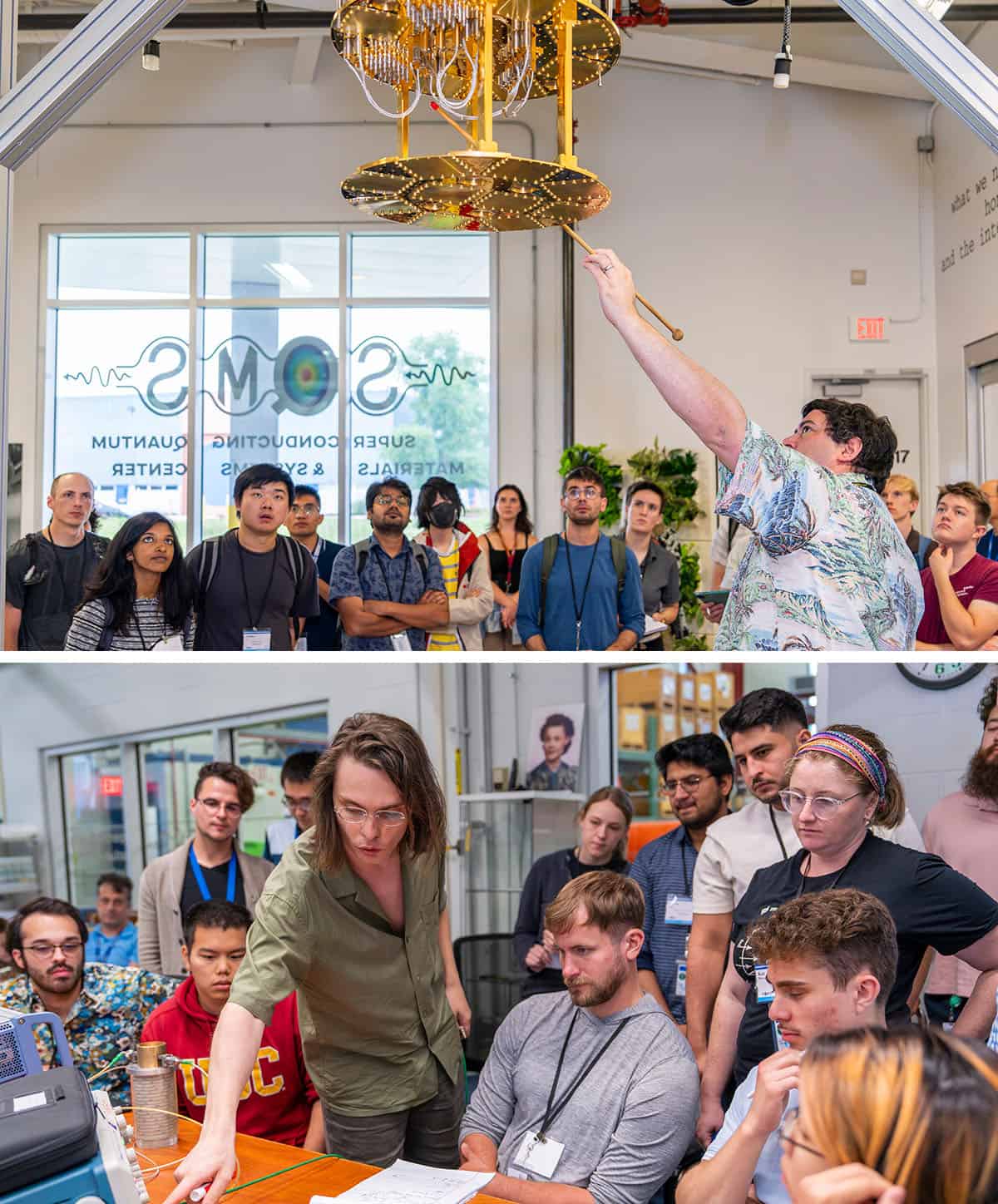
The Quantum Garage is also the centrepiece for SQMS efforts to scale the specialist quantum workforce. Back in August 2023, for example, nearly 150 delegates, drawn from 70 organizations, spent 10 days at Fermilab attending the first US Quantum Information Science (USQIS) School. The aim of the school, which will be held annually, is to develop the next generation of quantum scientists, engineers and technicians by sharing theoretical knowledge and experimental skills through a mix of lectures, lab time, panel discussions and poster sessions.
Back to school In August 2023, the Quantum Garage hosted nearly 150 delegates attending the first US Quantum Information Science (USQIS) School. (Courtesy: Dan Svoboda, Ryan Postel/Fermilab)
Participants in the inaugural school came with a broad range of experience and backgrounds, including undergraduate and graduate students, educators, as well as scientific and technical staff from federal labs and industry. While the school was organized and hosted by SQMS, the lectures and training were very much a collective effort, involving close to 50 expert instructors from all five DOE Office of Science quantum research centres. (In that same spirit, the baton for the 2024 school now passes to the Quantum Science Center at Oak Ridge National Laboratory in Tennessee.)
“With the USQIS school, we’re offering a quantum education programme that gives participants an interactive, hands-on learning experience – the likes of which is currently out of reach for many interested in the rapidly expanding field,” notes Grassellino. In particular, the school exposes attendees to sophisticated enabling technologies – including qubit control systems, high-capacity dilution refrigerators and nanofabrication clean rooms – none of which are routinely found in a typical university setting. “It’s this mix of deep expertise and cutting-edge infrastructure that make the National Laboratories the ideal channel for this sort of specialist training and development,” adds Grassellino.
With encouraging progress evident along multiple SQMS fronts, Grassellino is already turning her attention to the next five-year funding cycle for the DOE’s quantum information science initiative. The DOE’s proposed renewal – currently under review in Congress – would see SQMS funding potentially boosted for the 2025-30 cycle.
“SQMS is already a success,” concludes Grassellino. “Three years ago, we had an empty facility; now we have a fully kitted-out Quantum Garage. Over the same time, we have created an international collaboration of leading experts, trained up more than 500 students and postdocs in many areas of quantum science and engineering, while maintaining our laser focus on the core mission: increasing the coherence of superconducting qubits in a systematic manner.”
Universities and colleges have found it hard to complete applications to the UK’s new Turing Scheme, with funding for students often delivered late. That is the finding of a report into the first year of the scheme, which is supposed to help UK students study and work abroad. Some participants of the Turing Scheme have also had to withdraw or rely on alternative funds due to delayed funding decisions.
The Turing Scheme was set up after the UK opted post-Brexit not to stay in the European Union’s Erasmus+ student-exchange programme. Worth €26bn, Erasmus+ has 33 full members across Europe and the latest round of funding began in 2021. The Turing Scheme funds UK students to study, work or train in other countries around the world, with their institutes applying for funding on their behalf.
The analysis of the Turing Scheme’s first year, which was conducted by IFF Research and commissioned by the UK government, was based on interviews and surveys with education providers and participants who had completed their placements abroad. Just over 20,000 individuals took part in Turing in the 2021/22 academic year – below the 35,000 government target – with most providers stating that the COVID-19 pandemic hampered their ability to deliver the scheme.
According to the report, almost 80% of universities reported difficulties with the application process, with further education and vocational education providers complaining that applying was too complicated and tedious. One stated that the application “was a lot of work” because it “kept asking the same questions, so you had to find another way to answer”.
Many providers felt that the application window was too short, with universities complaining that it fell over the Easter holidays. Universities were also unhappy with the post-application stage, with two-thirds stating that outcome decisions took longer than expected.
This created a dilemma for students, who often had to commit to placements abroad before knowing if they would get the funding. This particularly harmed students from disadvantaged backgrounds, with some who could not afford the upfront costs – or who did not want to risk funding not being available – having to drop out.
Many participants did not receive their funding until they were already abroad, with some not even getting it until they had returned home. Without alternative funds, for example from parents, some students said they would have had to turn down their placements. Indeed, only 45% of university participants felt the funding covered at least half of their costs.
‘Not serving students’
Although 92% students say they were satisfied with their year abroad, Mike Galsworthy – chair of the pro-EU group European Movement UK – says the report backs its view that the Turing Scheme is not an adequate substitution for the Erasmus+ programme. Reported application difficulties, inadequate funding and delivery challenges show that the scheme “is not serving our students, young people or education providers”, he adds.
More than 31,000 people have now signed a petition calling on the UK government to open negotiations to re-enter the Erasmus+ programme. However, the UK government says that more than 40,000 students will benefit from the Turing Scheme in the 2023/24 academic year with £105m of funding being awarded. Some 60% of placements are expected to be for students from disadvantaged background or under-represented groups, it says.
The Magellanic Clouds are prominent features of the southern sky that are named after the Portuguese explorer Ferdinand Magellan. He sailed west from Europe to the Philippines in the early 16th century and the clouds were described by a returning crew member.
Voyages such as Magellan’s set into motion the European colonization of much of the world. This involved the oppression and assimilation of indigenous peoples and led to racism and inequality that endures to this day.
In this episode of the Physics World Weekly podcast the astronomers Mia de los Reyes and Sally Oey explain why it is time to rename the Magellanic Clouds to make astronomy more hospitable to people from places that still suffer the legacy of colonization. They also talk about astronomy’s connections with colonialism and consider a few suggestions of new names for the clouds.
De los Reyes is based at Amherst College and Oey is at the University of Michigan. They are in conversation with Physics World’s Margaret Harris.
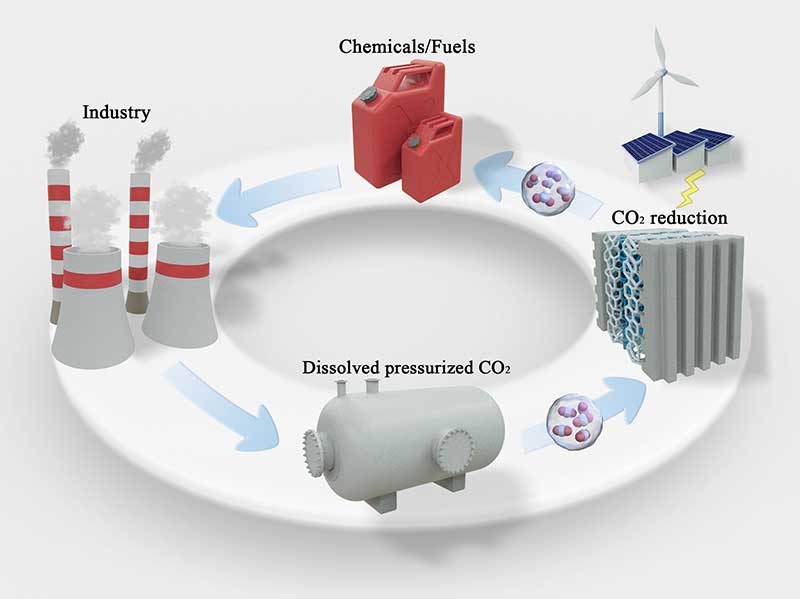
The electrochemical reduction of carbon dioxide (CO2R) is a strategic approach aimed at completing the carbon cycle for chemical production. Traditionally, this field has predominantly focused on conducting electrolysis on CO2 under standard atmospheric pressure. However, in industrial applications, CO2 is typically pressurized during its capture, transportation, and storage, often existing in a dissolved state.
A significant discovery has been unveiled: subjecting aqueous CO2 to a pressure of 50 bar alters the CO2R pathways, favouring the formation of formate. This phenomenon is consistently observed across commonly used CO2R catalysts. Through the development of effective techniques for operating under high pressures, including a measurable Raman spectroscopy approach during the ongoing reaction, a connection has been established between the increased preference for formate and the heightened coverage of CO2 on the cathode surface. This collaboration between theoretical models and experimental data strongly supports this mechanism and has led to enhancing the cathode surface of a copper electrode with a proton-resistant layer. This innovation amplifies the selective impact caused by pressure. Furthermore, research has unveiled the potential to transform gas-phase high-pressure CO2 into ethylene (C2H4) through CO2R. Density functional theory calculations were conducted to identify a range of copper alloys that promote C-C dimerization under high pressure, which represents the rate-limiting step for C2H4 production. Theoretical predictions were validated through a combination of electrochemical measurements and operando observations, guiding the design of a copper-based catalyst for efficient and active conversion of CO2 to C2H4.
An interactive Q&A session follows the presentation.
Xu Lu is assistant professor of Mechanical Engineering at the King Abdullah University of Science and Technology (KAUST). He is affiliated with the Clean Combustion Research Center (CCRC) and KAUST Solar Center (KSC). Lu’s Low-carbon Energy Conversion and Storage (LECS) Lab focuses on electrochemical conversion of high-pressure CO2 conversion. So far, the LECS Lab has generated two US provisional patents and research articles in Nature Communications (two), Angewandte Chemie, Chemical Engineering Journal, Joule, and others. The LECS lab is also developing cutting-edge pilot-scale showcases with industrial partners such as ACWA Power and Aramco. He obtained his BS and PhD from the Department of Mechanical Engineering at the University of Hong Kong in 2012 and 2017, respectively. He trained as a postdoctoral fellow in the Department of Chemistry at Yale University. Lu joined KAUST in March 2021.
A new technique for fine-tuning frictional forces at the interfaces between different materials has been developed by researchers in France. Julien Scheibert and colleagues at the University of Lyon used simple and easily-adjustable metasurfaces to create specific coefficients of friction at the interface between glass and elastomer samples.
From touchscreens to robotic hands, frictional contacts are a key component of many modern devices. To optimize their performance, designers need to establish tight control over the frictional forces at material interfaces. However, despite centuries of careful investigation, we still do not have a reliable method for predicting the coefficient of friction across any given interface.
The main difficulty in understanding friction is the sheer diversity of textures found on surfaces. The size of surface features can span several orders of magnitude: from atomic to millimetre scales. Since all of these features can influence the friction between two surfaces, it is often incredibly difficult calculate friction coefficients from first principles.
Currently, there are two main techniques for optimizing the friction between surfaces. One method is to simply select a pair of materials that experience the correct amount of friction. However, it is often the case that these materials do not have the other properties – thermal, electrical etc. – that are required for a specific application.
Poor understanding
“The second technique is to create artificial microtextures on the surfaces,” Scheibert explains. “But because the relationship between texture and friction remains poorly understood, suitable textures are usually only identified after long and costly experimental campaigns.”
In their study, Scheibert’s team improved on the microtextural approach by using very simple metasurfaces that comprise square arrays of spherical caps. Each cap can be given a specific height with respect to the other caps (see figure).
“In these conditions, the [frictional] response of the interface can be modelled accurately, and the list of heights that offers the targeted friction behaviour can be determined before actually manufacturing the surfaces,” Scheibert explains. In this way, the team could engineer different textures to achieve the desired level of interfacial friction on the first try.
The researchers tested their approach by preparing metasurfaces on centimetre-sized samples of a rubber-like elastomer. Each surface featured a lattice of 64 spherical caps made of elastomer. The height at which each cap protrudes from the surface is set individually, allowing the team to create a range of different metasurfaces.
Friction is measured by placing a flat piece of glass on top of the metasurface and pushing down while dragging the glass along the metasurface. By adjusting the structure of the metasurfaces in a systematic way, specific coefficients of friction could be created at the interface.
Two different friction coefficients
The approach worked without any need for first-principles calculations of frictional forces, and without changing any properties of the materials themselves. “Even more, we have prepared contacts featuring two different friction coefficients, which depend on the level of compression applied to the interface – a behaviour that is very rare in nature,” Scheibert adds.
With this quick and affordable approach, Scheibert’s team were able to reproduce a variety of known friction laws in their experiments: including linear laws, where the coefficient friction stays constant as shear forces increase across the interface; and more complex nonlinear laws, where this coefficient varies with shear force.
As they improve their technique further, the researchers envisage a wide array of applications for their adjustable metasurface approach. “Creating contact interfaces matching a specified friction behaviour is the Holy Grail in tribology,” says Scheibert.
“Our design strategy provides new tools for preparing such frictional interfaces. This could potentially open up opportunities in various challenging fields, from sports to soft robotics. If further equipped with sensors and actuators, our metainterfaces even hold the promise of smart contact interfaces with real-time friction tuning.”