The future of NASA’s next flagship mission to Mars has been put in doubt following a scathing report from the agency’s Independent Review Board. It concludes that the Mars Sample Return mission, which is set to be launch in 2028, faces a series of technical problems, a runaway budget as well as a dubious launch timetable.
NASA and its collaborator on the project — the European Space Agency – regard the mission as a “critical next step” in plans to explore Mars. Part of that plan involves NASA’s Perseverance Rover, which landed on Mars in 2020. It has already collected a series of Martian samples and deposited them on the surface. They would then be collected by a separate mission – the MSR – and returned to Earth.
With an original price tag of $4bn, the MSR’s cost has risen to an estimated $5.3bn. The review board report identifies problematic issues in the promotion, organization, scheduling and financing of the mission.
“MSR was established with an unrealistic budget and schedule expectations from the beginning,” the report states. “As a result, there is currently no credible, congruent technical, nor properly margined schedule, cost and technical baseline that can be accomplished with the likely available funding”.
Those issues, the report says, make launching the mission in 2028 “impossible”. Yet moving the launch to 2030, the next feasible launch window for Mars, would increase the mission’s cost to $8–11bn – a move that would put “extreme pressure” on the rest of NASA’s budget for planetary science.
An alternative option would be to use two landers to return the samples, instead of one, but this would extend the mission well into the 2030s and at the same high cost.
The review board recommends that NASA examine the “entire management and organizational structure” for the mission to improve accountability. “Mars Sample Return is a very complex programme with multiple parallel developments, interfaces and complexities,” notes review chair Orlando Figueroa, who is a former director of Mars exploration at NASA.
The report also says that NASA must do “a much better job at engaging and communicating the importance of MSR” to the public.
NASA has now appointed a review team to respond to the review board’s findings. Led by deputy administrator for science Sandra Connelly, the team aims to publish a report next March. NASA has also decided in the meantime “to delay its plans to confirm the official mission cost and schedule”.
“If NASA is unable to provide the committee with a MSR lifecycle cost profile within the budget profile [of $5.3 billion],” the committee says, “NASA is directed to either provide options to de-scope or rework MSR or face mission cancellation.”
The mission also faces competition, with China setting out plans for a Mars sample return mission to launch around 2030.
While quantum computers show great promise for the future, today’s processors are small and noisy – and this makes it very difficult to do meaningful quantum calculations right now. To address this problem, researchers are developing clever quantum algorithms that make the most out of the hardware that is available today.
Some of those algorithms are being developed by UK-based Phasecraft and the firm’s co-founder and chief technology officer is our guest in this episode of the Physics World Weekly podcast. Toby Cubitt explains why the company is focusing on the development of quantum algorithms for calculating the properties of materials and how these algorithms can be run on today’s noisy hardware.
Cubitt also talks about career opportunities in quantum computing and explains why he believes that quantum computers could soon be solving scientifically relevant problems.
During surgery, nerves can be accidentally cut, stretched or compressed if the surgeon mistakes them for other tissue. To reduce this risk, scientists seek to develop new medical imaging techniques that are better than ultrasound and quicker than magnetic resonance imaging (MRI) at distinguishing nerve tissue and thus preventing accidental damage. Researchers at Johns Hopkins University in the US recently contributed to this effort by characterizing the optical absorption properties of an intact nerve and using this information to optimize optics-based imaging and sensing technologies.
Unlike some other tissue types, nerve tissue is rich in fatty compounds known as lipids. These lipids absorb light in two regions of the electromagnetic spectrum: the near-infrared-II (NIR-II) and near-infrared-III (NIR-III), which run from 1000–1350 nm and from 1550–1870 nm respectively. However, their strongest absorption lies in the NIR-III region, which makes these wavelengths ideal for obtaining images of lipid-rich tissues such as nerves using a hybrid method known as photoacoustic imaging.
In this method, a tissue sample is first illuminated with pulsed light, which causes it to heat up slightly. As it heats up, the tissue expands, generating ultrasonic waves that can then be detected with an ultrasound detector.
Characteristic light absorption peak
In the new work, a Johns Hopkins team led by biomedical engineer Muyinatu Bell set out to determine the best wavelength within this NIR-III window for identifying nerve tissue in photoacoustic images. The researchers hypothesized that the ideal wavelength would be between 1630 and 1850 nm, since the myelin sheath of nerve cells has a characteristic light absorption peak in this range.
To test their hypothesis, they used a standard spectrophotometer to obtain detailed optical absorption measurement on peripheral nerve samples taken in vivo from pigs. They then characterized the photoacoustic profiles of the samples by selecting amplitude information from photoacoustic images of the nerves.
The researchers initially observed an absorption peak at 1210 nm, which lies in the NIR-II range. However, this peak is also present in other types of lipids, not just the ones found in the myelin sheaths of nerve tissue, so they deemed it unsuitable for their purposes. Then, when they subtracted the contribution of water from the absorption spectrum, they found a characteristic lipid absorption peak for each of the nerves at 1725 nm – bang in the middle of the expected NIR-III range.
“Our work is the first to characterize the optical absorbance spectra of fresh swine nerve samples using a wide spectrum of wavelengths,” Bell says. “Our results highlight the clinical promise of multispectral photoacoustic imaging as an intraoperative technique to determine the presence of myelinated nerves or prevent nerve injury during medical interventions, with possible implications for other optics-based technologies.”
The researchers plan to build on their findings to design new photoacoustic imaging techniques. “We now have a nerve-specific optical absorption baseline profile that can be used in future investigations,” Bell tells Physics World. “We no longer need to rely on the spectra of lipids, which can vary.”
A new technology based on modulating quantum processes inside human cells could revolutionize the treatment of a particularly aggressive form of brain cancer called glioblastoma.
Joining forces for the project, biochemists, physicists, engineers and clinicians at the University of Nottingham have shown that electrical stimulation administered via bio-nanoantennae can initiate the quantum biological tunnelling for electron transfer (QBET) within cancer cells that triggers cell death. The team used the technique in its lab experiments to kill glioblastoma cancer cells, while leaving healthy cells unaffected.
The bio-nanoantennae are composed of gold nanoparticles coated with cytochrome c, a protein that plays a key role in starting off apoptosis – the natural self-destruct sequence within a cell. When cytochrome c becomes oxidized by losing an electron via quantum tunnelling, it prompts signals to be sent out that instruct the cell’s genes to alter in such a way that the cell dies.
In the study, reported in Nature Nanotechnology, the multidisciplinary team of researchers led by Frankie Rawson, an associate professor in the School of Pharmacy who has a background in biochemistry and electrochemistry, used a remote external electric field to polarize the bio-nanoantennae that they had developed. This led to a voltage gradient sufficient to trigger oxidation – thanks to electron tunnelling – of the cytochrome c in the coating. This, in turn, initiated the self-destruct mechanism within the patient-derived glioblastoma cells that it was in direct contact with.
One of the features that makes glioblastoma so difficult to treat is the tendency for glioblastoma cells to spread around the brain. So even once a brain tumour is removed, the brain contains many additional cancer cells that cannot be surgically extracted without risking brain damage. Glioblastoma cells also quickly become resistant to chemotherapy. So this new quantum biological treatment has the potential to essentially mop up these stray cells.
“We are integrating electronics with biology to control cells. The switch [that triggers cell death] is a quantum tunnelling event,” explains Rawson, adding that the treatment selectively targets cancer cells as a result of their unique biology that isn’t found in normal cells. Cells without that specific biology don’t respond to the external electrical stimulus, thereby enabling cancer cells – which are receptive to the treatment – to be singled out.
The Nottingham bio-nanoantennae are too large to pass through the blood–brain barrier, a very tight junction of cells lining the blood vessels leading to the brain that protect it from damage by preventing the passage of particles and large molecules. So since they cannot be injected into the bloodstream, these bio-nanoparticles will need to be sprayed or injected close to the tumour site during surgery.
As gold is biocompatible, there is no need to remove the particles after treatment. Rawson stresses, however, that further studies are required to determine what happens to the cytochrome coating – which they expect will degrade and stop working over time – and to evaluate whether the treatment can be given in one dose or, if fractions are required, what the timings between doses needs to be.
Rawson hopes “to be trialling the treatment in patients within a decade”, and is looking to secure funding for small human trials. The team has already begun in vivo studies, injecting the bio-nanoantennae into cancerous tumours in animals to check for issues with toxicity.
“I think biology is now shifting and researchers are starting to realize that bioelectricity alongside DNA is fundamental to cell function,” concludes Rawson, who is hopeful that because of its ability to selectively target any type of cancer cell, this technique could pave the way for a whole range of quantum-based medical procedures. “This work has so many implications in terms of quantum biology and quantum therapeutics. It is potentially a whole new paradigm in medicine.”
Award-winning journalist Angela Saini has spent years interrogating and exploring deeply rooted bias in science. Her previous two books, Inferior: How Science Got Women Wrong (2017) and Superior: the Return of Race Science (2019) examined how sexist and racist theories have been embedded in the fabric of science, permeating throughout history to affect society today. Saini now turns her careful eye to history, anthropology and archaeology in her new book The Patriarchs: How Men Came To Rule.
Exploring the origins of the patriarchy and how it came to take root in societies across the globe, Saini begins by taking us on an ambitious global tour of varying cultures – from ancient history to modern society. Saini offers us glimpses into societies that are matrilocal (where the family unit is based around the woman, usually meaning men move to their wife’s home when they marry), matrilineal (where lineage is traced through the female line) and “gender blind”.
There is a vivid description of the Nairs in Kerala, India, whose households were organized around a single female matriarch, tracing their ancestry and inheriting property along the female line, until the British colonized the region and enforced a patriarchal social structure.
There is also insight into the Indigenous American Haudenosaunee women who held a sacred position in their society. Until colonial settlers arrived in America in the 1600s, these women experienced political, social, economic and spiritual equality within their communities. What makes this story so intriguing is how the Haudenosaunee inhabited the area around Seneca Falls in New York state – the place that would eventually host the first women’s rights convention in 1848, starting the suffrage movement across America. Saini, of course, cleverly highlights this fascinating and thought-provoking intersection of feminist history.
I was particularly intrigued by the story of successful corporate lawyer Choo Waihong, who visited the matrilineal, goddess-worshipping Mosuo community in south-western China in the early 2000s (Choo explores this in her book The Kingdom of Women). During her time there, Choo witnesses a 66-year-old grandmother who has a sixpack from manual labour; a woman approaching a group of men at a bar to buy them a round of beer; and grandfathers regularly changing their granddaughters’ nappies. Choo enjoyed the liberating “feminist utopia” so much that she ended up staying.
A theme that runs throughout The Patriarchs is how these societies have been viewed as the exception to the rule – often being described as “unnatural” and “uncivilized” by their patriarchal alternatives. Even the archaeologists and anthropologists studying these societies have had to fundamentally shift their views on what is and isn’t possible, in terms of gender.
In the late-1990s, science provided a revolutionary tool to dramatically alter the field of archaeology and the mindsets of those working within it. For the first time, biologists were able to reproduce the genetic sequence – and therefore determine the sex – of ancient skeletons. This new tool provided definitive evidence to support the idea that women in ancient cultures existed outside the “normal” roles as expected by our modern standards.
In 2018 a 9000-year-old skeleton surrounded by weapons was excavated in the Peruvian Andes and was presumed to be a male hunter. However, when DNA sequencing concluded it was, in fact, a woman, the weapons and artefacts found alongside the skeleton were suddenly described by many as symbolic or religious – rather than entertaining the possibility that women could also be hunters. A male anthropologist called Kim Hill is quoted saying “You can’t just stop in the middle of stalking a deer in order to nurse a crying baby” – unable to hide his disbelief that women can do something other than look after children.
In this and other similar examples, it required women in archaeology and anthropology to point out the simpler, more likely explanation – that women can hunt and even be military leaders. Here is where Saini’s book is most directly relevant to modern physics. She makes clear that new evidence should make us re-evaluate established conclusions. But equally important is that it sometimes takes a person with a different perspective or life experience from the status quo to see that there could be a different explanation. If women and other under-represented groups aren’t part of the scientific discussion, then we could be missing out on real breakthroughs in understanding.
As with Inferior and Superior, Saini has researched The Patriarchs with rigour, with nearly 40 pages of references included. This is in part what makes her books such an enjoyable and engaging read. As a reader you can trust that Saini is giving you a balanced, thoughtful and insightful overview of the subject. I learned something new on almost every page.
Despite dealing with a topic as complex and nuanced as surveying the roots of patriarchy, Saini does not try to provide an over-simplified explanation. History, and the origins of the patriarchy, is not a straight line with a single definitive story. In the quest for gender equality, there are gains and losses again and again throughout history. What becomes clear from this book is that male domination is not biological inevitability, but a cultural phenomenon. “By thinking about gendered inequality as rooted in something unalterable within us, we fail to see it for what it is,” writes Saini. She adds that it is “something more fragile that has to be constantly remade and reasserted”.
Our society and the patriarchal norms we follow are still evolving, and we all have a role to play in making the change we want to see
This is perhaps the key take-home message from the whole book. Our society and the patriarchal norms we follow are still evolving, and we all have a role to play in making the change we want to see. Saini uses the example of the Soviet Union, and the fact that women working in science and engineering roles was completely normalized during this period, between 1922 and 1991. In that region in 1913, only 10% of doctors were women, which rose dramatically to 79% by 1959. This attitude lingers in society today. The journal Naturereported in 2019 that central and eastern European countries are among the best in the world for gender balance of authors on scientific papers. The US, the UK and other western countries lag far behind.
Throughout the book, Saini drives home the point that the patriarchy is essentially a tool used for categorization, to divide society into “relentless binaries”. She writes how scholars strictly define the sexes – “Men are violent and cruel; women are nurturing and caring” – often with little room for nuance between the two extremes and no room for individuals who break this mould. But ironing out subtleties, and categorizing humans as defined by stereotypes, pushes us to look at the differences between ourselves, rather than the similarities. This technique of divide-and-rule has been used for centuries and is in part what gives patriarchy its power today. This powerful idea is weaved into every chapter of the book, and I’m sure will resonate with many of its readers.
The book ends with hope. If division is what gives patriarchy its power, it can be countered simply by humans’ innate ability to love and trust one another.
A new theoretical study sheds fresh light on the relationship between superconductivity and “excess” electrons in materials known as electrides. The study, on a monolayer of aluminium hydride, shows that this material should be a conventional superconductor with a critical transition temperature TC of 38 K – the highest known transition superconducting temperature among all two-dimensional electrides reported to date.
Electrides are a type of exotic ionic solid that contain more electrons than expected from classical (valence bond) theory. These additional electrons are known as interstitial anionic electrons (IAEs) because they are not bound to any atoms. Instead, they are trapped in voids within the material’s crystalline lattice.
Theory suggests that manipulating these IAEs could offer a new route to modulating a material’s electronic properties. Another, even more tantalizing possibility is that IAEs could interact more strongly with vibrations of the crystal lattice (phonons) than “normal” electrons do, which would lead to superconductivity.
Most superconducting electrides studied to date, however, have been bulk three-dimensional materials, which become superconducting only at very high pressures (hundreds of gigapascals) or very low temperatures (below 10 K). This limits their applications in areas such as superconducting quantum interference and single-electron superconductor quantum dot devices.
More promisingly, researchers recently discovered that two-dimensional (2D) electrides can also behave as superconductors – and at normal pressures, too. Unfortunately, the 2D electrides studied previously still suffer from very low Tcs.
Using electron localization function analyses, the researchers found that the aluminium-hydrogen bond is ionic and that each hydrogen atom gains around 0.9 electrons from each aluminium atom, which tends to lose three valence electrons. However, since the H– anion cannot accommodate any more electrons, any remaining electrons provided by the aluminium end up in the interstices of the lattice, resulting in a zero-dimensional electride state. Further calculations confirmed the presence of the IAEs and this electride state.
Highest Tc for any known 2D electride
Unexpectedly, the Dalian team also found that the IAEs provided by the aluminium are not responsible for the material’s superconductivity. This, says Zhao, is “another innovative point in our work” and “in contrast to what has been observed for most previously known superconducting electrides”. Instead, it is the hydrogen atoms’ 1s electrons that strongly couple with the phononic vibrations of aluminium that allow the material to become a conventional (“BCS”) superconductor with a Tc of 38 K.
And that was not all: the researchers also found that applying a biaxial strain of 5% to the AlH2 can increase this Tc to 53 K. This is because the strain converts the IAEs into itinerant electrons, which promotes the formation of the stable Cooper electron pairs required for superconductivity, they say.
“Our theoretical study establishes a unified picture about the relationship between IAEs, the dynamic stability of the host lattice and superconductivity in the AlH2 monolayer,” team member Xue Jiang tells Physics World. “It presents a significant step toward the comprehensive understanding of 2D superconducting electrides, which in turn, open new avenues towards novel classes of high-Tc low-dimensional superconductors.”
The Dalian University of Technology team is now focusing on a wider range of low-dimensional materials with superconductivity or other exotic electronic properties.
Device and materials characterization can be challenging, especially when dealing with low-level source and measurement values. This is particularly the case when characterizing low-resistance/superconductive samples, high-resistance materials, and samples with large differences in states, like topological insulating materials.
This webinar will introduce practical steps that can ensure high-quality and repeatable measurements.
Topics will include:
Proper wiring, guarding, and shielding
Similarities and differences between AC/lock-in and DC measurement techniques
Filtering and its effects on data
Key factors for successful measurements at cryogenic temperatures
Jason Chonko is a business development manager with Lake Shore Cryotronics. A 1998 graduate of Kent State University with a BSci in physics, he started his career as a lab technician at the university’s Liquid Crystal Institute, then worked at several optical startups as a staff engineer dealing with the challenges of research and design. Most of his 25-plus years in the industry have been spent as an Applications Engineer and marketer for several general-purpose test and measurement companies, with the goal of always helping customers get the most out of their instrumentation. With Lake Shore, he specializes in electrical device characterization systems, often performing technical analysis of customer applications to aid in product selection.
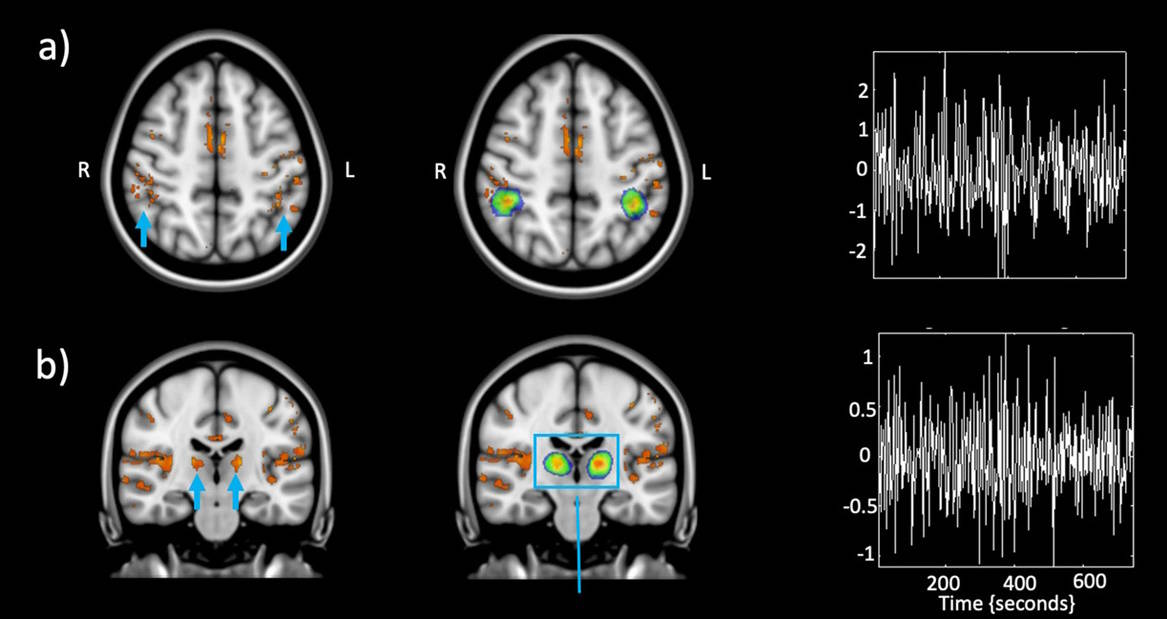
Light is critical for transmitting visual information to the brain; but light also impacts non-visual processes in the body, such as circadian rhythms, hormone secretion, pupil size and sleep cycles. Exposure to blue light is known to stimulate alertness and enhance cognitive performance, but the neural processes underlying this effect are not well understood. Now, researchers at the University of Liège in Belgium have used ultrahigh-field MRI to find out more about how light stimulates our brains, reporting their findings in Communications Biology.
Non-visual responses to light are mainly mediated by photosensitive retinal ganglion cells that express melanopsin, a photopigment that’s most sensitive to blue light at around 480 nm. These retinal neurons transfer light information to several areas of the brain associated with light-mediated behaviour. In particular, the pulvinar (a region of the posterior thalamus involved in attention control) is consistently activated in response to light, suggesting that the thalamus, a subcortical region, may play a key role in relaying non-visual light information to the cortex.
To investigate this hypothesis, first author Ilenia Paparella and colleagues in the GIGA-CRC laboratory used 7T functional MRI to record the brain activity of 19 healthy young participants while they completed an auditory oddball task known to elicit response in the posterior thalamus. During the task, in which random rare deviant tones were sounded amongst frequent standard tones, the volunteers were either in darkness or exposed to 30 s blocks of blue-enriched polychromatic or control orange light.
The researchers assessed how light exposure during the auditory task affected the connectivity from the thalamus to the intraparietal sulcus (IPS), an attentional-related area of the cortex. For each subject, they analysed changes in the blood oxygen level dependent (BOLD) signals from the thalamus and the IPS to infer their neuronal activity. They then used dynamic causal modelling to estimate the effective connectivity between the two brain regions.
The team’s analyses revealed that hearing a rare deviant tone during the auditory task excited both the pulvinar and the IPS in both hemispheres. Without light exposure, there was significant reciprocal negative influence between both regions.
The researchers found that only the blue-enriched light strengthened the connectivity from the posterior thalamus to the IPS, switching the influence of the posterior thalamus on the IPS from inhibition to excitation. “In other words, the active light modulated specifically the information flow from thalamic to cortical areas, while the control light, despite otherwise eliciting visual responses, was not affecting our network in any way,” they write.
Importantly, the researchers computed two independent models for the left and right brain hemispheres, and saw that they yielded the same results. They also observed that the impact of blue-enriched light on connectivity correlated with changes in pupil size – another measure of the non-visual impact of light on physiology.
“To the best of our knowledge, our results provide the first empirical data supporting that blue wavelength light affects ongoing non-visual cognitive activity by modulating task-dependent information flow from subcortical to cortical areas,” the researchers write.
An important step towards creating an extremely accurate clock based on a nuclear transition has been taken by an international team of physicists. Yuri Shvyd’ko at Argonne National Laboratory in the US and colleagues have achieved the resonant excitation of a nuclear transition in scandium-45. The transition could be used to create a nuclear clock with the potential to be much more accurate that the best atomic clocks available today.
Central to the operation of any clock is an oscillator that delivers a signal at a steady frequency. This could be the swinging of a pendulum or the piezoelectric vibration of a quartz crystal. Today, the second is defined by clocks that use the frequency of microwave radiation that is emitted from caesium atoms. Even more accurate atomic clocks use higher-frequency light from atomic transitions to create time signals. Today’s best clock is accurate to better than one part in 1018 – which means that it would take over 30 billion years for the clock’s timekeeping to accumulate a deviation of more than 1 s.
In principle, even more accurate clocks could be made using higher-frequency nuclear transitions. One further benefit of nuclear clocks over atomic clocks is that nuclei are much more compact and stable than atoms. This means that a nuclear clock would not be as susceptible to noise and interference from the surrounding environment.
Resonance needed
However, there are many challenges facing those trying to create nuclear clocks. This includes how to produce coherent radiation that is resonant with a nuclear transition – something that is needed to produce a time signal. In an atomic clock this is done by locking the frequency of a maser or laser to an atomic transition.
“With the advent of advanced X-ray free-electron lasers (XFELs) in the past decade or so, alternative nuclear-clock oscillators are now within reach of direct photon excitation,” Shvyd’ko says. “The extremely narrow bandwidth, 12.4 keV transition in scandium-45, with its long lifetime of 0.47 s, is the most promising.”
However, this extremely narrow bandwidth also means that the window of frequencies that are resonant with the transition is 1015 times narrower than the spread of frequencies produced even by the most cutting-edge laser facilities available today. “This means that only a tiny proportion of the incoming X-rays can resonantly excite the nuclei; the dominant off-resonance X-rays just create enormous detector noise,” Shvyd’ko explains.
Now, Shvyd’ko and colleagues have found a promising way around this noise problem. Their experiments took place at the European XFEL facility close to Hamburg in Germany, which currently offers the highest intensity of X-ray photons tuned to specific frequencies.
Target removal
Their experiment involved firing X-ray pulses at a foil target of scandium-45. After a pulse strikes the target, the target was quickly removed from the beamline to a nearby region where the photon detectors were located. This isolation from the beamline allowed the team to measure the tiny signal produced by the decay of the resonant excitation. This process was repeated as frequency of the incident light pulses was scanned in order to find the exact frequency at which the resonance occurs.
“Only 93 nuclear decay events were detected in response to 1020 near-resonant photons directed at the scandium-45 target,” Shvyd’ko explains. “But because of the extremely low detector noise, this number was enough to detect the resonance and allow the energy of the transition to be measured with an uncertainty more than two orders of magnitude smaller than the previous best value.”
By using this transition as a frequency standard, a nuclear clock of the future could stay accurate to within 1 s every 300 billion years – vastly improving on the precision of the latest atomic clocks.
Before that is possible, however, further improvements will be needed. “A key next step is the time-resolved observation of X-rays coherently scattered off the nuclei, which would reveal the actual spectral width of the resonance,” Shvyd’ko explains.
If various challenges can be overcome, the technology could have exciting implications in many fields of cutting-edge research. “The X-ray excitation of the scandium-45 resonance and the accurate measurement of its energy open up new avenues for ultrahigh-precision spectroscopy, nuclear clock technology and extreme metrology in the regime of high-energy X-rays,” says Shvyd’ko.
A new analysis conducted by an international team of physicists suggests that dark photons – hypothetical particles that carry forces associated with dark matter – could explain certain data from high-energy scattering experiments. The analysis, which was led by Nicholas Hunt-Smith and colleagues at the University of Adelaide, Australia, could lead to new insights into the nature of dark matter, which remains a mystery even though standard models of cosmology suggest it makes up around 85% of the universe’s mass.
Dark matter gets its name because it does not absorb, reflect or emit electromagnetic radiation. This makes it extremely difficult to detect in the laboratory, and so far all attempts at doing so have come up empty-handed. “No particle beyond the Standard Model, which describes all the matter with which we are familiar, has ever been seen,” says Anthony Thomas, a physicist at Adelaide and a co-author of the analysis, which is published in the Journal of High Energy Physics. “We have no idea what dark matter is, although it seems likely to be [a] beyond standard model particle (or particles).”
The dark photon hypothesis
Though dark matter is poorly understood, it is nevertheless the leading explanation for why galaxies rotate faster than they should, given the amount of visible matter they contain. But although we can observe dark matter interacting with the universe, the mechanism for these interactions is unclear. According to Carlos Wagner, a particle physicist in the High Energy Physics (HEP) division of Argonne National Laboratory and a professor at the University of Chicago and the Enrico Fermi Institute, dark photons are one possibility.
“The story is something like this: there could be an additional dark sector, where dark matter resides, and that couples weakly to the ordinary sector – in this case, via the mixing of a gauge boson, the dark photon, with the ordinary neutral gauge bosons,” says Wagner, referring to the photons, W and Z bosons that carry the electromagnetic and weak forces. “Such a gauge boson may couple in a relevant way to the dark matter and, in general, to a hypothetical dark sector.”
A “provocative” result
In the latest study, the Adelaide-led team, which also included researchers at the Jefferson Lab in Virginia, US, performed a global quantum chromodynamics (QCD) analysis of high-energy scattering data within the Jefferson Lab Angular Momentum (JAM) framework. The researchers demonstrated that when they try to explain the results of deep inelastic scattering (DIS) experiments, a model that incorporates a dark photon is preferred over the competing Standard Model hypothesis at a significance of 6.5σ.
“[DIS] is the process where a probe like an electron, muon or neutrino scatters from a proton with such high transfer of energy and momentum (hence deep) that it smashes the proton into pieces (hence inelastic),” Thomas explains. “If you sum over all the pieces, you can determine the distribution of momentum of the quarks within the original proton.”
Thomas adds that the results of this experiment are described in terms of parton distribution functions (PDFs), which give the probability of finding a specific type of quark with a given fraction of the momentum of the proton. “All high-energy labs in the world have played a role in taking the more than 3000 data points we currently have and which were analysed in this work,” he says. “The Jefferson Lab JAM group has a long history of extracting PDFs from such data.”
Dark halo: A Hubble Space Telescope image of the inner region of the galaxy cluster Abell 1689. Though dark matter cannot be imaged directly, it can be mapped by plotting the plethora of arcs produced by the light from background galaxies that is warped by the foreground cluster’s gravitational field, indicated by the blue overlay. (Courtesy: NASA, ESA, E Jullo/Jet Propulsion Laboratory, P Natarajan/Yale University, and J-P Kneib/Laboratoire d’Astrophysique de Marseille, CNRS, France; Acknowledgment: H Ford and N Benetiz/Johns Hopkins University and T Broadhurst/Tel Aviv University)
Tim Hobbs, a theoretical physicist at Argonne who was not involved in this work but has previously co-authored papers with several members of the team, calls the study “provocative”. He notes that the work involved simultaneously fitting proton and neutron scattering data with a beyond the Standard Model (BSM) scenario such as the dark photon hypothesis alongside the PDFs. This approach, he says, “has been growing in interest in the past few years”.
Indeed, Hobbs and his collaborators produced what he calls “a study of similar spirit” in May 2023 that focused on jet and top-quark data. “The basic worry [is] that signatures of BSM physics could be spuriously ‘fitted away’ in traditional PDF analyses that do not carefully parametrize the BSM independently,” he explains. This concern, he adds, is “significant enough that more global fits of this type are required. I very much expect many follow-up studies in the future.”
Opportunities for further research
While enthusiastic about the work, Hobbs points out a practical issue that is crucial to its interpretation: uncertainty quantification. “This is one of the developmental frontiers in this field,” he says. “How exactly does one arrive at a consistent, reproducible uncertainty in a theoretical analysis with a complicated, multi-parameter model?”
Hobbs adds that the new analysis used what he calls “a more aggressive definition” of uncertainty than is typical. “This may play a role in heightening the apparent significance of the dark photon signature extracted from DIS data, as well as the degree of correlation with the PDFs,” he says. These and other questions, he concludes, require more investigation, and he is “excited that Hunt-Smith et al. have provided further motivation in this direction”.
Wagner, who was also not involved in the study, is surprised that the team restricted its analysis to DIS, since the existence of dark photons would also affect the results of electron-positron experiments such as BABAR and LEP. “The values of [the mixing parameter] epsilon quoted are not very small and such an effect should be visible,” he says, noting that a previous analysis of BABAR data found no such dark-photon-related effects. Future studies, he suggests, could learn more by changing the model to assume an asymmetry between particle couplings, which would mean that not all such couplings are governed by the same mixing parameter.
Thomas agrees that more work is necessary. “As our result gives extremely strong but indirect evidence of the existence of this particle, it would be wonderful to have it confirmed in other analyses,” he says. One possible future direction, he adds, would be to study the results using more sophisticated versions of QCD, though he adds that “evidence in direct experiments or other reactions would be ideal. We have a very strong hint and would love to see independent confirmation.”