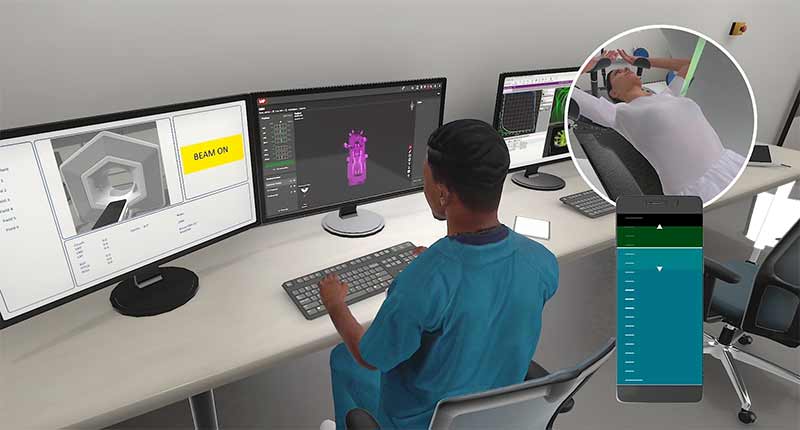
LAP introduces LUNA 3D, the new SGRT system, which utilizes high-resolution stereoscopic cameras to provide precise and dose-free patient positioning and monitoring from CT simulation to treatment delivery, compatible with bore-type and C-arm LINACs.
LUNA 3D’s development was collaborative, with LAP’s experts working closely with clinical partners to create a seamless SGRT clinical workflow and ensure high usability.
Are you ready to take patient positioning and monitoring to a new level while keeping the laser workflow’s comfort and simplicity?
Thomas Speck is the vice president, new product solutions at LAP. Thomas has more than 15 years of experience in the medical device industry with a strong focus on patient positioning and monitoring solutions in radiation therapy.
The relativistic jet emanating from the black hole at the heart of the galaxy Messier 87 (M87) is wobbling as it is dragged around by the spinning black hole, new radio observations have found. This is the first direct evidence that powerful jets from active galaxies are driven by black holes that are rotating rapidly, not slowly.
M87 is the giant elliptical galaxy found in the heart of the Virgo galaxy cluster, 55 million light-years away. It’s famous for being home to the first supermassive black hole to have its “shadow” imaged by the Event Horizon Telescope, back in 2019. M87 also produces a powerful jet of charged particles extending at least 5000 light-years from the black hole. This jet is so large and bright that it is even visible in images taken by amateur astronomers with garden equipment.
Although M87 was the first galaxy found to harbour a relativistic jet over a century ago, thousands of galaxies and quasars are now known to have jets. The material in such jets is dredged up by magnetic fields from an accretion disc of material spiralling around the black hole. Theory posited that the energy for the jet is extracted from the rotational energy of the black hole.
Now, an international team of astronomers – led by Yuzhu Cui of Zhejiang Laboratory in Hangzhou, China, and Kazuhiro Hada of Japan’s Graduate University for Advanced Studies and the National Astronomical Observatory of Japan – has made the first observations that directly support this theory, publishing the results in Nature.
“One of the most important implications from this study is that a spinning black hole is essential to generate a powerful relativistic jet as seen in M87 and other radio galaxies or quasars,” Hada tells Physics World.
“If the result is confirmed, it would really be a giant leap in our understanding of jets,” adds Yannis Liodakis of the University of Turku in Finland, who was not involved in the study. In 2022 Liodakis was the lead author of a paper in Nature that found shock fronts and turbulence in M87’s jet.
Think of a spinning top, and how its axis of rotation seems to wander around in a circle. The jet in M87 is perpendicular to the accretion disc, but both jet and disc are misaligned with respect to the black hole’s rotational axis. As the black hole spins, it drags space-time around with it – an effect known as “frame-dragging”. As it does so, it pulls the accretion disc around, causing the direction that the off-axis jet points to precess, or wobble, by approximately 10 degrees with a period of about 11 years.
In 1973, the physicist John Wheeler famously posited his no-hair theorem – that a black hole can be fully characterized by just three parameters: its mass, its electric charge and its angular momentum (the “hair” is a metaphor for everything else – all other information enters the black hole and becomes inaccessible). The mass of M87’s supermassive black hole is about 6.5 billion times the mass of our Sun, and its electrical charge is considered to be negligible. However, despite this measurement of the precession of the jet as it is dragged around by the spinning black hole, it’s not yet possible to define a rate for that spin.
Black hole spin rate
However, one might surmise that black holes with powerful jets will have fast spins, while black holes with no jets will tend to be spinning more slowly.
“The jet precession period depends on both the black hole spin and the size of the accretion disc,” says Hada. Unfortunately, the size of M87’s disc is not well known. In their theoretical modelling, the team assumed 40 rotations per year, but that is just one possible solution – different spin values with different disc sizes could also explain the degree of precession.
“Nevertheless, it is very likely that the black hole’s rotation time scale is much shorter than that of the jet and disc precession,” says Hada. “Measuring the value of this spin is exactly our next step to go. Hopefully this will be possible by combining our jet monitoring and a black hole movie from the Event Horizon Telescope.”
Liodakis points out how vital it is to know that fast-spinning black holes drive jets, because it will assist astronomers in constraining the size of the accretion disc at the centre of a galaxy such as M87, and the composition of such jets.
“It’s not an unexpected result,” says Liodakis. “But it is certainly great to have direct confirmation.”
Remote control of chemical reactions in biological environments could enable a diverse range of medical applications. The ability to release chemotherapy drugs on target in the body, for example, could help bypass the damaging side effects associated with these toxic compounds. With this aim, researchers at California Institute of Technology (Caltech) have created an entirely new drug-delivery system that uses ultrasound to release diagnostic or therapeutic compounds precisely when and where they are needed.
The platform, developed in the labs of Maxwell Robb and Mikhail Shapiro, is based around force-sensitive molecules known as mechanophores that undergo chemical changes when subjected to physical force and release smaller cargo molecules. The mechanical stimulus can be provided via focused ultrasound (FUS), which penetrates deep into biological tissues and can be applied with submillimetre precision. Earlier studies on this method, however, required high acoustic intensities that cause heating and could damage nearby tissue.
To enable the use of lower – and safer – ultrasound intensities, the researchers turned to gas vesicles (GVs), air-filled protein nanostructures that can be used as ultrasound contrast agents. They hypothesized that the GVs could function as acousto-mechanical transducers to focus the ultrasound energy: when exposed to FUS, the GVs undergo cavitation with the resulting energy activating the mechanophore.
“Applying force through ultrasound usually relies on very intense conditions that trigger the implosion of tiny dissolved gas bubbles,” explains co-first author Molly McFadden in a press statement. “Their collapse is the source of mechanical force that activates the mechanophore. The vesicles have heightened sensitivity to ultrasound. Using them, we found the same mechanophore activation can be achieved under much weaker ultrasound.”
Reporting their findings in the Proceedings of the National Academy of Sciences, the researchers demonstrate that this approach can remotely trigger the release of cargo molecules from mechanophore-functionalized polymers using biocompatible FUS.
Drug delivery development
McFadden and colleagues first identified the safe ultrasound parameters for physiological applications. Experiments with 330 kHz FUS revealed a biocompatible upper limit of 1.47 MPa peak negative pressure with a 4.5% duty cycle (3000 cycles per pulse), resulting in an acoustic intensity of 3.6 W/cm2. In a tissue-mimicking gel phantom, these parameters led to a maximum temperature increase of only 3.6 °C.
The researchers then investigated whether FUS could activate mechanophore-containing polymers using these biocompatible parameters. They studied the polymer PMSEA containing a chain-centred mechanophore loaded with a fluorogenic small molecule. Exposing a dilute solution of this polymer to biocompatible FUS in the presence of GVs resulted in a strong increase in fluorescence, indicating successful release of the payload – approximately 15% release after 10 min of FUS exposure. Importantly, FUS exposure without the GVs did not trigger a fluorogenic response, confirming that GVs play an essential role as acousto-mechanical transducers.
Next, the researchers examined whether the system was suitable for mechanically triggered drug release. They conjugated the chemotherapy agent camptothecin to the mechanophore followed by polymerization to create PMSEA-CPT, and used FUS to provide controlled release. After 10 min exposure to biocompatible FUS plus GVs, approximately 8% of camptothecin was released. As found for the fluorogenic molecule, no drug release was detected in the absence of GVs.
According to co-first author Yuxing Yao, this is the first time that FUS has been demonstrated to control a specific chemical reaction in a biological setting. “Previously ultrasound has been used to disrupt things or move things,” Yao says. “But now it’s opening this new path for us using mechanochemistry.”
To assess the platform’s future potential for targeted chemotherapy in patients, the researchers investigated its cytotoxicity in vitro on lymphoblast-like Raji cells. Cells incubated for two days with PMSEA-CPT previously exposed to FUS and GVs exhibited a significant decrease in viability. In contrast, no significant cytotoxicity was seen in cells incubated with PMSEA-CPT that had not been exposed to FUS or PMSEA-CPT exposed to FUS but without GVs.
“The mechanically triggered release of molecular payloads from polymers in aqueous media illustrates the power of this approach for non-invasive bioimaging and therapeutic applications of polymer mechanochemistry,” the researchers write. “More broadly, this study demonstrates an approach for achieving remote control of specific chemical reactions under biomedically relevant conditions with the spatiotemporal precision and tissue penetration afforded by FUS.”
Following these initial tests under controlled laboratory conditions, the researchers now plan to test their platform in living organisms. “We are working to translate this fundamental discovery to in vivo applications for drug delivery and other biomedical technologies,” Robb tells Physics World.
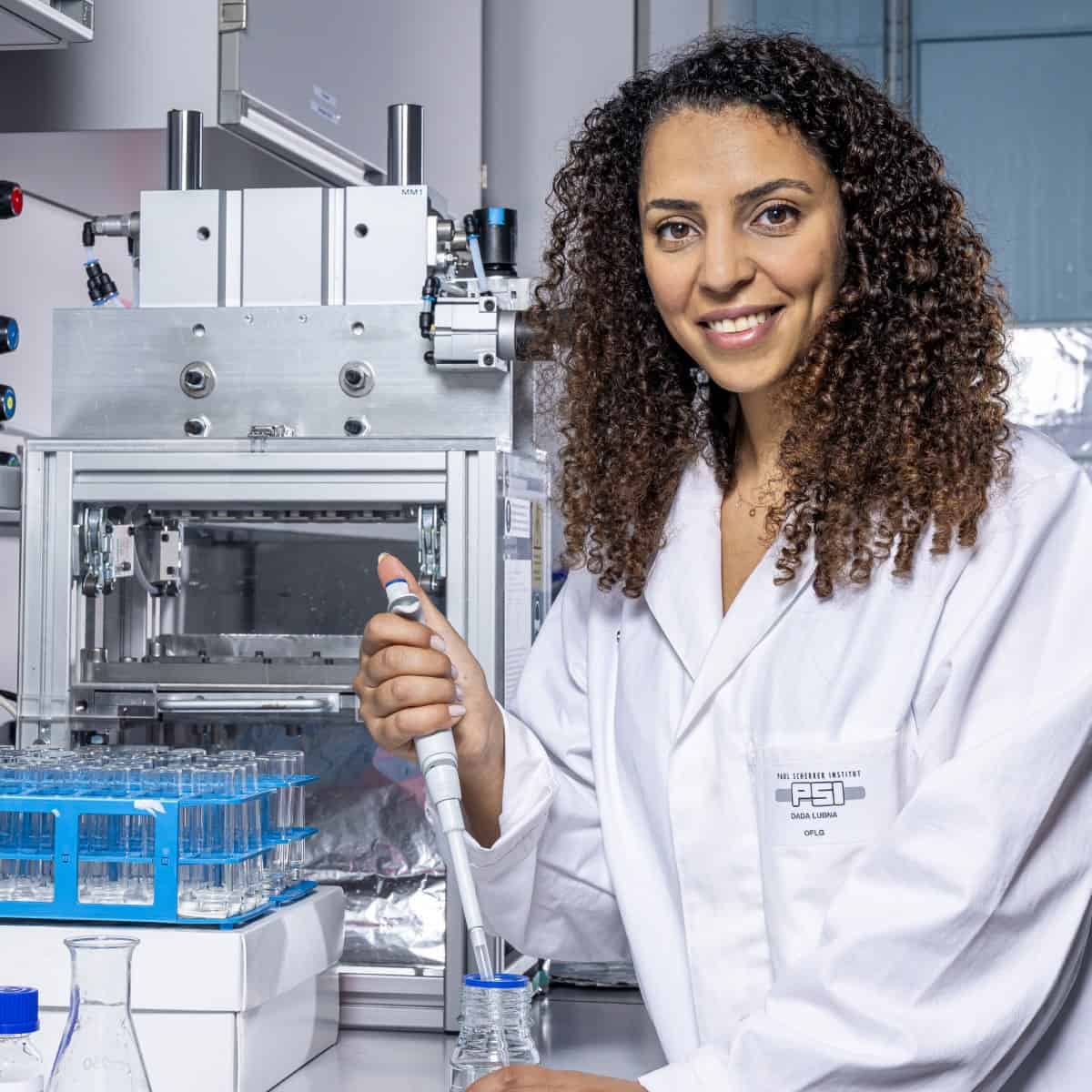
Cloud expert: Lubna Dada and colleagues have found that sesquiterpenes have the potential to play an important role in cloud formation. (Courtesy: Paul Scherrer Institute/Markus Fischer)
A family of organic compounds released by trees could play a far greater role in cloud formation than previously thought. That is the conclusion of Lubna Dada at Switzerland’s Paul Scherrer Institute and an international team, who say that their insights could play a crucial role in predicting the future of Earth’s climate.
When trees come under stress, they release organic molecules that react with ozone, nitrate radicals and other compounds in the atmosphere. These reactions create tiny solid particles called ultra-low-volatility organic compounds (ULVOCs).
In some cases, ULVOCs can grow large enough for water droplets to condense on their surfaces, encouraging cloud formation. Clouds have significant effects on Earth’s climate – many of which are poorly understood. Therefore, understanding the influence of ULVOCs cannot be overlooked in global climate models.
The most important molecules involved in ULVOC formation are in three types of hydrocarbon called isoprene, monoterpene and sesquiterpene. To complicate matters, scientists believe climate change is now altering their emission into the atmosphere.
Increasing concentration
“The concentration of terpenes is increasing because plants release more of them when they experience stress – for example when there is an increase in temperatures and extreme weather conditions and vegetation is more frequently exposed to droughts,” Dada explains.
Through previous research, climate scientists now have a solid understanding of how increasing levels of isoprene and monoterpene are affecting global cloud formation – helping them to make better predictions about the future of Earth’s climate.
So far, the role of sesquiterpenes has proven far harder to pin down. “This is because they are quite difficult to measure,” says Dada. “First, because they react very quickly with ozone, and second, because they occur much less frequently than the other substances.”
Despite their lower emission, these molecules are more likely than isoprene and monoterpene to form the large particles necessary for cloud formation. Ultimately, this means that a deeper understanding of sesquiterpene’s cloud-forming role will be crucial to improving our models of Earth’s climate.
Cloudy at CERN
In the latest study, Dada’s team explored the ability of sesquiterpenes to form ULVOCs using the Cosmics Leaving Outdoor Droplets (CLOUD) chamber at CERN in Geneva. There, researchers can simulate different atmospheric conditions that are involved in cloud formation.
“At almost 30 m3, this sealed climate chamber is the purest of its kind worldwide. It is so pure that it allows us to study sesquiterpenes even at the low concentrations recorded in the atmosphere,” Dada explains.
Starting with a mixture of only isoprene and monoterpene, the team measured how rates of cloud formation changed inside the chamber as the concentration of sesquiterpene was increased. The effect was immediate. Even when sesquiterpene composed just 2% of the mixture inside the CLOUD chamber, its increased yield of ULVOCs had already doubled the cloud formation rate.
As Dada explains, “This can be explained by the fact that a sesquiterpene molecule consists of 15 carbon atoms, while monoterpenes consist of only 10 and isoprenes only five.” With its higher molecular weight, sesquiterpene is far less volatile still than the other two molecules, allowing it to coalesce more readily into solid particles.
The results show that the cloud-forming influence of sesquiterpenes must be included in future global climate models. Dada and colleagues hope that their study will allow climate scientists to make better predictions of how cloud formation and its impact on Earth’s atmosphere will change as the planet continues to heat.
Building on their techniques, the researchers will now aim to gain a broader picture of how the climate has already been impacted by emissions of other artificially created compounds. “Next, we and our CLOUD partners want to investigate what exactly happened during industrialization,” explains team member, Imad El Haddad. “At this time, the natural atmosphere became increasingly mixed with anthropogenic gases such as sulphur dioxide, ammonia and other anthropogenic organic compounds.”
It has been a very exciting week in the world of physics. The winners of the 2023 Nobel Prize for Physics were announced on Tuesday and on Wednesday we learned that this year’s chemistry prize has a very strong connection to physics. And to top it all off, the names of the chemistry winners were leaked several hours before the announcement was made.
So we definitely have lots to talk about in this episode of the Physics World Weekly podcast, which features Physics World’s Margaret Harris, Matin Durrani and Hamish Johnston.
Physics World‘s Nobel prize coverage is supported by Oxford Instruments Nanoscience, a leading supplier of research tools for the development of quantum technologies, advanced materials and nanoscale devices. Visit nanoscience.oxinst.com to find out more.
Radiation therapy, a mainstay treatment for many cancers, is usually delivered in numerous low-dose fractions over several weeks. But this drawn-out schedule can be problematic for patients. The ability to deliver an entire course of treatment in a shorter time, using a higher dose for each fraction, could have numerous benefits: reducing patients’ travel time and costs, minimizing their time off work, and enabling hospitals to treat more patients in less time.
In low- and middle-income countries (LMICs), where radiotherapy resources can be scarce and patients may live far away from their nearest treatment centre, an accelerated treatment regime could have even greater impact. At the ASTRO Annual Meeting, several studies demonstrated that it is feasible to deliver shorter courses of radiation therapy, without impacting tumour control or increasing adverse effects.
The HYPNO trial
Søren Bentzen from the University of Maryland School of Medicine shared the findings of the IAEA-sponsored HYPNO trial, a large international study comparing hypofractionated versus normo-fractionated radiation therapy for locally advanced squamous cell head-and-neck cancers.
Bentzen explained that each year there are 10 million deaths worldwide due to cancer and 70% of these occur in LMICs. And while head-and-neck cancers are relatively infrequent worldwide, they affect those in LMICs disproportionately. For example, an estimated 84% of deaths from head-and-neck cancer occur in LMICs, due in part to the link between head-and-neck cancers (other than those caused by the human papillomavirus) and use of tobacco and alcohol.
Standard treatment for such patients typically involves up to seven weeks of radiation therapy. This can be particularly challenging as the limited number of radiation therapy facilities in LMICs means that many patients have to travel great distances for treatment and remain away from home for long periods of time.
Following on from their mathematical modelling of clinical trial data, which suggested that fewer but higher doses of radiation could deliver outcomes similar to current radiotherapy regimes, Bentzen and colleagues tested this hypothesis in 792 patients with locally advanced head-and-neck cancer, mostly related to tobacco use. The patients, from 12 health centres in 10 LMICs, received either 33 fractions over 5.5 weeks (66 Gy total dose) or 20 fractions in 4 weeks (55 Gy total dose); most also received cisplatin chemotherapy.
After three years, patients who received the accelerated treatment had approximately the same level of local tumour control and late adverse events as those who received the longer conventional treatment. Overall survival and progression-free survival rates also agreed to within a couple of percent between the two groups.
The researchers note that this result is “potentially practice changing” and that treating in 20 fractions instead of 33 is both resource-sparing and more convenient for patients. “This is a trial that directly informs how you can effectively deliver radiation therapy to patients in a resource-scarce environment,” said Bentzen in a press statement.
The PACE B trial
The PACE (Prostate Advances in Comparative Evidence) study is a series of trials aiming to optimize treatment for men with prostate cancer. At the ASTRO meeting, Nicholas van As from The Royal Marsden NHS Foundation Trust and the Institute of Cancer Research shared the five-year outcomes from PACE B – a phase III trial comparing stereotactic body radiotherapy (SBRT) with conventionally fractionated radiotherapy for treating localized prostate cancer.
Patients receiving radiotherapy for intermediate-risk prostate cancer typically receive treatment in 20 (and up to 40) daily fractions. SBRT uses advanced imaging and treatment planning techniques to deliver radiation with extreme accuracy, minimizing damage to surrounding healthy tissue. It uses fewer, higher doses of radiation typically delivered in five or fewer outpatient sessions.
PACE B included 874 men with localized prostate cancer (10% low-risk and 90% intermediate-risk) who were not considering surgery. The patients, from 38 centres across the UK and Canada, were randomized to receive either SBRT (36.25 Gy in five fractions over one to two weeks) or conventional radiotherapy (78 Gy in 39 fractions over 7.5 weeks, or 62 Gy in 20 fractions over four weeks) to the planning target volume.
The researchers assessed the rate of biochemical clinical failure in the two groups. Results showed that five years after treatment, people treated with SBRT had a disease control rate of 95.8%, compared with 94.6% for conventional radiotherapy. “This was significantly better than we expected,” said van As in a news briefing. “We can say, with confidence that SBRT is non-inferior to conventional fractionation.”
Importantly, side effects were similar and low in both treatment arms. “I think it’s now imperative that our surgeons discuss these data with patients before they perform prostatectomies,” van As concluded. “We can also say now with a high level of confidence that SBRT can be considered the new standard-of-care for low- and favourable intermediate-risk prostate cancer.”
The FABREC study
Around 40% of people with breast cancer undergo mastectomies, with more than half having breast reconstruction immediately after. To minimize risk of recurrence, roughly one-third of these patients also receive radiotherapy, which is generally delivered over a period of five or six weeks. However, this post-mastectomy radiation greatly increases the risk of reconstruction complications such as infection and unwanted changes to cosmetic results.
Rinaa Punglia from the Dana-Farber Brigham Cancer Center described the findings of the FABREC study, the first to compare shorter versus longer courses of radiation specifically in people who underwent breast reconstruction immediately following mastectomy. Punglia explained that hypofractionation has already been widely adopted after breast-conserving surgery, where it is shown to produce equivalent oncologic outcomes, and improve quality-of-life and cosmetic results.
FABREC included 400 participants with stage 0 to 3 breast cancer who had mastectomy immediately followed by reconstructive surgery using a tissue expander or implant. The trial focused on patient-reported outcomes, particularly in terms of physical wellbeing, following hypofractionated or conventional radiosurgery.
Patients randomly received either 25 radiation fractions across five weeks (50 Gy total dose) or 16 fractions over roughly three weeks (42.56 Gy total dose), with a median time from surgery to the start of radiation of 2.6 months. In the conventionally treated group, 7.7% of patients had treatment breaks (missed days of therapy) that can lead to worse outcomes; this was reduced to just 2.7% with the use of hypofractionation.
Six months after treatment, patients in both groups reported similar levels of physical wellbeing. Younger patients (aged 45 or less), however, reported higher physical wellbeing scores and were less bothered by side effects after hypofractionated radiation. There were no differences in the rates of recurrence or toxicity outcomes between the two groups.
The shorter treatment course also significantly reduced the burden on patients’ time and finances. Among those who took unpaid time off from work for treatment, patients in the hypofractionated group required 73.7 h of unpaid leave, while those receiving conventional fractionation required 125.8 h.
“Our trial results suggest that hypofractionation can safely be used in this setting without compromising efficacy or increasing side effects,” said Punglia in a press statement. “Reducing the requirement to three weeks of radiation therapy would be a significant improvement in the quality of our patients’ lives.”
Most regular engines convert thermal energy into mechanical work, but an international team of researchers has now designed and implemented an entirely different, quantum engine. Instead of heat, this proof-of-principle microscopic engine runs on the energy difference associated with the statistical properties of quantum matter. And rather than powering the next generation of cars, this type of engine may one day be used to charge quantum batteries or power quantum computers and sensors.
“Engineering is going into the nano world, and at some point, quantum will hit,” says Artur Widera, a physicist at the University of Kaiserslautern, Germany and a leader of the collaboration. “And we’d better be prepared and know what’s going on and how we can use it.”
The power of quantum statistics
All particles known to science fall into one of two categories: bosons or fermions. While bosons cluster in the same quantum state, fermions obey the Pauli exclusion principle, meaning no two fermions can share the same state. This doesn’t matter much at room temperature when particles are flying about at high speeds. Cool those particles down to just shy of absolute zero, though, and the difference becomes vast: the bosons pile into the lowest available energy state, while fermions stack on top of each other in a “ladder” of states. At such low temperatures, a collection of fermions will thus have much more energy than a collection of bosons.
“When I was a student in class, and I saw what enormous energies are associated with a Pauli principle, I was wondering, ‘can you use this?’” Widera says.
At the time, the answer was “no”. Although the energy difference between bosons and fermions at low temperatures is immense, switching a set of particles from bosonic to fermionic behaviour was out of reach. Then, in the early 2000s, physicists discovered that if they cooled a gaseous cloud of fermionic atoms to just above absolute zero and then tuned the magnetic field surrounding them, they could force the atoms to pair up into bosonic molecules. “Suddenly, you have a tool to really change the quantum statistics,” Widera says.
A quantum Pauli engine
The so-called quantum Pauli engine Widera and his collaborators developed relies on this boson-fermion switchover and operates similarly to a regular piston-based engine. The difference is that instead of ignition and heat pushing the piston out, the driving force is the change in the gas’ fundamental quantum nature.
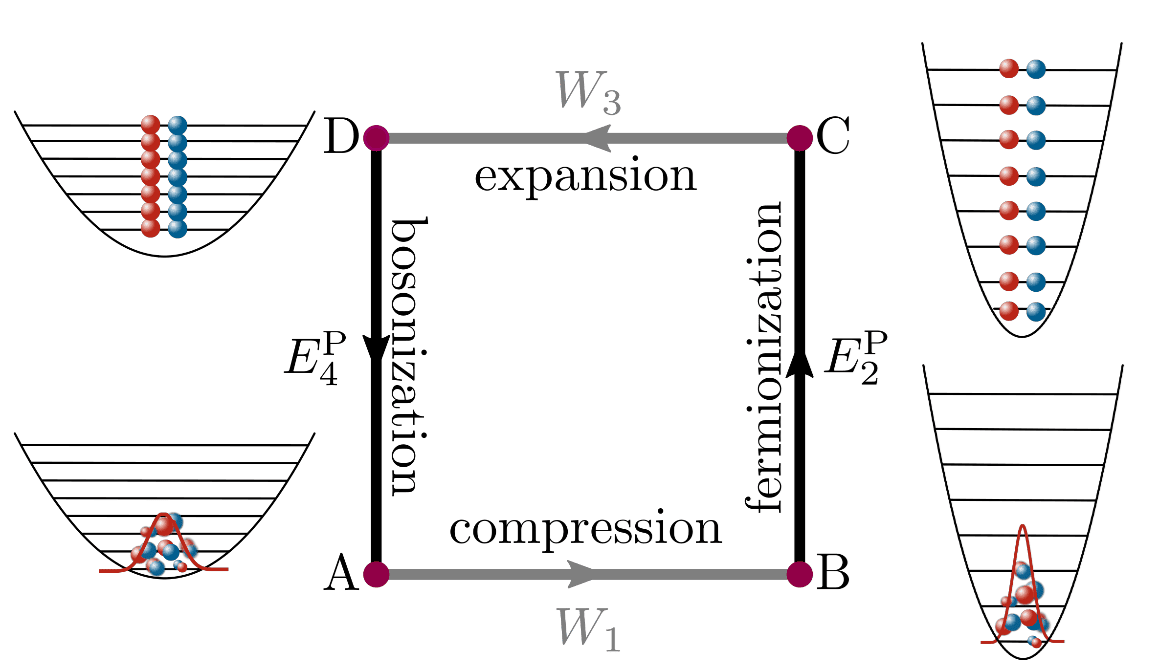
To realize the engine, the team cooled a gas of fermionic lithium-6 atoms and confined them in a combined optical and magnetic trap. They then tuned the magnetic field until the fermionic atoms paired up into bosonic molecules. The operation of the engine was a four-step process akin to the four strokes of a piston engine: a compression step (closing the piston), a “fermionization” step (instead of ignition), an expansion step (instead of pushing the piston out) and “bosonization” (resetting back to the starting point).
Four strokes of a quantum engine: First, bosonic lithium molecules are compressed in a trap. Second, the magnetic field is changed to break up the molecules, leaving fermionic lithium-6 atoms. Third, the trap is expanded, which could allow the atoms to do work on their environment. Lastly, the magnetic field is changed back, forming molecules and resetting the system. (Courtesy: Jennifer Koch and Artur Widera, Department of Physics and Research Center OPTIMAS, RPTU Kaiserslautern-Landau)
The efficiency of this engine is set by the difference in the gas’s energy change in the first (compression) step and the energy increase in the third (expansion) step. In this experiment, the researchers achieved a maximum efficiency of 25%, but the team say further improvements could bring that number above 50%. This number does not include the energy it takes to run the apparatus for cooling the atoms and keeping them trapped. But it does reflect the work that’s directly put into the gas, and the work that could be extracted from it.
Extracting power: a work in progress
In this version of the engine, the “piston” is effectively welded shut, since the trap confining the gas of atoms or molecules cannot be pushed open. This means the engine does not actually do work on the outside world. Instead, its calculated work and efficiency reflect how it could perform in principle, though the team is trying to figure out a way to make it do practical mechanical work.
Even though this is a proof-of-concept demonstration, Ferdinand Schmidt-Kaler, a physicist at Johannes Gutenberg University in Mainz, Germany who was not involved in the work, believes it is an essential step. “We need such clean showcase experiments to display and study the quantum effects in heat engines,” he tells Physics World. “Works like this are stimulating both new experimental directions and a better theoretical understanding. On the other hand, I am very confident that quantum thermodynamics will be an essential ingredient on every quantum computer, of many quantum sensors in less than 10 years.”
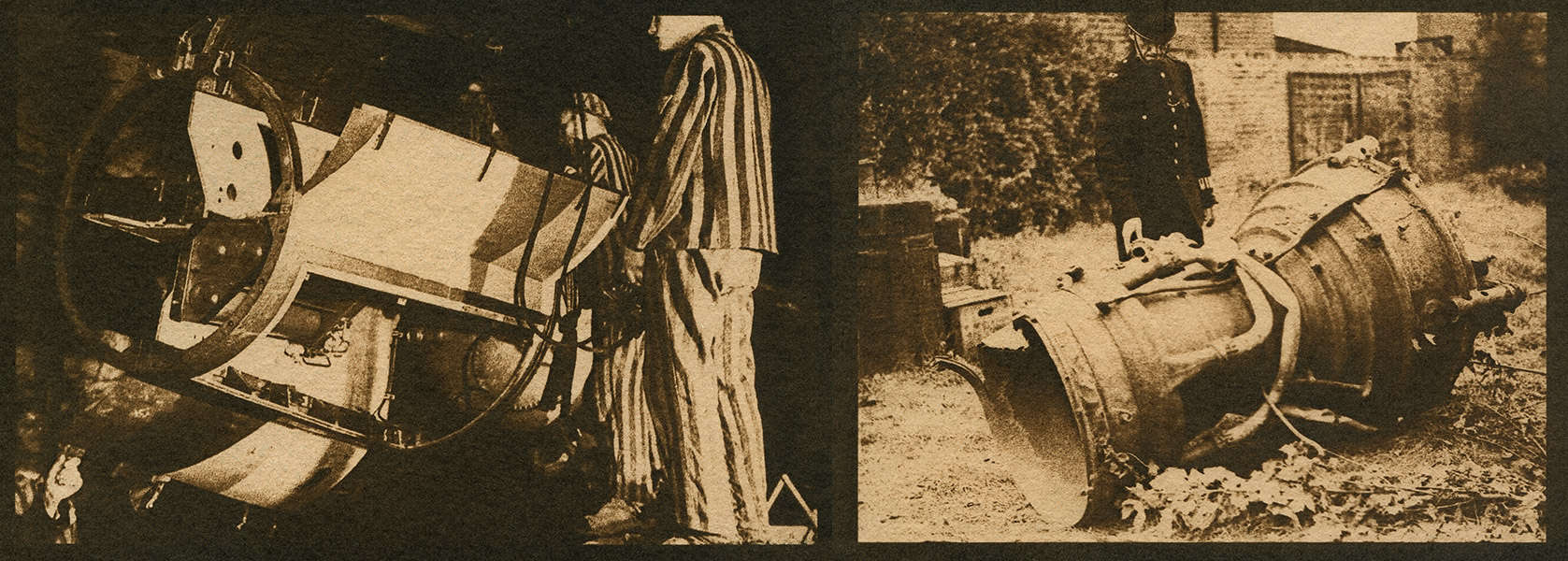
Devastating invention Arguably Wernher von Braun’s biggest contribution was the V-2 rocket. These were produced by concentration camp prisoners and other forced labourers (left), and it is estimated that this led to the deaths of some 12,000 workers. Meanwhile the V-2 rockets were also used to bomb Allied territories, directly killing at least 4400 people in the final year of the Second World War. The image on the right shows a British police officer inspecting the remains of a V-2 engine after a rocket attack. (Left: German government. Right: photographer unknown. Courtesy: Lewis Bush)
Ettersburg Castle, Germany, 1926. A previously unremarkable student who had shown promise in languages but little else performs an astonishing scholastic turnaround after being given a telescope in honour of his confirmation. The instrument sparks an obsession with space and rocketry, driving a furious study of mathematics and physics that sees him teaching the other students and graduating early. This effort leads to a successful career in aerospace, with the boy eventually becoming the “father of space travel”, the architect of the iconic Saturn V rocket that took humanity to the Moon, an outspoken advocate for racial integration, and an unofficial spokesperson for NASA on a Disney programme about space travel.
Peenemünde, Germany, 1940. An opportunistic engineer working to develop the world’s first long-range guided ballistic missile is urged to join the Allgemeine Schutzstaffel (SS) at the orders of Heinrich Himmler, a leading member of the Nazi Party. He is issued membership number 185,068 and the rank of Untersturmführer (“junior storm leader”, equivalent to second lieutenant). He goes on to perfect his terrifying weapon, the V-2, which would directly kill at least 4400 people in the final year of the Second World War – and the production of which is estimated to have led to the deaths of some 12,000 concentration camp prisoners and other labourers.
While these two contrasting stories seem worlds apart, they are the experiences of the same person, German aerospace engineer Wernher von Braun (1912–1977). But as with many historical figures, notes photographer Lewis Bush in his engrossing new photobook, Depravity’s Rainbow, the life of von Braun is one all too easily “rendered into reassuringly clear blacks and whites”. Bush sets out to explore the “grey hinterland” that lies between both von Braun’s arguable evil and virtue, and space exploration’s contradictory history of extreme militarism and peaceful science.
The title of the book is a nod to another work concerned with the development and use of V-2 rockets, Thomas Pynchon’s 1973 novel Gravity’s Rainbow – a book so infamously complicated it was lampooned by Daniel Craig’s character in the 2019 film Knives Out as being something “nobody” actually read. But Depravity’s Rainbow is not afraid of a little structural complexity either, and the lion’s share of the work is given to telling – through archive photos – two converging narratives.
Two sides of the same man Wernher von Braun meets US president John F Kennedy in 1962 at NASA’s Marshall Space Flight Center (left), 28 years after being photographed with Adolf Hitler and senior members of the Nazi government (right – von Braun is dressed in a black suit, second row from the back). (Left: US government. Right: German government. Courtesy: Lewis Bush)
The first begins with the US flag planted on the Moon, and works its way backwards to the end of the Second World War, and von Braun joining the rocket team at Fort Bliss, Texas. He was there as part of Operation Paperclip – a secret US intelligence programme to recruit German scientists and engineers after the collapse of Nazi Germany.
The second narrative, meanwhile, starts with a young von Braun. It follows his life as he joined the Verein für Raumschiffahrt (Space Flight Society) and became involved in the Germany Army. He then played an instrumental role in the development of the Aggregate series of rockets, which would end up including the devastating V-2 missile – a fact that secured the Allied forces’ interest in him as the Second World War came to a close.
The author notes the inherent dichotomy in von Braun’s joining the SS in 1940 only to go on, in 1965, to passionately lecture segregationist Alabama governor George Wallace on racism
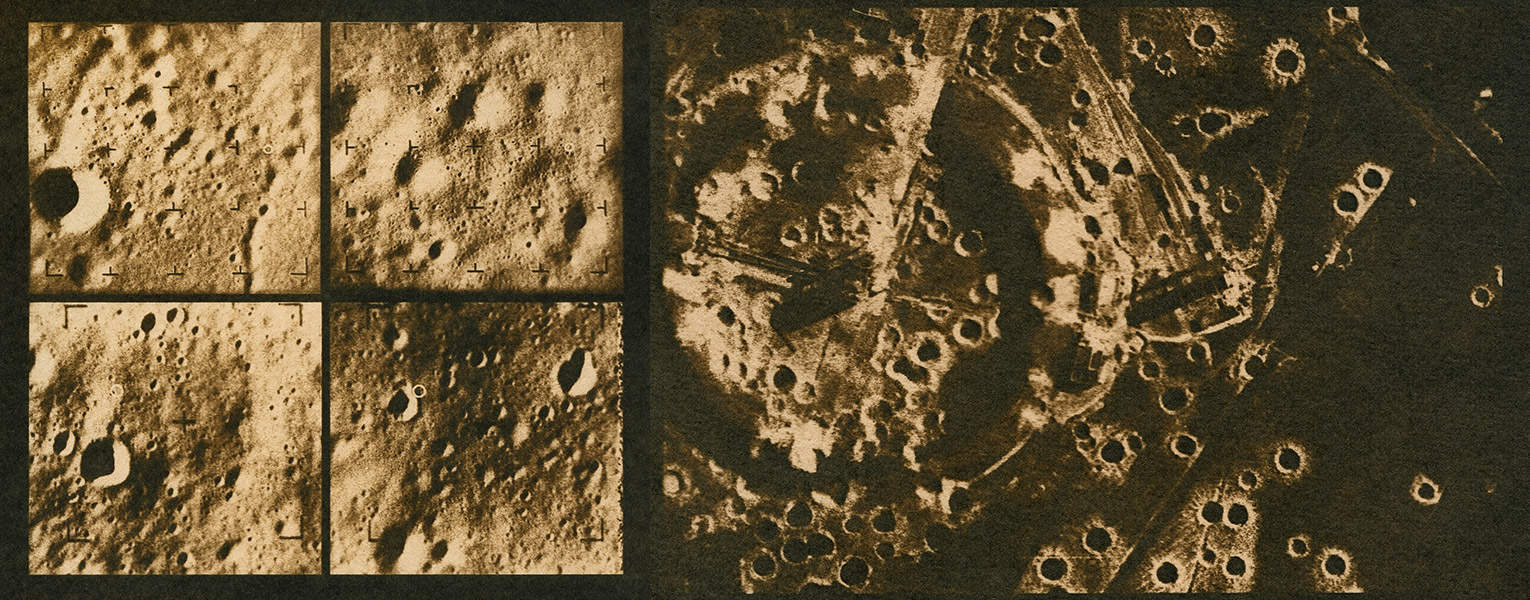
This two-stream format allows Bush to highlight a number of interesting contrasts and parallels. He compares the craters of the Moon to those of the RAF-bombed Peenemünde Army Research Centre where von Braun was based. Bush also notes the inherent dichotomy in von Braun’s joining the SS in 1940 only to go on, in 1965 (with then NASA administrator James Webb), to passionately lecture segregationist Alabama governor George Wallace on racism and the need to “shed the shackles of the past”.
Twin craters Author Lewis Bush uses two converging story lines to highlight parallels and contrasts in Wernher von Braun’s life. Here we see the craters on the Moon (left) compared to those at the RAF-bombed Peenemünde Army Research Center where von Braun was based. (Left: US government. Right: German government. Courtesy: Lewis Bush)
Double standards
The final section of Depravity’s Rainbow is a series of essays around the themes of the book. These range from the evolution of rocketry prior to the Second World War and the history of aerial bombardment, through to the horrors of the concentration camps and the holocaust, and the defences that von Braun would later employ to counter questions about his role within the Nazi regime. In many ways, these are the most fascinating parts of the book – even if the detour into musings on ideas, truth, progress and modernity does come across as a little self-indulgent before its intended place in the wider narrative becomes clear.
More interesting to my eye was the comparison that Bush makes between von Braun and “the man who might with time have become his American equivalent”. Born in Texas the same year as von Braun, Frank Malina was a rocketry researcher at Caltech who helped to found the Jet Propulsion Laboratory in Pasadena that would ultimately become part of NASA in the 1950s. As Bush puts it, “Rather like von Braun, Malina combined practical engineering ability with theoretical expertise, and [with a colleague] formulated some of the key mathematical theories necessary for multiple-stage rocketry.” In fact, Malina was responsible for overseeing the WAC Corporal sounding rocket that would later be married to captured V-2s to form the RTV-G-4 Bumper, the first high-altitude multi-stage rocket.
Unlike von Braun, who may have spoken of rocketry as the means to a utopian future while hitching his wagon to Nazi militarism, Malina’s active pacifism and socialism attracted the attention of the FBI, who placed him under surveillance. Fearing incarceration, Malina emigrated to France in 1947, where he became the head of scientific research at the fledgling UNESCO for two years before leaving to devote himself to kinetic art (forms that contain motion), and later the intersection between the arts and the sciences.
His fears of arrest appear to have been founded. In 1952, at the height of the Second Red Scare – when a fear of communism permeating American politics led to the persecution of left-wing individuals – Malina was indicted for failing to list his Communist Party membership on an old security questionnaire from his time at Caltech. Malina was declared a fugitive, to be arrested should he ever return to the US. As the author points out, this led to the curious situation that “an American who advocated for a peaceful vision of rocketry as a panacea to ills on Earth would be more problematic for branches of the US government than a former Nazi who had worn the black uniform of the SS and whose rockets had led to the deaths of thousands”.
The author concludes that what set apart von Braun from his peers may not have been “his technical or theoretical expertise, his very considerable skill as a manager, or even his great charisma as a public figurehead for space exploration”. Rather, says Bush, “It was his utterly ruthless expediency, his willingness to make himself useful to the cause of anyone who he thought would help him achieve his vision.” And it is this, perhaps, that makes him so captivating a personality.
The Nobel Prize for Chemistry has been won by Moungi Bawendi, Louis Brus and Alexei Ekimov for “the discovery and synthesis of quantum dots”.
Quantum dots are extremely small particles just a few atoms in size and their properties allow them to emit light at specific wavelengths. Since the 1930s physicists had known that, in theory, quantum effects could arise in nanoparticles that would give them unusual characteristics, but for decades it was difficult to create such materials in the laboratory.
That changed in the early 1980s, when Ekimov, who had a background in semiconductors, succeeded in creating size-dependent quantum effects in coloured glass.
The colour came from nanoparticles of copper chloride and he experimented with molten glass heated to a range of temperatures and with varied heating times. Once the glass had cooled he X-rayed it and found tiny crystals of copper chloride had formed inside the glass, with the manufacturing process affecting the size of the particles.
This was the first time that someone had succeeded to deliberately produce quantum dots with Ekimov demonstrating that the particle size affected the colour of the glass via quantum effects.
A few years later, Brus proved size-dependent quantum effects in cadmium sulphide particles floating freely in a fluid, finding that smaller particles had an absorption that shifted towards blue.
In 1993 Bawendi revolutionized the production of cadmium selenide quantum dots, resulting in controlling the temperature of a solvent to grow nanocrystals to a specific size and with a smooth and even surface. This development was necessary for them to be used in a range of applications, and they have since been used in computer monitors and television screens based on QLED technology.
From chemistry to physics
Bawendi was born in 1961 in Paris. He received his PhD from the University of Chicago in 1988 and did postdoctoral work at AT&T Bell Labs. He joined Massachusetts Institute of Technology in 1990 where he has remained since.
Brus was born in 1943 in the US. He did a PhD in chemical physics from Columbia University in 1969. He then went to the US Naval Research Laboratory before moving to AT&T Bell Labs in 1973 until 1996. He then took a position at Columbia University where he remained for the rest of his career.
Ekimov was born in 1945 in the former Soviet Union. He received his PhD in physics in 1974 at the Ioffe Physical-Technical Institute, Russia. He then worked at the at the Vavilov State Optical Institute, Russia, and in 1999 became chief scientist at US-based Nanocrystals Technology Inc.
Early morning call
Bawendi spoke from the US during the press conference that followed the announcement of the award in Stockholm. He told Hans Ellegren “Don’t be sorry” for waking him up very early in the morning. Ellegren is secretary general of the Royal Swedish Academy of Sciences and has the task of telephoning winners with the good news.
“It is quite an honour. [I am] very surprised, sleepy, shocked and very honoured,” said Bawendi. He added, “[Quantum dots] is a field with a lot of people that have contributed to it from the beginning, so no, I didn’t think I would get this prize. We’re all working together. I didn’t think I would get it.”
Also at the press conference was Heiner Linke, who is professor of nanophysics at Sweden’s Lund University. When asked whether quantum dots are physics or chemistry, he replied: “There’s a root of this field in semiconductor physics.” However, he pointed out that this prize focuses on the production and purification of quantum dots, adding “the methods of doing this come from chemistry”.
Quantum dots are famous for producing a wide range of vibrant colours, so it is not surprising that that the first applications have been in lighting and displays. Quantum dots have been used to adjust the colour of LED lighting from a cold white to warmer tones. Green and red quantum dots have been used in conjunction with blue LEDs to create computer and television screens.
Quantum dots are also finding use in biochemistry and medicine. They can be attached to biomolecules, for example, and the light they emit used to map out biological structures.
Winners leaked
At the press conference, Ellegren was questioned by several journalists about the leak of the winners’ names, which occurred several hours before the official announcement was made. This leak came as a great surprise to Nobel watchers because of the high level of secrecy that normally surrounds the decision process.
“We deeply regret that this happened,” said Ellegren, who added that the final decision about this year’s winners had not been made when the leak occurred. “The decision about the prize is not taken until the academy has met, and the academy met this morning.”
Ellegren was also asked whether it would be appropriate for Ekimov, who was born in Russia, to be invited to the Nobel prize ceremony in Stockholm on 10 December in light of the ongoing war in Ukraine. Ellegren said that decision rested with the Nobel Foundation (of which Ellegren is a director) and that the decisions about who wins Nobel prizes are based solely on scientific merit. “Alfred Nobel said that the most worthy person should receive the prize, regardless of nationality,” he stressed.
Physics World‘s Nobel prize coverage is supported by Oxford Instruments Nanoscience, a leading supplier of research tools for the development of quantum technologies, advanced materials and nanoscale devices. Visit nanoscience.oxinst.com to find out more.
Biointegrated devices that can interact with cells could help target drugs and accelerate wound healing. One challenge facing researchers is powering these tiny machines.
Conventional electronic circuits require a lot of energy — on the order of tens to hundreds of microamperes, or a few volts — to stimulate cells or tissue. With the latest advancements in materials science and engineering now at their fingertips, researchers are turning instead to power sources grounded in physiology. A power source driven by ions, for example, would be twistable and compressible, tissue-like in its stiffness and mechanical properties, allowing it to seamlessly interface with the external components of a biointegrated device.
“If we want to use electrons to stimulate cells, that either needs a large electric field to create a double layer, so one side is electrons and the other side is ions, or you need a high voltage to induce some redox reactions,” explains Yujia Zhang, a postdoctoral researcher at the University of Oxford. “We found that if we can use ions to directly stimulate cells or tissue, that needs only a very low energy input…like, nanoamperes to microamperes in terms of current levels.”
Zhang and his colleagues from the Bayley Group have developed a miniature battery that consists of a chain of nanolitre-sized hydrogel droplets and an ion gradient, reporting their findings in Nature.
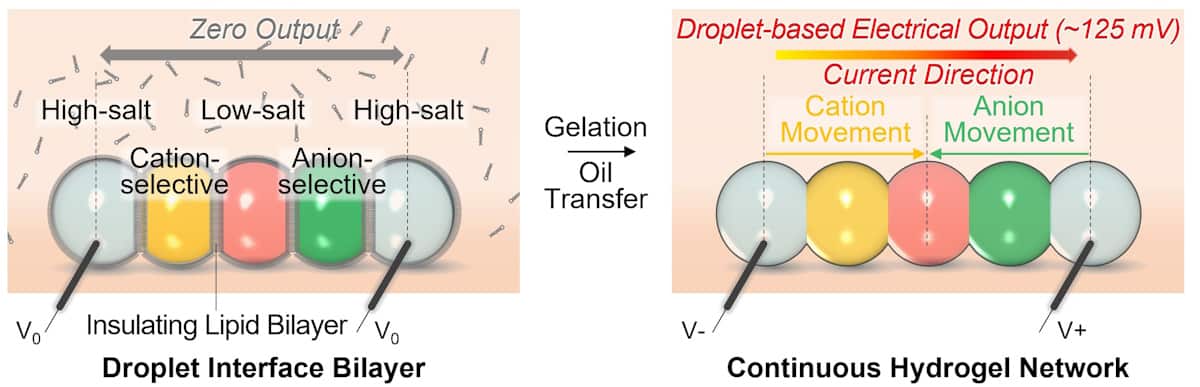
Each droplet in the chain is a three-dimensional network of polymer chains containing a large quantity of absorbed water and each has a different composition to establish a salt concentration gradient. Droplets are separated from their neighbours by a lipid bilayer that provides mechanical support and prevents ions from flowing between droplets.
The battery is turned “on” by disrupting the lipid bilayers (changing the medium in which the droplets are housed) and forming a continuous hydrogel (by cooling the droplet chain down to 4°C). The energy released from the ion gradients is transformed into electricity when the end droplets are connected to electrodes.
Activation process Left: before the battery is activated, an insulating lipid prevents ions flowing between droplets. Right: the power source is activated using thermal gelation to rupture the lipid bilayers. Ions then move through the conductive hydrogel, from the high-salt droplets at the ends to the middle low-salt droplet. (Courtesy: Yujia Zhang)
The researchers found that the current from their battery persisted for over 30 mins at 65 nW, even after storing the battery for 36 h. A network of droplets deposited in a hexagonal, flower-like assembly lit up a diode and elicited a calcium response from a three-dimensional network of neural cells.
Ultimately, the hydrogel structure could act as a power source for the external components of a biointegrated device.
“We are one of the leading pioneers to show ionic stimulation based on neural microtissues,” Zhang says. “In the last few years, because of the developments by materials scientists, we can create better ways to control those ions by using different ion-selective polymers based on the charge of different cations or anions.”
While the researchers triggered the battery via a temperature change in the current study, Zhang says that the research team is now controlling the battery’s off–on switch using light signalling. Other methods of activation include pH levels or the presence of certain levels of biomolecules, such as glucose.
“Biological scientists give us initiative to do biostimulation. They give us the goals to why this biostimulation is important,” says Zhang. “Our technique provides a platform…we can integrate it with other dopants, biomolecules, protein nanopores, etc, to achieve a lot of different types of functions and applications. So it’s kind of like an arsenal, and this work is the first step.”