This year’s Nobel Prize for Physics will be announced in just a few days’ time and it is possible that the award committee is still arguing over who will win the prize. The only thing that can be said with certainty is that no more than three people will bag the award this year – and this is a big challenge for the committee in the current era of collaborative science.
Many physicists, and indeed most people in the working world, understand the power of collaboration. From working groups to technical teams, most scientific breakthroughs today are the result of groups of people working together toward a common goal. No better example of this can be found in the circumstances surrounding the 2013 Nobel Prize for Physics, which was awarded for the discovery of the Higgs mechanism.
The prize was bagged by Peter Higgs and François Englert, who predicted the existence of the mechanism way back in 1964. However, it wasn’t until CERN’s 2012 announcement that physicists working on the Large Hadron Collider (LHC) had observed the Higgs boson, that speculation intensified about who would win the inevitable Nobel prize for the Higgs.
Choosing three from thousands
At CERN, the Higgs was detected by two LHC experiments – CMS and ATLAS – which involved thousands of physicists around the world. So, how could the Nobel committee recognize this achievement with a prize that can only be awarded to a maximum of three people?
Instead of the experimentalists, the committee chose to focus on the scientists who made the theoretical prediction in the 1960s. But even then there were more than three to choose from. The “Higgs six” who made major contributions in 1964 were Higgs, Englert, Robert Brout, Carl Hagen, Gerald Guralnik and Tom Kibble (Philip Anderson is also included by some). Sadly, Brout had died in 2011 – so the committee had five people to chose from. Exactly why they chose Higgs and Englert over the other three will remain a secret until 2063, when documents related to the decision will be released to the public.
Indeed, it can be difficult to pinpoint who was the first to do something in science. Even original thinkers like Isaac Newton admit that they are “standing on the shoulders of giants” when doing their research. And having a ubiquitous particle named after you is no guarantee of a Nobel.
No prize for namesake
The Higgs particle is a boson, which is any particle that has an integer value of quantum spin. The boson was named by Paul Dirac to recognize the Indian physicist Satyendra Nath Bose, who along with Albert Einstein developed the theory of bosons in the 1920s. But unlike Peter Higgs, Bose did not win a Nobel prize for this very important contribution to physics (neither did Einstein, but he already had a prize by then).
The obvious way to recognize the collaborative nature of science would be to award the prize to a group or organization. This practice is already followed by the Nobel Peace Prize, which has been awarded to the International Red Cross, the United Nations and other organizations.
While the physics prize has yet to embrace large collaborations, there was intense speculation in 2013 that the Higgs prize would mark a break with the three-person rule. Lars Brink, a Swedish particle physicist and chair of the Nobel Committee for Physics in 2013, shed light on why it didn’t break the rule when he told Physics World in 2019, “we don’t want 5000 people calling themselves Nobel laureates”.
But why not recognize the thousands of physicists who built and operated the amazing machines that first detected the Higgs boson? Cosmologist Brian Keating argues that the three-person restriction is bad for the public understanding of science because it suggests that breakthroughs are made by “one or two lone geniuses – usually white males – working without vast support networks behind them”. In a time when investment in science is so important, perhaps it is prudent to show that science is done by a wide range of people.
The discovery of the Higgs mechanism should become a symbol of how science is done in the modern age – often over long periods of time and by many people. A century ago, lone recipients of the prize such as Einstein were appropriate when individuals were in the position to make breakthrough discoveries on their own. More recently, the advancement of knowledge has relied on large collaborations and it’s time that the Nobel prize reflects that.
Physics World‘s Nobel prize coverage is supported by Oxford Instruments Nanoscience, a leading supplier of research tools for the development of quantum technologies, advanced materials and nanoscale devices. Visit nanoscience.oxinst.com to find out more.
If you have ever literally watched paint dry then you might have seen a drying drop of paint look somewhat like a fried egg with a yolk of colour surrounded by a pristine white halo. Other drops, meanwhile, might appear uniform in colour when dried.
Paint contains a mixture of substances including resins, pigments, additives and a solvent and because of this complex composition, various interactions are at play when paint drops evaporate.
Researchers from the University of Lyon went about testing this interplay and created five mixtures of a water-based acrylic paint and water and then put some drops onto heated glass slides. They then literally watched as the paint dried.
The team found that pigment concentration and temperature played a key role in how the liquid gelled and evaporated. This then impacted the size, shape and pattern of the dried drops.
Drops with lower pigment concentrations or deposited onto a lower temperature surface led to a “fried egg” appearance while more pigment and higher temperatures led to a more uniform dried pattern.
Optimal swimming
Drafting, or drag reduction, is an important element in races, especially when it comes to cycling where riders can save energy by riding behind a lead cyclist in a peloton. But what about open-water swimming?
The results showed that swimming directly behind a swimmer can reduce drag by up to 40%. Yet another good position is at the hip of a neighbouring swimmer, which reduces drag by 30% by literally riding the wave created by the other swimmer.
No doubt swimmers will now be buoyed by the opportunity to save some energy during races.
Iconic paper
And finally, Physics World received an e-mail today from Ian Galloway, a physicist in Pontivy, France, informing us that September 2023 marks the centenary of what he calls “one of the most iconic physics papers ever published”.
Galloway is referring to “Ondes et Quanta” by the French physicist Louis de Broglie, in which he proposed that matter is associated with a wave motion, a proposition that he developed more fully for his PhD thesis the following year.
“Wave particle duality was the final part needed for the wave mechanics jigsaw,” Galloway reminds us. “Following Planck’s quanta and Einstein’s work on the photoelectric effect, the wave particle duality set the scene for Schrödinger’s Wave Mechanics, which appeared in 1926. The well known de Broglie relationship λ=h/p ranks with E=hf and E=mc2 and is surely a historical development worth recalling.”
De Broglie went on to win the 1929 Nobel Prize for Physics. But what’s curious is that, as de Broglie himself later knew, most people assumed that it was his PhD thesis, published in 1924, that were the real deal.
Galloway, who is a Fellow of the Institute of Physics, which publishes Physics World, claims that no organisation, not even CERN – the lab de Broglie himself proposed creating in 1949 – made any comment at his death.
“He died largely forgotten and his close involvement laying the building blocks of quantum mechanics seems forgotten also,” Galloway concludes.
Nobel disciplines infographic: click to enlarge. (Courtesy: Hamish Johnston/IOP Publishing)
It’s a mug’s game, we know, but we just can’t help ourselves here at Physics World when it comes to predicting who will win the next Nobel Prize for Physics. The suspense will be over next week, but until then let’s have a bit of fun and speculate about the winner.
To my best recollection, we have only made one correct prediction in the past. That was in 2013 when Peter Higgs and François Englert bagged the prize for their prediction of the Higgs mechanism – work that they did way back in 1964. It would have been a genuine shock if the pair had not won the prize that year because it was in 2012 that physicists at CERN announced that the Higgs boson had been observed at long last.
Over the past few decades we have made many predictions that didn’t come true in the years they were made. But that means that we have built up a shortlist of candidates, some of whom have gone on to win prizes in later years. The 2022 prize is a great example of this. All three winners – Alain Aspect, John Clauser and Anton Zeilinger – were on our predictions list back in 2013. Also mentioned in our 2013 list (and our 2009 prediction) were Michael Mayor and Dider Queloz, who shared the 2019 prize with Jim Peebles.
So it seems that if you keep making predictions, they will eventually come true! And that takes us to our predictions for this year.
Predictive infographic
Recently, we have replaced our crystal ball with an infographic that charts physics Nobel prizes in terms of discipline (see figure). We believe that the Nobel committee tries to spread prizes out so it doesn’t look like one field is dominating the prize. But because the committee’s deliberations are kept top secret for 50 years, we have no idea if that is being done at the moment.
One thing that jumps out from the infographic is that in three out of the past six years, prizes have gone to physicists working in astronomy, astrophysics and cosmology. So our first impression is that the 2023 winner(s) will not be working in these fields. That rules out a prize associated with the James Webb Space Telescope – but stayed tuned in the future.
Last year’s award was in quantum physics, so it might seem foolish to predict another prize in that field. However, quantum computing has grown in leaps and bounds over the past few decades, so we are predicting a prize for developing the theoretical foundations of quantum computing. Potential laureates include Ignacio Cirac, David Deutsch, Peter Shor and Peter Zoller.
Another quantum prize that is a long time coming would go to Yakir Aharonov and Michael Berry for the discoveries that bear their names. These are the Aharonov–Bohm effect and the Berry phase – two quirky and profound consequences of the mathematics of quantum theory.
The infographic shows that there hasn’t been a prize in condensed matter since 2016, and 2018 was the last time we had a prize in atomic, molecular and optical physics. These are both huge fields, so look very promising for 2023 prizes. Some of our favourites working in these areas are Federico Capasso for his significant contributions to photonics; Lena Hau for her work on slow light; and Pablo Jarillo-Herrero for his work on twisted graphene.
One place to look for potential winners of the Nobel prize, is the list of winners of the Wolf Prize in Physics. The most recent winners were Paul Corkum, Ferenc Krausz and Anne L’Huillier “for pioneering contributions to ultrafast laser science and attosecond physics”. That fits in nicely with our expectation of an optics prize, so let’s add those three to this year’s list of predictions.
This years physics prize will be announced at 10:45 BST (or later) on Tuesday 3 October. As soon as the announcement is made, you can read all about it on the Physics World website.
Physics World‘s Nobel prize coverage is supported by Oxford Instruments Nanoscience, a leading supplier of research tools for the development of quantum technologies, advanced materials and nanoscale devices. Visit nanoscience.oxinst.com to find out more.
During the opening salvos of the Russian invasion of Ukraine, which began on 24 February 2022, academics across Europe quickly took to university mailing lists to discuss how to help their colleagues in Ukraine. While some Ukrainians managed to move to safer places across the continent, others decided to stay at home. Some 18 months on from the start of the conflict, Ukrainian cities such as Kyiv and Kharkiv are still being attacked, but a semblance of stability is beginning to emerge.
With Ukraine starting to see successes on the battlefield, some displaced researchers are slowly coming back to their home institutes. One of those is astrophysicist Oleksiy Golubov from Kharkiv National University (KhNU) – one of the country’s leading institutions. He left Ukraine when war broke out, moving first to the Astronomical Calculation Institute in Heidelberg, Germany, and then the Poznan Observatory in Poland. But in July he decided to return home (see box “Oleksiy Golubov – returning home to build a ‘Ukrainian Boulder’”). “I moved back to Ukraine largely because I felt that I was not in the right place,” he says.
Golubov’s research group, however, still faces major problems. A significant number of colleagues entered military service and some have sadly died. They include Mykhailo Lesiuta, one of Golubov’s first students, who joined the army in 2022 and was killed fighting in Donetsk on 11 December 2022, aged 25. While student numbers entering physics at KhNU have recovered to pre-war levels, those students are scattered, working from across Ukraine and Europe.
The scars left by the Russian army as it advanced to the outskirts of Kharkiv in the first days of the war are still noticeable. The KhNU’s School of Physics and Technology, one of four distinct physics schools at the university, was completely destroyed on 11 March 2022 by Russian shelling. “We only just repaired this building before the war began,” says Golubov. “We cannot have laboratory classes for our students as the laboratories are destroyed.”
Other KhNU facilities, such as the School of Physics and the Astronomical Institute, avoided structural damage but scores of windows were broken when the adjacent district administration building was hit on 1 March 2022 by two Russian missiles. The strike killed 29 people. One of Golubov’s students was in the building. “She was not harmed, but it was very close,” he says.
KhNU’s Astronomical Institute operates an observational station in Chuhuiv, 70 km south-east of Kharkiv. It includes a 70 cm optical telescope – which is used for asteroid photometry studies – as well as UTR-2, the largest telescope in the world for radio waves with decametre wavelengths. When Russian forces were pushed out of the region in April this year, astronomers discovered that the station has been ransacked and mined with explosives. “They could not steal the big telescopes, but they took away the CCD cameras – one of the most expensive parts of the telescopes,” says Golubov. However, UTR-2’s control room has been destroyed beyond repair and CCD cameras were later found riddled with bullet holes.
Oleksiy Golubov – returning home to build a “Ukrainian Boulder”
Back where he belongs Physicist Oleksiy Golubov moved to Germany and then Poland when war broke out but has now returned to Ukraine. (Courtesy: Oleksiy Golubov)
Oleksiy Golubov completed his studies at Kharkiv National University (KhNU) in 2008 before carrying out a PhD on galactic dynamics at the University of Heidelberg, Germany, which he completed in 2012. After a postdoc at the University of Colorado Boulder, US, Golubov returned to KhNU in 2014. Once the Russian invasion of Ukraine began in early 2022, however, eight of the 10 members of Golubov’s research group left Kharkiv, moving within Ukraine or fleeing to elsewhere in Europe.
As Golubov is unfit for military service due to a paralysed left hand, he was exempt from the ban on men aged 18–60 leaving the country. Eventually, he managed to travel, and spent time as a visiting researcher at the Astronomical Calculation Institute at the University of Heidelberg and the Poznan Observatory in Poland. “My motivation was that all work was done online anyway,” he says. “In Europe I had a more stable situation, an Internet connection, no air alarms.”
While Golubov and his parents could leave Kharkiv, his godfather was less fortunate, getting trapped in occupied territory for months. Golubov’s research institute continued to function online, and he taught four courses over the following academic year. He managed to keep up his research and recently published a reconstructed orbit of the first iron meteorite instrumentally captured during its fall.
But the past 18 months have been far from easy for Golubov, who sank into a deep depression. “The conditions for my work were perfect – I had accommodation, I had good problems to work on and my colleagues and advisers were super motivating,” he says. “[But] I did almost nothing useful, I did not know what to start with.”
Shortly after Ukrainian forces pushed back and liberated Kharkiv, his godfather’s house was destroyed by Russian shelling along with most of Golubov’s possessions, which had been stored there temporarily. “My PhD hat from Germany, all my memories and, most unpleasantly, my library where I had hundreds of books, mostly about physics, mathematics, astronomy [were destroyed].”
Yet Golubov is trying to stay upbeat. Since 2022 he has written more than 1000 Wikipedia articles in Ukrainian about astronomy and his home city of Melitopol. “[It] is the city of my childhood, the city of my dreams,” he says. “I want to move to Melitopol and turn it into a Ukrainian Boulder, a Ukrainian Heidelberg. All my work in Kharkiv, Europe and America [is about] gaining enough experience to be able to go to Melitopol and work there fully independently.”
While foreign aid such as grants and collaborations initially targeted Ukrainian researchers with temporary positions abroad, there are now calls to support researchers in the country (see box “#ScienceForUkraine – providing support for Ukrainian researchers”). Indeed, a survey released in July revealed that 70% of Ukrainian scientists are in a worse financial position than in the first two months of the war, with only a third now having enough money for food.
Ukraine still faces significant human, material, monetary and security challenges that are preventing researchers from doing research or teaching students. Golubov’s funding situation is similarly precarious. His grant from the Ukrainian National Research Foundation recently ended and his position at KhNU has been reduced, resulting in his income falling by 80%. “If I did not have some savings, I am not sure if I could survive,” he says.<
Occupied territories
Dozens of other universities or institutes in Ukraine continue to be occupied by Russian forces, however. Indeed, some have been in Russian hands since 2014 following the annexation of Crimea and the war in the Donbas, which led 26 higher-education institutions to be relocated to other parts of Ukraine. One of those affected is Melitopol State Pedagogical University (MSPU), which is an occupied university in southern Ukraine. Founded exactly a century ago, before the war it hosted several modern laboratories and trained some 2000 teachers each year.
Katerina – who does not want to reveal her full name for fear of reprisal – was in Melitopol in March 2022 when war broke out. “In the first days, when we did not know what was happening in the university, the work of the university almost stopped,” she told Physics World. “A month later, we started working remotely and resumed the educational process.”
Teachers were called to return to work face-to-face and soon it became impossible to live under occupation. “Over half of my colleagues did not co-operate with the occupiers,” she says. “Then Russian soldiers came with machine guns and forced them to write applications for employment at a new Russian university.”
Katerina decided to flee Ukraine and her journey took her across five countries. She now lives and works elsewhere in Europe but the events of the past 18 months have left a deep wound. “[The occupation] was a shock. I couldn’t give lectures. It was very difficult for me to communicate with students because I did not know how to encourage them,” she says. “For seven months after the start of the full-scale war in Ukraine, I could not write a single scientific paper.” Occupying forces took over MSPU, merged it, renamed it and appointed new leadership. The university continues to educate its students online, both in free and occupied territories.
Part of that “freedom” has been provided by the Internet, which continues to play a key role for Ukrainian researchers and teachers. The Ukrainian Online Physics School was set up in July 2022 by teachers in Kherson and Kharkiv distraught to see that displaced children had become deprived of a quality physics education. The school now educates displaced 13–17-year-olds and, over the past year, has held online physics classes three hours a week, three times a week.
The school has received support from Alexey Boyarsky, a cosmologist from the University of Leiden in the Netherlands, who helped initiate the project. Boyarsky and colleagues have also helped to supply battery packs so that teachers can continue lessons during blackouts, as well as terminals to access SpaceX’s Starlink satellite constellation, which provides Internet in the country.
Despite the hardship, some sort of normality is starting to return. In August the Lviv Data Science Summer School 2023 was held in-person at the Ukrainian Catholic University, organized with aid from the non-profit US-based Simons Foundation and the US National Academy of Sciences.
“Lectures were held underground so even in the case of an alarm we could continue,” says Oleksii Ignatenko – a mathematician from the university, who co-organized the event. Still, there were interruptions. “One night was quite disturbing, with alarms at 4 a.m., so lecturers had to go to the shelter,” he says, though insisting that, despite these issues, the school was a “huge success”.
Ukrainian science is still in peril and the country will need peace for it to return to pre-war levels. Yet researchers in Ukraine are trying to stay positive, hoping that international organizations and individuals can help Ukrainian science to either slow its decay or even reverse it. The most important action anyone can take to help, it turns out, costs nothing. “I would ask people not to ignore what is happening in Ukraine,” says Golubov. “These are lives of real people who are suffering under Russian occupation.”
#ScienceForUkraine – providing support for Ukrainian researchers
#ScienceForUkraine is a community group of volunteer researchers and students from institutes in Europe and around the world who are supporting the Ukrainian academic community. They say help is possible in three different ways. One is to provide resident research opportunities to Ukrainian researchers abroad. The second is to create paid remote research positions, allowing Ukrainian scientists to work alongside international researchers while staying at their home institutions. The final approach is to fund research groups in Ukraine directly. Even small things, such as facilitating experiments, sharing article submission fees or sponsoring academic travel, can make a difference. Programmes that support researchers from Ukraine can be found at www.scienceforukraine.eu, including a £200,000 IOP Benevolent Fund that has already helped 31 Ukrainian physicists, with funds still available for applicants.
PET is a medical imaging technique commonly used for diagnosis of cancers and neurodegenerative disease, and the CTR is a key parameter influencing the performance of TOF-PET scanners. Achieving a value below 100 ps would provide major clinical benefits, such as improved image quality, shorter acquisition times or reduced radioactive dose.
With no detectors previously available that could achieve a CTR of 100 ps or less, while maintaining good sensitivity and energy resolution, Fiammetta Pagano and co-authors investigated whether heterostructures – which combine two materials with complementary properties – could meet this challenge.
The researchers found that heterostructures formed from alternating layers of high-density bismuth germanate (BGO) and the fast plastic scintillator EJ232 show potential for improving CTR while maintaining reasonable sensitivity compared with standard bulk crystals.
Since the paper was published, the researchers have continued to progress their work in this field. This has included developing a better understanding of the scintillation properties of the heterostructures, as well as improving the time capabilities of BGO and EJ232 heterostructures using different readout approaches. The team is also testing several fast nanoscintillators that could replace EJ232 to further enhance performance.
“One of the advances is the use of double-sided readout applied to heterostructures – where the pixel is read out by a silicon photomultiplier from both of its extremities – to improve the CTR,” Pagano explains. “These results will be presented in the next IEEE Nuclear Science Symposium and Medical Imaging Conference and we hope to publish them soon.”
The researchers have also recently constructed a heterostructure-based TOF-PET module, which they envisage will soon be ready for testing.
Pagano notes that while the concept of heterostructures had been introduced previously, it remains a relatively new area and the TOF-PET community is becoming more and more interested in this approach. “In our paper we showed the CTR improvement achievable with BGO and EJ232 heterostructures compared to BGO, but we also pointed out the main limitations together with some suggestions about how to overcome them,” she explains.
Pagano tells Physics World that she was really surprised by the news that her paper had won the Roberts Prize. “I am only at the beginning of my career as a researcher and I am honoured that one of the main studies I conducted during my PhD has been awarded,” she says.
A 20-qubit quantum processor has been used to simulate the classical and quantum nature of non-equilibrium phase transitions. The work was done by researchers in the US and Canada, who used a processor made by Quantinuum, which is based in the UK and US. The team’s success suggests that small-scale quantum processors could soon be solving some problems that are beyond the capability of conventional computers – an achievement called quantum advantage. This advantage could be put to use in fields including condensed matter, quantum optics and metrology.
As well as being a central pillar of physics, phase transitions are part of our daily lives – think of the evaporation of liquids to gas or the formation of ice from liquid water. Physicists have studied phase transitions for many years and have developed a good understanding of the relevant processes when systems are at thermodynamic equilibrium. In systems that are away from equilibrium, however, the situation becomes more complex. And if such systems are quantum in nature, they are too complicated to be simulated using conventional computational methods.
This is where quantum computers could come to the rescue. In principle, quantum processors will outperform conventional computers when doing certain complex calculations. However, we are still far away from creating large-scale quantum computers that can run big algorithms. This would require the integration of several thousand to a million quantum bits (qubits), and today’s quantum processors only integrate a fraction of this. Another important challenge facing those building quantum computers is that today’s qubits are noisy, and therefore very prone to errors that quickly destroy quantum calculations.
Clever techniques
This shortcoming has not stopped researchers from using clever techniques to get the most out of current qubit technologies.
Now, researchers at Quantinuum, the University of Texas at Austin, Princeton University, and the University of British Columbia have used Quantinuum’s H1-1 quantum processor to calculate a 1D model of non-equilibrium phase transitions. This processor comprises 20 trapped-ion qubits.
The model is concerned with the process of directed percolation (DP), which occurs when a fluid is filtered by using gravity to pass it through a through porous material. The relevant phase transition is from the permeable (percolating) state to an impermeable (non-percolating) state. The researchers described the time evolution of the system using a discrete-time model that is also used to simulate contact disease spreading.
Modest processor
While the H1-1 processor offers a modest number of qubits, the qubits have low error rates. Furthermore, a method called qubit reuse was employed to effectively turn the 20-qubit quantum processor into one that comprises 73 qubits. Error-avoidance techniques were used to deal with qubit noise. This involved making measurements at varying levels of noise, including some that are introduced intentionally. Considering these varying levels together allowed the researchers to extrapolate back to zero noise.
Discrete-time simulations were performed on both sides of the phase transition and near the critical point. The results of these simulations showed evidence of a DP phase transition for both classical and quantum versions of the model.
While these calculations came close to achieving quantum advantage, they can still be done on a conventional computer. But what is important is that the researchers have developed the appropriate tools for scaling-up the calculation to run on larger quantum processors. The researchers say that quantum advantage can be reached with only a modest increase of qubit number and a slight reduction of error rates. This would pave the way to calculations that would provide insights into non-equilibrium processes in fields such as condensed matter, quantum optics and metrology.
Higher dimensional problem
David Hayes, a senior R&D manager at Quantinuum, says that the research suggests that we do not need to wait for enormous quantum computers that are 10 years away. Instead, he says that error mitigation is here to stay and will be part of quantum computing applications for the foreseeable future. He adds that the team would like to push their research further on at least two fronts. First, they aim to achieve even lower error rates on their quantum computer. Second they will tackle a higher dimensional problem, which would be more beneficial for showing a quantum advantage. He points out that this will require more qubits than H1-1 was able to support.
Igor Lesanovsky is a physicist at the University of Tübingen in Germany and was not involved in this research. He thinks that the research shows nicely what type of questions a quantum computer could answer in the future – in particular, investigating the impact of quantum effects on emergent many-body properties such as phase transitions. These emergent effects appear only in sufficiently large systems and at sufficiently long times, which makes experimental and theoretical studies difficult.
Lesanovsky says the work is “really impressive” because it unambiguously shows signatures of a non-equilibrium phase transition on a quantum device and extracts critical exponents. In order to shed light on some unanswered questions, he hope that the techniques can be extended to study large quantum systems over very long times.
This episode of the Physics World Weekly podcast looks at how studying the deep-ocean floor could help scientists who are scanning the cosmos for signs of intelligent life. Our guest is Pablo Sobron of the SETI Institute and Impossible Sensing, who explains how the Laser Divebot spectrometer is shedding light on the biochemistry of the seafloor – and what this information tells us about the biodiversity of the oceans and how life could emerge elsewhere in the universe.
Also in this episode, Aarhus University’s Jeffrey Hangst talks about the first ever observation of freefalling antimatter – which was made by Hangst and colleagues using the ALPHA-g experiment at CERN. While the experiment confirmed that antimatter falls down rather than up, there is still a tantalizing possibility that future experiments could identify a small difference in how matter and antimatter respond to gravity.
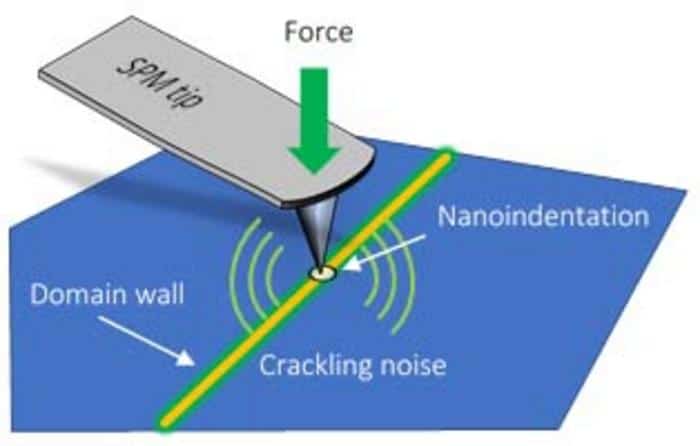
A new microscopy technique to measure “crackling noise” on the nanoscale could have a wide range of applications, from helping researchers better understand weak spots in metals to investigating biological structures such as kidney stones so they can be destroyed without the need for major surgery.
When a material is put under stress or strain, it triggers a series of atomic processes that can change a smooth motion such as a simple compression into a sequence of jerky ones. The result is a phenomenon known as crackling noise, which sounds rather like a creaking door but occurs in avalanche-like cascades that span many size scales and follow universal power laws.
“A typical case is when a compression produces cracks that do not progress in a simple line, but show complex patterns with lots of branches, like in a flash of lightning,” explains Ekhard Salje, a solid-state physicist at the University of Cambridge, UK, who co-led the new study with Jan Seidel of the University of New South Wales (UNSW) in Australia. “When there are many cracks, the material softens and may even disintegrate.”
Crackling noise was first studied in magnetic materials, where it is known as Barkhausen noise after the German physicist who discovered it in 1919. It is now used in materials science to investigate metal and alloys; in geophysics to study earthquakes; and in solid-state physics to develop memory devices in ferroic materials such as BaTiO3. “Each time the memory is activated, it initiates an avalanche,” explains Salje. “This avalanche helped researchers identify which materials were good for devices like memory switching.”
Observing the full spectrum of crackling noise
In the new work, members of the Cambridge-UNSW team used a technique based on atomic force microscopy (AFM) nanoindentation. They inserted the AFM probe extremely slowly – over a period of many hours – into the sample being studied. This slow insertion is important because if the probe moves too fast, even state-of-the-art electronic equipment will pick up too many overlapping signals, and thus see a continuous process rather than individual jerks, Salje says. This overlap makes it difficult to identify individual crackling noise signals.
Crackling noise microscopy detects nanoscale avalanches in materials using a scanning probe microscope (SPM) tip. Courtesy: FLEET
Thanks to their patient approach, the team was able to observe the full spectrum of crackling noise for the first time and relate it to specific forms of avalanche.
According to the researchers, the technique could have several uses. These include investigating special alloys for aircraft wings; studying corrosion in metals to identify weak spots where the metal breaks on the atomic scale; and testing the viability of new 3D printed materials. Salje says he is particularly interested in studying biological materials such as bones and teeth, which both emit crackling noise. Another important project, with the Addenbrooks hospital in Cambridge, is to study the crackling noise in kidney stones.
“We can imagine building a tube with a needle at the end and testing kidney stones,” Salje explains. “This would help us to find out how to destroy them from the outside with having to resort to more invasive surgery.”
Seidel adds that he and his colleagues at the UNSW plan to use the technique to study topological defects in various functional materials. “We will also be looking at how to improve the measurement approach itself using an AFM system,” he reveals. “At the moment, I’m looking for a new PhD student to continue this work since the lead author of this work, which is published in Nature Communications, recently graduated from my group.”
A study on photoplethysmography (PPG) algorithms has won its authors the Martin Black prize, awarded to the best paper published in Physiological Measurement during the previous year.
PPG is an optical technique commonly employed in smartwatches, fitness trackers and pulse oximeters to monitor physiological parameters. A key step in analysing the PPG signal, a measure of the pulse, is detection of individual heartbeats in the signal. In their award-winning investigation, Peter Charlton from the University of Cambridge and collaborators evaluated the performance of the different algorithms used to detect heartbeats in PPG signals.
The paper, Detecting beats in the photoplethysmogram: benchmarking open-source algorithms, describes a framework for testing PPG beat detection algorithms. The researchers used this approach to assess 15 open-source algorithms against reference beats from electrocardiogram signals in eight freely available datasets. They also investigated how algorithm performance is affected by patient demographics and during arrhythmias (abnormal heart rhythms such as atrial fibrillation).
“I was keen to understand how best to detect heartbeats in the PPG and to understand how well they could be detected in different settings, such as during exercise and in babies,” says Charlton.
The team found that most beat detectors performed well in the absence of movement, though their performance was poorer during exercise, in neonates (who have higher heart rates than adults) and during atrial fibrillation. In particular, the results identified two open-source algorithms that performed best across a range of use cases. Charlton suggests that the team’s use of open-source algorithms may be key to the study’s success, as people can easily employ the recommended beat detection algorithms by simply downloading them and viewing the source code.
The study should prove valuable for academic researchers who need to ensure that their PPG signal analyses are accurate, as well as enabling device designers to select the most appropriate algorithm for use in a device. Charlton says that the findings will also be helpful for clinicians. “Hopefully, the use of the best-performing algorithms will result in more accurate analyses – such as assessing heart rhythm and detecting arrhythmias from the PPG,” he explains. “Ultimately, it will be helpful to patients, as the measurements taken from them will be more accurate, leading to better-informed clinical decision making.”
Charlton and colleagues are currently conducting the SAFER Wearables Study to investigate the performance and acceptability of wearable devices for detecting atrial fibrillation, the most common arrhythmia. Atrial fibrillation increases the risk of stroke and is often not recognised because it can occur without symptoms. Once diagnosed, however, well-established interventions exist to reduce the risk of stroke.
“Detection of atrial fibrillation is one of the most promising applications of PPG-based devices,” says Charlton. “In this study we are assessing whether PPG-based devices perform well enough to be used to screen for atrial fibrillation in the general population. If so, this could help improve the detection of atrial fibrillation, and ultimately contribute to preventing strokes.”
Charlton tells Physics World that he was pleased to receive the Martin Black prize as it hopefully indicates that the team’s research is helpful. He points out that beat detection has received less attention than other algorithms, such as those used to estimate blood pressure from the PPG. “I think the community probably particularly valued an assessment of this type of algorithm, as comparatively less was known about their performance than other types of algorithms.”
“I am grateful for the input of team members, and those who originally developed the algorithms, without which this work would not be possible,” he adds. “I’m interested in exploring why we were awarded this prize, because understanding this might help us understand the most valuable areas we could work on in the future.”
Antimatter does not “fall up”, but rather responds to the gravitational pull of the Earth in much the same way as normal matter. That is the conclusion of physicists working on the ALPHA-g experiment at CERN, who have made the first direct observation of free-falling antimatter atoms.
The experiment helps rule out the idea that a difference in their responses to gravity is somehow responsible for the fact that there is much more matter than antimatter in the visible universe. However, the measurement still leaves open the tantalizing, but very unlikely, possibility that antimatter and matter react slightly differently to gravity.
Antimatter was first predicted in 1928 and four years later the first antimatter particles – anti-electrons, or positrons – were observed in the lab. Antimatter particles appear to be identical to their matter counterparts, but with their charge, parity and time reversed. So far, studies of antiparticles suggest that they have the same masses as their counterparts and that they respond to gravity in the same way.
Banished from sight
This similarity suggests that antimatter should have been produced in the same quantity as matter during the Big Bang. This flies in the face of what we know about the visible universe, which appears to contain much more matter than antimatter. As a result, physicists are searching for subtle ways that antimatter differs from matter, because finding such differences could help explain why matter dominates over antimatter.
Indirect measurements of the effect of gravity on antimatter suggest that matter and antimatter both respond in the same way to gravity. However, the difficulties of working with antimatter meant that a direct observation of antimatter falling freely under Earth’s gravity had not been made.
While antimatter can be made in a the lab, it will annihilate upon contact with matter in an experimental apparatus. So great care must be taken to accumulate enough antimatter to do an experiment. Over the past decade, the ALPHA team at CERN have perfected the magnetic trapping of antimatter under high vacuum to minimize annihilation. Now, they have created a trap within a tall cylindrical vacuum chamber called ALPHA-g, which allows them to observe whether antimatter falls downwards or upwards.
Their experiment involves filling the chamber with antihydrogen atoms – which each comprise an antiproton and a positron. The positrons are collected from a radioactive source and the antiprotons are created by firing protons at a solid target. Both types of antiparticle are very carefully slowed down and then combined to create antihydrogen.
Escaping the trap
The ALPHA-g experiment begins with the antihydrogen magnetically trapped in the centre of the cylinder. Then the trapping field is dialled down, so that antiatoms began to escape the trap. These escapees strike the walls of the chamber, where annihilation creates a flash of light within a scintillation detector. The team observed about 80% of the annihilations below the centre of the trap, suggesting that the antiatoms fall under gravity once released from the trap. This was confirmed by repeating the experiment more than a dozen times. The team did not observe 100% of the antiatoms moving downwards because the thermal motion of the particles sent some of them upwards and they annihilated before they could fall back again – explains the ALPHA-g spokesperson Jeffrey Hangst, who is at Denmark’s Aarhus University. Hangst told Physics World that the experiment is consistent is with antihydrogen falling down.
However, ALPHA-g found that the antiatoms experienced an acceleration due to Earth’s gravity that is about 0.75 of that experienced by normal matter. While this measurement has a low statistical significance, it offers tantalizing hope that physicists could soon discover a difference between matter and antimatter that could point towards new physics beyond the Standard Model.
Graham Shore of the UK’s University of Swansea tells Physics World that the current ALPHA-g result should not be interpreted as evidence that antimatter responds differently than matter in Earth’s gravitational field.
“General relativity predicts that matter and antimatter fall at exactly the same rate, so a future measurement of any difference, however small, would imply radically new physics,” explains Shore, who was not involved with the ALPHA-g experiment. “One possibility would be the existence of a new gravitational strength force mediated by a massless ‘graviphoton’, though it is difficult to see how this could have remained hidden from precision gravitational experiments with matter.”
We will have to wait for more data from the experiment because the ALPHA-g has been dismantled and a spectroscopy experiment has been put in its place at CERN. Hangst and his colleagues are currently fixing a known design flaw in a magnet in ALPHA-g and working out how they can laser cool the antihydrogen atoms to improve the performance of the experiment.