For millennia, humans have used units of measurement based on aspects of the human body. Familiar examples include the fathom (arm span) and the qubit (forearm length). Our guest in this episode of the Physics World Weekly podcast is the Finnish social scientist Roope Kaaronen, who has studied the development and use of body-based units in 186 cultures around the world.
While many traditional units have been superseded by international standards, Kaaronen tells Physics World’s Margaret Harris that some body-based units are alive and well today, and they can sometimes be more useful than their modern counterparts. Useful units include those that emerged from the need to fit technologies such as skis and kayaks to individual users. Indeed, Kaaronen says that the existence of such units suggests that rather than being a modern concept, the idea of ergonomics has been around for a very long time.
Also in the podcast, Physics World editors chat about the blockbuster film Oppenheimer.
Quantum computing is a rapidly evolving technology offering the promise of exponentially greater computing power than that achievable by today’s classical computers. So could the field of medical physics exploit these emerging systems, and how best could such immense processing power be harnessed for clinical benefit?
Speaking at the recent AAPM Annual Meeting in Houston, TX, Amit Sawant from the University of Maryland School of Medicine examined the potential applications of quantum computing within radiation therapy. “Radiation oncology as a discipline is probably more power hungry than most. We have large, spatially and temporally rich datasets, and we also have very intricate clinical workflows,” he explained.
Looking at advances in traditional computing technologies, starting from the first general-purpose digital computer built in 1945, Sawant noted that “every three or four decades we have pretty much increased our computational power by six orders of magnitude”. Quantum computers, however, have potential to massively surpass that progress by producing an exponentially higher increase. “That’s humbling and really expands our thinking,” he told the audience.
Appropriate applications
Classical computers store information in “bits”, whereas quantum computers use quantum bits, or “qubits”. These qubits are based on a physical system that can be in either of two quantum states (such as the up and down spin states of an electron, for example, or the horizontal and vertical polarization of a photon). The big difference is that a while a bit can be either 0 or 1, qubits can also exist in a superposition of the two states. This results in a far greater storage capacity – with the amount of data that can be stored increasing exponentially with the number of qubits – and an equivalent increase in processing power.
Within radiotherapy, access to higher speed computing could help in many day-to-day clinical tasks, such as contouring, image reconstruction, plan optimization and dose calculations, Sawant explained. But he pointed out that conventional computing will improve to meet these needs, with 10- or 100-times faster computers likely emerging over the next few years. “This is not really what quantum computing needs to be harnessed for,” he said.
Instead, he suggested, radiation oncology should exploit two key properties of quantum computers: their vast storage capabilities and, once large amounts of data are stored, their ability to perform operations on all these data simultaneously. “These two properties make quantum computing ideal for radiotherapy optimization, because we have lots of variables on which we need to run the same operation to find the global minimum.”
Sawant explained that radiotherapy optimization is a computationally hard and complex problem, with various assumptions and approximations employed to create an optimized plan in a clinically viable time. But as delivery techniques become increasingly complex – using non-coplanar beams or multiple arcs, for instance – this approach doesn’t always guarantee an optimum result. Quantum computers could remove the need for approximations and guarantee that global minima are reached, he said.
He described an example of such a complex optimization: real-time volumetric motion management for radiotherapy of moving tumours. “We should not deliver radiation by just chasing the target, we should be chasing the entire volume because it is all affected by radiation,” he explained. Including surrounding normal tissue into the optimization process, however, makes this a huge problem. “We use a combination of particle swarm optimization and mixed integer programming to achieve this, which gives dosimetric benefits, but is not practical in the clinical environment.”
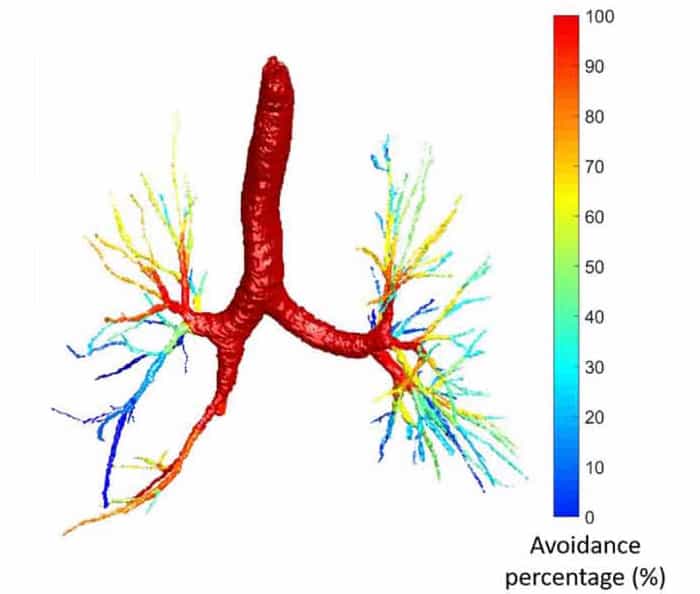
Ventilation map Functionally weighted airway sparing aims to preserve lung function after treatment. (Courtesy: Phys. Med. Biol. 10.1088/1361-6560/ab9f5d)
Sawant and his team are also investigating functional lung sparing, in which a radiotherapy plan is created that ensures ventilation is preserved after treatment. This is another highly complex problem – with each airway segment in the lung designated as an organ-at-risk (OAR), instead of the usual 10 or 20 OARs, there are now 250 to consider. Again, this can be achieved using swarm optimization techniques on very high-end computers, but the process still takes several hours to several days.
“These problems definitely can be tackled by quantum computers,” said Sawant. “But that’s still thinking small. What if you had a million or a billion times higher computational power, what could you do then?”
Future gazing
One limitation of current radiotherapy is its anatomy-focused approach, in which each organ is treated independently. The human body, however, contains many interacting systems – the cardiovascular system, the respiratory system and so on – that really should be considered together. For example, Sawant explained, if radiotherapy affects the lungs then the heart gets stressed, and when the heart is stressed the lungs have to work faster to produce the same output. But currently, treatment plans aren’t optimized to preserve function in the two organs simultaneously.
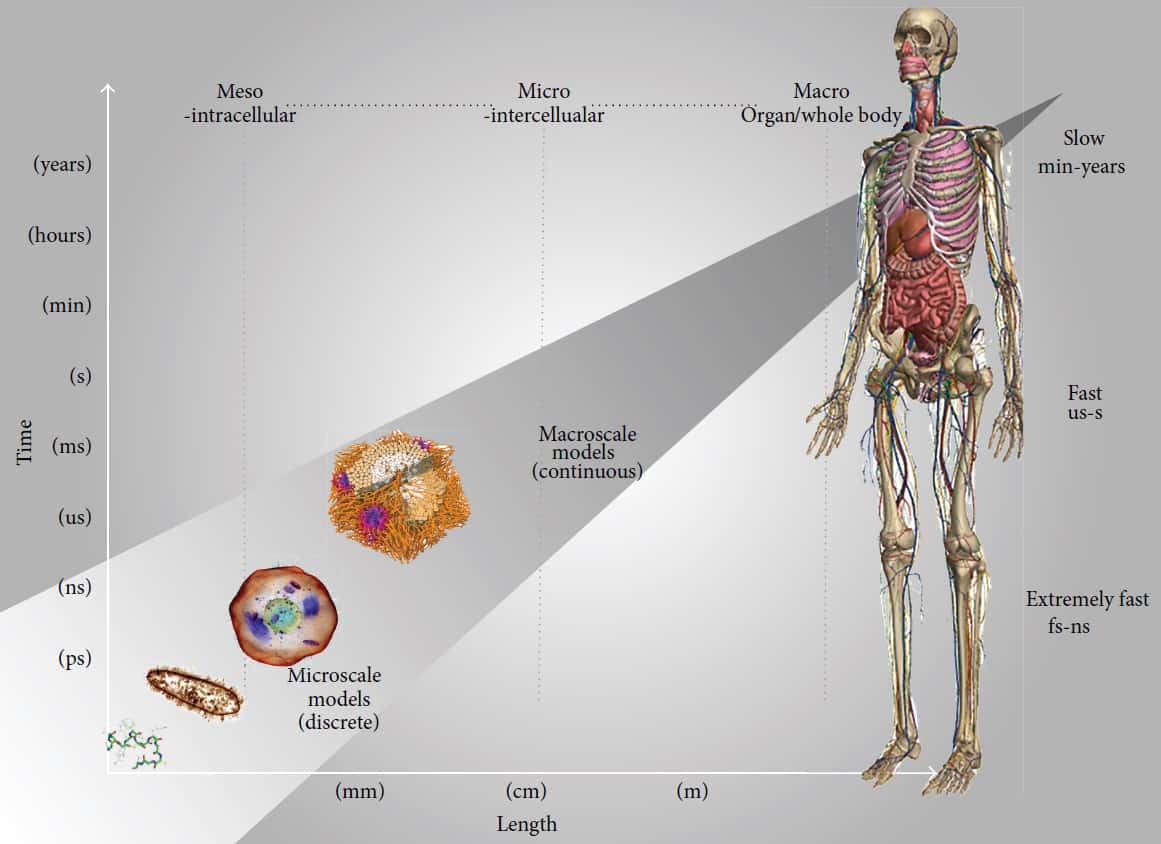
Digital twin Multiscale models of the human body that span multiple time and length scales could help predict treatment response. (Courtesy: CC BY 3.0/BioMed Res. Int. 10.1155/2014/902545)
“The next step is to look at all of the human body as a set of interconnected systems – we cannot even visualize doing that right now because we don’t have the computational power,” said Sawant. “The optimization problem is becoming more and more exponential in its scope. Quantum computing may help us solve these large problems.”
Looking further into the future, Sawant proposed the idea of creating a radiotherapy-specific digital twin of a human. This would be a multiscale model, ranging from the cellular level to the anatomic and system levels, that should more accurately predict a patient’s response to radiotherapy. It could also enable optimization over multimodal treatments, including chemotherapy, immunotherapy and surgery. “This is a problem that’s worthy of such high computational power,” he said.
“Quantum computing represents intriguing possibilities for oncology. It forces us to think bigger than we have ever before,” said Sawant. He emphasized that this is not an immediate solution, as it will require the development of very different algorithms and data structures to fully exploit its potential. “But overall, I think the future is very exciting,” he concluded.
As for the likely first role of quantum computing in radiation oncology, Larry Antonuk from the University of Michigan, who organized this AAPM session and presented the introductory talk, suggests that treatment planning may be first to benefit.
“Considering the challenges facing the ambitious goals for quantum processor development and quantum error correction, it’s likely we’ll first see rudimentary (followed by increasingly sophisticated) efforts to harness the growing capabilities of quantum computing to improve the quality of treatment plans,” Antonuk tells Physics World. “This will eventually be followed by efforts to provide real-time improvement to the precise delivery of radiation therapy beams.”
Researchers in China have shown how measurements of strain, temperature and vibration can be made simultaneously on a single optical fibre. This could be used to create a fibre-based system to monitor a number of different physical parameters in infrastructure such as buildings, bridges and railways.
The work was done by Xinyu Fan at Shanghai Jiao Tong University and colleagues and the their system uses two successive light pulses to measure three different types of light scattering in real time.
Distributed fibre-optic sensing (DFOS) is used for monitoring large, complex infrastructures. Optical fibres are attached to parts of the infrastructure and are subject to high-intensity light pulses. Some of this light will interact with the fibre and be scattered back to the source, where it is detected.
Single end
This backscattered light contains information about the state of the fibre including its temperature, strain, and mechanical vibrations. This information is extracted in real time with the help of specialized algorithms. A key benefit of this “single end” approach is that it can monitor the entire length of an optical fibre, which can be kilometres in length, using equipment installed at one end of the fibre.
However, current DFOS sensors tend to only measure a single parameter at a time, which limits their use. This limitation arises because DFOS involves three different types of scattering and each type needs to be monitored with a different approach – and combining the three had been a costly and complicated endeavour.
One scattering effect used in DFOS is Rayleigh backscattering, which occurs when the incident light scatters from microscopic density fluctuations in the fibre. This scattering arises because the refractive index of the fibre is related to its density. By monitoring the interference between this backscattered light and a reference beam, researchers can monitor mechanical vibrations in the fibre with extreme accuracy.
Quantized vibrations
Another relevant effect is Brillouin scattering, which occurs when incident photons interact with acoustic phonons. The latter are quantized, long-wavelength vibrations in the fibre. This results in a shift (up or down) in the energy of scattered photons and is detected as a change in the wavelength of some of the detected light. Brillouin scattering provides information about strain and temperature in the fibre.
The third interaction is Raman scattering, which is similar to Brillouin scattering but involves interactions between photons and shorter-wavelength optical phonons in the fibre. This interaction is used to monitor the fibre’s temperature alone, without being affected by strain.
Now, Fan and colleagues have developed a hybrid DFOS system that monitors all three of these scattering processes at once. This is done by firing two successive light pulses into the fibre and analysing the light that comes back. The first pulse is optimized to measure Rayleigh backscattering, while the second is optimized for measuring Brillouin scattering. Raman scattering data can be extracted independently from measurements on both pulses.
The team was able to achieve the simultaneous measurement of strain, temperature and vibration using a single fibre that was about 9 km in length.
With the early success of their new approach to DFOS, the team now hopes its technology could soon be adapted to monitor complex, large-scale infrastructures in real time.
Such systems could be a great help in the development of “smart cities”, in which devices, systems, and sensors are seamlessly interconnected to monitor the patterns, trends, and needs that emerge in complex urban landscapes. In turn, this could help to boost the efficiency and sustainability of these communities, while improving quality of life for the many people who call them home.
Curtains of light The book explains how the aurora is created by solar winds, and where you can go to see and photograph it. (Courtesy: Liz Kay)
Kids have an insatiable appetite for knowledge and love to ask questions, sometimes to the exasperation of parents and carers. Why is the sky blue? Why do leaves change colour from green to orange? Why is blood red, but our veins blue?
If you know someone young who is curious about the world around them, then Can You Get Rainbows in Space?, a new children’s book about light and colour, could be for them. Written by planetary scientist Sheila Kanani and illustrated by Liz Kay, it is a compendium of space, science and light, told through the colours of the rainbow from red to violet and beyond.
Empty void The blackness of space is also tackled in Can You Get Rainbows in Space? (Courtesy: Liz Kay)
After introducing what is meant by colour and light, each chapter focuses on a particular colour of the rainbow. Featuring fun scientific facts and trivia, every page has been nicely designed with attractive illustrations so it doesn’t feel too dense and keeps children interested.
Examples of the trivia include the fact that humans tend to avoid blue food because of the colour’s association with mould, and that carrots started out white before turning other colours such as purple and orange thanks to farming.
But Can You Get Rainbows in Space? does not just look at the six distinct visible colours. The latter chapters go beyond the rainbow to examine ultraviolet, infrared and fluorescent light, as well as what the symbolism of the rainbow represents.
I gave the book to my seven-year-old son Henry, to gauge his thoughts. He often comes home from school telling me his favourite fact of the day. “Did you know that cats can see really well in low light” was one such recent example. So this book sounded like it would be right up his street – presented at a level at which he would be able to understand the concepts and take something from it.
Despite being more than 100 pages, Henry devoured the contents over just four sittings, which is perhaps the best indicator of how much the book piqued his interest.
The following are his thoughts, edited for clarity.
“This book is about the colours of the rainbow. Each colour is given around 10 pages that contain loads of exciting scientific facts as well as details about all sorts of different things.
“I really like the facts – such as, if I put my hand on the top of a fire, the temperature could be between 500 and 1000 °C, and yellow or orange. But some super-hot fires can be even hotter, around 1000 to 3000 °C, and are blue in colour.
Look up Observing the universe is done using wavelengths from across the electromagnetic spectrum. (Courtesy: Liz Kay)
“Another fun fact is that flamingos are pink because of what they eat. My favourite fact is that the Sun isn’t actually yellow, but green (if you measure the energy of the Sun from space)!
“I like how the pages in each chapter are the same colour it is describing and how each page is full of fun pictures that make you want to read the facts and find out more.
“This is a fun book for children who love to find things out. Five stars.”
There you go: Can You Get Rainbows in Space? gets the thumbs up from Henry and the thumbs up from me for providing a necessary resource that parents and carers can refer to when they find themselves on the receiving end of countless questions about the colours we see in the natural world.
2023 Puffin Books 128pp £14.99hb
Michael Banks is news editor of Physics World (see link below to his author page) and Henry is his son
Scientists in New Zealand have combined two wavelengths of light to deactivate a bacterium that is invulnerable to some of the most widely used antibiotics in the world – paving the way for a potential disinfectant treatment to address the urgent problem of antimicrobial resistance.
Synergistic effect
The researchers, based at the government-owned Crown Research Institute AgResearch, combined two wavelengths – far-UVC (222 nm) and blue LED light (405 nm) – to deactivate an antibiotic-resistant bacterium, specifically extended-spectrum β-lactamase-producing (ESBL) Escherichia coli. They outline the results of their research in the Journal of Applied Microbiology.
As co-author and project leader Gale Brightwell explains, the unique aspect of the approach is the synergistic effect achieved by combining the two wavelengths. This results in superior efficiency compared with using these wavelengths individually, and utilizes distinct antimicrobial mechanisms that “work together to effectively deactivate bacteria”.
“We believe the blue light inflicts the initial damage to the bacterial cells, making them more vulnerable, and far-UVC then capitalizes on this weakened state to exert its antimicrobial effects more efficiently,” says Brightwell, principal scientist and science team leader for the AgResearch Food System Integrity Team.
Sustainable solution
According to co-author Amanda Gardner, a research associate at AgResearch, the new technology could be used to combat bacterial contamination in a number of environments – including healthcare facilities and food processing plants, as well as water treatment plants and public spaces like airports, schools and public transport. She notes, however, that further research is needed to “fully understand the health impacts, establish optimal dosages, and ensure the technology’s safe and effective use in clinical settings”.
“The study’s advance lies in demonstrating the effectiveness of the dual-light technology against antibiotic-resistant bacteria without promoting further resistance,” Gardner explains. “However, addressing the development of light tolerance in bacteria and verifying its performance under practical conditions are crucial steps to maximize the positive impact of this technology in clinical and real-world settings.”
Gardner highlights a range of advantages of the approach, particularly when compared with existing disinfection methods, including a lower risk of antibiotic resistance in the treated bacteria, and the ability to apply dual-light technology selectively to “target specific areas or surfaces for disinfection, without affecting other parts of the environment or human health”.
“Unlike chemical disinfection methods, the dual-light approach is chemical-free, reducing the environmental impact and health risks associated with chemical use. It offers a more sustainable and eco-friendly solution for bacterial deactivation,” she says.
Sha also points out that far-UVC and blue LED light technology can be used in continuous lighting conditions, allowing for constant disinfection without the need for intermittent treatments. “In addition, once fully developed and implemented, the dual-light technology may offer cost savings in terms of energy consumption and reduced reliance on expensive antibiotics for bacterial control,” she adds.
Next steps
The next steps for the research team are to investigate the mechanisms behind the development of light tolerance in bacteria and explore its effects on different antimicrobial-resistant strains. According to Brightwell, the team also aims to collaborate with light manufacturers and industry partners to verify the technology’s performance under practical conditions.
“Determining the minimum effective killing light dose and assessing potential cross-resistance to other stressors will further optimize the technology’s application in combating bacterial infections without adverse outcomes,” she says.
“Overall, the dual-light technology holds great promise as a safer and more sustainable alternative to traditional chemical disinfection methods, contributing to the global efforts in combating antimicrobial resistance,” she adds.
Researchers in the US have integrated ultralow-noise lasers and photonic waveguides onto a single chip for the first time. This long-sought-after achievement could make it possible to perform high-precision experiments with atomic clocks and other quantum technologies within a single integrated device, removing the need for room-sized optical tables in certain applications.
When electronics was in its infancy, researchers worked with diodes, transistors and so on as stand-alone devices. The technology’s true potential was only realized after 1959, when the invention of the integrated circuit made it possible to pack all these components onto a chip. Photonics researchers would like to perform a similar feat of integration, but they face a hurdle. “For a photonic link we need to use a light source, which is normally a laser, as the transmitter to send the signal to the downstream optical links like the fibres or waveguides,” explains Chao Xiang, who led the research as a postdoc in John Bowers’group at the University of California, Santa Barbara. “But when you send out the light, it will normally generate some back-reflection: that goes back into the laser and makes it very unstable.”
To avoid such reflections, researchers usually insert isolators. These allow light to pass in only one direction, breaking the natural two-way reciprocity of light propagation. The difficulty is that industry-standard isolators accomplish this using a magnetic field, which poses problems for chip-making facilities. “CMOS fabs have very strict requirements about what they can have in the clean room,” explains Xiang, who is now at the University of Hong Kong. “Magnetic materials are normally not permitted.”
Integrated, but separate
Since the high temperatures required for annealing waveguides can damage other components, Xiang, Bowers and colleagues began by fabricating ultralow-loss silicon nitride waveguides on a silicon substrate. They then covered the waveguides with several layers of silicon-based materials and mounted a low-noise indium phosphate laser at the top of the stack. Had they mounted the laser and the waveguide together, the etching involved in fabricating the laser would have damaged the waveguides, but bonding the subsequent layers on top sidestepped this problem.
Separating the laser and the waveguides also meant that the only way the two devices could interact was by coupling through an intermediate silicon nitride “redistribution layer” via their evanescent fields (the components of an electromagnetic field that do not propagate but instead decay exponentially away from a source). The distance between them thus minimized unwanted interference. “The top laser and the bottom ultralow-loss waveguide are very far away,” says Xiang, “so they can both have the best possible performance on their own. The control of the silicon nitride redistribution layer allows them to be coupled exactly where you want them to be. Without it, they would not couple.”
Combining the best active and passive devices
The researchers showed that this laser set-up was robust to noise at the levels expected in standard experiments. They also demonstrated the usefulness of their device by producing a tuneable microwave frequency generator by adjusting the beat frequency between two such lasers – something not previously practical on an integrated circuit.
Given the enormous range of applications for ultralow-noise lasers in modern technology, the team says that being able to use such lasers in integrated silicon photonics is a big leap forward. “Finally, on the same chip, we can have the best active devices and the best passive devices together,” says Xiang. “For the next step, we are going to use those very ultralow-noise lasers to enable very complex optical functionalities like in, for example, precision metrology and sensing.”
Scott Diddams, an optical physicist at the University of Colorado, Boulder, US, who was not involved in the research, is impressed. “This problem of integrated lasers with optical isolators has been the bane of the community for at least a decade and no-one had known how to solve the problem of making a really low-noise laser on chip…so this is a real breakthrough,” he says. “People like John Bowers had been working in this field for 20 years, and so they knew the basic building blocks, but figuring out how to make them all work perfectly together is not just like bolting pieces together.”
Diddams adds that the new integrated device is likely to be “very impactful” in quantum computing. “Serious companies are trying to build platforms that involve atoms and ions – those atoms and ions operate at very specific colours, and we talk to them with laser light,” he explains. “There is just no way that one is ever going to build a functioning quantum computer at scale without integrated photonics like this.”
In 2022 we celebrated the 75th anniversary of the development of the first transistor and today it is estimated that there are more than three billion trillion of these devices in use around the world. Without the semiconductor transistor, there would be no mobile phones (smart or otherwise) and no personal computers either. Indeed, most of the devices you’d find in a doctor’s office or hospital (just think of the data processing necessary to generate an MRI image) wouldn’t exist, and you’d be hard-pressed to get your car to start each morning.
Solid-state and semiconductor physics, it’s fair to say, have transformed the world we live in. Promising research in quantum computation and graphene-based devices suggests that solid-state physics will continue to have a large impact on our daily life. That’s why it’s surprising, to me at least, that there is so little public engagement and outreach centred on condensed-matter physics.
Visit the science section devoted to physics in any bookstore and you’ll find the shelves groaning under the weight of books on a variety of topics in astronomy and cosmology – everything from string theory and dark matter to black holes and gravitational waves – as well as books on particle physics and quantum mechanics. But there are significantly fewer popular-science books describing solid-state and materials-science research.
Let me be clear: I am not saying that there shouldn’t be popular science books, news articles and television programmes devoted to astronomy or particle physics. The accomplishments of the Large Hadron Collider (LHC), Laser Interferometer Gravitational-Wave Observatory (LIGO) and the James Webb Space Telescope (JWST), to name just a few, are truly inspiring and should be widely shared with the general public. These projects and similar ones deserve all the attention from the press and the Nobel prize committee that they have received.
What I am suggesting, however, is that there may be a risk for these fields, and physics in general, if these are the only physics-research updates and results that the public encounters.
Public POV
Just under a decade ago, a number of focus groups and surveys of the public’s attitudes towards science were commissioned by ScienceCounts, a not-for-profit outfit supported by the American Physical Society (APS), the American Association for the Advancement of Science (AAAS) and many other science organizations. The good news: people had a high regard for science in general, and scientists in particular. The bad news: only 25% of those surveyed believed that government funding of science research was necessary.
The alarming aspect of this study is that many people could not readily cite any personal benefit from government-funded scientific research. If the public and their elected representatives do not see how scientific research benefits their daily lives, then we risk the public deciding that the appropriate science funding level should be comparable to public arts funding.
Between the Higgs boson and the Big Bang, between the subatomic and astrophysical scales, lies another regime – the human scale – where all of us, and in particular the taxpayers who help fund our research, reside
The elucidation and comprehension of the laws of nature that govern the universe, and account for how it originated and continues to evolve, is truly one of the greatest accomplishments of humankind. Similarly, the identification of the quantum of excitation of the Higgs’ field and the development and confirmation of the Standard Model of particle physics is a monumental advance in our understanding of the world. But between the Higgs boson and the Big Bang, between the subatomic and astrophysical scales, lies another regime – the human scale – where all of us, and in particular the taxpayers who help fund our research, reside.
To be sure, research in particle physics and astrophysics has led to substantial technological applications – from the development of the World Wide Web and medical imaging to GPS navigation and satellite communications. These have had a great impact on society, but the applications were not the goals of this research. The main goal of condensed-matter research, on the other hand, is to understand the fundamental principles underlying the properties and behaviours of materials, so that these properties may be controlled and manipulated for desired ends.
Energetic applications Ferrofluid on a reflective glass plate, with a rare-earth magnet underneath. Rare-earth magnets could improve the effectiveness of wind turbines and jet engines. (CC BY SA 3.0 Gregory F Maxwell)
A central motivation behind the study of thermoelectric materials – solid-state semiconductors that transform heat into electric power or produce cold from an applied voltage – for example, is to be able to fabricate devices with improved efficiency and practical use. Similarly, there is much interest in rare-earth magnets, which could improve the effectiveness of wind turbines (used as permanent magnet-generator systems) and jet engines. Many laboratories, using different approaches, are working to develop a quantum computer but all of them employ solid-state devices as the basis of their qubits.
The success of condensed-matter physics teaches us that to understand the world around us we cannot rely solely on the techniques of particle physics or astrophysics. As Nobel-prize-winning physicist Philip Anderson explained in his excellent 1972 essay “More is different” (Science177 393), simply knowing the properties and interactions of fundamental particles (and even, I would add, the mechanisms by which stars, planets and galaxies form and evolve) is insufficient to understanding physics on the human scale. As Anderson put it, “there are more levels of organization between human ethology [the study of behaviour and social organization] and DNA than there are between DNA and quantum electrodynamics, and each level can require a whole new conceptual structure.”
Attention-grabbing science
In the early part of the 20th century, the development of quantum mechanics meant that we could get a better understanding of the electronic properties of solids – whether they are metals, insulators or semiconductors. The macroscopic properties of solid-state systems could be understood through the behaviour of individual electrons, yielding transformative devices such as the transistor and the light-emitting diode.
By the second half of the last century, phenomena such as magnetism and superconductivity were recognized as manifestations of emergent collective behaviours, arising from interactions between electrons. The role of interactions is central to understanding these so-called “quantum materials”, perfectly illustrating Anderson’s thesis. Nothing in the Standard Model can account for superconductivity or magnetism, nor how these two phenomena can coexist in iron pnictides materials.
Similarly, interactions between individual particles can yield fascinating phenomena in soft-condensed-matter systems such as sandpiles (Am J. Phys.73 8). Here, the only relevant forces are gravity and friction, yet granular media can exhibit properties that appear counterintuitive. For example, while most materials become denser under pressure, sand can become less dense, which is why your footprints on wet sand will appear dry.
Grains of truth Axial segregation demonstrated with a 50/50 mixture of uncooked rice and split peas. Studies of granular media are not merely academic, as the storage and transport of powders and grains is fundamental to the pharmaceutical, construction and agricultural industries. (Courtesy: James Kakalios/University of Minnesota. Reproduced from American Journal of Physics73 8, with the permission of the American Association of Physics Teachers)
Another interesting phenomenon is that when a mixture of large and small sand particles is rotated about the long axis of a horizontal cylinder, the mixture will segregate into alternating bands of large and small sand particles like rings on a finger – a phenomenon termed “axial segregation”. The width of each band is much larger than the diameter of each sand grain and is a striking illustration of how local interactions can give rise to macroscopic ordering.
I feel that my father (who was a taxi driver) would have been interested to learn that the same physics that governs axial segregation also accounts for the spontaneous formation of traffic jams, as a fundamental instability of highway flow. Studies of granular media are not merely academic, as the storage and transport of powders and grains is fundamental to the pharmaceutical, construction and agricultural industries.
I concede that in capturing the public’s attention, astrophysics and particle physics have an important competitive advantage – the tools and fruits of their research generate striking visual images that readily spark one’s interest. Personally, I never tire of viewing photos from the Hubble, James Webb or other space-based telescopes. Images of the detectors at the LHC are similarly remarkable – in particular because they demonstrate that humanity is able to build machines of such scale and complexity, and moreover that these machines work.
Back in early July someone on Twitter (now referred to as X) posted an image of the Cathedral of Santa Maria del Fiore cathedral in Florence, Italy, and asked whether “humanity would ever produce something like this again?” I assumed that by “something” the poster meant “of similar scale and grandeur”. Consequently, I replied: “Good news – we have!” and embedded an image of the ATLAS detector at the LHC. But when it comes to condensed-matter physics, however, an image of a micro-computer – which to a large extent enables the research advances in astrophysics and high energy physics – would be a picture of a literal black box.
Materials matter
So what advice would I give to my colleagues in condensed-matter and materials-science research who wish to engage the public with our field? One advantage we have is that the results of our research are readily apparent to the public. From the moment we awake to the close of the day, people around the world are surrounded by the materials and products of our research.
In his 2019 follow-up popular science book, Liquid: the Delightful and Dangerous Substances that Flow Through our Lives, Miodownik describes the fascinating science of fluids. This time, each chapter focuses on a liquid he encounters while on a transatlantic flight from the UK to the US – from the contents of the drinks cart to the jet fuel, from liquid soap in the toilets to the ink in ballpoint pens.
Similar but different The molecules CH4 and CF4 are structurally and electronically similar, but when linked into long-chain polymers the former yields petroleum (left) while the latter produces Teflon (right) – both useful materials, for very different reasons. (Courtesy: CC0 Nefronus; iStock/Wirestock)
Concepts from condensed-matter physics have been applied to situations that nearly anyone can relate to. A recent paper by Pablo Gottheil of Leipzig University and colleagues connects the physics of jamming of granular systems to the conditions under which cancer cells can metastasize and move away from their tumour of origin to other parts of the body (Phys. Rev. X13 031003). While one must, of course, avoid over-promising, one can legitimately argue that fundamental research in disordered materials can be both inspiring and practical.
The very nature of big-science projects such as the LHC, LIGO and the JWST requires many scientists and engineers working together to address particular research goals – be it observing the Higgs boson or determining whether gravitational waves exist. In contrast, advances in condensed-matter physics usually take place with many scientists working mostly independently on a broad range of research problems. Some of these studies require large facilities such as high-magnetic field labs or neutron scattering sources – but the collaborations in condensed-matter physics are orders of magnitude smaller than in particle physics. This enables a nimbleness and flexibility that our field has exploited to great benefit.
Ultimately, as scientists, we study the subjects we do because they interest us – we should share that interest with others. Science communication need not involve the very latest research advances. For example, whenever I give a public lecture, I try to find a reason to show scanning tunnelling micrographs (STM), as most of the audience is unaware that we can routinely image surfaces with atomic-level resolution. I then point out that the same physics underlying an STM also operates in the tunnelling diodes and other devices found in their smart phones and computers.
As the television networks used to say when promoting a series of reruns: if you haven’t seen it before, it’s new to you. To my fellow condensed-matter and materials science colleagues, I encourage each of you to share your research far and wide, and engage with the public as often as you can. As the transistor demonstrates, little things can have a big impact on all of our lives.
Mammography screening has been shown to reduce mortality from breast cancer. But mammograms are far from perfect, with one study finding that only 46% of detected cancers were true positives, while 22% of genuine cancer cases were missed. The problem arises because the soft tissue in the breast provides limited X-ray contrast and the two-dimensional projection used in mammography fails to clearly depict the complex structure of the breast.
Dedicated breast computed tomography (CT) provides volumetric data, thereby eliminating challenges arising from tissue overlap and breast compression. But it does not solve the fundamental contrast limit of attenuation-based X-ray imaging. To overcome this limit, researchers have turned to phase-contrast X-ray imaging, a technique that exploits refraction and interference effects to create images with significantly higher contrast and resolution. Such improvements could help detect tumours at an earlier stage and improve the chances of survival.
To date, phase-contrast X-ray imaging has been constrained by the need for highly coherent X-ray sources such as synchrotrons. Another approach is grating interferometry-based phase-contrast CT (GI-CT), which works with conventional X-ray tubes but requires high X-ray doses. Now, a research team headed up at the Paul Scherrer Institute (PSI) and ETH Zurich has developed a GI-CT technique that’s more dose efficient than conventional CT for breast imaging under near-clinical conditions,
Grating interferometry (which was first demonstrated at PSI) works by placing a series of diffraction gratings, with a line spacing of a few microns, between the X-ray source and the detector. The gratings introduce an interference pattern into the X-ray beam, which is then distorted when the beam passes through the sample. Refraction on large-scale structures causes the pattern to shift laterally (the phase contrast), while refraction on small unresolvable structures blurs the pattern (the dark-field signal). Analysis of the distorted pattern therefore yields three potential images: based on attenuation, phase contrast and the dark-field signal.
Performance assessment
Marco Stampanoni, professor of X-ray imaging at ETH Zurich and head of the research group at PSI, and colleagues constructed a GI-CT system based on a tungsten-anode X-ray source (operated at a typical breast CT energy of 70 kVp), a photon-counting detector with an active area of 195 × 19.2 mm, and a Talbot–Lau interferometer based on commercially available gratings with a 4.2 µm pitch.
The researchers used the device, described in Optica, to image a human breast sample, with an average delivered dose ranging from 5.5 to 219 mGy. They reconstructed images using both attenuation and phase contrast and found that the visual quality of both contrasts increased with delivered dose. At the lowest dose, the phase-contrast image appeared inferior to the attenuation-contrast image; however, for the higher dose, the PC image appeared superior.
To effectively resolve the morphology of the breast, a contrast-to-noise ratio (CNR) of five between adipose and glandular tissue is needed. To decrease the CNR to that value, the researchers filtered the reconstructed volumes with a Gaussian kernel. For each image, they determined the size of the kernel (a lower limit on the resolution) needed to achieve this CNR and the necessary dose at this resolution.
They found that the dose requirement increased more rapidly for attenuation-based than phase-based images. At a resolution of 214 µm or above, phase-contrast images were sharper than images derived solely from attenuation at the same dose.
The researchers also compared GI-CT to conventional attenuation-based CT. Even though GI-CT only utilizes half of the photon flux, fusing the attenuation- and phase-contrast signals provided sufficient information to compensate for this loss. “We demonstrated that we get more information from refraction than we lose due to half of the photons being absorbed by the analyser grating,” explains lead author Michał Rawlik.
For spatial resolution better than 263 µm and absorbed dose of 16 mGy (both within clinical ranges), GI-CT outperformed conventional CT. For sharper kernels, GI-CT exhibited increasing benefit, for example, requiring only 53% of the dose at 150 µm. The team’s goal is to reduce the dose by a factor of two to three compared with conventional X-rays, while maintaining the same resolution. As the sensitivity of GI-CT is constrained by the grating fabrication, improvements in fabrication technology should take GI-CT closer to that limit and, with smaller grating pitches, possibly beyond it.
As this study examined a breast tissue sample with no tumour or microcalcifications, the researchers did not incorporate the dark-field signal in their analyses. Future studies on pathological samples will allow them to investigate the benefit of the dark-field signal for breast CT. They also plan to examine the impact of breast density and how the increased CNR correlates with diagnostic accuracy.
The researchers note that GI-CT is compatible with conventional CT scanners, making it suitable for widespread use in hospitals and immediately applicable to dedicated breast CT systems. They have now developed two clinical GI-based investigational devices, including a 2D mammography system retrofitted with a grating interferometer that’s installed in University Hospital Zürich. This device has received Swissmedic approval, and a clinical study is planned to start this year. The other is a phase-contrast breast CT device, which the team is currently commissioning in the lab at ETH Zurich, with device approval planned by the end of 2024.
Two neighbouring urea molecules in an aqueous solution exchange protons. (Courtesy: DESY, Ludger Inhester)
When life first appeared on Earth four billion years ago, it may have got its start in what the 19th-century naturalist Charles Darwin called “warm little ponds”: volcanically heated pools containing a soup of initially lifeless organic molecules. In a recent study, researchers in Switzerland and Germany shed further light on this topic by examining how one such molecule, urea, responds to pulses of ionizing radiation. The results of their work, which used ultrafast X-ray absorption spectroscopy to follow chemical reactions in real time, could advance our understanding of the biochemical origins of life.
When urea is exposed to ionizing radiation, it forms malonic acid. This acid then reacts with un-ionized urea to form several nucleobases, which are the fundamental components of RNA and DNA. Such processes could well have occurred when the “warm little ponds” were exposed to the Sun’s ultraviolet radiation and may have played a role in the emergence of early lifeforms.
Two pulses
In their experiment, researchers led by Jean-Pierre Wolf of the University of Geneva and Hans Jakob Wörner at ETH Zurich, Switzerland, applied a laser pulse to a highly concentrated solution of urea, causing some of the urea molecules to lose electrons and become ionized. Immediately afterwards, they sent in an ultrashort pulse of soft-X-rays. This second pulse reveals how the urea molecule responds to the loss of an electron.
The researchers repeated the experiment several times, varying the time interval between the ionizing laser pulse and the soft-X-ray pulses. This technique, known as time-resolved X-ray absorption spectroscopy (XAS), is routinely employed in the optical regime to study specific particles within materials, but this work extends it into the X-ray part of the electromagnetic spectrum.
“We also wanted to recreate experimental conditions as close as possible to the ‘real world’ and thus needed to perform our measurements in the liquid phase,” explains study lead author Zhong Yin, a former member of the ETH Zurich team who is now at Tohoku University in Japan. “For this, we developed a liquid flat sheet with sub-micron thickness, which is required for artefact-free XAS because of the very short attenuation length of the system.”
Another key element in the experiment, Yin adds, is that their light source could deliver ultrashort pulses over a range of energies broad enough to cover the absorption edges of carbon and nitrogen in the urea molecule. “This meant we could identify that the absorption signal comes exclusively from urea, since liquid water has no carbon and nitrogen in it,” he tells Physics World.
Femtosecond scale resolution
Using this technique, the team was able to reconstruct the sequence of events on the scale of a few femtoseconds (10-15 s), meaning the researchers could follow the chemical reactions in real time and observe how the system evolves. Even with a new technique and the right tools, however, it wasn’t easy. “Interpreting the spectra proved to be particularly challenging, and required detailed computer simulations which we developed here at DESY over many years,” explains Ludger Inhester, who is a theoretical physicist in the CFEL at DESY in Hamburg.
The researchers observed that when a urea molecule is ionized (that is, becomes positive as it loses an electron), it pushes a proton (a hydrogen nucleus) over to a nearby neutral, non-ionized, urea molecule in an effort to lose this positive charge. “This femtosecond-rate proton transfer creates a urea radical along with a positively charged urea ion,” says Inhester. “Both are chemically reactive and could have led to the formation of RNA molecules – essential building blocks of early life – billions of years ago.”
The new experiment is the first to observe such extremely fast processes in a molecule in an aqueous environment, he adds. Previous experiments were performed in the gas phase, but observing the behaviour of molecules suspended in water is important, especially when it comes to understanding biological processes.
Members of the Hamburg-Geneva-Zurich team would now like to further investigate the initial step of the ionization dynamics. “Such an experiment will require an even higher temporal resolution and will take some time to set up,” Yin says. “I am positive, though, that we will observe something new and exciting when we do this.”
A new technique for exploiting the random energy fluctuations present in empty space and biasing the fluctuations with an applied field has been demonstrated by US scientists. The researchers believe the technique could have applications from sensing to random number generation in probabilistic optical computing.
Just as it forbids a particle from being completely bereft of momentum, Heisenberg’s uncertainty principle prevents a system from being totally devoid of energy. In quantum mechanics, therefore, a vacuum is populated by tiny fluctuations in the electric field at random frequencies. These are normally too small to be experimentally relevant, but in specific situations they can become important.
In 2021, for example, theoretical physicist Ortwin Hess of Trinity College Dublin and colleagues led by Hui Cao at Yale University in Connecticut utilized these fluctuations to produce a random number generator from a multi-mode laser. “In the laser description we used back then, [we described] the unpredictability and the beating that would result from the many modes interacting,” explains Hess; “but that was a very interesting consequence that allowed the harvesting of the quantum fluctuations.”
Random difficulties
Despite widespread use in cryptography and computer simulations, sets of true random numbers are notoriously difficult to generate. This makes Cao and Hess’ work of great interest outside of the field of quantum optics.
In the new work, researchers at the Massachusetts Institute of Technology (MIT) took this concept a step further by applying an external signal to interfere with the quantum fluctuations and measuring the effect of this interference. Yannick Salamin, Charles Roques-Carmes and colleagues placed a lithium niobate crystal in an optical cavity and pumped it with photons from a laser. This generated excited states in the crystal that decayed to produce two photons of exactly half the energy of the pump photons.
“The phase that these photons will have is completely random because they are triggered by the vacuum fluctuations,” explains Salamin, “but now the photon will circulate in the cavity and, when the next photon comes, it can give energy to that same photon and amplify it. But because of the physical nature of the effect, only two possible phases can be amplified.”
Bifurcation transition
Photons are initially amplified with both phases, but the system undergoes a “bifurcation transition” and picks one mode or the other as soon as enough energy accumulates in that mode to overcome losses. “Once you’re in the steady state, the outcome is fixed,” explains Roques-Carmes. “If you want to get a new sample, you have to restart the whole process, go back to the vacuum distribution and go through the bifurcation again,” he adds.
When no external bias was applied, the cavity was equally likely to end up in either of the two possible modes, and the relative frequencies of various combinations of outcomes after repeated trials formed a perfect Gaussian distribution. The researchers then applied a pulsed electromagnetic field attenuated until it was on the order of the vacuum fluctuations. They found that, though the system could still settle down into either state, they could bias the probability that it would pick one state over the other. When they applied a stronger bias, the system consistently picked the same state.
The team is now studying possible applications, including probabilistic computing. “The general idea is that by coupling many p-bits [probabilistic bits] together we can build a p-computer,” says Roques-Carmes. “There are many areas of science where you want to be able to encode uncertainty…We plan to take this photonic p-bit and incorporate it into a photonic processing unit.” The research are also investigating the possibility of using the system’s responsiveness to small electric fields to produce a sensor.
The research is described in Scienceand Hess is keen on the results described in the paper. “It’s quite exceptional, because it’s almost like you bias things with nothing,” says Hess, who was not involved in this latest work. “What impressed me is that they have a very nice way of writing the manuscript – they link it up very strongly with some of the grand masters of laser science such as Lamb and Purcell – they cite Hawking and Unruh. In the 1950s and 1960s it really wasn’t clear how many of these processes came about and how fluctuations can be changed by where they happen…There’s a lot more applications in which one could use this, but from a fundamental point of view I’m just impressed by the fact that they’ve shown experimentally that quantum statistics is still quantum statistics even if it’s biased in some way.”