In recent weeks the astrophysics community has been buzzing following the discovery that the universe appears to be filled with a background hum of gravitational waves. Using radio telescopes in the Africa, Asia, Australia, Europe and the US, several teams have noted the same thing: that gravitational waves leave a faint fingerprint in the signals received from pulsars within our galaxy. The discovery is another exciting breakthrough within multimessenger astronomy.
In this episode of the Physics World Stories podcast, Andrew Glester explores the implications of the new gravitational wave discovery, announced on June 28 by the NANOGrav collaboration in the US. He is joined by Cherry Ng, an astronomer at the Laboratory of the Physics and Chemistry of the Environment and Space, part of the French National Centre for Scientific Research (CNRS). In the podcast, you will hear about what this gravitational wave signals can reveal about the massive objects triggering them, most likely the merger of supermassive black holes.
What are the highest energy photons (gamma rays) emitted by the Sun? Our star is powered by nuclear fusion and these reactions release energy on the order of megaelectronvolts, so naïvely, I would have thought that was the energy limit.
It turns out that the Sun also generates gamma rays by the acceleration of charged particles by its powerful magnetic fields — and when our star interacts with high energy cosmic rays. Indeed, stellar physicists believe that the highest energy gamma rays from the Sun are created by a combination of these two effects. High-energy cosmic-ray protons are deflected away from the surface of the Sun by the solar magnetic field. As these protons travel away from the star, they can collide with gas in the Sun’s atmosphere to create high-energy photons that can then continue on to Earth.
Now, physicists working on the High-Altitude Water Cherenkov (HAWC) say that they have spotted the highest-energy gamma rays ever to be seen coming from the Sun. These photons have energies in the teraelectronvolt regime – or a million times more energetic than my naïve prediction. What is more, the researchers observed many more of these high-energy photons than expected. You read more about this latest solar observation in Physics.
HAWC on video
HAWC is located in Mexico near the peak of the extinct Sierra Negra volcano. The observatory cuts a spooky image against the Mexican countryside, comprising 300 giant silver barrels with yellow tops that are filled with water. We have produced a video about HAWC and you can watch it here: “Faces of Physics: a HAWC eye on the sky”.
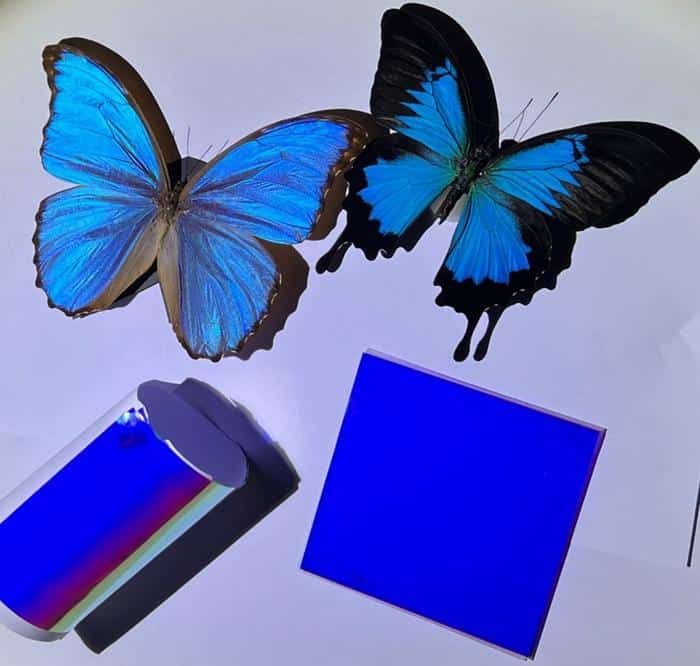
If you want to stay as cool as possible on a sunny day, white clothing is recommended. This is because the white pigment in the fabric reflects more sunlight that darker materials. But what if white is not your colour – could some clever scientists create darker clothes that are also good at reflecting sunlight? The answer is yes, with a little help from butterflies.
Cool wings: the highly reflective films and the morpho butterflies that inspired their creation. (Courtesy: Wanlin Wang/Shenzhen University)
Guo Ping Wang from Shenzhen University in China and colleagues have created coloured films that absorb very little light. They did this using “structural colour”, which is created when a surface is covered with an array of nanostructures that interact with light. This effect appears widely in nature, giving the wings of some butterflies (and the feathers of some birds) their vibrant colours.
By using the appropriate arrays, Wang and colleagues created surfaces that had both deep colours and reflected nearly all of the light that fell on them. As a result, they were able to lower the temperature of colourful objects to 2 °C below the ambient temperature. In the case of a blue object left in the sunshine all day, its temperature was a whopping 26 °C degrees cooler that a similar object painted with blue car paint.
“With our new films, excellent cooling performance can be achieved, no matter the desired colour, saturation or brightness,” claims Wang. “They could even be used on textiles to create clothes of any colour that are comfortable in hot temperatures.”
The films were also tested on the roof of a building, where they were found to be 35 °C cooler than the roof itself on summer days – something that could be used to create more energy efficient buildings.
You can read about the films in an open-access paper in the journal Optica.
A new “thermocell” that generates a voltage by exploiting temperature-related phase transitions in a pair of electrodes has been unveiled by researchers in Japan. Teppei Yamada at the University of Tokyo and colleagues hope that their new technology could lead to the development of new ways of recycling waste heat.
When a temperature difference arises across the junction between two different conductive materials, a voltage is created via the thermoelectric effect. Today, this phenomenon is being explored for its potential to harvest energy from natural temperature gradients, and for recycling waste heat from vehicles, power plants, and computer processors.
In their research, Yamada’s team explored the thermoelectric effect using thermocells. These are devices that exploit the effect using reduction–oxidation (redox) reactions, whereby one species of atoms or molecules either gains or loses electrons to another species.
“Thermocells are thermoelectric conversion systems consisting of a solution of molecules which exhibit a redox reaction; they create electrical energy by taking advantage of the shift in the equilibrium of the redox reaction in response to temperature,” Yamada explains.
Triggered reactions
If a temperature difference occurs between the thermocell’s electrodes, it can trigger an oxidation reaction in one electrode, and a reduction reaction in the other – generating a voltage between them.
In their previous research, Yamada and colleagues have investigated how different chemical and physical changes to the thermocell’s electrodes can improve their efficiency. This is measured by their Seebeck coefficient – which relates the magnitude of the thermocell’s voltage to the temperature difference between its electrodes.
In their latest study, the researchers unveil their most efficient design yet – which is based around a hydrogel made from PMIPAM polymer. “We focused on the ‘coil-globule transition’ of these polymers,” Yamada explains. “This property causes the polymer chains to stretch and separate at low temperatures, but to become spherical and coalesce when the temperature is raised.”
This transformation is a distinct phase transition: in their stretched, coiled form, oxidized PMIPAM molecules are hydrophilic, drawing water molecules towards them. When they transform into reduced globules, they become hydrophobic – releasing their surrounding water molecules.
Promising opportunity
For Yamada’s team, this temperature-induced phase transition presents a promising opportunity to generate electricity from latent heat. This is the energy absorbed or released by molecules as they undergo a transition from one phase to the other.
Even when the energy difference between both phases was very small, the thermocell could generate an impressively high voltage between two electrodes containing oxidized and reduced molecules. “As expected, we obtained a large Seebeck coefficient in the temperate region where the coil-globule transition occurs,” Yamada says.
The teams also demonstrated the reverse process: generating a temperature difference between two electrodes by applying a current.
The researchers hope their result could pave the way for a new generation of high-performing thermocells powered by the latent heat of phase transitions. Yet as Yamada explains, there is still much room for improvement. “There are many other materials that exhibit phase transitions,” he says. “As long as we can give them redox activity, they could be used in thermocells.”
With future improvements, electrochemical thermocells could drastically improve our ability to recycle waste heat. This would be particularly useful in air conditioning and refrigeration – where strong temperature gradients emerge between spaces being cooled, and areas where waste heat is ejected.
Converting some of this waste energy back into electricity could help to slash the overall energy consumption of these cooling systems, and by extension, their sizeable carbon footprint.
Can you give a brief description of WATLab, its main instruments and what you provide to users
WATLab is a multiuser metrology facility in the Department of Chemistry of the University of Waterloo. It was established in 2000 by professor Kam Tong Leung and its first two instruments were a Leo 1530 field emission microscope and a VG EscaLab X-ray photoelectron spectroscopy (XPS) tool. Today, the most commonly accessed instruments include scanning electron microscopes (SEMs), XPS, a high resolution transmission electron microscope (HRTEM), electron and ion beam lithography systems (supplied by Raith), secondary ion mass spectrometry (SIMS), as well as atom force microscopy, X-ray diffraction and Raman imaging spectroscopy. We also have more specialized tools, such as a Zeiss helium ion microscope and a Thermo VG Auger imaging microscope, with the complete list available on our website, watlabs.com.
How do users interact with WATLab? Do they come in to use the equipment, or do they send their samples to you?
During the COVID-19 pandemic, we pivoted to remote service. However, we have now gone back to our usual mix of user operated (mainly SEM) and operator service metrology. Education was a big part of the original mandate from our funding agencies, and we offer short training classes on using some of the tools safely and effectively. Most projects also involve discussions with the users on how to interpret their results and understand the limitations of the data. However, much of our funding is on a fee-for-service model, so extensive discussions and user operation of our more complex and expensive tools is simply not cost effective.
Can you give us an idea of your user base at the university – what departments do users come from?
Most of our users are students and faculty at the University of Waterloo, and local technology companies. We also assist researchers from universities and early-stage companies from across Canada and in the US. Most of our tools and expertise is related to inorganic materials such as metals, ceramics, semiconductors, although we have done several polymer and life sciences projects. Our user base at Waterloo spans chemistry, physics, Earth and environmental sciences. We also work with people in engineering departments including mechanical, chemical, civil and systems design engineering – and we do occasional projects with people from other university departments.
What are some of the most popular services that you offer?
Our most popular tools are the field-emission scanning electron microscopes with energy dispersive X-ray spectroscopy (SEM/EDS). In nanoscience, the ability to easily observe and analyse materials on the tens-of-nanometre length scale is one of the reasons that the field has expanded so much in recent years.
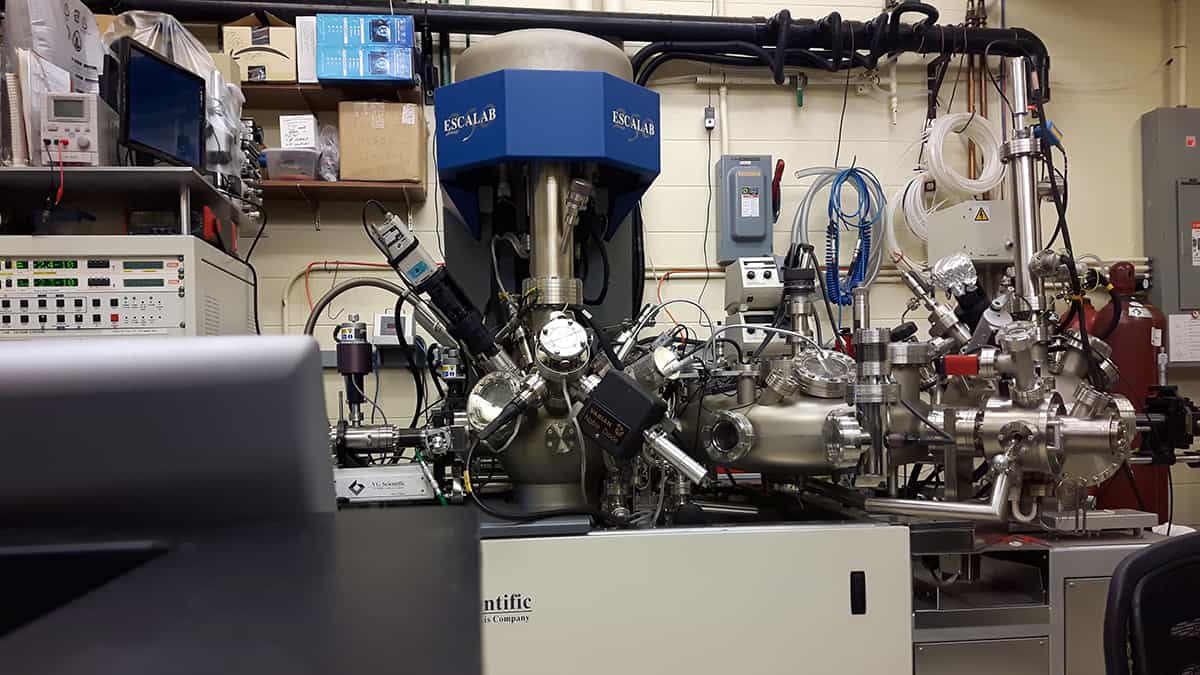
Users’ favourite The VG-ESCALab XPS has been used to study the chromium bonding state in pigment materials. (Courtesy: University of Waterloo)
After that, the VG-ESCALab XPS tool is the piece of equipment most reserved by our users.XPS is a powerful tool for analysing the valence state of various compounds. For example, graphite has carbon bonds with sp2 hybridization and diamond sp3 hybridization. These different bonding structures can be observed in the XPS as a shift in the carbon kinetic energy peak. Another advantage of XPS is its extreme surface sensitivity. XPS normally probes only the one or two nanometres of the sample surface, without any noise from the underlying substrate. This allows one to accurately analyse thin film materials.
Can you give a few examples of some notable scientific research and industrial work that has been done at WATLab?
Locally, we have assisted with fabrication trouble-shooting and environmental remediation. One Earth sciences faculty member had a project looking for the presence and form of arsenic in the soil near a mining site. We went through a large number of thin section samples with the SEM to find the heavy precipitated arsenic minerals, and evaluated these with EDS and XPS to determine if the arsenic compoundswere inert or environmentally active.
An older project for Waterloo-based BlackBerry was to evaluate materials in their supply chain for the presence of hexavalent chromium, which is carcinogenic and banned in the European Union.Since various valences of chromium are commonly used in pigments, and only hexavalent chromium is dangerous, the ESCALab was used to determine the chromium bonding state in materials.
More recently, a local start-up company developed a new process for fabricating melt-blown polymer fibres with longer and finer fibres for various applications including diapers, wipes and filters. Then COVID-19 appeared, so the company focused on the filter application. Thinner fibres allow smaller particles to be removed with a smaller pressure drop across the filter, which improves efficiency. We used the SEM to image their fibre materials made under different conditions, to determine which factors were optimal.
What career path did you follow to work at WATLab?
I did a physics undergraduate degree at McGill University in Montreal, and a PhD in materials science and engineering at the University of Wisconsin-Madison in the US. My PhD project was fabricating, analysing and measuring the superconducting properties of yttrium barium copper oxide grain boundaries. After that, I worked as a post-doc and research scientist in California, before returning to Canada. This gave me experience with a variety of tools and measurement techniques, as well as experience trouble-shooting equipment.
What do you enjoy the most about your job?
The most interesting thing about working at WATLab is the variety of different projects that our users are working on. Studying artefacts (or not!) in a new dataset is always challenging. I have learned a lot about our tools, and about how to apply these tools in a number of academic areas. Teaching and communicating with users are other important skills that I have developed while at WATLab.
A new air quality monitor can detect any variant of the SARS-CoV-2 virus in near real time. The first-of-its-kind device, which comprises a high-flow air sampler and a nanobody-based biosensor, could also be adapted to detect other respiratory pathogens such as influenza, rhinovirus and respiratory syncytial virus (RSV), according to its developers at Washington University in St. Louis, US.
While we are no longer in the emergency phase of the COVID-19 pandemic, it is still important to prevent people from becoming infected, especially if they are clinically vulnerable to the coronavirus or its long-term effects. One way to do that would be to survey indoor environments for the coronavirus – ideally in real time, so that people can evaluate the risks and take appropriate actions. “There is nothing at the moment that tells us how safe a room is,” explains John Cirrito, a WashU neurologist and member of the research team. “If you are in a room with 100 people, you don’t want to find out five days later whether you could be sick or not. The idea with this device is that you can know essentially in real time, or every five minutes, if there is a live virus.”
Micro-immunoelectrode biosensor
The new device is an adaptation of a micro-immunoelectrode (MIE) biosensor that Cirrito and his psychiatrist colleague Carla Yuede previously developed to detect amyloid beta, the plaque-forming amino acids that are thought to be implicated in Alzheimer’s disease. To make this biosensor sensitive to SARS-CoV-2, Cirrito and Yuede exchanged the antibody that bonds to amyloid beta for a nanobody obtained from llamas that binds to the spike protein from the coronavirus.
Their next task was to combine this modified sensor with an air sampler. For this, they turned to Joseph Puthussery, an engineer in Rajan Chakrabarty’s Complex Aerosol Systems Research Laboratory at WashU. Because levels of viruses in indoor air are typically very low, the team chose a sampler called a wet cyclone that takes in large volumes of air in a short period of time. Aerosols enter this sampler at high speeds and impact its wetted inner walls, creating a downward vortex flow that traps any airborne virus particles present.
Once the sample is collected, the device sends the virus-liquid mixture to the MIE biosensor using an automated liquid transfer pump. Yuede explains that the SARS-CoV-2 virus then binds to nanobodies on the sensor, and a technique called square wave voltammetry is used to oxidise amino acids called tyrosines that sit on the virus’ surface.
The strength of the resulting oxidation current is related to the amount of virus in the sample, and Chakrabarty says the device is sensitive enough to detect as few as 7-35 copies of viral RNA in a cubic metre of air. “It is like finding a needle in a haystack,” he observes. “The high virus recovery by the wet cyclone can be attributed to its extremely high flow rate of around 1000 litres per minute, which allows it to sample a larger volume of air over a 5-minute sample collection compared with commercially available samplers.”
Real-time benefits
A further advantage compared to commercial samplers is the device’s speed. “The nanobody-based electrochemical approach is faster at detecting the virus because it doesn’t need a reagent or a lot of processing steps,” Yuede explains.
Puthussery adds that conventional aerosol sampling involves two main steps. First, samples are collected from the air using either filter-based sampling or a particle-into-liquid sampler. This collection process can take anywhere from several tens of minutes to 24 hours or more. Once the aerosol samples are collected, they must be carefully stored in a medical-grade storage container for transport to a testing facility. There, they are tested for the virus, typically using the reverse transcription-quantitative polymerase chain reaction (Rt-qPCR) technique.
This approach is time-consuming, expensive, and has poor temporal resolution. In contrast, the WashU team’s device could be programmed to light up, beep, or simply display the raw biosensor oxidation current signal whenever it detects that SARS-CoV-2 is present, enabling users to take practical steps such as opening windows or increasing airflow in other ways. “The choice of notification would be location-specific so as not to create panic among the building occupants,” he says. “We have not finalized what would be the ideal.”
The researchers now plan to diversify their biosensor by adding different target-specific nanobodies so that it can detect other common respiratory pathogens. They will then start working on commercializing their system. “In a hospital setting, the monitor could be used to measure for staph or strep, which cause all kinds of complications for patients,” says Cirrito. “This could really have a major impact on people’s health.”
Earlier this year, Nottingham-based Cerca Magnetics won the inaugural IOP qBIG Prize for quantum innovation for the development of its OPM-MEG wearable brain scanner. The prize is awarded by the Institute of Physics and is sponsored by the UK-based investment firm Quantum Exponential.
In this episode of the Physics World Weekly podcast my guests are David Woolger, who is CEO of Cerca Magnetics and Stuart Nicol, who is chief investment officer at Quantum Exponential. We talk about the quantum technology behind Cerca’s brain scanner and explore the relationship between quantum start-up companies and the firms that provide them with the funds needed to develop their products.
There have been some great science-based movies over the years. But there have also been some real stinkers. Thankfully, Oppenheimer falls into the former camp. I was relieved to find it is largely historically accurate and although a few factual distortions creep in, they aren’t huge. The moral quandaries faced by Robert Oppenheimer and the other physicists on the Manhattan project are handled well – this is no glorification of the bomb.
The movie also does a great job at presenting the tensions surrounding the removal of Oppenheimer’s security clearance after the Second World War and the subsequent downfall of Lewis Strauss, the chair of the Atomic Energy Commission who sought Oppenheimer’s fall from grace. It’s also beautifully filmed, especially the scenes on location in Los Alamos in New Mexico.
Stand-out performances for me are, obviously, Cillian Murphy as Oppenheimer and Robert Downey Jr as Strauss. It was also a delight to see a huge roll-call of physicists appearing on screen, including Werner Heisenberg, Niels Bohr, Isidor Rabi, Patrick Blackett, Ernest Lawrence, Edward Teller and Hans Bethe: who’d have thought there would ever be a Hollywood movie with them all in. My only quibble is the downplaying of Leo Szilard, who first came up with the idea of a nuclear chain reaction. I also felt the appearance of Albert Einstein, played by Tom Conti, was weak and unnecessary (and I couldn’t help recall his performance as the Greek boatman Costas in the 1980s rom-com Shirley Valentine).
Still, this is a movie that’s definitely worth watching.
James Dacey: rating 3/5
To sum up Robert Oppenheimer’s attitude to nuclear weapons, you might land on the word “conflicted”. That’s also how I feel about this film.
Cillian Murphy is mesmerizing in the titular role. Slumped in a cinema seat eating popcorn, it’s easy to take for granted all the versions of Oppenheimer he is playing, often in the same scene through the deftest change of facial expression. The genius. The Communist sympathizer. The vanity. The doubt. The guilt.
The film is also visually stunning. Director Christopher Nolan’s choice to shoot on large-format IMAX film with Panavision cameras results in a clarity and depth of field that turns even the drabbest administrative buildings into a visual treat. I enjoyed the alternation between colour and black-and-white scenes, which helped distinguish Oppenheimer’s life story from historical detail.
But ultimately, I expected the film to leave more of a lasting impression. It’s slightly unfair to compare a film with a TV series, but I felt far more engaged with the characters and plot of the 2019 HBO series Chernobyl. That show – also a melting pot of 20th-century nuclear apocalypse, science and politics – perfectly captured the moment in history and created a deep sense of unease.
Perhaps the enormity of destruction at Hiroshima and Nagasaki created a disconnect in my mind. But after the drama and jaw-dropping visuals of the Trinity Test in the New Mexico desert, the final twists and turns involving the political “baddie” Lewis Strauss (Robert Downey Jr) feel a tad trivial. Perhaps the film is a victim of its determination to cram in as much historical detail as possible. One reviewer in the New Yorker referred to it as a “movie-length Wikipedia article”. That’s a bit harsh, but I sort of know what they mean.
Hamish Johnston: rating 5/5
We decided to see Oppenheimer on a rainy Sunday afternoon in Bristol but much to our surprise the first two cinemas we tried were sold out. We managed to get tickets at the Odeon, where there was only a sprinkling of empty seats in the first few rows. I was gobsmacked that at least three Bristol cinemas were packed with people eager to see a film about a physicist. Indeed, we had seen Barbie the week before in a venue with more empty seats.
Exactly how J Robert Oppenheimer has seeped into the zeitgeist is beyond my understanding of popular culture. And I still can’t believe that the theoretical physicist has been twinned with a plastic doll to create the Barbenheimer phenomenon (check out the illustration for Anthony Lane’s review in the New Yorker for a particularly good mashup).
What I do know is that Oppenheimer is a fantastic film that I thoroughly enjoyed. How joyful it was to watch a rip-roaring tale with physics at its heart – and to see so many Nobel laureates portrayed on the silver screen.
Oppenheimer is not easy to watch because it requires the viewer’s full concentration. So its popularity suggests that people’s attention spans are not shortening as a result of apps like TikTok. I hope that this will encourage Hollywood to delve into the lives of other physicists. The remarkable story of Marie Curie would be a great place to start.
Michael Banks: rating 5/5
I think Oppenheimer is a masterpiece.
When I discovered the film would run for three hours, I questioned whether a dialogue-heavy film could capture my attention for that long. But it did. That is mostly thanks to the incredible cinematography and performances not to mention the film’s mesmerizing score by Swedish composer Ludwig Göransson, which adds to the movie’s pacing and intensity.
The fun aspect of the film is playing “famous physicist bingo” – even Richard Feynman has the occasional cameo playing the bongos. But this is a serious movie and by the end Oppenheimer leaves you wrestling with the moral implications that advancing science can bring.
Kate Gardner: rating 4/5
I was expecting Oppenheimer to be good-looking but problematic. I was right and wrong. It looks incredible, every stylistic choice adds rather than detracts. And it does have some problems, but on the whole I was blown away.
Robert Oppenheimer is not presented as good or bad – he is complicated, tormented by the choices his life has led him to. Cillian Murphy does an amazing job of portraying Oppenheimer’s fractured mental state throughout his life, as well as convincing me of his intelligence, egotism and charisma.
Similarly, the film does not shy from the moral ambiguity of the Manhattan Project. We see not only scientists refusing to join it, but individuals and groups within the project wrestling with their consciences, trying to make themselves heard as the terrible potential of the atomic bomb becomes clear. Christopher Nolan brilliantly depicts the reactions of everyone at Los Alamos to both the Trinity test and the news that the bomb has been dropped on Hiroshima – the combination of jubilation and horror of those scenes will stay with me for a very long time.
The one glaring omission from the film is in fact 19,000 omissions – the number of people, mostly Indigenous, who lived near the Trinity test site in New Mexico. Oppenheimer implies the area was empty, side-stepping the thorny truth that local residents were not warned about the test at all – not even given a false story to prevent them from drinking the toxic rainwater that fell for the next few days. Did Oppenheimer feel guilt about the radiation exposure and ensuing high rates of deadly cancer among his Los Alamos neighbours? We may never know.
Researchers in the US, UK and Ireland have identified a new crystalline superconducting state in uranium ditelluride (UTe2). The existence of this state challenges the conventional picture of superconductivity and could have implications for the development of quantum computers.
“Physicists have been searching for a material like this for more than 60 years,” says team leader Shuqiu Wang, a condensed-matter physicist and postdoctoral researcher at the University of Oxford, UK.
Superconductors are materials that conduct electricity without any resistance. In the Bardeen-Cooper-Schrieffer (BCS) theory of superconductivity, the transition to resistance-free current flow occurs at low temperatures, when electrons overcome their mutual electrical repulsion to form so-called “Cooper pairs” that can travel unhindered through the material like a superfluid.
s-, p– and d-wave symmetries
The wavefunctions of these Cooper pairs have three possible types of symmetry: s-, d– or p-wave. s-wave superconductors include conventional (that is, BCS theory-obeying) superconductors such as lead, tin and mercury. In these materials, each Cooper pair consists of one electron with spin up and one electron with spin down. As these electrons move head-on towards each other, their net spin angular momentum is zero.
d-wave superconductivity occurs in unconventional (non-BCS) high-temperature superconductors such as copper oxides (cuprates). Electrons in these materials also form Cooper pairs where one electron is spin up and the other spin down, so the total spin angular momentum for each pair is again zero. However, the pairs’ orbital angular momentum is nonzero.
The final category, p-wave superconductors, is unique and highly distinct in that the Cooper pair wavefunctions of these materials have odd parity. This means that both electrons are either spin up or spin down, giving each pair a single quantum of spin angular momentum.
p-wave superconductors have attracted considerable attention recently because they are also topological superconductors, meaning that they harbour unusual states at their edges. These edge states, known as Majorana zero modes, may have applications in quantum computing. The search for technologically viable topological superconductors with odd-parity Cooper pairs is thus a hot topic in quantum matter research.
An electronic crystal embedded in the background superfluid
In the new work, researchers led by Wang and C Séamus Davis at Oxford, together with Qiangqiang Gu of Cornell University and Joseph P Carroll at University College Cork, used a technique called scanning Josephson tunnelling microscopy to visualize spatial modulations of the superconducting pairing potential in UTe2, a recently-discovered topological superconductor. This technique provides unparalleled microelectronvolt-scale energy resolution, allowing the electron pairing energy gap to be visualized at the atomic level.
The team’s observations revealed that some of the electron pairs in UTe2 form a crystalline structure within the background superfluid. Such structures are known as electron pair-density waves (PDW), and the team had previously observed them in s-wave superconductors and in d-wave superconductors. The latest results therefore demonstrate that the PDW state is common to all types of Cooper-pair symmetries.
“What is exciting for us and the superconducting community at large is that the PDW we discovered appears in a bulk p-wave superconductor,” Wang says. She adds that the pairs of electrons appear to have intrinsic angular momentum: “If this is true, then what we have detected is the first PDW composed of exotic spin-triplet pairs of electrons in which the spins of both electrons point in the same direction. While such states do exist in p-wave superfluid helium-3, they are unprecedented in superconductors.”
A quantum bit material for topological quantum computers
UTe2 was first synthesized five years ago and there is growing evidence that it might be used to make quantum bits, or qubits, in so-called topological quantum computers. The edge states in such computers would be protected, and therefore robust to a phenomenon called decoherence in which qubits lose their quantum nature (and the information that is encoded in them) due to interactions with their environment.
“UTe2 could thus enable more stable and practical quantum computers,” Wang tells Physics World. “Our work is a crucial step towards understanding this intriguing material and unlocking such applications.”
A thermal cloak that can radiatively cool objects in hot weather, and keep them warm when it is cold has been developed by researchers in China. Kehang Cui at Shanghai Jiao Tong University and colleagues say that their new technology offers a promising way to regulate temperature without the input of energy.
The heating and cooling of buildings accounts for about 20% of global energy consumption. As climate change escalates the frequency and severity of extreme weather, temperature-control systems will be stretched further in the coming decades.
As a result, researchers are keen on creating low-cost, carbon-neutral technologies that can regulate temperatures passively, without drawing from a power supply.
Working both ways
An important challenge in creating such systems is that conventional heat-regulating materials cannot switch their radiative behaviour automatically. For example, some cooling materials reflect solar radiation, while emitting mid-infrared radiation in the “transparency window”. This window is part of the electromagnetic spectrum where radiation is not reflected or absorbed by the atmosphere and this emission will have a cooling effect. However, these materials will also emit radiation in cold temperatures, discarding precious heat.
Now, Cui and colleagues have created a new “Janus thermal cloak” (JTC), which regulates temperature at all ambient temperatures. “The cloak is composed of an all-ceramic, radiative-cooling phononic metafabric facing the sky, and a photon-recycling foil facing inside,” Cui explains.
The team chose these materials for their high strength and stability, low cost, and excellent resistance to fire and corrosion. As a result, they say that the cloak is easy to manufacture, and resilient against harsh outdoor environments.
Made from an aluminium alloy, the JTC’s inner foil has a high thermal conductivity, but is almost perfectly reflective to radiation across the entire infrared spectrum – trapping heat inside. The researchers say that materials including ceramics, copper, and stainless steel could also be used, depending on material availability.
Hyperbolic material
The JTC’s sky-facing metafabric comprises a scaffold woven from braided silica fibres that is bonded to a 2D hexagonal boron nitride crystal. This creates a “hyperbolic” material, whose response to incident electromagnetic waves depends on the angle of their approach.
In contrast to the foil beneath, the metafabric has an extremely low thermal conductivity, but is highly reflective to solar radiation – covering the visible and near-infrared range. This is due to light-matter interactions inside the metafabric, which causes mid-infrared radiation to scatter around the axes of its silica fibres. In the transparency window, the metafabric re-emits virtually all of the radiation it absorbs, without transferring it to the foil.
As a result, heat within the cloaked object tends to be retained but radiation from the environment will not tend to heat the object.
Cui’s team tested the JTC on electric cars parked on the streets of Shanghai, and compared their cabin temperatures with uncovered cars. In the experiment, the covered cars remained some 8°C cooler than the uncovered cars on hot summer days, and 6.8 °C warmer on cold winter nights.
“This is the first time that we could achieve warming above the ambient temperature by almost 7 °C during winter nights,” Cui describes. “This is also kind of surprising to us – there’s no energy input or sunshine and we can still get warming.” This passive regulation is especially important for electric cars, since their batteries and electrical components cannot readily withstand extreme swings in temperature.
For Cui and colleagues, the next steps will be to upscale their design – possibly leading to a diverse array of exciting practical applications. “The thermal cloak is reliable, truly passive, and does not involve phase change or moving parts,” he continues. “This makes it promising for use in real-world applications in buildings, vehicles, and even extra-terrestrial environments.”
With a PhD in materials science and engineering from Stanford University, Streiffer, 57, has long experience in national labs. He spent 24 years at the Argonne National Laboratory in Illinois in several positions including leader of the physical sciences and engineering divisions, director of its Advanced Photon Source as well as deputy director for science and technology.
“I was fortunate to work closely with Stephen at Argonne,” recalls Mark Peters, executive vice president of laboratory management and operations for Battelle, which operates Oak Ridge with the University of Tennessee. “So I’ve seen his commitment to teamwork and his ability to build support first hand.”
In 2020, Streiffer took up the role of co-director of the Department of Energy’s National Virtual Biotechnology Laboratory – a consortium of national labs that focusses on testing, treatment, epidemiological modelling, and supply chains during the COVID-19 pandemic. In 2022, Streiffer was appointed vice president at the SLAC National Accelerator Laboratory and earlier this year became the lab’s interim director following the retirement of Chi-Chang Kao.
Asmeret Asefaw Berhe, director of the Department of Energy’s Office of Science, notes that Streiffer “has been a key leader in the development of [the national labs’] capabilities”. Indeed, when Streiffer takes up the directorship of Oak Ridge in October, he will oversee several facilities such as the Spallation Neutron Source and the High Flux Isotope Reactor.
A proven leader
Meanwhile, John Sarrao, who is currently deputy director for science, technology & engineering at the Los Alamos National Laboratory in New Mexico, will take over from Streiffer as SLAC director.
Sarrao, 56, has a Ph.D. in physics from University of California, Los Angeles, and specializes in the synthesis and characterization of correlated electron systems, especially in actinide materials. In 2013 he won the Department of Energy’s Ernest Orlando Lawrence award for discovering and studying novel superconductors.
“John brings proven leadership and scientific excellence to this important role,” Berhe says. “His leadership will advance SLAC’s mission and amplify its scientific impact.” Sarrao adds that he is “excited and humbled” by the position.