Physicists track the mass and temperature of a levitated nanoparticle

Physicists in China have developed a technique for simultaneously measuring the mass and temperature of a single nanoparticle. The technique, which involves levitating the nanoparticle in an optical trap, applying a sinusoidal electrostatic force to it and analysing its subsequent trajectory, will help scientists determine how the properties of nanoparticles change in response to changes in temperature.

Nanoparticles are found in a wide range of products, including cosmetics, paints, food products and pharmaceuticals. To optimize their performance in these diverse applications, it is essential to characterize and control their properties, but current methods of doing this have significant limitations.

The mass of a nanoparticle, for example, is usually estimated based on density data and particle size analyses. The values obtained using this approach are not very accurate, however, and the method does not provide information on the properties of individual nanoparticles or the differences between them.

In recent years, researchers have developed several techniques that aim improve on these estimations. Of these techniques, schemes that rely on optical levitation are among the most promising. In a typical levitation set-up, a calibrated optical field is used as a reference to infer the mass of a particle down to the femtogram (10-18 kg) range. Even this improved technique, however, does not provide any information about how a nanoparticle’s mass varies with temperature – an important parameter since the mass of most materials changes as their temperature increases.

A reference scale

Physicists at the University of Science and Technology of China have now shown that they can track variations in mass, centre-of-mass temperature and other properties of a 165-nm diameter silica particle by using a known AC driving force as a reference scale. Their technique relies on the fact that the particle’s charge and the electric field are calibrated at the position at which the particle is levitated in an optical potential trap. This approach allows the precise magnitude of the electric force acting on the particle to be determined.

“The mass of the particle is then obtained by analysing the trajectory of the particle when subjected to the known electric field force,” explains team member Yu Zheng.  “The temperature of the particle is determined using the thus-calculated mass and a thermal motion scale. This scale is governed by the equipartition theorem, which in classical statistical mechanics relates the temperature of a system to its overall energy.”

Using this technique, the researchers were able to observe a sudden loss of the nanoparticle’s mass when the air pressure falls below a certain point. This phenomenon cannot be explained by the simple effect of water molecules desorbing from the nanoparticles’ surfaces and thus cannot be observed by conventional desorption analysis tools, such as thermal desorption spectrometry.

The researchers now plan to add a heating laser to their set up so they can control the heating of the levitated nanoparticles more precisely. “This will enable us to thermogravimetrically analyse individual particles,” Zheng tells Physics World. “Indeed, preliminary findings from our study have already shown that the variations in mass of an individual nanoparticle with temperature reveal nuanced information that conventional thermogravimetric analyses fail to capture.”

The present study is detailed in Chinese Physics B.

Quantum mechanics and thermodynamics can both be true, say physicists

Physicists in the Netherlands and Germany have shown that the theories of thermodynamics and quantum mechanics are both valid ways of describing the behaviour of photons in a quantum processor. The results, obtained by researchers at the University of Twente and the Freie Universität Berlin, open the door to a deeper understanding of how to reconcile these two great theories.

Thermodynamics and quantum mechanics are cornerstones of modern physics, but in one specific, important way, they don’t get along well. The point of contention revolves around the second law of thermodynamics, which states that a closed system will move towards maximum entropy (a measure of the system’s disorder, or chaos) in an irreversible way. The theory of quantum mechanics, in contrast, allows previous states of particles to be calculated back, meaning that the flow of information and time are both reversible.

In recent years, there have been several attempts to explore this conflict using entangled quantum systems such as ultracold atoms or superconducting quantum bits (qubits). By observing what happens when these systems thermalize and equilibrate, it should be possible to measure their entropy and quantum states at the same time, and thus resolve the paradox.

The problem is that quantum systems are very sensitive to interactions with their environment. This makes it hard to create a system that is truly closed. They are also prone to losing their quantum nature, a process known as decoherence, which makes time reversal difficult to implement.

Photonics to the rescue

To get around these challenges, the team chose to study thermalization and equilibration in systems of entangled photons. Photons have several advantages over quantum systems composed of (for example) atoms. Their intrinsically quantum nature means they do not suffer from decoherence. They can be studied at room temperature, in contrast to the ultralow temperatures necessary for atoms, and are easy to manipulate with interference. Most importantly, they allow for time reversibility: any mixing of the photons can be reversed by performing the inverse operation, meaning that entangled photons can, in effect, be “disentangled”.

In the experiment, the researchers begin by injecting single photons into waveguide channels on a chip. These photons interfere where the photonic channels on the chip meet and cross. This interference, which the team controlled with thermo-optic Mach-Zehnder interferometers, creates a superposition of photons in the waveguides and allows entanglement to build up. The photons are then detected with single-photon detectors.

Simultaneously true

To determine the system’s local and total increases in entropy, the researchers performed a series of protocols. Time reversibility, for example, was implemented by disentangling the photons, which was possible due to the full control the processor gives over the experiment.

Once these protocols were complete, measurements in the experiment’s individual output channels showed that photon numbers could no longer be precisely defined. This is because the photons were in an entangled state together and no longer individually localized in a single channel as they were at the input. However, the photon statistics the researchers measured in each channel did show that entropy increased locally in all the channels, consistent with the second law of thermodynamics. At the same time, the entanglement that built up between photons is not visible in the individual channels: only when considering the entire system does it become clear that the overall quantum state is in a pure form, consistent with quantum mechanics.

As a final check, the physicists performed operations to return the processor to its original state (time reversal). The success of these operations proved that the processes of thermalization and equilibration were due to entanglement between the quantum particles, rather than interactions with the environment. Hence, the experiment showed that thermodynamics and quantum mechanics can both be true at the same time.

High-quality data

According to Pepijn Pinkse, a quantum optics expert at the University of Twente, the team’s biggest challenge was to get enough high quality data to perform the measurements. Low losses in the photonic processor helped, he says, and more photons and larger processors should enable them to simulate more systems. The weakest element in the chain, he adds, seems to be the photon source: “We have at least 12 input channels, but only three photons at the same time to experiment with, so there’s room for improvement there,” he tells Physics World.

Nicole Yunger Halpern, an expert in quantum thermodynamics at the US National Institute of Standards and Technology (NIST) who was not involved in the research, says the experiment is important because it extends to photons previous work that involved ultracold atoms, trapped ions and superconducting qubits. This change of platform, she says, enabled the experimentalists to undo the process that led the system to equilibrate internally, making it possible to conclude that the system had retained its quantum nature while equilibrating. Doing this requires an “excellent amount of control”, she notes, adding that the challenge of achieving this control has caused groups using other platforms significant anxiety over the past several years.

The research is published in Nature Communications.

Automated patient QA using RadCalc software for helical tomotherapy treatments at the University Hospital Cologne

Want to learn more on this subject?

Join Dr Florian Kamp, head of medical physics at the University Hospital of Cologne, as he shares valuable insights into the setup, commissioning, and clinical implementation of the RadCalc software for automated Monte Carlo-based secondary check for helical tomotherapy treatments at a Radixact system.

RadCalc has automated patient QA procedures, significantly reducing time spent at LINACs while benefiting from independent treatment plan evaluation.

Want to learn more on this subject?

Florian Kamp received his doctorate in physics from the Technical University of Munich in 2015. Afterwards he worked five years as a postdoc on various topics in the field of medical physics affiliated with the Department of Radiation Oncology of the LMU university hospital in Munich. About two years ago he joined the radiotherapy department at the University Hospital Cologne, Germany, leading the medical physics group. Having to work in a two-shift clinical environment, he is very eager to reduce the time spent for patient QA at the linacs.

Venus flytrap pulses mapped, sound of twinkling stars, falling cats

The Venus flytrap (Dionaea muscipula) was once described by Charles Darwin as “one of the most wonderful [plants] in the world”.

Consisting of two lobes that attach together to form a kind of jaw, the inner surface of each lobe contains so-called “trigger” hairs that cause the trap to rapidly shut if bent by an unsuspecting insect.

When a hair is stimulated an electrical “action potential” swiftly spreads through the leaf in less than a second, activating the plant’s motor cells.

To study this in more detail, researchers in Italy, Sweden and the US attached an organic-based multielectrode array to the plant’s lobes. They found that once stimulated, the signal spreads radially at a constant speed away from the site but along no specific direction.

Yet the trap only fully closes if the hairs are stimulated twice within 20 to 30 seconds, a move that saves the plant energy if the hair is bent by something other than potential prey.

The team found that the second action potential helped to accelerate the closure of the trap. Eleni Stavrinidou, from Linköping University, Sweden, says that the work opens the “possibilities for new discoveries”.

Sound of the stars

“Twinkle, twinkle, little star” is a popular English lullaby with the lyrics taken from an 19th-century poem by Jane Taylor.

Stars appear to twinkle thanks to the atmospheric effects of light reaching Earth, but they also have an innate “twinkle” that is caused by the rippling waves of gas on a star’s surface.

Researchers in the US and UK have now carried out computer simulations of these rippling waves and converted them into sound waves, allowing listeners to hear both what the insides of stars and the “twinkling” should sound like.

The researchers describe the sounds emerging from the core of a large star as “a low echo reverberating through an empty room” while the waves at the surface of a medium-sized star “conjure images of a persistent hum through a windswept terrain”.

For a bit of fun, the researchers also simulated passing “Twinkle, twinkle, little star” through the core of stars of varying sizes to see how the music changed. The result is rather eerie and haunting.

And finally, while it is known that falling cats always manage to land on their feet, as this article in Scientific American points out, they can also survive falling from a great height.

Sustainable next-generation battery chemistries

Want to learn more on this subject?

The widespread adoption of battery technologies for electric vehicles and grid electricity storage requires optimization of cost, energy density, power density, cycle life, safety, and environmental impact, all of which are directly linked to severe materials challenges. Cost and sustainability will be the single dominant factor as we march forward.


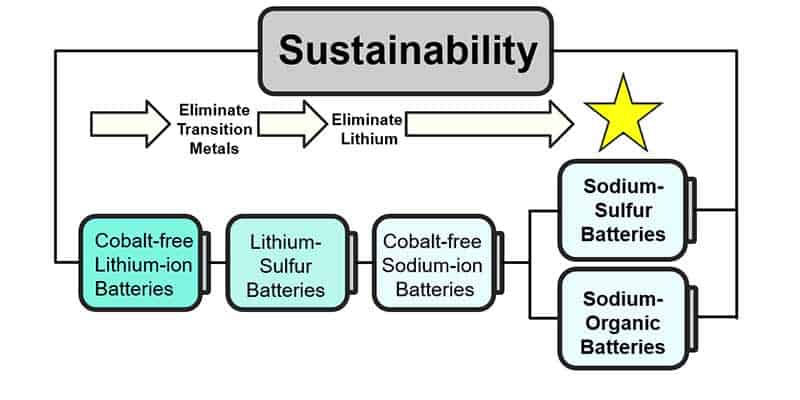
This webinar focuses on the development of sustainable next-generation battery chemistries and materials. Strategies and approaches for eliminating expensive and scarcely available cobalt, followed by eliminating nickel and ultimately any mined metal, including lithium, are discussed. As an example, the progress on cobalt-free, high-nickel cathodes, lithium-sulfur cells, and sodium-sulfur cells is presented. The challenges of bulk and surface instability and chemical crossover during charge-discharge cycling, dynamics and stabilization of lithium or sodium plating and striping, advanced characterization methodologies to develop an in-depth understanding, and approaches to overcome challenges are presented.

An interactive Q&A session follows the presentation.

Want to learn more on this subject?

Arumugam Manthiram is the George T and Gladys H Abell Endowed Chair of Engineering at the University of Texas at Austin (UT-Austin). From 2011–2022, he was the director of the Texas Materials Institute at UT-Austin. After receiving his PhD in chemistry from the Indian Institute of Technology Madras in 1981 and working as a postdoctoral researcher at the University of Oxford and at UT-Austin, in 1991, he joined the UT-Austin Department of Mechanical Engineering faculty. Prof. Manthiram’s research focuses on batteries and fuel cells. He has authored more than 900 journal articles with 102,000 citations and an h-index of 158. He has mentored approximately 300 students and postdoctoral researchers, including the graduation of 69 PhD students.

Arumugam is a fellow of The Electrochemical Society, Materials Research Society, American Ceramic Society, Royal Society of Chemistry, American Association for the Advancement of Science, and World Academy of Materials and Manufacturing Engineering. He is an elected member of the World Academy of Ceramics. He received the 2023 ECS John Goodenough Award, 2021 ECS Battery Division Technology Award, 2020 ECS Henry B Linford Award for Distinguished Teaching, 2020 International Battery Association Research Award, 2016 Billy and Claude R Hocott Distinguished Centennial Engineering Research Award, 2015 Distinguished Alumnus Award of the Indian Institute of Technology Madras, 2014 ECS Battery Division Research Award, and 2012 university-wide (one per year) Outstanding Graduate Teaching Award. He is a Web of Science Highly Cited Researcher every year since 2017. He delivered the 2019 Chemistry Nobel Prize Lecture in Stockholm on behalf of Prof. John Goodenough.


Where do power surges occur in an electricity grid?

Three maps of the UK, overlaid with circles and lines representing the electrical grid

A new algorithm can identify where an electric current surge occurred in a power grid, potentially making it easier to avoid outages and subsequent equipment failures along transmission lines. The algorithm was developed by researchers from the University of Applied Sciences of Western Switzerland (HES-SO) and Los Alamos National Laboratory in the US, and it requires no previous knowledge of the grid’s global structure to pinpoint the source of damaging phenomena.

When a component of an electrical grid malfunctions, it injects an unexpected signal into the system, causing persistent periodic disturbances known as forced oscillations to flow through the grid. These oscillations can show up as power swings along transmission lines and may have consequences thousands of kilometres from the source of the disturbance.

Such long-distance effects are possible because electric power grids are among the world’s largest human-made systems, observes Robin Delabays, an applied mathematician at HES-SO’s Institute of Sustainable Energy and the study’s leader. The European grid, for example, stretches from Portugal to Ukraine and operates as a single system. It is therefore impossible for anyone to monitor all its components all the time.

“Since power grids are complex structures, the sources of such disturbances are difficult to identify,” Delabays explains. “But with the method we propose, we are able to do just this solely based on voltage measurements. This means that we require no knowledge of the actual underlying power grid.”

Such “system agnosticism” is a big advantage, he adds, as the actual grid structure and parameters change constantly due to operational decisions and even weather conditions.

“Principled maximum likelihood” approach

The researchers’ model accounts for random power-flow fluctuations that are naturally present in transmission lines and uses them to determine the set of parameters needed to find the most likely origin of a forced oscillation. Using this “principled maximum likelihood” approach, Delabays and colleagues were able to identify the source of the oscillation in historical US transmission system data recorded during known forced-oscillation events.

“The algorithmic part per se is rather standard,” Delabays explains. “We solve a least square problem by an interior point method. Our main contribution was to be able to re-write the optimization problem in such a way that allows us to get rid of a lot of nonlinearities in the system.”

The work could help mitigate forced oscillations in future renewable-energy power grids, where such they could be a significant source of infrastructure failure and blackouts, he says. “The holy grail for us would be to be able to apply our method in real-time on measurement data and to identify a device (typically a transformer) that is currently malfunctioning,” he tells Physics World. “Our goal here would be to provide early warnings to grid operators and to be able to locate the source of these warnings.”

Delabays says the next step will be to get access to data for additional disturbance events for which the source has been identified, and use this to confirm the validity of the method. After that, he and his colleagues hope to apply the algorithm to historical measurement data for which the actual disturbance source is unknown. “The other improvement we envision is to leverage the knowledge we have of the power grid in general,” Delabays says. “We do not know everything about a grid, but there are many things that we do know and that we do not currently leverage. For instance, new power lines will not materialize from thin air, so even if we don’t know whether an existing line is active or not, we do know when two buses are not physically connected.”

The technique is described in PRX Energy.

Shreddinger’s equation: when the uncertainty principle goes up to 12

shred (ʃrɛd), verb (intransitive, slang): to play an electric guitar using sets of notes in a way that produces a sound that is distorted (i.e. strange and sometimes unpleasant) –
a rather dubious definition, courtesy of the Cambridge English Dictionary.

I think it’s safe to say that heavy-metal music is popularly perceived to be neither cerebrally challenging nor an especially highbrow form of art. Indeed, for most outside the subculture, it’s essentially noise for Neanderthals. Quantum mechanics, on the other hand, is believed to be one of humanity’s towering intellectual achievements. In fact, it’s so conceptually demanding that even if you think you understand it, you supposedly don’t.

So what happens when the brawn of metal meets the brains of quantum physics? That’s a question I’ve been intensively researching ever since I was invited by the Institute of Physics more than a decade ago to contribute to its (now sadly defunct) physicsfocus blog. Although I’d always had a keen interest in writing, I hadn’t blogged previously and wasn’t entirely certain how to best position my posts. So, I followed the standard advice – write what you know.

Superposing my twin obsessions of metal and physics, in 2013 I penned a piece in which I tried to explain the Heisenberg uncertainty principle in the context of the chugging guitars of Metallica, Megadeth, Opeth et al. Writing it was so much fun – it’s all just applied Fourier analysis, after all – that the metal-quantum nexus became the theme of an entire book. When the Uncertainty Principle Goes to 11: Or How to Explain Quantum Physics with Heavy Metal was duly published in 2018.

A still from the video of the song "Shut Up and Calculate"

But could we push the mash-up of metal and quantum physics beyond 11, to an ear-shattering 12 on the volume dial? Instead of just writing about the connections, why not embed quantum concepts directly, from the bottom up, in a metal song? Let’s derive the riffs, rhythms and lyrics from physics equations, constants and theories. Should the multiverse exist, there was always going to be a universe in which “quantum metal” exists, and it might as well be this one.

The resulting song, “Shut Up and Calculate”, was recently published on the Sixty Symbols YouTube channel, which is a collaboration between the filmmaker/video journalist Brady Haran and physicists at the University of Nottingham. (In fact, the title of this article was lifted directly from a comment left by a viewer under the video – so thank you @muusers.) I should admit that Brady has indulged me previously when it comes to metal–maths links after we collaborated with Dave Brown on a golden-ratio-inspired song in 2012 for Brady’s Numberphile channel.

Could we push the mash-up of metal and quantum physics beyond 11, to an ear-shattering 12 on the volume dial?

With “Shut Up and Calculate”, however, we wanted to push the metal–science envelope much further so that not only would the song be driven by a musical encoding of quantum concepts but that physics undergraduates, teachers and researchers would also be directly involved in its creation. A huge thank you therefore to filmmaker Sean Riley, who’s usually behind the Computerphile camera, for his inspired editing of gaggles of gigabytes of footage to produce the final Sixty Symbols video. Ear-splittingly loud thanks are also due to David Domminney Fowler – guitarist with the Australian Pink Floyd (look ’em up if you’re a Floyd fan), producer, sound engineer, occasional Computerphile contributor and self-confessed uber-geek – for mixing the song.

The song features bass playing from James Theobald – head of physics at the Minster School in Southwell, Nottinghamshire – along with a guitar solo from Chris Morley, a quantum technologies postdoc at Nottingham. Midway through the song there’s a “choir” of Nottingham undergrads chanting “This is the root of all things” under a reading of a key passage from Paul Dirac’s genre-defining 1930 classic The Principles of Quantum Mechanics.

When it came to choosing a title and chorus for the song, there really was no other choice. It had to be “Shut Up And Calculate”– the perennial admonition to physics undergrads when it comes to getting to grips with quantum mechanics. If you want to know how we hid quantum equations and concepts in the song, all the gory details are on my Symptoms Of The Universe blog. Briefly, here are just a few of the physics-metal mappings we used. The opening riffs are a mapping of the digits (in SI units) of ħ/2m (guitar panned left) and ħ (panned right) to the notes of a C harmonic minor scale, encoding constants in the time-dependent Schrödinger equation. These riffs are undercut by drum-bass accents that follow a 1, 4, 9, 16 sequence, i.e. matching the energy eigenvalues for an infinite 1D potential well.

The ability to connect with different audiences was a key motivation for this new song

Under the chorus there’s a repeated 6..6..2..6..0..7 bass-drum pattern, punctuated by the snare, which represents the first few digits of Planck’s constant, h. This pattern flips to snare beats punctuated by the bass drum after Morse code for “e to i pi” (i.e. e) – a phase shift of 180 degrees – sounds in the mid-section of the song. I did say that we took the quantum-metal thing to far beyond 11!

After we uploaded the Numberphile golden-ratio song all those years ago, one of the comments under the video that really stuck with me was: “I think you’ve just made me like math. Clever bastards.” It’s exactly that ability to connect with different audiences – who otherwise might unfortunately think that physics or mathematics is not for them – was a key motivation for this new song and indeed for my book.

Equally motivating, however, is countering the tired old stereotype that science is not creative. I believe there’s just as much creativity involved in setting up a physics experiment or calculation as there is in painting, poetry or songwriting. Crossing the arts–science divide, from both directions, is essential to counter this myth. And if we can do it through the medium of metal, all the better.

How a wedge can increase beam transmission in conventional proton therapy

At the beginning of 2023 there were 89 proton therapy clinics worldwide (according to the Particle Therapy Co-Operative Group). Proton therapy is a highly conformal cancer treatment that can be used to treat irregularly shaped tumours located near critical structures, such as the spine or eyes, but it’s not yet been widely adopted.

Why? In large part, it’s due to the cost of building a proton therapy facility, says Vivek Maradia, a scientist at the Paul Scherrer Institute Centre for Proton Therapy.

“If you want to build a two- or three-room treatment facility, it costs about 100 million US dollars,” Maradia says. “Since finishing my PhD, I have been designing a compact proton therapy facility that will reduce the cost and can deliver treatment in multiple rooms with a single beamline.”

Maradia’s design relies on a modified beamline that he developed while a PhD student at the Paul Scherrer Institute (PSI). He and his colleagues are tackling one of the main disadvantages of cyclotron-based proton therapy facilities: much of the beam is lost as protons are stepped down to clinically relevant energies.

Cyclotrons produce proton beams at high energies, often higher than those needed for proton therapy. To lower the energy, the beam passes through a degrader material (for example, a carbon wedge) that leaves the energies spread out in a spectrum. Slits are then used to select the correct energies for a treatment.

This energy selection system is inefficient. It leads to both reduced beam transmission – meaning it takes more time to deliver a treatment – and secondary radiation that requires shielding, which significantly increases construction costs.

To increase the fraction of the beam that reaches the target, Maradia turned to momentum cooling, a technique used in muon beamlines. Momentum cooling replaces the slit found in conventional proton therapy energy selection systems with a wedge. Instead of cutting out unwanted energies, the wedge converts the spread of energies to a lower energy, keeping lower energies low while shifting higher energies to lower ones.

“We actually found a manuscript from a researcher at PSI who proposed using this technique in pion beams in 1976, but we couldn’t confirm whether it had been implemented,” Maradia says. “There are challenges to overcome in applying momentum cooling to proton therapy, such as controlling beam emittance, and we have been collaborating with experts in acceleration technology on that.”

Writing in Nature Physics, Maradia and his colleagues demonstrated how momentum cooling can be incorporated in a gantry design to increase beam transmission. Results of their simulation experiments suggest up to a 100-fold increase in transmission for a 70 MeV beam. Water tank experiments in an eye treatment beamline yielded a factor of two increase in transmission.

Following this proof-of-concept work, the researchers are currently designing a polyethylene wedge for every 10 MeV beam from 70 to 230 MeV, and they plan to integrate momentum cooling permanently into the beamline to shorten treatment times to a single breath hold. They are designing a compact proton therapy facility incorporating momentum cooling with the support of a grant from the Swiss government. Ultimately, momentum cooling could even assist in exploiting the FLASH effect because inserting the wedge increases dose rates, but Maradia says that’s not the team’s current priority.

“In proton therapy, we precisely treat tumours when they are not moving. But when it comes to moving targets, such as the lung and liver, because of respiratory motion we cannot deliver those as precisely. We need to use some kind of motion mitigation, which increases delivery time. We wanted to reduce the treatment time so that we can deliver the treatment in a single breath hold,” Maradia says. “This increase in transmission through momentum cooling is important for reducing treatment time.”

Energy-efficient fabric helps wearers beat heat waves and cold snaps

A new thermoregulating textile keeps its wearers comfortable with a minimal amount of energy input thanks to a conductive polymer that can be modified to adjust how much infrared radiation it sheds. According to the textile’s developers at the University of Chicago, North Carolina State University and Duke University (all in the US), the new “wearable variable-emittance device”, or WeaVE, could be used to make next-generation smart thermal management fabrics.

Many animals are good at manipulating infrared (IR) radiation to heat themselves up and cool themselves down. Saharan silver ants, for example, dissipate excess heat thanks to triangular hairs on their bodies that reflect differing amounts of near-IR rays depending on the position of the Sun. Human bodies, in contrast, absorb and lose heat mainly through IR radiation with a wavelength of 10 microns, and our skin is not capable of controlling this wavelength range in real time to help us regulate body temperature. Researchers  are therefore developing textiles that can do this for us.

Fabric switches between two states

The new WeaVE device consists of three layers: an active layer made of a conducting polymer called polyaniline (PANI); metallized nylon; and a semi-solid electrolyte. When a small voltage is applied to this layered structure, the active material switches between a transmissive dielectric state and a lossy metallic state. Each state has a different emissivity, so by switching between them, the amount of thermal radiation the fabric puts out can be adjusted to make it either heat-emitting (cooling) or heat-shielding (heating).

“The textile can thus keep the wearer comfortable by adjusting how much body heat is retained and how much is radiated away,” explains Chicago’s Po-Chun Hsu, who led the development team together with Jie Yin of NC State. “In this way, the user would feel the same skin temperature regardless of the external temperature.”

Thermoregulation is “adaptive”

One major advantage of the WeaVE is that the electrochemical tuning used to modify its radiative heat transport requires only a small amount of energy input. This type of thermoregulation is termed “adaptive”, meaning that it relies on modulating the material’s heat transfer coefficient, and it uses far less energy than “active” technologies that use electric heat or recirculating water to generate or pump thermal energy. As a result, the energy required to maintain the heat balance is virtually zero. A further advantage is that the metallized nylon in the fabric is cut in a kirigami-style pattern, which allows it to stretch and move with the user’s body while fully preserving the connections and configuration of the electrochemical cell.

The WeaVE’s flexibility and low energy use means it could be employed in sustainable, next-generation textiles and fabrics that allow users to adapt to their environments, Hsu says. “As thermal comfort is a highly individualized and subjective concept, it would be beneficial if the cooling/warming effect is tailored for everyone based on their feelings and the surrounding environment,” he tells Physics World. “We also hope that this work could inspire future research on both the materials science of conducting polymers and the engineering of smart wearable personal thermoregulation devices.”

The researchers are now working towards demonstrating other electrochemically tuneable thermal materials based on conducting polymers. “The fundamental studies of polymer physics and light-matter interaction of the electrochromic mechanisms are also our main focus, which is not only scientifically interesting but can lead us towards higher-performance polymers,” Hsu says.

They detail their present work in PNAS Nexus.

Have scientists in Korea discovered the first room-temperature, ambient-pressure superconductor?

Room-temperature superconductivity has long been the holiest of holy grails in condensed-matter physics. Within the past decade, the appearance of new materials that superconduct at relatively balmy temperatures, but only under extreme pressures, has brought a slight yet significant alteration in the quest. To be truly grail-like, a newly synthesized superconductor cannot merely carry electrical current without resistance at room temperature. It must also do it at ambient pressure for it to have practical applications beyond the laboratory – such as levitating trains, efficient power lines or cheaper MRI machines.

So when a not-yet-peer-reviewed paper entitled “The First Room-Temperature Ambient-Pressure Superconductor” appeared on the arXiv preprint server earlier this week, physicists were intrigued – though also sceptical, given recent retractions and allegations of scientific misconduct in the field.

In the paper, Sukbae Lee and Ji-Hoon Kim, both materials scientists at the Quantum Energy Research Centre (Q-Centre) in Seoul, Korea, together with Young-Wan Kwon of Korea University, report that under everyday conditions, a modified form of the mineral lead apatite exhibits tell-tale signs of superconductivity. These signs include the all-important resistance-free flow of current; the expulsion of magnetic field from the material via the Meissner effect; and a critical temperature and critical magnetic field below which the superconducting transition occurs.

Further evidence emerges

To bolster these claims, a further paper appeared shortly afterwards on the arXix, this time written by Lee and Kim in collaboration with their Q-Centre colleagues Sungyeon Im, SooMin An and Keun Ho Auh, plus Hyun-Tak Kim, a physicist at the College of William and Mary in the US. The timing of this paper’s appearance and its longer author list prompted intense online speculation about the team’s motives, with several commenters pointing out that a Nobel Prize (the likely reward for any confirmed discovery of room-temperature, ambient-pressure superconductivity) can only be shared by three people, not six. Speculation aside, the second paper repeats many of the jaw-dropping details of the first, while describing the material’s synthesis in more detail.

As a final piece of evidence, a video posted by Hyun-Tak Kim on arXiv’s ScienceCast platform on 25 July purports to show the material Lee and Ji-Hoon Kim call LK-99 (apparently after their own initials and the year they first synthesized it) levitating atop a magnet. This simple demonstration of the Meissner effect is a staple of undergraduate physics labs – except in this case, the liquid nitrogen required to produce superconductivity in conventional, low-temperature superconductors is nowhere to be seen.

The critics wade in

A few days after the papers appeared on the arXiv – and mere hours after their sensational claims began circulating on social media, crashing Q-Centre’s website in the process – experts in the field urged caution. Richard Greene, a physicist at the University of Maryland, US who has worked on superconducting materials since the 1970s, observed that while the Meissner-effect video “looks impressive” at first glance, superconductivity is not the only phenomenon that can cause objects to levitate. “If you look carefully you see that sample 2 (which was levitated) has a large diamagnetic magnetization in the normal state,” he said. “So it could be levitated just because it’s a diamagnetic material.”

Another physicist, Douglas Natelson of Rice University, US, highlighted apparent inconsistencies in the two papers’ data on magnetic susceptibility, Χ. When Lee, Ji-Hoon Kim and colleagues placed their sample of LK-99 in a magnetic field, the six-authored paper states that the change in the material’s mass susceptibility (that is, Χ divided by density) amounted to 2.5 x 10⁻⁴ electromagnetic units per gram. “Assuming a density of about 7 grams per cubic centimetre, that gives Χ = –0.022, about 36 times that of graphite,” Natelson wrote in a Twitter/X thread dedicated to the findings. “That would be exciting, if it’s accurate.”

However, Natelson went on to note that “what appears to be the same data” also appears in Figure 4 of the three-authored paper, but with a completely different scale on the graph’s y-axis. This second set of numbers is, he said, “unphysical”, adding that the “pretty sloppy” discrepancy “does not encourage confidence in the results”.

Wait for reproduction

One bright spot in this confusion is that unlike studies of high-pressure superconductors, the work of Lee, Ji-Hoon Kim and their collaborators required relatively little in the way of specialist equipment. That won’t make attempts at replicating it easy, exactly; as Jennifer Fowlie, a condensed-matter physicist at the SLAC National Laboratory in the US, pointed out on Twitter, the four-day, multi-step, solid-state process the Korean researchers used to synthesize their material is hardly straightforward. (“Some of you haven’t had blisters from overusing your pestle and it shows,” she quipped.)

Still, the absence of highly specialized kit should make replication possible for more than a handful of research groups. And with so much attention devoted to finding it, a solution to the mystery of LK-99 and its possible room-temperature, ambient-pressure superconductivity should not be long in coming. “I think it is best we wait and see if this material, and the results contained within the report, are reproduced by another group in the world,” Nigel Hussey, a superconductivity researcher at the University of Bristol, UK, tells Physics World. “If so, then of course, this would be a sensational breakthrough. For the time being, though, it is simply sensational.”

Copyright © 2026 by IOP Publishing Ltd and individual contributors