Medical devices take design tips from the animal kingdom

The animal kingdom has benefited from millions of years of biological evolution to adapt processes and characteristics to meet specific needs. Using an approach known as bioinspiration, scientists and engineers are employing insights from biology to solve today’s technology challenges and optimize the design of new materials, devices and structures.

Within the medical field, for example, researchers have designed a surgical imaging system based on the amazing eyes of the mantis shrimp, created a space blanket that allows users to control their temperature by mimicking the adaptive properties of squid skin, and fabricated an intraocular pressure sensor based on nanostructures with optical properties first discovered in the wings of a butterfly.

And this week saw the publication of two new research studies exploiting insights from biology for the benefit of human health.

Powered by pangolin scales

First up, the pangolin – the only mammal that’s completely covered in hard scales. These scales connect to the underlying skin, rather than to each other, and overlap in the style of a pine cone, enabling the pangolin to curl into a ball when threatened. And it is these scales that provided the inspiration for Metin Sitti from the Max Planck Institute for Intelligent Systems and his collaborators to design a miniature soft medical robot.

Pangolin-inspired robot

Untethered magnetic soft robots offer the potential to perform minimally invasive medical procedures inside the body. One day, such robots could be guided by magnetic fields to hard-to-reach regions where they can then deliver drugs or create heat. Localized heating can be used to stop bleeding, cut tissue or even ablate tumours. Remote generation of heat, however, requires the use of rigid metallic materials, which can compromise the compliance and safety of soft robots.

“To address this inherent trade-off between effective remote heating at long distances and compliance, we observed how pangolins in nature could still achieve flexible and unencumbered motion despite having keratin scales which are orders of magnitudes harder and stiffer than the underlying tissue layers, simply by organising the keratin scales into an overlapping structure,” write the researchers, in Nature Communications.

With this in mind, Sitti and colleagues designed and built a 20 x 10 x 0.2 mm robot comprising a soft polymer layer and a pangolin-inspired layer of overlapping metal elements. By exposing the robot to a low-frequency magnetic field, the researchers could make it roll up and move about. When exposed to a high-frequency magnetic field, the robot delivered on-demand heating (by over 70°C) at large distances (more than 5 cm) within less than 30 s.
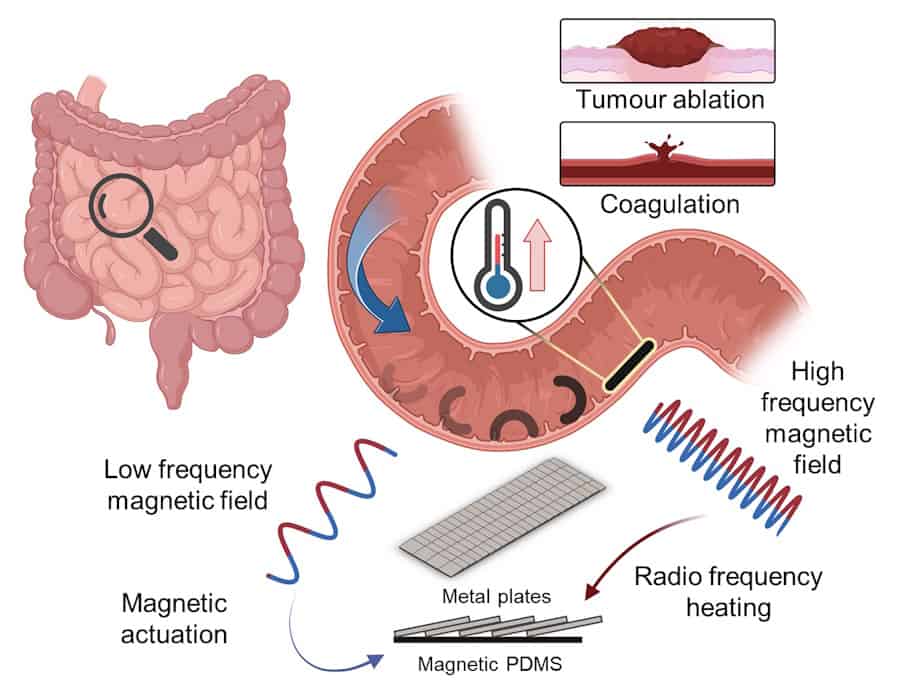
Illustration of the untethered magnetic robot

In proof-of-concept experiments on tissue phantoms, the team showed that a 65 mT rotating magnetic field could actuate and move an untethered robot, and that the heating scales could selectively release cargo secured to the robot with beeswax.

To further assess the robot’s clinical potential, the researchers simulated bleeding inside an ex vivo pig stomach and demonstrated that the robot could navigate to the bleeding site and use heat to stop the bleed. They also placed tumour spheroids in direct contact with the heating scales, which destroyed the spheroids after just 5 min of heat at 60 °C.

“Many questions and technical challenges still remain, although surmountable, they require more time and effort. These include the clinical utility and practicality of deploying these robots in clinical scenarios, biocompatibility issues, control and tracking,” says first author Ren Hao Soon. “In my next project, I want to continue pushing these untethered robots closer to the bedside. I hope to work closely with clinicians to identify a real medical need for which such robots might be useful.”

Emulating the octopus bite

The blue-ringed octopus is tiny, vibrant in colour, and one of the world’s most venomous marine animals. Its bite punctures the shell of its prey and then releases tetrodotoxin, a paralysing neurotoxin. “The predatory behaviour of the blue-ringed octopus inspired us with a strategy to improve topical medication,” writes a research team headed up at Sichuan University and Zhejiang University in China.

Intratissue topical medication – a method in which drugs are delivered into tissue surfaces via microneedles – offers rapid action, high drug bioavailability and minimal invasiveness. The approach can be used to inhibit tumour growth, for example, or accelerate healing. Challenges remain, however, such as adhering drug carriers to soft tissue surfaces wetted by bodily fluids and controlling the concentration of drug release.

To overcome these obstacles, first author Zhou Zhu and colleagues created a microneedle patch that provides robust tissue surface adhesion and active-injection drug delivery. Writing in Science Advances, they note that the drug-releasing microneedles work in a manner “inspired by the teeth and venom secretion of the blue-ringed octopus”.
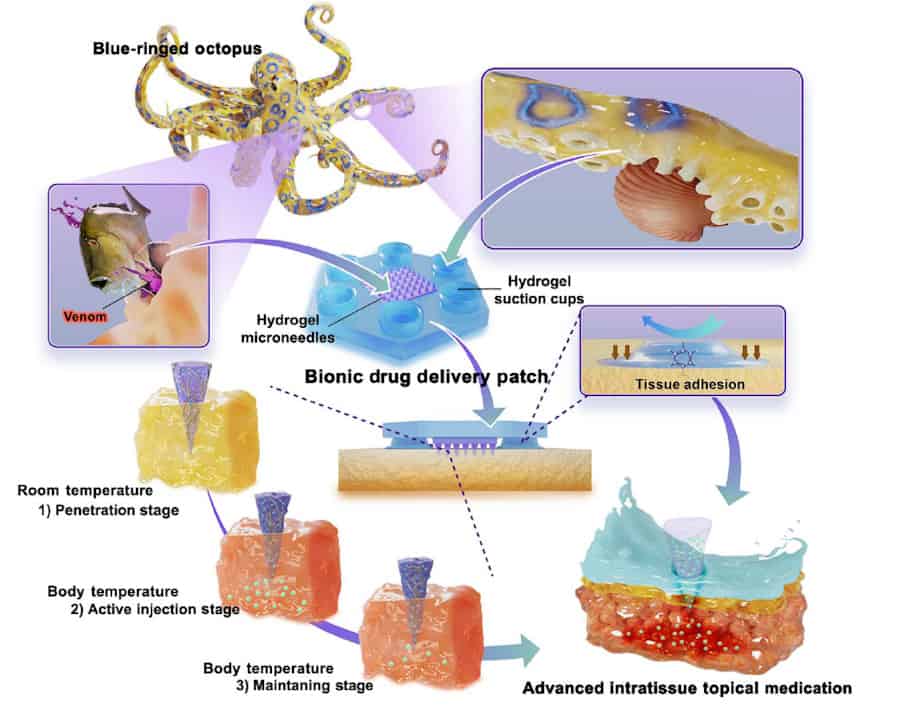
Microneedle drug delivery platform

The researchers formed the microneedle patch from a mixture of silk fibroin and the hydrogel pluronic F127 (silk-Fp), adding heat-sensitive PNIPAm hydrogel to enable controlled drug release. The resulting hydrogel microneedles were strong enough to penetrate soft tissue or the mucus barrier.

One challenge, particularly in a humid environment, is to keep the patch stable on the tissue surface. Imitating the design of the suction cups on the octopus’ tentacles, the team created a base layer containing hydrogel suction cups and integrated the microneedles into its centre. The suction cups adhere to tissue via both negative pressure fixation and chemical bonding with tissue proteins. Even after long periods under water, the silk-Fp patch stayed firmly in place on the tissue surface.

To test the functionality of the patch, the researchers loaded the silk-Fp microneedles with the anti-inflammatory drug dexamethasone sodium phosphate (DEX) or the anticancer drug 5-fluorouracil (5-FU), and applied the patches to treat oral ulcers or early superficial tumours in animals, respectively.

The shape and strength of the microneedles enabled them to puncture into the ulcer or tumour. After entering the target tissue, the microneedles sense the body temperature and provide rapid-onset drug delivery within two hours (as the needles shrink and the PNIPAm transforms from a hydrophilic to a hydrophobic state upon heating). Over the next two days, the microneedles gradually deliver the remaining drug to maintain the therapeutic effect.

The researchers found that the silk-Fp microneedle patch could increase the healing speed of ulcers through DEX release or almost completely halt tumour growth when loaded with 5-FU. “Imitating the blue-ringed octopus biting through the shell of its prey and injecting toxic saliva, the developed silk-Fp MN could actively inject drugs into tissues,” they write.

Lined-up quantum dots become highly conductive

Assemblies of quantum dots tend to be highly disordered, but when the facets of these tiny semiconducting structures are lined up like soldiers on parade, something strange happens: the dots become very good at conducting electricity. This is the finding of researchers at the RIKEN Center for Emergent Matter Science in Japan, who say that these ordered, quasi-two-dimensional “superlattices” of quantum dots could make it possible to develop faster and more efficient electronics.

Quantum dots are semiconductor structures that confine electrons in all three spatial dimensions. This confinement means that quantum dots behave in some ways like single quantum particles even though they contain thousands of atoms and measure up to 50 nm across. Thanks to their particle-like properties, quantum dots have found use in many optoelectronics applications, including solar cells, biological imaging systems and electronic displays.

There is a snag, however. The general disorderliness of quantum dot assemblies means that charge carriers do not flow efficiently through them. This makes their electrical conductivity poor, and standard techniques for introducing order have not helped much. “Although the order of the assemblies can be improved, we found that it is not enough,” says Satria Zulkarnaen Bisri, who led the RIKEN study and is now an associate professor at the Tokyo University of Agriculture and Technology.

A fresh look at quantum dots

Bisri explains that to improve quantum dots’ conductivity, we need to look at them in a different way – not as spherical objects, as is currently the case, but as chunks of matter with a suite of unique crystallographic properties inherited from their compound crystal structure. “Orientation uniformity of the quantum dots is also important,” he says. “Understanding this enabled us to formulate a way to control the assembly of the quantum dots by tuning the interaction between facets of neighbouring quantum dots.”

The researchers made their quantum dot assemblies, or superlattices, by creating what is known as a Langmuir film. Bisri describes this process as a bit like drizzling oil on the surface of water and letting it spread into a very thin layer. In their experiment, the “oil” is the quantum dots, while the “water” is a solvent that helps the dots connect to each other selectively, via certain facets, to form an ordered monolayer, or superlattice.

“The good properties of this monolayer superlattice are that the large-scale order and the coherent orientation of the quantum dot building blocks minimize energetic disorders throughout the assembly,” Bisri tells Physics World. “This allows for more precise control over the electronic properties of the dots.”

At higher doping levels, charge transport from one quantum dot to another is no longer governed by a hopping transport process

The RIKEN researchers found that they could make their system up to a million times more conductive than assemblies of quantum dots that were not connected epitaxially in this way. Bisri explains that this increase in conductivity is associated with an increase in the doping level of charge carriers in the system. At this higher doping, charge transport from one quantum dot to another is no longer governed by a hopping transport process (as occurs in an insulator), but by a delocalized transport mechanism through electronic minibands – “just as what would happen in a metallic material,” Bisri says.

Faster and more efficient electronic devices

High conductivity and metallic behaviour in semiconducting colloidal quantum dots could bring significant advantages for electronic devices, making it possible to develop faster and more efficient transistors, solar cell, thermoelectrics, displays and sensors (including photodetectors), Bisri adds. The materials could also be used to investigate fundamental physical phenomena such as strongly correlated and topological states.

The researchers now plan to study other quantum dot compounds. “We would also like to achieve similar or even better metallic behaviour using other means besides electrical field-induced doping,” Bisri reveals.

They detail their present work in Nature Communications.

Regulating AI will slow the pace of science

“Mitigating the risk of extinction from AI should be a global priority alongside other societal-scale risks such as pandemics and nuclear war.” That was the terrifying-sounding statement signed by more than 350 business leaders and researchers at the end of May. Released by the non-profit Center for AI Safety, signatories included the astronomer Martin Rees, who is known for his deep thoughts about the future of humanity.

Rees later explained he was less worried about “some super-intelligent ‘takeover’” and more concerned about the risk of us relying too much on big interconnected systems. “Large-scale failures of power grids, Internet and so forth can cascade into catastrophic societal breakdown,” he warned in the Times. For Rees – and many others who take an interest in such matters – we need regulation to control AI.

But who should do the regulating? I’m not sure I particularly trust tech firms to act in our best interests, while politicians are notorious for creating rules that are cumbersome, late and miss the point. Some say we should leave it to international bodies like the United Nations – in fact, the EU is already planning what it calls “the world’s first comprehensive AI law”. And anyway, is regulation even possible now that the AI genie is out of the bottle?

Sure, there are concerns. Large-language models like ChatGPT are ultimately trained on data and information created by people. But it’s unclear what sources it’s used and credit is rarely given. There have been instances of ChatGPT “making up” journal references, which can erode trust in what we see, watch and read online.

With events moving at such a fast pace – the latest version of ChatGPT is due out shortly – I’m not sure anyone really knows what the future holds. Many UK universities have reacted by banning students from using AI tools, worried that they might be gaining an unfair advantage on coursework. Universities essentially are trying to win breathing space while they work out what to do long term.

But banning AI isn’t a wise idea, especially as it offers so many exciting possibilities. As well as addressing pressing global issues such as climate change, AI could help with day-to-day tasks: imagine a student taking a photo of a lab experiment and asking if they’ve set it properly up. AI tools could create videos or podcasts as teaching aids. Or do coding. Or spot patterns in data. It could suggest titles to research papers or summarize talks.

AI is here to stay; ultimately, it’s up to us to use it wisely.

Shopping trolley could save lives, the bottle bouncing challenge

Could a shopping trolley save your life? Researchers at the UK’s Liverpool John Moores University think so. They have done a study in which 2155 people used a shopping trolley (or cart) that had an electrocardiogram (ECG) sensor built into its handle. The device was able to detect whether a subject had atrial fibrillation, which is a type of irregular heartbeat that makes it much more likely that a person will have a stroke.

Shoppers in a supermarket gripped the trolley handle for at least one minute while a measurement of the person’s heartbeat was made. A green light would appear if no evidence of atrial fibrillation was detected. This null result was then confirmed by one of the researchers using a separate instrument. If evidence of atrial fibrillation was detected by the trolley handle, an independent measurement was made by one of the supermarket’s pharmacists. A cardiologist member of the team then reviewed the data and reported back to the subjects.

The study was done in four supermarkets in Liverpool over two months and 220 people were flagged up for have an irregular heartbeat. Of these, a diagnosis of atrial fibrillation was made for 59 people – with twenty people already knowing that they had the condition.

Happy to be tested

Liverpool Moores’ Ian Jones says “Nearly two-thirds of the shoppers we approached were happy to use a trolley, and the vast majority of those who declined were in a rush rather than wary of being monitored. This shows that the concept is acceptable to most people and worth testing in a larger study.” He adds, “we identified 39 patients who were unaware that they had atrial fibrillation. That’s 39 people at greater risk of stroke who received a cardiologist appointment.”

The team reported its results today in Edinburgh at ACNAP 2023, which is a scientific congress of the European Society of Cardiology.

Now, it’s time for a bit of physics fun. Take a plastic bottle and fill it with water and then drop it and observe how high it bounces. Then, take the same bottle and set it spinning about its long axis and drop it again and see what happens.

Apparently, the non-spinning bottle will bounce higher than the spinning bottle – according to a team of researchers in Chile led by Pablo Gutiérrez of O’Higgins University and Leonardo Gordillo of the University of Santiago.

Now, when I first came across this study, I assumed that the spinning bottle would bounce higher because its recoil upwards would be stabilized by the conservation of angular momentum. I was wrong, but can you work out why the spinning bottle does not bounce as high? Here’s a hint, think of the water as a shock absorber. You can read more in Physics, where you can also watch a video of the experiment.

Silicon solar cells gain new flexibility

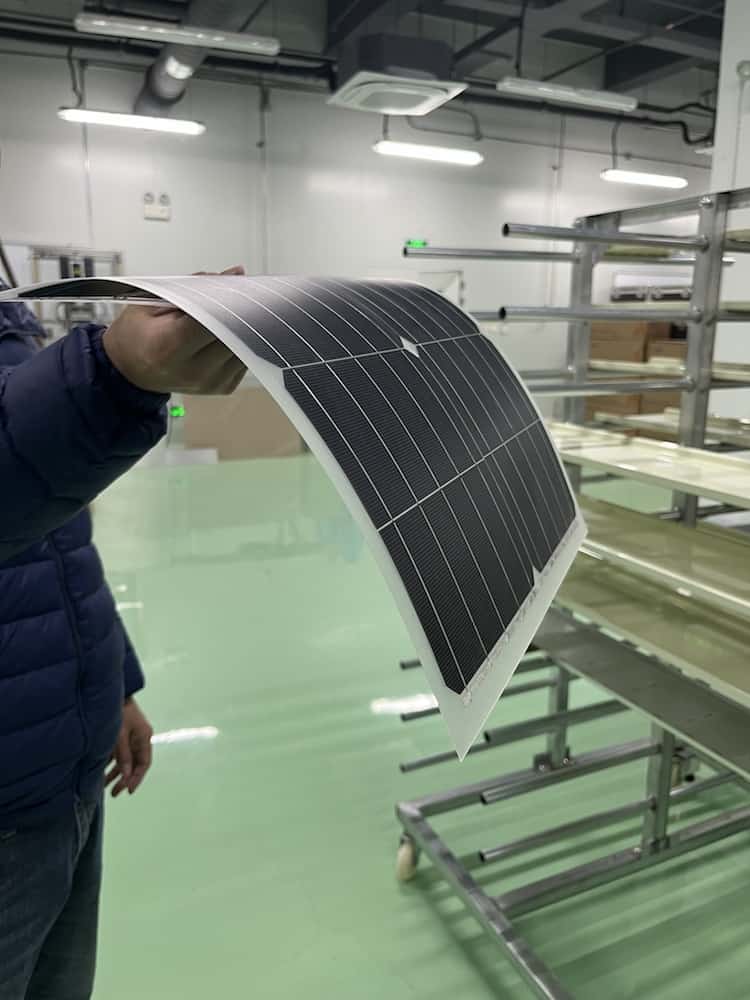
A photo showing the new bendy silicon solar cells flopping over in a person's hand like a piece of flimsy card

Most silicon solar cells are completely rigid, but researchers in China, Germany and Saudi Arabia have now succeeded in making them bend and flex like paper. The new flexible cells have a baseline power conversion efficiency of 24%, and they retain 96.03% of this efficiency after 20 minutes of flapping in a laboratory-generated version of wind. They are also robust to temperature changes, losing just 0.38% of their efficiency after cycling between temperatures of –70 and 85 °C for two hours.

Conventional silicon-based solar cells make up 95% of all solar cells on the market today. After decades of development, these cells are very efficient at generating electricity from sunlight. Their main drawback is that silicon is a brittle material that cracks easily when bent, meaning that standard silicon solar cells cannot be deployed on undulating or flexible surfaces.

Thin-film solar cells made from other materials, such as amorphous silicon, Cu(In,Ga)Se2, CdTe, organics or perovskites, are attractive alternatives in many ways. However, they often contain elements that are toxic (such as lead or cadmium) or scarce and expensive (such as indium or tellurium). They also suffer from low power conversion efficiency and are chemically unstable under normal operating conditions.

Shearing rather than fracturing

Scientists have long known that textured crystalline silicon wafers begin to crack at certain sharp interfaces that form between pyramid-shaped features on their edges.

In the latest work, a team of researchers led by Wenzhu Liu of the Shanghai Institute of Microsystem and Information Technology, Chinese Academy of Sciences, used this fact to improve the wafers’ flexibility. They did this by blunting the crack-initiating interfaces with chemical and plasma etching. Once blunted, the wafer no longer fractures. Instead, it forms a microscopic network of cracks that enables it to be bent and even rolled up.

After treating the wafers in this way, the researchers demonstrated that they could use them to make heterojunction solar cells. When assembled into large flexible modules with an area greater than 10,000 cm2, the new cells had a power conversion efficiency as high as 23.4%. An anti-reflective coating based on magnesium fluoride increased the efficiency further, to 24.6%.

Resistant to vibrations and repeated bending

“These devices are resistant to vibrations and repeated bending (1000 side-to-side bending cycles) and could be made into lightweight large-area flexible solar modules,” Liu tells Physics World. “They may be good for building-integrated and car-integrated photovoltaics where such properties are needed.”

While the new cells can withstand conditions that mimic winds with speeds of 30 m/s for 20 minutes, they are not yet robust to high-speed hailstones. The researchers, who report their work in Nature, say they are now looking into ways of solving this problem.

Intel releases 12-qubit silicon quantum chip to the quantum community

Intel – the world’s biggest computer-chip maker – has released its newest quantum chip and has begun shipping it to quantum scientists and engineers to use in their research. Dubbed Tunnel Falls, the chip contains a 12-qubit array and is based on silicon spin-qubit technology.

The distribution of the quantum chip to the quantum community is part of Intel’s plan to let researchers gain hands-on experience with the technology, while at the same time enabling new quantum research.

The first quantum labs to get access to the chip include the University of Maryland, Sandia National Laboratories, the University of Rochester and the University of Wisconsin-Madison.

The Tunnel Falls chip was fabricated on 300 mm silicon wafers in Intel’s “D1” transistor fabrication facility in Oregon, which can carry out extreme ultraviolet lithography (EUV) and gate and contact processing techniques.

Silicon spin qubits work by encoding information in the up or down spin of a single electron, making each qubit device essentially a single electron transistor that can be fabricated using standard CMOS processing.

The high quality of the fabrication process results in a 95% yield rate across the wafer similar to a CMOS logic process, with each wafer providing over 24 000 quantum dot devices.

Catching up

In recent years, Intel has fallen behind competitors such as IBM and Google who have quantum processors containing as many as 433 qubits. Yet Intel believes silicon spin qubits are superior to other qubit technologies because of scalability. Being the size of a transistor, the chip is approximately 50 x 50 nm, making it up to a million times smaller than other qubit types.

James Clarke, director of quantum hardware at Intel, calls the release of the new chip the next step in Intel’s long-term strategy to build a full-stack commercial quantum computing system. He says that while there are still challenges that must be solved towards a fault-tolerant quantum computer, the academic community can explore this technology and accelerate research development.

Intel now plans to integrate the chip into its full-stack commercial quantum computing system with the so-called Intel Quantum Software Development Kit (SDK). A next-generation quantum chip based on Tunnel Falls is already under development and is expected to be released next year.

Tiny 3D-printed vacuum pump could give mass spectrometry a boost

A tiny 3D-printed vacuum pump has been developed by researchers in the US. Luis Fernando Velásquez-García and colleagues at the Massachusetts Institute of Technology say that their device outperforms current state-of-the-art miniature pumps. It could be used to give people in remote communities access to advanced instrumentation such as mass spectrometry for health and environmental testing.

A peristaltic pump is a type of miniaturized positive displacement pump that mimics the action of the muscles in our intestines. Inside the pump, fluid travels through a flexible tube, fitted around the inner edge of a rigid circular casing.

A rotor at the circle’s axis is fitted with rollers that pass along the circle’s inner circumference – squeezing the tube against the casing, transporting pockets of fluid ahead of the rollers, in the direction of the pump outlet. Simultaneously, after the roller passes, the tube regains its original shape. This creates a suction effect that draws more fluid into the pump.

Since this technique avoids direct contact between the fluid and pumping mechanism, it is now widely used to transport liquids that are chemically reactive or need to stay pristine – like blood.

Vacuum challenges

So far, however, peristaltic pumps have not been widely used for creating and maintaining a vacuum through the transport of gases. This would require the rotor to both rotate at faster speeds and squeeze the flexible tube harder, which could quickly damage the pump. In addition, a tube with a circular cross-section can never be fully sealed, meaning some gas can always leak through in the wrong direction.

In the new study, Velásquez-García’s team explored how these problems could be solved through a smarter flexible tube design – made possible by 3D printing. “One of the key advantages of using 3D printing is that it allows us to aggressively prototype,” Velásquez-García explains.

“If you do this work in a clean room, where a lot of these miniaturized pumps are made, it takes a lot of time. If you want to make a change, you have to start the entire process over. In this case, we can print our pump in a matter of hours, and every time it can be a new design.”

This approach enabled Velásquez-García and team to print all of the pump’s inner workings simultaneously. For the flexible tube, they used a relatively new material that is easier to print than more mainstream flexible materials, but has the required properties.

Pair of notches

They also adapted the tube’s design – introducing a pair of notches on opposite sides of its cross-section, perpendicular to the direction of its compression by the rollers. This small alteration meant the tube required less than half the force to seal completely (see figure).

With these adaptations in place, the team’s pump could maintain vacuum pressures an order of magnitude lower than other state-of-the-art miniaturized pumps. This is achieved using lower rotor speeds, and with smaller forces imparted on the flexible tube. Their design maintained this performance over a lifetime of over 100,000 rotations.

Velásquez-García and colleagues believe that their results clearly show just how advanced 3D printing has become. “Some people think that when you 3D print something there must be some kind of trade-off. But here our group has shown that is not the case,” Velásquez-García claims. “It really is a new paradigm. Additive manufacturing is not going to solve all the problems of the world, but it is a solution that has real legs.”

The team envisages numerous possible uses for the device: including high-purity metallurgy, coating processes, semiconductor manufacturing and especially mass spectrometry.

“With mass spectrometers, the 500-pound gorilla in the room has always been the issue of vacuum pumps,” Velásquez-García explains. “What we have shown here is ground-breaking, but it is only possible because it is 3D-printed. If we wanted to do this the standard way, we wouldn’t have been anywhere close.”

With this approach, mass spectrometers fitted with miniaturized vacuum pumps could be easily produced and deployed in remote regions – allowing small communities in developing countries to analyse blood samples, and examine water quality.

The pump is described in Additive Manufacturing.

Sniffing out drug driving: why a breath test for cannabis is so hard to create

Friday 23 June 2023 marks the 10th International Women in Engineering Day and we are celebrating by devoting two episodes of the Physics World Weekly podcast to women engineers who are doing cutting edge research.

This week our guest is Kavita Jeerage, who is a research engineer at the US National Institute of Standards and Technology (NIST) in Boulder, Colorado. She is an expert in nanoparticle metrology and neurotoxicology and some of her research focuses on developing breath-test technology.

While roadside breath tests for alcohol are a standard part of policing, there is currently no device that can reliably determine whether a driver has recently consumed cannabis. This is not for lack of trying, it turns out that creating a breath test is very difficult.

Recently, Jeerage and colleagues set out to measure the amount of tetrahydrocannabinolic acid (THC, the active ingredient in cannabis) in users’ breath, and to monitor how it changes over time. While the team was able to address some of the challenges that have been holding back the development of practical cannabis breath tests, they concluded that their research does not support the idea that detecting THC in breath as a single measurement could reliably indicate recent cannabis use.

In a conversation with Physics World’s Margaret Harris, Jeerage explains why a breath test for cannabis is so hard to create.

What makes external lasers essential at a bore-type LINAC?

Want to learn more on this subject?

Linac’s latest development is the bore-type design that offers many advantages for the patient and the clinical user. So, the question arises whether and why external lasers should also be used at the bore-type LINAC.

In this webinar, we want to evaluate this question from the point of view of the therapist, the patient and the medical physicist while giving you an overview of laser solutions from LAP.

Want to learn more on this subject?

Raphael Schmidt is responsible for the product management of laser systems for CT, MRI, LINAC, and MR-LINAC from LAP. During his studies at KIT (Karlsruhe Institute of Technology), he gained broad experience in different workflows in radiation therapy while analysing them. Raphael holds a degree in industrial engineering and management.

Incoming president of The Electrochemical Society aims to spark change

Gerardine Botte, the new president of The Electrochemical Society (ECS), wants the world to know that solid-state science and electrochemistry have the power to transform our lives. Alongside the battery technologies that power our mobile devices and a growing fleet of emission-free vehicles, she points out that advances in electrochemical science and engineering are crucial for the development of fuel cells and hydrogen power, as well as a myriad of novel materials, sensors and devices for applications ranging from industrial manufacturing through to healthcare.

“We can imagine the world to be a much better place, all the way from safeguarding the environment to delivering the next generation of materials and biomedical innovations,” she says. “We need to make more people aware of the impact that electrochemistry and solid-state science can have in solving the grand challenges facing humanity and our planet.”

Botte, generally known as Gerri, has been a Fellow of the ECS since 2014 and a member since 1998. Now a professor specializing in food, water and energy sustainability at Texas Tech University, Botte is no stranger to driving positive change. She is a serial entrepreneur with several start-ups to her name, and recently founded and now directs an engineering research centre supported by the National Science Foundation (NSF) that brings together five academic institutions as well as industrial partners to create a circular economy for nitrogen-based fertilizers.

“I love changing the world and having an impact,” she says. “I’m really excited to be president of The Electrochemical Society, and I want to take the opportunity I have to make a difference.”

Gerardine Botte with past president Turgut Gür and plenary speaker Linda L Horton

It’s no surprise, then, that Botte has an ambitious programme of initiatives in mind for her presidential year, which started at the beginning of June. Top of the list is extending the reach and influence of the society beyond its established community of electrochemical scientists and engineers. “Our biannual meetings already attract a diverse group of people, but we could work harder to deliver our message to other stakeholders, such as investors and policymakers,” she says. “We need to make the science relevant to people who are not directly involved in the research, so they can see the value of investing in these technologies.”

One specific initiative is to introduce different types of articles into the society’s publications. “Our journals are phenomenal, and lots of people read them because the science is incredibly strong,” Botte explains. “I’d like to work with our editors and divisions to publish perspective articles that cover broader topics, such as lifecycle analysis, sustainability and science policy, to enable our message to be heard at another level.”

As well as making connections with a wider circle of influencers, Botte is working closely with the society’s leadership team to reach out to geographic regions that are not yet well represented at the ECS. South and Central America are key priorities for Botte, who is originally from Venezuela, and she is working with chief executive officer Chris Jannuzzi to seed more student chapters throughout the region. A road-trip is in the works to inspire local scientists to become advisors for these student-led organizations, while Botte is also hoping to develop regional conferences to provide a stronger voice for under-represented populations within the society. “It’s more than simply co-sponsoring a conference and putting the ECS logo on it,” she says. “We want to bring the experiences from these different regions into the society and allow scientists from all over the world to take an active role in the society.”

Botte hopes that involving more students and scientists in the ECS will provide them with the same opportunities that she has enjoyed during her membership. “I have had tremendous support from the society throughout my career,” she says. “Through the meetings I have been able to meet with friends and colleagues, ask for advice, explore new collaborations, and find students and researchers to join our team, while the society has also provided letters of recommendation to support every level of my professional progression.”

Gerardine Botte with the student poster session winners

Botte felt welcome at the ECS from her very first meeting as a graduate student, and as president she is continuing to look for new ways to make sure that people from different backgrounds and cultures feel at home within the organization. “Even small changes, such as providing a range of menu options at our events, can help us to embrace members with different cultural backgrounds,” she says. “We want everyone to feel included, to feel that they are part of our community, and to feel that they can be part of the society.”

Botte also hopes to partner with organizations that have been working to integrate diversity and inclusion into their processes and development programmes. “We need always to have this component present when we are planning our activities,” says Botte. “As an example, we need to reflect cultural diversity in our career development courses, plus we need to ensure that everyone has the same opportunity to benefit from the support and recognition offered by the society.”

Throughout her time at the ECS Botte has placed a strong emphasis on educating the next generation of scientists. In 2006 she launched an outreach programme within her division that over the years has enabled hundreds of high-school students to learn about electrochemical technologies and their applications. Now, as president, Botte is keen to expand the existing programme of travel grants, best-paper awards, and early-career fellowships that the society offers to its student members.

“We will need to raise funds to expand our initiatives for students and early-career researchers, but investing in the next generation of scientists could be an attractive option for philanthropic support,” she says. “We are reaching out to a few foundations that might make a contribution, while the society has some fantastic industry members that might support initiatives aimed at bolstering their efforts to hire electrochemical scientists and engineers.”

Gerardine Botte networking with ECS members

Botte’s ascendancy to the presidency comes after 25 years of commitment to The Electrochemical Society. Initially working within her division, which focuses on industrial electrochemistry and electrochemical engineering (IE&EE), she has taken an active role in various committees, established and organized awards, and served first as vice-chair and then chair of the IE&EE division.

“To become president you need to play all the roles in your division and the committees, because only then do you have the knowledge and understanding to join the executive committee and work at the society level,” she says.

In 2021 Botte became third vice-president of the ECS, kickstarting a five-year progression through society’s executive positions that includes her presidential year. “It’s very important to take the responsibility and make the commitment to the society,” says Botte. “I’m a woman, I’m Hispanic, and just being in the role helps to show future generations what’s possible, that they can feel represented, and that they can aspire to take leadership positions.”

Botte always has one eye on future, particularly on the students and early-career scientists that will sustain and grow the field of electrochemical science and engineering, as well as the ECS, for years to come. “It really is a community and I try to make sure that all my students and researchers recognize the value of the society, not just for their own professional careers but also to ensure that future generations can benefit from its support,” she says. “My goal is to extend the impact of the society so that we can inspire and support the electrochemical scientists and engineers of the future.”

With such an ambitious presidential agenda, Botte is well aware that the next 12 months is likely to go past in a blur. “It’s a lot to do in a year, but we’ve already been paving the way and developing some of the initiatives,” she says. “With the support of Chris and the other members of the executive committee, as well as the staff, the members, and our volunteers, I think we’re going to do great.”

Copyright © 2026 by IOP Publishing Ltd and individual contributors