The European Space Agency (ESA) has launched a mission to Jupiter that will test the conditions that may have led to the emergence of habitable environments. The €1.6bn Jupiter Icy Moons Explorer (JUICE) was launched today on an Ariane 5 rocket from Europe’s Spaceport in Kourou, French Guiana, at 09:14 local time. JUICE will now take eight years to travel to Jupiter. It is expected to reach the gas giant in July 2031.
As it makes its way to Jupiter, JUICE will perform flybys of Venus, Earth and the Moon to increase its speed and adjust its trajectory. Once at Jupiter it will spend four years investigating the Jupiter system, including how the planet’s complex environment has shaped its moons as well as studying whether there could ever have been life on the moons.
Indeed, the craft will also visit Jupiter’s three large ocean-bearing moons – Ganymede, Callisto and Europa – performing 35 fly-bys, which includes 21 of Callisto and two of Europa.
JUICE will be the first spacecraft to ever orbit a moon in the outer solar system when it orbits the water-rich Ganymede, which is the only moon in the solar system that has a magnetic field. It will arrive in orbit around Ganymede in December 2034 where it will remain in orbit for just under a year or until the propellent runs out. It will then undergo a controlled crash into Ganymede.
To carry out its studies, JUICE carries 10 instruments, some components of which have been supplied by NASA and the Japanese Space Agency, JAXA. The instruments include an optical camera, a UV imaging spectrograph and radar as well as a magnetometer.
“Today, we have sent a suite of ground-breaking science instruments on a journey to Jupiter’s moons that will give us an exquisite close-up view that would have been unimaginable to previous generations,” says Carole Mundell, ESA’s director of science. “The treasure trove of data that JUICE will provide will enable the science community worldwide to dig in and uncover the mysteries of the jovian system, explore the nature and habitability of oceans on other worlds and answer questions yet unasked by future generations of scientists.”
JUICE is the first L-class probe as part of ESA’s Cosmic Vision 2015–2025 programme. It was selected in 2012, beating off competition from two other candidates – the Advanced Telescope for High Energy Astrophysics (ATHENA) and the New Gravitational Wave Observatory (NGO).
The next mission to arrive at the Jupiter system is NASA’s Europa Clipper craft that from 2030 will investigate the potential for life on Europa as well as help select a landing site for a future Europa lander.
The 2023 winners of two awards in quantum technologies for early-career researchers have been announced by IOP Publishing. Feihu Xu from the University of Science and Technology China (USTC) has won the International Quantum Technology Early Career Scientist Award, while Annabelle Bohrdt from the University of Regensburg in Germany has won the International Quantum Technology Emerging Researcher Award.
Xu, who works on quantum communication and quantum-enhanced imaging, won the early-career scientist award for his “seminal contributions to quantum communication and quantum networks, including the security of practical quantum cryptography, large-scale quantum networks and high-speed quantum communication”.
This award is given to scientists who have completed their PhD no more than eight years ago. “I am extremely honoured to be recognized by the IOP and the award committee,” Xu told Physics World. “The recognition of this award is encouraging for my future career to bring quantum information science to general applications, and to explore great physical science.”
Bohrdt, who works on the physics of quantum many-body systems, was given the emerging researcher award for her work “developing novel approaches to analyse strongly correlated quantum matter using snapshots of quantum state”.
This prize is awarded to scientists who completed their PhD no more than three years ago. “It’s a great honour for me to receive this award in recognition of my work,” says Bohrdt.
Future plans
Both Xu and Bohrdt are excited about the future of quantum science and technology. “Quantum science enables a number of new technologies that can outperform current technology such as in quantum communication, quantum computing and quantum metrology,” says Xu. “I believe quantum technologies will play an important role in life in the near future.”
Bohrdt echoes those sentiments. “Quantum systems never cease to amaze with the unexpected features they can exhibit,” she adds. “The technological advances on the hardware side, such as in quantum simulation, quantum computation or quantum sensing, have been impressive to watch, and I expect even more advances in the coming years.”
The IOP awards, which have been announced on World Quantum Day, are designed to recognize scientific excellence and to help support the development of scientists at the start of their careers. The winners will give an award lecture on 25 May and be invited to submit a perspective related to their work to the IOP Publishing journal Quantum Science and Technology.
Applications were reviewed by an eight-strong committee chaired by Chaoyang Lu, a quantum physicist at the USTC, who sits on the board of Quantum Science and Technology.
Today is World Quantum Day and the celebrations are already in full swing here at IOP Publishing.
Our colleagues in journals and books are showcasing some of their best quantum content. What is more, quantum-related ebooks will be offered at a discount.
A good place to start exploring is the Quantum Science subject collection on the IOPscience website. There you will find links to special issues of journals with quantum themes, a selection of quantum ebooks and interviews with quantum researchers who are associated with IOP Publishing.
Not to be outdone by our journals and books colleagues, Physics World editors have put together a collection of some of our best quantum-related articles, podcasts and videos. Here you will find interviews with leaders in quantum science and technology, reports on the latest breakthroughs in quantum physics and advice about how to pursue a career in the burgeoning quantum sector.
If you are interested in the origins of World Quantum Day and want to hear about some of the many celebrations worldwide, then listen to the Physics World Weekly podcast. This features an interview with Yasser Omar of the University of Lisbon, who was a World Quantum Day founder. That podcast also has a conversation with Fermilab’s Anna Grassellino, who is director of the US Department of Energy’s Superconducting Quantum Materials and Systems Center.
If you need some inspiration to pursue a career in quantum science and technology, we have just published an interview with Leni Bascones from Spain’s Instituto de Ciencia de Materiales de Madrid. She explains why she chose a career in quantum science, talks about her current research and looks to the future – addressing that thorny question about whether the quantum bubble will burst.
Have a happy World Quantum Day and we hope you enjoy our quantum offering.
Vital perspective Leni Bascones is a quantum physicist at the Instituto de Ciencia de Materiales de Madrid in Spain, working on strongly correlated electron systems and unconventional superconductors. (Courtesy: Leni Bascones)
I wasn’t someone who knew as a child that they wanted to be a scientist because they liked figuring out how the world works. In fact, when I was a teenager, my plan was to be a fashion designer. Even when I had to decide what I wanted to study at university, I wasn’t sure whether to do physics or history. In the end, I chose physics because of my interest in astrophysics.
It was only in the third year of my undergraduate studies[at the Universidad Autónoma de Madrid], when I took a course on quantum mechanics, that I realized this was the topic I was most interested in. It fascinated me. Initially I went for particle physics and followed courses about that as it’s closely tied to quantum physics. But when I had to commit to a topic for my PhD, I decided to focus on quantum materials and devices, and to this day, I am very happy with my choice.
What excites you most about quantum physics?
I find the behaviours of quantum systems captivating. There are many interesting phenomena that we do not understand yet, and many surprises are constantly appearing. At present we have the possibility to engineer devices and quantum materials. Even though I do not work directly on applications, when I think about the tangible impact it can have in the world, such as digital technologies, climate change, medicine and transport, I find the potential of quantum physics extremely exciting.
What real-world problem do you hope to solve with your research?
My research focuses on strong electronic correlations and superconductivity. I am currently working on 2D moiré heterostructures, such as twisted bilayer graphene, where two carbon layers are overlaid with a relative twist.
Typically, materials have a resistance to the flow of electric current and this costs a lot of energy to overcome. But in some materials this resistance vanishes below a certain temperature – usually extremely low temperatures – and the electric current can flow without losing any energy. The vanishing of resistance is one characteristic of superconductivity, which happens because the electrons enter a co-operative state in which they join in pairs. This is surprising because electrons are charged particles and repel each other.
Superconductivity has a lot of applications, from building motors, sensors and trains, to medical imaging and quantum computation, as well as being used for creating strong magnets, or conducting and accumulating electric currents without energy cost.
In a certain type of superconductor, superconductivity emerges because of the interactions between the electrons and the atomic lattice. But this explanation does not work in so-called “unconventional superconductors”, which in many cases superconduct at higher temperatures. In these materials the appearance of superconductivity is surprising because the attraction between the electrons in pairs could actually be due to repulsion between the charged particles.
It would be really fun to fully understand the insights and mechanisms of unconventional superconductivity, and predict or engineer new materials with high-temperature superconductivity. This is an important and fascinating quantum problem that physicists have been trying to explain for almost 40 years. With new, highly tunable 2D superconducting devices that have been discovered recently, such as the moiré heterostructures, many new superconducting systems can be designed, and finding an explanation for this phenomenon seems closer.
What unique qualities can female researchers like yourself bring to quantum physics?
Women have talent, intuition and perseverance, and we cannot lose these attributes. We need more woman to advance in the basic knowledge and applications of quantum physics.
At present we are losing many talented women from pursuing a career in quantum. They face more difficulties to advance in science, often due to unconscious behaviours from colleagues. Also, fewer women choose quantum physics due to stereotypes and lack of encouragement. But women are uniquely placed to help advance quantum physics by creating a more collaborative and welcoming research environment. Too much competition and ego lead to scientific practices that increase the noise and delays our ability to solve quantum problems.
What do you see as the future of quantum physics?
We are living in a time of many opportunities. Quantum will grow and we are now conscious of the technologies we can invent using quantum physics. Developing applications will be a key element of research over the next few years, but it will go wrong if we reduce the importance we place on basic science. History shows us that the most disruptive technologies emerge from basic science discoveries, not by searching for applications.
Do you think we’re currently in a quantum bubble that is about to burst?
We are now talking a lot about quantum, in the same way that we once talked a lot about, say, nanotechnology. Many applications and new knowledge will emerge. Maybe these applications and developments are not the ones that we have in mind at this moment, but our understanding of quantum will evolve. That doesn’t mean that the bubble will burst, but we should not focus our funding and efforts on a very narrow set of choices. For example, some funding agencies concentrate their support on very specific quantum technologies and forget about the quantum materials that underpin them. Or the agencies fund projects only if they are linked to specific applications. That’s a mistake given that quantum materials are going through a revolution right now.
A single-photon detector that could boost the performance of some quantum key distribution (QKD) cryptography systems has been unveiled by Hugo Zbinden and colleagues at the University of Geneva and ID Quantique in Switzerland. The device contains 14 intertwined superconducting nanowires, which share the task of photon detection.
Quantum computers of the future could crack conventional cryptography systems. However, quantum cryptography systems should remain secure from hackers – at least in principle. One such system is quantum key distribution (QKD), which uses the laws of quantum mechanics to ensure that two communicating parties can exchange cryptography keys securely.
QKD involves sending and receiving strings of photons in specific polarization states. If an eavesdropper intercepts this communication, it disrupts the quantum nature of the information thereby alerting the correspondents.
Limited clock rates
While commercial QKD systems are already is use in some specialized applications, more widespread use of the technology is limited by the “clock rate” at which photons can be created, transmitted and detected. “The clock rates of these systems have increased continuously over the past 30 years,” Zbinden says. “But in modern systems, the speed of the detectors and the post-processing become the limiting factor for high secret key rates in QKD.”
These key rates control the speed at which communicating parties can exchange a secure quantum key. Higher key rates enable users to exchange more information – both more securely, and at higher speeds.
Today’s QKD systems use superconducting nanowire single-photon detectors (SNSPDs), which operate a cryogenic temperatures. A small region of the nanowire heats up when it absorbs a photon, switching temporarily from a superconductor to a normal material. This causes an increase in the electrical resistance of the nanowire, which is detected. After the photon is absorbed, the nanowire must cool down before it can detect the next photon – and this recovery time puts a limit on how fast an SNSPD can operate.
Simple yet sophisticated
In its study, Zbinden’s team implemented a simple yet effective fix to this problem. “The novel design of SNSPDs consists of 14 nanowires, which are intertwined in such a way that they are all equally illuminated by the light exiting the optical fibre,” explains Fadri Grünenfelder, Zbinden’s colleague at the University of Geneva. “This increases the chance that there is a wire that still can detect while some others are recovering.”
Another feature of the detector is that each nanowire is shorter than nanowires usually used in SNSPDs – which means that the individual nanowires can cool down faster.
Existing SNSPDs can support key rates of just over 10 Mbps, but the Swiss team has done much better. “The high maximum count rate of the SNSPD, as well as the increased timing resolution, helped to achieve a secret key rate of 64 Mbps over 10 km of optical fibre,” Grünenfelder says. “We could beat the previous record by more than a factor of four.”
Privacy amplification
By detecting photons at this rate, a QKD system could make any necessary error corrections, and carry out privacy amplification (a process which transforms raw key photons into a final secure key, independent of any information which might have leaked to an eavesdropper) – both in real time.
For now, the cryogenic temperatures required for SNSPDs mean the technology is not well suited to everyday applications in QKD. “Other optimizations implemented for pushing key rates to the limit can be implemented in more mainstream, commercial QKD,” Zbinden explains.
However, the researchers still envisage a wide range of possibilities for their ultra-fast, highly efficient SNSPDs: from secure communication between distant spacecraft, to new generations of advanced optical sensors – which could be particularly useful in medical imaging.
Friday 14 April is World Quantum Day and to celebrate I am in conversation with two physicists working at the forefront of quantum science and technology.
First up in this episode is Fermilab’s Anna Grassellino, who is director of the US Department of Energy’s Superconducting Quantum Materials and Systems Center (SQMS). She explains how the SQMS brings together people with a broad range of expertise – including materials science, microwave systems and particle physics – to create new quantum technologies. Grassellino also talks about how quantum sensors can be used to look for physics beyond the Standard Model.
Researchers at the University of Michigan in the US have created bowtie-shaped nanostructured microparticles whose chirality, or handedness, can be tuned continuously over a wide range. The complex particles, which are constructed from simple components that are sensitive to polarized light, form a variety of curling shapes that can be precisely controlled. The photonically active nanoassemblies might find use in a host of applications, including light detection and ranging (LiDAR) devices, medicine and machine vision.
In mathematical terms, chirality is a geometric property, described by continuous mathematical functions that can be pictured as the gradual twisting of a sweet wrapper. A family of stable structures with similar shapes and progressively tuneable chirality should therefore be theoretically possible. In chemistry, however, chirality is often treated as a binary characteristic, with molecules coming in two versions called enantiomers, which are mirror images of each other – much like a pair of human hands. This chirality is often “locked in” and any attempt to modify it results in breaking the structure.
Continuous chirality
A team of researchers led by Nicholas Kotov has now shown that nanostructures with an anisotropic bowtie shape have continuous chirality, meaning that that they can be fabricated with a twist angle, pitch width, thickness and length that can be tuned over a wide range. Indeed, the twist can be controlled all the way from a fully twisted left-handed structure to a flat pancake and then to a fully twisted right-handed structure.
The bowties are made by mixing cadmium and cysteine, a protein fragment that comes in left- and right-handed varieties, and then suspending this mix in an aqueous solution. This reaction produces nanosheets that self-assemble into ribbons that then then self-stack on top of each other, forming the bowtie-shaped nanoparticles. The nanoribbons are assembled from nanoplatelets 50–200 nm in length with a thickness of roughly 1.2 nm
“Importantly, the size of the particles is self-restricted by the electrostatic interactions between the nanosheets and the particles overall,” explains Kotov, “a mechanism that we discovered in a previous study on supraparticles and layered nanocomposites.”
If the cysteine is all left-handed, left-handed bowties form and if it is right-handed, right-handed ones form. If the mix contains different ratios of left- and right-handed cysteine, however, structures with intermediate twists can be created. The pitch of the tightest bowties (that is, those with a 360° turn over their entire length), is about 4 µm.
The researchers found that the nanostructures reflected circularly polarized light (which propagates though space in a corkscrew-shape) only when the twist in the light matched the twist in the bowtie shape.
5000 different shapes
The team succeeded in producing 5000 different shapes within the bowtie spectrum and studied them in atomic detail using X-ray diffraction, electron diffraction and electron microscopy at the Argonne National Laboratory. Scanning electron microscopy (SEM) images show that bowties are structured as a stack of twisted nanoribbons 200–1200 nm in length and 45 nm thick.
The reasons for continuum chirality come thanks to the intrinsic properties of the nanoscale building blocks. First, flexible hydrogen bonds allow for variable bond angles, explain Kotov and colleagues. Second, the ability of nanoribbons to ionize leads to long-range repulsive interactions between nanoscale building blocks that can be tuned over a wide range by changing the pH and ionic strength. And since the nanoribbons twist, the total electrostatic potential becomes chiral, which reinforces the handedness of the assemblies.
“Compared to the ‘simple’ supraparticles we studied in our earlier work, the ones made from chiral nanoclusters can form more complex structures,” Kotov tells Physics World. “Controlling their electrostatic interactions enables us to vary their size and shape. Establishing such a chirality continuum for synthetic chemical systems, such as these complex particles, allows us to engineer their properties.”
The researchers, who report their work in Nature, say they are now busy looking into applications for their bowtie particles in machine vision. “Circularly polarized light is rare in nature and thus very attractive for such vision since it allows one to cut out noise,” explains Kotov. “The engineered bowtie structures could also be used in capacity as markers for LiDAR and polarization cameras.”
The twisted nanoparticles may also help create the right conditions for producing chiral medicines. Chirality is an important property of drugs, as enantiomers of the same molecule can have entirely different chemical and biological properties. Distinguishing between them is thus particularly of interest to those developing new pharmaceuticals.
Quantum technology research was among the hot topics at the 2023 APS March Meeting in Las Vegas, which brought together more than 10,000 researchers from across the physics spectrum. In these interviews, filmed at the event, you hear from editorial board members from the journals Quantum Science and Technology (QST) and Materials for Quantum Technology (MQT), published by IOP Publishing, which also publishes Physics World.
Amid the buzz of the event, the researchers discuss some of the most pressing research questions within their fields, and the benefits of publishing in QST and MQT. Appearing in the video are:
Andrew Daley, University of Strathclyde, UK / Editorial board member, QST Anna Grassellino, SQMS Division, Fermi National Accelerator Laboratory, US / Editorial board member, MQT Chandrasekhar Ramanathan, Dartmouth College, US / Executive editorial board member, MQT
Understanding the radiobiological response of DNA to charged particle irradiation is crucial to help optimize particle therapies and improve radiation protection strategies. DNA damage in extreme conditions (such as those experienced by astronauts, for example) can result in double-strand breaks, which can lead to mutations, chromosomal aberrations and changes in gene expression.
Interactions between charged particles and the electronic structure of DNA are complex, however, and there is a significant gap in understanding the dependence of different types of DNA damage on high-energy protons. Towards filling this knowledge void, researchers at the University of North Carolina at Chapel Hill and Massachusetts Institute of Technology used large-scale computer simulations to identify a mechanism through which ionizing radiation could cause a break in one or both of the DNA strands. Their findings, reported in Physical Review Letters, could help improve proton therapy for cancer treatments and enable better protection during human spaceflight.
Christopher Shepard and colleagues employed real-time time-dependent density functional theory (TD-DFT) simulations on a supercomputer. TD-DFT is a method that computes the electron density of a many-electron system using a single function. Therefore, it is considered to be an efficient method for calculating the electronic structure of large systems.
With this in mind, the researchers used TD-DFT to quantify at the molecular level the energy transfer from high-energy protons to solvated DNA (DNA surrounded by water), a state in which the DNA is separated into its sugar-phosphate side chains and nucleobase backbone components.
DFT calculations account for large-scale interactions between the electrons, using a set of approximations that make it possible to compute the electronic structure of complex DNA when exposed to ionizing radiation and study the time-dependent electron density.
The computational approach
For their computations, the researchers focused on the total energy of the solvated DNA system. In TD-DFT, total energy is a function of the electron density, and by moving the proton at a constant velocity, the change in total energy can be used to measure the electronic energy transfer.
The researchers studied two different proton paths, with each path closer to a different region of DNA: either the sugar-phosphate side chains or the nucleobases. They found that spread change (a measure of electronic delocalization) of DNA occurs close to the path of the irradiating proton and is higher in trajectories closer to the phosphate chains. This means that the DNA’s sugar-phosphate side chain molecules absorbed much more energy than did the nucleobases.
More precisely, the simulations showed that the amount of energy transferred to the solvated DNA system by an incoming high-energy proton depends on the part of DNA component that it comes closest to. The researchers determined that the energy transferred to the sugar-phosphate side chain is more than two to three times larger than the energy transferred to the nucleobase when a proton is equally close to either of the two components. Consequently, side chain irradiation is more likely to result in damage.
The findings indicate that there is a higher prevalence of high-energy electron–hole formation in the sugar-phosphate side chains, which in turn, can lead to formation of free radicals. Free radicals, aqueous atoms or molecules with an unpaired valence electron, are highly reactive with their local surroundings and, as a result, can be highly damaging. Therefore, interactions between the sugar-phosphate side chains and generated radicals can lead to fractures and eventually break one or more DNA strands.
According to an accompanying Viewpoint article, this work provides an advance towards studying complex interaction dynamics that are difficult to replicate in a laboratory setting. Some caution should be exercised, however, until detailed experiments test the researchers’ models and findings.
Lithium ion batteries (LIBs) are characterized by structural and chemical complexities across a broad range of length scales. It is the batteries’ structural hierarchy that determines their functionality. The study of the battery function, degradation and failure mechanisms requires a systematic investigation from the structural, chemical, mechanical and dynamic perspectives. X-ray-based characterization techniques are playing an important role in this research field.
This talk presents a macro-to-nano zoom through the hierarchy of a real-world battery cell using a suite of state-of-the-art X-ray techniques. Damage, deformation, compositional and chemical heterogeneity at different length scales is visualized and associated with different degradation mechanisms. These results highlight the importance of the battery material’s mechanical properties, which evolve upon battery cycling and could significantly impact both immediate and long-term cell behaviours.
An interactive Q&A session follows the presentation.
Yijin Liu is lead scientist at the Stanford Synchrotron Radiation Lightsource, SLAC National Accelerator Laboratory. He has more than 15 years of experience in developing state-of-the-art X-ray characterization techniques including multi-modal and multi-scale microscopy using both synchrotrons and compact laboratory X-ray sources. In addition to his technical expertise, Liu has applied these methods broadly for scientific research in renewable energy science, industry catalysis, oil production and material under extreme conditions. In more recent years, Liu’s research group focused on studying energy storage materials using synchrotron experimental tools as well as associated machine learning and data-mining approaches.
Liu completed his BS in 2004 and PhD in 2009 in optics at the University of Science and Technology of China. He joined Stanford University as a postdoctoral scholar in 2009 and became associate staff scientist at the SLAC National Accelerator Laboratory in 2012, staff scientist in 2015, and lead scientist in 2020. He received the 2016 William E and Diane M Spicer Young Investigator Award.




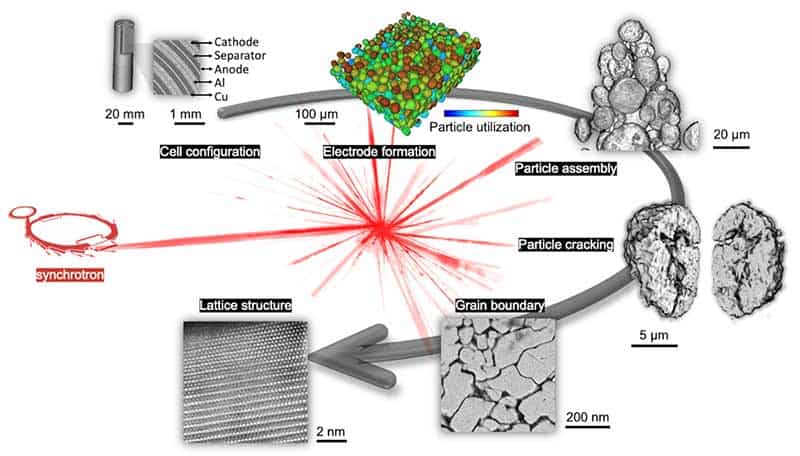 Lithium ion batteries (LIBs) are characterized by structural and chemical complexities across a broad range of length scales. It is the batteries’ structural hierarchy that determines their functionality. The study of the battery function, degradation and failure mechanisms requires a systematic investigation from the structural, chemical, mechanical and dynamic perspectives. X-ray-based characterization techniques are playing an important role in this research field.