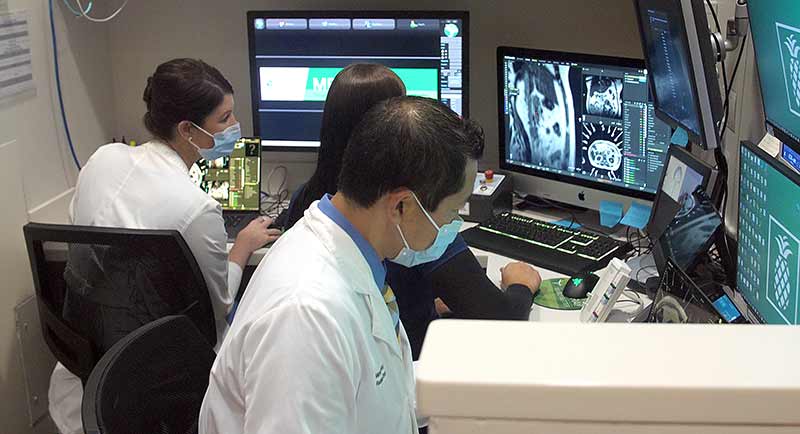
Experience of transit dosimetry using RadCalc EPID

Want to learn more on this subject?

Radiotherapy treatment involves the delivery of high doses of radiation, targeted at a tumour, but often in close proximity to other critical organs. Radiotherapy treatments are planned on computers using a combination of a machine beam model and a scanned patient geometry. This treatment plan may then be delivered to the patient daily over a period of several weeks. The success of the treatment depends on the precision of the dose delivery and this can be affected by a number of factors including the accuracy of the beam model, machine issues, patient setup and physical changes to the patient.

RadCalc EPID offers a method of calculating the dose that was delivered to the patient using images of the beam that are collected as it exits the patient. The most simplistic use of this data is to ensure that no gross error has occurred during treatment delivery. However, the sensitivity of the system is such that it can detect much smaller deviations, helping to identify both systematic issues and patient-specific problems.

This webinar covers the use of RadCalc EPID at Raigmore Hospital in Inverness. Use of the system will be discussed along with examples of the types of problems that have been discovered, along with their resolution.

Want to learn more on this subject?

Steve Colligan is head of radiotherapy physics at Raigmore Hospital in Inverness, Scotland. Having gained an honours degree in electrical and electronic engineering at the University of Edinburgh, he pursued an MSc in medical physics at the University of Aberdeen. After graduating, he worked in clinical scientist roles at both Walsgrave Hospital in Coventry and Raigmore Hospital in Inverness before being appointed to his current head of department role. In addition to maintaining a clinical role, he is actively involved in a number of the department’s projects that aim to make improvements to the accuracy of treatment delivery using tools such as transit dosimetry and surface image guidance. His other interests include radiobiology and programming.

Quantum research and development thrives in the defence sector

In the past decade or so, quantum technologies have gone from lab curiosities to commercial products with practical applications. This had led to a growing number of business opportunities in the sector – as well as opportunities for people with the right skills.

This episode of the Physics World Weekly podcast features an interview with Mackenzie Van Camp – who is quantum and photonics chief scientist at BAE Systems FastLabs – the research and development branch of the defence contractor BAE Systems.

Based in New Hampshire, Van Camp did a PhD in physics before joining the company. She explains why BAE Systems is developing quantum technologies and talks about some of the projects that she has worked on. She also offers career advice for people who are interested in working in the quantum and defence sectors.

Fledgling quantum industry is heavily male dominated, finds report

The burgeoning quantum industry is heavily male-dominated and action must be taken to make its workforce more diverse and inclusive. That is the conclusion of a report by the London School of Economics and Political Science (LSE), which finds that fewer than 2% of applicants for quantum jobs are female. The lack of women, the report argues, means that the industry is missing out on talent, innovation and productivity.

Quantum science – like other fields linked to physics and computing – struggles with representation and diversity, the LSE report says. According to findings from the recruitment company Quantum Futures, which are highlighted in the report, just one in 54 applications for jobs in the quantum sector are female. Meanwhile, 80% of quantum companies do not have any senior female figures.

The report was produced following a City Quantum Summit held in London in October 2022 attended by quantum and business experts. It says that a diverse workforce, when combined with inclusive behaviours, such as allowing people from different backgrounds to have a voice in meetings, can improve innovation and financial performance.

To foster diversity and inclusion, the report recommends that organisations collect data and statistics on diversity and their hiring practices. They should also audit work processes to ensure equal opportunity, voice and visibility of everyone, while creating awareness of the need for diversity and inclusion.

Companies and organisations could also boost diversity by ensuring their recruitment process are fair and unbiased, the report says. This could involve ensuring candidates do not “self-select out of roles” because of, say, poor language in job descriptions. Task-based assessments, rather than interviews, could also help as they place less importance on an applicant’s background.

Connor Teague, chief executive and president at Quantum Futures, adds that attracting leaders from other industries to the quantum sector could help import a more diverse and inclusive culture. “When the co-founders step to the side and bring in a leader from a different industry, the business tends to stop hiring versions of themselves,” he says. “I’ve seen great success with quantum business who have done this.”

We must work harder as an industry to understand and address these issues in quantum and other technology fields

Ilana Wisby

Ilana Wisby, chief executive of Oxford Quantum Circuits (OQC) says it is “disheartening” that statistics on women’s representation in quantum continue to be “disappointingly low”. Wisby also says there is a lack of data on people in the quantum sector who identify as LGBTQ+ or who come from minority-ethnic groups. She believes it is “likely that they face similar or worse under-representation and systemic barriers”.

Wisby feels it is crucial to make the quantum sector more diverse and ensure it has full equality of opportunity diversity given that quantum technology will transform society. There are signs, though, that the sector is open to change. According to Quantum Futures, more than 60% of current employees in quantum technologies want more to be done to increase diversity in the sector.

“Diverse teams consistently outperform their competitors, building better companies and achieving greater success,” says Wisby. At OQC, for example, women make up about 16% of team members in quantum-specific roles, rising to 28% when expanded to include wider technical teams. Wisby admits this is “not good enough”, but says it is better than the industry average.

Despite implementing more than 25 measures to improve diversity and inclusion, however, the firm still struggles to increase diversity among candidates for senior roles. “As an emerging industry, much of our talent pool comes from academia or reskilling from other technology sectors, which themselves face systemic barriers to diversity and inclusion,” adds Wisby. “We must work harder as an industry to understand and address these issues in quantum and other technology fields”.

Quantum plans

The LSE report came out as the UK government in March launched a new National Quantum Strategy that will run from 2024 until 2034. It believes that quantum technology could significantly benefit UK society and boost economic growth and jobs. Ministers have pledged to invest £2.5bn over the next 10 years to keep the UK competitive in this field and create a “world-leading” quantum economy.

The strategy will take over from the UK’s National Quantum Technologies Programme, which began in 2014. According to the new science minister, George Freeman, the new strategy is a doubling of previous commitments, equating to an additional £150m per year. The UK government also hopes to attract £1bn in private investment into the burgeoning quantum sector over the next 10 years.

The strategy will be supported by the development of research and innovation infrastructure, such as the existing National Quantum Computing Centre at the Harwell Campus in Oxfordshire as well as new quantum technology research hubs. It also aims to fund an additional 1000 PhD students in “quantum relevant disciplines” and open more doctoral training centres focused on quantum technologies.

In announcing the strategy, the government said it hopes the UK will become the “go-to-place” for quantum businesses, investors and global talent, by nurturing home-grown businesses, and attracting and supporting global companies to move to Britain. By 2033, it aims for the UK to have cornered a 15% share of global private-equity investment in quantum technology companies.

Other objectives include making companies in relevant sectors more aware of and prepared for the quantum technologies and developing a world leading regulator and ethical framework for the use of quantum technologies.

The strategy has been widely welcomed. “The new quantum strategy and its £2.5bn funding package is exactly the kind of backing our physics innovators need to drive even greater R&D, innovation and growth in our thriving quantum sector,” noted Louis Barson, director of science, innovation and skills at the Institute of Physics, which publishes Physics World.

Jim McDonald, president of the Royal Academy of Engineering, says it shows that the UK government “appreciates the competitive advantage of such long-term commitment in strategic technologies”. Daniele Faccio, a quantum physicist from the University of Glasgow, praises the “ambitious” strategy, adding that boosting skills is particularly important as “the science, the innovation and the leadership are driven by people”.

Following the launch of the strategy, the Commons Science and Technology Committee announced a new inquiry on quantum technologies. Greg Clark, chair of the House of Commons science and technology committee, said that MPs would “scrutinise the effectiveness of the government’s quantum plan to date”, including the new £2.5bn investment, and how “the UK compares globally in this strategically important area”.


Light-triggered implantable device provides programmable drug delivery

A new self-powered drug delivery device has been developed by researchers at Northwestern University in the US. The device can be implanted in the body and triggered to release the medication it is carrying using externally applied light pulses of different wavelengths. The technology, which is the first of its kind, is also absorbable by the body, thus avoiding the need for surgical removal when no longer required.

Implantable drug delivery systems, made from polymer matrices and porous scaffolds, are used to treat conditions ranging from chronic pain to cancer and diabetes, and work by slowly releasing drugs. The amount of drug released cannot, however, be controlled by the patient or doctor, nor can these devices be switched off remotely. Devices that can be controlled for programmable drug release do exist, but they require power supplies and electronics, and surgical extraction after a period of use.

The new device, developed by a team led by John Rogers, Yamin Zhang and Colin Franz, contains three separate drug reservoirs, each controlled by a phototransistor and an optical filter. Three light-emitting diodes (LEDs) of different wavelengths are placed on the skin near to where the device is implanted. These allow the user to trigger a short circuit in an electrochemical cell structure that includes a metal gate valve as its anode. This short circuit induces electrochemical corrosion, which eliminates the gate and opens up the underlying reservoir to release a dose of drug from any one or combination of the reservoirs into surrounding tissue.

Noticeable pain relief

To test their system, Zhang, Franz and colleagues filled the drug reservoirs with lidocaine, a common nerve-pain-blocking medication. They then implanted the device into the right sciatic nerve of rats and placed the LEDs on the skin. Not only did they observe noticeable pain relief in the rodents when drug release was triggered, they were also able to tune the device to provide different degrees of pain relief depending on the LED colour-light sequencing.

According to the researchers, the technology represents a breakthrough that addresses the shortfalls of current drug delivery systems and could provide an effective and safe alternative to systemically delivered pain medications. And while this proof-of-concept test only used three LEDS, this number could potentially be increased to up to 30 different LED wavelengths, offering many more programmes for pain relief, they say.

“We have demonstrated this platform as a system for programmed release of pain-relieving drugs on an as-needed basis,” Rogers tells Physics World. “The same technology could also be used for precise hormone and cancer treatments.”

The Northwestern team is now busy reviewing various additional aspects of biocompatibility and safety prior to seeking US Food and Drug Administration (FDA) clearance for human clinical trials.

The study is detailed in the Proceedings of the National Academy of Sciences.

Carbon-capture technology could benefit from quantum computing

Quantum computers could be used to study chemical reactions related to carbon capture by doing calculations that are beyond the capability of even the most powerful classical computers – according to researchers in the US. The team at the National Energy Technology Laboratory (NETL) and the University of Kentucky used a supercomputer to simulate the quantum calculations. This revealed that the computation could be done much faster on quantum computers of the future.

Increasing levels of carbon dioxide in the atmosphere are driving global warming so scientists are keen to develop new ways of absorbing the gas and storing it. One way of doing this is to use chemical reactions that consume carbon dioxide, creating substances that can be safely stored. However, existing carbon-capture reactions tend to be energy intensive and expensive. As a result, researchers are on the lookout for new carbon-capture reactions and also for ways to predict reaction efficiencies at realistic temperatures and pressures.

Designing optimal reaction pathways requires a detailed understanding of the microscopic quantum properties of the molecules involved. This is a challenge because precise calculations of the quantum nature of chemical reactions are notoriously difficult to do on conventional computers. The required computational resources increase exponentially with the number of atoms involved, making simulating even simple reactions very difficult. Fortunately, this exponential scaling does not occur if the calculations are done on quantum computers.

Small and noisy

Quantum computers are still in the early stages of development and the largest machines are limited to a few hundred quantum bits (qubits). They are also plagued by noise, which inhibits quantum calculations. Whether these noisy intermediate-scale quantum computers (NISQs) can do useful calculations is therefore still a subject of much debate. One promising avenue is combining quantum and classical computers to mitigate the effects of noise in quantum algorithms. This approach includes the variational quantum eigensolver (VQE), which was used by the NETL/Kentucky researchers.

In a VQE, a classical computer generates a guess for the quantum configuration of the reacting molecules. Then, the quantum computer calculates the energy of that configuration. The classical algorithm iteratively adjusts that guess until the lowest energy configuration is found. Thus, the stable lowest energy state is computed.

In recent years, quantum computing hardware running VQE algorithms has successfully determined the binding energy of chains of hydrogen atoms and the energy of a water molecule. However, neither calculation achieved quantum advantage – which occurs when a quantum computer does a calculation that a classical computer cannot do in a realistic amount of time.

Simulated quantum calculation

Now, the NETL/Kentucky team has explored how VQE algorithms could be used to calculate how a carbon dioxide molecule reacts with an ammonia molecule. This involved using a classical supercomputer to simulate the quantum calculation, including the noise levels expected in a NISQ.

Past studies have looked at how ammonia could be used for carbon capture, but it is unlikely that these processes could be used on a large-scale basis. However, amines – complex molecules that resemble ammonia – show potential for large-scale use. As a result, studying how carbon dioxide and ammonia react is an important first step towards using VQEs to study reactions involving more complex amines.

“We have to pick a representative reaction to do the modelling,” says Yueh-Lin Lee, who is a team member at NETL. Lee points out that their simplified reaction allows them to test how current quantum computing algorithms and devices fare with increasing molecular size: from carbon dioxide to ammonia to the NH2COOH molecule that the reaction produces.

While the team was able to calculate the chemical pathway of carbon dioxide reacting with ammonia with their simulated quantum algorithm, obtaining the vibrational energy levels of NH2COOH proved difficult. Their supercomputer obtained an answer after three days of calculations, allowing the team to conclude that a quantum computer with sufficiently low noise should be able to do the calculation much faster. Furthermore, they found that if the product molecule was any larger, a classical supercomputer computer would not be able to solve the problem.

Real-life conditions

The researchers point out that calculating precise vibrational energy levels is crucial for understanding how the reaction would fare in real-life conditions, at non-zero temperatures.

“If you want  to look at the reaction in realistic conditions, not only do you need the total energy but vibrational properties as well,” says team member Dominic Alfonso at NETL. “A classical simulation is not able to calculate the vibrational properties, whereas we show that a quantum algorithm can do that. So even at this stage, we may see a quantum advantage.”

Existing quantum computers have enough qubits to perform the classically out-of-reach simulation of vibrational levels. What remains to be seen is whether such quantum computers have low enough noise to do the calculations – although noise simulations predict success.

However Kanav Setia, who is chief executive officer of the US-based quantum computing software provider qBraid and a VQE expert, has expressed doubt that the NETL/Kentucky model captures the true noise level of existing quantum computers. Setia, who has not involved in the research, says “Given the recent progress in many other architectures, performing this study on quantum computers may be possible in the coming years.”

The team is now collaborating with IBM quantum to implement their ideas on an existing quantum computer, and are hopeful they may demonstrate a quantum advantage. They report their findings in AVS Quantum Science.

A fast-paced adventure: journey through the history of speed

While on a road trip in India last December, I was reacquainted with the country’s many amusing highway signs reminding motorists to drive responsibly, often through rhyme. My favourite: “Speed thrills but kills”.

The message reminded me of our human obsession with going fast. We have films, hobbies and sports centred around it, and are constantly trying to speed up processes and technology. We even keep records of both the fastest and the slowest things in the universe, as well as those closer to home here on Earth. But we don’t always pay attention to every way in which we experience speed on a daily basis, whether it’s how fast we’re hurtling through the Milky Way or the speeds at which we process our thoughts.

A few weeks after my trip, I was invited to attend the premiere of a new documentary film on the topic of speed. Written, directed and produced by Trent Burton of the Cosmic Shambles NetworkRapid Motion Through Space: an Incomplete History of Speed takes the viewer on a two-hour ride that explores the myriad notions of motion.

The film shines a spotlight on some unexpected aspects of speed, with the trademark Cosmic Shambles mix of ultra-nerdy science discourse and unabashed silliness. For example, mathematician and comedian Matt Parker explains the scientific definition of speed and introduces us to derivatives, then provides a whimsical demonstration courtesy of a gaming console.

The documentary is presented by Amy Reynolds – a familiar face to speed-obsessed fans of MotoGP and W Series – and it was produced in association with the Royal Institution (RI) in London, where a lot of the narrative footage was shot and the premiere took place.

From the RI’s lecture theatre, Reynolds informs us that the concept of speed has been around since the days of Aristotle – but the film isn’t a history lesson. And despite swiftly introducing us to the speed of the universe’s rapid expansion courtesy of dark energy, and the seemingly slow rate of tectonic drift that can nonetheless reshape the surface of our planet over millions of years, the film isn’t a science lecture either. Rapid Motion Through Space serves us a smorgasbord of every possible interpretation of the idea of speed, and there’s something for everyone, from physics fans to athletics aficionados to ecology enthusiasts.

I was most surprised by the appearance of sports commentator and former captain of the England men’s cricket team, David Gower. My surprise wasn’t because I felt Gower lacked the expertise to address the speed with which a batter must react to a fast-moving cricket ball, but because of the inclusion of cricket itself, famously thought of by some as a rather slow sport. In a contrast of pace, the documentary also gave plenty of airtime to the world of motor sports, including a trip to the famous Silverstone racetrack in the UK. There, the audience learns from motorcycle racers what it’s like to ride at the staggeringly high speeds of over 360 km/h.

Desiree Henry at a running track

Not everyone is into speed for the sake of speed itself, however. “Every time we go faster, we learn something new,” Reynolds reminds us. This is true for the UK-based Bloodhound LSR team, which is seeking to break the land-speed record. But the engineers are also keen to demonstrate they can achieve that goal by developing more environmentally friendly solutions that will prove useful for humanity at large. Our attention is also brought to other considerations of speed within the environment, particularly how accelerating climate change is impacting the speed of ocean currents and related phenomena.

For a title that mentions space, the film concerns itself largely with proceedings on Earth. But this isn’t to say that the cosmos is ignored entirely. Rapid Motion Through Space brings us astrophysicists describing the speeds of galaxies, as well as Britain’s first astronaut, Helen Sharman, on the experience of getting to and living on the International Space Station. At the other end of the spectrum, we find ourselves shrunk to the size of a proton and learn what it is like to be accelerated to nearly the speed of light inside CERN‘s Large Hadron Collider.

Burton conceived Rapid Motion Through Space during the first COVID-19 lockdown in the UK. He proposed his idea to supporters of the Cosmic Shambles Network, and the documentary was made thanks to their generosity and crowdfunding. I thoroughly enjoyed the film and you can too, at no cost because it’s available in its entirety on YouTube. But if you are interested in watching it on the big screen, the Cosmic Shambles team plans to screen the film across the UK later in 2023, accompanied by a Q&A with some of the cast members. However you decide to watch Rapid Motion Though Space, don’t forget to strap in for a thrilling journey.

  • 2023 The Cosmic Shambles Network in association with the Royal Institution

Microbial nanowires create ‘electronic nose’ for health monitoring

Specific molecules stick to microbial nanowires grown on genetically modified E. coli

A new nanowire structure that can be grown by a common bacterium could be used as an “electronic nose” to detect a variety of chemical tracers, including those exhaled by patients with medical conditions such as asthma and kidney disease. The device, developed by a team of researchers at the University of Massachusetts Amherst, is more sensitive than conventional inorganic nanowire sensors, while being biodegradable and more sustainably produced.

Nanowires can be used to fabricate highly efficient and versatile sensors by adding different functional groups that bind specific analytes to the nanostructures. The problem is that traditional techniques to do this are complicated. What is more, the wires are often made from highly toxic materials, such as carbon nanotubes or silicon, which need to be processed at high temperatures and involve the vaporization of hazardous components.

A little help from E. Coli

The researchers, led by microbiologist Derek Lovley and electrical engineer Jun Yao, made their nanowires with the help of a bacterium known as Geobacter sulfurreducens, which naturally grows tiny, electrically conducting nanowires thanks to a specific gene known as pilin.

This microorganism needs very specific conditions in which to grow, however, so the researchers extracted this gene and spliced it into the DNA of another bacterium, Escherichia coli, which, in contrast, is extremely easy to culture.

Once the gene was inside the E. Coli, Lovley, Yao and colleagues modified it to include peptide ligands. These are short tails of amino acids exposed on the outer surface of the nanowires that specifically bind chemicals of interest.

Such pilin-based nanowires have already been employed as electronic components in a range of applications, including devices that generate electricity from humidity in the atmosphere, neuromorphic memory devices and sensors. An advantage of these nanostructures is that they can easily be modified by changing the pilin gene sequence. Their conductivity, for example, can be tuned over a wide range, from 40 µS/cm to 277 S/cm, by simply changing the number of aromatic amino acids in the pilin protein.

A high affinity for ammonia

In the new work, which is detailed in Biosensors and Bioelectronics, the researchers studied a peptide called DLESFL, which has a high affinity for ammonia (a chemical often present in the breath of people with kidney disease).

The E. Coli began to grow nanowires as expected and the researchers collected these nanostructures to build them into a sensor. They did this by drop-casting a purified solution of the protein nanowires onto the surface of a pair on electrodes and allowing the solution to dry in air. They connected the sensor to a commercial characterization system and applied a voltage of 1 V across the electrodes. They then measured the sensor’s response to ammonia by monitoring its change in conductivity.

The team found that the genetically-modified protein nanowires were 100 times more sensitive to ammonia than the unmodified ones, while functioning much better than sensors fabricated with conventional silicon or metal nanowires. 

Sensing devices akin to the nose

“It is possible to design different ligands for each of a wide variety of chemicals, not just ammonia,” explains Lovley. “Incorporating a diversity of wires capable of detecting different molecules should therefore make it possible to produce sensing devices akin to the nose, which contains hundreds of sensors each sensitive to a specific molecule.”

Since they are made from common bacteria, the new nanowires are far more sustainable than conventional nanowires, adds Yao. “Our line of research takes electrical engineering in a fundamentally new direction,” he says. “Instead of nanowires made from scare raw resources that won’t biodegrade, the beauty of these nanowires is that you can use life’s genetic design to build a stable, versatile, low impact and cost-effective platform.”

According to the Amherst team, application areas include biomedical monitoring of chemicals in breath or in sweat on the skin to sense metabolites indicative of disease. Environmental sensing in water for pollutants and plant nutrients is also a possibility.

“Our study is a proof-of-concept investigation demonstrating that it is possible to genetically tune the protein nanowires to sense specific chemicals with high specificity,” Lovley tells Physics World. “We now plan to design nanowires to sense a wider range of chemicals, and structure the electronics into a commercially viable configuration.”

Streamlining patient treatments with MRIdian A3i

Want to learn more on this subject?

From Laura Bassi to Marie Curie, for centuries, women have been making important contributions to the world of physics. Now with ViewRay’s MRIdian system, women are leading the charge in bringing the latest advancement of MRI-guided radiation therapy to the forefront of radiation oncology and expanding the medical physics landscape.

In this webinar, Dr Kathryn Mittauer will present an overview of MRIdian A3i workflow/utilization, sharing her experience with accelerated online adaptive workflow implementation including:

  • adaptive parallel segmentation
  • MR-only based planning
  • dose-guided real-time bowel tracking
  • utilization of MR-based single fraction course, and
  • increased MR-guided radiotherapy utilization with CNS with A3i BrainTx.

This series of five webinars will specifically highlight women physicists across the globe that are using MRIdian to transform cancer care as we know it. Dr Kathryn Mittauer will present this webinar.

This presentation is the fifth in a series of Women in Medical Physics, supported by ViewRay.

Want to learn more on this subject?

Kathryn E Mittauer, PhD, DABR, is a board-certified medical physicist at Miami Cancer Institute and assistant professor at Florida International University. Kathryn has extensive experience in research, clinical development, and implementation of MR-guided radiotherapy applications. Her active research includes using MR-guided online adaptive radiotherapy to assess normal tissue toxicities and deformable image registration techniques in animal and human models.   Kathryn led the commissioning, development and execution of the online adaptive program on the MR-guided radiotherapy system serial #2 at the University of Wisconsin. She is widely published including peer-reviewed medical journals, patent, book chapters, and recipient of grant awards. She serves on national committees for image-guided radiotherapy.

Researchers develop the missing component in robotic textiles

For years the snag with soft robotics has been that a lot of it requires some kind of pump that, until now, has only been available in more conventional un­-wearable forms. Sensors, actuators, as well as energy storage and generation devices, have all been developed in the form of soft fibres that can be woven seamlessly into clothing. However, the soft pumps that have been developed lack the fluidic power to make them really useful, and have not been made as fibres.

Reporting their findings in Science, Michael Smith, Vito Cacucciolo and Herbert Shea at École Polytechnique Fédérale de Lausanne (EPFL) in Switzerland have developed a soft hydraulic pump that not only beats the fluidic power previously achieved by a factor of ten but also takes the form of a fibre.

“Hydraulic actuating is interesting because it’s soft and compliant, and you can put it on the body,” says Shea. He and his colleagues had been largely motivated by long-term goals to develop a soft comfortable exoskeleton that someone could wear for rehabilitation or strength support, for instance, or to enable someone with limited mobility to walk.

The fibre pump operates based on electrohydrodynamics, a principle it shares with a stretchy pump that Shea’s group demonstrated in 2019. Whereas that pump had electrodes that alternated along the inside of a fluid-filled channel like interlaced fingers, the fibre pump contains positive and negative electrodes coiled around the inside of a fluid-filled tube. The potential difference between the electrodes ionizes molecules in the fluid and accelerates them up the tube. As surrounding molecules get caught up with the ionized molecules, the fluid shifts up the tube generating pressure.

The mechanism of the pump relies on the electrodes being held in place on the inside of the tube such that there is direct contact between them and the fluid so they can inject charge into it. While challenging, the researchers found a natty route to the required geometry by twisting the tube material and electrodes together around a mandrel.

“Any metric you can think of to measure a pump gets better when you make it into a fibre by a factor of at least 10,” says Smith, who developed the coiling geometry, citing improvements in pressure, flow rate, efficiency and power. This is largely thanks to the continuous pumping along the tube that the helical structure gives, which leads to smoother fluid flow, Shea explains.

The cylindrical symmetry also lowers the fluidic impedance, while the wires may also provide a more ionizing field distribution than flat electrodes. The leap in fluidic power delivered by the device came as a welcome surprise to the researchers, since – as Smith points out – the pump is very difficult to simulate accurately due to all the “coupled physics” involved.

A haptic sensation

The pump is still a little way from the efficiency required for a soft exoskeleton, but the researchers have demonstrated how effective it can be for generating haptic stimuli – the sensation of touching an object. The buzzing feeling of typing on a touch screen is an everyday example of tactile haptics, but, as Shea points out, “a lot of how we perceive the world is actually thermal conductivity.” In a virtual world, recreating these thermal experiences can improve the sense of immersion, but it has been difficult to implement. The fibre pumps can locally circulate chilled fluid, creating local thermal haptic stimuli without needing a huge array of separate pumps and valves.

Jun Zou is a professor at the State Key Lab of Fluid Power and Mechatronic Systems in China who has also worked on soft pumps. Although not involved in this research, he describes it as “an effective integration of actuation and stitchability for wearable applications”.

Andrew Conn, an expert in soft robotics at the University of Bristol in the UK, who was also not involved, describes the work as “an exciting step” towards comfortable wearable technologies for physical assistance and thermal regulation. He highlights the simple fabrication method, which can scale up the length of fibre pump produced. “This should help to translate this technology out of the laboratory and into practical wearable applications much more quickly,” he adds, although he also points out that the large electric fields and specialized pumped fluid may be limitations of the current design.

“We do operate at a high voltage, but the power consumption of the pumps is very modest,” says Smith in response. He adds that the fibre pumps can be battery powered and carry a current well below any safety thresholds for human interaction.

The researchers have demonstrated that the fibre pumps can apply the pressure needed to actuate artificial muscles, render thermal haptic stimuli in gloves and create active cooling garments. In the future they hope to broaden the selection of liquids they use, but they are now primarily looking at ways to improve the efficiency of the fibre pumps, make them longer, and interweave them with other active fibres such as sensors and actuators, to maybe one day produce a soft and comfortable exoskeleton.

Physicists demonstrate Young’s double-slit interference in time

Thomas Young’s early nineteenth-century demonstration of interference between light waves sent through a pair of narrow slits is one of the most iconic experiments in the history of physics. But while that experiment and others like it involve diffraction of light in space, researchers in the UK and elsewhere have now shown it is possible to achieve the equivalent effect using double slits in time. They did so by turning the reflectivity of a semiconductor mirror on and off twice in quick succession and recording interference fringes along the frequency spectrum of light bounced off the mirror.

Young’s experiment involves directing light from a single, preferably monochromatic, source through two small apertures and measuring the resulting intensity pattern on a screen.

Diffraction from each slit causes the waves to spread out and interfere with one another, leading to constructive interference when the path difference is an integer number of wavelengths and destructive interference in the case of half-integer disparities. The result is a pattern of bright and dark stripes on the screen.

The demonstration provided fundamental support to the wave theory of light. Physicists have since gone on to carry out the same experiment with single photons, showing that even in that case interference fringes are formed (one photon at a time) – implying that light is both a wave and a particle. But until now no-one had demonstrated the temporal version of the experiment.

When a light wave impinges on a barrier containing two narrow slits separated in space, its frequency remains unaltered but its momentum changes as it diffracts outwards. This means that the distribution of the light’s electric field on the screen is roughly equal to the Fourier transform of the mathematical function that describes the shape of the slits in space.

In contrast, the temporal analogue involves fixed momentum but changing frequency. A material in which two slits rapidly appear and then disappear, one after the other, should cause incoming waves to maintain their path in space but spread out in frequency – so-called time diffraction. The frequency spectrum would be the Fourier transform of the function describing the slits in time, with interference between waves at different frequencies – rather than different spatial positions – generating the fringes.

Technological impact

Romain Tirole, Riccardo Sapienza and colleagues at Imperial College in London, together with researchers in the US and Germany, have observed such fringes by firing sets of three infrared laser pulses at a layer of indium tin oxide just 40 nm thick that is sandwiched between glass and gold. The two shortest pulses acted as the slits, each briefly transforming the layer from a transparent semiconductor to a reflective metal (reflection being easier to carry out than transmission). The third pulse instead acted as the probe, having its frequency spectrum broadened as it underwent the double reflection.

Measuring the spectrum of the reflected probe pulses, Tirole and co-workers found that the pulses’ initial bandwidth was stretched by about a factor of ten. Crucially, that spectrum contained a series of peaks that became progressively smaller further from the pulse’s central carrier frequency. What’s more, they found that those peaks got further apart the shorter the delay between the pump pulses.

The results, they say, are what would be expected of temporal diffraction. The peaks are the fringes generated by interference between light at different frequencies. And just as the fringes in a conventional double-slit experiment become more spread out in space when the slits are closer together, so too in this experiment they got further away in frequency terms when the slits were nearer to one another in time.

While the size of the fringes closely matched theoretical predictions, their staying power came as a surprise – the peaks further from the central frequency being more pronounced than expected. This slow decay, the researchers say, indicates that the indium tin oxide responds more quickly to the leading edge of the slit pulses – taking less than 10 femtoseconds (10-14 s) to do so. This they point out is comparable with the length of one optical cycle of the infrared radiation they were using.

The researchers say that this finding calls for “a new fundamental understanding” of the response of such thinly layered materials. They believe that such “time-varying metamaterials” could have several applications, including very fast optical switches for signal processing and communication or reconfigurable components for optical computing.

Sapienza points out that such technology will require further work, given the impracticality of using very intense ultrafast laser pulses to create temporal double slits. But he adds that the phenomenon they have observed should also be a feature of other types of waves – such as radiofrequency, terahertz or acoustic – and that as such this novel type of diffraction should “impact many technologies”.

The research is published in Nature Physics.

Copyright © 2026 by IOP Publishing Ltd and individual contributors