High rolling on high-Tc: dispatches from Las Vegas

Thousands of physicists from around the world descended on Las Vegas earlier this month, not for a raunchy weekend, but for an annual pilgrimage: the March Meeting of the American Physical Society (APS). Ancient lore, likely untrue, has it that the last time the meeting took place in Vegas – back in in 1986 – physicists were so stingy with money and so single-minded about science that they avoided gambling, with the result that the Vegas casinos had their worst weekend in history. Rumours that the city had banned the APS from ever hosting any future events there were clearly unfounded because the March meeting returned to Nevada almost 40 years later.

I therefore arrived in Vegas a proud, card-carrying member of the APS, mustering the gravitas of a monk who has conquered all earthly temptations, ready to give Vegas another memorable week. Memorable it would be, but not quite in the way I expected.

I arrived in Vegas mustering the gravitas of a monk who has conquered all earthly temptations

At first, Vegas feels like an odd place for an academic conference. It is a city designed to pamper the senses and loosen the spirit. Inside the stupendous expanses of the super-casinos, you lose all track of direction and time. With glitzy water-and-fire shows, simulated volcanoes and drinks that start flowing as soon as you sit at the roulette table, the seemingly generous hospitality obscures the sinister reality that the city’s fortune is all based on the tiny yet predatory mathematical advantage the casinos have over their customers.

It’s an edge that is militantly enforced using surveillance cameras peppered all over ceilings. Everything about the city – the colours, the sounds, the smells – somehow feel engineered to get you to gamble. I walked into one flamingo exhibit where even the birds were pointing towards the poker room.

Yet the sheer number of megahotels and cavernous ballrooms makes Vegas a favourite destination for professional conventions, whether it’s gaming events or agriculture expos. The city’s slogan might as well be: “Give them any excuse to come here. We will take care of the rest.”

During the day, conference lanyards and badges are a common sight on the Vegas strip. As night takes over, the neon lights get brighter and the conference accoutrements fade away. Inner streets, like the LINQ promenade, turn into a large open-air carnival, accommodating everything from bachelorette parties to divorce celebrations. The same streets get eerily empty at 7 a.m., when the hotel staff finally hose away the lingering smell of mai tais and daiquiris from the night before.

Earlier this month, though, they were joined by a sea of roughly 10,000 people all heading towards the Caesars Forum conference centre, perhaps the only standing structure in central Vegas without a slot machine in it. The daily proceedings of the March Meeting would begin at 8 a.m. sharp.

To call the March Meeting the biggest event in the physics social calendar is no exaggeration

To call the March Meeting the biggest event in the physics social calendar is no exaggeration. It brings together a large portion of the world’s physics researchers, from undergraduates to Nobel-prize winners. It’s not cheap either, with air fares and registration rates costing hundreds of dollars, even for students. For the jet-lagged, there is a rush to the coffee samovars at the conference venue before they run out. Thankfully, the perennially bright lobbies filled with slot-machines and roulette tables offer far stronger cognitive stimulation than any dark roast.

The March Meeting is known for its signature 12-minute talk format. Over the week there were thousands of them, sometimes more than 75 running in parallel. Searching through the programme and creating a personal schedule is so cumbersome that APS has made a handy app just for that. One wonders how this event was even possible before smartphones.

A very large very full conference room

In my first couple of years of attending the March Meeting, I had naively made a point of attending everything I could, seeking to absorb as much information as I could. I would try to take notes and then, falling behind on notes, snap pictures of talk slides. Just a couple of days in, I would give up, utterly exhausted. I have learned my lesson since.

For seasoned delegates, the conference instead serves a larger social purpose – an occasion when you get to see, in the flesh, the people whose papers you read, collaborators and old friends. Here, you are supposed to discover new research projects, exchange gossip and even network to get your next job. But good luck trying to find a place to chat in a city where the only quiet spots are the high-stakes poker tables. Crammed into the small stretch of space outside the conference centre, almost beneath the world’s largest Ferris wheel (the aptly named “High Roller”), were dozens of round tables. At any given time, each of them hosted as many as four separate conversations.

At times, it felt like the March Meeting was just relearning how to host so many people after being hit by the pandemic. In 2020 the onset of COVID-19 forced the APS to make the difficult decision to cancel that year’s meeting even after many attendees had already flown into Denver. The following year, everything was remote and forgettable. In 2022 the meeting took place in Chicago in a hybrid format but many scheduled to present didn’t show up, while those who had travelled all the way to Chicago had to watch pre-recorded talks if a recorded version was available. The venue was so large I remember wishing for a golf cart to transport me from one end to another.

Las Vegas was supposed to be the comeback, and what a comeback it was!

Las Vegas was supposed to be the comeback, and what a comeback it was! The conference centre – its ballrooms, hallways and bathrooms – was overcrowded every day. The sheer density of people in the venue would have been alarming even before the pandemic. But the APS certainly must have been happy to see just how well attendees were able to resist the wiles and charms of Las Vegas: the buffets at the Bellagio, risqué shows at Caesars Palace and endless pampering at the Palazzo.

On Thursday evening, just as the Vegas strip was getting ready for yet another wild night, the APS got the final proof it needed of its comeback. Thousands of physicists had chosen to ignore Vegas’s temptations and instead pack the casino-free ballroom to hear 2022 Nobel laureate John Clauser beat the local hidden-variable theory to death using the Star Trek meme “He’s dead, Jim”. That night, the faithful were rewarded with a spread of artichoke and asparagus.

In fact, this year’s March Meeting was educational in ways I hadn’t foreseen. A week of living on the Vegas strip is a sensory experience not easily replicable elsewhere in the world. I have walked across pastiches of French streets, Roman forums and Venetian canals, all within half an hour. I have seen a stroller-strapped infant’s wide-eyed face under the pink neon glow of the sign of a burlesque show. I have seen so many posters of Gordon Ramsey that he makes regular cameos in my nightmares. Plus, I now understand why he is always angry at the staff at Hell’s Kitchen. I even know precisely what a Baked Alaska is.

This year’s March Meeting will probably be best remembered, however, for a seemingly extraordinary announcement by a group of physicists who claimed that they had discovered room-temperature superconductivity and it was going to change the world. There was even meant to be a surprise 12-minute talk, made to coincide with an unexpected Nature publication. Apparently, security had forced people out of the room so the talk could proceed. The authors had previously made controversial claims that were met with resistance, making the whole announcement a very Vegas affair.

I myself wasn’t at the announcement, having just polished off my third plate of a buffet when I heard about the news, and I stayed for dessert without giving the news a second thought. These days, breakthroughs happen too frequently. Vegas trips, not quite as often.

The controversy later moved on to Twitter. I saw that one lab even tried to reproduce the discovery (they couldn’t) and many others were still trying. Maybe they didn’t get the memo: what you hear in Vegas should stay in Vegas.
Scouring the ocean floor for an alien probe, bloodless concrete for Martian homes

One of my favourite popular physics books is The Second Kind of Impossible: the Extraordinary Quest for a New Form of Matter by Paul Steinhardt (read my effusive review). It’s a description of the author’s successful quest to find a rare quasicrystalline material that fell from the sky and landed in the vast wilderness of eastern Siberia.

This week I am wondering if the Harvard astrophysicist Avi Loeb is also a fan of the book, because he is organizing a similar needle-in-a-haystack search for an “alien artefact” that may have fallen into the sea. Instead of mosquito-infested Siberia, The Guardian reports that Loeb and colleagues are focussing their search on the ocean around the Papua New Guinea. There in 2014, a meteorite struck Earth and further studies by NASA suggest that the object may have originated from outside of the solar system.

The two-week expedition will search for fragments of the meteorite in a ten-square-kilometre area by dragging a sled on the ocean floor at depths of up to 1.7 km. Like Steinhardt, Loeb has assembled a “dream team” to do the search – which has already been narrowed down to that particular patch of the ocean using existing data on the trajectory of the object.

Advanced alien civilization

Now, you might be wondering where Loeb thinks the object came from – and the answer is more extraordinary than the search itself. He thinks that the meteorite could be part of a space probe that was launched towards Earth by an advanced alien civilization. If this is true, he reckons that it will be made of the very strong material that may have survived its fiery descent through the atmosphere and impact in the ocean.

If Steinhardt could find tiny quasicrystals in the vast Siberian taiga, perhaps Loeb will also succeed. I wish him a bon voyage.

Staying on the theme of materials in space, researchers at the UK’s University of Manchester have created a new type of concrete that could someday be used to build homes on Mars. Dubbed StarCrete, the material comprises synthetic Martian soil combined with potato starch and salt. Apparently the material is an improvement on previous Martian concretes that used human blood as a binding agent – so good news for Martian colonists. You can read more in “StarCrete: A starch-based biocomposite for off-world construction”, which is published in Open Engineering.

‘Bionic finger’ creates 3D maps of human tissue

Researchers from Wuyi University in China have developed a smart bionic finger capable of subsurface tactile tomography. While previous artificial sensors could only recognize external features, the new system can identify the internal shapes and textures of complex layered objects by simply touching their exterior surfaces. It then transmits the surface and subsurface data to a computer to create 3D maps.

This capability heralds the future use of smart bionic fingers in diagnostic imaging, as a replacement for or supplement to ultrasound or X-ray exams.

“We were inspired by human fingers, which have the most sensitive tactile perception that we know of,” says senior author Jianyi Luo. “When a finger touches a human chest, it can sense the outline of the bone as well as the soft tissue above it.”

The researchers explain that when the skin of a human finger touches something, it undergoes mechanical deformation such as compression, stretching or drag. “These deformations stimulate mechanoreceptors to emit electrical impulses. The electrical impulses travel through the central nervous system to the somatosensory cortex of the brain and are finally integrated by the brain to recognize the characteristics of the material,” they write.

Inspired by this process, the team designed the smart bionic finger using carbon fibre beams as mechanoreceptors.

The bionic finger described in Cell Reports Physical Science consists of a bundle of carbon fibres with a 0.5 mm-diameter metal cylinder mounted on top as the contact tip. The fibres connect to a signal processing module, which contains signal acquisition and controller modules that combine with the sensor to establish a tactile feedback system.

The bionic finger scans an object by applying pressure to the surface, detecting both external and internal structures as it moves along. It measures the degree of compression of a surface, which provides information about the relative softness or stiffness of the object being touched. The bionic finger can achieve a spatial resolution of at least 500 µm in the x and y planes and 200 µm in the z axis direction.

Luo, and co-principal investigators Zhiming Chen and Yizhou Li, performed a series of investigations using the bionic finger to examine complex objects. One test included recognition of a rigid letter “A” buried beneath a soft silicon outer layer. They also tested the bionic finger with a simulated human skeleton comprising a soft silicon “skin” layer, a “muscle” layer, a layer containing simulated blood vessels and hard polymer skeletal “bones”.

The bionic finger accurately reproduced the tissue structure and located a simulated blood vessel beneath the muscle layer. The researchers advise that improvement is needed with respect to reconstructing blood vessels with greater precision and to enable the finger to recognize more complex 3D structures.

The researchers also investigated the bionic finger’s ability to diagnose problems in electronic devices. After the finger scanned the surface of an encapsulated flexible circuit system, they used the data to create a 3D map of its internal electrical components. The device precisely located where the circuit was disconnected, and identified a mis-drilled hole without breaking through the encapsulating layer.

“We are currently trying to incorporate the bionic finger into robots or prosthetics, because we want to investigate its use in robotic and biomedical engineering,” Chen tells Physics World. “We are developing the bionic finger with the capability of omnidirectional detection on arbitrary surfaces and improving its sensitivity and resolution.”

Future clinical applications, Chen suggests, could include use of the bionic finger to help physicians diagnose lumps under the skin, such as those caused by breast cancer lesions. “A consumer bionic finger could be like a home blood pressure monitor, detecting something in the body that is not normal, but with the ability to transmit data to a physician for evaluation and diagnosis,” he adds. “We anticipate that it will also be an excellent tool for non-invasive industrial or research testing.”

From war-torn Damascus to success as an aviation engineer and pilot, a refugee’s journey

This episode of the Physics World Weekly podcast features an in-depth interview with the engineer and pilot Maya Ghazal, who fled from the war in Syria and arrived in the UK in 2016. Despite facing prejudice when she first tried to resume her education, Ghazal gained a degree in aviation engineering and pilot studies and is now a graduate research engineer at the UK’s Manufacturing Technology Centre in Coventry. There, she works on aeronautics for space in support of the UK’s national space strategy.

Ghazal is a Goodwill Ambassador for UNHCR (the UN Refugee Agency). She speaks to science journalist Anna Demming about her journey from war-torn Damascus to the UK, how she overcame barriers faced by refugees and how she found an unexpected passion for all things aeronautical.

Ultrafast laser camera images combustion in real time

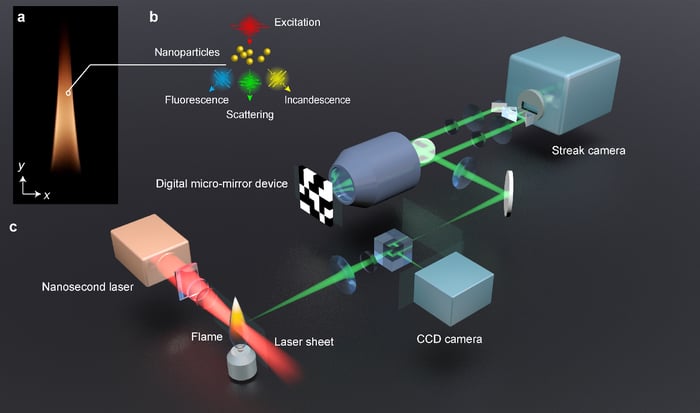
The ultrafast laser camera used in the experiments

An ultrahigh-speed single-shot laser camera has imaged how hydrocarbons burn with the greatest detail yet. As well as shedding fresh light on the processes that occur during combustion, the technique – developed by a team of physicists and engineers at the California Institute of Technology in the US, the University of Gothenburg in Sweden and Friedrich-Alexander-Universität Erlangen-Nürnberg in Germany – could help unravel fundamental mysteries in modern physics such as hot plasma, sonoluminescence and nuclear fusion, say the researchers. The technology could also come in useful for biomedical imaging and for observing how light propagates in materials in real time.

The polycyclic aromatic hydrocarbon (PAH) molecules and soot particles produced when hydrocarbons are burnt have extremely short lifetimes (on the order of nanoseconds) and combustion reactions in general are very fast and one-shot – that is, they are not repeated. Studying combustion therefore requires ultrafast imaging to capture these processes.

The researchers, led by Yogeshwar Nath Mishra, created a laser camera that can do just this by producing videos at a record-fast speed of 12.5 billion images per second. This is at least one thousand times faster than current high-speed techniques that are limited to a million frames-per-second (fps). The new device works by photographing a material in a two-dimensional layer using a technique called single-shot laser sheet compressed ultrafast photography (LS-CUP).

The method is based on firing a single nanosecond-duration laser pulse onto a sample, in contrast to previous techniques that used multiple pulses to achieve a million fps. These pulses can change the physical and optical properties of soot as the laser adds energy and heat to the system.

“The technique allows us to extract critical parameters from the fast dynamics occurring during combustion, such as the fluorescence lifetimes of PAH molecules (which are hazardous to the environment), soot nanoparticle sizes, soot cluster sizes and particle temperature,” explains Mishra. “We have for the first time taken a single-shot 2D image of PAHs at 1.25 billion fps and, from the laser scattering images, obtained maps of the size of these hydrocarbons.”

Combining two imaging modalities

In this study, the team combined two imaging modalities: laser sheet (LS) imaging and compressed ultrafast photography (CUP). “A laser sheet essentially intersects a 2D plane of a 3D sample,” explains Mishra. “It therefore provides a spatial and temporal profile of the dynamics occurring in the probed plane, for example, turbulence and the interaction between different chemical species. To perform single-shot imaging, we apply a compressed sensing algorithm on a standard streak camera image,” he tells Physics World.

The camera can film chemical species like PAH and soot in real-time, on the order of nanoseconds to sub-nanoseconds, Mishra adds. “With a billion fps, it is possible to see how soot evolves from PAH. Another advantage is that we can record two species at the same time because the camera has two high-speed channels – something that is extremely useful for quantitative imaging.”

According to the researchers, who report their work in Light: Science & Applications, the new camera could be combined with pre-existing planar imaging methods for combustion research. Aside from such studies, LS-CUP could also be used for real-time observations of hydrogen combustion, plasma-assisted combustion and metal powder combustion, they say.

As for future work, Mishra says he and his colleagues will now be looking to perform real-time ultrafast imaging for PAH molecule sizing using femtosecond-duration pulses by implementing two-channel fluorescence anisotropy with their current scheme. “We are also studying the impact of high laser fluence in soot oxidation and graphitization – processes that could be essential for fabricating carbon-based nanomaterials for a host of technological applications,” says Mishra.

Tunable lasers and femtosecond lasers from Hübner Photonics

This short video filmed at the Photonics West 2023 meeting features Martin Ruge from Hübner Photonics, who introduces the company’s C-WAVE product family of tunable and lockable laser light sources, which operate from 450 nm in the blue to 3.5 μm in the infrared. Ruge, who is global product manager of the C-WAVE tunable laser series, explains how it emits a continuous wave with a line width of a few hundred kHz and comes with three tuning mechanisms.

Niklas Waasem, application specialist/regional manager, talks about the applications for these tunable C-WAVE lasers, which include everything from spectroscopy to holography and more besides. The wide tuning ranges enables the analysis of nanoparticles, colour centres, single molecules or gases, with the products all designed so that users can set them up themselves.

Finally, Oilver Prochnow, chief executive of VALO Innovations – part of the Hübner Photonics group – discusses their ultrashort femtosecond lasers. They can produce pulses lasting less than 50 fs and up to 2 W output power, which means they can achieve the highest peak power exactly where it’s needed. Applications of these ultrafast lasers include multiphoton imaging, advanced spectroscopy, optogenetics and two-photon polymerization.

An expanding universe is simulated in a quantum droplet

Unfortunately for the field of cosmology, there is only one universe. This makes performing experiments in the same way as other scientific fields quite a challenge. But it turns out that the universe and the quantum fields that permeate it are highly analogous to quantum fluids like Bose–Einstein condensates (BECs), at least from a mathematical point of view. These fluids can be the subject of experiments, allowing cosmology to be studied in the lab.

In a paper published in Nature, researchers at Heidelberg University in Germany have for the first time used a BEC to simulate an expanding universe and certain quantum fields within it. This allows for the study of important cosmological scenarios. Not only is the universe currently expanding, but it is believed that in the first fractions of a second after the Big Bang it underwent a period of extremely rapid expansion known as “inflation”. This process would have expanded the microscopic fluctuations of quantum fields in the early universe to the size of galaxy clusters, seeding the large-scale structure of our universe today.

To study this cosmological model, the researchers began with a flat droplet of BEC composed of potassium-39 atoms in an optical trap. This was the “universe” part of the simulator, and it had a spatial curvature that was related to the average density of the BEC. The quantum field part was played by phonons, quantized packets of sound energy moving through the fluid. These served as analogues to photons and other quantum fields fluctuating in the actual universe.

Quantized vibrations

The phonons were created by firing a laser at the BEC. When the laser was switched off, a phonon vibration spread through the droplet. Quantum particles follow trajectories determined by the curvature of the spacetime in which they move. Hence, by studying the trajectory of these phonons, the researchers were able to confirm that the simulated universe had the spatial curvature they were aiming for.

Finally, the expansion of space was cleverly instituted by adjusting the strength of interactions between the atoms in the BEC with magnetic fields. Decreasing the interaction strength also decreases the speed of sound, which achieves the same effect as a corresponding expansion of space. The idea is that in an expanded space, it takes longer for a signal to traverse its length. So instead of physically expanding the droplet, one can produce the same effect by slowing down the signal.

Distribution of matter in the universe

Quantum fields and a dynamic space–time interact in complex ways. One particularly curious feature is that an expanding space can produce particles – an effect similar to the creation of Hawking radiation by black holes. By tuning the scattering length of the BEC, the scientists experimented with “ramping” up the size of their mini universe in different ways, corresponding to uniform, accelerating and decelerating expansions.

Seeding large-scale structure

What they observed did in fact correspond to the production of phonons, as expected. As these phonons interfered with one another, they produced patterns of random density fluctuations in the BEC. They had thus observed the same phenomenon predicted to be responsible for the seeding of large-scale structure in the early universe.

Even though the simulated universe differs greatly from our own – for example, it has only two spatial dimensions and a different overall curvature – these simple tools may help scientists solve difficult problems in the future.

“Already simplified cosmological models, like the one we considered, can contain some of the not-well-understood phenomena that are present in our universe,” explains Marius Sparn, one of the co-authors of the Nature paper.

Even this proof-of-principle experiment contained intriguing surprises. Not only were phonons produced by the expansionary ramps, but the characteristics of their collective oscillations depended on the type of ramp performed. The phonons contained information that revealed whether the expansion was constant, accelerating or decelerating. This interesting feature, which Sparn says was only understood through the interplay between theory and experiment, demonstrates the possibilities of pursuing these lab-based studies.

In particular, the researchers hope to use these tools to peer back into the earliest moments of the universe and probe the hypothesis that the universe’s large-scale structure has a quantum origin. Co-author Stefan Floerchinger asks “Is the standard textbook theory complete, or are there ways to look back to the period before inflation by investigating quantum fluctuations, correlations and entanglement in more detail?”

If the Milky Way could talk, what would it say?

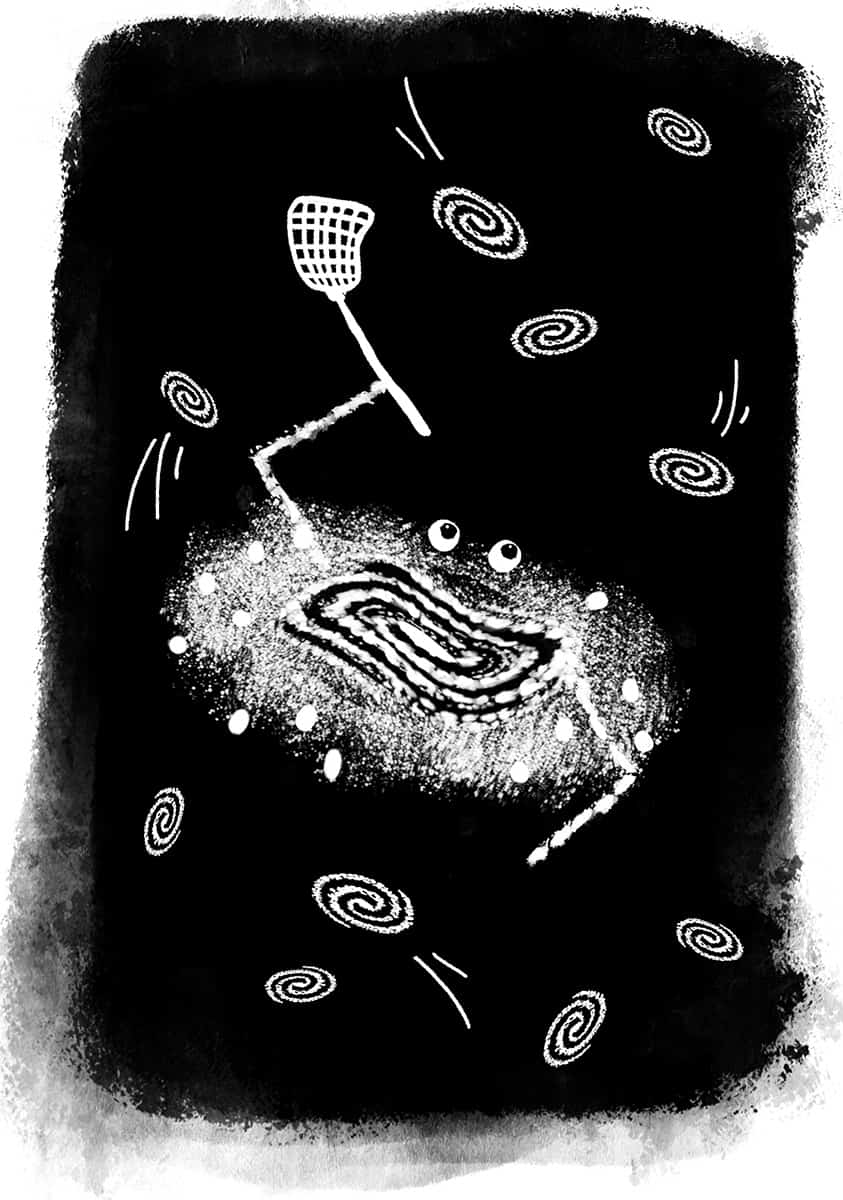
Artwork of the Milky Way with googly eyes

Like almost every astronomer, I have looked to the stars and dreamt of objects far larger than I can realistically comprehend. But never in my deepest daydreams have I imagined a sarcastic, egotistical, lonely galaxy telling its story through a series of anecdotes and thinly veiled barbs.

In The Milky Way: an Autobiography of our Galaxy, US astrophysicist Moiya McTier unfurls the story of the Milky Way as we know it (or, as the narrator would pointedly note, as we think we know it). This is a story we’ve heard time and time again, but here it’s presented with one crucial quirk: McTier tells the tale from the perspective of the galaxy itself.

In an age when technological advances are letting astronomers look at ever-more distant objects in the universe, McTier’s revolutionary story brings the focus back to the magnificent galaxy we call home. The Milky Way deftly spans great stretches of time and space, from the creation of the galaxy nearly 14 billion years ago, to its long-awaited collision a few billion years in the future, and finally to its inevitable doomsday.

Each of the 15 chapters tackles a different aspect of our galaxy’s story, including a list of its many names, illustrations of its shape and structure, and detailed descriptions of other nearby entities. The story follows the Milky Way as it grows up: experimenting with the birth of new stars (and mourning countless others), making friends (and crushes) or sworn enemies of its neighbours, and battling the supermassive black hole at its centre.

Nestled within this intricate, meandering autobiography is a story of how we humans have viewed the milky blanket of stars strewn across the sky through an ever-changing array of legends, myths and theories. One chapter – aptly titled “Death” – explores the most promising human theories on how the universe will end. Whether it’s the Big Rip, Freeze, Crunch, Bounce or Slurp, the narrator diligently explains the science behind each scenario in a way that will appeal to experienced astronomers and amateur space enthusiasts alike.

Sprinkled throughout the book are quirky and humorous intermissions, lending it a casual, informal feel. For example, the description of the relationship between the Large and Small Magellanic Clouds (or Larry and Sammy, as the Milky Way calls them) has our galaxy salaciously waggling the stars that form its “eyebrows” before discussing the two bodies’ respective star-formation rates. (If your mind works anything like mine, you’ll spend days wondering which stars those might be and how the waggle would be created.)

Moiya McTier presents a complete history of the galaxy all wrapped within a captivating story of knowledge, friendship and self-awareness

With the ever-expanding depth and breadth of astronomical knowledge, science writers and communicators nowadays are constantly trying to find stimulating methods to convey complex topics. In The Milky Way, McTier has more than achieved this goal. She presents a complete history of the galaxy – along with tricky concepts such as the distance ladder, nucleosynthesis and dark matter – all wrapped within a captivating story of knowledge, friendship and self-awareness.

There’s even romance. We know that Andromeda will eventually collide with our galaxy as a story of chaos and doom, but McTier presents this event with a mix of excitement and hope. “Andromeda and I are going to merge so completely in just a few billion years that we’ll essentially become one galaxy,” she writes. “We’ll die at the same time, and I won’t have to worry about leaving anyone I care about behind.”

McTier unfolds a story so absurdly characterful and riveting, that you almost don’t notice how much you’re being taught

The Milky Way is truly a work of art – and not just because of its fantastical illustrations by AnnaMarie Salai. McTier unfolds a story so absurdly characterful and riveting, that you almost don’t notice how much you’re being taught. The lonely, but somewhat hopeful, voice of the Milky Way transports the reader into the realm of galaxies, gas clouds and the vast expanses of space.

Throughout the book, you’re encouraged to look at scientific concepts from an entirely new perspective, with McTier’s almost poetic prose providing a dreamlike quality to near-incomprehensible topics. Fortunately, when it comes to unanswered questions, the author does not give credibility to unproven concepts, instead describing current theories as we best understand them.

When discussing the ambiguous end to the universe, for example, the Milky Way simply states: “Don’t worry, I won’t spoil the ending for you, though I will tell you what your human scientists think could happen.” I, for one, have never had such a garrulously enigmatic teacher.

If you’re looking for a book that will reveal the answers to hard-kept astronomical secrets, you might be disappointed. What you will find, though, is a witty, romantic and innovative account of everything humans currently know about the galaxy we live in. McTier has created the perfect ode to our incomprehensibly vast home – a flawless blend of respect and curiosity that gives voice to one of the most relentlessly studied objects in our universe.

  • 2022 Grand Central Publishing 256pp $27.00hb

Electrochemical Society powers ahead with open science

One of the primary remits for any scientific society is to facilitate and promote the knowledge exchange needed to drive research progress. For The Electrochemical Society (ECS), an international non-profit scholarly organization, that has translated into a long-term vision launched in 2015 to “Free the Science” – to make all of its content free to read, while also remaining free for authors to publish their work.

As an immediate signal of its intent, the ECS introduced an annual Free the Science Week that this year will run on 2–9 April 2023. During the event, the society will lift the subscription paywall on more than 180,000 articles across its entire digital library – which includes journals, conference proceedings, and the society’s Interface magazine – allowing anyone from across the globe to explore the latest research results as well as an archive stretching back more than 120 years. Readership during the last six events has seen a significant uplift, with the number of article downloads typically increasing by around 25%.

“Free the Science Week is a celebration of the bold vison set out by the ECS when almost all research content was firmly behind a paywall,” comments Colm O’Dwyer, a professor in chemical engineering at University College Cork in Ireland, who is currently 2nd vice-president of the ECS and chair of the society’s publications sub-committee. “As a non-profit society, the mission of the ECS is to advance solid-state and electrochemical science and technology, and that requires free access to the community’s research results as well as removing the cost barrier for authors to publish their work.”

That long-term ambition has shaped the society’s publishing strategy as open access has emerged as a viable, and increasingly a necessary, alternative to gated library subscriptions. Its latest journals, ECS Advances and ECS Sensors Plus, both launched in 2022, are fully open access, with the article processing charges (APCs) waived for all authors for the first two years. “Open access has now become the default option for all new ECS journals,” comments O’Dwyer. “New titles start out with no cost to the authors, which opens them up to anyone who wants to publish.”

In a bid to remove the cost barrier for more authors to make their work freely accessible, the society launched its forward-looking ECS Plus programme in 2016. This read-and-publish package not only provides institutions with full access to the ECS digital library, but also allows authors at those institutions to publish an unlimited number of open access articles in ECS journals free of charge. The uptake has been impressive, with more than 1000 research centres around the world now subscribing to the package.

Colm O'Dwyer

ECS Plus has in many ways foreshadowed the transformative agreements that are now being struck between journal publishers and large research consortia. These agreements follow a similar read-and-publish model, but offer free open-access publishing to researchers from any institution in the consortium across a much broader range of journals. “Here in Ireland the universities and funding agencies came together to create a consortium that negotiated transformative agreements with many different publishers,” explains O’Dwyer. “With these agreements in place there is zero cost for authors to publish, and anyone can read the content for free. From my personal perspective it has truly transformed the concept of Free the Science.”

In 2019 the ECS formed a partnership with IOP Publishing, an international publisher of scientific books, journals and also, incidentally, Physics World, that allows its journals to be included in these large-scale transformative agreements. “IOP Publishing has led the way in developing these open-access agreements since we established one of the first offsetting arrangements in 2014,” says Emma Bartovsky, who now manages the publisher’s growing portfolio of transformative agreements. “These read-and-publish licences are helping to accelerate the transition to open-access publishing, since researchers no longer need to source their own funding to pay an APC.”

IOP Publishing now has transformative agreements in place with more than 700 institutions in 28 different countries, around 300 of which include free open-access publishing in ECS journals. “Authors have been publishing in ECS journals more regularly as a result of these agreements,” comments O’Dwyer. “The partnership with IOP has also generated a much wider readership for our digital content.”

For researchers like O’Dwyer, the cultural shift towards transformative agreements has removed the need to make decisions about whether funding is available to publish open access. “With these agreements in place I now expect to be able to publish free of charge, ” he says. “If a journal demands exorbitant fees, or isn’t covered by our national agreement, I generally avoid them and find an alternative title. Speaking for myself, I have plenty of choices to find an appropriate journal with no APC to pay.”

One remaining issue, says O’Dwyer, is that many researchers are still unaware that they can exploit these transformative agreements to publish in their preferred journals without needing to pay a fee. “The concept of open access is often met with the fear of the cost,” he says. “Many of my colleagues don’t yet think about checking whether it’s one of several hundred journals that are free to publish in.”

O’Dwyer has been working to build awareness within his own institution, but he points out that authors must currently take much of the responsibility for finding out whether their chosen journal is included in a transformative agreement. “Some journal platforms check whether an article is covered as part of the submission process, but others are less joined up,” he says. “Ideally there would be a one-stop resource where authors can check which journals they can publish in free of charge.”

IOP Publishing has a journal finder, developed in collaboration with ChronosHub, that allows authors to determine whether a particular title is included in a transformative agreement with their institution. “We want to simplify the process for authors and provide them with greater certainty that their APC will be covered,” says Bartovsky. “We are also now focused on putting unlimited agreements in place, which remove any caps on the number of articles that can be published open access for free.”

The bigger challenge is to ensure that researchers in all parts of the world have an equal opportunity to make their work free to read. While transformative agreements have quickly become commonplace in Europe, and are starting to become more established in North America, authors in most regions must still pay an APC to make their work freely accessible. “Open access needs to be equitable for everyone,” says O’Dwyer. “There is so much good work happening all over the world, but outside of these transformative agreements the cost of publishing open access typically falls on the author.”

The ECS has sought to mitigate that problem by operating a fee-waiver programme across all its titles, including its flagship Journal of the Electrochemical Society (JES), that eliminates the APCs for some authors and offers significant discounts for ECS members and students. IOP Publishing also waives the APCs for authors from low-income countries (as defined by the World Bank), and charges a reduced rate for researchers from low-middle income nations.

But O’Dwyer would like to see a more comprehensive solution, while still ensuring that publishers can generate enough income to maintain their journals for the research community. “We need to make sure that all authors have an equal chance to publish open access for free, and that sort of equity can only be achieved through initiatives that are developed and supported by the whole publishing community.”

  • This year’s Free the Science Week runs on 2–9 April 2023. Visit the ECS digital library to explore and download more than 180,000 articles.

Novel imaging platform reveals the neuronal basis of a drifting mind

A rat engaged in self-referential processing

When was the last time you daydreamt? Paying no particular attention to the outside world, engaged in introspection or memory recall, your mental state feels altered. This difference is reflected in global patterns of brain activity – the default mode network (DMN). Identified 20 years ago and the focus of much research activity since, the DMN connects several brain regions through distinct low-frequency oscillations.

“The DMN is also thought to play a key role in a variety of neurological and psychiatric disorders, including Alzheimer’s disease, schizophrenia, depression and autism,” says Tzu-Hao Harry Chao from the University of North Carolina at Chapel Hill’s department of neurology. “Understanding how the DMN functions in health and disease could lead to new treatments and interventions for these conditions.”

Motivated by these goals, Chao and colleagues have combined functional magnetic resonance imaging (fMRI) with a fibre photometry sensor that measures cellular calcium levels to understand how different brain regions come together to establish and disrupt the DMN in rat brains. They report their findings in Science Advances.

When studying large-scale brain connectivity, it is challenging to tap into individual neurons, especially in deep brain regions. To investigate global features, neuroscientists therefore often use a proxy for neuronal activity.

Tzu-Hao Harry Chao

“For example, fMRI detects changes in blood oxygenation/flow to different regions of the brain, which are thought to reflect changes in neuronal activity,” explains Chao, cautioning that “this relationship between blood flow and neuronal activity is not always straightforward, and there can be many sources of noise and variability in fMRI signals.” To complement fMRI data with a direct measure of neuronal activity, the research team developed an fMRI-compatible optical imaging platform that provides multi-site neuronal readout from rat brains.

During signal transmission from one neuron to another, calcium ions enter the cell in response to an action potential, triggering the release of neurotransmitters into the synapse. For the experiments, the team used genetically engineered rats that carry a calcium-sensitive protein. The protein “undergoes a conformational change in response to calcium binding, leading to increased fluorescence intensity that can be used to detect changes in intracellular calcium levels,” says Chao.

The researchers synched up an fMRI machine to a fibre photometry platform that can detect changes in cellular calcium concentration simultaneously in four brain regions. They then scanned the brains of anaesthetized rodents for DMN activity changes, which they aligned to the calcium data.

Three out of the four brain regions observed showed increased neural activity just before the DMN was established, while in the fourth region – the anterior insular cortex – activity was significantly lowered. This is interesting as the anterior insular cortex plays a role in the salience network (SN), an alternative brain connectivity state associated with attention.

In contrast, upon DMN deactivation, activity in the three DMN-associated regions was inhibited, while the anterior insular cortex signal spiked around 8 s before the DMN shut down. Following statistical analysis, these observations reveal that anterior insular cortex activity has a negative causal influence on the other DMN brain regions.

The researchers also derived a model of five latent brain states complete with a cycle of likely transitions between them. Since in some of these latent states the anterior insular cortex correlates with the other regions, while in other states there is an anticorrelation, Chao concludes that “the topology of large-scale brain networks can be very dynamic, and these networks can be somewhat overlapped instead of clearly separated”. The pathway by which the anterior insular cortex induces DMN suppression requires further examination, however, which the team hopes to achieve in future work.

The investigators also studied the brains of awake rats with the calcium-measuring technique. Using an oddball paradigm, where the rats listened to repetitive tones with an occasional odd-one-out, they found a causal network between the studied brain regions, again with the anterior insular cortex having an inhibitory role on other DMN-associated regions.

Experiments on awake rats did not feature fMRI because conventional fMRI acquisitions are very loud, which can cause stress to the animal. “In humans, we can use earplugs plus earmuffs to minimize the acoustic noise to affect human subjects,” Chao explains. “This is practically more difficult for us to mimic in rodents, in part because their skulls are very thin for the acoustic noise to easily penetrate. This being said, we are indeed working on performing fMRI in awake mice with a new silent fMRI technique.”

The team is developing the calcium-sensor approach further by including more channels to enable data acquisition from two subjects at the same time. “This upgrade will enable us to investigate the DMN and SN roles in social interaction using rodent models. We maintain an active collaboration on this topic with Vinod Menon’s lab at Stanford University,” says Chao.

He is confident that their research “paves the way for future translational studies using rodent models to investigate the cellular basis of large-scale, functionally and behaviourally significant brain networks in the healthy brain, and the neuronal mechanisms that lead to network dysfunction in brain disorders”.

“[It] has the potential to transform the landscape of fMRI and the knowledge gained will have widespread implications for the design, analysis and interpretation of human brain fMRI data,” Chao tells Physics World.

Copyright © 2026 by IOP Publishing Ltd and individual contributors