

Michael Robertson: pioneer of optical communications disconnects from the network

The ability to simply download a book, video or PDF from the Internet is something that’s easy to take for granted. Just imagine how much longer it would take to receive that same file sent by mail. Whether it’s social media, the news, TV shows, movies or academic papers, the Internet can grant you access to it almost instantaneously. It’s a revolution in our information economy that has truly transformed the modern world.

The story of telecommunications begins in the late 1850s, when a 3000 km-long copper cable transmitting electric signals was laid between Britain and the US, enabling Queen Victoria to send the first trans-continental telegram. The message, addressed to American President James Buchanan, took over 17 hours to transmit but contained only 98 words – less than 500 bytes of information. Today’s telecommunications networks, in contrast, let us transmit gigabytes of data across oceans within seconds, mostly as a result of fibre-optic technology.

To send a message down a fibre-optic cable, it first has to be converted into an optical signal, like pulses or flashes of light, before being fired along the glass fibre as efficiently as possible. The signal then needs to be detected and translated back into data form. It’s a multi-stage process requiring advanced technology that was in part developed and implemented by the pioneering physicist Michael Robertson who has just hung up his laser goggles after almost 43 years in fibre-optic communications.

Optical cable

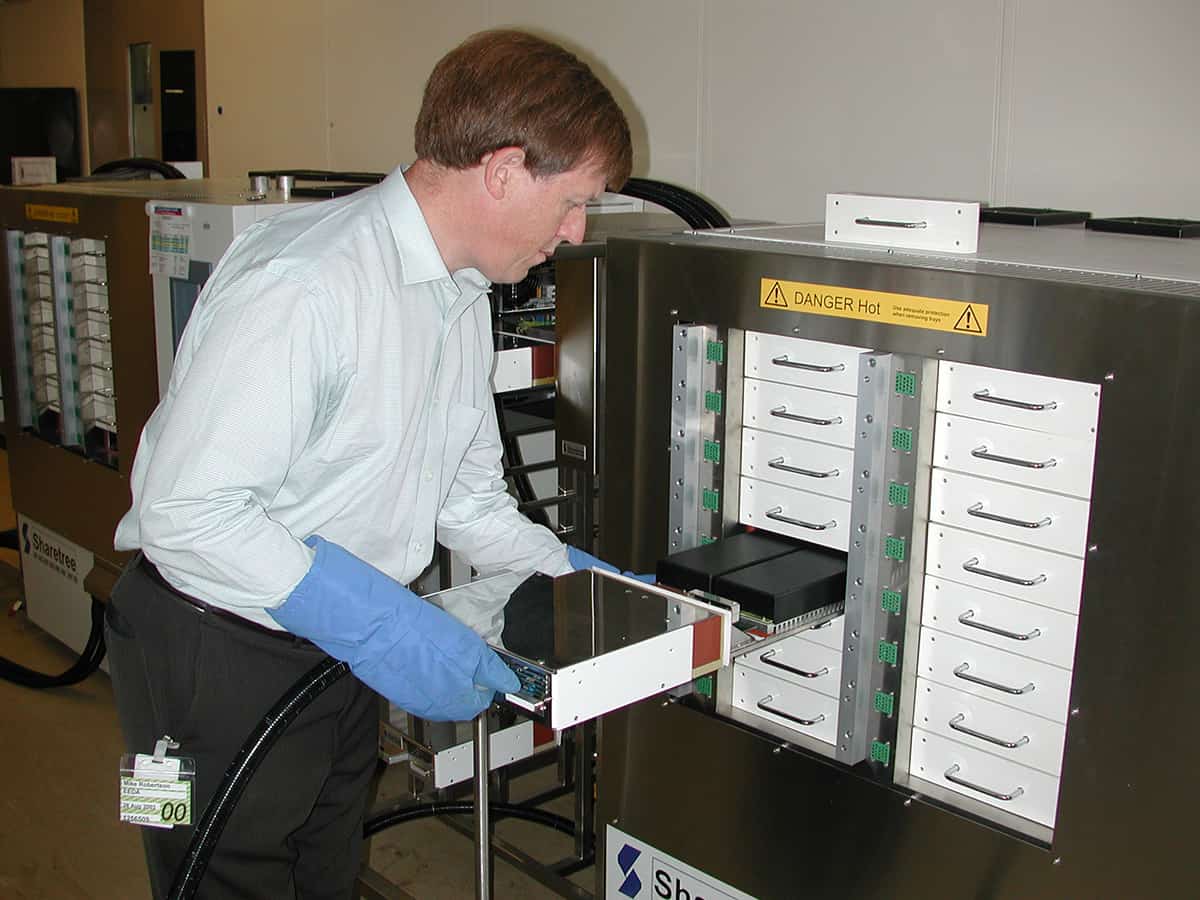
Robertson spent his career at the world-leading photonics research facility at Martlesham Heath in Ipswich. A corporate laboratory that was initially known as the Post Office Research Station, it has gone through many different ownerships over the years and is now called Adastral Park. Here, Robertson developed technology that vastly increased the speed at which data could be transferred in fibre-optic communications cables. Work undertaken by Robertson and his team has gone on to underpin much of the Internet infrastructure we rely on today – even those backbones of the pandemic, Zoom and Skype, use the technology they developed.

Of course you need the electronics to operate faster and faster, but it’s the same [optical] fibre….that’s what we’ve achieved, far higher data rates over the same fibre.”

Robertson’s research focused on the lasers used to transmit optical signals down the cables, and the detectors that were used to receive them. “We started at something like 8 megabits [per second] in the early 80s and now we’re at 25 gigabits,” he says. This number rises even more when the systems are “multiplexed” together, effectively enabling multiple signals to be sent simultaneously in one optical cable. “When you multiplex it up, we’re talking of 100 gigabits or even higher, giving a massive increase with very little downside.” The work means that minimal additional infrastructure has been required to transmit over 10,000 times as much data as was possible in the 1980s.

“Of course you need the electronics to operate faster and faster, but it’s the same [optical] fibre,” says Robertson. “So that’s what we’ve achieved, far higher data rates over the same fibre.” It means that a movie clip that would have taken over an hour to download in the 1980s can now be accessed in under a second, even though the signal is still being transmitted through the same optical fibres.

A polymath of photon science

Robertson began his journey as a physicist at the University of St Andrews, from which he graduated in 1976, before moving to Durham University to do a PhD in cadmium sulphide solar cells. “I was wanting to do something useful,” he says, “I thought solar energy was important for the future. After [my PhD] was finished, I wanted to keep doing something useful.” Robertson left Durham in 1979 when, he notes, “optical telecommunications was just taking off”.

He took a job at the Post Office Research Station but it was soon taken over by British Telecom (BT), becoming BT Research Laboratories (BT Labs). Here, as an experimental physicist, he worked on semiconductor lasers and photodiodes, which are key components in optical communications networks. Robertson was a fast learner, consolidating the solid-state physics he had acquired during his PhD with numerous other skills.

“I did lots of different things in optoelectronics: I did epitaxy; I did modelling; and I worked in laser reliability. That was where I started,” Robertson says, adding that laser reliability was “the big issue in the early days”. Laser devices based on semiconductors operated at high current densities, meaning that a lot of electrical current had to flow through a small area, which made them prone to fail. “They’d last a day,” he recalls, “and we had to work on getting them to last up to 25 years. This is the sort of lifetime they can do now.” This is also the kind of lifetime these diodes need for reliable performance in optical communications networks.

Around 1989, Robertson took his expertise to a small laboratory about a kilometre away from Martlesham Heath known as BT&D, which BT had set up with the US corporate giant DuPont. He calls himself “the technical guy in charge of detector projects”, an understated description that belies the influence of his work in solid-state physics at BT&D. It was there that Robertson and his team first implemented a technique known as metalorganic vapour-phase epitaxy (MOVP) for growing certain kinds of semiconductor crystals with multiple layers. These semiconductors are used in many of the essential components that make up fibre-optic communications systems, including modulators, detectors and lasers.

The MOVP growth technique was originally pioneered by Rodney Moss, a scientist also based at BT for many years. It enabled, in Robertson’s words, “a dramatic change” in the landscape of optical communications. Before Robertson’s work on MOVP at BT&D, semiconductors could only be grown in tiny pieces with poor reliability. This limited their use, particularly in detecting small signals at the end of telecommunications networks. But with MOVP, Robertson was able to grow much larger semiconductor crystals. These were highly reliable and, importantly, also enabled high-speed optical detectors that could pick up signals that were modulating more quickly, thus increasing the rate at which data could be collected.

Stability in an ever-changing landscape

After a year at BT&D, Robertson moved back to BT’s labs at Martlesham Heath, and in 1993 he and his team at both BT and BT&D won the Queen’s Award for Technology (now part of the King’s Awards for Enterprise) for their work on optoelectronic materials and devices. But then in 2000, during the “dot com” boom, the company sold the facility Robertson worked in to the US optical-communications giant Corning. When the dot com bubble burst in the early 2000s, Corning pulled out of Martlesham Heath, leaving behind much of the lab’s infrastructure and equipment. The site was taken over by the East of England Development Agency, from which Robertson and his then boss David Smith formed a start-up called the Centre for Integrated Photonics (CIP) in 2003. The centre existed until 2012, at which point the government pulled the plug on development agencies and CIP was sold to the Chinese technological company Huawei, in whose ownership it remains today.
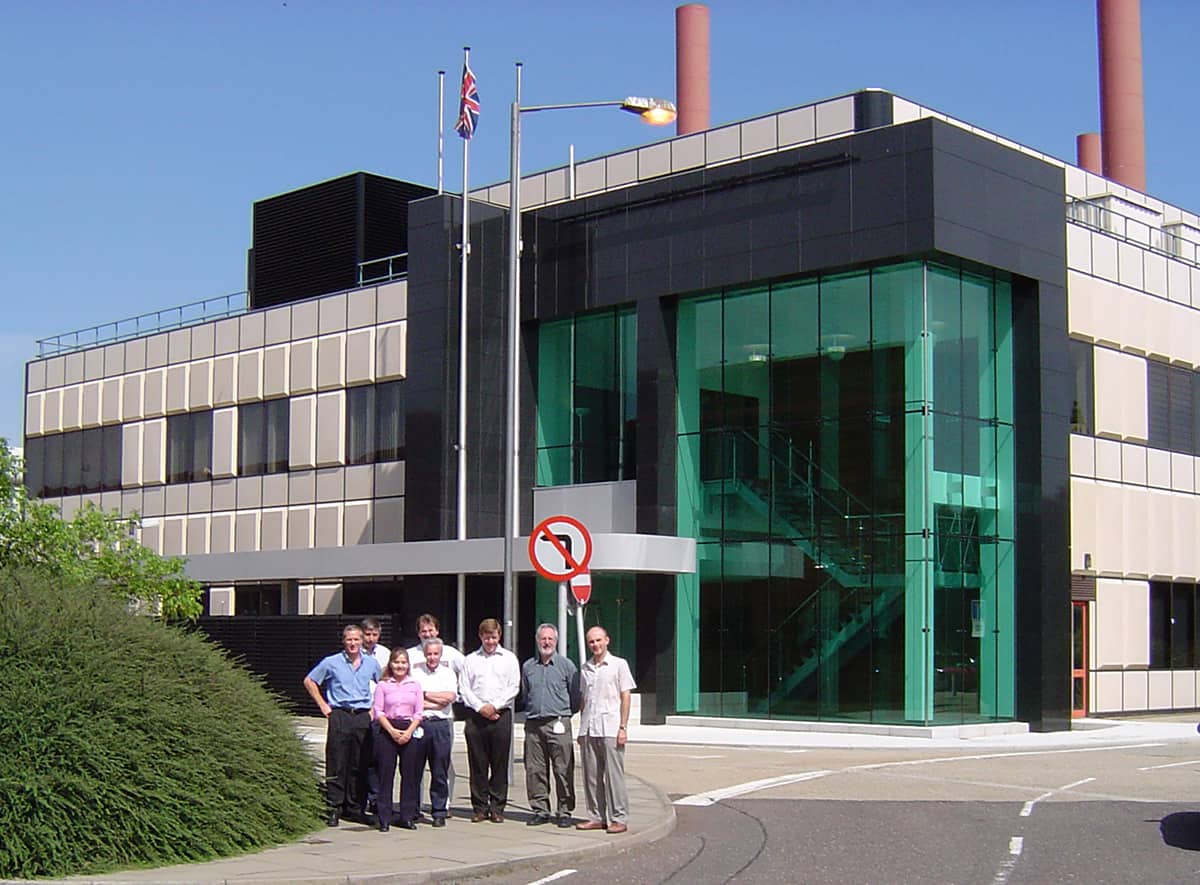
The ever-shifting nature of the lab, and Robertson’s career within it, is an emblem of the changing face of the telecommunications industry in the UK. Each company had its own characteristics, strategies and drawbacks. “We had most freedom during the BT days,” he reflects, regarding BT as a world-renowned operation that in many ways pioneered the field. Huawei, on the other hand, has given the lab its clearest commercial focus. “We are closer to the sharp end in Huawei. They want something we can sell out of it.”

Some politicians and commentators have questioned Huawei’s involvement in such a high-profile field, with the UK government having raised security concerns against the company in 2020. The government has said it wants Huawei to be removed from the UK’s 5G networks by 2027 and has also advised fibre-optics firms to distance themselves from Huawei equipment. But when asked about the criticism levied at Huawei, Robertson seems relatively sanguine. “As far as security issues that you read about in the press are concerned, [at Martlesham Heath] we are completely separate from all that. The things we do are materials research, so it has no backdoors; we can just get on with being physicists and materials scientists, which I’m pleased about. Huawei goes to great lengths to ensure it’s not doing anything it shouldn’t do.”

The pursuit of better science and technology – irrespective of a changing working environment – has always been a big driver for Robertson, and working in a company has suited him well.

While many physicists relish the intellectual freedom of academic research environments, Robertson says he was never held back by working in industry, where they had access to more funding and better equipment. There was, he adds, “more of a focus on an outcome”, whereas at universities you had more flexibility.

More academic people may want to pursue their theories rather than be constrained, but I’ve never been like that. I’ve always been happy to make something and see if it works.

“I was happy to go with the flow,” he says. “More academic people may want to pursue their theories rather than be constrained, but I’ve never been like that. I’ve always been happy to make something and see if it works.” Robertson thinks it takes “a very certain type of character” to devote their life to a particular narrow area, but adds that he’s “been blessed by being able to work on all these different things”.

Missed opportunities

In such a long career, is there anything that Robertson would have changed? He points not to his team’s individual contributions, but rather to the failure of BT and the UK government to invest in fibre-to-the-home (FTTH or FTTP) technology. FTTH is the infrastructure for delivering fibre-optic cables straight to homes, residential buildings or offices, to grant tenants and employees high Internet speeds.

“The UK is miles behind the rest of the world in fibre rollout,” he says. This means that access to high-speed Internet is lagging behind in the UK as compared with other countries. Robertson puts this down to the lack of early investment by BT.

Roll of fibre optic cable

“Nearly 20 years ago, I was involved in pushing FTTH from a technical perspective, but it is really the finance person you have to convince,” he says. The government, he explains, were in talks with BT about rolling out FTTH, but they were also worried about a monopoly forming in the telecommunications industry, and so were hesitant to spend the “massive cost” of FTTH on BT – even though, Robertson believes, it would have been a relatively modest amount of just a few billions of pounds. At the same time, BT was unwilling to invest in the technology itself, because it was worried that the government would force the company to open up its fibre network to competition. A deadlock formed, and the chance to build a FTTH network in the UK was lost.

Robertson believes , however, that investment can still help the UK’s FTTH network. “It’s disappointing, but [FTTH] is being rolled out now so that’s good,” he says. “In 2019, the UK was actually bottom of the list in Europe for fibre-to-the-home. We’re now 36th.”

Final reflections

Looking back on a career that has spanned optics, electronics, lasers, modelling and information science, Robertson has enjoyed working across many disciplines of physics, describing himself as “more of a generalist” than someone who adheres to one specific discipline. That diverse experience eventually saw him become Research and Collaboration Manager at Huawei, managing links between the company and other academic and corporate research institutes across Britain and the rest of Europe. Now aged 66, Robertson has officially retired but, like many physicists, he still keeps a toe in the door at Huawei for a couple of days a month.

“I don’t consider my career as being anything spectacular,” says Robertson, who remains resolutely down-to-earth about his vast contributions to optical communications. And when asked if his family ever jokes that he is the reason why the TV works or why videos can be downloaded so fast,  he smiles self-depreciatingly and says, “occasionally”.  His colleagues, on the other hand, are more forthright about his impact on the field of optical communications.

He’ll be too humble to say it, but his work has benefited anyone in the UK with an Internet connection

Michael Hill-King, collaboration director, Huawei UK

“Michael’s career at Martlesham Heath is a journey through the development of the optoelectronics industry,” says Michael Hill-King, collaboration director at Huawei UK. “He’ll be too humble to say it, but his work has benefited anyone in the UK with an Internet connection.” It’s a view echoed by Henk Koopmans, Huawei UK’s chief executive of research and development, “Michael should feel very proud of the significant contribution he has made to the development of photonics in the UK.”

Gravitational waves from merging black holes go nonlinear

Two independent teams have shown that gravitational waves emanating from the distorted remnants of black-hole mergers should interact with themselves. By including these nonlinear effects in their models, one team, led by Keefe Mitman at Caltech, found it could replicate gravitational wave signals from simulated “ringing” black holes up to 100 times more accurately than previous approaches. The other team came to a similar conclusion and was led by Mark Ho-Yeuk Cheung at Johns Hopkins University

Following the violent and energetic merging of two black holes, the distorted black hole that is created must quickly settle into a state of equilibrium. To reach this steady state, the object releases colossal amounts of energy in the form of gravitational waves (GWs), in a process called black hole ringdown.

In 1973 a team led by Saul Teukolsky was the first to model GWs from ringdown – more than 40 years before the first GWs from merging black holes were detected by the LIGO observatory. Yet at the time, Teukolsky and colleagues only considered small distortions in remnant black holes, something that we now know is not a good description of what happens after a merger.

Large distortions

“Because black-hole mergers are so violent, the distortions of the final black hole are often large,” Mitman explains. “This means that we should expect nonlinear effects [such as] effects from the GW interacting with itself as it propagates through spacetime near the black hole, generating new waves.”

Despite this, astrophysicists have so far held to the idea that nonlinear effects must be too small to show up in observable GW signals. As a result, they have still only considered the linear effects calculated by Teukolsky’s team.

In one new study, Mitman, Teukolsky and colleagues employed a more advanced approach to modelling black hole ringdowns. Following a suggestion from team member Macarena Lagos at Columbia University, the team developed a new way to consider how a model could describe the self-interaction of the GWs emitted after black-hole mergers.

Lagos explains, “We have improved the GW model by including nonlinear interactions of gravity. We considered various numerical simulations of black-hole mergers, containing both linear and nonlinear interactions. We then quantified how well our nonlinear model reproduced the simulations.”

More precise model

Just as they predicted, the researchers’ new approach allowed them to replicate realistic GW signals far more closely than before. “By including this nonlinear term, rather than the more-familiar linear terms that Teukolsky helped discover, we can much more precisely model the GWs created in our numerical simulations,” Mitman continues. “This means that when black holes ringdown to a steady state, that ringing is a nonlinear process.”

By analysing various simulations of black-hole mergers, the team found that nonlinear effects can account for up to 10% of the GW signals – making them far more influential than previous studies had assumed. Altogether, this meant the team could model black-hole ringdowns some 100 times more accurate than purely linear approaches.

The team led by Cheung came to similar conclusions and together the results could have important implications for astronomers’ ability to probe the interior structures of black holes from the GW signals they emit during ringdowns. “To extract physical information from GW signals, we need very accurate analytical models that connect properties of the black holes to features in the detected signal,” Lagos explains. “Our results mean that the nonlinear effects are actually important and will be necessary to include in future GW detections.”

With a better understanding that ringdown is nonlinear in nature, the team hopes its discoveries could soon help astronomers to better explain the enigmatic behaviours of black holes.

Perhaps most importantly, they could also enable researchers to test Albert Einstein’s general theory of relativity – which governs black hole dynamics – in the most extreme environments known to astrophysics. With the precision offered by the team’s models, these tests may finally prove stringent enough to push Einstein’s theory to its limits – which could allow new and exciting physics to emerge. However, astrophysicists will have to wait until the next generation of GW observatories come online because the current LIGO–Virgo facilities are not expected to be able to detect nonlinear effects.

The research is described in Physics Review Letters.

UK aims to become a space launch superpower

In January crowds gathered at Newquay Airport in the hope of witnessing history in the making. The mission “Start Me Up” was set to launch the first satellites from UK soil, via a Virgin Orbit LauncherOne rocket, shuttled into the atmosphere by a modified Boeing 747-400.

Although the mission was ultimately unsuccessful – with the rocket and its nine small satellites never making orbit – the experience has not dampened the spirits of those in the UK space industry. With two Scottish facilities planning launches for later this year, and with four more spaceports in the works, the nation’s space launch capability is set to take off. That is despite Virgin Orbit’s plans to furlough staff while the company finalizes a new investment plan.

This short video looks at the UK’s drive to become a competitive destination for space launches. One of the challenges is that the UK is entering a competitive market and UK space companies fear there is a skills gap among the UK workforce. On top of that, there are concerns about environmental sustainability and the growing issue of space junk – a threat to space missions, satellites, and ground-based observatories.

Find out more by reading the article “UK spaceports: the good, the bad and the ugly”.

Photoexcited electrons from fullerene help create high-speed switch

Light-induced electron emissions from fullerene, a carbon-based molecule, can be used to make an ultrafast switch. The new device, developed by a team headed up at the University of Tokyo, Japan, has a switching speed that’s four to five orders of magnitude faster than that of current solid-state transistors used in modern-day computers. The path of the electrons produced from the emission sites in the molecule can be controlled on the sub-nanometre scale using pulses of laser light.

“Prior to this work, such optical control of electron emission sites was possible on a scale of 10 nm, but it was difficult to miniaturize these electron sources with emission site selectivity,” explains Hirofumi Yanagisawa of the University of Tokyo’s Institute for Solid State Physics.

The researchers made their single-molecule switch by depositing fullerene molecules on the tip of a sharp metallic needle and applying a strong constant electric field at the tip’s apex. They observed single-molecule protrusions appearing on the apex and found that the electric fields become even stronger on these bumps, allowing electrons to be emitted selectively from these single molecules. The emitted electrons come from the metal tip and only pass through the molecules on the protrusions.

 Switching function is like a railroad track

“The electron emission sites of a single-molecule electron source are determined by the way electrons are distributed in the molecule, or molecular orbitals (MOs),” explains Yanagisawa. “The distribution of the MOs largely changes with molecular levels and if the electrons supplied from the metal tip are excited by light, those electrons pass through different MOs as compared to those that aren’t excited. The result is that the emission sites can be changed using light.”

This switching function, he says, is conceptually the same as that of a train being redirected on a railroad track – the emitted electrons can either remain on their default course or be redirected.

The fact that photoexcited electrons can pass through different MOs compared to unexcited ones implies that we should be able to further change these orbitals and so integrate multiple ultrafast switches into a single molecule, Yanagisawa adds. Such structures could then be used to create an ultrafast computer.

Another possible application is to improve the spatial resolution of photoelectron emission microscopy. Prior to this study, explains Yanagisawa, this technique was sub-10 nm, but it could now achieve 0.3 nm (which is small enough to resolve single-molecule MOs). “We can thus use our ‘laser-induced field emission microscope’ (LFEM) as we have called it to follow ultrafast dynamics in single molecules,” he tells Physics World. “Such molecules could include biomolecules such as those associated with photosynthesis, which are thought to involve femtosecond-time-scale electron processes.”

In their future work, the Tokyo researchers hope to further improve the spatial resolution of their LFEM technique so that they can resolve the atomic structure of a single molecule. They are performing this work as part of the PRESTO project.

The researchers report their work in Physical Review Letters.

The importance of citing Black women in physics

The 2016 film Hidden Figures follows a group of women who worked at NASA in the 1950s and 1960s during the space race between the US and the Soviet Union. The movie is based on research conducted by Margo Shetterly and Duchess Harris, inspired in part by Harris’s grandmother who was one of the hidden figures. When it comes to awareness of Black women in science, I believe there are two eras: one before the film’s release and the other after.

I came of age in the era before Hidden Figures when public acknowledgements of Black women scientists were largely limited to the extraordinary Mae Jemison – the first Black woman to go to space. These days, students use social media and search engines to find each other. Even so, the reality of ensuring that Black women in science get their due is only just beginning.

Black physics students, especially women and non-binary people, still struggle to find information about role models – and their work. When I started university in 1999 I didn’t know any Black women physicists until I met Nadya Mason during my degree. She had just completed her PhD at Stanford University and was beginning as a Harvard Society Junior Fellow.

Soon thereafter, I attended the 2003 annual conference of the National Society of Black Physicists and Black Physics Students, where I shared a hotel room with Jami Valentine, a PhD student in condensed-matter physics at Johns Hopkins University. For the first time, I met Black women who shared my passion for physics and who also set an example for me to emulate.

Valentine, now Valentine Miller, went on to become the first Black woman to earn a PhD in physics from Johns Hopkins. Perhaps aware of her position as a barrier breaker, one of her extracurricular activities involved publicly tracking Black women with PhDs in physics. She maintained a list on her Johns Hopkins website, which is now maintained by African-American Women in Physics (AAWIP) – a non-profit organization that Valentine Miller co-founded and still runs.

This list became a reference point for me. It allowed me to track my place in a growing legacy, and to remind myself that I am not alone. Several years ago, I became curious about how many Black women had done research in fields related to mine: cosmology and particle physics theory. Based on the AAWIP list, I compiled a blog with links to the dissertations of myself and four other women in related fields: nuclear physics, particle physics and cosmology.

As I became aware of others, I began to wonder how we could learn about their work. I was also thinking about how ideas circulate in physics, and how race and gender shape what we know about the physical world. I realized that what’s important is whether someone stays active and remains a continuous advocate for their ideas by giving talks and writing papers.

Whole lines of thought get dropped when Black women walk away from physics and aren’t there to advocate for their contributions. This, of course, is true about anyone who leaves the field. But given the severe under-representation of Black women in physics – and also the unique barriers presented by misogynoir – it’s clear that race and gender shape scientific outcomes.

Building links

Through my other interests in Black feminist science, technology and society studies, I came across the Cite Black Women Collective, which encourages researchers to cite Black women’s work in their scholarship. Would it be possible, I wondered, for me to encourage people to cite Black women in physics? Thanks in part to a grant from the Foundational Questions Institute, in 2021 I hired two undergraduate research assistants – Sabrina Brown and Tessa Cole – to build a bibliography of all the publications by Black women and gender minorities with PhDs in particle physics, cosmology and astrophysics. Brown had expertise in information science while Cole has a background in engineering. Together they compiled entries for every single person on the AAWIP list – going beyond their original mandate.

In December 2022 I unveiled the Cite Black Women+ in Physics Bibliography. It connects to a Zotero database with more than 4000 entries of papers authored and co-authored by US-based or rooted Black women and gender-expansive people in the 50 years since 1972. That was the year when Willie Hobbs Moore became the first Black woman in the US to earn a PhD in physics. This public resource is a first-of-its-kind bibliography of papers by a marginalized community of scientists. Hopefully it won’t be the last.

It’s not perfect. I had to update it almost immediately for someone we did not previously know about. This isn’t a knock against the AAWIP – it’s important to recognize how complex a task maintaining the AAWIP list is. Indeed, the AAWIP runs on donations and is not fiscally backed by any of our major professional societies, such as the American Physical Society or the American Institute of Physics.

Until the AAWIP came along, no organization provided systematic support for Black women and gender-expansive folk. After I began it as a solo project, the AAWIP took over maintaining a Facebook group for Black women and gender minorities in physics and astronomy. The organization also provides fiscal support for community members in crisis, to attend conferences, and to organize social gatherings at conferences.

I have been asked whether it is possible to replicate this effort in other countries, such as the UK or elsewhere in Europe. While I can’t make recommendations about how to do so, what I can say is that in the US we have been forced to do this work ourselves and with insufficient resources. Others shouldn’t have to make the same mistake.

Breakthrough in quantum error correction could lead to large-scale quantum computers

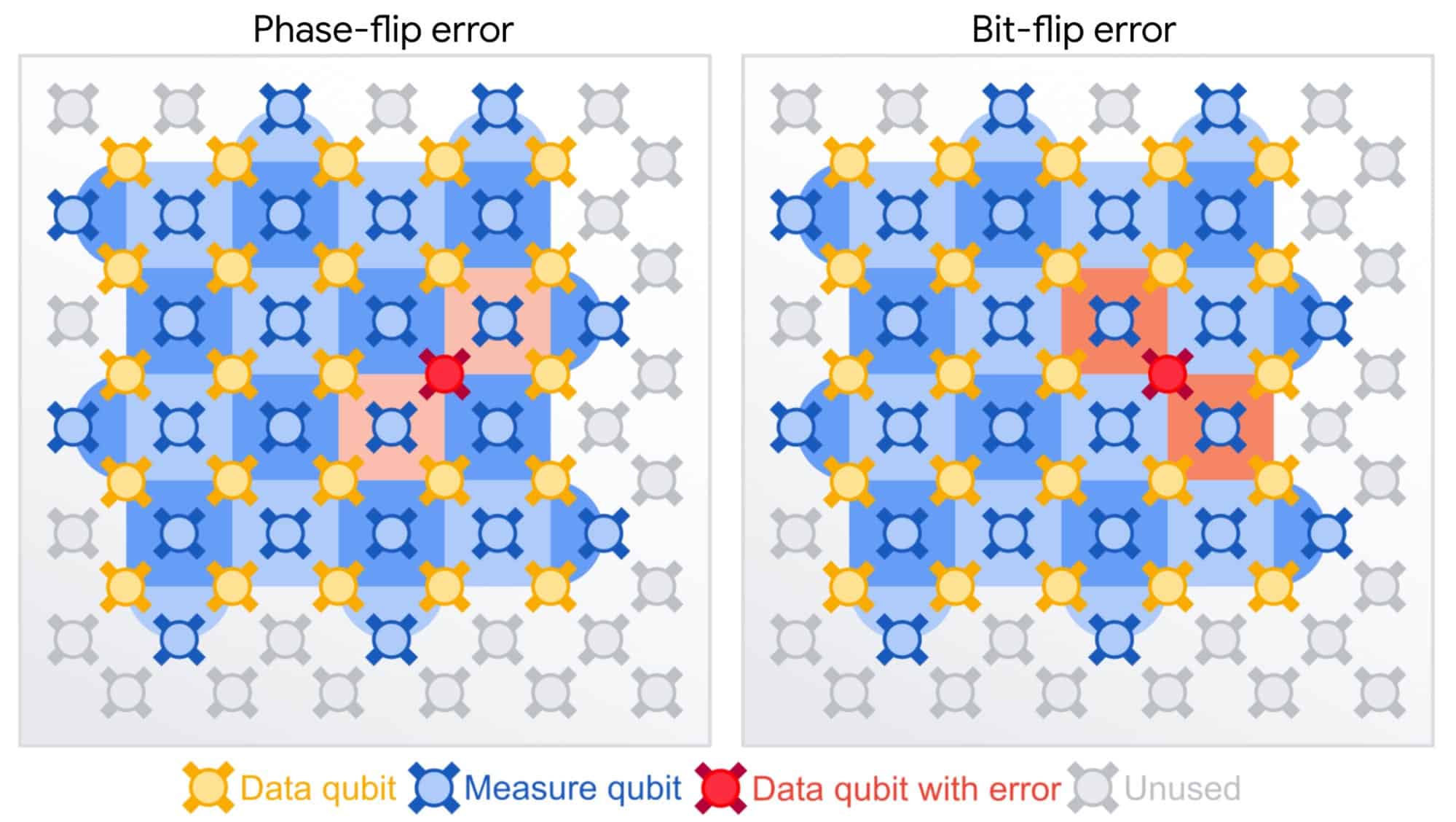
Error correction diagram

Researchers at Google Quantum AI have made an important breakthrough in the development of quantum error correction, a technique that is considered essential for building large-scale quantum computers that can solve practical problems. The team showed that computational error rates can be reduced by increasing the number of quantum bits (qubits) used to perform quantum error correction. This result is an important step towards creating fault-tolerant quantum computers.

Quantum computers hold the promise of revolutionizing how we solve some complex problems. But this can only happen if many qubits can be integrated into a single device. This is a formidable challenge because qubits are very delicate and the quantum information they hold can easily be destroyed – leading to errors in quantum computations.

Classical computers also suffer from the occasional failure of their data bits and error-correction techniques are used to keep computations going. This is done by copying the data held by a sequence of bits, so it is easy to spot when one of the bits in that sequence fails. However, quantum information cannot be copied and therefore quantum computers cannot be corrected in the same way.

Logical bits

Instead, a quantum error-correction scheme must be used. This usually involves encoding a bit of quantum information into an ensemble of qubits that act together as a single “logical qubit”. One such technique is the surface code, whereby a bit of quantum information is encoded into an array of qubits.

While this can be effective, adding extra qubits to the system adds extra sources of error and it had not been clear whether increasing the number of qubits in an error correction scheme would lead to an overall reduction in errors – a highly desired effect called scaling.

For practical large-scale quantum computing, physicists believe that an error rate of about one in a million is needed. However, today’s error correction technology can only achieve error rates of about one in a thousand, so significant improvement is required – which is a big challenge.

Bit flip and phase flip

Now, researchers at Google Quantum AI have taken an important step forward by creating a surface code  scheme that should scale to the required error rate. Their quantum processor consists of superconducting qubits that make up either data qubits for operation or measurement qubits that are adjacent to the data qubits and can either measure a bit flip or a phase flip – two types of error that affect qubits.

The team then undertook a series of improvements to this basic design to boost its ability to deal with errors. The researchers used advanced fabrication methods to reduce error rates in individual qubits, including an increase in their dephasing lifetime. They also improved operational protocols, such as performing fast, repetitive measurements and leakage reset – where leakage refers to the unwanted transition of a qubit into a quantum state that is not used in computations.

Resetting leakage states

Error correction requires repeatedly retrieving intermediate measurement results in each error-correction cycle. These measurements must have low errors themselves so that the system can detect where errors on data qubits have occurred. The measurements must also be fast to minimize decoherence error across the qubit array. Decoherence is a process whereby the quantum nature of qubits deteriorates over time. Additionally, leakage states must be reset.

The team implemented a process called dynamic decoupling, which allows for both qubit measurement as well as the isolation that is needed to avoid destructive crosstalk between qubits. Here the qubits are pulsed to maintain entanglement and to minimize a qubit’s interaction with its measured neighbours. The advanced protocol also puts a number on the maximally allowed crosstalk interactions between qubits. Crosstalk introduces correlated errors that can confuse the code.

When running the experiment, the results must be interpreted to determine where errors have occurred, without full knowledge of the system. This was done using decoders that have access to more detail about their specific device to make better predictions of where errors occurred.

More means less

The researchers assessed that scalability of their design by comparing a “distance-3 array” logical qubit that comprised a total of 17 physical qubits with a “distance-5 array” that comprised 49 qubits. They showed that their distance-5 qubit array had an error rate of 2.914% and outperformed the distance-3 qubit array, which had an error rate of 3.028%. Achieving this reduction by increasing the size of a qubit array is an important achievement and it shows that increasing the number of qubits is a viable path to fault tolerant quantum computing. This scalability suggests that an error rate better than one in one million could be achieved using a distance-17 qubit array that comprises 577 qubits of suitably high quality. The team also looked at a 1D error correction code, which only focuses on only one type of error – bit or phase flip. They found that a 49-bit scheme can achieve error rates of around one in one million.

Julian Kelly, director of quantum hardware at Google Quantum AI, calls this result “absolutely critical” for scaling towards a large-scale quantum computer, adding that this experiment is a necessary gauntlet that every hardware platform and organization will need to pass through to scale their systems.

He says that the team’s next steps are to build an even larger and highly robust logical qubit that is well below the threshold for error correction. “The goal is to demonstrate algorithmically relevant logical error rates at a scale well beyond the systems that exist today. With this, we will cement that error correction is not only possible, but practical and lights a clear path towards building large-scale quantum computers,” he tells Physics World.

Hideo Kosaka, a quantum engineer at Japan’s Yokohama National University and who was not involved in this research, says that the surface code is considered the best practical method for scaling the number of qubits in a quantum processor since it allows a simple structure in 2D. Although he mentions that it is limited to a class of errors called Pauli errors, it would be enough in practice with possible future improvements of the device including shielding from cosmic ray impacts. Even though Kosaka thinks that this is just a starting point, where the researchers must improve their performance much more to reduce the number of physical qubits and error correction cycles, he does state that “no-one believed this would be realized within 20 years when we started research on quantum information science”.

The research is described in Nature.

Physics philanthropist on the silver screen, guitar-slinging astrophysicist is knighted

The Perimeter Institute for Theoretical Physics is a world-leading research centre that is in Waterloo, Canada. It is no coincidence that Waterloo is also home of BlackBerry Limited (previously Research in Motion) – which is possibly the most meteoric company in Canadian history. The connection is that BlackBerry co-founder Mike Lazaridis put up $170 million to launch Perimeter in 2000. He also stumped up $100 million in 2002 for the Institute of Quantum Computing at the nearby University of Waterloo, where Lazaridis had studied electrical engineering and computer science.

Now, the story of how Lazaridis made his vast fortune is coming to a cinema near you. The film BlackBerry tells the story of how he and Douglas Fregin developed the eponymous proto-smartphone and how they recruited the businessperson Jim Balsillie to sell it to the world.

The BlackBerry was the must-have gadget of the pre-smartphone 2000s because it offered secure email services. It became so addictive to some that it was dubbed the “CrackBerry” and its security meant that it was favoured by a wide range of users from corporate executives to drug dealers.

Shining moment

The film is released in Canada in May and stars Jay Baruchel as Lazaridis and Glenn Howerton as Balsillie. It is directed by Matt Johnson, who also plays Fregin. Speaking to the CBC, Johnson said “At one point in time [Research in Motion] controlled 50% of the cellphone market. There was a shining moment, when a Canadian company had a larger control of the cellphone market than Apple does now.”

That glory began to fade in 2007, when Apple launched the iPhone and the era of the smartphone got well underway. While BlackBerry tried to compete with smartphone makers like Apple and Samsung, the device faded away and today BlackBerry Limited develops cybersecurity software.

The UK’s favourite guitar-playing astrophysicist has received a knighthood from King Charles. Queen founder Brian May bagged the honour for his “services to music and charity”. Most famous for his soaring guitar solos, May started a PhD in astrophysics at Imperial College London way back in 1971 but abandoned it when his musical career began to take off. More than three decades later, he completed his doctorate – which is called A survey of radial velocities in the zodiacal dust cloud. I wonder what he is most proud of, being Sir Brian or being Dr May?

Physicists perform first measurement of ‘time reflection’ in microwaves

Physicists in the US have observed an effect known as time reflection in an electromagnetic wave for the first time. They detected the phenomenon – the temporal counterpart of familiar spatial reflection – by rapidly switching a series of capacitors in a novel type of metamaterial. They say the result could improve wireless communication and ultimately help bring about long-sought-after optical computing.

Everyday reflection involves the transformation of a wavepacket when it meets an interface in a distinct region of space. The process preserves temporal ordering, so that the leading part of the incident wave remains ahead after reflection. This means that objects further from a mirror look more distant in the reflection, while sounds in an echo arrive back in the same order they were emitted.

Time reflection instead involves a wavepacket being transformed as a result of an abrupt change in time that applies equally throughout the medium it is traversing. In other words, the material in question experiences a sudden shift in its properties. This causes the wave to switch direction such that its trailing edge prior to reflection is now at the front. Objects nearer a mirror in the real world would look further away in the reflection, while for an echo the last sound emitted would become the first to arrive back.

The two processes conserve different quantities. A wave bouncing off an object transfers momentum to that object while its frequency is conserved. In contrast, a wave reflected in time must preserve momentum, causing a change in the speed with which it oscillates (its frequency). In other words, the reflected wave maintains its shape but is stretched out in time.

To date, scientists have only observed such temporal reflections in water waves. Seeing the same thing in electromagnetic radiation is complicated by the high frequency of the waves. The trick involves being able to switch a material’s refractive index uniformly at a high enough speed – taking much less time than the wave period – and with a great enough contrast so as to generate a measurable effect.

Time to reflect

Andrea Alù and colleagues at the City University of New York have now succeeded in doing that by devising a new kind of metamaterial. Metamaterials have striking electromagnetic properties, thanks to their large numbers of tiny, precisely arranged engineered structures.

The material in question consists of a 6 m-long strip of metal serving as a microwave waveguide that snakes back and forth 20 times to form a device some 30 cm2. Thirty capacitive circuits are positioned at regular intervals along the length of the strip, but separated from it by switches. The idea is to inject a train of microwave pulses and then switch all the circuits on or off at the same time while the pulses are in transit along the strip – causing a sudden change in the metamaterial’s effective refractive index and impedance. That sudden change temporally reflects the microwave signal.

Alù and colleagues were able to double (or halve) the refractive index in far less time than it took the wave to complete a single oscillation, thanks to their switching circuitry taking a short cut across the snaking waveguide. Injecting a signal consisting of two unequally strong peaks and then connecting the capacitive circuits, they found that a part of the signal arrived back at the input port with the peaks in reverse order and stretched out in time – just as would be expected for a time-reflected wave. The rest of the signal instead returned to the port with the two peaks in their original order, having spatially reflected off the far end of the metamaterial.

According to Alù, the analogue nature of this time reversal mechanism could lead to a number of applications. For example, he says, it might be used to combat distortion in a wireless data channel. Such distortion is often estimated by a receiver station sending back known signals to the transmitter with their temporal profiles reversed. But this usually involves digitising the signals. With time reflections being instead entirely analogue, he says that their use could save time, energy and memory.

Radio engineers may say that they have a new instrument in their toolbox

Simone Zanotto

In the longer term, he says, the scheme might find use in a new generation of analogue optical computers. As he points out, time and energy are sacrificed in current computers as a result of having to convert analogue electrical signals to and from the digital domain. But it turns out that one type of analogue operation that is particularly useful for signal processing and computing is phase conjugation – the transformation that takes place when waves undergo time reflection.

Before this can happen, Alù and his colleagues will try and shrink their metamaterial as far as possible. He says they are currently working on a chip-scale version that would operate at much higher frequencies – in the tens of gigahertz range, rather than the hundreds of megahertz of their current device. They might conceivably get to terahertz and beyond, he says, although at that point they would have to use laser pulses rather than electrical switches.

Chen Shen of Rowan University in the US, who was not involved with the work, reckons that the ability to control the spectra of radio waves could enable applications such as time-reversal medical imaging, temporal cloaking (a counterpart to spatial cloaking) and better estimating channel numbers in wireless communication. “These demonstrations show that time modulation can be added as a new ingredient for wave manipulation,” he says.

Simone Zanotto of the Scuola Normale Superiore in Pisa, Italy, agrees. “Radio engineers may say that they have a new instrument in their toolbox,” he says. “An instrument whose operating principle is well understood and probably further tuneable upon their needs.”

The research is published in Nature Physics.

Ask me anything: Nicole Bell – ‘Collaboration is the norm: we achieve more when we work together’

What skills do you use every day in your job?

Multitasking! Between research, teaching and my role as president of the Australian Institute of Physics (AIP), there is always a lot going on. Communication skills would also be up there near the top of the list. My AIP role involves interacting with physicists in academia, education and industry, and promoting the role of physics to government, policy makers and, importantly, the general public. High-level written and verbal communication skills are a must.

In terms of research, I spend most of my time trying to understand dark matter. Here, the ultimate aim is to uncover the identity and properties of the elusive substance that contributes most of the matter in the universe. We try to do this by understanding how dark-matter particles might interact with ordinary matter and how our ideas can be tested in experiments. Like many areas of physics, my research requires analytical skills, ideas and imagination. It needs logical thinking, an ability to break big problems into bite-sized chunks, and an ability to ask “why?”.

Science is a team sport [where] we can turn good ideas into better ones

What do you like best and least about your job?

One of the best features of my job is that it is never boring. I am always learning new things and have multiple activities on the go at any one time. I also like the fact that there is an opportunity to interact with an ever-expanding network of colleagues from within Australia and around the world.

One of the things that I like least is that working with international colleagues, in different time zones, often requires meetings at crazy hours of the day or night, which can at times make for rather long days. But the benefits of international collaboration outweigh this necessary evil.

What do you know today, that you wish you knew when you were starting out in your career?

The importance of developing networks: collaborators, colleagues, students, mentors. Science is a team sport. Collaboration is the norm, and we achieve more when we work together. By having conversations and connections with lots of different people, we can turn good ideas into better ones. In Australia, where the physics community is relatively small, we interact with researchers from a more diverse range of areas than might be the case elsewhere in world where the community in each subdiscipline is much larger. Rather than being a limitation, I suspect that this cross-fertilization of ideas is a real strength of Australian science.

Molecular photoswitch could help create better anti-cancer drugs

Thanks to measurements at the Swiss X-ray free-electron laser (SwissFEL) and the Swiss Light Source (SLS), researchers at the Paul Scherrer Institute (PSI) have succeeded in producing the first videos showing how a photopharmacological drug binds to and releases from its protein target. These films could help advance our understanding of ligand–protein binding, knowledge that will be important for designing more efficient therapeutics.

Photopharmacology is a new field of medicine that involves the use of light-sensitive drugs to treat diseases such as cancer. The drug molecules contain molecular “photoswitches” that are activated by light pulses once they have reached the target region in the body – a tumour, for example. The drug is then deactivated using another pulse of light. The technique could help limit the potential side effects of conventional drugs and could also help mitigate the development of drug resistance.

In the new work, researchers led by Maximilian Wranik and Jörg Standfuss studied combretastatin A-4 (CA4), a molecule that shows much promise as an anti-cancer treatment. CA4 binds to the protein tubulin – a crucial protein in the body that’s important for cell division – and slows down the growth of tumours.

The team used a CA4 molecule made photosensitive by the addition of an azobenzene bridge consisting of two nitrogen atoms. “In its bent form, this molecule binds perfectly to the ligand binding pocket in tubulin, but it elongates upon light illumination driving it away from its target,” explains Standfuss.

Tubulin adapts to the changing shape of the CA4 molecule

To better understand this process, which takes place on millisecond time scales and at the atomic level, Wranik and Standfuss used a technique called time-resolved serial crystallography at the SLS synchrotron and SwissFEL.

The researchers observed how the CA4 was released from tubulin and the subsequent conformational changes that occurred in the protein. They obtained nine snapshots 1 ns to 100 ms after the CA4 had been deactivated. They then combined these snapshots to produce a video that revealed that a cis-to-trans isomerization of the azobenzene bond changes CA4’s affinity for tubulin so that it unbinds from the protein. The tubulin in turn adapts itself to the change in CA4’s affinity by “collapsing” its binding pocket just before ligand release, before re-forming again.

“Ligand binding and unbinding is a fundamental process critical for most proteins in our body,” says Standfuss. “We have been able to directly observe the process in a cancer drug target. Besides the fundamental insight, we hope that better resolving the dynamic interplay between proteins and their ligands will provide us with a new temporal dimension to improve structure-based drug design.”

In the current study, detailed in Nature Communications, the PSI researchers focused on the reaction occurring on the nanosecond to millisecond time scales. However, they also collected data covering the photochemical part of the reaction from femtoseconds to picoseconds. They are now completing the analysis of these results and hope to publish a new paper on this work soon.

“Ultimately, we want to produce a molecular movie covering the complete reaction of how a photopharmacological drug changes its shape over 15 orders of magnitude in time,” Standfuss tells Physics World. “Such a stretch of time would allow us to obtain the longest dynamic structural data for any drug–protein interaction to date.”

Copyright © 2026 by IOP Publishing Ltd and individual contributors