Compact mass spectrometer could search for life on distant moons

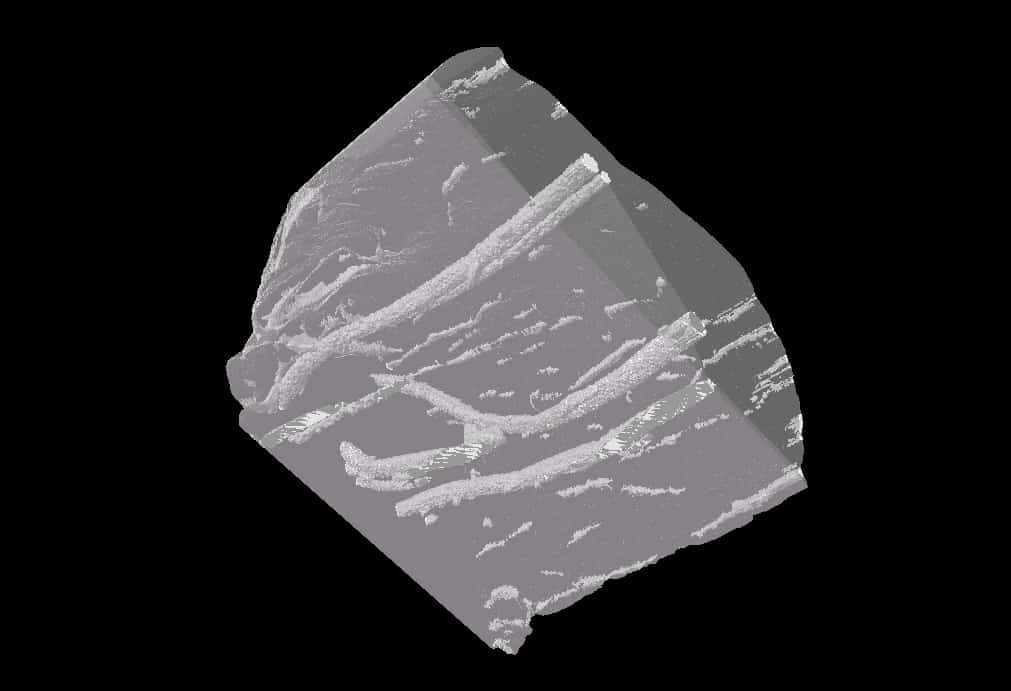
A compact prototype instrument that could one day search for signs of life in the solar system has been unveiled by a team of researchers in the US, France, and Germany. Led by Ricardo Arevalo at the University of Maryland, the team’s Orbitrap LDMS instrument can non-invasively identify complex molecules, despite taking up just a fraction of the size and weight of commercially available counterparts.

The prospect of finding evidence of life existing elsewhere within the solar system is a major driving factor for future space missions. In the coming decades, scientists hope to search for evidence of biological processes in extraterrestrial environments including the vast subsurface oceans of Europa and Enceladus – moons of Jupiter and Saturn respectively.

Key to the success of these missions will be the ability to detect a variety of biomarkers: including proteins, isotopic ratios and complex structures that indicate microbial activity. Crucially, missions must be able to distinguish larger, more complex organic molecules such as proteins from smaller, less useful signatures like amino acids – which can still be assembled by non-biological reactions.

Micron scale analysis

The instrument is called Orbitrap LDMS and employs a technique called laser desorption mass spectrometry (LDMS). This uses a pulsed ultraviolet laser to ionize small fragments of solid samples. An important benefit of LDMS is that the laser light can be tightly focused on the surface of a sample, allowing different components of the sample such as grains, dust particles and other tiny structures to be analysed at the micron scale. LDMS also minimizes the contact between the instrument and the sample, thereby reducing the chances of sample contamination.

After the ions are created, they are directed to an Orbitrap analyser, which is a mass spectrometer that was invented in the 1990s by team member Alexander Makarov, who is now at Thermo Fisher Scientific in Germany. This instrument traps the ions in orbits around a spindle-like electrode. The motions of the ions are tracked, and this information is used to determine the masses of the ions. This mass data can then be used to determine the nature of the molecules.

Optimized for space

Both LDMS and Orbitrap are established technologies, but they had to be combined in a way that is appropriate for use on space missions – minimizing mass, volume and power requirements.

Now, after eight years of development, Arevalo’s team has unveiled a prototype for a miniaturized Orbitrap LDMS. Measuring just a few centimetres in size, the prototype was able to detect target biosignature molecules at appropriate densities for studying the subsurface oceans of Europa and Enceladus. As the researchers hoped, the quality of this analysis matched the performance of existing commercial systems.

Arevalo and colleagues hope that Orbitrap LDMS will be included aboard future interplanetary space missions. These include NASA’s proposed Enceladus Orbilander mission, which could reach the surface of Enceladus in the early 2050s. In the shorter term, it could also be employed by missions like the NASA Artemis programme, to deepen our knowledge of the chemical make-up of the lunar surface.

The research is described in Nature Astronomy

Visible-light lasers shrink to chip scale

Illustration of the integrated laser platform showing different colours of visible light emerging from a single chip

Researchers in the US have created the first high-performance, tuneable and narrow-linewidth visible-light lasers that are small enough to fit on a photonic chip. Developed by a team at the Columbia University School of Engineering and Applied Science, the new lasers operate at wavelengths shorter than the red part of the electromagnetic spectrum and could be employed in technologies such as quantum optics, bioimaging and laser displays.

“Until now, lasers with performance similar to ones we have developed were benchtop-sized and expensive, which made them unsuitable for high impact technologies such as portable atomic clocks and AR/VR [augmented reality and virtual reality] devices,” explains Mateus Corato Zanarella, a member of Michal Lipson’s nanophotonics group at Columbia. “In our work we show how we can use integrated photonics to drastically shrink the size of complex laser systems.”

Integrated photonics has already revolutionized the way we control light for applications such as data communications, imaging, sensing and biomedical devices, he adds. By routing and shaping light using micro- and nanoscale components, it is now possible to shrink full optical systems down to objects that can fit on a fingertip. Despite great advances, however, high-performance chip-scale lasers have been lacking – meaning that a key component for complete miniaturization remains out of reach.

Tuneable and narrow linewidth light of wavelengths shorter than red

Columbia’s new on-chip laser platform is the first to demonstrate tuneable and narrow linewidth light at wavelengths shorter than red, with the smallest footprint and shortest wavelength (404 nm) of an integrated laser platform. It is composed of commercial Fabry-Perot laser diodes as the light sources and a photonic integrated chip (PIC) with micron-sized silicon nitride resonators. The latter component is designed to modify the laser emission to be single-frequency, easily tuneable and narrow in linewidth through a physical process known as self-injection locking. Without this PIC, the device would emit at several wavelengths and would not be easily tuneable.

“Each laser diode originally emits impure light of different shades of a colour and we design our PIC to ‘purify’ that emission,” Zanarella tells Physics World. “When we combine the diode and the chip, the selective and controllable optical feedback provided by the PIC forces the laser to emit a single colour of high purity instead of multiple shades.”

High-end applications

The researchers say they can generate and control pure light at colours from near-ultraviolet to near-infrared in a precise and fast fashion – up to 267 petahertz/second. Such light could be employed in high-end applications such as portable atomic clocks that were previously not possible because of the of the size of the required laser sources. Other potential applications include quantum information, biosensing, underwater laser ranging (LiDAR) and Li-Fi (visible light communications).

“What’s exciting about this work is that we’ve used the power of integrated photonics to break the existing paradigm that high-performance visible lasers need to be benchtop and cost tens of thousands of dollars,” Zanarella says. “Until now, it’s been impossible to shrink and mass-deploy technologies that require tuneable and narrow-linewidth visible lasers. A notable example is quantum optics, which demands high-performance lasers of several colours in a single system. We expect that our findings will enable fully integrated visible light systems for existing and new technologies.”

The Columbia researchers now intend to turn their chip-scale laser into standalone units that can be easily deployed in practical applications. They have also filed a patent for their technology, which they describe in Nature Photonics.

From tech fear to tech leader: a step-by-step guide

We know from countless reports and surveys that women are under-represented in science, technology, engineering and mathematics (STEM). The reasons for this are manifold, and most attempts to rectify it concentrate on education in schools, particularly of younger children. Computer scientist and entrepreneur Anne-Marie Imafidon has likewise focused her outreach and leadership efforts on girls and non-binary young people through her organization Stemettes. Since 2012 more than 50,000 of them have attended technology workshops, hackathons and other free events run by Imafidon and her team.

The success of Stemettes gave Imafidon a platform to speak more widely about diversity in STEM, particularly on how to get more women into positions of power in the technology sector. It is this that she focuses on in her new book She’s in CTRL: How Women Can Take Back Tech. In it, Imafidon first addresses why STEM workplaces need to be more representative of wider society than they currently are.

The examples are numerous. Most crash-test dummies are based on an average male body, leading to unforeseen types of injury among women in car accidents. Facial-recognition technology used in large warehouses doesn’t work well with darker skin, causing Black employees to be penalized unfairly. Several health apps, meanwhile, make assumptions about menstruation that cause them to be unusable for people who have menstrual cycles that are irregular or longer than the average range (for example, sufferers of polycystic ovary syndrome), or who are menopausal.

Some of this will be familiar from other excellent titles such as Invisible Women by Caroline Criado-Perez or Inferior by Angela Saini. Imafidon’s book is different in that she explicitly argues that if a woman or person of colour had been on the tech team behind these products, such problems wouldn’t have occurred in the first place. The companies would have saved themselves money and reputational damage, and the world would have become a better place for everyone.

Getting comfortable with tech

Imafidon assumes two things about her reader: that they are female (which is fairly likely, given the subtitle), and that they are non-technical, perhaps even fearful of tech. While I doubt many readers of Physics World are scared by technology, don’t skip past this book just yet – it contains information and insights that even the most tech-savvy among us could benefit from. As Imafidon says, “It’s important to make sure that tech is not built by the few and feared by the many.”

Though I’m a decade older than Imafidon, I recognize her descriptions of having computers both at school and at home in the 1990s, when that wasn’t universal or even common. And I can see that gave me (as it did her) a familiarity and comfort with certain types of technology that isn’t ubiquitous for people in their 30s and older.

Unlike Imafidon, however, I did not pass A-level computing aged 11, and I don’t have a long roster of honorary doctorates on my CV. She is an impressive woman who has done exactly what she is encouraging her readers to do. Yet even this admirable role model experienced micro- and macro-aggressions in response to her early interest in technology, for flying against what is expected of a woman – especially a Black woman like her.

As with the early home computers, I can relate to Imafidon’s memory of schools discouraging girls from STEM. It’s in the way teaching materials are written (using male pronouns, or traditionally male interests in example text); the pupils who are called on in class, encouraged to do extra projects or simply get more of their teachers’ time; the careers and higher-education advice that is given to pupils. And the women who do make it past all that discouragement to get a STEM qualification are less likely to be hired in technical roles – or promoted to a management position in a STEM-based company – than equally qualified men.

A lifetime of discouraging comments or being ignored in technical conversations means many women have low confidence in their technical abilities, or their right to be in a technical space. This is who Imafidon is addressing. Even women working in and enthusiastic about STEM can be deterred from trying new technical solutions, or widening their technical knowledge. And Imafidon’s advice is useful for us too.

Imafidon explains how women who aren’t currently in a technical role can start engaging with technology, as well as how women already in STEM can make sure they’re holding the door open behind them for other under-represented people. She does this via practical exercises at the end of each chapter, turning her book from a series of interesting essays into a useful guide. She introduces the first of these “getting started” sections with an acknowledgement that some suggestions will be easier to follow than others. Every exercise has diversity and inclusion baked into it. They are all zero or low-cost.

However, I found some of Imafidon’s assumptions about her readership frustrating. In fact, the book almost lost me during its early chapters, as they lean hard into persuading the reader to care about, and want to engage with, technology. I’m not sure who would look at the title of this work and start reading without already being on board with the concept. Imafidon also repeats a little too often the idea that anyone can – and should – be an entrepreneur. While I agree that entrepreneurship is currently too male and white, it’s not the only option in the technology sector, and not every reader will have the opportunity, or the desire, to take that route.

Yet I’m glad I persevered. I enjoyed learning about the many female and non-binary tech leaders that Imafidon profiles, such as Tobi Oredein, who found herself excluded from her chosen specialism of lifestyle journalism. In response, she launched her own lifestyle website for Black British women, Black Ballad, but then ran into the problem that quality journalism relies on good data, and there just wasn’t data available on the subjects she wanted to cover. So she applied for grants to collect the data and made those data available online to other journalists and academics. Data collection and management is now as large a part of her role as journalism.

Physics World contributing columnist Jess Wade also gets a mention for her project creating a Wikipedia entry every day for a woman or other under-represented person in STEM. Of Wikipedia’s many thousands of profiles of people, around 80% are of men. Sadly, it took a woman to challenge this. It is likely related that 90% of Wikipedia’s voluntary editors are men. Editing Wikipedia requires free time – which, on average, women have less of than men – and a little technical knowhow.

In She’s in CTRL, the examples of women in STEM from history (or “herstory” as Imafidon styles it) are familiar but told from a slightly different angle. For example, Florence Nightingale is widely lauded for her nursing but she also made innovations in statistics and data visualization. Indeed, Nightingale was elected as the first female member of the Royal Statistical Society in 1859.

One last warning concerns the pun in the title. Imafidon repeats it frequently throughout the book, which is perhaps not unexpected given that her podcast for the Evening Standard has the equally puntastic title Women Tech Charge. Still, if you’re comfortable with a little wordplay and a hefty dose of self-improvement, there is bound to be some useful advice for you in She’s in CTRL.

  • 2022 Penguin Random House 368pp £16.99hb

Interactions between ultracold molecules controlled by physicists

A way of colliding ultracold molecules while controlling the rate at which they react has been developed by physicists at the Massachusetts Institute of Technology (MIT) in the US. Researchers at Germany’s Max Planck Institute for Quantum Optics have made a similar discovery using an different experimental technique. Their research opens new pathways for enhanced control of chemical reactions.

Chemical reactions are immensely complex, with huge numbers of atoms and molecules colliding with each other while being driven by kinetic forces. This complexity makes it very difficult to focus on reactions at the atomic and molecular level.

To get around this complexity problem, researchers can cool atoms and molecules to microkelvin temperatures to limit the possible quantum states the reactants can be in. Reactions involving these ultracold atoms and molecules can then be partially controlled using lasers or magnetic fields, providing important information about chemical processes.

One challenge in studying ultracold molecules is that they have rotational and vibrational quantum states. This makes molecules much more difficult to control than atoms, and this has prevented ultracold experiments from moving beyond simple atom–atom and atom–molecule reactions.

Feshbach resonances

Now, a team at MIT led by the Nobel laureate Wolfgang Ketterle has developed a new way of controlling of ultracold molecules. The technique uses Feshbach resonances, which occur when two colliding atoms or molecules briefly form a bound state. Feshbach resonances are widely used in the study of ultracold gases because they can be used to fine tune interactions between atoms.

Applying Feshbach resonances to ultracold atoms was pioneered by Ketterle in 1998, when he made the first ever observation the phenomenon in ultracold sodium atoms. Since then, researchers have been searching for similar resonances in collisions involving both atoms and molecules. Last year, Ketterle and colleagues used Feshbach resonances to create reactions involving sodium atoms and sodium-lithium molecules. They found that quantum interference effects related to multiple bounces between colliding particles can be constructive or destructive. This either enhances or suppresses the reactions by factors of about 100.

Now the MIT researchers have found a Feshbach resonance in collisions between pairs of ultracold sodium-lithium molecules. It occurs within a very narrow range of the applied magnetic field. When the researchers looked over a magnetic-field range of more than 1000 G, they found an increased reaction rate between molecules in a narrow 25 mG window. The team concluded that the Feshbach resonance encouraged the molecules to move into a relatively long-lived intermediate complex that in turn increased the number of molecular reactions up to 100 times.

Big surprise

Further analysis of the new data yielded a surprising discovery. Precisely at the resonance, two states of the molecule have exactly the same energy and therefore can both take part in the collision. Even though the result was unexpected, Ketterle points out that sodium–lithium is the lightest ultracold molecule being studied. As a result, it has the smallest density of states and that therefore it is highly likely that the molecule has an isolated state that is long-lived.

To understand their observations, the team developed a model that describes the resonance caused by the magnetic field and the decay of the intermediate complex into an open channel causing the molecule to disappear.

Their model is analogous to light resonating within a Fabry-Perot cavity – a device comprising two thin mirrors that will transmit light at a specific resonant wavelength. The lifetime of the intermediate complex is analogous to round-trip time that a photon spends inside a resonant cavity.

While this model explains the results, some open questions remain. For example it would be useful to know if these narrow resonances are unique to molecules with small atoms – molecules that have a lower density of states. It would also be of interest to explore whether other magnetic-field values create long-lived complexes. Undoubtedly these questions will spark a wave to excitement in the field of ultracold chemistry and could lead to new applications and physical insights.

In control

Ketterle believes that the research will prove to be important for quantum science, physical chemistry and chemistry. But he acknowledges that more work needs to be done and that without a full understanding of the resonance it is difficult to make predictions for other molecules. However, he says that his team’s observation has made it more likely that resonances and long-lived collision complexes exist in other molecules.

“The field is currently progressing towards control at the quantum level over more and more complex systems.  Our work is a step to achieve quantum control over molecular collisions and reactions and to map out more broadly the collisional properties of these molecules with the goal of finding a deeper understanding”, he tells Physics World.

Bo Zhao from the University of Science and Technology of China lauds the team’s  discovery of a magnetically tunable Feshbach resonance between ultracold ground-state diatomic molecules, adding that the work is an important advance in ultracold molecules and ultracold chemistry. He states that Feshbach resonances between molecules could lead to many new research possibilities, including the study of strongly interacting molecular gases.

The research is described in Nature. In the same issue of the journal, Xin-Yu Luo and colleagues at Germany’s Max Planck Institute for Quantum Optics describe a similar scheme for controlling the reaction rate of ultracold sodium–potassium molecules. In this research, the team used oscillating microwave radiation to create the resonance.

Colloidal mixture exists in up to six phases at once

A binary colloidal mixture can exist in up to six phases at the same time, according to new theoretical work by researchers in the Netherlands and France. The result, obtained using a simple algebraic model, has applications for predicting the phase stability of common colloidal materials such as paint and mayonnaise.

Until recently, scientists thought that colloidal-polymer mixtures could only exist in three simultaneous phases – similar to the well-known “triple point” at which water is a gas, a liquid and a solid. In 2020, however, members of this same Netherlands-France group, led by Remco Tuinier and Joeri Opdam of the Eindhoven University of Technology, showed that such mixtures could, in fact, exist in five different phases at once. This result defied the 150-year-old Gibbs phase rule, and the researchers obtained it by simulating the behaviour of a colloidal mixture with two components – rods and polymers – dispersed in a background solvent.

In their computations, they represented rods as hard “spherocylinders” and the polymers as spheres that freely overlap with each other. They found that in this system, under specific conditions, a “quintuple point” appears in which the possible phases are an isotropic gas phase with unaligned rods at the top; a nematic liquid crystal phase with rods pointing in roughly the same direction; a smectic liquid crystal phase with rods lying in different layers; and two solid phases with “ordinary” crystals at the bottom.

A wide range of possible coexisting multiphases

The same team has now developed a general way to predict phase diagrams for complex mixtures containing two types of hard particles. They did this using an extension of their previous technique that takes into account not only binary mixtures of rods and polymers, but also binary mixtures of, for example, rods and platelets (discs), or mixtures of spheres and rods. The team also considered the orientation and positions of each component in the mixture.

As before, Tuinier, Opdam and colleagues found a wide range of possible coexisting multiphases, including two quintuple phase coexistence regions for rod/sphere mixtures and even a sextuple phase coexistence region for rod/plate mixtures.

This profusion of phases is possible because of the shape of the particles (particularly their length and diameter), they say. In addition to the known variables of temperature and pressure, there are three additional parameters: for both particles, the length in relation to its diameter; and the diameter of one type of particle in relation to the diameter of the other particles in the solution. Thanks to these three parameters, three additional coexisting phases can be possible with respect to the predictions of Gibbs’ phase rule.

Applications in manufacturing

Tuinier notes that being able to predict phase diagrams is important in several areas of science and engineering, where it helps to know when systems will be stable, whether demixing occurs and what kinds of phase states are expected to form. According to the researchers, who report their work in J. Phys. Chem. Lett., the findings could help advance our understanding of phase transitions in such systems and predict more precisely when they will occur – knowledge that could come in useful when manufacturing complex colloidal mixtures like mayonnaise or paint.

“We wanted to better predict the phase stability of such systems,” Tuinier tells Physics World. “While our new work still focuses on hard particle dispersion of different shapes, we hope to extend this work to also include materials like polymers for practical applications.”

He adds that mixing colloids with different sizes and shapes and employing phase transitions may pave the way towards creating novel materials with bespoke optical or mechanical properties for applications such as fast-switching optical devices or biomimetic muscles. Liquid crystals in displays, photovoltaic and energy storage materials could benefit too, as could novel types of batteries and fuel cells.

Smart stitches could prevent infections at surgical sites

Surgical stitches, or sutures, are used to close wounds following injury or surgery and to support the healing process. But sutured wounds are susceptible to infection, with infections at surgical sites occurring in 2–4% of patients.

A team headed up at RMIT University in Australia is developing an antimicrobial suture that could play an important role in preventing such infections. The smart suture is also designed to be visible in CT scans, enabling wound monitoring after surgery and enhancing patient recovery. This could prove particularly useful for locating internal stitches and to help detect infected wounds inside the body without requiring surgical intervention.

“Our smart surgical sutures can play an important role in preventing infection and monitoring patient recovery,” says lead author Shadi Houshyar in a press statement. “The proof-of-concept material we’ve developed has several important properties that make it an exciting candidate for this.”

Currently, there are no commercial contrast agents that can be used in sutures due to problems with toxicity. To get around this, Houshyar and colleagues are using iodine-conjugated carbon particles (ICPs). Carbon nanoparticles are biocompatible, cheap and easy to produce in the lab, and inherently fluorescent and antibacterial. Attaching iodine provides X-ray visibility and enhanced antimicrobial properties, while lowering the iodine toxicity by controlling the release of ICPs. The team embedded these ICPs into the suture material polycaprolactone (PCL) to create I-PCL suture filaments.

Describing their work in OpenNano, the researchers first evaluated the stability of the I-PCL before complete suture degradation. They immersed sutures in phosphate-buffered saline (PBS) at 37 °C for 22 days with mild shaking and quantified the iodine concentration in the PBS. In the first 24 hrs, they saw an initial high-rate release of ICP. This was followed by a significant drop in ICP concentration and slow, steady release over time.

This burst release of ICPs from the suture could prevent the colonization of wounds with pathogens, while the ensuing slow release over an extended time period helps prevent biofilm formation and infection.

The team then examined the impact of ICP concentration on the contrast properties of I-PCL, comparing micro-CT images of sutures containing various ICP concentrations. The CT contrast increased with increasing ICP concentration. The suture with 40% ICP (40I-PCL) exhibited contrast 272, 81 and 31% higher than sutures with 10, 20 and 30% ICP concentrations, respectively.

Sutures are clearly visible in CT scans

Focusing on the 40I-PCL suture with the highest contrast enhancement, the researchers investigated how suture degradation affected its contrast properties. After 22 days in PBS, the CT contrast reduced by 18%, which the team notes is still acceptable and as expected for a degradable suture.

The researchers next assessed the visibility of 40I-PCL sutures threaded through chicken breast and thigh tissue. Micro-CT images revealed that sutures were clearly visible in, and distinguishable from, the tissue. Such visibility should be particularly advantageous for post-surgery wound monitoring, enabling surgeons to identify the suture integrity and location within the body.

Antibacterial optimization

The bacteria methicillin-resistant S. aureus (MRSA) is the most common cause of surgical site infections, thus the researchers studied its interaction with various I-PCL sutures. After 6 h incubation at 37°C, 30I-PCL killed 90% of MRSA, while the higher-concentration 40I-PCL eliminated nearly 99% of MRSA with no visible biofilm on the suture.

In addition to use in surgical stitches, the smart suture material can also be employed to create meshes, such as the vaginal mesh implants used to treat prolapse – a procedure that can have relatively high infection rates.

“This mesh will enable us to help with improved identification of the causes of symptoms, reduce the incidence of mesh infections and will help with precise pre-operative planning if there is a need to surgically remove the mesh,” explains co-author Justin Yeung from the University of Melbourne. “It has the potential to improve surgery outcomes and improve quality-of-life for a huge proportion of women, if used as vaginal mesh for example, by reducing the need for infected mesh removal.”

The researchers conclude that sutures that can be visualized using modalities such as CT and MRI can minimize surgical risks, monitor internal wounds and assist surgeons accurately planning surgery if complications requiring mesh removal develop. They suggest that the 40I-PCL suture best satisfies these requirements by providing high CT visibility, as well as reasonable biocompatibility and excellent antimicrobial properties.

Nonlinear resonator breaks dynamic optical nonreciprocity

On-chip device

A new method for making devices that act like a “one-way street” for light has been developed by researchers in China and Japan. The technique, which breaks the limit of dynamic reciprocity in nonlinear optical systems, could be important for applications in photon-based information processing.

Reciprocity – or more precisely, Lorentz reciprocity – is a fundamental principle of optics that decrees that electromagnetic signals must propagate freely in both directions through an optical fibre or electrical circuit. A microwave pulse, for example, can travel in either direction along a waveguide and a light signal can move both ways along an optical fibre. This two-way traffic can cause problems such as backscattering, which reduces the strength of the transmitted signal.

Some technologies for avoiding reciprocity already exist. Isolators in radar microwave transmitters, for example, get around the reciprocity rule by using a large external magnetic field to isolate the waves travelling in the reflected (backwards) direction. However, the devices employed to achieve this, called Faraday rotors, rely on the magneto-optical effect, and thus require strong, heavy magnets. Such magnets are incompatible with photonic chips, and they also considerably increase the power consumption of circuits. While nonmagnetic isolators have been developed, their performance has been poor so far.

Kerr nonlinearity

An alternative way to break Lorentz reciprocity is to use optical nonlinear effects such as Kerr nonlinearity, which is observed when high-intensity light propagates through a medium. The simplest manifestation of this effect can be described as a change in the refractive index of the medium that is proportional to the intensity of the light. In contrast to magneto-optical effects, nonreciprocal devices using such optical nonlinearity are compatible with photonic chip integration, explains Keyu Xia of Nanjing University, Nanjing, who led the new research effort together with Franco Nori of the RIKEN Quantum Computing Center. Kerr nonlinearity exists in many optical materials, including silicon, which is widely employed in photonics.

When designing nonlinear isolators and circulators, scientists are accustomed to taking into account the Kerr nonlinearity of materials individually in a circuit or waveguide, Xia adds. “This leads to ‘dynamic reciprocity’, which causes another problem: a nonlinear nonreciprocity device cannot block the backscattering when the forward and backward-propagating light fields enter the device at the same time, so imposing a fundamental constraint on Kerr-mode nonlinear devices used as optical isolators,” he explains.

Xia and colleagues have now shown that a nonlinear optical material, such as silicon, can be used to overcome this problem and make on-chip devices (such as optical isolators and circulators) when two separate nonlinearity effects are considered. The first, known as the self-Kerr effect, is an optical nonlinearity effect that produces a phase shift proportional to the square of the number of photons in the field. The second, termed cross-Kerr nonlinearity, is a coherent effect that dramatically changes the optical response of the medium to light at selected frequencies.

Achieving dynamic nonreciprocity

The new technique works because in most optical nonlinear materials, the self- and cross-Kerr nonlinearities have differing strengths. When the forward- and backward-propagating light fields enter a device such as a micro-ring resonator (made from a silicon-based nonlinear material) at the same time, the modulation coming from the self- and cross-Kerr nonlinearities can therefore cause different resonance frequencies for the forward- and backward-circulating modes. These are normally denoted as the clockwise and counter-clockwise modes. “We made use of this chirality to achieve dynamic nonreciprocity in a passive system consisting a micro-ring resonator, two waveguides and an absorber,” Xia explains.

“Our proposed method bypasses the fundamental constraint of dynamic reciprocity imposed on nonlinear optics,” he tells Physics World. “The same concept has been demonstrated experimentally by another group at Stanford University for an on-chip optical isolator. Our work, published in Chinese Physics Letters, opens a door for realizing on-chip optical isolators and circulators, and thus will boost the integration scale and function of photonic chips.”

The researchers are now testing their integrated nonreciprocal devices in their laboratory. The applied micro-ring resonator in this method severely limits the available nonreciprocal bandwidth to a very narrow scale, of about hundreds of MHz, so they plan to improve this and reduce so-called insertion losses by using only Kerr-nonlinear optical waveguides. “Such a new design would allow many important and practical applications of on-chip nonlinear isolators and circulators because it can process photonic information faster and with lower light loss,” Xia says.

New type of fractal emerges in spin ices

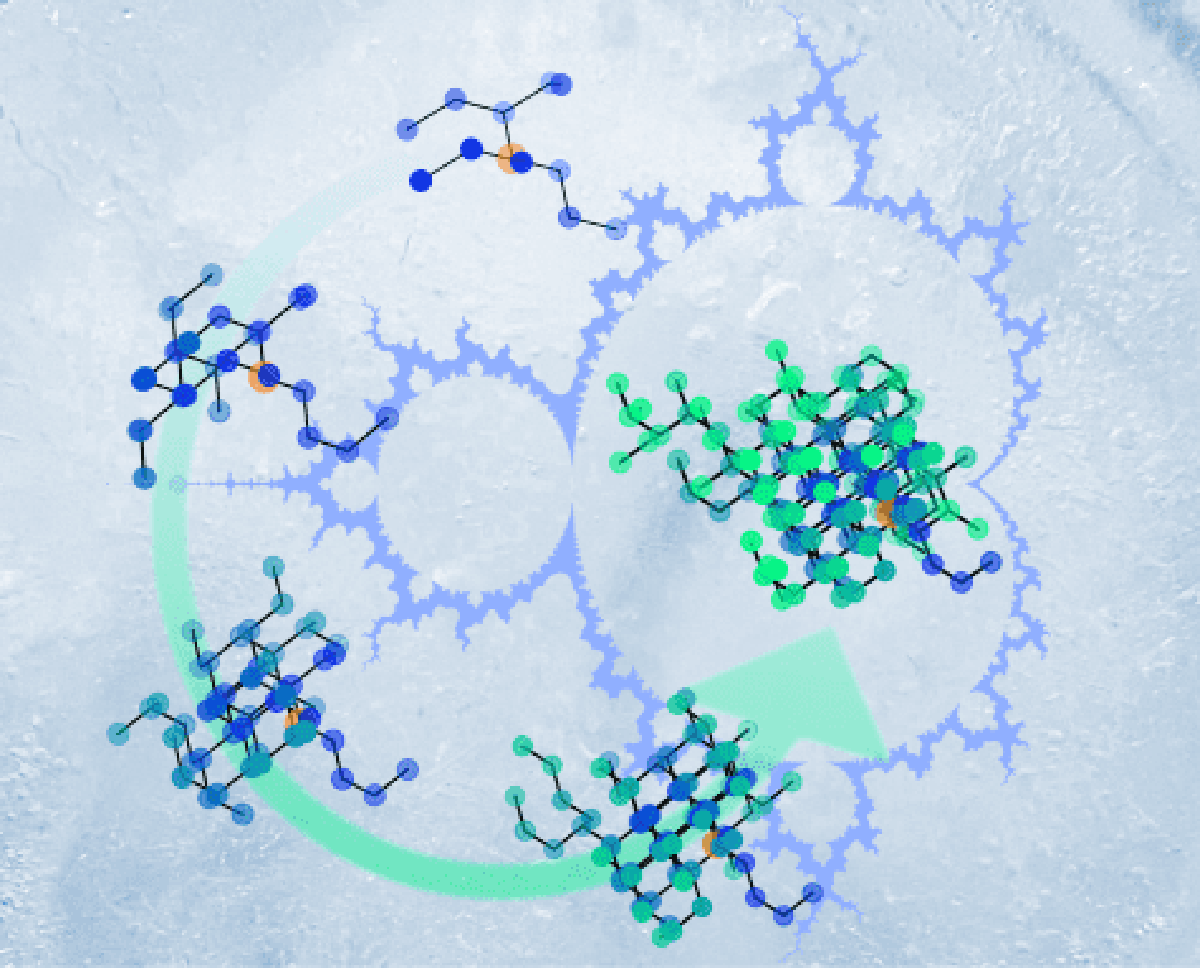
Example of the fractal structures in spin ice together with a famous example of a fractal (the Mandelbrot set), on top of a photograph of water ice.

A new type of fractal has appeared unexpectedly in a class of magnets known as spin ices. The new fractals, which were observed in clean three-dimensional crystals of dysprosium titanate (Dy2Ti2O7), appear to come from excitations of magnetic monopoles in the material, and could have applications in magnetocalorics, spintronics, information storage and quantum computing.

Fractals are ubiquitous in nature and exist at many scales, from the macro to the nano. Everyday examples include snowflakes, networks of blood vessels, mountain landscapes and coastlines. To qualify as a fractal, an object must have a hierarchical geometric structure with a basic pattern that repeats at ever-decreasing sizes, branching off into narrower patterns that are smaller versions of the main one.

Entirely new type of fractal

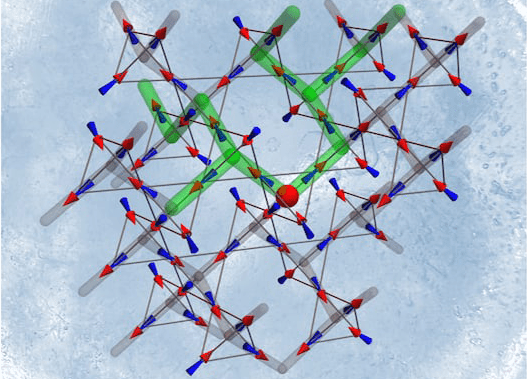
A team at the University of Cambridge, the Max Planck Institute for the Physics of Complex Systems in Dresden, the University of Tennessee in the US and the Universidad Nacional de La Plata in Argentina has now discovered an entirely new type of fractal in clean three-dimensional spin ices. The name “spin ices” comes from the fact that in these materials, the disorder of magnetic moments (or spins) at low temperatures is exactly the same as the proton disorder in water ice. Structurally speaking, spin ices contain rare-earth ion moments that occupy the corners of a tetrahedral pattern, and local constraints mean that these moments obey the “ice rules”: two them point into the tetrahedron and two point out of it.

At temperatures just above zero kelvin, the crystal spins form a magnetic fluid. Small amounts of thermal energy then cause the ice rules to break at a small number of sites, and the north and south poles making up the flipped spins separate from each other. At this point, they behave as if they were independent magnetic monopoles.

Living in a fractal world

“We realized that the monopoles must be living in a fractal world,” explains team member Claudio Castelnovo from the University of Cambridge, “and not moving freely in three dimensions as had always been assumed.” To be more precise, he adds, the configurations of the spins created a dynamic network that branched as a fractal, and the monopoles moved along it (see figure).

Simulated image of the spin-ice fractal, showing the possible locations for monopoles to "hop", which appears as an irregular, fractal-like grid

To explain this behaviour, the researchers referred to a mathematical model that describes how monopoles hop thanks to quantum tunnelling of the magnetic spins. They found that there are two very different timescales on which a monopole can do this. “Which timescales a specific spin tunnelling event happens on depends on the configuration of the neighbouring spins,” says study lead author Jonathan Nilsson Hallén. “It became clear that the longer of the two different tunnelling timescales is much larger than the shorter one. Monopole hops happening on the longer timescales can therefore be ignored.”

Clusters form fractals

When the researchers accounted for this and calculated the typical number of remaining hops available for a monopole, they found that the system sits near a critical point at which the average number of moves available to a monopole at each site is the one that generates fractal clusters. In their simulations, they mapped out the sites each monopole can reach and showed that these clusters do indeed form the fractals they predicted.

Studying monopoles in spin ices this way could be important for a host of applications, Hallén says. “Spin ices are one of the most accessible instances of topological magnets and magnetic monopoles in spin ices are one of the best understood examples of fractionalized excitations,” he tells Physics World. “Topological materials remain to date one of the most intensely researched areas of condensed matter physics, and there is hope that the exciting phenomena that these materials display will prove useful for applications such as magnetocalorics, spintronics, information storage and quantum computing.”

Hallén notes that evidence of unusual dynamical behaviour in spin ices has been accumulating for more than two decades. Given this mounting body of evidence, he suggests that the length of time it took to discover dynamical fractals in spin ice clearly demonstrates that we are far from understanding the behaviour of fractionalized charges, like magnetic monopoles, at the same level that we understand conventional charges such as electrons in a metal. “The capacity of spin ices to exhibit such striking phenomena makes us hopeful of further surprising discoveries in the cooperative dynamics of even simple topological many-body systems,” he says.

The researchers are now investigating how the other properties of spin ices may be affected by the dynamical fractals. “In particular, we hope to work with experimental groups to find further evidence of this behaviour,” Hallén says. “We are also actively searching for other systems in which similar dynamical constraints may appear, and we plan to more broadly investigate the range of effects they may give rise to.”

They detail their present work in Science.

Europe is at the forefront of quantum-based technologies, says report

Europe is leading the race to implement quantum-based technologies, according to a new report from the European Commission. The report examines the state of the 10-year €1bn Quantum Technologies Flagship programme, which began in 2018. It aims to boost quantum research in Europe as well as foster the implementation of quantum technologies such as quantum sensing, communication and computation.

The flagship has so far brought together more than 1500 scientists and 236 organizations, made up of 77 privately owned companies, 103 universities and 56 research organizations. The 36-page report examines the activities during the flagship’s ramp-up phase from 2018 to 2021 when the programme received €193m under the Horizon 2020 programme.

This first phase led to 19 R&D projects that ran from 2018 to 2022 and two additional projects that went from 2020 to 2024. The projects were carried out in quantum communication, computing, simulation, sensing and metrology as well as fundamental quantum science.

During the first three years of the programme, the flagship led to 25 start-up companies, 105 patents and 1313 scientific papers with another 223 under review. The report also says that a total of 1961 conferences were attended by researchers, while 161 conferences or workshops were organized.

The flagship also sparked national initiatives in quantum technologies that aim to set-up up local ecosystems to support the growth of quantum research and development. Germany is providing €2bn for its own quantum initiative, while France is spending €1.8bn and the Netherlands €670m.

‘Concrete achievements’

According to the report, co-ordinating research at national and European level is crucial given that no single country can do everything required to develop quantum technologies. One of those issues is the development and manufacturing of quantum devices through the production of quantum chips. Others are the need to provide researchers with access to clean rooms as well as prototyping, production and testing facilities.

Some of those issues will tackled by the European Chips Act, which will support the development of dedicated pilot lines for design, manufacturing and testing of quantum chips.

Roberto Viola, the commission’s director general for communication, networks, content and technology, says that the report’s findings show that “impressive results and concrete achievements” have been made by the flagship as well as “significant steps in bringing quantum research from laboratory to commercial applications”.

Launching worms into space, shading Earth with dust from the Moon

This week I interviewed two physicists in Germany about sending quantum technologies into space (stay tuned for that on an upcoming episode of the Physics World Weekly podcast), so I was amused to find out that six students at the UK’s University of Warwick are planning to send a very different cargo into space. The sextet is working on a CubeSat that will carry microscopic worms in low Earth orbit. The mission is being carried out for researchers at the University of Exeter, who want to study how the worms function and reproduce in low gravity.

The ultimate goal of the research is to understand how worms would fare on a deep space mission, during which the worms would provide “biomass”. I could be wrong, but I suspect that biomass is a euphemism for “food” – and that astronauts travelling to Mars will be dining on worms. Sounds more than a bit yucky, but at least they will have quantum computers and sensors to play around with.

Staying on the topic of firing stuff into space, researchers in the US have published a proposal to cool the Earth using dust from the Moon. The idea is to launch the material towards the L1 Lagrange point, which lies between the Sun at the Earth. It would remain there for a few days, blocking some of the Sun’s rays and cooling the Earth.

Less energy needed

One of the benefits of the scheme, according to Benjamin Bromley of the University of Utah and colleagues, is that ejecting material from the surface of the Moon takes much less energy than ejecting it from the surface of the Earth. Also, the fact that the dust should only linger at the Lagrange point for a few days, means that the cooling can be adjusted or stopped easily.

Bromley and colleagues calculate that to attenuate sunlight by 1.8%, about 1010 kg of dust would have to be ejected from the Moon each year. This is about 700 times the total mass of material that has been launched from Earth into space and is enough material to pack into a sphere with a 200 m radius.

The proposal is described in PLOS Climate.

Copyright © 2026 by IOP Publishing Ltd and individual contributors