This episode of the Physics World Weekly podcast features the laser specialist Tara Fortier, who works with some of the world’s best atomic clocks. Based at the National Institute of Standards and Technology (NIST) in Boulder, Colorado, she explains how atomic clocks work and why it is important for scientists to be able to compare the time signals of different clocks around the world.
The interview also delves into scientific and technological applications of atomic clocks such as testing Albert Einstein’s general theory of relativity and searching for physics beyond the Standard Model.
Friction at the atomic scale appears to depend on the speed at which two surfaces move past each other. This surprising behaviour was observed as the tip of an atomic force microscope (AFM) moves along a graphene coating, and researchers at the universities of Basel in Switzerland and Tel Aviv in Israel say it results from surface corrugation induced by a mismatch in graphene’s lattice structure. The finding, together with observations that the frictional force scales differently in different velocity regimes, could have applications in devices such as hard disks and moving components in satellites or space telescopes that require ultralow friction.
In everyday, macroscopic objects, friction is either independent of the sliding speed (according to Coulomb’s law) or linearly dependent on it (for example in viscous media). On the atomic scale however, things are different. In the new work, a team led Ernst Meyer from the Swiss Nanoscience Institute and the Department of Physics at Basel University measured the speed at which an atomic force microscope (AFM) moves across a layer of graphene (a 2D form of carbon atoms arranged in a honeycomb-like configuration) atop a platinum substrate.
Moiré superlattices
In their experiment, which they report in Nano Letters, Meyer and colleagues found that graphene forms superstructures known as moiré superlattices. These structures are no longer completely flat, and the friction they produce scales in various ways depending on the velocity regime.
According to atomistic molecular dynamic simulations by Oded Hod and Michael Urbakh’s research groups in Tel Aviv, the mechanism behind the effect comes from deformation at the ridges of the moiré superlattice as the tip of the AFM moves along the graphene/platinum interface. The tip induces elastic deformation as it pushes on the ridge, followed by ridge relaxation upon detachment from the tip as it slides forward.
At low AFM scanning velocities, the friction force is small and remains constant (reminiscent of macroscopic behaviour), explains Hod. Above a certain threshold velocity, however, it increases logarithmically. “This threshold is lower the larger the size of the moiré superstructure, allowing to tune the cross-over value via the interfacial twist angle,” Hod says.
“A clear message for practical applications”
“Our findings provide a clear message for practical applications,” Urbakh adds. “To achieve ultralow friction using two-dimensional material coatings, they should be prepared in a way to produce small-scale moiré patterns.”
The researchers say the mechanism they observed may also be relevant for polycrystalline materials, in which grain boundaries are present. They plan to study these in more detail in future work. “In this case, frictional energy dissipation is dominated by the contribution of the grain boundaries,” Hod tells Physics World. “We intend to find ways to eliminate grain boundary friction, for example by exploring unique negative friction coefficient regimes, where friction reduces with external normal loads, in contrast to common physical intuition.”
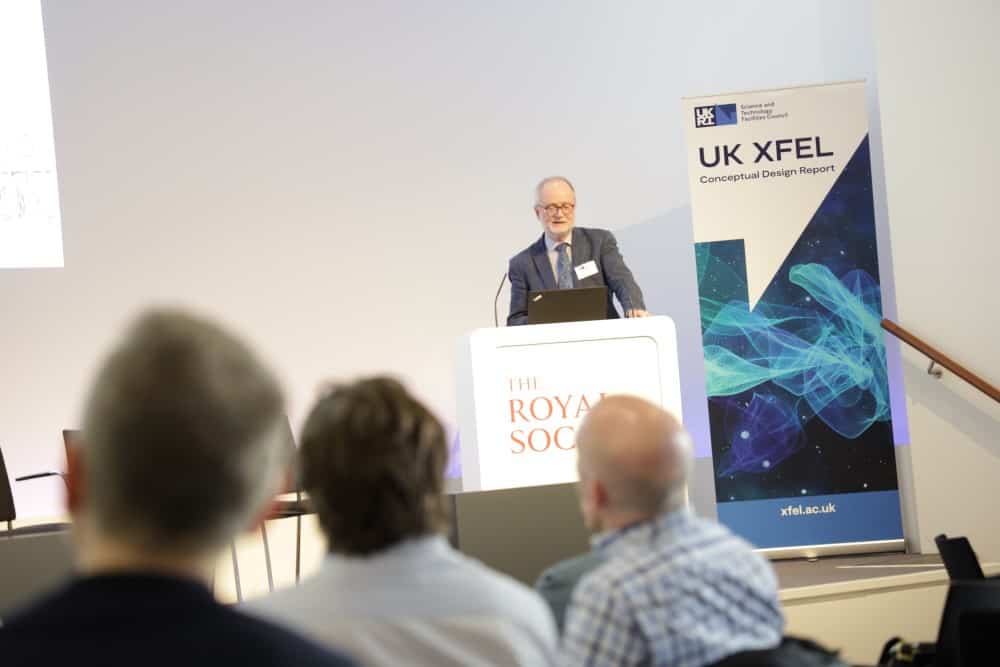
The UK has officially launched the start of design work for a next-generation X-ray free-electron laser (XFEL) facility. Over 150 researchers met at the Royal Society on Monday to discuss plans for the UK-based XFEL that, if given the go-ahead, could be built in the coming decades. Researchers will now hold a series of meetings across the UK to gauge interest in a facility and discuss what kind of science it may produce.
While synchrotrons use X-rays to produce static images, or snapshots, of a sample under investigation, XFELs can study dynamical processes because they generate pulses of intense, coherent X-ray beams tens of thousands of times per second (see box below). Each pulse lasts less than 100 fs (10–13 s), which means that researchers can, for example, create “movies” of chemical bonding processes or analyse the way vibrational energy flows across a material.
XFELs are not new, with the first such facility to come online being the Linac Coherent Light Source (LCLS) at the SLAC National Accelerator Laboratory in the US. Construction began in 2005 and was completed four years later. The facility is now undergoing a major upgrade – known as LCLS II – that will involve boosting the number of X-ray pulses per second from 120 in LCLS to one million in LCLS II.
Other XFELs soon opened in Japan, Germany, South Korea and Switzerland, meaning that there are now five such user facilities around the world. In 2008 the UK also began to look into hosting a dedicated XFEL but the plans failed to gain traction. The UK instead chose to join the European X-ray Free Electron Laser (European XFEL) at the DESY lab near Hamburg, Germany.
The European XFEL, which achieved first light in 2017, features a 2.1 km superconducting linear accelerator that can accelerate electrons to 17.5 GeV. The facility produces pulses of X-rays 27,000 times per second, with each pulse lasting less than 100 fs. In 2022 more than 120 articles were published based on experiments performed at the facility.
The UK was initially involved with the European XFEL by developing technology, designing instruments, contributing to construction and joining user consortia. The UK’s Diamond Light Source in Oxfordshire also hosts two “XFEL hubs” – in the physical and life sciences – where UK users of the European XFEL are given support in terms of training, sample preparation and data processing.
In 2018 the UK then became the 12th country to join the European XFEL, contributing some €26m – or 2% – towards the cost of building the €1.22bn (2005 equivalent prices) facility. The UK also began to pay 2% of the annual operating costs of the facility, although that figure has now risen to 7%, with the UK being involved in a similar percentage of experiments.
The operational costs of an XFEL facility can be significant. The European XFEL, for example, has an annual running cost of €140m, meaning that the 100 experiments carried out at the facility last year each cost about €1.4m to carry out. But with the European XFEL being five times oversubscribed, there is still capacity for more machines and in 2015 the UK began to re-examine the case for its own XFEL.
Build your own
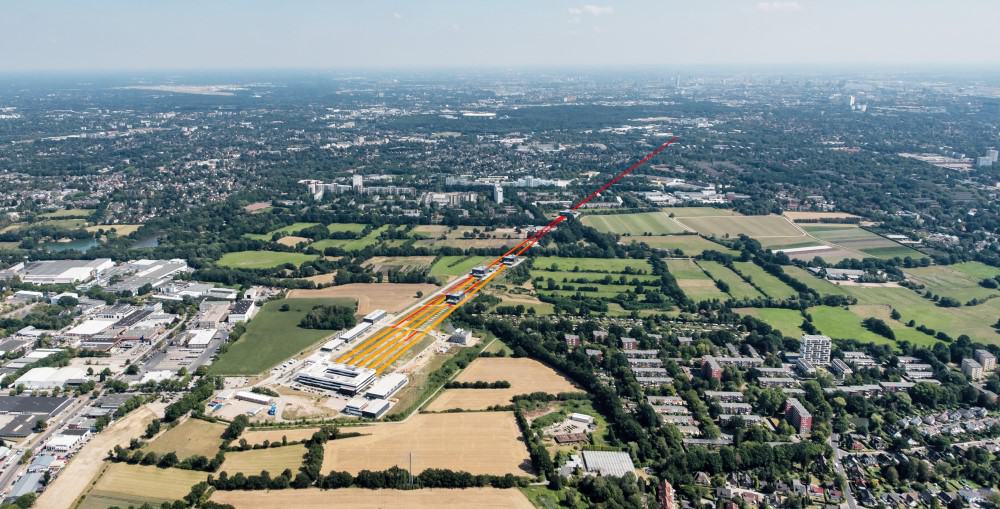
Large footprint: aerial view of the European XFEL, which is over 3 km long. (Courtesy: European XFEL)
The UK missed that deadline but did publish a UK XFEL science case that year. More than 100 scientists from around the world helped to draft the report, which recommended the UK build a machine capable of producing X-rays with an energy between 0.1 keV and 150 keV and a pulse duration of 100 attoseconds to 1 fs, allowing for new regimes to be explored.
How XFELs look in 2030s or 2040s may be very different to what they look like today
Mike Dunne
In October 2022 the UK XFEL proposal was boosted by £3.2m from UK Research and Innovation – the umbrella organization for the UK’s nine research councils – to carry out a conceptual design review. It is expected to take some three years to complete and will also involve updating the science case. According to physicist Ian Walmsley, provost of Imperial College London, the review is an “important step” for the project.
During the event at the Royal Society, which was also attended by some 150 people online, scientists outlined what a new facility might investigate. This includes quantum materials, dynamic structual biology and even, as physicist and XFEL user Emma McBride from Queen’s University Belfast explained, getting a better understanding of the conditions inside planets.
David Dunning, a physicist from the Accelerator Science and Technology Centre (ASTeC) at the STFC-Daresbury Laboratory, notes that a UK XFEL operating an 8 GeV superconducting linear accelerator “would cover a lot of the science base” that came out of the survey of potential users. But that energy requirement will now be investigated in greater detail during the conceptual design review.
Community engagement
A survey of research groups in the UK, conducted as part of the UK XFEL science case, indicated that over 500 UK scientists have had active involvement in XFEL science in the last decade. But Jon Marangos from Imperial College London, who is UK XFEL’s science lead, says it will be crucial in the coming years to broaden the engagement of the scientific community to make sure that XFEL science does not turn into a clique of users.
Future outlook: Robert Feidenhans’l discusses developments at the European X-ray Free Electron Laser facility in Hamburg, Germany (Courtesy: STFC)
A key theme to emerge at the Royal Society meeting was the need for the UK to think as early as possible about the necessary regulatory process, given that a UK XFEL will probably have to be built, at least in part, in a greenbelt area. Jim Clarke from ASTeC highlighted that sustainability will also be a key part of the design. This could include, for example, using superconductors for radio-frequency cavities that can operate effectively at temperatures above 2 K.
Officials at the London event were keen to acknowledge that the main requirement for a UK XFEL is that it should have capabilities not currently possible elsewhere. That view is backed up by LCLS director Mike Dunne, who told delegates that innovation will be key when designing a next-generation facility. “How XFELs look in 2030s or 2040s may be very different to what they look like today,” he says.
We are only beginning to scratch the surface of what these machines can do
Emma McBride
The decision to start work on a conceptual design review does not, however, mean that a UK XFEL will be built. As speakers at the Royal Society meeting made clear, the review might conclude that the machine is too expensive and that a better option would be to support developments and deepen ties at another facility.
But if a UK-based option is deemed the best bet and there is funding available, the next step would be an engineering design on the favoured design. Although users may have to wait several decades to start experiments on a UK XFEL, the machine could offer much to science. “We are only beginning to scratch the surface of what these machines can do,” notes McBride.
How an X-ray free-electron laser works
XFELs work by accelerating bunches of electrons in a linear accelerator to gigaelectronvolt (GeV) energies. The electrons are then passed through “undulators” that cause the electrons to follow a sinusoidal path and emit synchrotron radiation in the process. As the photons are initially incoherent and concentrated over a narrow range of wavelengths, the light is amplified into coherent laser light by a process known as self-amplified spontaneous emission.
As the electrons travel through the undulator, the light they emit interacts with electrons following behind and this interaction accelerates or decelerates the electrons depending on their position and the phase of the light. The net result is that the electrons bunch up as they travel and thus produce light in phase and with a higher intensity.
This method gives an X-ray peak brilliance at XFELs some 10 orders of magnitude greater than existing “third generation” synchrotron light sources. The wavelength of the light can also be easily changed by controlling the energy of the electron beam in the linear accelerator or the magnetic field of the undulators to produce X-rays with a wavelength as small as 0.1 nm.
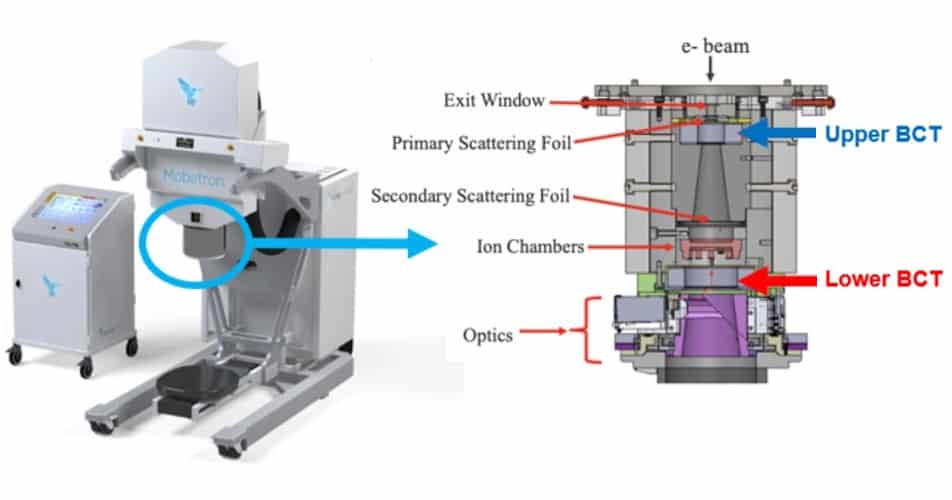
Electron FLASH radiotherapy The IntraOp Mobetron system and console (left) and schematic (right) showing the internal components of the head, including the beam current transformers (BCTs) used for beam monitoring. (Courtesy: CC BY 4.0/J. Appl. Clin. Med. Phys.10.1002/acm2.13891)
Monitoring and controlling the radiation delivered to every patient is of utmost importance in radiation therapy. This is a current challenge in emerging ultrahigh-dose rate modalities such as electron FLASH (eFLASH) radiation therapy.
FLASH radiotherapy delivers radiation at ultrahigh dose rates, shortening the treatment course and improving tissue sparing relative to conventional radiotherapy.
“One of the things that we need to elucidate [with FLASH] is what is the biological mechanism behind the sparing effect and how does it depend on the way that we are delivering these ultrahigh dose rates. To determine that we need to know exactly what we’re delivering,” explains Emil Schüler from the University of Texas MD Anderson Cancer Center. “Having a good understanding of the exact parameters for each pulse that is being delivered seems to be important. Until we know more, we need to have that type of detailed understanding of our deliveries, and that is where conventional equipment has proved to be suboptimal.”
In conventional radiotherapy, radiation delivery is monitored using transmission ion chambers. While ion pairs occasionally recombine in these dosimeters, ion recombination represents only a small percentage of measurements (less than 5%) and these events can be accounted for using models and correction factors. In high-dose rate eFLASH beams, however, over 90% of ion pairs might recombine, conventional models that correct for ion pair recombination break down, and accurate beam monitoring and control becomes challenging – if not impossible.
Led by Schüler and Sam Beddar, a team of MD Anderson researchers has recently described a way to overcome the challenges inherent to eFLASH beam monitoring. Their solution has its roots in high-energy physics experiments.
Beam current transformers for FLASH
In their study, reported in the Journal of Applied Clinical Medical Physics, the researchers introduce an integrated beam current transformers (BCTs) system to monitor radiation beams produced by the Mobetron system, a commercial electron therapy linear accelerator manufactured by IntraOp.
BCTs, which were originally used in the beamlines of high-energy physics experiments, measure the induced current of electrons passing through them. Building on work performed at Lausanne University, IntraOp engineers redesigned the Mobetron head to accommodate two BCTs: one located after the primary scattering foil; the other, downstream of the secondary scattering foil.
The MD Anderson researchers then extensively characterized the BCT response to ultrahigh-dose rate electron beams at 6 and 9 MeV. They monitored beam output in different dosimetric setups and with different collimation as a function of dose, scattering conditions, and physical beam parameters including pulse width, pulse repetition frequency and dose per pulse. Dosimetric evaluations were performed with GafChromic EBT3 film, a standard dosimeter that gives total dose readings independent of dose rate. Experimental studies were performed three times to ensure repeatability and reproducibility.
The team concluded that BCTs can accurately monitor eFLASH beams, quantify accelerator performance and capture essential physical beam parameters on a pulse-by-pulse basis.
Now, they are investigating the source of, and ways to correct for, higher differential backscatter levels measured in the upper BCT relative to the lower BCT. These discrepancies were measured outside the range of likely clinical eFLASH beam parameters. Schüler and Beddar’s team is also developing methods to measure beam flatness and symmetry, which to date cannot be measured with BCTs.
The overarching goal of this research, Schüler says, is to make sure that radiation physicists can deliver eFLASH radiation treatments accurately and precisely.
“It really comes down to making sure that we can guarantee a safe and robust clinical translation of this technology,” Schüler says. “For medical physicists, this is going a little bit outside of our comfort zone…going outside of the standard equipment that we are using now, when FLASH radiotherapy is becoming a reality. We also trying to develop the ion chamber technology for these ultrahigh dose rates, but for [beam] monitoring, especially when it comes to electron beamlines, it’s unlikely that we’re going to be able to use transmission chambers in the same fashion as we have previously with conventional dose rate radiotherapy.”
Recently there has been a raft of exciting new initiatives in FAIR and OS. This panel aims to draw on these developments. Among the topics we will address are:
What tools and practices have been working well in your experience?
What are the barriers presented by current publishing models to FAIR and OS?
What infrastructure can publishers provide to facilitate FAIR and OS?
How can we reduce blocks in interaction between data science and domain expert communities?
Left to right: Keith Butler, Kyle Cranmer, Sünje Dallmeier-Tiessen, James A Warren, Megan Ansdell, Harry Enke and Daniel Keirs
Keith Butler (chair) Keith Butler’s research interests are focused on using data-driven methods and atomistic modelling to accelerate the design, development and characterization of new green energy materials. Keith is currently senior lecturer at Queen Mary University of London and was previously senior scientist at the Rutherford Appleton Laboratory in the SciML team. Keith has published more than 100 peer-reviewed research articles related to computational materials science, covering topics such as atomistic modelling of materials, machine learning enabled materials design, and machine learning for the accelerated analysis of experimental materials data. He has been involved in developing ML methods to accelerate materials characterization, developing approaches to enhance neutron scattering, X-ray tomography and electron microscopy. His work on ML for X-ray tomography has been commercialized by Finden Ltd.
Kyle Cranmer is director of the American Family Insurance Data Science Institute, University of Wisconsin–Madison and the editor in chief of IOP Publishing’s journal Machine Learning Science and Technology. Professor Cranmer obtained his PhD in physics from the University of Wisconsin-Madison in 2005 and his BA in mathematics and physics from Rice University. He was awarded the Presidential Early Career Award for Science and Engineering in 2007, the National Science Foundation’s Career Award in 2009, and became a fellow of the American Physical Society in 2021 for his work at the Large Hadron Collider. Kyle developed a framework that enables collaborative statistical modelling, which was used extensively for the discovery of the Higgs boson in 2012. His current interests are at the intersection of physics, statistics, and machine learning.
Sünje Dallmeier-Tiessen is the data coordinator in the Scientific Information Service at CERN. Together with her colleagues she builds services to enable researchers to practice open science and to take steps towards reproducible research. She holds a PhD in information science. Her previous positions in publishing and research management made her realize the need to integrate open science “workflows” into scholarly communication and management to incentivize it. Hence, she co-chaired the RDA Data Publishing Workflows group, and serves on several boards of national and international bodies. This work, together with a research stay at IQSS at Harvard University in 2015, enabled her to study data publishing practices beyond disciplinary boundaries.
James A Warren is the director of the Materials Genome Program in the Material Measurement Laboratory of the National Institute of Standards and Technology (NIST). After receiving his PhD in theoretical physics at the University of California, Santa Barbara, which was preceded by an AB (also in physics) from Dartmouth College, in 1992 he took a position as a National Research Council postdoc in the Metallurgy Division at NIST. In 1995, with three other junior NIST staff members, he co-founded the NIST Center for Theoretical and Computational Materials Science, which he has directed since 2001.
Megan Ansdell is a program officer at the Planetary Science Division at NASA. She is a space scientist with a background in international policy who is dedicated to combining her expertise in these fields to foster open science for the advancement of human knowledge. Megan currently works at NASA Headquarters in Washington, DC, where she supports NASA’s Open Source Science Initiative with a focus on growing the application of Artificial Intelligence and other data-driven approaches to the space sciences. She also manages the Planetary Data System, NASA’s long-term archive for all data returned from its planetary science missions. Prior to NASA, Megan was a research fellow at the Flatiron Institute in New York City, where she contributed to the Institute’s goal of advancing scientific research through computational methods. Megan’s PhD thesis from the University of Hawaii on the first demographic studies of protoplanetary disks in nearby star-forming regions won the International Astronomical Union’s PhD Prize for Planetary Systems and Bioastronomy. Megan also holds a Master’s degree in International Science and Technology Policy from the George Washington University, where she researched and advocated for international cooperation in human space exploration.
Harry Enke, is head of Section EScience & SuperComputing at Leibniz Institute for Astrophysics Potsdam (AIP). Starting with the German Astrophysical Virtual Observatory (GAVO) project (2003), Harry has ever since focused on integrating advanced developments of IT infrastructures and tools of astronomical research. The definition and implementation of workflows for managing the scientific data including FAIR data publication is a firmly established part of the AIP profile. The section has developed data-management infrastructure and software, publishes huge data collections and provides efficient collaborative research environments. He is involved in interdisciplinary projects for Research Data Management and developing collaborative scientific infrastructure.
Daniel Keirs is the head of journal strategy and performance at IOP Publishing. Daniel supports the provision of strategic planning and business insights on the journals publishing programme at IOP Publishing, with a particular focus on open science publishing and policy developments. Prior to joining IOP, Daniel held roles managing publishing programmes in the natural, applied and social sciences at a number of publishers, including Wiley, ICE Publishing and Taylor & Francis. Daniel has been involved in open access publishing since 2012, and at IOP has become a keen supporter of open science developments in the physical sciences.
About this journal
Machine Learning: Science and Technology is a multidisciplinary open access journal that bridges the application of machine learning across the sciences with advances in machine learning methods and theory as motivated by physical insights.
Editor-in-chief: Kyle Cranmer, University of Wisconsin-Madison, USA
The stepped bevel diamond anvil: Scanning electron microscope (SEM) image of the stepped bevel diamond anvil after machining by a dual focused ion beam. From Nature Communications: Creative Commons Attribution 4.0 International License (CC BY 4.0)
Researchers have measured the speed of sound in pure iron under pressures similar to those that exist at the Earth’s inner core boundary. The result suggests that this region of the core may be enriched in silicon and sulphur.
“It may be surprising, but we do not have much information about the centre of the planet we live on,” says Alfred Baron of the RIKEN SPring-8 Center in Japan. “One can dig down a few kilometres, and volcanoes and plate tectonics can bring up material from depths of a few hundred km, but what lies below, down to the centre of the Earth some 6000 km beneath our feet, is not well understood.”
Our current picture of Earth’s interior suggests that the planet’s outer core (located around 3000 km down) is mostly liquid iron, with an inner core of solid iron underneath. This information is obtained by tracking seismic waves from earthquakes as they propagate through the planet, yielding data on the density and the speed of sound, and specifically the compressional and shear wave velocities (vp and vs respectively). However, the values thus measured do not agree exactly with what is expected for pure iron according to the Preliminary Reference Earth model (PREM), explains Baron. Hence, there must be something else – possibly something less dense – present in the core.
“What that material is, and how much of it there may be, are active areas of investigation as they have implications for understanding the present properties of the Earth and the evolution of the solar system as a whole,” he says.
Improved version of a diamond anvil cell
An alternative means of exploring the behaviour of materials at high pressures is to use a diamond anvil cell (DAC). However, even with this tool, it takes considerable skill to achieve pressures comparable to those in the Earth’s core.
In the latest work, project leaders Daijo Ikuta, Eiji Ohtani and Alfred Baron used an improved version of a DAC known as a stepped-bevel anvil, combined with inelastic X-ray scattering and X-ray diffraction measurements. The X-ray scattering technique allows researchers to observe atomic motions in materials using X-rays and is the only method for measuring the sound velocity in metals directly under extreme static compression in a DAC. The researchers made these measurements at RIKEN’s facility for inelastic X-ray scattering, the Quantum NanoDynamics Beamline at Spring-8 in Hyogo Prefecture.
These measurements revealed that at a pressure of 310–327 GPa – the highest static pressure ever achieved in studies using inelastic X-ray scattering and in situ X-ray diffraction techniques – the density of hexagonal-closed-packed-iron is 13.87 g/cm3. The researchers also found that vp and vs of the inner core are around 4% and 36% slower, respectively, than the corresponding velocities of pure iron at inner-core pressures. “These density and sound velocity values can be explained by the addition of around 3% silicon and 3% sulphur (by weight) to the iron in the inner core, as may occur by a selective enrichment of material due to inner core growth from the outer core,” Baron tells Physics World.
The European Space Agency (ESA) recently made history by selecting John McFall – an amputee, Paralympic sprinter and medical scientist – among its latest cohort of astronauts. McFall’s inclusion is part of an ESA parastronaut feasibility project for making human spaceflight accessible to people with physical disabilities. In the latest episode of the Physics World Stories podcast, people involved in this initiative explain why making space more accessible is not only fair but also the very essence of exploration.
The first guest is Mike Miller-Smith, chief executive of Aerobility, a UK-based charity that helps people with any disability to fly planes. Aerobility is being consulted as part of ESA’s feasibility study and the organization will share its experiences in adapting aircraft. “People often say to us: ‘when I’m flying, I’m leaving my disability on the ground’,” Miller-Smith tells podcast host Andrew Glester.
Also in the episode you will hear from Irene Di Giulio, an anatomy and biomechanics researcher at King’s College London, whose research group is also part of ESA’s initiative. Di Giulio says that almost everything we currently know about space biomechanics is based on non-disabled people, often with athlete levels of fitness. She says that small adjustments to equipment can make space far more accessible, and certain disabilities may even bring advantages in microgravity environments.
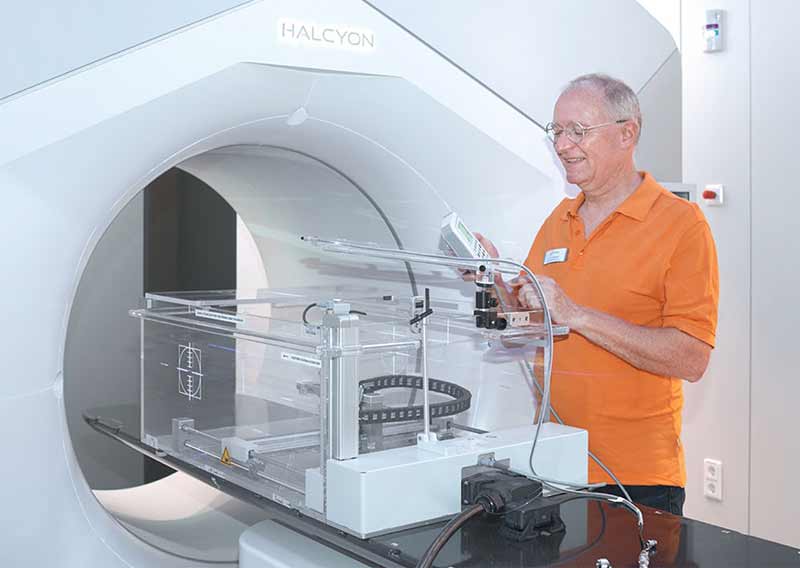
In this webinar, Dr Erich Gebhardt, head of medical physics at MVZ Meine Strahlentherapie Nürnberg GmbH, will talk about his experience with the THALES 3D SCANNER in clinical use. The radiotherapy team uses the THALES 3D SCANNER for commissioning and quality assurance of the Halcyon™ linear accelerator. You will learn which parameters are important to them, why they chose the LAP water phantom and how it is typically used.
Dr Erich Gebhardt did his doctorate on “Dosimetry in the Proximity of Radioactive Sources in Medicine” and has been the director of medical physics since 1995. His responsibilities range from radiotherapy, nuclear medicine and diagnostic radiology to further education talks and presentations.
When I started my PhD, I expected the next three or four years would follow a well-trodden path. I would study my chosen topic, keep going until I got some results, and – once the work was good enough – I’d publish a paper. Along the way I’d get more ideas and become more independent, hopefully repeating this process once or twice more until I had enough content for a thesis worthy of a doctorate.
But it didn’t occur to me to ask: what happens if something goes wrong?
Given that I’m writing this article, it is perhaps unsurprising that something did go wrong for me. You might think it should be perfectly possible to manage the problems you encounter during a PhD – so why did these obstacles prove to be some of the most difficult times in my life?
Unfortunately, shortly after I started my PhD in astrophysics in September 2019, two major events shook the world. First, there was the COVID-19 pandemic, which was a horrendous time for everyone in many ways. I was barely six months into my PhD when the UK went into national lockdown and the academic support systems I relied upon suddenly disappeared or became almost impossible to access.
Then in May 2020 George Floyd was brutally murdered by police in the US. Unfortunately, this demonstration of police violence and systemic racism was not an isolated event. Similar actions happen in the UK, and the sudden wave of stories rightly being put under the spotlight brought to the surface extreme levels of mourning, fear, anger and injustice that made focusing on my research near impossible.
Chaotic thoughts It can be hard to focus when difficulties occur during a PhD, such as research problems, health issues and global events. (Courtesy: iStock/useng)
I was struggling. Around me, my friends and colleagues were able to continue their research and publish papers. But due to a mix of bad luck and personal issues, I could not. I was faced with not enough content, various COVID-related emergencies, and being unable to adapt to the steep learning curve all newcomers have to climb when doing scientific research for the first time. I couldn’t concentrate at all on my work and would often find myself staring into space thinking and feeling nothing in particular, or in a state of what I now realize was anxiety.
All of this left me with no tangible evidence of the first two years of my academic journey. Some horrible and sobering yearly reviews left me flailing for answers. I needed to find out what was wrong with me that meant I was struggling where others were not.
Eventually I found out I had undiagnosed ADHD in addition to the dyslexia I already knew about. To avoid failing my PhD, I needed to get help faster than the National Health Service could provide it, but doing so wiped out my savings and put me into debt, which I’m still trying to pay off. With all this going on, I had to simultaneously manage the deep situational depression I was falling into.
Luckily, the situation is no longer as dire as it was – I started taking medication for my ADHD, which has improved my concentration, and I was able to switch to a new project within the same research group that has been progressing a lot more smoothly. But questions still remain. When will I finish? How do I get enough research for a PhD thesis? I’m in debt, time is running out. What do I do?
In looking for answers in the obvious places – including end-of-year reviews, university counselling and careers services – I’ve had “MPhil” thrown at me a lot. The idea that I should downgrade my ambition and leave university with only a Master’s degree is not only demoralizing, but also doesn’t solve my problem. While an MPhil is the simplest way for the university to get me out of its system without me completely failing, would any other department accept me if I then tried to apply for a PhD again?
An imperfect system
It’s been hard finding out what academia is truly like if things don’t go perfectly. There’s no clarity about what level of research is considered “good enough”, and if an experiment doesn’t work it’s often treated as a failure. Furthermore, if you’re sick or have to take time away for personal reasons, the academic system does not provide the support you need to get through. The COVID-19 pandemic highlighted this – despite lockdowns and laboratories being inaccessible, PhD extensions were hit and miss, with some being as little as one month.
I should state here that I am critiquing the system in place that we are working under, not the people. In addition to PhD students struggling, many supervisors are snowed under with work – much more than they should be doing and certainly more than they’re being paid for. I know that despite my bad experiences, I would not have made it as far as I have without the compassion and support of my supervisors, as well as my department and friends.
Overall, I want to finish my PhD – the goal of getting a doctorate is one I have had for most of my life and I still wish to achieve it. But while I’m doing research in the field I’m most passionate about, my experience has taken the fun out of science, and I do not plan to stay in academia because it is simply too unpredictable and unstable for me. Contracts are short-term, grants are not guaranteed, null results do not count as successful research, you often have to move around institutions, and the bureaucracy can overshadow the science. I also don’t particularly like teaching, so climbing the academic ladder to become a lecturer wouldn’t make sense for me. When the time comes, I will be looking for a job with lower stakes where I can switch off at the end of the working day and rediscover my love of science.
In the meantime, I’m trying to prepare myself as much as possible for when my funding runs out. For example, I’ve got in touch with my university careers service for help looking for part-time work; I’m dealing with my debt through the charity National Debtline; and I’ve tried to do research in a sustainable way by prioritizing socializing, exercise, eating well, keeping my house clean, and maintaining a good work–life balance. But all the preparation is not enough to remove the frustration and fear that I have for the future.
Not the only one
While searching for answers and help, I discovered something very important – I am not alone. I’ve heard many stories of other students facing similar struggles, and in the process I’ve became more and more confused. Why are null results, which are a completely normal part of science, so taboo that they are rarely mentioned formally, and the only option if they happen is to fail? If research can and does go wrong so often, why is it such a universally bad experience? Why is it so hard to get answers, and why isn’t there a well-established support system in place? Furthermore, of those I’ve spoken to who have had problems, the majority have left or plan to leave academia, which raises the question: are universities losing good researchers because they don’t support them during the early stages of their career?
Seeking help It is important to ask for help if you are having problems during your PhD, whether it’s turning to a friend, supervisor or professional. (Courtesy: iStock/elenabs)
With the sheer number of PhD students who begin every year, a “non-standard” PhD journey is all but guaranteed for many, and a void exists in how to manage this, leaving these students at risk. Unfortunately, I do not have any obvious, clear-cut solutions beyond my own preparations. I’m therefore looking to set up a support group for PhD students who are also struggling with their studies, with the hope that we can help each other and find solutions.
Among the students I’ve contacted since starting this process, three have given me permission to share the problems they’ve had during their PhDs (though two of them wish to remain anonymous because their accounts contain sensitive information). I hope our stories provide some help to those currently going through similar situations, and highlight that these difficult PhD experiences are not unique.
Last-minute changes
Name: Pruthvi Mehta University: University of Liverpool, UK Academic stage: 4th year particle-physics PhD student – writing up and nearing deadline Research area: Improving detection of supernova relic neutrinos
Pandemic problems COVID-19 and the resulting lockdowns meant PhD students couldn’t access vital research resources, but extension lengths and funding were varied and often inadequate. (Courtesy: Shutterstock/Nadya_Art)
When did things start going wrong?
I had a decent chunk of my thesis written prior to my funding running out, so I thought everything was on track. But then I had the sudden realization that one part of my analysis would be ongoing beyond my funding period because I’d been asked to switch to a new analysis code at the tail end of my third year. COVID-19 also impeded my work as my experiment is in Japan, and communication with colleagues was very limited and face-to-face help unavailable. On top of all this, I had personal circumstances that affected my studies, including chronic pain, mental health issues and family tragedies.
How are you surviving with no funding?
I had to get a part-time job doing teaching and demonstrating for about 20 hours a week. I rely on savings as well, which I only have because I severely restricted expenditure during the first two years of my PhD.
Have you had any help with managing it all?
I’ve had very little to no help. And since coming back from the pandemic and re-entering the office there have been numerous cases of sexual harassment and bullying that the institution has yet to deal with.
Funding wise, I was given a six-month extension because of the pandemic but only three months of it were funded. My original funding arrangement involved three and a half years paid and a six month, unfunded, write-up period, but with the COVID extension not being fully funded, I’ll be working unpaid for longer than originally planned.
Any idea of an end date? Do you know if you’ll have to start paying fees?
Fortunately, I don’t have to pay university fees, but only because I filled out a special form and got it signed off to state that I was writing up my PhD and intending to submit it. One has to wonder why this is not automatically done instead of having to wrestle with admin.
I know when my current admin-set end date is, but nothing has been allocated or made clear to me about safety nets if things go wrong again. What I have heard (from professors within my own department) is that the uncertainty of this period should “make it easier and more likely for a student to want to finish writing up ASAP”.
How do you feel about it all?
Having to juggle chronic pain, mental-health issues and personal family-related tragedies during COVID, as well as difficult situations stemming from my own place of work, has made finishing up difficult. The idea that being unfunded should motivate students to write faster and finish quicker – something I’ve heard from people who are supposed to be guiding and helping me – has made me sick to my stomach and very angry. No-one should have to do any unpaid labour of any kind, especially the mentally challenging and tough labour of finishing the highest educational qualification available on the planet.
Have you heard other stories of similar situations?
While searching for help – whether for mental health, chronic pain or funding – I saw very little regarding solutions. Mostly it was just a litany of articles detailing other former PhD students suffering the same issues. One has to wonder why nothing has been done despite the mountain of evidence showing how poorly PhDs are funded in the UK, and how terribly the mental and physical wellbeing of students are treated.
Do you have any advice for other students?
Ultimately it shouldn’t be on the shoulders of the student to improve the system they are suffering under. It is up to those in power to improve the system – we’re not the ones wielding the funding. Having said that, connecting with other students is key. For instance, Karel Green is setting up a support group for PhD students in the UK who are or have been struggling during their time in academia. And as always, join your student union!
What are your future plans?
As of yet, I’m pretty undecided. I do really like research, but the environment and the tenuous nature of postdocs is turning me against it. Outside of academia I’m interested in science policy and science writing – something that will allow me to help others, and improve the academic system and the way research is carried out.
Triple conditions
Name: Anonymous University: UK institution Academic stage: 5th year particle-physics PhD student – writing up and past the submission deadline Research area: Particle cosmology
Stress, anxiety and burnout PhD students often have to push themselves to their limits to achieve their doctorate, which can have negative health impacts. (Courtesy: Shutterstock/Buravleva stock)
When did things start going wrong?
There wasn’t a specific moment, but three particular events stand out.
First, there was the 2020 lockdown. My flatmates at the time were in the process of moving out, and my new flatmates decided to delay moving in due to the pandemic. The effect of isolating, alone, for six months had a profound impact on my mental health. Looking back at my lab book and GitHub contributions, you can practically see my productivity nosediving during this period, and bouncing straight back once people were around again.
The second event was my funding expiring. In our group it is practically unheard of to finish within your funding period, which is typically 3.5 years although four is not uncommon. Even during my first week, older PhD students were warning me not to spend every penny of my stipend as I’d likely need savings to finish. I completed my research more or less as my funding stopped but even then I could see no way I could keep working without pay, certainly not long enough to complete a thesis to satisfaction. I had no choice but to pick up work, and got a full-time job as a programmer in the same city. That was 15 months ago, and although my career has been generally successful, I regret not taking a part-time job instead so as to leave me with more time to write my thesis. Having a second job has left me burnt out, exhausted and unproductive.
Finally, my mother was diagnosed with a terminal illness. I spent a month looking after her, and a month organizing the funeral and the will, not to mention trying to support my dad who had just lost the person they thought they’d spend the rest of their life with. Of course, to add to all of that, I’d lost the person I’d have turned to for support during this sort of situation.
How are you surviving with no funding?
A full-time job.
Have you had any help with managing it all?
Yes and no. I can hardly hold anyone else responsible for not helping me through my mental-health struggles during the pandemic because I was too embarrassed to tell anyone. However, my supervisor has been very supportive during the family crisis and is fighting my corner with the university to reduce the late submission fees accordingly. I only got a six-week funded extension due to COVID, and am applying for a further eight-week extension, which will not be funded, to help after losing my mother.
Any idea of an end date? Do you know if you’ll have to start paying fees?
Hopefully I’ll be submitting my thesis very soon. It’s almost in a state where I’m happy with it. Regarding funding, I started building up a debt to the university six months after my original submission date, which was itself three months after my funding ended. It will be paid as a lump sum to them after submission. I try not to think about it, but I am careful to put enough away from my job to cover it each month.
How do you feel about it all?
Honestly, it’s been really hard. My personal life has taken a beating. I see friends maybe once every two months or so. I spend only one evening a week with my partner, with whom I live, although this is as much about her work schedule as mine.
Do you have any advice for other students?
If you can, just bite the bullet and use savings to finish. If that’s impossible find part-time work to pay the bills, otherwise it just hangs over you forever.
What are your future plans?
I’d like to get a dog at some point.
Ignorance is bliss?
Name: Anonymous University: UK institution Academic stage: Recently graduated with a PhD in particle physics – submitted five months after funding ended Research area: Particle cosmology
Daunting deadlines PhDs are inherently stressful experiences, with the threat of funding ending looming overhead. (Courtesy: iStock/nadia_bormotova)
When did things start going wrong?
In general, I think my PhD started off on the wrong foot, and then problems built up and forced me to go beyond my planned degree time.
While I didn’t have bad supervisors, I lacked the necessary support from them to really flourish in academia. They certainly had a “hands-off” approach, and throughout my entire PhD I didn’t have the guidance that I needed. I didn’t do as many talks as I should have; I didn’t attend enough conferences; I mostly stayed on one project; and I didn’t do enough networking. All this culminated in me being ill-equipped for writing a thesis and lacking in my actual research. I remember being jealous of fellow students who had more “hands-on” supervisors.
So when it came down to actually writing, I simply didn’t have enough work. One of my supervisors assisted me with more research, but it meant I was writing and researching at the same time. At this point I was already two months over my funding end date, but this really delayed submitting even more.
During this time, I realized that my background knowledge was seriously lacking. I think this also stemmed from not having as much guidance as I wanted or needed at the start of my PhD. For the most part I acted a bit like a calculation monkey, just doing maths for datasets rather than actual analysis and drawing conclusions – which in all fairness I enjoyed. But it left me unprepared for the challenges of the thesis. This further added to the delay, and the extra background reading that I did showed me the holes in my research methods and work. This only left me feeling more demotivated about my thesis, as I was worried that my work was not good enough to pass my viva.
In all fairness, could I have had a bit more initiative to seek out opportunities myself? Probably. But the lack of support towards the start just did not set me up for a successful academic career.
How did you survive with no funding?
I managed to save some money that I could live off, at least for a couple of months after my funding ended. However, I didn’t have the money to continue to live near the university after that, so I had to move back in with my parents. Additionally, I had to take out some savings to tide me over and pay for the deposit on my next house when I started working. Overall, I’m quite lucky in that I had savings I could dip into and my parents had space for me to stay with them, so I didn’t struggle too much in this aspect. But I would have preferred to finish closer to the end of my funding period, of course.
Did you have any help managing these issues?
Not really. I kept telling myself “this is how it has to be”. I had a bad start with my PhD, so I was already in a bit of a hole. My supervisor really was helpful with advice, but I did feel like I had to tackle it all on my own at this point.
How did the end date compare with what you initially thought it would be? Did you know how long you would be funded and unfunded for?
I had always planned to go over my funded period by a couple of months, so in a sense I had a self-imposed end date. In the end, I handed in my completed thesis to be examined about five months after my funded end date, well after my self-imposed deadline but thankfully this was about a month before my final hand-in deadline (after which I would have to pay extra fees to continue my thesis writing).
In terms of whether I knew how long I would be funded and unfunded for, I was well aware of all the deadlines – as I said, I planned to go over my funding period while writing anyway. But what I didn’t quite realize was how long the process of writing would take, or what kind of work I needed to put into it. I don’t think I was fully made aware of it either, or at least there wasn’t much urgency from my supervisors. This added to the stress of it all, as I felt like I was a complete failure for going over my self-imposed deadline.
How do you feel about it all?
In terms of paid work and other struggles, I was mostly fine. But the actual writing period made me feel completely hollow. It made me feel like all of the research I had done was terrible and not even worth doing for those three years. There was also the anxiety of not finishing on time and going past my hand-in date, or not passing. I just felt completely awful and sick to my stomach because of the work. Overall, my mental health remained steady as most other aspects of my life were good, but writing that thesis was one of the worst experiences of my life. It was the most mentally challenging piece of work I’ve ever completed and not in a good way.
Do you have any advice for other students?
It feels hard to do so but take every opportunity to learn and grow throughout the PhD. And be proactive when it comes to asking for help with supervisors, especially in relation to networking, organizing talks and finding conferences to attend. Finally, be more vocal to supervisors if they’re not offering the support you need. They only want you to do well, so it’s not like you’re a failure for asking for help. Everyone’s different and a PhD is incredibly mentally challenging, so you shouldn’t be expected to have all the answers.
Do you have any future plans?
Working in tech is my plan, but I was 50:50 about going into academia. Even though thesis writing was a bad experience, it hadn’t put me off. In the end, I decided against staying because I didn’t think my PhD research really prepared me to become a postdoc. I feel I just don’t know enough and my knowledge is lacking compared to my counterparts. More fundamentally, the life of an academic doesn’t look appealing. The moving around, the volume of work, and the low pay are not things I want out of a job. Finally, I don’t think I’m interested enough in my topic. I enjoyed what I did but compared to my fellow PhD students I don’t have the same level of enthusiasm, which I think you need to carry you through the bad parts.
If you’re going through or faced similar situations in the past, and have any advice or simply wish to vent, please get in touch. I and many others would like to hear from you, even if just to be reassured that we are not struggling alone, e-mail karelgreen1996@gmail.com