Lessons learnt Rafal Janik says it’s crucial to “build relationships, reach out and be brave if you want to further your career”. (Courtesy: Xanadu)
What skills do you use every day in your job?
Before becoming chief operating officer, I led the machine-learning and product teams at Xanadu. Taking on multiple roles previously has given me the skills to succeed in my current role. Working closely with each team at the company has been instrumental in my ability to understand their unique needs and work cross-functionally to manage day-to-day operations. Skills that are crucial to my role include leadership, communication, programme management, relationship management and the ability to assimilate new information.
To that end, the number one skill to have is adaptability. Whether it’s contract law, finance or trying to understand how different parts of the tech stack work, it’s important to be adaptable and able to pick up new things quickly. At Xanadu, and perhaps at any early-stage company, you need general flexibility, the drive to learn and implement new skills to meet business needs, and the ability to delegate and empower team members to make decisions and take ownership.
What do you like best and least about your job?
One thing I really enjoy is that Xanadu is mission-driven – we want to build quantum computers that are useful and available to people everywhere. We discuss our aims regularly and make sure we hire people who are passionate about what they do, seek to learn every day, build strong relationships and communicate effectively. Building a scalable quantum computer that people can use to solve real-world problems is no easy feat, but fortunately I have an incredible team and working with them is by far the best thing about my job.
The other thing I really enjoy – which is also really difficult – is that I’m always doing something new. My day-to-day tends to be full of very different tasks and I can’t say I’m ever bored. But at the same time, this can be incredibly challenging.
One of the hardest parts of the job is that everything we’re doing is new. We’re solving problems that people haven’t even thought of yet, and not only from a technical perspective. There are no books on how to show the value of quantum computing to enterprise customers or to describe to them why quantum computing matters to a company like theirs. And you can’t just rely on the expertise you’ve gathered previously in your career to do the job; you always need to be learning as you go.
What do you know today that you wish you knew when you were starting out in your career?
I really wish that I knew, even before I started university, that if you simply call, reach out or email people in the field they will be willing to help. If you’re interested in a particular area, the worst thing you can do is just not try. We have lots of people at Xanadu that have managed to become part of the industry despite the many roadblocks that may have existed either in their minds or in reality. This is mainly because they’ve been brave enough to showcase their work and talent, whether it be through contributing to our open-source projects or engaging with us through events like QHack. And that’s one thing I was always too shy to do. I thought that you go to university, then send your resume out, get a job and continue on that path. But as I’ve gone through my career, I’ve learned that it’s much more important to build relationships, reach out and be brave if you want to further your career or change anything about the world at all.
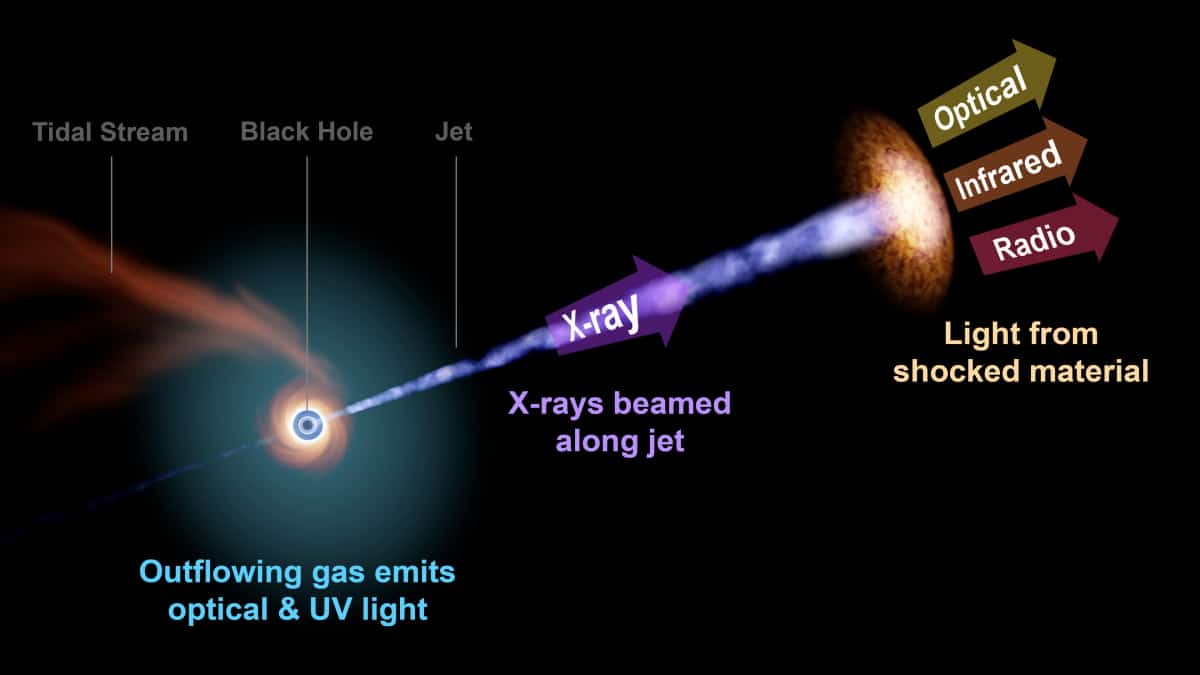
Tidal disruption event A black hole devours a star that has come too close. In rare circumstances, this may also result in jets moving with almost the speed of light that generate light at many frequencies. (Courtesy: Zwicky Transient Facility/R Hurt (Caltech/IPAC))
A star ripped apart by a supermassive black hole in a distant galaxy has been caught producing a rare but powerful jet of particles travelling at nearly the speed of light. The discovery, initially made by the Zwicky Transient Facility (ZTF) at Palomar Observatory in California, is the first time such a jet has been seen at optical wavelengths, and it is shedding light on how the star met its demise.
Such events are referred to as tidal disruption events, or TDEs, wherein ferocious gravitational tides from the black hole are able to twist and tear apart an entire star, sometimes in a matter of days, reducing it to a string of matter that spirals into the black hole in a process colourfully described as “spaghettification”. If too much matter piles up at the black hole’s maw, some of it can be spat away in a magnetically collimated jet.
The ZTF spotted the initial flare of light from the TDE, catalogued as AT2022cmc, on 11 February 2022, and subsequent observations with the European Southern Observatory’s Very Large Telescope pinned down its redshift as being 1.19, placing it in a galaxy at a distance of 8.5 billion light years.
For such a violently luminous TDE to occur, the star had to get very close to the black hole. In our Milky Way, stars have been observed orbiting as close as 1.9 billion kilometres to the supermassive black hole at the heart of our galaxy. But in the case of AT2022cmc, the unfortunate star could have come as close as 70 million kilometres, equivalent to about 100 solar radii.
Relativistic beaming
TDEs are observed in relatively nearby galaxies about once per month on average, but in most cases they are not accompanied by a relativistic jet – the light that we see comes from the thermal emission of the spiralling disc of material formed from the wrecked star. TDEs with jets are far rarer, and this is the first time a jet has been seen in the optical, boosted by a phenomenon known as “relativistic beaming”, whereby because the jet is pointing directly at us, the light it emits is rendered brighter by the Doppler effect.
“[AT2022cmc] is the first time we’ve found a TDE with an unambiguously super-strong relativistic jet, and the first time we’ve discovered a TDE through its jetted emission since 2011,” says Matt Nicholl of the University of Birmingham, who is an author on one of the papers detailing the discovery.
The previous TDE discovered by its jet was designated J1644+57, and was found at X-ray wavelengths by NASA’s orbiting Neil Gehrels Swift Observatory. However, unlike AT2022cmc, J1644+57’s jet was not seen at optical wavelengths.
“With J1644+57 we needed to appeal to a large amount of dust in the host galaxy to account for the lack of optical emission,” says Josh Bloom of the University of California, Berkeley, part of the team that discovered J1644+57 and a co-author on a second paper describing the event. “AT2022cmc provides a cleaner view into the phenomenon, and by having detections in the optical, we hope to constrain the physics of relativistic TDEs.”
Star–black hole dynamics
TDEs are not the only astrophysical phenomena that produce jets – astronomers see jets in a wide variety of objects ranging from young stars that are accreting matter from their birth nebula, all the way up to quasars that are consuming vast amounts of gas. Common to all jet-emitting objects is the process of accretion, coupled with the effects of powerful magnetic fields that are able to funnel away some of the excess material. However, the precise mechanism, and why only some TDEs produce jets, remains puzzling, Nicholl tells Physics World.
“The more massive the black hole, the less close a star has to get to be torn apart, or the more massive the star, the closer it has to get,” he says. “It might be that to form a jet, a star has to come really close to the black hole to speed up the accretion rate onto the black hole.”
Based on how much material would need to be consumed very quickly to power AT2022cmc’s jet, the mass of the doomed star is estimated to be less than that of the Sun. “We think that it also favours a slightly lower mass black hole, closer to a million solar masses than a billion,” Nicholl adds.
The discovery of AT2022cmc is just a precursor to the bountiful treasures that the Vera Rubin Observatory, which begins work surveying the night sky later this decade, promises. Over ten years it should find at least 10,000 TDEs, with perhaps between one and 10 per cent of them displaying relativistic jets. To identify them, AT2022cmc’s light curve can be used as a fingerprint.
“Now that we have an example of what the first few days of optical emission look like, we know that we need to look for fast-fading red things,” Nicholl explains.
Since the first candidate TDEs were discovered in the 1990s, observations have been so relatively few that theoretical ideas have always led the way. With the sheer amount of data that Rubin will collect, this situation should reverse such that, as Nicholl says, “observations will lead the theory, and we’ll find more things that we have to explain.”
Every year, the biggest names in high-performance computing get together for the SC conference. This year’s edition, SC22, saw nearly 12 000 supercomputing experts and enthusiasts travel to Dallas, Texas, US to listen to lectures, collaborate with colleagues and meet old friends.
One of this year’s “Birds of a Feather” sessions – so named because they provide a space for experts to discuss topics based on personal interests rather than disciplinary boundaries – focused on the intersection between physics-informed machine learning and high-performance computing (HPC). While high-fidelity physics simulations are vital in the study of complex systems, they’re costly in terms of computing power. There are solutions to this, such as alternative projection-based methods, but these have limited accuracy. During the discussion, supercomputing and machine learning communities brought their expertise, while users of these systems spoke about their own challenges.
A “digital twin” for Earth
Another highlight of the conference for physicists was a plenary talk by Niels Wedi of the European Centre for Medium-Range Weather Forecasts (ECMWF) on the Destination Earth (DestinE) project. This collaborative initiative from the European Commission brings together scientists from the European Space Agency, EUMETSAT and ECMWF with the aim of creating a “digital twin” of Earth – that is, a physics-based model that acts as an interactive computer simulation of our planet. The project’s first phase is due to end in June 2024, and in his talk, Wedi explained that it has several goals:
Creating a common and standardized approach (the DestinE digital twin engine) for developing Earth-system simulations and connecting them with observations
Developing services to help assess and predict environmental extremes using a “weather-induced and geophysical extremes” digital twin
Establishing services to support climate change adaptation policies and mitigation scenario testing via a “climate change adaptation” digital twin
Wedi also noted that most of the world’s computing resources are currently located in Europe, the US and China. Creating an effective digital twin of our entire planet will, he said, require expanding this capability so that people around the world can get involved.
Edging forward: Presenters at the SC22 panel discussion on edge computing in space. (Courtesy: Kevin Jackson)
As members of the panel explained, edge computing devices allow complex computations to be performed on-site – for example, on an oil rig, a factory floor or inside a space station. Before such devices were available, this computational work often needed to be sent off-site to sections of the network that could handle the load. This created some problems, since “you can always compute faster than you transmit,” Fernandez told me in an interview after the panel.
One way that edge computing has already demonstrated its potential on the ISS is by analysing the gloves of astronauts. Whenever astronauts return to the ISS after a spacewalk, their equipment must be analysed to make sure it is still safe. The current way of doing this is to send photos of the gloves back to Earth for expert human analysis, which takes about five days. During that time, astronauts must wait to find out whether they can use their gloves again. In contrast, once the HPE Spaceborne computer completed a single (admittedly time-consuming) period of being “trained” on glove images using machine learning, it succeeded in analysing astronaut gloves in mere seconds.
For the moment, the human system for checking astronaut gloves is still in place. However, Fernandez hopes that the computerized alternative will one day allow astronauts to go outside and work multiple days in a row. As with efforts to model tiny particles in Earth’s atmosphere, when it comes to space exploration, computer science and physics fit together like – well, like a hand in a glove.
This episode of the Physics World Weekly podcast features a lively discussion about our Top 10 Breakthroughs of 2022. Physics World editors discuss the merits of research on a broad range of topics including nuclear physics, optoelectronics, medical physics and astronomy.
The top 10 serves as the shortlist for the Physics World Breakthrough of the Year award, which will be announced on 14 December.
Links to all the nominees, more about their research and the criteria for the award can be found here.
A single light source has transmitted a record-breaking 1.8 petabits of data per second, say researchers in Denmark and Sweden. The achievement could aid the development of highly energy-efficient optical transmitters, thereby reducing the carbon footprint of the Internet and other data-hungry systems.
To create the frequency comb, Oxenløwe and colleagues injected a single laser beam into a component called a silicon nitride ring resonator. As the resonator oscillates, it outputs a range of new frequencies at discrete intervals. These frequencies form the lines, or teeth, of the comb.
The team then split the power of the comb’s spectrum into 37 parts, directing 1/37th of the total power to each output. After the outputs are amplified using an optical fibre amplifier, the individual frequency lines are separated and modulated to carry data. The data-carrying comb teeth are then merged back together, reamplified to compensate for loss due to modulation, and sent down a “space-division-multiplexed” 37-core fibre. Finally, at the other end of the fibre, the channels are separated and checked to verify the transmission.
Scaling up could lead to 100 Pbits/s transmission
In their experiments, the researchers found that this source transmitted 1.8 petabits (or 1.8 billion gigabits) of data per second. “This is the first time that researchers have investigated just how much data a single frequency comb can carry, when considering feeding it to many parallel channels, such as wavelength and spatial channels,” explains Oxenløwe, physicist and professor of photonic communication technology at TU Denmark’s Centre of Excellence for Silicon Photonics for Optical Communications.
The team’s theoretical analyses indicate that the new record is a floor, not a ceiling. This is because the system is scalable: not only can it create many frequencies, it could also split these frequencies into numerous spatial copies and then optically amplify them, making them into parallel sources for transmitting data.
With more parallel fibres in a cable, or multiple cores in a fibre, Oxenløwe says the technology “should be able to support 100 times more than we experimentally demonstrated – that is 100 Pbit/s if we use a couple of thousand fibres”. He notes that all these frequencies would be coherent with each other, and would have a fixed separation between them, which is very useful for data transmission.
More energy-efficient optical communication transmitters
Cables containing thousands of fibres are already on the market and are commonly used transport large quantities of data around data centres. This makes scaling to such numbers realistic, Oxenløwe says. What is more, all these fibres can be fed with light from a single source, doing away with the thousands of lasers that would otherwise be required to transmit data using current state-of-the-art commercial equipment.
“The power and potential of frequency combs is thus far greater than I think most comb-enthusiasts even dared to dream of,” Oxenløwe says. “We may now be able to design more energy-efficient optical communication transmitters.”
Oxenløwe notes that while previous demonstrations have succeeded in transmitting data at rates of up to 10 Pbit/s, this is the first time the essential light needed to carry data all comes from a single chip-based light source. “For future transmitters and receivers in optical communication systems, it will be useful to integrate lasers, resonators, modulators and electronic circuitry on the same chip,” he says, “and finding the best way to do this will be very important.”
Physics World is delighted to announce its top 10 Breakthroughs of the Year for 2022, which span everything from quantum and medical physics to astronomy and condensed matter. The overall Physics World Breakthrough of the Year will be revealed on Wednesday 14 December.
The 10 Breakthroughs were selected by a panel of Physics World editors, who sifted through hundreds of research updates published on the website this year across all fields of physics. In addition to having been reported in Physics World in 2022, selections must meet the following criteria:
Significant advance in knowledge or understanding
Importance of work for scientific progress and/or development of real-world applications
Of general interest to Physics World readers
The Top 10 Breakthroughs for 2022 are listed below in no particular order. Come back next week to find out which one has bagged the overall Physics World Breakthrough of the Year award.
Ushering in a new era for ultracold chemistry
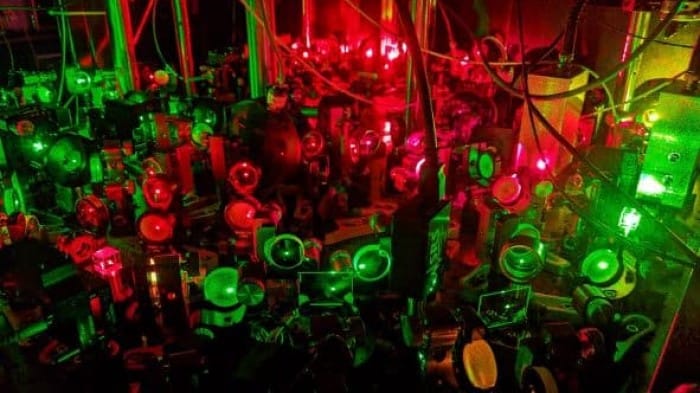
Cooling light: the experimental set-up used by John Doyle and colleagues. (Courtesy: John Doyle)
To Bo Zhao, Jian-Wei Pan and colleagues at the University of Science and Technology of China (USTC) and the Chinese Academy of Sciences in Beijing; and independently to John Doyle and colleagues at Harvard University in the US, for creating the first ultracold polyatomic molecules.
Although physicists have been cooling atoms to a fraction above absolute zero for more than 30 years, and the first ultracold diatomic molecules appeared in the mid-2000s, the goal of making ultracold molecules containing three or more atoms had proved elusive.
Using different and complementary techniques, the USTC and Harvard teams produced samples of triatomic sodium-potassium molecules at 220 nK and sodium hydroxide at 110 µK, respectively. Their achievement paves the way for new research in both physics and chemistry, with studies of ultracold chemical reactions, novel forms of quantum simulation, and tests of fundamental science all closer to being realized thanks to these multi-atom molecular platforms.
To Meytal Duer at the Institute for Nuclear Physics at Germany’s Technical University of Darmstadt and the rest of the SAMURAI Collaboration for observing the tetraneutron and showing that uncharged nuclear matter exists, if only for a very short time.
Comprising four neutrons, the tetraneutron was spotted at the RIKEN Nishina Centre’s Radioactive Ion Beam Factory in Japan. The tetraneutrons were created by firing helium-8 nuclei at a target of liquid hydrogen. The collisions can split a helium-8 nucleus into an alpha particle (two protons and two neutrons) and a tetraneutron.
By detecting the recoiling alpha particles and hydrogen nuclei, the team worked out that the four neutrons existed in an unbound tetraneutron state for just 10−22 s. The statistical significance of the observation is greater than 5σ, putting it over the threshold for a discovery in particle physics. The team now plans to study the individual neutrons within tetraneutrons and look for new particles containing six and eight neutrons.
The new TPV cell is the first solid-state heat engine of any kind to convert infrared light into electrical energy more efficiently than a turbine-based generator, and it can operate with a broad range of possible heat sources. These include thermal energy storage systems, solar radiation (via an intermediate radiation absorber) and waste heat as well as nuclear reactions or combustion. The device could therefore become an important component of a cleaner, greener electricity grid, and a complement to visible-light solar photovoltaic cells.
The team used laser pulses lasting just one femtosecond (10−15 s) to switch a sample of a dielectric material from an insulating to a conducting state at the speed needed to realize a switch that operates 1000 trillion times a second (one petahertz). Although the apartment-sized apparatus required to drive this super-fast switch means it will not appear in practical devices any time soon, the results imply a fundamental limit for classical signal processing and suggest that petahertz solid-state optoelectronics is, in principle, feasible.
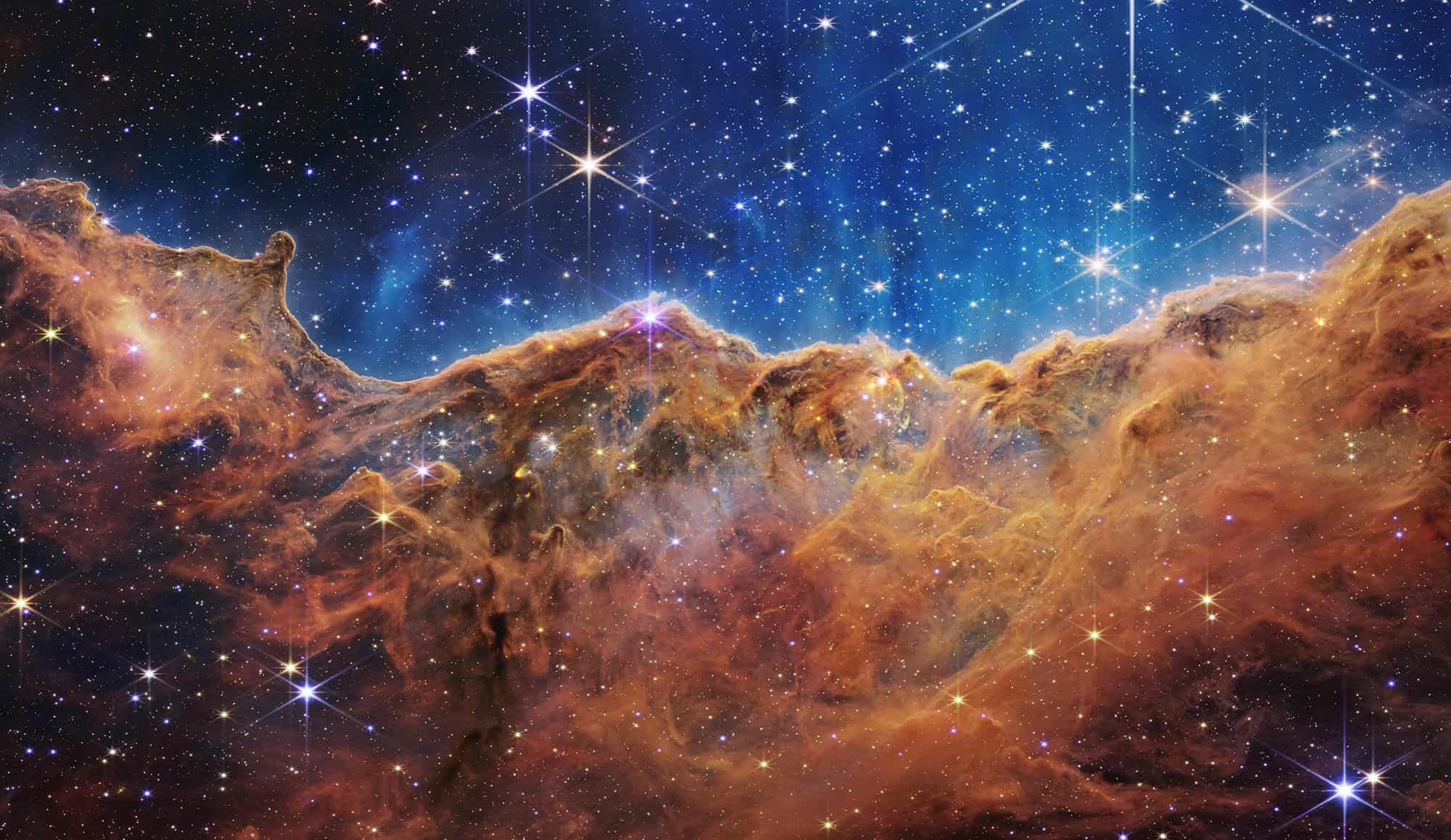
Following years of delays and cost hikes, the $10bn JWST finally launched on 25 December 2021. For many space probes, launch is the most dangerous part of the mission, but the JWST also had to survive a series of hazardous deep-space unpacking manoeuvres, which involved unfolding its 6.5 m primary mirror as well as unfurling its tennis-court-sized sunshield.
Prior to launch, engineers identified 344 “single-point” failures that could have hampered the observatory’s mission, or worse, make it unusable. Remarkably, no issues were encountered and following the commissioning of the JWST’s science instruments, the observatory soon began taking data and capturing spectacular images of the cosmos.
The first JWST picture was announced by US president Joe Biden at a special event at the White House and many dazzling images have since been released. The observatory is expected to operate well into the 2030s and is already on course to revolutionize astronomy.
FLASH radiotherapy is an emerging treatment technique in which radiation is delivered at ultrahigh dose rates, an approach that is thought to spare healthy tissue while still effectively killing cancer cells. Using protons to deliver the ultrahigh-dose-rate radiation will allow treatment of tumours located deep inside the body.
The trial included 10 patients with painful bone metastases in their arms and legs, who received a single proton treatment delivered at 40 Gy/s or greater – some 1000 times the dose rate of conventional photon radiotherapy. The team demonstrated the feasibility of the clinical workflow and showed that FLASH proton therapy was as effective as conventional radiotherapy for pain relief, without causing unexpected side effects.
To a team led by Stefan Rotter of Austria’s Technical University of Vienna and Matthieu Davy of the University of Rennes in France for creating an anti-reflection structure that enables perfect transmission through complex media; along with a collaboration headed up by Rotter and Ori Katz from the Hebrew University of Jerusalem in Israel, for developing an “anti-laser” that enables any material to absorb all light from a wide range of angles.
In the first investigation, the researchers designed an anti-reflection layer that’s mathematically optimized to match the way waves would reflect from the front surface of an object. Placing this structure in front of a randomly disordered medium completely eliminates reflections and makes the object translucent to all incoming light waves.
In the second study, the team developed a coherent perfect absorber, based around a set of mirrors and lenses, that traps incoming light inside a cavity. Due to precisely calculated interference effects, the incident beam interferes with the beam reflected back between the mirrors, so that the reflected beam is almost completely extinguished.
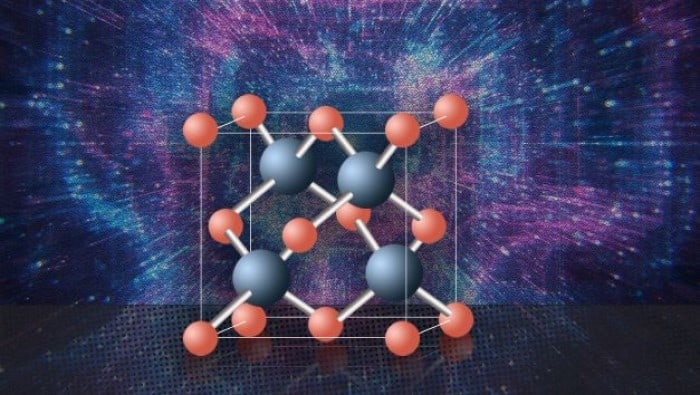
To two independent teams, one led by Gang Chen at the Massachusetts Institute of Technology and Zhifeng Ren at the University of Houston in the US; and the other led by Xinfeng Liu of the National Center for Nanoscience and Technology in Beijing, China and Jiming Bao and Zhifeng Ren at the University of Houston, for showing that cubic boron arsenide is one of the best semiconductors known to science.
The two groups did experiments that revealed that small, pure regions of the material have a much higher thermal conductivity and hole mobility than semiconductors such as silicon, which forms the basis of modern electronics. Silicon’s low hole mobility limits the speed at which silicon devices operate, while its low thermal conductivity causes electronic devices to overheat.
Cubic boron arsenide, in contrast, had long been predicted to outperform silicon on these measures, but researchers had struggled to create large enough single-crystal samples of the material to measure its properties. Now, however, both teams have now overcome this challenge, bringing the practical use of cubic boron arsenide one step closer.
To NASA and the Johns HopkinsApplied Physics Laboratory in the USfor the first demonstration of “kinetic impact” by successfully changing the orbit of an asteroid.
Launched in November 2021, the Double Asteroid Redirection Test (DART) craft was the first-ever mission to investigate kinetic impact of an asteroid. Its target was a binary near-Earth asteroid system consisting of a 160-metre-diameter body called Dimorphos that orbits a larger 780-metre-diameter asteroid called Didymos.
Following an 11-million-kilometre journey to the asteroid system, in October DART successfully impacted Dimorphos while travelling at about 6 km/s. Days later, NASA confirmed that DART had successfully altered the Dimorphos’ orbit by 32 minutes – shortening the orbit from 11 hours and 55 minutes orbit to 11 hours and 23 minutes.
This change was some 25 times greater than the 73 seconds that NASA had defined as a minimum successful orbit period change. The results will also be used to assess how best to apply the kinetic impact technique for defending our planet.
First predicted in 1949, the original Aharonov–Bohm effect is a quantum phenomenon whereby the wave function of a charged particle is affected by an electric or magnetic potential even when the particle is in a region of zero electric and magnetic fields. Since the 1960s, the effect has been observed by splitting a beam of electrons and sending the two beams on either side of a region containing a completely shielded magnetic field. When the beams are recombined at a detector, the Aharonov–Bohm effect is revealed as an interference between the beams.
Now, the Stanford physicists have observed a gravitational version of the effect using ultracold atoms. The team split the atoms into two groups that were separated by about 25 cm, with one group interacting gravitationally with a large mass. When recombined, the atoms displayed an interference that is consistent with an Aharonov–Bohm effect for gravity. The effect could be used to determine Newton’s gravitational constant to very high precision.
Congratulations to all the teams who have been honoured – and stay tuned for the overall winner, which will be announced on Wednesday 14 December 2022.
Physicists have long boasted of their success in what’s known as “quantum 1.0” technology – semiconductor junctions, transistors, lasers and so on. But the future will increasingly focus on “quantum 2.0” technology, which taps into phenomena like superposition and entanglement to permit everything from quantum computing and cryptography to quantum sensing, timing and imaging.
The incredible possibilities of quantum 2.0 were brought home to me when I attended the UK’s National Quantum Technologies Showcase (NQTS) in central London in November. With the UK home to around half of all quantum businesses in Europe, the event was sold out, with 1000 delegates in attendance. There were also more than 60 exhibitor stands and a packed programme of talks.
The showcase highlighted progress made by the UK’s National Quantum Technologies Programme, which has invested almost £175m in quantum technology over the last decade, supporting 139 business-led projects involving 141 different firms. This money has generated over £390m of additional investment since 2018 – and the government hopes that £1bn of public and private money will have gone into UK quantum research and innovation by 2024.
Quantum tech has been a real success story in the UK. According to management consultants Anchored-In, a total of 46 quantum-tech firms have been set up in the country over the last decade. Together they have raised more than £346m in investment and now employ 850 people, with some £101m invested in the first three quarters of 2022 alone.
Several quantum-tech companies now bringing in as much cash as they spend on R&D, which is always an excellent sign
Indeed, quantum tech was one of the UK’s six fastest-growing sectors in 2021, and the big change in 2022, according to Anchored-In, is that these firms are now starting to generate significant amounts of revenue. In fact, it estimates they have earned more than £50m in sales, with several companies now bringing in as much cash as they spend on R&D, which is always an excellent sign.
In fact, several IOP business-award winners were represented at the NQST, working in everything from quantum computing to quantum communications and sensing. They included Universal Quantum, which is on the way to creating a quantum processor with a million qubits. That would be even more impressive than IBM’s Osprey device, which has 433 qubits and an aim of 4000 by 2024.
Universal Quantum’s electronic modules are based on silicon technology, connected using ultrafast electric field links to form an architecture that can truly scale. The company recently announced a €67m contract with the German Aerospace Center to build the world’s first fully scalable quantum computer based on trapped-ion technology.
Also at the London event was ORCA Computing, which won an IOP business start-up award in 2020. The firm is making great progress on its room-temperature photonic-based quantum computing platform, having announced $15m in investment funding in January 2022. In fact, it is providing the UK’s Ministry of Defence with an ORCA PT-1 computer – the first of its kind that can work at room temperature. Another has been sold to the Israel Quantum Computer Center, “with more announcements to follow soon” according to boss Richard Murray.
Meanwhile, Aegiq, which works in quantum-key distribution (QKD) and won an IOP start-up award in 2021, has launched its first products. Spun off from the University of Sheffield in 2019, Aegiq has received nearly £4m to develop “iSPS” technology, which produces indistinguishable single photons. The first application is expected to be in satellite QKD, with iSPS offering speeds 10 times higher than the best currently available, allowing data to be sent more securely.
I was also intrigued by Cerca Magnetics, which received a 2022 IOP business innovation award for bringing to market the world’s first wearable magnetoencephalography scanner. Using optically pumped room-temperature magnetometers, each sensor element is no larger than a LEGO brick and can measure human brain function with a sensitivity rivalling that of cryogenic superconducting devices. Cerca has already built a light-weight 3D-printed head-mounted scanner cap and installed several systems around the world.
Then there was QLM Technology, which won an IOP business start-up award in 2020 and has successfully trialled its “quantum gas camera” in the field and raised £12m of funding in August 2022. QLM makes low-cost, low-power, tunable-diode LIDAR gas-imaging systems based on infrared single-photon detectors. They can monitor leaks of methane – a potent greenhouse gas – from gas and oil wells. QLM’s early prototypes imaged parts-per-million levels of methane at distances of up to 200 m.
It’s this spirit of innovation that has led to the qBIG prize, which will award small and medium-size enterprises £10,000 in cash and give them mentoring and access to the IOP Accelerator and business network. The award is sponsored by London-based Quantum Exponential, which is the first stock-market-listed firm to start assembling a portfolio of minority investments in early-stage, quantum-tech companies around the world. It trades on the AQSE Growth Market under the ticker symbol “QBIT”, which most Physics World readers will, I am sure, find easy to remember.
The deadline for entries to the IOP’s 2023 business awards is 16 January: see bit.ly/3uOQFQB for full details of how to apply.
With the pending return to long-duration crewed spaceflights, astronauts will face significant risks from exposure to space radiation. Galactic cosmic rays (GCRs) pose a particular challenge as they are not easily shielded and have dose rates as high as 0.5 mGy/day.
Sustained irradiation to the central nervous system is a major concern, both for long-term astronaut health and overall mission success. Studies in rodents have demonstrated behavioural changes following exposure to radiation doses as low as 50 mGy. Patients treated with radiotherapy have also experienced cognitive and memory impairments, albeit at much higher radiation doses. But accurate risk estimation for astronauts is difficult, in part due to the technical challenges of emulating the broad-spectrum GCR field in a laboratory.
In recent years, the NASA Space Radiation Laboratory has used a new GCR simulator (GCRSim) for its radiobiology experiments. The GCRSim spectrum includes 33 ion–energy combinations and closely resembles the radiation environment that astronauts will experience on journeys to the Moon and Mars.
Now a research team from Harvard University and Massachusetts General Hospital has performed the first nanometre-scale computational analysis of GCRSim in a realistic neuron geometry. The team hopes that the simulations, presented in Physics in Medicine & Biology, will help researchers performing GCRSim experiments interpret biological data.
“The motivation for this study was to simulate the energy deposition imparted to a neuron under realistic spaceflight conditions that can also be replicated during ground-based radiobiology experiments,” first author Jonah Peter tells Physics World.
Modelling the neuron
Radiation-induced behavioural changes are thought to arise partly from damage to neurons in the brain’s hippocampus. In particular, irradiation of sub-neuronal structures such as dendrites (branched extensions of the nerve cell) and dendritic spines (tiny protrusions from the dendrites) can cause cognitive decline. With this in mind, Peter and colleagues performed in silico reconstructions of a representative hippocampal neuron, including the soma (cell body), dendrites and over 3500 dendritic spines.
In silico reconstruction Neuron geometry showing the dendrites (green), soma (red) and a zoomed-in view of the dendritic spines. (Courtesy: Phys. Med. Biol. 10.1088/1361-6560/ac95f4)
The team used Monte Carlo simulations to model particle tracks through the neuron for each GCRSim ion–energy combination, which included 14 different energies of protons and alpha particles, plus five heavier ions.
For all simulations, the total absorbed dose over the entire neuron was scaled to 0.5 Gy, the approximate dose experienced by an astronaut during a 2–3 year Mars mission, and the dose used in GCRSim experiments.
The model predicted absorbed doses to the soma, dendrites and spines after GCRSim irradiation of 0.54±0.09, 0.47±0.02 and 0.8±0.5 Gy, respectively – deviating from 0.5 Gy due to inhomogeneities in the irradiation profile at low fluence. “This leads to stochastic fluctuations in the absorbed dose, which become more prominent for smaller structures,” Peter explains.
The researchers also analysed the energy deposition for three dendritic spine types (mushroom, thin and stubby spines). They found that mushroom spines receive around 78% of the total spine energy deposition due to their larger average volume, which could put them at greater risk for radiation-induced damage.
Dose predictions Doses to the neuron and subcellular structures after GCRSim irradiation, scaled to a total neuronal absorbed dose of 0.5 Gy. (Courtesy: J S Peter et al Phys. Med. Biol. 10.1088/1361-6560/ac95f4)
Energy deposition
Due to the high energies of all primary ions in the GCRSim spectrum, each ion deposits most of its energy into the neuron via secondary electrons. The team investigated the various physical processes associated with this energy deposition and found that the dominant contribution (59%) came from ionizations. This is significant, as ionizations inflict the largest energy deposition per event, making them particularly harmful.
For a GCRSim neuron dose of 0.5 Gy, the simulations predicted an average of 1760±90 energy deposition events per micrometre of dendritic length, 250±10 of which were ionizations. In addition, there were an average of 330±80, 50±20 and 30±10 events per mushroom, thin and stubby spine, respectively, including 50±10, 7±2 and 4±2 ionizations per spine.
Assessing the spatial distribution of energy deposition events throughout the dendrites revealed that GCRSim exposure results in proton irradiation of all dendritic segments at very low doses. Widespread irradiation by alpha particles was also likely at spaceflight-relevant doses, while irradiation by heavier ions was comparatively rare.
“There is still a lot of uncertainty surrounding which aspects of GCR irradiation are ultimately responsible for eventual changes in cognition or behaviour,” Peter explains. “Our results suggest that widespread irradiation of even small-scale structures like neuronal dendrites is likely after just a few months of spaceflight.”
If such repeated, widespread irradiation is indeed the driver of neuronal dysfunction, this might imply that extended deep-space missions are disproportionately more dangerous than short stays in low Earth orbit. Peter notes that more experimental data are needed, however, before any definitive conclusions can be drawn.
Finally, the researchers compared their results to those obtained using SimGCRSim, a simplified spectrum also employed in NASA experiments. They found that the 33-beam GCRSim and the 6-beam SimGCRSim irradiation profiles produced highly similar fluences and energy deposition patterns at the single-neuron scale.
The ultimate goal, says Peter, is to develop a mechanistic model of radiation-induced neuronal dysfunction. The team’s next step will be to include the effects of radiolytic chemistry in the simulations and then, when more experimental data are available, to deduce which physico-chemical properties are responsible for changes in biological function.
The first scientific results from the new Facility for Rare Isotope Beams (FRIB) at Michigan State University have been unveiled by physicists in the US. Heather Crawford at Lawrence Berkeley National Laboratory and colleagues have synthesized five neutron-rich isotopes of three different elements, and have measured their half-lives for the first time. The nuclei are near the neutron drip line and the research provides a taste of how physicists will use FRIB to study exotic nuclei.
Costing $730m, FRIB opened earlier this year with the aim of expanding our knowledge of nuclear physics by creating thousands of new isotopes for scientists to study. FRIB comprises a superconducting linear accelerator that can create high-intensity beams of just about every stable isotope. These nuclei are fired at targets, creating unstable isotopes that are collected to form beams – allowing the isotopes to be studied.
Dripping out
Nuclei contain protons and neutrons and there is a limit on the number of neutrons that can exist in the isotopes of a given element. When known nuclides are plotted with proton number on the vertical axis and neutron number on the horizontal axis, this neutron limit appears as a lower boundary line. This is called the drip line, the idea being that near to this line, neutrons drip out of neutron-heavy nuclei. Isotopes lying close to this line are all highly unstable and have very short lifetimes, making them very difficult to study. As a result, the neutron drip line’s position has only been charted for the first 10 elements: from hydrogen-3 to neon-34.
New exotic nuclei
In this first experiment at FRIB, Crawford and colleagues fired a beam of calcium-48 nuclei at a beryllium target. This created five exotic nuclei – isotopes of phosphorous, magnesium, aluminium, and silicon – all of which lie close to the neutron drip line and contain about 28 neutrons. The half-lives of these nuclei had been unknown until now.
The team measured the half-lives of the nuclei using an instrument called the FRIB Decay Station Initiator, and then compared their results with theoretical predictions. In most cases, there was agreement, but the team describes as “intriguing” the shorter-than-expected half-life of magnesium-38. This result will require a tweaking of the current shell model of the nucleus.
Crawford’s team will do new experiments next year, when a much higher beam intensity should give them access to additional neutron-rich isotopes. In the meantime, other research groups are using the facility and we should see more studies of new and exotic nuclei.
The virus that causes COVID-19 spreads most easily when the indoor relative humidity falls outside a “sweet spot” between 40 and 60%, say researchers at the Massachusetts Institute of Technology (MIT) in the US. This finding, which is based on a comparison of meteorological data and population-level COVID-19 statistics, suggests that indoor humidity plays a significant role in the spread of COVID-19, and should be considered alongside ventilation and other measures to reduce disease transmission.
Like other respiratory viruses, the SARS-CoV-2 virus responsible for the COVID-19 pandemic is transmitted via virus-laden droplets and aerosols produced when infected people breathe, talk, sneeze, cough or sing. Some of these microscopic particles remain suspended in the air for minutes or even hours, during which time other people may inhale them and become infected themselves. However, the exact length of time these viral particles linger – and how easily they infect new hosts – depends on a complex mix of environmental and biological factors.
Early in the pandemic, many infectious disease specialists predicted that COVID-19 might eventually become a seasonal virus, similar to flu and a clutch of older coronaviruses that usually cause mild, cold-like illness. However, many regions of the world have experienced major outbreaks even in summer months, and efforts to tease out links between COVID-19 rates and weather variables such as temperature, humidity and solar radiation have produced inconclusive and sometimes contradictory results.
Humans are indoor creatures
In the latest study, Connor Verheyen and Lydia Bourouiba of the Harvard-MIT Division of Health Sciences and Technology took a different approach. Rather than focusing on what the weather was like outside, they concentrated on conditions indoors, where most people spend much of their time, and where most respiratory disease transmission takes place.
More specifically, the pair looked for a connection between COVID-19 rates and indoor relative humidity (RH). “Compared to other variables in the problem of respiratory cloud emissions that are laden with pathogen-bearing droplets, it’s the relative humidity that really governs the physics,” explains Bourouiba, who leads an MIT laboratory dedicated to studying the fluid dynamics of respiratory disease transmission.
To explore the possible relationship between virus transmission and indoor RH, Verheyen and Bourouiba compared meteorological data from 121 countries (67 in the northern hemisphere, 50 at tropical latitudes and four in the southern hemisphere) with records of COVID deaths from the same countries between the start of the pandemic and August 2020. By concentrating on deaths rather than cases, and on the period before vaccines were manufactured, they reduced the chances of clouding the picture with unrelated factors such as limited testing capacity and local vaccine availability.
The researchers found that outdoor RH was fairly consistent across all three regions during the study period. However, in tropical countries, the indoor RH (which they calculated based on outdoor temperature, dewpoint and an assumption that indoor temperatures would mostly fall within a comfortable 19–25 °C) rose from intermediate to high (>60%) between March and August 2020. Northern and southern hemisphere countries, meanwhile, experienced sharp dips in indoor RH during their respective winters – a phenomenon that will not surprise anyone who spends the colder months applying lotion to their dry, cracked skin.
A sweet spot for reduced viral impact
When Verheyen and Bourouiba superimposed these indoor RH trends on graphs of new COVID deaths in each region, they observed a clear association between worse COVID outcomes and indoor RH that was either very low (<40%) or very high (>60%). According to Bourouiba, this association “continued to emerge despite us trying to poke holes in every hypothesis we made and every part of the analyses” by controlling for other factors, including weather parameters such as temperature, outdoor RH or absolute humidity and public health interventions aimed at limiting coronavirus spread. The association also endured after they collected new data aimed at confirming the limits of validity of their central assumptions.
As for why COVID spreads more easily at high and low indoor RH, and less easily in between, Bourouiba says that U-shaped trends like this typically appear when physical mechanisms compete. “Essentially, you have alignment of mechanisms in one regime and misalignment in another,” she explains.
Commenting on the research on Twitter, Linsey Marr, an environmental engineer at Virginia Tech, US, who also studies airborne virus transmission but was not involved in this work, said that while aerosol particles stay aloft more at relative humidities below 40%, the virus may also maintain its infectivity longer in such conditions. “40-60% is considered the sweet spot for more rapid virus decay, but there’s still a lot we don’t understand about this relationship,” Marr observed.
Ventilation remains vital
Asked about the research’s implications for public health, Bourouiba notes that this “sweet spot” of 40–60% humidity is “quite aligned with building management codes” and humidity sensors are relatively cheap. However, she cautions that controlling humidity is not a silver bullet: “If the humidity is controlled, but the air is not cleared at high enough frequency (that is, there are few air changes per hour), then of course the effect of humidity can become secondary.”
Under those circumstances, Bourouiba says that viral load in the air may remain high despite the mitigating effect of humidity, meaning that a person’s cumulative exposure would still lead to an increased chance of transmission. A better solution, she says, would be to combine humidity controls with improvements to ventilation. “Hopefully, the pandemic has taught us that retrofitting current designs with comparatively low-cost means and incorporating these measures into new designs and upgrades is a worthwhile investment,” she says. “The cost is minimal compared to the cost of entire societies coming to full lockdowns due, in part, to a lack of preventive measures planned or implemented in time.”