Unified Sun Nuclear, CIRS product portfolio benefits clinical and research QA customers

The integration of Computerized Imaging Reference Systems (CIRS) within Sun Nuclear – announced back in July – reinforces the provision of independent QA solutions to the radiation oncology and diagnostic imaging communities. That convergence also reshapes – in fact, simplifies – the medical physics supply chain, with two of the industry’s flagship QA vendors now a single unified business: Sun Nuclear, the US-based manufacturer of independent QA solutions for radiotherapy facilities and diagnostic imaging providers, plus CIRS, a US equipment maker specializing in tissue-simulation technologies and anthropomorphic phantoms for the diagnostic imaging and radiotherapy markets.

Convergent thinking

For customers of both vendors, the main take-away here is that CIRS product lines are now fully integrated as part of the Sun Nuclear quality management portfolio (with CIRS absorbed under the Sun Nuclear brand). “The addition of CIRS products into Sun Nuclear’s sales channels means simplification, streamlining and a ‘one-stop shop’ for our respective offerings,” explains Patrick Ploc, business unit director for diagnostic QA and laser alignment at Sun Nuclear.

Equally significant is the complementary know-how and expertise of the CIRS and Sun Nuclear product teams. “It’s exciting to accelerate our development effort alongside such experienced colleagues,” Ploc adds, “and fundamental to delivering a pipeline of innovative QA technologies for the clinical community.”

Complementarity is a theme echoed by Mark Devlin, former president of CIRS and current president of Sun Nuclear’s phantoms and lasers division, when elaborating on the upsides of the converged business. “CIRS has been known for decades as an experienced team of materials, physics and engineering specialists who work closely with the medical physics research community and clinical end-users,” he explained.

As such, one of CIRS’s acknowledged strengths is its wide-ranging collaborations with early-stage innovators to track where QA technologies and applications are heading – whether in a diagnostic context or in the radiotherapy suite. “Now being one with Sun Nuclear means we have amazing access to a ‘deeper bench’ of in-house clinical and technology expertise when it comes to product innovation,” adds Devlin.

Better together, it seems, is a defining mantra of the new-look Sun Nuclear business – and in more ways than one. After all, independent QA companies are increasingly moving towards integrated solutions – hardware, software and phantoms for patient QA, machine QA and diagnostic QA – all working in concert as part of a fully engineered quality management framework for the clinical and research customer. “It’s been a very positive integration, with lots of learning on our side as the smaller of the entities,” notes Devlin. “We’ve also seen some significant early-wins on joint product development.”

Collaborate, accelerate

A case in point is the Enhanced Dynamic Platform, the first product release from the expanded partnership, which will be showcased at the upcoming ASTRO 2022 Annual Meeting in San Antonio, Texas. An evolution of an existing CIRS product, the Enhanced Dynamic Platform enables movement of compatible phantoms with sub-millimetre accuracy and reproducibility and will form part of a suite of Sun Nuclear QA solutions designed to support Accuray‘s Radixact System with Synchrony in the delivery of real-time adaptive radiation therapy.

Enhanced Dynamic Platform

Sun Nuclear’s ASTRO booth will also feature the work-in-progress MotionCHECK 3D system – another outcome of this early joint initiative. Designed to support the tumour-tracking capabilities of Synchrony, MotionCHECK 3D is intended to integrate the Enhanced Dynamic Platform with the ArcCHECK diode array (a Sun Nuclear product widely deployed for 3D pretreatment patient QA in radiotherapy clinics).

“We brought together teams from Sun Nuclear and CIRS to work through the design, prototyping, validation and commercialization needed to take these products to market,” explains Ploc. “Those combined capabilities are key to success. This project would have been very difficult to deliver as independent entities.”

Underpinning it all, concludes Ploc, is a cultural alignment that cuts across the US and European campuses of the new-look Sun Nuclear organization. “The integration of CIRS has gone well because all our teams are working towards the same goal – the ‘science of better’ for improved patient outcomes.”

Organizationally, Sun Nuclear sits within a newly created umbrella group called Mirion Medical (itself a part of the broader Mirion Technologies). Mirion Medical comprises a network of healthcare-focused business units with solutions and services spanning diagnostic imaging, radiation therapy, occupational dosimetry, nuclear medicine and physical medicine. Collectively, as well as individually, the group’s constituent businesses are organized around a unified objective: helping clinical practitioners to “streamline workflows and reduce risk” while ensuring “patients benefit from a safer, more efficient healthcare experience”.

  • Sun Nuclear will be exhibiting on booth 980 at ASTRO 2022 (23-25 October in San Antonio, Texas).

ATOM phantoms: boldly going

Engineers from CIRS (now Sun Nuclear) have been working with NASA and an international network of scientific partners to support the upcoming Artemis I mission, a precursor to future human exploration to the Moon and Mars.
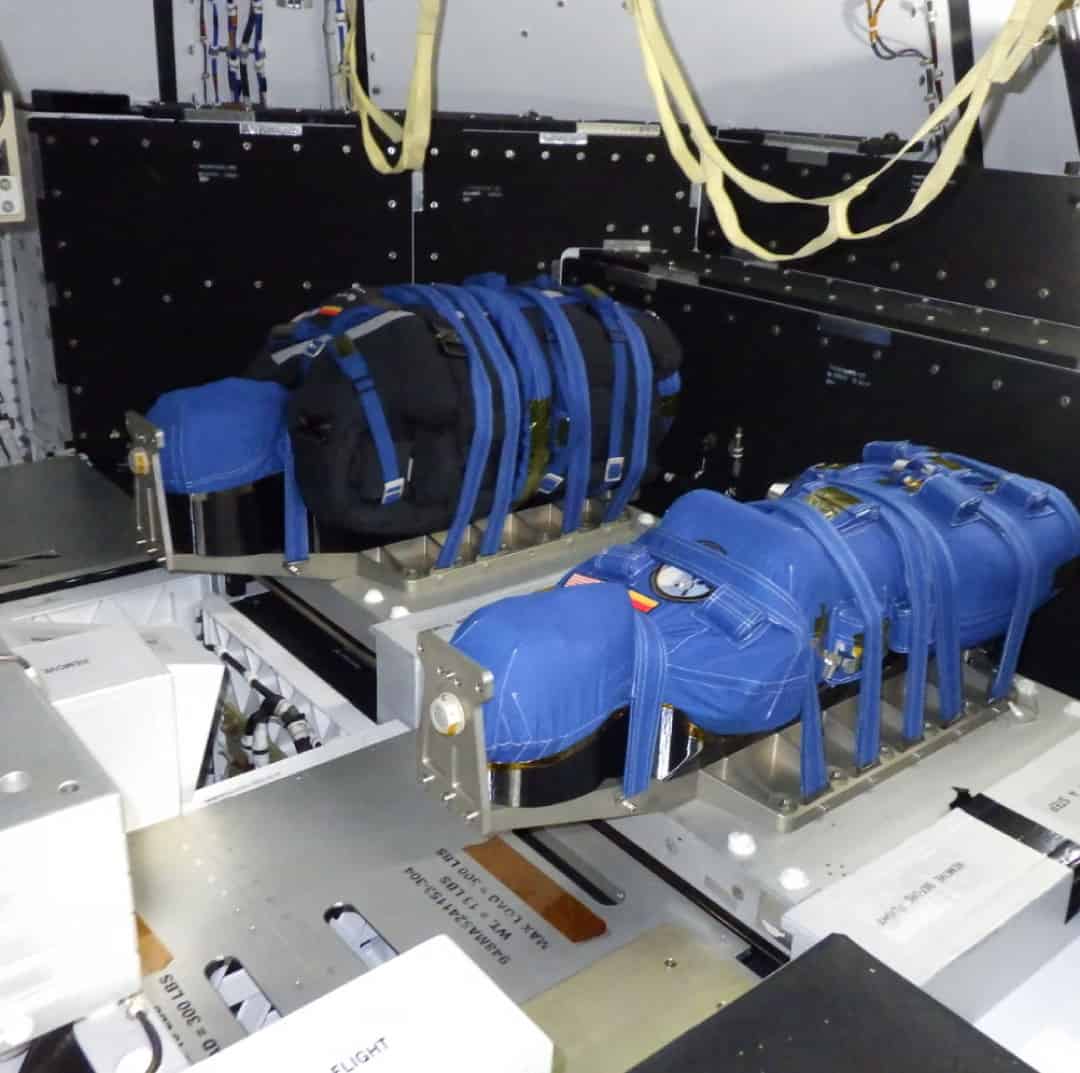
Custom ATOM Phantoms

The uncrewed mission, now scheduled for launch in mid-November, will serve as the first integrated test of NASA’s deep-space exploration systems, including the Orion spacecraft. As part of the project, two custom anthropomorphic ATOM Phantoms from Sun Nuclear will ride as “passengers” aboard the Orion, providing in situ measurements regarding potential radiation exposure to astronauts.

The full CIRS ATOM Phantom line consists of models representing a newborn, one-year-old, five-year-old, 10-year-old, adult male and adult female. Two female-bodied torso models were selected for Artemis I, reflecting the fact that there are an increasing number of female astronauts (also the fact that women typically experience greater sensitivity to radiation in space). What’s more, a stated goal of the Artemis programme is to send the first woman astronaut to walk on the surface of the Moon.

As per CIRS tradition when shipping ATOM phantoms to customers, the space-bound phantoms have been given names – Helga and Zohar. While both will be equipped with radiation detectors, only Zohar will wear a radiation protection vest (to better understand the radiation levels that may be encountered in space and how effective the vest is for mitigating exposure to so-called solar particle events).

“The selection of the ATOM phantoms by NASA speaks to the quality of our technical team and our materials science, physics and engineering capabilities,” explains Mark Devlin of Sun Nuclear. “Our engineers worked closely with the ARTEMIS project partners on all aspects of the mechanical customization, testing and validation of Helga and Zohar.”


Sand battery stores renewable energy, the economics of domestic heat pumps and solar panels

In this episode of the Physics World Weekly podcast, we meet Markku Ylönen, who is co-founder and chief technology officer of the Finnish company Polar Night Energy. The firm has created a “sand battery” that stores excess renewable energy as heat, and can be used to smooth out variations in supply that occur when the Sun isn’t shining and the wind isn’t blowing.

Ylönen is in conversation with Physics World’s Margaret Harris, who has also written a feature article about how installing a heat pump and solar panels can reduce domestic energy consumption from mains sources. In this podcast she talks about the economics of these technologies and what governments can do to encourage their uptake.

Innovative femtosecond lasers for multiphoton applications

Want to learn more on this subject?

Fibre-based femtosecond lasers are rapidly becoming one of the leading laser sources for various multiphoton applications due to their alignment-free compactness, ease-of-use and robustness. By realizing sub-50 fs laser pulses new perspectives open up, especially for multiphoton applications where peak powers can significantly influence the quality of the results.

In this webinar we will discuss the underlying physics involved in ultrashort femtosecond lasers and describe the benefits of femtosecond pulses in the sub-50 fs regime, their unprecedented two-photon efficiencies and high peak powers, and how they help push frontiers in physics and in multiphoton applications, specifically in multiphoton microscopy and optogenetics, multiphoton polymerization, and terahertz generation.

Recent applications in these fields will be discussed to highlight the advantages of shorter pulses.

Want to learn more on this subject?

Oliver Prochnow (top) is a founder of VALO Innovations, now a part of HÜBNER Photonics since 2021. He developed the sub-50 fs femtosecond fibre lasers that now builds the VALO Femtosecond Series from HÜBNER Photonics. He holds a PhD in physics from the University of Hannover, Germany. During his PhD he worked at the Laser Zentrum Hannover e.V. focusing on ultrafast fibre lasers and amplifiers.

Wissam Nakhle (bottom) is the product manager and ultrafast applications scientist, for the VALO Femtosecond Series from HÜBNER Photonics. As an imaging and applications specialist, Wissam is experienced working with laser systems for a wide variety of applications, guiding customers through choosing the correct laser system for their applications. Wissam holds a PhD and a master’s degree from Concordia University in Montreal, where he acquired extensive expertise in polymer processing and polymerization.

Dirk Mortag is operations manager for the VALO Femtosecond Series at HÜBNER Photonics and has more than 10 years of experience in the ultrafast laser industry. Dirk holds a PhD in physics from the University of Hannover, Germany, and did his PhD at the Laser Zentrum Hannover e.V. working on ultrafast fibre lasers and amplifiers. 

Jan Ahrens is responsible for R&D for the VALO Femtosecond Series at HÜBNER Photonics focusing on ultrafast fibre technology. He has more than 10 years of experience in the ultrafast laser industry focusing on new developments. Jan holds a PhD in physics from the University of Hannover, Germany, and did his PhD at the Institute of Quantum Optics at the University of Hannover working on ultrafast optical parametrical chirped pulse amplifier systems (OPCPA). 

Multiple mirrors illuminate atom interferometry

A new multiple-mirror imaging technique could greatly improve the performance of atom interferometers, making them more useful in applications ranging from dark matter detection to quality control in manufacturing. By capturing incoming light from many different angles, the new technique enables scientists to collect more light than is possible using conventional imaging set-ups, boosting the system’s sensitivity.

The new technique, which was developed by researchers at the US Department of Energy’s SLAC National Accelerator Laboratory, is an example of light-field imaging, which captures not just the intensity of light, but also the direction in which light rays travel. The multiple mirrors redirect the different light views and overlap them onto an imaging sensor. This light field information can then be used to reconstruct a three-dimensional image of an object.

Gravitational searches for dark matter

One possible use for the new technique would be in the Matter-wave Atomic Gradiometer Interferometric Sensor, a 100-metre-long atom interferometer currently being installed at the Fermi National Accelerator Laboratory in Illinois, US. MAGIS-100, as it is known, will be a new tool in the ongoing search for dark matter – the mysterious substance that is thought to make up 85% of the matter in the universe but is currently only observable through its gravitational influence, which prevents large objects such as galaxies from flying apart as they rotate. The experiment will also serve as a pathfinder towards larger scale mid-band gravity wave detectors.

In MAGIS-100, researchers will release clouds of strontium atoms in a vacuum tube and then shine laser light on the clouds to image them as they fall within the tube. Each atom acts like a wave and the laser light puts these atomic waves into a superposition of quantum states: one state in which the atom continues down its original path and another in which the light “kicks” it higher up the tube. The two waves then recombine, creating an interference pattern. The relative phase between pairs of such interference patterns created using two interferometers can be highly sensitive to the presence of gravitational waves, as well as ultra-light dark matter manifesting as classically oscillating waves.

For this technique to work, however, the laser light used to make the atoms fluoresce for imaging the final interference pattern needs to be just the right intensity. Too intense, and it will destroy the structure of the atom clouds; not intense enough, and the clouds will be too dim to be picked up by the experiment’s imaging camera (which sits outside the chamber that holds the atoms). One solution to this problem would be to use a camera with a wider aperture, but this would create a narrow depth of field in which only a small part of the image is in focus.

Capturing more light

In the new work, the team led by Ariel Schwartzman and graduate students Murtaza Safdari and Sanha Cheong of the SLAC National Accelerator Laboratory overcame this problem by reflecting light travelling away from the cloud back into the camera lens. The camera can then gather not just more light, but also more views of an object from different angles, each of which shows up on the image as a distinct spot on a black background. A collection of such distinct images can be used to reconstruct a 3D model of the atom cloud.

“Conventional imaging captures only as much light as the lens aperture can accept, and it necessarily loses directional information since it integrates light over the aperture of the lens,” Safdari tells Physics World. “Conventional spatially multiplexed light field imaging is also hampered by the limited lens aperture. Our system is able to benefit from the 3D information capturing ability of spatially multiplexed systems, while also capturing more light than the lens’ aperture would conventionally allow.”

Safdari adds that while the system would directly benefit imaging in atom interferometer experiments like MAGIS-100, it could also have other applications, such as parts inspection on production lines and particle tracking. He and his colleagues are now adapting their design concept to take images of atom clouds in a magneto-optical trap at Stanford, while in the longer term they would like to develop an in-vacuum version of the system to install at MAGIS-100.

The present work is detailed in the Journal of Instrumentation.

Neural network verifies proton dose directly from PET detector data

Proton dose distributions

To maximize the quality of proton therapy delivery, researchers are generating precise, rapid and optimized methods for in vivo dose monitoring and range verification in proton treatments. This is no easy feat.

During proton therapy, high-energy protons in the treatment beam interact with nuclei in the patient to produce prompt gammas and short-lived positron-emitting isotopes, which emit pairs of 511 keV gammas that can be detected using positron emission tomography (PET). The trail of isotopes left in the wake of the proton beam follows the dose distribution closely. When the proton energy drops below a threshold for an isotope’s production, the trail stops.

Methods to obtain accurate positron emission activity distributions must consider photon attenuation, PET detector efficiency, the uncertainty introduced by nonlinearities in positron range, and randomness and scattering within a detector. And after researchers reconstruct the positron emission activity, they need to map the activity profiles to dose distributions, another complicated process.

To date, methods for verifying proton dose from PET detector data fall into one of two classes. Indirect methods detect the secondary radiation emitted from the patient when charged particles interact with tissue and compare the measured and precalculated distributions of these secondary particles. These methods do not directly estimate the difference between delivered and planned doses, however, and therefore aren’t ideal for evaluating treatment progress.

Direct methods provide dose and range verification throughout a patient using the activity profiles of the positron emitter. Unlike indirect methods, direct approaches don’t require traditional reconstruction schemes. Researchers have also investigated statistical approaches that can be performed directly or indirectly.

Recently, researchers at National Taiwan University, National Central University and the Institute of Physics at Academia Sinica applied deep-learning methods to directly map PET detector data to intrinsic dose distributions in proton therapy without reconstructing the PET activity distribution. Their method bypasses traditional PET image reconstruction and demonstrates the feasibility of directly mapping proton dose from coincidence events (detection of the two 511 keV annihilation photons) using just the raw data.

The neural network method

“Understanding the dose distribution is an essential aspect of achieving high treatment quality in particle therapy,” says Mythra Varun Nemallapudi, second author on the Physics in Medicine & Biology study. “Currently, there aren’t many verification systems installed in facilities around the world, as this is still in the R&D phase…The key to our solution is to train neural networks to learn both the secondary particle distribution of 511 keV photons emitted from positron annihilation isotopes created from proton interactions [with tissue], and the dose distribution with the aid of simulations.”

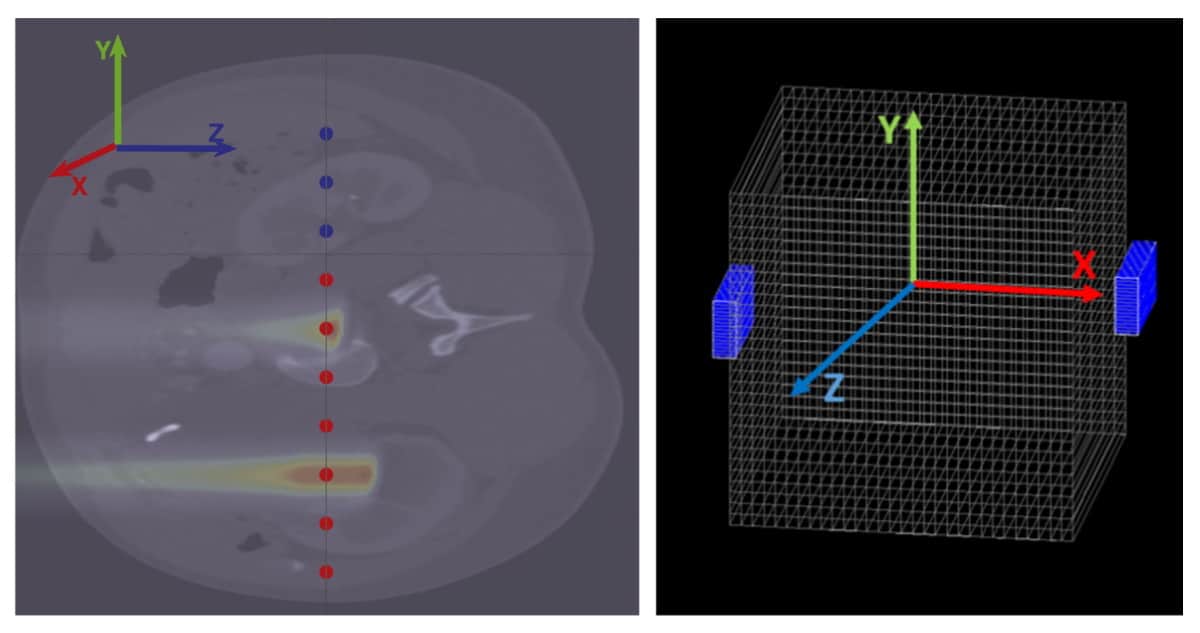
Nemallapudi and his team used Monte Carlo simulations to generate datasets of an abdominal phantom irradiated with high-energy protons and imaged with compact in-beam PET detectors. They then employed a neural network model based on conditional generative adversarial networks (cGANs) to provide the most likely dose distribution given the PET activity distribution at the detectors.

Proton simulations

The neural network was trained for underlying imaging physics, detector geometry and detector non-uniformity directly from experimental data. The model was also trained on a diverse set of data containing different energies, positions and spot sizes to help reduce the chance of model divergence, a common challenge with cGANs. The researchers didn’t apply the model to simulated tissues with large inhomogeneities, such as the lungs, as that would increase model output uncertainties.

The researchers assessed the model’s performance using several approaches, including an evaluation of the shift in Bragg peak position (the depth at which the proton beam deposits most of its dose) for monoenergetic irradiations between 50 and 122 MeV. Results were obtained using 10,000 coincidences acquired five minutes after proton irradiation. They found that the trained model could effectively map the proton dose from detected coincidences – the model output deviated from true dose and range values by 1% and 2%, respectively.

The trained model performed well despite the low number of counts produced in compact detectors. This level of performance is critical because traditional PET systems are too bulky for installation in current proton therapy facilities. Compact detectors, on the other hand, can be integrated with the proton treatment gantry and positioned close to the patient.

The researchers now plan to implement their model on treatments using multiple fields at different angles. Such setups will augment current challenges related to the limited number of coincidences available for mapping PET activity and complex dose distributions.

“Imaging secondary gammas is very promising; however, there is a need for practically adoptable detector systems,” Nemallapudi says. “In addition to dose, there is a plethora of information pertaining to the treatment waiting to be unleashed from the patient. I believe that researchers, clinicians and the public will all profit from continuing this line of research using practical systems that expand on functionality.”

He notes that higher proton fluxes and a higher number of coincidences can be expected as researchers investigate hypofractionated therapies and FLASH for proton therapy.

Six-qubit silicon quantum processor sets a record

A team of researchers in the Netherlands has placed a record number of silicon spin qubits on a chip. By combining an advanced modular software stack, efficient calibration routines and reliable device fabrication, the researchers showed that they could operate the new six-qubit chip with high fidelity, clearing the way for even larger qubit numbers in silicon-based devices.

Although quantum computers have several advantages in principle over their classical counterparts, many of these advantages will only be realized when quantum computers can operate with at least a million qubits. Many promising qubit platforms exist, including superconducting qubits, trapped ions and photonic platforms, and researchers have so far demonstrated that they can control between a few dozen and a few hundred qubits, depending on the platform. In each case, though, one of the major factors preventing researchers from scaling up qubit numbers is that qubits can decohere (lose their quantum nature) and become subject to cross-talk from nearby qubits. Both processes affect the quality of the whole system.

Semiconductor qubits such as silicon spins hold an important high card in the qubit-platform game: they can be mass-produced like normal computer chips. This scalability makes them a promising candidate for building a large-scale quantum computer, and the high quality, or fidelity, of operations involving single silicon spin qubits or pairs of qubits (99.9%) is another advantage.

Operating larger numbers of silicon spin qubits at such a high fidelity, however, has proven difficult because the electron spin is very delicate. This means that while various qubit processes (including initialization and readout) have been demonstrated individually at high fidelity, combining them has meant sacrificing the fidelity of the complete process.

To the next level

The new silicon chip built by researchers at QuTech (a collaboration between the Delft University of Technology and TNO) overcomes some of these earlier challenges. As well as holding a record number of six spin qubits placed in a linear quantum dot array, the chip also incorporates two sensing quantum dots for individual as well as universal control and read-out. In addition, the researchers apply a set of protocols aimed at maintaining high fidelity, such as automated calibration routines and a software program for post-selection signal processing to reduce errors.

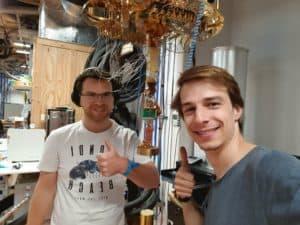
A photo of Mateusz Madzik and Stephan Philips giving the thumbs-up sign with their dilution refrigerator

What further sets this result apart from previous attempts is that the process of qubit initialization – that is, placing all the qubits in their desired starting state – combines measurements of the spin state with real-time feedback. This scheme has the benefit of not relying on a much slower process called thermalization, in which the qubits are “reset” by placing them in their ground state. On top of this, each spin qubit operates with a single electron and does not require access to electron “reservoirs” to bring in fresh ones. This makes their operations faster, meaning that operations can be completed before decoherence kicks in.

The researchers proved the high quality of their device by demonstrating 99.9% fidelity in operations involving single-qubit gates. The corresponding two-qubit gate fidelities were indicated by preparing special quantum states known as Bell states with 89–95% fidelity across the array – a result that clearly showed the effect of the team’s advanced protocols.

Next step: simultaneous operations

Lead researcher Lieven Vandersypen, who co-authored a paper in Nature outlining the work, says that the team’s next step will be to perform simultaneous operations on the qubits, which will allow more operations to take place before the effects of decoherence become too large. He also plans to execute quantum algorithms on the processor, and the team is already working on quantum dot arrays in two dimensions, as well as methods to connect two quantum dot arrays via an on-chip quantum link.

Silvano de Franceschi, a researcher at CEA in Grenoble, France who was not involved in this work, calls it “pretty solid and convincing”. He adds that realizing a six-qubit register is an important step towards scaling up qubit numbers in silicon, and says that the researchers’ protocols were instrumental in achieving high fidelities for one- and two-qubit operations. However, he also points out that performing such operations in an elementary two-qubit system is not the same as doing so in a qubit array, as the latter is “technically way more demanding”. Finally, he notes that the research brings to light important issues such as the need to understand and compensate for heating effects associated with the operation of a spin-qubit array.

Ensuring the voice of physics is heard loud and clear

Could you say a bit about your career before you replaced Paul Hardaker as chief executive of the Institute of Physics (IOP) in June?

The IOP is the sixth membership organization I have worked for in the past 25 years and my third as chief executive. I joined from the British Medical Association (BMA), where I was group chief executive and led the organization through the COVID-19 pandemic. I also restructured the BMA with a particular emphasis on membership engagement. Like the IOP, which owns the substantial specialist publishing business IOP Publishing, the BMA owns BMJ Publishing, which publishes more than 60 medical and scientific titles. Before the BMA, I led the Royal College of Anaesthetists, where membership grew substantially under my leadership, and before this I was executive director of strategy, communications and policy at the Royal College of Physicians, where I was also interim chief executive.

Tom Grinyer

What was it like leading the BMA during the COVID-19 pandemic?

With the BMA representing more than 160,000 doctors, it was incredibly busy and at times incredibly difficult, particularly hearing the news of doctors dying. We set up a 24/7 member-support helpline. In the press we highlighted the shortage of personal protective equipment (PPE) and then worked to get PPE to the front line. We emphasized the impact of the virus on those from ethnic minorities – including medical professionals – and were a leading voice in the public health debate. I am immensely proud of what we achieved, and it is as close as I have ever come to 24/7 working, but that was nothing compared with what many doctors and the wider medical profession had to endure, which I remain in awe of.

So what attracted you to the IOP?

I have long admired the IOP as a great organization and I believe that it has further potential. I’m hugely excited by the IOP’s agenda and I’ll be leading the IOP as it continues to emerge from COVID-19, tackle climate change, seek to cement science and physics in the post-Brexit landscape, and continue to make physics a more equal, diverse and inclusive discipline. The report we launched in September shows the UK and Ireland needs a clear, comprehensive and long-term vision for research and development.

What have you discovered during your time so far at the IOP?

How terrific the physics community is, and that includes its members, those in elected positions and the staff, who have a real professionalism and passion for the organization and its mission. I recently attended Photon 2022 in Nottingham and it was great to see seven IOP groups come together to discuss a crucial area of research.

What is top of your to-do list?

I believe in the importance of greater member engagement and influence, which is a key part of the IOP’s existing strategy. All member organizations are only as good as their member engagement, whether that is through Physics World, education, research, policy-making or sharing ideas through IOP’s thriving groups, branches or the wider physics community. That membership engagement needs to be grounded in inclusivity, as stated in our strategy: “We must ensure our profession better reflects the diversity of our society”. The role of the IOP is to bring together that member and staff expertise to ensure our influence in scientific debates and that the voice of physics is heard loud and clear.

Is it a help or a hindrance not being a physicist by training?

I hope my background in membership organizations and for the past decade working with professional bodies, each with a substantial publishing arm, brings something to IOP. The IOP membership is such a rich and valuable source of physics expertise – unmatched in the UK and Ireland – and it is important that we bring their knowledge to bear on the IOP’s work. For me, membership organizations are at their best when the members and staff work together seamlessly, respecting each other’s expertise, and I hope to continue that drive at the IOP.

What do you see as some of the main strengths and weaknesses of the IOP?

The IOP has a proud history stretching back to 1874 that covers all aspects of physics. Our strength is in bringing together the physics community. To do this to greatest effect we need to make sure that we increase and represent the diversity of that community and ensure a steady flow of physicists drawn from all parts of the population. It is vital that our profession better reflects the diversity of our society, and I am really impressed with the IOP’s work on inclusion, including the excellent Limit Less campaign. I also think we can – and must – do more to positively raise our public profile to ensure the voice of physics is listened to.

Longer term, what do you see as some of the biggest challenges facing the IOP?

We need to educate and inspire the future generations of UK and Irish physicists. There is a large shortage of physics teachers, something I will be discussing with the permanent secretary at the Department of Education. I will explain all the resources the IOP has put in place to support teachers and discuss what actions the department could take to attract and retain more physics teachers.

Do you keep up with the latest physics news? What areas excite you the most?

Absolutely. I have always had a keen interest in physics. The biggest excitement for me since starting was the early images from the James Webb Space Telescope. It is truly inspiring what physics can achieve. I was disappointed that the Artemis Moon rocket launch was delayed but hope it will happen soon.

Universities must reform how they evaluate students so that assessment is integral to learning

The COVID-19 pandemic has caused massive disruption to higher education. Its impact has also raised important questions about university education, including how we should best assess students in university physics departments. The current “gold standard” of student assessment is written examinations under controlled conditions that are often held at the end of the course. By being invigilated and time-limited, such exams are fair, guarantee academic integrity and support the development of independent thinking. They are also good at judging how well students can carry out certain derivations or apply their knowledge.

44% of students felt they have no regular indicators of how well they are performing

In many cases, the pandemic led to invigilated tests being replaced by remote examinations. This usually involved students working at home – downloading the question paper, taking a picture of their answers with their mobile phone camera and then uploading it onto a university server within a certain time. However, students were doing the exams under very variable conditions: some had full access to a quiet study area while others may have had unreliable Internet, been distracted by their surroundings or had to carry out caring duties. Some students may also have been working together in the same room or discussing questions on a messaging app, all of which raised significant concerns about academic integrity.

While some physics departments may look at the problems of remote exams and just want to return to how things were before, the pandemic has also shone a light on the over reliance of high-stakes end-of-course assessments, which few students liked in the first place. In 2020, for example, Pearson and Wonkhe – a higher-education policy forum – carried out a survey that revealed that 44% of students felt they have no regular indicators of how well they are performing. The findings suggested that there is too much emphasis on using exams as an assessment of learning. The bottom line is that such exams may be handy for universities wanting to calculate degree results but are less useful in supporting students’ learning.

We must consider what assessment is for: is it to assess what students have learned, or as a tool for learning itself?

According to a study commissioned by Advance HE and the Higher Education Policy Institute, the average number of assignments for students at UK universities per term increased from 5.0 in 2017 to 6.7 in 2022. So is the rise harming rather than helping students’ learning? Or were we perhaps under-assessing our students a decade ago? The fact that we do not know highlights why we need to re-examine how and why we assess students, and to take an evidence-based approach to how we redesign assessments. Most importantly we must consider what assessment is for: is it to assess what students have learned, or as a tool for learning itself? The right number of assignments, and when they occur in a degree programme, will result naturally from a careful design of assessment as part of learning.

The way forward

Exams will need to remain in place in some way. But there are several alternative approaches that were in use before the pandemic that are now being adopted more frequently, meaning that we do not have to come up with entirely new solutions. Examples include requesting that students add detailed explanations to accompany their workings. We could also make greater use of open-ended questions, which make it harder for students to cheat as they must demonstrate their knowledge and understanding in their own words.

Feedback opportunities would enhance students’ learning to help them develop as life-long, self-regulated learners

Better still would be to introduce more varied assessments throughout a degree programme – such as semester-long open problems or perhaps video presentations. They would give students multiple opportunities to show their achievements rather than purely relying on final exams. Physics departments could then develop assessment as part of the learning process itself rather than it simply being a way of judging what has been learned during a course. Assessment would also be more meaningful, while feedback opportunities would enhance students’ learning to help them develop as life-long, self-regulated learners.

It is an exciting time for university departments that want to transform student assessment so that it becomes a vital part of the learning process. Academic staff should work with students to review existing practice so that they together create more diverse and inclusive assessments throughout degree programmes. I hope that by working with other university services, and even with employers, we can make assessment more enjoyable for all, and that this will lead to better outcomes that prepare students for their personal and professional lives.

None of this will be easy. And things are made more difficult due to the abysmal lack of funding to support discipline-based education research in the UK even though lots of students are ready and waiting to try new things out. Changes to why and how physics students are assessed at university must come from the ground up. Students and educators must work as partners to find a solution and remain responsible for the direction they want to take.

Large piezomagnetism appears in an antiferromagnet

Researchers at the University of Tokyo in Japan, Cornell and Johns Hopkins Universities in the US and the University of Birmingham in the UK have observed large piezomagnetism in an antiferromagnetic material, manganese-tin (Mn3Sn). The finding could allow this material and others like it to be employed in next-generation computer memories.

Antiferromagnetic materials are promising candidates for future high-density memory devices for two main reasons. The first is that electron spins (which are used as the bits or data units) in antiferromagnets flip quickly, at frequencies in the terahertz range. These rapid spin flips are possible because spins in antiferromagnets tend to align antiparallel to each other, leading to strong interactions among the spins. This contrasts with conventional ferromagnets, which have parallel electron spins.

The second reason is that while antiferromagnets have an internal magnetism created by the spin of their electrons, they have almost no macroscopic magnetization. This means that bits can be packed in more densely as they do not interfere with each other. Again, this contrasts with the ferromagnets employed in conventional magnetic memory, which do generate sizable net magnetization.

Researchers use the well-understood Hall effect (in which an applied magnetic field induces a voltage in a conductor in a direction perpendicular to both the field and the flow of current) to read out the values of antiferromagnetic bits. If the spins in the antiferromagnetic bit all flip in the same direction, the Hall voltage changes sign. One sign of the voltage, therefore, corresponds to a “spin up” direction or “1” and the other sign to a “spin down” or “0”.

Strain controls sign change

In the new work, a team led by Satoru Nakatsuji of the University of Tokyo used equipment developed by Clifford Hicks and colleagues at Birmingham to place a sample of Mn3Sn under strain. Mn3Sn is an imperfect (Weyl) antiferromagnet with a weak magnetization, and it is known to display a very strong anomalous Hall effect (AHE), in which charge carriers acquire a velocity component perpendicular to an applied electric field even without an applied magnetic field.

The researchers found that, by placing different degrees of strain on the sample, they could control both the magnitude and the sign of the material’s AHE. “Since the discovery of the AHE by Edwin Hall in 1881, no report has been made on the continuous tuning of the AHE sign by strain,” Nakatsuji tells Physics World. “At first sight, it may appear that the Hall conductivity, a quantity that is odd under time reversal, cannot be controlled by strain, which is even under time reversal. However, our experiment and theory clearly demonstrate that a very tiny strain in the order of 0.1% can control not only the size but also the sign of the AHE.”

Important for antiferromagnetic spintronics

The team says that being able to control AHE using strain will be important for so-called “spintronics” applications involving antiferromagnetic materials. Since the Weyl semimetal state of Mn3Sn can also be switched electrically, the new discovery makes the material even more attractive for spintronics, and a number of groups around the world are now working on fabricating it in thin-film form.

The present work is detailed in Nature Physics.

Monitor your comprehensive MRI performance with the QUASAR™ MRgRT Insight Phantom

Want to learn more on this subject?

The increasing presence of magnetic resonance (MR) systems within clinics has spurred significant improvements to real-time tumor tracking and adaptive image-guided radiotherapy. Daily and periodic quality assurance (QA) on those onboard MRI systems are essential to delivering accurate radiation dose to patients, however, it is often time-consuming and takes away valuable scanning time from physicists. The QUASARTM MRgRT Insight Phantom is a time- and resource-efficient QA tool that offers comprehensive MR system performance metrics in just a single five-minute scan.

The QUASAR™ MRgRT Insight Phantom is an all-in-one device designed for treatment planning and delivery QA for MR-Sim and MR-Linac systems. The phantom offers the ability to monitor key imaging QA parameters over a large field of view relevant to radiation therapy on a daily basis, including: laser and imaging isocenter alignment, B₀ uniformity, SNR, geometric distortion, image ghosting, spatial resolution, slice thickness, and end-to-end dosimetry. Join our webinar on November 8 to learn more about maximizing efficiency for your clinic with the MRgRT Insight Phantom.

This webinar will highlight the advanced features of the MRgRT Insight Phantom, including a demonstration of the data analysis and workflow within the software platform.

Want to learn more on this subject?

Joanne Tang is the application specialist at Modus QA. Having joined Modus QA after completing her BSc and MSc in medical biophysics at the University of Western Ontario, she is currently involved in customer application support of all QUASARTM products.


Copyright © 2026 by IOP Publishing Ltd and individual contributors