Micromasers make a promising platform for quantum batteries

Most batteries store energy through chemical processes. Quantum batteries, in contrast, store energy in highly excited states of quantum systems. Researchers have proposed a number of different ways of implementing such batteries, and recent advances have raised hopes that they could aid the transition to more sustainable energy sources. However, they come with several challenges, including finding easy ways to release the energy and maintaining the correct level of stored energy.

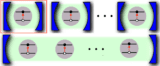
Researchers from the Institute for Basic Science (IBS), Korea, in collaboration with colleagues at the University of Insubria, Italy, have now shown that quantum batteries based on micromasers could help overcome some of these challenges. Micromasers consist of a stream of atoms that interact with the electromagnetic field inside an optical cavity. The energy in the cavity increases with successive interactions until it plateaus at a certain level, charging the battery.

In the new work, the IBS-Insubria team demonstrated that micromasers, once charged, reach an almost steady state, meaning that their energy level does not fluctuate significantly over timescales relevant to the system in the team’s model. This is important because it makes it possible to accurately calculate the battery’s charging time. With the parameters used in this study, the steady-state level is reached after approximately 30 interactions, and the energy remains stable for approximately 1 million further interactions.

Nearly pure steady state

Another advantage of this almost steady state is that it is approximately pure, which makes it possible to consider the state of the cavity independently from the state of the atoms that it has interacted with. This is surprising, because after many collisions one might expect that the state of the cavity wouldn’t be pure, making it impossible to maximize the amount of energy extracted from the battery without also interacting with all the discarded atoms. However, the IBS-Insubria team showed that the amount of usable energy (known as the ergotropy of the battery) remains high.

The micromaser’s quantum dynamics also prevent the battery from overcharging, says Dario Rosa, a senior researcher at IBS who led the study. “In principle, the system could continue to increase in energy and could become infinite,” Rosa explains. “Without any external control, the micromaser, by its own dynamics, does not increase its energy indefinitely.” This makes the battery easier to charge and prevents damage to the hardware from excess energy.

Additionally, the new results, which the team describe in the journal Quantum Science and Technology, show that these characteristics hold true under realistic conditions (namely, increased charging power and inaccuracies in the physical properties of the system) for the preparation and operation of the micromaser – bringing the model of a useful battery closer to what is experimentally achievable.

Superposition advantage

The positive results regarding micromasers are supported by a related study by a group from the University of Geneva, Switzerland. Led by Stefan Nimmrichter, this group showed that a single micromaser can have an advantage over classical devices in its charging power if the atoms arrive at the cavity in a quantum superposition. Previously, it had only been known that charging power can be improved over classical systems by combining many quantum batteries using quantum entanglement.

Rosa says that further work is needed to better understand how to combine many individual micromasers and optimize performance when scaling up the system. “With other batteries, we have seen that the charging power improves with more batteries charging together,” he says. “We want to know whether micromasers have this property.”

To make the model more realistic, the team is now interested in what happens when the cavity is imperfect, meaning that some energy is dissipated. If the battery performs well under these conditions, preserving the features already seen in this work, that would open the door to potential experimental collaborations, including with other physicists in Italy or the group in Geneva.
DART mission successfully hits asteroid in first-of-its-kind test

Update 12/10/2022: NASA has confirmed that DART’s impact successfully altered the asteroid’s orbit by 32 minutes, shortening the 11 hour and 55-minute orbit to 11 hours and 23 minutes. This was some 25 times greater than the 73 seconds NASA had defined as a minimum successful orbit period change. “This result is one important step toward understanding the full effect of DART’s impact with its target asteroid” says Lori Glaze, director of NASA’s Planetary Science Division at NASA headquarters in Washington. “As new data come in each day, astronomers will be able to better assess whether, and how, a mission like DART could be used in the future to help protect Earth from a collision with an asteroid if we ever discover one headed our way.”

NASA has announced that its asteroid-deflection mission has managed to successfully hit its target with scientists now studying how much the body has been deflected by the impact.

At 7:14 p.m. EDT yesterday, the $330m Double Asteroid Redirection Test (DART) craft – the first mission dedicated to demonstrating “kinetic impact” – hit a small asteroid with the aim to put the body in a slightly different orbit around its companion body.

DART, which was launched in November 2021, was sent on a roughly 11 million kilometre journey towards a binary, near-Earth asteroid system. This system consists of a 780 m-diameter asteroid called “Didymos” and a smaller, 160 m body “Dimorphos” that orbits it.

The plan was to slam into Dimorphos to see if the kinetic impact of a spacecraft could one day successfully deflect an asteroid that is on a collision course with Earth.

At its core, DART represents an unprecedented success for planetary defence, but it is also a mission of unity with a real benefit for all humanity

Bill Nelson

Some 15 days ago, the mission released the Light Italian CubeSat for Imaging of Asteroids (LICIACube) – a CubeSat that has been contributed by the Italian Space Agency – that carries two optical cameras.

As DART then neared the asteroid system, yesterday it began to taking images of Didymos and Dimorphos with a high-resolution imager called DRACO.

Travelling about 6 kilometres per second, DART then impacted Dimorphos and as it did so LICIACube flew past to image the kinetic impact itself, the resultant ejecta plume and possibly the impact crater.

Ground-based observations carried out at several facilities – including the Lowell Discovery Telescope in Arizona, Las Campanas Observatory in Chile, the Las Cumbres Observatory global network, and the Magdalena Ridge Observatory in New Mexico – also tracked track the impact of DART and the subsequent response by Dimorphos.

Next steps

Scientists will now characterize the ejecta produced and precisely measure Dimorphos’ orbital change to determine how effectively DART deflected the asteroid. Researchers expect the impact to shorten Dimorphos’ orbit by about 1%, or roughly 10 minutes. They will then compare the results of DART’s kinetic impact with computer simulations to evaluate the effectiveness of this approach and assess how best to apply it to future planetary defence scenarios.

“At its core, DART represents an unprecedented success for planetary defence, but it is also a mission of unity with a real benefit for all humanity,” noted NASA administrator Bill Nelson. “As NASA studies the cosmos and our home planet, we’re also working to protect that home, and this international collaboration turned science fiction into science fact, demonstrating one way to protect Earth.”

“This first-of-its-kind mission required incredible preparation and precision, and the team exceeded expectations on all counts,” says Ralph Semmel, director of the Johns Hopkins Applied Physics Laboratory in Laurel, Maryland. “Beyond the truly exciting success of the technology demonstration, capabilities based on DART could one day be used to change the course of an asteroid to protect our planet and preserve life on Earth as we know it.”

In 2024 the European Space Agency’s Hera mission will launch to the asteroid system and, once it arrives two years later, it will perform a close-up “crime-scene” investigation of DART’s impact.

Citing like it’s 1995: why women physicists find their papers referenced less

Female physicists are significantly under-cited compared to their male counterparts, according to an analysis of more than a million physics research papers. Carried out by a team led by physicist and systems neuroscientist Dani Bassett from the University of Pennsylvania, the study found the gap is biggest in articles written by men citing papers in fields they are less familiar with (Nature Physics 18 1161).

Covering papers published between 1995 and 2020 across eight different sub-fields of physics, the researchers used a gender-identification service to categorize papers as either “man-authored” or “woman-authored” based on the first names of the first and last authors. Although this method does not always reflect a person’s identity accurately, the researchers argue it is appropriate in this context as citing authors are also likely to perceive gender from first names.

The researchers found that, overall, woman-authored papers are cited 3.17% less frequently than expected, while man-authored papers are cited 1.06% more frequently than expected, giving a total disparity of 4.23%. The difference varies between different sub-fields, with the greatest gender gap being in general physics journals and the smallest in astronomy and astrophysics.

Several other factors were found to influence the disparity, including what the researchers call “proximity” – the tendency to over-cite man-authored papers when the citing author is less familiar with the field they were citing. The gap is also larger when the citing papers are man-authored and when journals limit how many papers can be referenced.

Despite the proportion of woman-authored papers rising significantly over time, the study reports that the citation gap actually broadened slightly between 2009 and 2020. The researchers believe this could be a result of preconceptions about who works in a discipline.

“We refer to this mechanism colloquially as ‘citing like it’s 1995,’” Bassett told Physics World. “If an author built up a perception of the demographics of the field decades ago, but the demographics are steadily diversifying, then the citation gap will simply grow.”

Addressing inequality

The researchers hope their study will spark debate, given that physics lags many other sciences in gender equity and representation. Individual researchers can address inequity, the authors say, by informing themselves about the work of under-represented scholars or by including citation diversity statements in their papers. Journals, meanwhile, could increase the proportion of woman-authored papers they publish and remove limits on the lengths of references.

“Citation diversity – along the lines of gender, as well as race, ethnicity, and other characteristics – matters for the flourishing of our community,” says Bassett, “and for our potential to appeal to and support the best minds of the future.”

What do the Sagrada Familia and big science have in common?

Big-science projects and Gaudi’s Barcelona masterwork the Sagrada Familia have more in common than you may think. That’s because multinational science projects and spectacular cathedrals both take longer than an average career to complete, which is why a process for inter-generational knowledge transfer is essential.

So said Leonardo Biagioni, deputy chief financial officer at F4E, the outfit that manages Europe’s contribution to the ITER experimental fusion reactor. “Apprentices learn from the masters before becoming the masters themselves,” he told delegates at the Big Science Business Forum (BSBF2022) in Granada, Spain.

Last week’s event brought together leaders from industry and academia, but there were plenty of early-career scientists and engineers too. They heard about the launch of XCITECH, a new in-person school designed to kickstart careers in big science. It will be held annually in Granada, the city hosting IFMIF-DONES, a research facility that’s being built to investigate materials for fusion power.

The plan is for scientists and engineers from IFMIF-DONES to deliver lectures at the school, drawing on previous experience at other big-science facilities.

“Our idea is to change the focus of the course each year depending on the feedback we receive from industry and what we feel is most important to teach our students,” says Blanca Biel Ruiz, an XCITECH co-ordinator and quantum simulation researcher at the University of Granada, who features on this week’s Physics World podcast.

Another theme at BSBF2022 was the need to strengthen ties between the private sector and academia. Maurizio Vretenar, a project leader at CERN, called for research institutes to view industry as a collaborator rather than a supplier. He questioned the prevailing wisdom that it is cheaper to develop solutions in house, because academic budgeting rarely takes full account of people time.

In the same session, Miranda van den Berg, innovation network manager at VDL, said that industrial engineers love being involved in big-science projects. She said that holding contracts with cutting-edge science facilities can help commercial companies to attract the best talent. One project discussed in Granada is the Einstein Telescope, a third-generation gravitational wave observatory that will require exceptional vacuums, powerful lasers and near-perfect mirrors.

During the closing session, panellists looked ahead to BSBF2024 (location tbc). They suggested key themes should include tech solutions for sustainable procurement, accelerating technology transfer, and routes into the big-science market for small- and medium-sized enterprises.

Ocean on Saturn’s moon Enceladus could be rich in a key ingredient for life

The subsurface ocean of Saturn’s moon Enceladus could be abundant in phosphorus – an element believed to be an essential ingredient for life. That is the conclusion of an international team of scientists who used a combination of simulation techniques to show that stable compounds of phosphorus are likely being released from moon’s seafloor. The predictions could help future missions to Saturn’s icy moons to better pinpoint any signatures of life.

The search for extraterrestrial life in the solar system is often guided by the presence of liquid water. Beyond Earth, oceans are known to exist beneath the icy surfaces of several moons of Jupiter and Saturn – all of which are warmed by the tidal forces imparted by those giant planets. One contender for life is Saturn’s sixth largest moon, Enceladus.

Although small (500 km diameter), this moon is famous for the water-rich plumes that erupt through cracks in its icy crust. The plumes were discovered by NASA’s Cassini spacecraft. During several flybys between 2005 and 2015, Cassini flew straight through these plumes, getting a glimpse of the chemical compounds that exist deep within Enceladus’ ocean.

Essential chemicals

The water Cassini examined contained several chemicals that astrobiologists consider essential building blocks of life: including carbon, ammonia and hydrogen sulphide. However, one element that escaped detection was phosphorus – which is a key ingredient of structures including DNA, cell membranes, bones and teeth. While a lack of phosphorus would throw Enceladus’ habitability into doubt, Cassini’s brief observations were far from exhaustive.

In this latest study, a team led by Jihua Hao at the University of Science and Technology of China and Christopher Glein at the Southwest Research Institute in the US used geochemical modelling techniques to obtain an estimate of the moon’s phosphorous abundance. Firstly, they used thermodynamic modelling to evaluate the stabilities of different forms of dissolved phosphorus – varying factors including the temperature and pH of the ocean.

Building on these insights, they next used kinetic modelling to examine the dissolution of stable phosphate minerals through Enceladus’ ocean. Over short geological timescales, these simulations showed that phosphorus could be rapidly released through the weathering of the moon’s rocky seafloor. In turn, this is expected to produce phosphorus concentrations close to, or possibly even exceeding the levels present in seawater on Earth.

Such a high abundance would mean that life in Enceladus’ liquid ocean would not be constrained by a lack of phosphorus – further strengthening the possibility that life may have emerged beneath the small moon’s icy surface. These predictions will have to be confirmed by future missions to Saturn, but if we do send probes to Enceladus, the team’s results will provide valuable guidance for these missions – helping astronomers to examine the moon’s dramatic plumes in unprecedented detail.

The research is described in Proceedings of the National Academy of Sciences.

Breaking boundaries: physicist bags 2022 economics Nobel

In the run up to this year’s Nobel Prize for Physics we published a series of blogs that looked at physicists who have won Nobel prizes in fields other than physics. With the announcement of the  Sveriges Riksbank Prize in Economic Sciences in Memory of Alfred Nobel 2022 we can add Philip Dybvig to that list of illustrious laureates.

Dybvig shared this year’s economics Nobel prize with Ben Bernanke and Douglas Diamond “for research on banks and financial crises”.

Born in 1955, Dybvig is Boatmen’s Bancshares Professor of Banking and Finance at the Olin School of Business at Washington University in Saint Louis, US. In 1983, Dybvig and Diamond wrote a seminal paper that explored the roles performed by banks in society and how the collapse of banks can be prevented.

Financial crises

The work of Dybvig and Diamond on the function and failure of banks helped form the basis for modern bank regulations. It also proved valuable in helping economists to understand the 2007 financial crisis, which was driven in part by bank-like financial institutions that did not have to adhere to these regulations.

But Dybvig did not start out as an economist. In 1976 he graduated from Indiana University with a double major in mathematics and physics. So as far as we are concerned here at Physics World, he remains a physicist.

Medical physics explained in 22 tales

What is medical physics, and what exactly does a medical physicist do? Why have I never met one before? It was questions like these, endlessly repeated by the friends, families and even colleagues of medical physicists, that prompted the publication of True Tales of Medical Physics: Insights into a Life-Saving Specialty. Aiming to answer these questions in an easy-to-understand way, the book is a collection of real-life stories told by award-winning medical physicists. As noted by its editor, Jacob Van Dyk from Western University in Canada, “this is not a medical physics book; rather, it is a book about medical physics”.

At first glance, you might feel as though reading a 600 page tome about medical physicists is a daunting task. But the good thing is, this is the perfect book to dip in and out of at will, as it is a collection of narratives. Taken as a whole, the text fulfils its remit of informing the reader exactly what is meant by medical physics. But the 22 individual “tales”, each written by a high-profile medical physicist at the top of their field, also stand alone. These personal stories from around the world, spanning different time periods and varied career pathways, were both informative and entertaining to read.

One chapter that particularly caught my eye was the “day in the life” story recounted by US physicist Arthur Boyer, which provided a glimpse into the wide breadth of roles he took on before retiring. The day in question began with Boyer planning a lecture for radiation oncology students on his drive to the San Antonio medical centre, where he worked as chief of physics, and ended with calibration checks of the centre’s linear accelerator (linac).

In between, his activities included tasks such as preparing radiotherapy plans for patients; analysing radiation safety limits for a proposed new floor above a linac vault; and developing a computer program to model radiation dose distributions. Together, these activities span the three main tasks that many academic medical physicists perform, which Boyer cited as clinical service, teaching (both of new medical physicists and medical residents), and research into new instruments and software for diagnostic imaging and cancer treatment.

Many of the chapters also include a synopsis of the author’s career, giving the reader a somewhat personalized overview of the history of medical physics. In telling their tales, the authors between them describe the emergence of many key technologies: the move from cobalt-60 machines to linacs for radiotherapy, for example, and the introduction of CT, MRI and ultrasonography – imaging techniques that are commonplace in hospitals today.

Their anecdotes also highlight the diverse range of ways in which the authors found their way into the field. Some were clearly always destined for a technology-based career – such as Marcel van Herk, who writes about his childhood obsession with taking apart and reassembling electronics, repairing old TVs, and designing and building devices from parts salvaged from his local flea market. By the time he finished high school, van Herk had built a working computer, and written all of the required software from scratch.

As a graduate student at the Netherlands Cancer Institute (NKI), van Herk developed the first compact electronic portal imaging device for image-guided radiotherapy (along with writing all of the accompanying software), a system that was later commercialized for clinical use. Among his other achievements, van Herk describes how he spent one Christmas holiday writing code to dramatically speed up cone-beam CT (CBCT) reconstruction. This led to the coding of a full clinical image-guidance system and positioned NKI as the first hospital to introduce CBCT-based radiotherapy guidance into the clinic.

Others followed a less obvious path, like Thomas “Rock” Mackie, who originally wanted to be a novelist. Mackie only embarked upon a degree after his father forged his signature and applied to the University of Saskatchewan for him. He took up the opportunity, drifting towards physics as a major. Mackie went on to invent helical tomotherapy, a novel radiotherapy delivery concept. He co-founded the company TomoTherapy (since acquired by Accuray) to commercialize the technique, and later established five other healthcare companies (three since his retirement in 2014).

Perhaps unsurprisingly, considering the historical nature of the book; but still rather disappointingly, only two of the 22 tales were written by women. Maryellen Giger described her role in helping to establish the fields of computer-aided detection and computer-aided diagnosis, explaining how her team launched a start-up company to commercialize the technologies. 

Cari Borrás, meanwhile, recounted a rather alarming incident from 1989 when she provided medical assistance to a radiological emergency in El Salvador, which at the time was in the midst of a civil war. There had been an accident with an industrial irradiator that exposed staff to high doses of gamma rays. Her role was to ascertain the cause of the incident, establish accurate dosimetry to guide treatment of the irradiated workers, and assess the irradiator design to prevent similar accidents in future.

Reading through the various stories, I was intrigued to note how many of the tales overlapped and how so many people’s paths crossed over the years. Perhaps considering the relatively small community – the International Organisation for Medical Physics currently represents more than 27,000 medical physicists worldwide – this is only to be expected.

Many of the authors described chance meetings – whether being rescued from a rainstorm by a vendor in a limousine, or running into a colleague at some unforgettable spot (Martin Yaffe cited examples ranging from the Antarctic Peninsula to the Great Wall of China to a steam-engine museum in Manchester) – that led to future collaborations and significant technology innovations.

As the titles of the book’s six sections suggest, a medical physicist is perhaps more than history, more than clinical service, more than research, more than protection of the public, more than teaching and more than commercial developments. Hopefully, readers of this book will leave with a fuller grasp of what medical physics is – and perhaps even be inspired to look into it as a worthwhile career option for themselves.

  • 2022 Springer 607pp £24.99pb/£23.74ebook

Patient-specific planning could improve radiotherapy outcomes

The goal of radiotherapy is to deliver a prescribed radiation dose to the tumour target while limiting damage to surrounding normal tissues. This is currently achieved using population-based treatment plan optimization, based on predefined dose-based objectives and organ-at-risk (OAR) constraints developed from the aggregated response to radiation of a broad patient population. Unfortunately, the effectiveness and toxicity of such standardized treatment plans vary, because patients and their tumours have individual biological characteristics.

Aiming to provide a more personalized approach to radiotherapy planning, researchers at the University of Michigan have developed a novel intensity-modulated radiotherapy (IMRT) optimization strategy that directly incorporates patient-specific dose-response models into the planning process. Their technique, described in Medical Physics, is based on maximizing the predicted value of overall treatment utility – defined as the probability of local control minus the weighted sum of toxicity probabilities.

The new planning method, called prioritized utility optimization (PUO), augments standard approaches by incorporating personalized factors related to the radiosensitivity of tumours and OARs. OAR radiotoxicity, for instance, can be influenced by age, smoking status, gene expression, molecular markers and pre-existing conditions such as cardiac disease. Other concurrent treatments may also impact the efficacy of radiation therapy.

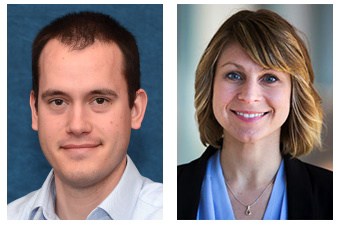
Daniel Polan and Martha Matuszak

To validate their strategy, principal investigator Martha Matuszak and colleagues used the PUO method to create IMRT plans for five patients with non-small cell lung cancer (NSCLC). They report that PUO planning improved local control for all patients compared with the conventional plans that had been used for their treatments.

“NSCLC patients represent a highly heterogeneous group with variability in extent and localization of disease,” explains lead author Daniel Polan. “In combination with other anatomic variability, these factors can drastically impact treatment planning, including any anticipated gains from differing optimization methods. Therefore, for initial feasibility testing of our method, we selected five cases to represent diversity in patient size, tumour size, location and laterality, in addition to diversity in dose covariates influencing predicted outcomes.”

To create patient-specific IMRT plans, the researchers first used a commercial treatment planning system to calculate dose based on an influence matrix of beamlet-dose contributions to regions-of-interest. They then solve two optimization problems to generate optimal beamlet weights that can be imported back into the TPS.

The first optimization problem maximizes the overall plan utility subject to typical clinical dose constraints, by optimizing the trade-off between efficacy and toxicity based on individualized dose-response models. The second minimizes conventional dose-based objectives, subject to the same dose constraints as the first, while maintaining the optimal utility determined from the first optimization.

For all five patients, the PUO approach successfully generated optimal beamlet weights that maximized utility while remaining within dose-based constraints. For the study, the researchers compared these PUO IMRT plans with the clinically delivered 3D conformal radiotherapy (CRT) plans, and with retrospectively generated dose-only optimization (DOO) IMRT and volumetric-modulated arc therapy (VMAT) plans.

Dosimetry comparisons

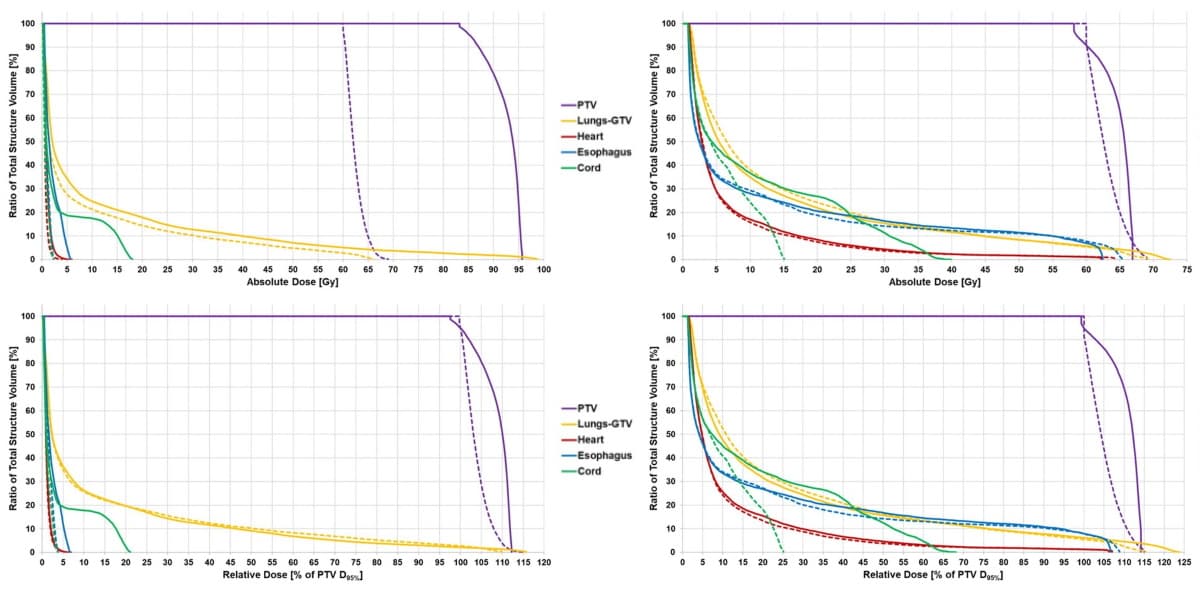
When compared with the 3DCRT, VMAT and DOO IMRT plans, the PUO method improved plan utility by an average of 40%, 32% and 31%, respectively. The PUO plans demonstrated an average 17% improvement in local control with similar toxicity to conventional planning.

As anticipated, the extent of benefits from the PUO IMRT plans differed among patients. Polan reports that for one patient, PUO resulted in a utility improvement of 70% over conventional DOO. “This corresponds to a 32% absolute improvement in the predicted probability of progression-free survival, while only increasing the predicted probability of radiation-induced lung toxicity by 2%,” he says. “This substantial trade-off has the potential to greatly improve disease survivability while minimizing the impact to a patient’s post-treatment quality-of-life.”

For another patient who had a large tumour, however, improvements were minimal. Polan explains that for larger tumours, treatment planning typically becomes more constrained due to increased integral dose requirements and a decreased ability to avoid bordering normal tissues.

The team emphasizes that the PUO method provides a quantitative way to determine which patients may benefit from dose escalation or redistribution, based on patient-specific clinical factors and biomarkers, while also accounting for patient geometry and OAR dose limits.

The researchers are currently conducting large-scale retrospective studies with the goal of developing a prospective clinical trial employing the PUO treatment planning strategy. Their research centres around integrating patient data and personalized outcome predictions directly into radiotherapy planning, with a current focus on liver, lung and head-and-neck cancers, where balancing the positive and negative effects of radiotherapy could significantly impact a patient’s overall quality-of-life.

Focus on U.S. Department of Energy’s Nanoscale Science Research Centers

Want to learn more on this subject?

The two-hour webinar will highlight and publicize the cutting-edge science being performed by the scientific staff and users located at the various Department of Energy (DOE) Nanocenters across the US. The five Nanocenters are DOE’s premier user centers for interdisciplinary research at the nanoscale, serving as the basis for a national program that encompasses new science, new tools, and new computing capabilities. Each center showcases particular expertise and capabilities in selected theme areas, such as the synthesis and characterization of nanomaterials; catalysis; theory, modelling and simulation; electronic materials; nanoscale photonics; soft and biological materials; imaging and spectroscopy; and nanoscale integration. As such, this webinar will feature dynamic and engaging presentations from a number of Nanocenter experts in these various specialities, who have submitted original papers to this targeted IOP Publishing Focus collection.

Want to learn more on this subject?

Stanislaus S Wong is a distinguished professor of chemistry at Stony Brook University. He and his group have developed viable sustainable strategies for producing novel nanomaterials of relevance not only for energy but also for nanomedicine and theranostics. Stanislaus has served as a section editor for Nanotechnology and is currently a member of its executive editorial board in addition to being an executive editor for ACS Applied Materials and Interfaces.

Ray LaPierre is a professor and chair in the Engineering Physics Department with interests in III-V nanowires, molecular beam epitaxy, and applications in photovoltaics, photodetectors and quantum information processing. He has more than 98 publications, 50 invited presentations, and 138 conference presentations related to nanowires. He is the editor-in-chief of Nanotechnology and also a board member of Nano Express.

Subramanian Sankaranarayanan is an associate professor in the Mechanical Engineering Department at University of Illinois Chicago and the group leader of the Theory and Modeling Group in the Nanoscale Science and Technology Division at Argonne National Laboratory. He is also a senior fellow at the Institute of Molecular Engineering at University of Chicago. He is a co-inventor on six patents and has co-authored more than 150 journal articles including several high-impact publications in Science, Nature, Nature Materials, Advanced Materials, Nature Communication, Proceedings of National Academy of Sciences, ACS Nano, Nanoletters, and Physical Review Letters to name a few.

Amy Marschilok is an associate professor in the Department of Chemistry at Stony Brook University, where she is an adjunct faculty in the departments of Materials Science and Engineering, and Chemical and Molecular Engineering, and co-director of the Institute for Energy Sustainability and Equity. Amy holds a joint appointment at Brookhaven National Laboratory, where she serves as energy storage division manager and energy systems division manager in the Interdisciplinary Science Department.

Daniel Sun is a fellow in Cyclotron Road Cohort 2022 and the founder of Sunchem. He received his BS in chemistry at Loyola Marymount University in 2013 and his PhD in chemistry and chemical engineering from the Swiss Federal Institute of Technology Lausanne in 2020. His objective is to revolutionize how critical metals are purified while also providing clean drinking water using nano filters.

Adam Rondinone is the co-director for the Center for Integrated Nanotechnologies (CINT) as well as the group leader for MPA-CINT at Los Alamos National Laboratory. Adam received his doctorate in chemistry from Georgia Institute of Technology in 2001 and immediately joined Oak Ridge National Laboratory as a Wigner Fellow studying the chemistry of nanomaterials. He is chair emeritus of the board of directors for the Society for Science at User Research Facilities, and served two years as a Legislative Fellow in the US Senate offering advice on energy and technology issues. He has authored or co-authored more than 100 publications and 10 patents.

About this journal

Nanotechnology encompasses the understanding of the fundamental physics, chemistry, biology, and technology of nanometer-scale objects.

Editor-in-chief: Ray LaPierre, McMaster University, Canada.


Perspectives on societal aspects and impacts of quantum technologies

Want to learn more on this subject?

Quantum science and technology is advancing and evolving rapidly and, in the last decade, has shifted from foundational scientific exploration to adoption by commercial and government organizations. It is essential that scrutiny and guidance is applied to this quantum revolution to bring other societal stakeholders onboard and ensure that the benefits can be maximized for all society.

What considerations exist for quantum technologies? How should we engage as a society in the future, as promised and created by this emerging sector? We will discuss some key questions that will shape the forthcoming quantum technology revolution.

Want to learn more on this subject?

Rob Thew is a senior researcher and group leader in the Quantum Technologies group at the University of Geneva. His research covers fundamental to applied topics in quantum communication and sensing. He is executive director of the Geneva Quantum Centre, chair of the Strategic Research Agenda Work Group for the European Quantum Flagship and founding editor-in-chief for the IOP journal, Quantum Science and Technology.

Ana Belén Sainz is a group leader in the Foundational Underpinnings of Quantum Technologies group at the International Centre for Theory of Quantum Technologies, University of Gdańsk, Poland. Her research on foundations of quantum theory focuses on understanding the nonclassical phenomena featured in Nature, and how to harness their power to enable new forms of information processing.

Zeki C Seskir is a doctoral researcher at Karlsruhe Institute of Technology (KIT) – Institute for Technology Assessment and Systems Analysis (ITAS) and co-ordinator of the project QuTec: Quantum Technology Innovations for Society. He conducts landscaping studies on quantum technologies to be utilized in technology assessment capabilities. His interests cover the emerging innovation and governance ecosystems of QT, together with their ethical, legal, societal and economic impacts, and potential futures.

Alex Holleitner is professor of physics at the Technical University of Munich working on the fundamental aspects of optics and electronics of quantum matter. Alex helped to establish a master programme on “quantum science and technology” within the Munich Center for Quantum Science and Technology and has initiated further programmes on quantum education e.g., to train experts from industry, and internships of MSc students at local quantum technology companies.

Mehul Malik is a professor of physics at Heriot-Watt University, Edinburgh, where he leads the Beyond Binary Quantum Information Laboratory. His research interests include quantum information processing and communication, fundamental studies of entanglement, and complex scattering media. He currently leads a QuantERA consortium studying quantum phenomena with complex media. Mehul is passionate about science communication and issues of gender diversity and researcher mobility in academia.

Vivek Krishnamurthy is the Samuelson-Glushko professor of law at the University of Ottawa and director of the Samuelson-Glushko Canadian Internet Policy and Public Interest Clinic. His work focuses on the regulatory and human-rights-related challenges that arise in cyberspace, advising on the impacts of new technologies. Vivek is a faculty associate of Harvard’s Berkman Klein Center for Internet & Society, senior associate of the Human Rights Initiative at the Center for Strategic & International Studies, and member of the Global Network Initiative’s Board of Directors.

Tara Roberson is a science communicator whose work focuses on responsible development and deployment of emerging technologies. As a postdoctoral researcher at the ARC Centre of Excellence for Engineered Quantum Systems, she works with quantum physicists to understand the implications of emerging technologies. Tara also works in industry on activities that address ethics, law and assurance for robotics, autonomous systems and artificial intelligence.

Speaker relationship with IOP Publishing

Rob Thew is the editor-in-chief for the IOP Publishing journal Quantum Science and Technology, 2021 Impact Factor 6.568, 2021 CiteScore 11.5.


Copyright © 2026 by IOP Publishing Ltd and individual contributors