Earth is “well-hidden” to extraterrestrial observers using photometric microlensing to hunt for habitable planets that might support life, an international team of researchers has concluded. The findings could also help to narrow down the best areas of the galaxy to target in our own searches for extraterrestrial intelligence (SETI).
When looking for potentially inhabited planets beyond the solar system, astronomers have a variety of tools at their disposal. As it stands, by far the most successful of these has been the transit technique, which has made about 75% of all the exoplanet discoveries so far. This approach involves watching for the periodic dimming of a star’s light as a planet passes between the star and an observer on Earth.
The transit method, however, has its weaknesses; the principal one being that transits only occur for the small fraction of planets whose orbital planes are almost exactly edge-on to Earth. An alternative approach lies in photometric microlensing, which involves the gravitational lens effect that occurs when one star passes in front of another, temporarily magnifying the light from the more distant, “source” star. If the nearer star has a planet orbiting it, this can further perturb the light, leading to characteristic spikes in the observed light.
Long-distance technique
A particular advantage of the microlensing technique is that it works at relatively long distances. While other exoplanet detection methods have typically only yielded planets up to one kiloparsec (about 3200 light–years) away from Earth, the majority of the 130 exoplanets detected to date using microlensing are up to seven times that distance from Earth. Accordingly, with the Milky Way being around 30 kiloparsecs across, it is conceivable that the microlensing method might be used by other technological civilizations to detect the Earth across galactic distances.
It has long been considered that those locations from which Earth could be detectable via the transit method are themselves good candidates for targeted SETI searches – following a game theoretic, “Schelling Point” cooperation strategy for two parties looking for each other who have no means of communicating. Applying the same logic to the microlensing technique has, therefore, the potential to identify new and more distant targets for the search for extraterrestrial intelligence.
In their new study, astronomer Eamonn Kerins of the University of Manchester and his colleagues considered the photometric microlensing signal of the Earth as it would appear to other potential technologically-advanced civilizations.
Defining the EMZ
“[We] dub the regions of our galaxy from which Earth’s photometric microlensing signal is most readily observable as the ‘Earth microlensing zone’ (EMZ),” the researchers explain, adding: “The EMZ can be thought of as the microlensing analogue of the Earth Transit Zone (ETZ) from where observers see Earth transit the Sun”.
The team used data from the European Space Agency’s Gaia telescope — specifically, the instrument’s second data release (DR2), which includes information on more than 1.1 billion stars. Dividing the sky up into small areas, the team mapped out from where Earth’s microlensing signature would be visible. Even if technologically advanced alien civilizations were located around every star they studied, the team found that the total Earth discovery rate is only 14.7 observers per year across the entire sky — meaning that, assuming technological life is actually relative rare, it is “very doubtful” anyone has spotted us using microlensing.
“Earth would be a challenging target,” Kerins told Physics World, in part because it is rather too close to the Sun to give a strong lensing signal for most potential observers. Furthermore, he said, “our location 27,000 light-years from the [Milky Way’s] galactic centre is something of a blind spot for any observer using microlensing.”
Background stars needed
To have a good shot at spotting us, Kerins explained, an alien civilization would need to be positioned such that there were a lot of background stars behind us, as to give the Earth a good chance of deflecting the light from one. “The best position for an observer to be is right at the edge of our galaxy with us on a line of sight towards the galactic centre,” he noted, adding: “But there are very few stars at the edge of our galaxy and so presumably few observers.”
Defining EMZs as those areas containing the top 1% of discovery rates, optimal regions for detection appear in the Large and Small Magellanic Clouds, as well as at low galactic latitudes near the galactic centre — where there is some overlap with ETZs.
The researchers note that the direction from Earth in which potential alien civilizations would have the highest chance of detecting Earth is towards the Milky Way’s Orion–Cygnus arm, in the galactic plane. There, Earth’s microlensing probability and discovery rate values are 3.28×10⁻¹⁰ and 2.35×10⁻² observer per year per square degree respectively.
The researchers conclude, “Overall, it seems the Earth is very dark to photometric microlensing discovery by other observers, unless they have sensitivity well beyond our own present capabilities.”
Martin Dominik, an astrophysicist from the University of St Andrews who was not involved in the present study, comments, “Clever aliens might want to use gravitational microlensing for finding candidate planets to search for other civilizations.” He adds, “It appears intriguing that they won’t be able to detect Earth transiting in front of the Sun unless they are in a narrow strip close to the ecliptic plane, which does not make it a good option to get to know each other!”
The theoretical physicist Freeman Dyson once imagined an alien civilization that was so advanced that it had surrounded its parent star with a giant, artificial shell. The inner surface of this “Dyson sphere” would capture solar radiation and transfer it towards collection points, where it would be converted into usable energy. Such a notion remains science fiction, but could a similar principle be used at a much smaller scale to harness the power of our own Sun?
After all, beyond the clouds, in the nightless blaze of near-Earth space, there is more uninterrupted solar power than humanity could realistically require for centuries to come. That’s why a group of scientists and engineers has, for more than 50 years, been dreaming up techniques to capture this energy in space and beam it back to ground.
“Space-based solar power”, as it’s known, has two huge benefits over traditional methods for tapping into the Sun and the wind. First, putting a sunlight-capturing satellite in space means we wouldn’t need to cover vast swathes of land on Earth with solar panels and wind farms. Second, we’d have an ample supply of energy even when, despite local weather conditions, it’s overcast or the wind has petered out.
And that’s the trouble with solar energy and wind power here on Earth: they can never meet our energy demands on a consistent basis, even if greatly expanded. Researchers at the University of Nottingham estimated last year that, if the UK were to rely totally on these renewable sources, the country would need to store more than 65 terawatt-hours of energy. That would cost over £170bn, more than twice that of the country’s forthcoming high-speed rail network (Energies14 8524).
Most efforts to realize space-based solar power have, unfortunately, hit seemingly intractable technical and economic problems. But times are changing. Innovative satellite designs, as well as much lower launch costs, are suddenly making space-based solar power seem like a realistic solution. Japan has written it into law as a national goal, while the European Space Agency has put out a call for ideas. China and the US are both building test facilities.
Meanwhile, a consultation published by the UK government in 2021 concluded that space-based solar power is technically and economically feasible. Tantalizingly, it reckoned that this technological solution could be put into practice 10 years before the 2050 “net zero” goal of the Intergovernmental Panel on Climate Change. So is space-based solar power the answer to our climate’s woes? And if so, what’s preventing it from becoming a reality?
Space dreams
The original concept of solar power from space was dreamt up in 1968 by Peter Glaser, a US engineer at the consultancy Arthur D Little. He envisaged placing a huge disc-shaped satellite in geostationary orbit some 36,000 km above the Earth (Science162 857). The satellite, roughly 6 km in diameter, would be made of photovoltaic panels to collect sunlight and convert it into electrical energy. This energy would then be turned into microwaves using a tube amplifier and beamed to Earth via a 2 km-diameter transmitter.
It’s the only form of green, renewable energy with the potential to provide continuous, baseline electrical power.
Chris Rodenbeck, US Naval Research Laboratory
The beauty of microwaves is they don’t get absorbed by clouds here on Earth and so would pass largely (though not totally) unhindered through our atmosphere. Glaser envisaged them being collected by a fixed antenna 3 km in diameter, where they would be converted into electricity for the grid. “Although the use of satellites for conversion of solar energy may be several decades away,” he wrote, “it is possible to explore several aspects of the required technology as a guide to future developments.”
The initial reaction was positive in at least some quarters, with NASA awarding Glaser’s company, Arthur D Little, a contract for further study. Over the years, however, the conclusions of subsequent studies into space-based solar power have ranged from cautiously positive to outwardly negative.
1 Multi-Rotary Joints Solar Power Satellite (MR-SPS)
(Courtesy: Hou Xinbin)
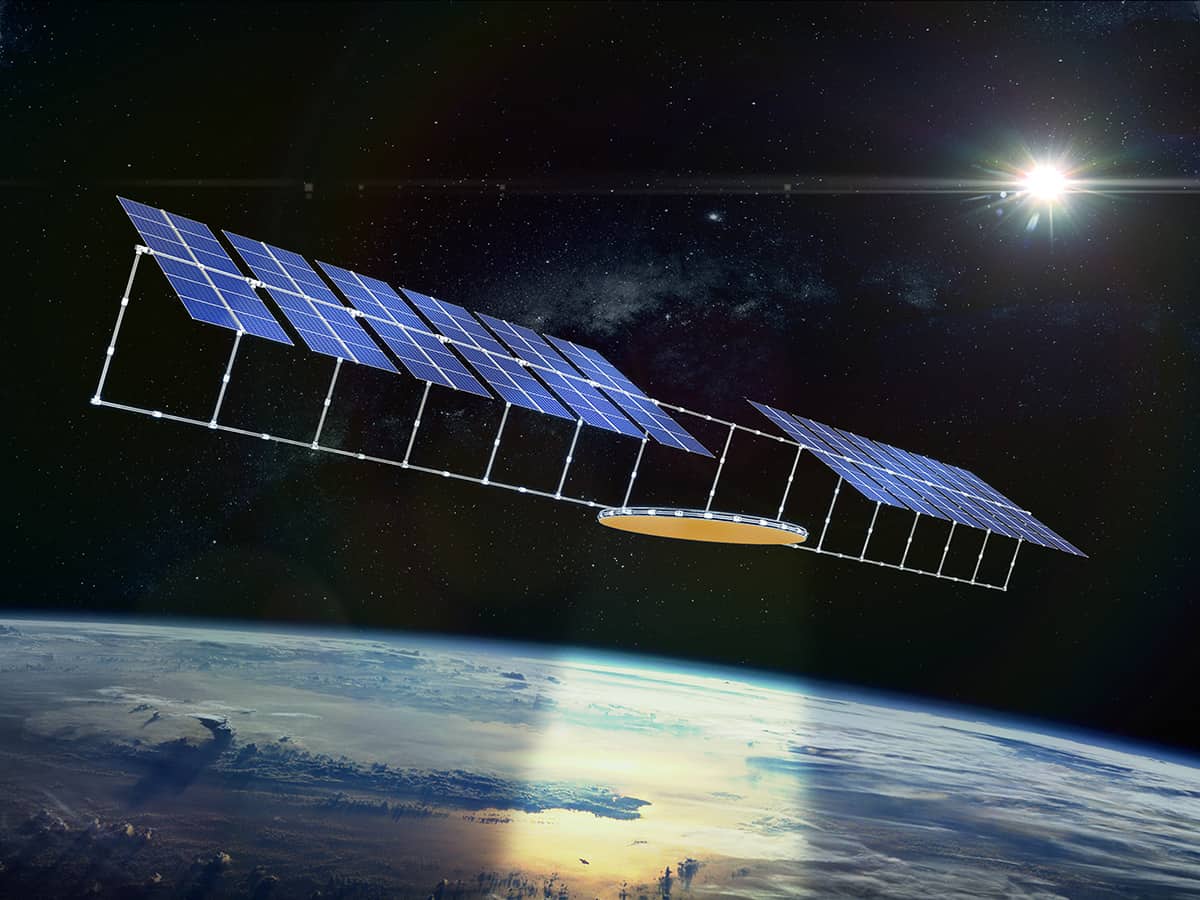
This concept for space-based solar power builds on the original 1968 proposals devised by the US engineer Peter Glaser. Known as the Multi-Rotary Joints Solar Power Satellite (MR-SPS), it was invented in 2015 by Hou Xinbin and others at the China Academy of Space Technology in Beijing. The 10,000-tonne satellite, which is about 12 km wide, would move in a geostationary orbit roughly 36,000 km above the Earth, with sunlight collected by solar panels and converted into microwaves that are beamed to Earth by a central transmitter. To allow power to be transmitted continually to us, the photovoltaic panels can turn to face the Sun relative to the central transmitter, which always faces Earth. The solar panels and transmitter are connected by a singular rectangular scaffold. Unlike rival designs, the MR-SPS concept does not rely on mirrors.
In 2015, for example, the technology received no more than a lukewarm verdict in a report from the Strategic Studies Institute (SSI) of the US Army War College, which cited “no compelling evidence” that space solar power could be economically competitive with terrestrial power generation. The SSI particularly criticized the “questionable assumptions” made by its proponents regarding getting such a huge orbiting structure into space. Simply put, the report stated that there aren’t enough launch vehicles, and those that are available are too expensive.
But the SSI’s less-than-glowing verdict came before private companies – especially SpaceX – began to transform the space industry. By combining reusable rocket systems with a trial-and-error attitude to research and development, the US firm has, over the last decade, slashed the cost of launch into near-Earth orbit by more than a factor of 10 (per kilo of payload), with plans to reduce it by an order of magnitude further. What the SSI considered a major limitation about launch costs is, in fact, no longer an issue.
Not that the cost of getting a satellite into space has been the only sticking point. Glaser’s original concept was deceptively simple, with many hidden challenges. For starters, as a satellite orbits the Earth, the angle between the Sun, the craft and the point on Earth to which the energy is sent is constantly changing. For example, if a geostationary satellite is trained on Earth, its photovoltaics will be facing the Sun at noon but have their backs to the Sun at midnight. In other words, the satellite would not generate electricity all the time.
The original solution to this problem was to continually rotate the photovoltaic panels relative to the microwave transmitters, which would stay fixed. The photovoltaic panels would then always point towards the Sun, while the transmitters would always face Earth. First put forward in 1979 by NASA as a development of Glaser’s ideas, the solution was extended further in a 2015 proposal by engineers at the China Academy of Space Technology in Beijing, who dubbed it Multi-Rotary Joints Solar Power Satellite, or MR-SPS (figure 1).
Meanwhile, John Mankins, a former NASA engineer, invented a rival solution in 2012. Dubbed SPS Alpha, his idea was to keep the solar panels and transmitter fixed, but install numerous mirrors surrounding the panels (figure 2). Known as heliostats, these mirrors would be able to rotate, continuously redirecting sunlight onto the solar panels and thereby allowing the satellite to supply power to the Earth without a break.
2 SPS-Alpha
(Concept and image courtesy John C Mankins)
In the SPS-Alpha concept, invented by former NASA engineer John Mankins in the US, the main body of the satellite – the solar panels and transmitter – is fixed and always faces Earth. Stationed in a geostationary orbit, the 8000-tonne satellite consists of a disc-shaped array of modules that convert sunlight to electricity via photovoltaics, and then transmit that energy as microwaves. Connected to this 1700 m diameter array is a separate, larger, dome-shaped array of mirrors, which independently turn to reflect sunlight to the array, depending on where the Sun is positioned relative to Earth in the geostationary orbit.
Neither MR-SPS nor SPS Alpha, however, is satisfactory, according to Ian Cash, director and chief engineer at International Electric Company Limited in Oxfordshire, UK. A former designer of electronic systems in the automotive, aerospace and energy sectors, Cash turned his mind a decade ago to the private development of clean, large-scale sources of energy. Initially lured by the potential of nuclear fusion, he was put off by its “really difficult” problems and quickly alighted on space-based solar power as the most practical option.
For Cash, the problem with both MR-SPS and SPS Alpha is that they have to rotate some parts of the satellite relative to others. Every part would therefore have to be physically connected to another and need an articulated joint that moves. Trouble is, when used on satellites like the International Space Station, such joints can fail due to wear and tear. Omitting articulated joints would make a solar-power satellite more reliable, Cash concluded. “I wanted to find out what it would take to have a solid-state solution that always sees the Sun and Earth,” he says.
By 2017 Cash had figured it out, or so he claims. His CASSIOPeiA concept is a satellite that essentially looks like a spiral staircase, with the photovoltaic panels being the “treads” and the microwave transmitters – rod-shaped dipoles – being the “risers”. Its clever helical geometry means that CASSIOPeiA can receive and transmit solar energy 24 hours a day, with no moving parts (figure 3).
Cash, who intends to profit from CASSIOPeiA by licensing the related intellectual property, claims many other benefits to his concept. His proposed satellite can be built of hundreds (and possibly thousands) of smaller modules linked together, with each module capturing solar energy, converting it electronically to microwaves and then transmitting them to Earth. The beauty of this approach is that if any one module were struck by cosmic rays or space debris, its failure wouldn’t knock out the entire system.
Another advantage of CASSIOPeiA is that the non-photovoltaic components are permanently in shadow, which minimizes heat dissipation – something that’s a problem in the convectionless vacuum of space. Finally, as the satellite is always oriented towards the Sun it can occupy more types of orbit, including those that are highly elliptical. It then would be, at times, closer to Earth than if it were geostationary, which makes it cheaper as you don’t need to scale the design on the basis of such a huge transmitter.
3 CASSIOPeiA
(Courtesy: IOP Publishing)
(Courtesy: IOP Publishing)
(Courtesy: Ian Cash)
a The CASSIOPeiA proposal for space-based solar power, developed by Ian Cash at International Electric Company Limited in the UK, envisages a satellite with a mass up to 2000 tonnes sitting in a geosynchronous or elliptical orbit around Earth. b Sunlight strikes two huge elliptical mirrors (yellow discs), each up to 1700 m in diameter, that lie at 45° to a helical array of as many as 60,000 solar panels (grey). These panels collect the sunlight and turn it into microwaves at a specific frequency, which are then transmitted to a ground station on Earth roughly 5 km in diameter. This station converts the microwaves into electricity for the grid. The advantage of the helical geometry is that the microwaves can be constantly directed towards Earth without needing articulated joints, which often fail in space environments. c The microwaves are instead steered via adjustments to the relative phase of solid-state dipoles.
Perhaps unsurprisingly, Cash’s competitors do not agree with his assessment. Mankins, who is now based at Artemis Innovation Management Solutions in California, US, disputes that the articulated heliostats in his SPS-Alpha concept are a problem. Instead, he claims they are “a simple extension of [a] very mature technology” that is already used to concentrate sunlight to heat fluids and drive turbines in “solar towers” here on Earth. He also believes that the dual mirrors required by CASSIOPeiA could be a problem as they must be very precisely built.
“I have high regard for Ian and his work; his more recent CASSIOPeiA concept is one of several that are very similar in character, including SPS-Alpha,” says Mankins. “However, I don’t agree with his expectation that CASSIOPeiA will prove to be superior to SPS-Alpha.” For Mankins, the best approach to space-based solar power will ultimately depend on the results of development projects, with the actual cost per kilowatt-hour of electricity here on Earth being the crucial factor.
Scalable and striking
Interest in space solar power has received an added boost in the wake of the UK government’s 2021 report into the technology, which could scarcely have been more positive about the concept. It was drawn up by engineers at the UK-based consultancy Frazer-Nash, who corresponded with a number of space-engineering and energy experts – including the inventors of SPS Alpha, MR-SPS and CASSIOPeiA.
The report concluded that a 1.7 km-wide CASSIOPeiA satellite in geostationary orbit transmitting solar radiation to a 100 km2 array of microwave receivers (or “rectenna”) located here on Earth would generate 2 GW of continuous power. That’s equivalent to the output from a large conventional power station. It’s also far better than, say, the existing London Array wind farm in the Thames estuary, which is about 25% larger but generates an average power of barely 190 MW.
More striking, however, was the report’s economic analysis. Based on an estimate that a full-sized system would cost £16.3bn to develop and launch, and allowing for a minimum rate of return on investment of 20% year-on-year, it concluded that a space-based solar-power system could, over its roughly 100-year lifetime, generate energy at £50 per MWh.
Frazer-Nash says that’s 14–52% more expensive than current terrestrial wind and solar energy. But, critically, it’s 39–49% cheaper than biomass, nuclear or the most efficient gas energy sources, which are the only ones currently able to offer uninterrupted “base load” power. The report’s authors also said that their conservative estimate for costings “would be expected to reduce as development proceeds”.
“It’s incredibly scalable,” says Martin Soltau of Frazer-Nash, one of the authors. And with the level of sunlight in the space around Earth being far brighter than down below, he reckons every solar module would collect 10 times as much as it would if installed on the ground. The report reckons that the UK would need a total of 15 satellites – each with its own rectenna – to provide a quarter of the country’s energy needs by 2050. Each rectenna could be located alongside or even within an existing wind farm.
If the scheme were scaled up further, it could in principle deliver over 150% of all global electricity demand (although a resilient energy supply would usually dictate a broad mix of sources). Space-based solar power, Soltau adds, would also have a much lower impact on the environment than Earth-based renewable energy sources. The carbon footprint would be small, there would be few demands on rare-earth minerals, and there would, unlike wind turbines, be no noise or tall visible structures.
If that all sounds too good to be true, it might well be. The Frazer-Nash report admits to several “development issues”, notably finding ways to make wireless energy transfer more efficient. Chris Rodenbeck, an electrical engineer from the US Naval Research Laboratory in Washington DC, says that large-scale demonstrations of the technology are hard to achieve. They require sustained investments and targeted advances in electronic components, such as high-power rectifier diodes, which are not readily available.
Fortunately, wireless energy transmission has been advancing for decades. In 2021 Rodenbeck’s team sent 1.6 kW of electrical power over a distance of 1 km, with a microwave-to-electricity conversion efficiency of 73%. On the face of it, that’s less impressive than the most powerful demonstration of wireless energy to date, which took place in 1975 when staff at NASA’s Goldstone lab in California converted 10 GHz microwaves to electricity at an efficiency of above 80%. Crucially, however, Rodenbeck used lower-frequency 2.4 GHz microwaves, which would suffer much less atmospheric loss in space.
To counteract the higher diffraction (beam spreading) that naturally occurs at lower frequencies, the researchers exploited the surrounding terrain to “bounce” the microwaves towards the receiver array, thereby improving power density by 70% (IEEE J. Microw.2 28). “We did [the test] fairly quickly and cheaply during the global pandemic,” says Rodenbeck. “We could have achieved more.”
Initial construction will require a 24/7 factory in space, with an assembly line like a car factory on Earth.
Yang Gao, University of Surrey
Rodenbeck is optimistic about the prospects of space-based solar power. Whereas nuclear fusion is, he claims, “running up against basic problems of physics”, space-based solar power – and wireless power transfer – is merely “running up against dollars”. “[It’s] the only form of green, renewable energy with the potential to provide continuous, baseline electrical power,” Rodenbeck claims. “Barring a technical breakthrough [in] controlled nuclear fusion, it seems highly likely that humanity will harness space solar power for future energy needs.”
A note of caution, though, comes from Yang Gao, a space engineer at the University of Surrey in the UK, who admits that “the sheer scale” of the proposed space system “is quite mind-blowing”. She believes the initial construction might well require “a 24/7 factory in space, with an assembly line like a car factory on Earth”, probably using autonomous robots. As for maintaining the facility, once built, Gao says that would be “demanding”.
For Cash, what’s crucial is the orbit that a space-power satellite would occupy. A geostationary solar-power satellite would be so far from Earth that it would require huge and expensive transmitters and rectennas to transmit energy efficiently. But by taking advantage of multiple satellites on shorter, highly elliptical orbits, says Cash, investors could realize smaller working systems on the CASSIOPeiA concept with a fraction of the capital. SPS Alpha and MR-SPS, in contrast, would have to be full sized from day one.
Is there enough will?
And yet the biggest challenge for space-based solar power may not be economic or technical, but political. In a world where substantial numbers of people believe in conspiracy theories surrounding 5G mobile technology, beaming gigawatts of microwave power from space to Earth could prove a tough sell – despite the maximum beam intensity being barely 250 W/m2, less than a quarter of the maximum solar intensity at the equator.
In fact, the UK report admits that its proponents need to test the public appetite, and to “curate a conversation” around the key ideas. But there are real technical and societal considerations, too. Where will the rectennas be sited? How will the satellites be decommissioned at their end of life without adding to space junk? Will there be space in the microwave spectrum left for anything else? And will the system be vulnerable to attack?
In the wake of its report, the UK government unveiled a £3m fund to help industries develop some of the key technologies, with former business secretary Kwasi Kwarteng saying that space-based solar power “could provide an affordable, clean and reliable source of energy for the whole world”. That pot of cash is unlikely to go far towards an undertaking of this scale, which is why Soltau has helped to set up a business called Space Solar, which hopes to raise an initial £200m from private investors.
Meanwhile, what he calls a “collaboration of the willing”, the Space Energy Initiative, has gathered scientists, engineers and civil servants from over 50 academic institutions, companies and government bodies, who are working pro bono to help bring a working system to fruition. SpaceX is not yet on the list, but Soltau claims to have caught the US company’s attention. “They’re very interested,” he says.
Cash does not doubt that investment will be found. Terrestrial renewables can’t deliver uninterrupted, base-load power without enormously costly battery infrastructure, while nuclear always faces stiff opposition. Space-based solar power, Cash believes, is a vital part of the mix if we’re to hit net-zero, and simply asking people to use less energy is a “dangerous idea”. Most wars have been fought over a perceived lack of resources,” he says. “If we don’t look at how to keep civilization moving forward, the alternative is very scary.”
A new design for a laser that is powered by sunlight has been unveiled by researchers in Algeria and Portugal. The solar laser, which has yet to be built in the lab, is predicted to operate at a higher efficiency than existing systems and could have numerous applications – including a space-borne system for harvesting solar energy for use on Earth.
The use of sunlight as a pumping source for producing laser light has been widely explored since the 1960s. Current technologies can be used to produce cost-effective laser systems with high power and brightness.
Numerous advances in solar lasers have been made over the past decade – but existing designs can be limited by their use of a single large laser rod. This rod is the gain material that produces laser light through the energy it acquires from the pump source. Single-rod solar systems tend to be expensive and suffer from uneven temperature distributions within the rod, which diminishes the quality of the beam it produces.
Numerical simulations
This latest work was done by Rabeh Boutaka at the Centre for the Development of Advanced Technologies in Algiers, Dawei Liang at NOVA University Lisbon and Abdelhamid Kellou at the University of Science and Technology Houari Boumediene. The trio did numerical simulations to help them design a more optimal solar laser set-up. Their proposed system would operate in the TEM00 optical mode: the fundamental, lowest-order laser mode, where the intensity of light surrounding the centre of the beam follows a simple Gaussian distribution. The team’s design collects sunlight using four parabolic mirrors with a total area of 10 m2.
Once this light has been harvested, it is directed to a laser head, where it is distributed evenly between four fused-silica concentrators and light guides. Finally, the light is used to simultaneously pump four small-diameter laser rods – with the set-up ensuring that pump power is distributed evenly between the rods. As a result, the design avoids the limitations presented by thermal lensing – an unwanted effect whereby temperature irregularities in an optical material affects the paths taken by light.
Altogether, Boutaka’s team calculated that their alterations doubled the light collection efficiency of solar lasers operating in the TEM00 mode, resulting in 1.24 times the sunlight-to-laser conversion efficiency of previous designs. The researchers envisage numerous potential applications for their design: including better methods for monitoring the Earth’s surface and atmosphere using satellites; along with the removal of space debris, and deep-space communications.
Perhaps the most fascinating application is the development of new forms of solar energy production. Here, Boutaka and colleagues propose that solar lasers could operate in space, where sunlight is around twice as strong as it is on Earth. Laser beams could be fired back to Earth, and collected by concentrated solar cells – in a process that is more efficient than ground-based solar energy collection.
Whether or not you know much about the philosophy of science, The Knowledge Machine by Michael Strevens is arguably the most accessible and engaging book on the topic ever written. The author – a philosopher at the University of New York – has produced something that is enthralling, beautiful and persuasive. Reading Strevens’ book is a bit like talking to a critical friend. Indeed, it was such a joy, I read it twice.
The author’s basic premise is that disagreements in science are settled by empirical tests whose results are archived in formal scientific journals. It’s what he calls the “iron rule of explanation”, which also allows theoretical ideas to be published without supporting evidence, provided they are intended for empirical testing. While I don’t agree with everything Strevens has to say, his book certainly helped me clarify my own thinking.
The author starts by discussing the “great method debate”, in which he pitches Karl Popper against Thomas Kuhn. Popper believed that, to qualify as science, a claim must be falsifiable, with scientists accepting the claim only if it cannot be falsified. Kuhn, meanwhile, introduced the concept of “normal science” operating within a settled “paradigm” that only occasionally gets upended. In fact, Strevens calls this “more than an explanatory framework; it is a complete recipe for doing science”.
In presenting these as rival theories, Strevens misrepresents and oversimplifies their ideas. “Do scientists fight to preserve the status quo,” he asks, “as Kuhn’s theory would tend to suggest, or to overthrow it, as Popper would have it?” Surely, though, these philosophies are complementary, with Popper nesting inside Kuhn? After all, scientists who do normal science are trying to replicate published results, which might lead to those ideas being falsified.
Strevens then turns in detail to the expedition carried out in 1919 by the British astronomer Arthur Eddington, who studied that year’s solar eclipse. It was designed to test whether the bending of light from distant stars supported Newton’s law of gravitation or Einstein’s general theory of relativity. Although the results were equivocal, Eddington concluded that they confirmed general relativity, which demonstrates that there is an element of subjectivity in the way scientific claims are interpreted.
This subjectivity is partly because of what’s known as the Duhem–Quine problem, which states that a scientific claim cannot be assessed in isolation because it depends on a retinue of auxiliary or background assumptions. Scientists also engage in what Strevens calls “plausibility rankings” to weigh up the significance of each assumption or to assess conflicting evidence. As Strevens puts it, scientists harbour a variety of “enthusiasms, hopes and fears [that] mould their thinking far below the threshold of awareness”.
Eventually a consensus is reached, just as migrating birds eventually find their destination. Ultimately, science is beautifully self-correcting
His suggestion is that Eddington was simply beguiled by the beauty of Einstein’s theory and, being a pacifist, accepted it in his eagerness for scientific rapprochement with Germany following the First World War. This, in turn, leads Strevens to concede that “scientists seem scarcely to follow any rules at all”, echoing the Austrian philosopher Paul Feyerabend’s dictum that “anything goes”. As for Strevens’ own philosophical position, that isn’t clear in the book but I suspect he is a “radical subjectivist” of the kind who have superseded Kuhn and Popper.
In discussing how science progresses, Strevens makes clear that different interpretations of the same data are allowed because science does not depend on “the unwavering rationality of any individual scientist” but on a succession of them, all applying the iron rule. “As evidence accumulates, plausibility rankings begin to converge”, which leads to competing theories being whittled down. Eventually a consensus is reached, just as migrating birds eventually find their destination. Ultimately, science is beautifully self-correcting.
Strevens also explains how scientists find inspiration wherever they like. While he doesn’t give examples, consider how Einstein and other physicists made progress via thought experiments or how the chemist August Kekulé day-dreamed his way to establishing the ring-like nature of the benzene molecule. This discussion reminded me of the Nobel-prize-winning biologist François Jacob, who contrasted the reasoning scientists do in their heads (what he called “night science”) with the formal stuff that appears in research papers (“day science”).
Sadly, Strevens’ iron rule stops scientists from supporting their claims with appeals to elegance or anything else that is non-empirical. It’s a prohibition he says is “irrational”. Whereas philosophers take into account all relevant considerations as part of the “principle of total evidence”, scientists wantonly throw away potentially valuable information. According to Strevens, it’s like buying a used car from a dealership but perversely ignoring the garage’s inspection report.
Strevens also focuses on the notion of mathematical beauty, which was held up as a guiding light by the likes of the late Steven Weinberg. So where does that put string theory? It lacks empirical support but has proved to be an elegant and useful framework for half a century. Surely it deserves to be accepted as legitimate science via a logical upgrade to the iron rule? Not so, says Strevens, who urges scientists not to “meddle with the iron rule”.
The Knowledge Machine is required reading for anyone who wants a more authentic picture of how science progresses
Ironically, this puts him in agreement with Richard Feynman, who saw no place for philosophy in science, famously declaring that “experiment is the sole judge of scientific ‘truth’”. It seems though that Strevens has only a grudging respect for scientists. He laments their narrow focus yet concedes it’s also a necessary virtue. Strangely, he blames scientists for trashing the environment, yet recognizes that science holds the key to solving our environmental problems.
The Knowledge Machine is replete with colourful anecdotes and clever analogies (the author’s description of science as a coral reef is sublime). Strevens is provocative and thought-provoking – and includes more than enough footnotes and references for readers to explore ideas further.
Although a potted history of the philosophy of science might have been helpful for those new to the discipline, The Knowledge Machine is required reading for anyone who wants a more authentic picture of how science progresses. You might not always agree with him, but Strevens challenges you to re-assess your understanding of the history, sociology and philosophy of science.
A new and simple way to control the stickiness of medical adhesives using ultrasound eliminates the need to use any potentially toxic chemicals to increase bioadhesion. The technique, developed by researchers from McGill University in Canada and ETH Zurich in Switzerland, could prove invaluable for applications such as tissue repair, wound healing, wearable electronics and drug delivery.
Bandages and plasters don’t usually stick well to wet skin. Ultrasound could help overcome this problem, not only on skin but on many other tissues, including mucosal membranes and aorta, explains lead author Zhenwei Ma, now at Harvard University and the University of British Columbia.
In their work, the researchers used microbubbles induced by low-frequency ultrasound to make adhesives stickier. The waves locally “boil” the liquid in an adhesive primer spread on the tissue substrate (a solution containing chitosan, gelatine or cellulose), forming vapour bubbles that grow and collapse violently towards the tissue surface. “Hydrogel patches made of polyacrylamide or poly(N-isopropylacrylamide) combined with alginate were then applied to the treated region to achieve strong adhesion,” explains Ma.
“This motion results in mechanical interactions that transiently push the adhesives into the skin and other tissues for stronger bioadhesion,” Ma tells Physics World. “By simply adjusting the intensity of the ultrasound and manoeuvring the ultrasound probe used to create the bubbles, we can control – very precisely – the stickiness of the adhesive bandages.”
The researchers tested their technique on rat and pig tissue. They found that the ultrasound amplified the adhesion energy between the tissue and the hydrogel by up to 100 times, and increased the interfacial fatigue threshold between the two by 10 times. Indeed, they measured adhesion energies of over 2000 J/m2 for skin, around 295 J/m2 for buccal mucosa and around 297 J/m2 for aorta. In comparison, adhesion energies for hydrogels not subjected to ultrasound were approximately 50, 12 and 17 J/m2, respectively.
Ultrasound-induced cavitation
The team’s theoretical modelling calculations suggest that the main mechanism underlying this bioadhesion is ultrasound-induced cavitation, which propels and immobilizes anchoring primers into tissue. It is the mechanical interlocking and interpenetration of these anchors that ultimately produces strong adhesion between hydrogel and tissue without the need for chemical bonding.
The adhesives could also be used to deliver drugs through the skin. “This paradigm-shifting technology will have great implications in many branches of medicine,” says Ma. “We’re very excited to translate this technology for applications in clinics for tissue repair, cancer therapy and precision medicine.”
As well as the unprecedented controllability of bioadhesion strength, the researchers say that their technique will allow many more types of materials to be used as bandages, plasters and interfaces with biological tissue. This will inevitably expand the potential areas of application, they say.
Two astronomers in the UK have shown that some giant planets orbiting far from their host stars have likely been captured from the planetary systems of other stars. Using computer simulations, Richard Parker and Emma Daffern-Powell at the University of Sheffield showed that giant planets recently discovered by the BEAST mission – and dubbed “BEASTies” – were probably ejected from their original systems shortly after their formation, and were then captured by other stars.
The planetary systems so far discovered by astronomers display a remarkable diversity. In systems like TRAPPIST-1, several small, rocky planets can be tightly packed together in orbits close to their host stars. In contrast, Jupiter-sized planets have been discovered in orbits hundreds of astronomical units (au, the distance from Earth to the Sun) from their hosts – often challenging astronomers’ preconceptions about how planetary systems form.
In 2021, the B-star Exoplanet Abundance Study (BEAST) discovered two Jupiter-sized planets orbiting OB-type stars. These are hot stars with masses at least 2.4 times that of the Sun. Current theories suggest that the intense radiation emitted by OB-type stars should have evaporated the discs of planet-forming material that originally surrounded them – precluding the formation of planets. Adding to the mystery of their existence, one of the BEASTies orbits its host at a distance of 556 au, which is well over 10 times greater than the distance between Pluto and the Sun.
Now, Parker and Daffern-Powell have developed an explanation for the formation of the BEASTies. As suggested in previous studies, it should be possible for planets to be exchanged between planetary systems. This could occur after a planet is somehow ejected from its original host star and captured by another star as it wanders through interstellar space. Another possibility is that a planet is stolen as two stars pass close to each other.
Sparsely populated regions
These scenarios seem highly unlikely at first glance, especially because OB stars tend to exist in more sparsely populated regions of the galaxy. However, some astronomers believe that OB stars may have formed in nurseries with far higher stellar densities. This was followed by a period when the stars moved apart rapidly. In such a scenario, exchanges of planets between stars could have occurred far more readily within these dense regions.
To explore this idea, the Sheffield duo did computer simulations of stellar nurseries to estimate how readily these planetary heists could occur. Their results showed that on average, a capture occurred once within the first 10 million years of the evolution of a dense star-forming region. The simulations also suggest that the BEASTies were more likely to have been captured as free-floating planets than stolen directly, given the shapes and sizes of their orbits.
This discovery strengthens the idea that planets orbiting at distances greater than 100 au from their host stars are no longer occupying the systems where they originally formed. The duo’s results offer important guidance for future observations of the BEAST mission and help to better explain the immense diversity of planetary systems we observe today.
When walking in an area that is busy with cars, most people will focus their gaze on the driver of a vehicle, rather than the vehicle itself. This is both to ensure that the driver has seen them and to gauge where the car will go next.
Some people, however, are unable to see fine details such as where a driver is looking and, in the future, self-driving cars will not have a human driver to look at. Now researchers in Japan have done a study that suggests a way of addressing these problems.
Takeo Igarashi and colleagues at the University of Tokyo fitted a self-driving electric golf cart with a large pair of eyes with pupils that move in unison to make it appear that the vehicle is looking in a specific direction.
Virtual road crossing
They did an experiment in which people waiting to cross a road are approached by the cart with eyes and without eyes, and decide what to do. For safety reasons, the participants viewed the scenarios using a virtual-reality system, rather than walking out in front of a real golf cart.
In some cases, the eyes were focused on the pedestrian – indicating that the self-driving system had recognized that someone was about to cross the road and would stop. In other cases the eyes looked away, indicating that the vehicle was oblivious to the pedestrian and would not stop.
The team found that overall, the subjects were able to use the information provided by the eyes to make better judgements when crossing the road. However, they did find that male participants made more unsafe crossings that female subjects. While some participants found the eyes endearing, others said that they were creepy.
The eyes have it
Aesthetics aside, Igarashi and colleagues believe that fitting self-driving cars with some sort of robotic eyes could reduce collisions with pedestrians. Indeed, they plan to build a self-driving vehicle in which the navigation computer sets the direction of the eyes when it detects a pedestrian (the eyes in their recent experiment were set manually).
Igarashi says, “I hope this research encourages other groups to try similar ideas, anything that facilitates better interaction between self-driving cars and pedestrians, which ultimately saves people’s lives.”
The research was presented at the 14th International Conference on Automotive User Interfaces and Interactive Vehicular Applications in Seoul.
Martian hike
Negotiating a busy carpark can be dangerous, but it has nothing on walking on Mars. Even if you could get there, you would have to endure very chilly temperatures and a distinct lack of oxygen. Fortunately, Sebastian Walter at the Free University of Berlin and colleagues have created a virtual Martian hike that you can enjoy from the comfort of your own home.
The interactive map guides you across the Jezero crater, which is currently being explored by NASA’s Perseverance Rover. Indeed, many of the images and sounds used to create the experience have been gathered by that mission. The base layer of the map was created using data from three different instruments that are currently orbiting the Red Planet.
Virtual hikers can zoom in on images that they encounter and can also pan across Martian vistas.
Walter says, “The map is the perfect tool for planning a future visit to Mars, with an interactive interface where you can choose from different available base datasets. Some of the slopes are pretty steep, so watch out for those if you want to avoid too much oxygen consumption!”.
While the map was originally developed to get the public interested in Mars, Walter believes that it could develop into a research tool as more data from Perseverance are included.
Green hydrogen (GH2) is produced through the electrolysis of water in an electrolyser, powered by renewable electricity, e.g., wind, solar, hydro, thermal, (<0.1% of the global hydrogen production versus 99% from fossil fuels). Some recent market reports indicate that between 400 and 550 million tonnes of GH2 will be produced by electrolysis, requiring 3000–4000 GW of electrolysers (ca. 3000–4000 times increase in electrolyser capacity by 2050).
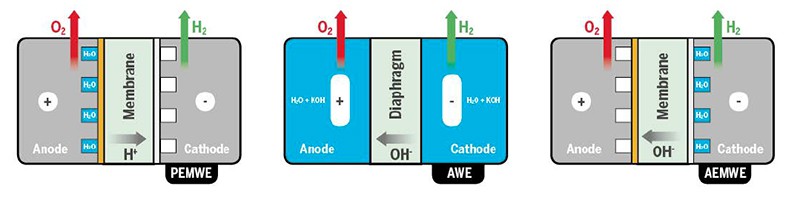
Water electrolysers and especially low-temperature water electrolyser (LT-WE) technologies strongly depend upon (i) materials used, i.e. catalysts, electrolytes, separators, electrodes, porous transport layers/gas diffusion layers and (ii) working temperatures and pressures. Currently, there are three main types of LT-WE, namely: (i) proton exchange membrane water electrolyser (PEMWE), (ii) alkaline water electrolyser (AWE), and (iii) anion exchange membrane water electrolyser (AEMWE). For all LT-WE, further R&D in materials and systems (e.g. balance of plant) is required to drastically improve efficiency, performance and durability, as well as reducing costs.
This presentation highlights the state-of-the-art, benefits, bottlenecks (e.g. critical raw materials, membranes, degradation, costs), strategies for cost reduction (materials, stack and system levels), potential routes for overcoming the major issues, and key performance indicators and technology targets for all LT-WE technologies.
Bruno G Pollet is a professor of chemistry at the Université du Québec à Trois-Rivières (UQTR), director of the UQTR Green Hydrogen Lab (GH2Lab), deputy director of the UQTR Institute for Hydrogen Research (IHR), and adjunct professor of renewable energy at the Norwegian University of Science and Technology (NTNU). He has worked on hydrogen energy in the UK, Japan, South Africa, Norway and Canada. He holds two prestigious research chairs, the NSERC Tier 1 Canada Research Chair in Green Hydrogen Production, and the Innergex Renewable Energy Research Chair (partly funded by the Quebec Ministry of Economy and Innovation) focusing on the next generation of water electrolysers and hydrogen production technologies. He is also president of the Green Hydrogen Division of the International Association for Hydrogen Energy (IAHE). He was recently invited to join the Council of Engineers for the Energy Transition (CEET): An Independent Advisory Council to the United Nations’ Secretary-General, and awarded the IAHE Sir William Grove Award for his ground-breaking work in hydrogen, fuel cell and electrolyser technologies.
Prof. Pollet completed his PhD in physical chemistry at Coventry University and undertook his postdoc in electrocatalysis at Liverpool University. His research covers a wide range of areas from the development of novel materials for low-temperature fuel cells and water electrolysers, hydrogen production from (non-)pure waters, organics and bio-wastes to fuel cell and electrolyser systems, demonstrators and prototypes. His research also focuses on ultrasound and sonoelectrochemistry to produce fuel cell and electrolyser materials, and to improve electrochemical processes. He is the author of two books, edited more than 17, and published more than 25 book chapters on hydrogen and fuel cells, sonochemistry, and sonoelectrochemisty. He delivered more than 200 keynote and invited talks at various international events.
One of my guilty pleasures is watching TV competitions where people make stuff. Whether it’s clothes on Sewing Bee, cakes on Bake Off or pottery on Throw Down, I can’t get enough of the amazing skills and creativity of the contestants. Though sometimes it’s their failures that also make compelling viewing.
At the moment I’m absorbed in a Netflix series called Blown Away. It features 10 glass artists competing to win $60,000 and a residency at Corning Museum of Glass in the US. The challenge for the contestants in each episode is to create a glass sculpture based on a theme chosen by the adjudicators. And of course, at the end of every show, the judges send one artist home until a winner is crowned.
The programme demonstrates the immense strength, skill and determination needed to manipulate molten glass into any recognizable form
I’ve always wanted to have a go at glass-blowing but the programme demonstrates the immense strength, skill and determination needed to manipulate molten glass into any recognizable form, let alone a piece of art. As it takes place in “North America’s largest hot shop” – with furnaces working at around 1000 °C – the contestants are sweating buckets and phrases like “I have never sweat or smelled this bad in my life” are commonplace.
What’s more, the contestants have to be physically strong to handle the glowing orange blobs at the ends of long pipes in this intense environment. Artist Grace Whiteside (one of my favourite entrants) revealed they even hired a trainer to prepare for the competition. But by using weird and wonderful techniques, the artists somehow turn this raw material into delicate structures featuring a myriad of colours within just a few hours. That’s not to say it’s always successful – nearly every episode there’s at least one heart-stopping shattering of glass as a partly made piece crashes to the ground, and the contestant has to start all over again.
Over the course of the three seasons to date, the themes have ranged from standard glass objects – including light fixtures, perfume bottles and drinking vessels – to items that you wouldn’t normally associate with glass such as robots, body parts and food. There have even been more conceptual topics like duality, fears and memories. But it was the third episode in the latest series (season 3) that particularly caught my attention because the theme was the International Year of Glass. Having helped put together a special issue of Physics World devoted to the year, I felt heavily invested.
The remaining eight competitors were asked to make a sculpture inspired by a glass invention that changed the world. But where do you even begin with such a brief? As resident judge and glass artist Katherine Gray said during the episode’s introduction: “There is 5000 years of innovation all around us.”
My mind immediately turned to optical equipment, such as lenses, mirrors and prisms. Surely the manipulation of light would lend itself well to a piece of art made of glass? As I’m not a professional artist, I was therefore pleased when glass-blower Minhi England went down a related route. She fashioned a piece inspired by the glasses that can help people who have a certain type of colour blindness distinguish between wavelengths more effectively. Called Full Colour Spectrum, the sculpture consists of a large clear lens in front of spheres that are positioned and coloured in such a way that it appears the lens provides the colour. While not scientifically accurate regarding the way these glasses work, it is certainly eye-catching.
Of the other seven remaining contestants, two went for fibre-optic cables and another two chose smartphone screens, with each sculpture featuring a nod to either the history of glass or how it connects people. Meanwhile Whiteside mimicked Corning’s famous Pyrex cookware shapes in a slightly distorted way, and Trenton Quiocho made a set of the very recognizable vessels found in every chemistry lab.
For me, the best piece was by John Sharvin (my other favourite contestant). At university he switched from studying engineering to fine arts in glass, which is perhaps why he went down a different path to the other artists. Titled Perspective, his sculpture features a detailed depiction of an old-fashioned telescope directed at a vividly coloured and textured virus.
Sharvin says he was inspired by the controversy Galileo Galilei faced with his findings about the solar system, and how that “debate between scientific evidence and non-science thought has continued throughout history and has increased in recent years”. It was an interesting spin on the brief and I liked the fact he chose a less obvious glass invention.
The International Year of Glass was not the only reference to science in this latest series. Episode 8’s theme was space, and the sculptures included a floating iridescent Earth, a moon crashing into a planet, and an alien plant giving birth (yes, it was as weird as it sounds). The most interesting part of this episode was the guest judge – space scientist Marianne Mader. She talked about some of the applications of glass in space exploration, and her excitement over the sculptures was that of a scientist who really enjoys seeing their field represented in such a creative way.
As Quiocho puts it when talking about his laboratory glassware, “Science and glass go hand-in-hand, and so I guess the message behind this piece is ‘science is cool’.”
The UK government must develop a “clear, comprehensive vision for research and development”, and failing to do so could result in the country being left behind. That is according to a new report – Physics: Investing in our Future – released this week by the Institute of Physics, which publishes Physics World. The report also calls for changes across the physics R&D system from discovery and business innovation to people and infrastructure.
As the report notes, physics has been at the heart of many technological breakthroughs, such as the development of fibre optics, which is critical to modern communication. According to earlier estimates from the IOP, physics-based businesses play a significant role in the UK economy. In 2019, for example, they generated about £230bn – equivalent to 11% of UK GDP.
The report warns, however, that without continued investment in science, the UK economy could lose thousands of jobs. To combat this possibility, it calls on the UK government to target spending 2.4% of GDP on R&D in the coming years along with above-inflation increases in the research councils’ budgets to 2027. In 2019, UK spending on science was 1.74% of GDP.
The report says that funding should be “long-term and sustainable, to enable people and disruptive ideas to flourish” and that governance processes should recognize and nurture “a broader range of excellence across all types of institution and all stages of research”. IOP chief executive Tom Grinyer calls the 2.4% target “just the starting point”, adding that the UK is now at a “critical juncture”.
Now is the time
The report also focuses on diversity, recommending that learning and working cultures must be welcoming and inclusive to people from all backgrounds. It calls for additional funding to support long-term fellowships as well as expand the use of industrial placements in PhD programmes and to “address challenges” in teacher recruitment.
“Today’s report should be a wake-up call to anyone who is committed to the UK’s future as a prosperous, sustainable, technologically advanced nation,” says Grinyer. “At a time when we are facing concerns over energy bills and the cost of living it might seem we could ignore the kinds of longer-term concerns about research and development – but now is the time to invest in the science and innovations that can help prevent these kinds of crises in the future.”