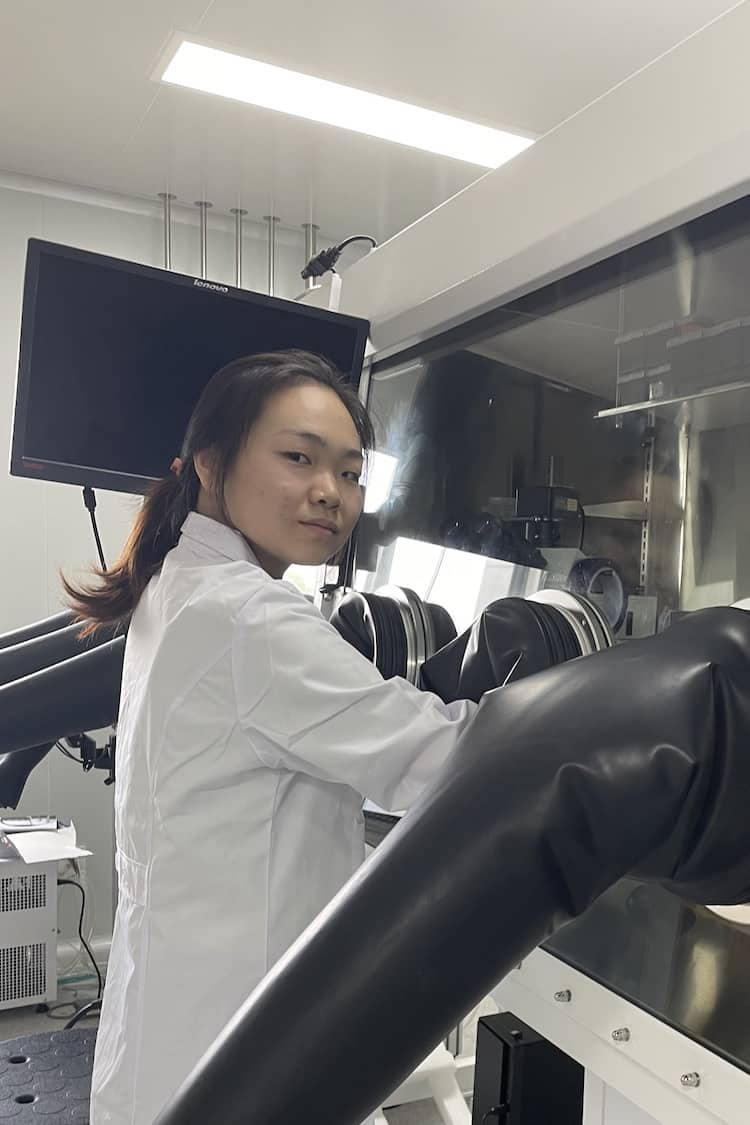
As an early career nanoscientist, I have so far worked in research groups in four different countries. The culture and supervision style in each group were never quite alike, but what they had in common was that PhD students often faced the same mental and emotional challenges. Sadly, research is rarely the hardest part about doing a PhD – rather, it is managing the dynamics between a supervisor and their students and wider research group. Difficult situations often – but not always – arise due to dysfunctional leadership styles and toxic work environments.
There is a scary and common misconception in physics that students work better if their supervisors and other senior group members pressure them with negative, condescending language. The students might be undermined and made to feel inferior to their peers, but – so the thinking goes – it’ll spur them on. However, this leadership style drains students and makes them less engaged, worsening their performance. In contrast, PhD students who feel respected and encouraged have a higher work output, share their work more openly and progress faster.
Supervisors must take responsibility for their role as leaders and assess whether they are helping or hindering their students. Improving academia’s work culture is crucial for the future of physics – and supervisors play a vital role in fostering a welcoming environment for all. Any supervisor who thinks they don’t influence their research group’s culture is underestimating their role as the captain of the ship.
To keep PhD students motivated and hardworking, supervisors and other group members need to encourage, guide and support one another. So, what can supervisors do – and more importantly not do – to improve the wellbeing of their students so that they can raise their own work standards and that of the research group?
Setting the standard
PhD students will be happy and productive if they are made to feel understood and respected. Supervisors need to remember that students are highly motivated researchers and – driven by that motivation – they are working as hard as they can. Any comments that suggest otherwise can be manipulative, signal a lack of trust, and can cause the student to feel undervalued, misunderstood and demotivated.
If there is a concern that a student is not working hard enough, their supervisor should schedule a meeting to discuss the situation in an honest and respectful way. Negative comments and jokes about a particular student not working hard enough usually do more harm than good. Positively influencing their motivation, for example by encouraging students to overcome their research challenges, is the best way forward. After all, a student’s output is heavily guided by their supervisor.
In my experience, the best research groups are those where people help each other to progress, stand up for each other and have a healthy dynamic. Supervisors can create this kind of environment by leading by example: being supportive and encouraging in meetings, and suggesting open collaboration. This kind of culture will not be fostered by comparing students’ progress against each another, or putting down group members to others behind their backs, or rewarding those who succeeded but left a mess behind for others to clean up. The language a supervisor uses when talking to students will rub off on them so that when they talk to each other it will be done in an equally respectful (or disrespectful) way.
I also encourage supervisors to find out what their PhD students need, rather than what they think they need. The quickest way to optimize supervision style is to ask for feedback – and to listen to it. Sure, there are sometimes good arguments for running things the way they always have been done, but it might create a huge positive change if supervision style is adapted even slightly to such feedback.
People are often more motivated by clear, well-defined tasks rather than a lack of direction. Although research is by its very nature undefined, which makes it easy to get bogged down in a particular problem, students still need input from their supervisors on the “bigger picture” progress of their project as well as reassurance about the goal that everyone is working towards.
For those who could have a future in academia, give them a fair and realistic picture of what it is like to work there. For those who hope to forge a career path in industry, teaching, finance, engineering, IT or the many other areas that physicists go into, students still need to be respected and encouraged so that they part ways on good terms. How previous group members have been treated will heavily influence the dynamics of the group.
Many physicists go into the subject because they love science and not necessarily because they wanted to be leaders of people. But the fact remains that supervisors are crucial to nurturing the next generation of scientists – and that power and responsibility must be used for good.
One of the most distant galaxies ever observed is very likely to be rotating, say astronomers. An international team led by Tsuyoshi Tokuoka of Waseda University, Japan, discovered the motion using observations from the Atacama Large Millimetre/submillimetre Array (ALMA) in Chile. The result offers crucial new insights into the evolution of newly formed galaxies and could provide useful guidance for upcoming observations with the James Webb Space Telescope (JWST).
When galaxies first began to form, the universe was in its “dark ages” – a period when virtually all matter was cool and transparent. As matter collapsed under gravity, galaxies formed, kicking off star formation in nascent galactic centres and triggering the so-called “epoch of reionization” that ended the dark ages. From there, star formation spread out into rotating galactic discs, where newer stars now reside.
Astronomers still have much to learn about the physics that governed these ancient galaxies. To shed new light on these questions, including the origins of the galactic rotation, Tokuoka and colleagues turned to observations from ALMA. This instrument has revolutionized the observation of distant, highly redshifted galaxies, owing to its impressive spatial and frequency resolutions.
In the latest study, the researchers used ALMA to study MACS1149-JD1: a gravitationally lensed galaxy that lies over 10 billion light-years away, making it one of the most distant objects ever confirmed. Through spectroscopy, astronomers have discovered that JD1 contains a population of stars roughly 300 million years old, placing its origins well inside the universe’s dark ages – just 270 million years after the Big Bang.
Different redshifts
The team examined the characteristic wavelengths emitted by doubly ionized oxygen (O III) in JD1. This gas is widely found in supernova remnants, making it a key component of material in the interstellar medium. Thanks to ALMA’s resolution, the team was able to identify variations in the redshift of O III emissions in different parts of the galaxy. This revealed a gradient in the velocity of material in JD1’s interstellar medium – with one side of the galaxy displaying a distinctly different redshift.
This observation satisfied nearly all criteria that must be met to confirm that a galaxy is rotating, making it the earliest example of a rotating disc ever discovered. Its rotational speed was also far slower than is found in other galaxies, including our own – suggesting that JD1’s rotational motion is still in its early stages.
The result, which is described in The Astrophysical Journal Letters, means that astronomers have a record of galactic rotation speeds spanning over 95% of the universe’s total history, which members of the team say is an important step in understanding of how the physical characteristics of galaxies evolve. Tokuoka and colleagues now hope that many remaining questions will soon be answered with the help of the JWST, which should enable them to identify the ages of specific stellar populations inside the galaxy.
I recently booked my first flight since the COVID-19 pandemic devastated the aviation industry. Who can forget the airports full of grounded planes, with staff and pilots laid off? According to the International Civil Aviation Organization (ICAO), the number of air passengers worldwide fell by 60% between 2019 and 2020. And although numbers climbed back to 2.3bn in 2021, they were still 49% below pre-pandemic levels.
But despite the problems, sustainable air travel has made big progress over the last two years. Many airlines and carriers have exploited the opportunity afforded by the drop in passenger numbers to scrap older, less economic and less efficient planes. Planes spew out carbon dioxide (CO2) and nitrous oxides (NOx), which also helps form ozone in the upper troposphere. They also emit particulates and leave water-vapour trails (contrails), both of which trap heat.
Sustainable air travel has made big progress over the last two years.
With airlines and plane manufacturers keen to improve their environmental credentials, one simple solution is to power aircraft with bio-fuel, known as sustainable aviation fuel (SAF) in the trade. Existing aircraft can use jet fuel mixed with 50% SAF without needing to be modified in any way. Doing so can slash emissions by up to 80% compared to ordinary jet fuel, with Rolls-Royce and Boeing having already carried out test flights on 747s fitted with Trent engines using 100% SAF.
Alternative fuels
Unfortunately, these greener fuels are up to five times more expensive than jet fuels so they won’t succeed without tax incentives or investment by the fuel industry to make them cheaper. The Finnish firm Neste, for example, is using old cooking oils as a feed stock for its SAF, claiming that more than 370,000 commercial flights have used SAF since 2016. Neste can currently make about 150 m litres of the fuel a year, but that’s still a tiny fraction of what’s needed – and there’s only so much used cooking fat available before SAFs compete with global food supplies.
Those concerns are one reason why the Biden administration has launched the Sustainable Aviation Fuel Grand Challenge, which aims to produce 3 billion gallons of SAF a year by 2030. But even if that ambitious goal is met, SAFs will only cut the direct CO2 emissions from planes; they do nothing for NOx, water vapour or contrails. The obvious solution is hydrogen, which emits almost no CO2, very little NOx and just a bit of water vapour. Its energy density (140 MJ/kg) is triple that of kerosene (43 MJ/kg) and far higher than lithium-ion batteries (0.95 MJ/kg).
On the downside, hydrogen is a gas at room temperature, which means it has to be liquefied or compressed so it can be stored in the fuselage. That’s why I think electric batteries could be an answer, for smaller planes at least. Last year Rolls-Royce broke two world records for the fastest all-electric plane, hitting speeds of 555 km/h over a distance of 3 km. The plane used a 400 kW axial flux electric motor from the Oxford-based automotive powertrain supplier YASA.
Unfortunately, today’s batteries are so heavy and bulky that battery-electric planes will probably only be useful for short flights. But according to a recent report from the UK’s Aerospace Technology Institute (ATI), the aviation sector can become carbon-neutral by 2050 using a combination of SAFs and ultimately “green” hydrogen (i.e. hydrogen not derived from fossil fuels) using fuel cells, gas turbines and hybrid systems. The ATI believes that a mid-sized hydrogen-powered plane could be flying by 2035 and a narrow-body aircraft by 2037. The former could fly 280 passengers from London to San Francisco directly.
If half of the world’s commercial planes were hydrogen-powered by 2050, the ATI reckons that the aviation sector’s carbon emissions would fall by 4 × 10⁹ tonnes (4 Gt). That would be equivalent to four years’ worth of emissions from all existing conventional planes, with potentially 14 Gt being saved by 2060. It’s not a pipe dream: many companies contributed to the ATI’s report, including Airbus, easyJet, Eaton, GE Aviation, GKN Aerospace, Reaction Engines and Rolls-Royce.
Elsewhere, Reaction Engines, IP Group and the UK’s Science and Technology Facilities Council launched an intriguing new joint venture at the COP26 conference in Glasgow. They want to see if the exhaust heat from a plane can be used to make hydrogen from ammonia fuel, creating a blend that mimics jet fuel and can be used in existing aircraft engines. Meanwhile, Aviation H2 in Australia is using liquid ammonia combustion in modified jet engines and aims to have a converted Dassault Falcon 50 plane in the skies by mid-2023.
Retrofitting existing aircraft with hydrogen-electric powertrains makes good economic and environmental sense.
Beyond this kind of “green ammonia”, perhaps the cleanest option of all is being pioneered by UK/US start-up ZeroAvia, which has re-fitted an existing turboprop Dornier 228 commuter plane with hydrogen fuel cells and electric motors. Compared to jet engines, its approach could cut operating costs by 60% and maintenance costs by 75% – and, of course, with zero emissions. ZeroAvia has already carried out the first zero-emission six-seater plane flight, signed a partnerships with British Airways and United Airlines, and raised over $130m in funding.
Retrofitting existing aircraft with hydrogen-electric powertrains makes good economic and environmental sense given that there were 23,000 commercial aircraft in service around the world in 2017. But I am also intrigued by a potentially revolutionary new plane design being developed by US start-up Otto Aviation. Its ultra-aerodynamic laminar flow Otto Celera 500L craft can – the company claims – take six passengers more than 8300 km at speeds of 740 km/h using a single propeller, flying 8–9 times further per litre of fuel than a similar jet can.
If developments like these succeed, perhaps “green flying” will one day be possible.
Researchers in the Netherlands have produced models of a beetle that changes colour and a scallop shell that opens and closes in response to changing humidity in the surrounding air. Inspired by iridescent structures in nature, Jeroen Sol and colleagues at Eindhoven University of Technology showed that they could integrate a specialized liquid crystal into standard 3D-printing techniques, creating “4D printed” devices that react to their changing environments.
Over millions of years, many organisms have evolved micro-scale structures in their anatomies that allow them to change their vibrant iridescent colours in response to stimuli. Recently, researchers have developed inks that change colour in the same way and have begun to experiment with incorporating them into 3D-printed structures.
This technology has been dubbed 4D printing, where the fourth dimension represents reversible, time-varying changes to the structures after printing. One widely used technique in 4D printing is to deposit ink directly onto 3D printed structures. This approach can accommodate many types of material, as well as a versatile range of printing temperatures, speeds and path designs.
Liquid crystals respond to environmental changes
A particularly promising class of inks for 4D printing are cholesteric liquid crystals (ChLCs). In conventional liquid crystals, molecules flow like a liquid while still orienting themselves like a solid crystal. In ChLCs, molecules arranged across multiple vertical layers can adopt spiral structures in their orientations. Crucially, these structures can be easily and reversibly varied in response to the presence of water, certain chemical compounds and mechanical forces – all of which alter their optical characteristics.
In their study, which they describe in Advanced Functional Materials, Sol and colleagues took inspiration from a species of longhorn beetle (Tmesisternus isabellae) that changes its iridescent colour in response to humidity. To reproduce this effect, the researchers incorporated ChLC ink onto the back of a 3D-printed beetle, then treated this layer with acid in such a way that its crystal structure would respond to moisture.
In high-humidity conditions, the ink swelled. This altered its spiralling molecular structure, causing the beetle’s vibrant iridescent colour to transform from green to red. Once the humidity was removed, the ink reverted back to its original structure, and the beetle turned green again.
An open and shut case
In a parallel experiment, Sol and colleagues printed an open scallop shell from a ChLC elastomer material prone to swelling in high humidity. The team then treated one side of the shell with light to remove this humidity response, while treating the other side with acid as they had with the beetle. This meant that when exposed to dry air, the acid-treated side shrank, causing the shell to clamp shut, only to open again once humid air was restored.
Sol’s team says that these reversible, stimuli-responsive behaviours could inspire applications in robotics and sensing technologies. They could be particularly useful in healthcare, where affordable, wearable 3D printed devices would allow patients to monitor their symptoms simply by tracking the devices’ variable iridescent colours.
Researchers in the US have shown how brainwaves detected in unresponsive patients can help predict if and when they will make a full recovery from traumatic brain injury. By analysing the electrical signals using machine learning, a team led by Jan Claassen at Columbia University Irving Medical Centre found that patients who recover faster tended to generate brainwave activity in response to verbal commands, even when their bodies couldn’t respond physically.
For clinically unresponsive patients who have suffered from traumatic brain injury, it can be incredibly difficult for doctors to predict how long it will take for them to fully recover. As patients start to show signs of recovery, rehabilitation is crucial to ensuring that their brains regain their usual function.
To maximize their chances of success, these rehabilitation programmes must be tailored to the unique rate of progress of each patient. Yet for reasons that neurologists don’t yet understand, the timescale of recovery can vary drastically between patients: ranging from just a few months to potentially several years. Ultimately, this makes it far harder for doctors to decide on how rehabilitation should proceed.
Currently, the extent of a patient’s recovery is often assessed by asking them to respond to simple verbal commands to move a certain part of their body. Those who do not respond to these commands are considered unconscious.
Recently, however, more advanced techniques have emerged, based on electroencephalography (EEG). Here, electrodes placed on a patient’s scalp pick up their brainwaves: oscillations in electrical current generated by large clusters of synchronized neurons in their brains. Studies have shown that even if patients with traumatic brain injury can’t respond to verbal commands directly, their brainwaves indicate that they are aware of them to at least some extent. In this case, patients are said to be in a state of “covert consciousness”.
In their study, Claassen and his team worked with 193 intensive care patients with traumatic brain injury, all of whom were unresponsive to verbal commands at the start of the study. To identify covert consciousness in the patients, the researchers applied machine learning to their EEG recordings – allowing them to distinguish whether the brainwaves appearing after verbal commands to “keep moving” were different from those triggered by instructions to “stop moving”.
In total, the researchers identified brainwaves associated with covert consciousness in 27 of the patients. Out of this group, 41% had made a full recovery after just one year; while nearly all of them showed visible signs of improvement after just three months. In contrast, just 10% of patients without covert consciousness had made a full recovery over the same period.
The result is an important step forward in neurologists’ understanding of how the timescale of recovery in unresponsive patients can be predicted from their brain activity. Based on these insights, Claassen’s team hopes that doctors could develop smarter rehabilitation programmes for their patients; while also helping their families to make more informed decisions about their care.
Conventional ultrasound imaging – as routinely employed in hospital scans – works in reflection mode and provides qualitative images of soft tissue reflectivity, or echogenicity. In ultrasound tomography (UST), by contrast, many more measurements are taken and a computational algorithm is used to reconstruct quantitative images of acoustic properties, most commonly the sound speed.
Although UST was first proposed several decades ago, recent advances in hardware, not least in computational power, have led to a revival of interest and progress in the technique, in particular for breast imaging.
Bringing together UST research groups from around the globe, the 3rd International Workshop on Medical Ultrasound Tomography, MUST 2022, took place last month from 27–29 June, hosted by the National Physical Laboratory (NPL) in collaboration with Imperial College London and University College London.
The talks at the workshop covered all aspects of UST, from hardware design, through image reconstruction, to application in the clinic. But there were perhaps two dominant themes: breast imaging and the use of full-waveform inversions for image reconstruction.
The workshop was opened by NPL’s Chief Scientist, JT Janssen, who described some of the illustrious history of NPL and its current roles in maintaining standards and thereby accelerating research and innovation and facilitating trade.
The first invited speaker was Jeroen Veltman, a breast radiologist from the University of Twente in the Netherlands, who gave a clear description of the clinical workflow requirements and unmet needs in breast radiology. Recently, UST scanners developed by both QT Imaging and Delphinus Medical Technologies have been approved by the US Food and Drug Administration for breast imaging, and the conference attendees heard from the chief scientists behind both these scanners, James Wiskin and Neb Duric.
The group led by Nicole Ruiter, from Karlsruhe Institute of Technology, is a long-time pioneer of fully 3D breast UST technology. Ruiter spoke about UST technical challenges and system design, including presenting details of the group’s latest breast scanner.
The topic of image reconstruction using full-waveform methods was headlined by Jeroen Tromp from Princeton University, who gave a beautifully illustrated description of the state of the field of waveform tomography in the geosciences and seismology, and noted the considerable overlaps with biomedical imaging.
Continuing this theme, there were several talks concerned with applying UST to imaging the brain through the intact skull. The skull is a major barrier to ultrasound, so this represents a considerable challenge. It will be exciting to see, at the next MUST conference, how much progress has been made.
The meeting was supported by NPL, Precision Acoustics, Blatek, the Department for Business Energy & Industrial Strategy, and the UK Acoustics Network (UKAN), who sponsored an early career researcher prize for the best poster. The winner of the UKAN prize was Martin Angerer from Karlsruhe Institute of Technology, for his poster: A new generation of transducer arrays for 3D USCT III.
Tympanometry is a test that measures middle ear function by examining the compliance of the eardrum to changing air pressure. The test, used to help diagnose middle ear disorders that could lead to hearing loss, is currently performed using a tympanometer, a device that costs between $2000 and $5000. A team of engineers at the University of Washington in Seattle has now designed a smartphone-based system that performs the same function using off-the-shelf components costing just $28.
The new device comprises a lightweight and portable smartphone attachment that can vary the air pressure of the ear canal and measure eardrum mobility. It automatically detects when a seal has been formed with the ear canal, safely varies air pressure, and generates a tympanogram (a plot of how the eardrum moves) on the smartphone in real time. In an initial clinical study reported in Communications Medicine, 86% of test results agreed with those produced by commercial tympanometers.
The researchers have made their hardware design and smartphone app software (designed to work with the Android operating system) free of charge and accessible to audiologists and developers for use and adaptation. They hope that the device will improve access to tympanometry, particularly in low- and middle-income countries and at geographically remote healthcare facilities.
Smartphone attachment: The circuit board contains the key acoustic and pressure sensing elements of the tympanometer, plus a microcontroller, Bluetooth antenna and micro-USB port. The syringe is used to adjust the pressure in the ear and move the eardrum. (Courtesy: Dennis Wise/University of Washington)
In the handheld version, all of the electronic components fit into a compact 3D-printed enclosure that attaches to the back of a smartphone. An ear probe incorporating pressure and acoustic sensors is connected through 1 m of lightweight air-tight silicone tubes, which provide mobility during measurements. The tip of the probe, which rests securely in a patient’s ear, is a plastic adapter that interfaces with standard tympanometer disposable rubber ear tips.
During a tympanometry test, the air pressure in the ear canal is changed to evaluate eardrum mobility. To achieve this, the system incorporates a pressure transducer made from a stepper motor that precisely moves the plunger of a 5 ml syringe. Moving the plunger by 5.3 mm changes the pressure between -400 and 200 daPa.
A fail-safe device stops the measurement in case of sensor malfunction. Also, if the probe dislodges from the ear canal during a measurement, air pressure returns to ambient pressure.
During the pressure sweep, the system sends a 226 Hz audio tone (the recommended frequency for patients over nine months of age) at 85 dB SPL (sound pressure level) and records the acoustic reflections at a microphone connected to the smartphone. After the measurement, the pressure data are sent to the smartphone using an onboard wireless Bluetooth radio. The synchronized pressure and audio data are then converted into a tympanogram.
Prior to using the system with a smartphone, a one-time sound level calibration is conducted using a sound level meter. The team notes that two individuals unfamiliar with the process were able to perform the entire calibration procedure in less than 5 min after reading instructions.
Clinical study
Tympanometry is helpful for diagnosing middle ear infections, fluid in the middle ear, a perforated tympanic membrane and issues with the Eustachian tube. Children can be especially susceptible to such middle ear problems, and for this reason the designers elected to conduct their initial clinical tests with paediatric patients at Seattle Children’s Hospital.
For the clinical study, two licensed audiologists performed tympanometry on 50 ears from a total of 28 paediatric patients ranging in age from one to 20 years, first with the smartphone device and then with one of two commercial tympanometers (the GSI TympStar Pro or GSI TympStar). Five paediatric audiologists classified the 100 randomized and anonymized tympanograms, with only patient age provided. The agreement between the two device types was on average 86±2% across all five audiologists.
“The team is currently researching the utility of the system for infants under nine months,” says senior author Shyam Gollakota. “We are testing the tool with higher frequencies that are used with newborn babies. We are also integrating it with other audiological tests, such as audiometry, to provide a smartphone-based suite for addressing all ear-related conditions.”
Studies are being planned or under way in various low-resource countries. “A new study is currently being set up in Kenya,” Gollakota tells Physics World. “We’ll be announcing details about this in the near future. We are quite excited about all of these. Given the prevalence of inexpensive budget smartphones, particularly in developing countries, our frugal system has the potential to be a screening tool for middle ear disorders in resource-constrained environments.”
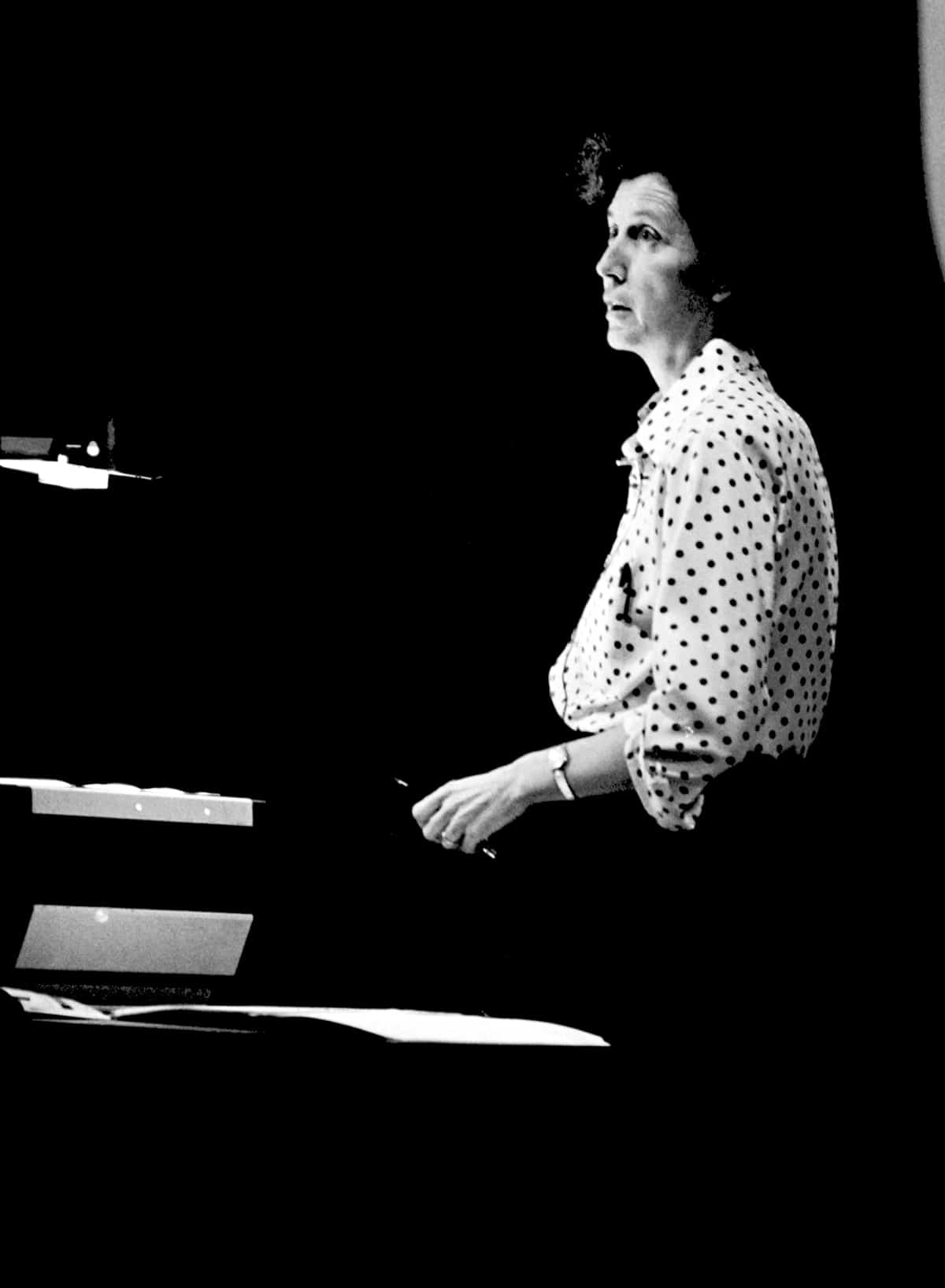
Sharing knowledge Helen Edwards speaking at the 12th International Conference on High-Energy Accelerators at Fermilab in 1983. (Courtesy: Fermilab)
There remains much about the world that is unknown, on scales from the immensely large to the extremely small. The physics of the Standard Model concerns itself with the latter, looking beyond molecules and atoms to examine the fundamental building blocks of nature: elementary particles. These are what give matter its structure, lead to electricity and magnetism, and give light to the universe.
But proving the existence of an elementary particle is no mean feat as they can be extremely short lived or interact only weakly with their surroundings. To detect them, scientists must often build immense, complex and highly sophisticated instruments such as particle colliders. In these powerful machines, particles are accelerated to relativistic speeds and then made to strike one another, with scientists inferring the existence of elementary particles by analysing the results of the collisions.
One such accelerator was the Tevatron, a synchrotron 6.3 km in circumference constructed in the 1980s at Fermi National Accelerator Laboratory (Fermilab) in Illinois, US. Until it was supplanted by CERN’s Large Hadron Collider (LHC) in 2009, the Tevatron was the world’s highest-energy particle accelerator, and it still is the second most powerful to have ever existed.
The techniques she pioneered allowed us to push the frontiers of particle physics
Helen Thom Edwards was the accelerator scientist who oversaw the construction and implementation of the Tevatron, from planning right until the end of its scientific operation. During her career, which spanned more than 40 years, the techniques she pioneered allowed us to push the frontiers of particle physics. A discerning physicist, Edwards was a force of nature in the field, and an ardent proponent of international collaboration.
A search for “new physics”
Born on 27 May 1936 in Detroit, US, Edwards began her physics career at Cornell University, where she obtained her bachelor’s and master’s degrees and then did a PhD in experimental physics, in which she sought to increase the energy of particle accelerators. After completing her studies, Edwards remained at Cornell as a research associate in the Laboratory for Nuclear Studies, where she was heavily involved with commissioning the university’s 10 GeV electron synchrotron. Edwards worked initially under the supervision of Robert Wilson, before he left to become founding director of Fermilab.
In 1970 Wilson appointed Edwards as associate head of the Booster Section at Fermilab, and she later became head of the Accelerator Division. While at Fermilab, Edwards’ primary responsibility was designing, constructing, commissioning and operating the Tevatron, which used superconducting magnets to accelerate protons and antiprotons up to 99.999954% of the speed of light (see box “Fermilab’s teraelectronvolt accelerator”). To achieve this was an incredible scientific and engineering challenge, and one that Edwards took in her stride. She was active in the hands-on, nitty-gritty, experimental work required to construct the accelerator, as well as having a formidable scientific intuition.
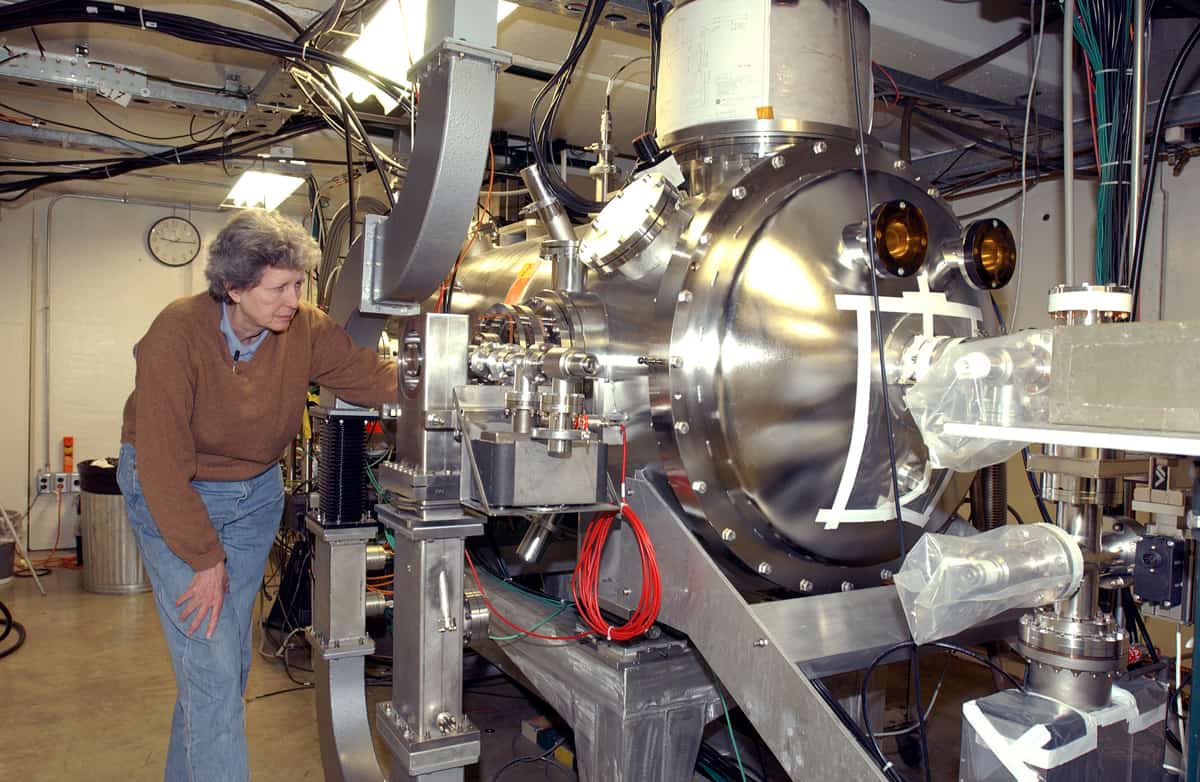
Hands on Helen Edwards working on research and development of superconducting magnets and cavities for DESY’s TESLA using AZero at Fermilab in 2004. (Courtesy: Fermilab/ Reidar Hahn)
“She was always absolutely right,” wrote Timothy Koeth in Fermilab’s obituary for Edwards following her death on 21 June 2016 at the age of 80. Now at the University of Maryland, Koeth studied under Edwards during her time at the Tevatron. “She had this intuitive and innate grasp of the material, and she was never wrong in the 20 years I knew her. She understood complex systems from every aspect – operational or technological.”
The Tevatron finally switched on and began delivering beams of accelerated protons and antiprotons in 1983, some 13 years after Edwards had joined Fermilab. Among the Tevatron’s accomplishments was the discovery of the Bc meson in 1998, the top quark in 1995 and the tau neutrino in 2000. These were all in part due to the constant improvement of the instrumentation at the synchrotron, which Edwards played a crucial part in implementing.
Fermilab’s teraelectronvolt accelerator
The Tevatron was a synchrotron that could accelerate protons and antiprotons to energies of up to 1 teraelectronvolt (TeV), giving rise to its name. It began operations in 1983 and was the world’s largest proton–antiproton collider until it was decommissioned in 2011. It was also the world’s most powerful particle accelerator until the Large Hadron Collider (LHC) at CERN broke energy records in 2009.
Tevatron’s accelerator consisted of a ring of superconducting magnets, 6.5 km in circumference, built directly underneath Fermilab’s first accelerator, the Main Ring. To achieve superconductivity, the entire Tevatron ring had to be cooled to near 4 K using liquid helium. The facility had two detectors that began working in 1992: the Collider Detector at Fermilab (CDF) and the DZero (DØ) experiment.
Both DØ and CDF were used to study the collisions of protons and antiprotons using different technologies. Sitting at four storeys in height, and weighing 5000 tonnes each, these behemoths could detect collisions occurring close to the speed of light, which result in unstable flashes of energy that decay into stable particles, replicating the moments just after the Big Bang.
Physicists at the Tevatron observed the first proton–antiproton collisions in 1985, and the implementation of CDF and DØ in 1995 led to the study of even smaller particles. Perhaps the most famous discovery at the Tevatron was that of the top quark in 1995, verified by scientists working on both the CDF and DØ experiments. Scientists also measured the top quark’s mass, later allowing them to determine the mass of the elusive Higgs boson.
In 2000 the Tevatron was responsible for the discovery of the tau neutrino, an unreactive particle that took three years of data analysis to uncover. Its scientists also proposed a new mechanism for the asymmetry between matter and dark matter in the universe by investigating the decay of a particle known as the neutral B meson.
Incredible forward momentum
It wasn’t just her depth of knowledge that marked Edwards out – it was also her ceaseless drive to make science happen as efficiently and effectively as possible. She was deeply determined – active in the design of the Tevatron magnets, the implementation of accelerator components, and in physically diagnosing issues in the Tevatron tunnel (see box “Pioneer of a new era of accelerator science”). She would frequently work all night to ensure instruments were calibrated to a high standard.
But, like many scientists before her, Edwards would get frustrated by the trappings of red tape. “She didn’t put up with bureaucracy when she wanted something done and knew it could be done,” says her former colleague Paul Czarapata, now deputy chief engineer of Fermilab and Accelerator Division associate head. “She didn’t ask for permission or for forgiveness,” Czarapata continues with a smile. “She demanded both.”
He describes an occasion when Edwards needed to take a piece of “fairly expensive” equipment to the technical division for some work, but was told it would take over a week to have it packaged, boxed and transported. “She asked me for a hand getting it over,” explains Czarapata. “Half an hour later I go outside and there’s a garbage can sitting there with packing foam all around and the component inside. I looked and said ‘well, it could probably bounce about in there’ and she considered it and said ‘yeah, you’re right’, so she added more foam. We then lifted it into the back of a van and she climbed in too to hang on to it.”
What high-energy physicists were trying to do at Fermilab had never been done before. Part of the enormous instrumentation required for the Tevatron was a system of alternately poled superconducting magnets to align the accelerated particles. The resulting field had to be strong enough to hold orbiting particles for long enough that they could collide, making it the world’s first large-scale superconducting system. But cooling such a large ring to cryogenic temperatures was a challenge for the Tevatron team, which suffered many setbacks.
Any small fluctuations in temperature could turn a superconducting magnet into a regular one, but – with so many magnets to keep track of – it was hard to find the errors. Edwards persisted, an encouraging presence with a determination that the Tevatron accelerator would function as intended. Indeed, Edwards and her team worked so hard on the Tevatron’s delivery that they became known as the “tunnel rats” because they would not see daylight for weeks, arriving underground before sunrise, and leaving after sunset.
Edwards had a formidable reputation at Fermilab, and was known for being extremely capable at managing the strengths, weaknesses and personalities of those involved in her team to obtain the best results. She had a long-sighted way of approaching science that demanded a very fast-paced way of working. At the time, and especially being a woman in the very masculine field of experimental physics, it would not have been easy to command the respect of so many people in such an intensive research environment.
“I noticed that most men were just terrified of her because they were standing in her way,” Czarapata continues, recounting the times that Edwards felt held back by bureaucracy. “But if you were someone who worked with her, you were just far and away in a good place. She respected you.”
Pioneer of a new era of accelerator science
Signing history Helen Edwards adds her signature to a commemorative sign for the installation of the last Tevatron magnet in 1983. (Courtesy: Fermilab)
Helen Edwards first worked as a research associate at Cornell University’s 10 GeV Electron Synchrotron, where she was involved with developing the technique of “resonant beam extraction”. Introduced in the 1950s, it focused on efficiently extracting high-energy particle beams from circular accelerators.
Edwards joined Fermilab staff in 1970, helping to bring the facility’s 8 GeV Booster Accelerator into operation with Roy Billinge. The machine’s 96 magnets bent proton beams around a circular path, and its design underpins Fermilab’s current Booster. After completing tens of thousands of revolutions in milliseconds and gaining energy with each revolution, the protons were fed into the Main Ring – Fermilab’s first primary accelerator, which began operation in 1972 and went on to deliver protons to its successor Tevatron until 1997.
Edwards is known for overseeing the implementation of the Tevatron or, as it was frequently called, the “Energy Doubler”. This new synchrotron was constructed in the same tunnel as Fermilab’s Main Ring accelerator with the promise of delivering at least twice as much energy in its particle beam. Perhaps the greatest design challenge the Tevatron team faced was establishing the large network of superconducting magnets required. Small misalignments in the coils used for generating the magnets could cause them to “quench”, no longer acting as superconductors. These misalignments could be caused by disruptions as small as the process of turning on the cooling systems. Solving these issues was Edwards and her team’s triumph.
To build the over 774 superconducting magnets used in the Tevatron, Edwards and colleagues purchased 95% of all the niobium-titanium produced in human history in the form of superconducting wire. They developed a special configuration known as the Rutherford wire, consisting of 23 strands, which had the perfect mechanical form for use in a magnet. As a result of the quantities of niobium-titanium needed for the Tevatron, its commercial production became standard, making superconducting wire readily available and paving the way for the implementation of MRI machines in hospitals.
A tight scientific unit
Although Edwards might appear intense and intimidating, she was also a serene person, deeply committed to nature. “She was very gentle, but it ended at the gate,” Czarapata says, referring to the entrance to the Tevatron site. Once Edwards crossed the threshold, her laser-sharp focus would descend, and all niceties were abandoned. None more so than with her husband, Don Edwards, who was also an accelerator scientist at Fermilab.
“When they were in the control room together, people used to clear out,” Czarapata continues. “People would back away to far corners because the two of them would be butting heads over some topic. They were often on opposite sides of the fence. But when they crossed the gate to go home, it was different.”
Helen and Don Edwards’ careers rose in parallel, and between them they ran five separate commissioning teams focused on getting the Tevatron up and running. The two later endowed a chair in physics at their alma mater, Cornell University, and continued to work together at both Fermilab and the DESY lab in Hamburg, Germany. Edwards viewed them as a tight scientific unit, and when awarded the 2003 Robert R Wilson prize from the American Physical Society, she said, “I believe this award is for my husband as much as for myself, as we have worked effectively as a team over the years.”
Mentor to many The AZero group at Fermilab in 2008 – Timothy Koeth (left), Helen Edwards and Ray Fliller. Edwards was often surrounded by her PhD students. (Courtesy: Fermilab/ Reidar Hahn)
Edwards was also committed to her PhD students and had a great love of teaching. Always surrounded by graduate students, she was a hands-on mentor, whether that involved explaining a theoretical concept or demonstrating how to do things. If asked a technical calculation about the accelerators, she would briefly disappear into her office and produce a full calculation 20 minutes later.
Edwards went out of her way to create opportunities for her students and trusted them to work on even the most difficult and involved of experimental procedures from the start. In her lab, a PhD student could be expected to work with high voltages, beams of electrons, high-energy radio-frequency signals and extremely high-pressure vacuums. She encouraged students to take the lead on talks and travelling to conferences, and had little patience for taking the spotlight in public.
“It was a form of paradise,” wrote Koeth in 2016. “Every time there was a tour at [Fermilab], she had me give it. She was a very good instructor.”
DESY and the Superconducting Super Collider
In 1989, once the Tevatron accelerator was constructed, Edwards began working as technical director for the Superconducting Super Collider, an 87 km circumference synchrotron that was planned in Texas. After developing the site-specific design, Edwards parted from the project in 1991. Although the SSC was later abandoned part-way through construction due to rising costs, the developments that she made in accelerator technology underpinned the formation of the Fermilab Accelerator Science and Technology (FAST) facility for designing and testing accelerators, which still operates today.
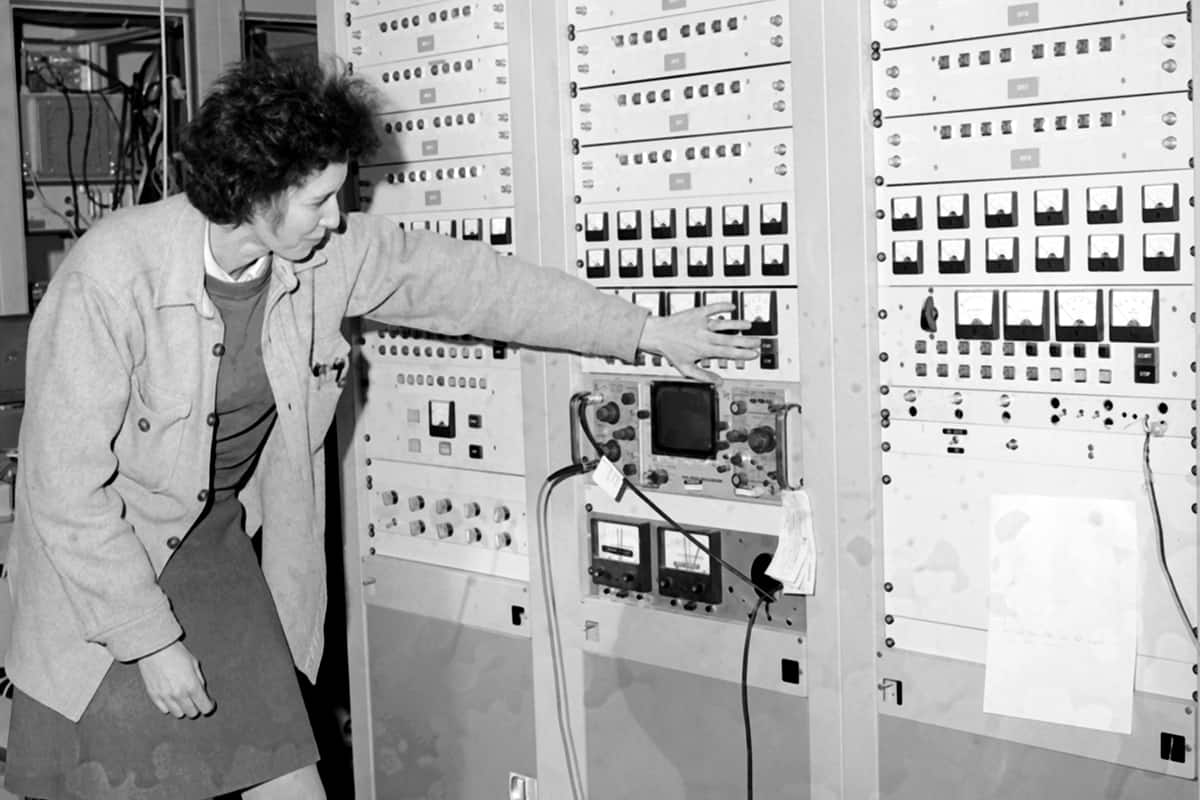
Beginnings… Helen Edwards monitoring display panels in 1971, shortly after she joined Fermilab as associate head of the Booster Section. (Courtesy: Fermilab)
During her career, Edwards also helped to design the Teraelectronvolt Energy Superconducting Linear Accelerator (TESLA) at DESY. For this, she brought decades of expertise, and her contributions eventually led to the construction of the lab’s FLASH free-electron laser, which still produces world-class science.
Helen and Don retired to Montana in the early 1990s, though both continued to work as guest scientists at Fermilab. The first thing Helen did was build a birch bark canoe from scratch. She was an avid lover of the natural world and deeply environmentally conscious. She rigged trail cameras all around the remote woodlands near her home, to capture photographs of wildlife from elk to cougars in their most undisturbed form. She even took photos of the rings of Saturn from a backyard telescope with a camera coarsely rigged to it. Whenever she was back in the lab, she would immediately show her colleagues the photographs with excitement.
The last days of the Tevatron
In 2011, after 28 years of operation, the Tevatron was finally decommissioned. Having overseen its life – from commissioning to scientific productivity – it was fitting that Edwards should be the person to officially switch the accelerator off. When doing so, she wore a cowboy hat and boots because a former director of Fermilab had once referred to the Accelerator Division as “a bunch of cowboys”. The rest of the team donned their Stetsons too.
For Helen, her best achievement was always the next one
Paul Czarapata
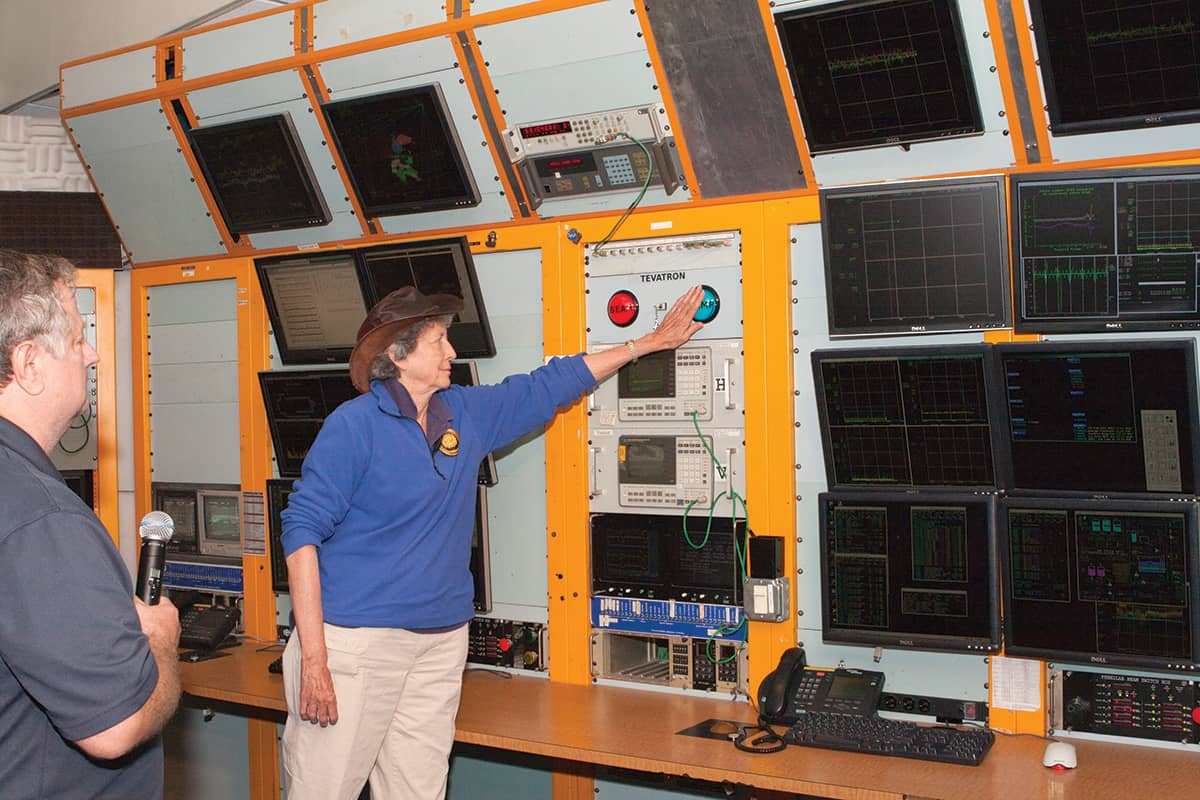
…And endings Helen Edwards presses the off switch on the Tevatron beam in September 2011. (Courtesy: Fermilab)
But the Tevatron wasn’t going out without a last laugh: as Edwards pressed the switch, the beam refused to turn off. Her second attempt succeeded, and several hundred scientists who were watching the decommissioning from Fermilab’s auditorium breathed one last sigh of relief. Having spent so long working on the Tevatron, Edwards must surely have felt bittersweet about seeing the accelerator come to a halt. But Czarapata says that she never looked back or focused on the things she had already achieved. “I don’t think she thought about it that way,” he says. “For Helen, her best achievement was always the next one.”
A member of the Hefei team in the lab. Courtesy: Zhe Qu
A newly fabricated two-dimensional material with the chemical formula Mn2Ga2S5 could find use in spintronics applications thanks to a phenomenon known as spin frustration. The material could also be used to study the fundamental physics of 2D magnetism and spin-disordered states, say the researchers at the Chinese Academy of Sciences in Hefei who fabricated it.
Spin frustration is a hot topic in magnetism research, explains Zhe Qu, a physicist at the Hefei Institutes of Physical Science’s High Magnetic Field Laboratory and the leader of the team that created the material. In frustrated magnetic systems, individual particles cannot arrange their magnetic moments (or spins) into a regular and stable pattern. This behaviour contrasts with that of ordinary ferromagnets, in which all the spins point in the same direction, and antiferromagnets, in which the spins point in alternating directions. Such frustration can lead to many novel phenomena by suppressing conventional magnetic orders, including highly degenerate ground states, strong fluctuations, cooperative paramagnetism and spin-disordered states at low temperatures.
Researchers have discovered a myriad of 3D spin-frustrated materials, most of which have their atoms arranged in three-dimensional triangular, face-centred cubic, hexagonal close-packed or kagome lattices.Until now, however, only a few spin-frustrated 2D materials had been found.
No long-range order
Qu and colleagues synthesized their single-crystalline Mn2Ga2S5 using a common method known as chemical vapour transport (CVT). This method involved mixing the manganese, gallium and sulphur in the correct stoichiometric molar ratio of 2:2:5 and putting them into a quartz ampoule using iodine as the transport agent. They then vacuum-sealed the ampoule and placed it in a tube furnace containing two temperature zones with a gradient of 1050–950 °C between them. After seven days, they allowed the sample to cool down to room temperature. The result was a large quantity of soft, dark brown single crystals that are easily sliced into 2D layers held together by weak van der Waals forces.
When the researchers subsequently cooled the material down to 2K, they did not observe any long-range order developing. Instead, they found that the spins “freeze” at a temperature of around 12 K. This effect stems from the competition between exchange interactions (which are responsible for the emergence of ferromagnetism) and the material’s 2D crystalline structure. The result is a “frustration index” of around 22, indicating that the system is highly frustrated. The researchers explain that the spin frustration within the crystals comes from the buckled Mn2+ honeycomb lattice within the van der Waals layer.
The researchers, who detail their work in Chinese Physics B, say they are now planning to search for frustrated 2D magnetism in related materials.
Usually, when light travels through a material, it produces an image. But when it passes through a new material developed by researchers at the Australian National University (ANU), it produces two completely independent and different images – as different, in fact, as the iconic outline of the Sydney Opera House and the continent of Australia. This unusual effect is possible thanks to nanoscale structures within the material that manipulate a light wave’s direction of travel in a way that could have applications for information processing and communications.
The nanoscale structures used in this research are ultrathin films comprising arrays of tiny dielectric structures that behave much like atoms. Known as metasurfaces, such structures are often employed in the design of miniaturized optical components, and they can also be used to control the direction in which light can and cannot travel at the nanoscale. For instance, some of these “meta-atoms” allow light to flow only from left to right, while others permit travel only from the right to the left, explains project leader Sergey Kruk of the ANU’s Nonlinear Physics Centre. They can also block the path taken by light in either direction.
Asymmetric images
In the latest work, Kruk and colleagues designed their all-dielectric metasurfaces to interact with light in an asymmetric way. For example, when they shone infrared light through one such structure, an image of Australia appeared in the visible range of the spectrum. When they flipped the metasurfaces around and looked again, they saw instead an image of the Sydney Opera House.
This optical magic trick occurs because of the complex interplay between the material’s nonlinear properties and magneto-electric coupling between artificially engineered optical modes, Kruk says. “Nonlinear optics studies how materials interact with very bright, high-intensity beams of light, such as those produced by lasers,” he explains. “These nonlinear interactions may be completely different to how weak and moderately bright light (for example, that from the Sun, or from a light bulb) interacts with materials”.
The researchers constructed their metasurfaces from four types of asymmetric nonlinear resonators, which are nanocylinders that react to light via the electric dipole and the magnetic dipole. These nanocylinders are composed of two layers of materials, amorphous silicon and silicon nitride, that have different optical constants. In this arrangement, the magneto-electric coupling comes from the asymmetry introduced by the difference in the refractive indices between the two layers.
“Rather like road signs”
The atoms in the metasurface control the flow of light rather like road signs control traffic on a busy road, Kruk says. This ability to guide light at the nanoscale ensures that it “goes where it’s supposed to go and doesn’t go where it’s not supposed to”, he explains.
Such control could have practical applications, Kruk continues. “A wide deployment of tiny components that can control the flow of light could potentially bring technological and social changes similar to transformations brought about in the past by the development of tiny components that control the flow of electricity, which are known as diodes and transistors,” he says.
According to the team, which also includes physicists from Paderborn University in Germany, Southeast University in China and A*STAR Singapore, the metasurfaces could be used in technologies associated with information processing and communication – including the Internet you are probably using to read this article.
“Currently, our information technologies rely heavily on our ability to perform traffic control of electrical currents inside modern computer chips,” Kruk says. “We design and fabricate incredibly sophisticated networks of billions and trillions of semiconductor diodes and transistors that act as road signs and traffic lights for electrical currents, enabling modern computing.”
“Our research suggests it may be possible to control traffic of beams of light similar to how we control electrical currents,” he tells Physics World. “When dealing with information, if we employ beams of light instead of electrical currents, many tasks can be performed faster and more efficiently.”
Preserving the colour of light
In this early-stage work, Kruk and colleagues focused on a nonlinear optical process (known as third harmonic generation) that changes the colour of light. For future applications, however, it might be more useful to stick to a single colour. The researchers say they are therefore working to develop optical nanostructures that preserve colour while displaying similar functionalities. “This will be based on different nonlinear optical phenomena associated with so-called self-action effects,” Kruk reveals. “While nonlinear optics of bulk materials has been well researched, we are only beginning to understand nonlinear optics of materials structured at the nanoscale.”