Pain management is a significant and ongoing health problem. Patients are often treated using opioids, which are effective but also highly addictive. The prevalence of opioid-use disorder and deaths due to overdose has motivated the development of non-opioid alternatives. Of these, nerve cooling could provide an effective and reversible strategy to alleviate pain.
Cooling a nerve causes the pain signals that travel through it to slow down and eventually stop completely. But existing nerve-cooling devices, which use precooled liquids, are bulky, provide non-specific cooling and require high power, making them unsuitable for clinical use. As an alternative, a research team headed up at Northwestern University has developed a soft, flexible implant to cool nerves and provide targeted, on-demand pain relief without the use of drugs, reporting their findings in Science.
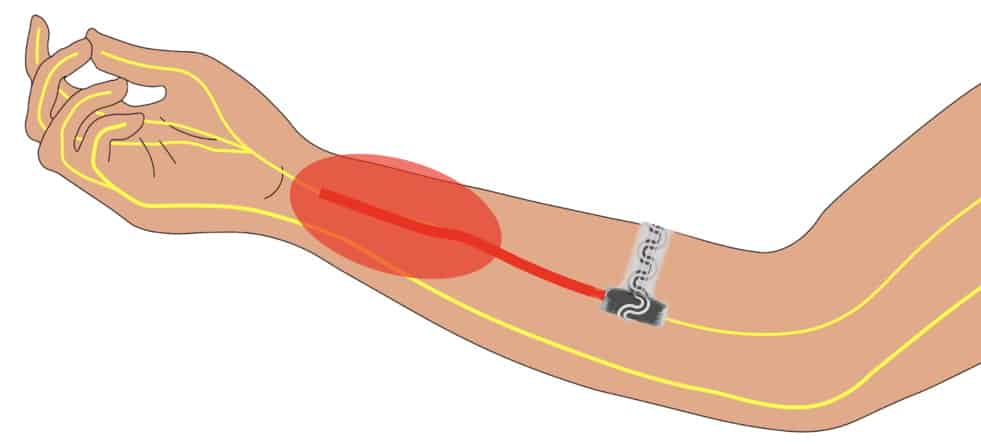
The paper-thin device, which is just 5 mm at its widest point, is constructed from elastomeric materials with tissue-like mechanical properties. As such, it can easily wrap around a single nerve like a cuff electrode to provide effective heat transfer. Another important innovation is that the materials are all bioresorbable and naturally absorb into the body over the course of days or weeks, eliminating the need for surgical extraction and its associated risks.
To create the cooling effect, the implant uses evaporative microfluidic cooling. It incorporates a microfluidic system with one channel containing perfluoropentane, a bioinert liquid coolant that’s clinically approved as an ultrasound contrast and for pressurized inhalers, and a second channel containing dry nitrogen. When the liquid and gas flow into a shared serpentine chamber, the perfluoropentane evaporates and generates localized cooling.
Previous research has shown that reducing the temperature of a nerve to 15°C can block the transmission of compound action potentials, while a complete conduction block is achieved at 5°C. If the temperature is too low, however, there’s a risk of nerve damage. To avoid this, the researchers incorporated a temperature sensor in an electronic layer alongside the microfluidic system to provide real-time feedback and control.
Pain relief: The device softly wraps around the peripheral nerve to silence signals to the brain; the red oval indicates pain. (Courtesy: Northwestern University)
“Excessive cooling can damage the nerve and the fragile tissues around it,” explains John Rogers, who led the device’s development. “The duration and temperature of the cooling must therefore be controlled precisely. By monitoring the temperature at the nerve, the flow rates can be adjusted automatically to set a point that blocks pain in a reversible, safe manner. Ongoing work seeks to define the full set of time and temperature thresholds below which the process remains fully reversible.”
In vivo assessment
The implant is designed for use on peripheral nerves, which connect the brain and spinal cord to the rest of the body and communicate sensory stimuli, including pain. To demonstrate the device’s cooling ability, the team tested it in rat models of neuropathic pain.
The soft, curled structure interfaced to the rat sciatic nerve without requiring sutures and without causing any damage. The device produced highly localized cooling, which caused effective and reversible conduction blocks of the nerves, as observed by electromyography, compound nerve action potential and muscle-force measurements.
The researchers also performed experiments in free-moving rats with neuropathic pain over several weeks. When mounted on the animal’s sciatic nerve, the device delivered a significant cooling-induced analgesic effect. They conclude that the cooling device can provide on-demand analgesia to manage neuropathic pain in freely moving animals.
Looking ahead, the team believes that the device could prove most valuable for managing post-operative pain following amputations, nerve grafts or spinal decompression surgeries. In such cases, the relevant nerves are already isolated and identified, making the application of the cuff straightforward to integrate into the clinical workflow.
Writing in a related perspective article, Shan Jiang and Guosong Hong from Stanford University note: “An implantable cooling device with on-demand local analgesia will be a game changer for long-term pain management.”
A controversial theory put forward by physicist Roger Penrose and anaesthesiologist Stuart Hameroff that posits consciousness to be a fundamentally quantum-mechanical phenomenon has been challenged by research looking at the role of gravity in the collapse of quantum wavefunctions. Based on results from an experiment done under Gran Sasso mountain in Italy, the new work concludes that Penrose’s and Hameroff’s Orchestrated Objective Reduction theory (Orch OR) is “highly implausible” when based on the simplest type of gravity-related wavefunction collapse – although they point out that more complex collapse models leave some wiggle room.
Many scientists regard consciousness as a global manifestation of individual calculations by the brain’s billions of neurons. Penrose and Hameroff instead argue that consciousness is based on the non-computational collapse of coherent quantum superpositions between cellular structures within neurons known as microtubules. They reckon that while the superpositions guide classical neuronal processes, it is the continual gravity-related collapse of the quantum states that gives rise to our sense of self-awareness.
In the latest work, Catalina Curceanu of the Frascati National Laboratory near Rome and colleagues assess the plausibility of Orch OR in the light of results from an experiment they set up to probe gravity’s possible role in wavefunction collapse. Standard quantum theory leaves open the question of what causes a state’s wavefunction to collapse, simply providing the probabilities of the system collapsing into one classical state or another and implying that the process is random. But several physicists over the years have attempted to identify a physical mechanism behind the process – among them Penrose and Lajos Diósi, who have developed the Diósi–Penrose model. Diósi is at Hungary’s Eötvös Loránd University and Wigner Research Centre for Physics and has worked with Curceanu on this latest research.
Different curved space–times
The Diósi–Penrose model involves combining quantum mechanics with classical gravity such that a spatial superposition of quantum states generates a superposition of different curved space–times. The idea is that the latter superposition is unstable and causes the system’s wavefunction to collapse when the gravitational energy resulting from the difference in space–time formations – and therefore system mass – exceeds some threshold. This process is independent of wavefunction decoherence by environmental noise, but its realization requires that the latter is kept at bay.
While both Penrose and Diósi arrived at the same simple formula for the timescale over which this type of collapse would occur, their individual models differ. Penrose did not specify the dynamics of wavefunction collapse, whereas Diósi provided a full dynamical description. In doing so Diósi predicted that collapse should be accompanied by the emission of electromagnetic radiation – generated by charged particles within the system as they undergo a continuous Brownian motion related to the collapse mechanism.
Now, Diósi has teamed up with Curceanu and other physicists in Italy and Germany to establish whether his predicted radiation really is given off in nature. The group did so by monitoring the emissions from a cylinder of germanium about the size of a small tin of beans shielded from external radiation by lead and copper shields as well as the 1400 m of rock above the lab – the Gran Sasso National Laboratory near L’Aquila. They were able to test the Diósi–Penrose model by working out how much gravity-related collapse radiation should have been produced by the charged particles within the germanium and comparing their calculations against the measurements.
Carrying out their experiment over the course of two months in the summers of 2014 and 2015, they measured no radiation beyond that expected from residual emissions in the experimental apparatus. This allowed them to impose a lower limit on a parameter, R0, that they describe as the effective size of the particle’s mass density.
That result already ruled out one specific and natural formulation of the Diósi-Penrose model – which stipulated that the scale of the superposition is comparable to the size of the nuclei themselves – the measured lower limit of R0 being 0.54×10⁻¹⁰ m while the size of the nuclear wavefunction of germanium cooled to liquid-nitrogen temperatures (as was the case in their experiment) would be an order of magnitude lower (0.05×10⁻¹⁰ m).
Molecular scale
Now, Curceanu, Diósi and colleagues have analysed what that value of R0 means specifically for the Orch OR theory, assuming two distinct scales of superposition – the nuclear one favoured by Penrose (about 10–15 m) and one similar to the size of whole tubulin proteins within a strand of microtubule (about 3 nm). In each case their aim was to work out how much brain matter would be needed to collapse the wavefunction on a timescale comparable to that of conscious experiences (typically about 0.5 s, but potentially as brief as 0.025 s).
With a nuclear-sized superposition, the collapsing effect of individual carbon nuclei within tubulin proteins is minuscule and therefore calls for huge numbers of nuclei to act in concert. In fact, the researchers work out that to collapse the wavefunction in around 0.025 s, a whopping 1023 tubulins would need to make up the coherent state. But as they point out, there are reckoned to be only 1020 tubulins in the whole brain (about 109 in each neuron). “These considerations seem to rule out tubulin separation at the level of the atomic nuclei,” they say.
In the second scenario, the larger superposition scale implies that fewer tubulins would need to remain coherent. Indeed, Curceanu and colleagues work out that a mere 1012 would do the job. Still, they say, the overall requirements seem daunting – the brain needing to maintain a mass of 10−16 kg in a coherent state for 25 ms over a length scale of about 10 nm. “This vastly exceeds any of the coherent superposition states achieved with state-of-the-art optomechanics or macromolecular interference experiments,” they note.
The researchers add that not all is lost for Orch OR. While they reckon that the theory seems implausible if based on the simplest wavefunction collapse model, it may become more plausible if a more sophisticated model can be developed – one, for example, that conserves energy (something not true of Diósi’s current model). “In future work,” they say, “we intend to develop such variants of the Diósi-Penrose collapse dynamics and then reexamine the tubulin superposition scenarios discussed above.”
Alzheimer’s disease (AD), the most common cause of dementia, is characterized by progressive cognitive impairment and brain atrophy. Patients are currently assessed using memory and cognitive tests, as well as brain scans that detect biomarkers such as protein deposits in the brain and shrinkage of the hippocampus. But AD remains challenging to diagnose, particularly at early stages of the disease.
A research team headed up at Imperial College London has now demonstrated that a combination of structural MRI and machine learning can diagnose AD from a single brain scan. The technique is based on a predictive model that uses MRI data to identify differences in the brain between people with and without AD. Importantly, the new approach can identify AD at an early stage, even before obvious shrinkage of the brain occurs.
Team leader Eric Aboagye and colleagues developed an algorithm that computes multi-regional features, such as shape, size, intensity and texture, from T1-weighted MRI scans. The model, described in Communications Medicine, uses these features to derive a biomarker called the Alzheimer’s predictive vector (ApV).
The model works by segmenting the MR images into 115 brain regions (45 white matter and 70 subcortical regions) and extracting 656 different features for each region. To avoid overfitting, a least absolute shrinkage and selection operator (LASSO) selects the most informative and least redundant features corresponding to specific brain regions.
To train the algorithm to identify changes that can predict AD, the team used 1.5 T MRI scans obtained from the Alzheimer’s Disease Neuroimaging Initiative (ADNI). This dataset included a control group of healthy individuals, patients with frontotemporal dementia and patients with Parkinson’s disease, plus a disease group of people with AD or AD-related mild cognitive impairment (MCIAD).
The team developed two biomarkers, the first of which – ApV1 – differentiates people with and without Alzheimer’s-related pathologies. To compute ApV1, the algorithm considers features extracted from all brain regions. From these, LASSO selected 20 features in 14 regions and used their weighted sum to determine ApV1. Integrating the model with cognitive measurements and cerebrospinal fluid (CSF)-based biomarkers generated an additional predictive vector, ApV1s.
The researchers tested the model in an unseen internal test set from the 1.5 T ADNI cohort. ApV1 showed an accuracy of 98% in predicting AD-related pathologies. This is more accurate than standard clinical measures – hippocampal volume (26% accuracy) and CSF beta amyloid concentration (62% accuracy) – suggesting a potential alternative to invasive CSF measurements.
They also tested the method on an external test set: 1.5 T MRI data from 64 people in the OASIS consortium. Here, ApV1 and ApV1s exhibited high accuracies of 81% and 83%, respectively.
Disease staging
The second biomarker – ApV2 – categorizes patients with Alzheimer’s-related pathologies into early-stage (MCIAD) and late AD groups. For this classification, a second LASSO used the weighted sum of eight features distributed in seven regions (with a dominance of the left brain) to determine the predictive vector.
In tests on unseen 1.5T data from the ADNI, ApV2 reached an accuracy of 79% in discriminating early-stage from later forms of AD, with a higher accuracy of 86% when integrating cognitive scores and CSF-based biomarkers. This compares with accuracies of 53% and 49%, for hippocampal volume and CSF beta amyloid measurements, respectively. The team notes that this high accuracy is particularly remarkable given the continuum of disease progression between MCIAD and AD.
When the model was applied to 3 T MRI scans, ApV1 and ApV2 showed reduced accuracies of 49% and 62%, respectively. The researchers suggest that the inferior performance at 3 T is likely due to the susceptibility of MRI radiomic features to magnetic field strength, and that this currently limits the algorithm’s use to only 1.5 T data.
The team also tested the model on 83 patients with suspected cognitive decline who underwent clinical amyloid PET imaging at the Imperial Memory Centre as part of their diagnostic workup, along with MRI scans and neuropsychological assessment. PET images were classified as either amyloid-positive, with a clinical diagnosis of AD, or amyloid-negative, likely another type of dementia or a non-neurodegenerative condition.
When employed in this group, the ApV1s outperformed hippocampal volume measurements and standard cognitive scores, showing a statistically significant difference between the amyloid-positive and amyloid-negative groups.
The researchers conclude that their MRI-based radiomic predictive vector, ApV, is reproducible and robust, can be easily computed and is ready to be integrated into the clinical decision support system. They note that the algorithm identified changes in areas of the brain not previously associated with AD – the cerebellum and the ventral diencephalon – which require further investigation.
“Currently no other simple and widely available methods can predict Alzheimer’s disease with this level of accuracy, so our research is an important step forward,” says Aboagye in a press statement. “Many patients who present with Alzheimer’s at memory clinics do also have other neurological conditions, but even within this group our system could pick out those patients who had Alzheimer’s from those who did not.”
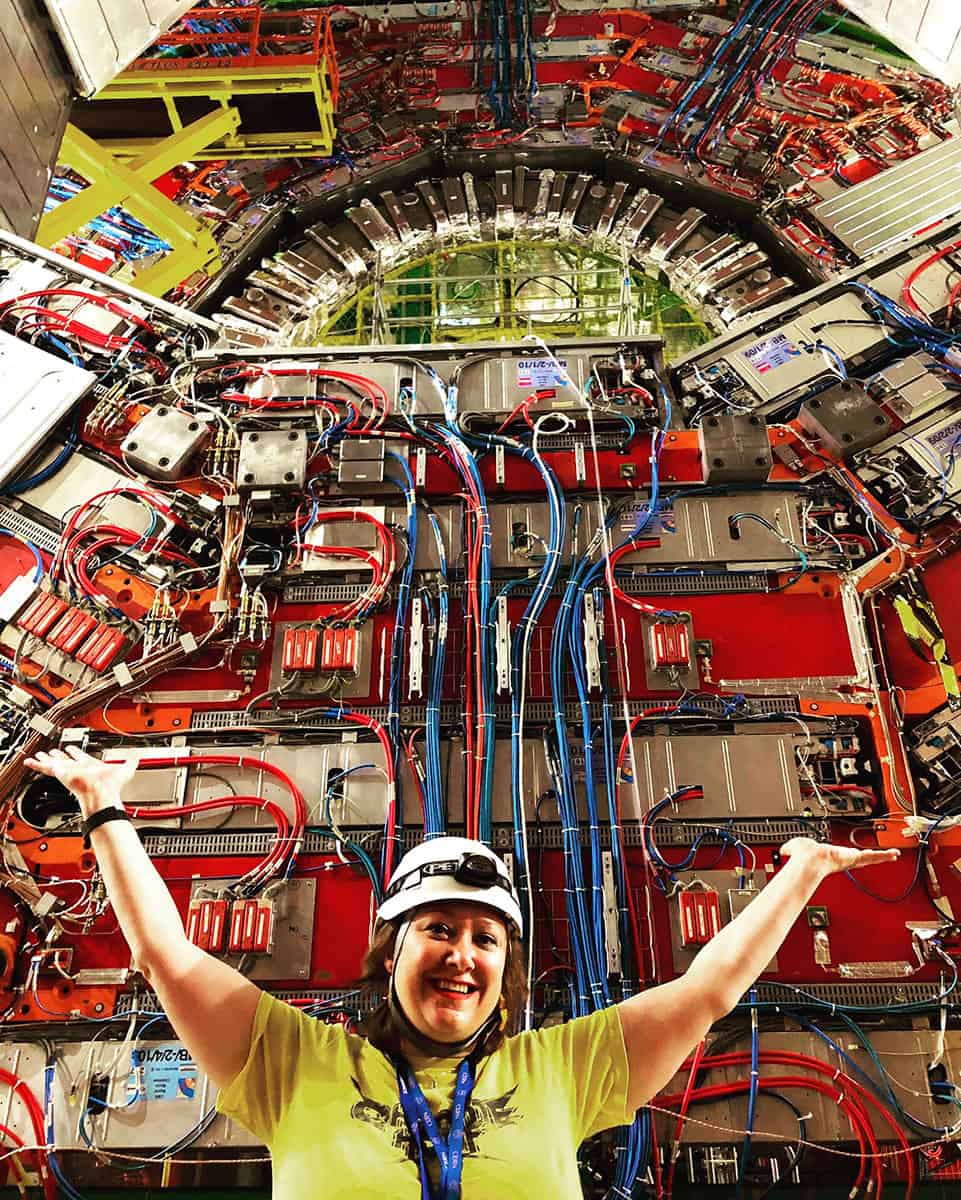
Bright spark Freya Blekman in front of the CMS detector at CERN’s Large Hadron Collider. (Courtesy: Zoltan Szillasi/CERN)
As an experimental particle physicist and lead scientist at DESY, Germany’s largest accelerator centre, Freya Blekman hopes to answer some of the big questions in physics. With a professorship at the University of Hamburg, she works on the Compact Muon Solenoid (CMS) detector at the Large Hadron Collider (LHC) at CERN, where she is also the lead physics communications officer. Having been involved in large collaborations everywhere from Fermilab in the US to Imperial College in the UK, she talks to Tushna Commissariat about her unique career path.
What sparked your initial interest in science and physics?
I have always been interested in science. As a child, I was obsessed by insects, but also by the ancient Egyptians, and I would read encyclopaedias, just to gather knowledge. I think the idea that I might have a career in science was perhaps clear to others around me even then. In particular I remember a school play when I was 11. It was written by my teacher who assigned us all different roles, and I was the scientist. I come from a relatively arts and social-sciences oriented family background, though my grandmother was extremely maths-oriented. Unfortunately, she was forced to quit studying after high-school to support her brother, who ended up becoming a professor. So she definitely cared that I went university, and pursued the sciences.
By secondary school I knew that I was going to do something scientific – the question really was what. I had initially decided to study biology, but switched to physics two weeks before I started university, after running into my physics teacher in the street, who convinced me to pick the subject.
What led you to doing a PhD in particle physics?
To be completely honest, I was not a stellar student. I also had to contend with some family issues – both my parents passed away during my studies, two years apart – so my time at university was not easy. I think that if some of the rules that are now enforced – such as very hard cut-offs and constraints about only admitting ideal students – had applied to me, I wouldn’t have got my degree. I didn’t know it at the time, but now that I work in academia, I realize that there were people who likely lobbied for me.
When I started out at the University of Amsterdam, I wanted to study biophysics. But then the university organized a trip to CERN, which made a huge impression on me. By the time I completed my Master’s in 2000, my thesis was based on the LHCb experiment at CERN.
After having been a CERN summer student in 1999, I realized that I enjoy the research lifestyle. From there, I ended up in a particle physics PhD programme and in the very first week, I was sent to the US for a workshop. I ended up doing most of my doctorate at Fermilab, where the University of Amsterdam sent me, to work on the DZero (DØ) experiment, which, at the time, had just detected the top quark.
How did you plan what to do after your PhD?
I’m a relatively social person and I enjoy working with others, so I think that I fit quite well into a collaborative science environment. I was very lucky during my PhD to work with some excellent people who all eventually became faculty themselves.
Finding a postdoc was not particularly difficult – I applied to multiple places and in the end I chose my postdoc based on location and prestige. I wanted to live in big cities, and so I chose Imperial College, London. That part of my career was a bit of shock because coming from the Dutch academic system, and going into the British one was quite a change. By now though, I have embraced it. I’m in Oxford as we speak, where I give yearly lectures on physics in the top quark sector, at the University of Oxford’s doctoral school.
But of course it was quite different at that time, especially because I was effectively the only woman in a group of 100 people. Until then, I had always been “one of the boys” and didn’t really think that gender issues were a problem for me. But when you are put in that position, you start to re-evaluate. Fortunately since I worked there in the 2000s, Imperial has really improved in that aspect.
I considered leaving academia and going into industry at the end of the postdoc, but ultimately decided to remain in fundamental research. For my second postdoc, 2007–2010, I was a research associate at Cornell University in the US, but was based at CERN and working on the CMS. I was given a lot of responsibility there, and it was a very exciting time because this was exactly when the LHC was turning on. We were finally getting data and could do the physics, so it was thrilling, but hard work.
What was it like being at CERN for the Higgs discovery?
The actual announcements were interesting because I was one of the many people in Australia at the International Conference of High Energy Physics, watching the announcement via video-link. I was aware of the CMS results and it was amazing to finally see that ATLAS too had consistent data.
The day was fantastic, but detecting the Higgs boson was a bit of a double-edged sword. While it was great to discover something we had long been looking for, it was another triumph for the Standard Model – even though it has its weaknesses, such as no explanation for dark matter. In a way it might have been a lot more exciting if we had not found the Higgs particle.
It’s indisputable that the Standard Model cannot be the whole picture
Freya Blekman
As the amount of data that the LHC produces keeps increasing exponentially, it’s important to remember that we found the Higgs with less than 1% of the data having been examined. Even now, we are at 3% of the data; there is a lot more coming. And claiming that there’s nothing there before you’ve even looked at this data isn’t right. It’s indisputable that the Standard Model cannot be the whole picture, but the real question is whether there are explanations to be found in the vast amounts of LHC data still to be examined.
What’s a ‘day in the life’ like for you now?
As a professor, there is a lot of organization, management and helping students, as well as a great deal of admin, hiring people and peer review. I’m also responsible within the CMS collaboration for the communication of any results to the general public and to the press. And occasionally I get to do some research myself – I really try to save at least half a day a week for this.
Sometimes the faculty job is perfect for me, as I get to brainstorm with young enthusiastic people. Other times, it is very intense; particularly working in large collaborations, with deadlines and competition. It can be really cutthroat every so often, so you have to protect yourself and the people in your team. I consider managing the well-being and mental health of everyone on my team an important part of the job, which is challenging at times.
What is your advice to students today hoping to get into high-energy particle physics?
Be willing to learn and don’t assume you know everything. Work with people who are complimentary to you. The nice thing about particle physics is that it’s extremely broad. You can do anything from quantum-field theory calculations, all the way to welding. I think that a good particle physicist knows more than just code and how to do analysis. An experimentalist should be able to build a detector but also innovate on the theoretical side – that’s an important thing early-career people can forget.
This can be related to the phases of the LHC or any other accelerator. When there’s data coming in, you can’t work on the device. But it is really important that you recognize that the people who have a deep, intimate knowledge of the detector can do some innovative interpretation of the data because they can squeeze out that final per cent of data that you need to get your result.
The chemical composition of samples collected from the asteroid 162173 Ryugu are strikingly similar to that of the Sun, say members of a team tasked with analysing samples of Ryugu collected by the Hayabusa2 mission. The result suggests that previously observed discrepancies between Ryugu’s composition and that of meteorites known as CI chondrites may be due to the different conditions that they experienced after their formation, rather than a different origin.
Ryugu was first detected by the Lincoln Near-Earth Asteroid Research (LINEAR) project in 1999. It is diamond-shaped, rotates every 7.6 hours, and orbits the Sun between the Earth and Mars. In 2014 the Japanese Aerospace Exploration Agency (JAXA) launched the Hayabusa2 mission with the aim of collecting samples from above and below the asteroid’s surface and returning them to Earth. In 2019 Hayabusa2 accomplished the first part of its mission by shooting a 5-gram tantalum projectile at the asteroid, collecting the ejected pebbles and sand and sealing them inside a capsule. On 6 December 2020, this sealed capsule returned to Earth, enabling scientists to analyse the uncontaminated material.
Puzzling differences
In the latest study, a team led by Kazuhide Nagashima of the University of Hawai‘i at Mānoa, US, Tetsuya Yokoyama of the Tokyo Institute of Technology, Japan, and Hishayoshi Yurimoto of Hokkaido University, Japan, used electron microscopy, radioisotope dating and other techniques to study a 95 mg sample of Ryugu, aiming to determine the conditions it may have experienced during its lifetime. These tests were motivated by earlier observations revealing that while both Ryugu and CI chondrites have similar chemistry to the Sun, they also differ in major ways: Ryugu is darker than all other meteorites, for example, and is more porous than CI chondrites. These differences are puzzling because both are believed to have parent asteroids that originated in the cloud of dust and gas which, due to gravity, eventually collapsed to become our Sun and the surrounding disc.
A key aspect of the team’s analysis focused on Ryugu’s relative lack of water. Even though the asteroid gets its name from an underwater “dragon palace” in Japanese folklore, aqueous liquid is not currently stable there. Radioisotope dating on the Ryugu samples suggests that energy from radioactive decay could have caused the water to melt and eventually escape into space, leading to the relatively dry mudball we observe today. Other hypotheses for Ryugu’s missing water include a concoction of impact heating, solar heating, space weathering, and exposure to the extremely high space vacuum. “Ryugu experienced severe aqueous alteration in the very early stage of its evolution,” says Shogo Tachibana, a professor of space and planetary science at the University of Tokyo and a member of the sample analysis team.
Pristine samples
An alternative hypothesis for the observed elemental differences between Ryugu and CI chondrites is that the latter may have experienced terrestrial contamination during decades spent on Earth, meaning that their chemistries no longer reflect those of their space-based parent bodies. The paper’s scientists note that Hayabusa2’s Ryugu samples are chemically pristine in comparison with others, with Tachibana calling them the “freshest CI chondrite having the elemental composition closest to the Sun among all the meteorites”.
Although samples collected from space and returned to Earth are currently rare, this could change over the coming years. JAXA has plans for future missions that would include the collection of samples from Mars’ moon Phobos, while Russia’s Roscosmos and the China National Space Administration plan to gather samples from the Moon. In the meantime, part of the sample from Ryugu is currently touring Japan, whilst a further fraction will remain stored in a chamber filled with nitrogen gas, limiting its exposure to contamination and offering further chances to characterize the formation and evolution of the solar system.
Researchers in Singapore have used a magneto-optical trap (MOT) to cool atoms in “main group III” of the periodic table to millikelvin temperatures. This group comprises boron and the elements below it in the table. The experiment is a first because these atoms do not have the right atomic properties for conventional MOT cooling. Travis Nicholson and colleagues at the National University of Singapore got around this problem by doing laser cooling on a metastable state of indium-115 atoms. Their approach could open new areas of the periodic table to ultracold-atom experiments that explore the quantum properties of matter.
By cooling atomic gases to near absolute zero temperature, physicists have unlocked a diverse array of fascinating phenomena and practical devices: including exotic states of matter; atomic clocks; and quantum sensors. In many of these experiments, the MOT is key to reaching cold temperatures. It works by confining an atomic gas using a spatially varying magnetic field. Laser beams are used to cool the gas – which counterintuitively involves exciting atoms out of their ground state.
So far, this cooling technique has been applied almost exclusively to alkali and alkaline-earth metals. As for most other elements, atomic transitions out of their ground states are not compatible with the operation of a MOT. While more complicated cooling schemes can sometimes be used, most of the periodic table remains unexplored at ultracold temperatures.
Long-lived metastable state
Instead of using a ground-state transition, Nicholson’s team used a transition from a long-lived metastable state in indium-115. To make use of this metastable state, the team had to design their MOT especially for this atom.
Having optimized their setup, Nicholson and colleagues loaded load half a billion indium-115 atoms into their MOT and were then able to cool them down to temperatures of about 1 mK. The atoms remained trapped in this chilly state for some 12.3 s, which is comparable to that achieved with alkali atoms. Based on their success, the researchers predict that MOTs could be easily customized for cooling other main group-III atoms.
Nicholson’s team have yet to use their setup to perform quantum measurements on ultracold indium atoms, but they believe that their technique will provide a robust platform for such experiments in future studies. By opening up a new area of the periodic table, they hope that their approach will inspire entirely new types of research in ultracold atomic physics. This could lead to the creation of exotic quantum phenomena that have never been seen before.
The first tranche of images and data from the $10bn James Webb Space Telescope (JWST) has been released today by NASA and partners. The four spectacular pictures – showing nebulae, a galaxy constellation as well as the atmospheric spectra of an exoplanet – follows the unveiling of the JWST’s first “deep field” image yesterday.
“Every image is a new discovery and it will give humanity a view of the universe that we have never seen before,” said NASA administrator Bill Nelson at an event today at NASA’s Goddard Space Flight Center. “These images show us light that is 13.5 billion years old. That is the threshold we are now crossing.”
Yesterday US president Joe Biden unveiled the first full-colour science image. Known as “SMACS 0723”, it is the telescope’s first “deep field” picture and shows how massive foreground galaxy clusters magnify and distort the light of objects behind them, allowing a deep-field view into extremely distant and faint galaxy populations.
Today, the images and data from four further targets have been unveiled. They include an image of the Southern Ring, or “eight-burst” nebula (main image above), which is a planetary nebula almost half a light-year in diameter and is located approximately 2000 light-years away from Earth.
NASA has also released the atmospheric spectra of the WASP-96b exoplanet (below), which was first announced in 2014. Composed mainly of gas, the planet is located nearly 1150 light-years from Earth and orbits its star every 3.4 days. This spectra, obtained by the JWST’s Near-Infrared Imager and Slitless Spectrograph (NIRISS), is the most detailed infrared exoplanet transmission spectrum ever collected.
Atmospheric composition of the WASP-96b exoplanet. (Courtesy: NASA, ESA, CSA and STScI)
Another object that has been pictured is Stephan’s Quintet in the constellation Pegasus (see below). It is about 290 million light-years away and is the first compact galaxy group to be discovered where four of the five galaxies within the quintet often have close encounters. The image was taken by JWST’s Near-Infrared Camera (NIRCam) and Mid-Infrared Instrument (MIRI)
Stephan’s Quintet. (Courtesy: NASA, ESA, CSA and STScI)
Last, but not least, is the Carina Nebula (see below), which is one of the largest and brightest nebulae in the sky and is located about 7600 light-years away in the southern constellation Carina. The image was taken by NIRCam.
Cosmic cliffs in the Carina Nebula. (Courtesy: NASA, ESA, CSA and STScI)
“We have an observatory that is excellent shape,” JWST project manager Bill Ochs from the Goddard Space Flight Center noted. “When I look at these images I see dedication, personal sacrifice, passion and all the individuals who have worked on this mission.”
The JWST is a collaboration between NASA, the European Space Agency and the Canadian Space Agency. “These first images and spectra from [the JWST] are a huge celebration of the international collaboration that made this ambitious mission possible,” says ESA director general Josef Aschbacher.
It is expected that the JWST will continue observations for at least two decades.
The quantum electronic link in momentum (velocity) space observed in the topological Weyl magnet Co2MnGa. (Courtesy: Ilya Belopolski and M Zahid Hasan, Princeton University)
For the first time, a team of physicists have observed quantum mechanical structures known as Weyl loops linking up to form chains. These structures, which are formed from quantum states of electrons in crystalline cobalt manganese gallium (Co2MnGa), have a novel topology and must be described using knot theory. According to the team, this same theory could help explain other quantum behaviours, with possible applications including topological conductors, superconductors and even quantum bits.
Topology is a branch of mathematics in which two objects are treated as equivalent if they can be continuously deformed into one another by bending, twisting, stretching or shrinking (but not tearing or cutting). In this framework, a circle is topologically equivalent to an ellipse, and a doughnut is equivalent to a coffee mug, since the objects in both pairs can be deformed into each other by stretching.
Topology also exists on the quantum scale, and physicists led by M Zahid Hasan of Princeton University in the US have been studying topological phenomena related to shape of the electron’s wave function. These studies brought them to Weyl loops, which are structures involving Weyl fermions – massless particles first predicted in 1929 by the theoretical physicist Herman Weyl as a solution to the Dirac equation.
Mathematical linking numbers
In 2019, Hasan and colleagues observed Weyl loops in Co2MnGa, demonstrating that the material behaved anomalously in the presence of applied electric and magnetic fields. They also discovered that this anomalous behaviour persisted up to room temperature.
In the latest study, which is published in Nature, the team used soft X-ray angle-resolved photoemission spectroscopy to find that the topology of Weyl loops in Co2MnGa differs from the wavefunction winding predicted by conventional topological theories. Specifically, the quantum state consists of linked loops, which were previously little discussed in the study of topological quantum matter. Furthermore, the team observed that the linked Weyl loops adopted a configuration wherein the traditional mathematical linking number, known as the algebraic linking number, is paradoxically equal to zero.
“To resolve this puzzle, we decided to dig deep into mathematical topology and found a lesser-known linking number, the so-called geometric linking number, which describes our linked Weyl loops in Co2MnGa,” Hasan explains.
By analysing the experimental data using this geometric linking number, the team discovered that materials such as Co2MnGa can in fact host multiple Weyl loops that link up and knot in different ways – including one that Hasan describes as “a counterintuitive object folded in on itself and wrapped across a higher-dimensional torus”.
“We came to realize that some aspects of knot theory are very powerful in explaining quantum properties of topological materials that were not understood before,” he says. “This is the first example that we know of where knot theory has been applied to understand the behaviour of topological magnets.”
Could other crystals host linked Weyl loops?
Hasan adds that the new observations and analyses raise several questions. For example, are crystals other than Co2MnGa capable of hosting linked Weyl loops? “Intuition suggests that there should be many such materials awaiting discovery,” team member Ilya Belopolski tells Physics World. The team would especially like to find materials with non-zero algebraic linking numbers, Belopolski says, adding that the results also raise theoretical questions about whether the non-zero geometric linking numbers in Co2MnGa could give rise to quantized optical effects.
Together with researchers led by Claudia Felser at the Max Planck Institute for Chemical Physics of Solids in Germany, who synthesized the Co2MnGa crystals, the team is now looking for ways to unlink and relink the Weyl loops using magnetic fields. According to Belopolski, such a method could offer a new path to studying phenomena such as the braiding of so-called Majorana fermions.
“Non-Abelian physics, such as the braiding of Majorana fermions, represents a longstanding challenge for physicists and is typically thought to require the interplay of subtle phases of matter such as superconductivity and the quantum Hall effect,” he explains. “Manipulation of linked Weyl loops in the electronic structure of a crystal may provide an alternate, simpler route to non-Abelian braiding. This is somewhat of a long-term project, but it is not impossible.”
Ten years ago this month, on 4 July 2012, two of the largest scientific collaborations in history – ATLAS and CMS – announced the discovery of the long-sought Higgs boson at CERN. Researchers from more than 60 nations spanning six continents could all rejoice together in what will surely stand as one of this century’s greatest scientific breakthroughs. It was a remarkable achievement of international co-operation too, happening at a singular moment of relative world peace.
Part of CERN’s success as a citadel of modern physics was the decision to base it in Switzerland – a nation long renowned for its political neutrality. Thousands of physicists of diverse nationalities, including Britons, Germans, Italians, Poles, Russians, Ukrainians, Indians, Chinese and Americans have converged on the Geneva-based lab. Since it was founded in 1954, CERN has nurtured a talented and cohesive workforce that successfully managed the difficult construction of the multibillion-euro Large Hadron Collider (LHC) and its four gargantuan particle detectors. All of these developments culminated in the 2012 discovery of the Higgs boson, the capstone of the Standard Model of particle physics.
But international co-operation in particle physics is now threatened by Russia’s savage invasion of Ukraine, which has seriously disrupted the existing post-Cold-War world order. In its regular 17 June 2022 meeting, CERN’s governing council voted to terminate its co-operation agreements with Russia (and Belarus) at their 2024 expiration dates after its attack on a laboratory associate member. It was a stunning policy reversal that excludes Russian institutes from involvement in new scientific projects, subject to further review.
For the first time, high-energy physics is closing its doors to certain nations. This is a worrisome turn of events. Russian physicists – and their Soviet counterparts before them – had been involved in CERN for almost half a century since taking part in experiments on the Super Proton Synchrotron in the mid-1970s. Russia’s later contributions to the LHC and its detectors were valued at an estimated $60m – indeed, an analysis by Sergei Smirnov of the National Research Nuclear University in Moscow suggests they were worth much more if the country’s cheaper labour and manufacturing costs are taken into account (J. Phys. Conf. Ser.1406 012003). Deeply involved in both the ATLAS and CMS experiments, Russian physicists shared due credit for the Higgs boson discovery.
Higgs factories
Russia’s likely exclusion from CERN is not the only example of an alarming pullback from international co-operation in high-energy physics. Earlier this year, a panel appointed by Japan’s Ministry of Education, Culture, Sports, Science and Technology (MEXT) expressed serious reluctance to proceed with plans for the International Linear Collider (ILC) – a new, technologically sophisticated, multibillion-dollar high-energy electron–positron collider targeted for construction in Japan.
Prospects for the ILC had initially looked encouraging. In February 2013, just eight months after the Higgs discovery, the ILC Global Design Effort published a five-volume technical design report that set forth a baseline design and the remaining R&D required before construction could start. Physicists in Japan even pinpointed two proposed sites for the collider. But nine years and multiple stumbling blocks later, that promising international endeavour seems to have stalled.
Part of the reason for the panel’s decision to “shelve the question of hosting the ILC” was the uncertainty over international commitments. It was too early for Japan to start building the ILC, the panel felt, calling for more research and additional overseas support for the project. And Japan unfortunately suffers from a limited history of hosting large international physics collaborations. Sure, the Belle experiment at the KEKB collider in Tsukuba involved physicists from nearly 100 institutions in 22 countries, but most of those were other Asian nations, and that detector cost just tens of millions of dollars.
A decade after the discovery of the Higgs boson, therefore, high-energy physics does not yet have a clear path to building an electron–positron collider, – dubbed a “Higgs factory” because it would produce huge amounts of Higgs bosons. The absence is particularly unsettling because this kind of machine sits high on particle physicists’ wish lists. The 2020 European Strategy for Particle Physics, for example, declared a Higgs factory to be “the highest-priority next collider” as it would allow physicists to measure the particles’ behaviour with high precision (see box “Towards a Higgs factory”).
The lack of a clear path forward for Higgs studies lies in stark contrast to the situation after the Z boson, which carries the weak force, was discovered at CERN in 1983. Barely six years later, there were not one but two “Z factories” in operation – the Large Electron–Positron (LEP) facility at CERN and the SLC at the Stanford Linear Accelerator Center (SLAC) in the US. Built at well-established labs, both electron–positron colliders could create large numbers of this massive particle. But a decade after the Higgs boson turned up, the way forward remains uncertain.
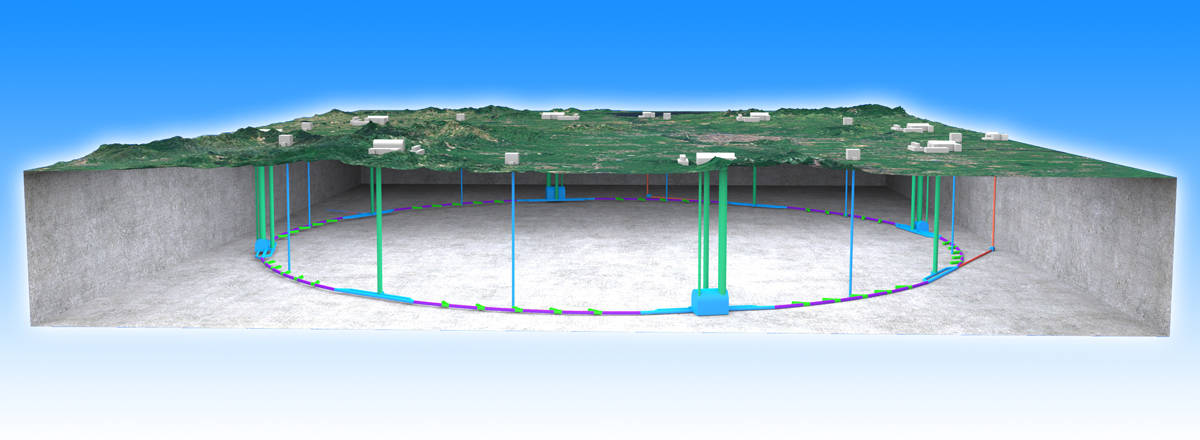
Given Japan’s hesitation over the ILC, it now appears that the leading candidate for a Higgs factory is China’s proposed Circular Electron Positron Collider (CEPC). It would be built by Beijing’s Institute for High-Energy Physics (IHEP), which is spearheading the proposal. Featuring dual rings of ambient-temperature iron magnets and two sets of superconducting accelerating cavities at two opposite points around the ring, this 100 km-circumference machine would generate collisions at 240 GeV – high enough to produce many thousands of Higgs bosons paired with Z bosons.
Its advertised cost is in the order of $6bn, paid largely by the Chinese government, which can probably afford this price tag, given its strong economy and trade surpluses. Construction could potentially start in the next few years, if given the go-ahead. But it will be a huge challenge. Such an immense machine would be hundreds of times larger and costlier than any project IHEP has ever attempted. The project will probably have to be managed and directed by people outside high-energy physics – professional engineers (possibly from Chinese military backgrounds) who are experienced at building large projects but not in establishing an all-important laboratory culture. Engineers are essential for such huge projects, of course, but they must not gain the upper hand over the scientists.
We have already seen this happen with the ill-fated Superconducting Super Collider (SSC), a colossal high-energy physics machine that the US tried to build in Texas rather than in Illinois adjacent to Fermilab. Then America’s premier high-energy physics lab, Fermilab had experienced accelerator physicists able to manage such an enormous project. Several factors lay behind the decision by the US Congress in 1993 to cancel the project, not least the internecine politics of Washington, DC. But mismanagement of the SSC (whether real or perceived) by a contentious organization of accelerator physicists and ex-military managers contributed to its downfall.
“The Chinese are very sophisticated in accelerator design, construction and operations,” says Barry Barish, the 2017 Nobel-prize-winning physicist from the California Institute of Technology, who is a member of the CEPC’s international advisory board and who headed the ILC Global Design Effort from 2005 to 2013. “But for large and expensive construction, they will undoubtedly bring in Chinese industry and other expertise.” Such external influences could easily compromise the resulting laboratory’s nascent scientific culture at a critical point in its evolution.
Voicing related concerns in a 2017 Foreign Policy article, the Chinese-born particle physicist Yangyang Cheng (now at Yale Law School) questioned whether the scientific values of international co-operation and camaraderie were “compatible with an authoritarian state that’s increasingly hostile to foreign ideas at home and which sees science as a tool for national greatness”. Can the traditional openness of science, she wondered, thrive in a closed culture in which Communist Party members are often looking over scientists’ shoulders?
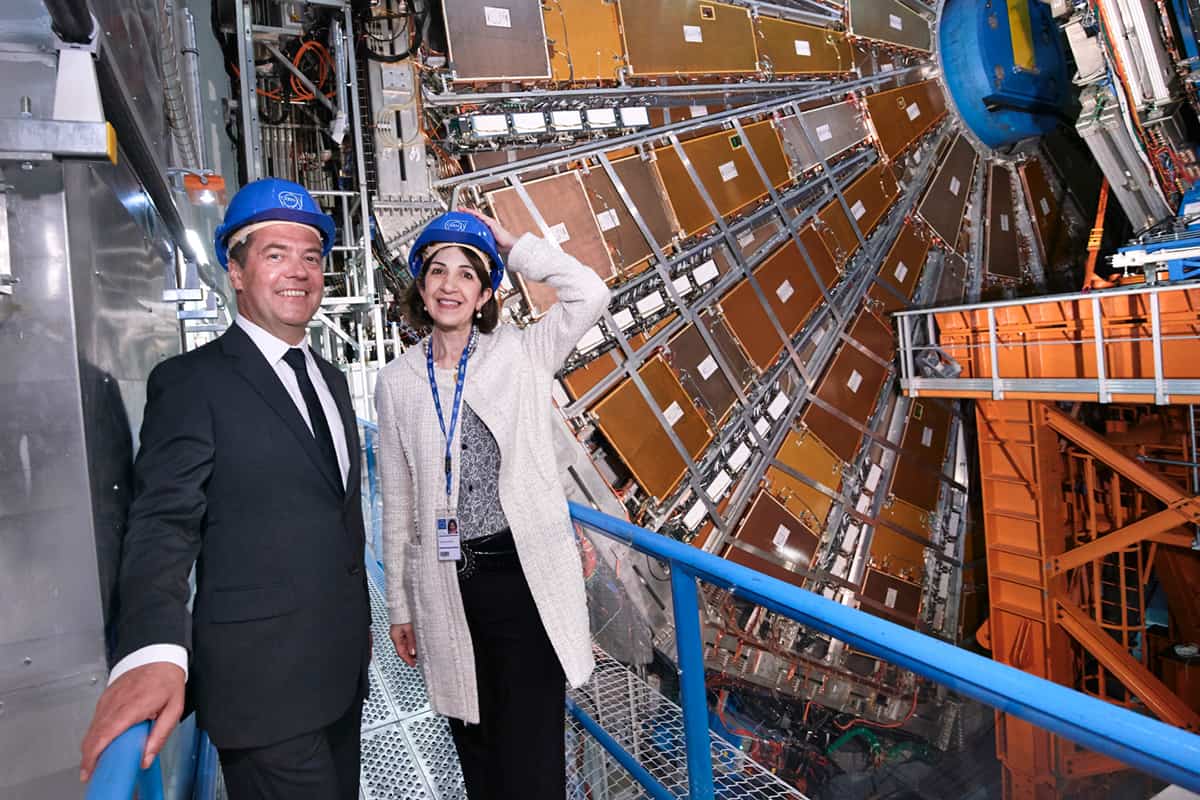
Uncertain future Former Russian prime minister Dmitry Anatolyevich Medvedev (left) at CERN with lab director-general Fabiola Gianotti in June 2019. Following its invasion of Ukraine in February 2022, however, Russia has been stripped of its “observer” status on CERN’s Council, and the country’s involvement in the lab’s future is not clear. (Courtesy: CERN)
There are also practical questions, notably the fact that high-energy physics thrives on the rapid and unfettered exchange of information online. Spawned at CERN, the Web was first used there for international scientific collaboration. Construction of a modern particle collider like the CEPC would be impossible without such free and open communication. But as Cheng asked with regard to China’s pervasive Internet surveillance: “Can the future of particle physics exist within the Great Firewall of China?”
Of added concern are recent US restrictions imposed on Chinese-affiliated scientists working in America. First enacted under President Trump, those constraints have partly continued during the Biden administration. The US Department of Energy could have great difficulty sending serious money to the CEPC (should the need arise), while US physicists seeking to do Higgs research in China could face problems too. They may end up being replaced by funding and physicists from Russia, which could be permanently locked out of CERN’s future. Physicists from Belarus – a nation CERN has also excluded from future projects – may follow that example too.
In a curious way, the CEPC begins to resemble the SSC project, originally promoted by the Reagan administration as a means of re-establishing US leadership in high-energy physics. When its costs ballooned during the early 1990s after the Cold War ended, the first Bush administration tried fitfully to internationalize the project, ultimately focusing on Japan, which proved to be a difficult partner to draw in due to the SSC’s nationalistic founding rhetoric. The failure to secure significant international contributions to the ever-rising costs of collider construction was ultimately a prominent factor in that project’s demise.
Future CERN colliders
So could CERN build its own Higgs factory? It is certainly planning one. Various options are on the drawing board, notably the Future Circular Collider (FCC). It resembles the CEPC design, consisting of a 90–100 km underground ring that would initially house a 365 GeV electron–positron collider and could later be upgraded into a hadron collider, as happened with LEP and the LHC.
But CERN’s current expertise lies in hadron colliders, which are much more effective as particle “discovery” machines because of their far greater energy reach. The LHC, for example, collides protons at combined energies of nearly 14 TeV, which means that individual quarks and gluons inside them can collide at total energies well above 1 TeV. That’s much greater than the 240–365 GeV achievable in currently proposed electron–positron colliders.
Even if the FCC gets the green light, it would cost a staggering €10bn, and serious construction would not start until research on the LHC has finished in the mid-2030s. That would push the start-up of its physics research programme into the 2040s. By that decade, the CEPC (if built) could have mined most of the important Higgs-related physics, leaving the Higgs boson self-coupling and subsequent top-quark research for CERN.
But at least one can be sure that construction of the FCC will be able to draw on the CERN culture so conducive to conducting world-class high-energy physics research. Its accelerator physicists would also lead construction of the FCC’s second phase, which would see it converted into a 100 TeV proton–proton collider by installing powerful niobium–tin superconducting magnets that could generate fields of up to 16 T – nearly twice the level of current LHC magnets.
Equivalent expertise in superconducting magnet technology does not yet exist in China. Any attempt to convert the CEPC into a hadron collider would have to wait until such technology is developed there – or imported through international collaborations with European and US physicists. That’s where CERN has a huge advantage because of its decades-long experience with hadron colliders and superconducting magnets. It also already has the necessary proton injector for the planned FCC hadron collider: the LHC. Chinese physicists, in contrast, would have to design, build and operate such a sophisticated injector from scratch.
And from a different perspective, the FCC design process has been a truly international effort. At the time of writing, about 1400 physicists were officially involved in it, hailing from more than 135 institutions in 35 nations, and the numbers are steadily growing. A similar observation cannot be made for the CEPC, which has largely been a nationalistic effort aimed at establishing Chinese leadership in high-energy physics. Whereas CERN gradually developed the expertise to initiate and manage increasingly large projects, China is trying to build a far larger project than it has ever attempted – a much greater leap forward even than the US high-energy physics community attempted with the SSC.
And as the Nobel-prize-winning physicist and SLAC director Burton Richter often argued when the concept of the ILC was first mooted in the 1990s, international accelerator collaboration must begin early in the design phase. Not only will a project then benefit from the ideas and expertise of other nations, but those countries will later be much more likely to contribute funding and equipment if they know that their intellectual input has been included.
Towards a Higgs factory
Global effort The Future Circular Collider is an international project that could be built at CERN adjacent to the existing Large Hadron Collider. (Courtesy: CERN)National focus Spearheaded by the Institute of High-Energy Physics in Beijing, the Circular Electron Positron Collider is so far a largely Chinese affair. (Courtesy: Institute of High Energy Physics, Chinese Academy of Sciences)
CERN’s Large Hadron Collider (LHC) has been producing Higgs bosons since the particle was discovered in 2012, but particle physicists are now keen to build a “Higgs factory” to study its properties in greater detail. “A Higgs factory will produce thousands of times more Higgs bosons than identified at the LHC to date,” says John Ellis, a former CERN particle theorist, now at King’s College, London. “And it will do so in a clean environment that will make analysing them much easier.”
The advantage of electron–positron collisions is the absence of so many extraneous hadron tracks unrelated to the collision under examination, resulting in much less confusing backgrounds and smaller systematic errors. Such a machine would therefore allow physicists to determine Higgs couplings to quarks and leptons much more precisely (to accuracies of about 1–2% rather than the 10–20% achieved so far at the LHC).
In the Standard Model, these couplings are expected to be proportional to the decay-particle masses. Any small deviations from this linear behaviour would therefore indicate the presence of “new physics”. Supermassive particles at the TeV scale, for example, would break the inherent symmetry of the underlying physics equations. A Higgs factory would seek to shed light on this symmetry-breaking process and thus how elementary particles acquire mass.
Two main options for a circular electron–positron collider that could serve as a Higgs factory are currently on the drawing board. One is China’s Circular Electron Positron Collider, while the other is CERN’s Future Circular Collider. Both would be approximately 100 km-circumference facilities. But whereas China would be building such a collider largely from scratch using its own technological skills and abilities, CERN would benefit from decades of international co-operation and expertise.
Global cleavage?
But a dark cloud hovers on the horizon. The Russian invasion of Ukraine is overturning some glib assumptions about international collaboration in science, as the nation has been barred from further participation in several such efforts. With huge collider projects at the energy frontier now costing upwards of €10 billion – much too large a sum for any single nation to contribute – high-energy physics cannot advance without such collaboration.
The Russian invasion of Ukraine is overturning some glib assumptions about international collaboration in science
If CERN Council does not lift its suspension of Russian institutes in future lab projects, Russian high-energy physicists will not be involved in the FCC and may cast their lot instead with China’s CEPC project. And if that proceeds, China might end up being a minor player (at most) in the FCC, given its necessarily huge financial commitment to the CEPC. Thus one can begin to perceive the dim outlines of a troublesome future realignment in high-energy physics, with liberal democracies backing the FCC at CERN and autocratic governments supporting a competing Chinese collider.
Such a potential political cleavage in the international high-energy physics community would reflect the looming bifurcation of the world order reminiscent of the Cold War. But both projects would suffer from such a renewed global rift. And the escalating costs of European rearmament after the Ukraine invasion will likely impact the CERN budget, too, stretching out the already lengthy schedule for implementation of its future collider projects. As far as politically possible, we now need CERN – more than ever – to remain true to the virtues of international scientific co-operation on which it was founded, which have proved so successful ever since.
A team of Stanford University scientists has created an innovative stretchable sensor for real-time monitoring of neurotransmitter molecules in the brain and gut. The sensor, dubbed NeuroString, paves the way for a number of potential applications in the monitoring and treatment of depression, Parkinson’s disease and intestinal diseases.
The graphene-based sensor uses an electrochemical sensing technique called fast-scan cyclic voltammetry, which involves rapidly raising and lowering the voltage applied to a probe to repeatedly oxidize and reduce the target neurotransmitters, generating a neurotransmitter-specific current.
As part of their research, the researchers used the NeuroString for long-term, stable sensing of dopamine and serotonin in a mouse brain. They performed a series of experiments using optogenetic stimulation, pharmacological stimulation and behavioural assays. The results of the study, published in Nature, show that the sensor effectively detected neurotransmitter levels in the brain, while generating minimal inflammatory response.
“We then tested the sensor in the gastrointestinal tract, where its stretchability and softness conforms well to the intestinal tissue without disturbing peristaltic movement or stimulating undesired serotonin release,” says first author Jinxing Li, who carried out the work as a postdoctoral researcher in Zhenan Bao’s lab at Stanford University and is now at Michigan State University. The device provided continuous and high-fidelity monitoring of serotonin released in the gut lumen, in both a rodent model of irritable bowel syndrome and a large-animal model.
To simultaneously measure the dynamics of brain dopamine and gut serotonin, the researchers implanted some mice with NeuroStrings in both the brain and colon. When they fed the mice chocolate, the sensors detected spikes of dopamine in the brain and spikes of serotonin in the gut.
“Neurons communicate through both electricity and chemical neurotransmitters,” Li explains. “Monitoring the electrical and chemical signal communication in the nervous systems is essential for studying the brain, understanding brain diseases and developing effective therapies.”
Clinical applications
Researchers have previously made strong progress in neurotransmitter sensing through the use of genetically engineered fluorescent probes, and bioelectronic neural interfaces have been used to study wild animals and even humans. However, existing bioelectronic tools for studying neurotransmitters are limited in several ways, including the fact that they tend to be rigid and brittle, and can lead to undesired stimulation of target tissue or inflammatory responses, making them poorly suited to monitoring soft tissues.
Instead, scientists need soft bioelectronic interfaces that can monitor the natural spatiotemporal dynamics of neurotransmitters in both the central and peripheral nervous systems, without interfering with the physiology of soft and moving organs such as the brain and the gut. “These tools could ultimately enable the development of next-generation brain–machine interfaces and medical therapies that modulate neurotransmitter activity,” says Li.
The team selected graphene as the electrode material because it acts as a catalyst for the oxidation of monoamine neurotransmitters such as dopamine and serotonin. According to Li, it also has excellent electrical properties, good biocompatibility, and can withstand bending, stretching and twisting.
Using a process called laser carbonization, the team created a network of laser-induced graphene nanofibres with transition-metal nanoparticles decorated on the surface. These nanoparticles bind to the neurotransmitters and improve electron transfer, enabling the sensor to sensitively and selectively analyse neurochemistry.
The researchers then embedded the graphene nanofibre network in an elastomer matrix to make it soft and highly stretchable, while preserving the unique electrochemical properties of the nanomaterials. “The graphene nanofibres maintained an interconnected 3D conductive network even when they were deformed in the matrix,” says Li.
“NeuroString’s elastic features make it suitable for simultaneously monitoring neurotransmitter signalling in both nervous systems, and potentially addresses current technical limitations in studying the dynamics of the gut’s chemistry and interactions with microorganisms,” Li adds.
Li expects that NeuroString will be a great tool for studying gut microbe metabolites and diagnosing gut inflation, and predicts that it might also be integrated with a neurostimulator for closed-loop stimulation to treat Parkinson’s disease.
In future work, the researchers hope to improve the sensor’s spatial resolution using micro- or nanofabrication, as well as enhance its selectivity and functionality by incorporating different probes. Eventually, they aim to integrate the sensor with wireless hardware, which should enable validation of its long-term performance in the brain and gut of larger animals.
“It might even be possible to link the sensor to a system for modulating the concentration of targeted neurotransmitters. This implanted, closed-loop system could be used to reprogram a person’s brain chemistry in real time,” says Li.