The image, known as “SMACS 0723”, is the telescope’s first “deep field” picture. It was taken by the JWST’s Near-Infrared Camera and is a composite made from images at different wavelengths. It shows how massive foreground galaxy clusters magnify and distort the light of objects behind them, allowing a deep-field view into extremely distant and faint galaxy populations.
“Today is a historic day,” noted Biden at an event at the White House today. “It shows what we can achieve and what we can discover.”
“[This] is not only the first full-color image from the James Webb Space Telescope, it’s the deepest and sharpest infrared image of the distant universe, so far. This image covers a patch of sky approximately the size of a grain of sand held at arm’s length. It’s just a tiny sliver of the vast universe,” said NASA administrator Bill Nelson. “This mission was made possible by human ingenuity. [The JWST] is just the start of what we can accomplish in the future when we work together for the benefit of humanity.”
“Today represents a new, exciting chapter,” noted US vice president Kamala Harris. ”We can look to the sky with a new understanding. Now we enter a new phase, building on the legacy of Hubble.”
More to come
Four other images will be released at a NASA press conference tomorrow (12 July) at 16:30 CEST.
They are an image of the Carina Nebula, which is one of the largest and brightest nebulae in the sky and is located about 7600 light-years away in the southern constellation Carina.
Another image will be the atmosphere spectra of the WASP-96b exoplanet, which was first announced in 2014. Composed mainly of gas, the planet is located nearly 1150 light-years from Earth and orbits its star every 3.4 days.
Another object that has been pictured is the Southern Ring, or “eight-burst” nebula, which is a planetary nebula almost a half a light-year in diameter and is located approximately 2000 light years away from Earth.
Last but not least, about 290 million light-years away is Stephan’s Quintet in the constellation Pegasus. It is the first compact galaxy group ever discovered where four of the five galaxies within the quintet often have close encounters.
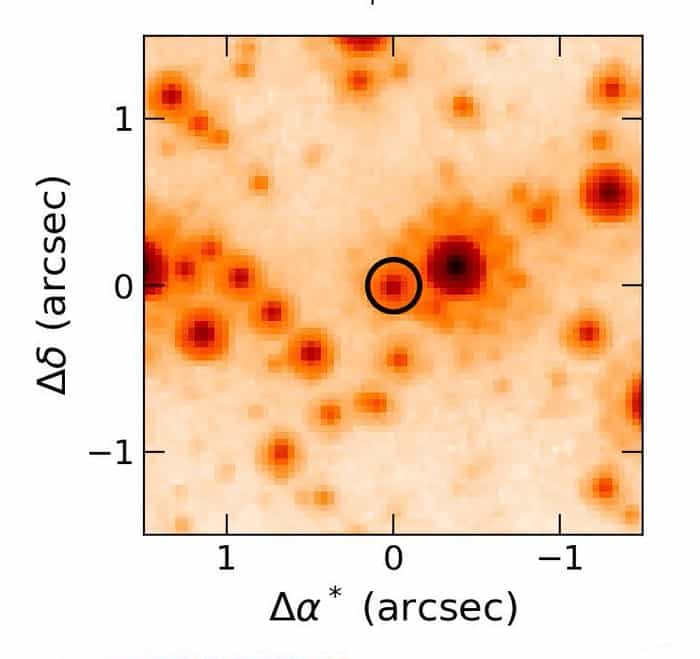
Distorted star: Hubble Space Telescope image of a distant star that was brightened and distorted by an invisible but very compact and heavy object between it and Earth. (Courtesy: STScI/NASA/ESA)
Astronomers have spotted a massive object that could be the first free-floating black hole ever observed using gravitational microlensing. The team of researchers was led by Casey Lam and Jessica Lu at the University of California, Berkeley and made the discovery by combining microlensing survey data with observations from the Hubble Space Telescope. Their study was the first exhaustive attempt to identify black holes that do not have a companion star – free-floating objects that are believed to be abundant throughout the Milky Way.
Stellar-mass black holes are born out of dramatic supernova explosions, triggered as massive stars collapse under their own gravity. Astronomers predict that hundreds of millions of black holes exist throughout the Milky Way, but so far, just around two dozen have been identified definitively. All of these are in binary systems: paired with stars whose movements indicate the presence of an invisible companion. Yet many astronomers believe that these pairs a not a representative sample, and that most black holes are isolated.
One way to detect a solo black hole is to observe the effect its gravity has on passing starlight. The gravitational distortion of spacetime surrounding the black hole can focus light from a background star onto Earth. This changes the brightness of the star and shifts its position in the sky. Because of the relative motions of objects in the cosmos, the effect lasts for several weeks or months – so microlensing could be detected by looking for temporary changes in appearance of stars. However, numerous microlensing surveys have been done over the past 25 years and so far, there have been no confirmed observations of solo black holes.
Temporary distortions
Now Lam, Lu and colleagues have combined over 120 days of ground-based microlensing measurements with data from the Hubble Space Telescope, which monitored ongoing changes to background starlight over the same period. There were able to identify five candidate events where the background starlight was temporarily distorted over month-long timescales.
Further analysis suggested that four of these events were probably caused by less massive objects such as neutron stars or white dwarfs. The fifth event looks much more promising and the team has calculated that it is associated with an object in the 1.6–4.4 solar mass range. This means that the lensing object is either a neutron star or a black hole. The object is also relatively close to Earth –the team calculates it is 2–6 light-years away.
Although the precise nature of the object is unknown, Lu points out that “This is the first free-floating black hole or neutron star discovered with gravitational microlensing”.
The team now plans to use further data from the Hubble Space Telescope along with more advanced modelling techniques to determine whether the object is a black hole. Even if the object does turn out to be a neutron star, the observation bodes well for future black hole searches using microlensing.
For the first time, researchers in the UK and Japan have identified the locations where materials known as perovskites begin to degrade. This degradation, which is caused by the formation of defects that act as “traps” for charge carriers moving through the material’s crystalline structure, is a barrier to commercializing perovskite-based devices such as solar cells because it reduces their efficiency over time. The new work could therefore help improve the stability and performance of perovskites by pointing the way toward controlling the defects’ formation.
Metal halide perovskites have an ABX3 structure, where A is typically caesium, methylammonium (MA) or formamidinium (FA); B is lead or tin; and X is chlorine, bromine or iodine. They are good candidates for thin-film solar cells because they can absorb light over a broad range of wavelengths in the solar spectrum. Indeed, the materials now boast a power conversion efficiency (PCE) of more than 25% for single-junction cells and nearly 30% for tandem perovskite/silicon cells. This means they rival established solar-cell materials such as silicon, gallium arsenide and cadmium telluride. They are also potentially cheaper to process than crystalline silicon and can be prepared as a liquid ink that is printed to produce a thin film.
Double trouble
Perovskites’ big drawback is their naturally-occurring defects. These defects are double trouble, because as well as trapping photo-excited charge carriers (electrons and holes), it turns out they are also the sites at which the light-absorbing layer of perovskites begins to undergo photochemical degradation.
In the new work, researchers at the University of Cambridge in the UK and the Okinawa Institute of Science and Technology (OIST) in Japan studied the nanostructure of perovskite thin films and how this changed over time when they were exposed to sunlight. In collaboration with the Diamond Light Source and the electron Physical Sciences Imaging Centre (ePISC) in Didcot, UK, together with the Department of Materials Science and Metallurgy in Cambridge, the team used several high spatial-resolution techniques to show that even trace amounts of defects compromise the material’s stability (and therefore its longevity). The degradation around these defects proceeds much faster than in the surrounding pristine material, and degraded films also contain morphological holes that form around the defects.
Controlling the impurities
The researchers report that the type of defects and the way they are distributed in the materials depends on the composition of the perovskite thin film and how it was processed. Performance losses and intrinsic degradation processes can therefore be mitigated by controlling these impurities, which requires the local structural and chemical properties to be carefully managed.
“We know that structural tuning (tilting of the perovskite lattice) can inhibit the formation of the most detrimental defective phases,” explains Stuart Macpherson, a PhD student at Cambridge and the lead author of a paper in Nature describing the team’s findings. “In fact, this effect has been unknowingly employed in some highly stable devices in the literature.”
Macpherson tells Physics World that eradicating these defective features would bring a twofold benefit in the form of increased efficiency as well as longevity. “Advancing this strategy and identifying passivation agents that have a similar effect will be a natural follow-up for this work,” he adds.
The Cambridge-Okinawa team is now extending its characterization toolkit to continue investigating the impact of defect phases in other perovskite materials. “We are also striving to optimize the device fabrication process based on our findings, to make solar cells that are both efficient and stable,” Macpherson says. “Our future work will focus on probing the fundamental influence of impurity phases on physical processes within perovskite solar cells.”
This edition of the Red Folder looks at some images from two science-related photography contests.
Last week the International Union of Pure and Applied Physics (IUPAP) announced the winners of its IUPAP 100 Photo Contest. First prize in the “At a glance” category went to Yuya Makino of Madison, Wisconsin, US who was a “winterover” at the Amundsen-Scott South Pole Station. He was one of two people who monitored the IceCube Neutrino Observatory during the harsh Antarctic winter. In total, 50 people spend the winter at the South Pole, keeping equipment and experiments ticking over.
Makino’s spectacular photo is called “Chasing ghost particles at the South Pole” (above) and it shows a winterover walking towards IceCube, which is bathed in the light of the Southern Lights and the Milky Way.
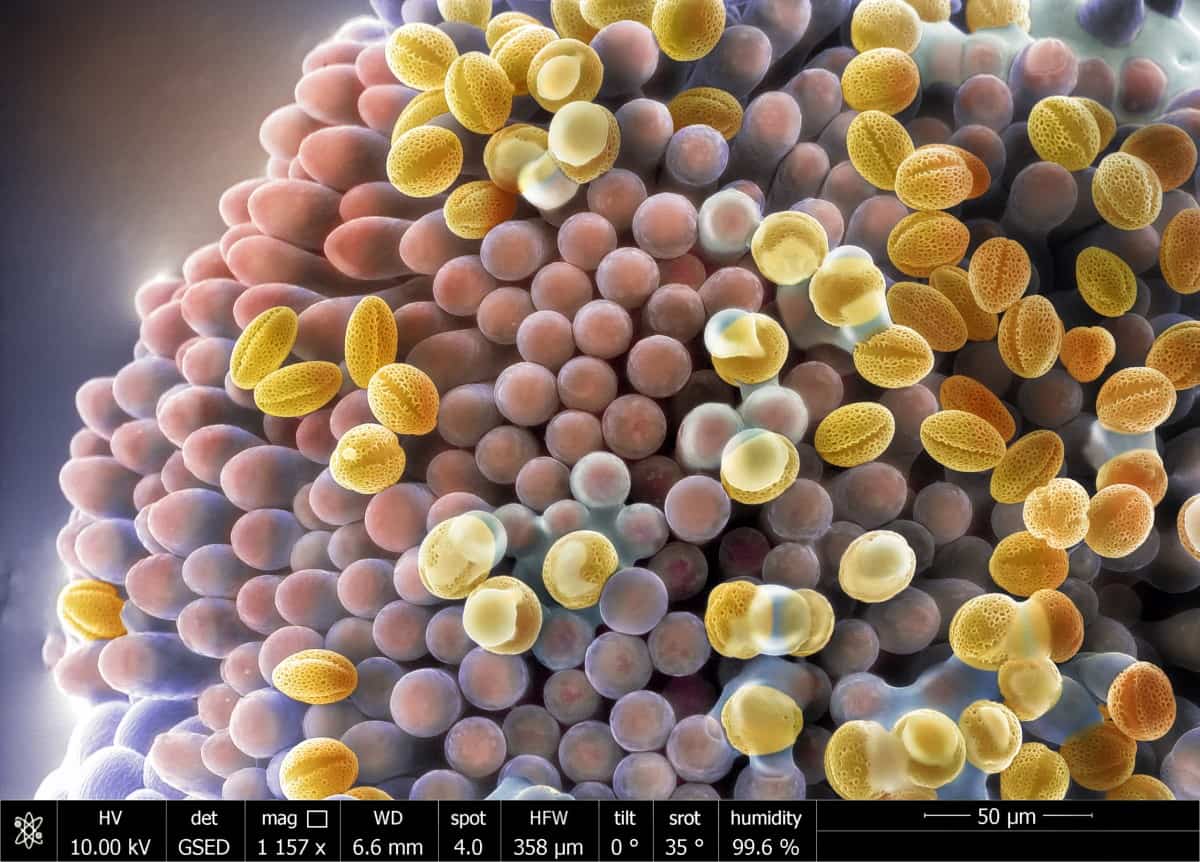
Just add water: “Surviving by drops”. (Courtesy: Isabel Sánchez)
Another of my favourites is “Surviving by drops” by Isabel Sánchez in Granada, Spain (above). This took third prize in the “Beyond our eyes” category and is a colourized environmental scanning electron microscope image. It shows how pollen sitting on the stigma of a flower is activated by condensing water.
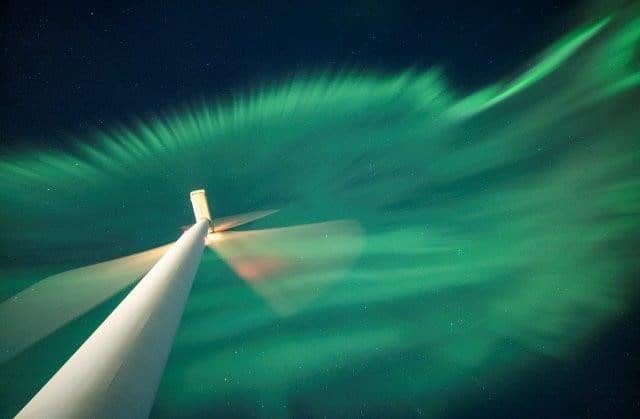
Energized sky: “Solar wind power”. (Courtesy: Esa Pekka Isomursu)
Not to be outdone, this week the UK’s Royal Observatory Greenwich announced its shortlist for its Astronomy Photographer of the Year 2022. Not surprisingly, there were lots of photos of aurorae – indeed the phenomenon had its own category. My favourite entry is the image above taken in Finland by Esa Pekka Isomursu and called “Solar wind power”. It shows a wind turbine illuminated by an aurora, giving the illusion that the two entities are interacting.
Tumour shape and position relative to healthy tissue will evolve as a cancer patient undergoes a course of radiotherapy – and can even change during an individual treatment session. The ability of MR-guided radiotherapy (MR/RT) systems like the Elekta Unity MR-Linac to detect those changes and adapt therapy accordingly – in effect, helping clinicians to “see what they treat” in real-time – represents a fundamental inflection point for the radiation oncology team.
While it’s still relatively early days for MR/RT adoption, the clinical end-game is already coming into view. Think personalized radiotherapy tailored to the unique indications of each patient – adjusting radiation delivery to address the daily variation in the tumour and surrounding healthy tissue, while enabling the clinician to adapt the plan for tumours that respond rapidly to treatment, as well as those that prove unresponsive to standard doses of radiation. Ultimately, researchers hope that the MR-Linac’s ability to visualize a tumour target with exceptional soft-tissue contrast, both prior to and during treatment, will make it possible to increase the radiation dose to diseased tissue in real-time without damaging adjacent organs-at-risk (OARs) and other critical structures.
Real-time adaptation
In the vanguard of this adaptive MR/RT research effort are Martin Fast and colleagues at UMC Utrecht in the Netherlands. For context, UMC Utrecht was the first research hospital to “go clinical” with high-field MR/RT – back in 2017 – and the centre’s radiation oncology department now has three Elekta Unity systems in routine daily operation. “We’re currently doing adaptation just before treatment starts and sometimes midway through a course of radiotherapy,” explains Fast, associate professor of medical physics at UMC Utrecht. “Where we’re heading, though, is continuous online adaptation of radiation delivery – a breakthrough that will allow us to take account of changes in tumour shape and position as a result of respiratory and cardiac motion.”
Fundamental to success here is a convergence of core enabling technologies. For starters, there’s the ability to capture the tumour and its environment “on the fly” using the MR-Linac’s real-time imaging capability. Put simply, novel MR imaging sequences are able to map a wide range of tumour motion – when the patient breathes, for example, or as a result of peristaltic activity along the digestive tract – which opens the way to dynamic tracking of the linac’s multileaf collimator (MLC), continuously reshaping the treatment beam so as to confine dose to the tumour target while avoiding OARs and surrounding healthy tissue.
Reliable, end-to-end QA is equally fundamental for the successful translation of breakthrough technologies into the radiotherapy clinic. A key building block in the MR/RT QA workflow at UMC Utrecht is the QUASAR MRI4D, an MR-safe, programmable motion phantom from Modus QA, a Canadian supplier of QA solutions for radiation oncology. As well as being a preferred QA vendor, Modus has a long-standing R&D partnership with the UMC Utrecht team – a dialogue that’s proved instrumental in addressing another piece of the MR/RT QA puzzle. “We were brainstorming new ways of measuring dose dynamically,” adds Fast, “and Modus introduced us to Medscint and their real-time, small-field dosimetry solution based on plastic scintillation detectors.”
Making light work of MR/RT QA
Based in Québec City, Medscint is a young and growing technology company combining expertise in photonics, scintillation dosimetry and medical physics. In terms of specifics, the start-up’s plastic scintillators combine near-water-equivalence and real-time response with high spatial resolution and MR-Linac compatibility. The scintillation detectors – known commercially as the HYPERSCINT Research Platform – also offer multipoint capability with a compact footprint (0.5 mm long, 0.5 mm diameter), which makes them ideal for small-field dosimetry and novel phantom developments.
After exploratory conversations at the end of last year, the UMC Utrecht/Medscint collaboration has proceeded at pace. The partners jointly presented on the characterization of the scintillation detectors in an MR-Linac environment at the Canadian Organization of Medical Physics (COMP) Annual Scientific Meeting last month. Meanwhile, new results demonstrating multipoint time-resolved plastic scintillation dosimetry on an MR-linac will feature at the AAPM Annual Meeting in Washington DC next week. This latest work is part of a collective effort – also involving scientists and engineers from Elekta and Modus – to road-test an experimental set-up in which a prototype 3D-printed hybrid cassette (containing four scintillation detectors and one EBT3 film) is incorporated in the QUASAR phantom to quantify MLC tracking for lung stereotactic body radiotherapy.
“We want to use a dosimeter that will integrate easily with the QUASAR motion platform,” explains Prescilla Uijtewaal, a PhD student at UMC Utrecht who co-led the design and validation work on the hybrid cassette. What’s more, the plastic scintillation dosimeter allows the end-user to see how dose is developing in real-time without being influenced by MR image acquisition, the scanner’s magnetic field or the motion of the phantom. Unlike other detectors, the HYPERSCINT platform can also be used regardless of its orientation in a magnetic field environment. “In that sense,” adds Uijtewaal, “it’s a pretty straightforward dosimetry device, because we don’t have to worry about all these dependencies.”
Fast, Uijtewaal and colleagues are already in talks to extend the strategic partnership with Medscint, with plans to evaluate more real-time dosimetry use-cases in the MR-Linac environment. One work-in-progress initiative involves the use of deformable inserts for the QUASAR phantom, mirroring the complexity and 4D deformation that tumours are subjected to as a result of motion within the body – and notably so for radiotherapy treatments in the cardiac region.
“The heart’s motion is not just rigidly translating – it’s deforming with each heartbeat,” explains Fast. “As such, we plan to integrate the HYPERSCINT detectors with a realistic model that supports time-resolved dosimetry while taking account of this type of complex motion and deformation.”
Big opportunities in small-field dosimetry
François Therriault-Proulx: Targeting new collaborations with radiotherapy research groups and equipment manufacturers. (Courtesy: Medscint)
François Therriault-Proulx, president and CEO of Medscint, was one of the company’s co-founders in 2016, along with colleagues Simon Lambert-Girard (chief science and technology officer) and Jonathan Turcotte (chief product, sales and marketing officer). Prior to establishing Medscint, Therriault-Proulx spent eight years as an academic scientist working on the fundamentals of scintillation dosimetry, spanning PhD and postdoctoral research positions at Université Laval, Quebec City, and the University of Texas MD Anderson Cancer Center, Houston. He talked to Physics World after his presentation at last month’s AAPM Summer School on Small-Field Dosimetry, SRS and SBRT.
How did delegates respond to your talk at the AAPM summer school?
There were around 180 attendees at the summer school – mostly medical physicists. For many delegates, my presentation offered the first opportunity to learn about plastic scintillation detectors in terms of the fundamental science and enabling technologies under development. As such, the event was an ideal forum for Medscint to get the word out to the clinical physics community, raising awareness about the HYPERSCINT Research Platform, the capabilities of our in-house product development team, also our R&D partnerships on cutting-edge applications like adaptive MR/RT and FLASH radiotherapy.
Why are scintillation detectors a good fit for small-field dosimetry?
Compact-footprint, water-equivalent plastic scintillator technology has a lot to offer as treatment fields get smaller and geometrically more complex – for example, in SRS treatments of metastatic tumours in the brain. With no need for small-field correction factors to characterize device behaviour, our detectors provide a real-time measurement tool that combines high linearity with respect to dose and dose rate. That wide linear dynamic range is relevant at both ends of the treatment spectrum, whether for novel low-dose-rate irradiation schemes or ultrahigh-dose-rate FLASH applications.
What are the priorities for Medscint at the AAPM Annual Meeting this month?
First up, we’re looking to establish new collaborations with radiotherapy research groups, though our direction of travel is shifting towards cross-disciplinary teams with a focus on clinical translation. Second, we want to gather granular feedback from clinical end-users on their evolving QA requirements for next-generation radiotherapy modalities. We’ll also be exploring potential synergy with other technologies and partnership opportunities with relevant manufacturers.
Thermal runaway is an undesired occurrence with lithium-ion cells and batteries when improperly designed, manufactured or used. With the size of these batteries increasing exponentially and their use in confined spaces becoming more common, it is imperative to fully characterize the nature and products of thermal runaway. In this webinar, Judy Jeevarajan of the Electrochemical Safety Research Institute (ESRI) at UL Research Institutes provides details on the need to carry out such characterizations; methods to take the test articles into thermal runaway; the worst case events observed; and products of fire and smoke for test articles studied by ESRI. Finally, Jeevarajan provides some recommendations on addressing the prevention and propagation of thermal runaway in Li-ion batteries.
Judy Jeevarajan is vice-president and executive director of the Electrochemical Safety Research Institute (ESRI) at UL Research Institutes (formerly Underwriters Laboratories, Inc.). She has worked in the field of batteries for more than 25 years, with a primary focus on lithium-ion chemistry.
Jeevarajan serves in the technical working groups and committees for standards organizations such as UL, Society of Automotive Engineers, International Civil Aviation Organization/Society of Aerospace Engineers, Radio Technical Commission for Aeronautics, International Electrotechnical Commission, and American National Standards Institute. She currently leads an effort under the American Institute of Aeronautics and Astronautics to develop a space safety standard for battery systems. She also serves as a member of the Informal Working Group and Dangerous Goods Panel under the United Nations. Jeevarajan is a member of the Great Lakes Energy Institute Advisory Board at Case Western Reserve University.
Before joining Underwriters Laboratories Inc., she worked for NASA at the Johnson Space Center (JSC) in Houston for 12 years, serving as group lead for Battery Safety and Advanced Technology. Prior to becoming a civil servant at NASA, Jeevarajan worked onsite for five and a half years at NASA-JSC for Lockheed Martin Space Operations.
Jeevarajan earned an MS in chemistry from the University of Notre Dame and PhD in chemistry (electrochemistry) from the University of Alabama. She has won numerous NASA awards, including the NASA Exceptional Service Medal and the NASA-NESC Engineering Excellence Award. She also received the 2019 American Institute of Aeronautics and Astronautics Aerospace Power Systems Award, and India Energy Storage Alliance Woman Leader of the Year 2020–Energy Storage Systems Award.
Wrapping a cuff around a patient’s arm and inflating it to measure blood pressure is one of the most routinely performed medical tests. It provides a quick and reliable assessment of cardiovascular health, as blood pressure is an independent predictor of all-cause mortality. But such arm cuffs are bulky and uncomfortable, making them impractical for continuous monitoring outside of clinics.
For this reason, researchers are developing cuffless alternatives with the goal of unlocking new possibilities for patient diagnostics and management, as well as providing new understanding of physiology. However, none of these tools has become a mainstay yet.
One option, acoustic sensors, slide during movements and are too large to be easily incorporated into untethered ambulatory sensors. Meanwhile, optical modalities such as smart watches are limited by the low penetration of light into tissues, which hinders their ability to capture haemodynamic parameters in the arteries. Studies also show that optical sensors are sometimes inaccurate when used with darker skin tones or larger wrists.
Graphene tattoos and machine learning
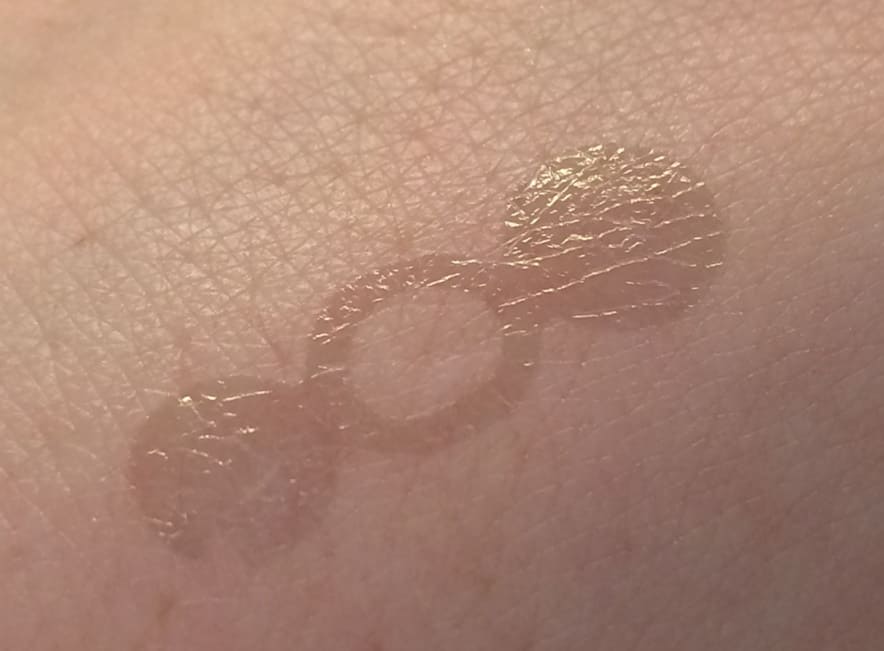
A group of researchers from the University of Texas and Texas A&M University, led by Roozbeh Jafari and Deji Akinwande, circumvented these impediments by developing a sticky and stretchable graphene electronic tattoo that is comfortable to wear for long periods and does not slide around. They describe the new blood-pressure monitor in Nature Nanotechnology.
Near-invisible: with a 25 mm2 surface area and a thickness roughly 1000× thinner than acoustic sensors for blood-pressure monitoring, the graphene electronic tattoo attaches seamlessly to the patient’s skin. (Courtesy: Roozbeh Jafari)
Graphene, one of the strongest and thinnest materials in existence, is similar to the graphite found in pencils but with the carbon atoms precisely arranged into layers just one atom thick.
“The sensor for the tattoo is weightless and unobtrusive. You place it there. You don’t even see it, and it doesn’t move,” says Jafari.
The device performs measurements by injecting a low-intensity electrical current into the skin and then analysing the body’s response, known as the bioimpedance. The electrical signal penetrates deep into the skin and propagates through the path of least resistance: the blood vessel, as blood is ion-rich and thus a better conductor than the surrounding fat and muscle cells. The signal that is collected reveals variations in bioimpedance, which are correlated with blood-pressure variations.
The researchers also used the device to measure pulse wave velocity, the speed at which blood travels in the arteries. They then used the bioimpedance and pulse wave velocity data as inputs for a common machine learning algorithm (AdaBoost) to predict diastolic (minimum) and systolic (maximal) blood pressure points.
Grade-A classification performance
To assess the accuracy of the tattoo, the researchers enrolled seven volunteers, attached sensors above their radial arteries and asked them to perform a series of activities known to change blood pressure (hand grip, cycling on a stationary bike and the Valsalva breathing manoeuvre). They measured reference blood pressures using a medical-grade blood pressure cuff.
In total, the researchers recorded 18,667 data points and split the data into 89% for training and 11% for testing, a process known as cross validation. The measurement accuracy – 0.2±4.5 mm Hg for diastolic pressures and 0.2±5.8 mm Hg for systolic pressures – was equivalent to grade-A classification, according to the IEEE standard for blood-pressure monitoring devices.
Further, some activities were combined with sweat-inducing walks outside at 38 °C or push-ups; none of the sensors degraded electrically after exposure to light and heat or contact with water or sweat. The sensor was able to monitor arterial blood pressure for more than 300 min, 10-fold longer than reported in previous studies. The sensors could also be used to record other vital signals, such as breathing respiratory rates, and could be placed on other locations, such as the tibial and carotid arteries and the jugular notch.
Looking forward, there is still some work needed to estimate central aortic blood pressure, which differs from peripheral blood pressure and is thought to be a superior indicator of cardiovascular events. Likewise, assessing the whole pressure wave over a cardiac cycle as opposed to single points could provide additional information on blood vessel functions and cardiac performances.
The Search for Extraterrestrial Intelligence (SETI) might want to add quantum communication to its list of ways for aliens to get in touch. According to calculations by researchers at the University of Edinburgh in the UK, quantum signals would be a viable means of establishing contact across interstellar distances – a result that also suggests we might need to update our technology to recognize any such signals coming in our direction.
This finding might seem surprising, given that setting up quantum links here on Earth has proven no easy task. Such links are based on creating entanglement between individual nodes and teleporting quantum states between them, but these states are fragile, and their tendency to decohere – that is, to lose their quantum nature – limits the stability of the links. Interstellar links, therefore, represent a bold step forward. Could quantum information survive the hostile space environment during a journey towards an interstellar receiver?
Effects of interstellar disturbances
To answer this question, the Edinburgh researchers calculated the likely impact of various disturbances a quantum signal could encounter. One such disturbance is gravity, which could cause quantum states to decohere and signals to lose fidelity. However, the researchers computed that a photon could travel 127 light-years before such decoherence comes into play, meaning that a considerable number of stars with known exoplanets are within reach.
The impact of space travel on the fidelity, or quality, of a quantum signal is slightly different, because decoherence is not the only contributor. “High fidelity” means being able to fully process a quantum signal once it is received. This parameter can be quantified by considering a relativistic effect known as Wigner rotation that can change the signal’s phase, resulting in a loss of fidelity while coherence remains intact. However, the researchers note that if the receiver knows the signal’s origin, they would in principle be able to estimate the magnitude of this effect and calculate the signal’s original phase.
Besides gravity, several other factors could disrupt the quantum state of a photon. Interstellar space contains a distribution of electrons, photons, hydrogen atoms and some heavier elements. Locally, such particles can also come from our own Sun. But when the researchers calculated the probability of a signal photon interacting with any of these, they found that the mean free path distance was larger than the observable universe, meaning no considerable interaction can be expected. Photons at X-ray wavelengths, in particular, have longer mean free paths through scattering and absorbing media such as gas and dust, and are less susceptible to interference from large magnetic fields, making them favourable for quantum communication.
ET teleport home?
Finally, the researchers considered the question of why an extraterrestrial civilization might choose quantum communication over classical signals. According to Arjun Berera, a physicist at Edinburgh and lead author of a paper on the research in Physical Review D, there are some benefits. One is that the quantum nature of the signal would be a sign that it comes from an intelligent source rather than a natural process. Another is that quantum communication makes it possible to pack a lot of information into the signals, especially when utilizing higher-dimensional entangled states.
Michael Hippke, an expert on interstellar communication who is affiliated with Germany’s Sonneberg Observatory, calls the new research “an excellent contribution to the field” because it shows that quantum photons can travel over interstellar distances without losing coherence. As for whether other civilizations (if they exist) could communicate with quantum light, Hippke, who was not involved in the latest research, describes the idea as plausible. “We should look for that,” he says. He adds that identifying the X-ray region of the electromagnetic spectrum as a potential carrier is important, though he notes that any attempt to detect such a signal would have to be carried out in space because the Earth’s atmosphere absorbs most X-rays.
Berera says that the team’s next step is to establish whether any natural astrophysical sources could also produce coherent quantum photon states. “It would be an important question to answer before we start focusing our attention on the quantum route for finding ETs,” he says.
When moth wings are used to coat hard, artificial surfaces, they can significantly reduce the reflection of incoming ultrasound, researchers in the UK have shown. Without making any modifications to the wings’ scale structures, Marc Holderied and colleagues at the University of Bristol showed how the natural metamaterial performs remarkably well as natural soundproofing.
Conventional soundproofing materials tend to be porous, and to be effective they must be thicker than about 10% of the wavelength of the sound they are blocking. Metamaterials made of specially designed structures can be thinner than 1% of the wavelength they absorb, but these tend to operate over a very narrow band of frequencies. While broadband metamaterials have been created, they tend to be much thicker.
To create thinner broadband sound absorbers, some researchers are looking to the wings of moths for inspiration. Bats hunt moths using echolocation, so some moth species have developed a remarkable ability to absorb the high-frequency sound waves bats produce. The insects do this using microscopic scales that decorate both sides of their wings.
Range of sizes
These scales come in a broad range of sizes – each with a characteristic resonant frequency. This allows the wings to absorb sound across a wide range of frequencies, making them far more effective than conventional sound-absorbing materials. Previous studies have shown how moth wings absorb sound waves as the insects travel through the air. In their study, Holderied’s team looked at how the wings absorb sound when attached to an aluminium disk.
Typically, such a hard, manmade surface will reflect most incoming sound. In contrast, the researchers observed that the moth-wing coating reduced this reflection by up to 87% at the lowest frequencies they tested. The ultrasound used by the team had wavelengths some 50 times longer than the thickness of the wings.
The team then had a closer look at how the sound was absorbed. They removed the scales from the upper side of the wing and discovered that this caused the absorption to vary with the orientation of the incoming sound. While its performance remained high when the bald side faced the incoming sound, it broke down almost completely in the orientation. By recreating this scenario in simulations, Holderied’s team showed that the metamaterial’s performance strongly depends on the presence of scales in the air gap between the wing membrane and the hard surface beneath.
The sound waves absorbed by moth wings may be beyond the range of human hearing, but by adapting the design to absorb lower frequencies, Holderied and colleagues hope that new artificial metamaterials inspired by their structure could soon be developed. These structures could lead to new breakthroughs in high-performance soundproofing: potentially leading to coatings for walls, vehicles, and noisy machinery that takes up a fraction of the space required by existing materials.
In this episode of the Physics World Weekly podcast, the climatologist Fredi Otto explains why scientists can say with confidence that certain extreme weather events such as floods and heatwaves are more likely to have happened because of climate change. Otto is at the Grantham Institute for Climate Change and the Environment, Imperial College London. She has recently published a review paper in the journal Environmental Research: Climate called “Extreme weather impacts of climate change: an attribution” and speaks to Physics World’s James Dacey about her research.
Also in this episode, we chat about the discovery of the Higgs boson, which was announced 10 years ago by physicists working on the Large Hadron Collider at CERN. Physics World is celebrating the anniversary by publishing a month-long series of articles about particle physics, so stay tuned to website.