Bacterial therapies, in which living bacteria are used to deliver drugs or other payloads to kill cancerous cells, could provide an alternative treatment for a wide range of cancers. When bacteria infiltrate the human body, the immune system triggers a fighting mechanism against the foreign substance, with the aftermath of such events dependent on the potency of the bacterium. However, some probiotic bacteria, such as Escherichia coli Nissle 1917 (EcN), easily resist the immune system’s lines of defence. This could be problematic if such bacteria are being considered for therapeutic applications.
Living bacteria can be engineered to kick back against the immune system, resulting in two potential outcomes: a compromise in the immune system after bacteria delivery; and the living bacteria causing toxicity to its host cells. Over the past decade, researchers have explored the reduction of toxicities from live bacteria by genetically deleting the parts of the bacterium that can cause toxicity; but this can lead to unwanted mutations in the bacterium itself and may substantially decrease therapeutic efficacy.
Tunable surface modulation: Programmable encapsulation enables bacteria to evade immune attack. (Courtesy: CC BY 4.0/Nat. Biotechnol. 10.1038/s41587-022-01244-y)
A team of engineers from Columbia University has now determined an effective approach to enhance the delivery of living engineered bacteria into cells, while maintaining the bacterium’s integrity and minimizing toxicity. Reporting their findings in Nature Biotechnology, the researchers describe a way of coating engineered bacteria with an inducible capsular polysaccharide (iCAP) that responds in a smart manner when delivered into the body.
Capsular polysaccharide (CAP) is a layer of water molecules that coats the surface of natural bacteria and acts as a shield against foreign infections. By converting CAP into iCAP, the researchers could apply programmable external stimulus that enables the engineered bacteria to evade immune attack, survive for a considerable duration in the host environment and deliver a tolerable therapeutic dose.
Guiding the bacteria
Cancer cells possess a natural ability to evade the immune system, which is one of the significant hallmarks of cancer. Since engineered bacteria are also required to evade immune attack, targeting bacteria to tumours becomes a herculean task, requiring a highly sophisticated design to enable adequate localization of the bacteria in the tumours.
The researchers leveraged synthetic gene circuits to dynamically control how the bacteria interact with their surrounding environment using the iCAP. As well as protecting against environmental pressures and forming a barrier for the bacteria wall, CAP has also been reported to play important roles in sensing immune responses. To control CAP expression, the authors introduced a small-molecule inducer termed IPTG. Induction of the CAP with IPTG modulated the bacteria’s interactions with circulating antimicrobials, bacteriophages, acids and the host immune system.
The iCAP system for cancer applications
While bacterial therapies for cancer continue to advance, developing a robust system for killing all tumours might seem insurmountable. As a starting point, however, the researchers demonstrated that the iCAP system can control the therapeutic delivery in mouse models.
To investigate the efficacy of iCAP, the researchers first examined the bacterial viability in human whole blood. They found that the engineered bacteria survived significantly longer than bacteria with natural CAP. Furthermore, after administering mice with iCAP bacteria, they observed lower inflammatory responses compared with the non-engineered bacteria.
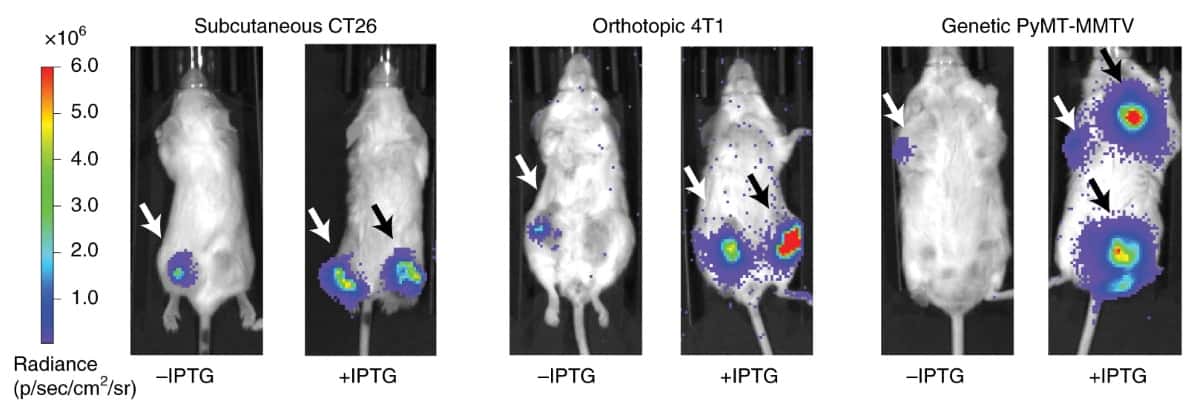
Bacterial biodistribution: Bioluminescence images show the distribution of engineered bacteria in various mouse models. White arrows depict the location of bacterial injection, black arrows show bacterial translocation after administration of IPTG. (Courtesy: CC BY 4.0/Nat. Biotechnol. 10.1038/s41587-022-01244-y)
In tumour-bearing mice, iCAP also enabled the translocation of therapeutic bacteria to multiple distal tumours throughout the body, with increased trafficking compared with natural bacteria. Additionally, delivering an EcN iCAP construct engineered to produce an anti-tumour toxin led to a reduction in tumour growth in the mice, demonstrating its therapeutic efficacy.
Tal Danino, senior author of this study, now plans to further explore the use of iCAP and other bacterial-based therapeutics to accelerate clinical translation in the future.
An obscure quantum-mechanical phenomenon involving a warm glow visible only to accelerated observers, long thought almost impossible to detect, should be measurable in the laboratory after all. So say three physicists in Canada and the US, who reckon that the “Unruh effect” could be seen by accelerating an electron along a very well-defined path while showering it with microwaves. Evidence for the effect, they calculate, should become available after just a few hours of observations – in contrast to the signature from an unirradiated particle, which would take longer than the history of the universe to emerge.
The special theory of relativity, which Albert Einstein unveiled back in 1905, applies to observers who are not accelerating – those in “inertial” frames of reference. It tells us that some very unusual effects occur when one observer moves relative to another at close to the speed of light – including the fact that time and velocity are no longer absolute quantities but depend on the observer’s frame of reference. However, the theory has little to say about the effects of acceleration.
Theorists investigated this problem in the 1970s, seeking to work out what an accelerated observer would experience as they move through the vacuum of deep space. William Unruh, Stephen Fulling and Paul Davies worked out that while an inertial observer would see nothing in particular, the accelerating individual would be basked in a (relatively) warm glow of particles from the quantum vacuum – slightly increasing the temperature in their frame of reference from zero to some finite amount.
Extreme acceleration
However, the effect is extremely small. To measure a temperature rise of just 1 K, an observer would have to accelerate at 1020 m/s2 – unimaginably higher than anything a human being could achieve. Such accelerations can be attained by electrons thrust along inside powerful particle accelerators, but even then, the odds of detecting the (probabilistic) phenomenon are tiny – just one in 1018 per second.
In the latest work, Barbara Šoda and Achim Kempf of the University of Waterloo in Canada take a new approach to calculating the quantum effects of acceleration. In particular, they consider how to boost the chances of a particle experiencing the Unruh effect by exposing it to electromagnetic radiation as it is accelerated. They explain that the amplification of the “stimulated” Unruh effect relative to the conventional, spontaneous variety is comparable to the difference between the spontaneous and stimulated emission of light by atoms – the latter being used in laser technology.
Doing the algebra, they conclude that the probability of seeing the stimulated Unruh effect rises in proportion to the number of photons in the stimulating radiation (compared with the spontaneous effect). As such, they argue, it should in principle be possible to slash the time needed for observing the effect by sending an accelerated electron through an intense electromagnetic field. Pointing out that state-of-the-art microwave cavities can store some 1015 photons, they reckon that a measurable effect could be seen after just a few hours of observation.
Unwanted absorption
There is a snag in that their calculations reveal a second quantum effect that should be experienced by an accelerating particle. This is resonant absorption, of the kind that any atom would undergo when exposed to radiation of the right frequency. But the researchers believe that this shouldn’t be a showstopper, arguing that given just the right trajectory an accelerated particle would experience the stimulated Unruh effect while undergoing practically no absorption.
A suitable experiment to generate such an acceleration is currently being developed by Vivishek Sudhir and colleagues at the Massachusetts Institute of Technology in the US. Sudhir, who collaborated with Šoda and Kempf on this latest research, says the idea is to use a “cryogenic ‘table-top’ microwave cavity” to trap and accelerate a single electron and then measure the mechanical recoil of the electron in the lab frame of reference as it emits and absorbs Unruh photons in its own accelerated frame. But he is reluctant to provide details about the acceleration method and on how he and his colleagues intend to achieve the necessary measurement sensitivity.
Indeed, Anatoly Svidzinsky of Texas A&M University in the US doubts that the Unruh effect can be directly detected experimentally. He says that a paper published by himself and some colleagues last year anticipated the current work, using the notion of negative frequency (or energy). He argues that stimulation without absorption could in principle be achieved without an external photon source, but relying instead on self-amplification – the fact that Unruh emission from one or more of a group of accelerated atoms in their ground state should stimulate other atoms within the group to do the same thing (energy conservation dictating that the photons can’t be absorbed). But he cautions that the effect would be miniscule in any realistic experiment.
If the newly proposed experimental scheme does see the light of day, the result might have implications beyond the Unruh effect itself. As Šoda and Kempf point out, the local equivalence of acceleration and gravity implies that the Unruh effect is closely related to Hawking radiation – which is the heat black holes are thought to emit from beyond their event horizons. Given the new findings, they suggest that Hawking radiation might also be stimulated – not by any lab-based photon source but by naturally-occurring ambient radiation near black holes.
Which innovations will have the greatest impact in radiotherapy by 2030? That was the question posed in the closing session of last week’s ESTRO 2022 congress; and five experts stepped up to respond.
As often seen in debate-style ESTRO sessions, competition was intense and gimmicks were plentiful, with all talk titles based on movies and a definite sci-fi twist. Before battle commenced, the audience voted for their preferred innovation based on the presentation titles. This opening vote put personalized inter-fraction adaptation as the winner. But could the speakers change the audience’s mind?
I, Robot
First up was Yatman Tsang from Mount Vernon Cancer Centre in the UK, who was tasked with arguing that by 2030, automation will have replaced humans in most aspects of the radiotherapy pathway.
“When I was first given the topic, I put ‘I, Robot’ into Google. I decided that instead of doing my slides, I’d rewatch the movie, to look for insight for my talk,” he admitted. “Then I thought, actually my job is quite easy, I’ll just present the facts and they will vote for me.”
So Tsang began by highlighting the prevalence of automation in our everyday routines. A wide range of technologies are available to reduce human intervention and increase efficiency in various tasks. Examples include sensors that control lights or escalators to save energy, or contactless payment cards. “All of this automation is already embedded in daily life and we are very familiar with it,” he said.
Moving onto automation in radiotherapy, Tsang explained that the radiotherapy pathway – a series of processes performed to deliver treatment – is extensive, complicated and involves a lot of people in different roles. He suggested that automation and robotics could take on some of the time-consuming tasks in this pathway, freeing up people’s time to invest elsewhere.
Tsang noted that automation in radiotherapy is a popular topic, with the number of published studies on this theme increasing from 30 in 2011 to 381 in 2021, and many talks in this area at the ESTRO congress. He conceded that some colleagues are less keen on the idea of automation, thinking that machines may not perform tasks as well as humans. “But we are the ones that decide what, when and how we want to use automation,” he emphasized. “We should let the machines do the time-consuming tasks that we design for them.”
“Automation is everywhere,” he concluded. “And as the other panel members give their talks, I want to point out that automation will be the greatest innovation to help all of these four achieve the results that they want to achieve.”
Inter(fraction)stellar
The second speaker, Stine Korreman from Aarhus University in Denmark, proposed that in the future, every target, every plan and every fraction will be adapted to individual risk and response models.
Korreman began by sharing an image taken with a new imaging modality, containing a lot of new, hard-to-interpret information. It was, in fact, the first image sent back to Earth from the James Webb telescope. She explained that the same type of situation can arise in the medical field when encountering new modalities or other new information that’s difficult to interpret and unclear how to use.
“We can take two paths,” she said. “The Interstellar path, where we look at these as opportunities: so much information, so much to explore. Or the Don’t Look Up path: ‘this is a lot of information, we don’t understand it, let’s stick to what we know’. Of course, I’d like to propose the Interstellar path.”
Patients want to know how the tests performed on them are used to personalize their treatment, whether the scans taken every day are used to improve their plan, and whether the measured tumour response is accounted for. “At the moment, we are not really doing this,” said Korreman. “Our objective should be fully personalized radiotherapy in which we do risk profiling for every patient’s initial prescription, risk-based target definition, including microscopic spread, and dose painting to target every part of the patient with exactly the correct amount of dose.”
Citing the ESTRO 2022 programme, she noted that many researchers are already developing adaptation and personalization for every part of the radiation treatment chain. Ultimately, combining all of this research will enable the full chain of personalized radiotherapy, with every target, plan and fraction adapted to each patient.
“We have the choice of following the Interstellar path, exploring and putting it to the test, or to not look up and just stick to what we know,” Korreman concluded. “I say let’s not have all the information disappear into a black hole. Instead, even though it may be hard to use and difficult to interpret, use this information to personalize radiation therapy at every level for every patient.”
Rogue One (to five)
Next, Alison Tree from the UK’s Royal Marsden/Institute of Cancer Research explained why all radiotherapy should be delivered in a maximum of five fractions.
Aiming to sway the audience vote, Tree let the infamous Star Wars opening crawl argue the case for her, introducing the idea of a war against unnecessarily long radiation treatment. Instead, the crawl explained, we should use the force in just three to five days, to provide a new hope: a world where cancer can be cured in less than a week.
Tree explained that the idea of fractionation originated almost 100 years ago, when Claudius Regaud studied whether irradiation could cause sterility in rams. He observed that after delivering one large radiation dose, sperm were still produced, but that lots of small doses of radiation effectively stopped spermatogenesis. “That would be fine if our objective was to prevent rams having babies, but actually we’re trying to cure cancer,” she pointed out.
What’s more, today’s radiotherapy technologies can deliver dose so precisely that the α/β ratios defining the dose sensitivity of the tumour and healthy tissues don’t really matter. So why do patients still receive radiotherapy over more than five days, travelling to hospitals every weekday for weeks on end?
Tree cited the large body of evidence showing that hypofractionation is effective and feasible in most common tumour types. Breast radiotherapy can be performed safely in five fractions, for example, and prostate treatments using fewer fractions are just as effective.
And how low can we go? Teams at the Royal Marsden and elsewhere are studying two-fraction prostate stereotactic body radiotherapy, with MR-guided adaptation for all fractions. “It’s early days, but so far so good,” said Tree. Studies are also starting on single-dose ablative radiotherapy in oligometastases and primary lung cancer. “That would be a real step change, to be able to see, diagnose and treat the patient all in one day,” she noted.
Tree concluded by urging the audience to think of the polar bears. “We modelled that if you dropped from 20 to five fractions, just in the UK and just for prostate cancer, you would save 3.5 million kilogrammes of CO2 over one year. Hypofractionation will make a difference to patients by 2030 and save the planet.”
FLASH (Gordon)
Speaker number four, Pierre Montay-Gruel, from the University of Antwerp and the Iridium Network in Belgium, presented a talk entitled FLASH: He’ll save every one of us. “Since I was given this title, I’ve had this song in my head,” he said.
For ESTRO, however, FLASH is defined as radiotherapy delivered extremely fast at ultrahigh dose rate using electrons, photons or particles. “What is amazing about FLASH is that it does not induce classical radiation-induced toxicity patterns on normal tissues, but has a high tumour efficacy,” Montay-Gruel explained. “That may make it possible to increase the therapeutic window in radiation therapy, and that’s what everybody in the room here has been trying to do for years.”
It was 2014 when Vincent Favaudon and colleagues first demonstrated that increasing the dose rate can protect normal tissue without impairing anti-tumour efficacy. “Now FLASH is everywhere and everyone is talking about it,” said Montay-Gruel, pointing out the large number of FLASH talks at ESTRO this year, with attendees spilling out of the auditoriums. “FLASH makes people talk, discuss, brainstorm, be curious, and that’s what we need in the field.”
Importantly, FLASH is already in clinical trials, with the first patient treated for skin lymphoma in 2019, at Lausanne University Hospital. Current trials are examining proton FLASH for bone metastases, electron-beam FLASH for skin metastases, and other trials are planned, such as breast cancer treatment using intraoperative radiotherapy.
But many questions remain. Radiobiologists, for example, need to investigate normal tissue toxicity and tumour kill mechanisms, and assess which models to use. Physicists must focus on dosimetry, designing new irradiation systems and optimizing treatment planning. Clinicians, meanwhile, must decide which treatment modality to use and which tumour types to treat. “We’ve got a lot of work to do, but we have a very powerful research tool,” said Montay-Gruel. “FLASH radiation therapy is a new tool for clinicians, but also for researchers, and that’s amazing”
Circling back to FLASH “saving every one of us”, Montay-Gruel defined “us” as radiation oncology professionals, whom FLASH will save by renewing the research field and triggering creativity, and also the patients, who may perhaps be saved from cancer. “Let’s be honest, FLASH will not replace 100 years of radiotherapy techniques,” he said. “But I hope it will help us renew those techniques and one day help us treat cancer.”
The Matrix
The session’s final speaker was Jean-Emmanuel Bibault, from Université de Paris in France, who argued that in the future, treatment decisions and optimal steering of radiotherapy will be based on big data and cloud computing. “I’m going to be talking about the matrix – basically that’s just cloud computing for optimal treatment decision,” he explained.
Today, there are numerous new therapies and new biomarkers available and its essential to choose the right ones to treat each patient optimally. We are also entering the era of big data, said Bibault, and here we are only scraping the surface. “We have lots of treatments and are going to have a have huge amount of data and no idea what we should be doing with it,” he said.
With the human brain only able to make optimal decisions when considering up to five variables, our brains are already saturated, Bibault pointed out. Thankfully, we have cloud computing. “We are currently building systems that are able to take much better decisions than us. Our responsibility is we have to use them for patients,” he explained. “We can’t simply reject AI or cloud computing because we are afraid to lose our jobs.”
The transition to cloud computing will no doubt face obstacles along the way. Bibault noted that some physicians are afraid that they will end up with no choices to make, just functioning as some kind of robots. But he emphasized that radiotherapy already works within sets of guidelines, which are essential for the patients, and predicted that the situation will not be so different from today.
By 2030, Bibault admitted, it’s likely that all radiotherapy will be automated, personalized and hypofractionated, and that FLASH will save us. “But the innovation piloting all that is going to be treatment decision and cloud computing,” he said. “Just like Neo learnt Kung Fu with a single button, I want to learn how to treat my patients with a single click of a button.”
Big data: As we enter the era of big data, explains Jean-Emmanuel Bibault, we are not yet using all of the available information. (Courtesy: iStock/loops7)
Following the five presentations, the ESTRO attendees were invited to reconsider their earlier selections. The results revealed that Alison Tree may have used the force to change the audience’s minds, with hypofractionation clearly winning the final vote. Tree was rewarded with a prize of a Lego Millennium Falcon Microfighter. I look forward to seeing what ESTRO comes up with next year in Vienna.
The first thermophotovoltaic cells with an efficiency of more than 40% – higher than any existing solid-state heat engine, and exceeding even the average efficiency of turbine-based power generation – have been fabricated by researchers at the Massachusetts Institute of Technology (MIT) and the US National Renewable Energy Laboratory (NREL). The cells, which are two-junction devices made from III-V semiconducting materials with electronic bandgaps between 1.0 and 1.4 eV, use back surface reflectors to divert unusable sub-bandgap radiation back to the source, and are optimized for heat sources at temperatures of 1900–2400 °C. According to their developers, the cells could be integrated into renewable energy systems for low-cost thermal grid storage.
Thermophotovoltaic (TPV) devices use photovoltaic cells to convert the predominantly infrared light emitted by hot objects (at 600 °C or more) into electrical energy. They can operate with higher-temperature heat sources than those used by turbines, and their range of possible sources is very broad, including combustion, nuclear reactions, waste heat, heat stored in a thermal energy storage system and solar radiation via an intermediate radiation absorber. All these sources are, in principle, more reliable than wind or solar energy generated directly from sunlight, both of which are intermittent.
New efficiency of 41.1%
The first TPVs were made from an integrated back surface reflector and a tungsten source emitting at 2000 °C. These devices had an efficiency of just 29%, and despite subsequent advances, TPVs have struggled to exceed the 32% mark and operate at temperatures below 1300 °C. The theory of TPVs, however, predicts that their efficiencies can exceed 50%, so researchers suspected there was room for improvement.
The new TPV cells, which were developed by a team led by Asegun Henry and Alina LaPotin of MIT’s Department of Mechanical Engineering, have a maximum efficiency of 41.1% and operate at a power density of 2.39 W/cm2 using a heat source emitting at 2400 °C. The devices were fabricated by researchers at the National Renewable Energy Lab (NREL) using a technique called organometallic vapour phase epitaxy.
The first of the team’s two cell designs uses top and bottom junctions made from AlGaInAs and GaInAs grown on a GaAs substrate. In this design, the AlGaInAs has a bandgap of 1.2 eV and the GaInAs a bandgap of 1.0 eV, and their lattices are mismatched with respect to the crystallographic lattice constant of the substrate. The second design combines a lattice-matched 1.4 eV GaAs top cell with a lattice-mismatched 1.2 eV GaInAs bottom cell.
The cells’ high efficiency comes from a combination of factors, LaPotin tells Physics World. “The first is the use of multi-junction cells that allow us to convert different energy bands of the incident spectrum more efficiently by reducing so-called thermalization losses,” she explains. “The second is the use of materials with a bandgap that is higher than those typically employed for TPVs, along with higher heat-source temperatures.”
“Usually, TPV targets bandgaps of around 0.7 eV with source temperatures lower than 1300 °C,” LaPontin continues. “Since there is an almost constant ‘penalty’ you pay on the voltage produced, moving to higher bandgaps (of 1.0 to 1.4 eV) confers an advantage. Indeed, as you move to higher bandgaps, you get higher voltage and the penalty becomes a smaller fraction of the total voltage, thereby leading to a higher overall efficiency.”
Other factors contributing to the device’s high efficiency include the use of a high-reflectance back surface reflector to send sub-bandgap radiation back to the heat source, as well as the high-quality fabrication techniques developed at NREL, LaPontin says.
More funding required
Henry says that the team’s device represents the first time that the efficiency of TPVs has reached 40% and the first time that any solid-state heat engine has ever demonstrated an efficiency higher than the average efficiency from turbine-based power generation in the US. The comparison to the average turbine is key, he says, because turbines currently have a near-monopoly on large-scale power production thanks to their low cost and efficiency. “This is the first time in history that another technology has shown a similar efficiency, lower cost and scalability, such that it can compete with turbine-based heat engines,” he says.
In Henry’s view, TPV technology merits more attention from the science and engineering community and “really deserves to get funding” for research and development. He notes that research into generating energy via an alternative method involving streams of supercritical CO2 has received around $100m in US government funding.
For their part, the MIT researchers have turned to developing thermal batteries that are compatible with their TPV technology, which Henry says could be “a huge part of the solution to mitigating climate change”. “Thermal batteries are an extremely low-cost, grid-scale energy storage technology that can enable full penetration of renewables onto the grid,” he explains. “The main applications for the cells we have demonstrated in our work is for these types of batteries.”
Another option for TPVs would be to combine them with hydrogen-fuel technology. “Some of the advantages of TPVs over turbines in this context include lower cost, faster response times, low maintenance, fuel flexibility and the ability to be cost effective at smaller power-generation scales – on the order of 10 MW,” Henry says.
The researchers now plan to test their cells in a thermal battery prototype system and pilot demonstration. They also hope to further improve the cells’ efficiency to 50% by increasing the fraction of unusable radiation they reflect to 97–98%.
In 2017, Kenichiro Itami and colleagues made the first carbon nanobelts, which can be as little as three atoms thick. Based at Nagoya University in Japan, Itami’s team has managed to tweak the topology of their nanobelts to create Möbius carbon nanobelts (see figure). Making the nanobelts was not an easy task and took 14 chemical reaction steps. They confirmed the Möbius structure using a chiral separation technique and circular dichroism spectroscopy.
It looks like Itami and colleagues created their Möbius nanobelts for the sheer joy of being the first to do so, which is wonderful. Although they do point out that newly discovered forms of carbon have in the past opened doors to new science and technology. They also believe that the techniques they developed to create Möbius carbon nanobelts could be used to make other interesting and useful carbon nanostructures. They describe their work in an open access paper in Nature Synthesis.
Described as out of this world, Dark Matter Quantum Lager is the latest tipple from Canada’s Wellington Brewery. “Of course, we used Comet and Galaxy hops in this refreshingly crisp lager, to give the beer a zesty grapefruit and tangerine boost,” says the website of the brewery, which is in Guelph, Ontario. Keeping with the extra-terrestrial theme, meteorites from Namibia are added during the boil portion of the beermaking process.
Food-grade glitter
Some cans of the lager contain “food-grade glitter” and anyone who cracks one of these open can claim a prize from the brewery (although there is no mention of what the prize is). But the real winner from the launch of this beer is Royal City Science, which will receive 50 cents for every can of Dark Matter Quantum Lager sold. The Guelph-based organization describes itself as “a hub for informal science, technology, engineering, and mathematics (STEM) education to ignite curiosity, build confidence, and inspire the inner scientist in us all”.
Earlier this week, the brewery and Royal City Science hosted the “Physics of Fizz” public event with University of Guelph physicist Joanne O’Meara and brewer Mitch Marquis. If you happen to be in Southern Ontario, there are more events planned at Guelph breweries and pubs in May and June.
The American-Danish physicist and Nobel laureate Ben Roy Mottelson died on 13 May at the age of 95. Mottelson made critical contributions to determining and understanding that certain nuclei could have asymmetrical shapes. The work earned him a share of the Nobel Prize for Physics in 1975.
Born in Chicago on 9 July 1926, Mottelson received a BSc in physics from Purdue University in 1947. He then carried out a PhD in nuclear physics at Harvard University under the supervision of Julian Schwinger. After graduating in 1950, Mottelson moved to the Institute for Theoretical Physics in Copenhagen, joining CERN’s theoretical study group in Copenhagen in 1953.
Four years later, Mottelson took up a post at the newly formed Nordic Institute for Theoretical Physics (Nordita), where he remained for the rest of his career.
A ‘collective model’
It was in the early 1950s that Mottelson carried out his Nobel-prize-winning research, the roots of which can be traced back to work done by the Danish scientist Niels Bjerrum, who in 1912 was the first to recognize that the rotation of molecules is quantized. Later, in 1938, Edward Teller and John Wheeler observed similar features in the spectra of excited nuclei, which they suggested was caused by the nucleus rotating.
(Courtesy: Niels Bohr Institute)
But a more complete explanation for this effect had to wait until 1950 and 1951 when Åage Bohr from the University of Copenhagen and James Rainwater from Columbia University pointed out that the rotation is a consequence of the nucleus deforming from its spherical shape. Their work challenged the widely accepted theory that all nuclei are perfectly spherical.
Bohr and Rainwater independently began to develop a theoretical model of the nucleus that combines the individual and collective motions of the neutrons and protons inside it. They did this by bringing together the liquid-drop model of the nucleus – which pictures the nucleus as an incompressible fluid – with the shell model.
Using this “collective model” of the nucleus, the duo showed how individual nucleon orbits can exist in a nucleus with non-spherical, liquid-drop properties. Mottelson then worked with Bohr to confirm that the theoretical models agreed with experimental data of energy levels in certain nuclei.
For their work, Bohr, Mottelson and Rainwater shared the 1975 Nobel Prize for Physics “for the discovery of the connection between collective motion and particle motion in atomic nuclei and the development of the theory of the structure of the atomic nucleus based on this connection”.
In addition to the Nobel prize, Mottelson also received the Atoms for Peace Award in 1969 and the John Price Wetherill Medal from the Franklin Institute in 1974. Mottelson worked with Bohr on a two-volume monograph –Nuclear Structure. The first volume – Single-Particle Motion – appeared in 1969 while the second volume, Nuclear Deformations, was published in 1975.
New levels of precision control over the quantized energy levels of mechanical resonators have been achieved by teams in the US and Switzerland, who independently measured the number of phonons in a cavity without disturbing it. In addition, the US group produced an entangling gate comprising two nanomechanical oscillators. The work could potentially have implications for quantum networking and quantum error correction.
Just as electromagnetic energy is quantized into propagating photons, acoustic energy propagates in quanta called phonons. The science of photon behaviour – called quantum electrodynamics – is an important branch of modern physics because it provides a relativistic description of the interaction of light with matter. Scientists have used the theory in a variety of applications such as atomic clocks and quantum computation. In recent years, scientists have begun applying some of the same concepts to phonons in a field called quantum acoustodynamics. Last year, for example, two groups independently used laser-based measurements to entangle the oscillations of membranes in cavities.
Quantum acoustodynamics is attractive for quantum networking and quantum information processing for several reasons. First, whereas it is extremely difficult to isolate photons from unwanted thermal and electrical noise in a superconducting qubit, sound only propagates within a medium. Therefore, isolated mechanical resonators can have a much longer lifetime, which could make them useful in quantum memory applications and quantum error correction. Despite this isolation, such resonators can also be interfaced with a wide variety of different quantum technologies – and this could prove invaluable for connecting superconducting, trapped ion or atomic quantum computers. “Everything that we have in our physical world talks to mechanical vibrations,” explains Uwe von Lüpke of ETH Zurich.
Changing energy
Reading out the energy level of a mechanical resonator, however, poses a challenge. The simplest way is to tune another system such as an electronic circuit or laser onto a resonance – much as one could ascertain the frequency of a laser by pumping it at multiple frequencies and finding out which one worked. This creates a problem, however: “If you have this resonant energy exchange, you’re actually changing the energy of the resonator,” explains von Lüpke.
In the new research, two groups – one at ETH Zurich led by Yiwen Chu and one at Stanford University in California headed by Amir Safavi-Naeini – have independently made “quantum non-demolition” measurements of the states of mechanical resonators. They interfaced mechanical resonators with superconducting qubits through piezo-electric materials, which expand when subjected to electric currents.
They did not, however, tune the frequency of the current oscillations into resonance with the mechanical oscillation. Instead, they utilized the fact that the number of phonons in the cavity alters its resonant frequency. Therefore, by measuring the relative phases of the oscillations between the cavity and the qubit (effectively measuring how far apart their frequencies were), they could determine the number of phonons in the cavity.
Long stability
“This effect is typically used to read out superconducting qubits,” explains von Lüpke, who is first author on the paper describing the ETH Zurich work. This type of measurement is only possible in the so-called strong dispersive regime, in which the coupled phononic-electronic states are stable long enough to allow sufficiently precise measurements of the frequency of the mechanical resonator. The two groups are the first to reach this regime.
The groups’ approaches, however, were different. The ETH Zurich team used bulk density waves in a sapphire wafer. The Stanford group fabricated two nanoscale, periodic “phononic crystals” on a lithium niobate chip. These are analogous to photonic crystals in that they preferentially support specific phonon frequencies. Like the ETH Zurich group, the Stanford team interfaced their phononic crystal resonators with a qubit and performed quantum non-demolition measurements of the number of phonons in each one.
The Stanford group then used the fact that both acoustic resonators were connected to the same electronic qubit to perform an entangling gate operation, which is a measurement of the qubit that left the two resonators in an entangled state. This could potentially be useful in quantum error correction, allowing the states of superconducting qubits to be stored in longer-lived mechanical qubits and removing the need for large amounts of redundancy to protect the integrity of quantum algorithms.
Towards hybrid technologies
“I think that’s what’s really motivated both of our groups to develop these sorts of heterogeneously integrated devices,” says Amir Safavi-Naeini. “That’s the direction where a lot of the field is going – towards these hybrid technologies.”
Warwick Bowen of the University of Queensland in Australia believes that both teams have achieved significant progress in creating their systems. “I think they’re very different, and they’ll have different applications,” he says. He points out that the bulk acoustic waves utilized by the ETH Zurich group can generate very long lifetimes, which could be useful in quantum memories – especially as a superconducting circuit could be mounted directly on the mechanical resonator. However, the Stanford group has already demonstrated entanglement generation (albeit with less than 60% fidelity, compared with over 99% fidelity required in viable quantum gates).
Bowen also says that the miniaturization of the phononic crystal approach has inherent benefits. “Nanoscale is good in terms of being able to pack more devices into the same area…and because they’re so much smaller it turns out they have a much stronger interaction with light. So, if you wanted to build a quantum interface between microwaves and light, this system is much better suited to that.”
The Stanford research is described in Nature. The ETH Zurich work is unveiled in Nature Physics.
MR-guided radiation therapy (MRgRT) has been running routine clinical practice. However, MRgRT requires robust imaging spatial integrity to achieve accurate dose calculations and high-quality plan delivery.
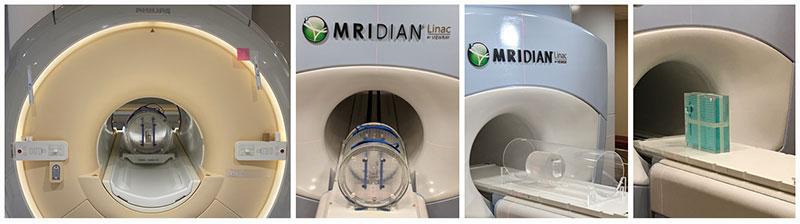
Throughout this webinar, we will review how to characterize the spatial integrity of 1.5T MRI and 0.35T MR-LINAC using QUASAR™ MRID3D Geometric Distortion Analysis System in radiation oncology.
Taeho Kim, PhD, DABR, is an associate professor of radiation oncology and joined the medical physics faculty in 2018. He currently has two primary interests in medical physics research: MRI-guided radiotherapy and respiratory motion management in clinical practice. Kim received his PhD in physics in 2007 from Washington University in St Louis. He completed two post-doctoral fellowships, one in MRI (radiology, University of Utah) and the other in radiation therapy (radiation oncology, Stanford University). He completed his medical physics residency in the CAMPEP-accredited medical physics programme at the University of Virginia. He worked on several medical physics research projects including respiratory motion management using MRI-guided audiovisual biofeedback, an integrated MRI-linear accelerator project, and quasi-breath-hold biofeedback in radiation oncology. He has extensive clinical research experience in medical physics and MRI from several universities.
Biomedical Materials (BMM) will host a webinar focusing on bioactive materials and regenerative repair.
Prof. Rongrong Zhu, board member of BMM will be the chair for the webinar. Along with two others speakers, Prof. Huiling Cao from Southern University of Science and Technology and Prof. Yuxiao Lai from Shenzhen Institute of Advanced Technology of Chinese Academy of Sciences, they will share their research on bioactive materials and regenerative repair and perspectives.
Please note, this webinar will be in Chinese.
Left to right: Rogrong Zhu, Huiling Cao and Yuxiao Lai
Rongrong Zhu is professor at Tongji University. She focuses her research on bioactive materials and regenerative repairs.
Huiling Cao is professor at Southern University of Science and Technology. She focuses on the study of skeleton development and homeostasis regulation and related bone diseases (i.e. osteoporosis, osteoarthritis), mechanisms of sugar and fat metabolism, and more.
Yuxiao Lai is professor at Shenzhen Institute of Advanced Technology of Chinese Academy of Sciences. She is mainly focusing her research on the R&D of orthopaedic biomaterials. She leads TMC integrates medicine, life science, material science, imaging, and mechanics. She focuses on the translational research of technology and products for the clinical application in orthopaedics.
About this journal
Biomedical Materials publishes original research findings and critical reviews that contribute to our knowledge about the composition, properties, and performance of materials for all applications relevant to human healthcare.
Editor-in-chief: Jianwu Dai, Center for Regenerative Medicine and Institute of Genetics and Developmental Biology, Chinese Academy of Sciences, People’s Republic of China.
A federal jury in Illinois has found Mingqing Xiao, a mathematician at Southern Illinois University Carbondale, guilty of failing to report a Chinese bank account to tax authorities. Xiao’s sentencing on the tax charges is set for 11 August but his lawyers say they will appeal. Xiao’s case may be one of the last that is brought by the US government under its controversial China Initiative.
The China Initiative was introduced in 2018 to combat efforts by China’s government to acquire US technology illegally. The US Department of Justice (DOJ) applied it in a few successful prosecutions of individuals charged with theft of technology and intellectual property. But several failed cases against academic scientists of Chinese descent, who had received funds for research projects from Chinese universities, created concern that the department had targeted the scientists for their ethnicity rather than their actions. Protests by Asian-American groups persuaded the DOJ to change the programme’s name to “a strategy for countering nation-state threats”.
Yet the DOJ has continued to take researchers such as Xiao, who is a naturalized US citizen, to court. “The evidence established that Dr Xiao concealed foreign work and hid more than $100,000 of foreign assets in an account in China, and he was properly prosecuted and held accountable,” notes US attorney Steven Weinhoeft.
The US government, however, failed to prove three related grant fraud cases that charged Xiao with lying to his university and the National Science Foundation – from which he obtained $151,099 in grants – about his ties to China’s Shenzhen University. US district judge Staci Yandle threw out two of those charges and the jury quickly acquitted Xiao of the third.
According to Xaio’s legal team, the failure of those three grant fraud cases represents “a complete rebuke” of the China Initiative. “We are thankful that those counts were rejected by the court and the jury as we believe that they were unjust, improperly motivated, and unsupported by the facts and the law,” the team declared in a statement.
Xiao’s legal counsel Michelle Nasser told Physics World that the team was “very disappointed” in the verdicts on the tax charges and intends to appeal.
Xiao is currently on administrative leave at his university but has received significant support from the community. Students and faculty members have held protests on his behalf, with the rallying cry “I stand with Ming”.
A GoFundMe page set up to help fund his legal expenses notes that he “has contributed enormously to our local community for the past eight years”. As of today, the page has received over $42,000 towards its target of $350,000.
Meanwhile, another China Initiative case hangs in the balance. In early April a federal jury found University of Kansas chemical engineer Franklin Tao – the first academic charged under the China Initiative – guilty on three charges of wire fraud and one of making a false statement regarding his work for Fuzhou University.
However, comments by US district judge Julie Robinson before and after the jury’s announcement have persuaded Tao’s lawyer, Peter Zeidenberg, that Robinson might overturn the verdict.