Read it now: as a service to the community you can read the March 2022 issue for free
As a service to the physics community, we’re offering you complimentary access to the March 2022 issue ofPhysics Worldmagazine.
As usual, there’s a great mix of in-depth features, comprehensive news and analysis as well as incisive opinion pieces, careers articles and book reviews.
The cover feature of this free sample issue looks at how physicists are using X-rays to create a zoomable “Google Earth” of the human body.
There’s a great feature about the life of the pioneering astronomer Cecilia Payne-Gaposchkin, who battled sexism and discrimination to succeed.
You can find out how researchers on big-physics experiments are lowering the “carbon footprint” of their supercomputing calculations.
And don’t miss our take on the cultural impact of the Netflix movieDon’t Look Up, see why physics awards need to be as fair as possible, and explore how firms are trying to build commercial fusion reactors.
• KATRIN sets neutrino mass limit – Björn Lehnert from the Lawrence Berkeley National Laboratory talks to Richard Blaustein about what a new measurement of the upper mass of the neutrino means for particle physics
• JET smashes fusion energy record – The Joint European Torus has achieved 59 megajoules of fusion energy in a single fusion “shot”, more than doubling the previous record. Michael Banks reports
• We need to rethink scientific awards – Jess Wade and Maryam Zaringhalam say that prize processes must be reformed to avoid discrimination
• Fusion: it’s hotting up – James McKenzie applauds recent record investments in commercial fusion power plants, which could help us to create a net-zero economy
• Disaster signalling – Robert P Crease wonders what lessons we can learn from movies about comets and asteroids heading towards Earth
• The body, exposed – A new synchrotron-imaging technique is letting researchers create a “Google Earth” of the human body. Jon Cartwright zooms in
• The woman who found hydrogen in the stars – Sidney Perkowitz delves into the work and life of Cecilia Payne-Gaposchkin, from her stellar astronomical findings to a career-long struggle with bias against women in the early 20th century
• The huge carbon footprint of large-scale computing – Researchers have been able to cut their carbon footprint by jetting off to fewer international conferences, but physicists working on large-scale experiments may also have to consider the significant environmental impact of the computer power they require. Michael Allen investigates
• Technology with characters – Andrew Robinson reviews Kingdom of Characters: a Tale of Language, Obsession and Genius in Modern China by Jing Tsu
• Putting the physics into science fiction – Kate Gardner reviews The EXODUS Incident by Peter Schattschneider
• Industry or academia? – How to choose your path – After doing a PhD and postdoc in
quantum technology, in the UK, Joanna Zajac spent three years in industry before returning to fundamental research. She now works as a quantum scientist at Brookhaven National Laboratory. So how do academia and industry differ and which one is right for you?
• Ask me anything – Careers advice from Maksym Sich, the co-founder and chief executive of quantum-photonics spinout Aegiq
• Conceptual juggling – Laura Hiscott finds out how circus skills can help students to learn physics
Scientists and engineers continue to push the boundaries of what can be achieved with artificial intelligence (AI), with the last few years seeing impressive gains in areas such as speech recognition and natural language processing. But experts agree that the current state-of-the-art still falls some way short of the thinking machines that are widely depicted in science fiction.
“AI is very good for solving very specific problems, as long as there is enough data to train the system,” says Yann LeCun, chief AI scientist at Meta and a Turing Award Laureate for his research on deep learning at New York University. “But current systems do not understand how the world works, and that’s what is needed to realize transformative applications such as domestic robots, virtual assistants and fully autonomous self-driving cars.”
Scientists at the forefront of AI research are still figuring out how to make the paradigm shift from data-driven number crunching to more intuitive human-like thinking. Most researchers believe there is a role for computer algorithms that mimic the biological brain, with artificial neural networks becoming a mainstream approach for solving problems through trial and error rather than rules-based programming.
“Over the last few years there has been a lot of progress in self-supervised learning, where a system can learn to represent the data for a specific task without being trained,” says LeCun. “Once self-supervised learning can work more generally, machines will be able learn how the world works by watching videos – opening the door to solving problems much more simply than we can today.”
While LeCun believes that neural networks running on standard computer chips offer the best route to building next-generation AI systems, others contend that building processors that mimic the functionality of the biological brain would yield more powerful AI systems that also consume less energy.
Such “neuromorphic” processing systems typically exploit analogue circuits to create artificial silicon neurons, and mixed-signal analogue/digital circuits to implement spiking neural networks. These neuromorphic circuits are designed to replicate the way that synapses and neurons in the brain light up during neurological activity.
“In our brain there is no distinction between an abstract algorithm and the computing substrate,” explains Giacomo Indiveri, director of the Institute of Neuroinformatics at the University of Zurich and ETH Zurich, and editor-in-chief of a new open-access journal, Neuromorphic Computing and Engineering. “We separate the software and hardware in computer science, but in neuromorphic computing there is a merging of the two. To achieve the optimal solution we need to co-design the architecture and the computing substrate.”
Advocates for neuromorphic computing believe that in certain situations these bio-inspired systems have the potential to outperform standard digital technologies. “Neuromorphic systems can be implemented as massively parallel architectures in which artificial neurons are in different states and ready to fire within a few microseconds, providing a quicker response that can be typically achieved with conventional digital computation,” says Indiveri. “Analogue/digital spiking neuromorphic architectures have also been shown to consume power in the microwatt range, orders of magnitude lower than conventional digital processors.”
Indiveri believes that the sweet spot for neuromorphic systems lies in applications that require low latency and low power, such as localized processing of sensor data. “It’s more suited to processing continuous streaming data in real time,” he says. “That might be a vision system for gesture recognition, or detecting whether someone has fallen in the home. For biomedical signal monitoring, a low-power neuromorphic system implemented on a ‘wear-and-forget’ wristband could detect any anomalies and raise an alert, without needing to be connected to a mobile phone.”
But LeCun is not convinced that neural computing needs to be neuromorphic to be effective. “I am interested, but I am sceptical,” he says. “The question is whether you are better off exploiting the progress of digital technology or try to follow the neuromorphic philosophy.”
While LeCun agrees that neuromorphic systems could play a role in processing sensor data at the edge of the network, he believes that current analogue technologies have fundamental disadvantages for building larger neural nets. “There may be a good reason for the brain to produce spikes, but it might not translate to electronics and software,” he says.
These differing points of view will be aired in a virtual debate entitled “The future of high-performance computing: are neuromorphic systems the answer?”, which can be watched live on Monday 7 March 2022 at 4.00 pm GMT and then subsequently on-demand. LeCun will be in the sceptics’ corner, along with Bill Dally, a professor at Stanford University and chief scientist at NVIDIA – a company that designs the graphical computer processors that underpin many AI systems.
On the other side of the debate will be Kwabena Boahen, founder and director of the Brains in Silicon laboratory at Stanford University. Boahen and his team are developing silicon-based artificial neurons to emulate the way the brain works, and have demonstrated Neurogrid – a circuit board composed of 16 chips that each includes analogue circuitry for more than 65,000 artificial neurons.
“We’ve built hardware models of neural systems to learn about how the brain functions, which lets us test ideas about how cognition could come from the properties of neurons,” Boahen explained in an article for Stanford University. “Informed by what these models have taught us, we’re now working on developing a computer that works more efficiently, like the brain does.”
Taking sides: speakers at the debate will be Kwabena Boahen (centre) and Ralph Etienne-Cummings (second right), who will be attempting to convince Yann LeCun (left) and Bill Dally (second left) of the need of neuromorphic approaches for more efficient computation. Regina Dittmann (right) will be the chair.
He will be joined by Ralph Etienne-Cummings, director of the Computational Sensory-Motor Systems Laboratory at Johns Hopkins University. Etienne-Cummings has studied bio-inspired vision sensors and their use in robots, and more recently brain–machine interfaces and neural prosthetics that are designed to restore function after injury or to overcome disease. His wide-ranging research has convinced him of the need for neuromorphic computing to “perform recognition tasks as effortlessly living organisms, create legged robots that are as efficient and elegant as humans, and design prosthetics than can seamlessly interface with the body.”
The discussion will be chaired by Regina Dittmann, an expert in memristive devices who is currently at the Peter Grünberg Institute of the Forschungszentrum Jülich in Germany. With Boahen and Etienne-Cummings attempting to convince LeCun and Dally of the benefits of neuromorphic computing over mainstream neural approaches, the session promises to be a friendly, but fiercely contested, debate. You can register for free now.
While the idea of neuromorphic engineering is rooted in concepts first proposed in the 1980s by, among others, microelectronics pioneer Carver Mead, the field has expanded over the years as new approaches have emerged. The term “neuromorphic” now describes any type of analogue, digital or mixed-mode implementation of a neural system, which includes physical devices that are designed to replicate the synapses in the brain, as well as digital chips – such as those demonstrated by Intel and IBM – that provide an electronic implementation of a spiking neural network.
The new journal, Neuromorphic Computing and Engineering, aims to represent this diversity of thought. “It’s the first journal that has tried to encompass all the different aspects of the field, from basic research about the brain to nanoscale technologies and high-performance computing that can hopefully exploit some of the concepts from spiking neural networks,” says Indiveri.
“We have received a high level of submissions and the articles published so far have had a good number of citations. I am happy to see that there is a lot of interest in the area in general and in bringing the different communities together through the journal.”
Register now for the online debate, which will be live on Monday 7 March at 16.00–17.30 GMT and subsequently available to view on-demand.
Pulse oximeters, which measure the percentage of oxygen in the blood, can be used as part of clinical decision-making to triage patients, adjust supplemental oxygen levels, and more. In 2020, researchers analysed tens of thousands of blood oxygenation measurements collected from thousands of patients. The study, though not received without controversy and discussions about study design, found that Black patients had approximately three times the frequency of hypoxemia – an abnormal decrease in the amount of oxygen in the blood – as white patients, and that this condition wasn’t being detected by pulse oximetry in many Black patients. In a letter to the editor in TheNew England Journal of Medicine, the researchers said that missed hypoxemia diagnoses could result in poorer health outcomes in Black patients.
The NEJM letter grabbed the interest of UC San Diego researchers Jesse Jokerst and Yash Mantri. Jokerst, a professor of nanoengineering, materials science and radiology, and Mantri, a bioengineering graduate student, are working to improve human health using a hybrid light and acoustic imaging technique called photoacoustic (PA) imaging. Soon after the NEJM letter was published, they decided to investigate the impact of skin tone on blood oxygenation measurements obtained using a different tool, PA oximetry.
“[This study] ties into some of our other work in wound imaging, wound repair and regeneration,” Jokerst says. “As we were doing those studies, we became more interested about the impact of skin tone. We also were motivated by the paper in The New England Journal of Medicine, among others, which referenced the impact of melanin in pulse oximetry.”
While pulse oximetry offers a quick and non-invasive way to measure oxygen saturation, pulse oximeters may not account for some physically relevant factors, such as absorption and scatter of photons by melanin in the skin.
And though biomedical optics devices such as pulse oximeters, cerebral tissue oximeters, wearables such as smart watches and PA imagers play “an increasingly powerful role in human health,” Jokerst and Mantri say that few of these devices account for differences in skin tone between individuals. Their subsequent proof-of-concept study, published in Biomedical Optics Express, suggests that individuals with darker skin tones have lower oxygen saturation as determined by PA oximetry compared with individuals with lighter skin tones.
Measuring blood oxygenation with PA oximetry: the physics
Most of the light that hits your skin is absorbed by haemoglobin and melanosomes. Haemoglobin is a protein found in red blood cells that carries oxygen throughout your body. Melanosomes are subcellular organelles that produce and store melanin, which largely governs skin tone – individuals with higher concentrations of melanin have darker skin. Darker skin tones absorb more photons than lighter skin tones because they contain higher concentrations of melanin.
PA oximetry is based on the absorption of light and the thermal expansion of absorbed light in tissue. When visible and near-infrared light from a laser or similar light source is delivered to tissue, it interacts with absorbers such as melanin and haemoglobin in the skin. This absorption of light produces a small temperature increase in tissue that leads to an initial pressure increase and then relaxation.
When the tissue relaxes, acoustic (sound) waves are emitted. The acoustic waves travel to the body’s surface, where they are detected by a PA transducer. The PA signals are used to create images that show the differences in optical absorption in tissue, a source of image contrast that can be used to create maps of oxygen saturation.
Skin tone and PA imaging: proof-of-concept study
The researchers measured PA signal, penetration depth and oxygenation differences in nine healthy volunteers with three different skin tones. Skin tones were estimated using the Fitzpatrick scale, which is often used in dermatology to estimate the response of different skin tones to ultraviolet light.
Each volunteer’s left arm and hand were imaged in five easily identifiable locations – selected for their relatively uniform distribution of melanin, flat curvature to facilitate scanning and relative hairlessness – using two PA imaging systems. The researchers acquired images using standardized settings that didn’t attempt to compensate for differences in skin tone, and they quantified oxygen saturation using the PA imaging systems’ built-in methods. They also acquired data using a multi-wavelength approach.
Jokerst and Mantri observed that individuals with darker skin tones had higher PA signal intensity at the surface of the skin, with increased acoustic clutter, a phenomenon caused by reverberations or off-axis scatterers. Further studies showed decreased oxygen saturation in the radial arteries of individuals with darker skin tones compared with those with lighter skin tones.
Correcting biases before devices hit the market
For devices on the market, several techniques that try to compensate for measurement biases already exist. PA intensity can be enhanced during image acquisition by adjusting time gain compensation settings. Noise reduction algorithms can also be implemented. Filtered back projection or PA computed tomography could reduce streaking artefacts even when strong absorbers are present. Applying fluence corrections, multi-angle plane wave ultrasound, focused ultrasound, spatial weighting or deep learning could reduce noise and stationary signals that lower the signal-to-noise ratio and mask blood vessels.
Jokerst and Mantri even developed a basic correction factor to adjust PA oximetry measurements. The factor, defined as the ratio between measurements made with these two methods, corrected PA oximetry measurements to within 2% of pulse oximetry.
But Jokerst hopes that their study, rather than creating more band-aid solutions, prompts the medical devices community to design devices that account for physically relevant factors such as skin tone before biomedical optics devices go to market. (The first PA imaging device approved by the US Food and Drug Administration was recently launched and was not tested as part of Jokerst and Mantri’s study.)
“Ideally, these would all be built into the device. To have the end user fixing the measurement doesn’t make much sense,” Jokerst says.
He suggests that skin tone could be read from images obtained using a built-in CCD camera and that oxygen saturation measurements could be automatically adjusted using this information. Future work will evaluate the results of their proof-of-concept study in larger cohorts, against arterial blood gas measurements, and using a wider variety of imaging equipment.
A scalable and flexible system for the remote monitoring of quantum experiments in noisy and unpredictable environments has been created by researchers in the UK. Thomas Barrett and colleagues at the University of Sussex used the latest sensing, machine learning and database technologies to create and maintain multiple quantum-related experiments involving ultracold atoms. Their approach could soon allow users to carry out, monitor and diagnose problems in advanced quantum experiments in hard-to-access environments – including on satellites.
As quantum technologies become more powerful and robust, they are starting to be used by non-specialists for practical sensing applications in a variety of environments. Much focus has recently been directed towards miniaturized, field-based quantum devices, which can be monitored remotely. Such devices are being developed as gravimeters and navigational accelerometers that exploit the unique quantum properties of ultracold atomic clouds.
Quantum systems are inherently sensitive to external factors such as heat, noise and electromagnetic radiation. Therefore, one of the main challenges for people creating practical quantum devices is how to keep them running in unpredictable environments. To mitigate against thermal disturbances and acoustic noise, components such as mirrors, coils and power supplies can be corrected actively. Yet in many cases, this can only be done after errors have occurred.
Active mitigation
Alongside advances in quantum technology, improvements to electronics and database software have all led to increasingly robust, versatile and modular systems for monitoring and manipulating experiments remotely. Using a combination of remote sensing, machine learning and human input, these systems allow users to collect data on key experimental parameters, diagnose unexpected behaviours and then actively mitigate problems before they occur.
In their study, Barrett’s team extended this technology to monitor a variety of parameters necessary for maintaining several ultracold atom experiments using a shared laser system. These parameters included temperature, vacuum chamber pressure, laser beam power and magnetic field strength.
Within the system, sensors were networked together, and the data they collected were recorded in an external database – which could then be accessed through user dashboards. This way, the team showed that users could efficiently control multiple experiments at the same time, allowing them to mitigate any problems quickly and remotely.
Such capabilities are particularly crucial for maintaining quantum devices in harsh and inaccessible environments. This includes space-borne experiments on satellites and interplanetary probes. Since the system is both scalable and highly flexible, the team says it could also be extended to a diverse array of other applications. These include particle accelerators, sensor networks for monitoring glaciers, and remote teaching labs – which could even allow students to access quantum experiments remotely.
Physicists backing Japan to build the ¥600bn ($5bn) International Linear Collider (ILC) must re-evaluate their plans and “shelve” the question of the country hosting the proposed next-generation particle collider. That is the stark message to emerge from a panel of senior Japanese officials who have examined progress made towards realizing the ILC. They conclude that it is too early for Japan to proceed towards construction of the ILC and instead call for further research and international support towards the project.
First mooted well over a decade ago as the successor to the Large Hadron Collider at the CERN particle-physics lab near Geneva, the ILC – if built – would accelerate and smash together electrons with positrons to study the Higgs boson and other particles in precise detail. Collisions using these particles would be much “cleaner” than the proton–proton collisions that are carried out at the LHC.
The ILC’s five-volume technical design report was published in June 2013 and included a 30 km-long linear collider operating at around 500 GeV. The Japanese physics community expressed their desire to host the machine, with a site in the Tōhoku region, about 400 km north of Tokyo, chosen as a potential location.
But with little support for the go-ahead from the Japanese government, in 2017 physicists looked for cost savings and revised the plans to reduce the ILC’s energy to 250 GeV — an energy aimed to study the 125 GeV Higgs boson, which was discovered in 2012 at the LHC. This included shortening the length of the main tunnel to around 20 km, but leaving the option of later upgrading the collider to the original 500 GeV proposal and eventually to energies of around 1 TeV.
Yet in 2019 an independent committee of the Science Council of Japan (SCJ) failed to support the ILC’s construction in Japan, pointing out that the ILC did not yet have enough international backing. The Japanese government then laid out a condition that the ILC should be more widely supported by the Japanese and international scientific communities.
This would likely involve, for example, the ILC being included in the next roadmap of large science projects put together by Japan’s Ministry of Education, Culture, Sports, Science and Technology (MEXT), as well as pledges being made by other countries to support the project. Following that move officials at the KEK particle-physics lab then began negotiations on cost sharing arrangements for a “preparatory laboratory” for the ILC that would carry out the technical development and engineering design needed for the start of ILC construction.
In June 2021 ILC scientists published a 48-page plan for the ILC pre-lab and also submitted a report updating MEXT on progress since 2019. Those moves resulted in MEXT convening a committee in July 2021 that was tasked with evaluating the updated developments.
Our attention should now be more focussed on trying to find a host for a linear collider elsewhere in the world
Brian Foster
On 14 February the panel reported its findings, which were then released on 25 February. While recognizing the “academic significance of particle physics and the importance of the research activities, including that of a Higgs factory”, the panel says it is still “premature” to give the ILC pre-lab phase the go-ahead as they say this would be “coupled with an expression of interest to host the ILC by Japan”.
The panel adds that given the “increasing strain in the financial situation” of some countries that may provide support for the ILC, it recommends that those backing the collider should not only “reflect upon this fact and to re-evaluate the plan” but also “re-examine the approach towards a Higgs factory in a global manner”. This would involve considering progress made in other proposed collider projects such as the Future Circular Collider (FCC) – a 100 km-circumference collider that would be built by CERN.
The panel also calls for more work in key technologies towards a next-generation accelerator by “further strengthening international collaboration” among institutes and labs therefore “shelving the question of hosting the ILC”.
In response to the panel’s findings, KEK notes that it will now “re-examine the path for realizing the ILC as a Higgs factory” and consider the progress made in the FCC feasibility study. “KEK and the Japanese ILC community is committed to further advance important technological and engineering development in the accelerator area and to continue the effort for the realization of the ILC,” KEK noted in a statement.
Looking elsewhere
John Ellis from King’s College London says that the explicit reference to the FCC in the panel’s recommendations “sounds like a tacit judgement” that FCC studies have been making progress while the ILC has been stagnating. Ellis adds that the panel’s recommendations are in line with previous reviews that stated the ILC community had not done enough to line up broad scientific support within Japan or have substantial international commitments on board. “It sounds like they suggest the ILC is interesting, but advise to find another way of doing the physics by collaborating with the FCC,” adds Ellis.
Yet Hitoshi Murayama from the Kavli Institute for the Mathematics and Physics of the Universe in Tokyo told Physics World that while MEXT’s conclusion towards the pre-lab is “certainly unfortunate”, it is not all bad news. “KEK management is optimistic to acquire funds from MEXT to carry out key development work,” he says.
“The problem MEXT has is that they don’t want to fund the ILC pre-lab which may be interpreted as their tacit approval of the ILC as a whole by some proponents,” adds Murayama. “As long as the technology development does not carry the name ILC or specify the site in Japan, they may support the activity.”
Some remain unconvinced. Particle physicist Brian Foster from the University of Oxford, who was European regional director for the ILC’s Global Design Effort, raises the prospect that the ILC may never be built in Japan. He says the MEXT review statement is “very disappointing” not only because it means delaying the ILC but also due to the way the decision was reached.
“It is apparent that some members of the committee did not approach their task with the openness of mind and belief in evidence-based conclusions that one would expect from senior members of the scientific community in an independent and unbiased review,” says Foster. “While we should continue to work with our Japanese colleagues to progress work on the ILC, our attention should now be more focused on trying to find a host for a linear collider elsewhere in the world.”
That view is backed by Phil Burrows, from the University of Oxford, who is the UK lead scientist in the ILC International Development Team. “Despite the best efforts of the particle physics community, not least via the International Committee for Future Accelerators, the Japanese government has yet to embrace the prospect of hosting ILC as a forefront global science facility,” he says. “Perhaps the time has indeed come to explore options elsewhere.” He points out that CERN, for example, has the “know-how and technical capability” to build a linear collider, although he admits that this “is not currently its stated top priority for a future project”.
International Linear Collider Q&A
What is the International Linear Collider (ILC)?
The ILC is a 20 km-long particle collider that will accelerate electrons and positrons to energies around 250 GeV. To do so, it will consist of thousands of superconducting radio-frequency accelerator cavities made of niobium. The ILC will then smash these beams together roughly 7000 times a second at an “interaction point”. The ILC will have two all-purpose detectors based around the interaction point — SiD and ILD — that would take turns being in the beam. Interchanging the detectors is estimated to take around a day to complete.
How is this different from CERN’s Large Hadron Collider?
The 27 km-circumference LHC is a circular collider made up of more conventional technology such as radio-frequency cavities that accelerate the beam, dipole magnets that bend the particles along a circular path, and quadrupole magnets that focus the beam. The ILC instead uses superconducting cavities to accelerate the beam along a straight path before being focused by quadrupole magnets. This linear acceleration has the advantage that the electrons do not lose energy via X-rays when travelling along a circular path. The benefit of a circular machine is that it allows for more integration points — four in the LHC’s case, with no need to swap detectors.
Has this accelerator technology been tested before?
Yes. The European X-ray Free Electron Laser (E-XFEL) facility near Hamburg, Germany, uses 768 superconducting niobium cavities to accelerate electrons to 17.5 GeV over 1.7 km. Rather than collide the particles, however, the E-XFEL makes them produce X-rays that are then used for a range of experiments from biophysics to condensed-matter physics. The E-XFEL is considered to some extent as an ILC prototype.
What would the ILC study?
Its main aim would be precision studies of the Higgs boson, which was discovered in 2012 at the LHC. The LHC has managed to measure the properties of the Higgs – notably how it couples to other particles – with a precision of around 20%. Yet the LHC’s proton–proton collisions suffer from a large amount of “debris” that affects the precision of the measurements. As electrons and positrons are fundamental particles, their collisions are much “cleaner” meaning that the ILC would improve this precision to 1% or lower. The ILC could also be later upgraded to higher energies to study the top quark.
Why is this exciting?
Physicists hope that the door to “new physics” could be opened through precision studies of particles such as the Higgs. This would come from deviations from those predicated by the Standard Model of particle physics.
Why has Japan dragged its feet for so long?
Japan has balked at the potential cost of building the ILC, which is one reason why physicists proposed a scaled-down version in 2017 that is both cheaper and would not take as long to build.
When could the ILC see the light of day?
Likely to be 2040s. If Japan gave it the go-ahead in the coming years then negotiations and preparations could take around four years to complete, with construction then taking a decade.
What other designs are on the table?
The CERN-led Compact Linear Collider would offer higher collision energies up to around 3 TeV, but the technology is not as mature as the ILC. Two other designs are circular colliders. China’s Circular Electron Positron Collider and the Future Circular Collider would both be 100 km-circumference colliders that would initially be used as a Higgs factory but could later be used for high-energy proton–proton collisions.
The assembly of 2D nanosheets on the surface of emulsion nanodroplets leads to the stabilization of the emulsion and requires only a tiny amount of material – report physicists in the UK. Furthermore, the team has developed a model that allows fine-tuning of the solvent composition so the droplets could be used to create components for a range of applications from strain sensors to batteries. The emulsions also raise the possibility of printing large-scale devices in a matter of minutes, which could have an important impact on electronics fabrication.
Wouldn’t it be great to print with 2D materials such as graphene? The answer is yes for many reasons, but how to do so is a puzzle that has confounded scientists working with 2D materials since Konstantin Novoselov and Andre Geim first isolated 2D sheets of carbon (graphene) in 2004. A thousand papers have been published on this subject, but the question regarding printing remains open. One important challenge is how to overcome the well-known coffee ring effect when using droplets to print thin layers of graphene or other 2D materials. This effect involves solids in a droplet forming a ring when the droplet evaporates on a surface – and results in defects when printing conductive coatings.
Now, researchers at the University of Sussex have come closer to making large-scale printing with 2D materials possible. The inspiration came when physicist Alan Dalton was mixing salad dressing and thought about adding graphene to liquid emulsions. An emulsion is a combination of two liquids that normally do not mix – like oil and water. In an emulsion, one of the liquids exists as droplets within the other liquid – like droplets of oil in a vinegar-based salad dressing.
Thin nanosheets are known to stabilize emulsions by covering the surface of droplets. The result is a Pickering or armoured emulsion, which is also found in some foods.
Armoured droplets
Dalton and colleagues armoured tiny droplets in an emulsion with thin layers of graphene, forming a shell that is just a few nanometres thick. This microscopic, but functional structure requires only 0.001 vol% of graphene in solution, which is the lowest value ever reported.
Dalton comments, “In bringing the graphene coatings of the liquid droplets down to atomically-thin layers, and in opening wide the potential for real-world applications by being able to do so with any liquid material, this research development will significantly advance the emerging and scientifically exciting field of liquid electronics”.
The armoured droplets offer a solution to the coffee ring problem because a continuous conductive pathway is formed upon drying. As a result, electronic devices could be printed from emulsion droplets.
Fine-tuned for different applications
Moreover, armoured droplets can be produced in any liquid, so they could be fine-tuned for different applications. Conductive droplets could be used for wrapping soft polymers such as silicone, for example, to create wearable strain sensors. Such devices have increased sensitivity at low graphene loading.
An important potential application is the development of better batteries for electric vehicles. Such batteries would be cheaper and more sustainable because they would require less graphene or other 2D nanosheets to coat the droplets used in their manufacture.
“We are also investigating emulsion assembly of battery electrode materials to enhance the robustness of these energy storage devices,” says Sussex’s Sean Ogilvie, who is lead author of a paper in ACS Nano describing the research.
Experimental evidence of long-range attractive forces between cellular proteins has been obtained by researchers in France more than 50 years after the idea was first proposed. The forces are mediated by electromagnetic radiation, and they could explain how molecules find their targets inside the crowded interiors of living cells.
At any given time, around 130,000 pairwise interactions may be occurring between proteins in a living cell. These are mediated by a range of phenomena including van der Waals forces and hydrogen bonding. Biochemical reactions work on a “lock and key” setup, whereby molecules must find and bind to receptors to trigger the processes of life. For this to occur efficiently inside a cell, molecules must find their cognate partners (keys must find the right lock) much more quickly than is possible by simple Brownian motion. However, how this happens so quickly and efficiently is a mystery. One possible explanation is electrostatic attraction, but mobile ions in the cell cytoplasm would screen out static electric fields over ranges longer than 100 nm.
Electrodynamic interactions
In the 1960s, the theoretical physicist Herbert Fröhlich suggested that the resonant exchange of radiation between macromolecules and their cognate partners could be the answer. “Electrostatic interactions are shielded, but electrodynamic interactions are not, in principle, provided these take place at sufficiently high frequency,” explains Marco Pettini of Aix-Marseille University – the work’s principal theorist. Fröhlich reasoned, therefore, that if molecules underwent collective oscillations in an excited state, they might behave like antennas and emit terahertz radiation. If the cognate partner resonantly absorbed this radiation, the two would attract as a result.
Pettini explains, “Biomolecules behave as special kinds of antennas called Hertzian antennas, whose size is much smaller than the wavelength of the radiation, and it’s a consequence of Maxwell’s equations that we can excite these attractive interactions”. However, there was no evidence at the time that proteins could show this collective resonance, so Fröhlich’s suggestion gathered dust.
The principal problem, explains Jérémie Torres of the University of Montpellier, was that the main constituent of a cell’s cytoplasm – water – strongly absorbs terahertz radiation, making terahertz spectrosopy extremely challenging.
Terahertz-frequency fluctuations
In 2018, Torres and colleagues labelled molecules of the protein bovine serum albumin (BSA) with a fluorophore that absorbs 488 nm light. They then dispersed this protein in water and irradiated droplets of the solution with a 488 nm laser. Using a nanowire, they detected terahertz-frequency fluctuations of the electric field around the droplet that matched theoretical predictions from Pettini and colleagues. This showed that proteins could indeed produce collective modes, but not how strong the resulting forces were. Pettini explains, “In principle these forces could be very weak and thus of no interest in biology,” says.
Now in a new paper published inScience Advances, the researchers demonstrate that electrodynamic forces can indeed excite phase transitions in biomolecules. They first use a refined version of their nanowire-based technique to study both the labelled BSA and a second, algal protein that naturally absorbs light. This time, instead of looking simply for collective oscillations in the proteins, the researchers looked at how these oscillations changed when they varied the laser power.
They found that, on increasing the laser power, the frequency of the oscillations shifted, showing that the interaction between the proteins was becoming stronger, as predicted by theory. When they reduced the power, the process was reversed. Moreover, for the algal protein, they used a new, independent spectroscopic technique to show that at high laser powers, the proteins form large clusters: “This is the combination of a very sensitive experimental set-up with a physical mechanism that gives you an absorption that’s even higher than water due to this collective dipole moment,” explains Torres, who led the new experimental work.
The researchers now intend to investigate the effects of these phenomena. Torres points to a 2014 optogenetic study in which two proteins aggregated mysteriously when irradiated by light. “We produce quite similar results but with deeper insight from the physical point of view,” he says. More generally, they want to know how the forces operate in cells, where there are no lasers. “Our work opens a new and broad research topic,” he explains, “During the evolution of life on the planet, nature has exploited all physical phenomena. It would be hard to understand why nature hasn’t resorted to these.”
“It’s a really interesting experiment,” says biophysicist Cécile Fradin of Canada’s McMaster University. “Whether it applies in cell I think remains to be proved and that will determine the ultimate significance, but it’s the first step – well, the second step.” Among several ideas for further work, Fradin suggests that whether proteins and other molecules are resonantly attracted to their cognate partners rather than simply themselves needs investigation. “I would see the next step to be finding out whether you can have two different types of molecules reacting together against a background of all different types of molecules that you don’t want to interact”.
Ultrashort pulses of light can dramatically alter the electronic and magnetic properties of certain materials. Indeed, such pulses have already been used to modify band gaps in graphene and topological insulators. The main drawback is that the laser light employed is extremely intense, making it easy to damage the materials through excessive heating. Researchers at the California Institute of Technology (Caltech) have now developed a new method that does away with this problem. Their approach could aid the development of ultrafast light-based computers and even make it possible to create materials such as exotic quantum magnets that are difficult or impossible to produce naturally.
The Caltech method relies on a technique known as Floquet engineering in which the properties of a quantum system are modulated by means of an applied field, such as a light field, over very short timescales. This technique requires strong driving (or “pumping”) electric fields characterized by the so-called Floquet parameter E ≡eaEpu/ ħΩ, where e is the charge on the electron, a is the material’s atomic spacing, Epu is the pumping field, ħ is the reduced Planck’s constant and Ω is the driving frequency. For a typical solid with a ≈ 3 Å, the field required is around 109 V m−1 at optical or near-infrared frequencies – more than enough to heat up the material.
To get around the problem of laser heating, a team led by David Hsieh chose a magnetic insulator, manganese phosphor trisulphide (MnPS3), that naturally absorbs only a small amount of light over a wide range of frequencies in the infrared part of the electromagnetic spectrum. They then fine-tuned the frequency of the laser light so that it changed the material’s electronic properties without imparting any heat to it.
Coherent optical engineering
In their work, Hsieh and colleagues used intense infrared laser light pulses, each lasting around 10-13 seconds, to rapidly change the energy of the electrons in their sample. In the process, the five-fold degenerate 3d orbitals in the manganese split into a low-energy t2g triplet and a high-energy egdoublet. This rearrangement causes the material to change from a highly opaque state to a highly transparent one. Importantly, the change is reversible: once the laser beam is switched off, the material spontaneously reverts to its original state without suffering any damage to its electronic structure.
The team note that this spontaneous reversion would not be possible if the material had absorbed the laser light and heated up. They explain that the method, which they term “coherent optical engineering”, works because the laser light alters the difference between the energy band gaps of electrons in the MnPS3 without “kicking” the electrons into different energy levels – the process that generates heat.
“It’s as if you have a boat, and then a big wave comes along and vigorously rocks the boat up and down without causing any of the passengers to fall down,” Hsieh explains. “Our laser is vigorously rocking the energy levels of the material, and that alters the materials’ properties, but the electrons stay put.”
The technique, which is detailed in Nature, could be used to create artificial materials such as exotic quantum magnets using light, Hsieh adds.
The revolution in mobile technologies has been enabled in large part by advances in rechargeable lithium-ion batteries, allowing more powerful mobile devices with super-sized screens to operate for longer. Unfortunately, however, the battery remains one of the most common points of failure. Thousands of charge-and-discharge cycles take their toll on materials inside the cell, eventually reducing the ability of the battery to store charge and supply power to the device. In the worst cases, thermal runaway in a damaged or degraded lithium-ion battery can become a safety hazard, causing the device to bulge, rupture, and even explode.
To design safer batteries with longer lifetimes, scientists and engineers need a fundamental understanding of the electrochemical processes at play within the cell. That’s why Sascha Nowak and his team in the Analytics and Environment group at the MEET Battery Research Center – part of the University of Münster, Germany – have perfected an array of analytical techniques to probe not just the material properties of the components inside the cell, but also the chemical reactions and mechanisms that cause the battery’s performance to deteriorate over time. “Through comprehensive analysis, our research group gains the in-depth knowledge needed to significantly improve the performance and service life, as well the safety and sustainability, of electrochemical energy-storage devices,” comments Nowak.
In one recent research study, Nowak and his colleagues devised an experimental strategy that exploits a combination of thermal analysis techniques to assess the complex ageing processes that degrade the performance of a lithium-ion battery. “We wanted to establish the reaction mechanisms that are happening inside the battery,” he says. “That could make it possible to design additives or coatings that would slow down these reactions, or even prevent them from taking place.”
Nowak was particularly keen to evaluate the thermal stability of the binder materials that hold together the powdery materials typically used for the electrodes. “The binder is often neglected in studies of the ageing process,” he comments. “Most analyses focus on the electrolyte because it is the most unstable component, or will look at the anodes and cathodes. We wanted to find out how the binder reacts and decomposes at different temperatures to understand the whole battery system.”
To start with, the researchers investigated the decomposition of both anodes and cathodes using a thermogravimetric analyser (TGA) from TA Instruments, which provides precise measurements of the weight loss from the sample over a broad temperature range. They compared the TGA profiles of electrodes in their pristine state with the same components after two charge-discharge cycles and then again after 100 cycles, and in both their charged and discharged states. “We look at the first cycles because there will be some initial decomposition of the electrolyte and some ongoing reactions at the liquid–solid interfaces, and we then measure the profiles after 100 cycles to check whether the system is stable,” explains Nowak. “We also take measurements in both the charged and discharged states, since the presence of lithium inside the anode can influence some of the reactions.”
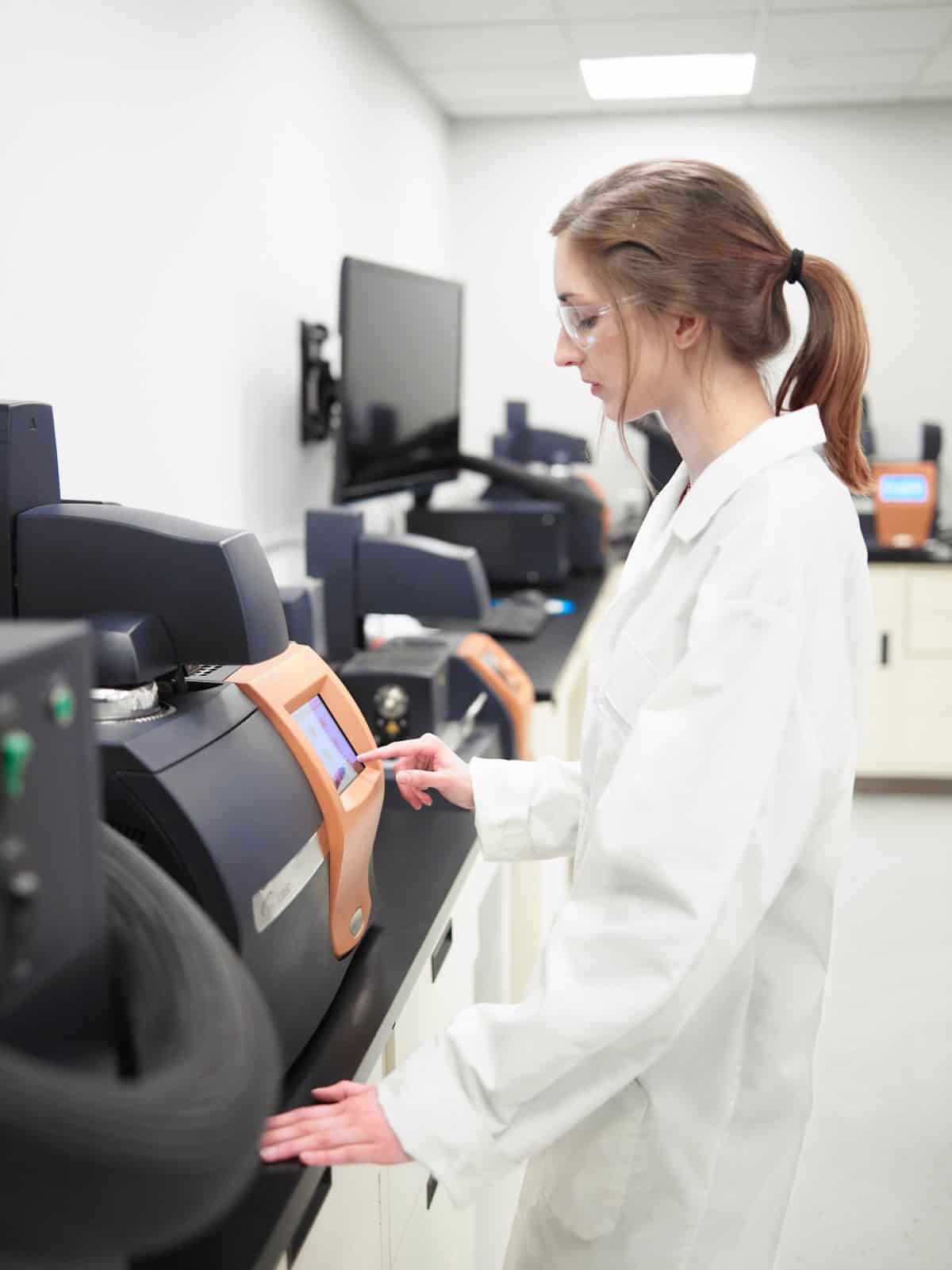
Reaction clues: Differential scanning calorimeters from TA Instruments measure any heat flow within the sample over a broad temperature range, which is a good indicator of any chemical reactions taking place inside the material (Courtesy: Waters Corporation)
For all the electrodes the TGA analysis revealed significant weight loss at temperatures below 200 °C, which is most likely to be caused by the evaporation of residual electrolyte from the porous electrode structure. The thermal profile of the anodes also revealed two weaker decomposition zones at higher temperatures – one at 200–300 °C and the other at 300–500 °C – which Nowak and his team attribute to the decomposition of two different types of binder. Meanwhile, the TGA profile of cathodes in their charged state exhibits a strong peak between 200–350 °C, which corresponds to the oxygen that is released by a lithium-ion battery cathode during normal operation.
The team then used a differential scanning calorimeter (DSC) from TA Instruments to measure any heat flow within the cathodes – which is a sure sign that chemical reactions are taking place inside the material. No distinct reaction peaks were observed for the pristine sample, or for the newly formed and aged cathodes when in the discharged state. When charged, however, the DSC profile of both cathodes clearly show a strong exothermic reaction at around 270 °C, which is related to the release of oxygen from the cathodes as observed in the TGA analysis.
While TGA and DSC are established techniques for studying the thermal behaviour of battery electrodes, the MEET team exploited another analytical method to investigate the chemical compounds released by the electrodes over a broad temperature range. “We had a pyrolyser that we can heat up to 1000 °C, and attached it to a combined gas chromatograph-mass spectrometer (GC-MS),” explains Nowak. “The chromatograph splits the released compounds into their constituent components, which can then identified by the mass spectrometer.”
The thermal profiles obtained with this technique, called evolved gas analysis mass spectrometry, shows good agreement with the decomposition zones that were observed in the TGA and DSC profiles. Mass spectrometry also confirms that oxygen is released from the cathode at around 270 °C, and also reveals significant evaporation of carbon dioxide from the cathode at temperatures above 250 °C – which could originate from the electrolyte or other organic molecules, including the binder material.
Having identified the decomposition zones from the thermal profiles, Nowak and his team exploited the same combination of pyrolyser and GC-MS to find out which compounds are being released at specific decomposition temperatures. This pyrolysis–GC-MS technique enables a more detailed analysis of the chemical products released from the binders, as well as the separators that are used in batteries to provide a physical barrier between the anode and cathode. “From this study we can conclude that lithiated anodes show intense decomposition behaviour and reactions with electron-rich binder molecules,” comments Nowak. “Meanwhile, charged cathodes are prone to phase changes that can be detected through the release of oxygen.”
While the results from this study offer some important clues about the chemical processes at electrode–electrolyte interfaces, Nowak points out that the main outcome from the work is to provide a starting point for probing the dynamic electrochemical behaviour inside a lithium-ion battery. “This was the first analysis of its kind, and we tried to set the ground rules for what you can do by combining together these different methods,” he comments. “We could show not only the reactions and the weight loss with DSC and TGA, but we could also work out whether the evaporated compounds derived from the electrolyte or from the binder.”
Nowak believes that the same methodology could be used to analyse many other processes inside a lithium-ion battery. “Thermal profiling using a variety of analytical methods turned out to be a valuable tool for the comprehensive analysis of both anodes and cathodes,” he concludes. “From basic characterization right up to detailed investigations of battery ageing, this method set could be used as a tool to unravel the reactions that determine the safety properties of lithium-ion batteries.”
TA Instruments is part of Waters Corporation, a specialty test and measurement company. More detailed information about the optimal testing solutions for battery materials and components can be found on the Waters/TA Instruments website.
Alternative path Perdi Potgieter works in the mass team at the National Physical Laboratory, having done an apprenticeship with them at 16. (Courtesy: NPL)
What projects do you work on at NPL?
I split my time between two areas, one being the Kibble balance project and the other being measurement services. The Kibble balance is an instrument that has been designed to generate a standard mass by comparing virtual electrical and mechanical power. It will allow the SI unit of mass to be defined in terms of very accurate quantum electrical units: the Josephson voltage and quantum Hall resistance, with relation to the fixed numerical value of the Planck constant.
What specific tasks do you do?
Within the Kibble balance project, I have my own smaller projects to focus on, one of which is a low-thermal electromotive force (EMF) switching system. The aim of this is to minimize electrical errors due to the generation of thermal EMFs from the small temperature differences that exist in critical parts of the wiring of the apparatus. Tasks on this project include working with manufacturers to design a bespoke switch, prototyping and designing a test rig, and testing isolation and latching forces.
Are these the same kinds of tasks done by people who have done a degree in physics?
It is important to remember that we are all part of a team, and each of us has our unique skills and talents. I enjoy the practical aspects, such as soldering and building pieces of equipment. When it comes to maintaining the UK mass scale, we are all responsible regardless of the level of qualification each person has. I am incredibly lucky to work in a team where the attitude has always been “if you can do something, then do it. If you want to learn, give it a go”. If you can help, there will always be something for you to do. When you’re asked to do something, no one is asking how many years you spent in education; they’re asking what your skills are.
I have found I can try a lot of things and learn as I work. Naturally, there are some tasks that I can’t do, which people on the team with a degree can. Likewise, there are tasks that I can do, that others with a degree can’t. I am proud of my practical skills, which come from being in the department for six years. I know a lot more about some of the specifics of my department than someone with a degree, although they will know more about physics than me. I don’t think this makes one of us better than the other, just different, which is never a bad thing.
How have you developed the skills and knowledge required for your job that many people in science and engineering careers get from university?
I can comfortably say I have a lifetime of learning to do. I’m part of such a supportive team of people who enable my development and allow me to get involved in different projects. A lot of what I’m doing now, I wouldn’t have known even if I did go to university, as it is such a niche job. There aren’t many labs around the world where you will be dealing with the national standards. I enjoy learning so I ask a lot of questions, which has helped improve my knowledge. I have learnt lots of skills through trying and undertaking various activities in my day-to-day job.
Do you find any advantages or disadvantages in having gone straight from school into your career, compared with going through university?
I am now doing a degree through The Open University in electromechanical engineering and I’m enjoying it. Doing the apprenticeship and working in industry has helped me to solidify what career I want and what sector I want to work in. The practical experience has been invaluable and helps me put theoretical work in perspective. It is great that I can say at 23 that I have almost seven years of industry experience. I wouldn’t be as far in my career if I had gone to university, although now I have the opportunity to do my degree through The Open University funded by NPL. Despite my great experience of the apprenticeship, I do think a degree is a good and important qualification and I can now bring my academic skills in line with my practical skills. Doing a degree at 18 isn’t for everyone and the route I’m doing has worked fantastically for me, but wouldn’t necessarily work as well for others.