The ten-billion-dollar gamble: What the JWST will do (and why it’s taken so long)

Launch is usually the most dangerous part of a space mission. Once the payload has been hurled skyward atop a column of fire and reached space intact, mission scientists remember they’ve been holding their breath, and slowly exhale in relief.

Not so with the James Webb Space Telescope (JWST). For NASA’s latest and most expensive eye on the sky, launch on an Ariane 5 rocket will be the simple part. What comes next will determine whether the mission is a success or not. That’s because before it can push the envelope of what science and space technology can achieve, it must first overcome a dangerous deep-space deployment. During that deployment, if any of more than 300 things that could go wrong, do go wrong, the telescope’s capabilities will be limited at best. At worst, the entire instrument will be ruined.

This is the scale of the challenge facing the JWST after its launch, which – barring additional delays – is now scheduled for 25 December 2021. Should it succeed, it will transform astronomy. Should it fail, it could set the field back decades.

Part of the challenge has to do with the telescope’s size. At 6.5 metres, its primary mirror is the largest ever sent into space. “When we started off, we knew that we could more safely build a much smaller telescope,” says John Mather, the Nobel-prize-winning cosmologist who has been leading the project at NASA’s Goddard Space Flight Center since the mid-1990s. The problem, though, is that smaller wouldn’t cut it. Inspired by the Hubble Deep Field image of distant galaxies, Mather and his colleagues wondered what it would take to see even further back in time, to 300 million years after the Big Bang and some of the first galaxies that ever existed. The answer was a telescope of the JWST’s size.

“A heck of a lot of hard technical challenges”

Size isn’t the only tough requirement, though. The light from those early galaxies has been stretched by cosmic expansion. To see them, astronomers need a scope that can peer into near- and mid-infrared wavelengths. And to do that, the telescope needs to be stationed away from Earth’s thermal glow, around the L2 Lagrange point, with the Moon and Earth behind it – much too far for astronauts to reach it on a servicing mission.

There’s more. “The other thing that is challenging is that to reach the infrared sensitivity that we need, the telescope has to be very cold,” Mather says. “Pretty soon you have a heck of a lot of hard technical challenges.”

Thanks to these challenges, the launch date slipped, then slipped again and again while the cost of the mission went up and up. In 2011, with the telescope’s budget spiralling, the US House of Representatives moved to cancel it entirely, only for the troubled project to receive an eleventh-hour reprieve after scientists, the public and the media rallied to save it. As recently as 2018, when the budget was about to break the $8bn barrier, the US Congress had to vote to provide it with more funds.

In the meantime, the mission’s science portfolio grew. In the mid-1990s, exoplanet science was in its infancy. Today we know of thousands of worlds beyond our solar system, and – all being well – the JWST will be in prime position to study their atmospheres. Similarly, a host of discoveries about the evolution of galaxies and how stars and planets form have raised new questions for the scope to answer. Should it come through its deployment successfully – its 6.5-metre segmented mirror unfolding correctly, its tennis court-sized sunshield unfurling without a hitch – then it will be ready to answer these questions and many more, utterly transforming astronomy in the process.

Despite the telescope’s hefty price tag and delayed launch, Lee Feinberg, the optical telescope element manager at NASA Goddard, is confident that it will be worth it. “There’s a couple of hundred scientific proposals [286 to be precise] that we’re going to do in the first year,” he tells Physics World, “and each one is at a level where they could justify a whole mission in themselves.”

Next: The JWST’s magnificent mirrors

  • This article was amended on 22 December 2021 to reflect delays to the JWST’s launch date.
Elekta presents the Elekta Unity MR-Linac at ASTRO 2021

In this short video, filmed at ASTRO 2021, Justin Turpin introduces the Elekta Unity MR-guided radiotherapy system. Elekta Unity provides real-time imaging whilst the gantry is rotating and the MLCs are moving, enabling treatments to be tailored according to changes in the patient’s tumour and surrounding anatomy. Turpin explains how new sequencing enables users to see like they’ve never been able to see before in radiotherapy.

Elekta presents QA Solutions at ASTRO 2021

As radiation therapy techniques continue to evolve, and the complexity of those treatments increases, quality assurance (QA) processes become more complex alongside. In this short video, filmed at ASTRO 2021, Elekta’s Heath Britt explains how the company is introducing a range of products to improve the QA workflow. Elekta’s portfolio, which includes machine QA and patient-specific QA, is designed to automate and simplify QA, enabling staff to focus on the results of the tests rather than the test procedures.

Siemens Healthineers and Varian present AI ecosystem for cancer care at ASTRO 2021

In this short video, filmed at ASTRO 2021, Siemens Healthineers’ Gabriel Haras introduces the company’s portfolio of artificial intelligence (AI)-based products. Such technologies support the entire care pathway for cancer patients, from screening and diagnostics to treatment and follow-up, including innovations such as AI-based autocontouring and generation of synthetic CT from an MRI scan for radiotherapy planning.

Next, Varian’s Kevin O’Reilly comments on the combining of Varian and Siemens Healthineers into one united company. He notes that the integration of AI capabilities has increased Varian’s ability to innovate, and will help accelerate its intelligent cancer care strategy: accelerating the path to treatment, increasing global access to care, exploiting data-driven insight and improving personalization.

Elekta presents ProKnow at ASTRO 2021

In this short video with Elekta, filmed at ASTRO 2021, Francisco Nunez introduces ProKnow. The cloud-based ProKnow software is designed to improve quality in radiation therapy. It allows users to perform individual patient analysis, as well as data analysis across large populations of patients, to evaluate treatment outcomes and improve cancer care.

Siemens Healthineers and Varian present AI solutions on the treatment planning pathway at ASTRO 2021

This year’s ASTRO annual meeting saw Siemens Healthineers and Varian focus on artificial intelligence (AI). In this short video, filmed at ASTRO 2021, Lisa-Marie Petzold from Siemens Healthineers explains how AI can support radiotherapy, for example, via the introduction of deep learning-based contouring of organs-at-risk. Varian’s Michelle Nystrom then describes how this autocontouring system integrates seamlessly with the Eclipse treatment planning system. She explains how AI contouring helps provide end-to-end treatment planning that is automated and efficient, without compromising on quality.

Why we need to consider the ethical implications of quantum technologies

Research into quantum technologies has advanced so much over the past decade that the underlying science is rapidly being translated into real-world applications – be it quantum computers, materials or communications systems. But before these innovations are widely rolled out, I believe we must do more to address their ethical, legal and social implications.

It’s easy to think that science has nothing to do with ethics, which is about the creation of universal rules and standards for moral behaviour. But there are ethical questions throughout science, whether it’s artificial intelligence, nanotechnology, biotech or nuclear power. In fact, what’s known as “quantum ethics” is an emerging field within applied ethics, which focuses on moral behaviour in specific domains.

Each of those domains has its own distinct properties, cases and societal impact, in which ethics applies. For example, the Hippocratic Oath taken by doctors exemplifies the moral responsibility of medical professionals towards their patients in upholding ethical standards such as helping the ill and prescribing only beneficial treatments. Similarly, quantum technology has its own specific ethical challenges and dilemmas.

Theories of ethics that are considered useful regarding the values and motives of human conduct can be converted into practical rules, principles and responsibilities. At one level, universal ethical standards will apply to quantum technologies and, when determining those standards, we can use our “normative” ethical theories. Key principles that emerge from these theories are fairness, benevolence, nonmaleficence (avoiding harm), autonomy and sustainability.

In addition, the unique and counterintuitive phenomena that underpin quantum physics – such as superposition, entanglement and tunnelling – will require a tailored approach. Take quantum machine learning. The probabilistic nature of quantum mechanics means that deploying quantum algorithms and quantum data leads to different outcomes in terms of fairness and transparency (obligations and constraints) than drawing on classical methods, which raises ethical questions. In designing applied quantum ethics, cross-disciplinary research must be conducted into the consequences of the distinct features of applied quantum technology.

To see why we urgently need to address the ethics of quantum technology, consider these questions. How can we create equal access to a socially responsible quantum internet in developing countries? How should we use intellectual property and open-source instruments in an ethical way to prevent certain groups or businesses from monopolizing quantum computation and simulation, while still fostering innovation and ensuring equitable outcomes regarding benefits of the technology?

How, moreover, do we prevent human suffering from nefarious use of cryptographic items in the financial and energy sectors? What are the ethical concerns surrounding manipulating biological processes on the subatomic level and how can we make sure quantum machine-learning processes remain fair, democratic and unbiased? And how should we proceed when the principles of open science and innovation conflict with the desire to keep new information – such as discoveries in quantum materials science and engineering – undisclosed?

Coherent pathways

One possible definition of quantum ethics could be: “Quantum ethics calls for humans to act virtuously, abiding by the standards of ethical practice and conduct set by the quantum community, and to make sure these actions have desirable consequences, with the latter being higher in rank in case it conflicts with the former.” Here we employ the old, familiar ethics that apply to all transformative technologies and to information. Due to the unique characteristics of quantum technologies, we also develop a new subtype of context-specific practical ethics.

This proposed definition allows different industries or economic sectors in which quantum systems, products and services operate to have their own sector-specific ethical rules. In the case of quantum-driven tools in neuroscientific medical R&D, for example, “neuroethics” generates ethical considerations about professional responsibility, personal identity and informed consent. Thus, a multi-layered, interdisciplinary ethical framework for quantum technology is formed.

The next step is to embed the quantum-specific ethical framework into a more comprehensive concept, dubbed “quantum-ELSPI”, which describes the ethical, legal, social and policy implications of quantum technology. Such an approach would help us to regulate quantum technologies, the benefits and risks of which must be equally distributed across all members of society and across developed and developing countries in equal measure. Regulating quantum technology, therefore, requires a multidisciplinary approach that unifies perspectives from the humanities, natural and social sciences into evidence-based technology governance strategies.

Quantum ethics should not, however, be seen as a trade-off to innovation. Instead, inclusive, values-based, sustainable development will help reduce and remove barriers for translating technology into real-world commercial products. We must therefore develop structured methods that provide a coherent ethical pathway in which physicists can develop their ideas. This methodology should be endorsed by as many interested parties as possible, beginning with the quantum community itself.

We need to build bridges of mutual understanding between disciplines – a move that will involve learning to speak each other’s language. This is easier said than done but the physics community must learn to understand the importance of ethics, its role in physics education and the ethical questions facing society. Bringing stakeholders together in a conference to establish a practical code of quantum ethics would be a crucial first step.

Brain stimulation delivers pain relief without adverse side effects

Worldwide, 1.5 billion people live with chronic pain, with greater prevalence among adults living in poverty, women and the elderly. In the US alone, chronic pain costs an estimated $560–635 billion per year in direct medical costs, lost productivity and disability programmes. Treatment for pain remains a major scientific and clinical challenge: the current portfolio of analgesic drugs such as opioids can relieve pain, but they also have immediate side effects on sensory and mental function and carry the risk of long-term addiction.

That is why researchers at Lund University, led by neurophysiology professor Jens Schouenborg, have developed a method to combat pain via personalized stimulation using micron-thin, tissue-friendly microelectrode arrays. They publish their study in Science Advances.

“We have achieved an almost total blockade of pain without affecting any other sensory system or motor skill, which is a major breakthrough in pain research. Our results show that it is actually possible to develop powerful and side-effect-free pain relief, something that has been a major challenge up to now,” explains Matilde Forni, doctoral student and first author of the new pain-relief study.

Tissue-friendly microelectrode technology

The technique applies electrical stimulation deep inside the brain to two regions called the periaqueductal grey substance (PAG) and dorsal raphe nucleus (DRN). Both the PAG and the DRN are part of the brain’s pain control centres, which makes them key targets for pain-relief treatments. While deep-brain stimulation has been attempted before to relieve pain, previous studies have had variable success due to foreign-body reactions to the electrode technology, which led to loss of local neurons and reduced stimulation efficacy.

To address these limitations, the team developed a highly flexible cluster of microelectrodes coated in hard gelatin needles. The gelatin expands and then dissolves during implantation, enabling insertion of the ultrathin microelectrodes and high-precision stimulation of deep-brain targets with minimal damage to nerves.

“We have been working for more than a decade on developing tissue-friendly technology that can sit in the tissue without irritation,” explains Schouenborg.

The cluster design of the microelectrodes enables a personalized pain treatment approach, as specific subgroups of electrodes can be activated and modulated to provide pain relief to suit an individual’s needs. The researchers tested their procedure on rats and found that electrical stimulation remained effective in treating pain using the same microelectrode subset and stimulation parameters for 11 weeks of testing, showing the high stability of the implanted microelectrodes for long-term pain analgesia. They did not observe visible side effects during the course of treatment, indicating that the technology provided pain relief without causing adverse reactions.

Novel animal model enables pain quantification

The researchers also developed an animal model in which the degree of pain signal could be quantified, enabling them to validate the treatment efficacy. Using a similar cluster recording array, they detected these pain signals in the rat’s brain. “We combine reading out the pain signal to the cortex cerebri with conventional reflex tests, so it’s a much more valid animal model for pain,” says Schouenborg.

The team compared their new technology with morphine-induced pain relief. “The technology was clearly superior,” states Schouenborg, highlighting that the novel stimulation technology yielded stronger analgesia than morphine (as seen through a reduction in pain signal) while at the same time having little to no adverse side effects.

Future of electrical stimulation in brain disease therapeutics

Schouenborg imagines a future where high-efficacy pain treatment can be delivered on demand, depending on the patient’s pain levels. Taking this a step further, patient-controlled interfaces could allow the patient to activate stimulation when they start to feel pain. The team’s current goal is to scale this treatment system up for humans within the next five to eight years. If further validated in humans, the technology could provide greater pain relief than drugs for those suffering from severe pain who currently have no satisfactory treatment.

According to the researchers, the technology could also be employed to treat other neurological conditions. “We recently published a study on a Parkinson’s disease model where we used very similar technology, which in that case restored normal motor movements with no side effects,” Schouenborg explains. In this study, they implanted the cluster technology in the part of the brain that regulates movement. Using personalized stimulation parameters, the team provided powerful, specific therapeutic effects in rat models. They claim that this treatment for Parkinson’s will be ready to test in the first humans within the next two years.

The team anticipates that this technology could demystify currently unknown details about how the brain operates. Through being able to both stimulate and record output signals of relevant brain regions; their technology could enable the development of improved diagnostics for a series of brain diseases.

Introduction to Bipolar High-Power Impulse Magnetron Sputtering

Want to learn more on this subject?

In this webinar, Daniel Lundin will give an introduction to thin film deposition using Bipolar High-Power Impulse Magnetron Sputtering (Bipolar HiPIMS), and how this sputtering technique differs from conventional magnetron processes.


The webinar includes a brief introduction to standard HiPIMS with emphasis on ionization of sputtered atoms, since it enables effective surface modification via ion etching and self-ion assistance during film growth.

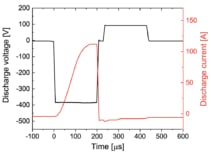
Bipolar HiPIMS represents a different approach to increase the energy of the bombarding ions. A positive pulse is applied to the magnetron target after the negative HiPIMS pulse, and the ion energy gain is proportional to the applied positive voltage. We will also look at the important role of the plasma potential for accelerating the ionic species with our goal to identify suitable conditions for achieving ion acceleration independent on substrate grounding.

Experimental results and simulations, based on industrially relevant material systems, will be used to illustrate mechanisms controlling the film growth.

Want to learn more on this subject?

Daniel Lundin is a visiting professor in the Plasma and Coatings Physics Division at Linköping University, Sweden. He is also the co-founder of the Swedish thin film technology company Ionautics. He obtained his PhD in 2010 and his Docent Degree/Habilitation in 2016 at Linköping University, Sweden. He has previously worked as a senior researcher at the National Center for Scientific Research (CNRS)/Paris-Saclay University, France, as a researcher at the Royal Institute of Technology (KTH), Sweden, and as a guest professor at Kiel University, Germany. Throughout his entire career, Daniel has been at the forefront of international research efforts on developing and characterizing new plasma-based methods for synthesizing thin films, in particular the thin film deposition technique High Power Impulse Magnetron Sputtering (HiPIMS). His current research is focused on plasma process control for film deposition using reactive gases, such as oxygen or nitrogen, where he has discovered new ways to enable stable and repeatable high-rate deposition of all types of compound coatings. For his work, he has received several awards and honours including the Institute of Physics Prize for novelty, significance and potential impact on future research and ranked as one of Sweden’s young “Supertalents” by the Swedish business journal Veckans Affärer. He is also the editor and main author of a book from Elsevier on the HiPIMS process (first in its field), published in 2020. He has published approximately 80 papers in refereed journals with  more than 2600 citations. Daniel is a national representative in the Plasma Science and Technique Division of IUVSTA, a member of the board of the European Physical Society Technology and Innovation Group (EPS-TIG), and a member of the AVS Advanced Surface Engineering Division Executive Committee.


Quantum 2.0: the cusp of a technology revolution

For several decades we have lived with “quantum 1.0” technology – things like lasers and the transistors inside microchips. But now we’re on the cusp of a “quantum 2.0” technology revolution, which taps into phenomena such as superposition and entanglement. Practical quantum computers, a quantum Internet and exquisitely accurate quantum sensors are among the goals for academic researchers, tech developers and investors.

Find out more about the commercialization of quantum 2.0 in the December issue of Physics World.

Copyright © 2026 by IOP Publishing Ltd and individual contributors