Particle and nuclear physics: quirky favourites from 2025

Particle and nuclear physics evokes evokes images of huge accelerators probing the extremes of matter. But in this round-up of my favourite research of 2025 I have chosen five stories in which particle and nuclear physics forms the basis for a range of quirky and fascinating research from astrophysics to archaeology.

CERN experiment sheds light on missing blazar radiation

The Fireball experiment installed in the HiRadMat irradiation area at CERN

My first pick involves simulating the vast cosmic plasma in the lab. Blazars are extremely bright galaxies that are powered by supermassive black holes. They emit intense jets of radiation, including teraelectronvolt gamma rays – which can be detected by astronomers if a jet happens to point at Earth. As these high-energy photons travel through intergalactic space, they interact with background starlight, producing numerous electron–positron pairs. These pairs should, in theory, generate gigaelectronvolt gamma rays – but this secondary radiation has never been observed. One explanation is that intergalactic magnetic fields deflect these pairs and the resulting gamma rays away from our line of sight. However, there is no conclusive evidence for such fields. Another theory is that plasma instabilities in the sparse intergalactic medium could dissipate the energy of the pair beams. Now, physicists working on the Fireball experiment at CERN have simulated the effect of plasma instabilities by firing a beam of electron–positron pairs through a metre-long argon plasma. They found that plasma instabilities are too weak to account for the missing gamma radiation – strengthening the case for the existence of primordial intergalactic magnetic fields.

Portable source could produce high-energy muon beams

A compact source of muons could soon be discovering hidden chambers in ancient pyramids. Muons are subatomic particles similar to electrons but 200 times heavier. They are produced in copious amounts in the atmosphere by cosmic rays. These cosmic muons can penetrate long distances into materials and are finding increasing use in “muon tomography” – a technique that has imaged the interiors of huge objects such as volcanoes, pyramids and nuclear reactors. One downside of muon tomography is that muons are always vertically incident, limiting opportunities for imaging. While beams of muons can be made in accelerators, these are large and expensive facilities – and the direction of such beams are also fixed. Now, physicists at Lawrence Berkeley National Laboratory have demonstrated a compact, and potentially portable method for generating high-energy muon beams using laser plasma acceleration. It uses an ultra-intense, tightly focused laser pulse to accelerate electrons in a short plasma channel. These electrons then strike a metal target creating a muon beam. With more work, compact and portable muon sources could be developed, leading to new possibilities for non-destructive imaging in archaeology, geology, and nuclear safety.

Radioactive BEC could be a ‘superradiant neutrino laser’

Could a “superradiant neutrino laser” be created using radioactive atoms in an ultracold Bose–Einstein condensate (BEC)? The answer is “maybe”, according to theoretical work by two physicists in the US. Their proposal involves creating a BEC of rubidium-83, which undergoes beta decay involving the emission of neutrinos. Unlike photons, neutrinos are fermions and therefore cannot form the basis of conventional laser. However, if the atoms in the BEC are close enough together, quantum interactions between the atomic nuclei could accelerate beta decay and create a coherent, laser-like burst of neutrinos. This is a well-known phenomenon called superradiance. While the idea could be tested using existing technologies for making BECs, it would be a challenge to deploy radioactive rubidium in a conventional atomic physics lab. Another drawback is that there are no obvious applications for a neutrino laser – at least for now. However, the very idea of a neutrino laser is so cool that I am hoping that someone will try to build one soon!

Antimatter could be transported by road

Photo of the BASE-STEP system being transported by overhead crane through the experimental hall of the Antimatter Factory at CERN. The system is an irregularly-shaped gray box and it's suspended from a large, bright yellow crane below the hall ceiling. A hard-hatted physicist, Marcel Leonhardt, looks on while holding a tablet displaying a dashboard of parameters.

If you happen to be driving between Geneva and Dusseldorf in the future, you might just overtake a shipment of antimatter. It will be on its way to an experiment that could solve some of the biggest mysteries in physics – including why there is much more matter than antimatter in the universe. While antielectrons (positrons) can be created in a small lab, antiprotons can only be created at large and expensive accelerators. This limits where antimatter experiments can be done. But now, physicists on the BASE collaboration at CERN have shown that it should be possible to transport antiprotons by road. Protons stood in for antiprotons in their demonstration and the particles were held in an electromagnetic trap at cryogenic temperatures and ultralow pressure. By transporting their BASE-STEP system around CERN’s Meyrin site, they showed it was stable and robust enough to handle the rigors of road travel.  The system will now be re-configured to transport antiprotons about 700 km to Germany’s Heinrich Heine University. There, physicists hope to search for charge–parity–time (CPT) violations in protons and antiprotons with a precision at least 100 times higher than is currently possible at CERN. The BASE collaboration is also cited in our Top 10 Breakthroughs of 2025 for their quantum control of a single antiproton.

Solid-state nuclear clock ticks ever closer

Solid quartz crystals revolutionized time keeping in the 20th century, so could solid-state nuclear clocks soon do the same? Today, the best timekeepers use the light emitted in atomic transitions. In principle, even better clocks could be made using very-low-energy gamma-rays emitted in some nuclear transitions. Nuclei are much smaller than atoms and these transitions are governed by the strong force. This means that such nuclear clocks would be far less susceptible to performance-degrading electromagnetic noise. And unlike atomic clocks, the nuclei could be embedded in solids – which would greatly simplify clock design. Thorium-229 shows great promise as a clock nucleus but it has two practical shortcomings: it is radioactive and extremely expensive. The solution to both of these problems is a clock design that uses only a tiny amount of thorium-229. Now researchers in the US have shown that physical vapour deposition can used to create extremely thin films of thorium tetrafluoride. Characterization using a vacuum ultraviolet laser confirmed the accessibility of the clock transition – but its lifetime was shorter and the signal less intense than measured in thorium-doped crystals. However, the researchers believe that these unexpected results should not dissuade those aiming to build nuclear clocks.


 

Quantum science and technology: highlights of 2025

There’s only a few days left in the International Year of Quantum Science and Technology, but we’re still finding plenty to celebrate here at Physics World HQ thanks to a long list of groundbreaking work by quantum physicists in 2025. Here are a few of our favourite stories from the past 12 months.

Observing negative time in atom-photon interactions

By this point in 2025, “negative time” may sound like the answer to the question “How long have I got left to buy holiday presents for my loved ones?” Earlier in the year, though, physicists led by experimentalist Aephraim Steinberg of the University of Toronto, Canada and theorist Howard Wiseman of Griffith University in Australia showed that the concept can also describe the average amount of time a photon spends in an excited atomic state. While experts have cautioned against interpreting “negative time” too literally – we aren’t in time machine territory here – it does seem like there’s something interesting going on in this system of ultracold rubidium atoms.

Creating an operating system for quantum networks

It is a truth universally acknowledged that any sufficiently advanced technology must be in want of a simple system to operate it. In April, the quantum world passed this milestone thanks to Stephanie Wehner and colleagues at Delft University of Technology in the Netherlands. Their operating system is called QNodeOS, and they developed it with the aim of improving access to quantum computing for the 99.99999% percent of people who aren’t (and mostly don’t need to be) intimately familiar with how quantum information processors work. Another advantage of QNodeOS is that it makes it easier for classical and quantum machines (and quantum devices built with different qbit architectures) to communicate with each other.

Pushing the boundary between the quantum and classical worlds

How big does an object have to be before it stops being quantum and starts behaving like the billiard-ball-like solids familiar from introductory classical mechanics courses? It’s a question that featured in our annual “Breakthrough of the Year” back in 2021, when two independent teams demonstrated quantum entanglement in pairs of 10-micron drumheads, and we’re returning to it this year in a different system: levitated nanoparticles around 100 nm in diameter.

In one boundary-pushing experiment, Massimiliano Rossi and colleagues at ETH Zurich, Switzerland and the Institute of Photonic Sciences in Barcelona, Spain cooled silica nanoparticles enough to extend their wave-like behaviour to 73 pm. In another study, Kiyotaka Aikawa and colleagues at the University of Tokyo, Japan performed the first quantum mechanical squeezing on a nanoparticle, narrowing its velocity distribution at the expense of its momentum distribution. We may not know exactly where the quantum-classical boundary is yet, but the list of quantum behaviours we’ve observed in usually-not-quantum objects keeps getting longer.

Using a quantum computer to generate quantum random numbers

What’s the best way to generate random numbers? In part, the answer depends on how random those numbers really need to be. For many applications, the pseudorandom numbers generated by classical computers, or the random-but-with-systematic-biases numbers found in, say, radio static, are good enough. But if you really, really need those numbers to be random, you need a quantum source – and thanks to work published this year by Scott Aaronson, Shi-Han Hung, Marco Pistoia and colleagues, that quantum source can now be a quantum computer. Which is a neat way of tying things together, don’t you think?

Giving Schrödinger’s cats a nuclear option

Left to right: UNSW researchers Benjamin Wilhelm, Xi Yu, Prof Andrea Morello, Dr Danielle Holmes

Finally, we would be remiss not to mention the work of Andrea Morello and colleagues at the University of New South Wales, Australia. This year, they became the first to create quantum superpositions known as a Schrödinger’s cat states in a heavy atom, antimony, that has a large nuclear spin. They also created what is certainly the year’s best scientific team photo, posing with cats on their laps and deadpan expressions more usually associated with too-cool-for-school indie musicians.

So congratulations to them, and to all the other teams in this list, for setting the bar high in a year that offered plenty for the quantum community to celebrate. We hope you enjoyed the International Year of Quantum Science and Technology, and we look forward to many more exciting discoveries in 2026.

Medical physics and biotechnology: highlights of 2025

This year saw Physics World report on a raft of innovative and exciting developments in the worlds of medical physics and biotech. These included novel cancer therapies using low-temperature plasma or laser ablation, intriguing new devices such as biodegradable bone screws and a pacemaker smaller than a grain of rice, and neural engineering breakthroughs including an ultrathin bioelectric implant that improves movement in rats with spinal cord injuries and a tiny brain sensor that enables thought control of external devices. Here are a few more research highlights that caught my eye.

Vision transformed

One remarkable device introduced in 2025 was an eye implant that restored vision to patients with incurable sight loss. In a clinical study headed up at the University of Bonn, participants with sight loss due to age-related macular degeneration had a tiny wireless implant inserted under their retina. Used in combination with specialized glasses, the system restored the ability to read in 27 of 32 participants followed up a year later.

Study participant training with the PRIMA device

We also described a contact lens that enables wearers to see near-infrared light without night vision goggles, reported on an fascinating retinal stimulation technique that enabled volunteers to see colours never before seen by the human eye, and chatted with researchers in Hungary about how a tiny dissolvable eye insert they are developing could help astronauts suffering from eye conditions.

Radiation therapy advances

2025 saw several firsts in the field of radiation therapy. Researchers in Germany performed the first cancer treatment using a radioactive carbon ion beam, on a mouse with a bone tumour close to the spine. And a team at the Trento Proton Therapy Centre in Italy delivered the first clinical treatments using proton arc therapy – a development that made it onto our top 10 Breakthroughs of the Year.

Meanwhile, the ASTRO meeting saw Leo Cancer Care introduce its first upright photon therapy system, called Grace, which will deliver X-ray radiation to patients in an upright position. This new take on radiation delivery is also under investigation by a team at RaySearch Laboratories, who showed that combining static arcs and shoot-through beams could increase plan quality and reduce delivery times in upright proton therapy.

Among other new developments, there’s a low-cost, dual-robot radiotherapy system built by a team in Canada and targeted for use in low-resource settings, a study from Australia showing that combining microbeam radiation therapy with targeted radiosensitizers can optimize brain cancer treatment, and an investigation at Moffitt Cancer Center examining how skin luminance imaging improves Cherenkov-based radiotherapy dosimetry.

The impact of AI

It’s particularly interesting to examine how the rapid evolution of artificial intelligence (AI) is impacting healthcare, especially considering its potential for use in data-intensive tasks. Earlier this year, a team at Northwestern Medicine integrated a generative AI tool into a live clinical workflow for the first time, using it to draft radiology reports on X-ray images. In routine use, the AI model increased documentation efficiency by an average of 15.5%, while maintaining diagnostic accuracy.

Samir Abboud from Northwestern Medicine

Other promising applications include identifying hidden heart disease from electrocardiogram traces, contouring targets for brachytherapy treatment planning and detecting abnormalities in blood smear samples.

When introducing AI into the clinic, however, it’s essential that any AI-driven software is accurate, safe and trustworthy. To help assess these factors, a multinational research team identified potential pitfalls in the evaluation of algorithmic bias in AI radiology models, suggesting best practices to mitigate such bias.

A quantum focus

Finally, with 2025 being the International Year of Quantum Science and Technology, Physics World examined how quantum physics looks set to play a key role in medicine and healthcare. Many quantum-based companies and institutions are already working in the healthcare sector, with quantum sensors, in particular, close to being commercialized. As detailed in this feature on quantum sensing, such technologies are being applied for applications ranging from lab and point-of-care diagnostics to consumer wearables for medical monitoring, body scanning and microscopy.

Alongside, scientists at Jagiellonian University are applying quantum entanglement to cancer diagnostics and developing the world’s first whole-body quantum PET scanner, while researchers at the University of Warwick have created an ultrasensitive magnetometer based on nitrogen-vacancy centres in diamond that could detect small cancer metastases via keyhole surgery. There’s even a team designing a protein qubit that can be produced directly inside living cells and used as a magnetic field sensor (which also featured in this year’s top 10 breakthroughs).

And in September, we ran a Physics World Live event examining how quantum optics, quantum sensors and quantum entanglement can enable advanced disease diagnostics and transform medical imaging. The recording is available to watch here.

Check your physics knowledge with our bumper end-of-year quiz

How well have you been following events in physics? There are 20 questions in total: blue is your current question and white means unanswered, with green and red being right and wrong.

16–20 Top quark – congratulations, you’ve hit Einstein level

11–15 Strong force – good but not quite Nobel standard

6–10 Weak force – better interaction needed

0–5 Bottom quark – not even wrong

ZAP-X radiosurgery and ZAP-Axon SRS planning: technology overview, workflow and complex case insights from a leading SRS centre

Want to learn more on this subject?

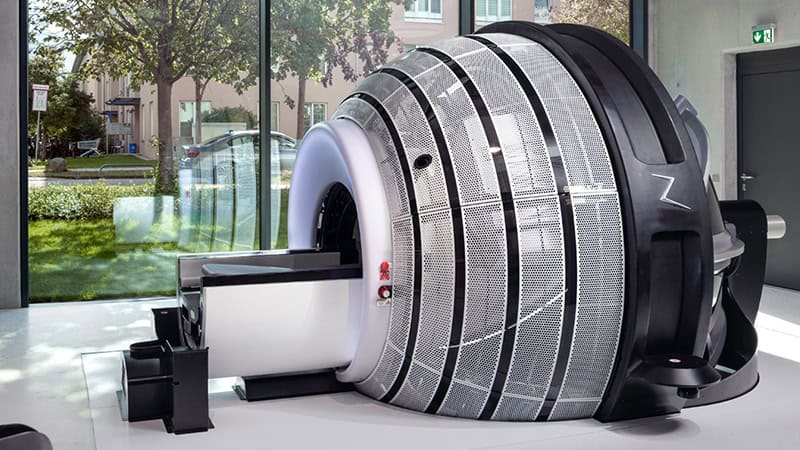
ZAP-X is a next-generation, cobalt-free, vault-free stereotactic radiosurgery system purpose-built for the brain. Delivering highly precise, non-invasive treatments with exceptionally low whole-brain and whole-body dose, ZAP-X’s gyroscopic beam delivery, refined beam geometry and fully integrated workflow enable state-of-the-art SRS without the burdens of radioactive sources or traditional radiation bunkers.


Want to learn more on this subject?

Theresa Hofman headshot

Theresa Hofman is deputy head of medical physics at the European Radiosurgery Center Munich (ERCM), specializing in stereotactic radiosurgery with the CyberKnife and ZAP‑X systems. She has been part of the ERCM team since 2018 and has extensive clinical experience with ZAP‑X, one of the first centres worldwide to implement the technology in 2021. Since then, the team has treated more than 900 patients with ZAP‑X, and she is deeply involved in both clinical use and evaluation of its planning software.

She holds a master’s degree in physics from Ludwig Maximilian University of Munich, where she authored two first‑author publications on range verification in carbon‑ion therapy. At ERCM, she has published additional first‑author studies on CyberKnife kidney‑treatment accuracy and on comparative planning between ZAP‑X and CyberKnife. She is currently conducting further research on the latest ZAP‑X planning software. Her work is driven by the goal of advancing high‑quality radiosurgery and ensuring the best possible treatment for every patient.

Oscar-winning computer scientist on the physics of computer animation

This episode of the Physics World Weekly podcast features Pat Hanrahan, who studied nuclear engineering and biophysics before becoming a founding employee of Pixar Animation Studios. As well as winning three Academy Awards for his work on computer animation, Hanrahan won the Association for Computing Machinery’s A M Turing Award for his contributions to 3D computer graphics, or CGI.

Earlier this year, Hanrahan spoke to Physics World’s Margaret Harris at the Heidelberg Laureate Forum in Germany. He explains how he was introduced to computer graphics by his need to visualize the results of computer simulations of nervous systems. That initial interest led him to Pixar and his development of physically-based rendering, which uses the principles of physics to create realistic images.

Hanrahan explains that light interacts with different materials in very different ways, making detailed animations very challenging. Indeed, he says that creating realistic looking skin is particularly difficult – comparing it to the quest for a grand unified theory in physics.

He also talks about how having a background in physics has helped his career – citing his physicist’s knack for creating good models and then using them to solve problems.

Physics-based battery model parameterization from impedance data

Want to learn more about this webinar?

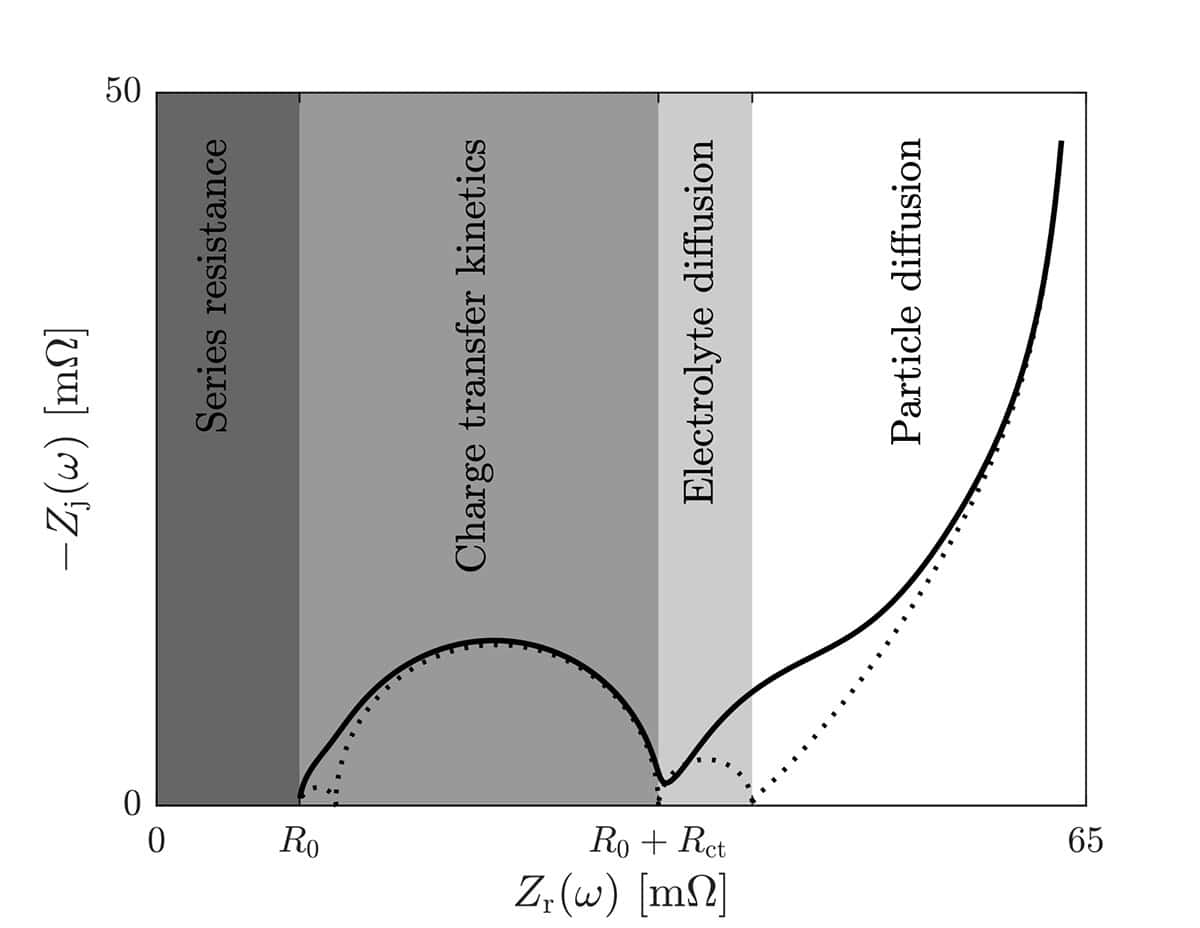
Electrochemical impedance spectroscopy (EIS) provides valuable insights into the physical processes within batteries – but how can these measurements directly inform physics-based models? In this webinar, we present recent work showing how impedance data can be used to extract grouped parameters for physics-based models such as the Doyle–Fuller–Newman (DFN) model or the reduced-order single-particle model with electrolyte (SPMe).

We will introduce PyBaMM (Python Battery Mathematical Modelling), an open-source framework for flexible and efficient battery simulation, and show how our extension, PyBaMM-EIS, enables fast numerical impedance computation for any implemented model at any operating point. We also demonstrate how PyBOP, another open-source tool, performs automated parameter fitting of models using measured impedance data across multiple states of charge.

Battery modelling is challenging, and obtaining accurate fits can be difficult. Our technique offers a flexible way to update model equations and parameterize models using impedance data.

Join us to see how our tools create a smooth path from measurement to model to simulation.

An interactive Q&A session follows the presentation.

Want to learn more about this webinar?

Noël Hallemans headshot

Noël Hallemans is a postdoctoral research assistant in engineering science at the University of Oxford, where he previously lectured in mathematics at St Hugh’s College. He earned his PhD in 2023 from the Vrije Universiteit Brussel and the University of Warwick, focusing on frequency-domain, data-driven modelling of electrochemical systems.

His research at the Battery Intelligence Lab, led by Professor David Howey, integrates electrochemical impedance spectroscopy (EIS) with physics-based modelling to improve understanding and prediction of battery behaviour. He also develops multisine EIS techniques for battery characterisation during operation (for example, charging or relaxation).


The Electrochemical Society, Gamry Instruments, BioLogic, EL-Cell logos

Higgs decay to muon–antimuon pairs sheds light on the origin of mass

A new measurement by CERN’s ATLAS Collaboration has strengthened evidence that the masses of fundamental particles originate through their interaction with the Higgs field. Building on earlier results from CERN’s CMS Collaboration, the observations suggest that muon–antimuon pairs (dimuons) can be created by the decay of Higgs bosons.

In the Standard Model of particle physics, the fermionic particles are organized into three different generations, broadly in terms of their masses. The first generation comprises the two lightest quarks (up and down), the lightest lepton (the electron) and the electron neutrino. The second includes the strange and charm quarks, the muon and its neutrino; and the third generation the bottom and top quarks, the tau and its neutrino. In terms of the charged fermions, the top quark is nearly 340,000 times heavier than the lightest – the electron.

All of the quarks and leptons have both right- and left-handed components, which relate to the direction of a particle’s spin relative to its direction of motion (right-handed if both directions are aligned; left-handed if they are anti-aligned).

Right- and left-handed particles are treated the same by the strong and electromagnetic forces, regardless of their generation in the Standard Model. The weak force, however, only acts on left-handed particles.

Flipping handedness

In the 1960s, Steven Weinberg uncovered a theoretical solution to this seemingly bizarre asymmetry. He proposed that the Higgs field acts as a bridge between each particle’s left- and right-handed components, in a way that respects the Standard Model’s underlying symmetry. This interaction causes the particle to constantly flip between its two components, creating a resistance to motion that can be perceived as mass.

However, this deepens the mystery. According to Weinberg’s theory, higher-mass particles must interact more strongly with this Higgs field – but in contrast, the strong and electromagnetic forces can only differentiate between these particles according to their charges (colour and electrical). The question is how does Higgs field can distinguish between particles in different generations if their charges are identical?

Key to solving this mystery will be to observe the decay products of Higgs bosons with different interaction strengths. For stronger interactions, corresponding to heavier generations, these decays should become far more likely.

In 2022, both the ATLAS and CMS collaborations did just this. Through proton–proton collision experiments at CERN’s Large Hadron Collider (LHC), the groups independently observed Higgs bosons decaying to tau–antitau pairs. This relatively common process occurred at the same rate as predicted by theory.

Rare decay

A year earlier, similar experiments by the CMS collaboration probed the second generation by observing muon–antimuon pairs from the decays of Higgs bosons. This rarer event occurs in just 1 in 5000 Higgs decays.

In their latest study, the ATLAS collaboration have now reproduced this CMS result independently. They collided protons at about 13 TeV and observed muon–antimuon pairs in the same range of energies predicted by theory.

Through the improvements they offer on the earlier CMS analysis, these new results bring dimuon observations to a statistical significance of 3.4σ. This is well below the 5σ standard required for the observation to be considered a discovery, so more work is needed.

The research could also provide guidance in the search for much rarer Higgs interactions that involve first-generation particles. This includes decay electron–positron pairs, originating from Higgs bosons which decay in just 1 in 200 million cases.

The research is described in Physical Review Letters.

Russia plans to revive abandoned Soviet-era particle accelerator

Russia wants to revive a Soviet-era particle accelerator that has been abandoned since the 1990s. The Kurchatov Institute for High Energy Physics has allocated 176 million rubles ($25m) to assess the current condition of the unfinished 600 GeV Proton Accelerator and Storage Complex (UNK) in Protvino near Moscow. The move is part of plans to strengthen Russia’s technological sovereignty and its activity in high-energy physics.

Although work on the UNK was officially halted in the 1990s, construction only ceased in 2013. At that time, a 21 km tunnel had been built at a depth of 60 m along with underground experimental hall lighting and ventilation systems.

In February 2025, physicist Mikhail Kovalchuk, president of the Kurchatov Institute National Research Center, noted in Russia’s Kommersant newspaper that enormous intellectual and material resources had been invested in the UNK’s design and development before it was cancelled.

According to Kovalchuk, Western sanctions provided an additional impetus to restore the project, as scientists that had previously worked in CERN projects could no longer do so.

“By participating in [CERN] projects, we not only preserved our scientific potential and survived a difficult period, but also enriched ourselves intellectually and technologically,” added Kovalchuk. “Today we are self-sufficient.”

Anatoli Romaniouk, a Russian particle physicist who has worked at CERN since 1990, told Physics World that a revival of the UNK will at least maintain fundamental physics research in Russia.

“If this project is realized, then there is hope that it will be possible to at least somewhat slow down the scientific lag of Russian physics with global science,” says Romaniouk.

While official plans for the accelerator have not been disclosed, it is thought that the proton beam energy could be upgraded to reach 3 TeV. Romaniouk says it is also unclear what kind of science will be done with the accelerator, which will depend on what ideas come forward.

Yet some Russian scientists say that it could be used to produce neutrinos. This would involve putting a neutrino detector nearby to characterize the beam before it is sent some 4000 km towards Lake Baikal where a neutrino detector – the Baikal Deep Underwater Neutrino Telescope – is already installed 1 km underground.

“I think it’s possible to find an area of ​​high-energy physics where the research with the help of this collider could be beneficial,” adds Romaniouk.

Real-world quantum entanglement is far from an unlimited resource

Achieving a profound understanding of any subject is hard. When that subject is quantum mechanics, it’s even harder. And when one departs from ideal theoretical scenarios and enters the real world of experimental limitations, it becomes more challenging still – yet that is what physicists at the Freie Universität Berlin (FU-Berlin), Germany recently did by exploring what happens to entanglement theory in real quantum computers. In doing so, they created a bridge between two fields that have so far largely developed in parallel: entanglement theory (rooted in physics) and computational complexity (rooted in computer science).

Ebits, the standard currency of entanglement

In quantum mechanics, a composite system is said to be entangled when its total wavefunction cannot be written as a product of the states of its individual subsystems. This leads to correlations between subsystems that arise from the structure of the quantum state, not from any shared classical information. Many speed-ups achieved in quantum computing, quantum cryptography and quantum metrology rely heavily on entanglement, but not every form of entanglement is equally useful. Only specific kinds of entanglement will enable a given computational or communication task.

To make quantum technologies practical, the available entangled resources must therefore often be converted into forms suitable for specific applications. One major conversion process involves transforming partially entangled states into, or extracting them from, the maximally entangled bit (ebit) that acts as the standard unit of entanglement. High-fidelity ebits – entangled pairs that are extremely close to the ideal perfectly entangled state – can be distilled from noisy or imperfect entangled states through entanglement distillation, while entanglement dilution allows one to reconstruct the desired entangled states from purified ebits.

In an idealized setting, with an infinite number of copies of entangled states and unlimited computational power, a single quantity called the von Neumann entropy fully determines how many ebits can be extracted or are required. But reality is far less forgiving: we never have infinite resources, and computational power is always limited, just like we don’t have an infinite amount of gold on Earth.

Entanglement under finite resources

In the present work, which is published in Nature Physics, the FU-Berlin team of Lorenzo Leone, Jacopo Rizzo, Jens Eisert and Sofiene Jerbi asked what happens when these ideal assumptions break down. They study the case where only a finite number of entangled states, which can scale at most polynomially with the number of quantum bits (qubits) in the system, are considered and all local operations and classical communication (LOCC) are performed in a finite polynomial time.

They found that the simple correspondence between von Neumann entropy and extractable or required ebits no longer holds: even when a state has a large von Neumann entropy, the number of ebits that can be efficiently extracted may be much lower. In these cases, the number is bounded instead by the min-entropy of the reduced state (an operational measure determined solely by the state’s largest eigenvalue that captures how much entanglement can be reliably distilled from a single copy of the state) without averaging over many uses. On the other hand, even a state with negligible von Neumann entanglement may require a maximal ebit budget for efficient dilution.

Leone and Eisert say they were inspired to perform this study by recent work on so-called pseudo-entangled states, which are states that look at lot more entangled than they are for computationally bounded observers. Their construction of pseudo-entangled states highlights a dramatic worst-case scenario: a state that appears almost unentangled by conventional measures may still require a large number of ebits to create it efficiently. The takeaway is that computability matters, and quantum resources you might have thought were available may be, in effect, locked away simply because they cannot be processed efficiently. In other words, practical limitations make the line between a “resource” and a “usable resource” even sharper.

Quantum resources in a limited world

The researchers say that their study raises multiple questions for future exploration. One such question concerns whether a similar computational‐efficiency gap exists for other quantum resources such as magic and coherence. Another is whether one can build a full resource theory with complexity constraints, where quantities reflect not just what can be converted, but how efficient that conversion is.

Regardless of the answers, the era of entanglement under infinite book‐keeping is giving way to an era of entanglement under limited books, limited clocks and limited gates. And in this more realistic space, quantum technologies may still shine, but the calculus of what can be done and what can be harnessed needs a serious retooling.

Copyright © 2026 by IOP Publishing Ltd and individual contributors