EmpowerRT’s founder and president Sha Chang trains staff at the Cancer Diseases Hospital in Zambia to use EmpowerRT’s software. (Courtesy: Cathy Mwaba, Zambia Cancer Diseases Hospital)
EmpowerRT, a social enterprise company spun out from the University of North Carolina (UNC), has an impressive goal: to help resource-limited cancer clinics in developing countries improve radiotherapy, at just 5–10% of the cost of purchasing modern technology.
Currently, there is a huge disparity in cancer care across the world. About 70% of deaths from cancer occur in low- and middle-income countries (LMICs) and, according to the World Health Organization, it is these LMICs that will face the highest increase in cancer death rates in decades to come.
One underlying reason for this disparity is that many cancer clinics in LMICs still rely on older generation radiotherapy equipment, with no funds available to update to modern digital-based systems and the associated infrastructure. And while advances in radiation therapy technologies, such as the introduction of intensity-modulated radiotherapy (IMRT, which has been standard-of-care for years in developed nations), can improve tumour targeting and clinical outcomes, such systems are simply too expensive for many cancer clinics in LMICs.
“This is the really sad truth,” says EmpowerRT’s founder and president Sha Chang. “Many patients in developing countries die and suffer, not because the world doesn’t know how to treat their cancers, but because they have no access to the treatments. Our mission is to help people in low-resource countries to improve the quality of radiotherapy using existing resources, without spending millions of dollars that they don’t have.”
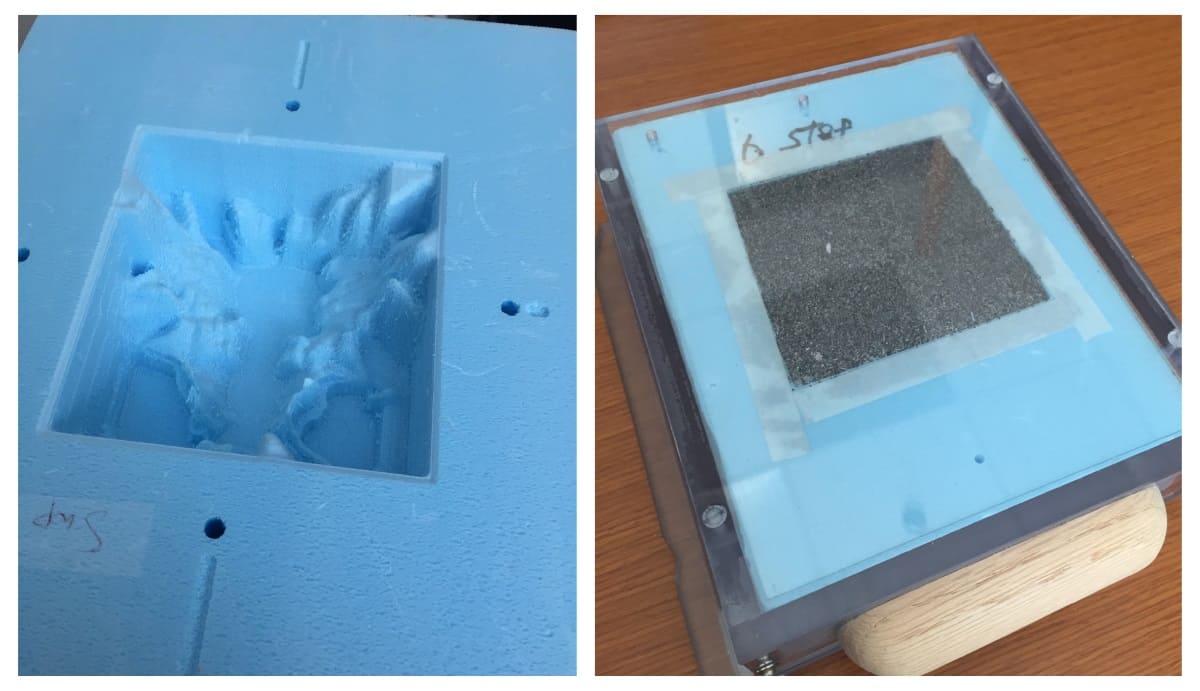
EmpowerRT is tackling this problem by offering a technology that enables any radiation delivery system to provide IMRT, using a low-cost compensator placed in front of the treatment beam. The compensator comprises a styrofoam mould filled with tungsten granules. It can be fabricated using a milling machine, assembled on site and, after treatment, the tungsten can be recycled to treat other patients. “The core belief of EmpowerRT is that we can advance cancer care by doing more with less, doing more with what is already available, and doing it simply”, says Sha.
The Styrofoam compensator mould (left) filled with recyclable tungsten granules (right). (Courtesy: Cathy Mwaba, Zambia Cancer Diseases Hospital)
Similar to modern radiotherapy systems, the IMRT compensator shape is individually designed to attenuate the radiation beam to maximize dose to the tumour target while minimizing dose to nearby healthy tissue. “Using this approach, we can make existing radiation therapy machines in LMICs deliver a more advanced treatment. That’s the beauty of it,” says Sha. She explains that the recyclable compensator IMRT solution was developed at UNC before multileaf collimator (MLC)-based machines were widely available, and was used in treatments for 14 years and 1400 patients before UNC terminated its use after migrating to digital-based radiotherapy.
“We developed the recyclable compensator IMRT technology at a time when we were in a manual operating environment that’s still used in many low-resource settings. So we know this technology is feasible in that environment,” says Sha. “We want to give our proven technology a second life that can benefit more cancer patients.”
In addition to the recyclable compensator IMRT technology, EmpowerRT also offers treatment planning software and e-chart, a digital patient chart software designed for manually operated clinics. “Our goal is to bring the many benefits of a record and verify system to low-resourced clinics in LMICs,” says Sha. “We are also bringing in grid therapy, a novel therapy that benefits large and late-stage tumours, which are more prevalent in developing countries.”
The company also provides extensive training and support, to help sites introduce IMRT – everything from quality assurance and patient selection to setup – in order to establish an effective and safe treatment programme.
Inaugural installation
EmpowerRT has now installed this technology at its first site – the Cancer Diseases Hospital in Zambia. The country’s sole cancer hospital, it has three basic radiotherapy machines, none of which were previously able to deliver IMRT.
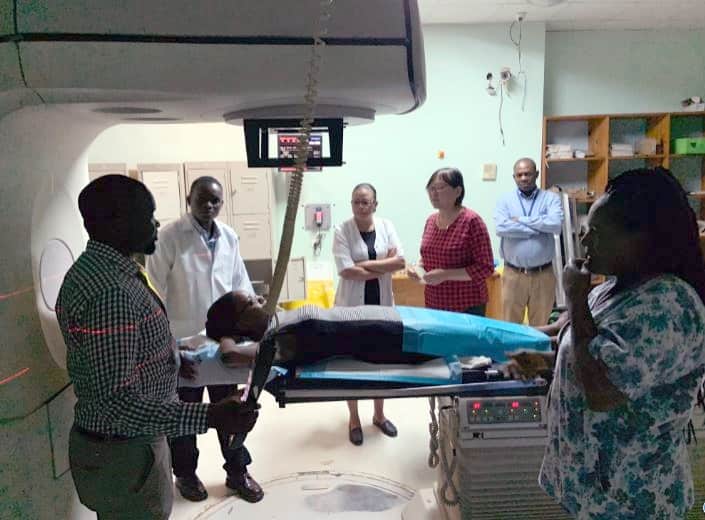
The EmpowerRT team offered remote training on the treatment planning software and also travelled to Zambia three times for extended onsite training and dry runs. Sha notes that the training focused on knowledge transfer: “we train the trainer, and then watch the trainer train others,” she explains.
Radiotherapy training at the Cancer Diseases Hospital in Zambia. (Courtesy: Cathy Mwaba, Zambia Cancer Diseases Hospital)
“The training was excellent and the time spent was more than expected, with various hands-on and ‘real patient’ practice cases,” says Mulape Kanduza, chief medical physicist at the Cancer Diseases Hospital. “My first impression was ‘why is this renowned professor from UNC interested in working with our department?’. Effort was put both by the trainees and trainers and I believe the output is evident.”
Challenges such as machines breaking down and long delays in performing repairs, which are not uncommon in a LMIC environment, exacerbated by COVID-19-related travel restrictions, mean that the Cancer Diseases Hospital has not been able to complete an IMRT patient treatment yet. “But we have overcome many unexpected challenges, and the Zambia team of doctors, physicists and radiation therapy technologists all learned a great deal,” says Sha. “They are confident that they can do this new procedure independently, with us remotely doing the review and monitoring. That’s the success.”
“The future is very positive in that we have created a lasting relation to draw from,” Kanduza tells Physics World. “The positive outcome [will be] seeing an IMRT patient treatment being executed and knowing that the outcomes will be much better than treating with other conventional techniques.”
“Improved quality assurance in the workflow, using the Excel-based e-chart to review treatment records, has allowed us to think differently and to acknowledge change,” Kanduza adds. “One measurable outcome is that EmpowerRT’s e-chart system can work in a low-income setting such as ours.”
Looking ahead, EmpowerRT is now in talks with cancer clinics in Nigeria and Indonesia. The company is also partnering with organizations such as Clinton Health Access Initiative, which has worked for decades to reduce the burden of disease in LMICs, and Rayos Contra Cancer, which focuses on global radiotherapy training.
“We are also writing an NIH small business proposal targeted to feasible and effective cancer solutions in LMICs,” says Sha. “The next step is not only looking for where we can help, but how as a social enterprise company we can continue to grow, to partner with more like-minded global cancer care organizations and make a difference together.”
For almost 75 years, the Doomsday Clock has monitored how close humankind is to global catastrophe. With the clock now closer to midnight than ever before, the science writer Rachel Brazil talks to Physics World’s Matin Durrani about how the clock is set by the Bulletin of the Atomic Scientists and how physicists can engage in public debates about the challenges facing civilization.
Space travel is one challenge that humans have overcome, and we could soon embark on a second era of exploration that culminates in the colonization of the Moon. Lunar dust, however, could be the nemesis of Moon dwellers because the stuff gets everywhere and can damage spacesuits and other essential technologies. Xu Wang and Ben Farr of the Laboratory for Atmospheric and Space Physics at the University of Colorado Boulder join the podcast to explain how beams of electrons could help keep equipment dust free on the Moon.
The film Proxima looks at the themes of motherhood, separation and sexism from the perspective of an astronaut who is preparing to spend a year on the International Space Station. Physics World’s Tushna Commissariat is on hand to give her impressions of the film and to chat about our interview with the film’s writer and director Alice Winocour.
Brain–computer interfaces (BCIs) offer the potential for people with severe motor disabilities to control external assistive devices with their mind. Current BCI systems are limited, however, by the need for daily recalibration of the decoder that converts neural activity into control signals. Researchers at the UC San Francisco Weill Institute for Neurosciences have now employed machine learning to help an individual with tetraplegia learn to control a computer cursor using their brain activity, without requiring extensive daily retraining.
To record neural activity, the team used a 128-channel electrocorticography (ECoG) implant, a pad of electrodes that’s surgically placed on the surface of the brain. Already approved for seizure monitoring in epilepsy patients, ECoG arrays provide greater long-term stability than the pincushion-style arrays of sharp electrodes used in previous BCI studies, which are more sensitive but tend to move or lose signal over time.
“The BCI field has made great progress in recent years, but because existing systems have had to be reset and recalibrated each day, they haven’t been able to tap into the brain’s natural learning processes,” explains senior author Karunesh Ganguly. “It’s like asking someone to learn to ride a bike over and over again from scratch.”
The ECoG implant. (Courtesy: Noah Berger/UCSF)
The researchers developed a BCI algorithm that uses machine learning (based on an adaptative Kalman filter) to map the neural activity recorded by the ECoG electrodes to the user’s desired cursor movements. Over a period of roughly six months (two months after ECoG implantation), they conducted experiments to assess two approaches for adaptation of this decoder algorithm as the user learns control.
First, they tested the existing practice of resetting the algorithm each day. Here, the participant imagined movements of his neck and right wrist while watching a cursor move across the screen, and the algorithm gradually updated itself to match the cursor’s movements to the generated brain activity. This daily initialization, however, could require hours for the participant to master cursor control; some days, he could not achieve control at all.
Next, the researchers examined an approach called long-term closed-loop decoder adaptation (CLDA), in which decoder weights from the previous day’s session are used for the current session, without resetting the algorithm each day. They found that continued interplay between the participant’s brain signals and the algorithm resulted in continuous improvements in performance over many days.
When the team reset the BCI algorithm after several weeks of continuous learning, the participant rapidly re-established the same patterns of neural activity required to control the device – effectively retraining the algorithm to its former state. “Once the user has established an enduring memory of the solution for controlling the interface, there’s no need for resetting,” says Ganguly. “The brain just rapidly convergences back to the same solution.”
The researchers next examined whether long-term CLDA could enable long-term stable performance without the need for retraining or recalibration – the so-called “plug-and-play” performance that could enable broader use of BCIs. They found that once expertise was established, the participant could simply begin using the BCI each day. His performance did not decline over 44 days without retraining, and he showed little performance decline after days without practicing.
At this stage, the participant was also able to “stack” additional skills, such as clicking a virtual button, without impacting his ability to control the cursor. To differentiate clicking from cursor control, the researchers trained a linear support vector machine (SVM). “One of the main innovations was the rate at which the Kalman filter and SVM parameters were adapted across days in order to track user learning and neural plasticity,” Ganguly notes.
Ganguly and colleagues conclude that by leveraging the stability of ECoG interfaces and neural plasticity, this approach offers reliable, stable BCI control. This stability may prove even more important for long-term control of more complex robotic systems such as artificial limbs – a key goal of the next phase of this research.
The team is now in the process of enrolling the next subject, says Ganguly. “We are also developing new approaches to increasing communication rates; this involves more sophisticated algorithms and using a denoised decoding of neural activity. And we are testing control of a six degrees-of-freedom robotic arm – we currently have a simulation in a physics engine,” he tells Physics World.
Researchers in the US and China have made the first silk hard drive using a technique called tip-enhanced near-field infrared nanolithography (TNINL). The device, which can store digital data with a density of 64 GB per square inch, is robust in the face of harsh conditions such as heat, moisture, gamma radiation or high magnetic fields. While a silk-based hard drive is unlikely to match the speed and storage capacity of state-of-the-art solid-state drives at the same cost, its unique set of features makes it promising for electronics that could be implanted in the body.
Lithography techniques are routinely used to make devices with optical storage densities as high as several hundred GB per square inch. However, it can be time-consuming to create small features with these methods, and it also requires costly and sophisticated fabrication procedures. Another drawback is that diffraction limits the resolution of conventional optical lithography to around half the wavelength of the illuminating light – roughly hundreds of nanometres for visible light. This makes further increases in storage density (beyond current industry standards) difficult to achieve.
Overcoming the diffraction limit with near-field light
An alternative technique known as scattering-type scanning near-field optical microscopy (s-SNOM) offers a possible solution. This technique gets around the diffraction limit because it depends on near-field light – that is, the component of light that “wraps around” surfaces – instead of the diffraction-prone far-field light (which propagates away from the structures that scatter it). Near-field light is already commonly used in nanoscience as a tool to fabricate, manipulate and characterize photosensitive structures. For example, researchers use so-called “evanescent” light fields for nanolithography of polymeric materials, and for processing nanoscale features in material surfaces when making optical nanodevices.
To make their silk drives, the researchers took silk extracted from silkworm cocoons and spin-coated a thin film of it (in the form of an aqueous solution) onto either a gold or a silicon substrate. They then created nanoscopic patterns in this film using an s-SNOM equipped with a mid-infrared laser light source. The frequency of the laser could be tuned between 1495 and 1790 cm–1, which covers the wavelengths at which silk proteins absorb light. By focusing the laser onto the sharp tip of an atomic force microscope placed near the silk surface, they were able to induce topological and/or phase changes in the silk film at roughly 30-nm length scales.
Information can be repeatedly written and erased
With these induced changes spaced 100 nm apart, the team achieved a data storage capacity equivalent to around 64 GB per square inch, Liu says. While the patterns thus created are robust to harsh conditions, the method nevertheless allows information to be repeatedly written onto and erased from the film.
The advantages of the technique are many, Liu tells Physics World. Thin silk films are easy to spin-coat onto various substrates, including curved and soft materials. Such films also offer two entirely different ways to read out the encoded data. The first option is to use straightforward AFM “mapping” in which topographic protrusions are recognized as “1s” while flat topographical features correspond to “0s”. The second, more innovative way is to use a laser readout technique that differs from conventional optical methods in that the spectroscopic information thus obtained is multi-coloured. What is more, by varying the laser’s writing power, the researchers demonstrated that they could achieve so-called “higher-dimensional” or greyscale data storage, where individual data points take on values other than a binary zero or one.
Finally, Liu notes that silk is an organic material that mixes and interfaces well with many biological systems, including biomarkers in blood. The information in these biomarkers could therefore be encoded and stably stored in a silk-based hard drive. Indeed, members of the team, who report their work in Nature Nanotechnology, now plan to integrate their silk drive with biological materials for bio-information storage applications. “We will be investigating body implantation in the near future as well,” Liu says.
A new photocatalyst sheet that uses light to convert carbon dioxide and water into a useful chemical fuel has been developed by Erwin Reisner and colleagues at the University of Cambridge. The device produces formic acid – a liquid fuel – with very few unwanted byproducts. With improvements to its conversion efficiency, the system could soon make an important contribution towards large-scale, carbon-neutral fuel production.
For billions of years, photosynthesis has provided living cells with an efficient way of using sunlight to convert carbon dioxide and water into chemical fuel. Recently, researchers have made strides towards practical technologies that exploit this process to generate carbon-neutral fuels. So far, however, these devices have often required sacrificial reagents to catalyse the oxidation of water – a key part of the photosynthesis process. This produces unwanted byproducts that need to be separated from the useful fuel, limiting the sustainability of the technology.
In their study, Reisner’s team developed a more sophisticated device that integrates two doped, light-absorbing semiconductor powders that are fixed onto a conductive layer of gold. In addition, a molecular, cobalt-based photocatalyst is embedded into the sheet.
Excess of electrons
When sunlight illuminates the sheet, electron-hole pairs are generated in both semiconductors. One of the semiconductors transfers electrons to the other via the gold layer, leaving behind an excess of positively charged holes. These holes can then be filled by electrons donated by water via an oxidation reaction that was enabled by the photocatalyst. Meanwhile, the excess of electrons in the other semiconductor causes carbon dioxide to undergo a reduction reaction to produce formate. This is a negative ion that can be used to make formic acid, which can be stored as a liquid.
The powders and catalyst comprising the device are easy and inexpensive to produce in large quantities and the role of water as an electron donor eliminates the need for wasteful oxidation-triggering reagents, significantly boosting the sustainability of the process. Although the team’s initial experiments yielded a low solar-to-formate conversion efficiency of just 0.08%, they demonstrated an extremely high formate selectivity of 97±3%, with very few unwanted by-products.
Reisner and colleagues achieved these results with a sheet area of 20 cm2, but believe it should be relatively easy to scale it up to several square metres – making it suitable for use on commercial solar farms. Since formate is a stable liquid fuel, it can easily be stored and transported, or converted into gaseous hydrogen fuel if necessary. Furthermore, the device is completely wireless and requires no external power, enhancing its sustainability even further.
The researchers will now aim to boost the conversion efficiency of their device to levels suitable for commercialization, by experimenting with a range of different photocatalysts. Through these improvements, the photocatalyst sheet could soon become suitable for practical, large-scale solar fuel production, which actively reduces levels of atmospheric carbon dioxide.
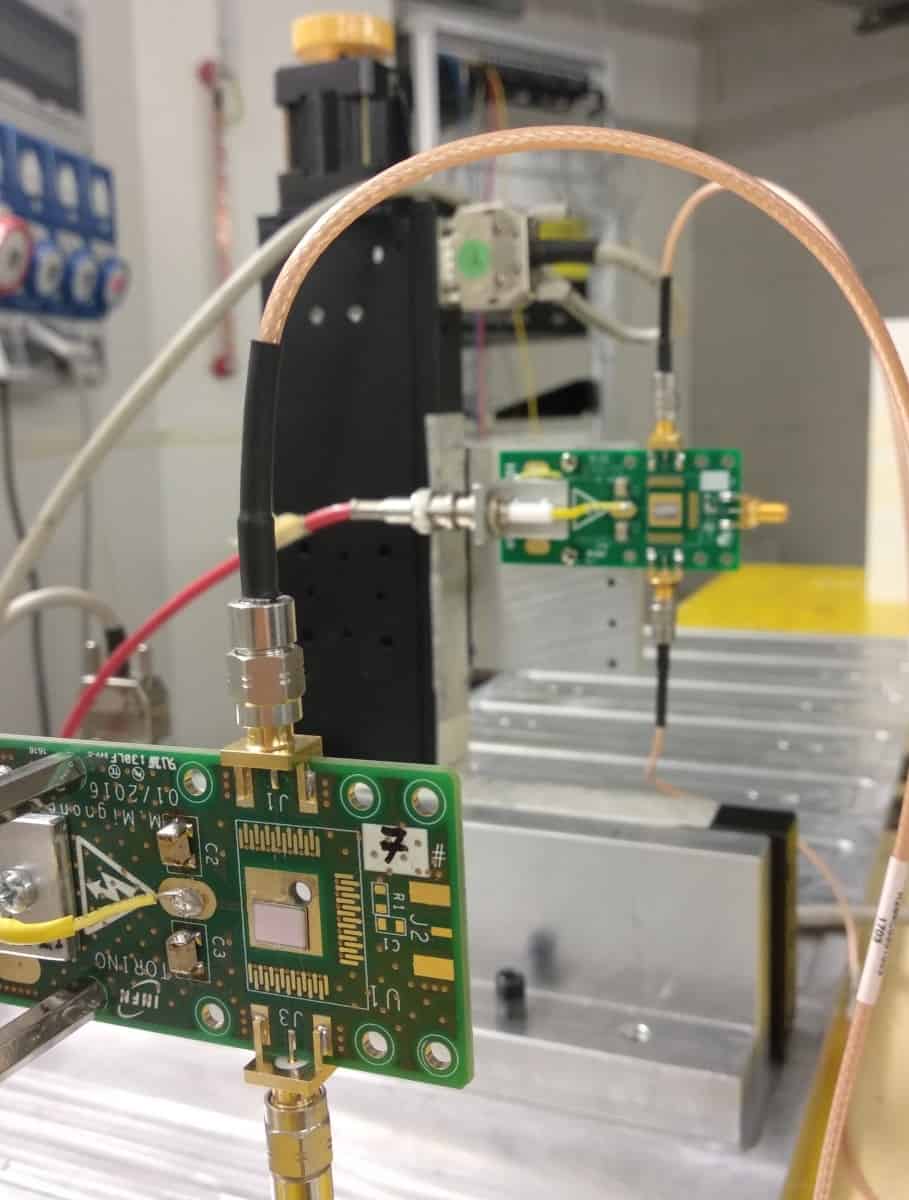
Experimental setup showing the two ultrafast silicon detectors used to determine the energy of clinical proton beams. (Courtesy: Anna Vignati)
Beam energy is a key parameter in particle therapy, defining the depth inside the patient at which the therapeutic radiation is deposited. Any deviations in energy will change the particle range, which could lead to tumour underdosage or overdose to normal structures, particularly for the increasingly prevalent pencil-beam scanning treatments.
A detector that can rapidly measure particle beam energy could prove invaluable. Such a device could be used for regular quality assurance (QA), to check beam energy during irradiation, or even to implement future adaptive dose delivery schemes employing fast energy modulation. With this in mind, researchers in Italy have developed a prototype detector that measures the time-of-flight (ToF) of protons to determine the beam energy.
To measure the energy, and thus the range, of a clinical proton beam, a detector must match the clinically acceptable range uncertainty, which is typically less than 1 mm at therapeutic proton energies. This corresponds to measurement accuracies ranging from about 0.5 MeV for 230 MeV protons to 1 MeV for 60 MeV protons. To achieve this, the researchers – from the University of Turin and INFN – created a detector from two thin ultrafast silicon detector (UFSD) sensors placed a specific distance apart along the beam direction.
“The main advantages of ultrafast silicon detectors over traditional silicon ones are excellent time resolution, reduced thickness, good signal-to-noise ratio and short signal duration,” explains first author Anna Vignati. “These features allow identification of single protons, even in beams of high intensity and irregular time structure. Thus, the number of protons needed to measure the beam energy with the required accuracy could be collected in a favourable timeframe (a few seconds) for QA checks in a proton therapy facility.”
Vignati and colleagues tested the prototype device on a clinical proton beam at the CNAO facility and reported their findings in Physics in Medicine & Biology. They performed ToF measurements at five clinical beam energies (58.9, 77.6, 103.5, 148.5 and 226.1 MeV, corresponding to water equivalent depths of between 30 and 320 mm). They measured each beam energy with the sensors positioned at four distances, from few centimetres up to roughly 1 m apart.
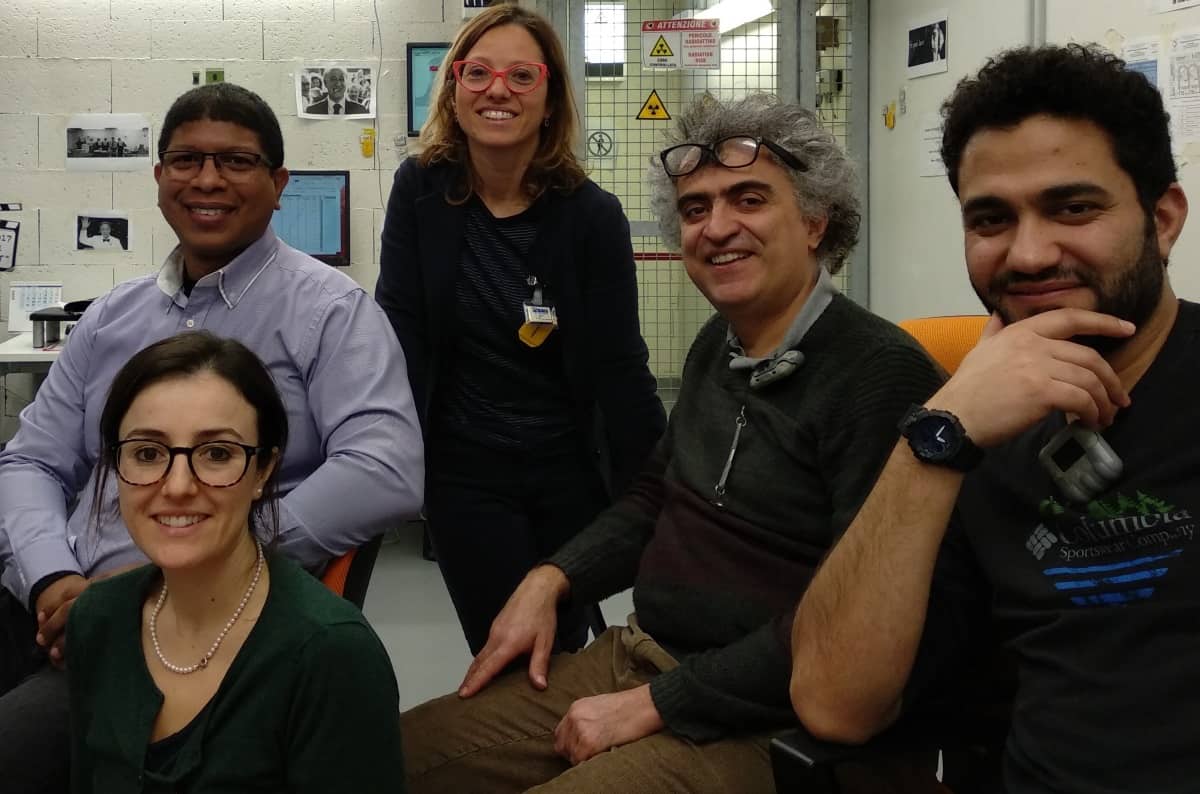
Anna Vignati (bottom left) and colleagues. (Courtesy: Anna Vignati)
The researchers calculated the ToF from the mean time difference between the coincident signals generated when a single proton crosses both sensors, minus a constant time offset related to signal routing. To determine the beam energy from these ToF measurements, they developed a model that accounts for energy loss in the sensors and in air, benchmarking it against Monte Carlo simulations.
The main error sources for this setup are the uncertainties in the distance between the sensors and the time offset. To minimize these uncertainties, the team developed a calibration method using 16 of the ToF measurements (excluding those at 103.5 MeV, which were used to test the calibration) and assuming the nominal energies at the isocentre as known quantities.
Comparing the measured energies with nominal beam energies revealed that, at the two largest sensor spacings (67 and 97 cm), deviations were less than 0.5 MeV for all five proton energies – compatible with the clinically acceptable measurement accuracy.
The detector also demonstrated short acquisition times. For a test with 97 cm detector spacing and a beam energy of 226.1 MeV, the researchers found that 6 s of irradiation at an intensity of 5×10⁸ protons/s was sufficient to remain below the maximum acceptable ToF error (4 ps for sensors 1 m apart).
From a clinical stance, the most significant parameter is the corresponding range deviation in water. At 67 and 97 cm sensor spacing, the range discrepancies between measured and nominal beam energies were within 0.5 mm at lower energies and within 1 mm for the maximum energy, in compliance with clinical requirements.
The researchers conclude that UFSD silicon sensors can measure the energy of a clinical proton beam in a few seconds, with good accuracy and minimal beam perturbation. They note that their detector could find immediate application for daily QA. “With further improvements, our detector will be even compatible with use during treatment,” Vignati tells Physics World. “Indeed, properly exploiting the extremely reduced thickness of these sensors would minimize the beam perturbation, while reducing the acquisition dead time would allow measurements of similar sensitivity in a few milliseconds.”
To further improve the collection of coincident protons, the researchers have produced a dedicated sensor with appropriate segmentation of the active area. They have also developed a mechanical system that varies the distance between sensors with high accuracy, enabling a self-calibration process that no longer requires knowledge of the beam energy used for calibration. “This ensures that the same precision and sensitivity will be achieved in any clinical facility where the device will be used,” says Vignati.
IOP Publishing, which publishes Physics World, has announced it will introduce double-blind peer review on all of its wholly owned journals by the end of 2021. The publisher says the rollout will be phased, with some journals shifting to double blind by the end of 2020, followed by the full portfolio of IOP Publishing-owned journals by the end of 2021.
Journal publishing has traditionally operated using single-blind peer review, in which the reviewers of the paper know who has written the paper, but the authors do not know who has reviewed their paper. Double-blind peer review, on the other hand, is when both the reviewers and authors do not know who each other are.
We believe that double-blind peer review is a significant step in the right direction
Kim Eggleton
IOP publishes 96 journals, around half of which are published jointly with or on behalf of partner societies. Since 2017 the publisher has offered double-blind peer review as an option for authors on two of its journals: Materials Research Express and Biomedical Physics & Engineering Express. After a year, author uptake of the double-blind review option was around 20% on each journal, with many authors being positive about the move, noting it to be fairer than single-blind peer review. Since then three more IOP Publishing journals – New Journal of Physics, Plasma Research Express and Engineering Research Express – have begun offering authors a choice of double-blind peer review, with uptake as high as 35%.
“Impartial evaluation”
IOP Publishing says that the move to apply double blind across all of its wholly owned journals is part of the publisher’s “dedication to tackle the significant gender, racial and geographical under-representation in the scholarly publishing process”. It adds that double-blind peer review “has the potential to reduce bias with respect to gender, race, country of origin or affiliation which should lead to a more equitable system”. Double-blind will be the default option when submitting a paper, but authors have the option to remain under the single-blind model.
“We believe that keeping both the author and the reviewers anonymous will mean the research is judged more fairly, giving authors a better chance of impartial evaluation,” says Kim Eggleton, integrity and inclusion manager at IOP Publishing. “We believe that double-blind peer review is a significant step in the right direction – but it is by no means a panacea. There is a lot more work to be done.”
Indeed, Eggleton adds that publishers have an “influential role” to play in making academia more inclusive. “By doing our best to ensure peer review is objective, we can increase the proportions of under-represented groups that get published,” she adds. “That links to funding, to promotions, to participation on editorial boards – all of which bring about more diverse role models to inspire the next generation of researchers.”
Penny Gowland from the University of Nottingham in the UK, who is an advocate for double-blind, says she is “absolutely delighted” by the move and by IOP Publishing “for listening and leading on this”. She adds that this is a “great day for the integrity of the scientific method and it provides natural justice for all scientists”.
IOP Publishing recently carried out a survey to understand what motivates researchers to carry our peer review. You can read the full report here.
COVID-19 has changed the world. The pandemic has caused devastation, pain and loss, with no corner of the globe untouched. But for some scientists the unprecedented disruption has also brought about a previously unimaginable opportunity. The dramatic fall in air pollution that accompanied countries going into lockdown has provided a unique natural experiment, enabling scientists to probe some of the long-standing mysteries surrounding cloud formation. In doing so, they have gained a better understanding of the complicated interactions between air pollution, weather and climate.
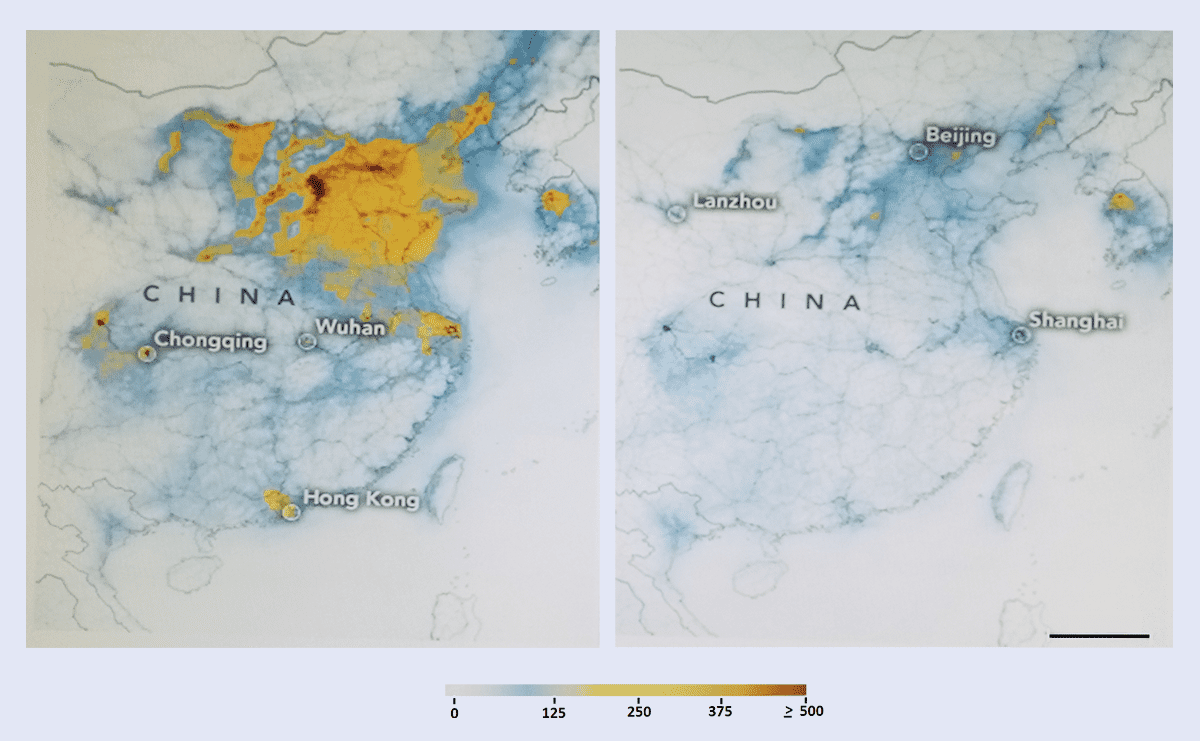
Stringent lockdown measures were first introduced in Wuhan, China – where COVID-19 was initially identified – on 23 January 2020, and quickly rippled out across the rest of the country to combat the spread of the SARS-CoV-2 virus. With public transport shut down, schools, universities and workplaces closed, and people confined to their homes, the streets became silent and air pollution plummeted. Satellite data revealed, for example, that nitrogen dioxide had fallen by as much as 70% (figure 1) across eastern China, with some locations – including Wuhan – seeing drops of up to 93%. And as the virus swept around the world and other countries imposed their own versions of lockdown, the atmosphere responded, with smog being replaced by blue skies in New Delhi, the Himalayan mountain chain becoming visible from parts of northern India for the first time in 30 years, and city skylines being brought into sharp relief in Jakarta, Los Angeles, Paris and beyond.
However, cleaner air doesn’t necessarily result in wall-to-wall blue skies. Just as a small amount of sugar or salt can make a cake taste very different, so small changes in the composition of the atmosphere can trigger a chain reaction of interesting atmospheric effects: concocting new chemicals, making or breaking up clouds, and potentially changing the weather at the surface. But teasing out those changes, against the background of natural climate variability, is difficult.
1 What a difference a month makes Airborne nitrogen dioxide (NO2) – which is primarily emitted by industry and traffic – plummeted over China after Wuhan went into lockdown on 23 January and the surrounding regions quickly followed. Over eastern China in particular, levels dropped by 70%. (Courtesy: NASA)
Keeping a lid on global warming
“The most direct effect of reduced particle pollution on the weather will be on increasing the sunlight that can warm the surface, rather than being absorbed higher up in the atmosphere or reflected back to space,” says Richard Allan, a climate scientist at the University of Reading in the UK. Earlier this year Allan and his colleagues showed that changes in air quality in recent decades have noticeably increased the amount of sunlight reaching the Earth’s surface (Nature Geoscience13 110). Their analysis of solar radiation measurements from the last 40 years revealed that grimy skies over Europe through the 1980s blocked sunlight and made it dimmer at ground level. But the implementation of air-pollution regulations from the late-1980s had a significant brightening effect across Europe. China has followed a similar path but had to wait until around 2005 for its atmospheric clean-up and the accompanying brighter skies.
Cleaner skies have also been shown to impact atmospheric circulation patterns and extreme weather. Last February Yuan Wang, a climate scientist at the California Institute of Technology in the US, and colleagues demonstrated that the reduction in air pollution across Europe since the 1970s has altered the strength and location of high-altitude winds, shifting the jet stream further to the north during winter (Nature Climate Change10 225). This movement has lessened the likelihood of extreme cold events over northern Eurasia.
But what about over a shorter time period? What can we learn from the dramatic reduction in air pollution associated with COVID-19 lockdowns? “Large-scale reductions in pollution due to COVID-19 will alter the heating patterns across the globe, particularly in south Asia, Europe and North America, and it is plausible that this will influence weather systems,” says Allan. “But isolating this effect from the chaotic natural fluctuations in weather may be impossible.”
Cleaner air brought more cloud for some
Axel Timmermann, a climate scientist at the IBS Center for Climate Physics in Busan, South Korea, agrees that in most locations the signal will be lost among the climate noise. However, in early February he realized that the massive drop in air pollution accompanying lockdown over eastern China was likely to be large enough to trigger changes that rose above the noise, and since then he and his team have been working flat out to decipher the story that they tell.
“We saw the massive drop in anthropogenic aerosols over eastern China and naively reasoned that fewer cloud-condensation nuclei would result in fewer clouds,” says Timmermann. But his team was in for an interesting surprise.
To tease apart natural climate variability from the impact of lockdown, Timmermann and his team ran 40 simulations on their supercomputer using a model developed by the US National Center for Atmospheric Research. Known as the Community Earth System Model, it is a coupled global climate model – meaning it links the ocean and atmosphere – that can simulate Earth’s past, present and future climate state. Each of the simulations started with atmospheric and oceanic conditions similar to those observed during January 2020 and modelled the following 12 months, with half the models simulating the climate conditions we’d expect in an ordinary year and the other half simulating the climate conditions with the coronavirus lockdown in place. To represent these two scenarios, 20 simulations used average levels of air pollution for February based on the last few years (but not including February 2020), while the other 20 were spiked with a 65% drop in aerosol emissions in February to mimic the impact of lockdown.
To our great surprise the simulations with reduced aerosols produced a significant increase in low cloud coverage and relative humidity over the region
Axel Timmermann
“To our great surprise the simulations with reduced aerosols produced a significant increase in low cloud coverage and relative humidity over the region,” says Timmermann, whose findings are now in review (EarthArXiv 10.31223/osf.io/z5dm8). The lockdown-spiked simulations produced a good match with the actual conditions seen on the ground, which did feature a distinct rise in low cloud cover.
“We still have a lot to learn about how aerosols control clouds, so this was a really exciting result,” says Timmermann. The simulations suggest that the reduction in the number of aerosols resulted in fewer cloud-condensation nuclei. However, this enabled the remaining cloud-condensation nuclei to collect more moisture and form bigger droplets that didn’t evaporate as easily, helping the low clouds to stabilize and be longer-lived. The time of year and prevailing weather conditions will also have played a role, and Timmermann is quick to point out that lockdown conditions at other times of year and under other weather scenarios would likely produce very different results.
Of course it is impossible to say if the low cloud over north-eastern China during February 2020 was actually triggered by the improved air quality, and some scientists are cautious of reading too much into Timmermann’s findings. “It’s an interesting study but we have to be careful because meteorology can be anomalous for reasons other than changes in emissions,” says Nicolas Bellouin, a climate scientist also at the University of Reading, although not part of the same project as Allan in this instance.
Indeed, another study published in June by Wang and colleagues suggests that there may have been more complex interactions at play over some regions of north-eastern China (Science 10.1126/science.abb7431). The team ran atmospheric chemistry and meteorology simulations using air-pollution data from eastern China gathered between 23 January and 13 February this year – the most stringent period of lockdown in China. “We intuitively expected that the reduction in nitrogen dioxide and sulphur dioxide would result in fewer aerosols and therefore less haze,” says Wang.
Observations from the megacities of Shanghai, Wuhan and Guangzhou appear to support this intuition. But to Wang and his colleagues’ surprise, the northern portion of their study area showed the exact opposite, with Beijing and surrounds experiencing severe choking haze. In Beijing itself, the concentration of fine dust particles (particulate matter with a diameter less than 2.5 μm, known as PM2.5) reached up to 200 μg/m3 – nearly 20% more than normal for this time of year and way above the World Health Organization’s guideline daily value of 25 μg/m3.
When Wang and his colleagues modelled the chemistry and meteorology, they found that the reduction in traffic and emissions from factories during lockdown did not actually alleviate air pollution in Beijing and its surrounding area. In this case, the high humidity and reduction in nitrogen oxides actually promoted the formation of another pollutant created by a secondary chemical reaction: ground-level ozone. That’s because under ordinary conditions, nitrogen oxide helps to keep a lid on ozone levels by reacting with it and breaking it down into nitrogen dioxide and oxygen. But with less nitrogen oxide around, ground-level ozone was able to persist for longer than usual, resulting in concentrations increasing by over one third in Wuhan for example (Science of the Total Environment735 139542). (In less industrialized areas the effect is muted because the fall in nitrogen oxides is not as great.) Helping to speed this reaction along even faster were the volatile organic compounds that continued to spew out unabated from petrochemical facilities and oil refineries. “These secondary reactions have been discussed previously, but the new findings show that the reactions are more efficient than we’d previously realized,” says Wang. “We think that Timmermann and his colleagues’ proposed cloud-formation mechanism is a plausible feedback process, but in this case we don’t think it was the main driver of the ground-level haze.”
In recent years cities like Beijing have been using short-term emissions controls such as alternate-day driving rules and factory closures to prevent the formation of severe haze. This appeared to be effective during the Olympic games in summer 2008, and for the Asia-Pacific Economic Cooperation in November 2014. But the new research suggests that these air-quality success stories in Beijing may be more down to good luck with the weather conditions at the time. “In both cases the near-surface humidity was not as high as it was during lockdown this year,” says Wang. Ironically, only cutting traffic could actually make things worse. “Our model simulations show that all sources of air pollution must be considered and that reducing volatile organic compounds is important too, because this helps to limit the secondary chemical reactions,” he continues.
Empty skies
Grounded Reduced air traffic in response to COVID-19 provides a unique opportunity to study the impact of aviation on cloud formation. (Courtesy: Shutterstock/Tim Roberts Photography)
Nicolas Bellouin at the University of Reading, UK, thinks that it might be possible to detect a change in cloud cover by focusing on a very specific aspect of lockdown: the extreme disruption to air traffic. “Because air traffic follows well defined corridors, particularly between Europe and the US, and the US and Asia, we can look for changes in cloud properties along these corridors,” he says.
Aviation impacts the composition of the atmosphere via the trails of condensed water they leave behind them (contrails) and the particulates emitted from jet engines. “We’re not really sure how effective those soot particles are at nucleating ice,” says Bellouin, “but our hypothesis is that with fewer particulates being emitted there will be fewer cloud-condensation nuclei and we’d expect to see fewer or thinner cirrus clouds.” Together with colleagues, Bellouin is gathering satellite data with the aim of comparing busy air traffic routes during lockdown with their equivalent from the past. “In order to try and rule out changes due to anomalous weather conditions we search for days from the past that have similar meteorology to the lockdown days,” explains Bellouin. “This is a time-consuming and complex process.” The team hopes to have some results later in the year.
Did lockdown alter India’s monsoon?
So what about elsewhere in the world? What happened as Europe, the US, India, Australia and South America entered lockdown and saw their air pollution plunge? Despite the hyperbole in the media, the drop in air pollution in other parts of the world wasn’t anywhere near as large as that seen in eastern China. For example, instead of the 70% drop in nitrogen dioxide levels observed there, satellite measurements show these fell by only 20–38% over western Europe and the US compared with the same time in 2019. It’s an impressive drop, but probably not big enough to have a measurable effect on the weather or climate.
2 Aerosol emissions fall over Europe and Asia Maps showing the fractional change of the model anthropogenic aerosol emissions during the months of lockdown relative to the 2016–2019 baseline period. The drop in air pollution over western Europe and India was far more muted than the 70% fall seen over eastern China. (Courtesy: Axel Timmermann)
Still, that doesn’t mean it isn’t worth looking into. Towards the end of March India entered strict lockdown, with everything except essential services shut and 1.3 billion people told to stay home for 21 days. As factories closed and animals reclaimed the streets, some areas showed hefty drops in air pollution, which if sustained for long enough might just influence climate. Research under review (Atmos. Chem. Phys. Discuss. 10.5194/acp-2019-1188, in review), carried out by climate scientist Laura Wilcox from the University of Reading and colleagues (not including Allan and Bellouin in this instance), indicates that reductions in Asian air pollution sustained over a number of years would result in more intense tropical monsoon rains. That’s because a thinner layer of haze over India would reflect less heat back into space. This would cause temperatures over land to rise, increasing the contrast in temperature between oceans and land, and driving a faster and more intense water cycle.
The drop in air pollution associated with lockdown is likely to be more fleeting in nature, but there is still a small chance that it may influence climate over the country. “I’ve been watching India closely,” says Wilcox. “We would typically expect to see summer monsoon onset during June, and would usually see both very hot temperatures and high aerosol levels ahead of it.” In 2020 it is thought the drop in air pollution over northern India may help to drive a more intense monsoon. Wilcox and her colleagues are busy gathering and analysing measurements, and comparing them with previous years to determine if this is the case. Initial indications suggest that the monsoon is weaker than average this year, but with some unusually intense convection events, bringing very heavy rains in July and severe floods to north-east India, Bangladesh, Bhutan, Myanmar and Nepal, killing hundreds of people and displacing as many as 4 million from their homes. But it will take some time to work out whether the intense rains were linked to the drop in air pollution, or were simply a random quirk of the climate this year.
Cutting air pollution ain’t simple
As well as understanding the impact that air pollution has on climate, atmospheric chemists have been using lockdown as an opportunity to better understand the sources of air pollution and the distances that pollution can travel. In Europe, where lockdowns saw air-pollution patterns echo those observed in China, there were significant drops in nitrogen dioxide, but disappointingly small reductions (or even increases) in particulate pollution. “There has been quite a bit learnt about PM2.5 [small particulate pollution], reinforcing that much of it is secondary in nature, and that simply reducing transport volumes doesn’t have a huge impact on particulates,” says Alastair Lewis, an atmospheric chemist at the UK’s National Centre for Atmospheric Science. “The assumption is that the key contributing sources to secondary particulates, like ammonia from agriculture and volatile organic compounds from solvents, will have been emitted largely as normal,” he adds.
If the changes associated with the COVID-19 pandemic lockdown have taught us anything it is how very complex the reactions that occur in Earth’s atmosphere are, and how intimately meteorology and atmospheric chemistry are linked. It’s clear that reducing air pollution can have unintended negative consequences, including changed weather patterns and a surge in secondary pollutants. For cities wanting to keep a lid on localized air pollution, and prevent dangerous short-term spikes, the lockdown findings demonstrate that quick fixes aren’t always possible. Instead, the best way of tackling air pollution in cities is to reduce pollution from all the different sources, but even this seemingly benign action could bring its own problems.
Earlier this year Wilcox and her colleagues published research showing that rapid cuts in air pollution are likely to accelerate climate change in the future (Environ. Res. Lett.15 034013). In the most extreme scenarios with rapid increases in air quality, their results suggest the hottest day of the year may be up to 4 °C hotter by 2050, with around one third of that increase due to cleaner skies.
Nonetheless, the cost of failing to cut air pollution is far higher. “Continuing to emit greenhouse gases into the atmosphere at the current rate will drive far larger and more sustained temperature rises,” explains Allan. “That, along with changes in the global water cycle, will cause serious impacts for our societies and the ecosystems upon which we depend.”
Researchers in Korea have developed a new 3D display with a touchless interface that responds to the water vapour in a user’s hovering finger. The display, which relies on structural colour (that is, colour produced by light-scattering nanostructures) rather than reflections from coloured pigments, changes its hue depending on how far the user’s finger is from the screen. The technology might find use in wearable electronics and electronic skins that mimic how human skin can sense pressure, temperature and humidity.
Structural colours are often found in nature – for example, in the wings of some butterfly species. Because they arise from a physical structure (such as photonic crystals or arrays of nanofibers that reflect certain wavelengths of light), they are more durable than chemical pigments, which inevitably fade over time. Structural colours can also be changed by altering the molecular configuration of their surfaces. Both properties are attractive for novel “smart” materials used in interactive displays, and to this end researchers have long searched for ways to mimic the structural colours of the biological world.
Photonic crystal display
Most interactive displays made to date respond to external stimuli by varying the intensity of light they emit, rather than changing colour. The display made by Cheolmin Park and Won-Gun Koh and colleagues of Yonsei University in Seoul is different in that it is based on the multi-order reflection of structural colours in a thin, solid-state block copolymer (BCP) photonic crystal. This material spontaneously develops a layered 1D periodic microstructural film as it forms.
The nanostructured surface of the photonic crystal has a refractive index that varies with a period that is close to the wavelength of visible light. This variation produces a photonic “band gap” that affects how photons propagate through the material, much as a periodic potential in semiconductors affects the flow of electrons by defining allowed and forbidden energy bands. In the case of photonic crystals, light in the wavelength range that corresponds to the photonic band gap gets reflected, while light at other wavelengths is transmitted.
To achieve full-visible-range structural colours, the researchers used a BCP photonic crystal made from alternating layers, including a layer containing a chemically cross-linked interpenetrating hydrogel network. When the domains of this network are filled with a non-volatile ionic liquid (which alters the photonic crystal’s electronic properties), the subtle changes in water vapour levels that occur when a human finger is brought to within 1 to 15 mm from its surface are enough to shift the configuration of the surface structures to produce blue, green and orange colours.
Reflective colour mixing
These colour changes occur thanks to a phenomenon known as reflective colour mixing. When light hits the material’s surface, it couples with surface plasmons – collective excitations of electrons. These plasmons then become trapped in the surface, creating regions in which the dielectric constant of the structure is nearly zero, separated by areas of high refractive index. The presence of the non-volatile ionic liquid changes these dynamics and increases the reflection of different wavelengths of light thanks to two-colour mixing of pairs of reflections.
The researchers also found that they could easily transfer their photonic crystal-based film from a silicon substrate onto another support (in this case a printed one-dollar bill). This means that the technology could be used in printable and rewritable displays, they say.
Natalia Herrera-Valencia and colleagues have successfully unscrambled entangled light after it has passed through a 2 m long multimode fibre. Led by Mehul Malik, the team at the Heriot-Watt University in Edinburgh tackled the challenge using entanglement itself. The research was done in collaboration with a colleague at the University of Glasgow and is described in a recent paper in Nature Physics.
Light passing through a disordered (or “complex”) medium like atmospheric fog or a multimode fibre gets scattered, albeit in a known manner. As a result, the information carried by the light gets distorted but is preserved, and extra steps are needed to access it. This gets especially tricky for the transport of entangled states of light because the medium muddles up the quantum correlations. The states get “scrambled” and “unscrambling” becomes necessary to retrieve the original entangled states.
Entanglement rescues entanglement
To understand a complex medium, physicists use a transmission matrix, which is a 2D array of complex numbers that predicts the fate of any input going through the medium. The transmission matrix theory, along with some key developments in technology, has only recently enabled propagation of classical light through complex media. In this work, the Edinburgh team has extended the idea of the transmission matrix to quantum photonics.
A property called the “channel-state duality” allows the researchers to use just a single quantum entangled state – a pair of photons that are correlated in their properties – as a probe to extract the entire transmission matrix of the medium. This is different from the classical way of constructing the matrix, where multiple light probes must be sent in through the medium to get the full matrix.
Once they know how the medium scrambles information, Herrera-Valencia and colleagues could undo its effects using the same matrix. Here again, entanglement offers a neat trick: instead of unscrambling light going through the fibre, the researchers can instead scramble its “entangled twin”, that does not go through the medium, to get the exact same results. They scramble light using a device called the spatial light modulator (SLM) which shapes the light field profile.
Dealing with higher dimensions
Compared to 2D qubits, higher dimensional entangled states have great potential because they can carry more information and are more robust to noise. But such states are also much more susceptible to changes by the environment.
Reporting the preservation of six-dimensional entanglement in space, the research tackles a significant challenge in quantum photonics. “Qubit entanglement already has the technology and deals with degrees of freedom [like polarization] that are not affected by the channel. When it comes to high-dimensional states, there are many issues with spatial mode encoding”, Malik explains. Something as simple as wavefront distortion could scramble the information.
To create and measure high-dimensional entangled states, physicists often use the spatial degree of freedom. In this work, the group uses a spatial “pixel” basis. They divide the continuous position space into discrete regions, or pixels, so if a photon is detected at the first pixel for one arm, its entangled twin will be detected at the same pixel in the other arm. The number of pixels determines the maximum dimension of entanglement that is possible in the system. The pixel basis works great in terms of quality, speed and dimensionality, more so because the SLM enables a precise and lossless control.
Implications for quantum technologies
In addition to increasing dimensionality of states and addressing issues like dispersion in longer fibres, the team is exploring how the idea that a complex channel is equivalent to a quantum state can simplify measurement of quantum states carrying a lot of information.
In their paper, the team also mentions that the technique can be used to transport high-dimensional entanglement even through dynamic media like biological tissues. Entangled light can also be sent through two independent channels, where manipulating any channel would affect the whole state, hence the other channel as well. They write, “Such an ability could be useful in quantum network scenarios or for non-invasive biological imaging, where access to all parts of the complex system may be limited”.