Bone marrow-on-a-chip models damage and disease

A new organ-on-a-chip, mimicking human bone marrow, enabled the investigation of damage to the marrow caused by radiation and drugs. The device, developed in Boston by an academia–industry collaboration, also correctly predicted the mechanism of a rare genetic disease (Nat. Biomed. Eng. 10.1038/s41551-019-0495-z).

The bone marrow generates billions of blood cells every day and is therefore affected by cancer treatments that work by disrupting cell growth, such as chemotherapy and radiation. This can cause anaemia, bleeding and a high risk of infection.

Until David Chou, Viktoras Frismantas and their colleagues developed the bone marrow chip, the only way to study living marrow tissue effectively was to take painful biopsies from the bones. Other methods to study bone marrow in the laboratory or in animals did not reproduce effects seen in patients.

“The ability to efficiently use human cells rather than animal models offers numerous benefits, both in terms of translatability to the clinic and reduction of animal usage,” says Stefan Platz from AstraZeneca, which co-funded this research and hopes to use the chip for their drug development.

Anatomy of the chip

The bone marrow chip is the size of a USB memory stick and made of clear silicone rubber, with two parallel channels separated by a membrane. The top channel is filled with bone marrow progenitor cells from the patient and stromal cells embedded in a matrix gel to mimic the 3D nature of marrow tissue. The lower channel is lined with endothelial cells to mimic the blood vessels. A liquid medium that supports the growth and differentiation of bone marrow cells into different blood cell types flows through the lower channel to feed the cells and remove waste, thereby mimicking blood flow.

The bone marrow chip

Compared with marrow cells grown in suspension or gel cultures, the chip improved the long-term survival of bone marrow progenitor cells and supported their growth and differentiation into white and red blood cells. Some neutrophils even migrated from the marrow channel into the lower channel (the “blood vessel”). This behaviour is equivalent to cells living in real bone marrow.

The researchers, from the Wyss Institute at Harvard University, then exposed the chip to a chemotherapy drug and found that it was damaged at the same drug concentrations that cause damage in patients.

To see whether the chip could also be used to predict the effect of new chemotherapy drugs, Chou and his team tested a drug that is currently in development by AstraZeneca. Because of the continuous flow through the lower channel on the chip, they were able to recreate the dynamic changes in drug levels observed in blood when the drug was administered to patients in a clinical trial.

Exposure to the drug for a short time caused a decrease in red and white blood cells, while treatment with the same total amount of drug administered over a longer time surprisingly only caused a drop in white blood cells. The effects observed on the chip matched those in the trial participants and even offered a way to study this effect further.

When testing radiation damage, once again the chip displayed toxicity at the expected radiation doses.

A doorway to the study of rare genetic diseases

The leader of the research team, Donald Ingber, says: “With this model in hand that can also replicate patient-specific marrow responses, we are in a position to assist in the design of human clinical trials for rare genetic disorders and advance personalized medicine in ways not possible before.”
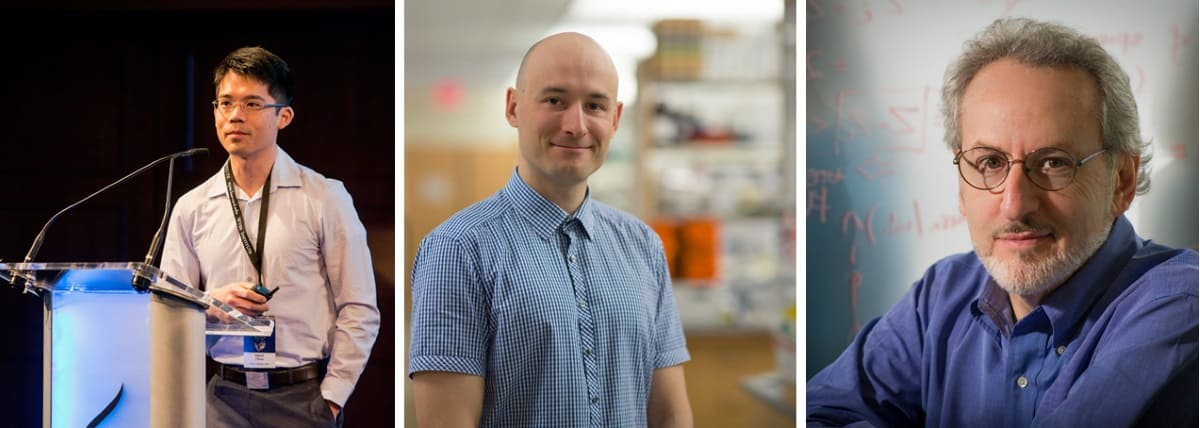
David Chou, Viktoras Frismantas, Donald Ingber

A first glance at this potential was provided by the investigation of Shwachman-Diamond Syndrome, a rare genetic disease resulting in bone marrow failure with abnormally low counts of white blood cells. Animal models failed to reproduce this disease. However, applying cells from affected patients to the bone marrow chip precisely replicated the phenotype. This allowed the researchers to discover a previously unknown role for the CD13 protein in this process.

In the future, the team wants to evaluate whether the chip can be used to develop well-tolerated dosing regimens for cancer treatment and develop therapies for bone marrow recovery using the novel organ-on-a-chip.
Realistic visions for augmented-reality headsets

Two years ago, when Bernard Kress kicked off the inaugural Photonics West session on augmented reality, virtual reality and mixed reality (AR, VR and MR), he spoke to a standing-room-only crowd. This year, the AR/VR/MR event was officially big enough to have its own conference – yet the cavernous Moscone Center ballroom felt empty, and there was little of the buzz that made the 2018 show so exciting.

Kress, an optical architect in Microsoft’s Hololens project, was open about the change. “Between 2016 and 2018 was the ‘age of euphoria’ for our field,” he told the audience. “Anybody who could spell ‘AR’ correctly got $20m for their ideas.” Since then, the field has gone through what Kress called a “period of readjustment” – in other words, the bubble burst. However, in his view, the AR/VR/MR community is now turning a corner, as hard work begins to pay off and hype gives way to reality.

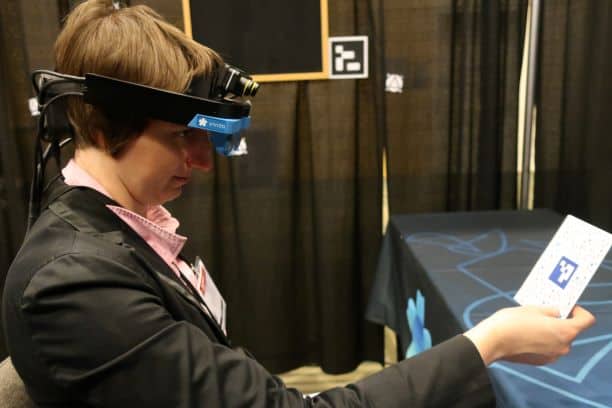
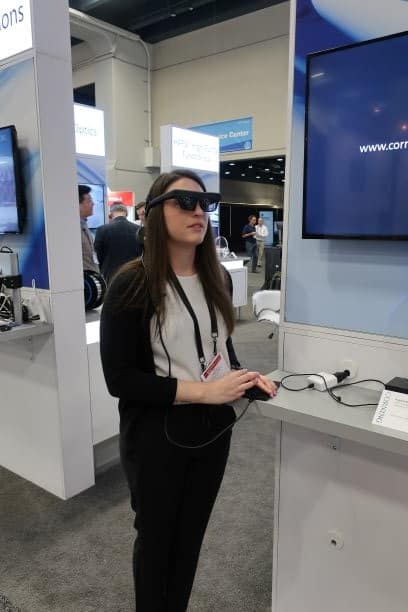
There was certainly plenty of hard work on show during the two-day event. As in the 2018 conference, several companies brought headsets for attendees to test. Among them was a UK-based start-up called VividQ whose chief executive, Darran Milne, gave a talk on Monday with the arresting (unofficial) title “Everyday consumer AR: just how screwed are we?” As Milne explained, one of the toughest constraints on AR displays is the amount of power they consume, which affects both battery life and user comfort. “You cannot have two watts of power sitting on your face,” Milne said bluntly. “You will get a hot head.”

With this in mind, VividQ’s designers based their device on a liquid-crystal-on-silicon (LCOS) display, which uses less power than a laser-beam-scanning display and can also support 3D holographic effects. Before I tried it on, VividQ’s head of sales and licensing, Richard Taylor-Colville, reminded me that it was a prototype, built with off-the-shelf components as a way of showing manufacturers what could be done. “We’re trying to be honest,” Taylor-Colville said. “The industry isn’t being honest with itself. There are lots of great components out there, but people aren’t working together enough to integrate them.”

Thus warned, I entered the screened-off area for VividQ’s demonstrations. There, Tom Durant, the company’s chief development officer, handed me the headset and asked if I knew my intrapupillar distance – in other words, the distance between my eyes. “A surprising number of people here do,” he remarked, settling the bulky device around my ears and taking out an Allen key to adjust it. Several minutes later, I could sort of make out a fuzzy green alien hovering in front of me, with a larger red alien floating behind it. Given the short time available, Durant declared this good enough and handed me a paper card with a QR-like code printed on it. When I looked at the paper, the green alien transformed into a spaceship, and I could see bolts floating through the air towards me – a bit like a cartoon version of the film Gravity.

Both the spaceship and the alien showed off the headset’s 3D capabilities, but in other respects, Taylor-Colville’s warnings were spot-on. The VividQ prototype is too heavy and clunky to wear for more than a few minutes, and the images it displays are, as yet, too fuzzy to be pleasant or useful. As a proof of principle, it’s brilliant; as a consumer device, it’s nowhere near ready – as its designers would surely acknowledge.

The second headset I tried was made by WaveOptics, which specializes in developing waveguides that steer the light from the projector into the device-wearer’s field of view. In addition to the waveguides, which won a coveted Prism Award at Photonics West for best vision-technology product, the WaveOptics headset also incorporates high-refractive-index glass made by Corning. When I put it on, I found the display bright and sharp, capable of superimposing video-quality moving images on the scene around me. The headset was also much more recognizably glasses-like than the VividQ prototype. Even so, I found them too heavy for long-term wear, and their wide field of view, though impressive, was also somewhat distracting. If I’d tried to walk down the street with them, I think the graphics on the display would have interfered with my normal vision too much.

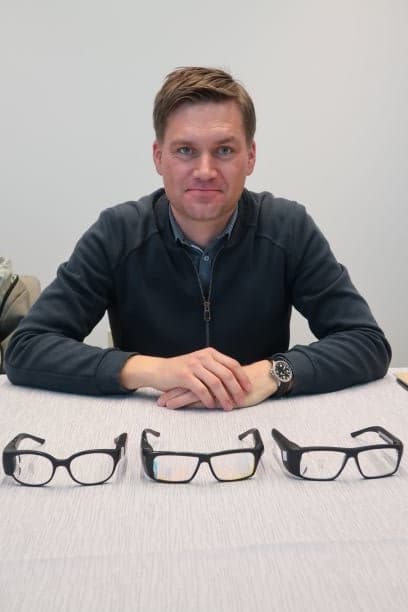
A man sitting at a table with three pairs of glasses in front of him

The third and final headset I tried was made by a German company called Tooz Technologies, which is a joint venture between the telecommunications firm T-Mobile and the glass manufacturer Zeiss. Tooz has managed the tricky task of combining waveguides with curved prescription glass lenses, and of the devices I tested, these were the only ones that felt like something I could wear all day. Although the display was not as bright or as sharp as the WaveOptics headset, it was good enough to show me bus timetables, maps, text messages and so on – exactly the sort of thing I, personally, can imagine wanting to look at while walking around an unfamiliar city.

That may not sound like much, but if AR/VR/MR is going to enter what Kress called the “age of reason”, it’s going to need pragmatism as well as ambition – and collaboration as well as competition. “We’ve promised a lot to the consumer,” Milne reminded the audience. “Can we actually do it?”

Physicists come top in ‘deep tech’ start-up challenge

Companies led by physicists took top honours in the 2020 SPIE Start-up Challenge, beating out dozens of other early-stage firms to scoop first and second prize in the challenge’s “deep tech” division. Ronny Timmreck, chief executive of Senorics, wowed the judging panel with his company’s low-cost optical sensors, while Anshuman Das of Labby came second for applying advanced spectroscopy and machine learning to milk analysis in dairy farms. Zak Niazi, an optical engineer whose company Circle Optics has developed a simplified camera for shooting 360-degree video, rounded out the winning group with a third-place finish.

The challenge took place during the Photonics West conference in San Francisco, US, which attracts photonics experts from around the world for a week of talks and networking. This year, for the first time in the contest’s 10-year history, competitors were split into two divisions: one for healthcare and one for “deep tech” – a catch-all term for products based on engineering innovations or advances in basic science. The best firms in each division took away giant cheques worth $10,000, while runners-up received $5000 and third-place contestants picked up $2500.

For Timmreck and Das, the 2020 result was all the sweeter because both of their companies made the semi-finals in the 2018 and 2019 competitions, only to lose out before reaching the finals. This time, Timmreck drew praise from competition officials for adapting his pitch to focus on the commercial advantages of Senorics’ technology, which uses organic light-emitting diodes (OLEDs) rather than costly indium-gallium-arsenide sensors to detect contaminants in food. Das, for his part, told Physics World that Labby originally developed its suite of spectrometers for analysing wine and spirits, only to identify a bigger market in the dairy industry, where milk testing is a valuable indicator of herd health.

A man walking in front of a slide describing acute compartment syndrome.

In the healthcare division, Odin Technologies got the judges’ nod for combining a wearable patch that optically measures blood flow with a machine-learning algorithm that distinguishes between healthy and unhealthy flow patterns. Steven Hansen, the company’s chief executive, has a background in athletic training, and he teamed up with optics experts after learning about the poor outcomes for patients with acute compartment syndrome (ACS) – a condition that develops when swelling from an earlier injury prevents blood from reaching muscle tissue. The runner-up in the healthcare division, Sanna Gaspard of Rubitection, was honoured for developing a system for diagnosing and monitoring bed sores, while the third-place contestant, Rachel Kuperman of Eysz, is using optical eye-tracking technology to diagnose seizures.

The judges evaluated the entries according to four criteria: the contestants’ delivery of their five-minute “pitch”; the quality of their business case and the competitive advantage their technology offers; the quality of the financial case; and the company’s overall trajectory and growth potential. Out of more than 100 entrants, 41 advanced to the semi-finals, while in the final round six companies in each division pitched their ideas to a panel of judges drawn from the investor community and the optics and photonics industry.

Solar physics, the quantum term that needs replacing and the acoustics of concert halls

https://media.blubrry.com/physicsworldweeklypodcast/content.blubrry.com/physicsworldweeklypodcast/PWWeekly2020-02-06QuantumAdvantage.mp3

In this instalment of the Physics World Weekly podcast, we discuss the highest-ever resolution images of the Sun, taken by the Inouye Solar Telescope in Hawaii, and talk to Sarah Matthews from University College London about what we still don’t know about our nearest star.

We examine attempts to rename the term “quantum supremacy” as “quantum advantage” and chat about the physics of concert halls, where you can find out which of us has been to any of the world’s top 10 venues as rated by Business Insider.

Intense terahertz pulses generated with unprecedented efficiency

Intense, ultrashort pulses of terahertz radiation have been generated with an unprecedented degree of efficiency by an international of team of researchers led by Stelios Tzortzakis at the Institute of Electronic Structure and Laser of the Foundation for Research and Technology-Hellas in Greece. Their technique could unlock a broad range of new applications including those that will benefit materials physics research.

Lying between microwave and infrared frequencies, terahertz radiation is and intriguing and underused portion of the electromagnetic spectrum. Terahertz photons have relatively low energies and therefore do not damage materials (or living tissues) as they pass through. In principle, this would make them ideal for a variety of imaging and analysis applications from medical and security scanning to the study of materials.

One challenge facing researchers is developing practical ways of generating terahertz pulses of enough intensity to be useful. The current ability to generate only extremely weak terahertz pulses – along with challenges in detecting the radiation – has left a “terahertz gap” in technology. The ability to create, higher intensity pulses, for example, would allow researchers to study nonlinear effects in materials — providing a wealth of new information.

Two-colour filamentation

Tzortzakis’ team, which included Claudia Gollner and colleagues at the Technical University of Vienna, have generated intense terahertz pulses by improving on an existing technique called “two-colour filamentation”. This involves firing an infrared laser at a nonlinear medium, which creates radiation with twice original infrared frequency. The two frequencies (or colours) of light combine to create an electric field with a highly-specific asymmetric shape. When this field is focused onto a small volume of air, it creates a plasma that accelerates electrons that emit terahertz radiation.

The newly optimized setup was developed by the Vienna team and is the first to use pulses of mid-infrared light with a wavelength of 3.9 µm. The resulting terahertz pulses last just tens of femtoseconds and are intense enough to carry energies of almost 200 µJ, and have electric field strengths as high as 100 MVcm-1. This makes the pulses intense enough to interact with matter on an atomic scale.

In addition, pulses have extremely broad spectra, encompassing the entire terahertz range. Overall, the process had an unprecedented conversion efficiency of 2.36%, which exceeded previous experimental values by several orders of magnitude. The ability to create such high-intensity pulses could lead to new opportunities for using terahertz radiation in areas including medical diagnostics, food inspection, and security.

Looking to the future, the team has done computer simulations that suggest  further optimization could push their technique’s efficiency to a high as 7%. The team now hopes to demonstrate two-colour filamentation processes approaching this value. If achieved, this could allow for the first affordable tabletop terahertz systems, suitable for experiments involving nonlinear optics.

The research is described in Nature Communications.

First-look inside steel manufacture has potential to streamline the industry

A collaboration between industry and academia has created the very first in situ tool to assess the internal cross-section of steel produced in a factory’s continuous casting process. The sensor is now ready to be turned into a commercially viable product that helps steel companies identify the solidification process in real time, potentially leading to lower energy requirements and faster production speeds.

Continuous casting is the final stage in steel processing, with the speed and quality of the solidification process critically influencing the material’s mechanical properties. The steel produced by casting needs to be fully solidified, but unlike the skewer test used to test whether a cake is “done”, it’s dangerous to remove steel while partially liquid, and it can’t be simply put back in the oven.

With no way to internally capture the steel’s thermal state within the casting chamber, factories may choose to set conservative casting parameters to ensure a fully “baked” product. But this is set to change.

“For the first time, we were able to show the internal temperature profile inside the casting steel in a factory environment,” says lead author Manuchehr Soleimani from the University of Bath. “With a device to monitor different stages of the process, you can optimize the control parameters to produce the quality of steel you need but more efficiently.

Keeping a cool head

Soleimani had been imaging liquid metals using a variety of techniques, including magnetic induction tomography (MIT). A relatively new imaging technique, MIT measures the loops of electric current induced by changing the magnetic field in a conductive material, so producing electrical conductivity maps.

On presenting this imaging work at a conference in Germany in 2015, Soleimani met Stefano Spagnul from the steel industry equipment supplier Ergolines laboratory. This initial brief introduction led to connections with fluid dynamics expert Teresa Gutiérrez, from Technalia Ventures, and what Soleimani describes as the “perfect collaboration”.

The team successfully applied for an EU research fund to back their SHELL-THICK project, which enabled the MIT device to move from the laboratory into industrial testing.

Critical for a move into industry, was finding a way to protect the MIT system’s sensitive array of coils wrapped around a copper wire. Harsh temperatures in the casting chamber had prohibited X-ray and ultrasound imaging, so a core challenge in the project was to integrate a cooling system into the MIT circuit.

Prototypes were tested in the laboratory and finally the MIT system was installed at the end of the secondary cooling chamber in the continuous casting machine of the steel company Ferriere Nord (FENO) in Italy. The installation was a success. The MIT system was able to remain at an optimum temperature for measuring current whilst merely centimetres away from the 1500°C steel billet.

Translating the data

To be truly useful to industry, an image of thermal energy showing the boundaries between the different states of metal – solid, the mush of solid and liquid, and pure liquid – was required.

“MIT can provide electrical property information, and as temperature changes so does the electrical conductivity of a sample. Therefore, if you know the steel grade then you can relate the temperature coefficient to electrical conductivity and translate to internal thermal images,” explains Soleimani.

Gutiérrez’s extensive computational thermal modelling was required to make this translation. But ultimately, the algorithms enabled reconstruction of the internal solidification front, which matched the contours of those from the thermal model. And the map’s sharp distinctions enabled the solid shell thickness to be calculated.

Conductivity and thermal maps

External shape could also be detected alongside the internal profile, giving the system even greater industry utility. And at this stage, the MIT system is said to have reached a much higher technology readiness level. The researchers now hope to secure further funding so that they can cover the final hurdle of producing a system with extra sensors for commercial deployment.

The new imaging technique is described in Measurement Science and Technology.

The experience at MD Anderson after 12 months with Elekta Unity in clinical use


Dr Clifton David Fuller MD, PhD

Associate Professor, Department of Radiation Oncology, Division of Radiation Oncology, The University of Texas MD
Anderson Cancer Center, Houston, TX

Associate Director of MR Programmatic Development, Department of Radiation Oncology, Division of Radiation Oncology, The
University of Texas MD Anderson Cancer Center, Houston, TX


Dr Jihong Wang PhD

Professor, Department of Radiation Physics, Division of Radiation Oncology, MD Anderson Cancer Center, Houston, TX

A critical mass of secrets

In the spring of 1941, Rudolf Peierls was in a bind. The British effort to develop atomic weapons, in which he played a leading role, was chronically under-resourced. The UK’s military situation, though somewhat improved compared to the darkest days of 1940, remained precarious. And as a Jewish refugee from Nazi Germany, Peierls had more reason than most to fear what would happen if Adolf Hitler’s scientists got the Bomb before Winston Churchill’s. So when a talented young physicist – a fellow refugee who shared many of his ideals, and got on well with  Peierls’ wife and children – came to join his research group at the University of Birmingham, Peierls must have seen him as the answer to a prayer.

There was just one problem. Peierls’ new assistant was Klaus Fuchs, a committed Communist who was probably already contemplating espionage by the time he arrived in Birmingham. Over the next seven years, during which Fuchs held a string of positions within the British and American atomic bomb projects, knowledge of this top-secret work flowed from him to Moscow, and thence to Soviet scientists who used it to jump-start their own weapons programme. Frank Close, whose new book Trinity focuses on Fuchs’ story, calls him “the most dangerous spy in history”, and he was certainly one of the most successful, passing hundreds of pages of atomic secrets before he was finally caught.

Fuchs’ double life has all the trappings of a Cold War spy thriller, complete with dead drops, murky motives and secret rendezvous. It even has a beautiful and bigamously married young woman codenamed “Sonya” who passed information from Fuchs to the Soviet embassy after meeting him for (platonic) assignations in the Oxfordshire countryside. Alas, to compare Trinity to “a novel by le Carré”, as the physicist and writer Jeremy Bernstein does on the book’s dust jacket, would be a discourtesy to the master of Cold War spy fiction. At 425 pages plus copious endnotes, bibliography and appendices, Trinity is not a quick read, and in places it is also a frustrating one.

A major source of this frustration is Close’s tendency to repeat himself. On page 162, for example, he informs his readers that, after the war, “Fuchs returned to England in a British bomber”. A few paragraphs later, and referring to the same journey, he states that Fuchs “flew by air-force plane to England”. On its own, a slip such as this would be too trivial to mention. In a long document, it is easy for writers to lose track of what they have and have not explained, or to unwittingly repeat a memorable phrase (such as referring to a nuclear reactor as a “heat engine” or describing a particular mistake as having “led to Fuchs’ downfall”, both of which Close does at least twice). But this is not an isolated incident, and the pattern, once noticed, is hard to un-see.

We are twice told that shadowing someone is not as smooth a process as it is portrayed in films; that Fuchs, in his eventual confession to the British security services, confused a location near Hyde Park with one near Hampstead Heath; that his subsequent arrest led his colleague Bruno Pontecorvo to defect; that the Democrats had controlled the US presidency for 20 years by the time the scandal broke; and that, by moving to East Germany after nine years in a British prison, Fuchs fulfilled the German Communist party’s pre-war hopes that technically minded people would return to build a new socialist utopia.

The reader is also told at least four times that James Chadwick discovered the neutron, and twice (on adjacent pages) that G P Thompson’s insights about breeding plutonium in a uranium reactor led to his research being classified as secret. And when one finds, on page 141, an explanation of a concept – critical mass – that has already been described or referred to on pages 125, 130 and 134, one starts to feel that the book’s repetitions have reached a critical mass of their own, as minor flaws tip over into a more substantial fault.

It doesn’t help that Close uses footnotes to discuss aspects of the story that haven’t happened yet. Sometimes, these footnotes state that the topic in question is covered in more detail in a later chapter; on one occasion, a footnote refers back to an explanation (of electromagnetic separation of uranium isotopes) given a mere four pages previously. The unfortunate effect of this foreshadowing (and backshadowing) is to snap the reader out of Fuchs’ story, draining some of the tension from it in the process.

That’s a shame, because there is otherwise much to appreciate in Trinity. The book’s later chapters, covering the months leading up to Fuchs’ confession and arrest, are taut and suspenseful. Close also deals well with the political tensions that underlay the wartime alliance between the UK and US, which inhibited co-operation between scientists and security services alike. Thanks to American restrictions on information-sharing, some of Fuchs’ spying was, in effect, done for the British as much as for the Soviets. This fact, Close argues, may have shaped Fuchs’ naïve belief that he could continue working in the UK after he made a clean breast of his covert activities.

From a physics standpoint, Close’s description of Fuchs’ scientific work is cogent and helpful, particularly in the later stages of his career, which was spent at the UK’s nascent atomic-weapons research facility in Harwell, Oxfordshire. This work proved so important to the development of the British atomic and hydrogen bombs that Close speculates that Fuchs might well have been knighted for his services, if only his espionage had gone undetected. It’s an intriguing idea, and one suspects the author of Tinker, Tailor, Soldier, Spy would appreciate the suggestion that the line between hero and villain is sometimes finer than we like to think. In this respect, the comparison to le Carré is fully merited.

  • 2019 Allen Lane £25.00hb 528pp

AI algorithm detects single cancer cells throughout an entire mouse body

Despite recent medical advances, cancer remains one of the leading causes of death worldwide. More than 90% of cancer-related deaths are from metastases rather than from the primary cancerous growth. Such metastases develop when cancer cells spread to new areas of the body whilst evading the body’s immune system.

Owing to the limited resolution of preclinical imaging techniques such as bioluminescence imaging and MRI, comprehensive detection of small metastatic lesions in the bodies of model animals has not been possible. These shortcomings have severely hampered the development of effective treatments by assessing the efficacy of new drug candidates, and resulted in a lack of knowledge about spreading mechanisms of diverse cancer types.

To overcome the obstacle of detecting cancer metastasis, researchers at Helmholtz Zentrum München, the Ludwig Maximilian University of Munich (LMU) and the Technical University of Munich (TUM) have developed a novel deep-learning based algorithm called DeepMACT (deep learning-based metastasis analysis in cleared tissue). DeepMACT enables automated detection and visualization of even the smallest of metastases and can also determine whether a drug has reached them.

The image-based AI algorithm

The researchers used a tissue clearing method called vDISCO to render the complete mouse body transparent. Using laser-scanning microscopes, they imaged the transparent mouse in 3D, allowing visualization of the smallest metastases, down to individual cancer cells. Manual analysis of such high-resolution images is time-consuming, however. Hence, DeepMACT was born (Cell 10.1016/j.cell.2019.11.013).

DeepMACT enabled the team to visualize exactly which cancer metastases were targeted by a drug candidate and which ones were missed. Their analyses showed that antibody-based drugs – for example, an antibody named 6A10, which is among the most effective treatments available – can miss up to 23% of the metastases in the bodies of affected mice. In addition, the team used this method to analyse metastatic spread in lung, breast and pancreatic cancer, and to observe how the metastases spread through the body at different time points.

“DeepMACT is the first method to enable the quantitative analysis of metastatic process at a full-body scale,” adds first author Chenchen Pan.

In detecting the metastases, the DeepMACT method not only matched the performance of manual detection but completed the analysis 300 times faster. “With a few clicks only, DeepMACT can do the manual detection work of months in less than an hour,” says Oliver Schoppe, a doctoral candidate at TUM.

As DeepMACT is publicly available and easily adoptable, the scientists are hopeful that the technology will be used by other laboratories involved in diverse tumour research and treatment options. Today, only about 5% of new drug candidates are successful in cancer treatment. Application of DeepMACT in pre-clinical research could improve the identification and development of better drug candidates for clinical trials. This approach should significantly increase the success rate of cancer drug candidates, improve the drug development process and potentially save many more lives.

Towards a quantum advantage

In 2012 the theoretical physicist John Preskill from the California Institute of Technology coined the term “quantum supremacy”. It was introduced to represent the ability of quantum computers to solve problems faster than conventional supercomputers. The term quickly caught on and, after years of research in the field by scientists at universities and companies, Google in October 2019 announced it had achieved the breakthrough. The result sparked optimism about the future of quantum computing, but something was missing in the debate that followed, namely the uncomfortable association of the term with “white supremacy”.

We are by no means the first to point out how problematic quantum supremacy is as a term. The physicist Karoline Wiesner at the University of Bristol, for example, outlined the discomfort in 2017 in a widely discussed article (arXiv:1705.06768). The word “supremacy” is often used to signify an ideology in which one social group dominates another and, as an analysis of language corpora shows, is frequently used in conjunction with the adjective “white”. The history of white supremacy, from the beginnings of scientific racism to apartheid in South Africa, is long. Due to political events in the past few years the ideology has spread throughout Europe, the US and other parts of the world, exacerbating discomfort with the term in the scientific community.

Discrimination and harassment in science due to race or gender is well documented. As minority groups are dealing with the ramifications of their marginalization, many are not afforded the privilege to be able to focus on just doing science. The fact that the term “quantum supremacy” is still in use is symptomatic of the composition and culture of the community. In quantum technologies, only 3% of US physics majors are being earned by African Americans, compared with approximately 15% of the undergraduate population – a statistic seen in other areas. Indeed, it is hard to imagine that a predominantly black and female group of scientists would have coined and stuck to this term – unless they rightly sought to reclaim the term, something that cannot be done by the current demographic.

Language matters and using a problematic term while ignoring its historical context is not unique to quantum technologies. For example, in 2018 the temporary naming of Kuiper belt object MU69 “Ultima Thule” evoked Nazi imagery. MU69 was ultimately named 486958 Arrokoth by the International Astronomical Union in partnership with the Pamunkey Native American tribe to honour the indigenous Powhatan people. This served as an example of science successfully bridging communities.

In 2018 members in the artificial intelligence community successfully campaigned to change the acronym of the Neural Information Processing Systems conference from NIPS to NeurIPS. The abbreviation NIPS provoked a series of sexist jokes, events and conversations that made many women feel uncomfortable. The revision stimulated important progress – from conference codes of conduct to community-led initiatives to support and encourage under-represented demographics, as well as the increased visibility of certain scientists – that helped the wellbeing of everyone in the field.

Quantum responsibility

We hope that switching to an alternative term for “quantum supremacy” will lead to similarly positive outcomes. The global quantum discipline coming together for change sends a very strong message of support for minoritized identities and that it will foster a sense of community in the field. Indeed, the discussion about quantum supremacy is an opportunity for us to reflect on creating a quantum-technology community that is more welcoming to marginalized groups, more ethically aware and more socially responsible. If the term quantum supremacy makes a single individual feel marginalized, then it is worth changing it. With the increasing commercialization of quantum technologies, the concern that the tech culture’s enormous problem with diversity and inclusion will spill over is looming large. The community cannot afford to mute or lose minoritized voices.

It is now 2020 and the world needs nuance, values and accountability. We must question how Western science and technology demand objective rights to both words and land. While the use of problematic language can seem innocuous, it is not by chance that it is acceptable and normalized. Scientists and technologists must take responsibility for the consequences of what they find, build and communicate.

We want to foster a more responsible community that can examine itself every step of the way and that can be held accountable – from students through to directors and from research groups and institutes to start-ups and companies. We need to follow the best practices for hiring a diverse team or organizing an inclusive conference, engage with researchers in the humanities who study the impact of technologies and support underrepresented groups to join the field.

When Preskill coined the term, he considered various alternatives. One that he rejected was “quantum advantage”, noting that it “lacks the punch” of quantum supremacy and doesn’t represent the vast increase in speeds. We disagree, and encourage everyone to replace quantum supremacy with quantum advantage. This is not only an adequate way to describe the gain that quantum computers offer but will also help quantum technologies enter the public arena truly as the future of technology.

Copyright © 2026 by IOP Publishing Ltd and individual contributors