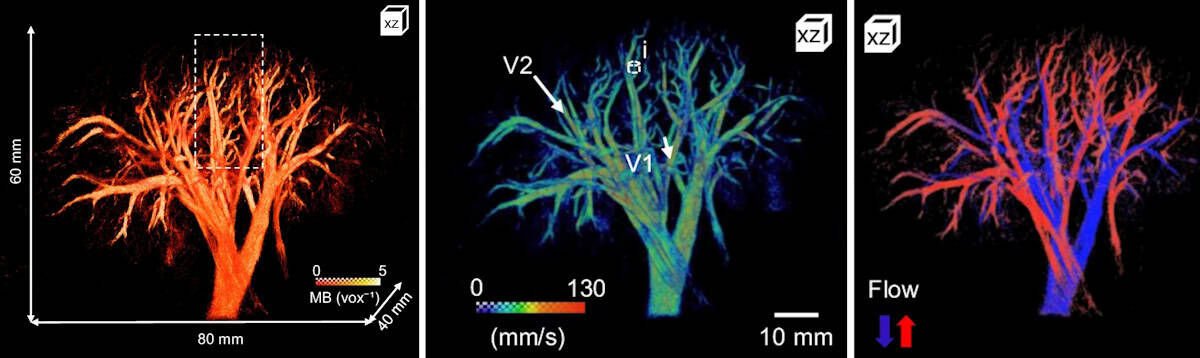
Delft Circuits, Bluefors: the engine-room driving joined-up quantum innovation

delft-circuits-cri/oflex cabling technology

Better together. That’s the headline take on a newly inked technology partnership between Bluefors, a heavyweight Finnish supplier of cryogenic measurement systems, and Delft Circuits, a Dutch manufacturer of specialist I/O cabling solutions designed for the scale-up and industrial deployment of next-generation quantum computers.

The drivers behind the tie-up are clear: as quantum systems evolve – think vastly increased qubit counts plus ever-more exacting requirements on gate fidelity – developers in research and industry will reach a point where current coax cabling technology doesn’t cut it anymore. The answer? Collaboration, joined-up thinking and product innovation.

In short, by integrating Delft Circuits’ Cri/oFlex® cabling technology into Bluefors’ dilution refrigerators, the vendors’ combined customer base will benefit from a complete, industrially proven and fully scalable I/O solution for their quantum systems. The end-game: to overcome the quantum tech industry’s biggest bottleneck, forging a development pathway from quantum computing systems with hundreds of qubits today to tens of thousands of qubits by 2030.

Joined-up thinking

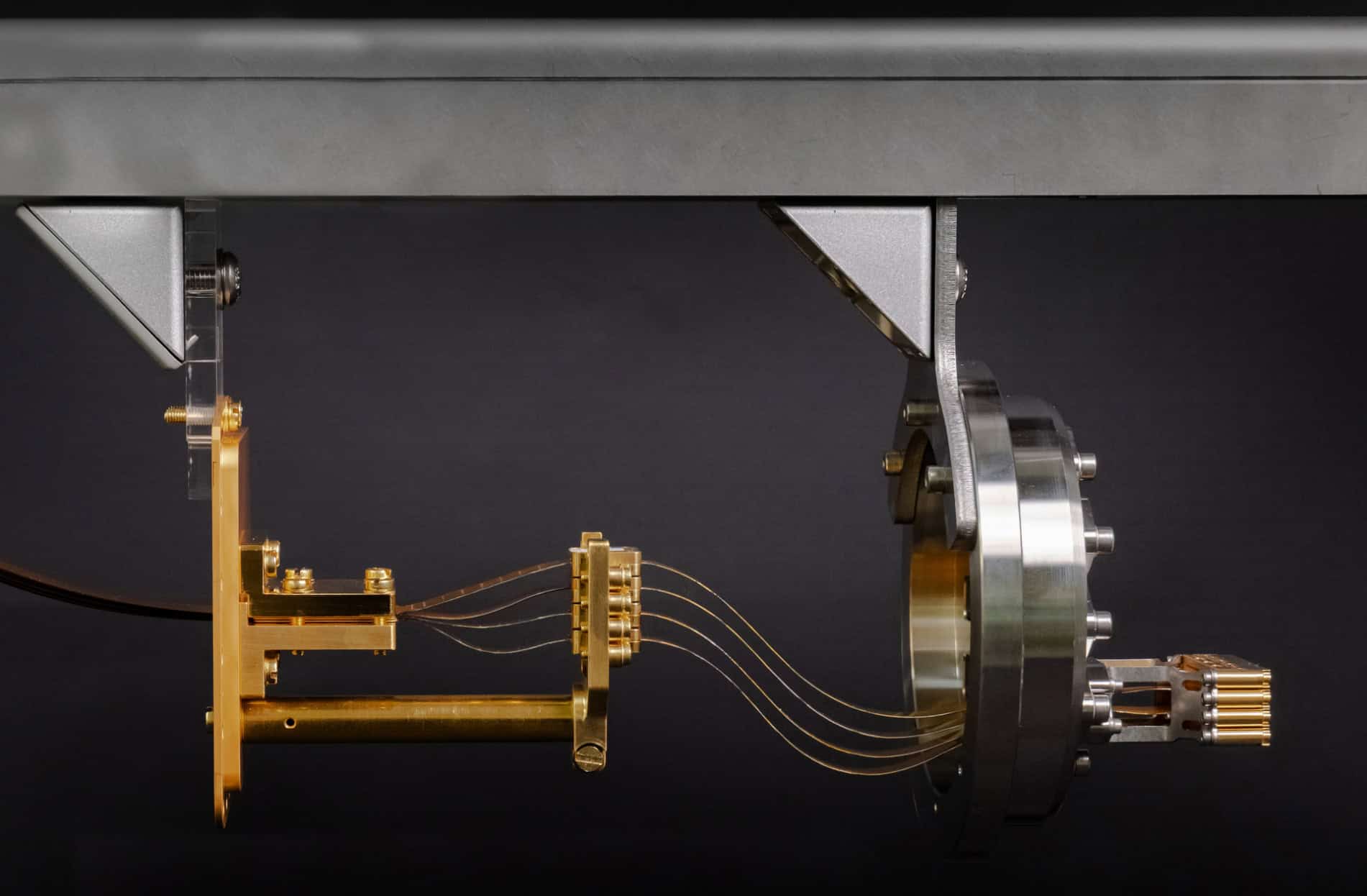
For context, Cri/oFlex® cryogenic RF cables comprise a stripline (a type of transmission line) based on planar microwave circuitry – essentially a conducting strip encapsulated in dielectric material and sandwiched between two conducting ground planes. The use of the polyimide Kapton® as the dielectric ensures Cri/oFlex® cables remain flexible in cryogenic environments (which are necessary to generate quantum states, manipulate them and read them out), with silver or superconducting NbTi providing the conductive strip and ground layer. The standard product comes as a multichannel flex (eight channels per flex) with a range of I/O channel configurations tailored to the customer’s application needs, including flux bias lines, microwave drive lines, signal lines or read-out lines.

Robby Ferdinandus of Delft Circuits

“Reliability is a given with Cri/oFlex®,” says Robby Ferdinandus, global chief commercial officer for Delft Circuits and a driving force behind the partnership with Bluefors. “By integrating components such as attenuators and filters directly into the flex,” he adds, “we eliminate extra parts and reduce points of failure. Combined with fast thermalization at every temperature stage, our technology ensures stable performance across thousands of channels, unmatched by any other I/O solution.”

Technology aside, the new partnership is informed by a “one-stop shop” mindset, offering the high-density Cri/oFlex® solution pre-installed and fully tested in Bluefors cryogenic measurement systems. For the end-user, think turnkey efficiency: streamlined installation, commissioning, acceptance and, ultimately, enhanced system uptime.

Scalability is front-and-centre too, thanks to Delft Circuits’ pre-assembled and tested side-loading systems. The high-density I/O cabling solution delivers up to 50% more channels per side-loading port to Bluefors’ (current) High Density Wiring, providing a total of 1536 input or control lines to an XLDsl cryostat. In addition, more wiring lines can be added to multiple KF ports as a custom option.

Doubling up for growth

Reetta Kaila of Bluefors

Reciprocally, there’s significant commercial upside to this partnership. Bluefors is the quantum industry’s leading cryogenic systems OEM and, by extension, Delft Circuits now has access to the former’s established global customer base, amplifying its channels to market by orders of magnitude. “We have stepped into the big league here and, working together, we will ensure that Cri/oFlex® becomes a core enabling technology on the journey to quantum advantage,” notes Ferdinandus.

That view is amplified by Reetta Kaila, director for global technical sales and new products at Bluefors (and, alongside Ferdinandus, a main-mover behind the partnership). “Our market position in cryogenics is strong, so we have the ‘muscle’ and specialist know-how to integrate innovative technologies like Cri/oFlex® into our dilution refrigerators,” she explains.

A win-win, it seems, along several coordinates. “The Bluefors sales teams are excited to add Cri/oFlex® into the product portfolio,” Kaila adds. “It’s worth noting, though, that the collaboration extends across multiple functions – technical and commercial – and will therefore ensure close alignment of our respective innovation roadmaps.”

Scalable I/O will accelerate quantum innovation

Deconstructed, Delft Circuits’ value proposition is all about enabling, from an I/O perspective, the transition of quantum technologies out of the R&D lab into at-scale practical applications. More specifically: Cri/oFlex® technology allows quantum scientists and engineers to increase the I/O cabling density of their systems easily – and by a lot – while guaranteeing high gate fidelities (minimizing noise and heating) as well as market-leading uptime and reliability.

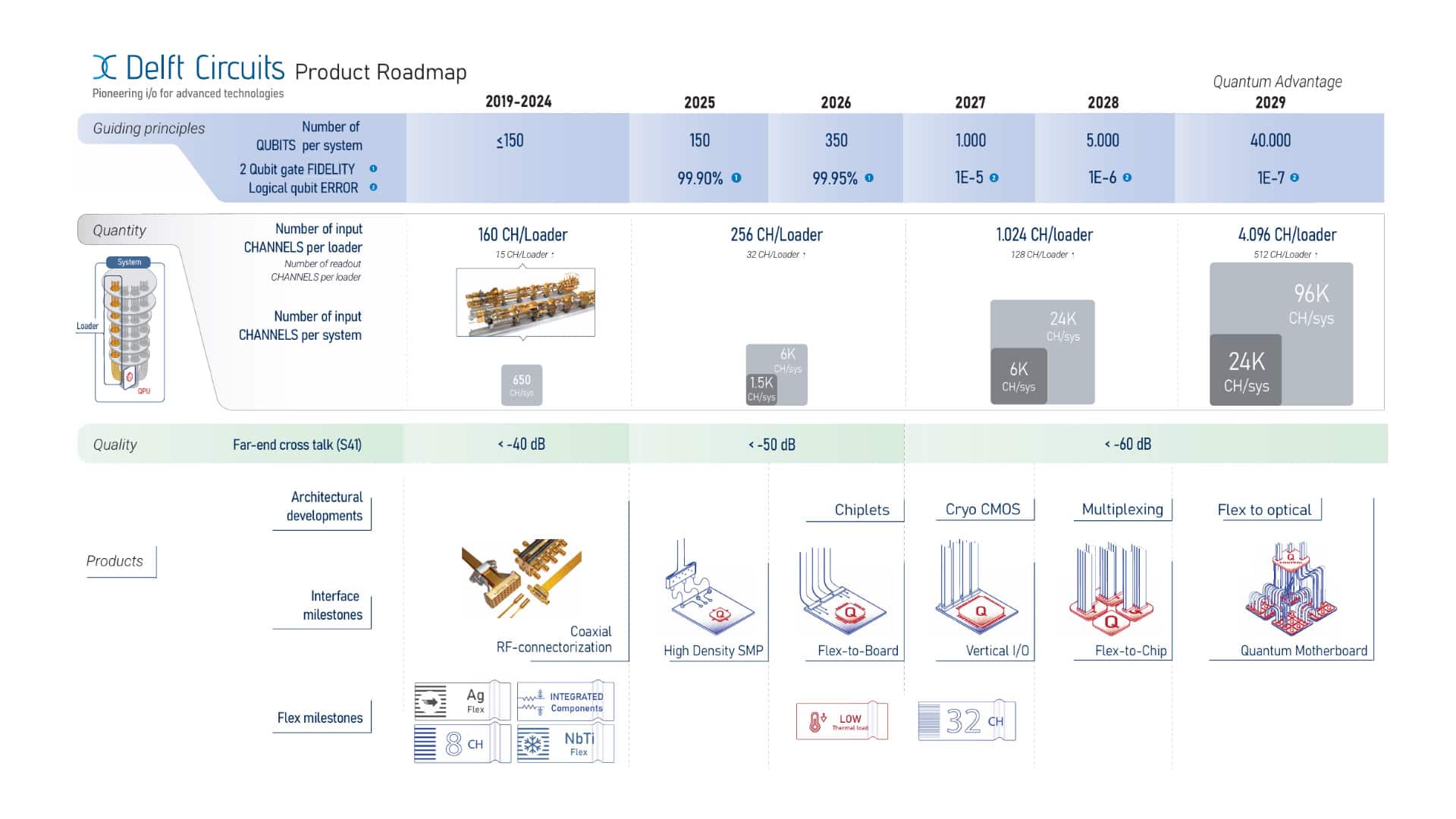
To put some hard-and-fast performance milestones against that claim, the company has published a granular product development roadmap that aligns Cri/oFlex® cabling specifications against the anticipated evolution of quantum computing systems –  from 150+ qubits today out to 40,000 qubits and beyond in 2029 (see figure below, “Quantum alignment”).

The resulting milestones are based on a study of the development roadmaps of more than 10 full-stack quantum computing vendors – a consolidated view that will ensure the “guiding principles” of Delft Circuits’ innovation roadmap align versus the aggregate quantity and quality of qubits targeted by the system developers over time.
delft circuits roadmap

Microbubbles power soft, programmable artificial muscles

Ultrasound-powered soft surgical robot

Artificial muscles that offer flexible functionality could prove invaluable for a range of applications, from soft robotics and wearables to biomedical instrumentation and minimally invasive surgery. Current designs, however, are limited by complex actuation mechanisms and challenges in miniaturization. Aiming to overcome these obstacles, a research team headed up at the Acoustic Robotics Systems Lab (ETH Zürich) in Switzerland is using microbubbles to create soft, programmable artificial muscles that can be wirelessly controlled via targeted ultrasound activation.

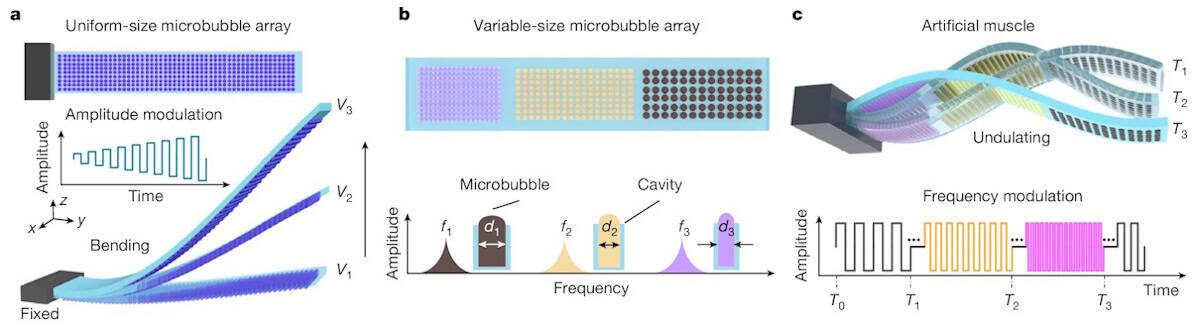
Gas-filled microbubbles can concentrate acoustic energy, providing a means to initiate movement with rapid response times and high spatial accuracy. In this study, reported in Nature, team leader Daniel Ahmed and colleagues built a synthetic muscle from a thin flexible membrane containing arrays of more than 10,000 microbubbles. When acoustically activated, the microbubbles generate thrust and cause the membrane to deform. And as different sized microbubbles resonate at different ultrasound frequencies, the arrays can be designed to provide programmable motion.

“Ultrasound is safe, non-invasive, can penetrate deep into the body and can generate large forces. However, without microbubbles, a much higher force is needed to deform the muscle, and selective activation is difficult,” Ahmed explains. “To overcome this limitation, we use microbubbles, which amplify force generation at specific sites and act as resonant systems. As a result, we can activate the artificial muscle at safe ultrasound power levels and generate complex motion.”

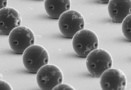
The team created the artificial muscles from a thin silicone membrane patterned with an array of cylindrical microcavities with the dimensions of the desired microbubbles. Submerging this membrane in a water-filled acoustic chamber trapped tens of thousands of gas bubbles within the cavities (one per cavity). The final device contains around 3000 microbubbles per mm2 and weighs just 0.047 mg/mm2.

To demonstrate acoustic activation, the researchers fabricated an artificial muscle containing uniform-sized microbubbles on one surface. They fixed one end of the muscle and exposed it to resonant frequency ultrasound, simultaneously exciting the entire microbubble array. The resulting oscillations generated acoustic streaming and radiation forces, causing the muscle to flex upward, with an amplitude dependent upon the ultrasound excitation voltage.

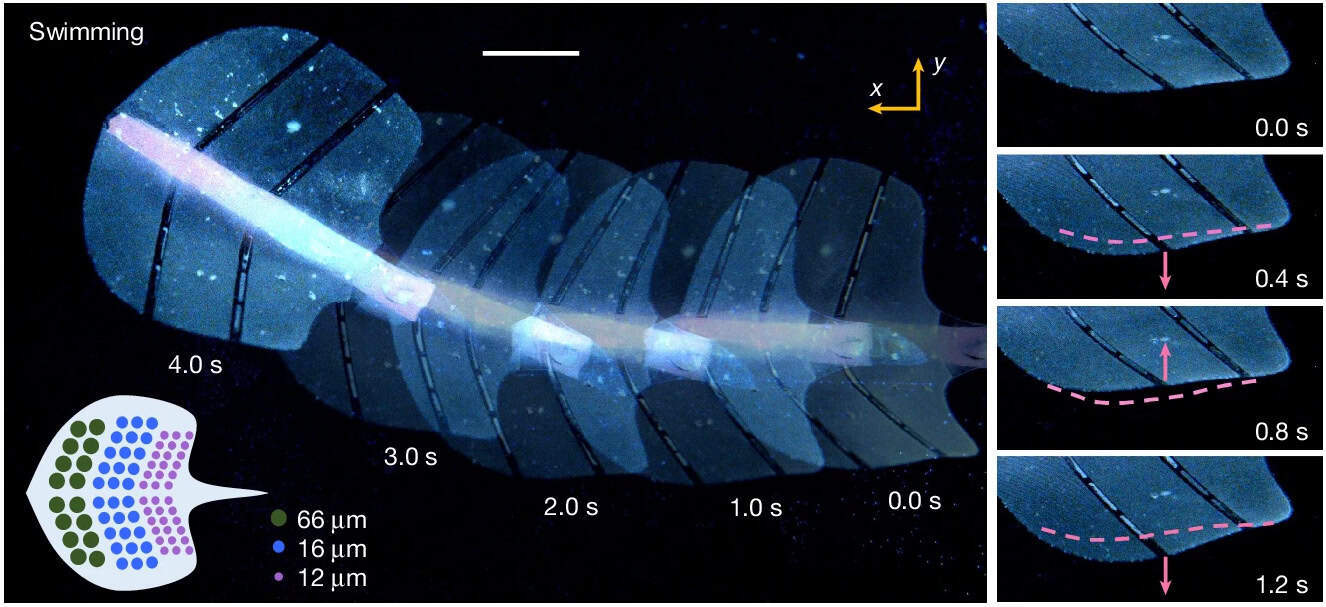
Next, the team designed an 80 µm-thick, 3 x 0.5 cm artificial muscle containing arrays of three different sized microbubbles. Stimulation at 96.5, 82.3 and 33.2 kHz induced deformations in regions containing bubbles with diameters of 12, 16 and 66 µm, respectively. Exposure to swept-frequency ultrasound covering the three resonant frequencies sequentially activated the different arrays, resulting in an undulatory motion.

Microbubble-array artificial muscles

A multitude of functions

Ahmed and colleagues showcased a range of applications for the artificial muscle by integrating microbubble arrays into functional devices, such as a miniature soft gripper for trapping and manipulating fragile live animals. The gripper comprises six to ten microbubble array-based “tentacles” that, when subjected to ultrasound, gently gripped a zebrafish larva with sub-100 ms response time. When the ultrasound was switched off, the tentacles opened and the larva swam away with no adverse effects.

The artificial muscle can function as a conformable robotic skin that sticks and imparts motion to a stationary object, which the team demonstrated by attaching it to the surface of an excised pig heart. It can also be employed for targeted drug delivery – shown by the use of a microbubble-array robotic patch for ultrasound-enhanced delivery of dye into an agar block.

The researchers also built an ultrasound-powered “stingraybot”, a soft surgical robot with artificial muscles (arrays of differently sized microbubbles) on either side to mimic the pectoral fins of a stingray. Exposure to swept-frequency ultrasound induced an undulatory motion that wirelessly propelled the 4 cm-long robot forward at a speed of about 0.8 body lengths per second.

To demonstrate future practical biomedical applications, such as supporting minimally invasive surgery or site-specific drug release within the gastrointestinal tract, the researchers encapsulated a rolled up stingraybot within a 27 x 12 mm edible capsule. Once released into the stomach, the robot could be propelled on demand under ultrasound actuation. They also pre-folded a linear artificial muscle into a wheel shape and showed that swept ultrasound frequencies could propel it along the complex mucosal surfaces of the stomach and intestine.

“Through the strategic use of microbubble configurations and voltage and frequency as ultrasound excitation parameters, we engineered a diverse range of preprogrammed movements and demonstrated their applicability across various robotic platforms,” the researchers write. “Looking ahead, these artificial muscles hold transformative potential across cutting-edge fields such as soft robotics, haptic medical devices and minimally invasive surgery.”

Ahmed says that the team is currently developing soft patches that can conform to biological surfaces for drug delivery inside the bladder. “We are also designing soft, flexible robots that can wrap around a tumour and release drugs directly at the target site,” he tells Physics World. “Basically, we’re creating mobile conformable drug-delivery patches.”

China’s Shenzhou-20 crewed spacecraft return delayed by space debris impact

China has delayed the return of a crewed mission to the country’s space station over fears that the astronaut’s spacecraft has been struck by space debris. The craft was supposed to return to Earth on 5 November but the China Manned Space Agency says it will now carry out an impact analysis and risk assessment before making any further decisions about when the astronauts will return.

The Shenzhou programme involves taking astronauts to and from China’s Tiangong space station, which was constructed in 2022, for six-month stays.

Shenzhou-20, carrying three crew, launched on 24 April from Jiuquan Satellite Launch Center on board a Long March 2F rocket. Once docked with Tiangong the three-member crew of Shenzhou-19 began handing over control of the station to the crew of Shenzhou-20 before they returned to Earth on 30 April.

The three-member crew of Shenzhou-21 launched on 31 October and underwent the same hand-over process with the crew of Shenzhou-20 before they were set to return to Earth on Wednesday.

Yet pre-operation checks revealed that the craft had been hit by “a small piece of debris” with the location and scale of the damage to Shenzhou-20 having not been released.

If the craft is deemed unsafe following the assessment, it is possible that the crew of Shenzhou-20 will return to Earth aboard Shenzhou-21. Another option is to launch a back-up Shenzhou spacecraft, which remains on stand-by and could be launched within eight days.

Space debris is of increasing concern and this marks the first time that a crewed craft has been delayed due to a potential space debris impact. In 2021, for example, China noted that Tiangong had to perform two emergency avoidance manoeuvres to avoid fragments produced by Starlink satellites that were launched by SpaceX.

Twistelastics controls how mechanical waves move in metamaterials

twisted surfaces can be used to manipulate mechanical waves

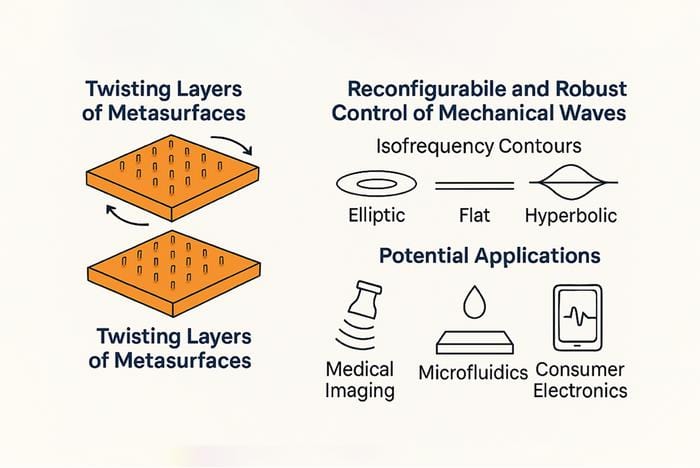
By simply placing two identical elastic metasurfaces atop each other and then rotating them relative to each other, the topology of the elastic waves dispersing through the resulting stacked structure can be changed – from elliptic to hyperbolic. This new control technique, from physicists at the CUNY Advanced Science Research Center in the US, works over a broad frequency range and has been dubbed “twistelastics”. It could allow for advanced reconfigurable phononic devices with potential applications in microelectronics, ultrasound sensing and microfluidics.

The researchers, led by Andrea Alù, say they were inspired by the recent advances in “twistronics” and its “profound impact” on electronic and photonic systems. “Our goal in this work was to explore whether similar twist-induced topological phenomena could be harnessed in elastodynamics in which phonons (vibrations of the crystal lattice) play a central role,” says Alù.

In twistelastics, the rotations between layers of identical, elastic engineered surfaces are used to manipulate how mechanical waves travel through the materials. The new approach, say the CUNY researchers, allows them to reconfigure the behaviour of these waves and precisely control them. “This opens the door to new technologies for sensing, communication and signal processing,” says Alù.

From elliptic to hyperbolic

In their work, the researchers used computer simulations to design metasurfaces patterned with micron-sized pillars. When they stacked one such metasurface atop the other and rotated them at different angles, the resulting combined structure changed the way phonons spread. Indeed, their dispersion topology went from elliptic to hyperbolic.

At a specific rotation angle, known as the “magic angle” (just like in twistronics), the waves become highly focused and begin to travel in one direction. This effect could allow for more efficient signal processing, says Alù, with the signals being easier to control over a wide range of frequencies.

The new twistelastic platform offers broadband, reconfigurable, and robust control over phonon propagation,” he tells Physics World. “This may be highly useful for a wide range of application areas, including surface acoustic wave (SAW) technologies, ultrasound imaging and sensing, microfluidic particle manipulation and on-chip phononic signal processing.

New frontiers

Since the twist-induced transitions are topologically protected, again like in twistronics, the system is resilient to fabrication imperfections, meaning it can be miniaturized and integrated into real-world devices, he adds. “We are part of an exciting science and technology centre called ‘New Frontiers of Sound’, of which I am one of the leaders. The goal of this ambitious centre is to develop new acoustic platforms for the above applications enabling disruptive advances for these technologies.”

Looking ahead, the researchers say they are looking into miniaturizing their metasurface design for integration into microelectromechanical systems (MEMS). They will also be studying multi-layer twistelastic architectures to improve how they can control wave propagation and investigating active tuning mechanisms, such as electromechanical actuation, to dynamically control twist angles. “Adding piezoelectric phenomena for further control and coupling to the electromagnetic waves,” is also on the agenda says Alù.

The present work is detailed in PNAS.

Ternary hydride shows signs of room-temperature superconductivity at high pressures

Crystal lattice structure of a new high-temperature superconductor

Researchers in China claim to have made the first ever room-temperature superconductor by compressing an alloy of lanthanum-scandium (La-Sc) and the hydrogen-rich material ammonia borane (NH3BH3) together at pressures of 250–260 GPa, observing superconductivity with a maximum onset temperature of 298 K. While these high pressures are akin to those at the centre of the Earth, the work marks a milestone in the field of superconductivity, they say.

Superconductors conduct electricity without resistance and many materials do this when cooled below a certain transition temperature, Tc. In most cases this temperature is very low – for example, solid mercury, the first superconductor to be discovered, has a Tc of 4.2 K. Researchers have therefore been looking for superconductors that operate at higher temperatures – perhaps even at room temperature. Such materials could revolutionize a host of application areas, including increasing the efficiency of electrical generators and transmission lines through lossless electricity transmission. They would also greatly simplify technologies such as MRI, for instance, that rely on the generation or detection of magnetic fields.

Researchers made considerable progress towards this goal in the 1980s and 1990s with the discovery of the “high-temperature” copper oxide superconductors, which have Tc values between 30 and 133 K. Fast-forward to 2015 and the maximum known critical temperature rose even higher thanks to the discovery of a sulphide material, H3S, that has a Tc of 203 K when compressed to pressures of 150 GPa.

This result sparked much interest in solid materials containing hydrogen atoms bonded to other elements and in 2019, the record was broken again, this time by lanthanum decahydride (LaH10), which was found to have a Tc of 250–260 K, albeit again at very high pressures. Then in 2021, researchers observed high-temperature superconductivity in the cerium hydrides, CeH9 and CeH10, which are remarkable because they are stable and boast high-temperature superconductivity at lower pressures (about 80 GPa, or 0.8 million atmospheres) than the other so-called “superhydrides”.

Ternary hydrides

In recent years, researchers have started turning their attention to ternary hydrides – substances that comprise three different atomic species rather than just two. Compared with binary hydrides, ternary hydrides are more structurally complex, which may allow them to have higher Tc values. Indeed, Li2MgH16 has been predicted to exhibit “hot” superconductivity with a Tc of 351–473 K under multimegabar pressures and several other high-Tc hydrides, including MBxHy, MBeH8 and Mg2IrH6-7, have been predicted to be stable under comparatively lower pressures.

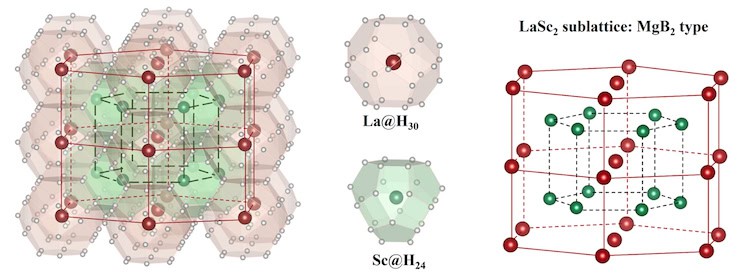
In the new work, a team led by physicist Yanming Ma of Jilin University, studied LaSc2H24 – a compound that’s made by doping Sc into the well-known La-H binary system. Ma and colleagues had already predicted in theory – using the crystal structure prediction (CALYPSO) method – that this ternary material should feature a hexagonal P6/mmm symmetry. Introducing Sc into the La-H results in the formation of two novel interlinked H24 and H30 hydrogen clathrate “cages” with the H24 surrounding Sc and the H30 surrounding La.

The researchers predicted that these two novel hydrogen frameworks should produce an exceptionally large hydrogen-derived density of states at the Fermi level (the highest energy level that electrons can occupy in a solid at a temperature of absolute zero), as well as enhancing coupling between electrons and phonons (vibrations of the crystal lattice) in the material, leading to an exceptionally high Tc of up to 316 K at high pressure.

To characterize their material, the researchers placed it in a diamond-anvil cell, a device that generates extreme pressures as it squeezes the sample between two tiny, gem-grade crystals of diamond (one of the hardest substances known) while heating it with a laser. In situ X-ray diffraction experiments revealed that the compound crystallizes into a hexagonal structure, in excellent agreement with the predicted P6/mmm LaSc2H24 structure.

A key piece of experimental evidence for superconductivity in the La-Sc-H ternary system, says co-author Guangtao Liu, came from measurements that repeatedly demonstrated the onset of zero electrical resistance below the Tc.

Another significant proof, Liu adds, is that the Tc decreases monotonically with the application of an external magnetic field in a number of independently synthesized samples. “This behaviour is consistent with the conventional theory of superconductivity since an external magnetic field disrupts Cooper pairs – the charge carriers responsible for the zero-resistance state – thereby suppressing superconductivity.”

“These two main observations demonstrate the superconductivity in our synthesized La-Sc-H compound,” he tells Physics World.

Difficult experiments

The experiments were not easy, Liu recalls. The first six months of attempting to synthesize LaSc2H24 below 200 GPa yielded no obvious Tc enhancement. “We then tried higher pressure and above 250 GPa, we had to manually deposit three precursor layers and ensure that four electrodes (for subsequent conductance measurements) were properly connected to the alloy in an extremely small sample chamber, just 10 to 15 µm in size,” he says. “This required hundreds of painstaking repetitions.”

And that was not all: to synthesize the LaSc2H24, the researchers had to prepare the correct molar ratios of a precursor alloy. The Sc and La elements cannot form a solid solution because of their different atomic radii, so using a normal melting method makes it hard to control this ratio. “After about a year of continuous investigations, we finally used the magnetron sputtering method to obtain films of LaSc2H24 with the molar ratios we wanted,” Liu explains. “During the entire process, most of our experiments failed and we ended up damaging at least 70 pairs of diamonds.”

Sven Friedemann of the University of Bristol, who was not involved in this work, says that the study is “an important step forward” for the field of superconductivity with a new record transition temperature of 295 K. “The new measurements show zero resistance (within resolution) and suppression in magnetic fields, thus strongly suggesting superconductivity,” he comments. “It will be exciting to see future work probing other signatures of superconductivity. The X-ray diffraction measurements could be more comprehensive and leave some room for uncertainty to whether it is indeed the claimed LaSc2H24 structure giving rise to the superconductivity.”

Ma and colleagues say they will continue to study the properties of this compound – and in particular, verify the isotope effect (a signature of conventional superconductors) or measure the superconducting critical current. “We will also try to directly detect the Meissner effect – a key goal for high-temperature superhydride superconductors in general,” says Ma. “Guided by rapidly advancing theoretical predictions, we will also synthesize new multinary superhydrides to achieve better superconducting properties under much lower pressures.”

The study is available on the arXiv pre-print server.

Scientific collaborations increasingly more likely to be led by Chinese scientists, finds study

International research collaborations will be increasingly led by scientists in China over the coming decade. That is according to a new study by researchers at the University of Chicago, which finds that the power balance in international science has shifted markedly away from the US and towards China over the last 25 years (Proc. Natl. Acad. Sci. 122 e2414893122).

To explore China’s role in global science, the team used a machine-learning model to predict the lead researchers of almost six million scientific papers that involved international collaboration listed by online bibliographic catalogue OpenAlex. The model was trained on author data from 80 000 papers published in high-profile journals that routinely detail author contributions, including team leadership.

The study found that between 2010 and 2012 there were only 4429 scientists from China who were likely to have led China-US collaborations. By 2023, this number had risen to 12714, meaning that the proportion of team leaders affiliated with Chinese institutions had risen from 30% to 45%.

Key areas

If this trend continues, China will hit “leadership parity” with the US in chemistry, materials science and computer science by 2028, with maths, physics and engineering being level by 2031. The analysis also suggests that China will achieve leadership parity with the US in eight “critical technology” areas by 2030, including AI, semiconductors, communications, energy and high-performance computing.

For China-UK partnerships, the model found that equality had already been reached in 2019, while EU and China leadership roles will be on par this year or next. The authors also found that China has been actively training scientists in nations in the “Belt and Road Initiative” which seeks to connect China closer to the world through investments and infrastructure projects.

This, the researchers warn, limits the ability to isolate science done in China. Instead, they suggest that it could inspire a different course of action, with the US and other countries expanding their engagement with the developing world to train a global workforce and accelerate scientific advancements beneficial to their economies.

Unlocking the potential of 2D materials: graphene and much more

This episode explores the scientific and technological significance of 2D materials such as graphene. My guest is Antonio Rossi, who is a researcher in 2D materials engineering at the Italian Institute of Technology in Genoa.

Rossi explains why 2D materials are fundamentally different than their 3D counterparts – and how these differences are driving scientific progress and the development of new and exciting technologies.

Graphene is the most famous 2D material and Rossi talks about today’s real-world applications of graphene in coatings. We also chat about the challenges facing scientists and engineers who are trying to exploit graphene’s unique electronic properties.

Rossi’s current research focuses on two other promising 2D materials – tungsten disulphide and hexagonal boron nitride. He explains why tungsten disulphide shows great technological promise because of its favourable electronic and optical properties; and why hexagonal boron nitride is emerging as an ideal substrate for creating 2D devices.

Artificial intelligence (AI) is becoming an important tool in developing new 2D materials. Rossi explains how his team is developing feedback loops that connect AI with the fabrication and characterization of new materials. Our conversation also touches on the use of 2D materials in quantum science and technology.

IOP Publishing’s new Progress In Series: Research Highlights website offers quick, accessible summaries of top papers from leading journals like Reports on Progress in Physics and Progress in Energy. Whether you’re short on time or just want the essentials, these highlights help you expand your knowledge of leading topics.

Ultrasound probe maps real-time blood flow across entire organs

Microcirculation – the flow of blood through the smallest vessels – is responsible for distributing oxygen and nutrients to tissues and organs throughout the body. Mapping this flow at the whole-organ scale could enhance our understanding of the circulatory system and improve diagnosis of vascular disorders. With this aim, researchers at the Institute Physics for Medicine Paris (Inserm, ESPCI-PSL, CNRS) have combined 3D ultrasound localization microscopy (ULM) with a multi-lens array method to image blood flow dynamics in entire organs with micrometric resolution, reporting their findings in Nature Communications.

“Beyond understanding how an organ functions across different spatial scales, imaging the vasculature of an entire organ reveals the spatial relationships between macro- and micro-vascular networks, providing a comprehensive assessment of its structural and functional organization,” explains senior author Clement Papadacci.

The 3D ULM technique works by localizing intravenously injected microbubbles. Offering a spatial resolution roughly ten times finer than conventional ultrasound, 3D ULM can map and quantify micro-scale vascular structures. But while the method has proved valuable for mapping whole organs in small animals, visualizing entire organs in large animals or humans is hindered by the limitations of existing technology.

To enable wide field-of-view coverage while maintaining high-resolution imaging, the team – led by PhD student Nabil Haidour under Papadacci’s supervision – developed a multi-lens array probe. The probe comprises an array of 252 large (4.5 mm²) ultrasound transducer elements. The use of large elements increases the probe’s sensitive area to a total footprint of 104 x 82 mm, while maintaining a relatively low element count.

Each transducer element is equipped with an individual acoustic diverging lens. “Large elements alone are too directive to create an image, as they cannot generate sufficient overlap or interference between beams,” Papadacci explains. “The acoustic lenses reduce this directivity, allowing the elements to focus and coherently combine signals in reception, thus enabling volumetric image formation.”

Whole-organ imaging

After validating their method via numerical simulations and phantom experiments, the team used a multi-lens array probe driven by a clinical ultrasound system to perform 3D dynamic ULM of an entire explanted porcine heart – considered an ideal cardiac model as its vascular anatomies and dimensions are comparable to those of humans.

The heart was perfused with microbubble solution, enabling the probe to visualize the whole coronary microcirculation network over a large volume of 120 x 100 x 82 mm, with a spatial resolution of around 125 µm. The technique enabled visualization of both large vessels and the finest microcirculation in real time. The team also used a skeletonization algorithm to measure vessel radii at each voxel, which ranged from approximately 75 to 600 µm.

As well as structural imaging, the probe can also assess flow dynamics across all vascular scales, with a high temporal resolution of 312 frames/s. By tracking the microbubbles, the researchers estimated absolute flow velocities ranging from 10 mm/s in small vessels to over 300 mm/s in the largest. They could also differentiate arteries and veins based on the flow direction in the coronary network.

In vivo demonstrations

Next, the researchers used the multi-lens array probe to image the entire kidney and liver of an anaesthetized pig at the Veterinary school of Maison Alfort, with the probe positioned in front of the kidney or liver, respectively, and held using an articulated arm. They employed electrocardiography to synchronize the ultrasound acquisitions with periods of minimal respiratory motion and injected microbubble solution intravenously into the animal’s ear.

In vivo imaging of a porcine kidney

The probe mapped the vascular network of the kidney over a 60 x 80 x 40 mm volume with a spatial resolution of 147 µm. The maximum 3D absolute flow velocity was approximately 280 mm/s in the large vessels and the vessel radii ranged from 70 to 400 µm. The team also used directional flow measurements to identify the arterial and venous flow systems.

Liver imaging is more challenging due to respiratory, cardiac and stomach motions. Nevertheless, 3D dynamic ULM enabled high-depth visualization of a large volume of liver vasculature (65 x 100 x 82 mm) with a spatial resolution of 200 µm. Here, the researchers used dynamic velocity measurement to identify the liver’s three blood networks (arterial, venous and portal veins).

“The combination of whole-organ volumetric imaging with high-resolution vascular quantification effectively addresses key limitations of existing modalities, such as ultrasound Doppler imaging, CT angiography and 4D flow MRI,” they write.

Clinical applications of 3D dynamic ULM still need to be demonstrated, but Papadacci suggests that the technique has strong potential for evaluating kidney transplants, coronary microcirculation disorders, stroke, aneurysms and neoangiogenesis in cancer. “It could also become a powerful tool for monitoring treatment response and vascular remodelling over time,” he adds.

Papadacci and colleagues anticipate that translation to human applications will be possible in the near future and plan to begin a clinical trial early in 2026.

Inge Lehmann: the ground-breaking seismologist who faced a rocky road to success

Inge Lehmann

In the 1930s a little-known Danish seismologist calculated that the Earth has a solid inner core, within the liquid outer core identified just a decade earlier. The international scientific community welcomed Inge Lehmann as a member of the relatively new field of geophysics – yet in her home country, Lehmann was never really acknowledged as more than a very competent keeper of instruments.

It was only after retiring from her seismologist job aged 65 that Lehmann was able to devote herself full time to research. For the next 30 years, Lehmann worked and published prolifically, finally receiving awards and plaudits that were well deserved. However, this remarkable scientist, who died in 1993 aged 104, rarely appears in short histories of her field.

In a step to address this, we now have a biography of Lehmann: If I Am Right, and I Know I Am by Hanne Strager, a Danish biologist, science museum director and science writer. Strager pieces together Lehmann’s life in great detail, as well as providing potted histories of the scientific areas that Lehmann contributed to.

A brief glance at the chronology of Lehmann’s education and career would suggest that she was a late starter. She was 32 when she graduated with a bachelor’s degree in mathematics from the University of Copenhagen, 40 when she received her master’s degree in geodosy and was appointed state geodesist for Denmark. Lehmann faced a litany of struggles in her younger years, from health problems and money issues to the restrictions placed on most women’s education in the first decades of the 20th century.

The limits did not come from her family. Lehmann and her sister were sent to good schools, she was encouraged to attend university, and was never pressed to get married, which would likely have meant the end of her education. When she asked her father’s permission to go to the University of Cambridge, his objection was the cost – though the money was found and Lehmann duly went to Newnham College in 1910. While there she passed all the preliminary exams to study for Cambridge’s legendarily tough mathematical tripos but then her health forced her to leave.

Lehmann was suffering from stomach pains; she had trouble sleeping; her hair was falling out. And this was not her first breakdown. She had previously studied for a year at the University of Copenhagen before then, too, dropping out and moving to the countryside to recover her health.

The cause of Lehmann’s recurrent breakdowns is unknown. They unfortunately fed into the prevailing view of the time that women were too fragile for the rigours of higher learning. Strager attempts to unpick these historical attitudes from Lehmann’s very real medical issues. She posits that Lehmann had severe anxiety or a physical limitation to how hard she could push herself. But this conclusion fails to address the hostile conditions Lehmann was working in.

In Cambridge Lehmann formed firm friendships that lasted the rest of her life. But women there did not have the same access to learning as men. They were barred from most libraries and laboratories; could not attend all the lectures; were often mocked and belittled by professors and male students. They could sit exams but, even if they passed, would not be awarded a degree. This was a contributing factor when after the First World War Lehmann decided to complete her undergraduate studies in Copenhagen rather than Cambridge.

More than meets the eye

Lehmann is described as quiet, shy, reticent. But she could be eloquent in writing and once her career began she established connections with scientists all over the world by writing to them frequently. She was also not the wallflower she initially appeared to be. When she was hired as an assistant at Denmark’s Institute for the Measurement of Degrees, she quickly complained that she was being using as an office clerk, not a scientist, and she would not have accepted the job had she known this was the role. She was instead given geometry tasks that she found intellectually stimulating, which led her to seismology.

Unfortunately, soon after this Lehmann’s career development stalled. While her title of “state geodesist” sounds impressive, she was the only seismologist in Denmark for decades, responsible for all the seismographs in Denmark and Greenland. Her days were filled with the practicalities of instrument maintenance and publishing reports of all the data collected.

Photo of six people and a dog outside a low wooden building in a snowy landscape

Despite repeated requests Lehmann didn’t receive an assistant, which meant she never got round to completing a PhD, though she did work towards one in her evenings and weekends. Time and again opportunities for career advancement went to men who had the title of doctor but far less real experience in geophysics. Even after she co-founded the Danish Geophysical Society in 1934, her native country overlooked her.

The breakthrough that should have changed this attitude from the men around her came in 1936, when she published “P’ ”. This innocuous sounding paper was revolutionary, but based firmly in the P wave and S wave measurements that Lehmann routinely monitored.

In If I Am Right, and I Know I Am, Strager clearly explains what P and S waves are. She also highlights why they were being studied by both state seismologist Lehmann and Cambridge statistician Harold Jeffreys, and how they led to both scientists’ biggest breakthroughs.

After any seismological disturbance, P and S waves propagate through the Earth. P waves move at different speeds according to the material they encounter, while S waves cannot pass through liquid or air. This knowledge allowed Lehmann to calculate whether any fluctuations in seismograph readings were earthquakes, and if so where the epicentre was located. And it led to Jeffreys’ insight that the Earth must have a liquid core.

Lehmann’s attention to detail meant she spotted a “discontinuity” in P waves that did not quite match a purely liquid core. She immediately wrote to Jeffreys that she believed there was another layer to the Earth, a solid inner core, but he was dismissive – which led to her writing the statement that forms the title of this book. Undeterred, she published her discovery in the journal of the International Union of Geodesy and Geophysics.

Home from home

In 1951 Lehmann visited the institution that would become her second home: the Lamont Geological Observatory in New York state. Its director Maurice Ewing invited her to work there on a sabbatical, arranging all the practicalities of travel and housing on her behalf.

Here, Lehmann finally had something she had lacked her entire career: friendly collaboration with colleagues who not only took her seriously but also revered her. Lehmann took retirement from her job in Denmark and began to spend months of every year at the Lamont Observatory until well into her 80s.

Photo of four women in front of a blackboard looking at a table covered with cakes

Though Strager tells us this “second phase” of Lehmann’s career was prolific, she provides little detail about the work Lehmann did. She initially focused on detecting nuclear tests during the Cold War. But her later work was more varied, and continued after she lost most of her vision. Lehmann published her final paper aged 99.

If I Am Right, and I Know I Am is bookended with accounts of Strager’s research into one particular letter sent to Lehmann, an anonymous (because the final page has been lost) declaration of love. It’s an insight into the lengths Strager went to – reading all the surviving correspondence to and from Lehmann; interviewing living relatives and colleagues; working with historians both professional and amateur; visiting archives in several countries.

But for me it hit the wrong tone. The preface and epilogue are mostly speculation about Lehmann’s love life. Lehmann destroyed a lot of her personal correspondence towards the end of her life, and chose what papers to donate to an archive. To me those are the actions of a woman who wants to control the narrative of her life – and does not want her romances to be written about. I would have preferred instead another chapter about her later work, of which we know she was proud.

But for the majority of its pages, this is a book of which Strager can be proud. I came away from it with great admiration for Lehmann and an appreciation for how lonely life was for many women scientists even in recent history.

  • 2025 Columbia University Press 308 pp, £25hb

Rapidly spinning black holes put new limit on ultralight bosons

The LIGO–Virgo–KAGRA collaboration has detected strong evidence for second-generation black holes, which were formed from earlier mergers of smaller black holes. The two gravitational wave signals provide one of the strongest confirmations to date for how Einstein’s general theory of relativity describes rotating black holes. Studying such objects also provides a testbed for probing new physics beyond the Standard Model.

Over the past decade, the global network of interferometers operated by LIGO, Virgo, and KAGRA have detected close to 300 gravitational waves (GWs) – mostly from the mergers of binary black holes.

In October 2024 the network detected a clear signal that pointed back to a merger that occurred 700 million light-years away. The progenitor black holes were 20 and 6 solar masses and the larger object was spinning at 370 Hz, which makes it one of the fastest-spinning black holes ever observed.

Just one month later, the collaboration detected the coalescence of another highly imbalanced binary (17 and 8 solar masses), 2.4 billion light-years away. This signal was even more unusual – showing for the first time that the larger companion was spinning in the opposite direction of the binary orbit.

Massive and spinning

While conventional wisdom says black holes should not be spinning at such high rates, the observations were not entirely unexpected. “With both events having one black hole, which is both significantly more massive than the other and rapidly spinning, [the observations] provide tantalizing evidence that these black holes were formed from previous black hole mergers,” explains Stephen Fairhurst at Cardiff University, spokesperson of the LIGO Collaboration. If this were the case, the two GW signals – called GW241011 and GW241110 – are first observations of second-generation black holes. This is because when a binary merges, the resulting second-generation object tends to have a large spin.

The GW241011 signal was particularly clear, which allowed the team to make the third-ever observation of higher harmonic modes. These are overtones in the GW signal that become far clearer when the masses of the coalescing bodies are highly imbalanced.

The precision of the GW241011 measurement provides one of the most stringent verifications so far of general relativity. The observations also support Roy Kerr’s prediction that rapid rotation distorts the shape of a black hole.

Kerr and Einstein confirmed

“We now know that black holes are shaped like Einstein and Kerr predicted, and general relativity can add two more checkmarks in its list of many successes,” says team member Carl-Johan Haster at the University of Nevada, Las Vegas. “This discovery also means that we’re more sensitive than ever to any new physics that might lie beyond Einstein’s theory.”

This new physics could include hypothetical particles called ultralight bosons. These could form in clouds just outside the event horizons of spinning black holes, and would gradually drain a black hole’s rotational energy via a quantum effect called superradiance.

The idea is that the observed second-generation black holes had been spinning for billions of years before their mergers occurred. This means that if ultralight bosons were present, they cannot have removed lots of angular momentum from the black holes. This places the tightest constraint to date on the mass of ultralight bosons.

“Planned upgrades to the LIGO, Virgo and KAGRA detectors will enable further observations of similar systems,” Fairhurst says. “They will enable us to better understand both the fundamental physics governing these black hole binaries and the astrophysical mechanisms that lead to their formation.”

Haster adds, “Each new detection provides important insights about the universe, reminding us that each observed merger is both an astrophysical discovery but also an invaluable laboratory for probing the fundamental laws of physics”.

The observations are described in The Astrophysical Journal Letters.

Copyright © 2026 by IOP Publishing Ltd and individual contributors