Refrigerator works by twisting and untwisting fibres

A new refrigeration technology based on the twisting and untwisting of fibres has been demonstrated by a team led by Zunfeng Liu at Nankai University in China and Ray Baughman at the University of Texas at Dallas in the US. As the demand for refrigeration expands worldwide, their work could lead to the development of new cooling systems that do not employ gases that are harmful to the environment.

The cooling system relies on the fact that some materials undergo significant changes in entropy when deformed. As far back as 1805 – when the concepts of thermodynamics were first being developed – it was known that ordinary rubber heats up when stretched and cools down when relaxed. In principle, such mechanocaloric materials could be used in place of the gases that change entropy when compressed and expanded in commercial refrigeration systems. Replacing gas-based systems is an important environmental goal because gaseous refrigerants tend to degrade the ozone layer and are powerful greenhouse gases.

In their experiments, Liu and Baughman’s team studied the cooling effects of twist and stretch changes in twisted, coiled and supercoiled fibres of natural rubber, nickel-titanium and polyethylene fishing line. In each material, they observed a surface cooling as high as 16.4 °C, 20.8 °C, and 5.1 °C respectively, which they achieved through techniques including simultaneous releases of twisting and stretching, and unravelling bundles of multiple wires.

Supercoiled fibres

The team also made supercoiled fibres of natural rubber in which the twisting and coiling were done in opposite senses (clockwise and anticlockwise). Much to their surprise, they found that these structures cooled when stretched, rather than heated.

The team also looked at microscopic changes in the materials. An X-ray diffraction crystallography study of the polyethylene fishing line revealed changes in molecular structures associated with the transition from low to high entropy phases. The team identified this process as the cause of the effect, which they have dubbed “twistocaloric” cooling.

Liu, Baughman and their colleagues then built a simple device from a three-ply nickel-titanium wire cable, which cooled a stream of running water by as much as 7.7 °C as it unravelled. They propose that far higher levels of cooling could be reached through additional cycles of twisting and twist release within the cable — resulting in a highly efficient fridge.

The team faces many challenges in creating commercially-viable twist fridges, including the need find a material that is not degraded by being repeatedly twisted and untwisted. So far, they have only explored few commercially-available materials, but now plan to expand their research to seek-out materials that have optimized mechanical and twistocaloric properties. If realized on commercial scales, twist fridge technologies could provide climate-friendly solutions to meeting our rapidly expanding demand for cooling.

The research is described in Science.

Oceans could have reached carbon threshold

Each of the five mass extinctions over the last 500 million years that saw at least 75% of species disappear was accompanied by a surge in carbon entering the ocean. But carbon pulses are relatively common and usually benign; there were around 30 over that same time period. So what sets mass extinction events apart?

A study suggests that Earth’s oceans have a distinct threshold when it comes to the amount of carbon they can process. Mass extinction events occur when the threshold is passed. Anthropogenic carbon dioxide emissions are comparable to the carbon surges associated with previous mass extinction events, suggesting that we’re likely to be triggering a sixth mass extinction event right now.

Carbon is constantly cycled around our planet. Photosynthesis converts carbon dioxide to organic carbon; respiration converts organic carbon back to carbon dioxide. Sometimes carbon ends up in a long-term store, for example when small ocean creatures such as coccolithophores sink to the sea-floor and lock the carbon into sediments, but eventually the carbon returns to the loop as, in this case, geological processes uplift the rocks and weathering releases the carbon to the atmosphere.

Many external triggers can disrupt the carbon cycle including variations in orbital motions, release of methane hydrates, meteorite strikes, evolutionary changes and volcanic emissions. Ocean sediments record those disruptions, with carbon-rich rocks forming when atmospheric carbon dioxide levels are high. Until now, the consensus has been that the ocean responds proportionately to the amount of carbon being pumped into it: the larger the trigger, the more carbon-rich the ocean sediments become.

However, Daniel Rothman from Massachusetts Institute of Technology, US, was puzzled by the fact that, regardless of their size, most carbon pulses result in a characteristic rate of change in the ocean’s store of carbon but mass extinction events appear to have a far greater rate of change. To understand this anomaly, Rothman modelled the marine carbon cycle mathematically, exploring how disruptions to the incoming carbon flux were likely to influence the way that carbon was stored.

The model demonstrated that up to a certain limit, Earth’s oceans can absorb and process pulses of carbon dioxide and return to their steady state. But above a certain threshold, the oceans were pushed out of their steady state, resulting in acidification at the surface.

“I’m suggesting that the magnitude of the disruption is determined not by the strength of the external stressors but rather by the carbon cycle’s intrinsic dynamics,” says Rothman, whose findings are published in the Proceedings of the National Academy of Sciences (PNAS). His results suggest that this ocean threshold is yet another “tipping point”, beyond which there’s a nonlinear response.

By looking at the size and duration of the 31 disruptions to the global carbon cycle over the last 542 million years, Rothman showed that the majority have a characteristic rate of change, but that four of the five mass extinction events grew faster than this.

The model suggests that the ocean threshold also depends on the duration over which the carbon flux is increased. Relatively weak but long-lived perturbations, such as massive volcanic eruptions occurring over millions of years, can overshoot the threshold. But short sharp disruptions, like the intense pulse of carbon dioxide produced by current anthropogenic emissions, can pass the threshold too.

Rothman shows that today’s anthropogenic emissions and the carbon dioxide associated with massive volcanism in the past are roughly equivalent in their potential to pass the ocean threshold. This suggests that mankind’s actions may well trigger a mass extinction event. But because the oceans take a while to respond, it will be some time before the sixth mass extinction event becomes visible in the rock record.

“If the carbon cycle passes the threshold, the effects would play out over a period of ten thousand years or more,” says Rothman.

Imaging tumour stiffness could help treat breast and pancreatic cancers

MR elastography

Researchers from the Institute of Cancer Research (ICR) have used MR elastography to visualize and measure the stiffness and density of tumour tissues in mice. The non-invasive imaging technique provides crucial new information about cancer architecture and could help deliver treatment to challenging tumours (Cancer Research 10.1158/0008-5472.CAN-19-1595).

Tumours are formed from dense and compact networks of cells, structural fibres and blood vessels. Some tumour types are particularly stiff and dense, which makes it difficult to deliver drugs deep inside the tumour mass and hinders treatment. Tissue stiffening is also associated with tumour progression and metastasis. The major contributor to this increased stiffness is collagen – a key component of bone, cartilage, tendons and the extracellular matrix that holds tissues together.

Drugs designed to break down the extracellular matrix, such as collagenase, can weaken the structure that holds a tumour together and allow other cancer drugs to reach cells in its centre. Assessing the contribution of collagen to relative stiffness could identify tumours with the potential to be treated by with such drugs.

The ICR researchers, working in collaboration with King’s College London, combined MR elastography with computational histopathology to investigate the contribution of collagen to the biomechanics of several different tumour types in mice. They found, for example, that breast tumours were around twice as stiff as brain tumours and around three times as dense.

The pre-clinical study demonstrated that increased collagen correlated with elevated tumour elasticity and viscosity, with collagen key to keeping breast and pancreatic cancers stiff and inaccessible to treatments. In contrast, tumours arising from the nervous system, such as some forms of childhood cancer and brain tumours, were relatively soft and lacking in collagen.

“Our research shows that this new type of scan can give valuable diagnostic information about breast and pancreatic tumours non-invasively by assessing their stiffness,” explains study co-leader Simon Robinson. “If confirmed in a clinical trial, we could use this technique to identify patients most likely to benefit from treatments that target the dense scaffold upon which these tumours grow.”

The researchers also used MR elastography to monitor the weakening of tumour structure following treatment with collagenase. They found that collagenase resulted in a clear reduction in the elasticity and viscosity of breast tumours in mice – both of which fell by around a fifth. This finding suggests that the technique, which can be performed on a conventional clinical MRI scanner, could help identify the optimum time at which to deliver chemotherapeutic drugs by showing when the tumour is most vulnerable.

“There’s a lot of research activity centred on finding new therapies designed to help anti-cancer drugs reach their target in breast and pancreatic cancers, which can be so stiff and dense that they are impenetrable,” says study co-leader Yann Jamin. “We are very excited to have found a rapid scan that can be incorporated into a current routine clinical MRI examination and can potentially monitor the effects of these new tumour-weakening therapies, and assist the development and delivery of medicines which could save or extend lives.”

Masters programme offers pathway to emerging nano-industry

A new Masters programme in nanoscience and nanotechnology has been specifically designed to give students the skills and experience they need to work in the fast-moving nanotechnology industry. The course, which was launched in September 2018 by the University of Central Lancashire (UCLan) in the UK, builds on the university’s strong reputation for nanotechnology research, as well as its established links with industrial partners in the UK and beyond.

According to Dr Joe Smerdon, the course leader, the hope is “to convert some of these MSc candidates directly into employees”. One notable feature of the course is an optional one-year industrial placement, and even the more conventional taught elements of the course will enable students to interact with companies developing commercial applications for nanotechnology.

“We wanted to make the course very relevant to employers,” says Smerdon. “We will be bringing in industrial partners to talk about nanotechnology and their current challenges, and then incorporate that insight into the teaching programme.”

They can work within our areas of research, complete an industrial placement, and then potentially be offered a suitable position with the industrial partner

Dr Tapas Sen, UCLan

Smerdon explains that prospective employers will be able to engage directly with the students from the beginning of the second semester all the way through to the end of the course. “There’s one module that allows students to directly participate in a challenging problem posed to them by the industrial partners, and the partners have the option of assessing their work if they want to – both at the proposal stage and the final project stage.”

The hope is that such direct interaction early in the course could pave the way for a final-year project working with the partner, or an industrial placement that would enable the student to really understand what it’s really like to work for the company. “The students have the option of doing a full year’s placement with a partner: they do the first two semesters at UCLan, spend a year with an industrial partner, and then return for the third semester,” explains Smerdon.

Prospective employers also have the opportunity to get to know the students they are working with. “They can indicate whether they are interested in working with particular students for their placement year or final-year project,” he says. “It’s very hard to select an engineer or a scientist based on an interview or presentation, and this way they get up to a year to find the right candidate.”

The extra industrial year could be particularly appealing for international students, since a one-year MSc is generally not recognized outside the UK. But according to Dr Tapas Sen, one of the other post-graduate course leaders, the real attraction for overseas students will be the potential to find a job with a local company. “They can work within our areas of research, complete an industrial placement, and then potentially be offered a suitable position with the industrial partner,” he says.

Hub for industrial research

And it’s not just the industrial connections that students will benefit from. UCLan is developing a centre for nanotechnology research, with several of the course tutors, including Smerdon, recently completing five-year research fellowships at the university. “We’re all high-performing researchers in nanotechnology, and we have built the course around this core expertise,” he says.

Launching the course is also part of a wider aim to establish UCLan as a hub for industrial nanoscience. Another major initiative, overseen by Sen, has been to establish a Society for Functional Nanomaterials to enable two-way communication between academia and industry. “One of the main reasons for slow development of nanoscience in real-life applications is a lack of understanding and collaboration between industry and academia,” he comments.

And both Smerdon and Sen are confident that nanotechnology will be a major driver for future innovation in the commercial sector. “We’re seeing a few things now, such as quantum-dot televisions that deliver better colour rendition, but there’s a whole more just around the corner,” says Smerdon. “We’re still not really exploiting the inherent benefits of nanosized materials and structures, and when we do nanotechnology will become increasingly ubiquitous.”

Smerdon is confident that the course offers a natural progression for students who have completed an undergraduate degree in the physical sciences. Michael Holmes, who embarked on the course after finishing an undergraduate degree in astrophysics, agrees: “My experience during this degree has been very positive,” he says. “I was worried about adapting to nanoscale science, but continued communication and support from all staff made it a very smooth transition.”

A core module in nanoscience and nanotechnology runs throughout the course, offering a multidisciplinary approach that spans physics, chemistry and the biosciences. Students can also choose optional modules in physics and chemistry that are pitched at different levels based on their existing knowledge. “The course offers a good balance of taught and self-taught modules,” says Holmes. “For example, the taught Advanced Nanophysics module was a great complement to the Current Topics in Industrial Nanoscience module, which involved a lot of individual research.”

Some of the modules are taught in the traditional way, through lectures, seminars and tutorials, and Smerdon says that compared to an undergraduate degree there’s not a great deal of difference in terms of teaching time and the level of support students receive from the lecturers. But students have more opportunities for self-directed research, and also have the freedom to pursue their own interests – whether that’s in industry or academia.

“I really enjoyed the freedom to use the most modern and advanced techniques,” agrees Holmes. “It felt very satisfying and fulfilling, especially compared to undergraduate work.”

  • The minimum entry requirements for UCLAn’s MSc in Nanoscience and Nanotechnology is a 2:2 in physics, chemistry, or a related subject, plus international students must meet a minimum language requirement (International English Language Test (IELTS) with an overall score of 6.5 and no element should be less than 6). Applications are open year round, for entry in September, and most students can apply for funding through a Postgraduate Master’s Loan.


Transparent graphene wearables monitor signs of health

A third of adults are consistently not getting enough exercise, reported the World Health Organisation in a 2018 study. In addition,  obesity has been claimed to be a national emergency in the UK. 

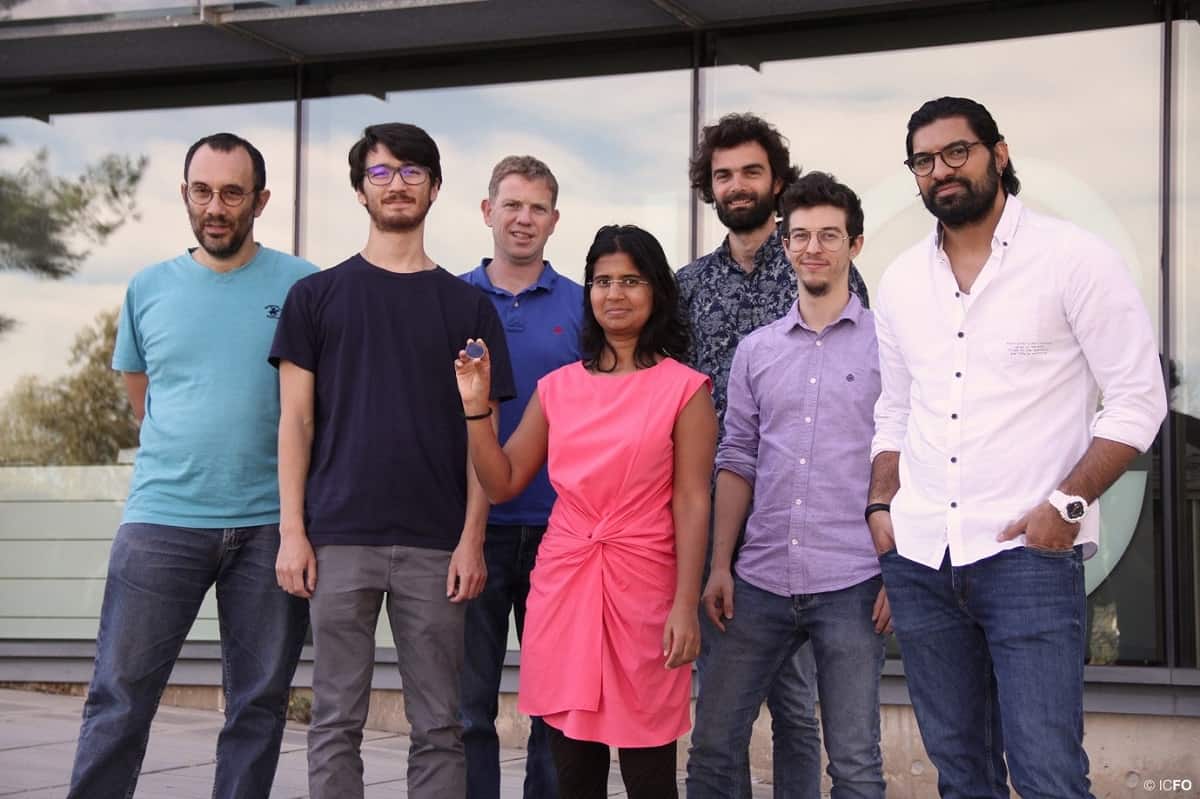
The use of consumer based health and wellness trackers such as smart watches or smart clothing has the potential to increase physical activity participation. Many of these devices noninvasively track vital health signs by optical detection. However, this technology is limited by the need for rigid materials. To overcome this, Emre Polat et al. have developed a new class of flexible and transparent wearables based on graphene sensitized with semiconducting quantum dots.

The new technology can successfully measure heart rate and oxygen saturation. It also has the potential to measure blood pressure and cardiac output, whilst maintaining its flexible and transparent form. The group has used the approach to develop a plethora of prototype fitness trackers such as a heart-rate monitoring bracelet and a wireless ultraviolet (UV) monitoring patch, which informs the user of their current UV exposure and recommended remaining exposure time via a mobile phone app.

researchers-1200

Monitoring heart rate

Health and wellness trackers based on optical absorption can operate in two modes. The flexible heart-rate bracelet operated using reflectance mode. Here, an integrated green LED is shone through the skin and onto the user’s blood vessels. The cardiac cycle changes the volume of the vessels, which modulates how much light is reflected back towards the photodetector. In this way, the heart rate can be reliably and accurately extracted from the user’s wrist. Transmission mode is used to operate the mobile phone integrated health patch in a similar way. However, instead of using an LED, the patch uses ambient light passing through the thumb tissue to measure the changes in cardiac cycle.

Discrete fitness trackers

Whilst health and wellness trackers based on optical detection have been on the market for some time, conformable sensors that are aesthetically pleasing have, until now, been next to non-existent. By using graphene in their new devices, Polat’s team have managed to develop fitness trackers that are transparent and flexible, allowing for the development of a range of discrete fitness trackers. In addition, these low-cost devices have the potential for wireless charging,  and offer other benefits key for this type of detector such as broadband wavelength sensitivity. This extends the number of vital signs that can be measured.

The full article can be found in Science Advances.

Michio Kaku loses superstring Nobel bet, algorithm helps you avoid the hot Sun, how potato snacks get their puff

Physicists are known to have an occasional flutter – especially when it comes to the possible discovery of new physics. Avid readers may remember in 2000 when 20 physicists, including theorist Nima Arkani-Hamed, bet that supersymmetry would be experimentally detected within 10 years. They ended up losing and apparently had to dig deep in their pockets to buy a bottle of “good cognac at a price not less than $100” for the 24 physicists who won the bet.

Now, its physicist Michio Kaku’s turn to get the chequebook out. In 2002, the US science writer John Horgan had a $2000 bet with Kaku that by 2020 “no one will have won a Nobel Prize for work on superstring theory, membrane theory, or some other unified theory describing all the forces of nature”. Now that the 2019 prize has been awarded to pioneering work in cosmology and the detection of the first exoplanet, there can be no grand unified theory Nobel prize this decade. Given that Horgan’s loot will be donated to the environmental non-profit group Nature Conservancy, at least it’s all for a good cause.

While urban areas can often be hotter than the surrounding countryside, at least you can shelter in the shade of tall buildings to beat the heat. Now, Xiaojiang Li and an international team of colleagues have created a routing algorithm that minimizes a pedestrian’s exposure to direct sunlight while walking through central Tokyo.

The team used Google Street View panoramas of Tokyo’s skyscrapers to work-out how much sunlight filters down to street level. Combining this with the position of the Sun, the algorithm was able to reduce exposure by an average of about 35% on 1000 random routes through the city. Li and colleagues point out that the same system could create routes with maximum sunlight exposure in the winter.

Just about everyone loves a deep-fried potato snack, but did you ever wonder how they get so puffy? In “Predicting lift-off time when deep-frying potato dough snacks”, Thomas Babb and colleagues model how a dense lump of dough is transformed into a foamy bite when plunged into hot oil. According to the abstract of their preprint, “the model simplifies to solving a one-dimensional Stefan problem in the snack”.

And if that has whet your appetite, tuck into this article about how the physics involved in making potato crisps (or chips).


How to stop a nuclear meltdown by leavening the reactor core like a loaf of bread

A new way of cooling and containing the radioactive, lava-like mass that forms in the core of a nuclear reactor during a catastrophic meltdown has been developed by researchers in the US. The technique involves using granular carbonate materials rather than water and has been demonstrated in both small and large-scale testbeds using molten lead oxide. The developers are now working toward a commercial application of the system.

When a nuclear plant undergoes a catastrophic meltdown, a radioactive lava-like mixture of nuclear fuel, control rods, fission products and the reactor’s structural components can form. Dubbed “corium”, this molten mass is both extremely dangerous and has the potential to move.

“During a severe reactor accident, the vessel that contained the fuel melts and ruptures,” explains Sandia National Laboratories engineer David Louie. “Then all that stuff falls out on the containment floor and starts spreading.”

Exploding hydrogen

Meltdown can escalate the release of radioactive material into the surrounding environment in two ways, the first of which is corium’s potential to melt through the floor of the reactor building and seep into the underlying soil. The molten mass could also react chemically with surrounding materials such as concrete to create hydrogen gas that can build up and cause an explosion.

The standard technique for dealing with corium is to try and cool it with water. However, this approach typically works too slowly, allowing the disaster to continue evolving and letting radioactive contaminants escape into the surrounding area.

“Eventually corium stops spreading because water will cool it down,” Louie said. “But you don’t want the accident to get worse and worse while you’re working to bring water in. The water also provides a source of explosive hydrogen.”

Looking for a better method to cool and contain corium, Louie and colleagues turned to granular carbonate minerals like calcite and dolomite, which they say could be injected into the heart of reactors in the event of a meltdown.

Small-scale test

Beginning with a small-scale test, the team heated a few grams of lead oxide powder to 1000 °C to create a molten material similar to corium. They then combined this with both a sample of granular calcite and, for comparison, grains of silicon dioxide (sand).

“We saw that the injectable carbonate minerals work,” Louie said. “It reacted chemically to produce a lot of carbon dioxide, which ‘leavened’ the lead oxide into a nice cake-like structure. The reaction itself had a cooling effect, and all the pores in the ‘cake’ allow for further cooling.” In contrast, the sand used as the control sample had no effect on the simulated corium.

A follow-up experiment, run on a kilogram-scale, also showed that carbonate granules could be successfully applied to contain the molten material. The researchers have also incorporated their injectable safety materials into Sandia’s reactor meltdown modelling software to examine how granular carbonates might affect an unfolding real-world nuclear disaster – such as the one that occurred at Japan’s Fukushima Daiichi power plant in 2011.

“While there are many ways to make nuclear power safer, solutions such as travelling wave reactors and molten salt reactors often involve completely new infrastructure, which may take decades to develop,” says physicist Lawrie Skinner of Stanford University, who was not involved in the present study. He adds, “This carbonate injection method offers a simple way to make current reactor technology safer.”

Larger demonstrations needed

“Although it still needs to be experimentally demonstrated at larger scales and with materials that closely match nuclear melts, it will be exciting to see how these carbonate injection methods perform.”

Oliver Alderman of Materials Development Inc. has previously studied corium lava and calls the new research “a very nice concept”. “I do wonder about the effect of corium temperature — corium can be much hotter than the molten lead oxide used — and also about secondary exothermic reactions that may occur,” he cautions.

He adds, “Another interesting point to consider is that the thermal conductivity of the ‘cake’ material is likely to be very low, and this could be an advantage, or disadvantage, depending upon the reactor design”.

With their initial study complete, the researchers now have a non-provisional patent underway for the injectable safety materials and are also looking to perform even larger-scale tests, but with the incorporation of depleted uranium.

“After that, we’d be ready to commercialize the technology,” Louie said, adding that the carbonate containment materials “could be retrofitted into any existing nuclear reactor design”.

Sandia National Laboratories is calling for expressions of interest from other research groups and organizations interested in partnering on future work into this approach to corium containment.

Water stress rises as more wells run dry

In a world of increasing extremes of drought and rainfall, driven by rising global temperatures and potentially catastrophic climate change, the water will start to run out.

It is happening already: in 20% of those water catchments in which farmers and cities rely on pumped groundwater, the flow of streams and rivers has fallen and the surface flow has dwindled, changed direction or stopped altogether.

“The effects can be seen already in the Midwest of the US and in the Indus Valley project between Afghanistan and Pakistan,” says Inge de Graaf, a hydrologist at the University of Freiburg.

Groundwater – the billions of tonnes locked in the soils and bedrock, held in vast chalk and limestone aquifers and silently flowing through cracks in other sediments – is the terrestrial planet’s biggest single store of the liquid that sustains all life.

Groundwater supplies the inland streams and rivers, and the flow from tributaries is an indicator of the levels of water already in the ground.

For thousands of years, communities have drawn water from wells in the dry season and relied on wet season rainfall to replenish it. But as human numbers have grown, as agriculture has commandeered more and more of the land, and as cities have burgeoned, demand has in some places begun to outstrip supply. The fear is that rising average temperatures will intensify the problem.

De Graaf and colleagues from the Netherlands and Canada report in the journal Nature that they used computer simulations to establish the likely pattern of withdrawal and flow. The news is not good.

“We estimate that, by 2050, environmental flow limits will be reached for approximately 42% to 79% of the watershed in which there is groundwater pumping worldwide, and this will generally occur before substantial losses in groundwater storage are experienced,” they write.

That drylands – home to billions of people – will experience water stress with rising temperatures is not news. Climate scientists have been issuing warnings for years.

Ground level drops

And demand for groundwater has increased with the growth of the population and the worldwide growth of the cities: some US cities are at risk of coastal flooding just because so much groundwater has been extracted that the ground itself has been lowered.

The important thing about the latest research is that it sets – albeit broadly – a timetable and a map of where the water stress is likely to be experienced first.

In a hotter world, plants and animals will demand more water. But in a hotter world, the probability of extremes of drought increases.

“If we continue to pump as much groundwater in the coming decades as we have done so far, a critical point will be reached also for regions in southern and central Europe – such as Portugal, Spain and Italy – as well as in North African countries,” De Graaf warned.

“Climate change may even accelerate this process, as we expect less precipitation, which will further increase the extraction of groundwater and cause dry areas to dry out completely.”

Sealed cell improves oxide-peroxide conversion in lithium-ion battery

A new high-energy density and stable lithium-ion battery that works by reversible oxide-peroxide conversion could help in the development of improved “sealed” battery technologies. This is the new result from a team of researchers in Japan and China who have designed an oxygen-free cell in which the Li2O to Li2Oreaction can take place.

Lithium-ion batteries are hitting the headlines this week with news of this year’s Nobel Prize for Chemistry being awarded to John Goodenough, Stanley Whittingham and Akira Yoshino for the development of these devices.

Lithium is the material of choice in these batteries because it has a high specific capacity and low electrochemical potential. In recent years, focus has shifted from the rigid Li-intercalation structures commonly employed in the conventional heavy lithium-transition metal oxide cathodes used in these devices to Li-Obattery technology that exploits oxygen-related redox chemistries that have excellent theoretical gravimetric energy densities. 

Redox reaction between Oand Li2O2

These batteries work thanks to the redox reaction between Oand lithium peroxide, Li2O2. One of the main hurdles hindering their practical application, however, is that they require Ogas as the active species. This needs to be supplied by bulky Ostorage or gas purification devices.

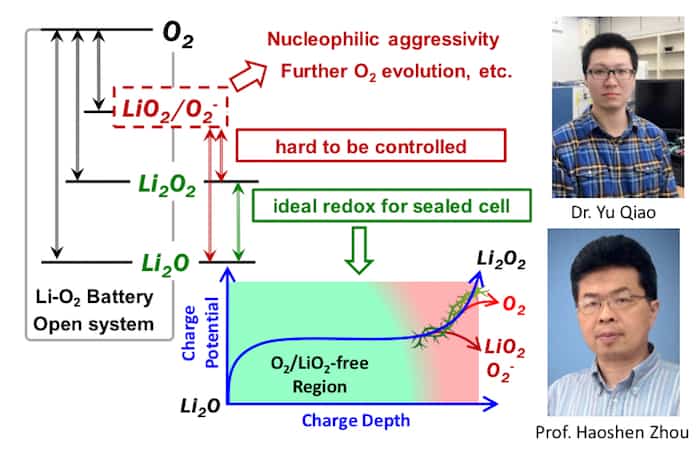
To overcome this problem, and the so-called Ocrossover and electrolyte volatilization in these batteries, researchers led by Haoshen Zhou of the National Institute of Advanced Industrial Science and Technology (AIST) and Nanjing University in China have now designed an O2-free sealed environment for the Li2O to Li2Oreaction.

Li2O/Li2O2 battery system

High-energy density, rechargeable and stable Li-ion battery

Zhou and colleagues did this by embedding Li2O nanoparticles into an iridium-reduced graphene oxide (Ir-rGO) catalytic substrate to successfully control the charging potential within a small region of the device and avoid the unwanted phenomenon of over-polarization.

“The choice of Ir nanoparticles as the catalyst is key, as is the conductive rGO substrate,” explains Zhou. “The Ir can effectively enhance the reaction kinetics and protect the newly formed Li2Ofrom further decomposition (by the formation of the inter-metallic Li2-xO2-Ir compound formed on the particles/substrate interface) while the rGO allows for the remarkable electrical conductivity of the system.”

The researchers also restrained two other serious problems that beset sealed redox systems: the irreversible evolution of Oand the production of superoxide (an aggressive and dangerous product). They did this by controlling the degree of the electrochemical reaction and its cycling depth and thus succeeded in producing a reversible capacity for the device of 400 mAh/g, a value that fares well when compared to other cathode candidates for Li-ion batteries.

The result is a high-energy density (1090 Wh/kg), high energy efficiency (a mere 0.12 V polarization potential), rechargeable Li-ion battery technology that is stable over 2000 cycles with 99.5% coulombic efficiency.

Although he and his colleagues still need to fully understand the catalysis mechanism at play in the cell, Zhou believes that the sealed Li2O/Li2Obattery system could gradually replace today’s open-cell Li-Obatteries and even become a a “hot” topic for next-generation battery research. “From an applications viewpoint, the very competitive properties of the sealed system could help in the development of cathode materials for commercial Li-ion battery technology,” he tells Physics World.

The researchers, reporting their work in Nature Catalysis 10.1038/s41929-019-0362-zsay they are now looking for more effective catalysts to further boost the reversible capacity region in their device and enhance the reaction kinetics.

Interstellar comet 2I/Borisov comes from a binary star 13 light-years away, say astronomers

Comet 2I/Borisov, recently confirmed as a visitor from interstellar space, could have its origin in a star system 13 light-years away, say astronomers. Extrapolating from the relatively scant orbital parameters determined so far, and accounting for the gravitational effects of hundreds of nearby stars, astronomers in Poland have projected the comet’s path back in time. They found that, about one million years ago, 2I/Borisov and the double star system Kruger 60 passed within a few light-years of each other at a very low relative velocity. Observations of the comet as it travels through the solar system will improve our understanding of its orbit and allow the astronomers to test their hypothesis more thoroughly.

Not counting cosmic dust grains found on Earth and captured in space, 2I/Borisov is only the second interstellar object that we know of. The first was the pencil-shaped body named ‘Oumuamua, which was spotted shooting through the solar system in September 2017. ‘Oumuamua caused great excitement when it was first discovered and some astronomers even speculated that it could be some sort of alien spacecraft. While that hypothesis has been discounted, much about this object remains a mystery. It was already heading away from the Sun when it was first spotted, so there was little time for detailed observations. Although some outgassing was inferred from unexpected changes in its orbit, it stubbornly refused to emit anything that could be measured directly.

This time things are different with 2I/Borisov. Discovered at the end of August 2019, 2I/Borisov is still on the inbound leg of its trajectory, and it will not reach perihelion (its closest approach to the Sun) until early December. This means that astronomers will have a year or so in which to make observations, and some of these will be measurements of the comet’s orbit with a view to determining its origin. In a preprint posted on the arXiv preprint server, Piotr Dybczyński, and colleagues Adam Mickiewicz University and the Space Research Center of the Polish Academy of Sciences report the first such study.

Complex problem

“Starting with the current position of 2I/Borisov, we traced its motion backwards, looking for a star that appeared to be close to it and with a small relative velocity,” says Dybczyński. This is more challenging than it sounds, however. The comet, the Sun, and every other star in the Milky Way pursue their own individual orbits around the galactic centre, with the path of each body influenced by the gravity of all of the others. Add in the fact that 2I/Borisov’s orbit is still relatively undetermined, and that the stars’ distances and motions are known only imprecisely, and the problem quickly becomes complex.

Dybczyński and colleagues modelled 2I/Borisov’s route through space under the gravitational influence of 648 star systems—including the Sun—that they identified as being close enough to affect it. A co-orbiting pair of red dwarf stars known collectively as Kruger 60 emerged as a potential home system for the comet. A series of 10,000 simulations, in which the astronomers varied the comet’s orbital parameters and Kruger 60’s location and velocity, suggested a closest approach of 5.7 light-years at a low relative velocity of 3.4 km/s.

Given this distance is somewhat greater than than the distance to the nearest star (Proxima Centauri just 4.22 light-years away), Kruger 60 might seem an unlikely source for the comet. According to Dybczyński, however, some residual uncertainties mean it is still a reasonable proposal. For one thing, says Dybczyński, the Solar System’s cometary cloud is believed to extend beyond 1.5 light-years and because Kruger 60 is a double system, its own cometary cloud (if it exists) might be larger. He also points out that our current knowledge of Kruger 60’s kinematics is poor.

The claim finds cautious support from Alan Fitzsimmons of Queen’s University Belfast, UK, who was not involved in the study. “The small velocity of the comet relative to Kruger 60 when it passed it is certainly suggestive of possible association,” says Fitzsimmons, “but the current miss distance, if true, would rule out an origin at that star. Yet it is still a contender, as our knowledge of the trajectory of 2I/Borisov is still evolving.” He also points out that any estimates of the comet’s past trajectory will have to be reconsidered if its current orbit is found to be affected by outgassing.

Copyright © 2026 by IOP Publishing Ltd and individual contributors