My favourite Nobel prize: weighing up neutrino mass

I’ve always been fascinated by neutrinos, those tricksy fundamental particles that abound the universe ( you’ve probably heard it before, but some 65 billion neutrinos pass through a space as small as your fingernail every second) but are rather hard to detect, as they are electrically neutral, and only interact with matter via gravity and the weak force. First predicted 89 years ago by Wolfgang Pauli as a “desperate remedy” for discrepancies arising in the study of beta decays, these so-called ghostly particles were thought to be impossible to detect. In fact, Pauli himself famously bet a case of champagne that it could never be done, supposedly saying “.”

Pauli was happily proven wrong though, when Frederick Reines and Clyde Cowan detected antineutrinos emitted by a nuclear reactor, in 1956 – a feat that earned Reines the 1995 Nobel Prize for Physics. Indeed, neutrino astronomy is a rather Nobel-friendly topic, with the 1988 prize awarded jointly to Leon M Lederman, Melvin Schwartz and Jack Steinberger “for the neutrino beam method and the demonstration of the doublet structure of the leptons through the discovery of the muon neutrino“, as well as the 2002 prize, one half of which was awarded to Raymond Davis Jr and Masatoshi Koshiba “for pioneering contributions to astrophysics, in particular for the detection of cosmic neutrinos“. 

But the neutrino Nobel that fascinates me the most is the 2015 prize, given to to Arthur B McDonald and Takaaki Kajitafor the discovery of neutrino oscillations, which shows that neutrinos have mass”. You see, early theories suggested that neutrinos were massless particles. But by 1957, Italian physicist Bruno Pontecorvo was already considering the possibility that multiple types, or “flavours” electron, muon and tau of neutrinos exist, and that they can change, or “oscillate”, from one to another. This was confirmed by 1962, when  Lederman, Schwartz and Steinberger observed the existence of the electron and muon neutrino at Brookhaven National Laboratory in the US , while the tau neutrino was ultimately discovered in 2000.

But a rather chilling conundrum soon raised its head, in the form of the “solar neutrino problem”, when an experiment at the Homestake Gold Mine in South Dakota, carried out by physicists Raymond Davis and John Bahcall, detected only about 30% of the amount of solar neutrinos that it should have, as predicted from the Sun’s luminosity. The only way to explain this discrepancy (short of worrying that the Sun itself was dying, which was considered for a while) was that the solar neutrinos were oscillating between flavours, as they travel from the Sun to the Earth. The Homestake experiment (which could only detect electron neutrinos), was therefore only picking up a third of the actual amount. A direct consequence of this solution was that neutrinos must possess mass, for these oscillations to take place – but this was contrary to the Standard Model of particle physics prediction of them being massless particles.

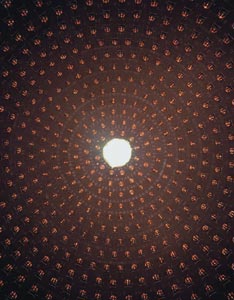
This is one of the reasons why I find neutrinos so interesting – while not being able to explain some pretty major phenomena such as gravity, dark matter and energy, and the matter–antimatter asymmetry, the Standard Model is one of the most successful and pervasive theories of particle physics to date, one that has consistently been proven to be accurate. To find out then, that neutrino physics is beyond the ken of the Standard Model, must have been a rather exciting prospect for physicists. But the proof of these neutrino oscillations, and therefore their mass, was a long time coming, and was what won Kajita and McDonald their Nobel in 2015. Kajita and his colleagues were part of the Japanese Super-Kamiokande experiment, which in 1998 showed that the ratio of electron to muon neutrinos coming from opposite sides of the Earth were different, showing that neutrinos changed flavour as they travelled long distances and passed through the Earth. For the first time, physicists were able to experimentally show that neutrinos must have mass, albeit only about 0.1 eV. A year later, the Sudbury Neutrino Observatory (SNO), led by McDonald, began collecting data, and was able to determine how many of the electron neutrinos produced in the Sun change into muon neutrinos or tau neutrinos as they travel to the Earth. SNO data were able to confirm the fact that about two-thirds of the solar electron neutrinos change flavour by the time they reach the Earth.

While neutrino science has significantly advanced in the years since both those experiments, there are still many questions, including the fact that we still don’t know what the exact masses of the three neutrino flavours, or how they achieve this mass. The day after the 2015 prize, I wrote a blog about why improving our understanding of neutrino mass is so important, when it comes to some of the big unanswered question in physics today. Enticingly, the answer to one or even more of those Standard Model problems that I previously mentioned may lie with an as-yet-undiscovered, but long coveted, fourth type of neutrino dubbed the sterile neutrino … but you’ll simply have to read that blog to find out more. I do hope, though, that I have made a good case for why neutrino Nobel prizes have fascinated me so. In any case, I will leave you with the captivating words of physicist Frederick Reines who once described neutrinos as “the most tiny quantity of reality ever imagined by a human being”.

Oxford Instruments logo

Physics World‘s Nobel prize coverage is supported by Oxford Instruments Nanoscience, a leading supplier of research tools for the development of quantum technologies, advanced materials and nanoscale devices. Visit nanoscience.oxinst.com to find out more.
Material lattice morphs into doubly curved shapes

Researchers have succeeded in 4D-printing material lattices that can shape-morph into complex and doubly curved structures in response to changes in temperature. The lattices are printed using inks composed of elastomeric matrices with tunable cross-link density and an anisotropic filler, which means that their elastic modulus and thermal expansion coefficient can be precisely controlled. The technique could be extended to many other temperature-responsive materials and different material designs to produce scalable, reversible, shape-shifting structures with hitherto unseen complexity for use in applications such as stents or scaffolds for artificial tissue, deformable lenses in telescopes and soft robotics.

Materials that reversibly change their shape in response to an external stimulus, such as temperature, could lead to a host of new applications in areas such as additive manufacturing, robotics and biomaterials. Most of the shape-morphing structures made so far, however, have been limited in their ability to transform into complex and doubly curved shapes. This is because such transformations require the surface of a material to curve in two perpendicular directions at the same time by different amounts at different places.

Making a shape-shifting sheet doubly-curved

This double curvature effect (which forms the basis of a famous nearly two-centuries-old theorem from the German mathematician Carl Friedrich Gauss) is familiar to anyone who has tried to gift-wrap a soccer ball, explain the researchers, led by Jennifer Lewis, William Boley and L Mahadevan of Harvard University. To transform paper, which is a flat (curvature-free) object, to the shape of a ball, which has positive double curvature, the paper needs to be creased and crumpled at the sides and bottom of the ball. Only if the paper sheet were able to naturally stretch or contract, or indeed both, could it then adapt to the shape of the ball.

To make a shape-shifting sheet doubly-curved, Boley, Rees and colleagues first calculated the form of the printed planar lattice that would deform into a given shape when heated. The lattice contained curved bilayer ribs with individually programmable shapes. The ink they then used to print it comprises elastomeric matrices made of PDMS (which naturally expands when heated) with tuneable cross-link density and anisotropic fillers comprising short glass fibres that have a far lower thermal expansion coefficient than the silicone matrix.

The ribs bend in response to changes in temperature, with the lattice nodes expanding and contracting much more than would a continuous sheet. The voids in the lattice also easily accommodate large changes in surface area when the ribs are designed to grow at different rates across the sheet, say the researchers.

Multiplexed bilayer ribs

To independently control extrinsic curvature, the researchers created multiplexed bilayer ribs composed of four different materials that allowed them to encode a wide range of 3D shape changes in response to temperature. As an example, they designed and printed planar lattices embedded with a conductive liquid metal that morphs into a dome shape to form an antenna whose resonance frequency changes as it deforms.

They also printed a flat mesh that deforms into the shape of a human face (that of Gauss himself in this work) when subjected to a certain temperature. They did this by designing each individual rib of the lattice to bend by a predetermined amount to preferentially form the shape of a nose or that of an eye socket. They say they can vary the arrangement of the four ribs to pre-programme whether the rib as whole curves up to morph into the shape of a nose, for example, or slopes down to form part of an eye socket.

The team, which includes researchers from Boston University and the Massachusetts Institute of Technology (MIT), says that it is now looking to apply its technique to stiffer materials for applications such as self-propelling fins and wings.

Full details of the present research are reported in PNAS.

Light from the cosmic web maps filaments across millions of light-years

Part of the web of gaseous filaments thought to permeate intergalactic space has been mapped directly for the first time. Two filaments of the web were observed by an international team of astronomers using the Very Large Telescope (VLT) and Keck II telescope. The team’s discovery heralds an important milestone in our understanding of the largest known structures in the universe, paving the way for future studies with even larger telescopes.

First gaining prominence in the late 1990s, the lambda cold dark matter model predicts that over 60% of all baryonic (normal) matter resides within a complex network of hydrogen gas filaments, which spans the entire universe. Galaxies form either when two filaments cross, or if a filament section is particularly dense. After a galaxy is formed, the surrounding filaments feed it with cool gaseous hydrogen.

When filaments are illuminated by ultraviolet light from galaxies, they should emit light by the process of hydrogen fluorescence. This light has been spotted in structures around galaxies, but not further out into intergalactic regions of space.

Sophisticated background subtraction

In this latest study, Hideki Umehata at the RIKEN Cluster for Pioneering Research in Japan and colleagues took a broader approach: observing filaments using the Multi Unit Spectroscopic Explorer (MUSE) on the VLT, and the Keck Cosmic Web Imager on the Keck II telescope. Both instruments are new instalments on their respective telescopes, and can perform spectroscopy over large fields of view. They were also specifically designed to detect the faintest astronomical objects ever predicted, using sophisticated techniques for light background subtraction.

When the results of the two instruments were combined, the Umehata and colleagues could search for filaments throughout the massive proto-cluster SSA22, situated 12 billion light-years away. Across the entire field observed, the astronomers identified hydrogen fluorescence in the brightest parts of the web, allowing them to map the structures of two parallel filaments permeating the cluster. The scale of this observation – around 3 million light-years – exceeds the size of the dark matter halos of even the largest galaxies. This suggested that the structure connects several galaxies, and is likely to be part of an even larger network.

Many questions about the properties of these clouds remain, including how their velocities can be determined, and how their full extents can be mapped. Umehata’s team hopes that in the future, even larger telescopes and longer observation times will be able to detect even fainter and sparser structures, allowing them to produce the first accurate, cosmic-scale maps of the universe’s largest known structures.

The observations are described in Science.

My favourite Nobel prize: highlighting climate change science and awareness

My favourite Nobel is not for physics but for peace: the 2007 Nobel Peace Prize split equally between Al Gore and the more than 2000 members of the Intergovernmental Panel on Climate Change (IPCC) committee for “their efforts to build up and disseminate greater knowledge about man-made climate change, and to lay the foundations for the measures that are needed to counteract such change”.

The IPCC half of the prize could perhaps have been for physics too. Many climate modellers have a background in this discipline, and physicists have sometimes claimed that physics is the most fundamental science.

Failure to prevent climate change has serious implications for peace – wars over food and water have occurred throughout history. The US military, if not its esteemed commander-in-chief, takes climate change extremely seriously and allows for it in its plans. As the Nobel prize press release put it, “Such [climate] changes will place particularly heavy burdens on the world’s most vulnerable countries…there may be increased danger of violent conflicts and wars, within and between states.” Some experts believe that part of the reason that China has invested so heavily in wind energy is the country’s history of regime change following famine.

In the twelve years since this prize I only wish we’d taken more action to cut greenhouse gas emissions enough to make our – and our descendants’ – future less challenging. Teenage climate activist Greta Thunberg is firm favourite to win this year’s Peace Prize, which will be announced on Friday. But if the rest of us had got our act together sooner, she wouldn’t need to have stepped up to this role. It seems inevitable that, like Alfred Nobel himself, who later seemed to regret his invention of dynamite and set up the Nobel Foundation as some recompense, all of us will come to rue our earlier behaviour, in this case our tardiness in cutting emissions.

There is still time, but we’ve made our job much harder.

Oxford Instruments logo

Physics World‘s Nobel prize coverage is supported by Oxford Instruments Nanoscience, a leading supplier of research tools for the development of quantum technologies, advanced materials and nanoscale devices. Visit nanoscience.oxinst.com to find out more

High-performance, low-field MRI improves lung imaging

Low-field MRI

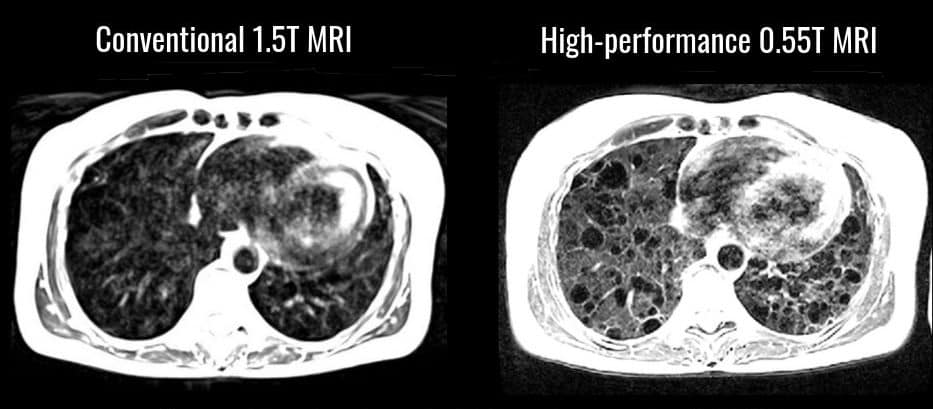
A high-performance, low magnetic-field MRI system can vastly improve the quality of lung images compared with a 1.5 T scanner. Developed by researchers at the National Institutes of Health (NIH) and Siemens, the low-field system is also more compatible with devices used in image-guided medical procedures and may prove safer for patients with pacemakers or defibrillators (Radiology 10.1148/radiol.2019190452).

Recent years have seen the introduction of MRI systems with higher magnetic field strengths, mainly for high-resolution imaging of the brain. Imaging at 1.5 T or 3 T can increase signal-to-noise ratio and resolution, but can also cause image distortion and artefacts at air–tissue interfaces. As commercial low-field MRI systems are generally not equipped with high-performance MRI hardware, the team propose that using a state-of-the-art MRI scanner, but at a lower field strength, may enable high-quality imaging of the heart and lungs.

To investigate this, the researchers modified a Siemens’ 1.5T MAGNETOM Aera MRI system to operate at 0.55 T, while maintaining the high-performance hardware and software needed to create high-quality images. They used the new imaging set-up to perform MRI examinations in 68 healthy volunteers and 15 participants with disease.

Importantly, the team found that metal devices such as interventional cardiology tools, which are at risk of heating with a high-field system, were now safe to use, heating up by less than 1°C. They demonstrated that MRI-guided heart catheterization (a procedure used to diagnose and treat some heart conditions) could be performed safely using commercial metallic guidewires.

“We continue to explore how MRI can be optimized for diagnostic and therapeutic applications,” says Robert Balaban, from the NIH’s National Heart, Lung, and Blood Institute (NHLBI). “The system reduces the risk of heating – a major barrier to the use of MRI-guided therapeutic approaches that have hampered the imaging field for decades.”

The team found that, compared with 1.5 T MR images, the 0.55 T scans reduced image distortion in the lungs, upper airway, cranial sinuses and intestines, due to improved field homogeneity. In patients with the lung disorder lymphangioleiomyomatosis, the low-field MR images showed lung cysts and surrounding tissues more clearly.

The researchers also examined the use of inhaled 100% oxygen to enhance signal intensity in lung tissue. They saw that inhalation of oxygen generated a signal enhancement of 19% at 0.55 T, compared with 7.6% at 1.5 T.

“MRI of the lung is notoriously difficult and has been off-limits for years because air causes distortion in MRI images,” explains first author Adrienne Campbell-Washburn. “A low-field MRI system equipped with contemporary imaging technology allows us to see the lungs very clearly. Plus, we can use inhaled oxygen as a contrast agent. This lets us study the structure and the function of the lungs much better.”

Campbell-Washburn suggests that this new generation of low-field MRI could change the way in which MRI is used in the future. “We can start thinking about doing more complex procedures under MRI-guidance now that we can combine standard devices with good quality cardiac imaging,” she says.

To boldly go

Lunar Lighting Test

Our bold future – as envisaged by the likes of Gene Roddenberry’s Star Trek franchise – was to be golden. Today’s shackles of money, nationalism, poverty, disease and discrimination would be long cast aside, replaced instead by a Utopian humanity that came together to explore the mysteries of universe just because it was there. But is this realistic?

“Sometimes people think about escaping Earth to escape traditions and restrictions on the planet. They think about space as a free environment, and to a certain extent that’s true, but the problem in space is that every commodity you need to survive…has to come through a manufacturing process,” astrobiologist Charles Cockell tells journalist Peter Ward near the end of the latter’s new book, The Consequential Frontier: Challenging the Privatization of Space. “So,” Cockell concludes, “you got the potential for tyranny in space that’s to an extreme that I don’t think has really ever been seen on the Earth.”

My opening comparison between humanity’s real-world prospects in space with those imagined by classic science fiction feels apposite. The idea that today’s space pioneers – such as SpaceX chief executive Elon Musk and ispace’s Takeshi Hakamada – have found inspiration in the likes of Star Trek, Star Wars and Isaac Asimov’s Foundation series is almost a thematic leitmotif that drifts throughout The Consequential Frontier.

Ward begins his work by rocketing the reader from the early days of the space race to the present and beyond. The lynchpin of this story is the so-called Outer Space Treaty, the document drawn up by the United Nations in 1967 to keep the space race peaceful and attempt to prohibit both the US and Russia from weaponizing their journeys out among the stars. The treaty, which was almost a decade in its planning, sets out a variety of principles, including a ban on the placement of weapons of mass destruction in space. It also prohibits the use of the Moon (and other such satellites) for military bases or testing arms, instead reserving them for exclusively peaceful purposes.

The strength of Ward’s work lies in the depth and personal touches he brings out in each of his many interview subjects. Of particular interest to me were the discussions with space enthusiasts who promote, for example, journeys to, and the colonization of, the red planet. It is hard not to get caught up in their enthusiasm. “I’ve got friends at this point that I know would literally die for just a chance to try to get to Mars, so let’s start coming together and build something around this,” says Bill Hargenrader, founder of the “I Love Mars” project, to Ward. Former Lockheed Martin Astronautics engineer Robert Zubrin proposes a paid subscription service, at $100 per person a year, to help humanity settle on Mars – sort of a Kickstarter to the stars, if you will.

In contrast, a particular intrigue comes into the anecdotes about times when NASA sacrificed potential innovations – such as in the development of recyclable rockets and the notion of refuelling waystations in space – for fear of seeming to supersede existing corporate contracts, or taking actions that might minimize jobs in consequence.

Only once does Ward fall into the tiresome cliché of stereotyping scientists as cold, impassionate thinking machines. Weirdly, this slip comes as he describes an interview with noted Harvard University geneticist George Church, whom he describes as speaking about space “with an un-clinical passion”, despite “being a biologist by profession”.

Church appears in what is perhaps the book’s most speculative and fascinating aside – the notion that humans might one day be physically modified to better survive the ravages of life in space. Using techniques such as CRISPR–Cas9, it may be possible to alter the human genome to make us less susceptible to interstellar radiation, for example, or better suited to living in environments with minimal gravity. I could happily digest an entire book on this subject, but I felt that in this case Ward might have better served his readers by exploring the science and ethics underpinning these proposals in more detail.

In fact, The Consequential Frontier could easily have been longer and more involved, I suspect, without needing to compromise on reader engagement. But the book’s main weakness is the scant overall delivery of Ward’s message. Given the title of the book, which seems to presuppose a strong cautionary tale about the dangers of privatizing space, the main body of text – despite being detailed and captivating – feels anodyne with respect to this potential argument.

The Outer Space Treaty will soon find itself out of date

Only in the concluding chapter does Ward’s strength of feeling begin to show. “The Outer Space Treaty was a great achievement in its time,” he argues, “but will soon find itself out of date, and needs to be revisited and revised specifically for those times of commercial interests in space. Without strong revisions, the document’s vague wording will be its downfall, and the gigantic loopholes will be exploited.” More of this, earlier, would have carried a stronger narrative thread as we set course out into this final frontier – boldly or otherwise.

  • Melville House Books, 244pp, £25hb

Cosmic pretzel feeds baby stars, fusion is his new graphene, is ‘Planet 9’ a tiny black hole?

The above image shows two baby stars as they feed on a cosmic pretzel. Each star is surrounded by a circumstellar disc of dust and gas. Those discs are the two bright spots in the image and each disc is has a radius similar to the distance from the Sun to the asteroid belt. The distance between the stars is about 28 times the Sun-Earth distance.

The twisted filaments surrounding the two discs are also dust and gas that is feeding the two stars. The image was taken by the Atacama Large Millimeter/submillimeter Array of radio telescopes, which is operated by the European Southern Observatory.

You can read more about how this remarkable image is shedding new light on star formation in “A cosmic pretzel”.

Astonishing claim

“Nuclear fusion has become his graphene”. It’s not every day that physics features in the endless political debate going on in the UK – but this quip made on BBC Radio 4 by the columnist Polly Toynbee made me chuckle. She was referring to the astonishing claim by the British prime minister that nuclear fusion will provide clean energy by 2040.

Clearly Boris Johnson didn’t get the memo that fusion energy is always at least 30 years away and his 20-year claim has left some UK fusion scientists puzzled. Writing in The Conversation Thomas Nicholas at the University of York explains why  “Conservatives’ ‘nuclear fusion by 2040’ pledge is wishful thinking”.

The graphene part of Toynbee’s quip is a reference to the former Conservative politician and chancellor of the exchequer George Osborne. He was very keen on the ultrathin material — possibly because it was invented in Manchester, which is the epicentre of his “Northern Powerhouse”.

Next up is a more plausible claim – that there is a primordial black hole orbiting the Sun. Jakub Scholtz of the University of Durham and James Unwin at the University of Illinois say that the gravitational tug of a tiny black hole – about 5-10 Earth masses – could explain the oddly-clustered orbits of objects beyond Neptune. Another possible explanation for this clustering is the existence of ‘Planet 9’ a similarly-sized planet in a huge and eccentric orbit.

But Planet 9 has not been observed directly, so Scholtz and Unwin reckon that a black hole the size of a bowling ball could be the invisible culprit. They set-out their argument in “What if Planet 9 is a Primordial Black Hole?”.


How to shape photons using a trapped atom

The first system for reshaping the time-varying profiles of individual photons has been created by Olivier Morin and colleagues at the Max-Planck-Institute for Quantum Optics in Garching, Germany. The team manipulated a single trapped atom to emit and absorb photons with the desired shapes by fine-tuning the properties of a pulsed laser beam. Their demonstration could bring about important advances towards efficient exchange of quantum information.

A photon is a quantum of light that can be described as a packet of waves that travel through space. A photon’s wavefunction is spread out over time and the specific nature of that distribution is the photon’s temporal shape or mode.

Photons are used to exchange quantum information and the ability to control the temporal shape of photons could be used to boost the performance of quantum networks. However, the reliable creation of photons with specific temporal shapes is difficult and this has hampered developments of quantum communications networks, particularly those with many transmitters and receivers.

Rubidium atom

Now Morin’s team has tackled this problem by coming up with a way of reshaping the temporal modes of single photons before they reached a receiver. Their scheme involves trapping a single atom of rubidium within an optical cavity and having the atom interact with individual information-carrying photons prior to the photons hitting a receiver. A pulsed laser beam causes that atom to absorb a photon with one temporal shape and then emit a photon with a different temporal shape that is compatible with the receiver.

Using this technique, Morin and colleagues were able to change the temporal width of an individual photon from 0.5 ms to 0.5 µs – shrinking the width by a factor of one thousand. They were also able to change the width back to 0.5 ms. This makes their set-up the first-ever demonstration of the complete, flexible and accurate control of time-dependent wavefunctions of single photons, over several orders of magnitude.

Morin and colleagues say that their technique could become an important tool for creating distributed quantum information systems in the future. The researchers envisage applications including all-optical quantum communications systems. In the most imaginative scenarios, photon-reshaping devices could even become crucial components of nonlocal quantum clouds, which would support the rapid exchange of quantum information.

The research is described in Physical Review Letters.

Sharing scientific and indigenous knowledge brings new insights

Towards the end of summer, bowhead whales appear in greater numbers in the waters to the northeast of Utqiaġvik in northern Alaska, US. The seasonal aggregation provides an opportunity for local indigenous people to restock their ice cellars. For scientists, the movements of the bowhead whales provide insight into ocean ecosystems.

By working together, hunters from this region and scientists showed that the whales congregate here at summer’s end because of alternating wind patterns that aggregate krill – shrimp-like zooplankton – in waters northeast of Utqiaġvik. As a result, hunters can forecast more accurately when whaling conditions are likely to be good, and scientists better understand the interaction between climate and ocean ecosystem dynamics. The collaboration even resulted in a film – Arctic Currents: a Year in the Life of the Bowhead Whale.

As this example illustrates, despite their differing perspectives, scientists and indigenous people have much to offer each other when it comes to understanding Arctic ecosystems. Sue Moore of the University of Washington, US, and Donna Hauser of the University of Alaska Fairbanks assessed Arctic projects that shared conventional science insights and indigenous knowledge. From sea ice and oceanography to the ecology and health of Arctic whales and seals, the study, published in Environmental Research Letters (ERL), reveals how these two very different kinds of knowledge can complement each other.

Conventional science is well equipped to make accurate measurements over large areas, the researchers note. But fancy instruments can’t peer back into the deep past. At best, scientists usually have a few decades’ worth of measurements. Indigenous people know the area near their villages (tens to hundreds of kilometres) very well, and have generational knowledge that goes back centuries, including understanding of their environment and the changes it has undergone.

“The two ways of looking at the ecosystem are complementary in their space-time scales, so we can learn more by sharing insights,” says Moore.

Moore and Hauser also note that finding a common interest and building trust is crucial to a good working relationship. Often scientists are in the field only for short periods of time, but social media tools such as Facebook can help maintain a connection and enable information sharing outside  fieldwork seasons.

The various partnerships the team reviewed operated in different ways; a flexible approach appeared to be key to a good working relationship. Finding shared questions and adapting metrics to make them relevant and measurable for both parties was important.

As the Earth’s climate continues to change, Moore and Hauser suggest that finding the common ground between conventional science and indigenous knowledge can play a significant role in understanding and adapting to the rapid changes now underway in Arctic marine ecosystems.

Flashbacks from scientific childhoods, how to give and receive a Nobel prize, clocking blood flow in sickle cell patients

In this episode of the Physics World Weekly podcast we explain how the diffuse scattering of light could improve the lives of children with sickle cell disease. We talk about what it is like to win a Nobel prize and also about the tremendous amount of work that goes into choosing the winners.

Physics World editors also offer a few predictions of who could bag next week’s Nobel Prize for physics and reminisce about what it was like to be a child who was obsessed with science.

Oxford Instruments logo

Physics World‘s Nobel prize coverage is supported by Oxford Instruments Nanoscience, a leading supplier of research tools for the development of quantum technologies, advanced materials and nanoscale devices. Visit nanoscience.oxinst.com to find out more

Copyright © 2026 by IOP Publishing Ltd and individual contributors