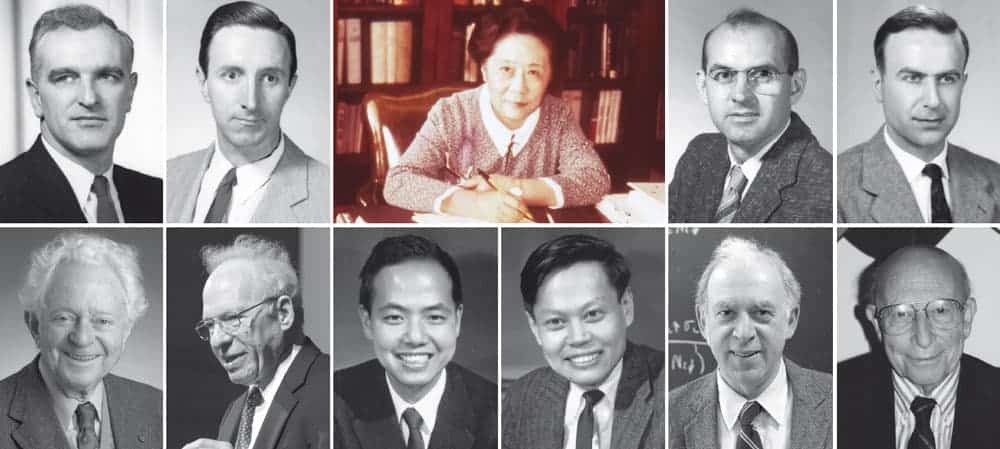
Influential theoretical physicist and Nobel laureate Chen-Ning Yang dies aged 103

The Chinese particle physicist Chen-Ning Yang died on 18 October at the age of 103. Yang shared half of the 1957 Nobel Prize for Physics with Tsung-Dao Lee for their theoretical work that overturned the notion that parity is conserved in the weak force – one of the four fundamental forces of nature.

Born on 22 September 1922 in Hefei, China, Yang competed a BSc at the National Southwest Associated University in Kunming in 1942. After finishing an MSc in statistical physics at Tsinghua University two years later, in 1945 he moved to the University of Chicago in the US as part of a government-sponsored programme. He received his PhD in physics in 1948 working under the guidance of Edward Teller.

In 1949 Yang moved to the Institute for Advanced Study in Princeton, where he made pioneering contributions to quantum field theory, working together with Robert Mills. In 1953 they proposed the Yang-Mills theory, which became a cornerstone of the Standard Model of particle physics.

The ‘Wu experiment’

It was also at Princeton where Yang began a fruitful collaboration with Lee, who died last year aged 97. Their work on parity – a property of elementary particles that expresses their behaviour upon reflection in a mirror – led to the duo winning the Nobel prize.

In the early 1950s, physicists had been puzzled by the decays of two subatomic particles, known as tau and theta, which are identical except that the tau decays into three pions with a net parity of -1, while a theta particle decays into two pions with a net parity of +1.

There were two possible explanations: either the tau and theta are different particles or that parity in the weak interaction is not conserved with Yang and Lee proposing various ways to test their ideas (Phys. Rev. 104 254).

This “parity violation” was later proved experimentally by, among others, Chien-Shiung Wu at Columbia University. She carried out an experiment based on the radioactive decay of unstable cobalt-60 nuclei into nickel-60 – what became known as the “Wu experiment”. For their work, Yang, who was 35 at the time, shared the 1957 Nobel Prize for Physics with Lee.

Influential physicist

In 1965 Yang moved to Stony Brook University, becoming the first director of the newly founded Institute for Theoretical Physics, which is now known as the C N Yang Institute for Theoretical Physics. During this time he also contributed to advancing science and education in China, setting up the Committee on Educational Exchange with China – a programme that has sponsored some 100 Chinese scholars to study in the US.

In 1997, Yang returned to Beijing where he became an honorary director of the Centre for Advanced Study at Tsinghua University. He then retired from Stony Brook in 1999, becoming a professor at Tsinghua University. During his time in the US, Yang obtained US citizenship, but renounced it in 2015.

More recently, Yang was involved in debates over whether China should build the Circular Electron Positron Collider (CEPC) – a huge 100 km circumference underground collider that would study the Higgs boson in unprecedented detail and be a successor to CERN’s Large Hadron Collider. Yang took a sceptical view calling it “inappropriate” for a developing country that is still struggling with “more acute issues like economic development and environment protection”.

Yang also expressed concern that the science performed on the CEPC is just “guess” work and without guaranteed results. “I am not against the future of high-energy physics, but the timing is really bad for China to build such a super collider,” he noted in 2016. “Even if they see something with the machine, it’s not going to benefit the life of Chinese people any sooner.”

Lasting legacy

As well as the Nobel prize, Yang won many other awards such as the US National Medal of Science in 1986, the Einstein Medal in 1995, which is presented by the Albert Einstein Society in Bern, and the American Physical Society’s Lars Onsager Prize in 1990.

“The world has lost one of the most influential physicists of the modern era,” noted Stony Brook president Andrea Goldsmith in a statement. “His legacy will continue through his transformational impact on the field of physics and through the many colleagues and students influenced by his teaching, scholarship and mentorship.”
‘Science needs all perspectives – male, female and everything in-between’: Brazilian astronomer Thaisa Storchi Bergmann

As a teenager in her native Rio Grande do Sul, a state in Southern Brazil, Thaisa Storchi Bergmann enjoyed experimenting in an improvised laboratory her parents built in their attic. They didn’t come from a science background – her father was an accountant, her mother a primary school teacher – but they encouraged her to do what she enjoyed. With a friend from school, Storchi Bergmann spent hours looking at insects with a microscope and running experiments from a chemistry toy kit. “We christened the lab Thasi-Cruz after a combination of our names,” she chuckles.

At the time, Storchi Bergmann could not have imagined that one day this path would lead to cosmic discoveries and international recognition at the frontiers of astrophysics. “I always had the curiosity inside me,” she recalls. “It was something I carried since adolescence.”

That curiosity almost got lost to another discipline. By the time Storchi Bergmann was about to enter university, she was swayed by a cousin living with her family who was passionate about architecture. By 1974 she began studying architecture at the Federal University of Rio Grande do Sul (UFRGS). “But I didn’t really like technical drawing. My favourite part of the course were physics classes,” she says. Within a semester, she switched to physics.

There she met Edemundo da Rocha Vieira, the first astrophysicist UFRGS ever hired – who later went on to structure the university’s astronomy department. He nurtured Storchi Bergmann’s growing fascination with the universe and introduced her to research.

In 1977, newly married after graduation, Storchi Bergmann followed her husband to Rio de Janeiro, where she did a master’s degree and worked with William Kunkel, an American astronomer who was in Rio to help establish Brazil’s National Astrophysics Laboratory. She began working on data from a photometric system to measure star radiation. “But Kunkel said galaxies were a lot more interesting to study, and that stuck in my head,” she says.

Three years after moving to Rio, she returned to Porto Alegre, in Rio Grande do Sul, to start her doctoral research and teach at UFRGS. Vital to her career was her decision to join the group of Miriani Pastoriza, one of the pioneers of extragalactic astrophysics in Latin America. “She came from Argentina, where [in the late 1970s and early 1980s] scientists were being strongly persecuted [by the country’s military dictatorship] at the time,” she recalls. Pastoriza studied galaxies with “peculiar nuclei” – objects later known to harbour supermassive black holes. Under Pastoriza’s guidance, she moved from stars to galaxies, laying the foundation for her career.

Between 1986 and 1987, Storchi Bergmann often travelled to Chile to make observations and gather data for her PhD, using some of the largest telescopes available at the time. Then came a transformative period – a postdoc fellowship in Maryland, US, just as the Hubble Space Telescope was launched in 1990. “Each Thursday, I would drive to Baltimore for informal bag-lunch talks at the Space Telescope Science Institute, absorbing new results on active galactic nuclei (AGN) and supermassive black holes,” Storchi Bergmann recalls.

Discoveries and insights

In 1991, during an observing campaign, she and a collaborator saw something extraordinary in the galaxy NGC 1097: gas moving at immense speeds, captured by the galaxy’s central black hole. The work, published in 1993, became one of the earliest documented cases of what are now called “tidal disruption events”, in which a star or cloud gets too close to a black hole and is torn apart.

Her research also contributed to one of the defining insights of the Hubble era: that every massive galaxy hosts a central black hole. “At first, we didn’t know if they were rare,” she explains. “But gradually it became clear: these objects are fundamental to galaxy evolution.”

Another collaboration brought her into contact with Daniela Calzetti, whose work on the effects of interstellar dust led to the formulation of the widely used “Calzetti law”. These and other contributions placed Storchi Bergmann among the most cited scientists worldwide, recognition of which came in 2015 when she received the L’Oréal-UNESCO Award for Women in Science.

Her scientific achievements, however, unfolded against personal and structural obstacles. As a young mother, she often brought her baby to observatories and conferences so she could breastfeed. This kind of juggling is no stranger to many women in science.

“It was never easy,” Storchi Bergmann reflects. “I was always running, trying to do 20 things at once.” The lack of childcare infrastructure in universities compounded the challenge. She recalls colleagues who succeeded by giving up on family life altogether. “That is not sustainable,” she insists. “Science needs all perspectives – male, female and everything in-between. Otherwise, we lose richness in our vision of the universe.”

When she attended conferences early in her career, she was often the only woman in the room. Today, she says, the situation has greatly improved, even if true equality remains distant.

Now a tenured professor at UFRGS and a member of the Brazilian Academy of Sciences, Storchi Bergmann continues to push at the cosmic frontier. Her current focus is the Legacy Survey of Space and Time (LSST), about to begin at the Vera Rubin Observatory in Chile.

Her group is part of the AGN science collaboration, developing methods to analyse the characteristic flickering of accreting black holes. With students, she is experimenting with automated pipelines and artificial intelligence to make sense of and manage the massive amounts of data.

Challenges ahead

Yet this frontier science is not guaranteed. Storchi Bergmann is frustrated by the recent collapse in research scholarships. Historically, her postgraduate programme enjoyed a strong balance of grants from both of Brazil’s federal research funding agencies, CNPq (from the Ministry of Science) and CAPES (from the Ministry of Education). But cuts at CNPq, she says, have left students without support, and CAPES has not filled the gap.

“The result is heartbreaking,” she says. “I have brilliant students ready to start, including one from Piauí (a state in north-eastern Brazil), but without a grant, they simply cannot continue. Others are forced to work elsewhere to support themselves, leaving no time for research.”

She is especially critical of the policy of redistributing scarce funds away from top-rated programmes to newer ones without expanding the overall budget. “You cannot build excellence by dismantling what already exists,” she argues.

For her, the consequences go beyond personal frustration. They risk undermining decades of investment that placed Brazil on the international astrophysics map. Despite these challenges, Storchi Bergmann remains driven and continues to mentor master’s and PhD students, determined to prepare them for the LSST era.

At the heart of her research is a question as grand as any in cosmology: which came first – the galaxy or its central black hole? The answer, she believes, will reshape our understanding of how the universe came to be. And it will carry with it the fingerprint of her work: the persistence of a Brazilian scientist who followed her curiosity from a home-made lab to the centres of galaxies, overcoming obstacles along the way.

Precision sensing experiment manipulates Heisenberg’s uncertainty principle

Physicists in Australia and the UK have found a new way to manipulate Heisenberg’s uncertainty principle in experiments on the vibrational mode of a trapped ion. Although still at the laboratory stage, the work, which uses tools developed for error correction in quantum computing, could lead to improvements in ultra-precise sensor technologies like those used in navigation, medicine and even astronomy.

“Heisenberg’s principle says that if two operators – for example, position x and momentum, p – do not commute, then one cannot simultaneously measure both of them to absolute precision,” explains team leader Ting Rei Tan of the University of Sydney’s Nano Institute. “Our result shows that one can instead construct new operators – namely ‘modular position’ x̂ and ‘modular momentum’ p̂. These operators can be made to commute, meaning that we can circumvent the usual limitation imposed by the uncertainty principle.”

The modular measurements, he says, give the true measurement of displacements in position and momentum of the particle if the distance is less than a specific length l, known as the modular length. In the new work, they measured x̂ = x mod lx and p̂ = p mod lp, where lx and lp are the modular length in position and momentum.

“Since the two modular operators x̂ and p̂ commute, this means that they are now bounded by an uncertainty principle where the product is larger or equal to 0 (instead of the usual ℏ/2),” adds team member Christophe Valahu. “This is how we can use them to sense position and momentum below the standard quantum limit. The catch, however, is that this scheme only works if the signal being measured is within the sensing range defined by the modular lengths.”

The researchers stress that Heisenberg’s uncertainty principle is in no way “broken” by this approach, but it does mean that when observables associated with these new operators are measured, the precision of these measurements is not limited by this principle. “What we did was to simply push the uncertainty to a sensing range that is relatively unimportant for our measurement to obtain a better precision at finer details,” Valahu tells Physics World.

This concept, Tan explains, is related to an older method known as quantum squeezing that also works by shifting uncertainties around. The difference is that in squeezing, one reshapes the probability, reducing the spread in position at the cost of enlarging the spread of momentum, or vice versa. “In our scheme, we instead redistribute the probability, reducing the uncertainties of position and momentum within a defined sensing range, at the cost of an increased uncertainty if the signal is not guaranteed to lie within this range,” Tan explains. “We effectively push the unavoidable quantum uncertainty to places we don’t care about (that is, big, coarse jumps in position and momentum) so the fine details we do care about can be measured more precisely.

“Thus, as long as we know the signal is small (which is almost always the case for precision measurements), modular measurements give us the correct answer.”

Repurposed ideas and techniques

The particle being measured in Tan and colleagues’ experiment was a 171Yb+ ion trapped in a so-called grid state, which is a subclass of error-correctable logical state for quantum bits, or qubits. The researchers then used a quantum phase estimation protocol to measure the signal they imprinted onto this state, which acts as a sensor.

This measurement scheme is similar to one that is commonly used to measure small errors in the logical qubit state of a quantum computer. “The difference is that in this case, the ‘error’ corresponds to a signal that we want to estimate, which displaces the ion in position and momentum,” says Tan. “This idea was first proposed in a theoretical study.”

Towards ultra-precise quantum sensors

The Sydney researchers hope their result will motivate the development of next-generation precision quantum sensors. Being able to detect extremely small changes is important for many applications of quantum sensing, including navigating environments where GPS isn’t effective (such as on submarines, underground or in space). It could also be useful for biological and medical imaging, materials analysis and gravitational systems.

Their immediate goal, however, is to further improve the sensitivity of their sensor, which is currently about 14 x10-24 N/Hz1/2, and calculate its limit. “It would be interesting if we could push that to the 10-27 N level (which, admittedly, will not be easy) since this level of sensitivity could be relevant in areas like the search for dark matter,” Tan says.

Another direction for future research, he adds, is to extend the scheme to other pairs of observables. “Indeed, we have already taken some steps towards this: in the latter part of our present study, which is published in Science Advances, we constructed a modular number operator and a modular phase operator to demonstrate that the strategy can be extended beyond position and momentum.”

Eye implant restores vision to patients with incurable sight loss

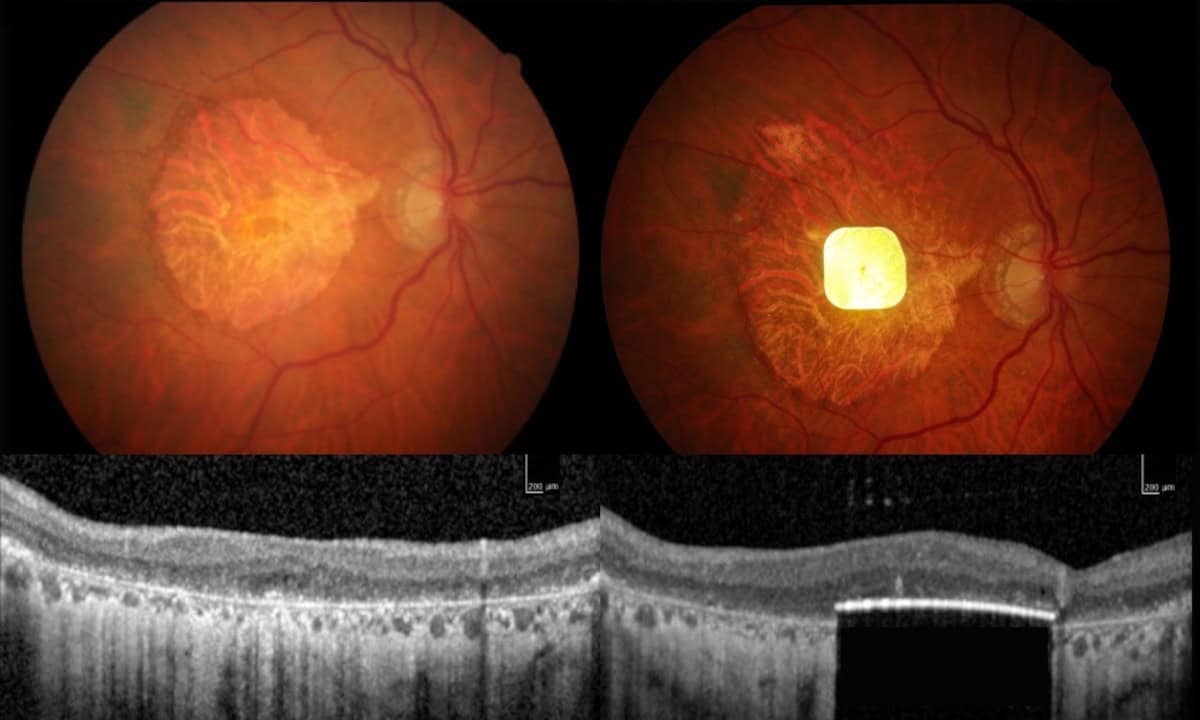
A tiny wireless implant inserted under the retina can restore central vision to patients with sight loss due to age-related macular degeneration (AMD). In an international clinical trial, the PRIMA (photovoltaic retina implant microarray) system restored the ability to read in 27 of 32 participants followed up after a year.

AMD is the most common cause of incurable blindness in older adults. In its advanced stage, known as geographic atrophy, AMD can cause progressive, irreversible death of light-sensitive photoreceptors in the centre of the retina. This loss of photoreceptors means that light is not transduced into electrical signals, causing profound vision loss.

The PRIMA system works by replacing these lost photoreceptors. The two-part system includes the implant itself: a 2 × 2 mm array of 378 photovoltaic pixels, plus PRIMA glasses containing a video camera that captures images and, after processing, projects them onto the implant using near-infrared light. The pixels in the implant convert this light into electrical pulses, restoring the flow of visual information to the brain. Patients can use the glasses to focus and zoom the image that they see.

The clinical study, led by Frank Holz of the University of Bonn in Germany, enrolled 38 participants at 17 hospital sites in five European countries. All participants had geographic atrophy due to AMD in both eyes, as well as loss of central sight in the study eye over a region larger than the implant (more than 2.4 mm in diameter), leaving only limited peripheral vision.

Around one month after surgical insertion of the 30 μm-thick PRIMA array into one eye, the patients began using the glasses. All underwent training to learn to interpret the visual signals from the implant, with their vision improving over months of training.

Eye images before and after array implantation

After one year, 27 of the 32 patients who completed the trial could read letters and words (with some able to read pages in a book) and 26 demonstrated clinically meaningful improvement in visual acuity (the ability to read at least two extra lines on a standard eye chart). On average, participants could read an extra five lines, with one person able to read an additional 12 lines.

Nineteen of the participants experienced side-effects from the surgical procedure, with 95% of adverse events resolving within two months. Importantly, their peripheral vision was not impacted by PRIMA implantation. The researchers note that the infrared light used by the implant is not visible to remaining photoreceptors outside the affected region, allowing patients to combine their natural peripheral vision with the prosthetic central vision.

“Before receiving the implant, it was like having two black discs in my eyes, with the outside distorted,” Sheila Irvine, a trial patient treated at Moorfields Eye Hospital in the UK, says in a press statement. “I was an avid bookworm, and I wanted that back. There was no pain during the operation, but you’re still aware of what’s happening. It’s a new way of looking through your eyes, and it was dead exciting when I began seeing a letter. It’s not simple, learning to read again, but the more hours I put in, the more I pick up. It’s made a big difference.”

The PRIMA system – originally designed by Daniel Palanker at Stanford University – is being developed and manufactured by Science Corporation. Based on these latest results, reported in the New England Journal of Medicine, the company has applied for clinical use authorization in Europe and the United States.

Single-phonon coupler brings different quantum technologies together

Researchers in the Netherlands have demonstrated the first chip-based device capable of splitting phonons, which are quanta of mechanical vibrations. Known as a single-phonon directional coupler, or more simply as a phonon splitter, the new device could make it easier for different types of quantum technologies to “talk” to each other. For example, it could be used to transfer quantum information from spins, which offer advantages for data storage, to superconducting circuits, which may be better for data processing.

“One of the main advantages of phonons over photons is they interact with a lot of different things,” explains team leader Simon Gröblacher of the Kavli Institute of Nanoscience at Delft University of Technology. “So it’s very easy to make them interface with systems.”

There are, however, a few elements still missing from the phononic circuitry developer’s toolkit. One such element is a reversible beam splitter that can either combine two phonon channels (which might be carrying quantum information transferred from different media) or split one channel into two, depending on its orientation.

While several research groups have already investigated designs for such phonon splitters, these works largely focused on surface acoustic waves. This approach has some advantages, as waves of this type have already been widely explored and exploited commercially. Mobile phones, for example, use surface acoustic waves as filters for microwave signals. The problem is that these unconfined mechanical excitations are prone to substantial losses as phonons leak into the rest of the chip.

Mimicking photonic beam splitters

Gröblacher and his collaborators chose instead to mimic the design of beam splitters used in photonic chips. They used a strip of thin silicon to fashion a waveguide for phonons that confined them in all dimensions but one, giving additional control and reducing loss. They then brought two waveguides into contact with each other so that one waveguide could “feel” the mechanical excitations in the other. This allowed phonon modes to be coupled between the waveguides – something the team demonstrated down to the single-phonon level. The researchers also showed they could tune the coupling between the two waveguides by altering the contact length.

Although this is the first demonstration of single-mode phonon coupling in this kind of waveguide, the finite element method simulations Gröblacher and his colleagues ran beforehand made him pretty confident it would work from the outset. “I’m not surprised that it worked. I’m always surprised how hard it is to get it to work,” he tells Physics World. “Making it to look and do exactly what you design it to do – that’s the really hard part.”

Prospects for integrated quantum phononics

According to A T Charlie Johnson, a physicist at the University of Pennsylvania, US whose research focuses on this area, that hard work paid off. “These very exciting new results further advance the prospects for phonon-based qubits in quantum technology,” says Johnson, who was not directly involved in the demonstration. “Integrated quantum phononics is one significant step closer.”

As well as switching between different quantum media, the new single-phonon coupler could also be useful for frequency shifting. For instance, microwave frequencies are close to the frequencies of ambient heat, which makes signals at these frequencies much more prone to thermal noise. Gröblacher already has a company working on transducers to transform quantum information from microwave to optical frequencies with this challenge in mind, and he says a single-phonon coupler could be handy.

One remaining challenge to overcome is dispersion, which occurs when phonon modes couple to other unwanted modes. This is usually due to imperfections in the nanofabricated device, which are hard to avoid. However, Gröblacher also has other aspirations. “I think the one component that’s missing for us to have the similar level of control over phonons as people have with photons is a phonon phase shifter,” he tells Physics World. This, he says, would allow on-chip interferometry to route phonons to different parts of a chip, and perform advanced quantum experiments with phonons.

The study is reported in Optica.

This jumping roundworm uses static electricity to attach to flying insects

Researchers in the US have discovered that a tiny jumping worm uses static electricity to increase the chances of attaching to its unsuspecting prey.

The parasitic roundworm Steinernema carpocapsae, which live in soil, are already known to leap some 25 times their body length into the air. They do this by curling into a loop and springing in the air, rotating hundreds of times a second.

If the nematode lands successfully, it releases bacteria that kills the insect within a couple of days upon which the worm feasts and lays its eggs. At the same time, if it fails to attach to a host then it faces death itself.

While static electricity plays a role in how some non-parasitic nematodes detach from large insects, little is known whether static helps their parasitic counterparts to attach to an insect.

To investigate, researchers are Emory University and the University of California, Berkeley, conducted a series of experiments, in which they used high-speed microscopy techniques to film the worms as they leapt onto a fruit fly.

They did this by tethering a fly with a copper wire that was connected to a high-voltage power supply.

They found that a charge of a few hundred volts – similar to that generated in the wild by an insect’s wings rubbing against ions in the air – fosters a negative charge on the worm, creating an attractive force with the positively charged fly.

Carrying out simulations of the worm jumps, they found that without any electrostatics, only 1 in 19 worm trajectories successfully reached their target. The greater the voltage, however, the greater the chance of landing. For 880 V, for example, the probability was 80%.

The team also carried out experiments using a wind tunnel, finding that the presence of wind helped the nematodes drift and this also increased their chances of attaching to the insect.

“Using physics, we learned something new and interesting about an adaptive strategy in an organism,” notes Emory physicist Ranjiangshang Ran. “We’re helping to pioneer the emerging field of electrostatic ecology.”

Wearable UVA sensor warns about overexposure to sunlight

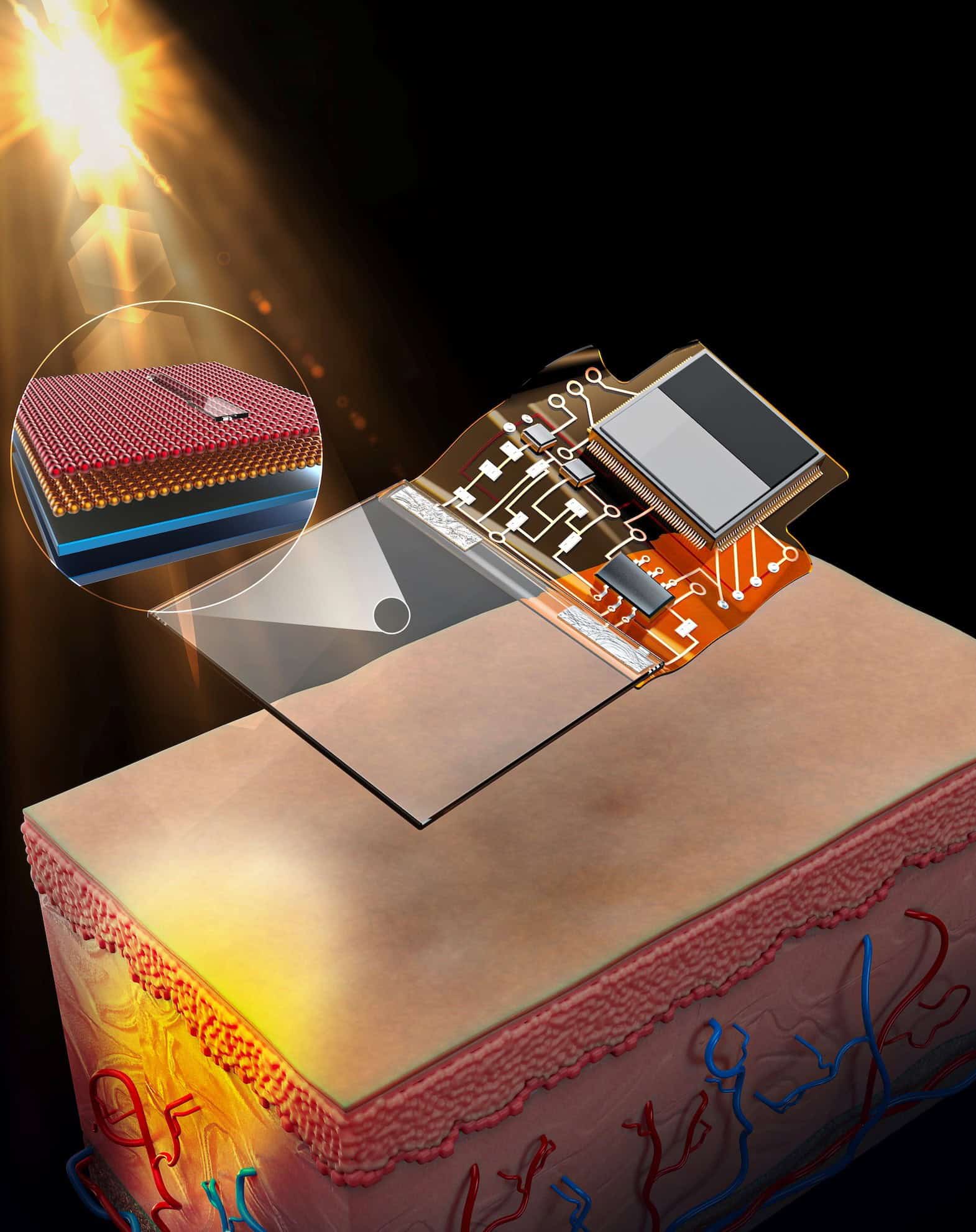
Illustration showing the operation of the UVA detector

A flexible and wearable sensor that allows the user to monitor their exposure to ultraviolet (UV) radiation has been unveiled by researchers in South Korea. Based on a heterostructure of four different oxide semiconductors, the sensor’s flexible, transparent design could vastly improve the real-time monitoring of skin health.

UV light in the A band has wavelengths of 315–400 nm and comprises about 95% of UV radiation that reaches the surface of the earth. Because of its relatively long wavelength, UVA can penetrate deep into the skin. There it can alter biological molecules, damaging tissue and even causing cancer.

While covering up with clothing and using sunscreen are effective at reducing UVA exposure, researchers are keen on developing wearable sensors that can monitor UVA levels in real time. These can alert users when their UVA exposure reaches a certain level. So far, the most promising advances towards these designs have come from oxide semiconductors.

Many challenges

“For the past two decades, these materials have been widely explored for displays and thin-film transistors because of their high mobility and optical transparency,” explains Seong Jun Kang at Kyung Hee University, who led the research. “However, their application to transparent ultraviolet photodetectors has been limited by high persistent photocurrent, poor UV–visible discrimination, and instability under sunlight.”

While these problems can be avoided in more traditional UV sensors, such as gallium nitride and zinc oxide, these materials are opaque and rigid – making them completely unsuitable for use in wearable sensors.

In their study, Kang’s team addressed these challenges by introducing a multi-junction heterostructure, made by stacking multiple ultrathin layers of different oxide semiconductors. The four semiconductors they selected each had wide bandgaps, which made them more transparent in the visible spectrum but responsive to UV light.

The structure included zinc and tin oxide layers as n-type semiconductors (doped with electron-donating atoms) and cobalt and hafnium oxide layers as p-type semiconductors (doped with electron-accepting atoms) – creating positively charged holes. Within the heterostructure, this selection created three types of interface: p–n junctions between hafnium and tin oxide; n–n junctions between tin and zinc oxide; and p–p junctions between cobalt and hafnium oxide.

Efficient transport

When the team illuminated their heterostructure with UVA photons, the electron–hole charge separation was enhanced by the p–n junction, while the n–n and p–p junctions allowed for more efficient transport of electrons and holes respectively, improving the design’s response speed. When the illumination was removed, the electron–hole pairs could quickly decay, avoiding any false detections.

To test their design’s performance, the researchers integrated their heterostructure into a wearable detector. “In collaboration with UVision Lab, we developed an integrated Bluetooth circuit and smartphone application, enabling real-time display of UVA intensity and warning alerts when an individual’s exposure reaches the skin-type-specific minimal erythema dose (MED),” Kang describes. “When connected to the Bluetooth circuit and smartphone application, it successfully tracked real-time UVA variations and issued alerts corresponding to MED limits for various skin types.”

As well as maintaining over 80% transparency, the sensor proved highly stable and responsive, even in direct outdoor sunlight and across repeated exposure cycles. Based on this performance, the team is now confident that their design could push the capabilities of oxide semiconductors beyond their typical use in displays and into the fast-growing field of smart personal health monitoring.

“The proposed architecture establishes a design principle for high-performance transparent optoelectronics, and the integrated UVA-alert system paves the way for next-generation wearable and Internet-of-things-based environmental sensors,” Kang predicts.

The research is described in Science Advances.

Astronauts could soon benefit from dissolvable eye insert

Spending time in space has a big impact on the human body and can cause a range of health issues. Many astronauts develop vision problems because microgravity causes body fluids to redistribute towards the head. This can lead to swelling in the eye and compression of the optic nerve.

While eye conditions can generally be treated with medication, delivering drugs in space is not a straightforward task. Eye drops simply don’t work without gravity, for example. To address this problem, researchers in Hungary are developing a tiny dissolvable eye insert that could deliver medication directly to the eye. The size of a grain of rice, the insert has now been tested by an astronaut on the International Space Station.

This episode of the Physics World Weekly podcast features two of those researchers – Diána Balogh-Weiser of Budapest University of Technology and Economics and Zoltán Nagy of Semmelweis University – who talk about their work with Physics World’s Tami Freeman.

Scientists obtain detailed maps of earthquake-triggering high-pressure subsurface fluids

Researchers in Japan and Taiwan have captured three-dimensional images of an entire geothermal system deep in the Earth’s crust for the first time. By mapping the underground distribution of phenomena such as fracture zones and phase transitions associated with seismic activity, they say their work could lead to improvements in earthquake early warning models. It could also help researchers develop next-generation versions of geothermal power – a technology that study leader Takeshi Tsuji of the University of Tokyo says has enormous potential for clean, large-scale energy production.

“With a clear three-dimensional image of where supercritical fluids are located and how they move, we can identify promising drilling targets and design safer and more efficient development plans,” Tsuji says. “This could have direct implications for expanding geothermal power generation, reducing dependence on fossil fuels, and contributing to carbon neutrality and energy security in Japan and globally.”

In their study, Tsuji and colleagues focused on a region known as the brittle-ductile transition zone, which is where rocks go from being seismically active to mostly inactive. This zone is important for understanding volcanic activity and geothermal processes because it lies near an impermeable sealing band that allows fluids such as water to accumulate in a high-pressure, supercritical state. When these fluids undergo phase transitions, earthquakes may follow. However, such fluids could also produce more geothermal energy than conventional systems. Identifying their location is therefore important for this reason, too.

A high-resolution “digital map”

Many previous electromagnetic and magnetotelluric surveys suffered from low spatial resolution and were limited to regions relatively close to the Earth’s surface. In contrast, the techniques used in the latest study enabled Tsuji and colleagues to create a clear high-resolution “digital map” of deep geothermal reservoirs – something that has never been achieved before.

To make their map, the researchers used three-dimensional multichannel seismic surveys to image geothermal structures in the Kuju volcanic group, which is located on the Japanese island of Kyushu. They then analysed these images using a method they developed known as extended Common Reflection Surface (CRS) stacking. This allowed them to visualize deeper underground features such as magma-related structures, fracture-controlled fluid pathways and rock layers that “seal in” supercritical fluids.

“In addition to this, we applied advanced seismic tomography and machine-learning based analyses to determine the seismic velocity of specific structures and earthquake mechanisms with high accuracy,” explains Tsuji. “It was this integrated approach that allowed us to image a deep geothermal system in unprecedented detail.” He adds that the new technique is also better suited to mountainous geothermal regions where limited road access makes it hard to deploy the seismic sources and receivers used in conventional surveys.

A promising site for future supercritical geothermal energy production

Tsuji and colleagues chose to study the Kuju area because it is home to several volcanoes that were active roughly 1600 years ago and have erupted intermittently in recent years. The region also hosts two major geothermal power plants, Hatchobaru and Otake. The former has a capacity of 110 MW and is the largest geothermal facility in Japan.

The heat source for both plants is thought to be located beneath Mt Kuroiwa and Mt Sensui, and the region is considered a promising site for supercritical geothermal energy production. Its geothermal reservoir appears to consist of water that initially fell as precipitation (so-called meteoric water) and was heated underground before migrating westward through the fault system. Until now, though, no detailed images of the magmatic structures and fluid pathways had been obtained.

Tsuji says he has long wondered why geothermal power is not more widely used in Japan, despite the country’s abundant volcanic and thermal resources. “Our results now provide the scientific and technical foundation for next-generation supercritical geothermal power,” he tells Physics World.

The researchers now plan to try out their technique using portable seismic sources and sensors deployed in mountainous areas (not just along roads) to image the shallower parts of geothermal systems in greater detail as well. “We also plan to extend our surveys to other geothermal fields to test the general applicability of our method,” Tsuji says. “Ultimately, our goal is to provide a reliable scientific basis for the large-scale deployment of supercritical geothermal power as a sustainable energy source.”

The present work is detailed in Communications Earth & Environment.

Researchers visualize blood flow in pulsating artificial heart

A research team in Sweden has used real-time imaging technology to visualize the way that blood pumps around a pulsating artificial heart – moving medicine one step closer to the safe use of such devices in people waiting for donor transplants.

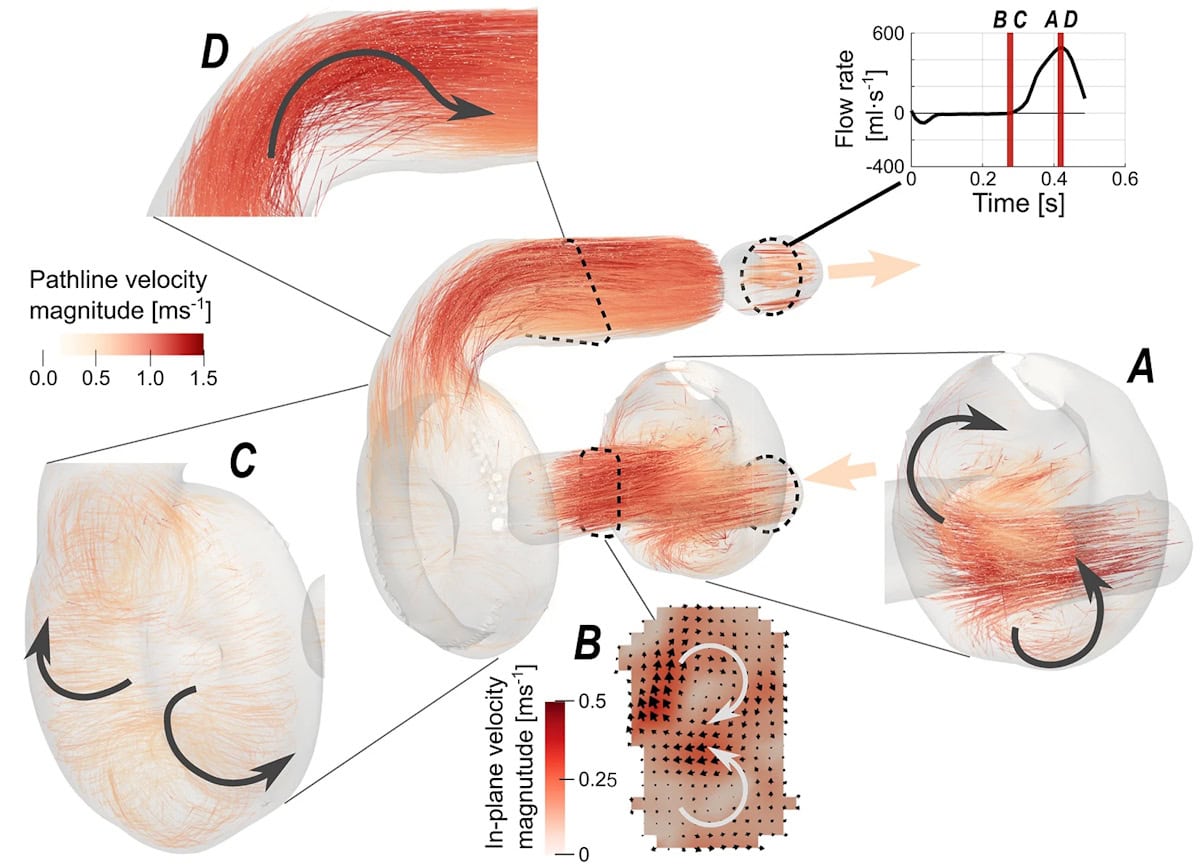
The Linköping University (LiU) team used 4D flow MRI to examine the internal processes of a mechanical heart prototype created by Västerås-based technology company Scandinavian Real Heart. The researchers evaluated blood flow patterns and compared them with similar measurements taken in a native human heart, outlining their results in Scientific Reports.

“As the pulsatile total artificial heart contains metal parts, like the motor, we used 3D printing [to replace most metal parts] and a physiological flow loop so we could run it in the MRI scanner under representable conditions,” says first author Twan Bakker, a PhD student at the Center for Medical Image Science and Visualization at LiU.

No elevated risk

According to Bakker, this is first time that a 3D-printed MRI-compatible artificial heart has been built and successfully evaluated using 4D flow MRI. The team was pleased to discover that the results corroborate the findings of previous computational fluid dynamics simulations indicating “low shear stress and low stagnation”. Overall flow patterns also suggest there is no elevated risk for blood complications compared with hearts in healthy humans and those suffering from valvular disease.

“[The] patterns of low blood flow, a risk for thrombosis, were in the same range as for healthy native human hearts. Patterns of turbulent flow, a risk for activation of blood platelets, which can contribute to thrombosis, were lower than those found in patients with valvular disease,” says Bakker.

“4D flow MRI allows us to measure the flow field without altering the function of the total artificial heart, which is therefore a valuable tool to complement computer simulations and blood testing during the development of the device. Our measurements provided valuable information to the design team that could improve the artificial heart prototype further,” he adds.

Improved diagnostics

A key advantage of 4D flow MRI over alternative measurement techniques – such as particle image velocimetry and laser doppler anemometry – is that it doesn’t require the creation of a fully transparent model. This is an important distinction for Bakker, since some components in the artificial heart are made with materials possessing unique mechanical properties, meaning that replication in a see-through version would be extremely challenging.

“With 4D flow MRI we had to move the motor away from the scanner bore, but the material in contact with the blood and the motion of the device remained as the original design,” says Bakker.

According to Bakker, the velocity measurements can also be used for visualization and analysis of hemodynamic parameters, such as turbulent kinetic energy, wall shear stresses and more in the heart, as well as for larger vessels in our bodies.

“By studying the flow dynamics in patients and healthy subjects, we can better understand its role in health and disease, which can then support improved diagnostics, interventions and surgical therapies,” he explains.

Moving forward, Bakker says that the research team will continue to evaluate the improved heart design, which was recently granted designation as a Humanitarian Use Device (HUD) by the US Food and Drug Administration (FDA).

“This makes it possible to apply for designation as a Humanitarian Device Exemption (HDE) – which may grant the device limited marketing rights and paves the way for the pre-clinical and clinical studies,” he says.

“In addition, we are currently developing tools to compute blood flow using simulations. This may provide us with a deeper understanding of the mechanisms that cause the formation of thrombosis and haemolysis,” he tells Physics World.

Copyright © 2026 by IOP Publishing Ltd and individual contributors