New observations of aerosol-polluted, low-lying clouds appear to refute the idea that the microscopic particulates increase the clouds’ overall water content, which would significantly boost their capacity to reflect sunlight back into space. While there’s no doubt that aerosols in low-level clouds can cause some cooling through an increase in the concentration of individual water droplets, researchers in the UK and Germany have found that this effect is moderated by a reduction in overall water content within clouds. The result, they say, should help to more accurately constrain future climate projections.
Scientists have known for many years that the release of microscopic aerosol particles into the atmosphere has the potential to change the properties of low-level clouds and, in turn, the amount of solar radiation that they reflect back into space. Two different factors are at play in this process. The first, which is backed up by strong observational evidence, is that the aerosols provide additional nuclei around which water can condense. This produces clouds that are made up of more numerous, but smaller, water droplets, and this increase in overall surface area typically causes the clouds to last longer and reflect more sunlight.
At the same time, the presence of aerosols in clouds is also believed to alter the total amount of water held within the cloud – but the exact nature of this effect has not been clear. Some researchers have suggested that aerosols act to suppress to formation of rain, which would significantly increase the total amount of water inside the clouds. Such an increase in water content would further boost the reflectivity and reinforce the cooling effect of aerosols, potentially mitigating the warming caused by the emission of greenhouse gases.
To test this hypothesis, meteorologist Velle Toll of the University of Reading and colleagues decided to directly compare the properties of aerosol-rich clouds with cleaner clouds nearby. They looked for localized sources of man-made aerosols, including industrial towns, coal-fired power stations and oil refineries, which generate aerosol-rich clouds in their downwind wake and form distinctive features known as pollution tracks that can be detected from space.
Similar phenomena are also created behind ships and downwind of volcanic eruptions, but these typically only reach heights of 1.5 and 2.5 km respectively. In addition, ship tracks in particular tend to be limited in their lateral extent, typically only being around 10 km wide. In contrast, pollution tracks from land-based, anthropogenic aerosol sources cover a wider range of clouds at different heights.
The team analysed 15 years’ worth of high-resolution satellite data recorded by NASA’s Moderate Resolution Imaging Spectroradiometer (MODIS) satellite, covering a total of 2400 tracks from different climate zones across the Earth. In common with earlier observations, the researchers found that the droplets were on average 30% smaller in pollution tracks than in unpolluted clouds.
Despite some variability in water content, their observations show that the polluted clouds had a slightly lower water content overall – and not the increase that some researchers had expected. This, they report, is because the increases in water content by lower levels of rain formation are counteracted by an increased evaporation of water from aerosol-rich clouds.
The team conclude that the cooling effect of aerosols as a result of the increased surface area is moderated by the effect the particles have on cloud water content. “We estimate that the observed decrease in cloud water offsets 23% of the global climate-cooling effect caused by aerosol-induced increases in the concentration of cloud droplets,” Toll and colleagues said. “These findings invalidate the hypothesis that increases in cloud water cause a substantial climate cooling effect and translate into reduced uncertainty in projections of future climate.”
Writing in an associated comment piece, atmospheric physicist Anna Possner of Goethe University – who was not involved in the present study – called the extent of the overall cooling effect of aerosol emissions “one of the key uncertainties in climate science”.
The researchers’ work, she concludes, “strongly suggests that the sensitivity of cloud water content to changes in the concentration of human-made aerosols might not be accurate in many current global climate models, and that large cooling effects caused by variations in cloud water content are unlikely.”
Microplastic pollution is becoming a serious problem worldwide and is dangerous for both aquatic life and human health. Few solutions to treat this problem currently exist, but researchers in Australia have now developed an environmentally friendly technique for removing these contaminants from water sources using carbon nanosprings. The nanomaterials are benign to aquatic microorganisms, they say, and may even be harnessed as a hydrocarbon source for cultivating algae, so allowing these plastics to be reused in a positive way.
Microplastics are a subgroup of plastics and are defined as those that measure less than 5 mm across. They can be further classed into primary and secondary microplastics and mostly originate from everyday cosmetic products (exfoliating facial creams and the like) and the breakdown of large pieces of plastics from household rubbish.
Microplastics are now unfortunately ubiquitous in aquatic systems and are difficult to recycle or remove by conventional wastewater purification techniques because of their small size. These microcontaminants take decades to break down naturally. More worrying still, since they adsorb hydrophobic organic pollutants and heavy metal contaminants in water, they accumulate these hazardous substances over time and end up poisoning marine life. And when ingested, they accumulate all the way up the food chain, explains study co-leader Shaobin Wang, who is at Curtin University in Perth and the University of Adelaide.
Reactive oxygen species break down organic pollutants in water
Researchers recently discovered that reactive oxygen species (ROS) can break down organic pollutants in water. In these studies, however, the ROS were produced using heavy toxic metals such as iron or cobalt, which bring their own share of problems.
Wang and colleagues have now found a way around this problem by producing ROS using manganese carbide nanocomposites encapsulated in helical-shaped carbon nanotubes doped with nitrogen. They made these nanomaterials using a one-pot pyrolysis technique.
The researchers tested out their nanocomposites on various plastic-containing solutions including one containing microplastic beads from a commercial facial cleanser. They found that the carbon nanotube catalysts removed a significant fraction of these plastics in solution in just eight hours while remaining stable themselves. The catalysts do this by shearing the long-chain molecules in the microplastics into sub-polymers with shorter carbon chains. These sub-polymers are then attacked by the ROS and broken into short chains with a lower molecular weight. These short chains are harmless and dissolve in water.
Great mechanical strength and ultrahigh chemical stability
“The fascinating thing about our catalyst design is that we can control the morphology and structure of the nanocarbon material by the pyrolysis temperature,” explains study co-leader Xiaoguang Duan, who is at Adelaide. “In this way, we can transform them into carbon clusters, long/short carbon nanotubes and spring-like structures. The nanosprings are particularly interesting since they have great mechanical strength and ultrahigh chemical stability in the oxidizing conditions that exist during microplastic degradation.
“Their coiled shape also makes them stable and maximizes the surface area of the catalyst.”
The fact that they contain manganese makes them magnetic too, which means that they can be easily separated and recycled from wastewater streams once their job is done, so that they can be used again and again, he adds. And since the manganese is embedded deep in the nanosprings, it cannot leach out easily, which means it will not cause any secondary contamination.
Degradation intermediates are non-toxic
To make sure that the intermediates produced from microplastic degradation were not more polluting than the microplastics they are meant to treat, Wang, Duan and co-workers analysed how green algae (Chlorella vulgaris) fared in the reaction filtrate. They found that the intermediates had little effect on the algae.
There was another pleasant surprise in store for the researchers: after six and eight hours in the reactor, they observed that the optical densities of the algae increased by 8% and 12% respectively when compared to controls in pure water. According to the team, this implies that the lightweight-molecule by-products from microplastic degradation might actually be harnessed as hydrocarbon sources for growing algae.
Towards a new technology for controlling and re-utilizing plastics?
The organic intermediates from microplastics might be digested by microorganisms to be transformed to other valuable products (such as sugars, proteins and biofuels), so returning the carbons to nature, says Duan. Alternatively, these products might be reused by us humans in a green and sustainable way. “This may provide us with a new opportunity for coupling catalytic oxidation with biotechnology for controlling and re-utilizing plastics.”
The researchers now plan to develop more advanced strategies to degrade microplastic of different compositions and structures that they will collect from rivers and oceans as well as sediment. “We will also be looking to improve the performance of our nanocarbon catalysts and the reaction conditions in which they work,” Duan tells Physics World. “We will systematically investigate the degradation pathways of microplastics by the free radicals and further evaluate the toxicity of the organic intermediates at every stage of the breakdown process.”
This week’s podcast features an interview with Ray LaPierre, who heads up the department of engineering physics at McMaster University in Canada. Ray talks to fellow Canadian Hamish Johnston about his research in semiconductor nanowires, in particular for use in photonics and quantum computers, and also shares his experiences of working at JDS Uniphase during the telecoms boom.
Physics World‘s Anna Demming also joins the podcast to describe a flurry of new results in the emerging field of twistronics – where two layers of graphene are stacked on top of each other but twisted at a slight angle to each other. The discovery last year that bilayer graphene can become a superconductor if the two graphene layers are twisted at the so-called magic angle of 1.1º won Physics World’s 2018 Breakthrough of the Year, and since then the race has been on to investigate other angle-dependent properties of twisted bilayer graphene. Anna describes how different research teams are now trying to work out what causes these intriguing effects.
We also talk to industry editor Margaret Harris about the importance of technology and engineering for scientific progress. Margaret shares her own “light-bulb” moment, when she realized that new laser technology could have saved hours of experimental time during her PhD, and also highlights several articles in the latest Physics WorldFocus on Instruments and Vacuum that highlight how breakthrough scientific discoveries rely on developments in the enabling technologies – including the first images of a black hole that were revealed in April.
The US Department of Energy (DOE) has given the green light to a major upgrade of Argonne National Laboratory’s Advanced Photon Source. Costing $815m, the upgrade will see the “brightness” of the synchrotron boosted by up to three orders of magnitude allowing researchers to study materials and processes at an unprecedented level.
There are around 50 synchrotron light sources in 23 different countries around the world. These machines work by accelerating electrons to high energies and then injecting them into a circular storage ring where they emit powerful beams of X-rays. The X-rays act as a microscope and can be used to study the structure and properties of materials in a range of disciplines, from condensed-matter physics to biology.
The APS has been operating for almost 25 years and is currently used by around 5500 researchers every year. Formal work on the upgrade – dubbed APS-U — began in 2010 and in 2016 the DOE awarded the project “critical decision 1”, which give officials the go-ahead to carry out full design work, which was approved two years later.
The DOE has now given the go-ahead for construction and for officials to begin procuring equipment for the upgrade. It will involve increasing the brightness of the X-ray beam by around 100-1000 times of that of the existing APS. This will be achieved by replacing the storage ring with a new array of magnets that both steer the beam and focus it. The upgrade will also make use of a new type of “multi-bend achromat lattice” configuration, which has been developed at the European Synchrotron Radiation Facility in Grenoble, France, and will be incorporated into upgrades at other synchrotrons worldwide such as at the ESRF itself as well as SPRING-8 in Japan and PETRA IV in Germany.
Boosting brightness
Removal of the APS’s storage ring is set to will begin in June 2022 and take around a year to complete before the machine comes back online for users. It is hoped that the beam current in the new ring will double to 200 mA with the new magnet configuration resulting in a reduction in the electron beam’s “emittance” – a measure of the spread of the particles in a beam — by a factor of 70 from its present value of around 3100 pm (10-12 m).
Once operational it is hoped that the brightness of the APS-U at X-ray energies of 20 keV will be around 300 x 1020 compared with 0.6 x 10²⁰ at the APS. The upgrade will also see a set of new beamlines installed, which are designed to take advantage of the upgraded brightness.
“The upgraded APS will enable science at a completely new scale, enabling discoveries across a wide range of research from microelectronics to polymers to quantum,” says Argonne director Paul Kearns. “It’s an exciting time as Argonne is building two powerful facilities for the world’s scientific community. Together, the upgraded APS and our Aurora exascale computing system will provide powerful new capabilities to accelerate science and technology.”
“We are very happy to learn that the APS upgrade is now in full swing, and that the construction of the APS-U new storage ring with unprecedented small horizontal emittance is well on its way,” ESRF director general Francesco Sette told Physics World. “The upgrades [at facilities worldwide] will open up a new page in synchrotron X-ray science to the benefit of the international science and industrial innovation communities.”
Each year, the AAPM Annual Meeting holds a Young Investigator competition. The 10 submitted abstracts scored the highest by the reviewers were presented by the finalists in a dedicated symposium, held in honour of University of Wisconsin professor emeritus John R Cameron. The top three winners of the competition received their awards at a ceremony later that day. Here’s what the winners had to say.
The winner of the 2019 John R Cameron Young Investigator award was Jessica Rodgers from the Robarts Research Institute. Rodgers is developing a 3D ultrasound needle-guidance system to help improve high dose-rate (HDR) interstitial gynaecologic brachytherapy.
Gynaecologic cancers have diverse presentation, Rodgers explained, occur in challenging anatomic locations and exhibit highly variable disease geometry. One treatment option for such cancers is HDR interstitial brachytherapy, in which needles are inserted into the tumour and then a radioactive source is positioned within the needle channels to precisely irradiate the tumour target.
Accurate placement of the needles is essential to avoid delivering excess dose to nearby organs-at-risk (OARs), such as the bladder or rectum. Currently, guidance is achieved using an initial MR image, followed by post-insertion CT or MRI to verify needle placement. What’s needed, Rodgers told the audience, is a way to visualize the needles while they are being placed. Such intra-operative guidance, using 3D ultrasound, for example, should improve implant quality and reduce risk to OARs.
To account for the variability of gynaecologic cancer geometry and patient anatomy, Rodgers and colleagues have created an ultrasound device with three scanning modes: side-fire transrectal ultrasound (TRUS) with 170° probe rotation, side-fire transvaginal ultrasound (TVUS) with 360° rotation, and end-fire TVUS.
They tested the TRUS mode in five patients and the 360° TVUS mode in six patients, with 8–10 needles placed per patient. Comparing the ultrasound images to post-insertion CT images revealed mean needle positional differences of 3.8 and 2.4 mm, and mean angular differences of 3° and 2°, for TRUS and TVUS, respectively.
Rodgers noted that while the needle and patient anatomy were clearly visible in the ultrasound images, the needle tips could not be seen in deep insertions. This may be achieved, however, using the end-fire mode. In a proof-of-concept phantom study, the team combined end-fire and side-fire TVUS to visualize the placement of six needles. Here, the mean maximum difference from the CT images was 1.9 mm and the mean angular difference was 1.5°.
The next challenge is rapid needle localization, for which Rodgers is developing an automatic needle segmentation algorithm. In tests on a TVUS image, the algorithm took about 11 s to identify all needles with a mean positional difference of 0.8 mm from manual segmentation and an angular difference of 0.4°.
“3D ultrasound may provide an accessible and versatile approach for accurately visualizing needles and OARs intra-operatively, with automatic needle segmentation having the potential to improve the clinical utility,” Rodgers concluded.
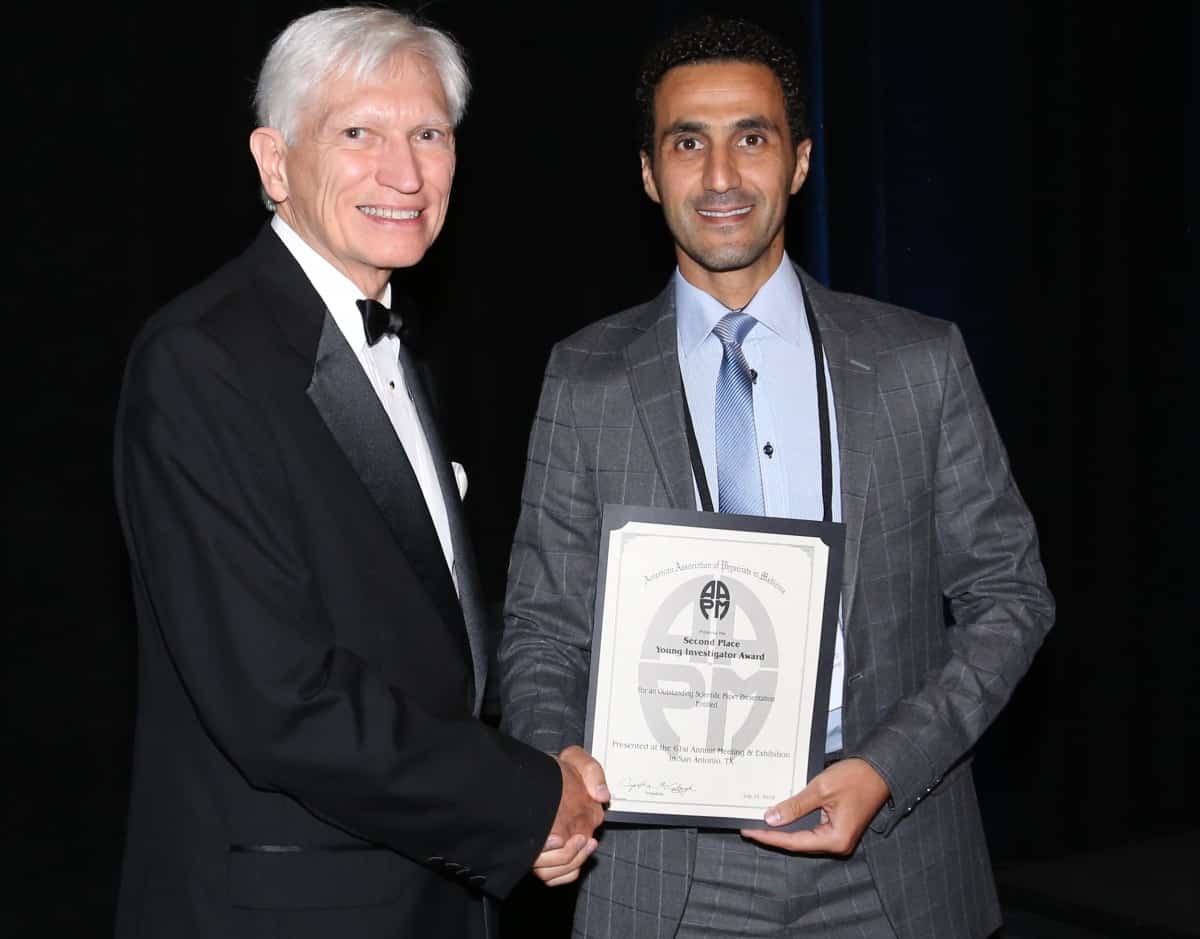
The runner up Young Investigator was Abdelkhalek Hammi from Massachusetts General Hospital/Harvard Medical School. Hammi described a method for modelling the dose delivered to lymphocytes during intracranial radiation therapy.
Abdelkhalek Hammi from MGH/Harvard Medical School receives his award. (Courtesy: AAPM)
Lymphocytes are white blood cells that form part of the body’s immune system. Irradiation of these calls is thought to lead to lymphopenia – an abnormally low level of lymphocytes in the blood. Hammi’s goal is to perform dynamic modelling of blood flow and radiation delivery to estimate the dose to circulating lymphocytes. Such work could increase our understanding of radiotherapy-induced lymphopenia and help optimize treatments to reduce lymphocyte depletion.
To achieve this, he used MRI to extract macroscopic brain vasculature data and develop a computational model of intracranial blood flow, extending this with a generic vessel model to create more than 1000 pathways through the brain. To simulate lymphocyte irradiation, the model explicitly tracks the motion of over 250,000 individual “blood particles” through the brain and radiation field and calculates the dose to each one.
Hammi simulated the rest of the human body using a statistical approach containing 24 organs. The entire blood flow model encompassed more than 22 million particles. He applied the models to compare dose to circulating blood from a 6-field intensity-modulated radiotherapy (IMRT) plan and a 3-field passive scattering proton therapy plan, both delivering 60 Gy in 30 fractions. He noted that the computation time was less than 10 s.
The mean delivered dose was 0.06 Gy for proton therapy and 0.13 Gy for IMRT, with maximum doses of 0.32 and 0.57 Gy, respectively. “We could see that the dose delivered to blood is really small compared with the dose to the target,” Hammi explained. “But the dose to blood in the proton plan is half of that received with IMRT.”
“This is the first explicit 4D blood flow model including recirculation to estimate radiation dose received by the circulating blood pool,” Hammi concluded, noting that his model accounts for blood flow throughout the entire body.
Deep learning helps spare the heart during radiotherapy
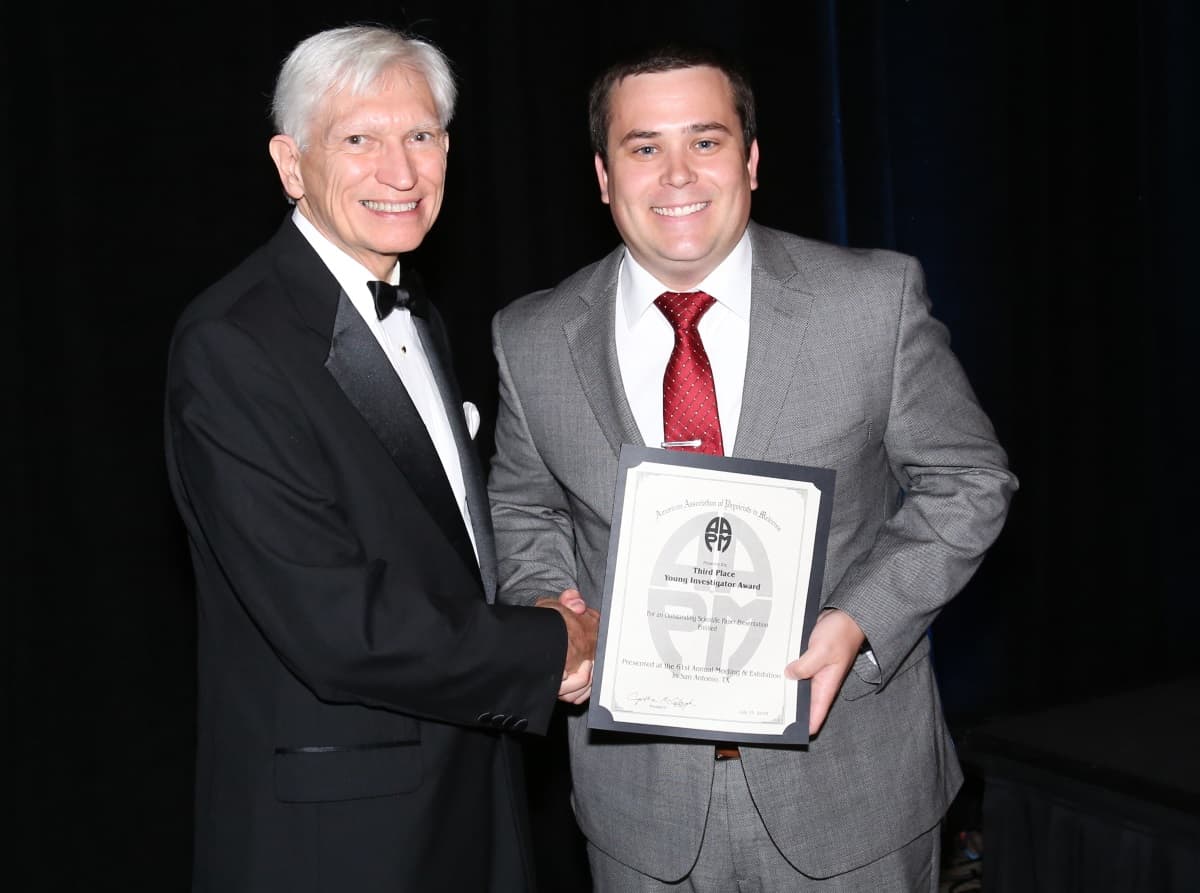
The third-place award this year went to Eric Morris, from Wayne State University and Henry Ford Cancer Institute. Morris presented his work on the use of deep learning to segment cardiac structures.
Eric Morris, from Wayne State University and Henry Ford Cancer Institute, receives his award. (Courtesy: AAPM)
Radiation to the heart is potentially fatal for cancer patients, Morris told the audience. Sensitive cardiac substructures are linked to cardiac toxicity and avoiding these could improve patient outcome after radiotherapy. Unfortunately, there’s currently no accurate way to segment these structures as they are not visible in standard CT images. As such, they are not considered in radiation therapy planning.
MR images could provide more information, but MRI is not a standard part of treatment planning in all clinics. Instead, Morris developed a deep learning system that learns to delineate 12 cardiac substructures from cardiac MR images registered to treatment planning CTs, but requires only non-contrast CT inputs.
Morris trained the system using T2-weighted MRIs and CT images from 25 breast cancer patients. To prevent erroneous outputs, he implemented a post-processing step using conditional random fields (CRFs). He then assessed the system using 11 independent test patient CTs. In these test cases, “CRFs improved the segmentation results for all 12 substructures,” said Morris. “This gives us confidence that relevant features are maintained during post-processing.”
Prediction versus ground-truth evaluation revealed that the deep learning model accurately segmented all structures with a mean distance-to-agreement (MDA) of less than 2 mm. Nine structures had a Dice similarity coefficient (DSC) of over 0.75, including the heart chambers (0.87) and great vessels (0.85). Pulmonary veins were delineated with a DSC of 0.71 and coronary arteries with a DSC of 0.50.
Morris also compared results for the 11 test CTs with a previously developed multi-atlas method. The deep learning technique improved MDA by about 1.4 mm over the multi-atlas results, and increased DSC by 3–7% for the chambers and 23–35% for coronary arteries. “Deep learning provided a statistical improvement over multi-atlas for all substructures,” he emphasized, adding that his model takes about 14 seconds to perform segmentation, compared with around 10 minutes for the multi-atlas approach.
“Our deep learning model offers widespread applicability for efficient and accurate cardiac substructure segmentation on non-contrast enhanced treatment planning CTs,” Morris concluded. “This may yield stronger associations with outcome than standard-of-care dose evaluation using whole-heart metrics.”
The amount of information about climate change on US government websites has decreased significantly since Donald Trump became president in 2017. That is according to a report by the Environmental Data & Governance Initiative (EDGI), which finds that the amount of language related to climate change on government websites has fallen by more than a quarter.
The EDGI – an organization that analyzes the federal government’s environmental data, websites, institutions and policy – monitored the use of certain words and phrases contained in 5301 government websites between 2016 and 2018. They find a 26% decrease in the use of words such as “climate change”, “clean energy” and “adaptation” while phrases that they say are “employed to undermine a clear analysis” of climate change such as “energy independence”, “resilience”, and “sustainability” rose by the same percentage.
The report reveals that the term climate change has been completely removed from 73 webpages belonging to the Environmental Protection Agency while references to climate change have also disappeared from 63 webpages of other cabinet departments such as the occupational health and safety administration and the transportation department. “Rather than cultivating the informational resources necessary to confront climate change, the Trump administration has attempted to remove the topic from federal agency websites, a clear policy indicator in line with withdrawing from the Paris agreement and the clean power plan,” says the report.
The EDGI’s report suggests that “self-censorship” by government employees could be behind the changes as well as government officials mandating such modifications. Yet other staff members, the report notes, seem intent on resisting the administration’s approach. This includes instances of workers adopting “rogue” social-media accounts to dispute “higher-ups” without “fear of retribution” as well as web managers at the Environmental Protection Agency fixing broken links to resources about climate change.
Clamping down
The disappearance of information about climate change from government websites is not the only evidence of the administration’s effort to remove references to it. Anonymous civil servants at the United States Geological Survey claim that officials have prevented them from using the term climate change in press releases while press reports emerged in June that White House officials tried unsuccessfully to persuade NASA administrator Jim Bridenstine — a former climate-change skeptic — to “systematically sidestep” evidence for climate change coming from NASA programmes.
Last month, the Washington Postreported that the administration blocked an intelligence agency in the state department from submitting testimony to Congress warning that human-caused climate change could have a “possibly catastrophic” impact. Rod Schoonover, the analyst who was scheduled to give the testimony, resigned on 12 July. Writing in the New York Times, Schoonover says that the White House “trampled not only on the scientific integrity of the assessment but also on the analytic independence of an arm of the intelligence community” adding that when the government “can shape or suppress intelligence analysis that it deems out of line with its political messaging, then the intelligence community has no true analytic independence”.
Baking has always fascinated me. Not only because I love to eat, but also because I love to prepare food for others. Generations of people have put a lot of dedication, love and passion into making something delicious – when people gather for a celebration, the centre of attraction is almost always food.
My other love is science. That comes from my questioning nature, which, combined with my potential for talking constantly for hours, always kept my parents busy. As a little boy, one thing that intrigued me was rain. Rain is a big thing in India, especially during monsoon season, which brings a sigh of relief after the scorching heat of summer. It always made me wonder where the rain came from. Little did I know that the same water that turns into vapour and then condenses to create clouds also creates the all-important steam during baking, helping cakes and breads to rise and pastries to puff.
Recipe for success: Rahul Mandal won The Great British Bake Off in 2018 and is now using cake to teach school students about science. (Courtesy: Nuclear AMRC)
For me, baking is a perfect combination of chemistry, biology and physics. Chemistry, as you mix different edible chemicals to create dough or batter, with tiny air bubbles trapped inside. Biology, as the culture of yeast provides carbon dioxide to make your bread rise. And physics, as those trapped gases expand and give the rise to the bakes.
Being part of The Great British Bake Off 2018 was a great experience. Apart from being in “the tent”, the other exciting part was the opportunity to do research on the science of baking and do some live experiments in front of millions of people. Just like any other experiment, understanding how baking works is the key to ensure the quality of the results. Designing and planning a bake is crucial – and is similar to setting up a laboratory experiment. You have to carefully consider each individual variable: from the proportion of ingredients, to the atmosphere inside the tent, to the structural stability of the bakes. All play important roles.
You could even say the kitchen is the oldest laboratory known to humankind.
Let’s talk about bakes
Baked goods are eaten all over the world, the most common being various kinds of cake, bread and biscuit. These are part of our daily life, whatever our country or culture. Their precise form will vary depending on the availability of grains – wheat, corn, barley, oat, rice and a few other cereals – as well as the local climate and the lifestyle of the people. But all start with grinding grains into flour and mixing it with liquid and fat to form some type of paste, dough or batter. Each will create a different type and texture of bread, cake or biscuit.
In my role as a STEM ambassador, I regularly visit schools and events to encourage young people to develop skills and careers in science, technology, engineering and mathematics. The way I do that is by talking about the science of baking, giving students a variety of baked foods and asking them how they think the same ingredients can give such different results.
The kids will quickly tell you that cake is airy, soft, moist, spongy and squeezy. Bread is soft and squeezy too, but also chewy. And biscuits are solid, hard, maybe chewy, and snappy.
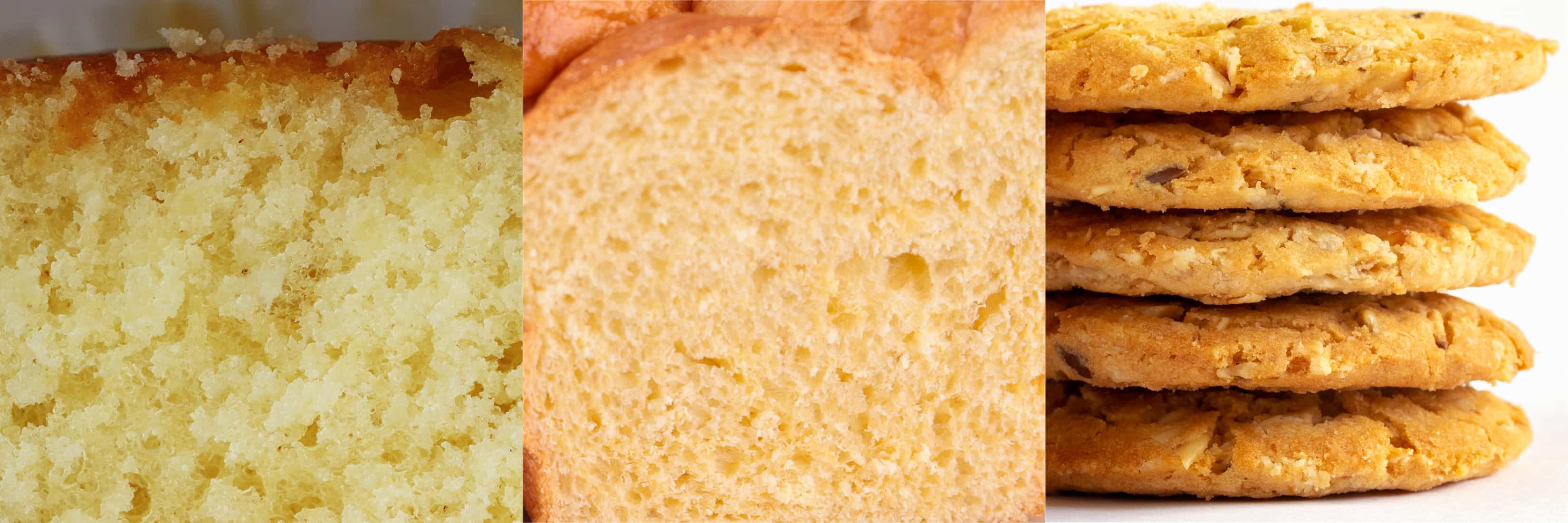
Even though they contain the same basic set of ingredients (see table above), the textures and flavours of Victoria sandwich cake, brioche bread and biscuits are completely different.
Cake (left) is the most decadent of all with equal amounts of fat, flour, sugar and eggs, which contributes to the soft and moist texture.
Brioche bread (centre), on the other hand, is more chewy and bouncy in texture thanks to the gluten that forms during kneading.
The snappy structure of the biscuits (right) comes from the comparative deficiency of hydration in the biscuit ingredients.
They are all delicious to eat, but the specific proportions (and some added ingredients like baking powder and yeast) make all the difference.
Each contains flour, fat, sugar and eggs in different proportions (see box above), which is one of the reasons for the differences in structure. The other reason is the additional ingredients – baking powder in cake, and yeast in bread – that make the mix rise and give you that airy spongy texture. Both play the crucial role of introducing carbon dioxide into the batter or dough.
Rise to the occasion
Baking powder is a combination of sodium bicarbonate and a dried acid, such as cream of tartar (potassium bitartrate). In its dry condition, it is inert and doesn’t react. But when added to the cake batter, the liquid makes it active, creating lots of tiny carbon dioxide bubbles that fill the mixture. To give maximum flexibility, commercial baking powders often have a two-stage rise – once during mixing, and again during oven baking. (Some recipes call for self-raising flour instead of baking powder – it simply contains added baking powder to provide the leavening during baking.)
The other way of introducing gases into cake batter is much more laborious. Known as the creaming method, it requires beating the butter with the sugar. You can observe this process by noticing the mixture change colour, from a buttery golden yellow hue to a creamy white, as you beat more air bubbles into the mix.
For bread, it’s slightly different. The gas bubbles are created by yeast, a common type of fungus that is readily found in the atmosphere – it’s the same type of fungus that is often seen as a white misty coating on grapes. Only a few varieties are safe for human consumption, and these are mass produced for the bread and beer industries. When added to a dough, the yeast feasts on the carbohydrate in the flour to create carbon dioxide as a byproduct, which makes the dough rise as it rests or “proves”.
So the important aspect for the soft fluffy baked goods is that they incorporate air before they are placed in the oven. It in this hot environment that the magic (or the physics) happens, and the dough or batter is transformed into a soft bread or spongy cake.
Into the oven
We can break down the many heat-induced reactions that occur in the oven into three generalized stages: expansion or rising; setting the structure; and colouring.
During expansion, the batter or dough reaches its full volume. The heat from the oven makes the trapped gases (air or carbon dioxide) expand in volume, as described by Charles’ law, which states that the volume of an ideal gas at constant pressure increases in direct proportion to absolute temperature. This is what gives us the familiar aerated texture. Alongside this expansion, the water molecules start to evaporate and create steam, which also expands and increases the total volume of the bake.
During the setting stage, the structural elements of egg and flour start to form the framework of the bake. The coiled protein molecules start to denature or unwind, and coagulate or firm up. The starch molecules absorb water and swell up until they disrupt and gelate. Along with the coagulated protein, this is what gives the cake or bread its final spongy structure.
In the final, colouring stage, the batter shape becomes stable. The proteins and sugars react on the surface of the bake, to create a beautifully coloured crust. This is the Maillard reaction, which can also cause caramelization at higher temperatures. The Maillard reaction can create hundreds of different flavour compounds depending on the conditions and ingredients – the same basic reaction also gives roasted coffee and seared meat their distinctive flavours.
Make it snappy
Now let’s talk about the harder, snappier bakes – pastry and biscuits. They are a bit different from bread and cakes, but the basic ingredients are still very similar: flour, fat and water, sometimes with added eggs or sugar.
In the case of pastry, the all-important rise comes from steam generated from the water and fat during baking in the oven. Fats used in baking generally include some water – butter is about 18–20% water, while baking spread is a kind of margarine with around 25% water. During baking, the water vaporizes to create steam, which increases in volume as the heat rises, pushing the flour molecules or layers apart. The proportion of butter or fat gives different kinds of pastry their distinctive short, flaky or puffed texture (see box).
Pastry variations
Ingredients
Shortcrust
Flaky
Puff
Choux
flour
125 g
125 g
225 g
70 g
butter/fat
55 g
80 g
250 g
55 g
water
30–40 ml
30–45 ml
120 ml
140 ml
egg
—
—
—
2
(Courtesy: iStock/EasterBunnyUK; iStock/Alexthq)
(Courtesy: iStock/Juanmonino; Nuclear AMRC)
(Courtesy: Nuclear AMRC)
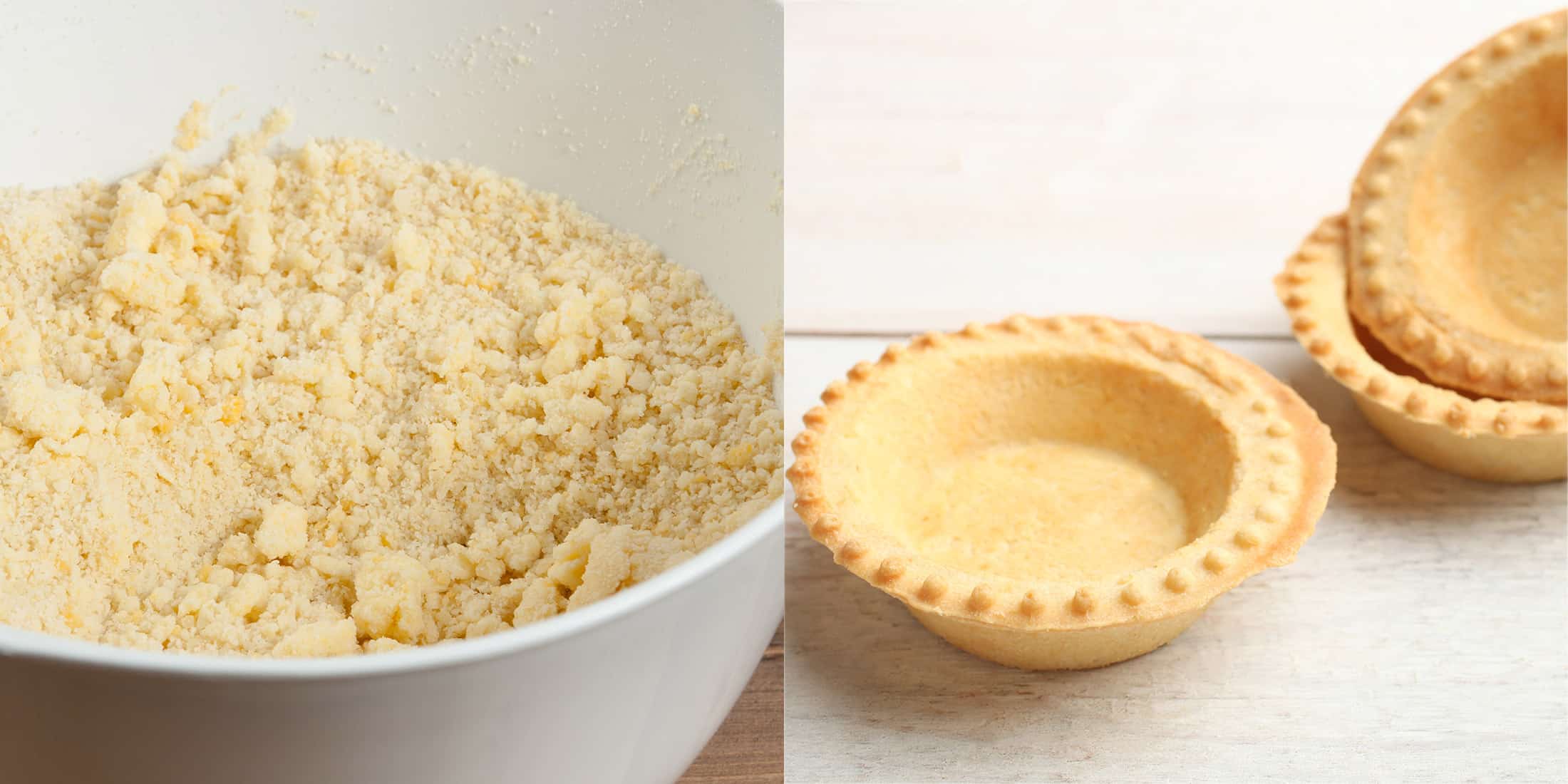
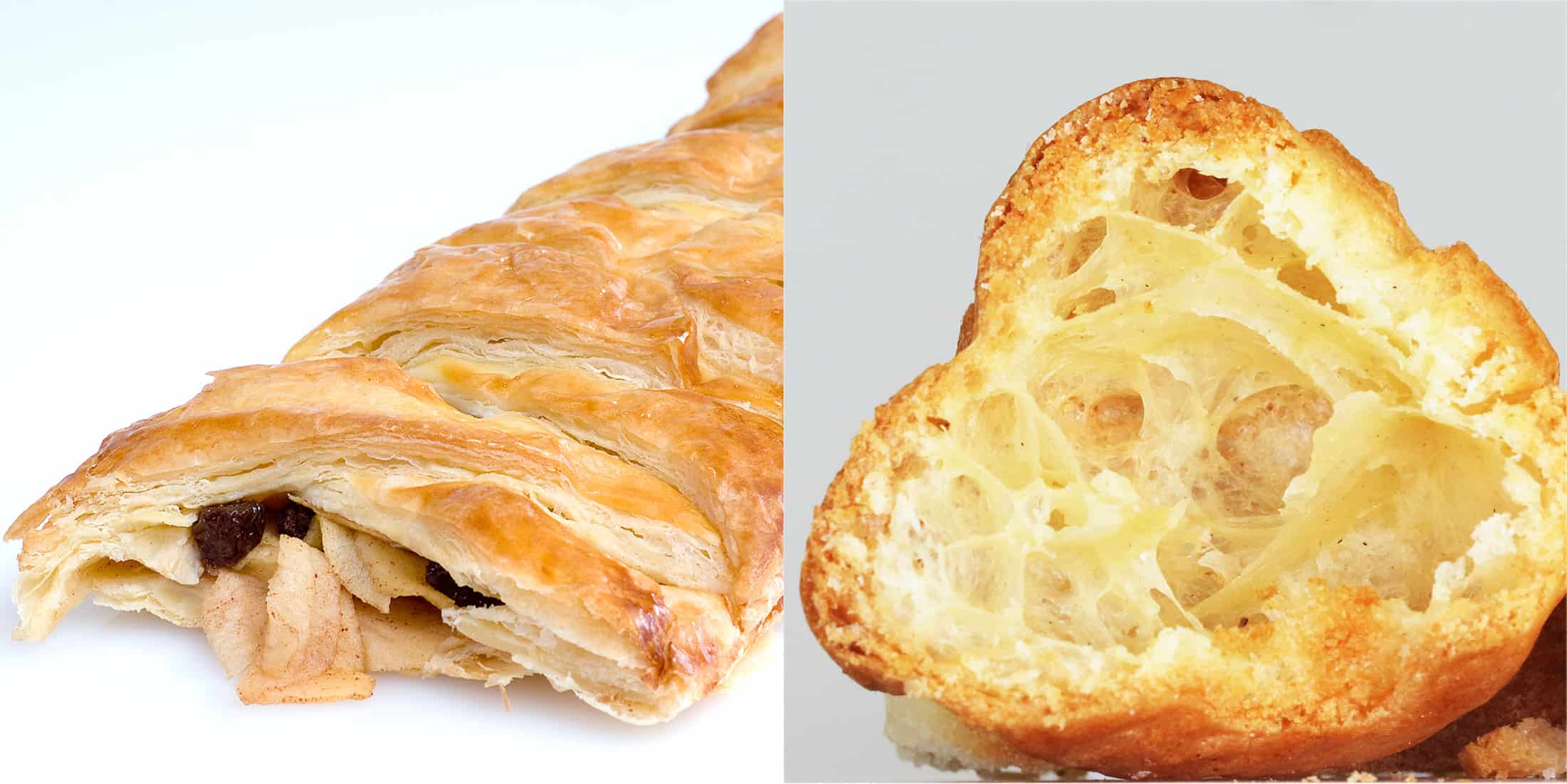
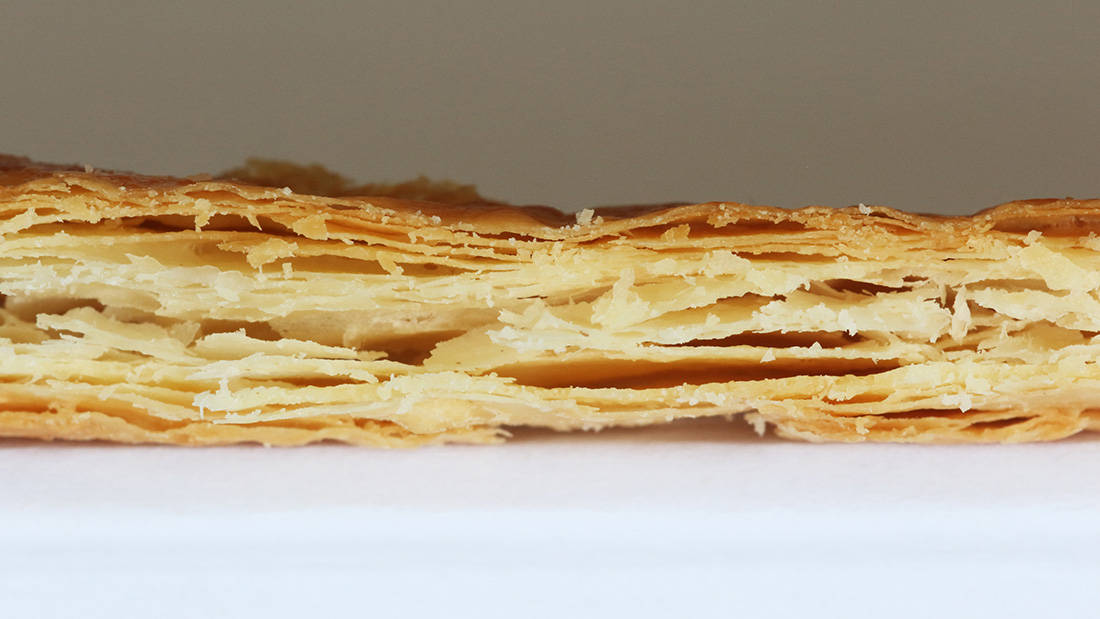
Shortcrust pastry (top) is created from a breadcrumb-like mixture. Flaky pastry (middle left) requires cold butter to be grated in, while choux pastry (middle right) is cooked twice. Puff pastry (bottom) layers butter and dough in a time-consuming process.
Shortcrust pastry, as the name suggests, is very short or crumbly. Recipes for shortcrust typically involve rubbing the flour and butter together until it resembles bread crumbs. A bit of water (and in some recipes, egg or yolk) is then added to bind the dough together. When everything is combined, pockets of fat are separated and surrounded by dough. During baking, the butter melts and its water vaporizes, creating pockets of steam that expand and push the particles of dough apart. This creates the short texture of this pastry.
Flaky pastry uses more butter than shortcrust. Frozen or very cold butter is grated and folded into the pastry dough – taking care not to let it melt through the dough, otherwise something more like shortcrust is produced. The steam from these little grated chunks of fat pushes the layers of dough apart during baking, creating the distinctive flaky structure.
Puff pastry needs a lot of work to prepare (there’s no shame in buying ready-to-roll pastry – many professional cooks do). Layers of butter are folded between layers of dough, to create a structure of many thin sheets. During baking, the butter melts and creates steam, which pushes the sheets of dough apart, resulting in the typical puff pastry structure.
Choux is the most complex type of pastry. When baked, it creates a thin crisp shell of pastry encasing a hollow centre that can then be stuffed with a delicious filling. It takes a bit of effort and practice to master this. The trick to choux is that it is cooked twice. The flour is cooked first during the preparation of the dough, and then again during baking. If you look at the ingredients, you will see that it takes a huge amount of water compared to other pastries, almost double the volume of flour, as well as eggs. The water evaporates during baking and, as the temperature increases, its volume increases according to the gas laws, pushing the pastry out and creating the hollow cavity with a crisp outside.
Have your cake and eat it
I have found that talking about the science of baking is a great way to get young students thinking about how we can explain everyday things that we might otherwise take for granted. It’s particularly engaging if there’s something tasty to eat alongside the science.
A lot of the time in schools, we forget to link science with its applications in an engaging way. That can make study much drier and more difficult than it needs to be, which is completely the opposite of what science is intended for.
Think about how you were taught addition when you were little – if you have two sweets and your friend gives you two more sweets, how many sweets do you have? The thought of sweets probably helped you learn your lesson a lot quicker.
In the same way, if you want to get kids interested in science, it helps to link it to real life in ways they might not have considered before. That can be as simple as thinking about what happens to the water in your kettle when you make a cup of tea. Or it can be more complex, like chocolate tempering, which is a remarkably similar process to steel tempering. In recent STEM events at the University of Sheffield’s Nuclear Advanced Manufacturing Research Centre where I work, we’ve let children try their hand at “welding” with chocolate, using molten chocolate to join slabs together into box structures, and then testing them to destruction. Bringing together the fun of food and baking with science and engineering really does give you the best of both worlds.
Rahul Mandal, the researcher who won TV’s Great British Bake Off last year, is the star of the August 2019 issue of Physics World magazine with a tasty look at the science of baking.
Based at the University of Sheffield in the UK, Mandal explains how a good understanding of physics, chemistry and biology helped him to scoop the prize – and could improve your baking too. You can read his feature here too.
Elsewhere in the issue, Jess Wade and Maryam Zaringhalam discuss the impact of poor diversity in physics and examine efforts to create a more level playing field, including those by the Institute of Physics, which publishes Physics World.
And finally, if you thought objects, like the Starship Enterprise, look shorter when moving at high speed due to length contraction, think again. If you could observe such an object, it would – bizarrely – appear rotated, as David Appell makes clear.
You can enjoy the entire August 2019 issue of Physics World magazine via our digital apps for iOS, Android and Web browsers (membership of the Institute of Physics required). Let us know what you think about the issue on Twitter, Facebook or by e-mailing us at pwld@ioppublishing.org.
• The real fall-out from Chernobyl – While HBO’s TV mini-series Chernobyl has been a hit with viewers, Una Davies warns that it risks amplifying fears over nuclear power
• From humble beginnings – James McKenzie reflects on what hi-tech start-up businesses need to get off to a flying start
• China’s next big thing – Work has just begun on China’s first fourth-generation synchrotron-radiation source. Robert P Crease gets a sneak preview of what’s in store on a visit to Beijing.
• Ready, set bake – Baking is like a scientific experiment, combining the reactions of chemistry, the processes of biology and the laws of physics. Rahul Mandal, a metrology researcher by training, talks about how his scientific thinking helped him become a baker and win The Great British Bake Off in 2018
• Why we need to keep talking about equality in physics – The lack of diversity among physicists is an ongoing problem – and, while it persists, physics will fail to achieve its full potential. Jess Wade and Maryam Zaringhalam discuss the implications of poor diversity in the field and how it could be overcome
• The invisibility of length contraction – The idea that objects contract in length when they travel near the speed of light is a widely accepted consequence of Einstein’s special relativity. But if you could observe such an object, it wouldn’t look shorter at all – bizarrely, it would seem to have been rotated, as David Appell explains
• Chernobyl: a drama out of a crisis – Hamish Johnston reviews Chernobyl, directed by Johan Renck and written by Craig Mazi
• Reality check – Hugh D Reynolds reviews The Case Against Reality: How Evolution Hid the Truth from Our Eyes by Donald D Hoffman
• Brain waves – Gary Green has spent his career working at the interface between physics, neuroscience and medicine. He speaks to Margaret Harris about starting a company, York Instruments, to commercialize a new brainimaging technology
• Behind the scenes at the printer – Kate Gardner visits Warners in Bourne, Lincolnshire
If quantum technologies came with instruction manuals, the first few pages would describe how to cool and trap a sample of atoms. Clouds of cold, trapped atoms lie at the heart of present-day quantum devices such as atomic clocks. They’re also integral to several possible future ones, such as the “quantum positioning systems” that may one day replace satellite-based GPS. The reason is simple: it is only by isolating atoms from their environment and cooling them down, sometimes to temperatures as low as a fraction of a degree above absolute zero, that their quantum characteristics come to the fore. Properties such as the atoms’ acceleration and rotation, the timing and frequency of transitions between energy levels, and even their response to disturbances in electric, magnetic and gravitational fields can and will be exploited as part of the next generation of quantum technologies.
Forming and sustaining clouds of cold atoms is, however, anything but simple. Among other requirements, the clouds must be kept in an ultrahigh-vacuum (UHV) environment, at pressures below 10–7 pascals (10–9 mbar). This ensures that atoms cooled to microkelvin temperatures are not lost from the trap due to collisions with warmer particles in the atmosphere. UHV assemblies are therefore critical sub-systems for high-precision quantum applications, and to date, they have typically consisted of multiple bulky, standardized stainless-steel components. The large number of vacuum connectors and joints between components increases the risk of leaks, especially when the joints are subjected to temperature changes and mechanical stress. As a result, UHV sub-systems are widely viewed as the limiting factor in getting quantum technologies out of the lab.
Additive manufacturing (AM) has the potential to turn this situation on its head. Unlike traditional manufacturing, in which parts are made subtractively from larger billets of material, additive techniques build components layer-by-layer. One method, known as laser powder bed fusion, works by laying down thin layers of powdered material and subjecting them to an energy source such as a laser, which fuses the layers together. The energy source is then scanned in a pattern determined by the geometry of the component being manufactured. Using this additive technique, it is possible to create complex features such as internal channels and lightweight lattices and then cover them with subsequent layers. AM also makes it possible to consolidate several components into single parts while retaining all the features that would have traditionally required a multi-part assembly.
Additively manufactured vacuum assemblies offer several benefits for quantum technologies applications. As well as replacing bulky off-the-shelf components with UHV sub-systems tailored to the user’s needs, AM also makes it possible to consolidate assemblies, remove vacuum joints, add integrated functionality and reduce the size, weight and power (SWAP) parameters of the whole system. Indeed, in the longer term, AM has the potential to drive a revolution in vacuum system design, introducing new capabilities and integrated features that are only achievable thanks to the freedom of design that AM can offer over traditional manufacturing.
Until recently, the idea of using AM to produce UHV system components was quickly dismissed within the vacuum industry due to fundamental concerns over the porosity and mechanical strength of additively manufactured materials. However, recent developments in the field of AM have pushed process capabilities forward to the point where the densities and mechanical performance of AM materials are now comparable to those of the original bulk materials. Thanks to these advances, it has become feasible to construct metal UHV components via laser powder bed fusion, and therefore to challenge common misconceptions about the place of AM methods within the vacuum industry.
Inspired by various success stories demonstrating that it is possible to use AM components within a UHV environment, my colleagues and I at Added Scientific asked ourselves whether we could produce an additively manufactured vacuum chamber – one that could hold a UHV and deliver the performance required for trapping clouds of cold atoms. Beginning in 2017, our team at Added Scientific collaborated with members of the quantum technologies research groups at the University of Nottingham and the University of Sussex in the UK, harnessing our multidisciplinary expertise to test this idea in a project funded by Innovate UK.
The application of these innovative methodologies, within a seemingly stagnant field, is critical to accelerating the evolution and miniaturization of emerging quantum technologies
As a feasibility study, we decided to construct an AM vacuum chamber for the standard “workhorse” of cold-atom experiments: the magneto-optical trap, or MOT, in which atoms are cooled and held in place with a combination of laser beams and magnetic fields. We designed the prototype chamber to meet all the functional requirements of a MOT, including optical access for three orthogonal pairs of laser beams; space for magnetic coils; a UHV environment; and the ability to connect to standard components such as vacuum pumps. To keep the chamber as lightweight as possible, we refined the geometry of its ports, minimizing the space between them and adding a thin internal skin to complete the walls of the chamber and enable it to hold the UHV. We also maintained the symmetry of the chamber design, ensuring that the ports remain perpendicular to the optical paths of the laser beams, which helps to minimize optical transmission losses.
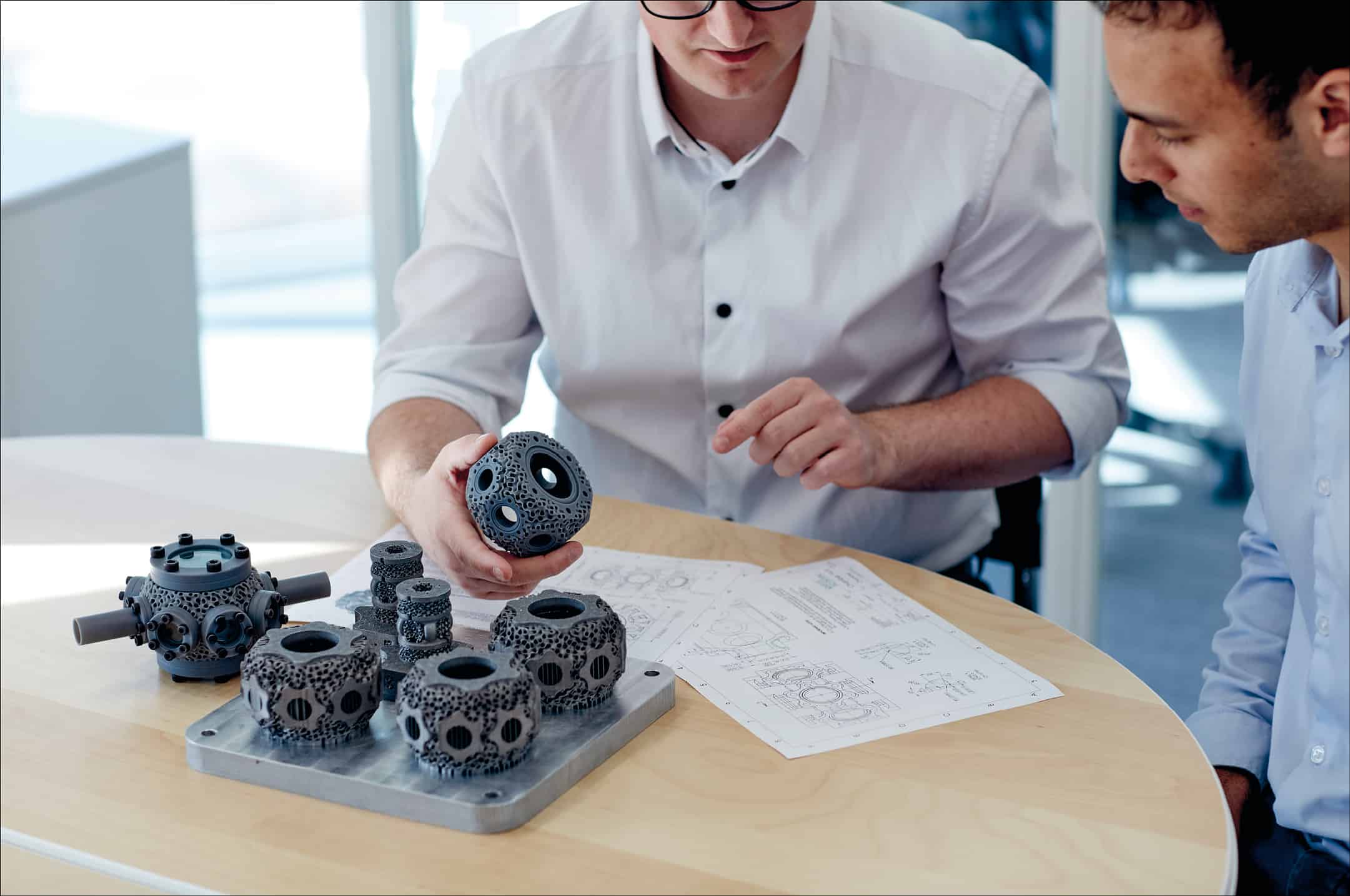
To add a layer of robustness and increased stiffness to the chamber design, we combined a symmetric internal chamber core with a lightweight structure known in the AM world as a variable density triply periodic minimal surface lattice. The lattice structure took the form of a mathematically defined matrix-based gyroid surface, thickened to form a 3D geometry (see image below). The inclusion of these variable-density lattices allowed us to balance the competing demands of keeping the chamber mechanically stiff and minimizing its mass. The lattice structure also increases the chamber’s external surface area-to-volume ratio, which helps to radiate heat away. The final chamber design consists of multiple ports (2 × CF40 ports and 8 × CF16), making it compatible with standard UHV equipment. Alongside the chamber, we also developed a magnetic coil forming insert with built-in water-cooling channels, to explore the additional benefits AM can offer.
Lightweight lattice The chamber’s internal core is combined with a matrix-based gyroid lattice to reduce its overall mass while maintaining structural stiffness. (Courtesy: Added Scientific)
Reasons for success
We chose to build the AM vacuum chamber out of an aluminium alloy, AlSi10Mg, due to its high specific strength and low density. Materials produced by laser powder bed fusion have a characteristic ultrafine grain structure in which the grains grow up through the layers as the component is built. After the build is complete, heat treatments are typically applied to alter the material’s mechanical performance by homogenizing the grain microstructure and controlling the size of the grains, while relieving residual stresses built up due to the AM build process. For our application, we also applied a separate “ageing” heat treatment to promote the growth of precipitates at the grain boundaries. This increased the material’s strength until it was hard enough for us to use the same knife-edge sealing techniques associated with standard vacuum components.
Traditionally manufactured UHV components have a machined and polished internal surface finish. In contrast, AM metals tend to have rough surfaces. This roughness is usually regarded as a black mark against AM for UHV applications, because the increased surface area was commonly thought to increase the likelihood of outgassing. To determine whether the additively manufactured components would be suitable for UHV, we conducted X-ray photoelectron spectroscopy and a mass spectrometric study on the AM alloy. The results indicated that a protective magnesium-rich oxide layer forms on the surface of the material, and that this layer plays an important role in suppressing the outgassing that might otherwise inhibit the alloy’s performance in vacuum applications. Other than the expected (and unavoidable) atmospheric species seen within the mass spectrometric data, we did not observe any other spectroscopic peaks until the temperature exceeded 400 °C. At this point, magnesium peaks from the layer itself started to appear, but this still gives us a wide range of acceptable operating temperatures, even without optimizing the material and protective layer further.
To assess the vacuum performance of the AM chamber, we mounted off-the-shelf stainless-steel viewports and components to it using standard knife-edge-sealing CF flanges, creating a complete vacuum assembly. We then pumped and baked out (that is, heated) the system at 120 °C for a period of 120 hours. Once baked, the UHV was sustained using a combined ion/non-evaporable getter (NEG) pump, achieving a final pressure of < 10–10 mbar – well within the UHV range. We then tested the system further by transporting it from Nottingham to the National Quantum Technologies Showcase event in London, which meant that it was without external power or active pumping for 48 hours. During this period, with only passive NEG pumping in place, the pressure rose, but only to 10–7 pascals (10–9 mbar) – still plenty low enough for cold rubidium atoms to be captured and retained in a MOT.
The start of something smaller?
This is the first time an AM chamber has been demonstrated to hold UHV, and for quantum technology applications, the advantages are clear. The change in material, together with the lightweight, AM-optimized design, meant that the mass of our prototype MOT chamber is 245 g – 70% less than that of a commercially available stainless-steel equivalent. This represents a considerable saving of precious lab space for research groups, as well as an important step towards portability in future devices. In principle, we could make the chamber even smaller, since the minimum size of a MOT is set by the diameter of the orthogonal laser beams that enter its windows and provide its optical trapping element (approximately 15 mm in diameter for the team’s particular test case). We were prevented from doing so at this stage by the need to integrate the AM chamber with existing, off-the-shelf vacuum components, but if this limitation were removed, and components of the wider vacuum system were included in future design iterations, we should be able to reduce the SWAP parameters further still.
So far, quantum physics is one of the few fields where customers are really pushing for smaller UHV systems. This makes projects like the additively manufactured MOT chamber a perfect testbed for AM within the vacuum industry. The application of these innovative methodologies, within a seemingly stagnant field, is critical to accelerating the evolution and miniaturization of emerging quantum technologies, and onward to moving them out of the laboratory and into everyday life. With the desire for quantum technologies and therefore the associated market maturing rapidly, the development of this capability will significantly support the UK’s National Quantum Technologies Programme and the government’s commitment to developing a quantum technology industry in the UK.
That said, the flexibility that AM provides in terms of design freedom, part consolidation and added functionality suggests that there are now exciting opportunities to make wider and more significant changes in how we approach vacuum system design. AM makes it possible to realize truly bespoke designs that are optimized for system performance, and not limited by traditional manufacturing capabilities. Using lattice structures and other complex geometries (as we did for this prototype) enables designers to further reduce the mass of common components while maintaining their structural integrity and stability. AM also offers the potential to enhance the performance of vacuum components in other ways by making structures such as integrated, conformal fluidic channels, internal coil mounts, diaphragms and so on an integral part of the component, rather than something that needs to be assembled from multiple components. In summary, the introduction of AM techniques to vacuum system development has the potential to impact not only portable quantum technology applications, but also the wider scientific and industrial community.
This article was amended on 15 August 2019 to include the project’s source of funding.
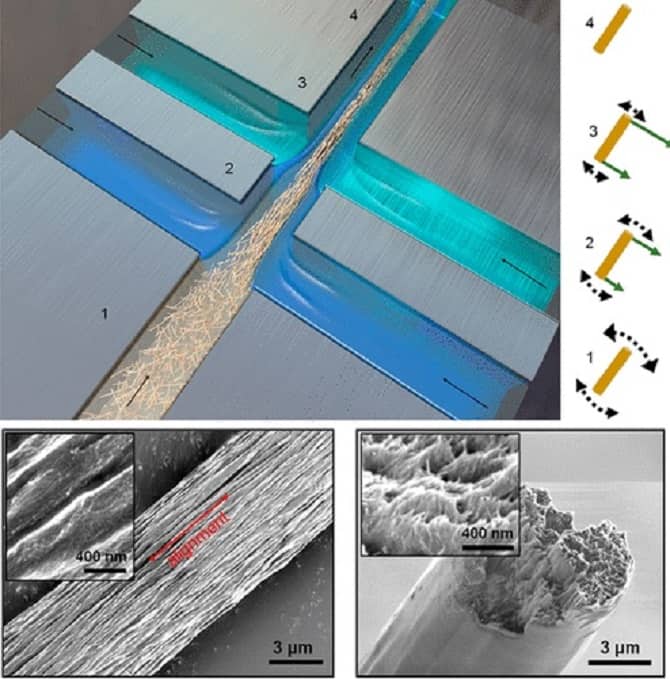
Assembly of nanostructured CNF fibers. Credit: ACS Nano doi.org/10.1021/acsnano.8b01084
Lightweight strong materials that can resist huge amounts of mechanical stress are in demand for many modern technologies. Surprisingly enough, the inspiration for these cutting-edge resistant materials can come from one of the first materials that mankind used to build utensils – wood. A group of researchers led by Daniel Söderberg at Wallenberg Wood Science Center in Stockholm, Sweden have developed a method for building long fibres starting from cellulose nanofibrils (CNFs). They looked at the architecture of wood and devised a method that can produce a glass-like material that is stronger and stiffer than many other synthetic and natural fibre compounds, such as dragline silk, steel, and E-Glass, to name just a few.
The main challenge when trying to build macroscopic structures using nanoscale blocks is that it is difficult to transfer the mechanical properties of the blocks to the structure. So in general no matter how strong the single elements are, the resulting macroscale structures are often much weaker.
In natural wood the crystalline CNFs are embedded in a matrix made of hemicelluloses and lignins. Cross-links in this matrix and the unique arrangement of glucose chains make CNFs in wood stiff and strong. However, due to lack of suitable assembly mechanisms, hierarchical scale materials produced from these components are 3-15 times weaker. Furthermore, the colloidal behaviour of CNFs in liquids is complicated compared with other nanomaterials due to its kinky morphology. To solve this problem, scientists in Söderberg’s group developed a bioinspired assembly technique, reported in ACS Nano.
Fibre flow
Söderberg and team inserted a suspension of CNFs in a channel. Due to the presence of Brownian diffusion and electrostatic repulsion the CNF alignment at this stage is minimal. This main channel containing the CNFs then meets two perpendicular channels. The first pumps in deionized water, which provokes an initial hydrodynamic alignment of CNFs and prevents a sudden transition to the glass-state through promotion of electrostatic repulsion. The second pumps in low pH acids, which counteracts Brownian diffusion and electrostatic repulsion. The end result is a well packed state with maximal CNF-CNF contact. Although the idea may seem relatively simple, the process requires constant in situ monitoring and a careful study of the relationship between fibril characteristics (length, charge, etc.) and mechanical characteristics.
Mittal and Söderberg, alongside Christophe Brouzet and Fredrik Lundell have also now devised a method for studying the how the rotational dynamics of suspensions of nanoscale fibres depend on fibre length. The approach aims to better understand how the range of lengths often found in these systems affects their behaviour, and may help to characterize the subtle interplay between Brownian diffusion and nanoparticle alignment.
The authors conclude that the results show “the central role of processing strategies and associated fundamental parameters on realizing the true potential of nanoscale building blocks”. Nitesh Mittal, first author of the study, claims that “interestingly, the strongest CNFs are 1.2-1.5 times stronger than wet-spun carbon nanotubes and graphene fibres”. Their bioinspired assembly technique may now provide a way to fully exploit this strength.