The new £13 million Cancer Research UK Convergence Science Centre at The Institute of Cancer Research (ICR) and Imperial College London brings together researchers from different scientific disciplines to develop a range of innovative cancer treatment techniques.
Under the leadership of cancer experts Paul Workman from the ICR and Lord Ara Darzi from Imperial, the centre integrates knowledge, methods and expertise from disciplines ranging from physics to data science and AI, and from engineering and biological sciences to medicine.
In one project, a team of biologists, physicists, engineers and clinicians are exploring whether histotripsy, a therapeutic ultrasound technique, could be adapted to destroy pancreatic tumours located deep within the body.
The researchers will use highly focused ultrasound to target and break apart cancer cells with the help of microbubbles. The ultrasound waves cause the microbubbles to expand and contract rapidly, putting a strain on the cancer cell and breaking it apart into harmless fragments that are reabsorbed into the body and expelled via natural processes.
“It’s fantastic to think that microbubbles could be used to blow cancer cells apart, and this is just one example of the exciting innovation we expect to see within the new Convergence Science Centre,” says Workman. “Our new centre will open exciting new frontiers in cancer research and lead to innovative treatments, tests and technologies for patients.”
“Although we are making great strides in the treatment of some cancers, survival remains stubbornly low for others, such as pancreatic cancer,” adds Michelle Mitchell, chief executive of Cancer Research UK. “If we are to make any real progress for patients, we need to take a bolder and more creative approach to research.”
In another project, researchers are fine-tuning a technique originally developed to explore autoimmune diseases, such as multiple sclerosis, to look at the activation of immune cells within a tumour in real time.
Cancer experts and bioinformaticians are working together to investigate how the delicate balance between tumour-killing and tumour-promoting immune cells can tip as cancer evolves. It is hoped that this technology could be used to gain a better understanding of why immunotherapies work for some patients but not others.
“Through this new centre and the training opportunities it presents, we will instil the importance of multidisciplinary collaboration into tomorrow’s researchers,” says Darzi. “Data science, physics and engineering are already transforming the way we treat cancer; integrating the expertise and knowledge of these disciplines is key to future-proofing our important work.”
“By creating a new generation of convergent scientists, we’re opening the door to new tools, devices and algorithms that we could never have imagined before. The combined strength of our two world leading institutions will set the standard for the future of convergence science, to transform cancer research in the UK and across the world.”
In a recent perspective article you highlight potential production of a terawatt per year from photovoltaics worldwide within the next decade. What is the significance of a terawatt per year?
The world is emitting 40 billion tonnes of CO2 a year, but the thinking is we’ve got a budget of 800 billion tonnes maximum. So you’ve got 40 years to cut 40 billion tonnes out if you do it linearly – 1 billion tonnes a year. One terawatt from photovoltaics will reduce it by about one and a half billion tonnes of CO2 a year if you’re displacing coal from electricity generation or oil from transport. So without doing anything else solar will put you on that trajectory, as long as you’re displacing those two components, which account for a huge fraction of the total CO2 budget.
Once you’ve displaced all the coal from electricity generation and oil for transport, you’ve got to start displacing carbon emissions from industrial processes and things like that, which is a bit more challenging, but you’ve got a little bit of time to work on that.
How did you get started in solar cell research?
I did my undergraduate degree in electrical engineering back in the late sixties. Microelectronics was a really exciting area because they were just starting to put multiple transistors on chips and things like that. But I got sort of disillusioned with that area because I’d missed the whole computer revolution and everything that followed on subsequently from microelectronics, and then I realized that my training would put me in a good position to get involved in photovoltaics. It was around the time of the oil embargoes of the 70s, and new sources of energy were attracting more interest.
I started working on a tunnelling structure during my PhD, in Canada under a Commonwealth scholarship. The structure had a metal separated from a semiconductor by an insulator, which is quite a common structure in microelectronics, except here the insulator was made very thin so that electrons can tunnel through it. My thesis was looking at what type of microelectronic application you might be able to use this structure in, but just having an insulator on the surface of the semiconductor, improved the surface properties of the semiconductor. And that turned out to be what was holding back solar cell performances.
What helped you establish such a successful group in this field?
Studying that first structure gave us a unique approach to improving the cell performance. We were a fairly small group then, but we were getting world record voltages, better than other groups that were being supported quite generously in the late seventies. When Jimmy Carter was president, there was actually more money going into photovoltaic research in the US than there is these days, even if you discount the depreciation in the value of the dollar.
We were able to set up a reasonably large group by Australian standards, but in 1983 we got our first world record for the cell performance. In the solar cells field, these are not just what you measure, you send it to a recognized test centre and have the performance confirmed there so that the result can’t be disputed. That helped with research funding because it was something quantifiable that everyone could understand.
1983 is a long time ago – was it hard to maintain that momentum?
After Carter, Reagan was in power and he didn’t like anything to do with renewables, so he just scrapped all the programs and all our US competitors sort of disappeared one by one. We managed to maintain our funding right through the 1980s until Chernobyl in 1986. That then reinvigorated interest in alternative energy sources, particularly in Europe.
We maintained continuity right from the 70s through to the late eighties, which didn’t happen in other countries. There are probably only three groups worldwide that maintained that continuity with a reasonably large size program, and they’re the three groups that are probably the most highly regarded worldwide in terms of solar research these days. All through that period we kept increasing the performance of our cells and setting new world efficiency records, which was again good for our funding here and kept us highly motivated.
There were very good students too because in the 80s in Australia, the scholarship stipends were very low and so on, so only those really dedicated to the field that they wanted to study did postgraduate research. Being in the solar area, we got some very motivated highly qualified and credentialed students into our programs. That also helped us make progress, having such a strong group of people together.
Martin Green at the entrance to the Solar Industrial Research Centre which accommodates technology transfers to industry and provides equipment evaluation for manufacturers. (Credit: Anna Kucera)
What key breakthrough has helped improve solar cell efficiency?
In a solar cell, light creates excited electrons within the material, but they relax back to their ground state in typically microseconds. So you haven’t got long to collect them or extract them from the cell. You get the maximum voltage from the cell when the rate of generation of the electrons by light balances the rate that they relax back, and as you increase the voltage of the cell, they start relaxing back more quickly. And if you have bad surfaces, they relax back even more quickly.
Our key breakthrough was the passivated emitter and rear cell known as the PERC cell. My first drawing of the PERC cell was in 1983. Passivated in this area means – reducing the electronic activity, so stopping the excited carriers from relaxing back. The tunnelling structure had allowed us to control what was happening at the surface of the cell. Solar cells use terminology that was originally developed for transistors. So the emitter is the top region of the cell. So all it means is we fixed up the surfaces on both sides of the cell. We fixed up the top and made our first efficient PERC solar cell in 1988. This was the first time we successfully achieved proper passivation on both surfaces, and that was the vehicle for taking us through to 25% efficiency in 2008, which is still the record for a PERC cell.
What impact have these PERC cells had in industry?
The fraction of world manufacturing solar cell capacity that was PERC by the end of last year was 60% – that all came online during the year. Only 35-40% of the product produced last year was PERC so this will be the first year that it’s the dominant technology used commercially.
The previous technology had been used for 40 years before that, so it’s a really big change in the industry, which has really given the efficiency a bit of a boost. There’s been a round of creativity associated with the change that’s really quite striking.
What led to the current technology persisting for so long?
The standard technology was improving incrementally, but then everyone could see that we were running out of room to move. So some of the companies started investigating PERC technology and started producing results where the cells were markedly better and so on. And then the whole industry transferred over to that new technology. The transition all happened over just five years. When the industry decides it’s time to move change can be very rapid.
Other high efficiency approaches such as rear contact structures have an additional complication in that they need a different type of silicon wafer from what has been traditionally used. That creates an additional barrier that the PERC cell didn’t have so it could take a little longer to transition because all the supply chains need rejigging. So I feel pretty confident that PERC will have a 10 year reign. But by the end of that, people will have got to our 25% efficiency or maybe beyond and they will be looking for ways to get 27% efficiency.
Is energy storage an issue in terms of the market reaching a terawatt a year?
It’s going to be important to develop storage, but the cost of lithium ion batteries have been coming down nearly as quickly as photovoltaics – about 20% per year reduction. So that’s been very timely.
In Australia, there’s a lot of interest now in pumped hydro storage. One of my former students (Andrew Blakers) who’s now at ANU has been doing studies of off-river pumped hydro where you make a swimming pool at the top and bottom of a mountain, and just pump the water uphill – you’re not relying on having a river flowing and dams and all that kind of stuff. He’s identified 22,000 suitable sites around Australia to store essentially all Australia’s electricity for a day or more. And, he figures you only need 22.
He’s now extended his study to the whole world and found hundreds of thousands of sites where this type of storage could be put in. There are already many working systems like that around the world, and it’s a lot simpler and more environmentally benign than the standard pumped hydro systems. That’s traditionally been the way electricity has been stored in the past and it’s still the cheapest way of storing huge quantities of electricity.
So the end of the world is not nigh?
The cost reductions in photovoltaic, occurred quite quickly, really just over the last 10 years. A lot of our grid utilities are now buying solar electricity under power purchase agreements – someone just bids to supply electricity at a predetermined rate over a 20 year period or something similar. Some of the bids that were coming in for solar supply from 2016 onwards have been really very low. That really was a turning point for me. Once you saw these bids for solar supply undercutting the normal costs of electricity generation by such large margins, you realized it could more than compete with the traditional suppliers.
Traditional ways of doing things, like generating electricity from coal, have become very cheap but if you look at the process, it’s really a very complex process involving many stages. It’s just an example of technology lock in – it’s got so refined that the costs have become cheap and made it difficult to be displaced, but with the added impetus that comes from trying to control CO2 emissions, solar technology has been driven to the stage that it’s now reflecting the natural order of things in terms of the costs you’d expect from the two different technologies.
At the wholesale level in Australia our electricity generation is only 1% of GDP; at the retail level that’s probably 3% of GDP, which is quite small considering it makes up more than 30% of CO2 emissions. So it’s having a disproportionate impact – politically as well. Here in Australia we’ve lost about five prime ministers over the issue. Fortunately the economics now well and truly favour solar. I think we’ll see fairly rapid phasing out of coal generation in Australia despite the wishes of our present bunch of politicians.
Future solar cell technologies
What might supercede PERC solar cells?
The highest efficiencies achieved so far are with back contact structures. In the traditional cell, the positive and negative contacts are on opposite surfaces, but back-contact structures have them both on the rear. Most of the carrier-generated excitation occurs very close to the front surface – within 2 micrometres of a 180-micrometre thick cell. So in order to maintain the electron in the excited state for sufficient time to get it to the back of the cell where the contacts are, you have to have very high-quality silicon material, much better than is available cheaply commercially. The other issue is that the processing to get both contacts on opposite surfaces is a lot more complex. So that means the approach is fundamentally more expensive.
However that could well be the way the industry goes. In microelectronics you get these continual improvements through reducing the size of the components and so on, but in the solar field, you get continuous reductions in the actual cost of making the cell through economies of scale and streamlining the processing and all that kind of thing. You’ve got a lot of other things like glass and aluminium frames, and it is more difficult to get the costs down for these components because they are such mature products. But by improving module efficiency you can generate the same energy with fewer modules, and so use less of these components. So the industry is pushing to more and more sophisticated cell structures to get higher efficiencies. PERC will probably prevail for at least 10 years, but if we’re not successful in implementing our (tandem cell) ideas after that it’ll probably go to one of the rear contact structures as the mainstream for the industry.
What about alternatives to silicon?
For spacecraft they stopped using silicon solar cells at the turn of the century and they’re using cells based on gallium arsenide (GaAs). The advantage there is that you can stack cells of different compositions on top of one another very easily in the GaAs system – to make tandem solar cells. If you can stack cells of different material on top of one another, you can design the upper most cells so that they convert the blue light very efficiently, and a cell underneath like a silicon cell that converts the red light well, and you end up with a better overall conversion efficiency. But it gets very expensive because you have to grow GaAs on high-quality germanium wafers, and germanium is much scarcer than silicon. The process is also more complicated.
The other material used commercially is cadmium telluride, which isn’t a great choice because cadmium’s one of the more toxic metals. And then the other component of the material, tellurium, is a material that is as scarce as gold. Then there is CIGS – copper indium gallium diselenide – where there is a bit of an issue with the supply of indium. So silicon is by far the best choice of these.
With silicon you grow a crystalline ingot and then you slice it into wafers. These other technologies you can deposit directly as thin films, so that’s their advantage. Until the early part of this century, it was thought that the thin films just had to be cheaper than silicon. But with the scaling up of the industry, the cost of making the wafers has dropped really dramatically. So the glass and frame cost more than the silicon wafers now.
Will perovskites ever make it in commercial solar cells?
Perovskites could be an interesting technology in the future. It’s very well matched to silicon – they respond really well to blue light and the silicon responds very well to red light, so they’re a good combination for the tandem cell approach. Oxford PV are leading in commercializing perovskites and that is what they are looking at.
But of the seven different cell technologies that have got to over 20% efficiency, silicon is by far the most stable, and perovskite is by far the most unstable. Perovskites are a really hot topic in physics. There are thousands of people who work in the area, but none of the published work is showing that the stability is under control. Oxford PV, of course, aren’t publishing too much about exactly what they’re doing. So, maybe Oxford PV is doing something a lot better than the thousands of other teams that are working on it, though that seems challenging to me.
Martin Green’s perspective article “Photovoltaic technology and visions for the future” is available in the recently launched journal Progress in Energy.
This interview was edited 31 July 2019 to amend the maximum CO2 budget and the number of off-river pumped hydro sites needed for Australia.
The botched production of a powerful neutrino source is the most likely cause of a radioactive cloud that enveloped much of Europe in the autumn of 2017. That is the conclusion of a group of radiation experts from across the continent who have used isotope monitoring and chemical analysis to try and understand where the leak came from. The researchers think that the isotope involved – ruthenium-106 – was probably released during an accident, possibly an explosion, involving spent fuel at the Mayak reprocessing plant in southern Russia.
Aerosols containing ruthenium-106 were detected in countries as far apart as Greece and Norway at the end of September and beginning of October 2017. The radioactive substance, not found in nature, was spread too thinly to pose a risk to public health but its geographical spread pointed to a major release somewhere. According to the latest work, published in the Proceedings of the National Academy of Sciences, the leak might have come about after workers at Mayak had been trying to make an extremely intense source of cerium-144 for a neutrino experiment in Italy.
Sourcing the leak
The Mayak plant, located in the southern Urals, has a long and chequered history. Built after the Second World War to produce plutonium for the Soviet Union’s atomic bomb programme, it was the site of one of the world’s worst nuclear disasters in 1957 when a chemical explosion in a radioactive waste tank spread vast quantities of radionuclides over a large area. According to Georg Steinhauser of Leibniz Universität in Hanover, Germany, the incident in 2017 would be second only to that in terms of the amount of ruthenium-106 released – some 250 tera becquerels.
Mayak came under suspicion after the French Institute of Radioprotection and Nuclear Security (IRSN) said in October 2017 that after feeding air-sampling data and weather patterns into a computer model it found that the radioactive cloud probably originated in the southern Urals. The Russian meteorology agency Roshydromet then said it had detected ruthenium-106 in the same area in late September. Russian authorities, however, denied that Mayak was the source of the leak.
For a worker who is standing in the plume that would mean very, very unpleasant doses
Georg Steinhauser
Yet in early December 2017 representatives of the plant told scientists from the Gran Sasso National Laboratory in central Italy that they were having difficulties making the cerium-144 source. It was designed to allow the Borexino detector, housed at Gran Sasso, to search for hypothetical particles known as sterile neutrinos. The source had to be extremely radioactive – emitting at least 3.7 peta becquerels – but small enough to function as a powerful point source for antineutrinos. Mayak was the only facility capable of producing it, but in the end was unable to deliver a high enough density of cerium-144 (within stable cerium). So in February 2018, the project’s funders – the Italian National Institute of Nuclear Physics and the French Atomic Energy Commission – axed the experiment, known as SOX.
Following the clues
According to Steinhauser, who led the latest research alongside Olivier Masson of the IRSN, there is good reason to think that the failed fabrication of the SOX source was responsible for the release of ruthenium-106. One of the most important clues, he says, is the age of the ruthenium, and by implication, the age of the spent fuel used to extract the cerium.
Spent fuel is usually left for at least three years to cool down after being taken out of a reactor before it is reprocessed. But a comparison of the radioactivity of the ruthenium-106 with that of a shorter-lived isotope (ruthenium-103) detected by a small number of European labs showed that the spent fuel involved in the leak had been removed less than two years earlier. Mayak had taken that very unusual step, Steinhauser suggests, to ensure that the material was as radioactive as possible. “They were forced to reduce the cooling time to squeeze in as much cerium-144 as the Italians wanted,” he says. “That is still a hypothesis but it makes perfect sense.”
Handling such young spent fuel would have carried significant risks, according to Steinhauser. The higher levels of ionising radiation would have affected the chemical reactions involved in reprocessing, while the extra heat generated by the spent fuel could have warmed gaseous ruthenium tetroxide, which is generated during reprocessing, to the point where it exploded.
Steinhauser and his student Dorian Zok have carried out experiments that suggest an explosion might well have taken place inside the Mayak complex. The ruthenium dioxide produced by highly reactive tetroxide gas within the atmosphere is very insoluble, he explains, but half of the material collected by air filters dissolved in water. That means the aerosols probably contained several compounds including perhaps ruthenium chloride, which can be formed during reprocessing to stabilise the gas by bubbling it through hydrochloric acid. “This is only speculation,” he says, “but ruthenium chloride needs higher temperatures to vaporise. And that goes hand in hand with an explosion or a fire.” It’s also possible that people working in the plant were killed, reckons Steinhauser. “For a worker who is standing in the plume that would mean very, very unpleasant doses,” he says.
The Russian authorities themselves set up a commission to investigate the leak. Comprising scientists from several European countries, it met in January and April last year but there was disagreement between its Russian and non-Russian members over the location of the source. Panel organiser Leonid Bolshov of the Russian Academy of Sciences says he is unconvinced by the latest research, arguing it ignores soil measurements taken around the Mayak plant that he says showed a “low level of contamination”. There is, he argues, “no reason to revise” the panel’s conclusions.
However, Steinhauser and colleagues have now dismissed two hypotheses considered by the panel as alternatives to that of an accident at Mayak. They argue that the ruthenium-106 could not have been released by a nuclear-powered satellite burning up in the atmosphere, given that its half life – 372 days – is too short to power a satellite over its expected lifetime, while pointing out that no satellite appears to have gone missing at the time of the radioactive release. They also say that what appeared to be very high levels of ruthenium in Romania at the end of September 2017 were due to the way air was sampled, rather than actual concentrations.
Stretchable conductors that stay conducting even when stretched by as much as 300% in any direction could find use in a new generation of deformable and wearable electronic devices. The conductors are made by sequential layering of polymers and gold nanoparticles in a design that is the first of its kind according to the researchers who developed them.
Stretchable electronics are in demand for a number of applications, such as wearable healthcare devices, electronic skin, artificial muscles and neuroprosthetic implants. All these applications ideally require stretchable conductors that have high electrical conductivity under large mechanical strain, but such materials are difficult to make.
Layered composite film sheets
There are two main strategies to make such conductors. The first involves depositing conductive nanoscale components onto the surface of an elastomeric substrate to reduce conductivity loss when the material is deformed. These composites unfortunately only contain a small amount of conductor though. In the second, researchers disperse conductive fillers in elastomeric polymers. Although these composites carry a high current and can self-heal, they are either prone to fail at low strains if they contain a large amount of stiff conducting material or have low intrinsic conductivity if they contain a high amount of elastomer.
A team of researchers led by Nicholas Kotov of the University of Michigan in the US, Soojin Park of POSTECH in Korea and Byeong-Su Kim of Yonsei University in Seoul, Korea, has now developed stretchable conductors using a new type of film made from multiple layers of positively charged gradient-assembled polyurethane (GAP) and negatively charged gold nanoparticles. The layered composite film sheets contain different ratios of gold nanoparticles, weighted at 90% at the top and bottom outermost surfaces and either 50 or 85 weight percent film to create a stretchable layer in between.
“This sequential layering of the polymers and nanoparticles in a specific sequence can be optimized for both mechanical and electrical properties,” explains Kotov, “and the stratified design is key to attaining tunable conductivity and stiffness.” Indeed, it allows the researchers to structurally organize the material on both the small and large scales, which means that they can align and interconnect the gold nanoparticles even under large strains so that they remain highly conducting.
“This approach to materials engineering is in fact typical for the design of many biomaterials and allows for wide range tuning of both mechanics and electrical transport,” he tells Physics World.
Strain can be applied along any direction
Importantly, the strain can be applied along any direction in the material, which retains its metallic conductivity in both the lateral and transversal directions even at strains of as high as 300%, he adds.
To test their material, the researchers used it as the electrode in a lithium-ion battery. They measured a charge-discharge rate capacity of 100 mAh/g at a current density of 0.5 A/g in this device, which continues to work at 90% of its original capacity even after 1000 battery cycles.
The result could allow for the development of stretchable lithium-ion batteries that deliver stable power even when deformed, they say.
“These materials and stretchable devices made from them open the road to a new generation of implantable biomedical devices with integrated batteries that are able to deform in a variety of directions inside the body,” explains Kotov. “They could thus be employed in constrained environments inside organs, for example, and perhaps even in the vicinity of neurons.”
They might also be used in soft robotics applications, he adds.
Learn everything you need to know about US immigration from lawyer Brian Getson (researchergreencard.com). Getson is a graduate of the University of Pennsylvania School of Law and has more than 20 years of experience. He gives presentations regarding the US immigration system at various major scientific conferences, including APS and MRS.
Brian Getson is a graduate of the University of Pennsylvania Law School with 20 years of experience. He is a leading U.S. immigration lawyer who represents scientific researchers in applying for green cards and leads his immigration law firm based in Philadelphia. Mr. Getson has given presentations on “Green Cards for Scientific Researchers” at numerous major scientific conferences, the Wistar Institute, and at Universities. Brian often provides a money back guarantee to qualified applicants giving clients confidence that they will get results. See his website, researchergreencard.com for more information.
The condensed-matter physicist Robert Schrieffer, who shared the 1972 Nobel Prize for Physics, has died at the age of 88. In the late 1950s, Schrieffer, together with his colleagues John Bardeen and Leon Cooper, developed a theory of superconductivity that could explain why certain materials undergo an absolute absence of electrical resistance at low temperatures.
Deep thinker: Robert Schrieffer made pioneering contributions to our understanding of low-temperature superconductors. (Courtesy: AIP Emilio Segrè Visual Archives)
Born on 31 May 1931 in Oak Park, Illinois, US, Schrieffer completed a physics degree at the Massachusetts Institute of Technology in 1953. He then moved to the University of Illinois at Urbana-Champaign to work on his PhD under the supervision of Bardeen. In the third year of his studies he began working on a theory of superconductivity – a phenomenon that had captured the imagination of scientists ever since the Dutch physicist Heike Kamerlingh Onnes discovered in 1911 that the electrical resistance of mercury suddenly disappeared beneath a temperature of 4.2 K.
However, despite developments in quantum mechanics in the 1920s, there was no microscopic theory of superconductivity until 1957, when Bardeen, Cooper and Schrieffer came up with their “BCS” theory. This described how an electron can deform the atomic lattice through which it moves, thereby pairing with a neighbouring electron. Being paired allows all the electrons in a superconductor to move as a single cohort, known as a condensate, prevailing over thermal fluctuations that could cause the pairs to break. The idea of a condensate of electron pairs was worked out by Schrieffer while he was apparently sitting on the New York subway where he wrote down an expression for the wavefunction of the superconducting ground state.
Bardeen, Cooper and Schrieffer published their initial letter announcing the Bardeen–Cooper–Schrieffer theory in April 1957 (Phys. Rev.106 162), which was then followed in December by a full-length paper, which is now recognized as one of the classics in modern physics (Phys. Rev. 108 1175). Not only did the BCS theory of superconductivity successfully account for the behaviour of “conventional” low-temperature superconductors such as mercury and tin but it also subsequently deepened the theory of elementary particle physics by contributing to the notion of spontaneous symmetry breaking.
A life in physics
After completing his doctoral dissertation on the theory of superconductivity in 1957, Schrieffer spent a year at the University of Birmingham and the Niels Bohr Institute in Copenhagen, Denmark. In 1958, he then moved to the University of Chicago before heading back to the University of Illinois at Urbana-Champaign a year later.
In 1962 Schrieffer joined the University of Pennsylvania in Philadelphia and in 1980 moved to the University of California, Santa Barbara. He served as director of the Institute for Theoretical Physics in Santa Barbara from 1984 to 1989 and in 1992 went to Florida State University where he was also chief scientist of the National High Magnetic Field Laboratory in Tallahassee before retiring in 2006. In 1983 he was awarded the US National Medal of Science.
Yet Schrieffer’s life was not without incident. In 2005, he was sentenced to two years in jail for killing a person and injuring seven others while driving over the speed limit in California a year earlier. According to his attorney at the time, Schrieffer fell asleep at the wheel of his Mercedes-Benz sports car while driving at more than 100 mph.
In June 2017 president Donald Trump announced that the US would cease all participation in the 2015 Paris Agreement on climate change mitigation. But this move didn’t completely negate the US obligation to regulate greenhouse gas emissions. Back in 2007 the US Supreme Court ruled that the Environmental Protection Agency has a legal obligation to regulate greenhouse gas emissions from existing power plants because it has been proven that greenhouse gas emissions endanger public health and welfare.
To meet these obligations the Environmental Protection Agency produced a Clean Power Plan, which established state-based emissions goals for fossil fired power plants. At the time it was finalized in 2015, it was estimated that the Clean Power Plan would decrease carbon dioxide emissions by 19% below business-as-usual level by 2030. However, Trump’s arrival in the White House forced a shake-up of many environmental plans, including the Clean Power Plan. Last August the Environmental Protection Agency released its proposed replacement for the Clean Power Plan: the Affordable Clean Energy rule.
Amelia Keyes from Resources for the Future, an independent non-profit research institution in Washington DC, and colleagues investigated the difference in impact that the Affordable Clean Energy rule will bring. Using the Environmental Protection Agency’s policy scenario modelling, along with projections of fuel generation and emissions datasets for all the different states, the team estimated carbon dioxide emissions up to the year 2030 under three scenarios: with the Clean Power Plan in place, with the Affordable Clean Energy rule in place and with no plan in place.
The researchers show that because the Affordable Clean Energy rule reduces the emissions intensity of individual power plants, it is likely to make coal-power a more popular choice.
“It may also extend the lifetime of some coal plants and allow them to retire later, thus causing a greater number of coal plants to remain in operation,” says Keyes. This counterintuitive impact is known as the emissions rebound effect.
Currently the US produces around 27% of its electricity from coal. With the Affordable Clean Energy rule in place, Keyes and colleagues estimate that the US will produce 22.3% of its electricity from coal by 2030. With no policy in place that would fall to 21.4%, and with the Clean Power Plan in place coal power would make up 19.7% by 2030. In other words, the Affordable Clean Energy rule is not just less effective than the Clean Power Plan, but is actively worse than doing nothing, acting to slow the progress of weaning the US off fossil fuels.
It isn’t just carbon dioxide emissions that are a problem. Air quality will also take a hit, with emissions of sulphur dioxide projected to increase by up to 148% in 19 states and nitrogen oxide estimated to increase by up to 9% in 20 states plus DC by 2030 under the Affordable Clean Energy rule, compared to no policy.
“Our results demonstrate the importance of considering the emissions rebound effect…in evaluating the Affordable Clean Energy rule and similar policies targeting heat rate improvements,” the authors write in ERL.
Scientists in Switzerland, the Netherlands and Italy have explained why the brush-like structures that keep dandelion seeds aloft have about 100 bristles. The team has calculated that 100 is the number needed to ensure the stability of a vortex structure in the air that enhances the flight of the seeds. The insights provided by the study could lead to the development of new types of tiny flying drones.
Dandelions can be found in many places worldwide, in part because of the wildflower’s ability to spread its seeds on the wind. After pollination, the dandelion flower matures into a white fluffy “blowball”. This comprises single fruits each attached to a tiny brush-like parachute called a “pappus” – which has about 100 individual bristle filaments. This structure allows the seed to remain aloft over distances of 100 km or more when the air is warm and dry.
In 2018, a multi-disciplinary team of scientists led by Naomi Nakayama and Ignazio Maria Viola at the University of Edinburgh discovered that rather than acting as a tiny parachute, the pappus uses an unexpected mechanism to keep its seed aloft. They showed that a “separated vortex ring” in the air near the seed is created and stabilized by air flowing through the pappus. The lift enhancement provided by the separated vortex ring is believed to underpin the extraordinary flight ability of the dandelion. However, exactly how many filaments are needed to create a stable vortex ring remained a mystery.
Flight stability
Now, François Gallaire and colleagues at EPFL Lausanne, the University of Twente and the University of Pisa have assessed the flight stability of dandelion seeds under fluctuations that are encountered in nature. Their theoretical study of the flow through the filaments of the pappus used a simplified disc model reminiscent of a bicycle wheel and its spokes.
The researchers considered different typical air velocities, disc sizes, and number of filaments and computed a steady-state solution of the Navier–Stokes equation. They showed that the pappus porosity has a threshold, beyond which the flow becomes a separated and circulating vortex ring.
“For all of the study cases, we first compute the underlying steady base state, and then we study its linear stability,” explains François Gallaire, who led the investigation at EPFL in Lausanne. “The way we constructed the study is that we fixed the geometry of the single filament, and of the disk pappus. The only parameters we vary are the number of filaments.”
Reynolds number
The separated vortex ring is stabilized by the airflow through the filaments and the vortex stability depends on two parameters. These are the permeability of the pappus and its Reynolds number – the latter being defined by the size of the pappus and the wind velocity.
The researchers fixed the size of the simulated pappus and varied the porosity of the pappus by changing the number of filaments in it. According to their calculations, the ideal number of filaments in a dandelion pappus to allow an adequate permeability necessary for creating a separated vortex ring is about 100 – which agrees with the number observed in nature by the Edinburgh team.
Edinburgh’s Viola, who was not involved in this latest research, says that Gallaire and colleagues have calculated the limit of the stability of the flow feature that his team discovered.
New types of drones
This new understanding of vortex ring stabilization opens exciting possibilities for creating technologies inspired by the dandelion pappus. Knowing the properties necessary for a long-distance flight could be used to create small flying drones with applications including surveillance, security and monitoring air quality and safety.
“Our research represents a theoretical study of stability of the flow equations for a dandelion pappus. If we were to consider another design, a series of variables would need to be explored based on their mathematical optimization,” said Gallaire. “However, this would be a very nice extension of our results,” he added.
Viola adds “Our previous study already touched this area; we created a drone prototype in form of a slotted disk model. I envisage that the real functional drone would have dimensions roughly of the dandelion, as we do not know exactly how big we could go”. Viola added that he is keen to work with Gallaire’s team to gain a further understanding of the pappus and potential applications.
Sadly, one of the members of the Edinburgh team – Enrico Mastropaolo – died on 15 July 2019. Viola and colleagues have dedicated their work to his memory.
Expression of the amino acid transporter LAT1 correlates strongly with 18F-DOPA uptake in human astrocytoma. (A) Biopsy samples from regions of low (blue outline) and high (red outline) uptake demonstrated low (B) and high (C) LAT1 expression (green stain), respectively. (Courtesy: R S Youland et al J. Neurooncol. 10.1007/s11060-012-0986-1)
Diagnosis of brain tumours and planning for surgery or radiation treatment is currently performed using MRI. Contrast-enhanced T1-weighted imaging can reveal disruptions in the blood–brain barrier, although some brain lesions don’t disrupt the BBB and are thus not detected. T2-weighted images, meanwhile, visualize disease well, but also highlight regions of oedema and treatment effect. Another option is PET imaging, but the commonly used 18F-FDG tracer exhibits high uptake in normal brain tissue and cannot detect low-grade gliomas.
Deanna Pafundi.
Clearly, there’s a need for an alternative imaging approach. Originally investigated back in the 1970s, 80s and 90s, amino acid (AA) PET tracers provide a high tumour-to-background uptake ratio and offer a promising approach for imaging brain tumours. But these tracers are not approved by the US Food and Drug Administration (FDA) for imaging of gliomas.
Speaking at the recent AAPM Annual Meeting in San Antonio, Deanna Pafundi from the Mayo Clinic explained how such tracers could enable functional-image-guided intracranial radiotherapy, and argued the case for their clinical adoption.
Seeing more
So how do AA tracers work? Pafundi explained that the rate of intracellular amino acid metabolism is greater in higher-grade tumours, and thus the level of tracer uptake correlates with disease. Notably, AA PET is also independent of BBB permeability.
The most commonly studied AA tracer is 11C-methionine, but its production requires an on-site cyclotron. 18F-based tracers, such as 18F-FET, 18F-DOPA and 18F-choline, however, can be shipped and may provide a more practical option. Pafundi pointed out that the last 10 years have seen a surge in publications covering “PET brain radiotherapy” and that the Mayo Clinic Enterprise has run several clinical trials with 18F-DOPA PET, with three still currently enrolling patients.
One key application for AA PET is in the initial biopsy/resection stage of treatment, where it can help target the most represented stage of disease for biopsy-only surgeries, and help define the extent of tumour resection. For example, in a patient with a non-enhancing lesion, it is difficult for the surgeon to select the most appropriate region to biopsy or resect. They may end up sampling a region of low-grade disease, while other areas actually contain high-grade tumours.
Using 18F-DOPA, Pafundi and colleagues found that a tumour-to-normal tissue (T:N) ratio threshold of 2.1 can differentiate high- from low-grade disease. She described an example case in which the preliminary MRI-based diagnosis was of a low-grade tumour. Subsequent 18F-DOPA PET imaging using this T:N ratio suggested high-grade disease. The final pathology turned out to be a grade IV astrocytoma.
Pafundi cited another case, a recurring tumour, in which use of the T:N ratio revealed a large area of high-grade disease that did not appear in the contrast-enhanced MRI. “AA tracers are very beneficial for recurring cases where T1 contrast imaging has limitations in detection capability,” she said. In this instance, the final diagnosis was grade IV astrocytoma.
Radiotherapy planning
Following diagnosis, the next step is to identify the extent of the lesion to be treated, using radiation therapy, for example. Pafundi noted that most recurrent brain tumours appear in or near to the primary treatment field, and postulated that this may arise from not treating all of the disease, as it is not all visible on the MR image. To address this shortfall, AA tracers can identify areas to treat in non-contrast enhancing lesions. And for contrast enhancing lesions, AA PET can increase the accuracy of tumour delineation.
Pafundi cited an example in which 11C-methionine PET revealed tumour tissue extending 3 cm outside of the contrast-enhanced MR image. Similar findings have been reported using 18F-FET PET, along with the Mayo Clinic studies using 18F-DOPA PET. As such, the addition of AA PET would have led to an increased treatment volume and possibly enhanced tumour control. Results from one of the Mayo Clinic trials showed that 18F-DOPA PET identified aggressive disease outside the MR image in over two-thirds of patients.
These findings suggest that contrast-enhanced MRI is not sufficient to identify areas of high-grade residual tumour, Pafundi told the audience. “These AA PET tracers all show disease that is not shown on conventional MRI and which should be taken into account during radiotherapy planning,” she explained. “Combining all of the available imaging modalities together would give a better idea of what we should be treating.”
For treatment planning, AA PET can help define the isodose volumes to irradiate, and in some cases could reduce the size of the irradiated region. In patients with non-contrast enhancing tumours, for example, typically the entire contoured T2-FLAIR volume is treated at 60 Gy. But not all T2 FLAIR is disease. Pafundi cited a study in which limiting the 60 Gy volume to areas of highly aggressive disease, as determined by 18F-DOPA PET, substantially reduced the volume irradiated at this dose.
MRI and MRI+PET plans for a patient with a non-contrast enhancing lesion. The 60 Gy isodose (black outline) is reduced in the MRI+PET plan. (Courtesy: T Kazda et al phiRO 10.1016/j.phro.2018.06.004)
Conversely, in some contrast enhancing lesions, including 18F-DOPA PET led to an increase in 60 Gy volume, as the AA tracer visualized disease outside of the MRI-defined region. Pafundi noted that, importantly, no extra toxicity was seen due to this dose escalation.
Finally, Pafundi presented a number of studies demonstrating how AA tracers can provide information on a patient’s post-treatment response, particularly in differentiating progression from pseudo-progression. “A lot of AA tracers are really going to be beneficial to help identify progression earlier,” she told the delegates.
“Over and over we’re showing that AA PET tracers provide valuable information for treating intracranial tumours,” she concluded. “Unfortunately, none are yet FDA approved for brain tumour imaging. I think it’s time we push to get these AA tracers FDA approved for the purpose of brain tumour imaging, and start looking to use these in the clinic.”
Padel is a tennis-like sport with a racquet that looks a bit like a giant table-tennis paddle with a grid of holes in it. Now, researchers at the Polytechnic University of Valencia have created a robotic tester for padel racquets that measures multiple parameters including power and blocking capability. The system also measures how vibrations created by striking a ball allow a player to “sense” their shot and the size of the racquet’s “sweet spot”.
The system was created by a team led by Martín Mellado, who says “working with robotic technology allows us to give the movements a very accurate repeatability that would be impossible to achieve even with a professional player”.
Symmetry is a joint publication of Fermilab and SLAC and often features the stories of physicists who have lived interesting lives. This week, the Korean-American physicist Chang Kee Jung is profiled. Jung grew up in poverty following the Korean War and decided he wanted to be a professor at age six and had settled on physics by the time he was 12. He studied at the prestigious Seoul National University but nearly threw away his chance of fulfilling his dream because of his love for mountaineering.
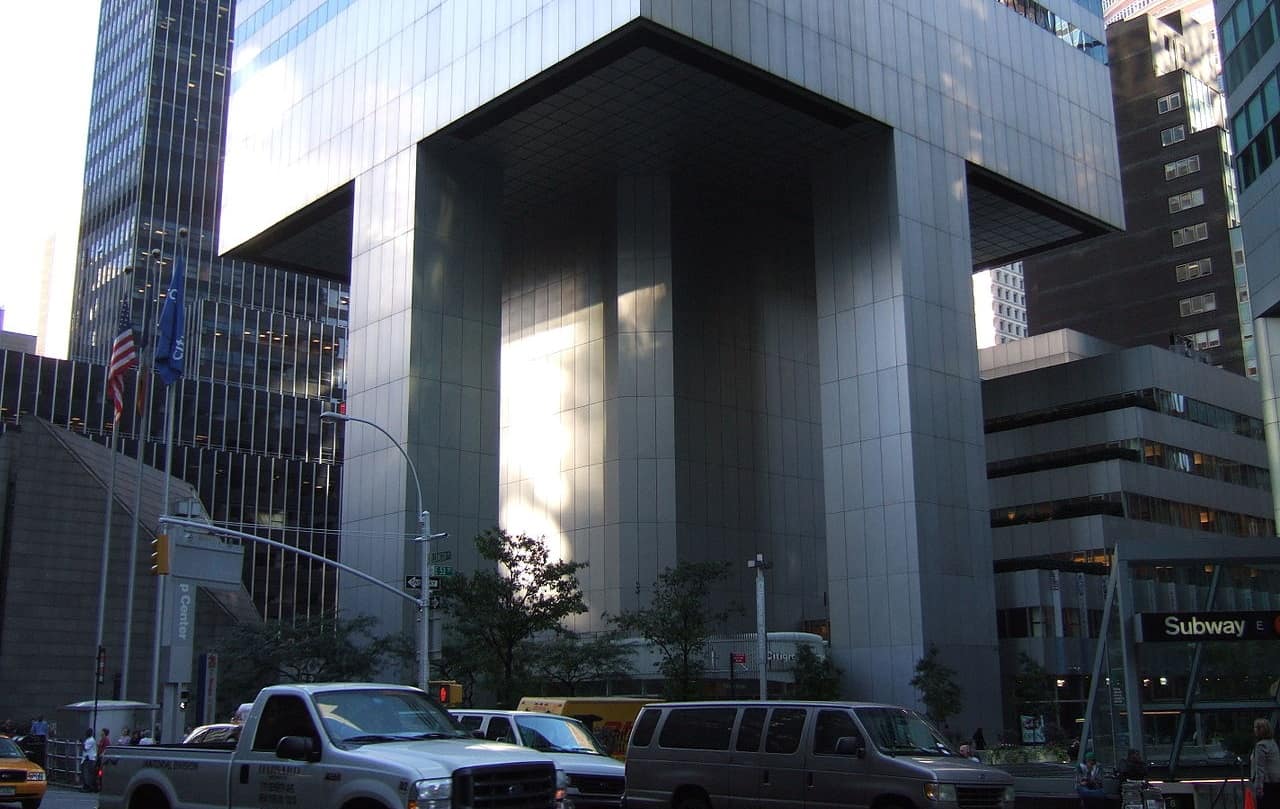
In 1978, the renowned structural engineer Bill LeMessurier received a phone call from an engineering student in New Jersey asking about his design of a newly-built Manhattan skyscraper. Diane Hartley said that she had been told by a professor that the four dramatic pillars that float the edges of the 59-floor Citicorp Center (now called 601 Lexington Avenue) 35 m above street level were in the wrong places when it came to resisting strong winds.
Wind resistant: two of the four pillars holding up 601 Lexington Avenue. (Courtesy: Trxr4kds/Wikipedia)
The story goes that LeMessurier explained to Hartley that his design was indeed safe, but her question preyed on his mind and he investigated further – doing calculations and reviewing the design of the building. He found that a certain aspect of wind stress was higher than he had previously thought, but not a problem because the affected steel joints had been welded during construction. But then he discovered that the joints had been bolted not welded – and no-one had thought of telling him.
After doing new wind-tunnel tests on a model of the building, the decision was made to weld the joints in a secret repair programme, which was ongoing as a hurricane struck New York City. The building held, and the story remained a secret until 1995, when it broke in the New Yorker.