Quantum information or metamaterials: our predictions for this year’s Nobel Prize for Physics

Infographic showing Nobel physics prizes in terms of field of research

On Tuesday 7 October the winner(s) of the 2025 Nobel Prize for Physics will be announced. The process of choosing the winners is highly secretive, so looking for hints about who will be this year’s laureates is futile. Indeed, in the immediate run-up to announcement, only members of the Nobel Committee for Physics and the Class for Physics at the Royal Swedish Academy of Sciences know who will be minted as the latest Nobel laureates. What is more, recent prizes provide little guidance because the deliberations and nominations are kept secret for 50 years. So we really are in the dark when it comes to predicting who will be named next week.

If you would like to learn more about how the Nobel Prize for Physics is awarded, check out this profile of Lars Brink, who served on the Nobel Committee for Physics on eight occasions.

But this level of secrecy doesn’t stop people like me from speculating about this year’s winners. Before I explain the rather lovely infographic that illustrates this article – and how it could be used to predict future Nobel winners – I am going to share my first prediction for next week.

Inspired by last year’s physics Nobel prize, which went to two computer scientists for their work on artificial intelligence, I am predicting that the 2025 laureates will be honoured for their work on quantum information and algorithms. Much of the pioneering work in this field was done several decades ago, and has come to fruition in functioning quantum computers and cryptography systems. So the time seems right for an award and I have four people in mind. They are Peter Shor, Gilles Brassard, Charles Bennett and David Deutsch. However, only three can share the prize.

Moving on to our infographic, which gives a bit of pseudoscientific credibility to my next predictions! It charts the history of the physics Nobel prize in terms of field of endeavour. One thing that is apparent from the infographic is that since about 1990 there have been clear gaps between awards in certain fields. If you look at “atomic, molecular and optical physics”, for example, there are gaps between awards of about 5–10 years. One might conclude, therefore, that the Nobel committee considers the field of an award and tries to avoid bunching together awards in the same field.

Looking at the infographic, it looks like we are long overdue a prize in nuclear and particle physics – the last being 10 years ago. However, we haven’t had many big breakthroughs in this field lately. Two aspects of particle physics that have been very fruitful in the 21st century have been the study of the quark–gluon plasma formed when heavy nuclei collide; and the precise study of antimatter – observing how it behaves under gravity, for example. But I think it might be a bit too early for Nobels in these fields.

One possibility for a particle-physics Nobel is the development of the theory of cosmic inflation, which seeks to explain the observed nature of the current universe by invoking an exponential expansion of the universe in its very early history. If an award were given for inflation, it would most certainly go to Alan Guth and Andrei Linde. A natural for the third slot would have been Alexei Starobinsky, who sadly died in 2023 – and Nobels are not awarded posthumously. If there was a third winner for inflation, it would probably be Paul Steinhardt.

Invisibility cloaks

2016 was the last year when we had a Nobel prize in condensed-matter physics, so what work in that field would be worthy of an award this year? There has been a lot of very interesting research done in the field of metamaterials – materials that are engineered to have specific properties, particularly in terms of how they interact with light or sound.

A Nobel prize for metamaterials would surely go to the theorist John Pendry, who pioneered the concept of transformation optics. This simplifies our understanding of how light interacts with metamaterials and helps with the design of objects and devices with amazing properties. These include invisibility cloaks –the first of which was built in 2006 by the experimentalist David Smith, who I think is also a contender for this year’s Nobel prize. Smith’s cloak works at microwave frequencies, but my nomination for the third slot has done an amazing amount of work on developing metamaterials for practical applications in optics. If you follow this field, you know that I am thinking of the applied physicist Federico Capasso – who is also known for the invention of the quantum cascade laser.
US scientific societies blast Trump administration’s plan to politicize grants

Almost 60 US scientific societies have signed a letter calling on the US government to “safeguard the integrity” of the peer-review process when distributing grants. The move is in to response to an executive order issued by the Trump administration in August that places accountability for reviewing and awarding new government grants in the hands of agency heads.

The executive order – Improving Oversight of Federal Grantmaking – calls on each agency head to “designate a senior appointee” to review new funding announcements and to “review discretionary grants to ensure that they are consistent with agency priorities and the national interest.”

The order outlines several previous grants that it says have not aligned with the Trump administration’s current policies, claiming that in 2024 more than a quarter of new National Science Foundation (NSF) grants went to diversity, equity, and inclusion and what it calls “other far-left initiatives”.

“These NSF grants included those to educators that promoted Marxism, class warfare propaganda, and other anti-American ideologies in the classroom, masked as rigorous and thoughtful investigation,” the order states. “There is a strong need to strengthen oversight and coordination of, and to streamline, agency grantmaking to address these problems, prevent them from recurring, and ensure greater accountability for use of public funds more broadly.”

Increasing burdens

In response, the 58 agencies – including the American Physical Society, the American Astronomical Society, the Biophysical Society, the American Geophysical Union and SPIE – have written to the majority and minority leaders of the US Senate and House of Representatives, to voice their concerns that the order “raises the possibility of politicization” in federally funded research.

“Our nation’s federal grantmaking ecosystem serves as the gold standard for supporting cutting-edge research and driving technological innovation worldwide,” the letters states. “Without the oversight traditionally applied by appropriators and committees of jurisdiction, this [order] will significantly increase administrative burdens on both researchers and agencies, slowing, and sometimes stopping altogether, vital scientific research that our country needs.”

The letter says more review and oversight is required by the US Congress before the order should go into effect, adding that the scientific community “is eager” to work with congress and the Trump administration “to strengthen our scientific enterprise”.

The curious history of Nobel prizes: from lighthouses to gravitational waves

Next week, the winners of the 2025 Nobel Prize for Physics will be revealed. In the run-up to the announcement I’m joined in this podcast by my colleague Matin Durrani, who has surveyed the last quarter century of Nobel prizes and picked his top five physics prizes of the 21st century – so far.

We also look back to two early Nobel prizes, which were given for very puzzling reasons. One was awarded in 1908 to Gabriel Lippmann for an impractical colour-photography technique that was quickly forgotten; and the other in 1912 to Gustaf Dalén for the development of several technologies used in lighthouses.

Our predictions

It’s a mug’s game, we know, but we couldn’t resist including a few predictions of who could win this year’s physics Nobel. Perhaps a prize for quantum algorithms could be announced on Tuesday, so stay tuned.

And finally, we round off this episode with a fun Nobel quiz. Do you know how old Lawrence Bragg was when he became the youngest person to win the physics prize?

Articles mentioned in this podcast:

Nobel prizes you’ve never heard of: how a Swedish inventor was honoured for a technology that nearly killed him

Nobel prizes you’ve never heard of: how an obscure version of colour photography beat quantum theory to the most prestigious prize in physics

Inside the Nobels: Lars Brink reveals how the world’s top physics prize is awarded

Courtesy: American ElementsThis podcast is supported by American Elements, the world’s leading manufacturer of engineered and advanced materials. The company’s ability to scale laboratory breakthroughs to industrial production has contributed to many of the most significant technological advancements since 1990 – including LED lighting, smartphones, and electric vehicles.

Nobel prizes you’ve never heard of: how a Swedish inventor was honoured for a technology that nearly killed him

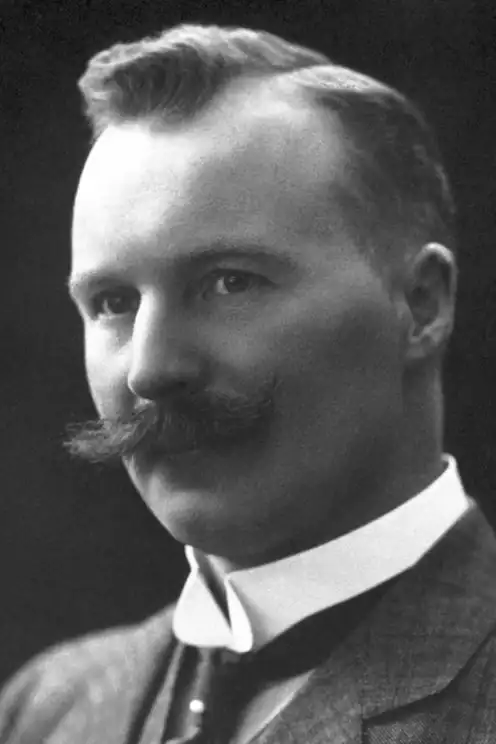
Black-and-white photograph of Nils Gustaf Dalén. He's wearing an old-fashioned high-collared shirt and has a large, bushy moustache.

The winner of the 1912 Nobel Prize for Physics was, by some margin, the unlikeliest physics Nobel laureate in history. He wasn’t a physicist, for starters. He wasn’t even a chemist. He was an inventor by the name of Nils Gustaf Dalén, and the invention that won him the prize was closely connected – in more ways than one – to the industrial accident that almost cost him his life.

To understand why members of the Royal Swedish Academy of Sciences plumped for Dalén in 1912 over his more famous contemporaries (including such luminaries as Max Planck and Albert Einstein) it helps to know a bit about the man himself. Like Alfred Nobel, Dalén was Swedish, born in 1869 in the small farming community of Stenstorp. Located around 140 km north-east of Gothenburg, Stenstorp is now home to a museum in Dalén’s honour, but as a young man, he did not seem like museum material. On the contrary, he was incredibly lazy – so lazy, in fact, that he invented a machine to make coffee and turn the light on for him in the mornings.

This ingenious device brought Dalén some local notoriety, but his big break came when Sweden’s most famous inventor at the time, Gustaf de Laval, saw him demonstrate a device for measuring milk fat content. Encouraged by de Laval to attend university, Dalén sold his family’s farm and enrolled at what is now the Chalmers University of Technology. After spending an additional year at ETH Zürich in Switzerland, he returned to Sweden to set up his first engineering firm.

A light in the darkness

The engineering challenge that set Dalén on the path to the Nobel was hugely important in a country like Sweden with a long, complex coastline. Years before the advent of GPS, or even reliable radio communications, lighthouses were the main way of warning ships away from danger. However, they were extremely expensive and hard to maintain. As well as needing 24-hour attention from skilled and hardy humans, they required huge amounts of propane fuel, necessitating frequent (and frequently dangerous) resupply trips.

The obvious way of reducing these costs was to make lighthouses burn something else. Acetylene was attractive because it could be manufactured in industrial quantities, and it produced a bright light when burned. Unfortunately, it was also highly explosive, meaning it couldn’t be safely bottled or shipped.

To tame the acetylene dragon, Dalén developed three separate inventions. The first was a combination of asbestos and diatomaceous earth that Dalén called “agamassan” after his company (Aktiebolaget Gasaccumulator) and the Swedish word for compound, massan. By filling a container with agamassan, wetting it with acetone and then forcing acetylene into the container under pressure, Dalén showed that the acetylene would dissolve in the acetone and become trapped within the agamassan like water in a sponge. Under these conditions, it could be shipped, stored and even dropped without exploding.

Having made acetylene safe to use, Dalén turned his hand to making it economical. His second invention was a device that automatically turned the acetylene supply on and off. This saved fuel and enabled the light to flash (distinguishing it from other light sources on the shore) without the need for cumbersome rotation mechanisms.

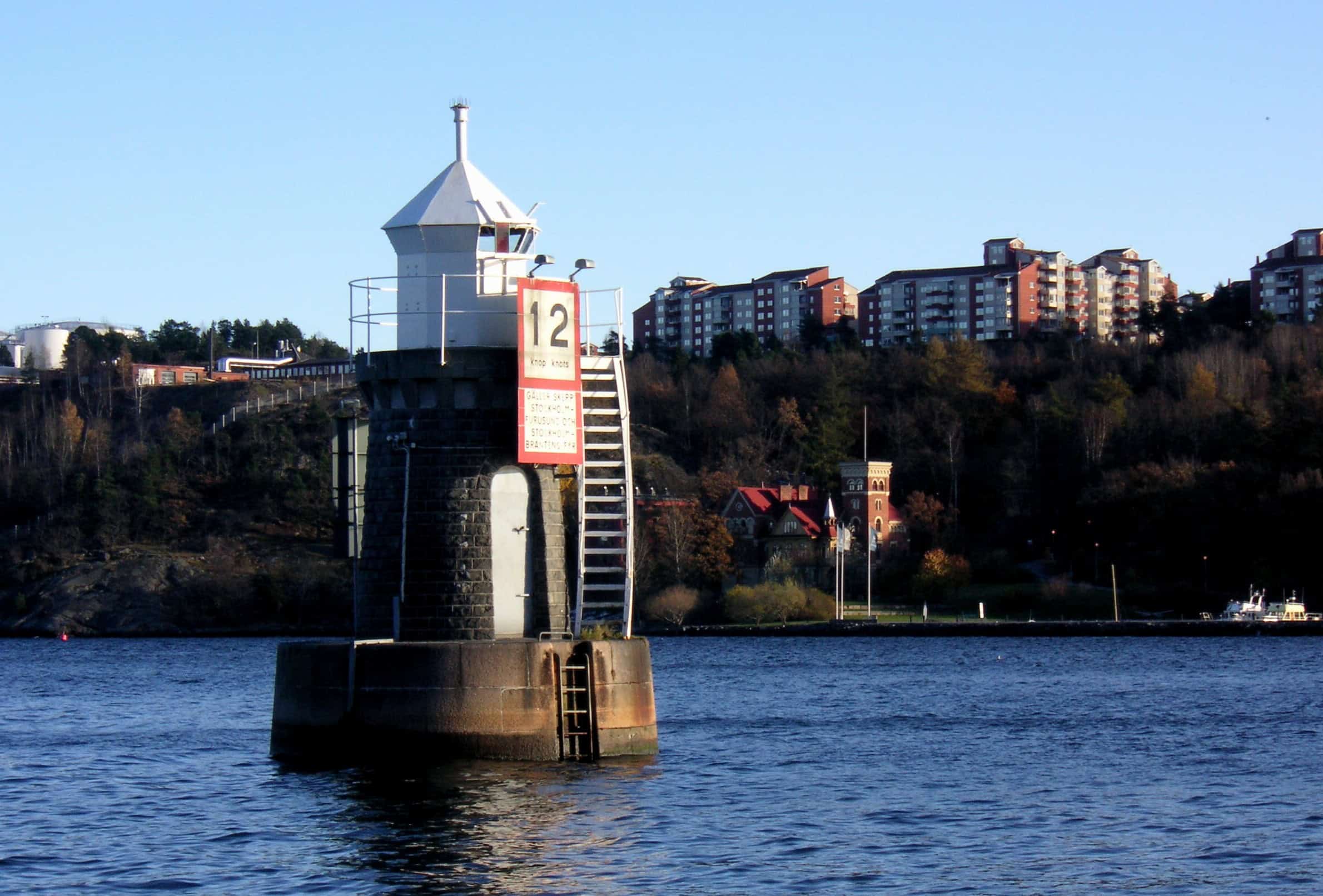
Photo of a lighthouse on a small rock in a bay with the coastline clearly visible close behind

Dalén’s third invention enabled even greater automation. Rather than relying on human lighthouse-keepers to switch acetylene burners on at night and off in the morning, Dalén developed a valve that could do it automatically. This valve worked by means of a set of metal rods, one of which was blackened while the others were polished. When the blackened rod absorbed enough heat from the Sun, it would expand and close the valve. At dusk, or in foggy conditions, the blackened rod would return to the temperature of the others, contract, and open the valve.

Choosing a laureate

While Dalén was perfecting the use of acetylene gas for lighthouses, the Nobel Committee for Physics was getting on with its usual business of recommending candidates for the prize. In 1909 the committee suggested the radio pioneer Guglielmo Marconi and his academic counterpart Karl Ferdinand Braun. The wider Academy accepted this choice. In 1910 the committee recommended the father of modern molecular science, Johannes Diderik van der Waals, and he also won the Academy’s approval. In 1911 the quantum theorist Wilhelm Wien, whose joint nomination with Max Planck in 1908 provoked such bitter disputes that neither of them got the prize, finally got the nod from both the committee and the Academy (Planck would have to wait for his prize until 1918).

By the early autumn of 1912, there was every indication that the Academy would again accept the committee’s recommendation, which was Heike Kammerlingh Onnes, who had liquefied helium for the first time in 1908 and subsequently used it to discover superconductivity. Although Dalén had also been nominated, Mats Larsson, a physicist at Stockholm University who served on the committee between 2016 and 2023, says he wasn’t a serious contender.

“It’s clear from the report from the Nobel committee to the Academy that they recognize there is an importance to Dalén’s inventions, but it doesn’t reach the standard for a Nobel prize,” says Larsson. With only a single nomination from a member of the Academy’s technical section, Larsson adds, “Dalén is not even on the shortlist.”

An industrial accident

Then, before the Academy could vote, tragedy struck. On 27 September 1912, during an experiment so risky it was performed in a quarry rather than in Aktiebolaget Gasaccumulator’s Stockholm factory, an explosion left Dalén seriously injured. The next day, Sweden’s national paper of record, Dagens Nyheter, put the accident on its front page, describing Dalén’s face as “unrecognizable” and his right side as “horribly massacred and burned”. Though conscious and talking when taken to hospital, he was not expected to survive.

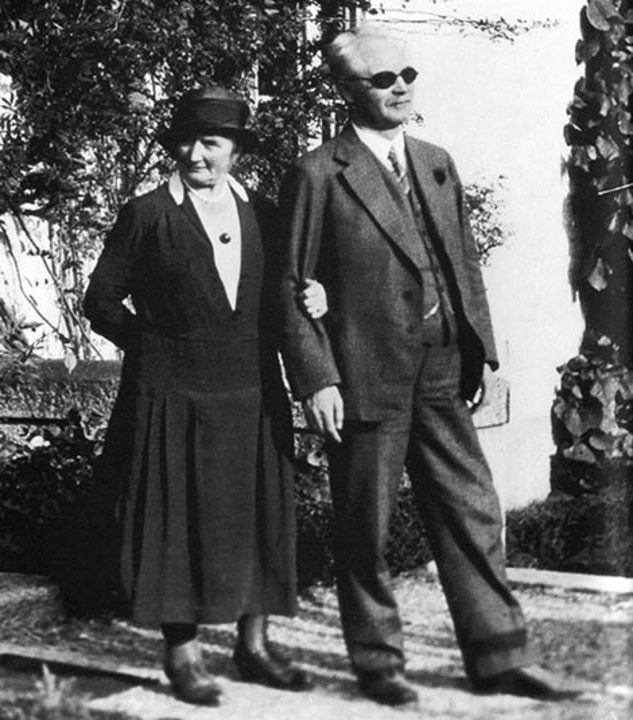
Gustaf Dalén and his wife Elma arm in arm

Nobel prizes cannot be awarded posthumously. If Dalén had died of his injuries, it is unlikely that his colleagues would have voted to honour him. But though Dalén’s doctors could not save his eyesight, they did save his life. By the time the Academy convened to vote on the 1912 Nobel prizes, he was recovering in the care of his family and very much on the minds of his sympathetic colleagues.

We don’t know exactly what happened next. “The material [in the Nobel archives] is very meagre,” Larsson explains. “It just says there was a vote and Dalén won the prize.”

Still, it’s easy to imagine that someone in the Academy must have pled Dalén’s cause. “This is our national hero who fought the war against ignorance and against darkness,” agrees Karl Grandin, who directs the Academy’s Center for History of Science. “And he loses his sight in the purpose of bringing light to the world. It was a symbolic thing.”

Dalén’s most enduring invention

Dalén was too unwell to attend the usual Nobel prize celebrations in Stockholm. Instead, he sent his brother, a physician, to accept the prize on his behalf. Eventually, though, he recovered well enough to resume his duties at Aktiebolaget Gasaccumulator. In time, he even returned to inventing. And herein lies the final twist in his story.

During his convalescence, the blind Dalén noticed something that had apparently escaped his attention when he could still see. His wife, Elma, worked very hard around the house, and cooking for him and their four children was especially tiresome. It would be much easier, Dalén decided, if she had a device that could cook several dishes at once, at different temperatures.

In 1922, ten years after losing his sight and winning the Nobel prize, Dalén unveiled the invention that would become his most enduring. Named, like agamassan, after the initials of his company, the AGA cooker is still sold today, bringing warmth to kitchens just as its inventor brought safe, effective and economical illumination to lighthouses. Gustaf Dalén may be the least likely physics Nobel laureate in history, but it would be facile to dismiss him as undeserving. After all, how many other physics laureates can boast of saving hundreds of thousands of lives at sea, while also relieving the drudgery of hundreds of thousands back home?

  • This article was amended on 4 November 2025 to correct the Swedish spellings of Dalén’s hometown and company.

Kirigami-inspired parachute falls on target

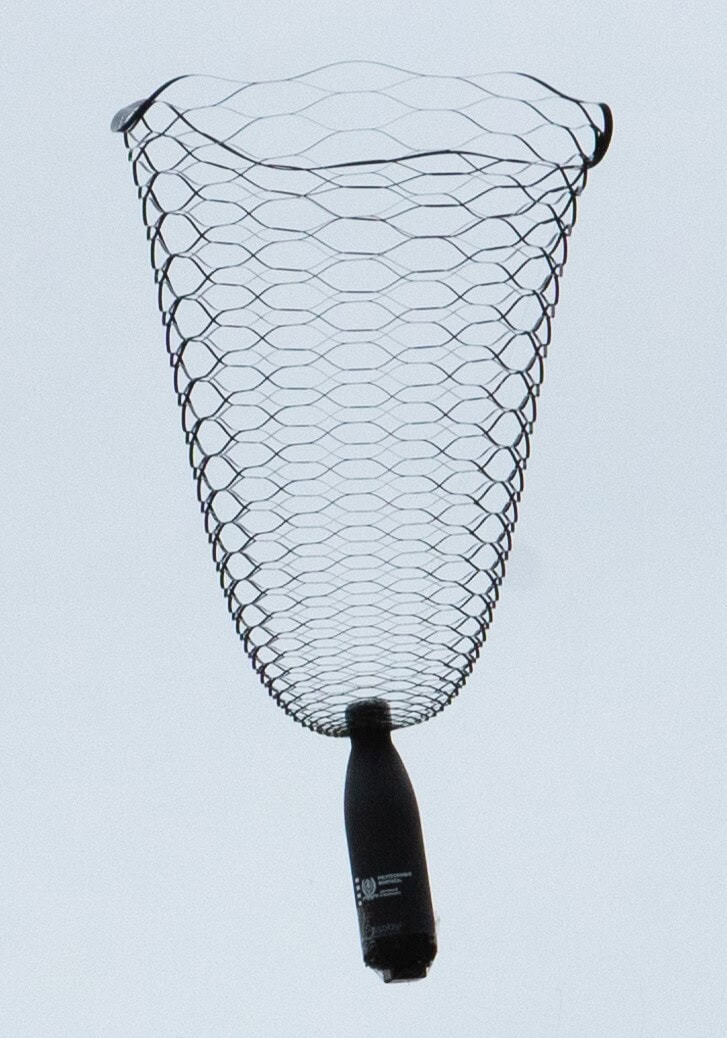
A Kirigami-inspired parachute

Inspired by the Japanese art of kirigami, researchers in Canada and France have designed a parachute that can safely and accurately deliver its payloads when dropped directly above its target. Tested in realistic outdoor conditions, the parachute’s deformable design stabilizes the airflow around its porous structure, removing the need to drift as it falls. With its simple and affordable design, the parachute could have especially promising uses in areas including drone delivery and humanitarian aid.

When a conventional parachute is deployed, it cannot simply fall vertically towards its target. To protect itself from turbulence, which can cause its canopy to collapse, it glides at an angle that breaks the symmetry of the airflow around it, stabilizing the parachute against small perturbations.

But this necessity comes at a cost. When dropping a payload from a drone or aircraft, this gliding angle means parachutes will often drift far from their intended targets. This can be especially frustrating and potentially dangerous for operations such as humanitarian aid delivery, where precisely targeted airdrops are often vital to success.

To address this challenge, researchers led by David Mélançon at Polytechnique Montréal looked to kirigami, whereby paper is cut and folded to create elaborate 3D designs. “Previously, kirigami has been used to morph flat sheets into 3D shapes with programmed curvatures,” Mélançon explains. “We proposed to leverage kirigami’s shape morphing capability under fluid flow to design new kinds of ballistic parachutes.”

Wind-dispersed seeds

As well as kirigami, the team drew inspiration from nature. Instead of relying on a gliding angle, many wind-dispersed seeds are equipped with structures that stabilize the airflow around them: including the feathery bristles of dandelion seeds, which create a stabilized vortex in their wake; and the wings of sycamore and maple seeds, which cause them to rapidly spin as they fall. In each case, these mechanisms provide plants with passive control over where their seeds land and germinate.

For their design, Mélançon’s team created a parachute that can deform into a shape pre-programmed by a pattern of kirigami cuts, etched into a flexible disc using a laser cutter. “Our parachutes are simple flat discs, with circumferential slits inspired by a kirigami motif called a closed loop,” Mélançon describes. “Instead of attaching the payload with strings at the outer edge of the disk, we directly mount it its centre.”

When dropped, a combination of air resistance and the weight of the free-falling payload deformed the parachute into an inverted, porous bell shape. “The slits in the kirigami pattern are stretched, forcing air through its multitude of small openings,” Mélançon continues. “This ensures that the air flows in an orderly manner without any major chaotic turbulence, resulting in a predictable trajectory.”

The researchers tested their parachute extensively using numerical simulations combined with wind tunnel experiments and outdoor tests, where they used the parachute to drop a water bottle from a hovering drone. In this case, the parachute delivered its payload safely to the ground from a height of 60 m directly above its target.

Easy to make

Mélançon’s team tested their design with a variety of parachute sizes and kirigami patterns, demonstrating that designs with lower load-to-area ratios and more deformable patterns can reach comparable terminal velocity to conventional parachutes – with far greater certainty over where they will land. Compared with conventional parachutes, which are often both complex and costly to manufacture, kirigami-based designs will be far easier to fabricate.

“Little hand labour is necessary,” Mélançon says. “We have made parachutes out of sheets of plastic, paper or cardboard. We need a sheet of material with a certain rigidity, that’s all.”

By building on their design, the researchers hope that future studies will pave the way for new improvements in package home delivery. It could even advance efforts to deliver urgently needed aid during conflicts and natural disasters to those who need it most.

The parachute is described in Nature.

Nobel prizes you’ve never heard of: how an obscure version of colour photography beat quantum theory to the most prestigious prize in physics

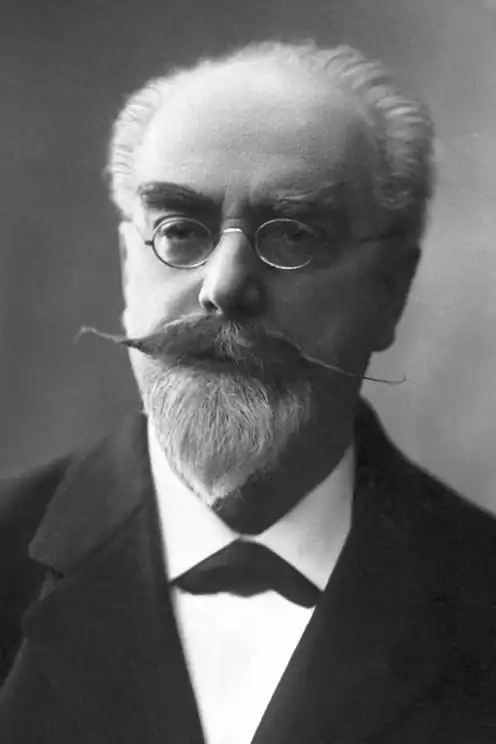
Black-and-white photo of Gabriel Lippmann. He's dressed formally, in a suit with a bow tie tucked beneath the collar, and he's wearing round spectacles. He has a large moustache with pointy, waxed ends.

By the time Gabriel Lippmann won the Nobel Prize for Physics, his crowning scientific achievement was already obsolete – and he probably knew it. Four days after receiving the 1908 prize “for his method of reproducing colours photographically based on the phenomenon of interference”, Lippmann, a Frenchman with a waxed moustache that would shame a silent film villain, ended his Nobel lecture with the verbal equivalent of a Gallic shrug.

After nearly 20 years of work, he admitted, the minimum exposure time for his method – one minute in full sunlight – was still “too long for the portrait”. Though further improvements were possible, he concluded, “Life is short and progress is slow.”

Why did Lippmann win a Nobel prize for a method that not even he seemed to believe in? It certainly wasn’t for a lack of alternatives. The early 1900s were a heady time for physics discoveries and inventions, and other Nobels of the era reflect this. In 1906 the Royal Swedish Academy of Sciences awarded the physics prize to J J Thomson for discovering the electron. In 1907 its members voted for Albert Michelson of the aether-defying Michelson–Morley experiment. So what made the Academy choose, in 1908, a version of colour photography that wouldn’t even let you take a selfie?

An elegant solution

Let’s start with the method itself. Unlike other imaging processes, Lippmann photography directly records the entire colour spectrum of an object. It does this by using standing waves of light to produce interference fringes in a light-sensitive emulsion backed by a mirrored surface. The longer the wavelength of light given off by the object, the larger the separation between the fringes. It’s an elegant application of classical wave theory. It’s easy to see why Edwardian-era physicists loved it.

A photo of bright red flowers in a vase. The colours are very vivid

Lippmann’s method also has an important practical advantage. Because his photographs don’t require pigments, they retain their colour over time. Consequently, the images Lippmann showed off in his Nobel lecture look as brilliant today as they did in 1908.

The method’s disadvantages, though, are numerous. As well as needing long exposure times, the colours in Lippmann photographs are hard to see. Because they are virtual, like a hologram, they are only accurate when viewed face-on, in perpendicular light. Lippmann’s original method also required highly toxic liquid mercury to make the mirrored back surface of each photographic plate. Though modern versions have eliminated this, it’s not surprising that Lippmann’s method is now largely the domain of hobbyists and artists.

A French connection

If technical merit can’t explain Lippmann’s Nobel, could it perhaps have been due to politics? The easiest way to answer this question is to look in the Nobel archives. Although the names of Nobel prize nominees and the people who nominated them are initially secret, this secrecy is lifted after 50 years. The nomination records for Lippmann’s era are therefore very much available, and they show that he was a popular candidate. Between 1901 and 1908, he received 23 nominations from 12 different people – including previous laureates, foreign members of the Academy, and scientists from prestigious universities invited to make nominations in specific years.

Funnily enough, though, all of them were French.

Faced with this apparent conspiracy to stamp the French tricolour on the Nobel medal, Karl Grandin, who directs the Academy’s Center for History of Science, concedes that such nationalistic campaigns were “quite common in the first years”. However, this doesn’t mean they were successful: “Sometimes when all the members of the French Academy have signed a nomination, it might be impressive at one point, but it might also be working in the opposite way,” he says.

A clash of personalities

Because Nobel Foundation statutes stipulate that discussions and vote numbers from the prize-awarding meeting of the Academy are not recorded, Grandin can’t say exactly how Lippmann came out on top in 1908. He does, however, have access to an illuminating article written in 1981 by a theoretical physicist, Bengt Nagel.

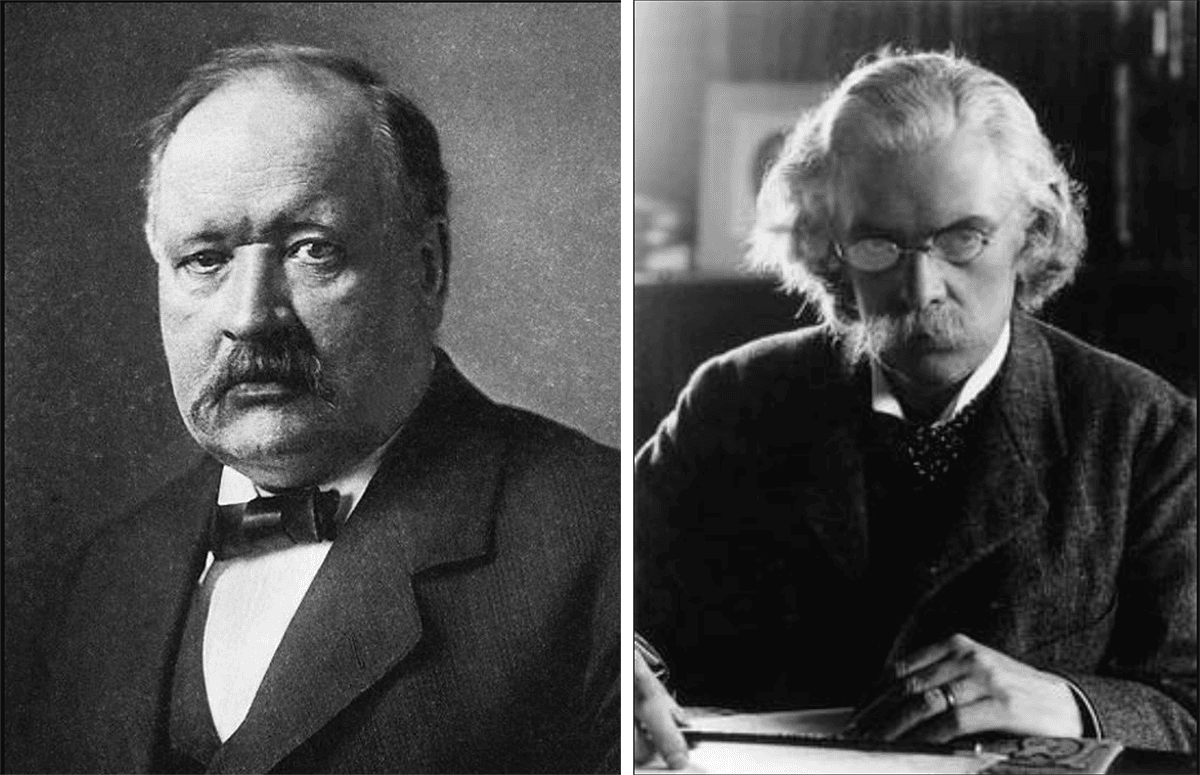
Drawing on the private letters and diaries of Academy members as well as the Nobel archives, Nagel showed that personal biases played a significant role in the awarding of the 1908 prize. It’s a complicated story, but the most important strand of it centres on Svante Arrhenius, the Swedish physical chemist who’d won the Nobel Prize for Chemistry five years earlier.

Today, Arrhenius is best known for predicting that putting carbon dioxide in the Earth’s atmosphere will affect the climate. In his own lifetime, though, Grandin says that Arrhenius was also known for having a long-running personality conflict with a wealthy Swedish mathematician called Gustaf Mittag-Leffler.

“Stockholm at the time was a small place,” Grandin explains. “Everyone knew each other, and it wasn’t big enough to host both Arrhenius and Mittag-Leffler.”

Arrhenius and Mittag-Leffler

Arrhenius wasn’t the chair of the Nobel physics committee in 1908. That honour fell to Knut Angstrom, son of the Angstrom the unit is named after. Still, Arrhenius’ prestige and outsized personality gave him considerable influence. After much debate, the committee agreed to recommend his preferred choice for the prize, Max Planck, to the full Academy.

This choice, however, was not problem-free. Planck’s theory of the quantization of matter was still relatively new in 1908, and his work was not demonstrably guiding experiments. If anything, it was the other way around. In principle, the committee could have dealt with this by recommending that Planck share the prize with a quantum experimentalist. Unfortunately, no such person had been nominated.

That was awkward, and it gave Mittag-Leffler the ammunition he needed. When the matter went to the Academy for a vote, he used members’ doubts about quantum theory to argue against Arrhenius’ choice. It worked. In Mittag-Leffler’s telling, Planck got only 13 votes. Lippmann, the committee’s second choice, got 46.

A consensus winner

Afterwards, Mittag-Leffler boasted about his victory. “Arrhenius wanted to give it to Planck…but his report, which he had nevertheless managed to have unanimously accepted by the committee, was so stupid that I could easily have crushed it,” he wrote to a French colleague. “Two members even declared that after hearing me, they changed their opinion and voted for Lippmann. I would have had nothing against sharing the prize between [quantum theorist Wilhelm] Wien and Planck,” Mittag-Leffler added, “but to give it to Planck alone would have been to reward ideas that are still very obscure and require verification by mathematics and experimentation.”

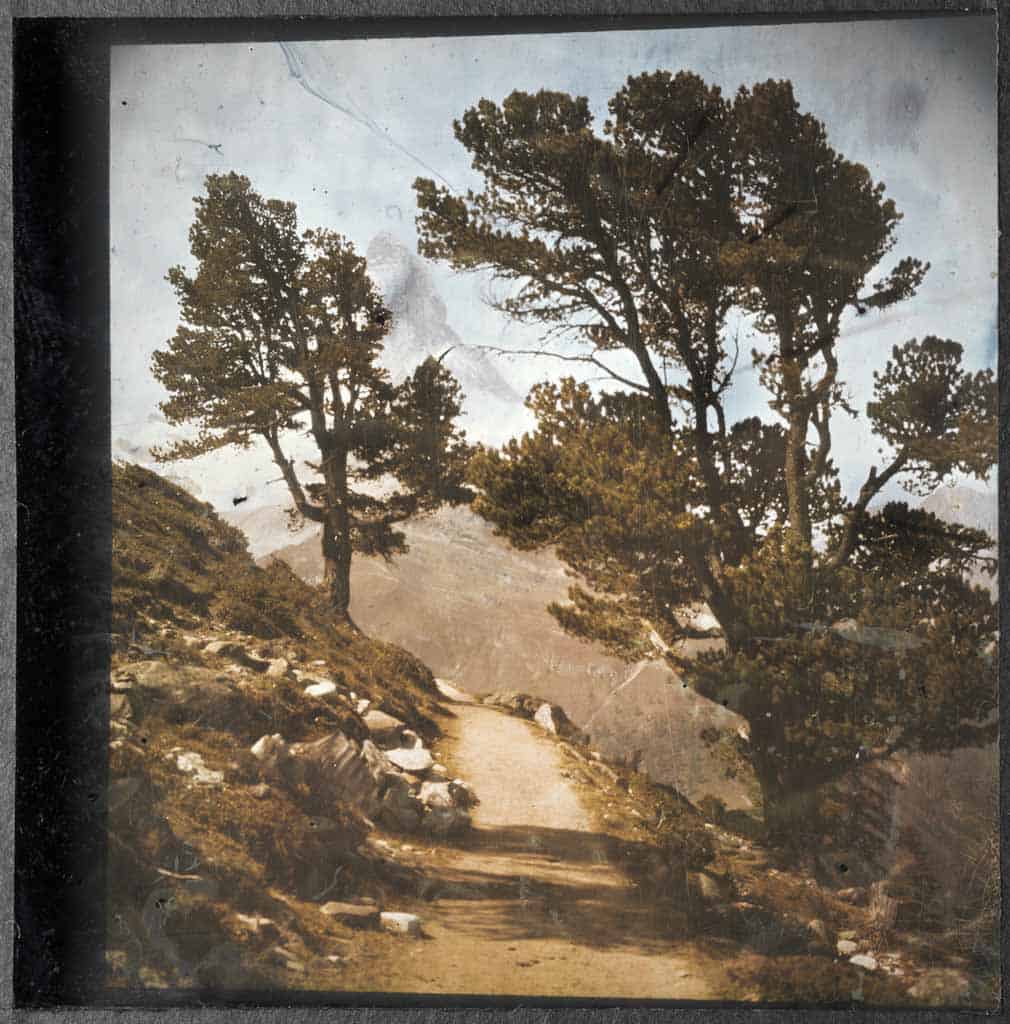
A photo of the Matterhorn rising above an Alpine landscape. The colours are a little washed out, but do not appear artificially tinted

Lippmann’s work posed no such difficulties, and that seems to have swung it for him. In a letter to a colleague after the dust had settled, Angstrom called Lippmann “obviously a prizeworthy candidate who did not give rise to any objections”. However, Angstrom added, he “could not deny that the radiation laws constitute a more important advance in physical science than Lippmann’s colour photography”.

Much has been written about excellent scientists getting overlooked for prizes because of biases against them. The flip side of this – that merely good scientists sometimes win prizes because of biases in their favour – is usually left unacknowledged. Nevertheless, it happens, and in 1908 it happened to Gabriel Lippmann – a good scientist who won a Nobel prize not because he did the most important work, but because his friends clubbed together to support him; because Academy members were wary of his quantum rivals; and above all because a grudge-holding mathematician and an egotistical chemist had a massive beef with each other.

And then, four years later, it happened again, to someone else.

Destroyers of the world: the physicists who built nuclear weapons

The title of particle physicist Frank Close’s engaging new book, Destroyer of Worlds, refers to Robert Oppenheimer’s famous comment after he witnessed the first detonation of an atomic bomb, known as the Trinity test, in July 1945. Quoting the Hindu scripture Bhagavad Gita, he said “Now I am become death, the destroyer of worlds.” But although Close devotes much space to the Manhattan Project, which Oppenheimer directed between 1942 and 1945, his book has a much wider remit.

Aimed at non-physicist readers with a strong interest in science, though undoubtedly appealing to physicists too, the book seeks to explain the highly complex physics and chemistry that led to the atomic bomb – a term first coined by H G Wells in his 1914 science-fiction novel The World Set Free. It also describes the contributions of numerous gifted scientists to the development of those weapons.

Close draws mainly on numerous published sources from this deeply analysed period, including Richard Rhodes’s seminal 1988 study The Making of the Atomic Bomb. He starts with Wilhelm Röntgen’s discovery of X-rays in 1895, before turning to the discovery of radioactivity by Henri Becquerel in 1896 – described by Close as “the first pointer to nuclear energy [that was] so insignificant that it was almost missed”. Next, he highlights the work on radium by Marie and Pierre Curie in 1898.

After discussing the emergence of nuclear physics, Close goes on to talk about the Allies’ development of the nuclear bomb. A key figure in this history was Enrico Fermi, who abandoned Fascist Italy in 1938 and emigrated to the US, where he worked on the Manhattan Project and built the first nuclear reactor, in Chicago, in 1942.

Fermi showed his legendary ability to estimate a physical phenomenon’s magnitude by shredding a sheet of paper into small pieces and throwing them into the air

Within seconds of seeing Trinity’s blast in the desert in 1945, Fermi showed his legendary ability to estimate a physical phenomenon’s magnitude by shredding a sheet of paper into small pieces and throwing them into the air. The bomb’s shock wave blew this “confetti” (Close’s word) a few metres away. After measuring the exact distance, Fermi immediately estimated that the blast was equivalent to about 10,000 tonnes of TNT. This figure was not far off the 18,000 tonnes determined a week later following a detailed analysis by the project team.

The day after the Trinity test, a group of 70 scientists, led by Leo Szilard, sent a petition to US President Harry Truman, requesting him not to use the bomb against Japan. Albert Einstein agreed with the petition but did not sign it, having been excluded from the Manhattan Project on security grounds (though in 1939 he famously backed the bomb’s development, fearing that Nazi Germany might build its own device). Despite the protests, atomic bombs were dropped on Hiroshima and Nagasaki less than a month later – a decision that Close neither defends nor condemns.

Other key figures in the Manhattan Project were emigrants to the UK, who had fled Germany in the mid-1930s because of Nazi persecution of Jews, and later joined the secret British Tube Alloys bomb project. The best known are probably the nuclear physicists Otto Frisch and Rudolf Peierls, who initially worked together at the University of Birmingham for Tube Alloys before joining the Manhattan Project. They both receive their due from Close.

Oddly, however, he neglects to mention their fellow émigré Franz (Francis) Simon by name, despite acknowledging the importance of his work in demonstrating a technique to separate fissionable uranium-235 from the more stable uranium-238. In 1940 Simon, then working at the Clarendon Laboratory in wartime Oxford, showed that separation could be achieved by gaseous diffusion of uranium hexafluoride through a porous barrier, which he initially demonstrated by hammering his wife’s kitchen sieve flat to make the barrier.

The Manhattan Project set an example for the future of science as a highly collaborative, increasingly international albeit sometimes dangerous adventure

As Close ably documents and explains, numerous individuals and groups eventually ensured the success of the Manhattan Project. In addition to ending the Second World War and preserving freedom against Fascism, there is an argument that it also set an example for the future of science as a highly collaborative, increasingly international albeit sometimes dangerous adventure.

Close finishes the book with a shorter discussion of the two decades of Cold War rivalry between scientists from the US and the Soviet Union to develop and test the hydrogen bomb. It features physicists such as Edward Teller and Andrei Sakharov, who led the efforts to build the American “Super Bomb” and the Soviet “Tsar Bomba”, respectively.

The book ends in around 1965, after the 1963 partial test-ban treaty signed by the US, Soviet Union and the UK, preventing further tests of the hydrogen bomb for fear of their likely devastating effects on Earth’s atmosphere. As Close writes, the Tsar Bomba was more powerful than any recorded explosion other than the meteorite impact 65 million years ago that wreaked global change and killed the dinosaurs, which had ruled for 150 million years.

“Within just one per cent of that time, humans have produced nuclear arsenals capable of replicating such levels of destruction,” Close warns. “The explosion of a gigaton weapon would signal the end of history. Its mushroom cloud ascending towards outer space would be humanity’s final vision.”

  • 2025 Allen Lane £25.00hb 321pp

A breakthrough in the hunt for dark matter

Dark matter makes up over 25% of the universe’s mass, holds galaxies together, and is essential to our understanding of cosmic structure. It doesn’t interact with light or other electromagnetic radiation, and is detectable only through its gravitational effects. While astrophysical and cosmological evidence confirms its presence, its true nature remains one of the greatest mysteries in modern physics.

A leading theory suggests that dark matter consists of extremely light, elusive particles called axions. Traditional axion searches rely on narrow-band resonance techniques, which require slow, step-by-step scanning across possible axion masses, making the process time-consuming.

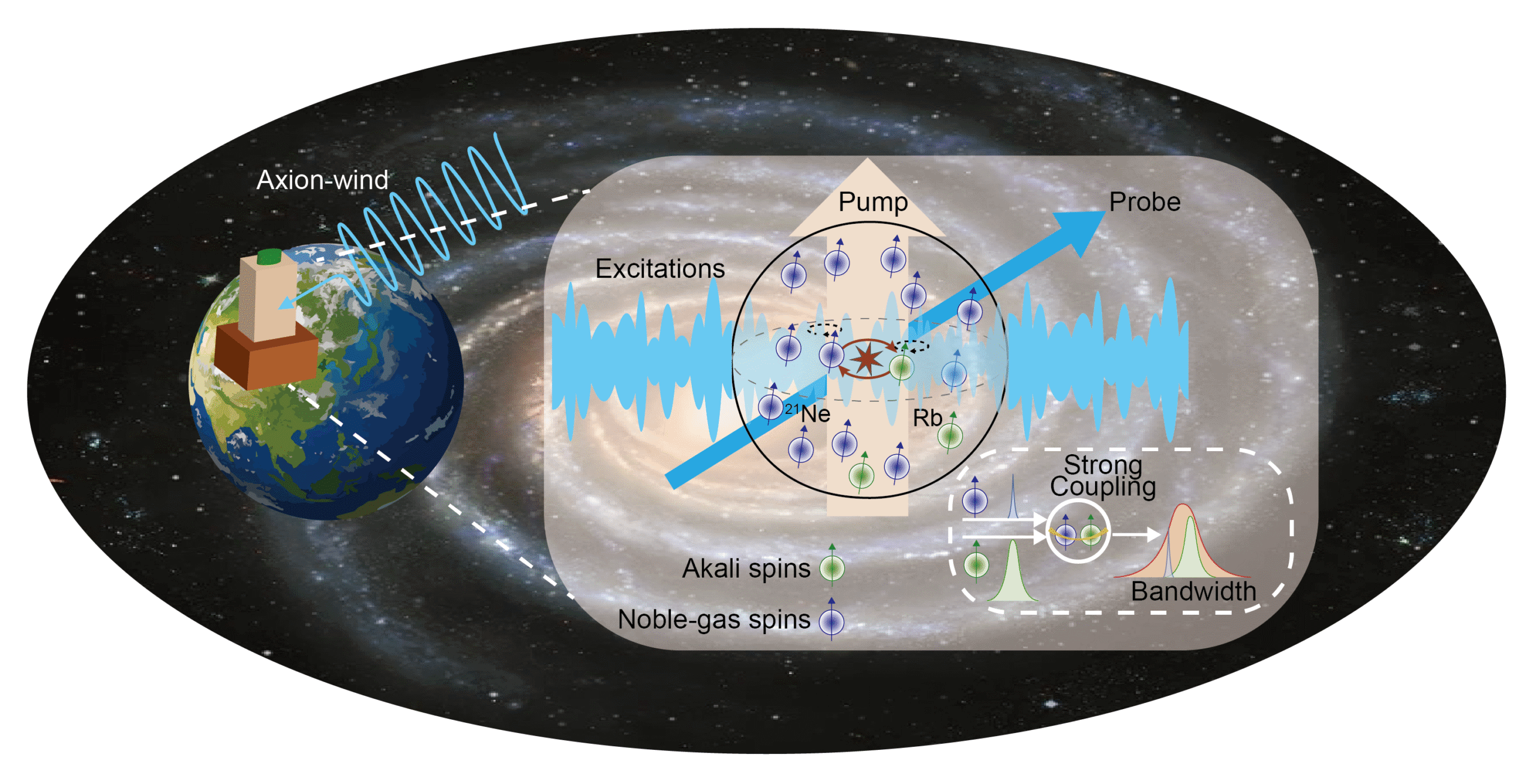
In this study, researchers introduce a new broadband quantum sensing approach using an alkali-21Ne spin system, which works like a very sensitive antenna to listen for signals from dark matter. They identify two distinct ways the system behaves under different conditions. At low frequencies, the spin system naturally adjusts itself to cancel out noise or unwanted effects. This self-compensation makes the system stable and sensitive, even without fine-tuning. It’s like a car that automatically balances itself on a bumpy road, you don’t need to steer constantly. At higher frequencies, the system enters a state where the spins of different atoms resonate together. This resonance boosts the signal, making it easier to detect tiny effects caused by dark matter. Like two musical instruments playing in harmony, the combined sound is louder and clearer. This allows researchers to significantly expand the search bandwidth without sacrificing sensitivity.

Concept sketch of the broadband quantum spin sensor used to search for axion-like dark matter: the galactic “axion-wind” drives tiny spin torques

Their experiment covers a vast frequency range, from very slow oscillations (0.01 Hz) to very fast ones (1000 Hz), enabling a comprehensive search for axion-like dark matter. They set new constraints on how axions might interact with neutrons and protons. For neutrons, they reached a sensitivity that beats previous astrophysical limits in some frequency ranges. For protons, they achieved the best lab-based constraints in specific frequency bands.

This work not only advances the search for dark matter but also opens new frontiers in atomic physics, quantum sensing, and particle physics, offering a powerful new strategy to explore the invisible fabric of the universe.

Read the full article

Dark matter search with a resonantly-coupled hybrid spin system

Kai Wei et al 2025 Rep. Prog. Phys. 88 057801

Do you want to learn more about this topic?

Dark matter local density determination: recent observations and future prospects by Pablo F de Salas and A Widmark (2021)

A step towards bridging gravity and quantum physics

A long-standing challenge in physics has been to integrate gravity into the Standard Model, which successfully describes the electromagnetic, weak, and strong forces. The difficulty lies in the mathematical symmetries: general relativity uses infinite-dimensional space-time symmetries, while the Standard Model relies on compact, finite-dimensional ones, making the two frameworks fundamentally incompatible.

A central question in this context is: is gravity a force? Newtonian mechanics says yes, gravity pulls masses together. Einstein’s relativity says no, it’s the curvature of space-time that guides motion. Quantum field theory suggests gravity may be a force mediated by hypothetical particles called gravitons.

The researchers behind this work propose that gravity can be treated as a gauge interaction, similar to electromagnetism. This approach implies gravity is a force mediated by a field and governed by the same kinds of symmetries as the other fundamental interactions.

They introduce unified gravity, a novel framework that reformulates gravity using the compact symmetries of quantum field theory. Working with an eight-dimensional spinor model, they define a space-time dimension field to recover familiar four-dimensional space-time. By applying four U(1) symmetries, they derive a gauge theory of gravity that mirrors the Standard Model, with the stress-energy-momentum tensor emerging naturally from these symmetries.

Their theory reproduces teleparallel gravity through a special geometric condition and describes gravity in flat Minkowski space-time by another geometric condition, making it compatible with quantum field theory. They develop Feynman rules and show the theory is renormalizable at 1-loop, meaning it handles quantum corrections without mathematical breakdown. Finally, they demonstrate that the theory respects BRST symmetry, which ensures gauge consistency in quantum field theory.

While this remains a mathematical theory, it prompts us to reassess how we conceptualize gravity, not as a curvature of space-time, but as a gauge interaction like the other fundamental forces. If validated experimentally, unified gravity could reshape our understanding of the universe and mark a major turning point in theoretical physics.

Read the full article

Gravity generated by four one-dimensional unitary gauge symmetries and the Standard Model

Mikko Partanen and Jukka Tulkki 2025 Rep. Prog. Phys. 88 057802

Do you want to learn more about this topic?

How far are we from the quantum theory of gravity? by R P Woodard (2009)

Leo Cancer Care launches first upright photon therapy system

Leo Cancer Care is a trans-Atlantic company that’s pioneering the development of upright radiotherapy – a totally new take on radiation delivery in which the patient is treated in an upright position and rotated in front of a fixed treatment beam. At this week’s ASTRO 2025 meeting in San Francisco, the company introduced its first upright photon therapy system, named Grace, to an enthusiastic crowd in the ASTRO exhibit hall.

Upright treatments have a host of potential advantages over conventional radiotherapy, where patients typically lie on their back during treatment. Studies have shown that the more natural upright posture could deliver more consistent anatomical positioning and organ stability, as well as enabling more comfortable treatment positions, with patients who have experienced the technology reporting improved comfort and greater patient–therapist connection.

A fixed treatment beam also simplifies system design, reduces space and shielding requirements, and lowers infrastructure costs. And for proton therapy in particular, removing the need for a bulky and expensive gantry could help increase global access to advanced cancer treatments. Indeed, a partnership between Leo Cancer Care and Mevion Medical Systems led to the development of the MEVION S250-FIT, an ultracompact upright proton therapy system that fits inside a linac vault.

Moving on from Leo Cancer Care’s initial focus on proton therapy, the new Grace system will deliver conventional X-ray radiation therapy with patients positioned upright. Grace – named after American computer scientist and US Navy rear admiral Grace Hopper – comprises an upright patient positioning system (with six degrees of freedom and 360° continuous rotation) in front of a stationary 6 MV photon linac.

“Our future innovation, Grace, will take a proven technology, photon therapy, and rethink the way it can be delivered,” Sophie Towe, the company’s director of marketing, tells Physics World. “Upright treatment isn’t just about comfort; it’s about consistency, stability and ultimately accessibility. By integrating advanced CT imaging, faster beam delivery and a more natural patient position, we are opening the door to more adaptive and affordable care. Our goal is to show that innovation in radiotherapy doesn’t always mean bigger or more complex; it can mean smarter and more human.”

The system features a fan-beam CT scanner at the treatment isocentre, enabling planning-quality imaging throughout the entire treatment workflow. It also incorporates a large, ultrafast multileaf collimator that, in combination with the stationary photon beam delivery system, is designed to optimize dose conformity and treatment efficiency.

“Leo Cancer Care is already known for delivering upright particle therapy technology, and over the past few years we have seen a real paradigm shift as a result,” says co-founder and CEO Stephen Towe in a press statement. “Grace represents a return to our original company focus of delivering more cost-effective photon treatments to a global stage without sacrificing on treatment quality. Our technology has always been bold, but we are pioneering with purpose and that purpose is to put the patient truly back at the centre of their treatments.”

The company will install the first pre-commercial Grace systems at healthcare institutions within the Upright Photon Alliance research collaboration, which include Centre Léon Bérard, Cone Health, IHH Healthcare, Mayo Clinic and OncoRay.

Copyright © 2026 by IOP Publishing Ltd and individual contributors