Triple-Gaussian model improves proton therapy plans

A new treatment planning system (TPS) for proton therapy has been shown to accurately predict delivered dose by modelling the beam as a combination of three Gaussian distributions. Researchers in Japan tested the system using an ionization chamber and radiochromic film in a simple, commercially available phantom. The results demonstrate a reliable and convenient method of dose verification that could be adopted widely by proton therapy providers (J. Appl. Clin. Med. Phys. 10.1002/acm2.12535).

Because the depth at which a proton beam is halted by tissue depends on its initial energy, intensity-modulated proton therapy (IMPT) allows the radiation field to conform closely to the 3D shape of the tumour while sparing surrounding tissue. This makes IMPT the method of choice for intricately shaped tumours in complex physiological settings. The narrow margins in these situations mean that a robust quality assurance procedure is needed so that clinicians can be confident that the planned dose is the one that is delivered to the patient.

To establish such a procedure for pencil-beam scanning proton therapy, Keisuke Yasui and colleagues, at Fujita Health University and Nagoya Proton Therapy Centre, simulated treatments for prostate and head-and-neck cancers using a simple commercial phantom that broadly replicates the form of a human patient. The researchers placed an ionization chamber at various points within the phantom to measure the absolute dose, and inserted radiation-sensitive film at three different depths to find the relative dose distribution.

Although the phantom is constructed using materials that approximate the radiation-absorbing properties of human tissue, the equivalence is not quite perfect. This means that standard calculations used to predict how the proton beam is stopped by tissue could not be applied to the phantom directly. To account for this, Yasui and colleagues derived a correction factor that converts measured radiodensity — in Hounsfield units — to phantom-specific relative stopping power. They also considered errors in the predicted dose that arise due to uncertainty in the measurement point of the ionization chamber, and in the point around which the treatment gantry rotates.

Triple Gaussian model

Key to the reliability of the group’s results is their use of a new TPS that better models the dose profile of the proton beam. Whereas traditional approaches represent the dose cross-section as a sum of two Gaussian distributions, previous research (Med. Phys. 10.1118/1.4942386) has shown that, under certain conditions, a combination of three distributions more accurately captures the effect of secondary particles at the beam’s edge.

As the TPS and phantom are both commercially available, any clinic that uses IMPT based on pencil-beam scanning can use the procedure and the team’s phantom-specific correction table to verify their treatment plans. As long as absolute dose measurements are taken for each beam angle — to mitigate uncertainty related to measurement points and gantry rotation — the method provides an accurate, reproducible basis for quality assurance. “Our motivation was to realize equal access to high-quality spot-scanning proton therapy in Japan and all over the globe,” says Yasui.

Next, Yasui and colleagues intend to investigate the value of using radiophotoluminescent glass dosimeters in place of ionization chambers. When such dosimeters absorb ionizing radiation such as protons, they develop stable luminescent centres that can later be excited using ultraviolet light. These dosimeters are attractive for their reproducibility, dose linearity and angular independence, and have already been used successfully in a multi-institution photon-beam dose audit in Japan.

In the future, the researchers also hope to use a 3D printing method to create a dosimeter that measures 3D dose distribution.

Vague but exciting: how the Web transformed business

As you probably don’t need reminding, the World Wide Web was devised in 1989 by Tim Berners-Lee – a British computer scientist working at the CERN particle-physics lab near Geneva. What’s less well known is that the first Web server was a NeXTcube work station, built by the firm that Steve Jobs founded after he left Apple in 1985.

When I recently saw the machine on a visit to CERN’s amazing Microcosm museum, I had to smile when I saw the handwritten sticker on it, which said: “This machine is a server – DO NOT POWER DOWN!!” It’s hard to believe that this innocuous device is where the Web began.

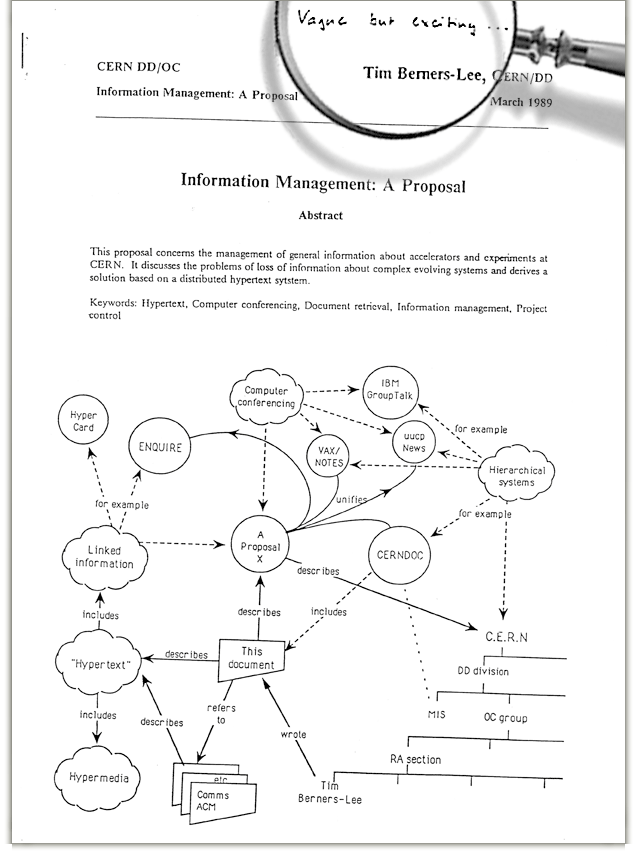
Written on Berners-Lee’s initial proposal for information management, dated March 1989, were his supervisor’s handwritten words: “Vague but exciting”. But why did Berners-Lee, who originally studied physics at the University of Oxford, come up with his idea for the Web? After all, initial reaction wasn’t overly enthusiastic. It’s obvious, though, when you remember why CERN exists.

Connect and compute

Ever since it was founded in 1953, the lab has needed computers to collect and analyse the vast amounts of data from detectors on its various experiments. And because CERN is an international collaboration, scientists from universities across Europe and beyond travelled to CERN to carry out experiments, which meant they needed a way to share that data too.

Although CERN was, by the early 1970s, an early adopter of computing, there were very few standards in computer systems.

But the story was far from straightforward. Although CERN was, by the early 1970s, an early adopter of computing, there were very few standards in computer systems. Many who worked there say CERN was chaotic, with a huge variety of protocols in use; indeed, open warfare existed between many manufacturers’ proprietary systems and CERN’s own homemade networks.

By the 1980s, however, things were more organized, with CERN setting up a data communications group to bring order to the chaos. Berners-Lee worked briefly at CERN in 1980, where he built software called ENQUIRE, which served two functions. It was partly a personal database of people and software models, but also a way for him to explore the use of “hypertext”, with each new page of information in ENQUIRE having to be linked to an existing page.

After a spell back in the UK, Berners-Lee rejoined CERN in 1984. At this point he realized that physicists who needed to share data lacked common machines and universal software interfaces. Soon, though, Internet protocol (IP) interfaces were installed on most machines, allowing devices from different manufacturers to communicate and interoperate via a common addressing and packet structure. Within a few years, CERN was home to Europe’s largest Internet site.

And so it was that by 1989 CERN’s Internet facility was ready to become the medium within which Berners-Lee could create the Web. An entire culture had developed at CERN around “distributed computing” and Berners-Lee’s 1989 proposal discussed the idea of “a large hypertext database with typed links”.

By 1989 CERN’s Internet facility was ready to become the medium within which Berners-Lee could create the Web.

The proposal attracted little interest, but Berners-Lee was encouraged when his boss, Mike Sendall, began implementing the system on that newly acquired NeXTcube workstation. Berners-Lee apparently considered several names, including Information Mesh, The Information Mine, or the Mine of Information, before settling on World Wide Web – a good choice, I think.

Then, on 30 April 1993 CERN put the World Wide Web software into the public domain. Later, CERN made a release available with an open licence, which was a surer way to maximize its dissemination. These actions allowed the Web to flourish – and the rest is history.

What could it do for me?

In the early 1990s most people didn’t know they needed the Web or what it could do. After all, it was developed by particle physicists who had big problems to solve – and few of us needed to look for the W boson. So to really make the Web useful, accessible and affordable for everyone else, some more enabling technology was needed, which duly appeared in the form of cheaper personal computers, search engines, broadband, WiFi and – later – smart phones.

The impact of the Web has been immense. It has enabled all sorts of new business models, but you only have to look at small companies to see how much things have changed since I left university in 1989 with a degree in physics and computing. Back then, small firms would open a shop, advertise in the local paper or radio, join a local networking organization, and hope that local customers needed what they had to offer. Location or well-targeted advertising was key to success.

While the Web may give small businesses global access, they are now small fish in a very big pond.

With the Web, however, businesses can reach customers across the globe and no longer depend on a local customer base to survive. Online shopping has transformed retail and decimated the high street, even though only 10% of sales are online by volume. Sites like Amazon and eBay look unstoppable. But while the Web may give small businesses global access, they are now small fish in a very big pond. Their website may be the storefront, but getting found and maintaining a positive reputation is an ongoing battle.

A decade ago, ensuring your website had the right keywords and a few banner ads was enough to deliver traffic to your store. Now, successful businesses have to play the new games of creating and placing shareable multimedia content, exploiting product placement with online influencers and bloggers, and investing time in managing very public – and occasionally highly critical – feedback. Customers spend more time online, but if they can’t find what they want within three clicks, they leave your store.

As for the future of the Web, one thing is sure: it’s not going away. Just look at Google: it started in 1998 and is now one of the biggest companies in the world. The Web will keep growing and expanding but just remember – without physics it would be nothing.

Pharmaceutical residues in fresh water pose a growing environmental risk

Over the past 20 years, concentrations of pharmaceuticals have increased in freshwater sources all over the world, research by environmental experts at Radboud University has revealed.

Levels of the antibiotic ciprofloxacin have reached the point of potentially causing damaging ecological effects. The research is the first to examine the risks of two particular medicines in global freshwater sources, and is published in Environmental Research Letters. The study calls for more widespread data gathering to measure the problem around the world.

“Getting an accurate picture of the environmental risks of pharmaceuticals around the world depends on the availability of data, which is limited,” says Rik Oldenkamp, lead author of the article. “It’s true that there are models, such as the ePiE model, which can give detailed predictions of pharmaceutical concentrations in the environment, but these are often only applicable to places where we already have a lot of information, such as rivers in Europe.”

The new model developed by the researchers, which builds on an existing model with a lower resolution, makes it possible to come up with worldwide predictions for individual ecoregions.

For the two pharmaceuticals investigated in the study – carbamazepine, an anti-epileptic drug, and ciprofloxacin, an antibiotic – the environmental risks were found to be 10 to 20 times higher in 2015 than in 1995. The increased human use of ciprofloxacin was found to have a particularly high impact globally. “The concentrations of this antibiotic are damaging to bacteria in the water, and these bacteria in turn play an important role in various nutrient cycles,” says Oldenkamp. “Antibiotics can also have a negative impact on the effectiveness of bacteria colonies used in water treatment.”

Antibiotic resistance has been on the agenda of the World Health Organization (WHO) and United Nations General Assembly for a few years now. “Generally, it’s seen as a problem for the health sector, as resistant bacteria can be spread within hospitals or through livestock,” says Oldenkamp. “But there’s little awareness of the role of the environment in this problem, even though that’s of crucial importance. After all, people are exposed to bacteria through wastewater treatment, rivers and lakes.”

“Our model predicts a high environmental risk for ecoregions in densely populated and dry areas such as the Middle East, yet those are precisely the areas where there is little data on pharmaceutical use and water concentrations,” says Oldenkamp. The researchers predicted human pharmaceutical consumption in these areas using regression models based on consumption in other countries, along with socio-economic and demographic information, and linked this to information related to other factors such as water sources and the number of people with access to water treatment.

“Our model shows a particular need for new data in these types of areas,” says Oldenkamp. “The model is really a starting point for creating an insight into the environmental risks posed by pharmaceuticals all over the world.”

Improved carbon capture turns CO2 into energy storage material

Carbon dioxide (CO2) can be transformed back into carbon at a minimal energy cost thanks to a new catalyst reported by researchers at the University of New South Wales (UNSW) and the Royal Melbourne Institute of Technology (RMIT) in their recent  Nature Communications article.

Carbon dioxide emitted by human activity is a critical factor in accelerating climate change, and must be addressed to reduce the resulting harmful impacts of rising sea levels and extreme weather. In an attempt to arrest emissions, carbon capture and storage projects have been initiated around the world that aim to trap CO2 at power plants and store it in deep geological formations, but there are concerns about the CO2 leaking back into the atmosphere. This new discovery by Torben Daeneke and Kourosh Kalantar-Zadeh transforms dissolved CO2 into solid carbon, which could be stored more easily or even used as an energy storage material.

Liquid benefits

Torben-Danaeke-Dorna-Esrafilzadeh

Transforming waste CO2 into useful chemicals has long been a fixation for chemists. However, CO2 is a very stable molecule so most successful approaches have required high temperatures or pressures, or have been resource intensive in other ways, making them commercially impractical.

Kalantar-Zadeh and Daeneke have now developed a catalyst that electrochemically converts CO2 to solid carbon at room temperature using a technique that requires very little electrical energy. They use cerium nanoparticles in a mixture of metals called galistan, which is liquid at room temperature. The use of a liquid metal surface stops the carbon from building up and slowing the reaction, and means the carbon can be removed easily.

The researchers show that the carbon generated by their process is as good as commercial carbon products for storing electricity. Although the electrocatalytic system is relatively complex and uses some costly metals it is an early demonstration of a very exciting prospect. Optimization might lead to viable carbon-negative processes that could produce useful materials and chemicals, with economically inviting resource requirements, while offering environmental benefits.

Women are better at crowdfunding science, Street View explores the LHC, preventing the weaponization of science

It is International Women’s Day and the challenges faced by women in STEM careers are being discussed in forums worldwide. Some good news is a study by Henry Sauermann, Chiara Franzoni and Kourosh Shafi, who have shown that women are much more successful than men when it comes to crowdfunding money for scientific projects. The trio looked at over 700 campaigns on experiment.com, which is the largest dedicated platform to crowdfunding scientific research.

Although the majority of campaign creators on the site are men, women had a 57% success rate for reaching their targets. Their male counterparts only succeeded 43% of the time. The trio discuss the study in “Crowdfunding scientific research: Descriptive insights and correlates of funding success”.

2019 is the 30th anniversary of the World Wide Web, which was invented at CERN. Maps and navigation applications are surely some of the most useful tools available online and now even CERN’s Large Hadron Collider can be explored via Google’s Street View. You can start your journey here.

Are you worried that your research results could be used for evil purposes? If you happen to be at Canada’s University of Waterloo on 13 April, you can attend a Safeguarding science workshop to learn how to avoid the misuse of your work. Participants will explore the risk of accidental or deliberate misuse or weaponization of human pathogens and toxins, nuclear substances, advanced research, materials, and dual-use technology. Scary stuff.

Sterile neutrinos are a no-show in MINOS+ experiment

Further doubt has been cast on a claim of experimental evidence for sterile neutrinos – hypothetical particles that could be a component of dark matter. Analysis of data from the MINOS+ experiment reveals no evidence for oscillations involving sterile neutrinos. This contradicts a study published in 2018 by physicists working on the MiniBooNE experiment, which claimed significant evidence for the particles.

The Standard Model of particle physics describes three flavours of neutrinos: electron, muon and tau. As neutrinos travel through space, they oscillate from one flavour to another – something that can be measured by placing a neutrino detector some distance from a source of neutrinos such as a particle accelerator, nuclear reactor or even the Sun.

One such experiment is MiniBooNE at Fermilab, which measures how many muon neutrinos become electron neutrinos after travelling several hundred metres. In 2018, physicists working on MiniBooNE reported detecting far more electron neutrinos than predicted by the Standard Model. A similar excess was also seen more than 20 years ago in measurements of Liquid Scintillator Neutrino Detector (LSND) at the Los Alamos National Laboratory

This excess could be related to the existence of sterile neutrinos, which are hypothetical particles predicted by some extensions of the Standard Model. Sterile neutrinos would also be involved in the neutrino-oscillation process and would therefore affect how muon neutrinos transform into electron neutrinos.

Difficult to detect

Neutrinos interact very weakly with matter and are therefore very difficult to detect. But sterile neutrinos would be even more elusive because they are expected to interact via gravity alone. This means that physicists are unlikely to detect sterile neutrinos directly but could measure their effect on neutrino oscillations. Discovering sterile neutrinos could have important implications for astrophysics and cosmology because the particles are a potential component of dark matter – a mysterious substance that appears to permeate the universe and interact only via gravity.

When the MiniBooNE physicists announced their findings last year, they combined their results with the LSND data to obtain a statistical significance of 6.1σ for the electron neutrino excess. While this is well above the 5σ that is normally considered a discovery in particle physics, some physicists were not convinced that it was evidence for sterile neutrinos.

Indeed, the conclusion seems to be at odds with several different measurements done at several other neutrino detectors worldwide – which reveal no evidence for sterile neutrinos. Furthermore, the properties of sterile neutrinos inferred from MiniBooNE are not compatible with properties of dark matter inferred from cosmological observations.  As a result, there is no consensus in the particle physics community about whether evidence for sterile neutrinos has been found.

Latest twist

In this latest twist in the story, physicists searching for evidence of sterile neutrinos in data from Fermilab’s MINOS+ experiment have come up empty handed. MINOS+ ran in 2013-16 and comprised two neutrino detectors – a near detector 1 km away from a neutrino source and a far detector located in a mine 735 km from Fermilab.

They were interested in how many muon neutrinos disappeared from the beam as it travels from the source to the detectors. The idea is that if more neutrinos are missing than predicted by the Standard Model, the excess could have oscillated to sterile neutrinos.

However, no such excess has been seen and the new results are incompatible with the MiniBooNE evidence for sterile neutrinos at a statistical confidence of at least 2σ. Writing in Physical Review Letters, the MINOS+ collaboration says that it has yet to study 40% of the data gathered by the experiment and working through those data using improved analysis techniques should boost the sensitivity of their result.

As for the excess seen by MiniBooNE, an optimistic view is that it could point to physics beyond the Standard Model – a result that could be just as exciting as the discovery of sterile neutrinos. A more mundane explanation could be an inaccuracy in how the response of the detector was calculated.

Streaming current measurements help explain ion transport in ångstrom-size channels

By measuring how the electric current of an ionic fluid is generated by the flow of water through ångstrom-sized channels, researchers in France and the UK have discovered that this current is sensitive to an electric field when pressure is applied. This transistor-like electrohydrodynamic effect, as they have explained it, is very similar to that recently observed in biological ion channels, such as PIEZO, and could help advance the emerging field of “iontronics”.

“Modern-day computing relies on electrons to perform calculations, but the circuitry in living organisms is different in that it exploits the transport of ions, such as sodium, chlorine and calcium, through molecular-scale channels,” explains Lydéric Bocquet of the École Normale Supérieure in Paris, who led this research effort together with Radha Boya and Nobel laureate Andre Geim of the University of Manchester. “Achieving this – often exotic – behaviour of ion transport at the nanoscale in artificial channels remains a considerable challenge, however.”

Ångström-scale channels

The researchers obtained their result by studying ion transport though ångstrom-scale channels made from two (roughly 10-nm and 150-nm) thin crystals of graphite or boron nitride separated by bilayer graphene strips on a silicon/silicon nitride substrate. The channels are assembled atop a micron-sized slit etched in the substrate, which serves as the opening of the fluidic channel, with its exit being on the other side of the wafer. These channels were developed by Boya and Geim.

Bocquet and colleagues then connect the channels to two macroscopic reservoirs filled with solutions of potassium chloride containing chlorinated silver/silver chloride electrodes. “We measure the change in ionic current using these electrodes as it flows through the channel while applying pressure drops and an applied electric field along the channel,” says Bocquet. “This so-called patch-clamp technique is similar to that employed in physiology experiments since it can measure minute electric currents.”

Indeed, the researchers say that the set up allows them to measure the pressure-driven component of the ionic current, known as the streaming current, which is an indirect measure of how water flows when confined in extremely narrow channels.

Pressure-driven flow is a supplementary parameter

“It is not easy to explain the effect we have observed using a simple physical picture,” Bocquet tells Physics World, “but it does have similarities with how electrons flow in Shockley diodes and field-effect transistors. The difference in our system is that there is pressure-driven flow as a supplementary parameter, which does not exist in electronics. This flow is probably key to iontronics.”

The finding was made possible thanks to the “ultimately thin” channels that Boya and Geim developed because it is only at these extremely small scales, typical of biological channels, that fluid and ionic transport does not fit the classical framework of hydrodynamics, says study lead author, Timothée Mouterde. “This exotic behaviour opens up a whole new world for fluid transport.”

Such devices are ideal platforms in which to mimic the behaviour of biological channels in which ions are driven though natural nanoscale channels under osmotic pressure and bioelectric potentials, add the researchers, reporting their work in Nature. “Studying such systems could help us better understand biological ionic channels such as TRAAK, TREK and PIEZO, which were recently discovered to be sensitive to pressure,” explains Mouterde. “The effect we have discovered could be the first step to assembling more advanced functions for iontronics inspired by these natural structures.”

ECR speakers offer look at radiology present and future

© AuntMinnieEurope.com

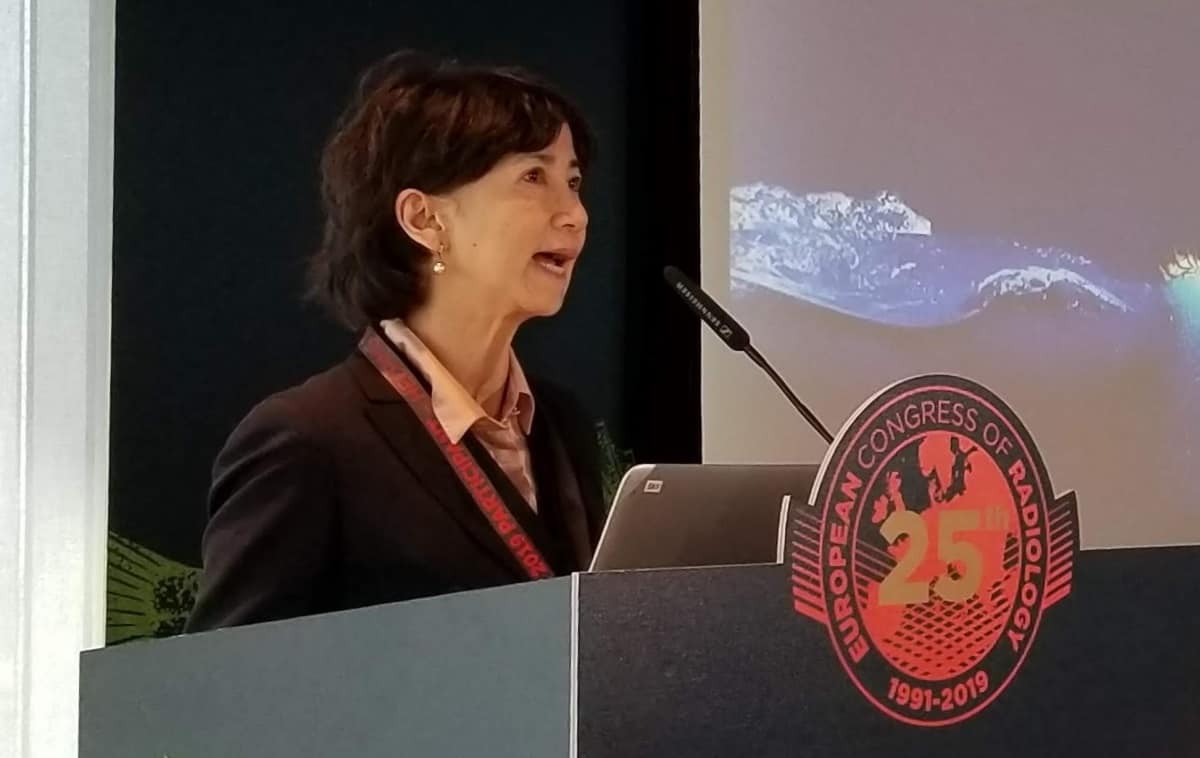
Radiology is moving toward a future in which radiologists, guided by artificial intelligence (AI), will be able to work more closely with clinicians to provide precise therapies that offer patients an improved quality of life, according to a series of speakers at the opening press conference of ECR 2019.

This new beginning has just begun in oncology imaging, according to Regina Beets-Tan of the Netherlands Cancer Institute, who detailed how imaging of oncologic biomarkers is already beginning to change the management of cancer patients. Beets-Tan gave the Wilhelm Conrad Roentgen Honorary Lecture on the topic.

Regina Beets-Tan

Cancer experts predict that within 15 years, cancer will become a chronic disease in which nine of 10 patients will have a good quality of life, Beets-Tan noted. Many of these patients will need to have their disease managed on an ongoing basis, a role for which imaging is perfect, she said. Indeed, recent studies have indicated that a strategy of watching and waiting with imaging after patients show a complete response after chemotherapy can be as effective as resection.

Artificial intelligence will play a key role in this future, Beets-Tan said. Computers will assist radiologists and enable them to provide closer support to the clinical team. Radiologists may also need to communicate more with patients as imaging is increasingly used to track their disease.

Ultimately, Beets-Tan sees some of the greatest potential with radiopharmaceuticals that have both diagnostic and therapeutic applications — so-called “theranostic” agents. Radiology will shift from a focus on following morphological changes as a sign of pathology to detecting genetic “mistakes” that are a sign of current or future disease.

“This is not a fairy tale — this is already being done in breast cancer,” she said, citing the MammaPrint molecular test, which can identify which tumours have a low risk of being life-threatening.

The role of artificial intelligence in radiology was emphasized by Elmar Kotter of University Medical Center Freiburg. Kotter reviewed the evolution of AI and noted the large number of submissions on AI that ECR received.

AI is not necessarily a new technology, and it could be at the top of the hype curve, Kotter noted. But the technology is sure to change the role of radiologists in the future, especially once issues like the integration of AI into clinical workflow are resolved. Ethical issues are also important, and they were the subject of a white paper published earlier this month by a number of radiology societies.

“AI will be very important in radiology in the future,” Kotter concluded.

For the first time, ECR is featuring a keynote speaker from outside the world of radiology: Bernadette Abela-Ridder from the World Health Organization (WHO). A doctor of veterinary medicine, Abela-Ridder leads research into neglected zoonotic diseases at the Department of Control of Neglected Tropical Diseases at WHO.

Abela-Ridder focused on the growing health problems presented by migrating populations worldwide. While it seems like the subject has become more prominent lately, she noted that the total number of migrants worldwide is actually at about the same as it’s been for years — approximately 3%.

There are a number of other misconceptions about migration, she said. For example, while immigrants to Europe have achieved widespread publicity lately, about 85% of the world’s displaced population is outside of Europe. Also, while many suspect that immigrants from developing countries introduce exotic diseases into developed nations, the vast majority of tropical diseases seen in developed nations are actually brought back by tourists.

What does this have to do with radiology? However they get there, more exotic conditions usually seen in the tropics are showing up in places like Vienna, and radiologists are often the first healthcare professionals who encounter these diseases as they interpret imaging exams. Indeed, the decision to invite Abela-Ridder as a speaker was inspired by the recent outbreak of an exotic disease in Genoa, Italy, according to Lorenzo Derchi, president of the European Society of Radiology (ESR), who moderated the panel.

Finally, Jean-Pierre Pruvo, head of the department of neuroradiology at Lille University Hospital, spoke about the role of imaging in diagnosing and managing psychiatric illness. Mental illness is exacting a growing toll in society, and it’s estimated that one in four individuals worldwide will experience some kind of illness, he noted.

Fortunately, this is another setting where imaging can help. Imaging tools such as MRI and MR spectroscopy can show evidence of neurological changes in cases of schizophrenia years before clinical evidence is obvious, Pruvo noted. Imaging can also be used to track the effectiveness of pharmaceutical therapy for mental illness in clinical trials.

In France, there are a number of projects underway to improve the integration of imaging and psychiatric care, such as the PREDIPSY project, which will soon acquire a 7-tesla MRI scanner to study biomarkers for mental illness.

  • This article was originally published on AuntMinnieEurope.com ©2019 by AuntMinnieEurope.com. Any copying, republication or redistribution of AuntMinnieEurope.com content is expressly prohibited without the prior written consent of AuntMinnieEurope.com.

Food supply falls as fish flee warmer seas

Global warming has already begun to affect fishing worldwide as fish flee warmer seas, a new study says.

In the last 80 years, there has been an estimated drop of more than 4% in sustainable catches for many kinds of fish and shellfish. That is the average. In some regions – the East China Sea, for instance, and Europe’s North Sea – the estimated decline was between 15% and 35%.

In the course of the last century, global average temperatures have crept up by about 1 °C above the average for most of human history, as a reaction to the unconstrained burning of fossil fuels. If the world continues to burn ever-greater volumes of coal, oil and natural gas, it could be 3 °C warmer or more by the end of the century.

Last year was only the fourth warmest for air surface temperatures, but the warmest since records began for the world’s oceans.

US researchers report in the journal Science that they looked at the impact of ocean warming in 235 populations of 124 species of fish, crustaceans and molluscs in 38 ecological regions between the years 1930 and 2010.

They then matched the world data on fish catches with ocean temperature maps to estimate what warming has done to the sustainable catch – that is, the biggest haul fishing crews can make without reducing breeding stocks for the seasons to follow.

“We were stunned to find that fisheries around the world have already responded to global warming,” says Malin Pinsky of Rutgers University, and one of the authors. “These aren’t hypothetical changes some time in the future.”

The researchers found that some species in some climate zones actually benefited from warming, and fish with faster life cycles sometimes responded well, sometimes badly to the temperature changes. Some responded by shifting their geographical range.

More climate losers

But overall, says Christopher Free, once of Rutgers and now at the University of California, Santa Barbara, “among the populations we studied, the climate losers outweigh the climate winners.”

And his colleague Olaf Jensen, also from Rutgers, says “Fish populations can only tolerate so much warning, though. Many of the species that have benefited from warming so far are likely to start declining as temperatures continue to rise.”

Fishermen off the coasts of Labrador and Newfoundland, in the Baltic, the Indian Ocean and the northeast US shelf may have seen more productive hauls of fish. But the biggest losses were in the Sea of Japan, the North Sea, off the Iberian coast and the Celtic-Biscay shelf.

Many fish species are adapted to a precise range of temperatures: they flourish not just in specific marine ecosystems but in thermal niches as well. Once things begin to change, they swim away or perish.

Marauding invaders

Fishermen in the North Atlantic have repeatedly observed changes in the available catch, as the cod shift northand the sardines migrate from increasingly uncomfortable warm waters. Warming in Mediterranean waters creates enticing conditions for invaders from the Red Sea and further south, at huge cost to the resident species.

The lesson is that fish stocks must be carefully conserved, and ocean reserves protected. Researchers have consistently warned that global warming and climate change – especially when combined with changes in ocean water chemistry as a consequence of carbon dioxide build-up in the atmosphere – could soon start to constrain an important source of nutrition: an estimated 3.2 billion people rely on the sea for an estimated 20% of their animal protein, especially in East Asia.

“This means 15% to 35% less fish available for food and employment in a region with some of the fastest-growing human populations in the world,” says Free.

“Knowing exactly how fisheries will change under future warming is challenging, but we do know that failing to adapt to changing fisheries productivity will result in less food and fewer profits relative to today.”

Challenges of interdisciplinary physics and the Web at 30

In this episode of Physics World Weekly, we’re celebrating the 30th anniversary of the World Wide Web. It was 30 years ago this month that Tim Berners-Lee, then a physicist-turned-computer-scientist at CERN, published a document entitled “Information management: a proposal”. The rest is history. Physics World editor Matin Durrani previews some of the various Web-related stories in the March special issue of Physics World.

Later in the podcast, our materials science editor Anna Demming discusses the challenges and opportunities of interdisciplinary research. Demming recently attended an event run by Nature Reviews Physics called “At the interface between physics and other disciplines”. While there she got the thoughts of Vittoria Colizza, Anthony Philips and Ricardo Sapienza.

As always, our general physics editor Hamish Johnston brings you a round-up of some of the other research news highlights from the website this week. If you enjoy what you hear, you can subscribe to Physics World Weekly via the Apple podcast app or your chosen podcast host.

Copyright © 2026 by IOP Publishing Ltd and individual contributors