It is Peer Review Week and the theme for 2025 is “Rethinking Peer Review in the AI Era”. This is not surprising given the rapid rise in the use and capabilities of artificial intelligence. However, views on AI are deeply polarized for reasons that span its legality, efficacy and even its morality.
A recent survey done by IOP Publishing – the scientific publisher that brings you Physics World – reveals that physicists who do peer review are polarized regarding whether AI should be used in the process.
IOPP’s Laura Feetham-Walker is lead author of AI and Peer Review 2025, which describes the survey and analyses its results. She joins me in this episode of the Physics World Weekly podcast in a conversation that explores reviewers’ perceptions of AI and their views of how it should, or shouldn’t, be used in peer review.
“Imagine the day the aliens arrive.” So begins Do Aliens Speak Physics? by the US particle physicist Daniel Whiteson and the cartoonist and author Andy Warner. From that starting point, if you believe the plots of many works of science fiction, it wouldn’t be long before we’re communicating with emissaries of an extraterrestrial civilization. Quickly, we’d be marvelling at their advanced science and technology.
But is this a reasonable assumption? Would we really be able to communicate with aliens? Even if we could, would their way of doing science have any meaning to us? What if an advanced alien civilization had no science at all? These are some of the questions tackled by Whiteson and Warner in their entertaining and thought-provoking book.
While Do Aliens Speak Physics? focuses on the possible differences between human and alien science, it made me think about what science means to humans – and the role of science in our civilization. Indeed, when I spoke to Whiteson for a future episode of the Physics World Weekly podcast, he told me that his original plan for the book was to examine if physics is universal or shaped by human perspective.
But when he pitched the idea to his teenage son, Whiteson realized that approach was a bit boring and decided to spice things up using an alien landing. At the heart of the book is a new equation for estimating the number of alien civilizations that scientists could potentially communicate with – ideally, when the aliens arrive on Earth.
The authors aren’t the first people to do such a calculation. In 1961 the US astrophysicist Frank Drake famously did so by estimating how many habitable planets might exist and whether they could harbour life that’s evolved so far that it could communicate with us. Whiteson and Warner’s “extended Drake equation” adds four extra terms related to alien science.
The first is the probability that a civilization has developed science. The second is the likelihood that we would be able to communicate with the civilization, with the third being the probability that an alien civilization would ask scientific questions that are meaningful to us. The final term is whether human science would benefit from the answers to those questions.
One of Whiteson and Warner’s more interesting ideas is that aliens could perceive science and technology in very different ways to us. After all, an alien civilization could be completely focused on developing technology and not be at all interested in the underlying science. Technology without science might seem deeply foreign to us today, but for most of history humans have focused on how things work – not why.
Blacksmiths of the past, for example, developed impressive swords and other metal implements without any understanding of how the materials they worked with behaved at a microscopic level. So perhaps our alien visitors will come from a planet of blacksmiths rather than materials scientists.
Mind you, communicating with alien scientists could be a massive challenge given that we do so mainly using sound and visual symbols, whereas an alien might use smells or subatomic particles to get their point across. As the authors point out, it’s difficult even translating the Danish/Norwegian word hygge into English, despite the concept’s apparent popularity in the English-speaking world. Imagine how much harder things would be if we used a different form of communication altogether.
But could physics function as a kind of Rosetta Stone, offering a universal way of translating one language into another? We could then get the aliens to explain various physical processes – such as how a mass falls under the influence of gravity – and compare their reasoning to our understanding of the same phenomena.
Of course, an alien scientist’s questions might depend on how they perceive the universe. In a chapter titled “Can aliens taste electrons?”, the authors explore what might happen if aliens were so small that they experience quantum effects such as entanglement in their daily lives. What if an organism were so big that it feels the gravitational tug of dark matter? Or what if an intelligent alien could exist in an ultracold environment where everything moves so slowly that their perception of physics is completely different to ours?
The final term in the authors’ extended Drake equation looks at whether the answers to the questions of alien physics would be meaningful to humans. We naturally assume there are deep truths about nature that can be explored using experimental and mathematical tools. But what if there are no deep truths out there – and what if our alien friends are already aware of that fact?
When Drake proposed his equation, humans did not know of any planets beyond the solar system. Today, however, we have discovered nearly 6000 such exoplanets, and it is possible that there are billions of habitable, Earth-like exoplanets in the Milky Way. So it does not seem at all fanciful that we could soon be communicating with an alien civilization.
But when I asked Whiteson if he’s worried that visiting aliens could be hostile towards humans, he said he hoped for a “peaceful” visit. In fact, Whiteson is unable to think of a good reason why an advanced civilization would be hostile to Earth – pointing out that there is probably nothing of material value here for them. Fingers crossed, any visit will be driven by curiosity, peace and goodwill.
4 November 2025 WW Norton & Company 272pp £23.00 hb; £21.84 ebook
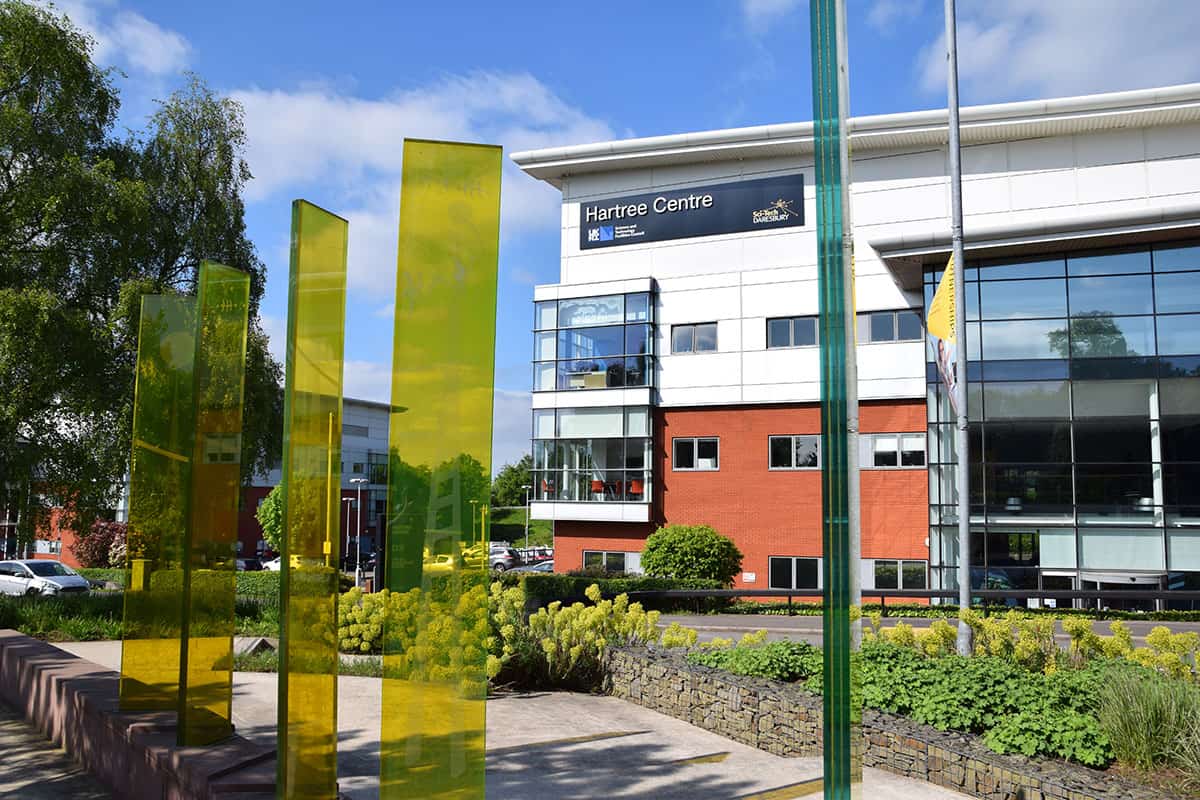
What role does the Hartree Centre play in quantum computing?
The Hartree Centre gives industry fast-track access to next-generation supercomputing, AI and digital capabilities. We are a “connector” when it comes to quantum computing, helping UK businesses and public-sector organizations to de-risk the early-stage adoption of a technology that is not yet ready to buy off-the-shelf. Our remit spans quantum software, theoretical studies and, ultimately, the integration of quantum computing into existing high-performance computing (HPC) infrastructure and workflows.
What does industry need when it comes to quantum computing?
It’s evident that industry wants to understand the commercial upsides of quantum computing, but doesn’t yet have the necessary domain knowledge and skill sets to take full advantage of the opportunities. By working with the STFC Hartree Centre, businesses can help their computing and R&D teams to bridge that quantum knowledge gap.
How does the interaction with industry partners work?
The Hartree Centre’s quantum computing effort is built around a cross-disciplinary team of scientists and a mix of expertise spanning physics, chemistry, mathematics, computer science and quantum information science. We offer specialist quantum consultancy to clients across industries as diverse as energy, pharmaceuticals and food manufacturing.
How does that work in practice?
We begin by doing the due diligence on the client’s computing challenge, understanding the computational bottlenecks and, where appropriate, translating the research problem so that it can be executed, in whole or in part, on a quantum computer or a mixture of hybrid and quantum computing resources.
What are the operational priorities for the Hartree Centre in quantum computing?
Integrating classical HPC and quantum computing is a complex challenge along three main pathways: infrastructure – bridging fundamentally different hardware architectures; software – workflow management, resource scheduling and organization; and finally applications – adapting and optimizing computing workflows across quantum and classical domains. All of these competencies are mandatory for successful exploitation of quantum computing systems.
So it’s likely these pathways will converge?
Correct. Ultimately, the task is how do we distribute a workload to run on an HPC platform, also on a quantum computer, when many of the algorithms and data streams must loop back and forth between the two systems.
How do you link up classical computing and quantum resources?
We have been addressing this problem with our quantum technology partners – IBM and Pasqal – and a team at Rensselaer Polytechnic in New York. Together, we have introduced a Quantum Resource Management Interface – an open-source tool that supports unified job submission for quantum and classical computing tasks and that’s scalable to cloud computing environments. It’s the “black-box” solution industry has been looking for to bridge the established HPC and emerging quantum domains.
Quantum hub The STFC Hartree Centre employs more than 160 scientists and technologists who specialize in supercomputing, applied scientific computing, data science, AI, cloud and quantum computing. (Courtesy: STFC)
The Hartree Centre has a flagship collaboration with IBM in quantum computing. Can you tell us more?
The Hartree National Centre for Digital Innovation (HNCDI) is a £210m public–private partnership with IBM to create innovative digital technologies spanning HPC, AI, data analytics and quantum computing. HNCDI is the cornerstone of IBM’s quantum technology strategy in the UK and, over the past four years, the collaboration has clocked up more than 30 joint projects with industry. In each of these projects, HNCDI is using quantum computers to tackle problems that are out of reach for classical computers.
Do you have any examples of early wins for HNCDI in quantum?
One is streamlining drug discovery and development. As part of a joint effort with the pharmaceutical firm AstraZeneca and quantum-software developer Algorithmiq, we have improved the accuracy of molecular modelling with the help of quantum computing and, by extension, developed a better understanding of the molecular interactions and processes involved in drug synthesis. Another eye-catching development is Qiskit Machine Learning (ML), an open-source library for quantum machine-learning tasks on quantum hardware and classical simulators. While Qiskit ML started as a proof-of-concept library from IBM, our team at the Hartree Centre has, over the past couple of years, developed it into a modular tool for non-specialist users as well as quantum computational scientists and developers.
So quantum computing could play a big role in healthcare?
Healthcare has yielded productive lines of enquiry, including a proof-of-concept study to demonstrate the potential of quantum machine-learning in cancer diagnostics. Working with Royal Brompton and Harefield Hospitals and Imperial College London, we have evaluated histopathology datasets to categorize different types of breast-cancer cells through AI workflows. It’s research that could eventually lead to better predictions regarding the onset and progression of disease.
And what about other sectors?
We have been collaborating with the German power utility E.ON to study the complex challenges that quantum computing may be able to address in the energy sector – such as strategic infrastructure development, effective energy demand management and streamlined integration of renewable energy sources.
What does the next decade look like for the Hartree Centre’s quantum computing programme?
Longer term, the goal is to enable our industry partners to become at-scale end-users of quantum computing, delivering economic and societal impact along the way. As for our own development roadmap at the Hartree Centre, we are evaluating options for the implementation of a large-scale quantum computing platform to further diversify our existing portfolio of HPC, AI, data science and visual computing technologies.
STFC Hartree Centre: helping UK industry deliver societal impact
Quantum returns “Our goal is to help UK industry generate economic growth and societal impact,” says Vassil Alexandrov, CSO of the STFC Hartree Centre. (Courtesy: STFC)
The Hartree Centre is part of the Science and Technology Facilities Council (STFC), one of the main UK research councils supporting fundamental and applied initiatives in astronomy, physics, computational science and space science.
Based at the Daresbury Laboratory, part of the Sci-Tech Daresbury research and innovation campus in north-west England, the Hartree Centre has more than 160 scientists and technologists specializing in supercomputing, applied scientific computing, data science, AI, cloud and quantum computing.
“Our goal is to help UK industry generate economic growth and societal impact by exploiting advanced HPC capabilities and digital technologies,” explains Vassil Alexandrov, chief science officer at STFC Hartree Centre.
One of the core priorities for Alexandrov and his team is the interface between “exascale” computing and scalable AI. It’s a combination of technologies that’s being lined up to tackle “grand challenges” like the climate crisis and the transition from fossil fuels to clean energy.
A case in point is the Climate Resilience Demonstrator, which uses “digital twins” to simulate how essential infrastructure like electricity grids and telecoms networks might respond to extreme weather events. “These kinds of insights are critical to protect communities, maintain service delivery and build more resilient public infrastructure,” says Alexandrov.
Elsewhere, as part of the Fusion Computing Lab, the Hartree Centre is collaborating with the UK Atomic Energy Authority on sustainable energy generation from nuclear fusion. “We have a joint team of around 60 scientists and engineers working on this initiative to iterate and optimize the building blocks for a fusion power plant,” notes Alexandrov. “The end-game is to deliver net power safely and affordably to the grid from magnetically confined fusion.”
Exascale computing and AI also underpin the Research Computing and Innovation Centre, a collaboration with AWE, the organization that runs research, development and support for the UK’s nuclear-weapons stockpile.
Today’s artificial intelligence (AI) systems are built on data generated by humans. They’re trained on huge repositories of writing, images and videos, most of which have been scraped from the Internet without the knowledge or consent of their creators. It’s a vast and sometimes ill-gotten treasure trove of information – but for machine-learning pioneer David Silver, it’s nowhere near enough.
“I think if you provide the knowledge that humans already have, it doesn’t really answer the deepest question for AI, which is how it can learn for itself to solve problems,” Silver told an audience at the 12th Heidelberg Laureate Forum (HLF) in Heidelberg, Germany, on Monday.
Silver’s proposed solution is to move from the “era of human data”, in which AI passively ingests information like a student cramming for an exam, into what he calls the “era of experience” in which it learns like a baby exploring its world. In his HLF talk on Monday, Silver played a sped-up video of a baby repeatedly picking up toys, manipulating them and putting them down while crawling and rolling around a room. To murmurs of appreciation from the audience, he declared, “I think that provides a different perspective of how a system might learn.”
Silver, a computer scientist at University College London, UK, has been instrumental in making this experiential learning happen in the virtual worlds of computer science and mathematics. As head of reinforcement learning at Google DeepMind, he was instrumental in developing AlphaZero, an AI system that taught itself to play the ancient stones-and-grid game of Go. It did this via a so-called “reward function” that pushed it to improve over many iterations, without ever being taught the game’s rules or strategy.
More recently, Silver coordinated a follow-up project called AlphaProof that treats formal mathematics as a game. In this case, AlphaZero’s reward is based on getting correct proofs. While it isn’t yet outperforming the best human mathematicians, in 2024 it achieved silver-medal standard on problems at the International Mathematical Olympiad.
Learning in the physics playroom
Could a similar experiential learning approach work in the physical sciences? At an HLF panel discussion on Tuesday afternoon, particle physicist Thea Klaeboe Åarrestad began by outlining one possible application. Whenever CERN’s Large Hadron Collider (LHC) is running, Åarrestad explained, she and her colleagues in the CMS experiment must control the magnets that keep protons on the right path as they zoom around the collider. Currently, this task is performed by a person, working in real time.
Up for discussion: A panel discussion on machine learning in physical sciences at the Heidelberg Laureate Forum. l-r: Moderator George Musser, Kyle Cranmer, Thea Klaeboe Åarrestad, David Silver and Maia Fraser. (Courtesy: Bernhard Kreutzer/HLFF)
In principle, Åarrestad continued, a reinforcement-learning AI could take over that job after learning by experience what works and what doesn’t. There’s just one problem: if it got anything wrong, the protons would smash into a wall and melt the beam pipe. “You don’t really want to do that mistake twice,” Åarrestad deadpanned.
For Åarrestad’s fellow panellist Kyle Cranmer, a particle physicist who works on data science and machine learning at the University of Wisconsin-Madison, US, this nightmare scenario symbolizes the challenge with using reinforcement learning in physical sciences. In situations where you’re able to do many experiments very quickly and essentially for free – as is the case with AlphaGo and its descendants – you can expect reinforcement learning to work well, Cranmer explained. But once you’re interacting with a real, physical system, even non-destructive experiments require finite amounts of time and money.
Another challenge, Cranmer continued, is that particle physics already has good theories that predict some quantities to multiple decimal places. “It’s not low-hanging fruit for getting an AI to come up with a replacement framework de novo,” Cranmer said. A better option, he suggested, might be to put AI to work on modelling atmospheric fluid dynamics, which are emergent phenomena without first-principles descriptions. “Those are super-exciting places to use ideas from machine learning,” he said.
Not for nuclear arsenals
Silver, who was also on Tuesday’s panel, agreed that reinforcement learning isn’t always the right solution. “We should do this in areas where mistakes are small and it can learn from those small mistakes to avoid making big mistakes,” he said. To general laughter, he added that he would not recommend “letting an AI loose on nuclear arsenals”, either.
Reinforcement learning aside, both Åarrestad and Cranmer are highly enthusiastic about AI. For Cranmer, one of the most exciting aspects of the technology is the way it gets scientists from different disciplines talking to each other. The HLF, which aims to connect early-career researchers with senior figures in mathematics and computer science, is itself a good example, with many talks in the weeklong schedule devoted to AI in one form or another.
For Åarrestad, though, AI’s most exciting possibility relates to physics itself. Because the LHC produces far more data than humans and present-day algorithms can handle, Åarrestad explained, much of it is currently discarded. The idea that, as a result, she and her colleagues could be throwing away major discoveries sometimes keeps her up at night. “Is there new physics below 1 TeV?” Åarrestad wondered.
Radiotherapy is a precision cancer therapy that employs personalized treatment plans to target radiation to tumours with high accuracy. Such plans are usually created from high-resolution CT scans of the patient. But interest is growing in an alternative approach: MR simulation, in which MR images are used to generate the treatment plans – for delivery on conventional linac systems as well as the increasingly prevalent MR-guided radiotherapy systems.
One site that has transitioned to this approach is the Institut Jules Bordet in Belgium, which in 2021 acquired both an Elekta Unity MR-Linac and a Siemens MAGNETOM Aera MR-Simulator. “It was a long-term objective for our clinic to have an MR-only workflow,” says Akos Gulyban, a medical physicist at Institut Jules Bordet. “When we moved to a new campus, we decided to purchase the MR-Linac. Then we thought that if we are getting into the MR world for treatment adaptation, we also need to step up in terms of simulation.”
The move to MR simulation delivers many clinical benefits, with MR images providing the detailed anatomical information required to delineate targets and organs-at-risk with the highest precision. But it also creates new challenges for the physicists, particularly when it comes to quality assurance (QA) of MR-based systems. “The biggest concern is geometric distortion,” Gulyban explains. “If there is no distortion correction, then the usability of the machine or the sequence is very limited.”
Addressing distortion
While the magnetic field gradient is theoretically linear, and MRI is indeed extremely accurate at the imaging isocentre, moving away from the isocentre increases distortion. Images of regions 30 or 40 cm away from the isocentre – a reasonable distance for a classical linac – can differ from reality by 15 to 20 mm, says Gulyban. Thankfully, 3D correction algorithms can reduce this discrepancy down to just a couple of millimetres. But such corrections first require an accurate way to measure the distortion.
Akos Gulyban: “The biggest concern is geometric distortion.” (Courtesy: Bordet – Service Communication)
To address this task, the team at Institut Jules Bordet employ a geometric distortion phantom –the QUASAR MRID3D Geometric Distortion Analysis System from IBA Dosimetry. Gulyban explains that the MRID3D was chosen following discussions with experienced users, and that key selling points included the phantom’s automated software and its ability to efficiently store results for long-term traceability.
“My concern was how much time we spend cross-processing, generating reports or evaluating results,” he says. “This software is fully automated, making it much easier to perform the evaluation and less dependent on the operator.”
Gulyban adds that the team was looking for a vendor-independent solution. “I think it is a good approach to use the tools provided [by the vendor] but now we have a way to measure the same thing using a different approach. Since our new campus has a mixture of Siemens MRs and the MR-Linac, this phantom provides a vendor-independent bridge between the two worlds.”
For quality control of the MR-Simulator, the team perform distortion measurements every three months, as well as after system interventions such as shimming and following any problems arising during other routine QA procedures. “We should not consider tests as individual islands in the QA process,” says Gulyban. “For instance, the ACR image quality phantom, which is used for more frequent evaluation, also partly assesses distortion. If we see that failing, I would directly trigger measurements with the more appropriate geometric distortion phantom.”
A lightweight option
To perform MR simulation, the images used for treatment planning must encompass both the target volume and the surrounding region, to ensure accurate delineation of the tumour and nearby organs-at-risk. This requires a large field-of-view (FOV) scan – plus geometric distortion QA that covers the same large FOV.
Kawtar Lakrad: “The idea behind the phantom was very smart.” (Courtesy: Kawtar Lakrad)
“You’re using this image to delineate the target and also to spare the organs-at-risk, so the image must reflect reality,” explains Kawtar Lakrad, medical physicist and clinical application specialist at IBA Dosimetry. “You don’t want that image to be twisted or the target volume to appear smaller or bigger than it actually is. You want to make sure that all geometric qualities of the image align with what’s real.”
Typically, geometric distortion phantoms are grid-like, with control points spaced every 0.5 or 1 cm. The entire volume is imaged in the MR scanner and the locations of control points seen in the image compared with their actual positions. “If we apply this to a large FOV phantom, which for MRI will be filled with either water or oil, it’s going to be a very large grid and it’s going to be heavy, 40 or 50 kg,” says Lakrad.
To overcome this obstacle, IBA researchers used innovative harmonic analysis algorithms to design a lightweight geometric distortion phantom with submillimetre accuracy and a large (35 x 30 cm) FOV: the MRID3D. The phantom comprises two concentric hollow acrylic cylinders, the only liquid being a prefilled mineral oil layer between the two shells, reducing its weight to just 21 kg.
Lightweight and accurate The MRID3D geometric distortion phantom in use on the treatment couch. (Courtesy: IBA Dosimetry)
“The idea behind the phantom was very smart because it relies on a mathematical tool,” explains Lakrad. “There is a Fourier transform for the linear signal, which is used for standard grids. But there are also spherical harmonics – and this is what’s used in the MRID3D. The control points are all on the cylinder surface, plus one in the isocentre, creating a virtual grid that measures 3D geometric distortion.” She adds that the MRID3D can also differentiate distortion due to the main magnetic field from gradient non-linearity distortion.
Moving into the MR world
Gulyban and his team at Institut Jules Bordet first used MR simulation for pelvic treatments, particularly prostate cancer, he tells Physics World. This was followed by abdominal tumours, such as pancreatic and liver cancers (where many patients were being treated on the MR-Linac) and more recently, cranial and head-and-neck irradiations.
Gulyban points out that the introduction of the MR-Simulator was eased by the team’s experience with the MR-Linac, which helped them “step into the MR world”. Here also, the MRID3D phantom is used to quantify geometric distortion, both for initial commissioning and continuous QA of the MR-Linac.
Screen shot B0 distortion mapping with MRID3D. (Courtesy: IBA Dosimetry)
“It’s like a consistency check,” he explains. “We have certain manufacturer-defined conditions that we need to meet for the MR-Linac – for instance, that distortion within a 40 mm diameter should be less than 1 mm. To ensure that these are met in a consistent fashion, we repeat the measurements with the manufacturer’s phantom and with the MRID3D. This gives us extra peace of mind that the machine is performing under the correct conditions.”
For other cancer centres looking to integrate MR into their radiotherapy clinics, Gulyban has some key points of advice. These include starting with MR-guided radiotherapy and then adding MR simulation, identifying a suitable pathology to treat first and gain familiarity, and attending relevant courses or congresses for inspiration.
“The biggest change is actually a change in culture because you have an active MRI in the radiotherapy department,” he notes. “We are used to the radioprotection aspects of radiotherapy, wearing a dosimeter and observing radiation protection principles. MRI is even less forgiving – every possible thing that could go wrong you have to eliminate. Closing all the doors and emptying your pockets must become a reflex habit. You have to prepare mentally for that.”
“When you’re used to CT-based machines, moving to an MR workflow can be a little bit new,” adds Lakrad. “Most physicists are already familiar with the MR concept, but when it comes to the QA process, that’s the most challenging part. Some people would just repeat what’s done in radiology – but the use case is different. In radiotherapy, you have to delineate the target and surrounding volumes exactly. You’re going to be delivering dose, which means the tolerance between diagnostic and radiation therapy is different. That’s the biggest challenge.”
Artificial intelligence (AI) could help sniff out questionable open-access publications that are more interested in profit than scientific integrity. That is according to an analysis of 15,000 scientific journals by an international team of computer scientists. They find that dubious journals tend to publish an unusually high number of articles and feature authors who have many affiliations and frequently self-cite (Sci. Adv.11 eadt2792).
Open access removes the requirement for traditional subscriptions. Articles are instead made immediately and freely available for anyone to read, with publication costs covered by authors by paying an article-processing charge.
But as the popularity of open-access journals has risen, there has been a growth in “predatory” journals that exploit the open-access model by making scientists pay publication fees without a proper peer-review process in place.
To build an AI-based method for distinguishing legitimate from questionable journals, Daniel Acuña, a computer scientist at the University of Colorado Boulder, and colleagues used the Directory of Open Access Journals (DOAJ) – an online, community-curated index of open-access journals.
The researchers trained their machine-learning model on 12,869 journals indexed on the DOAJ and 2536 journals that have been removed from the DOAJ due to questionable practices that violate the community’s listing criteria. The team then tested the tool on 15,191 journals listed by Unpaywall, an online directory of free research articles.
To identify questionable journals, the AI-system analyses journals’ bibliometric information and the content and design of their websites, scrutinising details such as the affiliations of editorial board members and the average author h-index – a metric that quantifies a researcher’s productivity and impact.
The AI-model flagged 1437 journals as questionable, with the researchers concluding that 1092 were genuinely questionable while 345 were false positives.
They also identified around 1780 problematic journals that the AI screening failed to flag. According to the study authors, their analysis shows that problematic publishing practices leave detectable patterns in citation behaviour such as the last authors having a low h-index together with a high rate of self-citation.
Acuña adds that the tool could help to pre-screen large numbers of journals, adding, however, that “human professionals should do the final analysis”. The researcher’s novel AI screening system isn’t publicly accessible but they hope to make it available to universities and publishing companies soon.
It’s almost impossible to avoid reading about advances in quantum computing these days. Despite this, we’re still some way off having fully fault-tolerant, large-scale quantum computers as of right now. One practical difficulty is that even the best present-day quantum computers suffer from noise that can often cause them to return erroneous results.
Research in this field can be broadly divided into two areas: a) designing quantum algorithms with potential practical advantages over classical algorithms (the software) and b) physically building a quantum computer (the hardware).
One of the main approaches to algorithm design is to minimise the number of operations or runtime in an algorithm. One intuitively expects that reducing the number of operations would decrease the chance of errors – the key to constructing a reliable quantum computer.
However, this is not always the case. In a recent paper, the research team found that minimising the number of operations in a quantum algorithm can sometimes be counterproductive, leading to an increased sensitivity to noise. Essentially, running a faster algorithm in non-ideal conditions can result in more errors than if a slower algorithm had been used.
The authors proved that there’s a trade-off between an algorithm’s number of operations and its resilience to noise. This means that, for certain types of errors, slower algorithms might actually be better in some real-world conditions.
These results bring together research on quantum hardware and software. The mathematical framework developed will enable quantum algorithms to be designed with the limitations of current real quantum computers in mind.
Despite the huge success of the Standard Model of particle physics, we know it’s not complete. Dark matter and neutrino masses are just two of the things that are conspicuously missing in our current theory.
However, it’s been notoriously difficult to perform an experiment that actually disagrees with the model’s predictions.
Many proposed extensions of the Standard Model, such as the fraternal twin Higgs or folded supersymmetry models, include so-called long-lived particles (LLPs).
Unlike most particles produced in high-energy collisions, which decay almost instantaneously, LLPs have relatively long lifetimes, meaning they travel a measurable distance before decaying.
A new paper from the CMS collaboration at CERN searched for evidence of these particles by re-examining previous data from proton-proton collision events.
The new analysis used new techniques such as machine-learning methods to enhance the sensitivity to LLPs.
So, did they find any new particles? The short answer, unfortunately, is no.
However, the new study achieves up to a tenfold improvement over previous limits for LLP masses. It also places the first constraints on many proposed models that predict these particles.
Although this study found no new physics, we’re still confident that something must be out there. And by narrowing down the possible spaces where we might find new particles, we’re one step closer to finding them.
Tunnel vision The successful consolidation of particle physics in the 1980s and 1990s, typified by work at the Large Electron–Positron collider, is the theme of a symposium held at CERN from 10–13 November 2025. (Courtesy: CERN)
Call it millennial, generation Y or fin de siècle, high-energy physics during the last two decades of the 20th century had a special flavour. The principal pieces of the Standard Model of particle physics had come together remarkably tightly – so tightly, in fact, that physicists had to rethink what instruments to build, what experiments to plan, and what theories to develop to move forward. But it was also an era when the hub of particle physics moved from the US to Europe.
The momentous events of the 1980s and 1990s will be the focus of the 4th International Symposium on the History of Particle Physics, which is being held on 10–13 November at CERN. The meeting will take place more than four decades after the first symposium in the series was held at Fermilab near Chicago in 1980. Entitled The Birth of Particle Physics, that initial meeting covered the years 1930 to 1950.
Speakers back then included trailblazers such as Paul Dirac, Julian Schwinger and Victor Weisskopf. They reviewed discoveries such as the neutron and the positron and the development of relativistic quantum field theory. Those two decades before 1950 were a time when particle physicists “constructed the room”, so to speak, in which the discipline would be based.
The second symposium – Pions to Quarks – was also held at Fermilab and covered the 1950s. Accelerators could now create particles seen in cosmic-ray collisions, populating what Robert Oppenheimer called the “particle zoo”. Certain discoveries of this era, such as parity violation in the weak interaction, were so shocking that C N Yang likened it to having a blackout and not knowing if the room would look the same when the lights came back on. Speakers at that 1985 event included Luis Alvarez, Val Fitch, Abdus Salam, Robert Wilson and Yang himself.
The third symposium, The Rise of the Standard Model, was held in Stanford, California, in 1992 and covered the 1960s and 1970s. It was a time not of blackouts but of disruptions that dimmed the lights. Charge-parity violation and the existence of two types of neutrino were found in the 1960s, followed in the 1970s by deep inelastic electron scattering and quarks, neutral currents, a fourth quark and gluon jets.
These discoveries decimated alternative approaches to quantum field theory, which was duly established for good as the skeleton of high-energy physics. The era culminated with Sheldon Glashow, Abdus Salam and Steven Weinberg winning the 1979 Nobel Prize for Physics for their part in establishing the Standard Model. Speakers at that third symposium included Murray Gell-Mann, Leon Lederman and Weinberg himself.
Changing times
The upcoming CERN event, on whose programme committee I serve, will start exactly where the previous symposium ended. “1980 is a natural historical break,” says conference co-organizer Michael Riordan, who won the 2025 Abraham Pais Prize for History of Physics. “It begins a period of the consolidation of the Standard Model. Colliders became the main instruments, and were built with specific standard-model targets in mind. And the centre of gravity of the discipline moved across the Atlantic to Europe.”
The conference will address physics that took place at CERN’s Super Proton Synchrotron (SPS), where the W and Z particles were discovered in 1983. It will also examines the SPS’s successor – the Large Electron-Positron (LEP) collider. Opened in 1989, it was used to make precise measurements of these and other implications of the Standard Model until being controversially shut down in 2000 to make way for the Large Hadron Collider (LHC).
There will be coverage as well of failed accelerator projects, which – perhaps perversely – can be equally interesting and revealing as successful facilities
Speakers at the meeting will also discuss Fermilab’s Tevatron, where the top quark – another Standard Model component – was found in 1995. Work at the Stanford Linear Accelerator Center, DESY in Germany, and Tsukuba, Japan, will be tackled too. There will be coverage as well of failed accelerator projects, which – perhaps perversely – can be equally interesting and revealing as successful facilities.
In particular, I will speak about ISABELLE, a planned and partially built proton–proton collider at Brookhaven National Laboratory, which was terminated in 1983 to make way for the far more ambitious Superconducting Super Collider (SSC). ISABELLE was then transformed into the Relativistic Heavy Ion Collider (RHIC), which was completed in 1999 and took nuclear physics into the high-energy regime.
Riordan will talk about the fate of the SSC, which was supposed to discover the Higgs boson or whatever else plays its mass-generating role. But in 1993 the US Congress terminated that project, a traumatic episode for US physics, about which Riordan co-authored the book Tunnel Visions. Its cancellation signalled the end of the glory years for US particle physics and the realization of the need for international collaborations in ever-costlier accelerator projects.
The CERN meeting will also explore more positive developments such as the growing convergence of particle physics and cosmology during the 1980s and 1990s. During that time, researchers stepped up their studies of dark matter, neutrino oscillations and supernovas. It was a period that saw the construction of underground detectors at Gran Sasso in Italy and Kamiokande in Japan.
Other themes to be explored include the development of the Web – which transformed the world – and the impact of globalization, the end of the Cold War, and the rise of high-energy physics in China, and physics in Russia, former Soviet Union republics, and former Eastern Bloc countries. While particle physics became more global, it also grew more dependent on, and vulnerable to, changing political ambitions, economic realities and international collaborations. The growing importance of diversity, communication and knowledge transfer will be looked at too.
The critical point
The years between 1980 and 2000 were a distinct period in the history of particle physics. It took place in the afterglow of the triumph of the Standard Model. The lights in high energy physics did not go out or even dim, to use Yang’s metaphor. Instead, the Standard Model shed so much light on high-energy physics that the effort and excitement focused around consolidating the model.
Particle physics, during those years, was all about finding the deeply hidden outstanding pieces, developing the theory, and connecting with other areas of physics. The triumph was so complete that physicists began to wonder what bigger and more comprehensive structure the Standard Model’s “room” might be embedded in – what was “beyond the Standard Model”. A quarter of a century on, our attempt to make out that structure is still an ongoing task.
When researchers at Microsoft released a list of the 40 jobs most likely to be affected by generative artificial intelligence (gen AI), few outsiders would have expected to see “mathematician” among them. Yet according to speakers at this year’s Heidelberg Laureate Forum (HLF), which connects early-career researchers with distinguished figures in mathematics and computer science, computers are already taking over many tasks formerly performed by human mathematicians – and the humans have mixed feelings about it.
One of those expressing disquiet is Yang-Hui He, a mathematical physicist at the London Institute for Mathematical Sciences. In general, He is extremely keen on AI. He’s written a textbook about the use of AI in mathematics, and he told the audience at an HLF panel discussion that he’s been peddling machine-learning techniques to his mathematical physics colleagues since 2017.
More recently, though, He has developed concerns about gen AI specifically. “It is doing mathematics so well without any understanding of mathematics,” he said, a note of wonder creeping into his voice. Then, more plaintively, he added, “Where is our place?”
AI advantages
Some of the things that make today’s gen AI so good at mathematics are the same as the ones that made Google’s DeepMind so good at the game of Go. As the theoretical computer scientist Sanjeev Arora pointed out in his HLF talk, “The reason it’s better than humans is that it’s basically tireless.” Put another way, if the 20th-century mathematician Alfréd Rényi once described his colleagues as “machines for turning coffee into theorems”, one advantage of 21st-century AI is that it does away with the coffee.
Arora, however, sees even greater benefits. In his view, AI’s ability to use feedback to improve its own performance – a technique known as reinforcement learning – is particularly well-suited to mathematics.
In the standard version of reinforcement learning, Arora explains, the AI model is given a large bank of questions, asked to generate many solutions and told to use the most correct ones (as labelled by humans) to refine its model. But because mathematics is so formalized, with answers that are so verifiably true or false, Arora thinks it will soon be possible to replace human correctness checkers with AI “proof assistants”. Indeed, he’s developing one such assistant himself, called Lean, with his colleagues at Princeton University in the US.
Humans in the loop?
But why stop there? Why not use AI to generate mathematical questions as well as producing and checking their solutions? Indeed, why not get it to write a paper, peer review it and publish it for its fellow AI mathematicians – which are, presumably, busy combing the literature for information to help them define new questions?
Arora clearly thinks that’s where things are heading, and many of his colleagues seem to agree, at least in part. His fellow HLF panellist Javier Gómez-Serrano, a mathematician at Brown University in the US, noted that AI is already generating results in a day or two that would previously have taken a human mathematician months. “Progress has been quite quick,” he said.
The panel’s final member, Maia Fraser of the University of Ottawa, Canada, likewise paid tribute to the “incredible things that are possible with AI now”. But Fraser, who works on mathematical problems related to neuroscience, also sounded a note of caution. “My concern is the speed of the changes,” she told the HLF audience.
The risk, Fraser continued, is that some of these changes may end up happening by default, without first considering whether humans want or need them. While we can’t un-invent AI, “we do have agency” over what we want, she said.
So, do we want a world in which AI mathematicians take humans “out of the loop” entirely? For He, the benefits may outweigh the disadvantages. “I really want to see a proof of the Riemann hypothesis,” he said, to ripples of laughter. If that means that human mathematicians “become priests to oracles”, He added, so be it.